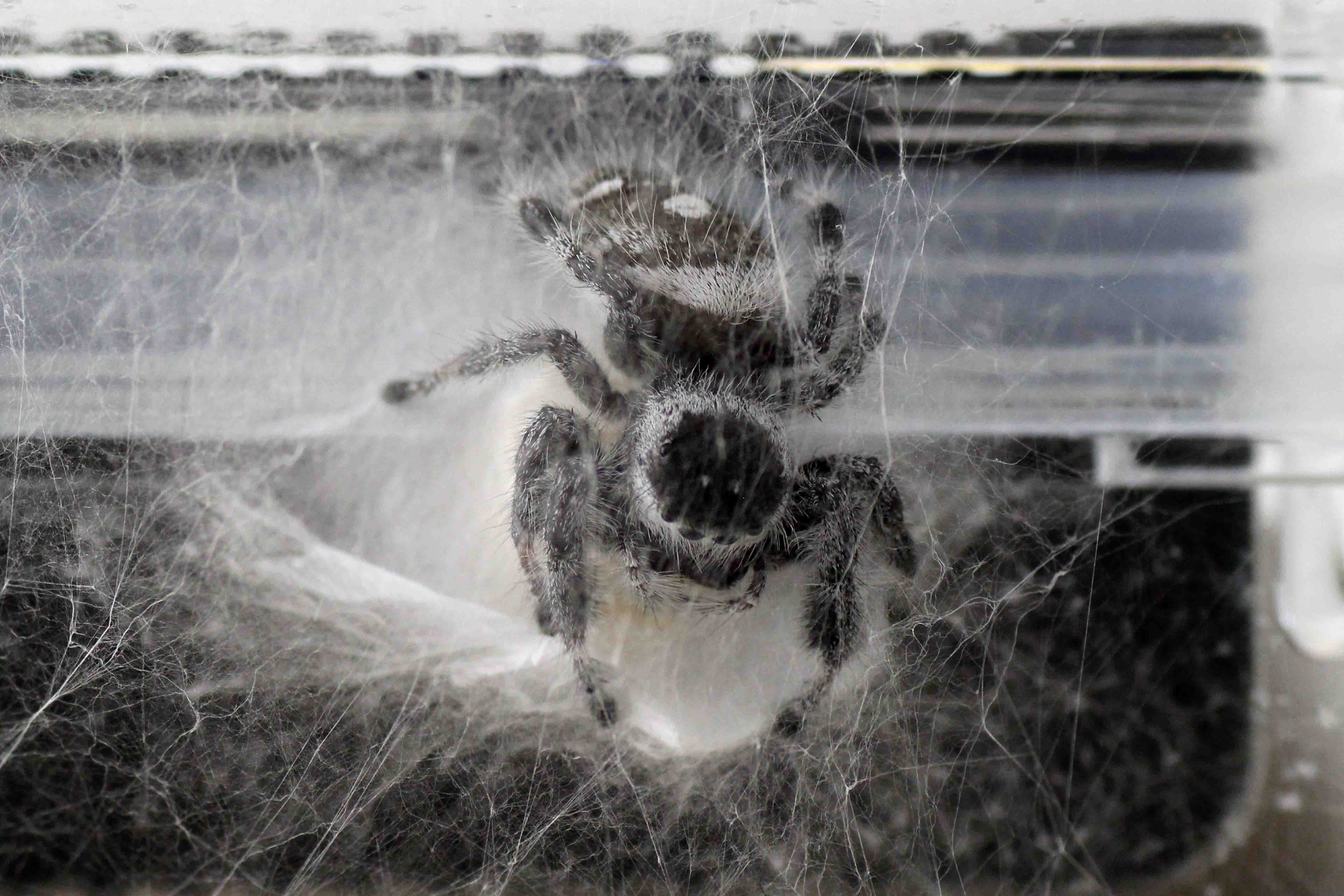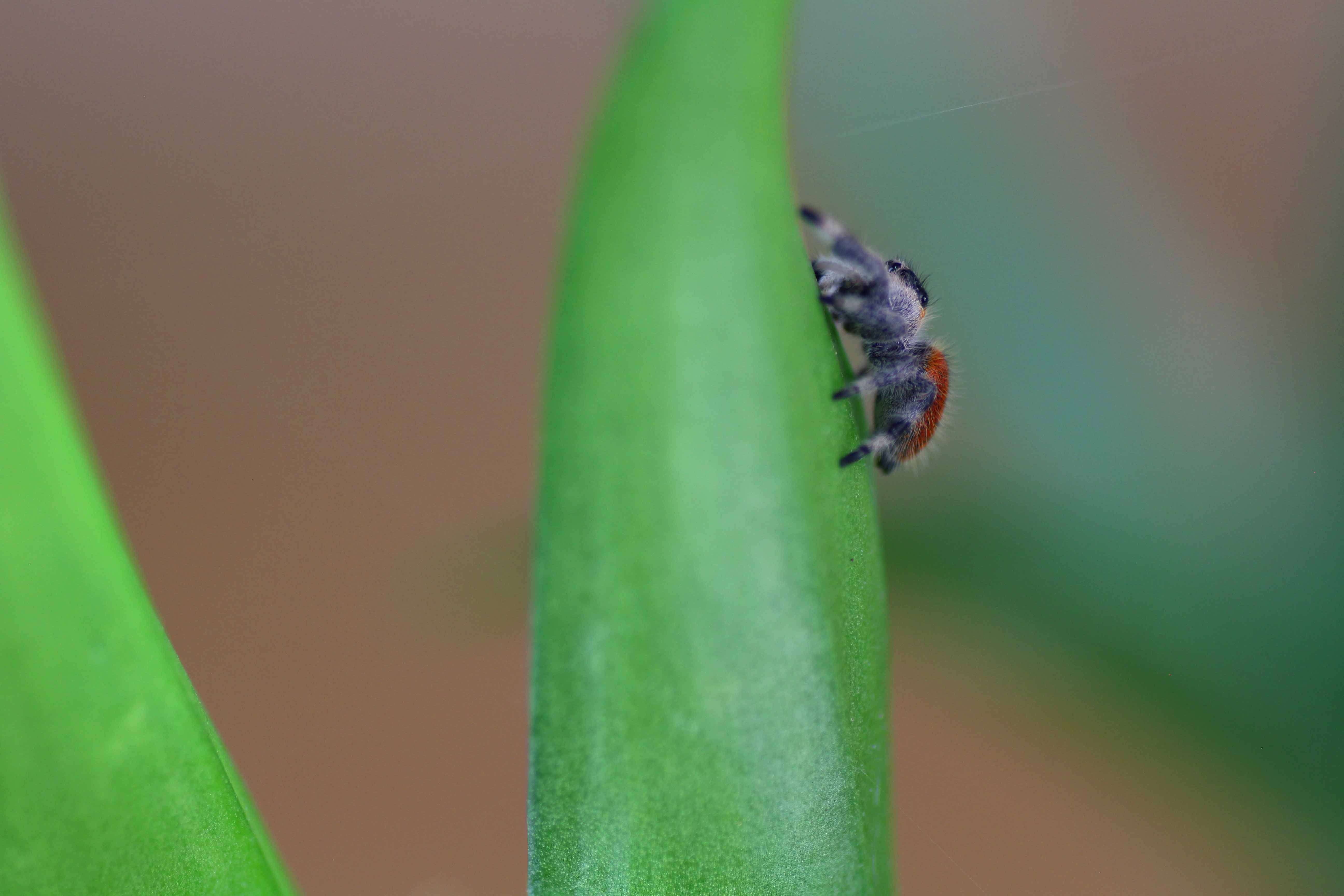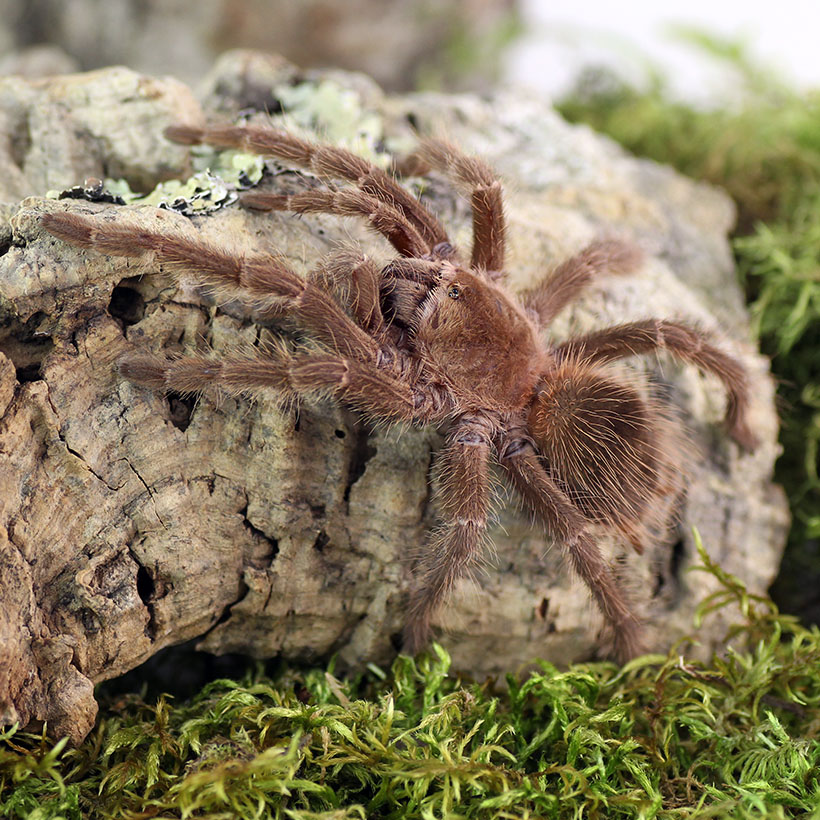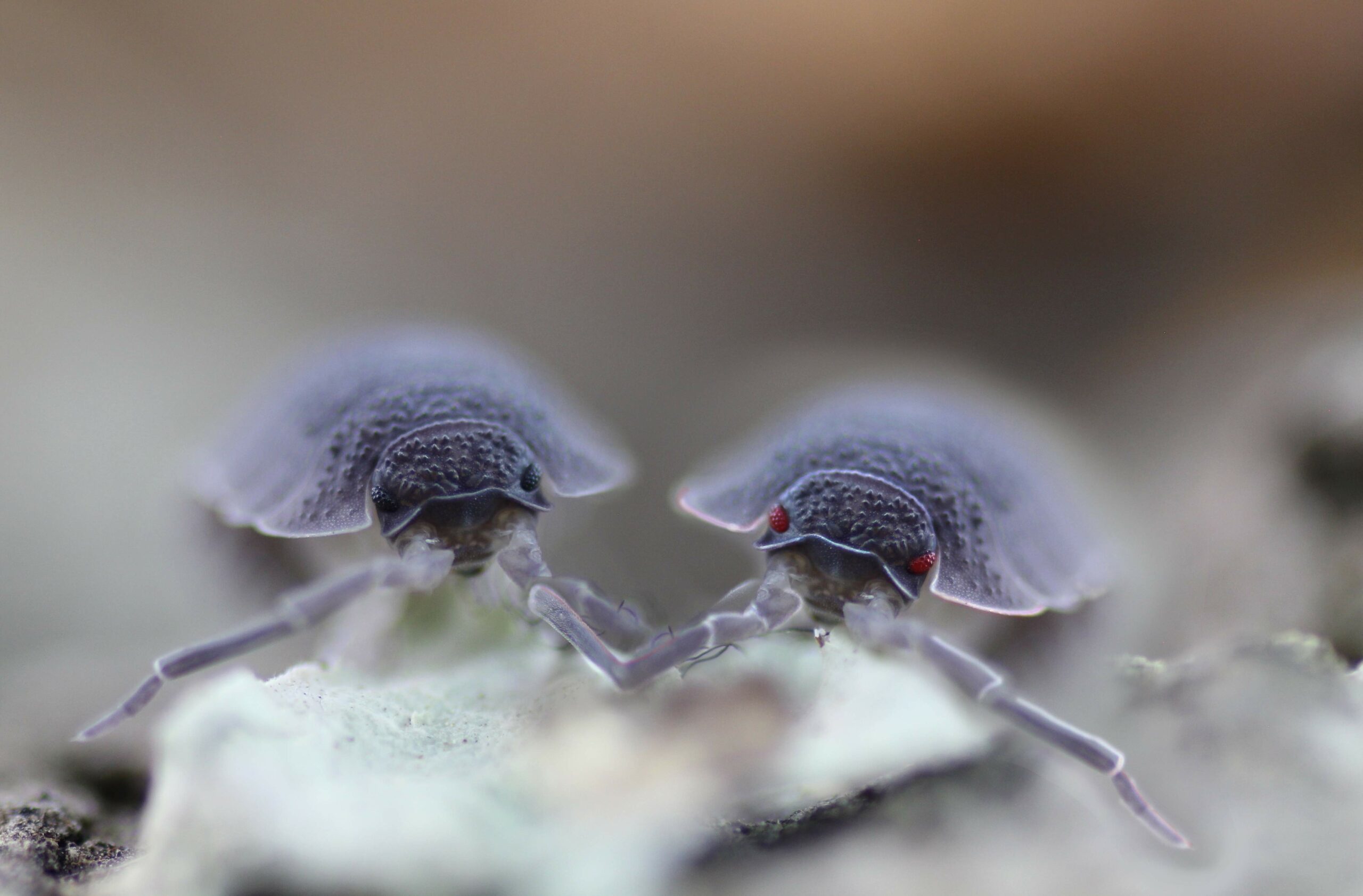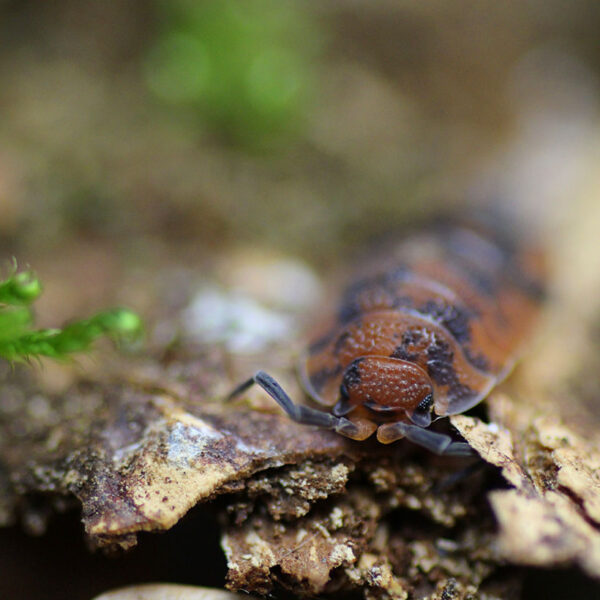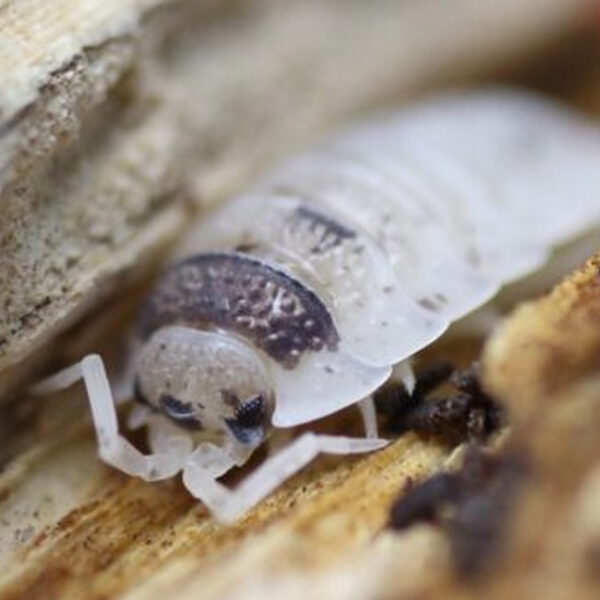
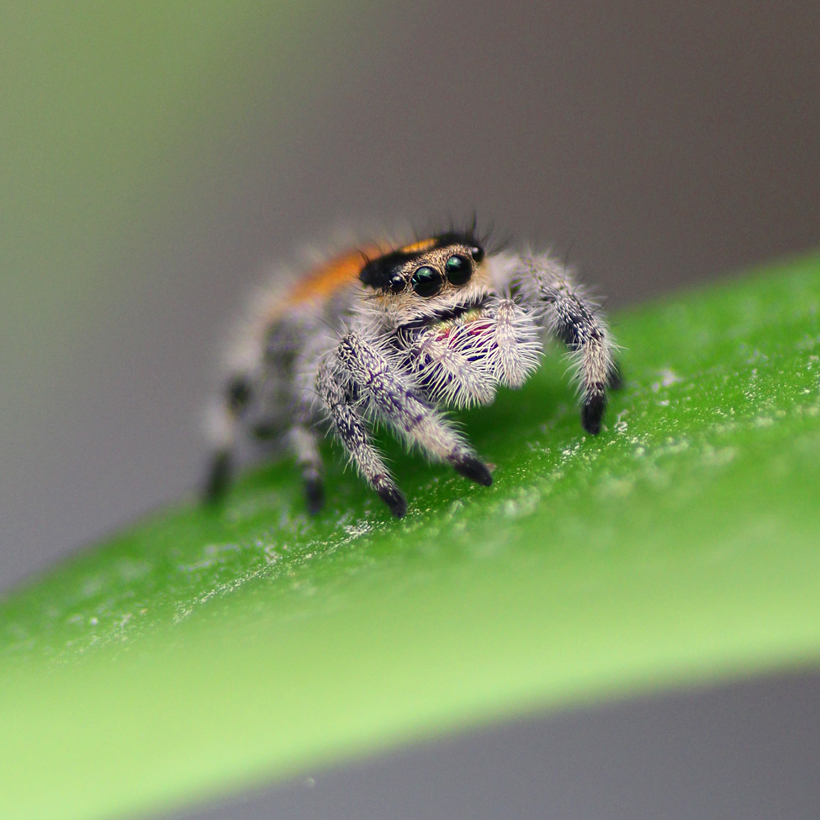
Despite their size, tarantulas are much less dangerous than is generally assumed. Although their bite is fatal to mice and insects, it is generally less harmful to humans than a bee sting. Nevertheless, tarantula owners often encounter misunderstood facial expressions. Spider phobia (arachnophobia) is one of the most common animal phobias. After all, 35% of Europeans suffer from a pathological fear of spiders. In this article, you can find out why this fear of tarantulas is unfounded and why keeping tarantulas is a fascinating hobby.
How dangerous are tarantulas really?
Hollywood is mainly to blame for the tarantulas’ bad reputation. They are portrayed in films as poisonous and dangerous to humans. Yet tarantulas are merely large, photogenic and many of them are easy to handle on a movie set, which is why they have been used so frequently in horror and action-adventure films. When a “poisonous” creature is needed, the special effects team calls in the film animal trainers with their tarantulas! This is then used to threaten James Bond or Indiana Jones, or to bring disaster to an entire small town. The spiders presented in such films are often among the tamest and least aggressive of their kind.
In reality, the venom of this largest of all spiders is generally only very mildly toxic to humans. Their mild venom is weaker than that of a typical bee. The only danger from keeping common tarantulas comes from the irritating hairs on their abdomen (stinging hairs), which can cause skin rashes or inflammation of the eyes and nasal passages. To avoid such problems, simply keep tarantulas away from your face and wash your hands after handling a tarantula. Incidentally, the stinging hairs on tarantulas are only found on New World (American) tarantula species. They are purely a defense mechanism against predators.
Tarantula shows its biting tool (chelicerae)
Where do tarantulas live?
There are hundreds of tarantula species found in most tropical, subtropical but also arid regions of the world. Their color and behavior vary depending on their specific environment. The majority of tarantulas are cave dwellers that usually make themselves at home under stones or roots. Most people think of plate-sized spiders from exotic countries when they hear the word tarantula. However, there are also three species of tarantula in Germany. However, these usually live so hidden in their underground burrows that very few people get to see them. At around 1.5 to 2.0 cm, the size of the so-called wallpaper spiders is anything but frightening. Incidentally, it is the position of the chelicerae (biting tools) and not their size that is decisive in classifying them as tarantulas.
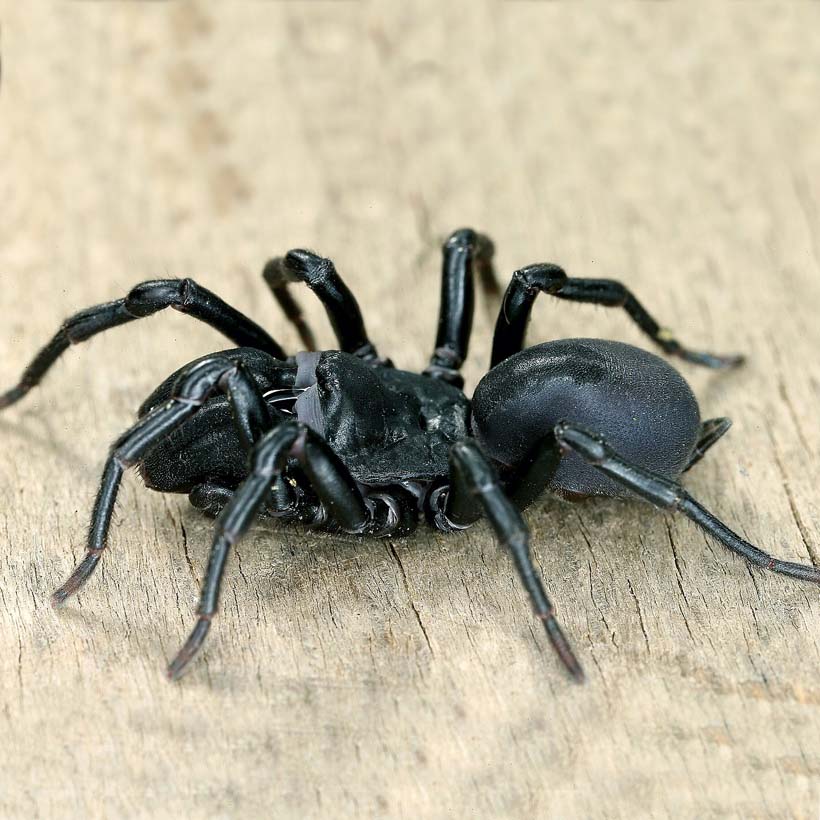
Tarantula species from Germany (Atypus affinis)
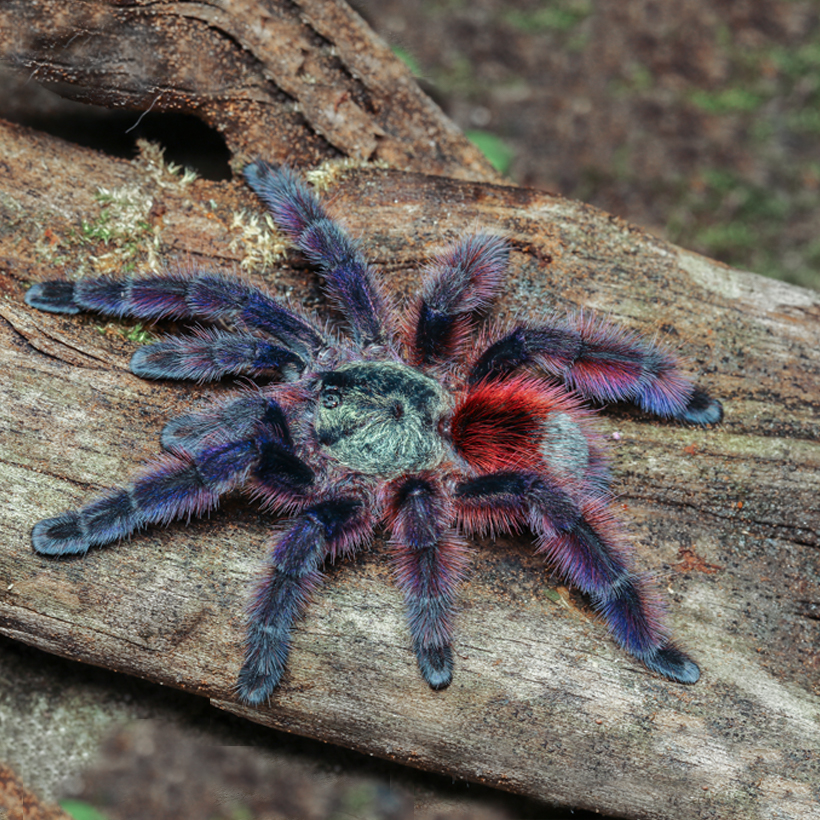
Colorful tarantula from Martinique (Caribena versicolor)
How do tarantulas grow?
Tarantulas shed their outer skeleton at regular intervals, which is known as moulting. In the process, they also replace internal organs such as the female reproductive organs and the stomach lining and even regrow lost limbs.
Many keepers think that if their tarantula is lying on its back, it means that it is dying. Most tarantulas moult lying on their back (a few moult on their side). The moult usually takes between a few minutes and a whole day.
Once the old exoskeleton has been shed, the tarantula’s body is soft and extremely vulnerable. Although the actual moult usually only takes a few hours, the tarantula’s body remains in this fragile state for several days before the new exoskeleton has completely hardened. During this phase, the tarantula lives very cautiously and remains in its shelter. Even food insects such as crickets or grasshoppers can become dangerous during this time and should be removed from the terrarium before each moult.
Why are tarantulas so popular as pets?
As scary as tarantulas may be for many, the animals have nevertheless become a popular pet worldwide. And there are reasons for this! Most people choose either a cat or a dog as a pet. Some also want to get a bird such as a parrot or cockatiel, or an aquarium to keep fish as pets. Some, however, go beyond the norm and look for exotic animals as pets. They want to recreate a piece of nature in their terrarium and display it in their living room. And all those who display a terrarium at home know that no visitor can resist the temptation and look into the terrarium with fascination.
Reptiles, chameleons, amphibians or snakes are often kept in terrariums. The more exclusive, the better. However, this also means that such rarities often require a lot of care. If this time is not constantly available due to work, family or vacation, a compromise solution is often sought. This inevitably leads to tarantulas. They are very easy to care for and inexpensive, can live for a long time, take up very little space and are incredibly interesting – making them the perfect exotic pets!
We always have a few tarantulas for beginners and a few rarities in our store. Please take a look!
What argument do you have ready for inaccurate prejudices?
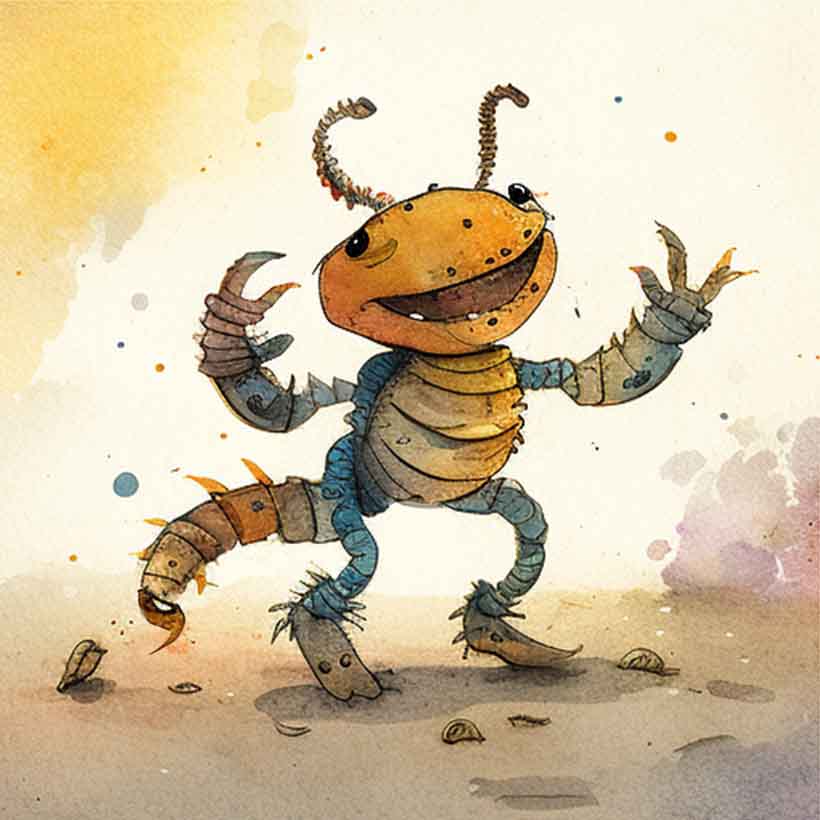
In the deep jungle, where tall meranti trees towered into the sky and wild animals roamed the thicket, lived a little orange scorpion called Sigi. Although he was small, he had great courage and an even greater thirst for adventure. Sigi was not like other scorpions who hid from the other animals in the jungle. On the contrary, he loved to be the center of attention and show off his skills. With his impressive dance on his legs, which he performed with perfect timing, and his amazing juggling skills with his arms, he had the talent to enchant everyone in the jungle. He was no stranger to somersaults and other acrobatics. The other animals in the jungle always looked on in amazement when they saw Sigi and they all looked forward to seeing his next tricks.
Sigi had perfected his tricks and somersaults and was always proud to show them off to the other animals in the jungle. But that day, when he tried to do a particularly difficult trick, the unexpected happened – he landed on his back. The little scorpion couldn’t get up and started laughing hysterically. The other animals in the jungle watched him in amazement and didn’t know what to make of it. Some of them thought that Sigi had gone mad for good, while others were just confused and worried.
But then they heard footsteps. A small child from the nearby settlement was walking curiously through the jungle. The child noticed Sigi lying on his back and immediately rushed over to help. He carefully turned the little scorpion onto his stomach and gave him a gentle push to help him back on his feet. Sigi was so grateful for the child’s help that he lifted his head and began to stand on his stinger.
The other animals in the jungle looked on and couldn’t believe what they were seeing. A scorpion that could stand on its stinger was something they had never seen before. But the child didn’t seem to be afraid of Sigi at all and simply regarded him as another friendly inhabitant of the jungle.
Sigi was so inspired by the child’s courage that he decided to improve his crazy tricks and skills even further. He juggled sticks, did somersaults and even danced on the monkeys’ heads. The other animals in the jungle watched in amazement and clapped enthusiastically.
The animals celebrated all evening and Sigi felt happier than ever before. The monkeys climbed the trees and swung from branch to branch, while the parrots whistled and sang at the top of their voices. Sigi danced on his legs and juggled sticks to entertain all the animals.
Suddenly, a loud thunder came from the distance and it began to rain. The animals rushed into their hiding places to protect themselves from the rain, but Sigi stood still and let the rain fall on his body. He laughed and enjoyed every moment. He had learned that life is not about fearing the unknown, but embracing it and letting it surprise you.
When the rain subsided and the sun came out again, all the animals gathered around Sigi and applauded him once more. They had realized that everyone can be different and that it is important to accept yourself and accept others as they are.
Sigi had become the star of the jungle and had found his place. He knew that he had to stay true to himself and that he could influence the world around him with his unique abilities. From that day on, Sigi was no longer just a small, crazy scorpion, but a role model for all the animals in the jungle.
Flakesoil as a substrate is currently the subject of controversial debate. Many people are unsure whether the Japanese miracle substrate has more advantages or disadvantages for their pets. In this article, we shed light on the Japanese miracle substrate and uncover the light and dark sides.
Flake Soil in the terrarium – it all started with forest humus and white rotten wood
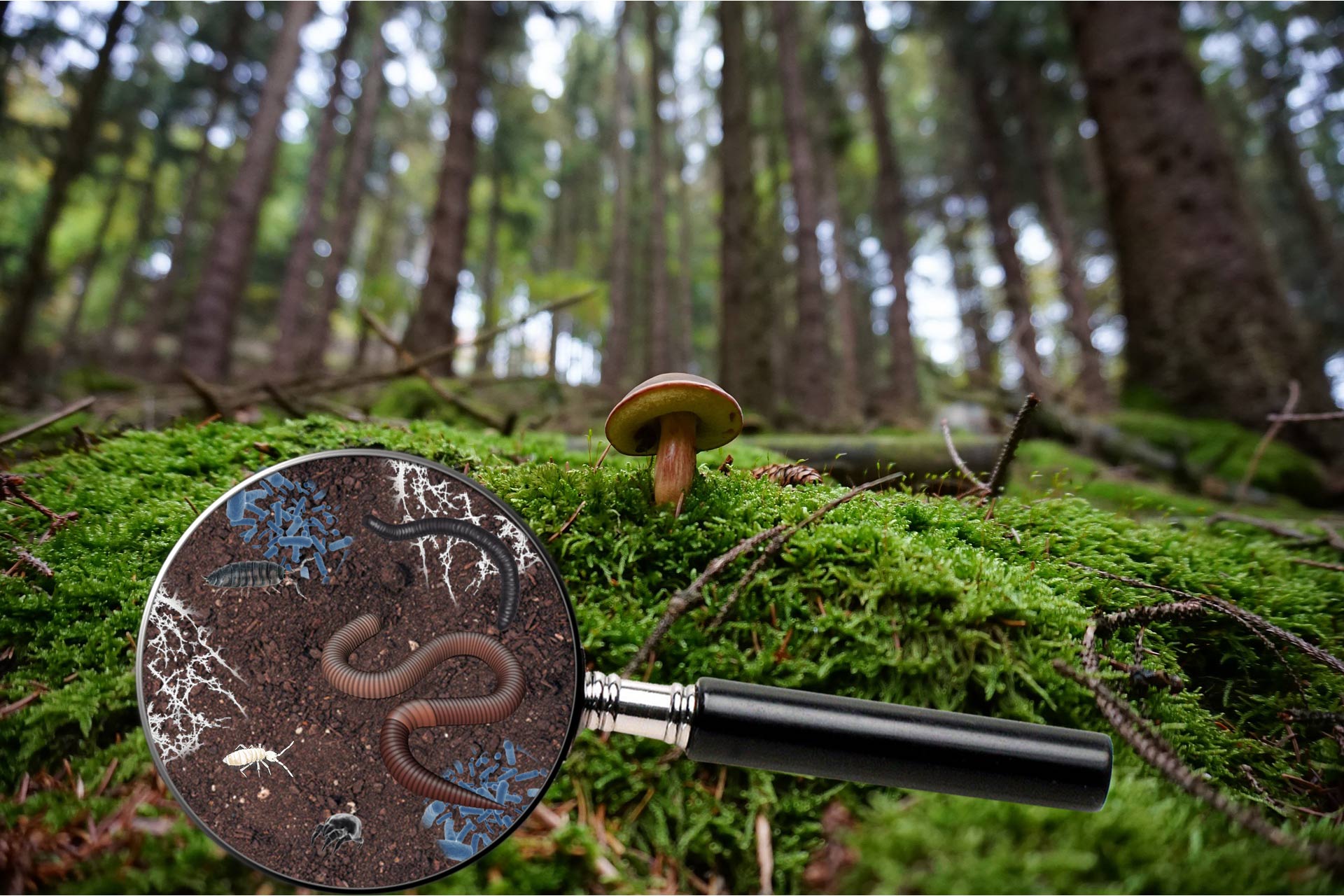
The forest floor consists of different surface layers with varying degrees of decomposition. Bacteria, threadworms, horn mites, whiteworms, earthworms, bipedes, pseudoscorpions, insect larvae, Isopods and millipedes are not only at home here, but have also adapted perfectly to the conditions. The forest floor is a complex habitat and much more than just soil. It is home to countless different species, making it impossible to describe them all. There are more creatures in a handful of soil than there are people on the entire planet. What’s more, not all of them have been researched. They have no names and are blank spots on the map of biodiversity.
Microorganisms such as bacteria, fungi and algae also live in these forest layers. They all help to ensure that there are no unusable products in the forest ecosystem. Anyone who deals with the first decomposers, keeps, cares for or breeds them, simulates these conditions in order to provide the animals with a natural environment. The main components of this reproduction consist of: Forest humus, white rotten wood and leaves.
The birth of flake soil
This was the rule until it was discovered that certain substances such as lignin are broken down far better by bacteria than by white rot fungi. In contrast to the white rot fungus, the bacteria spare the cellulose, which is an important source of energy for the primary decomposers, during decomposition. This accelerates the growth of the primary decomposers.
In Japan, breeding beetles is a widespread hobby. Beetles are considered ideal pets there. They require little space, little attention and captivate with their unusual colors and impressive shapes. As beetle breeding also has a long tradition in Japan, regular competitions have developed there. In these competitions, the winners are determined by who weighs the heaviest beetle larvae. As a result, not only are the husbandry parameters constantly optimized, but above all the quality of the food.
White rot wood is time-consuming
For a long time, white rot wood was the main and standard food for all beetle breeders. White rot is the process of lignin degradation in wood by fungi. Lignin is a natural polymer and ensures lignification in plant cells, gives them stability and at the same time protects the plant from microorganisms. To produce white rot wood, you need freshly felled hardwood and white rot fungi for inoculation. Decomposition can take up to three years. If the hardwood is shredded beforehand, the process can be accelerated somewhat, but it remains time-consuming and space-intensive. Incidentally, collecting white rotten wood in the forest is not an option! Firstly, it is forbidden and there is a risk of heavy fines and secondly, the forest needs the dead wood. The newly formed humus protects the forest from drying out. Last but not least, it also provides a natural habitat for many species.
Flake Soil is sustainable and cheaper
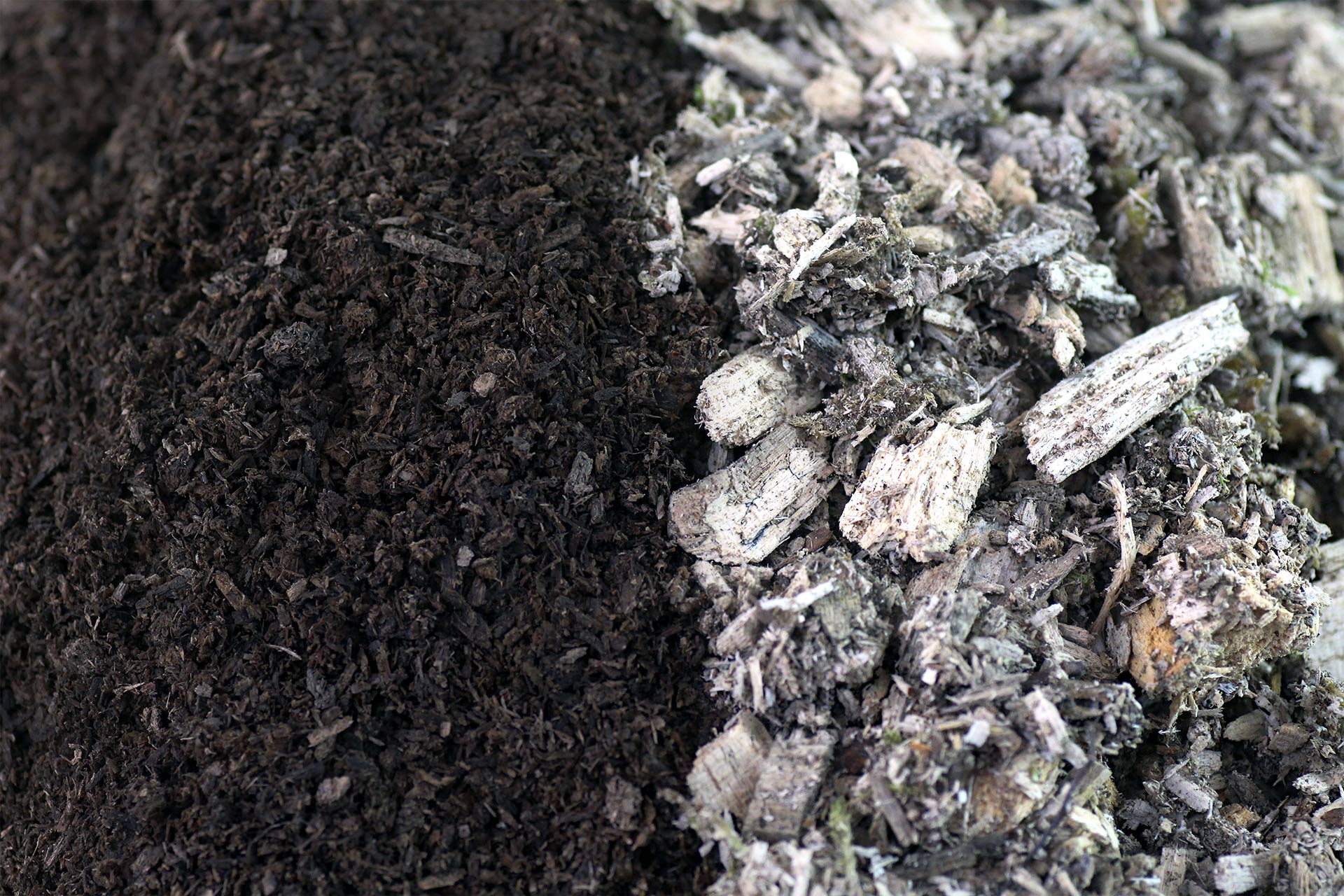
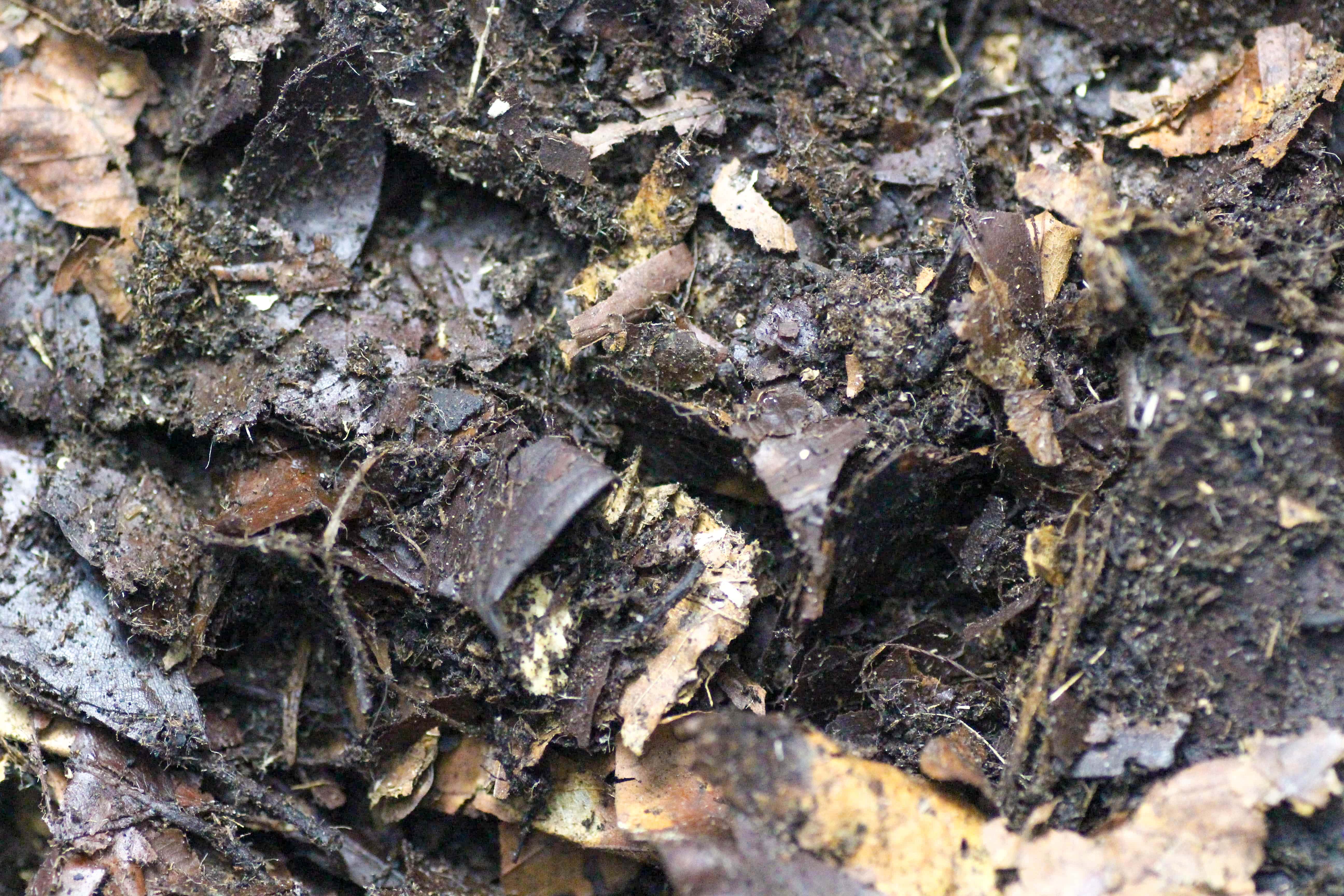
Hardwood shavings, wheat bran, bacteria for inoculation and water are required to produce flakesoil. The maturing process takes four months and is therefore many times faster than the production ofwhite rot wood. This also makes flakesoil more cost-effective thanwhite rot wood. The hardwood chips are a waste product from many sawmills, making them sustainable and gentle on our forests. We only use beech wood shavings that are labeled with an FSC seal. Greenpeace recommends the purchase of FSC-certified wood products, which they, as an active FSC member, are trying to improve in the long term.
During our first test runs with flakesoil in the terrarium, we limited ourselves to one species each. We chose Porcelliosilvestri for the Isopods, Centrobolusspec. “Mozambique” for the millipedes and Therearegularis for our cockroaches. We constantly compared two breeding boxes per species with the same number of animals. In one breeding box, forest leaf humus, white rotten wood and foliage were selected as breeding substrate, in the other flakesoil and foliage. The comparison period of the boxes was one year and the differences were clearly recognizable!
The reproduction rate of Porcelliosilvestri was significantly higher with flakesoil and foliage than on the conventional breeding substrate with white rotten wood. Without counting the animals individually, approx. 50% more animals were found in the box with the flake soil substrate.
Our Centrobolusspec. “Mozambique” grew faster and more vigorously with flakesoil and foliage than with forest leaf humus, white rotten wood and foliage. We have not yet been able to draw any conclusions about propagation, as the duration of the test was too short for the propagation process.
With Therearegularis, we noticed an enormous increase in the reproduction rate and a shortening of the development time. We obtained significantly larger adult animals with flakesoil and foliage. The behavior of the animals also changed as a result. The Therearegularis nymphs virtually lie in the flakesoil and hardly move at all. This is a sign that they can find enough food in their immediate environment.
After our test, we switched all breeding boxes where we needed a higher rate of offspring to the substrate with flakesoil and foliage. It is also worth mentioning that our foliage was also pre-fermented before feeding.
Downsides and side effects of flake soil
Due to the fact that flakesoil is a very loose substrate, it also dries out more quickly. You should therefore make sure that it does not dry out, especially at the beginning. Over time, however, you will find the right rhythm and the perfect amount of water.
Flake soil works wonders when breeding animals, but this also has the disadvantage that invaders such as mites or fungus flies thrive in the substrate. For this reason in particular, you should be careful not to use untreated material from nature in your terrariums or breeding boxes. Otherwise your pets will soon no longer be on their own.
Sometimes the flakesoil reacts with the foliage and a mycelium develops on the substrate. This is not mold, but filamentous cells of a fungus. You should not panic, but rather be happy. The animals eat the mycelium and thrive magnificently. There is also no heat build-up in the substrate.
Even though Flake Soil is a rather unconventional alternative to our natural, white rotten wood, we have been able to breed healthy and strong animals with great pleasure. We will therefore continue to use flake soil for our breeding in the future. However, it should be mentioned that heat can develop in self-mixed flake soil if it has not been properly deposited and the fermentation process is not yet complete. We have generally never noticed any heat development in the substrate, as we always use well-seasoned flakesoil. However, if the flakesoil is not fully fermented, there is a risk that it will continue to ferment in the terrarium and heat up to 60 °C may develop. For this reason, please pay attention to the color of the flakesoil. As long as it looks dark and earthy, you can assume that you have nothing to worry about!
Once upon a time there was a little snail called Shelly. She lived in a pretty garden full of flowers and lush grass, where she spent her days slowly crawling around and exploring everything around her. Shelly was different from the other snails because she always had an insatiable desire to experience new adventures and explore unknown places. She loved to crawl everywhere and keep her curious eyes on everything around her.
One day, as Shelly was sitting on a leaf and enjoying the raindrops, her eyes fell on the road that ran along the edge of the garden. She had seen so much of the world, but the other side of the road was still a mystery to her. She couldn’t explain what was waiting for her on the other side of the road. The desire to explore this world became so strong that Shelly decided to set off and explore the unknown terrain.
Shelly bravely set off to reach the other side of the road. She crawled and crawled and crawled, but there seemed to be no end to the road. Cars drove past incessantly and people hurried past her without noticing her. Shelly felt her crawling speed slow down and she started to get a little scared. What if she didn’t make it? What if she was hit by a car? Despite her fear and uncertainty, Shelly decided to keep going. She knew she could do it if she tried hard enough and listened to her inner voice. She remembered to focus on her goal and ignored all the distractions around her.
And suddenly something amazing happened. A little girl stopped and looked at Shelly. “Oh, what a cute snail!” the girl said. “She really needs to cross the road!”
The girl picked Shelly up and carried her carefully to the other side of the road. Shelly was so relieved that she had made it, and so grateful for the girl. But that wasn’t the end of the story.
The girl took Shelly to her kindergarten and showed her to all her friends. “That’s Shelly, the snail that crossed the road!” the girl shouted enthusiastically. All the children came over and admired Shelly. Shelly was happy and proud. Not only had she managed to cross the road, but she was now famous!
And so Shelly lived happily ever after, knowing that she was a brave and famous snail. And when she wasn’t exploring the world, she liked to crawl around in her snail shell and think about all the adventures she had had.
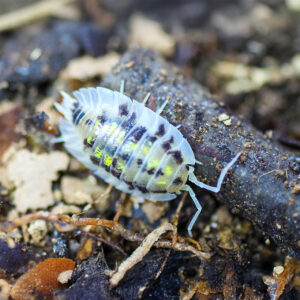
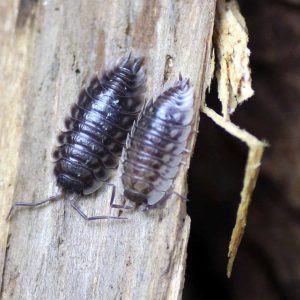
A piece of nature in the living room: woodlice, woodlice and the like can easily be kept in a terrarium. This can be particularly interesting for children and young people who are learning about the habitat of insects and other invertebrates. Of course, they also have basic needs and requirements that can be met relatively easily, inexpensively and with a small investment of time. You can also easily bridge the vacation period without neighbors, relatives or friends having to look after the animals. Isopods are also forgiving of the odd motivational hole, but otherwise need to be fed and cared for regularly like any other pet.
(Oniscus asellus)
(Armadillidium vulgare)
Isopods are therefore definitely suitable pets and companions for children. Whether you live in the city or in the village. It is very easy to recreate the animals’ environment in a terrarium. Keepers can then observe how the animals develop and reproduce. There is no need to worry about damage to the home, as Isopods cannot survive in normal indoor humidity, let alone reproduce.
Where can you find Isopods?
The best place to do this is in a deciduous forest. Of course you can also search in a coniferous forest, but the diversity of species in a deciduous forest is many times greater due to the presence of foliage. It is promising if you don’t look for Isopods there but for white rotten wood. White rotten wood are trunks or branches that have been lying in the forest for years and are rotting. The white rot fungus develops and slowly decomposes the wood. You can easily crumble this seasoned wood with your fingers and it smells slightly of mushroom, not unpleasant, but more like a delicious mushroom soup in the fall.
(White rotten wood is the ideal condition for finding Isopods)
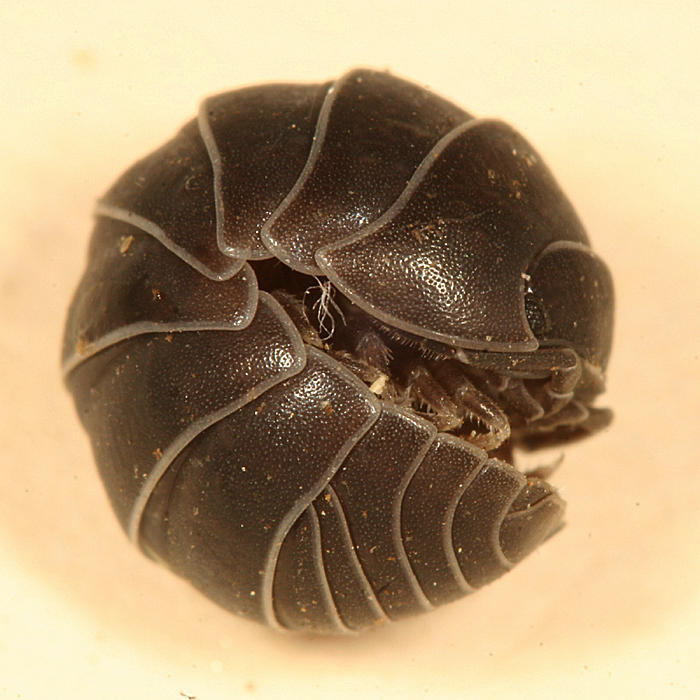
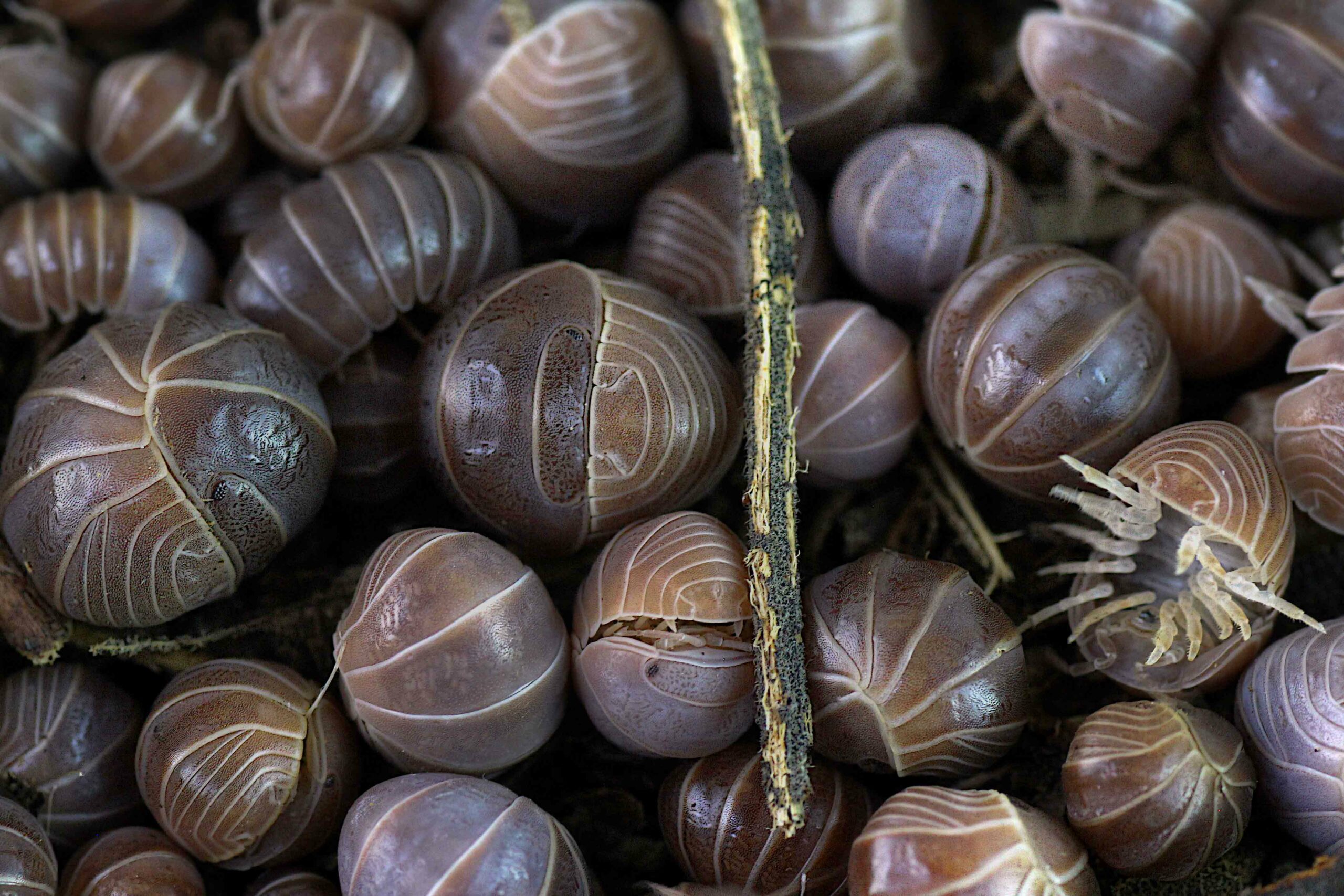
If you turn these trunks or branches over, you will automatically find very different species of isopods and sap-suckers. The Glomerida form an order within the group of millipedes and therefore do not belong to the Isopods (isopods). Due to their short, high-arched body and their ability to curl up in the event of danger, they are often confused with woodlice. However, they differ from woodlice in their largely uniform segments and the ability to hide their head with the first dorsal shield inside the ball when curling up.
I recommend starting with Isopods, as they are easier to keep, the reproduction rate is higher and, above all, the development time is much faster. My experience also shows that woodlice always go down very well with children!
Saftkugler (no head is visible)
woodlouse (even when rolled up you can still see the head and eyes)
How do we set up Isopods in the living room?
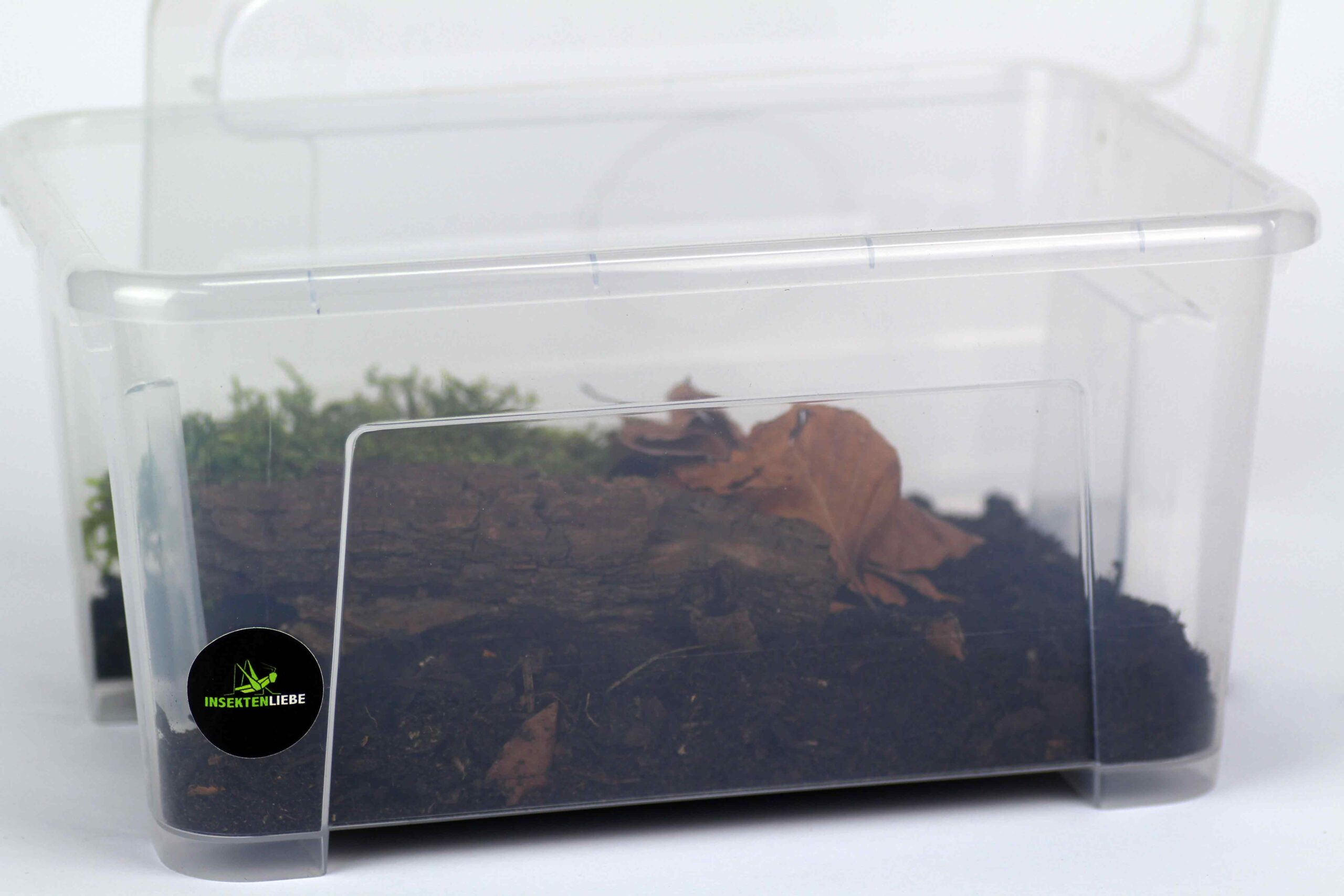
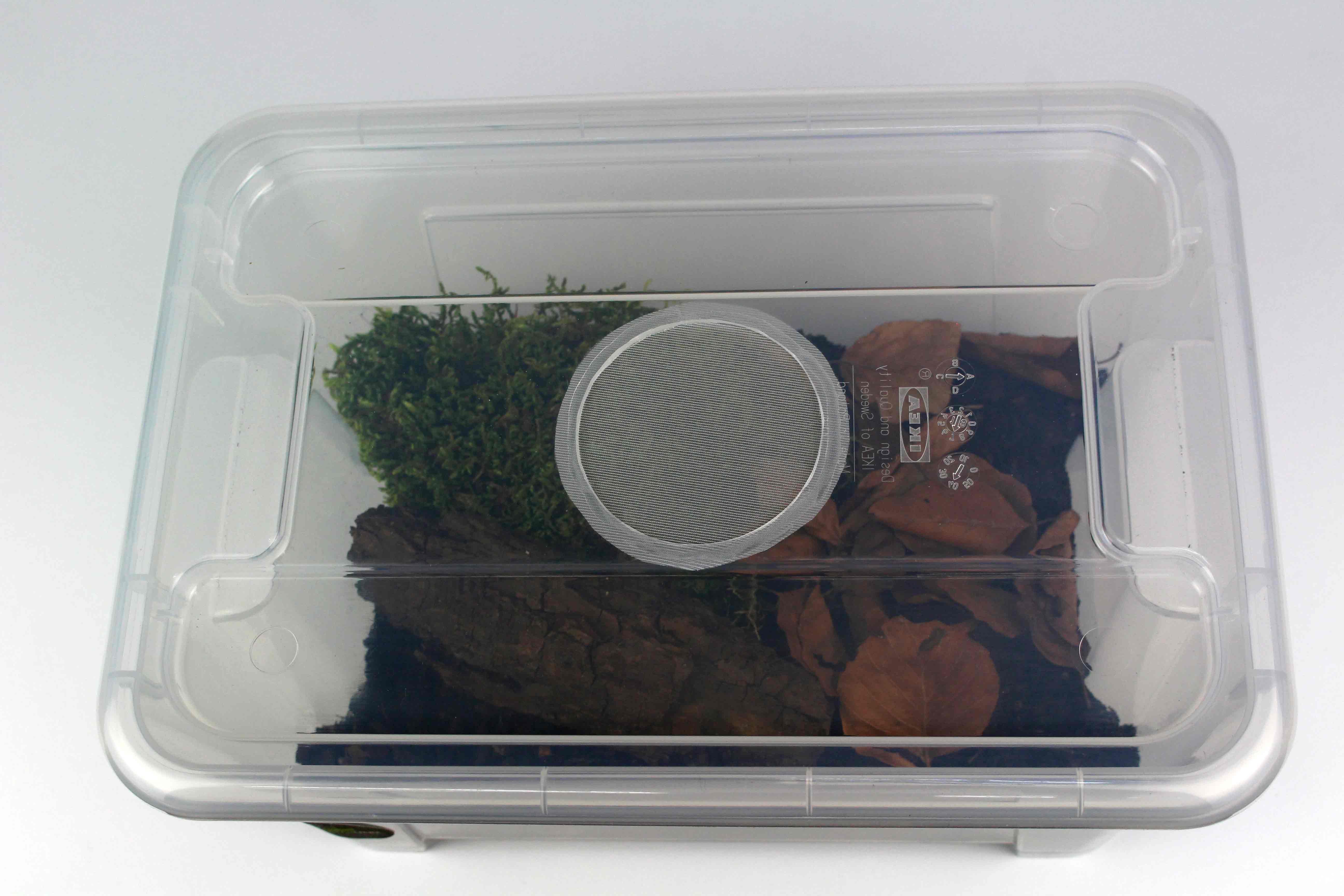
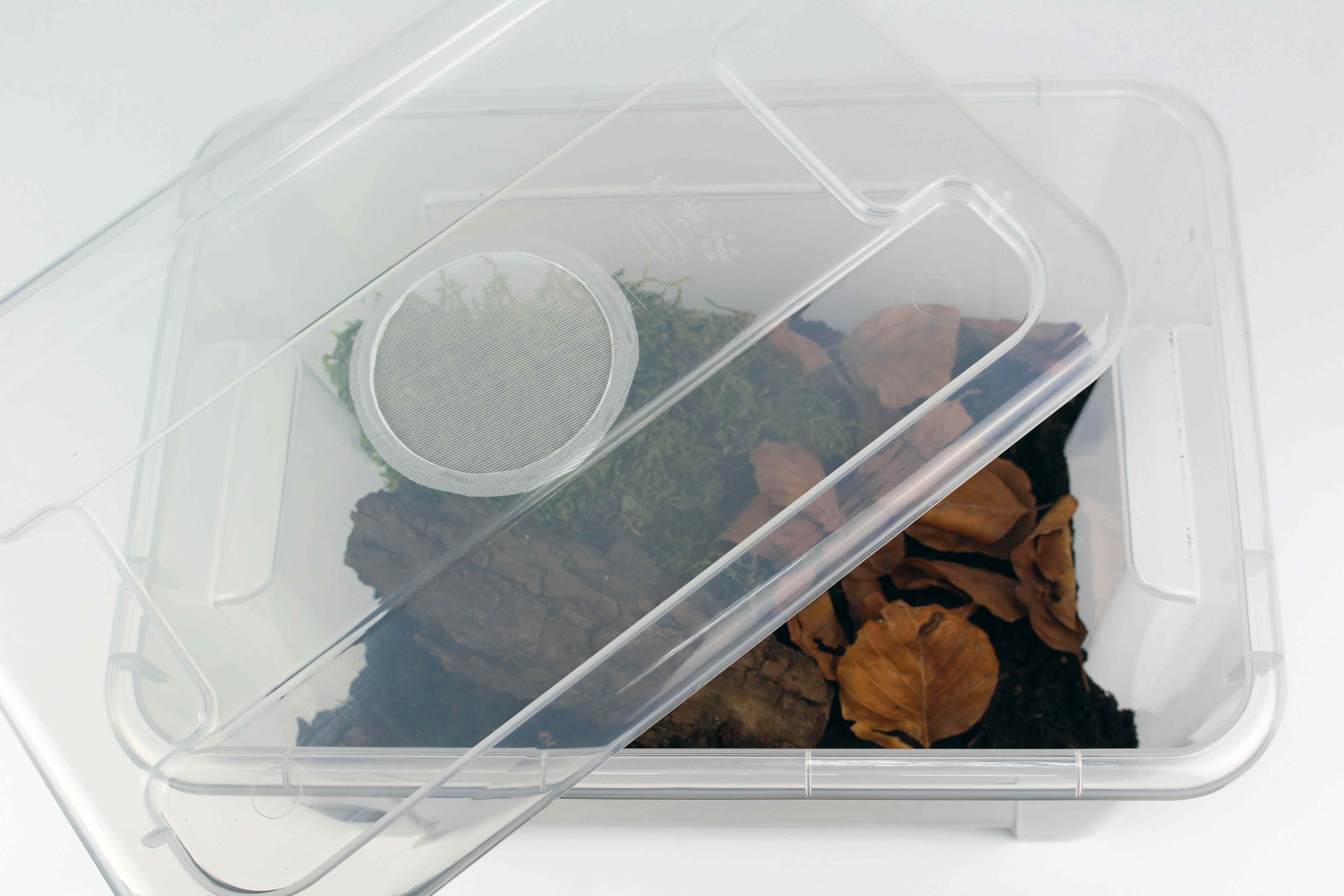
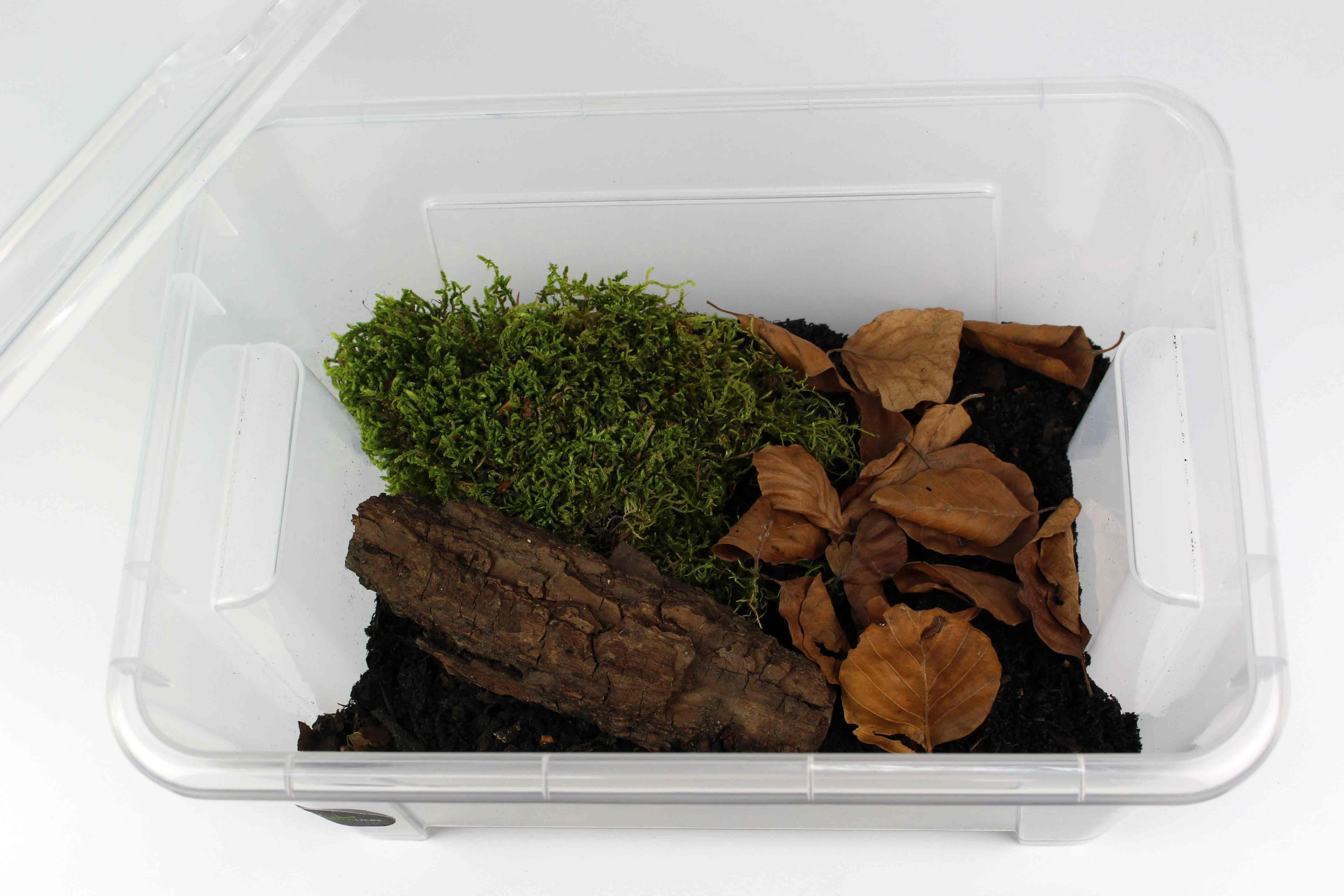
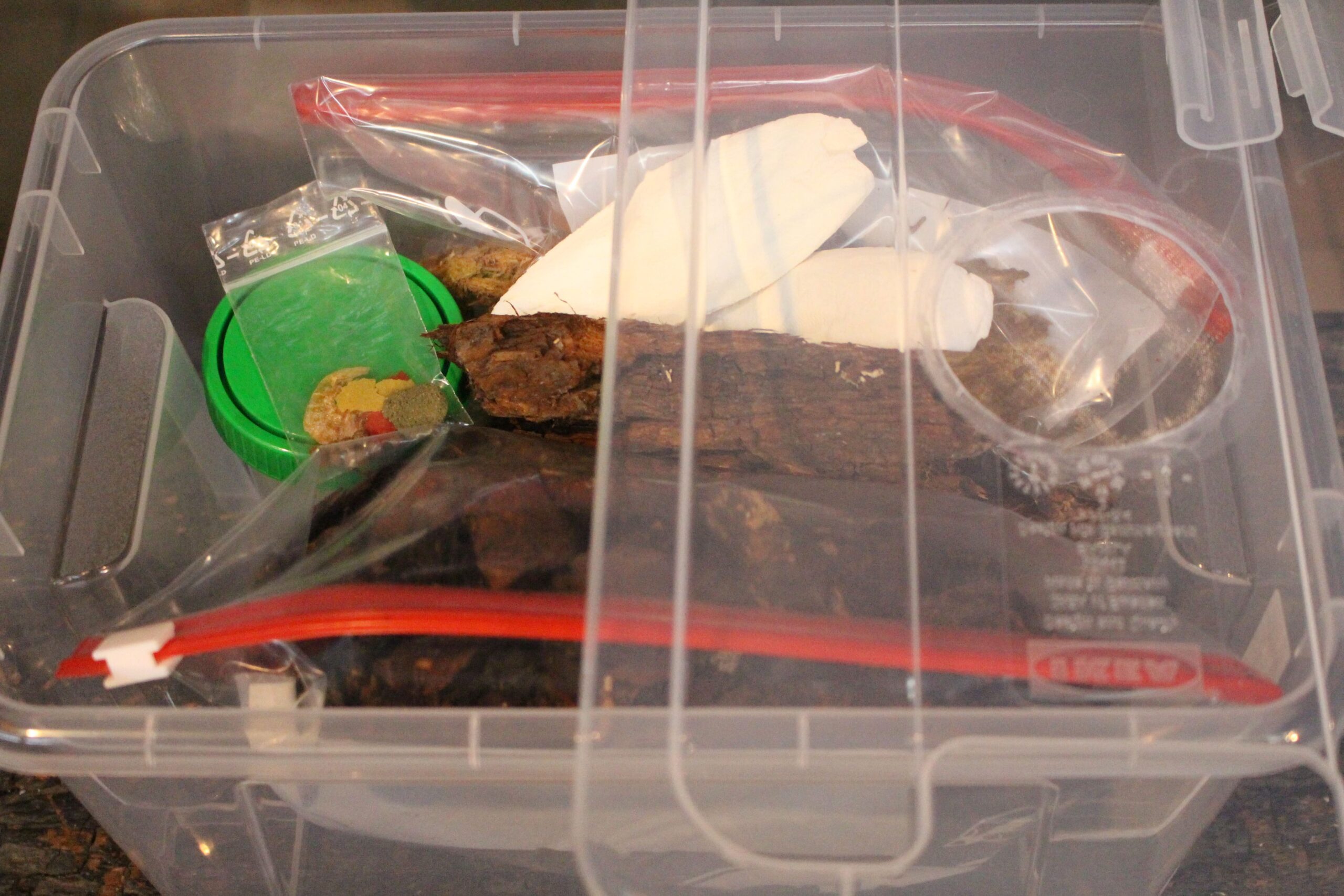
The size of the rearing container or terrarium depends on the number of animals. For me, a number of 12 animals has proven to be optimal and I have always been able to achieve very good results. Our complete Insektenliebe Isopod set is completely sufficient for this number.
Deciduous forest humus is an excellent substrate. If you are new to keeping isopods and are not yet experienced, you should start with a substrate height of 3 cm. This retains sufficient moisture and is forgiving of the odd watering mistake.
Mix a handful of white rotten wood into this substrate and place a large piece of cork bark on top so that the Isopods have somewhere to hide. Next to this piece of cork bark, place food leaves on the substrate. The white rotten wood and the leaves perfectly cover the Isopods’ basic food requirements.
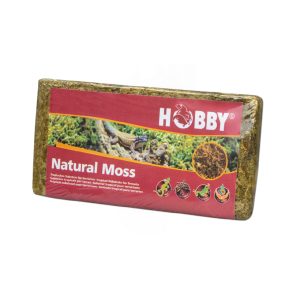
A corner with forest moss has proven to be an optimal moisturizer and should not be missing.
What do our new Isopods eat?
Isopods are easy to feed: as there are already leaves and white rotten wood in the container, all you have to do is feed them. You can do this with carrots, zucchinis, sweet potatoes, Chinese cabbage or even a boiled egg. I would advise against vegetables and fruit that contain a lot of water, as they simply go moldy far too quickly. Although this is not necessarily harmful for the animals, it is permanent for you and not nice to look at.
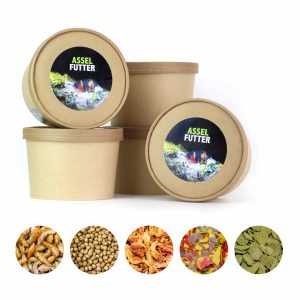
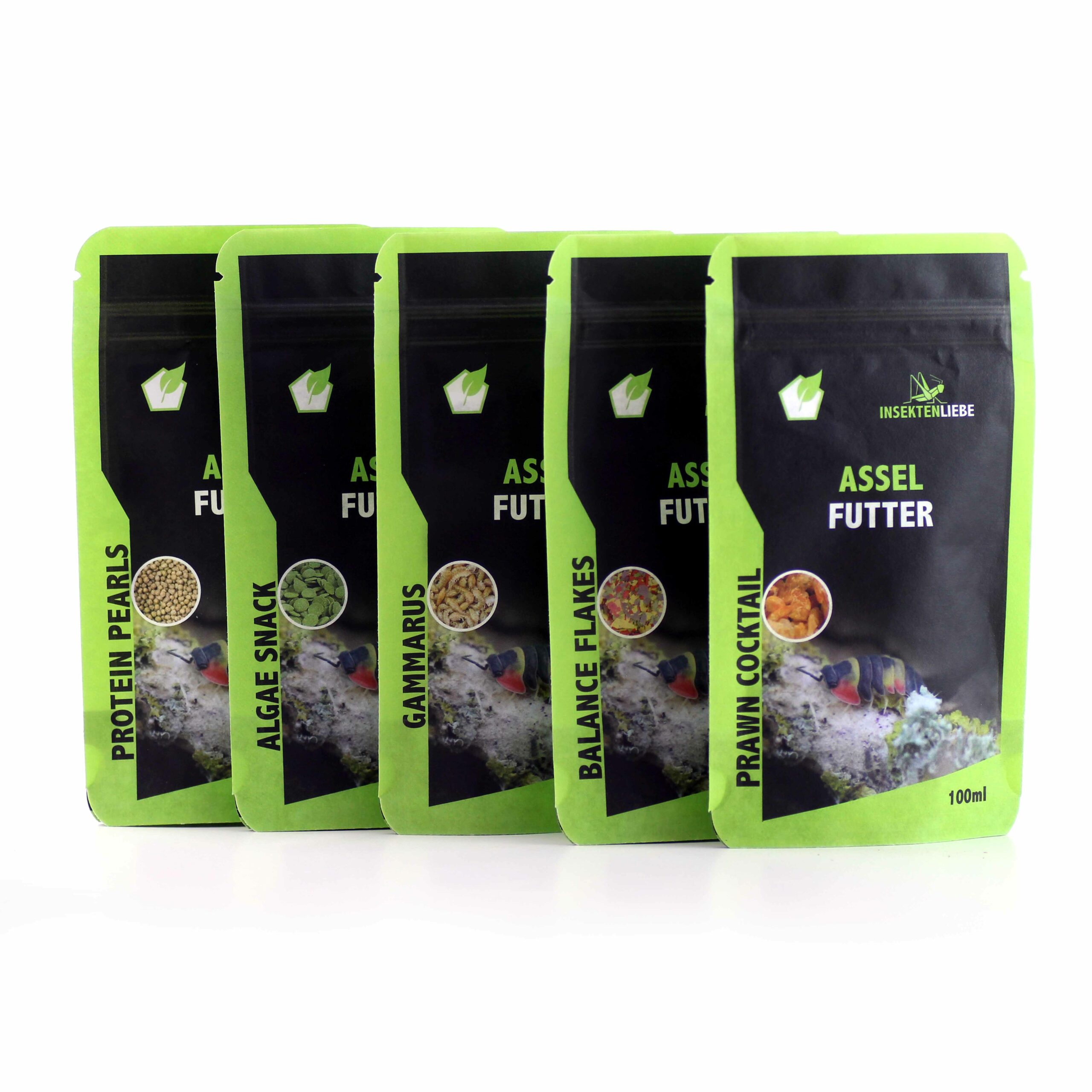
Protein in the form of isopod food should be offered from time to time. You should only put very little of this in the container so that the animals eat it immediately and completely before mold develops.
Sepia is really important as a source of calcium. In everyday life, we are more familiar with cuttlefish from bird cages. But Isopods also need this fortification for their shells. The cuttlefish shells should therefore always be available in the container so that the high calcium requirement for the development of Isopods is available. Alternatively, you can also grind eggshells and offer them to the animals. However, my experience shows that these are not accepted as well as the softer cuttlefish shells.
How do we look after our Isopods properly?
Maintenance takes place twice a week. In the half where the moss corner is located, it is best to spray the surface of the tank with a hand sprayer. The Isopods like to use this for moulting. It is never possible to say how often you need to spray, as factors such as ambient temperature, container size, substrate height and ventilation size in relation to the box all play a role. You should make sure that the substrate is and remains moist overall. The substrate should not be wet but also not dry. If you are on vacation for 2 weeks, it makes sense to keep the box cool and dark. A cellar room is a suitable place for this. A Beetle Jelly is suitable as a food source for a longer period of time.
Once upon a time there was a little girl called Lisa who had always wanted a pet. Her friends all had cats, dogs or guinea pigs, but Lisa wanted something special. Something exotic and unique that no one else had.
One day, the family decided to visit the zoo. Lisa was excited because she hoped to meet lots of new animals there. As she strolled through the rows of cages, aquariums and terrariums, she was amazed at the many different animals. From majestic lions to tiny leaf-cutter ants, there was everything to see. Suddenly her gaze fell on a terrarium in which a tarantula was sitting and watching her with its many eyes. Lisa was enchanted. She had never seen a tarantula before and knew it would be the perfect pet for her.
“Please, please, mom,” Lisa begged. “I want to have a tarantula. I’ll look after it and it will be my best friend.”
Lisa’s mother was skeptical at first, but after Lisa promised to take care of the exotic pet, she finally agreed. A tarantula moved in with them and Lisa called her Lola. She set her up in a cozy terrarium and watched her for hours as she got used to her new home.
But then Lisa noticed that Lola was very shy and timid. She needed a lot of time to get used to her new surroundings and therefore often hid in her cork tube. Lisa also had to buy special food, which was not available in every pet store.
It turned out that caring for a tarantula was much more difficult than Lisa had imagined. But Lisa didn’t give up. She researched and learned everything she could about tarantulas. She studied books and visited websites to read the husbandry reports. Slowly but surely, she learned how to care for Lola and keep her happy.
And Lola thanked Lisa in her own way. She became more and more trusting and began to recognize and trust Lisa. She even built a spider’s web in her terrarium to rest in when she was tired.
A funny thing happened one day. Lisa’s little brother annoyed Lola by knocking on the window with a stick. The tarantula, which was normally calm and peaceful, suddenly reacted and started running around wildly. Lisa’s little brother was so frightened that he fell backwards against the wall and screamed loudly in shock. Lisa and her family couldn’t stop laughing as the little boy shook and grimaced. Since then he called Lola “the scary spider”, but he was still fascinated by her and only ventured cautiously close to the terrarium to catch a glimpse of the tarantula.
Lola was great company for Lisa. Although tarantulas may be scary for some people, Lisa found her encounters with Lola reassuring. She liked how Lola moved slowly and gently, how she ate her food and how she slept in her spider web. It was fascinating to watch how Lola explored her surroundings and how she constructed her cobwebs. Lisa was proud that she could look after Lola so well and that Lola trusted her so much. The two of them were a perfect team.
Lisa’s friends and family were initially skeptical about her exotic pet, but when they saw how well she took care of Lola and how happy Lola was, they changed their minds. They even began to see Lola as a unique and interesting pet.
Lisa’s teachers at school were also fascinated by the tarantula. She asked Lisa to bring Lola to school for a presentation and Lisa had no hesitation. She explained to her classmates how to care for a tarantula and what kind of environment it needs. She also told them how important it is to respect and understand an exotic pet before keeping it at home.
At school, Lisa received a lot of praise for her presentation and her teachers and classmates were impressed by her knowledge of tarantulas. Lisa was proud to share her passion for exotic animals with others.
In summary, the tarantula Lola was not only an exotic pet for Lisa, but also a way to expand her skills and knowledge and share her passion with others. It was a unique experience that she would never forget.
Keepers keep telling me that almost their entire isopod or millipede population has died within a very short time. As an attempt at an explanation, I ask about changes before the mass extinction began. Ultimately, such attempts at explanations remain mere speculation without detailed investigation. They often only serve to reassure those affected that they have not made any mistakes and have become the victim of an unavoidable stroke of fate.
On closer inspection, these mass deaths can generally be attributed to causes that are often preventable!
Reasons for an unexplained slump
If we look at the habitat of the animals, it consists of deposits of dead, organic material, the so-called litter layer. It consists of fresh leaves, foliage and wood. It is home to soil animals such as spiders, snails, earthworms, grubs (beetle larvae), springtails, Isopods and sapsuckers. The rain washes out the litter layer and binds the tannins (tannins) and humic substances. These substances lower the pH value in the forest floor and have an antibacterial and fungicidal effect. Often this effect is lacking in the terrarium and the soil becomes alkaline (high pH value), resulting in mass mortality of the animals in it. There are no signs of this and therefore it actually appears to the keeper concerned as if a supernatural force has switched off the lives of the animals in the terrarium.
Check the PH value of the substrate
You can send a soil sample to an appropriate laboratory, which will then carry out a soil analysis and determine the exact pH value. A bit of a hassle and, if you have countless growing boxes like we do, also very time-consuming and expensive. You can occasionally find soil pH meters in well-stocked garden centers. But it is much easier to check the soil yourself with a small test. To do this, you need some vinegar (40 ml), a small bowl and the substrate to be tested (1 tablespoon). Pour a sip of vinegar into the bowl and add the soil to be tested. If there is a reaction and it starts to foam, the soil is already alkaline and you should take action immediately. As a rule, there is no reaction and you should only prevent it from staying that way. But how do we prevent the pH value in the soil from becoming too high?
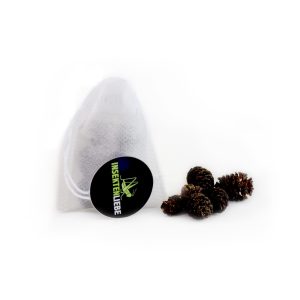
If we look at aquariums, the pH value is often reduced with oak leaves, almond tree leaves or alder cones. We can learn from these many years of experience and make use of them. Alder cones in particular are rich in active substances such as tannins and are known for their antibacterial and fungicidal effect. Compared to other natural materials that lower the pH value, you can simply collect them on a walk. Black alders are often found along streams or marshy areas. They love a moist location and keep their cones on the tree throughout the winter. Alder cones are not comparable to fir or spruce cones. With a size of 1-2 cm, they are not only much smaller, but their round shape also clearly distinguishes them from conifer cones. You should make sure that you collect the alder cones in the fall. This means that the rain has not yet washed them out and the valuable substances are still fully contained.
How do we get the valuable substances from the alder cones into our terrarium?
In principle, there is nothing to be said against simply placing the alder cones on the substrate surface in the terrarium. You could also mix them into the substrate to increase the effect in the substrate. However, this only achieves a selective application area and as we never soak the substrate completely, the humic substances are never distributed over the entire substrate. For this reason, we prepare an alder cone broth and regularly spray our substrate with it. This allows us to lower the pH value evenly and decide for ourselves when to use it. What should you bear in mind when preparing an alder cone stock?
The alder cone brew should be free of dirt particles so that it can be sprayed into the terrarium later using a spray bottle. Empty tea bags are therefore ideal for storing the alder cones during the infusion time.
We use 6 alder cones in a tea bag and pour 1 liter of boiling water over them. We then leave this to infuse for 1 day. The water turns a brownish color, this is the humic substances of the alder cones that have dissolved in the water. Then empty the alder cone stock into a spray bottle. If we have boiled up more decoction than the spray bottle can hold, you can store the decoction in a closed bottle without hesitation. Due to the anti-fungal effect of the alder cones, no mold will develop. The boiled cones can be put into the terrarium for feeding.
Use of the alder cone broth
We use the spray bottle with the alder cone decoction once a week. To do this, we spray the substrate evenly with the pH-value-reducing solution. The animals react positively to the mixture and absorb it well, just like in nature.
If you decide to keep Isopods as pets, you will inevitably have offspring. What to do if the Isopod terrarium gets too full? In this article, you will find background information and tips on how to keep your isopod population under control and avoid overpopulation.
Consequences of too many Isopods in the terrarium
When you discover Isopod babies in your terrarium for the first time, it’s always a great feeling. You are happy and get confirmation that you have maintained the correct husbandry parameters. A bond develops with the offspring and you care about each individual animal. How can this lead to problems? The problem is overstocking. Breeding sometimes not only gets out of hand, but can also collapse completely due to overpopulation. This causes the female Isopods to hit a genetic emergency stop and become infertile. In this way, a breeding strain that is doing very well can come to a complete standstill. This is comparable to an ant colony losing its queen. So far, however, we have only observed this phenomenon in Armadillidium species, which produce huge numbers of offspring once they reach a certain breeding strain size and then suddenly collapse.
So how do you control the number of Isopods? There are various ways to prevent overpopulation in the terrarium.
Release animals into the wild
The easiest way to control your isopod population is to release native species. This topic is generally very controversial. We consulted the local veterinary office in advance, which confirmed in writing that releasing native Isopods in the forest is not a problem. However, veterinary offices in other regions may see things differently, so it is advisable to consult them beforehand. Of course, you also need to be sure that the isopod species you are keeping are native. The color variants are irrelevant, as mutations also occur in nature and very quickly mix with the natural color forms and thus become relative again. You should look for a suitable place to release them into the wild beforehand. A piece of white rotten wood in the forest or a compost heap in the garden is ideal. Everyone should check what is native to their country and region. For all isopod keepers living in Germany, we suggest the following species:
On the one hand, you can raise the animals to a certain size and then pass them on to like-minded friends or swap them. Some pet shops will also be interested in healthy and strong offspring. It is best to inform yourself before breeding and make contact. You may find someone in advance who is permanently interested in your species of isopod.
We also regularly look for offspring of certain species.
There are various platforms on the internet where you can offer your animals, some of which are reputable. The same applies to regular pet fairs in various cities. If it doesn’t work out for you to give away your offspring regularly, you should think about alternatives.
Adjust the amount of food
If you feed more sparingly, the number of newborn Isopods will inevitably decrease. The reduction per litter can be 20-40 Isopods. The number of animals adapts very well to their environment. This can also be observed wonderfully in the forest. While the number of Isopods on a large white rotten trunk can be in the hundreds, under sparse conditions only a few Isopods can be found. If you deprive the Isopods of food to a minimum, they will stop reproducing and only the strongest will survive. This approach requires a certain amount of self-discipline and is not suitable for everyone. After all, you buy animals to look after them and give them a carefree life. As cruel as this may sound at first, it is a good way to grow a healthy breeding stock in the long term.
Use predators
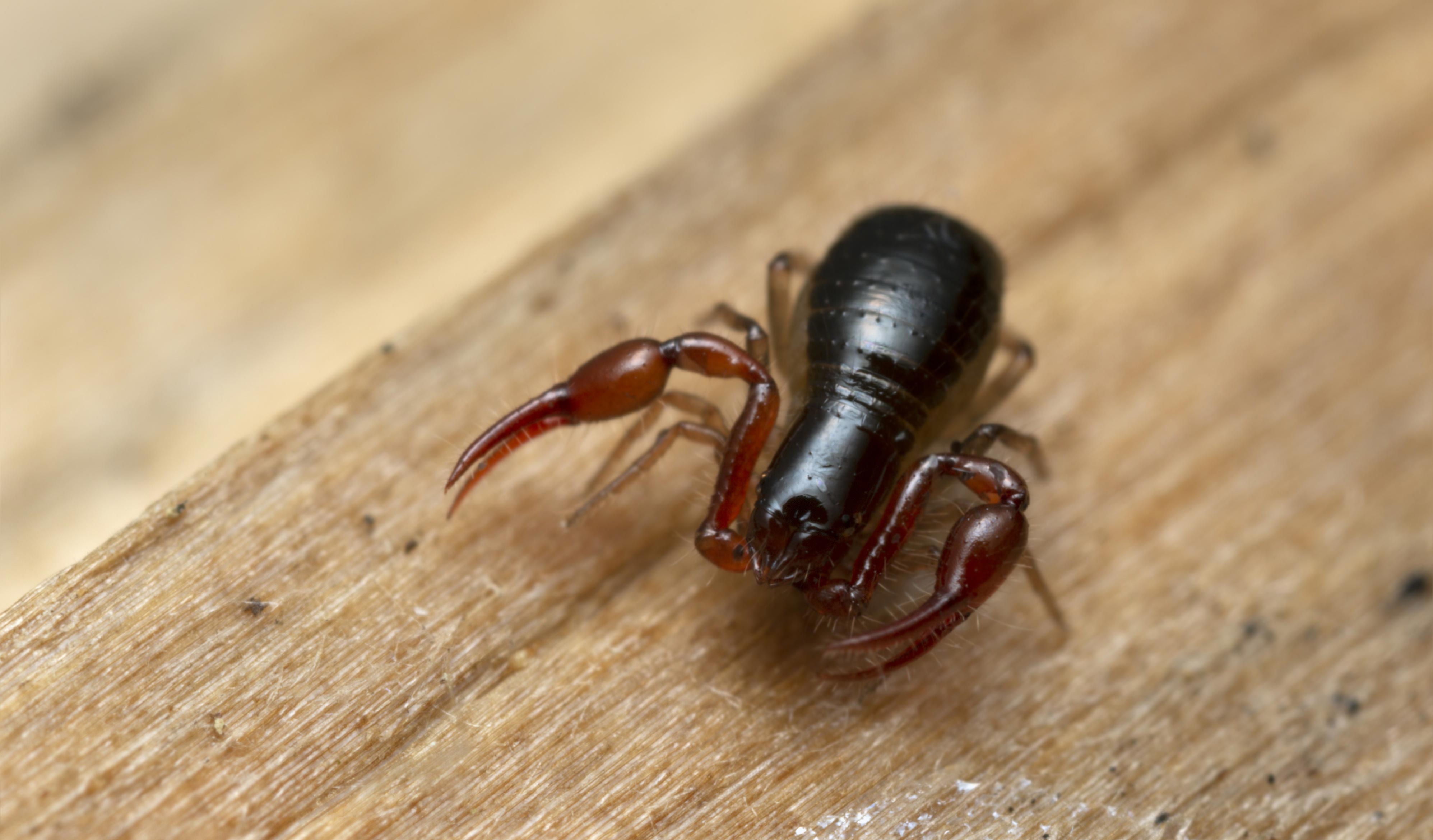
Our forests are of course also home to the natural predators of our Isopods. If we take a closer look at them, we can find a few suitable animals that can also be kept in a woodlouse terrarium. Perhaps some of you have already brought in a pseudoscorpion with a few forest utensils. Don’t worry, the 4.5 mm would-be scorpion does not have a venomous sting. It merely resembles a scorpion and belongs to the order of arachnids. However, it not only decimates the mites in the terrarium but also feeds on the newborn Isopods and sucks them out spider-style. Another predator that roams our forests is the centipede. It is a 5 cm large, nocturnal hunter and grabs medium-sized Isopods at lightning speed.
Both predators fit perfectly into our isopod terrarium in terms of husbandry parameters and have no problems adapting. However, if the stocking is already so advanced that there are hundreds of Isopods in the terrarium, both species come too late. They should be introduced with 30-50 animals so that the stocking is balanced. Personally, I would always introduce between five and ten animals.
Competition prevents overpopulation
Finally, we come to a very effective way of preventing overpopulation. When introducing “white Isopods” into our Isopod terrariums, we noticed that they prevent overpopulation of the actual Isopod species. White Isopods have a high reproduction rate and are therefore a food competitor.
They are hardly noticeable as they like to stay in the substrate and only come to the surface occasionally when feeding vegetables. A collapse of the white Isopods due to overpopulation cannot occur. The isopod population of the actual isopod species will still increase and you will get a nice breeding group. In addition, you will not reach an overpopulation where you are faced with dangers such as a complete collapse.
Do you have further questions or disagree? Please write them in the comments!
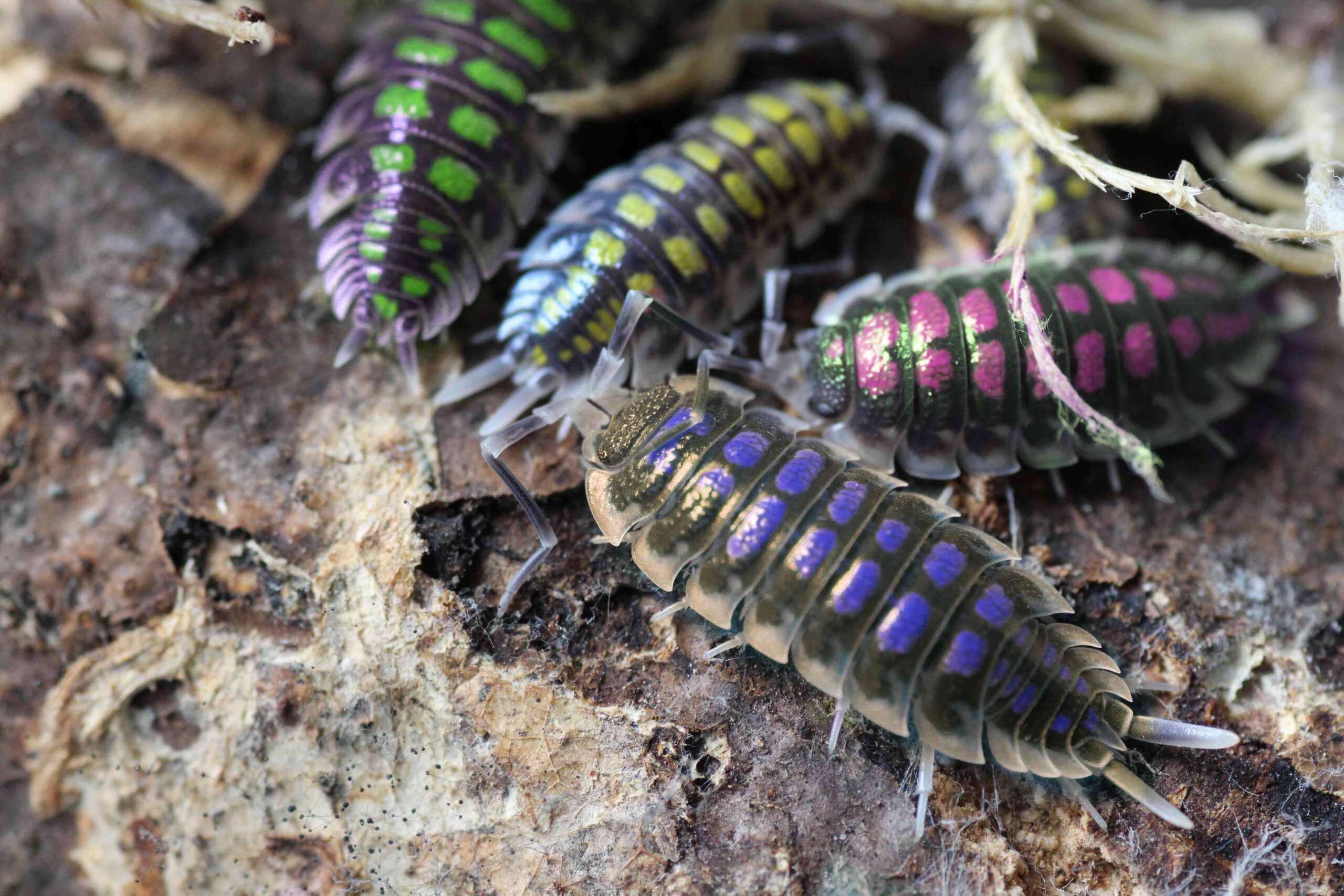
Isopods are now offered in a wide variety of breeding colors and patterns, so-called color morphs (morph = shape). The selection of beautifully colored, special or rare specimens is constantly increasing.
Our breeding stock also contains such mutations, which I will report on regularly on this page. It is important to me to inform you about everything from the discovery of a new color morph to breeding and selection.
We dedicate part of our daily work to our Isopod color morphs. We distinguish between the naturally occurring mutations and the so-called designer morphs.
While albinos, orange, caramel, dalmatian or high yellow, for example, were all discovered at some point in the wild or in domestic breeding and are “purebred” at the same time, designer morphs are combinations of two or more natural mutations.
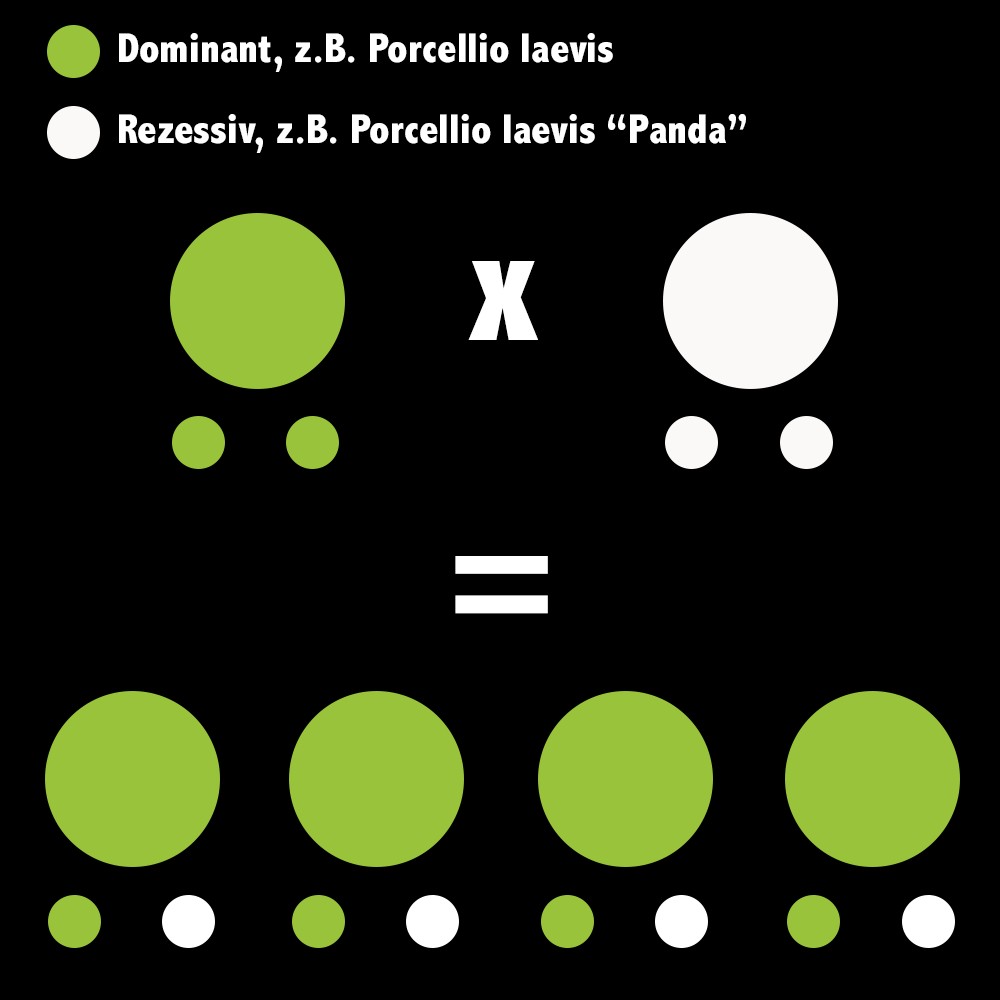
For example, if you take two purebred parents, a Porcellio laevis (dominant, green) and mate them with a Porcellio laevis “Panda” (recessive, white), the offspring are heterozygous. The offspring carry the panda gene and the wild color gene. In this constellation, the offspring look wild-colored, but are heterozygous for panda.
Heterozygous is the term used when a healthy gene is found on one chromosome alongside a “mutated” gene on the other chromosome. The expression of the mutation is then often suppressed and completely compensated for by the “healthy” gene (=recessive inheritance)
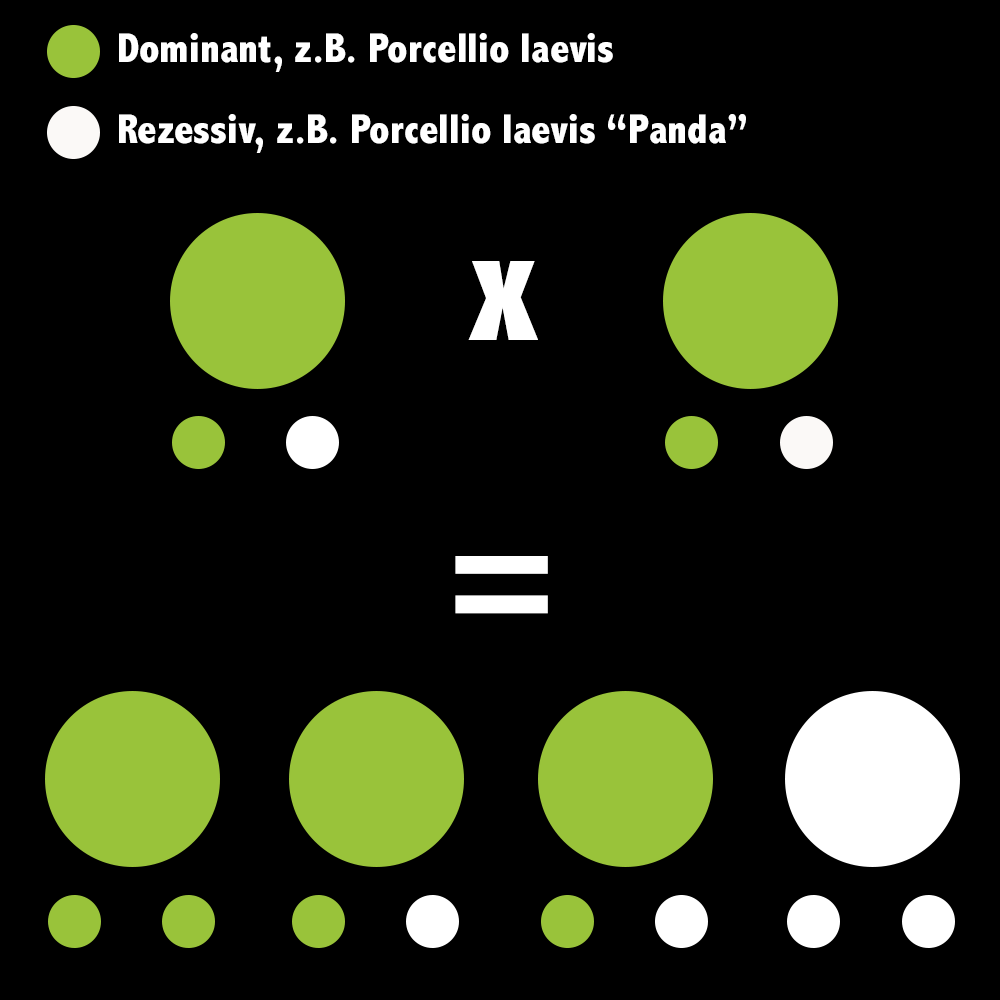
What happens when we mate heterozygous offspring with each other?
The second example shows the mating of this so-called F1 generation. In other words, the offspring from our first example. It is normal to mate the siblings with each other in order to carry out a color selection. Abnormalities such as deformities or short stature should be removed from the breeding stock. In our example we mate 2 Porcellio laevis “het.(heterozygous) Panda”.
The juvenile isopods would then be as follows: 1 x Porcellio laevis, 2 x Porcellio laevis “het. Panda” 1 x Porcellio laevis “Panda”
Of course we will produce more young isopods in a mating. This number must then simply be put into proportion: 25% Porcellio laevis ; 50% Porcellio laevis “het. Panda” ; 25% Porcellio laevis “Panda”
Porcellio hoffmannseggi brown & Porcellio spec. morocco 8i
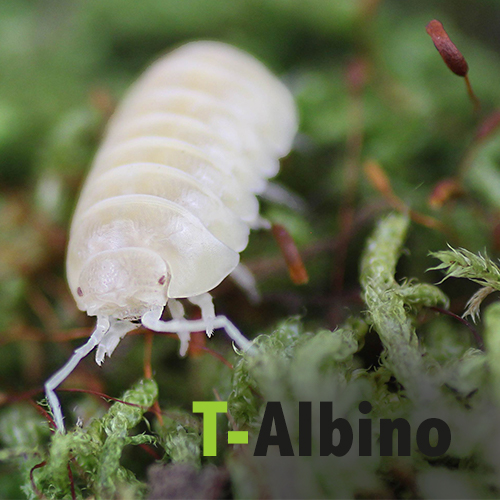
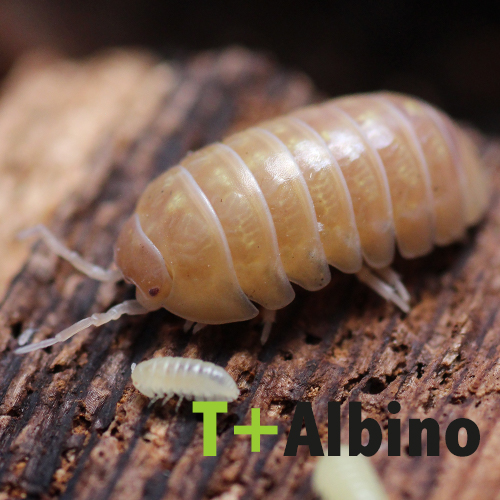
What does the (T) mean for albinos and what is the difference between (T-) and (T+)?
The T stands for tyrosinase, which is significantly involved in the production of melanin in animals and humans, among other things. Melanins are color pigments that give our hair, skin or eyes their color. It is the same with Isopods. Melanins are responsible for how our Isopods are colored. The main thing that all Isopods “suffering” from albinism have in common is the lack of melanin pigments.
In a T-albino, the tyrosinase is either completely defective or not present at all. As a result, the animals no longer have any melanin pigments and appear white with red eyes. The eyes are not red, but you can see the red blood vessels due to the lack of pigmentation.
The T+ albino has a functioning tyrosinase and therefore melanin pigments are also present. However, due to a lack of proteins, the T+ albino can only carry out the first two or three steps of the melanin process and therefore cannot produce dark color pigments. As a result, T+ albinos usually stand out due to their caramel-colored appearance.
A colorful variety of Isopods with Stefan and Frank Reebig
Most people know woodlice as small crawlers that like to hang around in damp, dark corners or under flower pots. Yet there are over 7000 species of Isopods worldwide, both in water and on land. This fascinates the brothers Stefan and Frank Reebig so much that they have been breeding a colorful variety of Isopods as a hobby since 2003. hundkatzemaus reporter Diana Eichhorn took a closer look at the spectacular results.
Small crawlers as pets
Diana Eichhorn visits her breeding laboratory “Insektenliebe” in Bad Urach. Around 1000 Isopods live here. Stefan and Frank actually have many customers who regularly order animals. The community of Isopod lovers who keep these quirky little animals as pets is not as small as you might think. Diana helps to set up a real isopod home for a new customer and learns all sorts of things about the diet and correct keeping of these unusual pets.
Today I would like to discuss the topic of designer morphs with you in more depth. For me, this is already the second attempt to cross color mutations with each other, but more on that later. In my last article, I wrote about Porcellio scaber “White Out” and whether we can succeed in combining different color mutations with each other. In our case, the white appearance of Porcellio scaber “White Out” with a Porcellio scaber “Orange”. We may be able to design a combination of the two species. But let’s start at the beginning: what is a designer morph?
The concept of designer morphs seems abstract at first, as if one wanted to play God or intervene in nature to change it according to one’s own wishes and ideas. In fact, these breeding forms involve crossing animals with each other that would be very unlikely to cross with each other in nature. The starting point for breeding the designer morphs is the mating of the different basic morphs.
Basic morphs arise randomly through mutations in nature and in our breeding boxes. Mutations that immediately catch the eye are the so-called color mutations. Sometimes the external appearance changes so obviously that the observer selects the animal from the box and tries to breed out the random color mutation. This is how very different basic morphs were and still are created:
As these animals do not meet and mate with each other in nature, the crossbreeding between the different basic morphs is referred to as designer morphs. But which basic morphs are suitable for experimentation?
Selection of the basic morphs
As mentioned in the introduction, this is my second attempt to breed designer morphs. In my first test I used Porcellio laevis “Panda” and Porcellio laevis “Orange”. My imagination developed an orange spotted Porcellio laevis. In other words, a cross between the color of Porcellio laevis “Orange” and the pattern of Porcellio laevis “Panda”. But even after x generations, I didn’t even come close to my desired result.
My conclusion was that the patterning and color traits are on the same gene. Therefore, there is no mixing. Due to my lack of documentation, I cannot say exactly whether the ratio of the offspring of the two color mutations was 50/50 or whether one mutation prevailed more strongly than the other. I will therefore keep a detailed record of my new experiment and report it to you in new articles.
The idea based on the first experiment was that the eye colors of basic morphs of Porcellio scaber could be transferred to another color morph. Two colors that are easy to recognize at first glance are best suited for this. The big difference in color helps me later with the selection and therefore I choose the following ground morphs for my experiment.
Porcellio scaber “White Out” x Porcellio scaber “Orange”
True to the motto “two are better than one”, I also test the transferability of the eye color:
Porcellio scaber “Orange” x Porcellio scaber “Dalmation”
Of course, I also like to be surprised and wouldn’t be disappointed if the colors of the respective base morphs blended together. That makes me curious about the test results.
The ground morph Porcellio scaber “Ghost” stands out not only because of its lavender basic coloration, but also because of its massive physique. Perhaps this characteristic can be transferred to a, in comparison, rather dainty ground morph. That’s why I choose it for my third attempt:
Porcellio scaber “Ghost” x Porcellio scaber “White Out”
Last but not least, I create the experiment with my favorite color variant Porcellio scaber “Lava”. It is large, its colors are bright and contrast beautifully with each other. They also reproduce best of all the basic morphs of Porcellio scaber. I therefore put the following animals together in my last attempt:
Porcellio scaber “Lava” x Porcellio scaber “White Out”
The Porcellio scaber “White Out” is so numerous in the experiment because it has a very interesting color mutation and therefore changes can be detected very quickly.
I’m looking forward to the experiment and hope to see some successes. Perhaps we will succeed in creating a new color mutation here.
You can find out more about the exact implementation in my next article.
It’s been a few months since I got the all-white Isopods. I have therefore been able to do some research on this species and observe it extensively. The color mutation is more or less known as Porcellio scaber “White Out”.
In the first article, I discussed how Thomas Hunt Morgan experimented with fruit flies and white eyes. He discovered a gene that was linked to the color of the eyes and the sex of the fruit flies. Because of this discovery, I was concerned that this mutation would only occur in the male sex.
If you haven’t read the article yet, you can do so here:
So I wanted to take the next opportunity to examine the sexes in this mutation and see if both sexes were present. And indeed, I was able to discover a brood pouch (marsupium) in an Isopod. This was the first step in disproving that eye color was linked to sex.
A nice breeding group quickly developed from the 5 animals received. Only 2 gray animals emerged. The mutation was therefore quite color stable and we only had to select very rarely.
The behavior of Porcellio scaber “White Out” does not differ from that of other isopod species. They like to eat the skin completely after moulting and use it as a source of calcium.
Now we come to the question of what color the Isopods’ blood is and whether a pigment is actually necessary for the white eyes or whether they are simply transparent. Vertebrates have red blood. The red color comes from the red blood cells that transport oxygen. That’s why we humans sometimes have red eyes in photos. This occurs when the flash hits our eye at a certain angle. This makes our blood vessels visible in the eye and they appear red.
Arthropods and molluscs, which include our Isopods, have developed an alternative to our blood. It is called hemocyanin (from the Greek häm, ‘blood’ and kyanos, ‘sky-blue’). The name tells us quite a lot. Hemocyanin is colorless. However, if oxygen is transported, it has a sky-blue color.
This confirms that our Porcellio scaber “White Out” has white pigmented eyes.
During my research I came across a new Porcellio scaber mutation. It is called Porcellio scaber “Lucy”. The appearance is white, like our Porcellio scaber “White Out”, but this mutation has black eyes. Now the question arises whether the white eye color can be transferred to other Porcellio scaber color variants, or whether it is genetically possible to transfer the black eye color to the Porcellio scaber “White Out”. I will therefore continue the project and cross different color variants with each other.
You’ll find out how I’m going to do this in the next article.
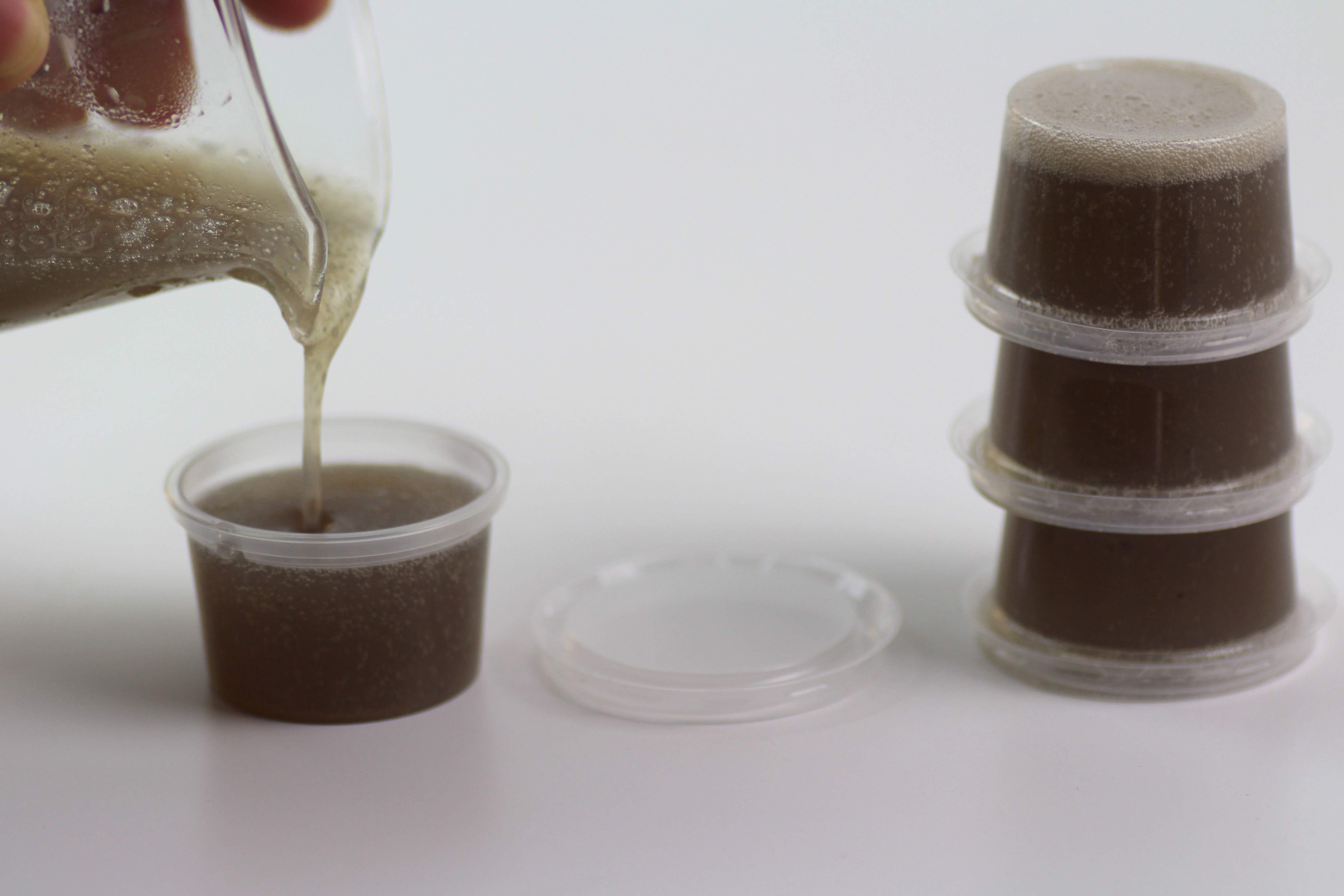
There is now a large variety of different Beetle Jelly on the Internet. The brightly colored Beetle Jelly immediately catches the eye and you can guess where they got their nickname “gummy bears for insects” from. But do our pets or food animals need Beetle-Jelly? The answer to this question is actually a clear and concise “no”.
But you wouldn’t be reading my blog if you didn’t know there was a little more to come and that’s exactly how it is this time.
Beetle-Jelly is the industry’s answer to the needs of working pet owners who go on vacation and still want to offer their pets a species-appropriate diet.
From our point of view, it has many advantages: You don’t have the hassle of running to a supermarket and you don’t have to deal with the question of whether you should use organic fruit, canned fruit or perhaps the cheaper “conventional fruit” after all. Beetle jelly can be stored properly at home without going bad within a very short time. They can be left in the terrarium for several days without fruit flies forming or starting to ferment. This also prevents bad odors. With Beetle-Jelly we can soothe our conscience while we work or relax on vacation.
If you take a closer look at your pet’s diet, you will quickly realize that the higher the quality of the food, i.e. the higher the fruit content, the shorter the shelf life.
Unfortunately, it is often the case that our animals like the Beetle-Jelly and are so fixated on it that they spurn other food. We also often like things that are not good for us. However, the industry also helps a lot with this. Flavorings and colorings are often added to Beetle Jelly so that an animal eats something that does not correspond to nature.
If you take a closer look at your pet’s diet, you will quickly realize that the higher the quality of the food, i.e. the higher the fruit content, the shorter the shelf life.
Unfortunately, it is often the case that our animals like the Beetle-Jelly and are so fixated on it that they spurn other food. We also often like things that are not good for us. However, the industry also helps a lot with this. Flavorings and colorings are often added to Beetle Jelly so that an animal eats something that does not correspond to nature.
A shelf life of up to 3 years cannot be achieved without preservatives. So now everyone can imagine what is in these colorful Beetle Jellies. Often you won’t find any ingredients on the supplier’s website and certainly not on the unlabeled Beetle-Jelly.
If you don’t want to miss out on the benefits of Beetle Jelly, but still want to offer your animals a healthy diet, you should choose a supplier who doesn’t offer imported products from China, or you can venture into the kitchen and do it yourself.
INGREDIENTS
Makes approx. 570ml Beetle Jelly – preparation time approx. 15 mins.
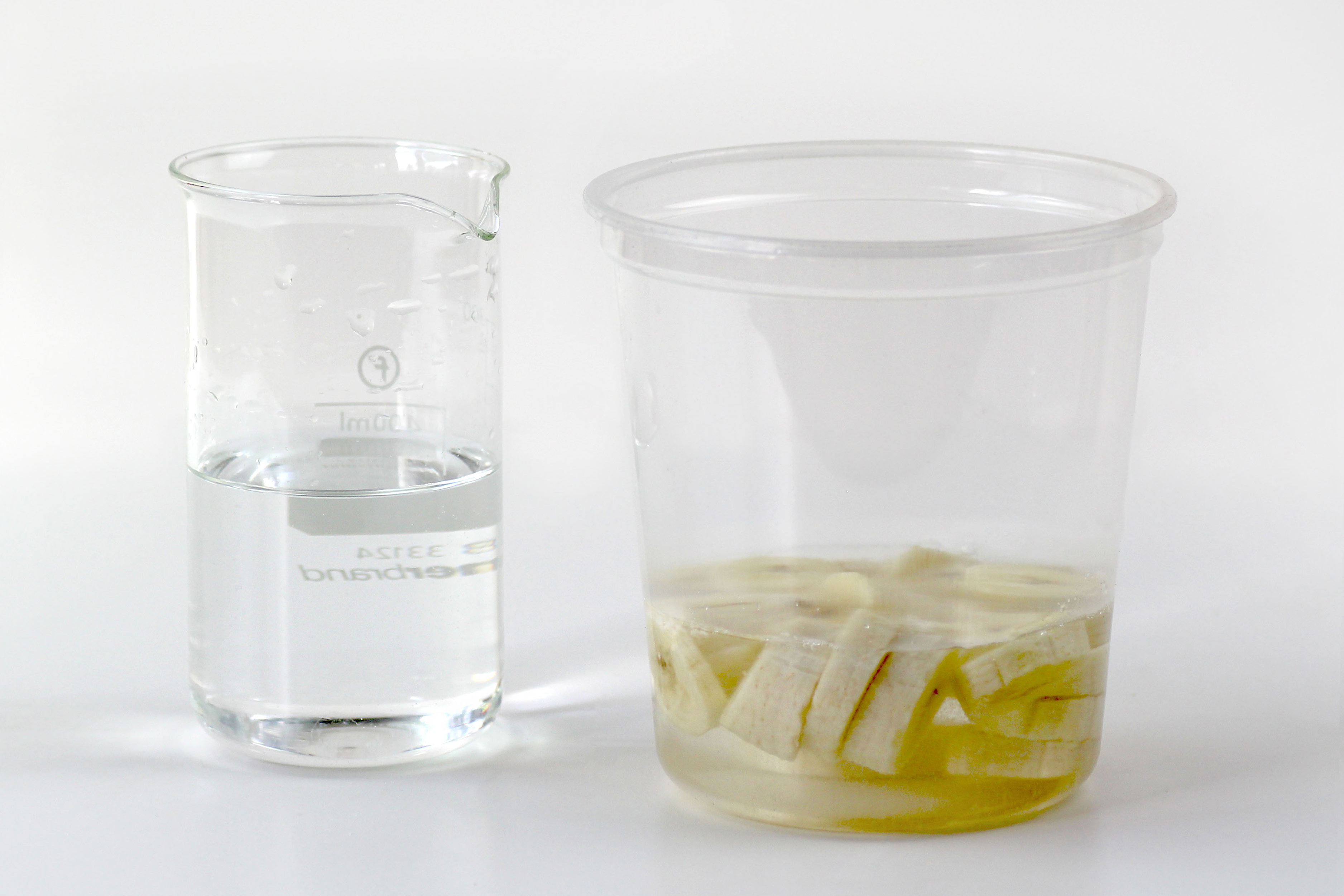
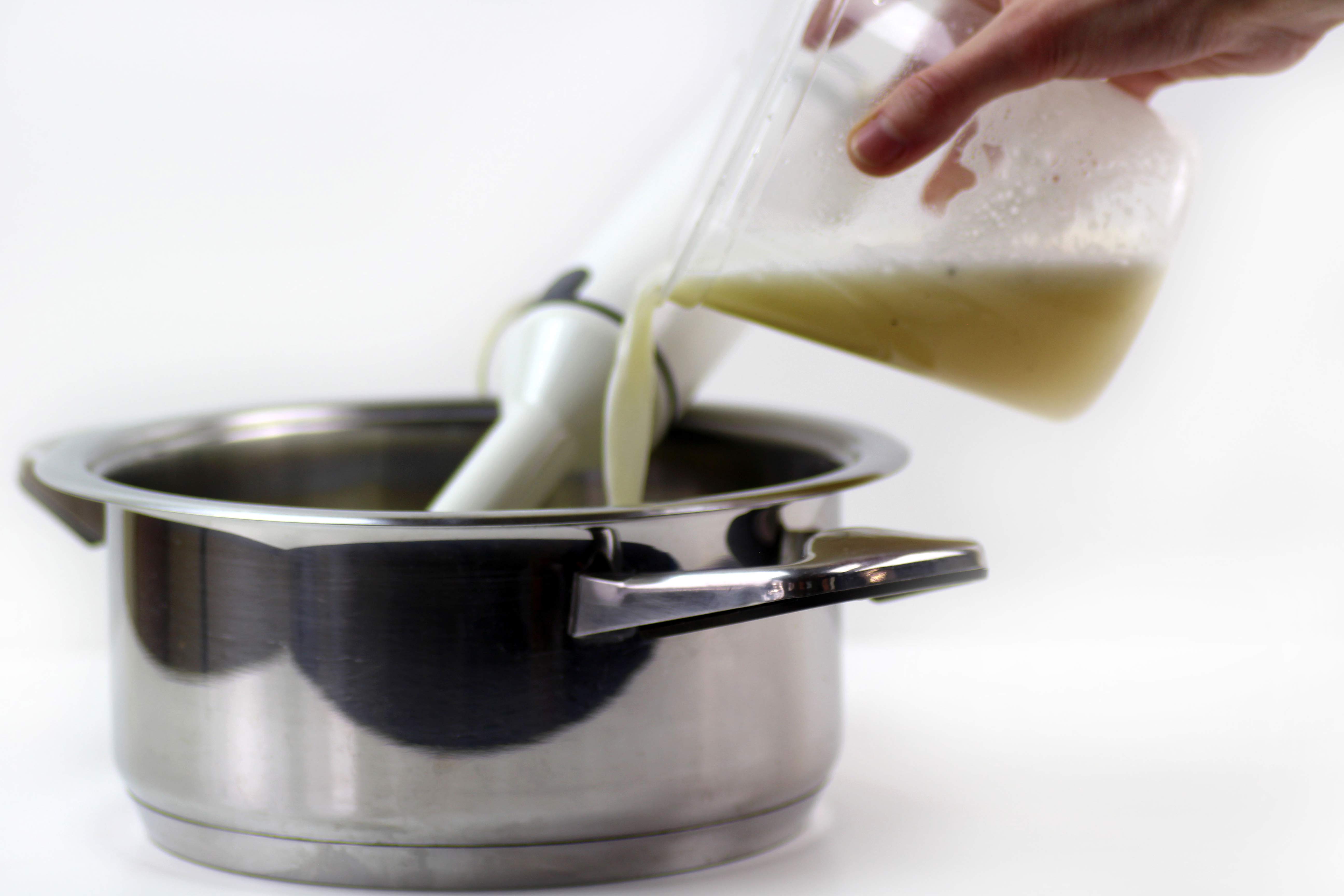
120g fruit or vegetables
350ml water
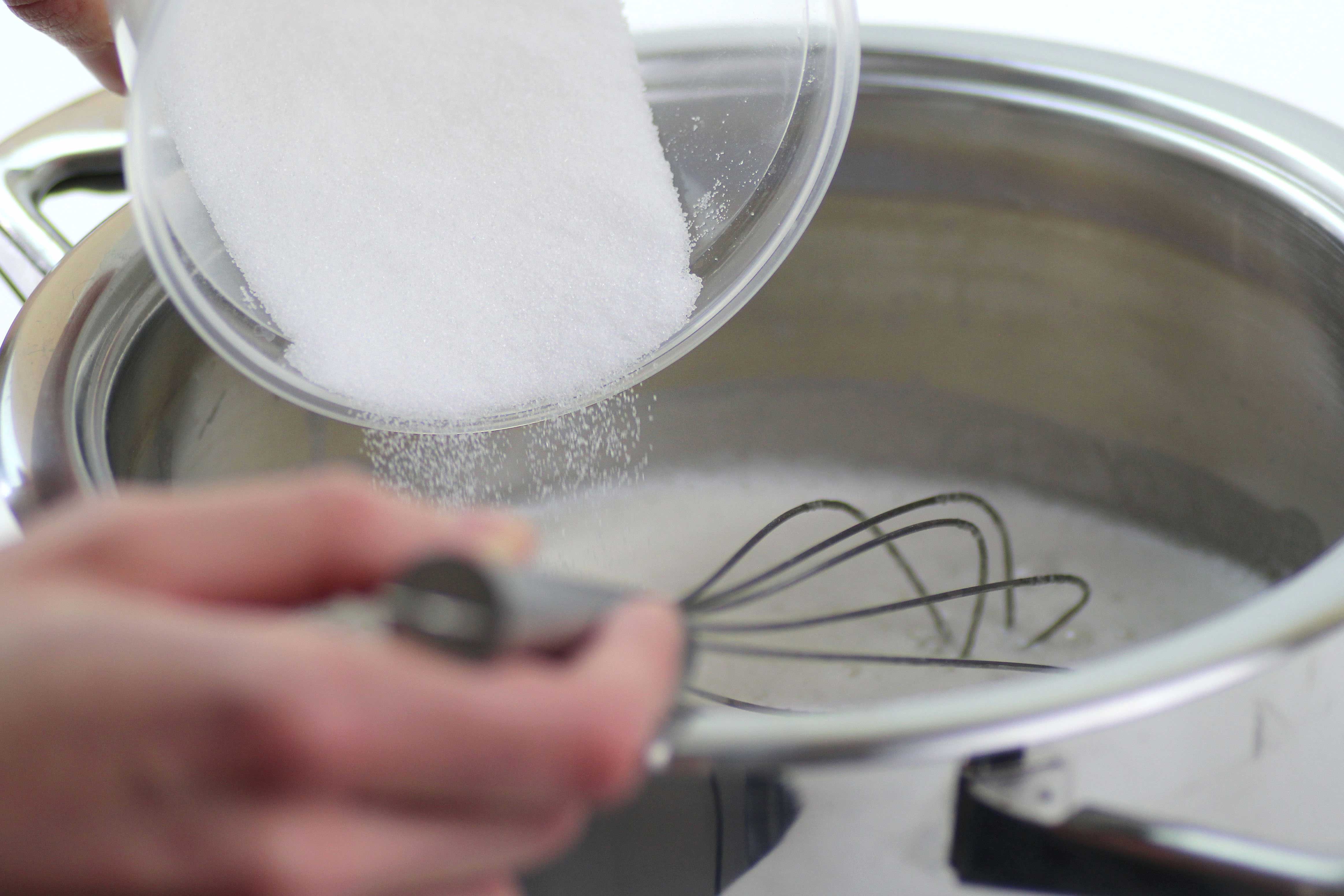
250g sugar
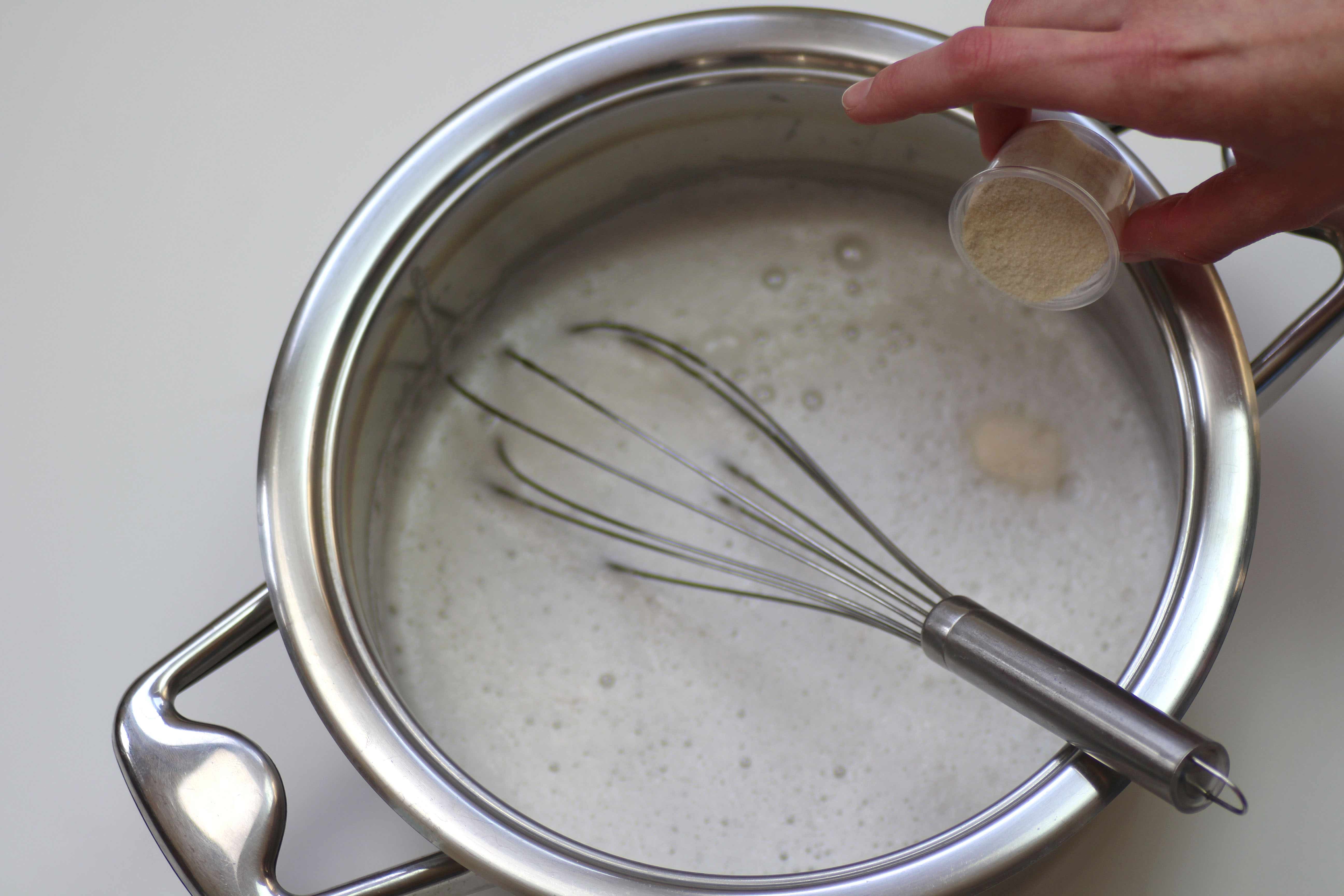
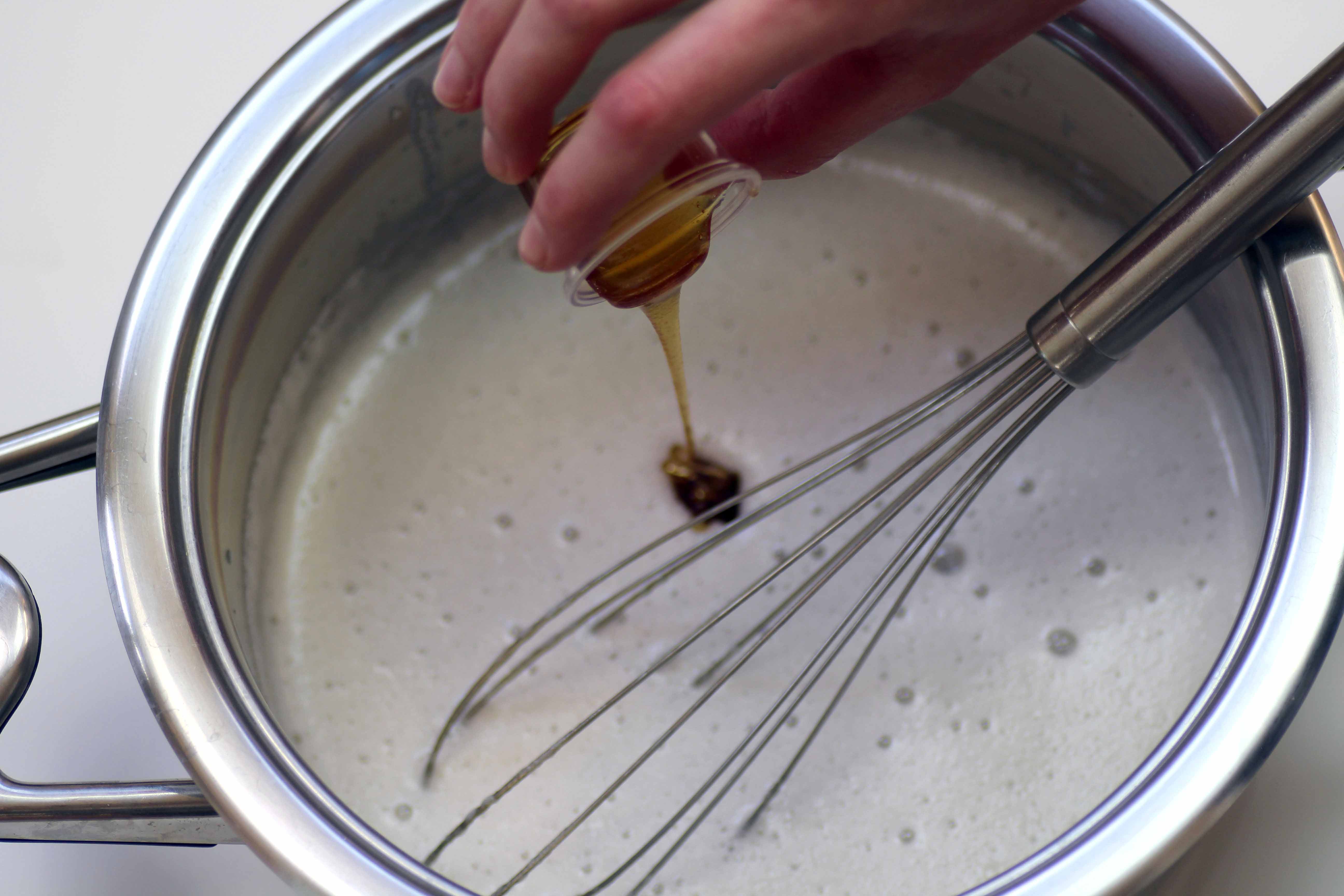
8g agar-agar (100%)
1 tsp honey
You are currently viewing a placeholder content from Default. To access the actual content, click the button below. Please note that doing so will share data with third-party providers.
Once the decision to purchase and design an Isopod terrarium has matured, numerous questions arise, especially for newcomers. It is clear that Isopods should be kept in groups – at least twelve, preferably more, animals should find a home with the new owner.
However, before you can start placing the animals in the terrarium, you need to make some preparations: A suitable enclosure with a species-appropriate substrate and suitable utensils must be selected. This is followed by a short run-in phase during which the substrate can acclimatize to the future inhabitants. You can find out below what you need to consider in the individual steps involved in providing an isopod terrarium.
The right size for an isopod terrarium
Isopods are relatively undemanding animals and can be kept in a very small terrarium. When I started keeping Isopods, I used boxes with a capacity of 1.3 liters. This provides a very inexpensive introduction to this fascinating hobby.
However, I quickly realized that larger containers of 5 liters or more are much more appealing for me and also for the animals. A larger isopod terrarium offers more scope for design and allows better observation of the behavior of the interesting animals. It is also much easier to constantly maintain the necessary husbandry parameters, which include a dry and a moist part. As offspring can often be expected quickly, at least in the case of woodlouse species, a larger terrarium also pays for itself quickly.
The material of an isopod terrarium
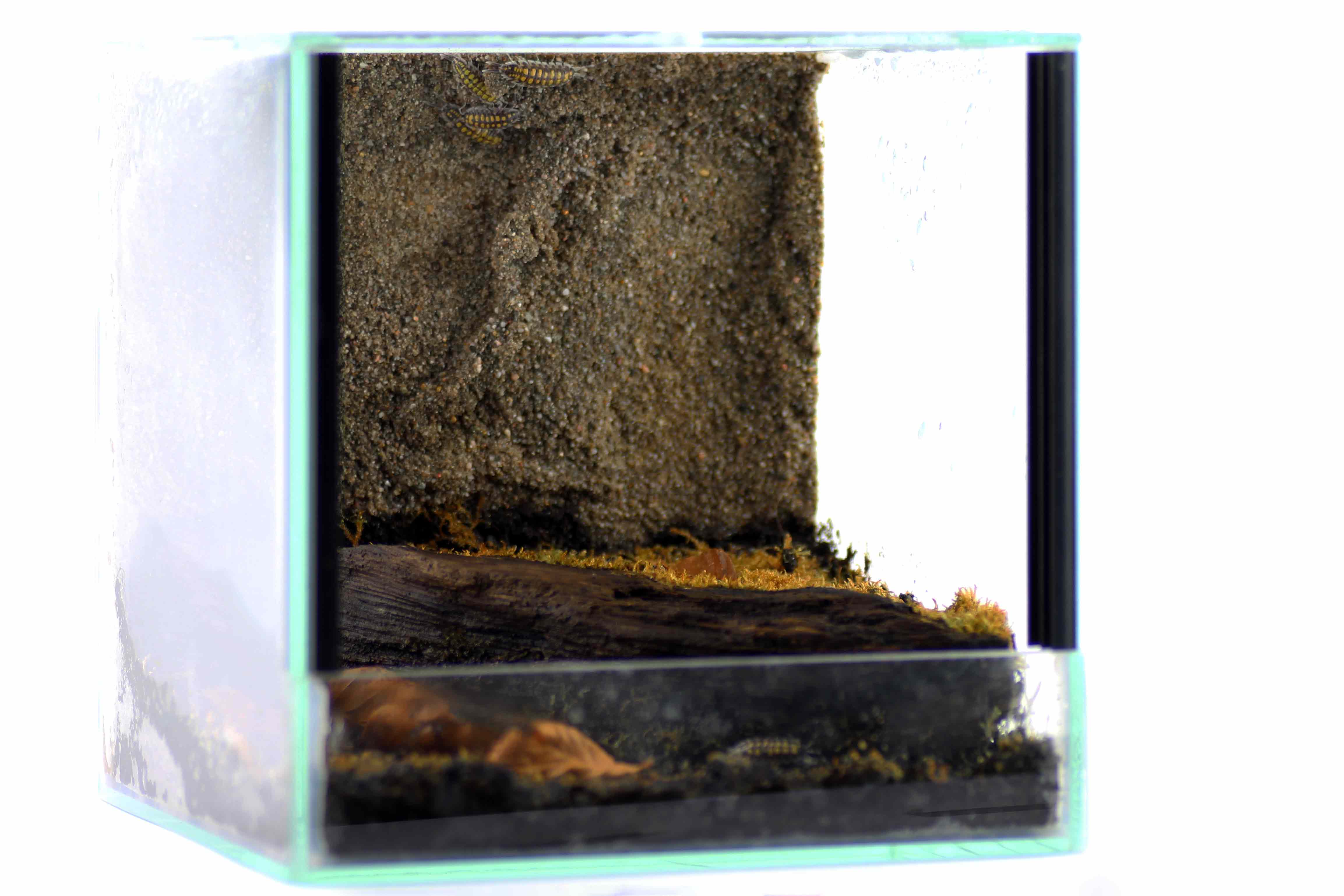
As Isopods are very good climbers, a smooth-walled material should be used. Of course, aquariums are also suitable as housing, but you should make sure that there is a tight-fitting lid, as Isopods can climb along the silicone joint without any problems. In general, the enclosure should be fitted with a tight-fitting lid. This keeps the animals in their terrarium and ensures that the humidity in the Isopod terrarium increases.
Terrariums can also be used as housing. I would advise against using sliding doors, as young woodlice can get out unhindered between the panes. You should therefore use trapdoor terrariums that close well. Some isopod keepers also use wooden terrariums. These must be treated with epoxy resin beforehand to prevent moisture from penetrating the wood and damaging it in the long term.
I can’t say whether the effort required to do this justifies the benefits, as I have no experience of this myself.
The disadvantage of glass terrariums compared to plastic boxes or wooden terrariums is obvious. They are virtually impossible to stack due to the ventilation areas at the top. It is much more difficult to work with them than with plastic and therefore it is no longer possible to improve the ventilation or make the work easier. I therefore only use plastic boxes that close well.
The bottom line is that Isopods don’t care what material the terrarium is made of, they will thrive in all types of material. It is much more important to ensure sufficient ventilation.
Ventilation for the isopod terrarium
Without ventilation, the terrarium would sooner or later become a musty and moldy shelter. It is therefore very important that oxygen exchange can take place to a certain extent. However, only up to a certain degree, as too much ventilation also lowers the humidity in the isopod terrarium and can lead to the small crustaceans drying out. I therefore advise against so-called chimney ventilation for containers under 25 liters. This ensures a permanent draught and if you look at the habitat of the animals in nature, this definitely does not take place in the forest under rotten wood or leaves.
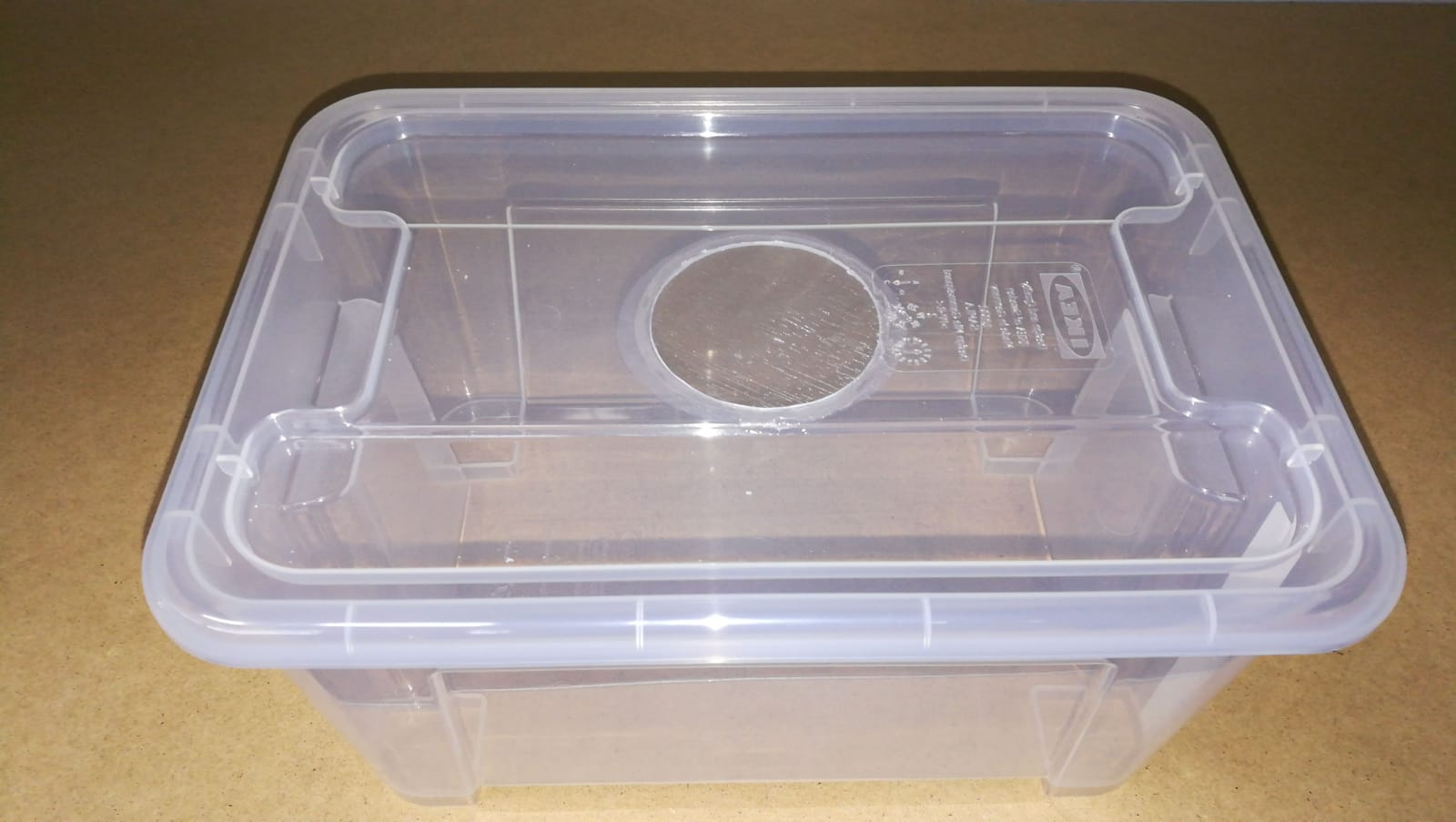
I have found that it is perfectly sufficient to attach an aeration surface to the isopod terrarium. For Porcellio species, the ventilation should be somewhat larger than for Armadillidium species. Porcellio species occur in drier and therefore lower humidity conditions in nature than woodlice. They therefore thrive much better in larger aeration areas.
I cannot give you a general formula for the exact size of the aeration area, as the terrarium volume, the substrate height and the temperature have a decisive influence on the oxygen exchange in the isopod terrarium. My experience at the beginning was that it is advisable to start with a larger aeration area and then slowly reduce it by taping it off until the optimum size is found. By “optimum size” I mean when the substrate is still slightly damp after a week, it is not moldy and the air in the isopod terrarium does not smell musty.
We attach an aeration surface with a diameter of 6 cm to our 5 liter complete isopod sets. This size is a good compromise and is well accepted by all isopod species. If you want to attach the ventilation to your isopod terrarium yourself, you should make sure that you attach a very fine-meshed ventilation grid.
This prevents the entry of many pests such as fruit flies. Fine-mesh wire gauze or organza have proven to be very effective. They keep the intruders outside the box and, if flies should form in the accommodation due to fruit, vegetables, etc. on offer, also in the isopod terrarium.
Substrate in the isopod terrarium – species-appropriate and functional
Once you have selected a suitable terrarium and adjusted the ventilation, the question quickly arises as to how the Isopods terrarium can best be set up so that the Isopods and you can enjoy the new tank.
When it comes to soil, no pesticides or fertilizers should be present, so substrates offered from the garden center are only suitable to a limited extent. Organic compost or potting soil are the end result after the Isopods have utilized the plant waste. They therefore offer no added value for the Isopods. The small animals are constantly on the lookout for food and chew through the entire substrate. It is best to offer Isopods what they prefer in nature, namely deciduous forest humus. This provides them with the varied food they need. I only use resinous soil from coniferous forests for the Oniscus asellus (woodlouse), as it is the only species I have found in such areas. All other species have digestive problems due to the resinous substrate.
We treat the deciduous forest humus with heat in the microwave before we use it. This prevents invasions of uninvited guests in a closed habitat in which we actually only want to keep Isopods. As the heat unfortunately also kills off beneficial animals such as native springtails, we inoculate the substrate with tropical springtails. These do not reproduce as massively as the native species and keep any mold spores at bay.
Soil calculator
Automatically calculates how many liters of forest humus and lime granulate you need for your container!
As Isopods are increasingly found on calcareous substrate in nature, I enrich the approx. 5 cm high substrate in the Isopod terrarium with lime granules. This provides an important component for the structure of their exoskeleton and also makes the substrate more airy. You can also add 10% sand to the substrate – although this is not absolutely necessary. I currently only use sand for African species such as Armadillidium officinalis “Israel”, Porcellio spinipes and Armadillidium spec. “Cameroon”.
White rotten wood is much more valuable than sand. I use it to add food to the forest leaf humus and thus create a natural substrate. I use approx. 20% white rotten wood and 80% forest leaf humus and mix the whole thing once.
If you have the time, it would be advantageous to observe the substrate with the added springtails and the newly added aeration for one to two weeks without Isopods. This will allow the substrate and the springtails to acclimatize and you will get a feel for the weekly addition of water without endangering the Isopods. This is a good way of gaining the necessary confidence, especially if you have no experience of keeping terrariums and don’t want to experience any setbacks at the start.
But before you do that, you can add the furnishings and decorations.
Furnishings for the isopod terrarium
In addition to the substrate, hiding places must also be added to the new terrarium to provide Isopods with a species-appropriate home. Nearly all Isopod keepers agree that pieces of bark in the terrarium create optimal hiding places for the Isopods. The pieces should always be adapted to the size of the tank so that the Isopod terrarium is not completely covered and the inhabitants can still be easily observed. I use an area of approx. 1/5 of the floor area for the piece of bark. This gives the Isopods enough space to hide and leaves room for a moss corner and feeding areas. Alternatively, you can also offer egg cartons as a hiding place. I use this for species that I control relatively frequently. As the egg carton is much lighter than a piece of bark, the Isopods are in no danger of being crushed when you put the hiding place back on the ground. Of course, this is not exactly what you would imagine a forest terrarium to look like, so I would not use it for a display terrarium.
One corner of the Isopod terrarium is turned into a so-called moss corner. This is the place that needs to be moistened regularly. The moss stores moisture very well and the moss corner creates a place in the Isopod terrarium that the animals will go to before moulting. They will find the ideal conditions there and you won’t have any problems with your Isopods moulting. You can find various mosses in nature that you can use. However, you should inform yourself beforehand, as there are types of moss that are protected. Please don’t be careless, as 54 moss species have already become extinct in Germany and 335 moss species are threatened with extinction or highly endangered. When I find a beautiful unprotected species in the forest, I simply harvest a small piece so that the population can regenerate quickly.
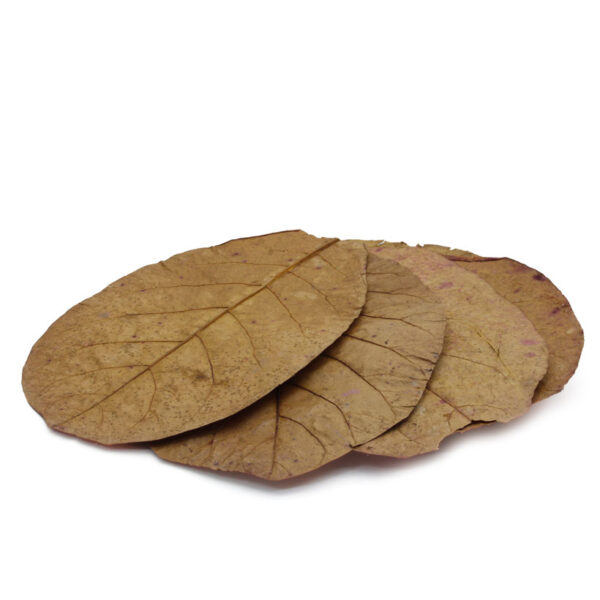
Finally, I cover the bare spots on the soil with leaves. I have had the best experiences with oak and beech leaves, as they rarely become moldy and also lower the pH value in the soil substrate. The leaves also prevent rapid evaporation of the soil and provide the Isopods with a natural food source that should never run out.
In my new YouTube video “Unboxing Terraristika Hamm | Isopods without eyes?” you could marvel at my latest color morph. Naturally, I wanted to take a closer look at it.
Anyone who has not yet seen the video can catch up here.
You are currently viewing a placeholder content from Default. To access the actual content, click the button below. Please note that doing so will share data with third-party providers.
I traded them in because the previous owner had problems with breeding this morph. She told me that she occasionally transfers the color variant from the normal breeding box to a separate box. Unfortunately, she had no breeding success in the box containing only this color morph. At first glance, you can’t see any eyes on this Isopod. I was therefore quite curious to see whether this would also be the case with a macro photograph and whether I would then be able to see more with my old eyes.
Since Porcellio scaber are generally very hectic contemporaries and very difficult to photograph with a macro lens, Stefan held on to the Isopod and I was able to focus the lens calmly.
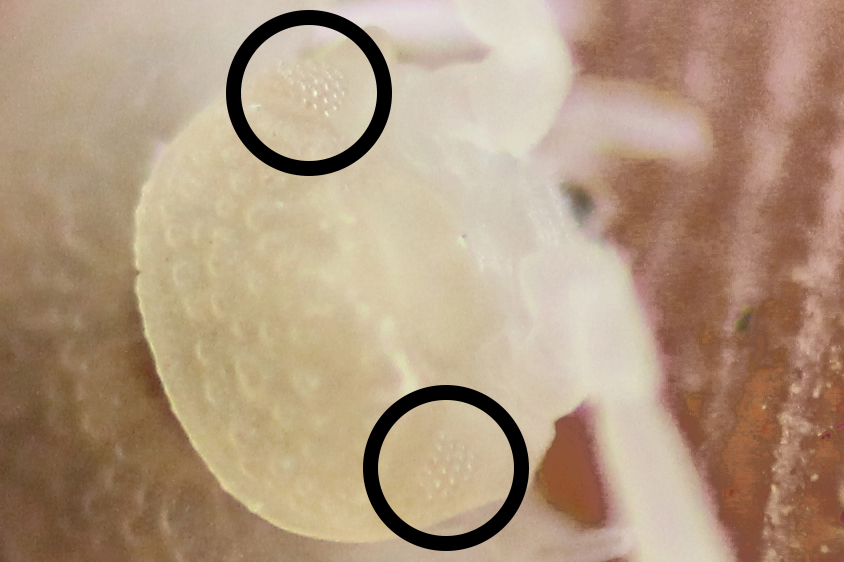
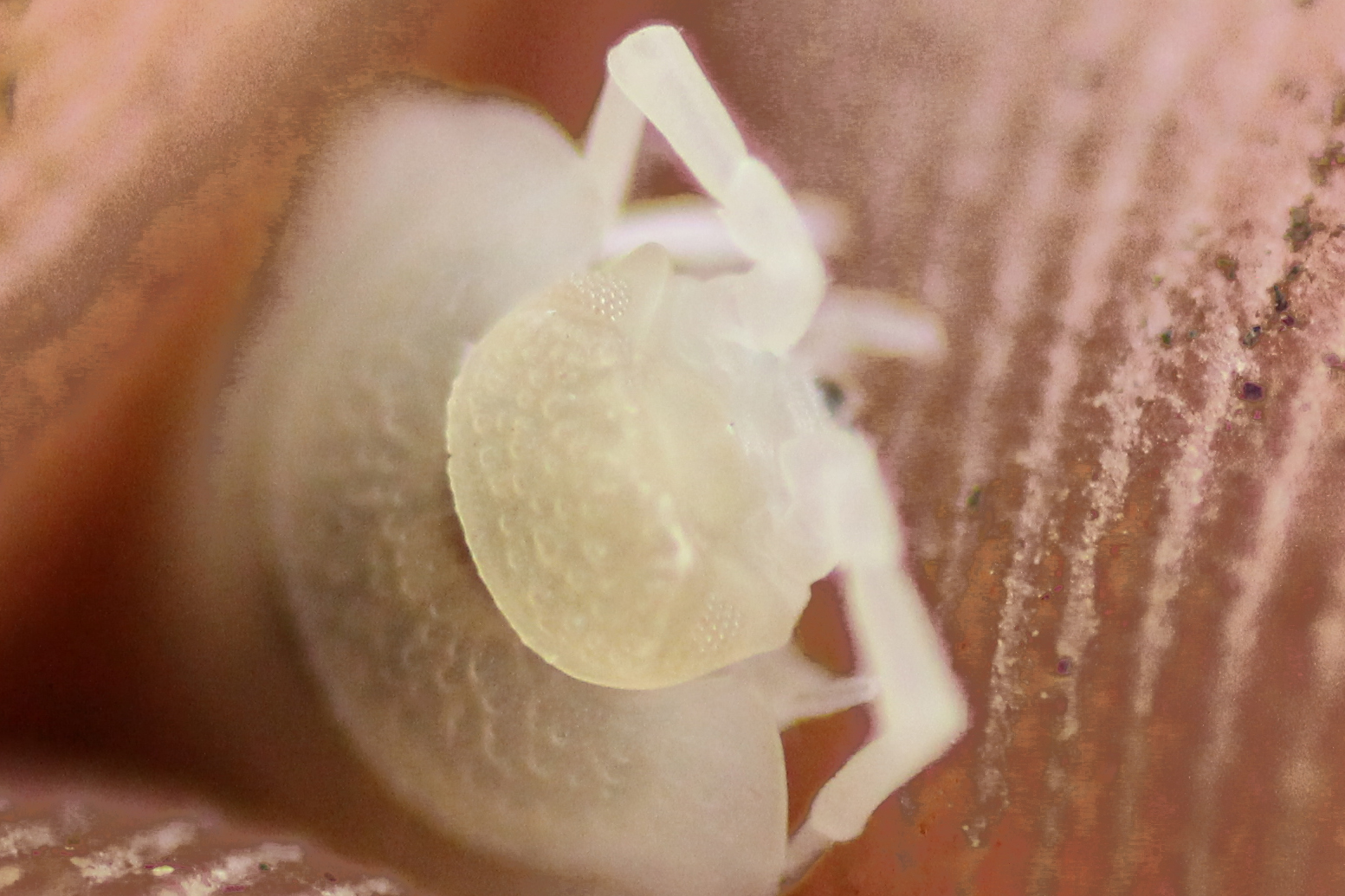
The two compound eyes are located on the left and right sides of the head. The compound eyes of insects consist of many individual eyes, the ommatidia. The more important the sense of sight is, the larger the eyes are and the more ommatidia they have. Isopods do not see such sharp images as we do, but they can perceive movements much better and react accordingly quickly.
After taking the picture, I knew why I first thought there were no eyes. They are completely white and therefore almost unrecognizable. However, white eyes do not mean that the animals do not produce melanin. Otherwise the Isopod’s eyes would be red, as you can see the red blood vessels due to a lack of pigmentation.
It is therefore much more likely that this color morph can only produce white melanin and that this is also reflected in the white eyes. I then researched such mutations on the Internet and found an interesting article about Thomas Hunt Morgan.
He experimented for years with Drosophilas in his “fly room”. Drosophilas are ideal for genetic research as they are easy to breed and the generation sequence is very short.
Back to Thomas Hunt Morgan – One day, the lucky man discovered a sensation in one of his many breeding batches: a Drosophila with white eyes! This was something very special, as Drosophilas normally have red eyes.
He tried to breed out this mutation and discovered that the mutation only ever occurred in male flies, never in female flies. After further investigations, it turned out that the eye color gene is located on both sex chromosomes of the fruit fly. This means that the white eye color is directly linked to the sex of the animals, in this case the male animals. Thomas Hunt Morgan was therefore the first person to be able to assign a gene to a specific chromosome. He was awarded the Nobel Prize for this in 1933.
If this could also be applied to Isopods, it would be clear to me why the previous owner had problems with breeding. With exclusively male animals, even the best husbandry conditions do not lead to breeding success
However, it should not be forgotten that Thomas Hunt Morgan worked with wild-colored animals with white eyes and not with completely white animals as in our case. Therefore, the tension remains high for me as to whether the Isopods are actually exclusively male animals. If this is the case, I would have to add wild-colored female Porcellio scaber to the group and cross-breed the offspring so that this morph species does not die out. As my “Asselbude” is an hour’s drive away from where I live and I am very busy after work, I will unfortunately have to wait until the weekend.
If you don’t want to miss my next blog article, just sign up here.
We are starting a new color breeding project with this individual. Since I have never heard of a color morph in the species Porcellio spec. Morocco, it is super exciting to successfully separate this mutation.
When I first noticed the animal, I thought that a Porcellio scaber had strayed into my P. spec. morocco box. At first glance I thought it was a mixture of P. scaber “Calico” and “Lava”. However, the size of the animal did not match this suspicion, as it is significantly larger and wider than woodlice.
I let you vote on Facebook for the name we should give this color morph. The comment with the most likes won. Our color morph is now called Porcellio spec. Morocco 8i. Depending on the context, the word “Achi” can have different meanings. In most cases, the word “Achi” is heard as a slang word among young people and they often mean the Arabic word “Akhi”. The word “Akhi” means something like “my brother” in German. The word “brother” does not necessarily mean a brother from the family, but often a “colleague” or “friend”.
If you would like to have a say in a name, just follow me on Facebook, where I often let you participate in decisions at Insektenliebe. Just click on the Facebook banner.
In comparison to the wild-colored P. spec. “Morocco”, the outer edge of the segment plates turns into a bright orange. I would describe this edge of the wild-colored Isopods more as a reddish-orange. Only the outline of the brownish basic coloration on the segment plates remains. The dark lines in the middle are the intestinal canal, which has nothing to do with the actual coloration.
If we discover a mutation, then we set up a new Isopod complete set. So we take a box with a volume of 5 liters. Of course, this box is actually too oversized for an Isopod with a few sexual counterparts, but this size allows different climate zones for the inhabitants: a rather dry area, a moist moss corner and a tobacco-moist area in between. In my opinion, this is very important for successful breeding. The risk of losing such a rare mutation due to a husbandry error is simply too great for me. As it is a female, I have added three male P. spec. “Morocco” and am eagerly awaiting the first offspring.
I have news about my Oniscus asellus “Mardi Gras”! First of all, a quick thank you to you for the great feedback you gave me on the first article.
Thank you! Thank you!
So something has actually happened with our wild catch. As I don’t want to unnecessarily stress animals that I only have once in my breeding room, I don’t check them after a pregnancy by taking them in my fingers and looking for the brood pouch (marsupium), but instead make sure that the basic requirements such as humidity, cuttlefish and food supply are met. Every now and then I was able to take a random look at them and each time I was happy to see that they were still alive. In this case, I was already very happy with very little, because occasionally I have the misfortune that the very animals I put so much stock in die before breeding success.
Now for the news: Our Oniscus asellus “Mardi Gras” has become the mother of many little light-colored babies. When I discovered the little ones, I was immediately delighted! A short moment later I was already wondering how the coloration of the baby isopods would develop. Do you know that? You are generally never satisfied with what you have, only your needs and expectations change.
It will therefore remain interesting to see in which direction the coloration of the baby isopods will develop.
Unfortunately, the little ones are relatively light-shy and fast at the same time, so I can’t provide a better photo. However, I can see, or imagine, that I can recognize yellow dots along the segment plates. I am therefore confident that the color characteristic has been passed on to a few young isopods and that I have dozens of little Oniscus asellus “Mardi Gras” babies in my breeding box. I hope nature will not prove me wrong, so that my suspicions will soon be confirmed. As soon as the coloration of the F1 generation stabilizes, I will sit down again and write a few lines.
One thing is for sure, it was worth keeping your fingers crossed!
A new color mutation has emerged! It’s always a great sight when you discover an animal that you’ve never seen before. Of course, it’s great when someone shows you a photo of a new mutation and you look at the color variation in amazement and envy at the same time. However, the excitement is somewhat higher when you discover such an Isopod in your own breeding box. We have had the following experience with color mutations that occasionally appear in Isopod breeding kits:
Color mutations usually occur in wild-colored animals. We had only once found a Porcellio laevis “t-albino” in a Porcellio laevis “orange” breeding batch. Unfortunately, this animal died after a very short time, so that we were unable to breed out this mutation. Otherwise, all the color mutations that we have selected in our current breeding program originate from Isopods that also occur in the wild. If you have any other experiences, please feel free to write them in the comments below.
Hence the mutation of Porcellio ornatus “sandstone” in the Porcellio ornatus “Nominat” breeding box. We usually find such special features when collecting your Isopod orders. Often the Isopods discovered are still relatively small and we wait until they are subadult before selecting them. This saves us a lot of work, as we are often too happy too soon. Some young isopods are lighter or completely differently colored than the older animals and are perceived as a mutation. This changes over time and as they get older they take on the coloration of their parents.
I’m not a fan of names like Caramel, Cappuccino or other made-up names, as these only confuse and you have to memorize them somehow. Often the color mutations fit into already existing variants such as brown, orange, high yellow, etc. and it is not necessary to name these animals differently just because they occur in a different subspecies. In this case, however, I have acted differently for the following reason: I am not sure in which direction this color mutation will go. For me, the color pattern is a mixture of orange and brown and therefore does not fit into any existing pattern. If this should change in the subsequent selection, I will change the naming to an existing name.
We currently have a female P. ornatus “sandstone”. As we have already found her pregnant in the breeding box, we have not added any more Isopods and are eagerly waiting to see when the next generation will hatch and how they will develop.
On February 8, 2019, my presentation took place at the “Club der Aquarienfreunde Nürtingen e. V”. Around 20 aquarium enthusiasts accepted the invitation, which was published on their website. I hope they gained an exciting and informative insight into the world of insects and Isopods.
“Insektenliebe, or how fascination becomes passion” – driven by this title, I thought about this evening in advance. After all, you rarely have the opportunity to talk about your passion for an hour without being interrupted. And believe me, my family, friends and colleagues no longer have a problem with nipping my stories in the bud right from the opening sentence. So it was also an important evening for me and my ego from a therapeutic point of view.
I was just standing at my pizza delivery place to pick up my order when my smartphone rang. On the other end was Peter Gaßner, the treasurer of the Aquarium Friends. He asked me if I would be interested in giving a talk at one of their club evenings. For the reasons mentioned above, I agreed straight away and was looking forward to the evening. Of course, you can’t completely plan an hour’s talk, but I wrote down key words and thought about what I could say and show.
Visit the homepage of the “Club der Aquarienfreunde Nürtingen e. V.”
For one thing, I have a full-time job plus Insektenliebe and for another, I am sometimes more unstructured than I would like to admit. That’s why I wasn’t able to prepare as well as I would have liked. But to compensate for this, I have a certain eloquence that has helped me out of a tight spot several times. So I sat in front of the interested audience and talked about my childhood, my experiences and the passion that I can no longer let go of. The hour went by faster than expected and towards the end I had to restrain myself from going into overtime.
I hope that with this lecture I was able to achieve that the audience sees insects and Isopods from a different perspective and in a different light than before.
My special thanks go to Peter Gaßner for the invitation, to Dr. Michael Hollnaicher for the exciting stories of his investigations into the fauna of the Upper Swabian wetlands afterwards and to all the listeners who shared this hour with me and my topic.
Maybe it has already happened to one or the other of you. You buy an isopod breeding batch and color abnormalities keep appearing in the offspring. It can even go so far that the color mutation becomes established in this batch all by itself. Jackpot!
If you buy a breeding batch of Isopods from a hobby breeder, there is a good chance that some of the animals in the batch are siblings. If the parent animals have passed on color abnormalities in their genes, you have effectively already bought the first generation of color morphs. As these offspring are heterozygous for this abnormality, they look like normal P. hoffmannseggi and nobody would suspect a mutation in these Isopods.
We had a similar experience with a Porcellio hoffmannseggi breeding batch. More and more brown P. hoffmannseggi emerged, which in the end made up a quarter of the total breeding stock. For this reason, I advise anyone who buys an additional breeding stock to their existing animals to separate them for the time being. This gives you better control over the offspring and any mutations that may occur.
We separated a total of 15 P. hoffmannseggi “brown”. In this case, it is of course a perfect prerequisite for achieving rapid color stability in this strain.
I assume that I may have to sort out some of the first offspring and that the 2nd generation will be color stable. Of course I will keep you informed about this beautiful color mutation.
Successful keeping starts with a well-designed substrate. And when it comes to the terrarium substrate or the substrate in other rearing containers, there is much more to consider than you might think. It’s no secret that you can buy relatively high-quality terrarium soil. Nevertheless, very few people do. Even that alone would not be a problem if you used inexpensive soil to keep your pets and sterilized it and inoculated it with various additives before using it. But this advice is one of those pieces of wisdom that is often ignored. Why is that?
“Well, animals grow and reproduce in nature too, of course without special sterilized and inoculated soil”, is often the common opinion. Here too, “trial and error makes perfect” and every terrarium keeper whose substrate has already been spoiled by prolific mould or a mass of hungry mites will be happy to sterilize and inoculate their terrarium soil from then on.
Why you should sterilize terrarium soil
I also had to learn that it is not a good idea to simply take soil from the forest or the garden center. It took weeks to contain the fungus gnat invasion and all my fantastic terrarium plants died due to the root feeding of the gnat larvae. In the wild, a few fungus gnats (Sciaridae) are no problem: on the contrary! The animals are even useful. Their larvae eat dead leaves and other dead plant parts that fall to the ground. However, fungus gnats spread rapidly in the terrarium and very quickly destroy the idyllic view of the terrarium.
If you use soil from the wild or cheap and therefore often poorly stored soil to fill your terrarium, you may bring a whole clutch of different unwanted inhabitants into your terrarium.
Fungus gnats, aphids, spiders or spider mites that hatch in the wild are generally not a problem. They have predators, plenty of space and sufficient food. They disperse and normally do not become a pest, but play their given role in the ecosystem.
In the terrarium, however, the situation is quite different: There is no functioning cycle there. There is no competition and hardly any food, apart from your terrarium plants and your occupants. You have created a habitat that is not in balance, and the creatures that have been brought in will really damage your lovingly furnished terrarium. Sterilized forest soil is the solution here. Your terrarium will have a stress-free start and great animals and plants can grow.
How to sterilize terrarium soil
So if you want to use cheap soil from the supermarket or old soil from a terrarium, this is not a problem in principle if you kill off potential pests and existing mould spores beforehand. There is nothing wrong with cheap discount soil as long as it is not fertilized and is enhanced with some white rotten wood and leaves.
So-called coco humus, which is simply the shredded, inedible flesh (mesocarp) of the coconut palm fruit, is not suitable for creating a living terrarium substrate. It lacks all the ingredients such as leaves, dead wood and other organic materials that all primary and secondary decomposers need as food. Even if this substrate is spiced up, many isopod species (Isopoda) run the risk of digestive disorders due to the coconut fibers they ingest.
Sterilizing soil works best with heat. This can be achieved either in the oven or even faster in the microwave.
In the microwave, 5 minutes on the highest setting should be enough. You should stir the soil halfway through. You will need a little longer in the oven. One or two baking trays full of soil should be placed in a preheated oven at 200 °C for 20 minutes. Afterwards, allow the soil to evaporate completely and cool down before you put it in the terrarium.
It may well be that after heating, some white particles appear that you could not see before. These are insects such as mites or larvae and worms. They consist mainly of protein, which coagulates in the heat and turns white.
After sterilization, we have the perfect basis for adding exactly the right kind of destructors to the substrate to ensure that we create a hygienic substrate and thus a healthy basis for our terrarium inhabitants. The destructors should eat dead plants, animal materials such as moulting residues, faeces, dead food animals, fungi and even mould. At the same time, they naturally prevent mites from forming, which can very quickly become a problem.
Before inoculating the terrarium substrate with helpers, you should consider which animals you are using and what conditions they require. The basic equipment of the ground police should always include white Isopods (Trichorhina tomentosa) and springtails (Collembola).
Springtails (Collembola)
White Isopods (Trichorhina tomentosa)
Most Isopods are herbivores and are therefore biologically primary decomposers. White Isopods mainly live in the substrate and really dig through it in search of food. This allows air to reach the terrarium substrate and eliminates germs that are not visible at first glance. Isopods belong to the class of higher crustaceans (Malacostraca) and need at least one damp corner in the terrarium to cover their moisture requirements.
Springtails are secondary decomposers and feed on the excrement of Isopods, among other things. In this way, they perfect the natural cycle in the substrate. Unlike Isopods, they do not stop at mold and eat it completely. This means they have eliminated the entire wish list of things you don’t want in your terrarium. They also need at least one damp corner in the terrarium.
Armadillidium klugii “Montenegro”
Zebra woodlouse (Armadillidium maculatum)
Depending on your requirements, you can now add another species of isopod as bottom police. Be it because the actual occupants need a lot of food due to their fast metabolism and thus cause a lot of waste, or because it is simply nice to keep a clearly visible Isopod on the substrate and thus get the flair of a community terrarium.
What can be done to ensure that tiny baby isopods do well in the terrarium? This is exactly the question we will address below. I will focus exclusively on the offspring of Isopods. I will first look at how a baby isopod develops and then go into how to create a good environment for them in the terrarium.
Development – from fertilized egg to adult animal
It is particularly fascinating that the isopod keeper can usually observe the reproduction of his animals very well. The female isopods should be the main focus of attention. Isopods do not lay their clutch of eggs anywhere in a thicket of plants, but always have them with them. It is interesting to observe the abdominal area of female Isopods.
If you keep a close eye on your Isopods, you may be lucky enough to spot a pregnant Isopod and prepare for its imminent offspring. Pay attention to the front abdominal area of female Isopods: The brood pouch (marsupium) can be easily recognized here.
The eggs remain in the abdominal region for around 40-50 days until the baby isopods hatch. Sometimes it happens a little faster, sometimes it takes a little longer. After leaving the brood pouch, they are still significantly smaller and lighter in color than the adult Isopods. Their shell is still relatively soft, which makes them particularly sensitive to dryness and moisture at this stage.
Tip: Due to the small size of a baby isopod, the keeper must keep a close eye on what is happening in the terrarium to be able to see the offspring at all. A magnifying glass could be helpful here. This should be used to search the substrate in the isopod tank for young animals. In the first few days, the young animals often move very little.
Incidentally, a baby isopod is not usually born alone: depending on the species, it may have up to one hundred and sixty siblings. The young isopods grow steadily in the following period, whereby their coloration and markings usually also slowly intensify. After around 12 weeks, the young animals may be sexually mature themselves, depending on the species. However, they may not have reached their final size and coloration at this point. However, whether a baby isopod can grow into an adult and healthy animal in a terrarium depends on many factors. I will discuss these in the following chapters.
Sources of danger for baby woodlice
Depending on the species, a baby isopod is really very small to begin with at around two millimeters. It is therefore logical that many things can quickly become a danger for them in a terrarium. Ideally, the following sources of danger should therefore be avoided in every terrarium right from the start:
Predators: Animals that eat Isopods have no business in an Isopod tank. However, there are also terrarium inhabitants that are not able to harm adult Isopods, but do like to eat the much smaller baby Isopods. For this reason, ideally no other animals should be kept in the terrarium if the Isopods are to reproduce unhindered.
Not quite ideal husbandry parameters: Baby isopods are more sensitive to less than ideal temperature and humidity values than an adult specimen. If something is wrong with the husbandry parameters, it is generally questionable whether they will breed at all. Nevertheless, the humidity values should be carefully monitored and adjusted if necessary, especially during the phase in which baby isopods are in the tank.
Heavy stones or pieces of wood: Hiding places can quickly become a death trap for Isopods in a terrarium – especially if they are still small and not very strong. There is a risk of crushing if you curiously lift a stone or a heavy piece of wood and place it back on the floor. If you want your isopod offspring to survive, you should therefore reconsider the choice of hiding places and use light and curved pieces of bark or egg cartons.
But even if all sources of danger for young Isopods have been eliminated, this unfortunately does not mean that every baby Isopod will develop into a sexually mature Isopod. Nature also provides for a certain degree of selection in these animals. Nevertheless, there is still a lot that can be done to ensure that Isopods are not only protected from danger, but also feel particularly comfortable – more on this below.
A good environment for baby woodlice
Once the real sources of danger in an isopod tank have been eliminated, it is important to think about how to make a baby isopod as comfortable as possible. After all, the offspring should not only be safe, but also comfortable. The following two aspects are very important here:
Hiding places in the terrarium: Moss fulfills two functions at once – as a hiding place and as a grazing ground. Different types of moss are particularly appreciated by young Isopods, but also by older specimens. They can often be seen grazing there as if they were in a meadow. The higher the substrate in the isopod container, the more hiding places there are.
Food for the baby isopods: If it seems sensible to feed the baby isopods, it is important to provide them with a suitably small food. Dust food, for example, is much better suited to small Isopods than some other coarser foods that may not be absorbed. Isopod food BALANCE FLAKES are particularly suitable for this. Some soft-leaved foliage such as lime leaves, on the other hand, seem to be suitable for providing both older and younger Isopods with another food option.
It all started with a huge wall lizard order. A customer had ordered 500 animals and we had nowhere near as many in stock. So we set out to look for some. We, that’s my brother Stefan and me. My experience of looking for woodlice is as follows: They are found in much higher numbers in coniferous forests than in deciduous forests. That is the big difference to the other isopod species. For this reason, we went to the Swabian Alb to look for some in a beautiful overgrown spruce forest.
The internal challenge was whoever found 250 animals first would be the isopod king. You know when you start playing games like that out of desperation? We reckoned it would take us half a day to find the animals and we still had a lot to do. So our desire to do so was relatively limited. Surprisingly, after 2 hours we had found 600 animals in an area of 100 square meters. Stefan was quicker, but that’s just because he’s a non-smoker. At least that’s how I explain it to myself.
And as it was probably his lucky day, he found this beautiful Oniscus asellus “Mardi Gras” under a piece of spruce bark. We both stopped and looked fascinated at the glittering yellow-gold spots in front of us. We have both seen many Isopods before, but this surpassed anything we had seen before in terms of beauty and perfection.
Judging by its size, the Oniscus asellus “Mardi Gras” is already an adult. As our eyes didn’t get any better with age, we had to wait until we could put on our reading glasses in the isopod shop to determine the sex.
That was the first thing we did when we got back, grabbing the 3.0 reading glasses. Unfortunately, it was a female. The “unfortunately” is made up of the following fact: If you only have a single color morph, you can only cross it with a wild-colored counterpart. You can add countless females to a male color morph and hope that he will fertilize quite a few. You can therefore expect a much higher number of young isopods in the first generation than with a female color morph.
But you shouldn’t look a gift horse in the mouth, you should rather saddle it. So we put them together with three male Oniscus asellus “wall lice” and several prayers in a 5 liter box and waited with bated breath to see what would happen.
There are many species of isopod that are quite easy to breed. If the husbandry conditions are right and Isopods of different sexes are kept together in a terrarium, reproduction can sometimes not be prevented at all. Isopod keepers are usually happy about this, as it is very exciting to observe the mating, reproduction and offspring of Isopods. However, uncontrolled reproduction can also become a problem: This usually happens when reproduction gets out of hand and, over time, too many Isopods populate a tank that is too small. Before breeding Isopods, you should therefore make sure that the offspring can be well cared for – either in a second container of their own or with people who give the Isopods a new home. Below I provide some basic information on how mating and reproduction in Isopods of the specialized reproductive type works.
Sex determination of Isopods
Before you can start breeding, you should be sure that both sexes are present in the breeding batch. The clearest way to identify all separated-sex Isopods is on the underside. To do this, carefully pick up the Isopod or place it in a transparent container and look at the end of the abdomen. I use reading glasses for this, of course you can also use a magnifying glass to better recognize the differences. You can see from the shape of the segmental plates that they are shaped in a pointed arc in the male Isopods and are more rectangular in the females.
Some Porcellio species have a phenotypic sex determination. This means that you can tell which Porcellio isopod is which sex based on its external appearance. The focus is on the end of the Isopod’s body. This is where the uropods are located, which are the last pair of swimming legs. These are significantly longer in male Porcellio species than in females.
There are also species in which the difference between the sexes can already be recognized by the colouring of the segment plates.
In Porcellio silvestri, for example, the males have a rather inconspicuous coloration, while the female Isopods stand out with a rich orange.
I will go into another clear sex determination in the next section.
The role of the brood pouch (Marsupium)
Once female Isopods have reached sexual maturity (usually at the age of a few months), the so-called brood pouch (marsupium), which will play an important role in later reproduction, becomes visible sooner or later in healthy Isopods of many species. This brood pouch can be located between the first and fifth pair of walking legs of the female Isopods. It is also used for sex determination, as it does not occur in males. It is often the only clue for sex determination, especially in many small isopod species. As the name of the brood pouch already makes clear, the female eggs, which are important for reproduction, are developed here, but were previously fertilized by the male Isopods during mating. The eggs remain in the protection of the brood pouch, which is filled with a liquid, during the entire development period until the young isopods hatch.
The mating of Isopods
Before the Isopods mate, the keeper can usually observe a lot of movement in the tank. The male Isopods literally chase the female Isopods as they are attracted by the hormones released by the females. They try to get close to the female in order to pass on their sperm to the female. Mating takes place without mating rituals, but the male Isopods often remain on the female’s back for hours. I often observe the males knocking against the segment plates of the females with their rear pairs of legs. I assume that this is a kind of stimulation.
After mating
After mating, the eggs of female Isopods migrate to the abdominal region. Only when the female Isopod has completed her moult does the brood pouch (marsupium) form. However, it still takes a few weeks before reproduction is complete. During this time, the eggs continue to develop until the young Isopods finally hatch. Isopods are very productive: a female Isopod (Porcellio) can give birth to 10 to 70 young in one go after mating. Woodlice (Armadillidium) are far more productive – between 20-160 young are the rule. The very large fluctuations often have to do with the age of the Isopods, as newly adult Isopods often have a lower hatching rate than older ones. Furthermore, nutrition and housing conditions (temperature and humidity) also play a major role. It is also worth noting that many female woodlice give birth several times a year.
Isopods certainly have a special appeal to many terrarium keepers because they differ from many other terrarium inhabitants. A special feature of Isopods is, of course, their shell. This shell not only serves as protection for Isopods, it is also responsible for the fact that Isopods can move and survive at all – after all, they lack an internal skeleton as we know it from humans. However, the Isopods’ carapace has a decisive disadvantage compared to the human skeleton: it cannot automatically adapt to the Isopod’s growth. To ensure this, the Isopod must moult. Below you can find out more about how often Isopods molt, how this molt takes place and how Terrians can deal with molt problems in their Isopods.
How often Isopods shed their skin
Moulting accompanies the life of Isopods and takes place repeatedly. However, as Isopods age, the intervals at which the individual moults take place shift. It is easy to understand why this is the case if you consider that moulting depends on the Isopods’ growth. Young Isopods grow relatively quickly at the beginning of their lives, so they have to moult very often so that their shell can grow with them. Older Isopods, on the other hand, moult less and less frequently as their growth has almost come to a standstill. However, middle-aged Isopods still usually moult every few weeks.
The carapace bursts open in the middle of the animal and the rear part of the carapace is stripped off by pumping movements. The front part is then shed by further contractions. This can take anywhere from a few hours to two days. Terrians should keep an eye on whether the moulting of the Isopods goes smoothly. Difficulties in the shedding process can be due to a variety of causes (see below).
The moulting process
It is not difficult to imagine that Isopods have to perform an enormous physical feat when a moult is carried out. Moulting is initiated by moulting hormones (cell messengers). Under the influence of the moulting hormones, enzymes are produced, some of which are pressed between the skins with the lymphatic fluid. Nevertheless, Isopods usually manage to complete the moult very quickly.
They are able to do this because a new protective shield has already formed before the old carapace is shed, which protects the animal during and after moulting. The old skin remains detached from the Isopods in the terrarium and is often eaten by the Isopods as it contains important nutrients. However, the new protective shield – the Isopod’s carapace – is not as resistant as the old one after moulting. This is one reason why Isopods are often easy prey for predators during this phase. Before Isopods emerge from their old skin, they can sometimes appear slightly tired and exhausted. However, this disappears once the moult has been completed without complications. Incidentally, the phase after mating is also the phase in which moulting takes place in adult animals.
Problems with moulting
There are basically at least two aspects that can make moulting Isopods problematic. Firstly, the moulting process itself is always a challenge for the Isopods, during which something can go wrong. If the Isopods cannot completely remove themselves from their old shell, this can lead to their death. On the other hand, it is also a warning signal if Isopods are unable to shed their skin at all. In this case, but also in the case of moulting processes that fail, it is reasonable to assume that the Isopods are either suffering from incorrect housing conditions (humidity, temperature) or are not receiving sufficient nutrients to make moulting possible in the first place. This aspect underlines how important it is to know the needs of Isopods with regard to housing conditions and food. The animals often seek out a damp corner in the terrarium shortly before moulting, where they complete the entire moulting process. If Isopods are unable to moult, they usually die. If the Isopods are healthy and a moult is successful, there is a high probability that the Isopods will reproduce.
As Isopods moult on their own in the wild, there is no need for human help. In principle, you can make it a little easier for the animal to moult by increasing the humidity a little. However, this only makes sense if you do this while the isopod is preparing to moult. If the Isopod is already in the process of moulting, there is no need to moisten the substrate as this will no longer have a positive effect on the moult. It can happen that an Isopod (especially a young or very old one) gets stuck in the old skin. If the moult is not complete after more than 48 hours, or if the animal is still dragging the old skin behind it, you probably have a failed moult. Unfortunately, this happens from time to time and you should not immediately panic.
In this case, it can be helpful to moisten or spray the affected part of the body with water. Only if the animal still does not come out after this measure can you carefully try to remove the skin with tweezers. Experiments with scissors and a knife should be avoided at all costs. In general, the husbandry parameters should be questioned again after such an incident, checked and readjusted if necessary.
Even before the actual Isopod hype had reached the German terrians, Isopods were often used as additional inhabitants of a terrarium that housed reptiles, for example, as ground police. Reptile keepers hoped that this approach would have a positive effect on the artificial biological system that prevails in a terrarium. And indeed, the little Isopods are very industrious when it comes to simply using organic waste, small molds and other debris as food.
Since the introduction of the Cuban Isopod (Porcellionides pruinosus) at the latest, reproductive Isopod species have often been offered as food animals in terrariums. Their high calcium content makes them ideal food for amphibians and smaller reptiles and as long as they are not eaten, they keep the substrate tidy.
As Isopods are now much more than just useful companion animals or food animals and they are often kept in a species tank, many Isopod fans ask themselves what the ideal Isopod food should look like apart from leaves, dead wood and cuttlebone so that the Isopods can develop as well as possible. Below you will find many tips on how to feed your Isopods. However, I would like to start with some information on what Isopods use as food in nature.
What Isopods eat in nature
If you take a closer look at the natural habitat of Isopods, you can quickly see that chance plays a major role in Isopods finding food. Isopods are not in themselves great hunters that would go after living animals. They are rather the prey of other animals and often have to feed in a completely different way. In nature, for example, leaves fall from trees, which decompose and can then be used by Isopods as a rich source of food. Of course, dead wood, lichens and mosses in the natural habitat also play a major role in providing Isopods with sufficient food. Isopods cover their high calcium requirements with different types of rock, which they find in their natural habitats. From time to time, dead insects can also be found in this habitat, which the Isopods also like to feast on. However, it should be noted that plant food is the easiest and most important food for Isopods.
Nature should always be a role model for terrestrials. If you want to feed your Isopods as species-appropriately as possible, you should use Isopod food with a high plant content. You can feed your protégés a particularly balanced diet by adding oak or beech leaves and white rotten wood to the terrarium and preparing various vegetables such as sweet potatoes, zucchinis or carrots for them. Such feedings are also much more fun for the keeper, as they can do more for their Isopods than just put the usual types of food from the forest into the terrarium. From time to time, animal food – in the form of shrimps, for example – is also allowed.
Assel food from the trade
At the moment, there is very little to no food on the market that has been specially developed for Isopods. Most people therefore switch to fish flake food and use it to feed their Isopods at regular intervals. The range of fish food available is almost unmanageable. The ingredients and recipes vary accordingly. There are sometimes very “creative” explanations. In addition, there are all kinds of ingredients such as artificial attractants, questionable bacteria or nonsensical extracts that are more harmful than beneficial. It is best to choose food that is as close to nature as possible and only contains what the Isopods actually need.
The correct dosing of isopod feed
Just as important as choosing the right food for Isopods is maintaining the correct food dosage. Many Isopod keepers – especially newcomers – mean far too well with their protégés and put more food in the terrarium than the Isopods can eat in a short time. This approach can have serious consequences for the small habitat: Excessive contamination occurs and germs have free rein in the terrarium. In the worst case scenario, this can lead to the Isopods dying. Isopod keepers should therefore remember that such small animals as Isopods really don’t need a lot of food and it is best to only put as much food in the breeding box at once as the Isopods can eat quickly. I recommend feeding the Isopods protein-rich food every three days. It is best to alternate different types of food so that the Isopods get as many different ingredients as possible. The amount of protein ingested varies greatly from species to species. Porcellio ornatus, for example, greedily eat protein food, in contrast to Armadillidium klugii “Montenegro”, which only take it up very sparingly. Daily feeding is not usually necessary either. If too much food is added to the tank, it is advisable to remove the leftovers to prevent overfeeding.
I normally answer questions from visitors to my Insect Love page and Facebook in person via email or Messenger. As there is a lot of hype about keeping isopods at the moment and the length and also the time is sometimes too much, I have decided to write a blog article on this topic. I hope it will help to answer the first questions that arise. If I have forgotten any questions, please write them in the comments below and I will include them in the article.
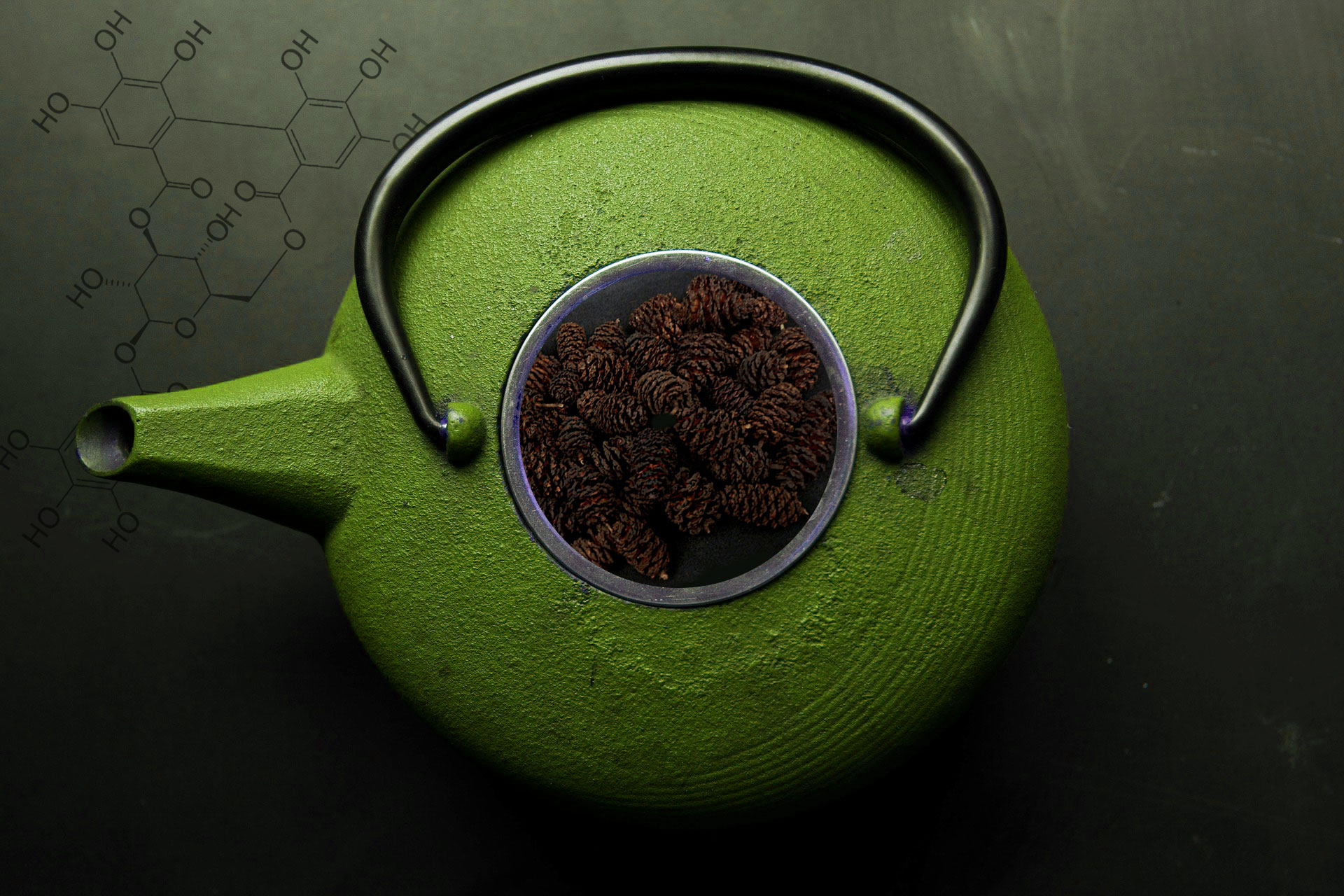
I am looking for Isopods for my snail terrarium. Which species can you recommend?
As there is usually very high humidity in a snail tank, not all isopod species can be used. I can recommend the following species, which are already being used successfully:
I am looking for Isopods as ground police. Which species are best suited for this?
In this case, all isopod species that are relatively undemanding, eat leftovers unconditionally and reproduce well are suitable. I have listed two species in which we have bred different color forms.
I find it difficult to classify isopod species into different categories. Beginners often have a better feel for their animals or quickly familiarize themselves with the subject and implement what they have learned better than some “old hands”. However, I can recommend isopod species that allow you to make a few mistakes and can put up with a lot.
Which isopod species are suitable as food animals?
Isopods are popular food animals in nature for a wide variety of tailed amphibians, frogs and pangolins. The Isopod’s very high calcium content makes it an excellent food animal. Breeding the animals also has a number of advantages over some conventional types of food animal. There is no unpleasant odor during breeding, escaped animals dry out in the home and there is no chirping noise. All Isopod species that breed quickly and easily are suitable as food isopods.
We will find the right isopod species for your requirements. Click through a few questions and finally choose from the isopod species that are suitable for you.
Can different species be kept together?
I myself do not mix species unless I am planning a cross or a new color form. In principle, it is possible to keep different species of isopod! It is important that no species reproduces to the extreme with another. This could result in one isopod species being displaced. This means that you should always intervene as soon as one species reproduces faster and remove and separate some animals. Of course, it always depends on the size of the container or tank how often you need to intervene. For smaller isopod boxes, I would advise against socialization.
What should be the minimum size of the isopod tank for a breeding batch of 12 animals?
For some types of woodlouse, you can start with a 1.3 liter BraPlast can. However, this will not last very long and you will have to switch to larger boxes. If you consider where you find Isopods in nature, namely under stones or dead wood in confined spaces, you should refrain from putting yourself in the Isopods’ shoes and think the bigger the better. It is often better to start in a smaller box, especially at the beginning of breeding. The Isopods will find it easier to mate and find food there.
Does it have to be a terrarium or is an aquarium or plastic box also suitable?
As you have silicone edges in an aquarium, this offers Isopods a great escape route. This means you need a lid, but a normal aquarium lid is not suitable without conversion measures, as there is no ventilation. You can either convert this lid and add gauze surfaces or build a wooden frame and add sufficient ventilation. It is best to use gauze that is fine enough to prevent fungus gnats from entering the aquarium, otherwise they will multiply incredibly in the Isopod tank.
Terrariums with two ventilation surfaces, at the front of the bar and at the top of the lid, ensure perfect air circulation. Fresh air flows in at the front and the warm, stale air flows out at the top. This is ideal for all Porcellio species that do not tolerate stagnant air. The disadvantage of many terrariums is that there are often slots in the sliding doors. A trap door is recommended for smaller terrariums as it can be closed tightly. If necessary, the doors must be sealed with e.g. window insulation.
In my opinion, a plastic box is the best way to work. They are inexpensive, you can easily work on them yourself and install ventilation where you want it. The boxes can often be stacked on top of each other, which creates space and room for even more Isopod species. Protection against Isopods is also absolutely guaranteed thanks to a perfectly lockable lid.
Can I leave the container open?
You run the risk of the boxes drying out. I would therefore advise every beginner to install a lid. If you are worried about ventilation, I would prefer a terrarium. The above-mentioned fungus flies and fruit flies also breed prolifically in a breeding box without a lid.
You are currently viewing a placeholder content from Default. To access the actual content, click the button below. Please note that doing so will share data with third-party providers.
A mixture of 1/3 humus and 2/3 deciduous forest humus is best. I like to add some extra leaves and dead wood, which serves as a source of food and moisture at the same time. I recommend my YouTube video on this topic.
How high should the substrate be filled?
This depends on the particular isopod breeding box and the possible filling height. A height of 5 cm is always recommended. This height guarantees a certain basic moisture level in the soil. If the substrate height is lower, the box will dry out quickly, which is particularly dangerous for beginners.
Do springtails absolutely have to be in the isopod tank?
I wouldn’t add them to the bottom as they usually settle on their own sooner or later due to the leaves or wood they bring with them. If it is purely an isopod tank, you don’t need the springtails as the ornamental isopods will keep the tank clean.
You are currently viewing a placeholder content from Default. To access the actual content, click the button below. Please note that doing so will share data with third-party providers.
Is the room temperature sufficient or should I heat the isopod box?
Room temperature is perfectly adequate for almost all species currently in circulation. Therefore, no extra heat source is required. For isopod species that require an additional heat source, such as the Cubaris spec. “Rubber Ducky” the heating mat should only be attached to one side. Never heat the Isopod containers from below, as this causes the soil to dry out very quickly, which can result in the death of the Isopods.
Do Isopods need a light source?
Basically no. However, many people install a light to be able to observe the Isopods better. LED lamps are well suited as they do not emit heat and have low energy requirements.
Should the forest floor be heated beforehand?
Many isopod keepers have controversial discussions about this. If you don’t want any uninvited guests in your isopod box, then yes. 30 seconds in the microwave or 10 minutes in the oven at 140 degrees will kill all the animals inside. You can also freeze the soil in a freezer for 48-72 hours. This will also kill all pests, but retain most of the beneficial components. It also protects against mite infestation.
Why can’t you use softwood or softwood flooring?
Coniferous wood repels various resins, most of which are deadly for our Isopods. The needles may also have come into contact with the resin and are just as dangerous. It is therefore best to avoid them completely and seek out a deciduous forest.
What needs to go into an isopod terrarium?
Substrate, cuttlefish powder or cuttlefish shell as a calcium donor, some leaves, white rotten wood mixed into the soil and a nice large piece of dead wood as a hiding place on top, optionally cork or tree bark is also possible. As Isopods often live in limestone-rich areas, you can also add one or two pieces of limestone. Small pieces of charcoal or charcoal dust are also ideal in the substrate to prevent mold. For this question, I recommend my YouTube video on how to set up a complete Isopod set.
You are currently viewing a placeholder content from Default. To access the actual content, click the button below. Please note that doing so will share data with third-party providers.
Does it have to be sepia or is a calcium preparation also sufficient?
A preparation is also possible but is usually much more expensive. It is important that the calcium content is high, as Isopods need to cover their calcium requirements. If this is not offered, they will quickly go to their living conspecifics. On the other hand, it is completely normal for Isopods to eat their dead conspecifics.
How often should the isopod container be moistened?
This is due to the overall condition of the growing container. Size, substrate height, aeration area and location. Therefore, this question cannot be answered in general terms and requires some practice and sensitivity. As a rule, however, 1-2 times a week should be sufficient. I look sideways into the corner of the container that I keep moist; if there is still condensation there, I do not moisten it.
Zebra woodlice no longer reproduce if the population density is too high. Does this also happen with other species?
This is not necessarily only due to the population density, but also to unmet needs or an incorrect substrate or missing components. The higher the stocking density in the Isopod container, the more proteins need to be supplied as otherwise the large Isopods will help themselves to the small young Isopods.
How can I tell if the crew density is too high?
If you find a lot of dead animals in the box but have actually done everything right. A high stocking density often means that not all basic needs can be met in the long term and an unusually high number of animals die as a result. You develop your own instincts and notice when there are too many animals in the box. If this is the case and you don’t know what to do with the animals, you are welcome to contact me.
Are there also live-bearing isopod species?
I don’t know any species and I can’t imagine that there are viviparous Isopods, as they are very closely related to crustaceans and they all lay eggs. Our known isopod species incubate their eggs in a brood sac under the shell until they hatch.
How do I recognize the sex of Isopods?
The easiest way to do this is via the brood sac of the females. With the Porcellio species you can also recognize the sex by the length of the “tails”. You have to compare Isopods of the same size and those with a longer tail end are males.
How old do Isopods get?
It is difficult to give a precise answer to this question, as Isopods and the various species have not yet been sufficiently researched in the laboratory to give a concrete answer. It is probably 2-3 years. According to my personal observations, rather less.
Which food is best for Isopods?
The best food comes directly from nature. Leaves and white rotten wood are a major component of isopod food.
I also offer the following:
Carrot
Cucumber
Chinese cabbage
Sweet potato
Potato
Zucchini
How often should protein be offered?
I offer my animals protein on a permanent basis. This gives them more offspring and the young isopods grow faster.
How often should I feed the Isopods?
It is important that there is always something on offer. The easiest way is with leaves and dead wood. It is best to feed in such quantities that it is eaten within 2-3 days. In this way, there will be few to no unloved guests in the form of mites.
Help my isopod tank is moldy! Is that bad?
Isopods cope quite well with a certain amount of mold, but the ratio has to be right. I myself go through all the containers once a week to check for mold and remove it. If the mold infestation is so high that it can no longer be easily removed, I would move the Isopods immediately.
An Isopod has died, I’m worried!
One or two animals are not bad and represent “natural selection”, but if several animals die every day or over the week, the conditions should be changed.
You should then consider the following options:
It went well and I changed something and then got problems. Then you should reconsider the change and possibly put it back again
It runs poorly right from the start. Then check the aeration again and improve it if necessary. Check the food and switch to organic food. If there is still no improvement, I would recommend a new substrate with more minerals.
The Insektenliebe Isopod complete set is a robust plastic box that is also ideal for beginners. The tank holds 5 liters and measures 28 x 20 x 14 cm. The sieved forest soil, small pieces of dead wood and oak leaves provide an ideal substrate. The animals feel at home right from the start under the large piece of dead wood and the cuttlebone offered. The offer includes one isopod species.
You can choose from the following types:
Isopod complete set: Everything you need to get started with Isopods
An Insektenliebe Isopod complete set offers newcomers the best starting conditions for keeping and breeding Isopods. An Isopod set contains all the equipment you need to get started in this fascinating hobby. The accessories such as substrate, cuttlefish and Isopods are perfectly coordinated. This allows you to concentrate fully on setting up your isopod terrarium and the first inhabitants.
What does an Assel complete set contain?
A complete set consists of a plastic box and a matching cover with clamps. The size is 28cm x 20cm x 14cm and has a capacity of 5 liters. This provides plenty of space for the Isopod breeding stock it contains and much more besides. This means you can start your first year of isopod breeding without any worries. Isopods often reproduce so strongly in our complete set that you can separate animals after just one year.
+++NEW NOW WITH INTEGRATED VENTILATION+++
The set includes a bag of sieved forest soil. The perfect start to keeping isopods with a balanced pH value and exactly the right amount in relation to the tank volume and the number of isopods.
We add a large piece of dead wood, which serves as food and a hiding place for the Isopods. The animals gather there in groups and thus also meet for mating. The deadwood takes up approx. 1/5 of the surface of the isopod tank and is therefore the perfect size for the breeding tank.
Oak leaves are placed in a bag. This serves as food and at the same time covers the surface to protect the substrate against rapid evaporation. This creates a perfect climate in the breeding box for the Isopods. Care should be taken to ensure that the soil can continue to breathe and is not insulated against a supply of fresh air.
Oak leaves have a disinfectant and anti-fungal effect due to the release of humic acids, which helps to keep the isopod terrarium free of mold.
Small pieces of dead wood are separated in another bag. This is ideal for mixing with the forest soil. As a result, the Isopods in the soil have enough food to feed themselves and grow. The first offspring in particular will benefit from this and grow faster than in normal forest soil.
The lime content of the soil plays a major role in the distribution of Isopods. As Isopods need lime to solidify their exoskeleton, acidic soils without replacement lime are rarely colonized by Isopods. For this reason, it is essential to offer the animals lime in the form of cuttlefish shells.
Cuttlefish are often found as flotsam washed up on the seashore, they come from dead squid. We add two cuttlefish shells and a tin of ground cuttlefish to the complete set to cover the Isopods’ calcium requirement for several months.
Isopod breeding approaches
There are at least 12 animals in each isopod breeding batch. These are pre-adult or sub-adult and you can start breeding shortly. This gives you the security of not buying young animals that may need 6-12 months to reach sexual maturity or already adult animals where you never know how long they will live.
When can the first Isopods move in?
You can put the Isopods in immediately after setting up the box. As the room temperature is perfectly adequate for most species, there is no need to measure and regulate the temperature and the humidity is determined by moistening the substrate.
Important: Do not forget the ventilation area in the lid!
Is an Assel complete set sufficient?
A complete set for beginners gives a first insight into the fascinating world of Isopods. Later you will need several of these tanks or a larger one. However, the complete Isopod set can still be used as a breeding tank or rearing tank.
Which is why I’ve turned my attention back to the blog and am currently turning down YouTube.
Current situation
There hasn’t been a new YouTube video from me for a month. This may disappoint some of you who would like to be lulled to sleep by a Swabian insect guru before you fall asleep. However, I have published 29 husbandry reports during this time, which can be used as a sleeping aid if necessary.
Why is that?
The Insektenliebe blog was my first attempt to automate answers. Inspired by your questions, which I came across again and again when selling insects, I built up my blog bit by bit. The reason behind it was rather pragmatic. Due to time constraints, I couldn’t give every single customer a basic course in terrarium keeping. However, I also wanted the animals I sold to be well. Therefore, it was often a balancing act to do justice to the animals and the financing of my hobby.
Surprisingly, after a longer test phase, this attempt at a solution has shown me that not all interested parties or customers take the trouble to read an article or posture report carefully. I didn’t get quite as many questions, but the content was still almost exactly the same, even though I wrote everything down in detail in the link.
I then launched the Insektenliebe YouTube channel. This enabled me to illustrate to many users in a simple and understandable way what was difficult and cumbersome to put into words on my blog. I was rather skeptical at first, but that disappeared relatively quickly. I reached a much larger audience than just my own customer base. As a result, I received additional requests via YouTube, although these tended to come in uncontrolled via comments or emails.
Facebook connects!
You can say and think what you like about Facebook, but I know of no better platform for making new contacts and maintaining them. It’s now the place to go for inquiries, orders and follow-up questions that arise. This is the platform where I feel the community that has formed. I like being there, problems can be photographed, everyone can express their opinion and there is a swarm intelligence that is certainly higher than the knowledge of a single person.
And now?
I’m going one step further and will be rebuilding the entire blog. The site will be moved and given a new look. However, it will not only be pretty but also more functional. A store system will be added to make the stock clearer. But don’t worry, I’m not turning into a retailer but into a marketplace. Not only will I benefit from the information in the future, but you will too!
That is the reason why I am currently prioritizing the blog. So that as many husbandry reports as possible are available and you have a diverse range to offer your offspring.
I will integrate a breeder login where anyone who has animals to sell can enter their stock quickly and easily and sell them via the platform. This way you can use my information to offer your own offspring and can therefore spend more time with your own animals and save yourself most of the customer questions about keeping them.
Of course, it will also be a new shopping experience for those interested. You can read husbandry reports and buy animals directly from a reputable breeder.
I’m looking forward to the change and I hope you stay on the ball!
What name should I give my mantid? Julia or Julian? First you need to know the sex of the animal.
I think it is not only interesting to know the sex of your mantis for naming purposes. Anyone planning to breed with their mantids should know whether they have the necessary ingredients.
Mantises reproduce sexually. There are only very few exceptions that are able to reproduce via parthenogenesis. However, as we know from some phasmid species, only female larvae hatch from these. Therefore f nly all mantid species exhibit sexual dimorphism (sex-specific differences).
Of course, you could also simply wait until they reach sexual maturity and then see what comes out. However, in many mantid species the males reach sexual maturity 2-3 moults before the females. It is not only the different maturation time until the adult moult, but the females then need even longer until they are ready to mate. It is therefore advantageous to recognize the sex differences at an early stage in order to keep the male mantids at the lower temperature limit and the female praying mantises at the upper limit to compensate for this time lag. However, please take care not to mate males and females of the same parents too often in order to avoid the risk of genetic defects.
Sex determination in adult praying mantises
Even with adult praying mantises, you first need to know and recognize the differences between the sexes. Since the male mantids become adults more quickly and also require fewer moults, we have a first clue, the size. Female mantids are generally larger and stronger. The overall appearance of males is rather small and thin in comparison.
The visible number of segments on the abdomen is 8 in males and only 6 in females.
The wings of the males extend far beyond the abdomen and due to the size of the wings and the shape of the body, most are good and agile fliers. In females, the wings usually end at the tip of the abdomen. If they try to fly at all, it is more like a dive than locomotion.
The antennae of male mantids are longer and sometimes thickened. There are sensory cells in the antennae or antennae. This enables the males to better pick up mechanical stimuli (feel) and chemical stimuli (smell). As soon as a male picks up the pheromones via his antennae and is sexually mature, he will follow the scent trail. In this way, the roaming males find the females, which are usually relatively slow-moving, even over long distances .
Sex determination in juvenile praying mantises
Logically, one could now assume that if the males grow up faster, they will also grow faster and this could be an indication. However, the Moult intervals are approximately the same with the same parameters. However, the males molt 2-3 times less than the females and do not gain as much size during the molts from L3-L4.
In all mantid species, males can be distinguished from females by the number of visible sternites (abdominal segments). A trained eye can differentiate with or without a magnifying glass from L3 onwards on the basis of the segments. The subgenital plate is always the most reliable.The subgenital plate is the plate below the genitalia. One large segment at the tip is always a female, two smaller segments at the tip a male. At the beginning it is difficult to tell the difference. It often helps to photograph the underside of the abdomen and enlarge the plate. After your first experiences, you will slowly but surely get an eye for it and will soon no longer need magnification.
Sex determination of species-specific praying mantises
Additional sexual characteristics in Hymenopus coronatus:
There are several additional ways to recognize the sex of orchid mantis. First of all, you can tell the sex by the color of the neck band. A brown nuchal band indicates a male and a green one a female. The coloration of the males can sometimes go slightly greenish, but never becomes as green as in females. However, this cannot be recognized in the earlier larval stages, at least not easily. And when the time comes, it is just as easy to differentiate according to other characteristics such as abdomen, body size and lobes.
The female H. coronatus have large, leaf-shaped lobes which can be used as a further indication of sex determination.
The abdomen of the male orchid mantis is oval and has 6 segments and the female abdomen has a round shape and 5 sternites.
Additional sexual characteristics in Blepharopsis mendica, Idolomantis diabolica, Gongylodes gongylodes:
The males have thickened antennae in the subadult and adult stages.
Additional sexual characteristics in Idolomantis diabolica, Gongylus gongylodes, Blepharopsis mendica and Pseudocreobotra wahlbergii:
From L3 onwards, male mantids have an additional spine on the abdomen.
You are currently viewing a placeholder content from Default. To access the actual content, click the button below. Please note that doing so will share data with third-party providers.
We have all asked ourselves this question, and not just once. With every new species you keep, this question is briefly worked through in your head and you usually fall back on experience or ask in various forums. It is not uncommon to get very different suggestions and heated discussions ensue.
As a rule, there are two different groups where opinions differ. On the one hand, there are breeders who want to house many animals and therefore have to calculate exactly which praying mantis needs how much space. The next important aspect for them is the handling of the containers, especially when feeding. Everything should be as quick and easy as possible. What the containers look like plays a subordinate role in this case, as the animals are kept in a hobby room and are not intended for display.
On the other hand, we have owners who want to display their animals as exhibits in their homes and are much more concerned with the appearance and visibility of the containers. Handling often takes a back seat.
At the end of the day, we are talking about a praying mantis and it has no demands on the appearance of its terrarium. Our fosterlings have other requirements that we have to meet in order to keep them successfully.
A terrarium must meet the following requirements:
Enough space
Adequate ventilation
Terrarium size:
Most praying mantises are ambush hunters and wait almost motionless for their prey. It is therefore not necessary to offer these mantises a huge terrarium. We often put ourselves in the animals’ shoes and think bigger is better, only to discover later with disappointment that the praying mantis doesn’t actually go for walks in the terrarium and usually hangs motionless on the lid. The mantid requires the most space when moulting, as this doubles its length. As not all branches are located directly under the lid and we also have to take the substrate height into account, special attention must be paid to the terrarium height.
I have developed a formula based on my experience and other husbandry reports. Using this rule of thumb, anyone can easily calculate the size of the terrarium themselves:
Terrarium size (single enclosure): 15cm x 15cm x 20cm
4 animals x 25% = 100% (in this case simply double all side lengths)
Terrarium length
30 cm
Size single holding + 4 × 25%
×
Terrarium width
30 cm
Size single holding + 4 × 25%
×
Terrarium height
40 cm
Size single holding + 4 × 25%
Group housing can of course only be used for mantids that are compatible within the species!
Ventilation
One of the really unhealthy factors in the terrarium is stagnant air, which can seriously damage our mantids in the long term. The movement of air in the atmosphere ensures that mantids are unfamiliar with such conditions in their natural environment. In the terrarium, this stagnant air must be prevented by sufficient air circulation, as dangerous germs quickly grow in such an atmosphere in the terrarium. Mould and unpleasant odors can develop, which can be avoided right from the start, i.e. when buying or building the terrarium.
However, very open solutions also cause a lot of heat to be lost in the terrarium, which is why a balance should be struck between economy and necessity, especially in a terrarium where a high heat level is required. The higher the temperature in the terrarium, the better the air exchange with the colder room temperature.
In principle, the terrarium should be surface-dry again within 2 hours after spraying.
Here, too, I have spent a long time comparing, testing and measuring very different terrariums in order to offer a simple solution. Using this rule of thumb, anyone can easily calculate the ventilation of the terrarium themselves:
At least 6% of the floor area should be ventilation area
Example
Terrarium dimensions: 20cm x 20cm x 20cm
Area of one side: 20cm x 20cm= 400 cm²
Area of the terrarium: 400 cm² x 6 sides = 2400 cm²
Ventilation of the terrarium: 2400 cm² x 6%= min. 144 cm²
I myself use prepared plastic tins from the packaging industry, BraPlast tins, screw tins and glass terrariums. As I know how difficult it is to get a well-ventilated terrarium or a perfect screw-top box, I offer both in the store under accessories.
And beautiful doesn’t have to mean impractical. I use drilled holes in my glass terrariums to feed the mantids quickly and without stress. If I’m not there for a few days, I can always install a sprinkler nozzle to ensure the water supply.
Buying a terrarium should therefore be carefully considered beforehand. First of all, I should be clear about which species of mantid I want to buy and with the final size of the mantid I can calculate everything else.
Click here for the video:
You are currently viewing a placeholder content from Default. To access the actual content, click the button below. Please note that doing so will share data with third-party providers.
Just over a year ago it was called “Danger for insects” – are Hamburg’s lanterns too bright? Today it’s “Danger for insects” – they taste good in hamburgers, don’t they?
From next week, burgers with mealworms will be available in Switzerland. This would be unthinkable in Germany, as the law still prohibits insects in food. The supermarket chain Coop is offering a special kind of fast food. The “insect patties” are prepared with chickpeas, onions, garlic and coriander. The Food and Agriculture Organization of the United Nations (FAO) has been promoting edible insects as a good source of protein for years.
As we are virtually self-producers, here is a recipe suggestion!
You are currently viewing a placeholder content from Default. To access the actual content, click the button below. Please note that doing so will share data with third-party providers.
20 g mealworms 200 g potatoes 2 tbsp sunflower oil 2 finely chopped shallots 15 g carrots, mashed 15 g sweetcorn 1 spring onion 2 eggs Salt Pepper 1.5 tbsp flour 15 g butter 3-4 tbsp breadcrumbs or breadcrumbs
Preparation:
Boil the potatoes for 20 minutes (in salted water if necessary).
Fry the shallots over a medium heat until translucent. Add the mealworms and carrots after 4 minutes. Remove everything from the heat after 5 minutes.
Mash the cooked potatoes into mash.
Fold in the mealworm and corn mixture and the chopped spring onions. Stir in 1 egg. Season to taste with salt and pepper.
Form the patties from the mixture and place in the fridge.
Crack and whisk the last egg. Sprinkle the breadcrumbs on another deep plate.
Dip the patties, like schnitzel, in the egg and then turn in the breadcrumbs. This step should be repeated after 10 minutes.
Fry the patties in a pan over a medium heat until crispy on both sides.
The eggs of a praying mantis are enclosed in a foamy nest called an ootheca. The term comes from the ancient Greek and means a place for storage. The German terms are foam nest or cocoon. Females like to lay their foam nests on branches or smooth surfaces. When the female produces the ootheca, it is soft, but it dries quickly to become firm and hard. The ootheca has the task of protecting the eggs until they hatch.
The eggs are laid regardless of whether successful mating has taken place. Unfertilized females also build oothecae from which no hatching occurs. Each species of mantid has a different color, size and shape of ootheca. An ootheca consists of a more or less thick outer protective shell, which can look like mounting foam and provides insulation against heat and cold. Some have only a few eggs inside, other species can have hundreds of mantid eggs in just one foam nest.
Most Mantis species that originate from temperate zones lay their ootheca in the fall, shortly before all mantids die. Ootheca building usually takes place under the cover of twilight. The eggs in the ootheca will remain dormant until spring, when the nymphs will hatch and grow up. Then the cycle starts all over again. When the female produces an ootheca, you should make sure that she is not disturbed. About 3 – 5 days after she lays the ootheca, it will have hardened enough to be removed from the female’s insectary. I recommend removing them because the nymphs require a different environment than the adult mantid. The female will also eat the nymphs if she is housed with them.
I place the foam nest in a separate container that is larger than 15 cm high and wider than 8 cm, simply to ensure that there is enough space for the nymphs when they hatch. Of course there are very small species that require less space, but in general these dimensions are suitable for all species. For hatching, there should be 5 to 10 cm of space at the bottom, as the larvae will shed their skin for the first time directly after hatching on a thread.
The container should have plenty of ventilation, either through a net or by punching holes in the plastic container. I always put a pair of tights over the lid. I place the ootheca on the inside of the lid of the container. The orientation should be the same as the female has placed it! You can attach the ootheca with double-sided adhesive tape. Make sure that all of the tape is covered, as any left over will kill nymphs if they walk on it. You can also use a needle to attach the ootheca, but only push the needle through a part of the ootheca where there are no eggs. This is usually the outer edge of the cocoon. It is easiest if the ootheca is attached to a branch, then I cut off the piece of branch and separate it.
Some oothecae require dormancy, tropical species do not. A diapause or dormancy is a pause in development during the winter months, so it is possible that the mantids will produce their eggs in the fall and the nymphs will not hatch until spring. At low temperatures the development of the eggs is paused, again higher temperatures will trigger the development. Species that have a diapause in nature, for example the European mantid (Mantis religiosa), must also have this pause in captivity. These oothecae should therefore be kept in a cooler environment at approx. 12 – 15 degrees Celsius for at least 8 weeks. As tropical mantid species do not experience seasons in the wild, they do not need a diapause.
To successfully incubate the mantid eggs, you need to keep the humidity and temperature in the container at the right level for your species. You can find this information in the species descriptions section of my blog. You can keep the humidity high by adding substrate to the bottom of the container. Good substrates are paper, vermiculite, cloth, clay granules, white sand or very small pebbles. I have had very good experiences with clay granules and a few oven fish so that nothing gets moldy.
As soon as the nymphs hatch, they must be transferred to a suitable container for rearing. More on this next time.
Who doesn’t know them, the chocolate bars for reptiles? Wax moth caterpillars (Galleria mellonella) are very popular with our animals and we have to feed them carefully as they have a very high fat content.
Anyone who has some at home also knows that you can’t keep them in thin-walled plastic tins for too long, otherwise they will eat through quite quickly.
Ergo what is the result? You transfer it to another vessel?
No! You take it to the nearest university and tell them about a miracle caterpillar that eats large quantities of plastic and the sensation is perfect.
A piece of news went around the world this week. A hobby beekeeper, while disposing of the caterpillars she had as unwanted guests in her beehive, noticed that they ate their way through the waste bag very quickly. With this discovery, she went to the Universidad de Cantabria in Spain, where they found out that around 100 wax moth larvae can eat around 92 milligrams of a normal shopping bag in twelve hours. That’s ridiculously little? No, it’s faster than anything that has ever been scientifically published on this subject!
They suspect that a molecule or enzyme, which they are now trying to isolate, is responsible for this rapid decomposition. This enzyme could then be produced on a large scale and used to break down plastic waste.
For me personally, this news was a sign to look at things from different angles. What is a sensation for other areas was a disadvantage for me that had to be solved. Looking back, I could kick myself in the ass. As is so often the case, you’re always smarter afterwards and think to yourself, why didn’t I think of it myself and publish this discovery? But it doesn’t help, in future I will try to look at anomalies not just pragmatically, but also think about the bigger picture.
In my lastblog post, I talked about the advantages of real plants in the terrarium and introduced my new orchids. Now I want to tie up the orchids and hang them in my BraPlast tins.
Generally speaking, orchids kept indoors are more care-intensive, as the humidity in the potting substrate can be maintained better than in the room. For this reason, you should spray or shower orchids in the room several times a day.
The humidity in the terrarium is higher, so this disadvantage is not relevant. On the contrary, in this case a mounted orchid has several advantages:
Which orchids are suitable?
There are different growth forms of orchids and a distinction must be made between:
epiphytic, growing on other plants
terrestrial, growing on the earth
lithophytic, growing on rocks or stones
Therefore, only the epiphytic orchid species is suitable for tying up.
General information about epiphytic orchids
The word “epiphytic” comes from the Greek and means: “epi” = “over” and “phytos” = “plant”; so literally translated “overplant”. This indicates that the plant grows as an epiphyte on other plants. In the past, these orchids were erroneously referred to as “parasites” because it was assumed that they fed on the hosts on which they grew.
These orchid species have been displaced on the ground by other stronger growing plants and have therefore adapted to the habitat on the trees. Only there could they survive with sufficient light and moisture.
Epiphytic orchids feed exclusively through their roots from precipitation, dead leaves, algae, moss, animal excrement, dead animals and so on. They merely cling to their host with their aerial roots in order to have sufficient support. These aerial roots have special properties: they form a multi-layered, so-called velamen radicum.
When dry, the velamen radicum is a white or silvery shimmering cell layer that is able to absorb moisture from the air through numerous large pores. Together with the moisture from the atmosphere, the orchid roots also absorb the nutrients dissolved in it. Many orchids also produce chlorophyll in their aerial roots and can therefore metabolize like green leaves.
Preparation
You will need the following utensils to tie up an orchid:
a piece of cork
Sphagnum moss
Tights
Scissors
Pliers
Garden wire
Binding wire
an epiphytic orchid
Tie on an orchid
Before I remove the plant from the pot, I give it a half-hour water bath. This makes the aerial roots more elastic and prevents them from breaking off when they are tied up.
In the meantime, you can drill two holes in the support, in my case a piece of cork, one at the top and one at the bottom and pull a piece of wire through. This is where I will hang the orchid later. I make the holes with a small screwdriver and don’t use a machine with this soft material.
Cork is not the only suitable substrate. Sometimes I also use Xaxim. These are dried tree fern trunks. There are lots of seeds and spores of living plants, mainly mosses and ferns, in the numerous cracks, holes and gaps. I always make sure that the Xaxim comes from plantations and not from the rainforest. I will write about why I pay attention to this in another article.
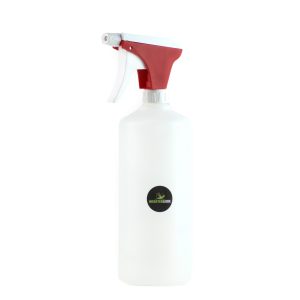
I then lay some sphagnum moss on the cork bark and tie it down with garden wire. When choosing the wire, it is important to make sure that it does not start to rust later. Of course, you can also use other types of moss. I can recommend tree moss from nature, but of course only from trees that have already been felled. You can read about how I use materials from nature here.
Then I cut three 5 mm strips from the ladies’ stockings. You don’t need a ruler for this, just cut them down pi by thumbs. I use these to tie on the orchid. The nylon stockings are ideal as they are elastic, stable and waterproof. This means that the aerial roots are not damaged and can continue to grow unhindered. A little tip: I don’t buy nylon tights for this but ask for free trial stockings in a specialist shoe store. Alternatively, you can also use a waistband elastic, but these have sharp edges and are therefore less suitable.
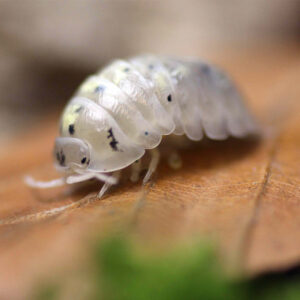
I tie the orchid so tightly that it doesn’t wobble. As soon as new roots form, they will attach themselves to the support. When this happens in sufficient numbers, you can remove the nylon strips again.
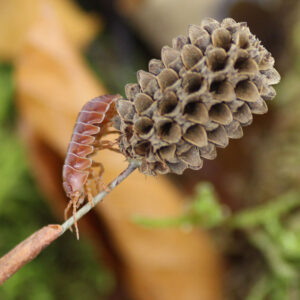
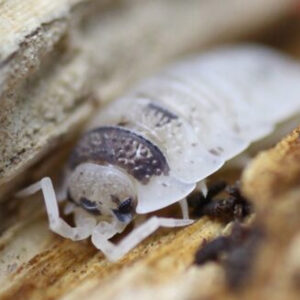
Then spray well over a sink and hang in the insectarium. To do this, I use a scalpel to make two holes in the BraPlast can and attach the wire. And now you have a piece of nature in your insectarium. The mantids and orchids get an optimum indoor climate and it simply looks more attractive than the plastic plants available in the shops.
Real plants are one of the best things you can put in a terrarium. Not only do they help to create a good climate, they also look good. They also offer the occupants privacy and a place to retreat. For mantids in particular, flowering plants are their natural habitat, where they linger and wait for nectar-loving insects. The only thing you should make sure of is that the plant and the soil have not been treated with pesticides.
To be on the safe side, I also wash the plant and replace the soil and wait a few weeks before adding an animal. In the case of an orchid, I don’t need the soil anyway as I tie it up and hang it in the terrarium.
I bought 5 small orchids because I want to hang them in BraPlast containers(18.5 x 18.5 x 19.0 cm) and keep them there permanently.
These are the following species:
Angreacum didieri
It is a small orchid that occurs exclusively in Madagascar. It is an epiphytic(epiphytic plant) growing species and is therefore ideal for mounting. Temperatures of 20 to 28°C and a humidity of 60-80% are ideal. This puts it in line with the orchid mantids.
Mediocalcar decoratum
Mediocalcar decoratum is also a small orchid that grows beautifully in the terrarium and flowers several times a year. It comes from Australia and should be given a bright spot in the terrarium. Its bell-shaped yellow-orange flowers are beautiful.
Nanodes/Epidendrum porpax
This orchid comes from tropical Central and South America. It is an epiphyte (epiphytic plant) with small, thick, fleshy leaves. It should be kept moist and warm in the terrarium.
Dryadella simula
Dryadella simula has a flower size of 1 cm and a leaf length of approx. 10 cm. It is a miniature orchid. Temperatures of 18-25°C and high humidity are ideal. It flowers all year round. Its countries of origin are Colombia, Ecuador and Peru.
Pleurothallis (Specklinia) corniculata
Small orchid that grows very well in the terrarium. It blooms several times a year with small, orange flowers and is easy to care for. It requires temperatures of 23-26°C and high humidity. It is found in Mexico, Guatemala, Panama, Nicaragua, Cuba and Jamaica.
I would like to briefly discuss the parameters of humidity and temperature. The values for the orchids and all the insects described are guidelines. It is not necessary to spray the terrarium four times a day at a humidity level of 70%. I usually spray the terrarium in the evening, half an hour before the heating goes out. This causes some of the water to evaporate and the humidity rises to around 90%. The next morning, the water evaporates relatively quickly and the humidity drops to 50-60%. This also corresponds quite closely to the natural habitats of insects and plants.
In the next blog post I will show you how I will tie up the orchids and integrate them into the insectarium.
Want to know what happens next? Then subscribe to me!
You can find very little or nothing at all online about my new acquisition from the bird spider exchange in Marbach. That’s what made it so special for me. For this reason, I proceeded according to the Isopod scheme. You should ask yourself what Isopods actually are.
They belong to the higher crustaceans, in fact they are the most advanced crustaceans in the world! They are the only ones that do not have to go into the water to lay their eggs, but can do everything on land.
Most Isopods are herbivores and are not really picky. They are therefore among the first decomposers. Basically, you can’t go wrong with oak leaves and rotten wood. Before I take things from the wild and put them in a terrarium, I do the following:
Wash thoroughly
30 seconds in the microwave
or bake in the oven at 100 degrees for 10 minutes
This eliminates all unwanted guests. Predators, such as spiders or mites, are no fun in a breeding batch. That’s why I always follow these steps to prevent problems later on.
As I also bought BraPlast boxes at the fair, I will set up my Porcellionides pruinosus- Cuban Isopods in them. As you can’t keep animals in plastic boxes, as they also like to breathe, you have to work on the boxes a bit.
To do this, I simply cut out a large piece of plastic from the lid and replace it with wire gauze. I simply glue the gauze with hot glue and you have a well-ventilated isopod terrarium.
It is amazing how well they accept the oak leaves. Within a day they have eaten the leaves down to the skeleton.
However, you should also offer them some protein. This can be added in the form of fish food, cat food or chick starter. To do this, finely grind the food and add small amounts, working your way up slowly. As soon as mold starts to form, reduce the dosage again. Don’t worry, a little mold does not harm the Isopods, on the contrary, they eat it, but this should not be a permanent condition in the Isopod terrarium.
I keep them in my hobby room at room temperatures of around 24-26 degrees and spray a shot of water into the terrarium with my spray bottle in the evening.
Now it’s time to observe and pay attention to every little change and take countermeasures if necessary. I’ll keep you up to date.
If you are interested in some beautiful offspring, then have a look in my store. I regularly offer you a great selection of species and animals there. Have fun shopping!
If you need more information about Porcellionides pruinosus- Cuban Isopods, then have a look at the husbandry report. Have fun reading!
On my YouTube channel, I go into great detail on the topic of substrate in the Isopod husbandry video and show you in detail which substrate layer to use from the forest and how best to treat it.
You are currently viewing a placeholder content from Default. To access the actual content, click the button below. Please note that doing so will share data with third-party providers.
Finally Sunday, finally trading day. I tend to be one of those impatient types. The kind of person who sets the alarm clock to 6 a.m. on days like this and is still afraid of not being at the destination on time. Surprisingly, the huge journey of around 50 minutes turned out to be exactly as my app had predicted. I arrived in Marbach at 10 a.m. and rubbed my eyes in amazement when I saw the long-haired, black crowd standing neatly in a row. The rush to the stock exchanges still seems to be unchecked. After half an hour of waiting, I was finally allowed to pay my EUR 6 entrance fee and immerse myself in the world of tarantulas.
I hung my camera around my neck as a precaution and was “ready”, so to speak. The positive thing about such a camera is that you are seen as a tourist and I think they buried their hopes of selling me something as soon as they saw me. Why didn’t I bring any photos of tarantulas with me? For one thing, which is also surprising for me, I lived out my passion for tarantulas and it hasn’t returned after about 15 years of abstinence. On the other hand, I had the feeling that everything I had seen at two tables was repeated in a different order and arrangement at the other exhibitors. Three aisles further on, my attention span was at rock bottom. I said to myself, Frank you’re at a tarantula fair, what do you expect. So far I’ve had two highlights, a Heteropteryx dilatata jungle nymph locked in a box so narrow that I didn’t want to capture it on camera. The same picture was repeated with the Extatosoma tiaratum- Australian Ghost Grasshopper. I had to restrain myself from making a rescue purchase, but I didn’t want to reward them for their disgraceful deed. A little disappointed, I glanced at the stage and thought to myself, come on, I’ll go up there and then I’ll get some accessories to make the visit at least a little worthwhile. And there it was, my personal reward. A mantid dealer who not only knew something about his animals at first glance.
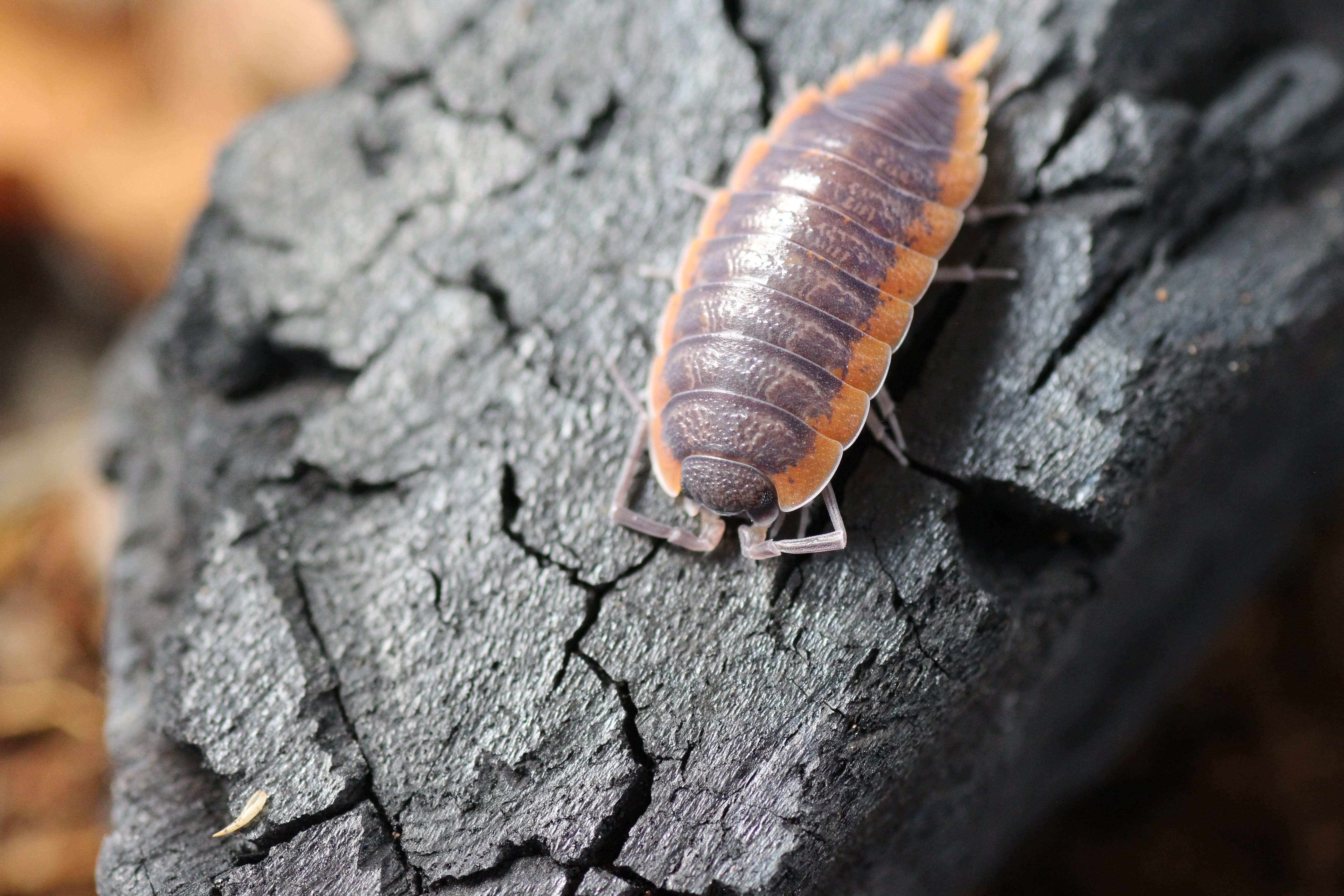
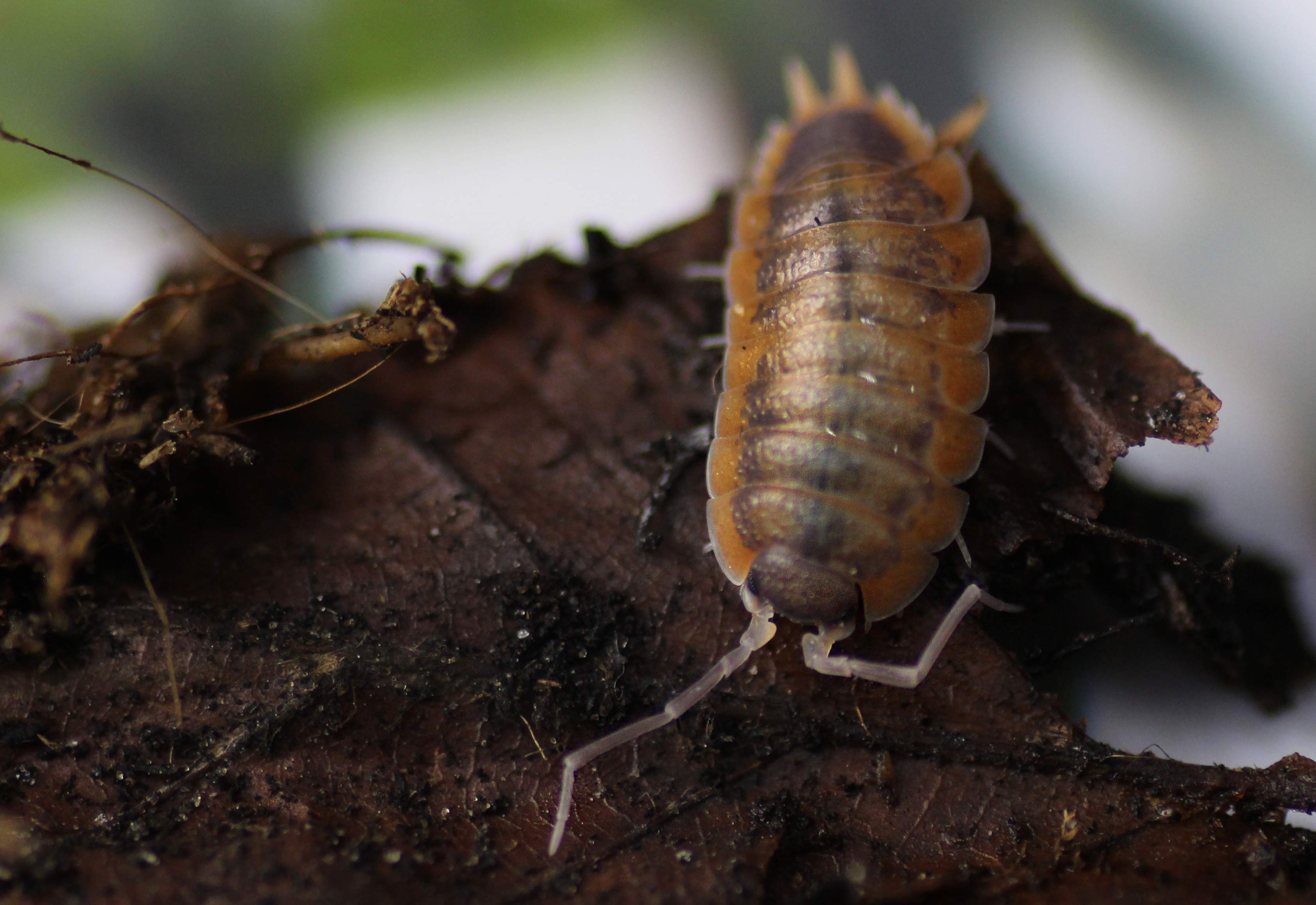
Unfortunately, I didn’t use my voucher as there were only female Hymenopus coronatus left and I didn’t want to stress myself out looking for a male. I also didn’t find any dealers selling heating mats or other lighting at the whole fair. As I had nothing left in reserve at home either, I didn’t compromise and left the orchid mantis where it was obviously doing well. So I made my way to a seller of plastic tins and food animals, who had his stall right at the entrance. 5 Braplast tins for 7 EUR and a large pressed ball of spaghnum moss for 7.50 EUR were the bargain of the day for me until I discovered the Cuban Isopods. There they were, standing inconspicuously between white Isopods and pea aphids. I had never seen them before. White Isopods are more common, but I’d never seen Cuban Isopods before. I drove home with the rarest and most exotic specimens of the whole tarantula fair and with the next mission in mind, to get oak leaves and rotten wood from the forest.
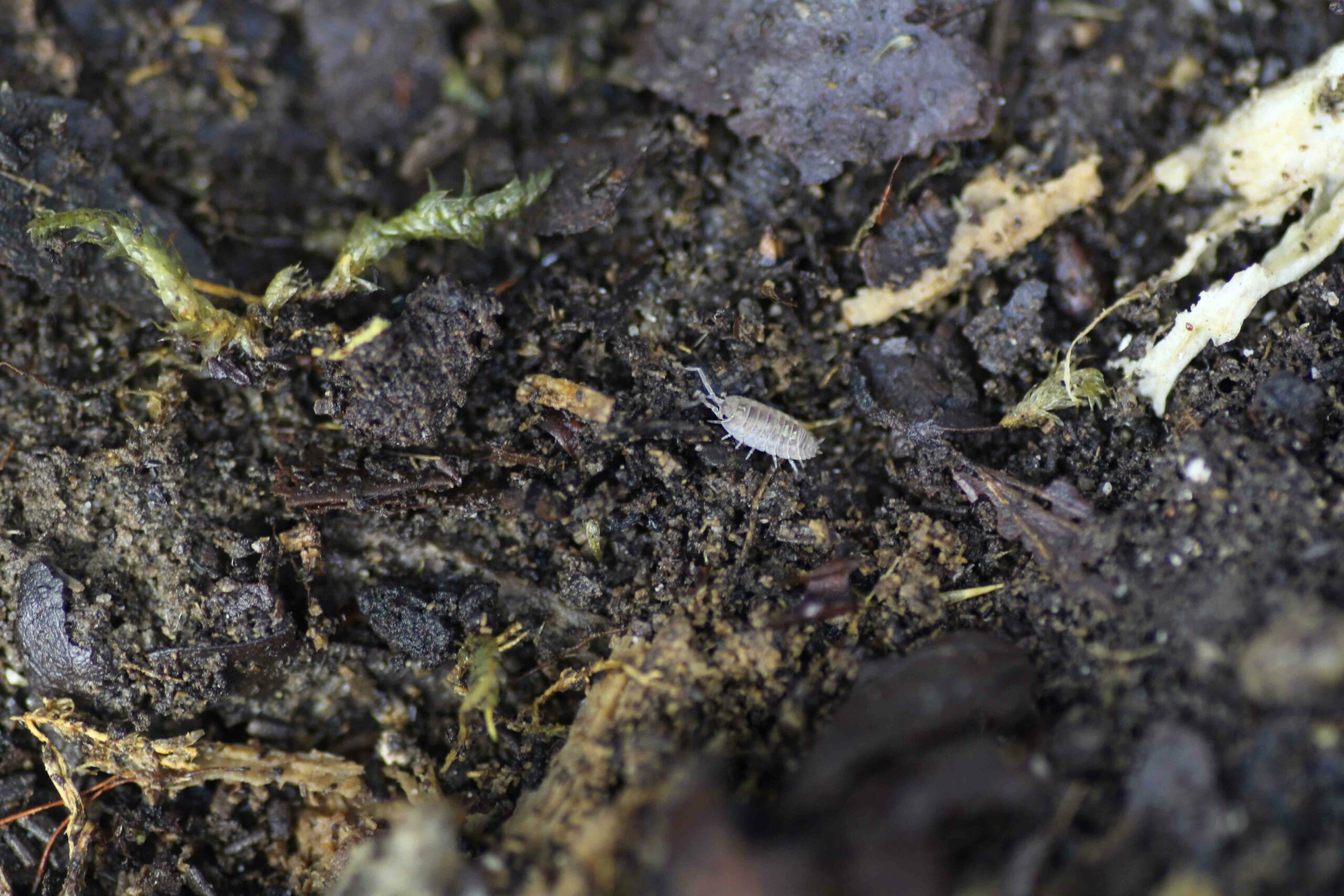
So there I sat in the subway, looking out into the gray concrete world with no hope of anything interesting. But what did my tired eyes see?
A poster with the inscription “International tarantula exchange in Marbach am Neckar”.
So I thought to myself, Frank do you know where you haven’t been for ages? My mind immediately went back in time, back to the 90s, when people bought their animals at pet fairs. Because how else would you get your exotics? A world in which you panicked if you accidentally pressed the Internet connect button on your cell phone. I immediately felt hope and excitement that I might find something there that I had been looking for for a long time. What exactly could it be? I have no idea, but I’m an open-minded person. My thoughts wandered over the plastic boxes I saw at the time and their contents. Yes, a stock exchange is just what I need this weekend. My girlfriend gave me a gift voucher for my birthday with the words “1x DEINEN WUNSCH ERFÜLLEN” on it. I’m going to take it with me to the exchange and keep it handy. As soon as I hear, you already have so many … this magical piece of paper will be used and the words I said before will fizzle out into nirvana. Yes, this will probably be my first and last voucher of this kind, but hey, time heals all wounds.
…you only buy sausage salad from the butcher to get the breeding box
…you refer to your pubescent son as a “subadult buck”
…you only allow your 3 children one room – to test species compatibility
…you give your children their school lunches in a Faunabox
…you are happy about regular “poops”
…you have to keep reassuring your girlfriend: “No, that’s not one of my insects”
…you don’t swat annoying mosquitoes to death in the kitchen, but instead guide them to their actual destination
…you fly away on vacation to rest and relax, but then run after every insect
… the money in your account is getting less and less, but the number of residents in your apartment is steadily increasing
… the visit to the next terrarium fair is booked as a family outing
…the visitor wants to crush an escaped insect on the floor because he thinks it’s vermin and you shout: “Stop! They’re hard to breed!”
…you are told that someone has problems with severe aphid infestation and instead of comforting them, you ask: “Can I have these?”
…you get told “you’re disgusting!” and you respond with “it was already dead before I froze it”
…your girlfriend sits in the terrarium in the hope of getting more attention
… your pharmacy has to place a special order for stool sample tubes in the fall
… you also annoy your pharmacy with other dubious requests
… you don’t call your 18th birthday an age of majority, you call it maturing
… the blackberry bushes in the garden are sprouting properly thanks to your weekly pruning
… the television has become completely superfluous for you
…you pay the hordes of children in your neighborhood to catch locusts and at the same time get angry about child labor in India
…you find the question “Why do you keep insects” somehow strange and superfluous
… you can no longer buy frozen products because the freezer is full of frozen food
… you actually got up early and are still 15 minutes late for work again because the morning view of your hobby room was so captivating
…you keep buying baby food even though you don’t have children
…you check everything you see in the DIY store for suitability for terrariums
…you convert everything that is not suitable for the terrarium in your head
…you receive chirping mail
…you ask yourself every time you walk through the apartment whether all the furniture is really still needed
…you spend days drilling holes in plastic boxes
…you come back from a relaxed walk laden with branches and stones
…you buy all the healthy fruits but only the cigarettes are for you
…you only smile when someone asks: ”Ewwww, are they slippery?
…you are listed as an industrial customer by your electricity supplier
…the care of your animals is the top priority when planning your vacation
… you are visiting a couple of friends whose child has just fallen ill and you first ask about husbandry parameters such as humidity, temperature and flooring in the child’s room
…you see your colleague’s home furnishings as a waste of space
…you think about force-feeding if your child doesn’t want to eat
…you are asked by a beautiful woman to help her open her dress and you think of skinning help
…the neighbor has cockroaches in the apartment and you ask: “Can I have them?
…you as a man buy tights in multipacks
…you can unmask the evil poisonous snake as a Sinaloa milk snake when you go to the movies
…you can’t understand how you can be disgusted by cockroaches
…you eagerly breed insects by the kilogram, which are beaten to death by others
…you can always find a place for a terrarium somewhere
…you enjoy the climate in the middle of winter topless and in shorts in your apartment
…you encourage everyone you know to pick up toilet rolls and egg cartons
…you don’t believe yourself when you say: “So…complete…there are no more animals”
…you are afraid of moving house
…trachycephalus, cyaneopubescens, phyllium or similar words are part of your everyday vocabulary
…you buy your pet food at the health food store and only cover your own needs at the discount store
…the cashier at Ikea gives you a dirty look because you come along with 50 drawers that are intended as storage space for children’s rooms
…you say to yourself every day: “Tomorrow I’ll do something about the cable clutter!
…you ghost through the apartment in the middle of the night, armed with a flashlight
…you have to lie when the little child asks you where the sweet fruit flies have gone
…you no longer divide your home into rooms, but into climate zones
…if you are constantly thinking about whether plastic boxes are “woodlouse-suitable”
…when your visitor is surprised that the decoration lives on the living room shelf
…when you realize that the animals do not live with you but you live with the animals
…if you are constantly mixing banana paste to feed “the little ones” properly, but are childless
…when you smile and nod in the supermarket when the cashier asks: “For the rabbits?”