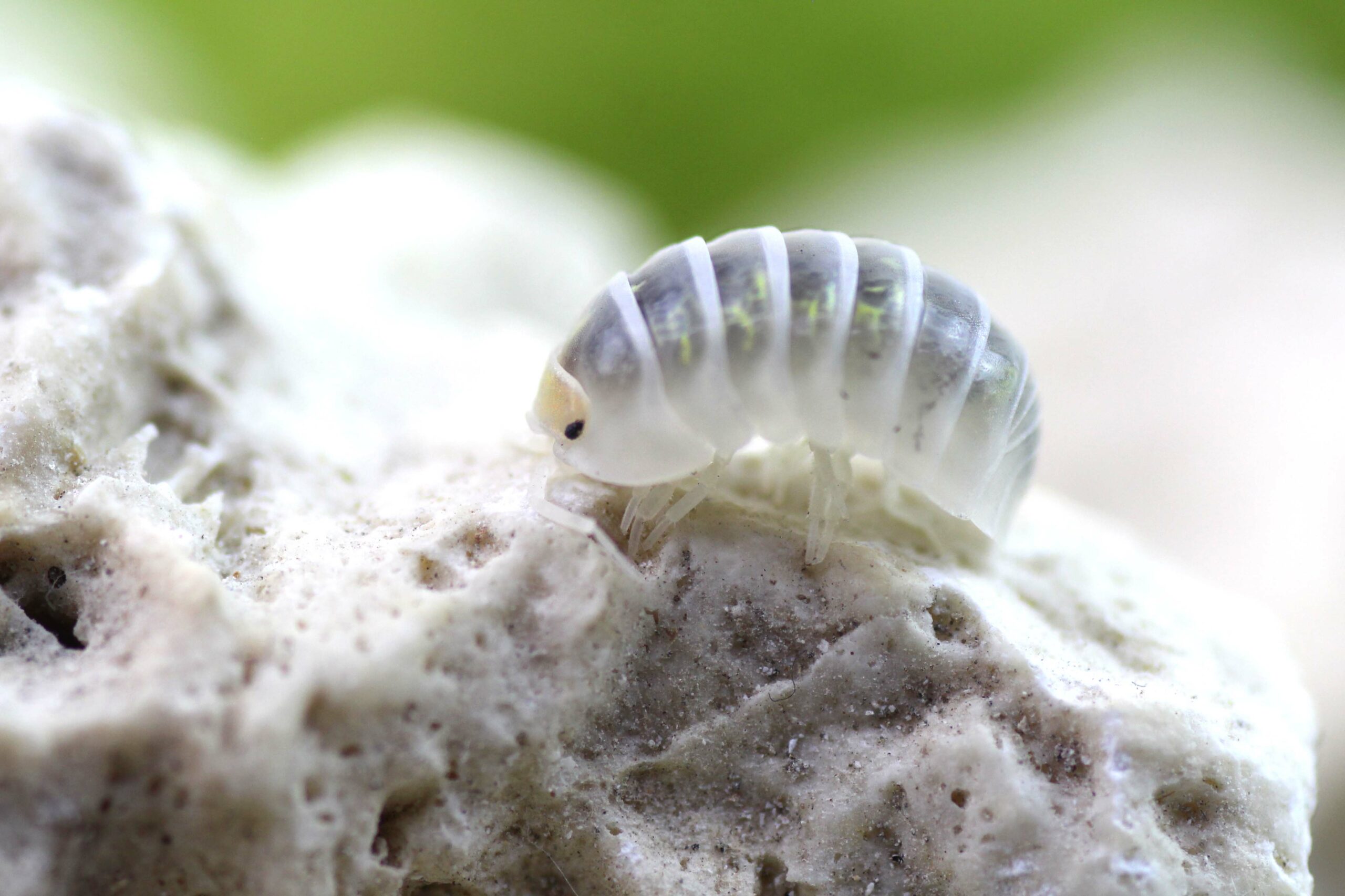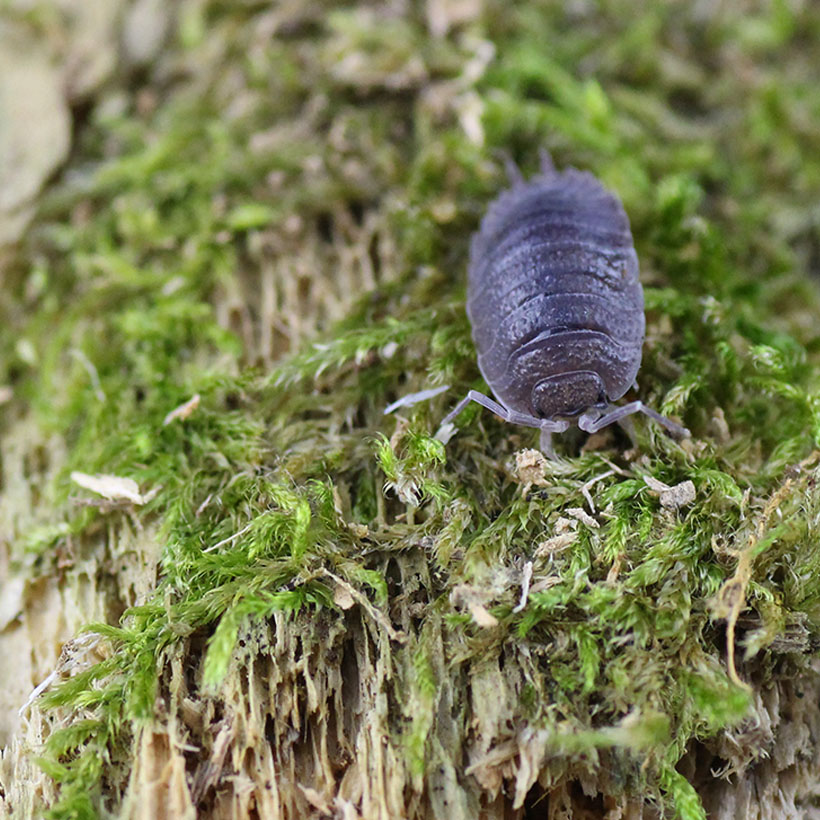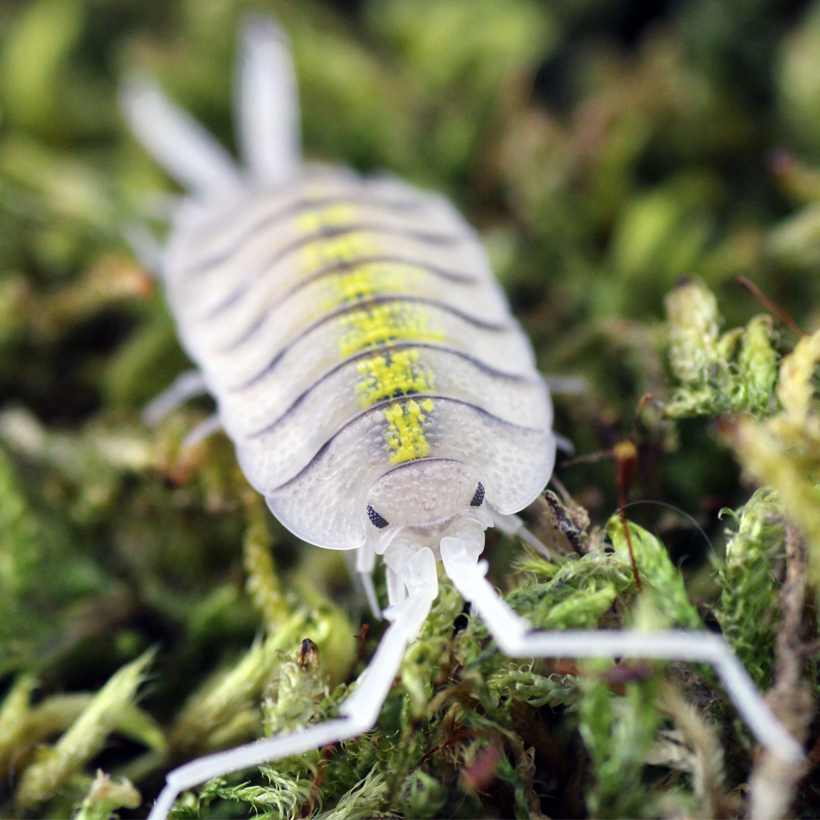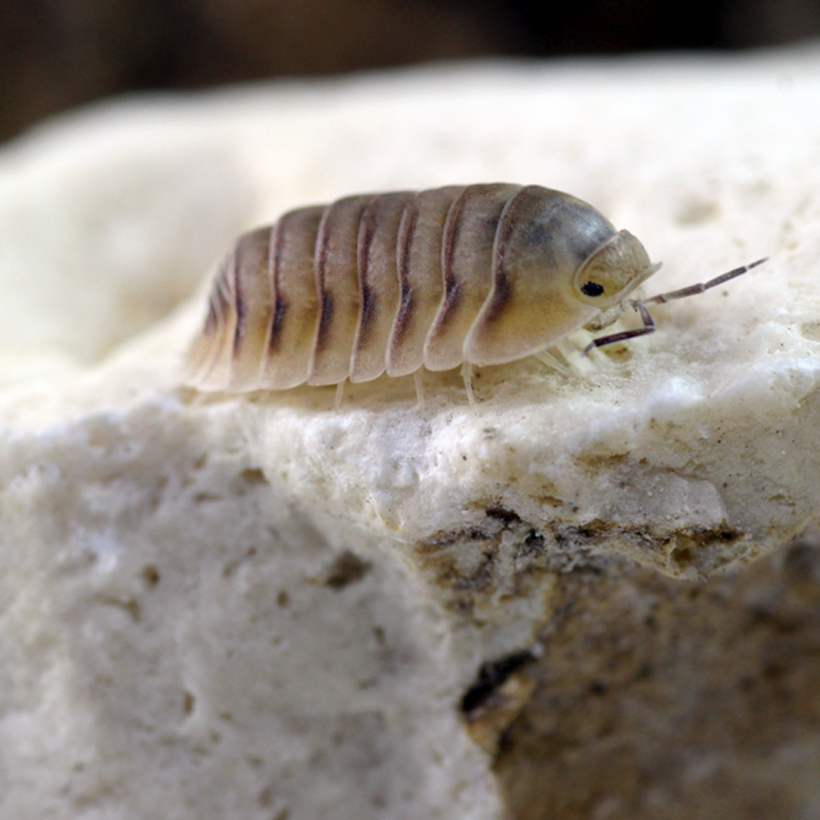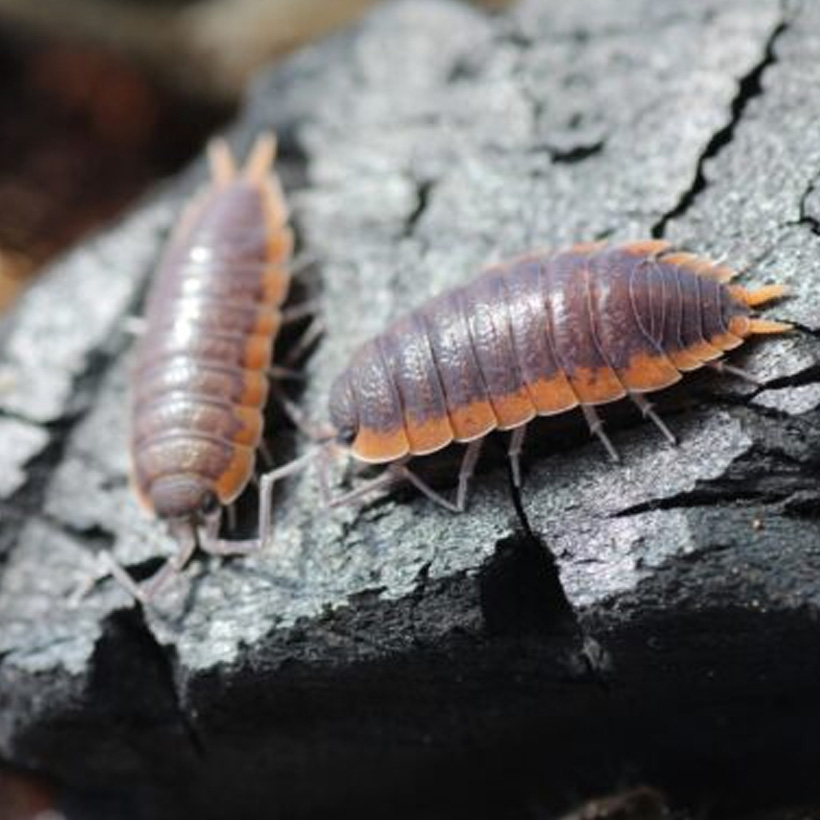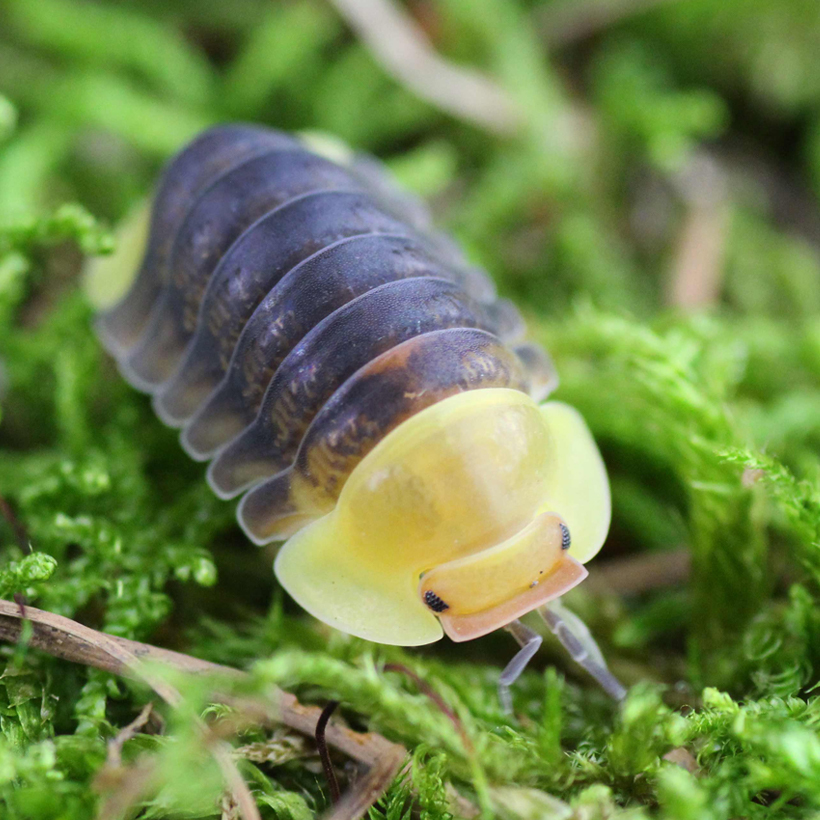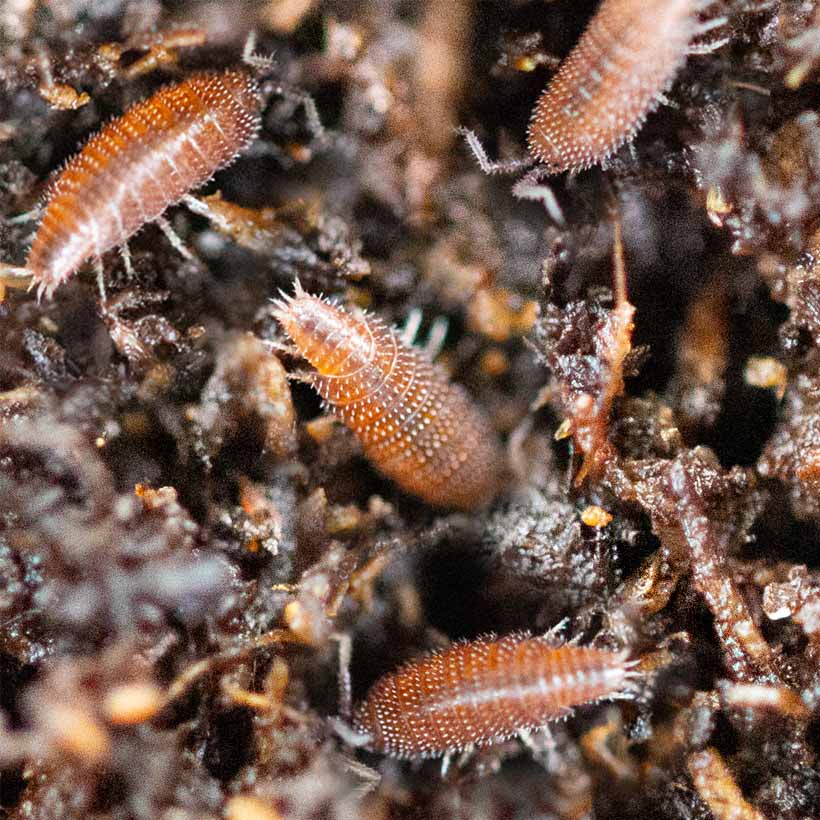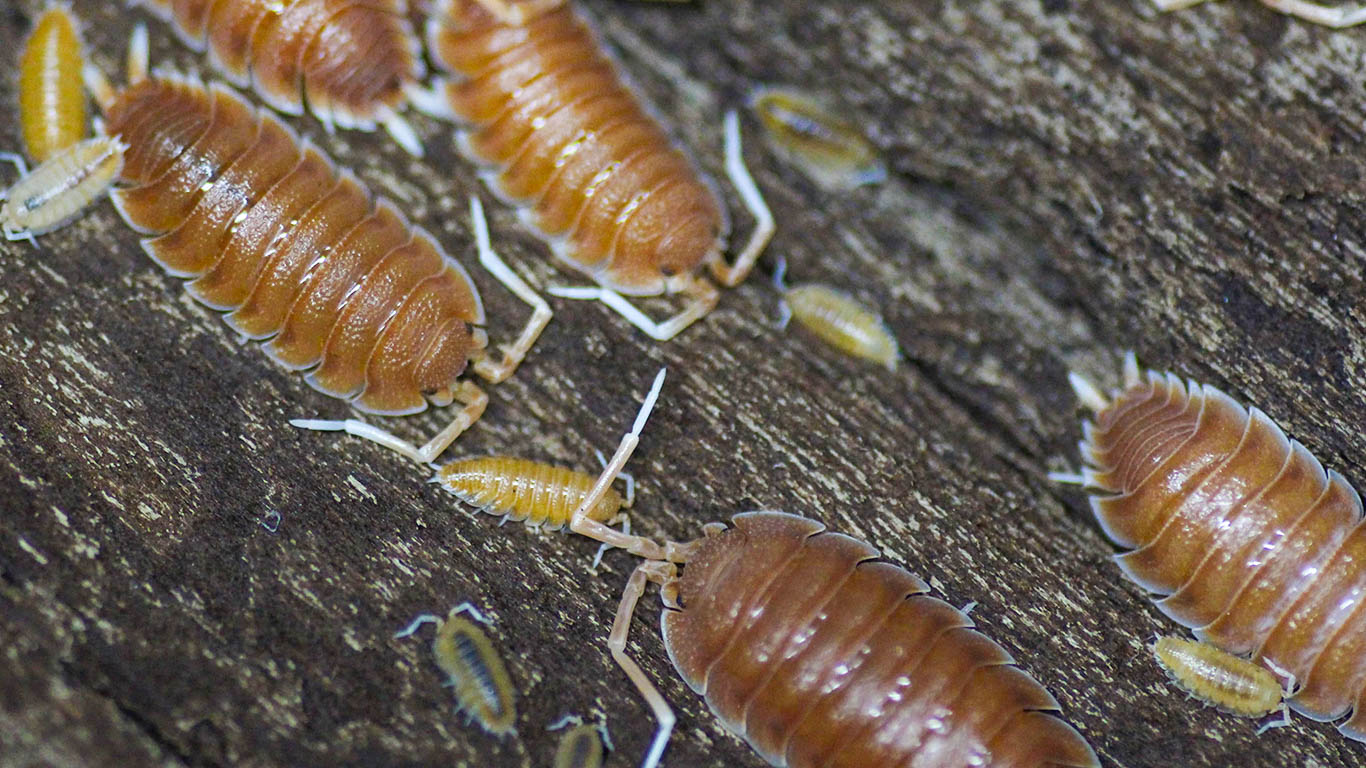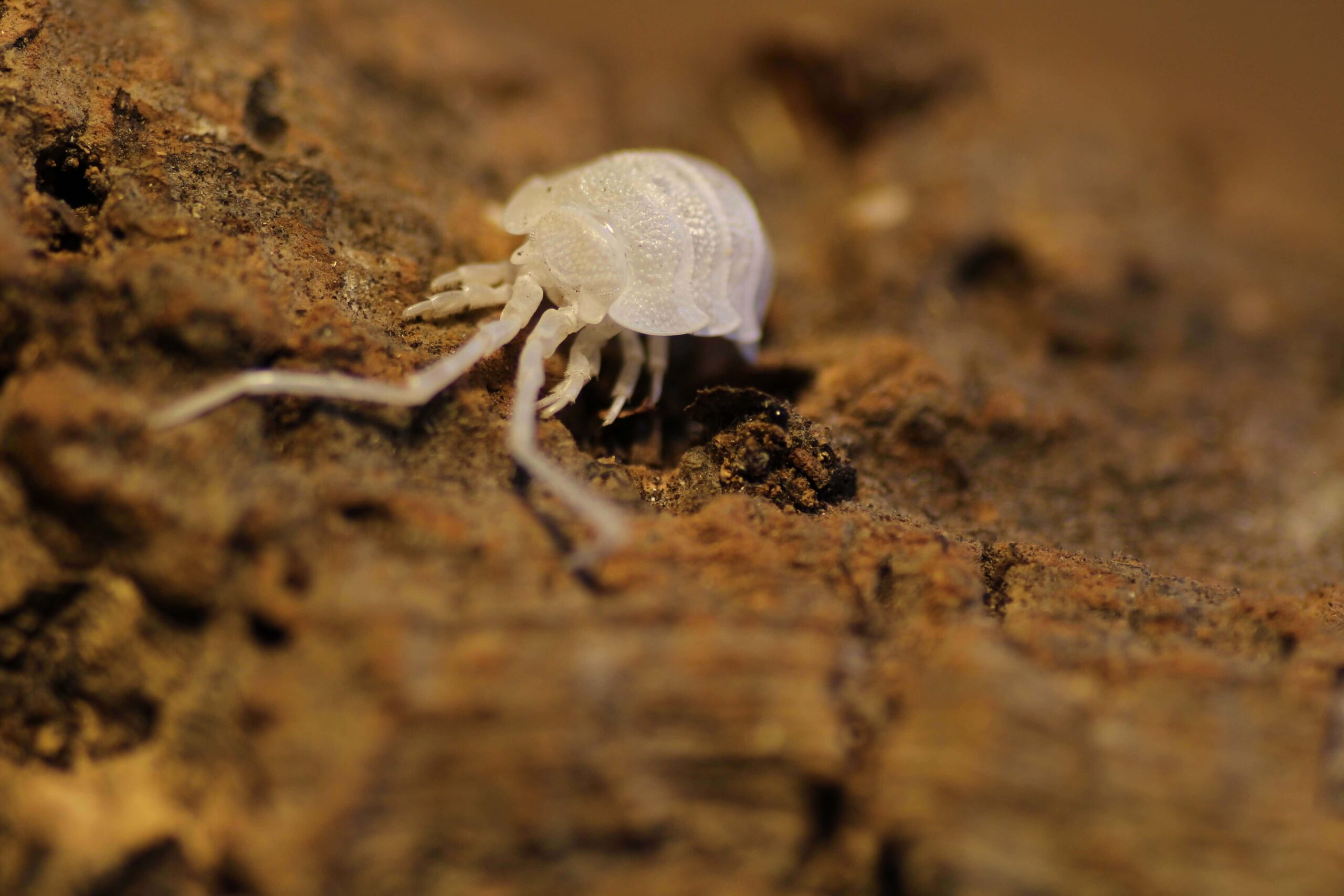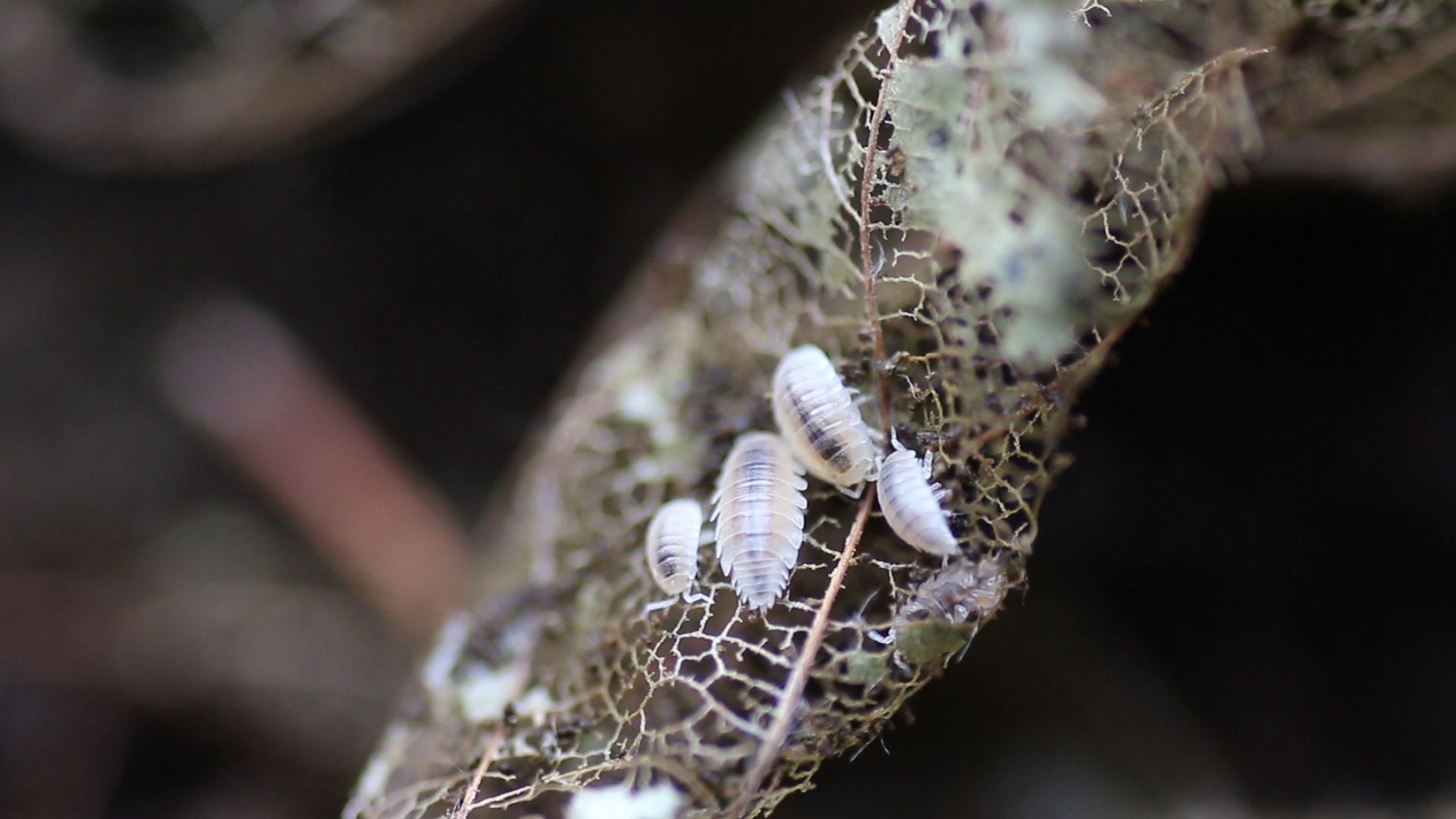


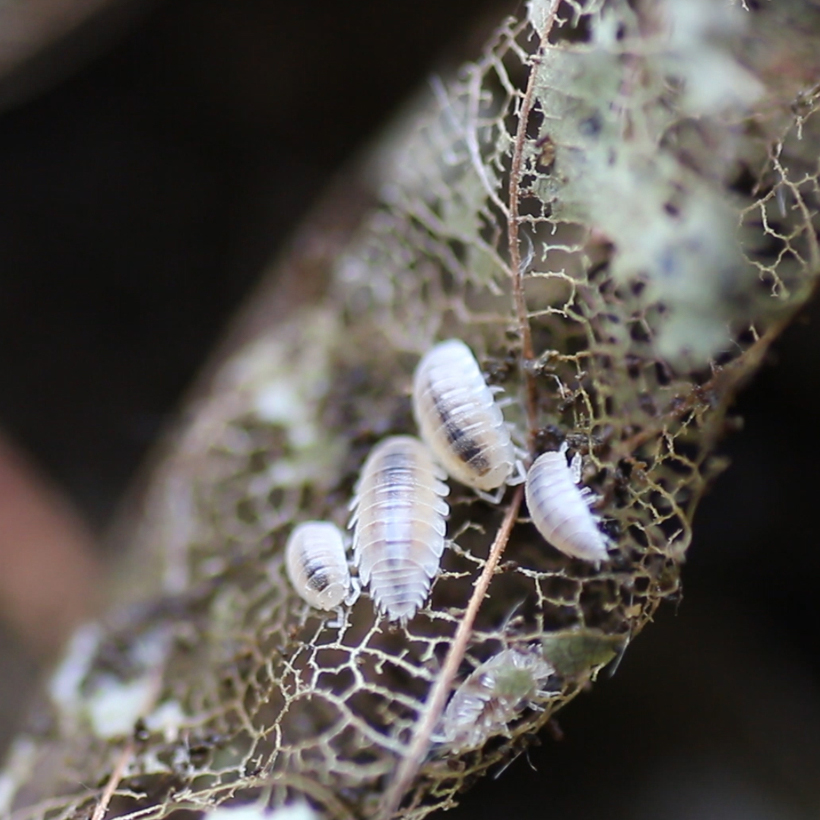
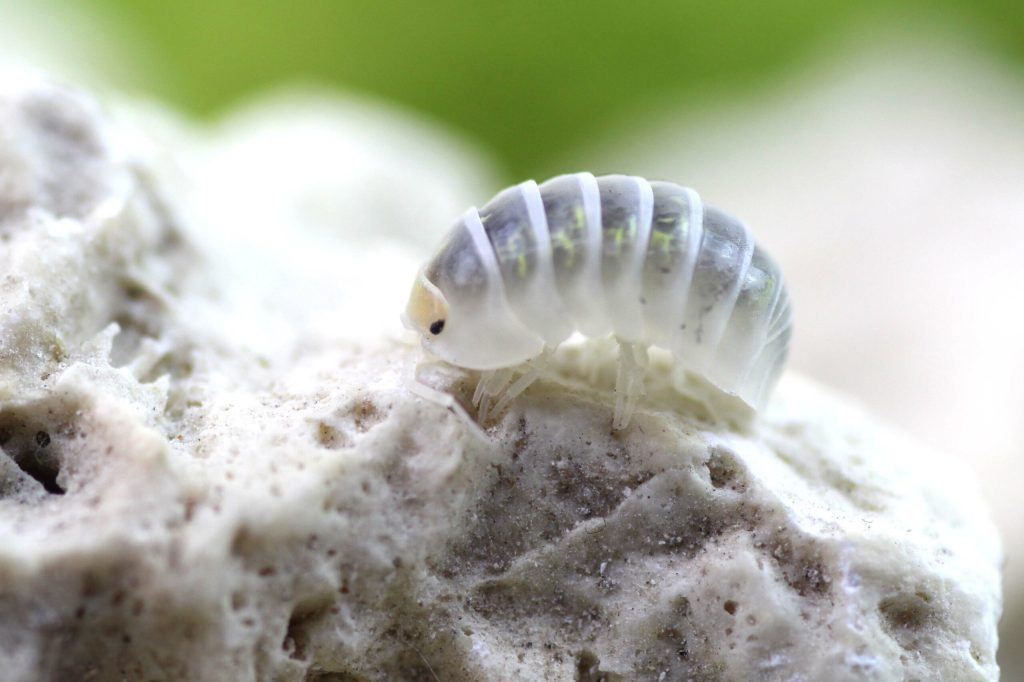
White isopods usually work where you can hardly see them: under leaves and in damp substrate. Trichorhina tomentosa can help break down organic debris and is suitable for many humid terrariums. However, this doesn’t mean the terrarium will clean itself on autopilot.


An Overview of White Isopods
| Temperature | 18–25 °C – as a guideline, out of direct sunlight |
| Size | up to about 5 mm |
| Keeping | A group in a well-ventilated enclosure or terrarium |
| Basic food | Leaves, white-rotten hardwood, and nutrient-rich substrate |
| Important | Moist hiding spots, fresh air, and a source of calcium |
As animals to observe, the tiny Isopods are less conspicuous than large, colorful species. If you’re mainly interested in seeing a lively group on the surface, a separate box with larger Isopods is a better choice. For the moist soil layer, however, white Isopods are practical helpers.
Adding White Isopods to a Terrarium
Plant them in an area with loose, slightly moist soil, leaves, and decaying hardwood. The soil should neither dry out completely nor become waterlogged. A piece of bark or a layer of leaves will protect the surface from drying out too quickly.
For mantises or jumping spiders, their inclusion is only an option if the terrarium already has a suitable moist ground area. The needs of the main inhabitants take precedence. A terrarium set up to be dry will not be made more humid solely for the sake of the “ground police.”
You should continue to remove uneaten food, large amounts of feces, and dead feed animals yourself. The small Isopods can only process limited amounts. Heavy mold growth is therefore a reason to check humidity, air circulation, and feeding practices.
Starting Your Own White Isopod Colony
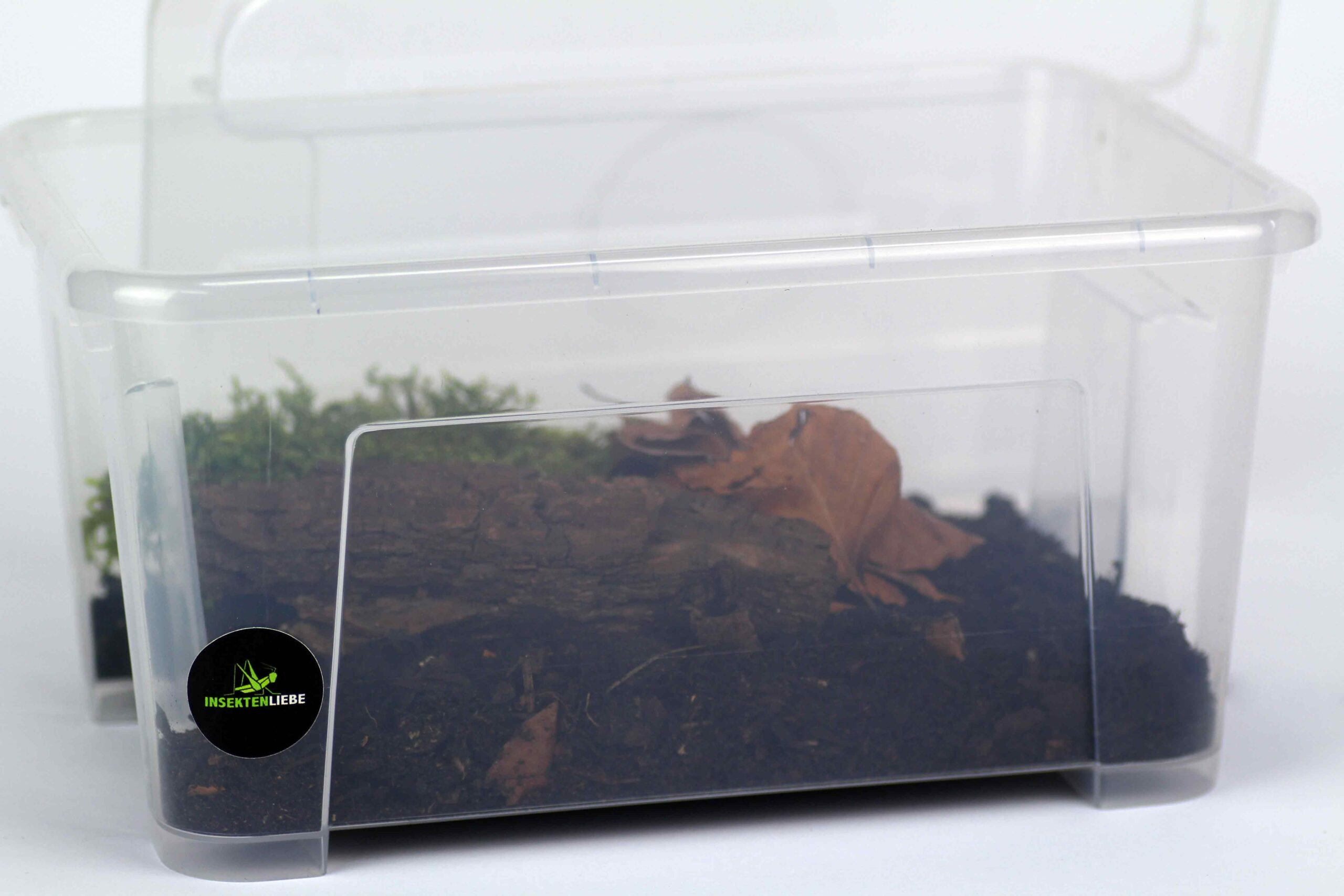
A plastic box that closes securely, with carefully secured ventilation openings, is sufficient for a small culture. Fill it with several centimeters of forest humus, mix in leaves and white-rotted wood, and add hiding places. Keep most of the substrate slightly moist without soaking the entire box.
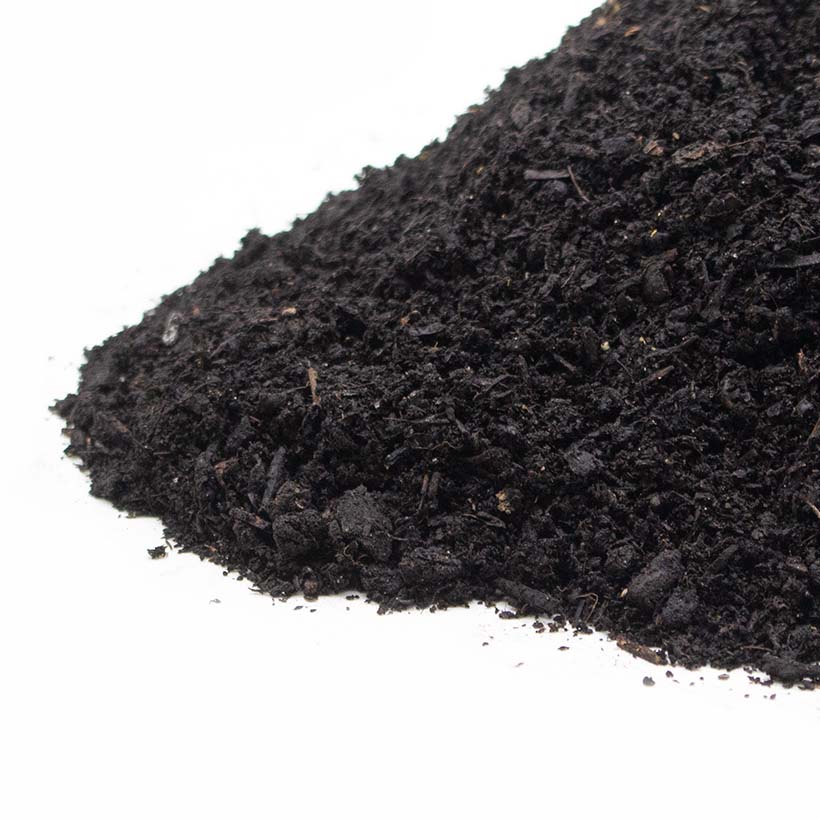
Forest humus
Forest humus – Natural forest soil for your terrarium With the forest humus You’re bringing a piece of natural forest soil right into your terrarium. This high-quality substrate comes from…
Place the plant where it won’t be exposed to direct sunlight. If the room temperature is right, you won’t need any additional heating. When watering, also check the moisture level beneath the layer of leaves. Watering the plant directly is often more effective than just misting the surface.
What do white Isopods eat?
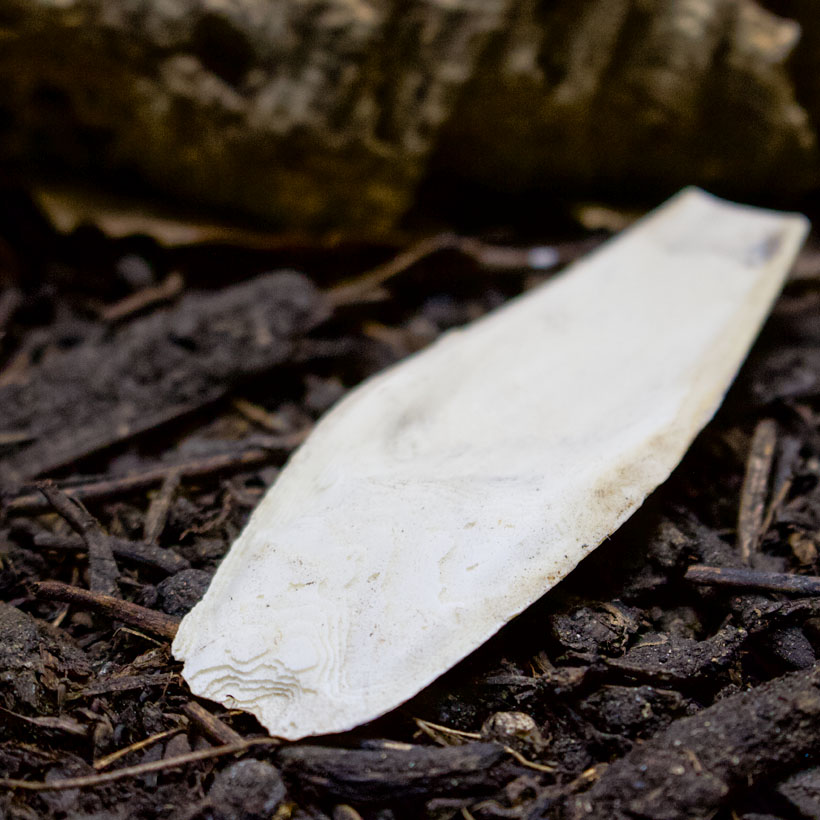
Leaves and decomposed wood are a permanent part of the enclosure. A source of calcium supplements their diet. As the leaves gradually break down, add more. This creates a food supply that also provides cover.
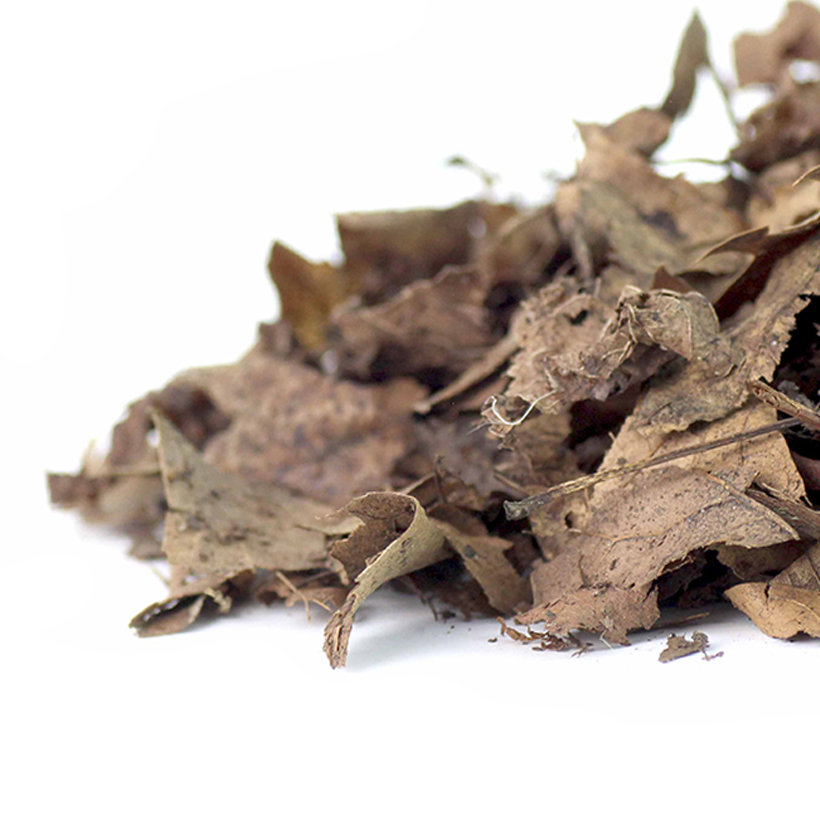
Fodder leaves
Staple food for many invertebrates.
If you’re raising them separately, you can supplement their diet sparingly with our white isopod food. Start with a very small portion. Any food left over the next day will indicate whether you should give them less. In a bioactive terrarium that’s already well-stocked, additional feeding isn’t automatically necessary.
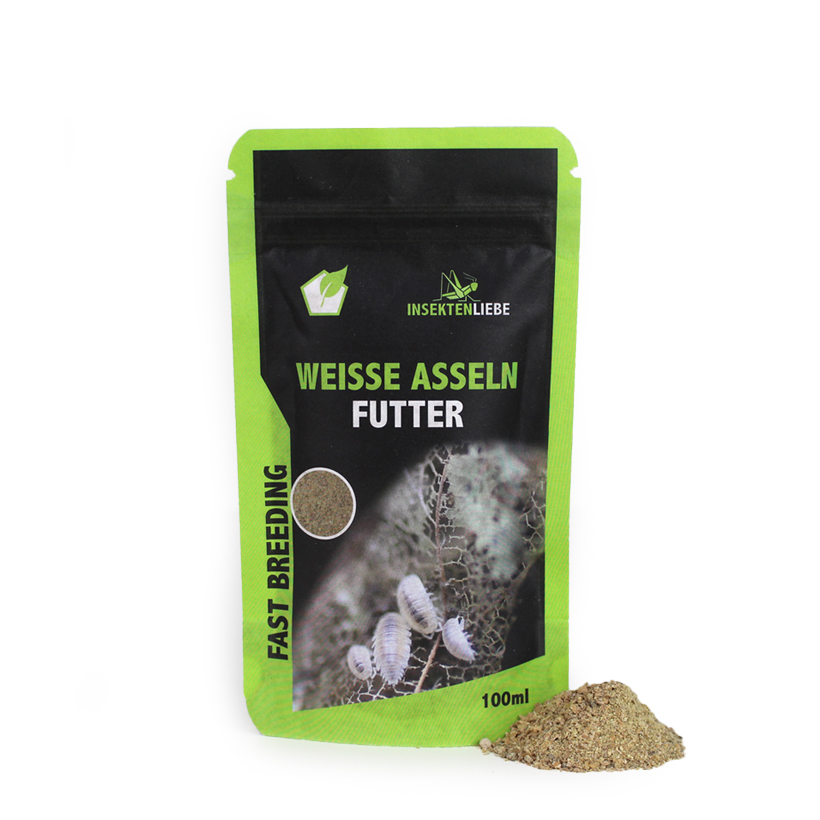
White Isopods food
The perfect recipe in a stand-up pouch!
Breeding and Harvesting
Let the colony grow first. Later, remove only a small portion and set aside a reserve. To transfer them, you can carefully place some colonized substrate or a small piece of leaf litter into the destination container. Be careful not to accidentally mix them with other woodlouse colonies.
For larger mantises and jumping spiders, white Isopods are not a substitute for appropriately sized prey insects. In their natural habitat, they are primarily ground-dwelling creatures. Whether they are suitable as food depends on the species, size, and hunting behavior of the predator.
Why can’t I see my white Isopods?
This is often normal for this species. Carefully lift a small hiding spot and check the ground underneath. These animals spend most of their time hidden. Only if uneaten food remains, the ground dries out, or you notice any losses should you examine the conditions more closely.
Recommended Reading: Springtails as Tiny Roommates
Here’s how to care for these tiny soil helpers and, if needed, start your own colony.
Discover More Isopods
Here you’ll find a selection from our store. Before purchasing, make sure the specific species’ needs are compatible with your terrarium.
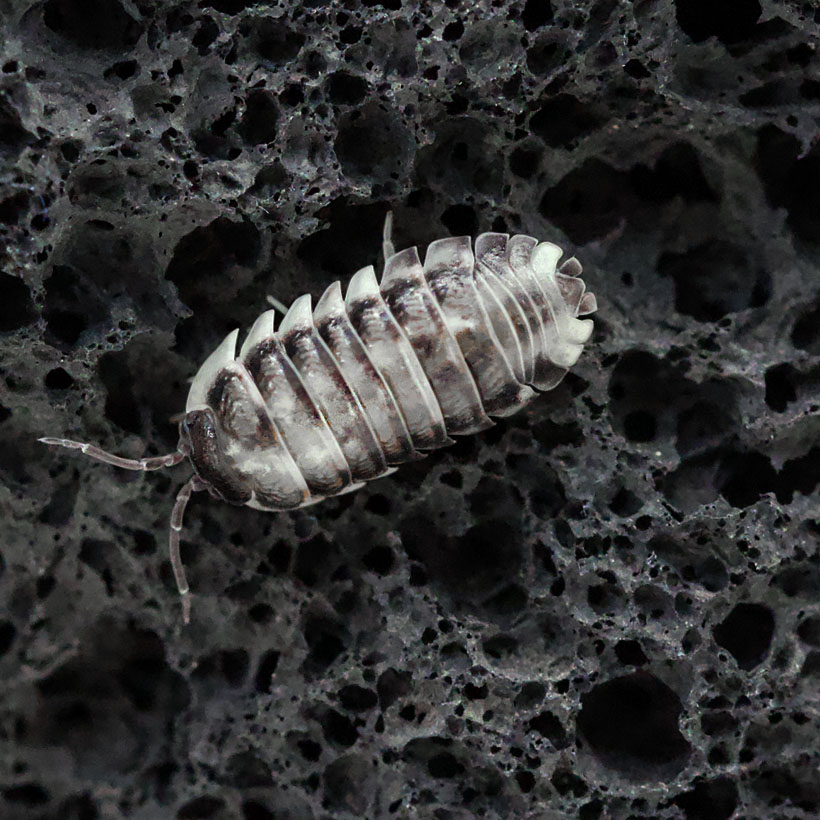
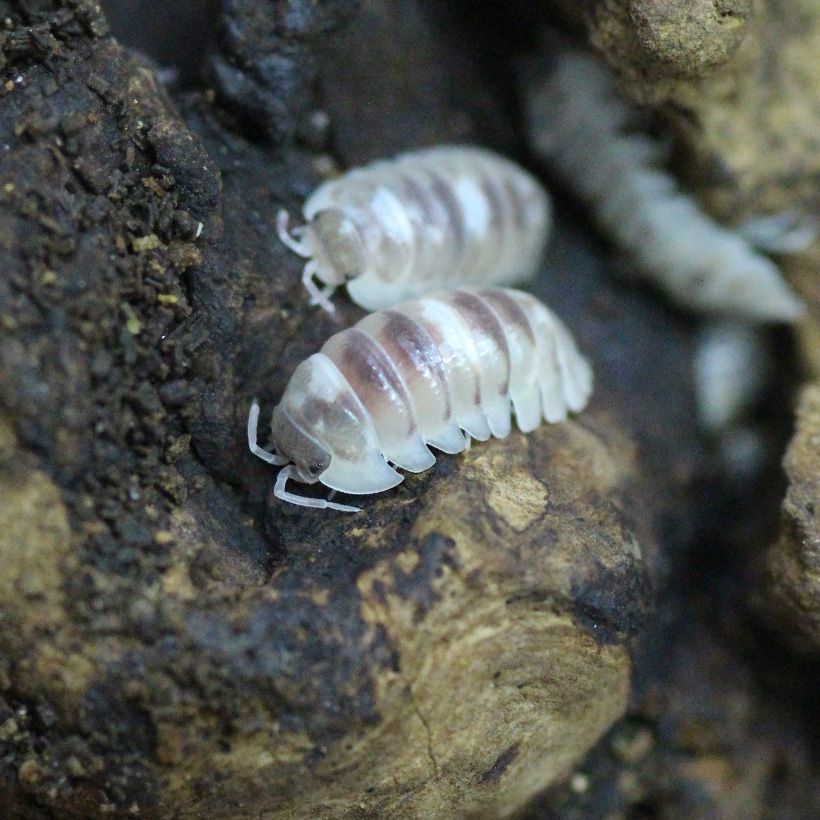
Still unsure? Feel free to ask us your question in the comments section below the article.