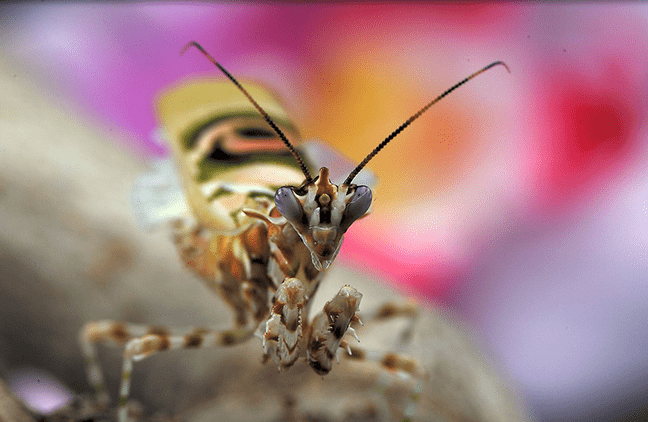


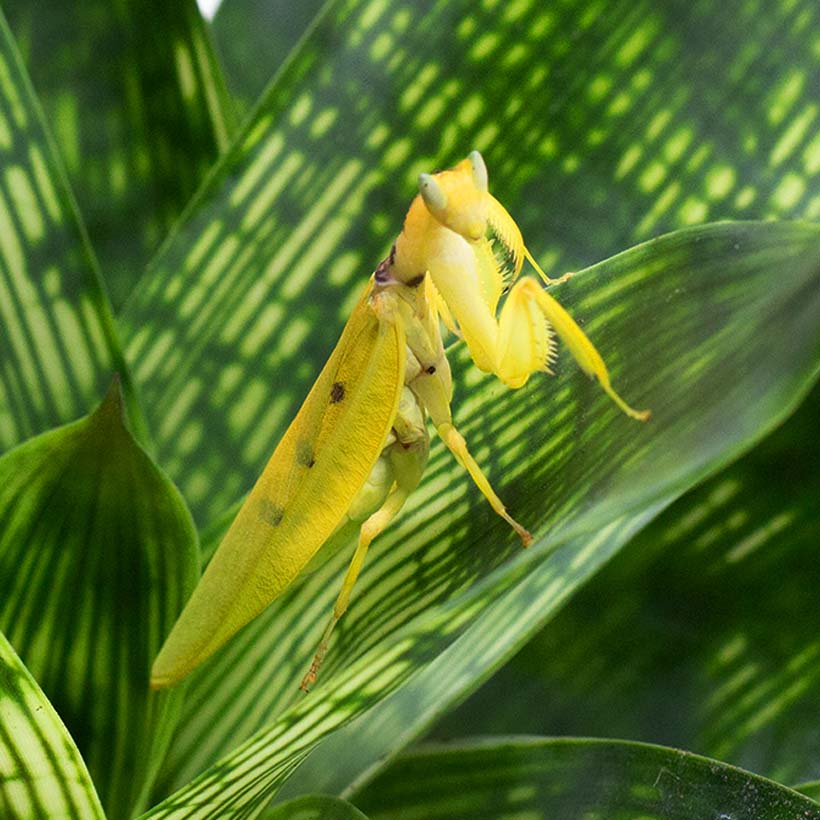
The African flower mantis, *Pseudocreobotra wahlbergii*, immediately catches the eye with its bold patterns and eye-like spots on its wings. To care for it, you’ll need, above all, warmth, fresh air, and a safe place for molting. You should not intentionally provoke its striking defensive posture.
An Overview of the African Flower Mantis
| Origin | Eastern and Southern Africa |
| Size | Males about 3–4 cm, females about 4–5.5 cm |
| Keeping | Individually—the safe choice, even for young animals |
| Temperature | About 25–30 °C during the day, around 20–23 °C at night |
| Air humidity | Approximately 50–70% as a guideline; no persistent moisture |
| Terrarium | For example, 20 × 20 × 30 cm for an adult animal |
These animals lie in wait for prey and spend a lot of time on branches or leaves. Their color can vary. It is not possible to reliably induce a specific coloration through colorful decorations. Therefore, set up the terrarium according to the animal’s needs.
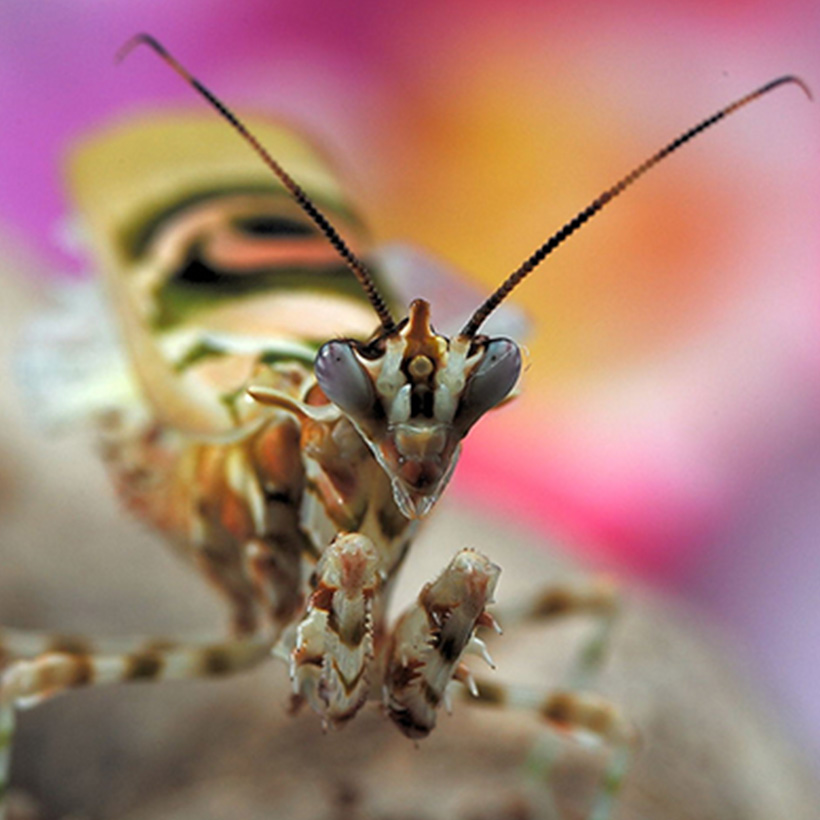
Pseudocreobotra wahlbergii
Pseudocreobotra wahlbergii – Small, colorful and full of energy Pseudocreobotra wahlbergii is one of the most well-known flower mantids in terraristics, as the species combines unusual coloration with very active…
Setting Up and Rearing the Flower Mantis
Small nymphs are easy to monitor in well-organized, escape-proof rearing containers. Carefully regulated aeration and sturdy climbing surfaces are important. Using paper towels as a simple substrate makes it easier to remove food scraps during rearing.
As it grows, the flower mantis needs more vertical space. Its enclosure should be at least three times its body length in height. The space beneath its perching spot remains crucial. Do not fill it with flowers, branches, or deep layers of substrate.
A BraPlast container with dual ventilation is handy for housing young animals of the appropriate size. Check the usable height before each transfer. An existing suitable container can be used just as well.
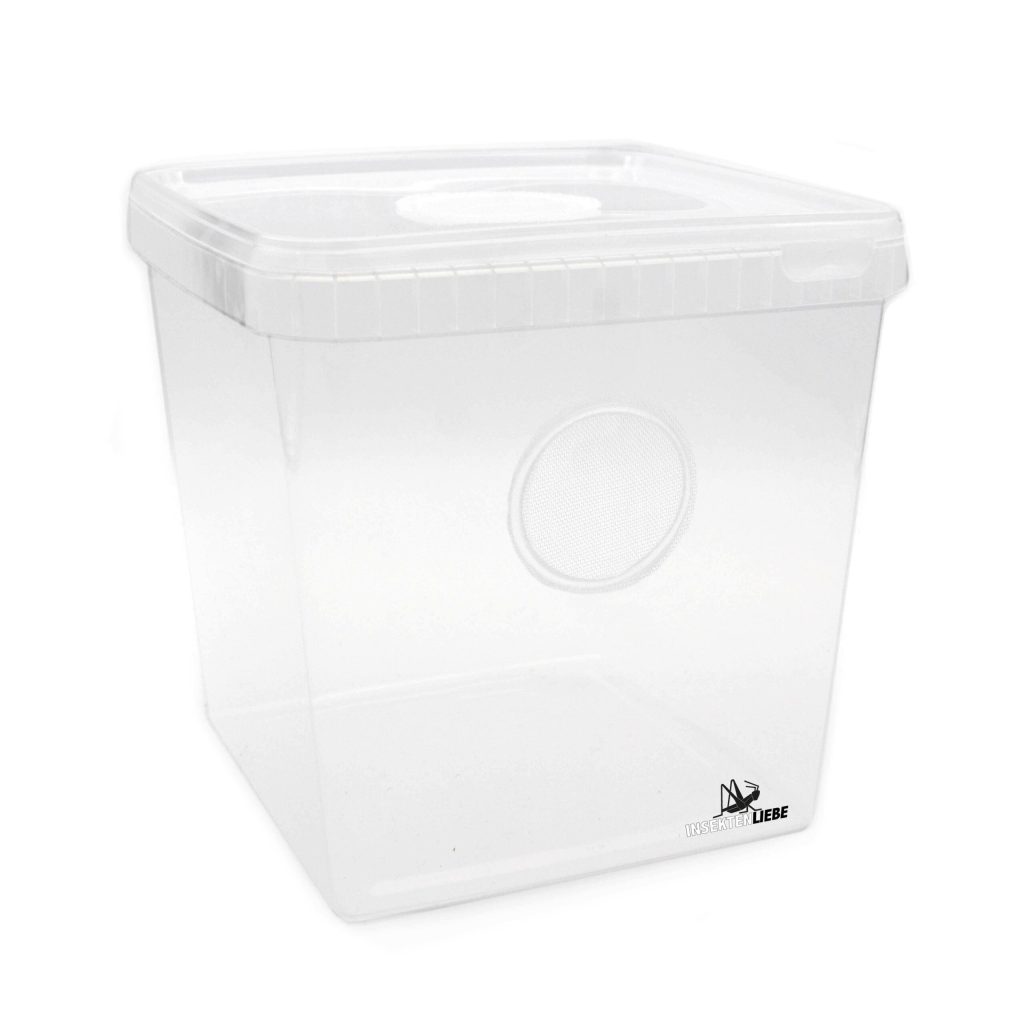
BraPlast can with double ventilation
BraPlast Tank with Dual Ventilation – More Fresh Air for Your Invertebrates The BraPlast container with dual ventilation is a practical and safe housing solution for a wide variety of…
Recommended Reading: The Right Mantid Terrarium
Here’s how to assess size, ventilation, and open space before buying a new terrarium.
Temperature, Humidity, and Drinking Water
A warm location during the day promotes development. Check the temperature at the resting spot and avoid direct sunlight. Small enclosures can quickly become too hot. Do not overheat the animal to force it to mate.
If necessary, lightly mist a wall or the furnishings. The droplets should be within reach, and the surfaces should be allowed to dry afterward. Replace wet paper towels. Adjust the amount of water to suit your terrarium, rather than soaking it every day according to a rigid schedule.
Materials collected from nature must be clean and free of contaminants. Do not use branches from plants that have been sprayed with pesticides. Brief heating in the microwave is not a reliable way to eliminate all unwanted pests and can cause dry material to catch fire.
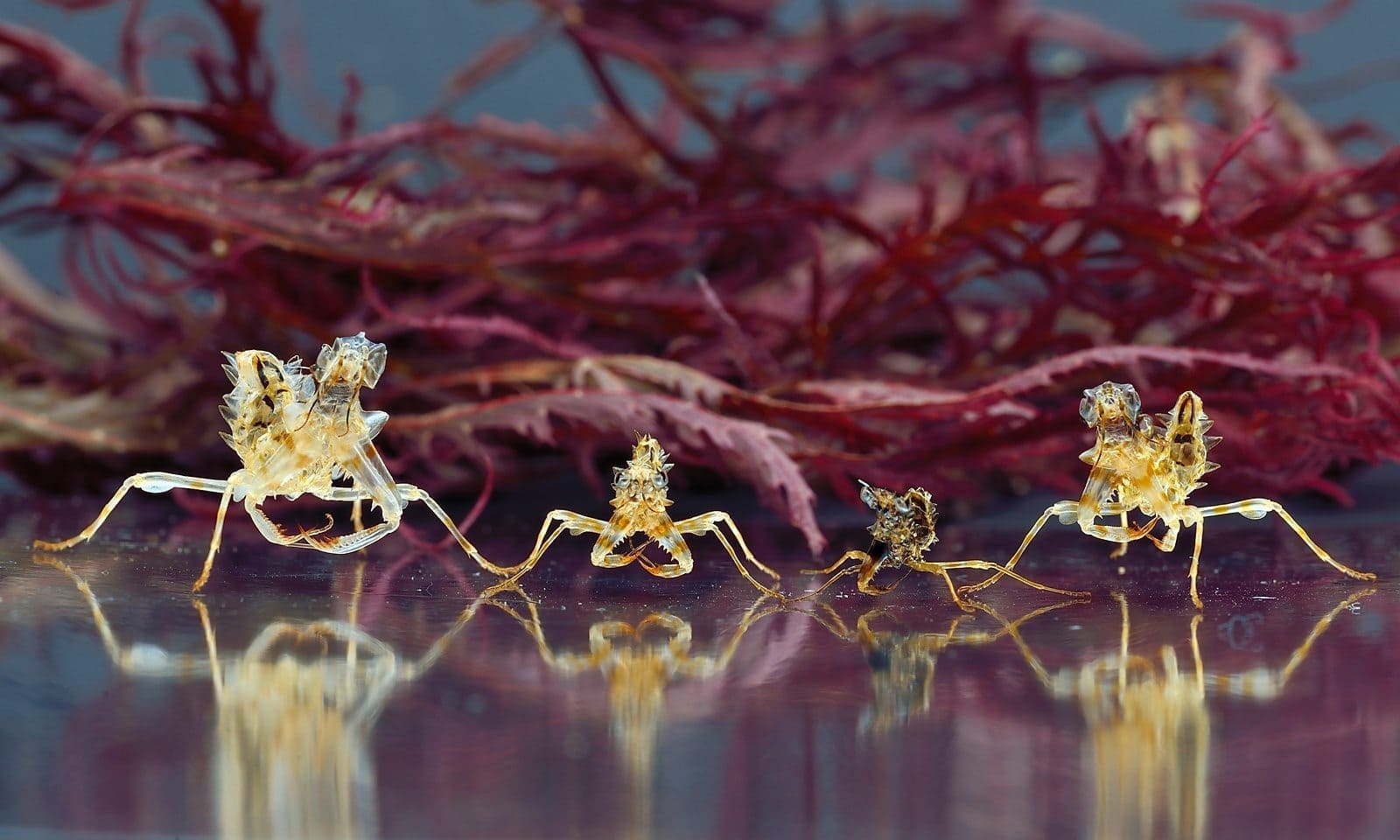
Photo: © Ralf Bauer
Food for Pseudocreobotra wahlbergii
Choose live prey based on the actual size of your mantis. Young nymphs should be fed small fruit flies; as they grow, larger fruit flies and, later on, golden flies or blowflies are suitable. Larval stages are only a guideline, not a fixed portion size.
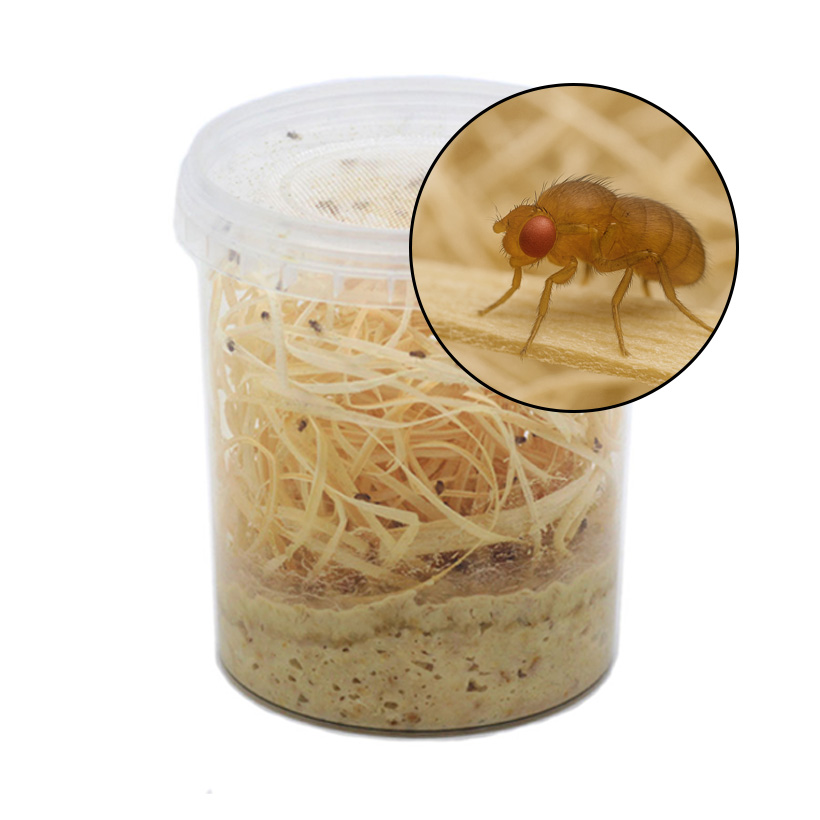
Small fruit fly “ant”
Small fruit fly “ant” – the perfect live food for tiny hunters When young animals are still too small for larger feed insects, the right prey size is crucial. The…
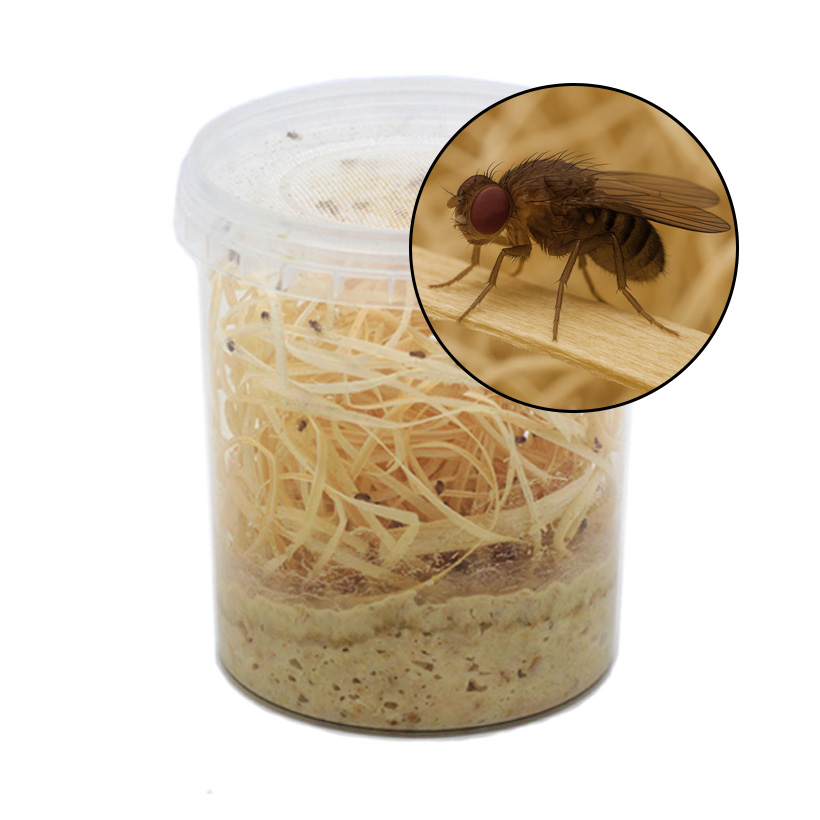
Large fruit fly
Large Fruit Fly – Active, Nutritious, and Easy to Feed The large fruit fly (Drosophila hydei) is one of the most popular food sources in the terrarium hobby. It cannot…
For larger animals, goldflies and blowflies are useful food sources. Start by adding just a few and observe how they are caught. Remove any uneaten insects, especially before a molt. A well-filled abdomen is not a reason to continue feeding immediately.
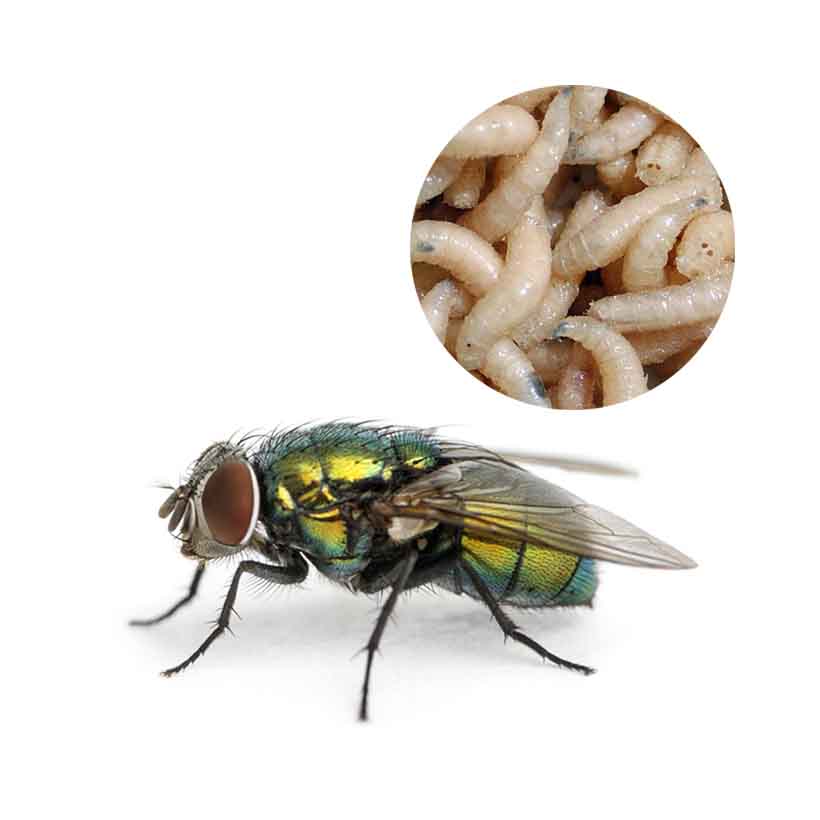
Gold flies
Gold Flies – Fresh, Nutritious, and Simple Gold flies are among the most popular live foods in the terrarium hobby. They are ideal for jumping spiders starting at about FH5…
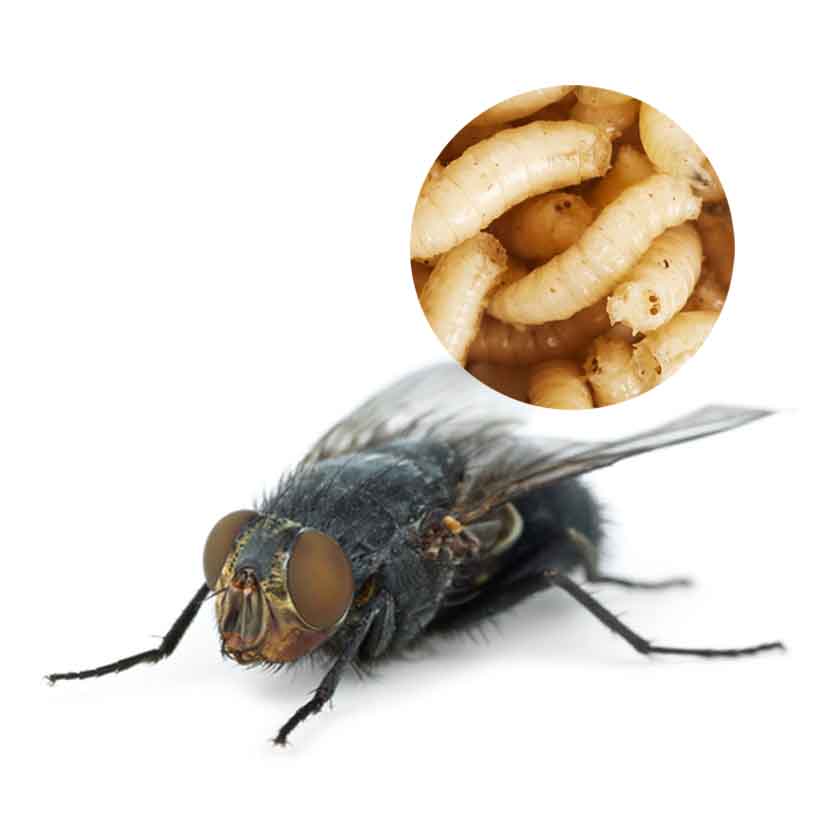
Blowflies
Blowflies – A Convenient Food Source for Jumping Spiders, Mantises, and Tarantulas Blowflies are among the most practical food sources for many invertebrates. They are a particularly good food source…
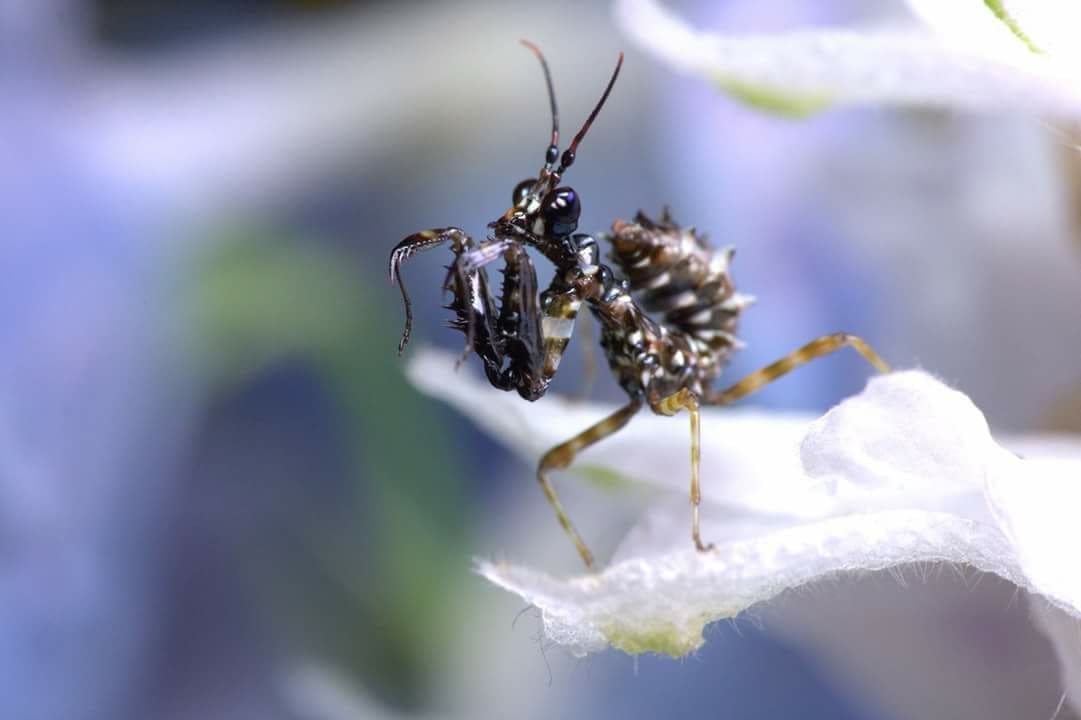
Juvenile Pseudocreobotra wahlbergii. Photo: Chase Campbell
Molting: Freedom and Peace
A flower mantis that eats less before molting does not need to be force-fed. Remove any food items that might disturb it and let it hang undisturbed. After molting, the new exoskeleton must harden. Only then should you carefully offer it appropriate food again.
A single animal is easier to manage than a group. Even when food is plentiful, cannibalism cannot be ruled out. That is why keeping animals individually is the simpler solution, especially for beginners.
Sex Determination and Mating
If the juveniles are large enough, you can examine the underside of their abdomen. Males have eight visible abdominal segments, while females have six. Adult males are usually smaller and slimmer. Check several characteristics rather than just comparing body size.
Recommended Reading: Sex Determination in Mantises
Photos and characteristics will help you correctly identify the abdominal segments and other differences.
Males reach sexual maturity earlier than females. As a rough guide, breeders generally estimate about one week after the last molt for males and about four weeks for females. The stage of development and behavior remain more important than a specific date on the calendar.
Only bring healthy, well-cared-for animals together under supervised conditions. Even a well-fed female may attack the male. Observe the encounter and separate the animals if there is a clear danger. There is no need to artificially raise their body temperature to force mating.
Oothecae of the African Flower Mantis
The elongated egg clusters should remain in their original orientation in a well-ventilated container. Warm conditions are used during incubation; approximately 28–30 °C is a conservative starting point within documented ranges. Avoid direct moisture and overheating.
After several weeks, many nymphs may emerge at the same time. Therefore, plan ahead for individual rearing sites and a small number of fruit flies. The emergence time and number of nymphs vary. Stable conditions are more important than the highest possible temperatures.
Discover More Mantises
Here you’ll find a selection from our store. Before purchasing, make sure the specific species’ needs are compatible with your terrarium.
-
Creobroter spec. “Yunnan”
Price range: 9,50 € through 11,00 € incl. VAT, plus shipping
Still unsure? Feel free to ask us your question in the comments section below the article.