Blepharopsis mendica “Little Devil’s Flower”
14,90 € incl. VAT, plus shipping

Medium

Turkey

< 70 mm

28°C – 35°C
Blepharopsis mendica – A small devil’s flower with extraordinary camouflage
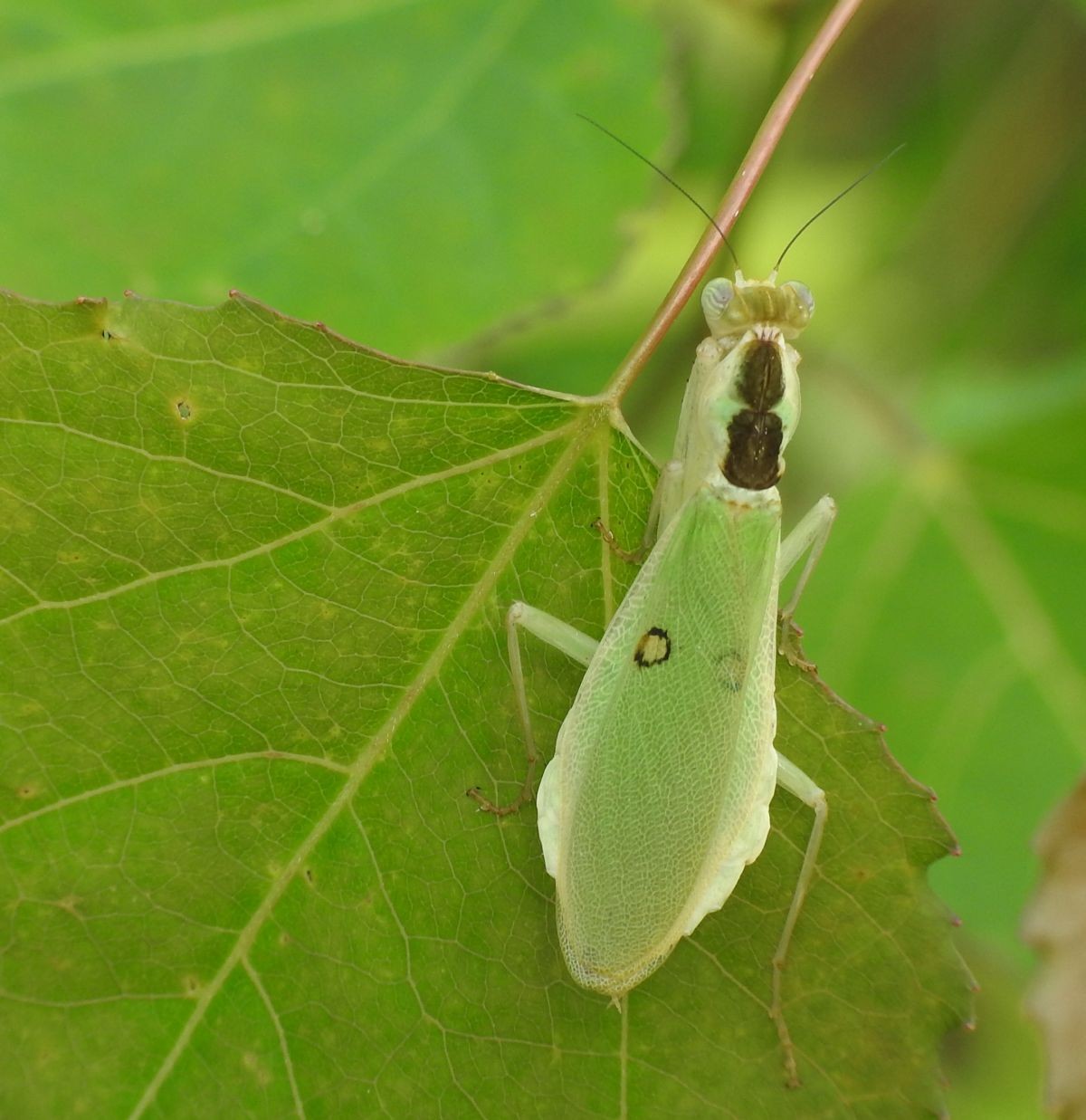
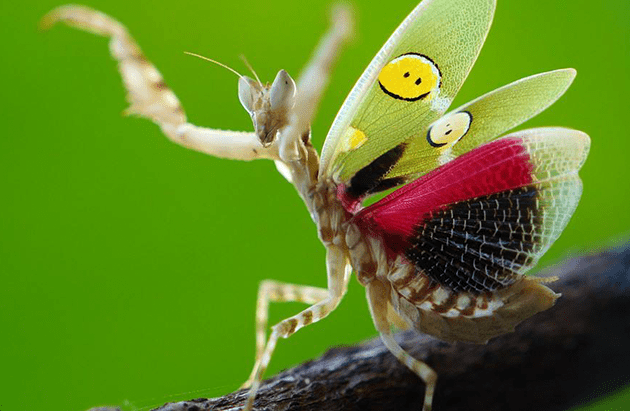
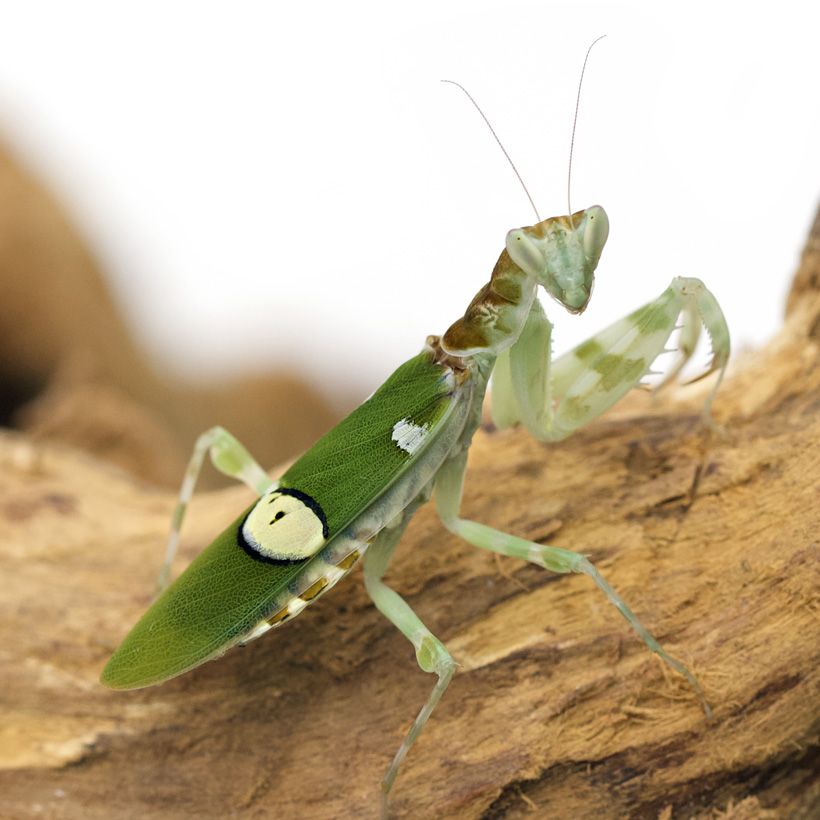
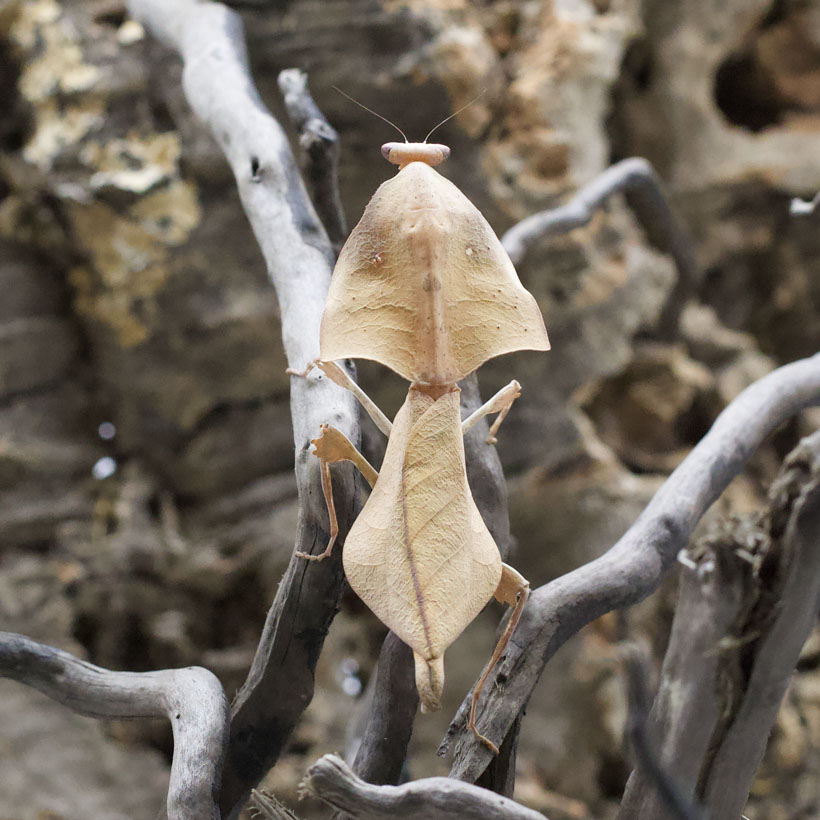
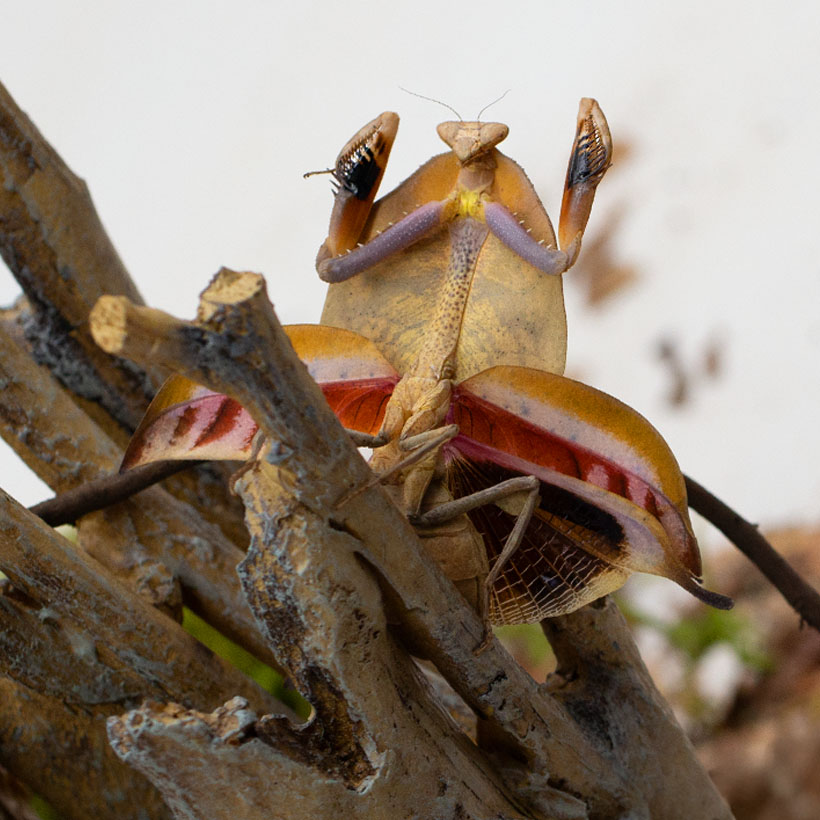
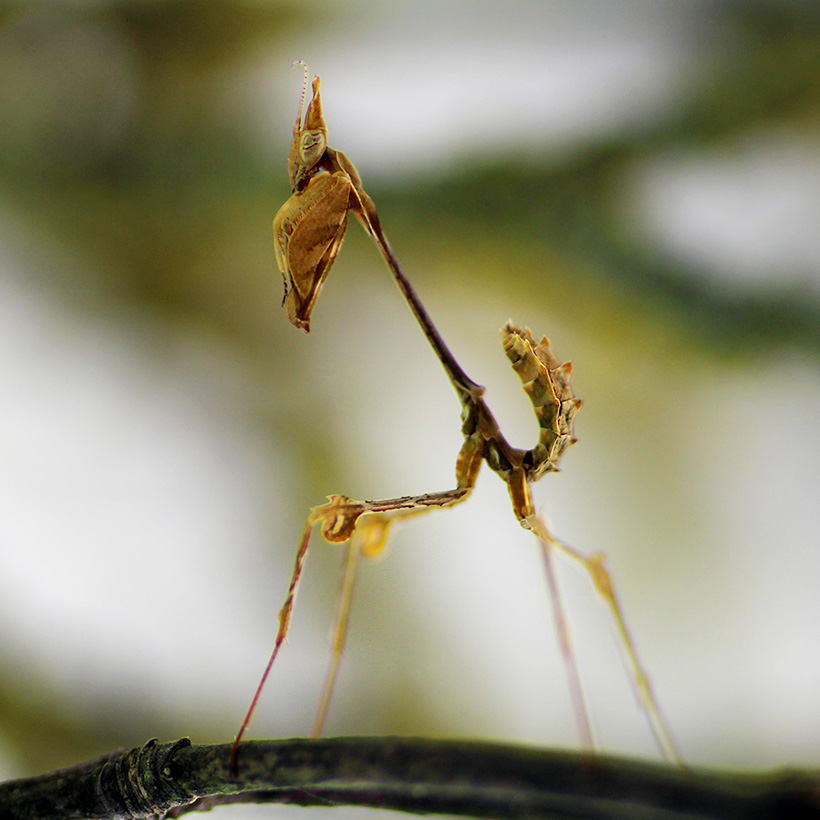
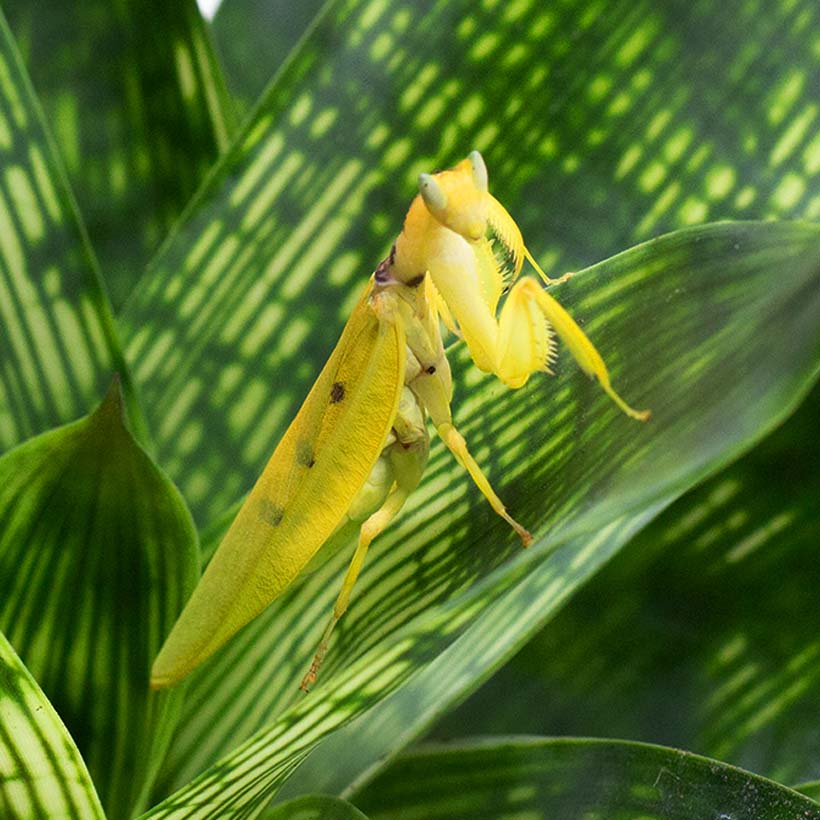
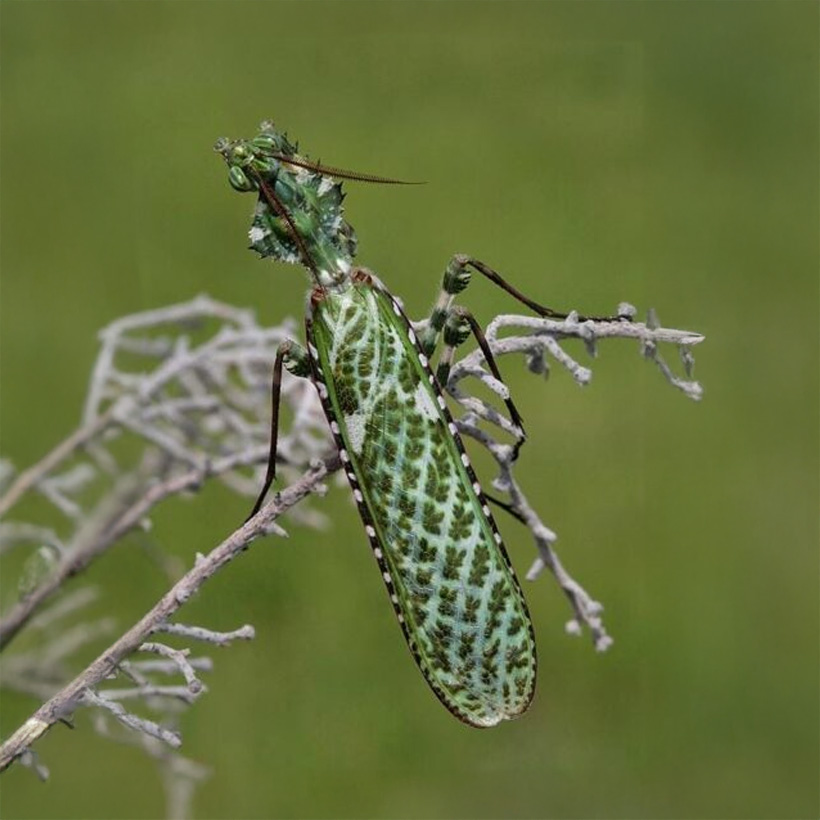
Blepharopsis mendica, the small devil flower, is one of the most extraordinary mantis species in the terrarium hobby. Its jagged body, leaf-like appendages, and whitish-green to beige-brown coloration allow it to blend almost seamlessly into its surroundings among dry twigs and plants.
The species was first described by Fabricius in 1775 and belongs to the family Empusidae. Blepharopsis is a distinct genus within this family.
The German name “Little Devil Flower” naturally brings to mind the well-known “Big Devil Flower,” Idolomantis diabolica. Both actually belong to the Empusidae family. Nevertheless, you shouldn’t simply treat Blepharopsis mendica as a smaller version of Idolomantis.
Plenty of light, high daytime temperatures, a relatively dry climate, and very good ventilation are particularly important.
From North Africa to West and South Asia
Blepharopsis mendica has a surprisingly large range.
The species is found in North Africa, the Canary Islands, the Middle East, and parts of West and South Asia. Documented occurrences extend, among other places, from Egypt, Algeria, Morocco, Tunisia, Israel, Jordan, Iran, and Oman all the way to Pakistan. The species is also known from Turkey and Cyprus.
It primarily inhabits warm, dry, and open habitats.
Typical habitats include sparse shrubs and other vegetation in dry areas. The design of the terrarium should be based precisely on this.
Perfectly camouflaged among dry vegetation
The appearance of Blepharopsis mendica is unmistakable.
These animals have numerous body appendages and an irregular silhouette. As a result, the distinct contours of their bodies disappear among the twigs and dry vegetation.
Depending on the animal and its stage of development, whitish, beige, light brown, and greenish hues may appear.
The characteristic swaying motion of many Empusidae also aids in their camouflage. The animal moves slowly back and forth, resembling a part of a plant swaying in the wind.
It is precisely this behavior that makes observing the little devil’s flower particularly interesting.
About 5–6 cm in body length
When it comes to size, the information available in stores varies surprisingly widely. In some cases, sizes as small as 7–8 cm are even listed.
For the species commonly kept in terrariums, however, I would use a body length of about 5–6 cm as a realistic guideline. Females have a stockier build, while males remain slimmer.
That said, different geographic populations may well vary in size. Therefore, I would not present a single maximum size as universally applicable to all Blepharopsis mendica.
Adult males can also be easily identified by their distinctive, double-comb-like antennae.
Males and females differ significantly
As development progresses, it becomes easier and easier to determine the sex.
Females have a sturdier body and, in particular, a significantly more voluminous abdomen. Males, on the other hand, remain slimmer.
In adult males, the large, feathered or double-crested antennae are particularly striking.
In addition, adult males are more agile and are good fliers. That’s why you should be especially careful when opening the terrarium.
Blepharopsis mendica loves warmth
This species can tolerate significantly warmer temperatures than many other mantis species.
A recent scientific study successfully kept older nymphs at 33–35 °C. Many years of experience in the terrarium hobby also show that Blepharopsis mendica thrives in extremely high daytime temperatures.
For this reason, I would create a distinct temperature gradient in the tank.
In the upper, well-lit area, temperatures may reach approximately 30–35 °C. Directly beneath a suitable heat source, it may be slightly warmer in some spots. At the same time, cooler areas should be available further down.
At night, the temperature can drop significantly. However, you should avoid keeping the plant in a consistently cool environment.
Light plays a particularly important role
Blepharopsis mendica is extremely light-loving.
The animals like to sit in very bright areas and also frequent spots that are directly lit.
That’s why I wouldn’t rely solely on the room lighting for the terrarium. In my opinion, bright terrarium lighting is an essential part of the setup for this species.
At the same time, this allows you to create the desired heat zone in the upper section.
This creates different temperature zones, allowing the animal to choose where it wants to stay.
Keep it dry instead of a tropical climate
This feature clearly distinguishes the Little Devil Flower from many other mantises.
Blepharopsis mendica does not require a constantly humid tropical terrarium.
In terrarium keeping, a relative humidity of approximately 30–50% has proven to be a good guideline. However, the reading on the hygrometer is not the only factor that matters here.
The terrarium should be mostly dry and have very good air circulation.
A combination of high temperatures, constantly damp substrate, and poor ventilation would be much more problematic for this species than a dry, well-ventilated setup.
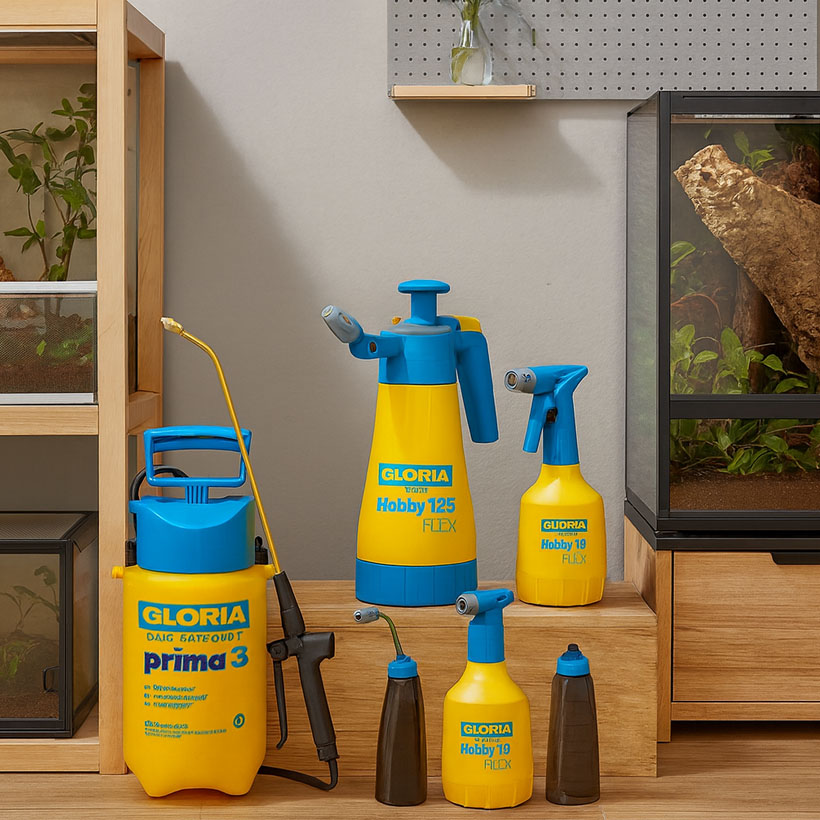
It’s best to use a light hand when spraying
Opinions on this point vary widely.
Some experienced breeders largely avoid misting Blepharopsis mendica and instead provide the animals with well-nourished live prey. In contrast, a scientific laboratory rearing program used regular, controlled misting at 40–45% humidity.
That’s why I wouldn’t formulate either “never spray” or “spray heavily on a regular basis” as a universal rule.
It is crucial for the care of this plant that it does not become persistently damp. If you do spray it, do so only very sparingly and ensure excellent ventilation at the same time.
Good ventilation is essential
A terrarium for Blepharopsis mendica should allow for particularly good air circulation.
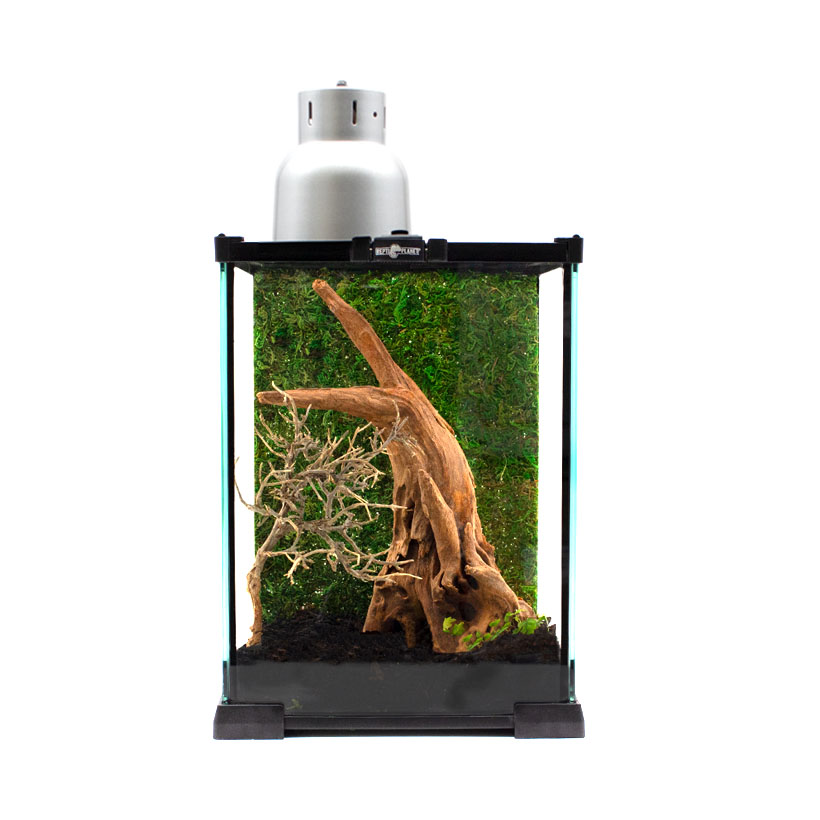
Large areas of gauze are therefore ideal. This allows warm air to escape and fresh air to flow in.
This air exchange is particularly important when working in the presence of bright lighting or a heat source.
The terrarium should be warm and dry—but, of course, it shouldn’t lead to heat buildup in a closed space.
At least 20 × 20 × 30 cm for an adult animal
For a single adult animal, I would plan for at least about 20 × 20 × 30 cm.
However, even more important than the sheer size of the terrarium is the usable structure.
Dry branches and branched structures provide suitable perches. At the same time, there must be enough space in several areas to allow for easy molting.
There is one notable exception, however: members of the Empusidae family cannot cling to completely smooth glass surfaces as securely as many other mantises.
That’s why the terrarium should contain plenty of rough branches, gauze, and other surfaces that are easy to grip.
Space to Shed Your Skin
Blepharopsis mendica also molts while hanging upside down.
To do this, the animal clings to a suitable branch or another surface that provides a good grip. It then pulls itself downward out of its old skin.
Therefore, there should be at least roughly twice the animal’s body length of open space below a potential molting site.
So, the terrarium can have some structure, but it should never be decorated so densely that branches are directly on top of one another everywhere.
The mantis needs plenty of space, especially during its final molts.
A specialized hunter of flying insects
Another distinctive feature of the little devil’s flower becomes apparent when it comes to feeding.
Flies are among the most suitable feed animals.
The mantis sits perched among the branches, waiting for prey to pass by. Flying prey flies right through this area, which reliably triggers the mantis’s hunting behavior.
A varied diet is still possible. The size of the prey must always be appropriate for the developmental stage.
From Drosophila to the blowfly
Very small nymphs can be fed Drosophila at first.
As the animal grows larger, its food intake increases accordingly:
Young nymphs should be fed fruit flies. Later on, Terflys and gold flies are suitable. Larger nymphs and adults can eventually be fed blowflies and other suitable flying insects.
In a scientific rearing experiment with Blepharopsis mendica, Drosophila melanogaster was used to feed the first two nymphal stages. Later, the insects were fed houseflies, moths, small grasshoppers, and mealworm larvae, among other things.
This means the species is not strictly dependent on flies. However, flying insects are particularly practical for terrarium care and also encourage natural hunting behavior.
Beware of molting
If Blepharopsis mendica suddenly stops eating, it may be because it is about to molt.
Then you shouldn’t try to get the animal to eat by constantly offering it new types of food.
Remove any excess prey and leave the mantis alone.
After molting, the new exoskeleton is soft at first. You should wait until the animal has fully hardened before resuming its normal feeding routine.
Keeping them in groups is possible—but keeping them individually is safer
In this respect, Blepharopsis mendica differs from many more aggressive mantises.
Experienced breeders often describe intraspecific aggression as relatively low. Young animals and adult males, in particular, can sometimes be kept together if they have sufficient space and plenty of food.
However , that does not mean that cannibalism is out of the question.
For customers who do not want to take any unnecessary risks, keeping a single animal is therefore still the safest option.
Especially when there are size differences or during molting, even normally peaceful animals can become problematic.
Caution Regarding Animals from the Canary Islands
One particularly important factor is the origin of the bloodline.
In the case of Blepharopsis mendica from the Canary Islands, a diapause in older nymphs has been described in terrarium keeping. During this developmental stage, the animals are kept at significantly cooler temperatures.
However, this cannot simply be applied to every Blepharopsis mendica.
Breeding lines from Egypt, for example, are kept warm throughout the entire development process.
That’s why, with this species, the exact origin of the breeding line is more important than with many other mantises. For your store, I would only include a diapause in the specific care instructions if your animals actually come from a Canarian line.
Advantages at a glance
- Blepharopsis mendica (Fabricius, 1775)
- German name: Little Devil’s Flower
- Family Empusidae
- Widespread distribution from North Africa to West and South Asia
- Also found on the Canary Islands
- A body length of approximately 5–6 cm serves as a good guideline for many breeding lines
- Unusual whitish-green to beige-brown camouflage coloring
- Characteristic body projections
- Adult males with conspicuously combed antennae
- Very heat-loving
- Upper temperature range: approximately 30–35 °C
- Rather keep dry
- Approximately 30–50% humidity as a general guideline
- Very good ventilation is necessary
- Extremely light-hungry
- Terrarium measuring approximately 20 × 20 × 30 cm
- Flies are particularly well-suited as food
- Group housing is possible in some cases, but individual housing is safer
- Consider the origin of the breeding line with regard to a possible diapause
Suitable accessories for your setup
Repto Terra Sky – offers plenty of ventilation surface area and sufficient height for perches as well as safe molting.
Repto Flat LED – provides bright lighting and supports the warm, well-lit upper area that Blepharopsis mendica prefers.
Insektenliebe Hygro-Therm —helps you control the high temperatures and relatively low humidity that are particularly important for this species.
Mini Tree —creates a dry, branched structure with various places to sit, climb, and hunt, making it a particularly good fit for keeping the Little Devil’s Flower.
Gold flies —as active flying insects—are particularly well-suited for nymphs of a corresponding size and encourage natural hunting behavior.
Blowflies —provide a suitable, active food source for larger nymphs and adult Blepharopsis mendica.
Conclusion
Blepharopsis mendica is not a typical tropical mantis. That is exactly what makes the Little Devil Flower so interesting.
This species is native primarily to warm and dry regions and therefore requires care that is appropriately adapted to its needs. Plenty of light, high daytime temperatures, a dry climate, and—above all—excellent air circulation are essential.
Temperatures in the upper part of the terrarium can reach approximately 30–35 °C, while temperatures may drop significantly at night. As a practical guideline, aim for a humidity level of about 30–50%. You should avoid conditions that remain constantly damp.
At the same time, Blepharopsis mendica needs plenty of places to perch that offer a secure grip. As a member of the Empusidae family, it is less stable on completely smooth surfaces than many other mantises. Branched twigs and gauze surfaces are therefore particularly valuable.
This species also displays its unique character when it comes to feeding. Flying insects, in particular, trigger its typical hunting behavior. From Drosophila for small nymphs to goldflies and blowflies for larger animals, the diet can be perfectly adapted to the stage of development.
This makes Blepharopsis mendica a fascinating mantis for keepers who want to set up a warm, bright, and dry mantis terrarium and are looking for a species that clearly stands out from the crowd in both appearance and behavior.