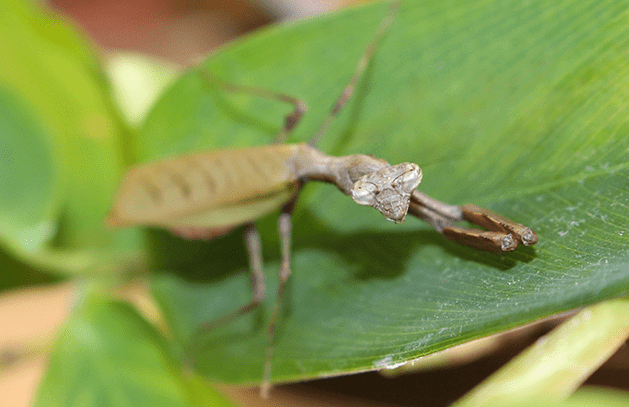


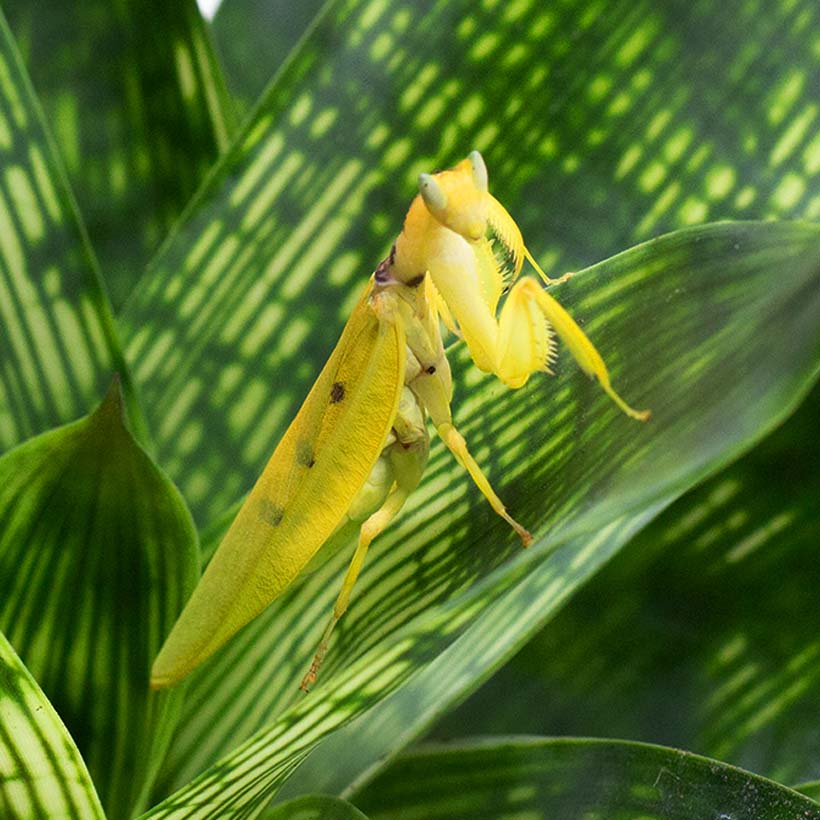
Acromantis japonica remains small and exhibits the typical movements of a boxer mantis with its antennae. These behaviors are fascinating to observe, but should not be deliberately triggered by repeated harassment. For keeping this species, we recommend housing a single specimen in a well-organized terrarium.
Acromantis japonica at a Glance
| Size | Males about 3 cm, females about 3.5 cm |
| Temperature | About 24 °C during the day; previously kept at 22–27 °C |
| Humidity | About 60–70% as a guideline, with good ventilation and drying |
| Keeping | Individually, with secure hanging spaces |
| Food | Live prey that matches the animal’s actual body size |
The Japanese boxer mantis is found in East Asia and inhabits branches and shrubs. Young mantises are very agile and have ant-like coloring. Later, they spend long periods of time motionless in a hiding spot.
Terrarium for Acromantis japonica
Safe climbing surfaces and open space underneath are more important than decorative furnishings. Plan for a terrarium height of at least three times the animal’s body length. There must be enough open space beneath the perching area for shedding. Adjust the terrarium as the animal grows.
Use a lid that closes securely and ventilation openings that are well-sealed. A few suitable twigs are often enough. Don’t overcrowd the enclosure with decorations. Even species that are sometimes kept together can eat each other; keeping them separately makes care easier.
Recommended Reading: The Right Mantid Terrarium
Here’s how to assess size, ventilation, and open space before buying a new terrarium.
Climate and Molting
Check the temperature at the animal’s preferred resting spot. You’ll only need an additional heater if the location is too cool. Direct sunlight and uncontrolled heat are not suitable. Spray small droplets onto the surroundings without soaking the animal, and then let the surfaces dry.
Before molting, your mantis may refuse food. If this happens, remove any prey that might be bothering it and let the mantis hang undisturbed. After molting, the new exoskeleton needs time to harden. Do not resume feeding until the mantis is gripping firmly and accepting prey.
Food for Acromantis japonica
Choose live prey based on the actual size of your mantis. Young nymphs should be fed small fruit flies; as they grow, larger fruit flies and, later on, golden flies or blowflies are suitable. Larval stages are only a guideline, not a fixed portion size.
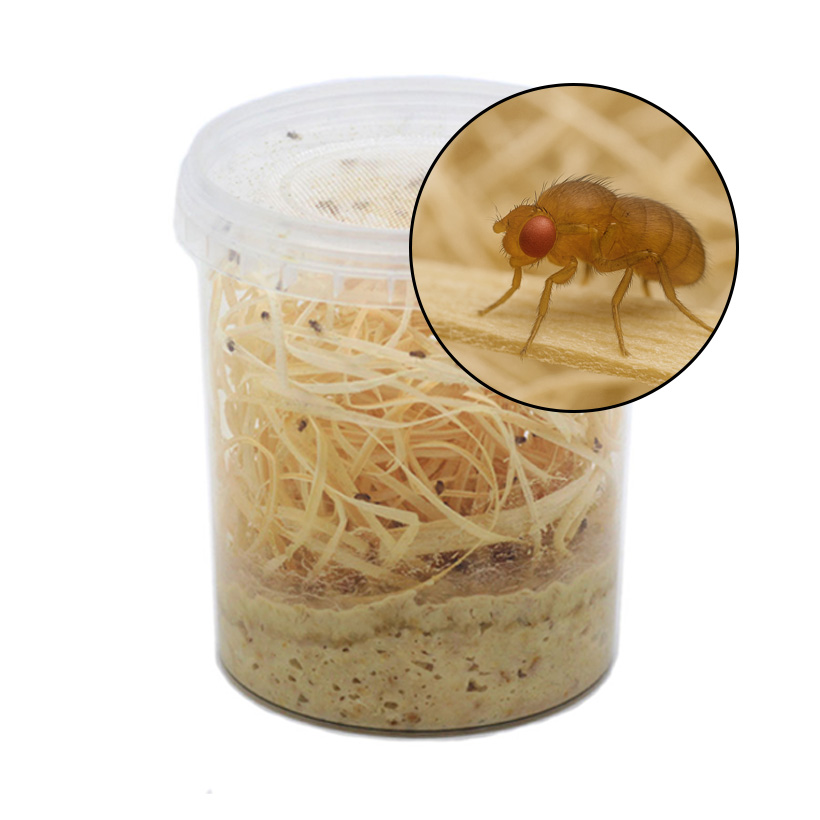
Small fruit fly “ant”
Small fruit fly “ant” – the perfect live food for tiny hunters When young animals are still too small for larger feed insects, the right prey size is crucial. The…
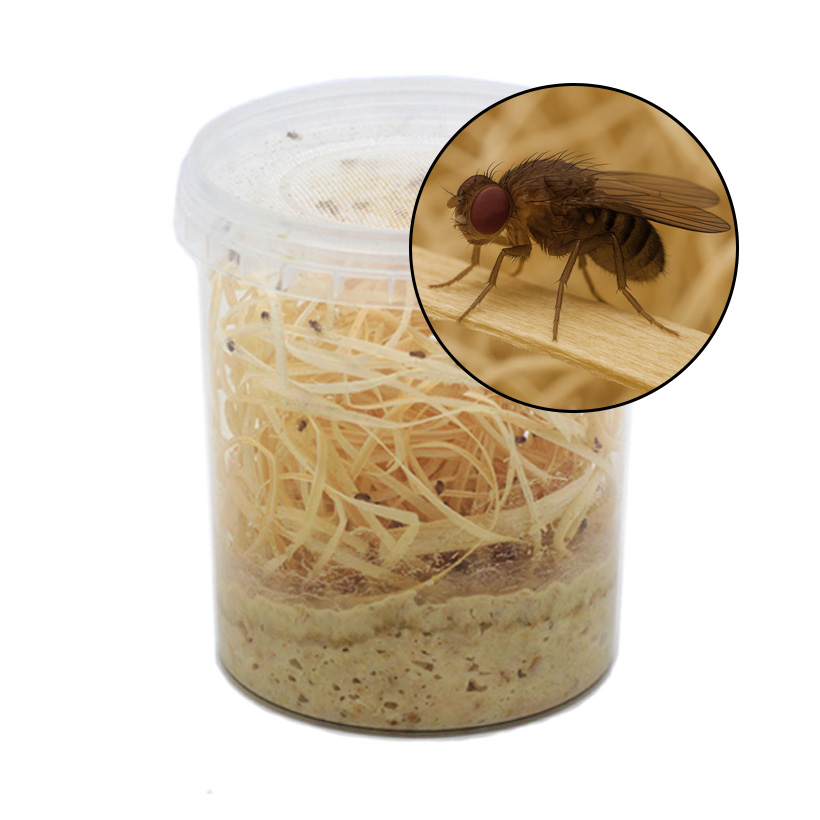
Large fruit fly
Large Fruit Fly – Active, Nutritious, and Easy to Feed The large fruit fly (Drosophila hydei) is one of the most popular food sources in the terrarium hobby. It cannot…
For larger animals, goldflies and blowflies are useful food sources. Start by adding just a few and observe how they are caught. Remove any uneaten insects, especially before a molt. A well-filled abdomen is not a reason to continue feeding immediately.
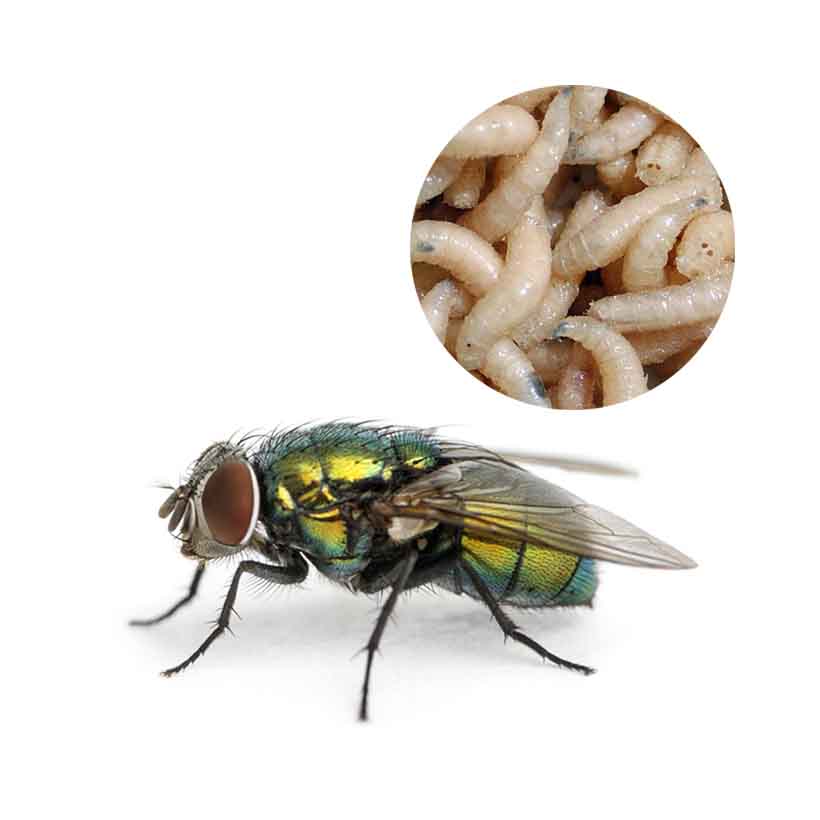
Gold flies
Gold Flies – Fresh, Nutritious, and Simple Gold flies are among the most popular live foods in the terrarium hobby. They are ideal for jumping spiders starting at about FH5…
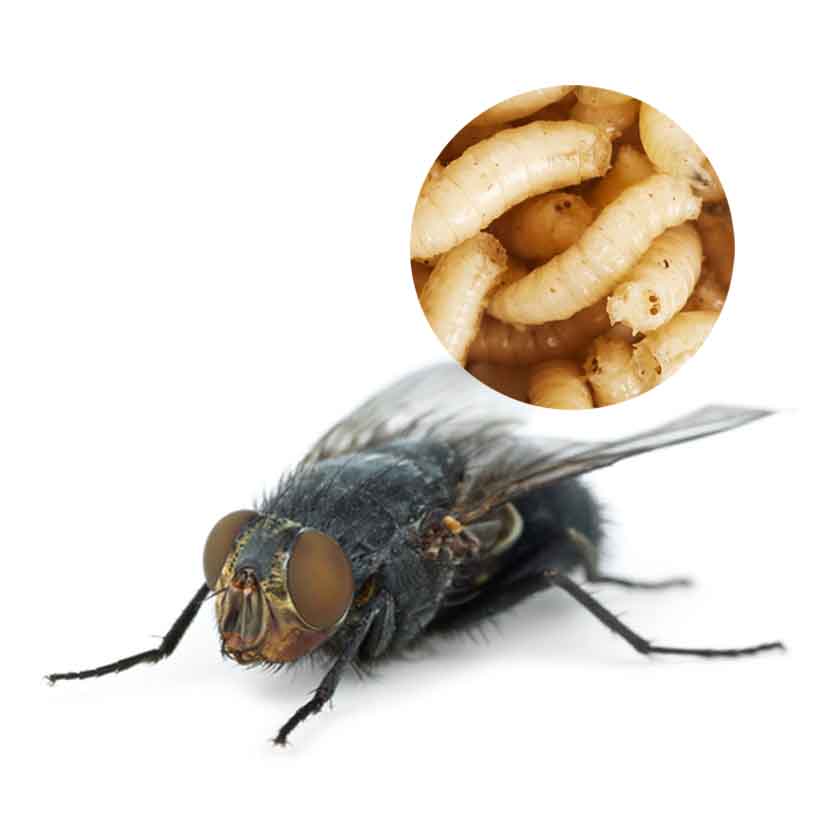
Blowflies
Blowflies – A Convenient Food Source for Jumping Spiders, Mantises, and Tarantulas Blowflies are among the most practical food sources for many invertebrates. They are a particularly good food source…
Make sure the prey is thoroughly subdued. The designations L1, L2, and other larval stages do not indicate fixed portion sizes. For very small juveniles, the prey must also be correspondingly tiny. Do not constantly offer new prey if there are still animals left in the container.
Mating and Offspring
Females often attach their egg capsules to twigs. It takes several weeks for the eggs to hatch; temperature and humidity affect their development. Suitable tiny food sources must already be available for the very small young.
Mating should only be considered for sexually mature, well-nourished animals. Supervise the introduction of the animals and separate them if they attack each other. Even a well-fed female may eat the male. Plan for the care of the offspring before attempting to breed them.
Recommended Reading: Sex Determination in Mantises
Photos and characteristics will help you correctly identify the abdominal segments and other differences.
Discover More Mantises
Here you’ll find a selection from our store. Before purchasing, make sure the specific species’ needs are compatible with your terrarium.
-
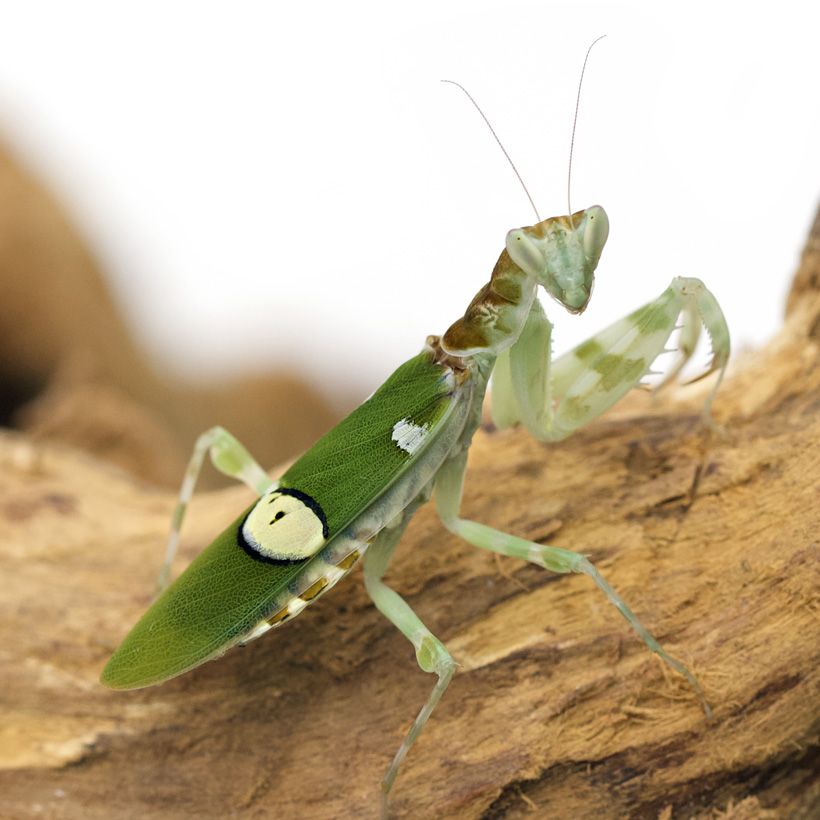
Creobroter spec. “Yunnan”
Price range: 9,50 € through 11,00 € incl. VAT, plus shipping
Still unsure? Feel free to ask us your question in the comments section below the article.