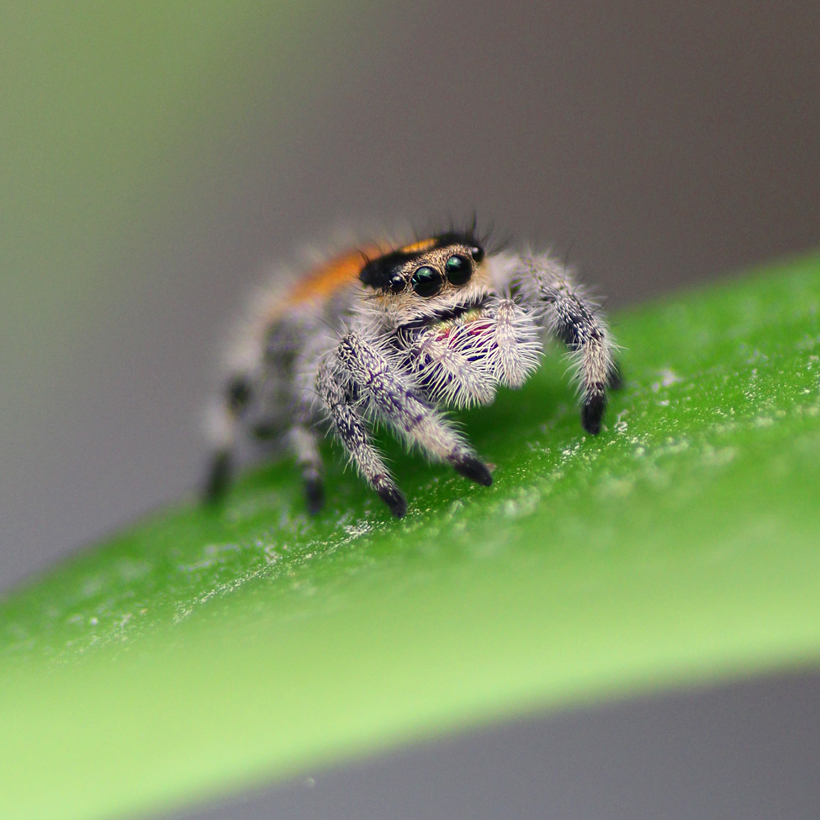


Do you want to keep a jumping spider and are wondering what you really need? Here are the most important steps to get you off to a good start: from choosing the right terrarium to feeding it for the first time.
This guide is primarily intended for owners of Phidippus regius. The care requirements may differ for other species of jumping spiders. Be sure to check the care instructions for your specific spider. Do you already have some supplies at home? Check first to see if they’re suitable—you don’t have to buy everything new.
Go straight to your topic
One jumping spider or more?
Keep Phidippus regius individually. These animals do not need company and may view other jumping spiders as prey. If you want to keep more than one, each should have its own home.
What does “FH” mean in the context of jumping spiders?
FH stands for “Fresshaut.” FH1 refers to the first stage in which the young spider hunts on its own. With each subsequent molt, the number increases by one. This information helps you assess its development. However, the actual size of your spider is also important when choosing a terrarium and food.
Which terrarium is right for my jumping spider?
Jumping spiders particularly like to climb high. For an adult Phidippus regius, a terrarium measuring about 20 × 20 × 30 cm is a good starting point. Small juveniles are better off starting out in a rearing container or a small rearing terrarium, where you can more easily observe whether they’re able to reach their food.
Make sure there is good ventilation and openings that neither your spider nor its small prey can escape through. An opening on the front makes care easier: The web is often located at the top and should remain undamaged when the enclosure is opened.
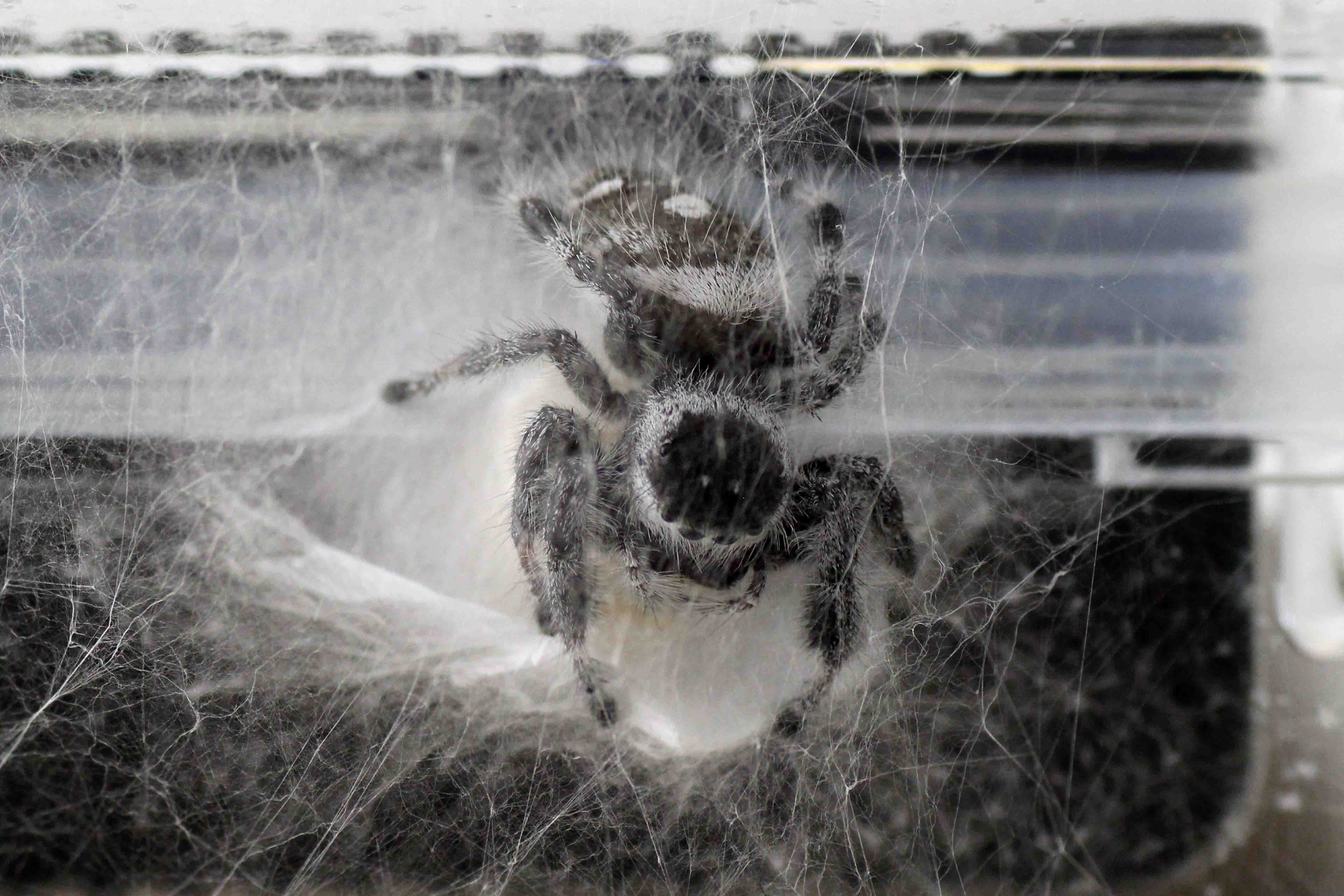
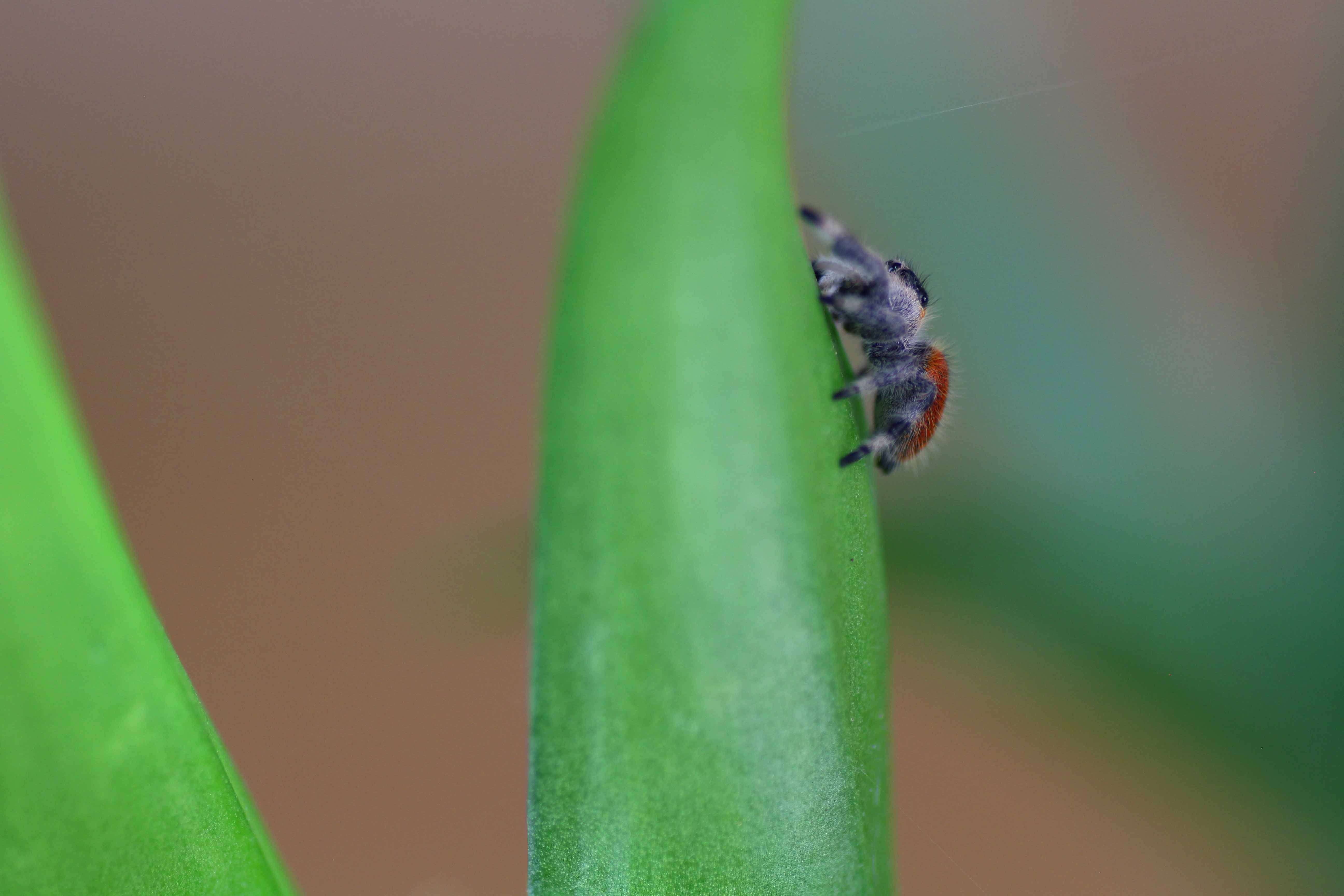
Set up the upper area as well. Your spider needs safe climbing routes and places to anchor its web there. Secure the structure firmly and keep the ventilation openings clear. Plants can provide additional cover.
The following developmental stages are a guide, not a fixed roadmap. The key factors are size, secure storage, and successful hunting. If your current container meets these requirements, you don’t need a new one for every hunting trip.
Young animals: approximately FH1–3
A small, well-ventilated rearing container keeps the distance to the food short. Be sure to check the slats and ventilation openings, especially for very small young animals. Here are some suitable options from our product line:

SpiderSafe rearing box
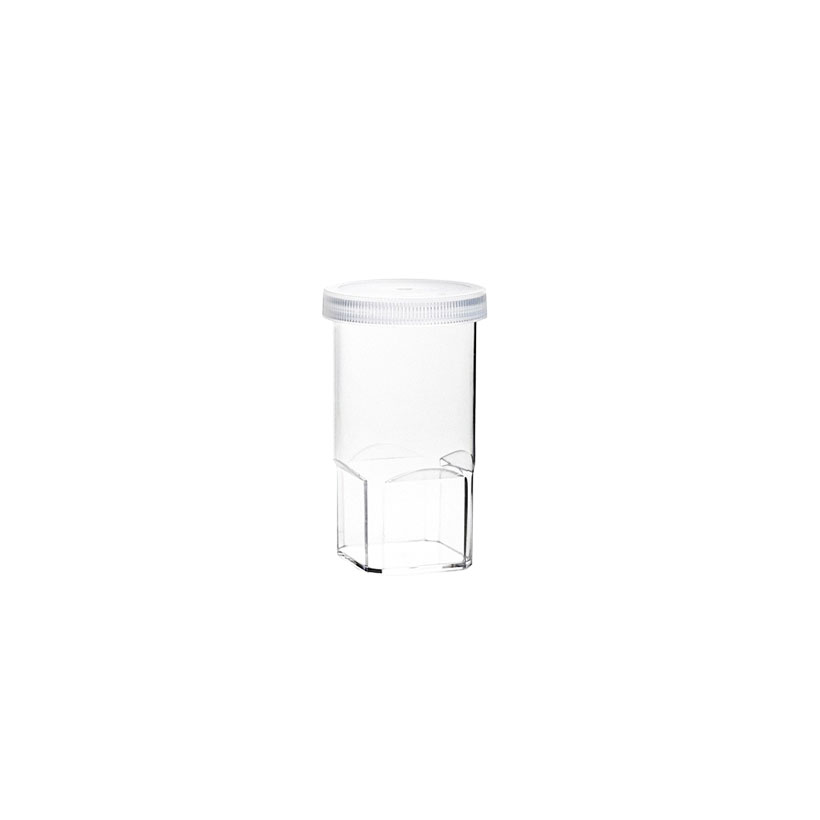
Rearing tins
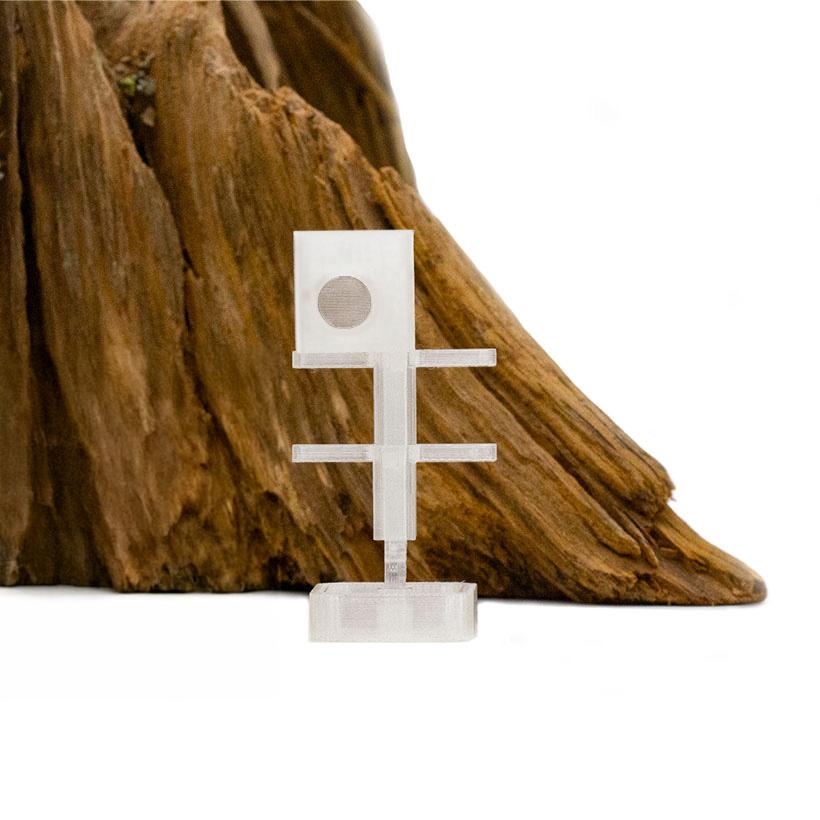
Jumping spiders tree house
Growing animals: approximately FH4–6
If the rearing container becomes too small, the next step is to switch to a larger one. Choose a size that gives your spider room to climb and allows you to keep a close eye on both the spider and its food.
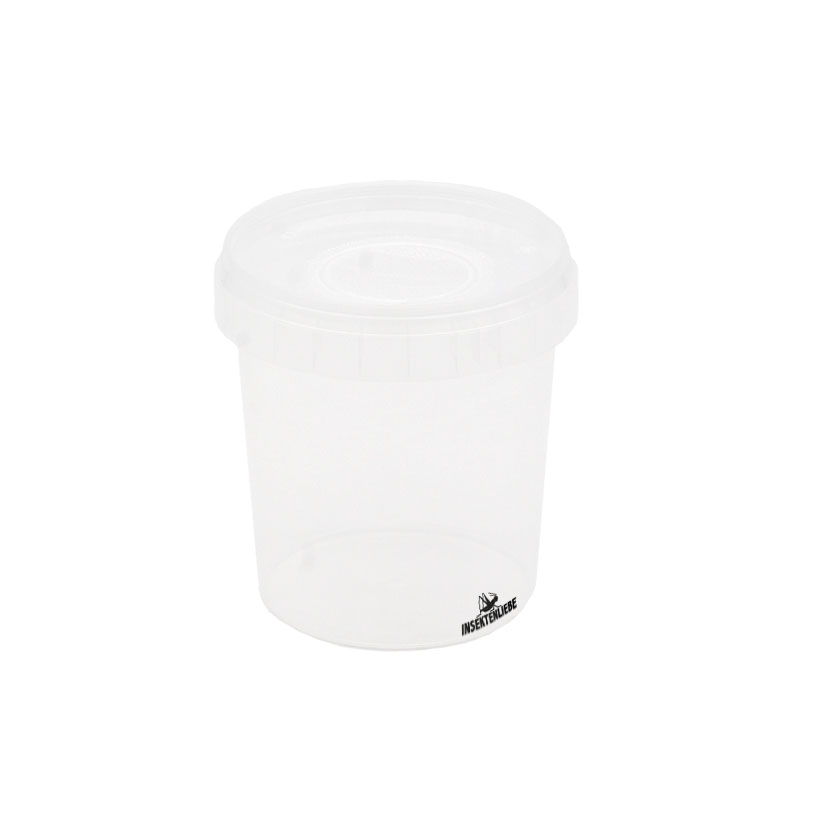
Rearing tins with gauze in the lid
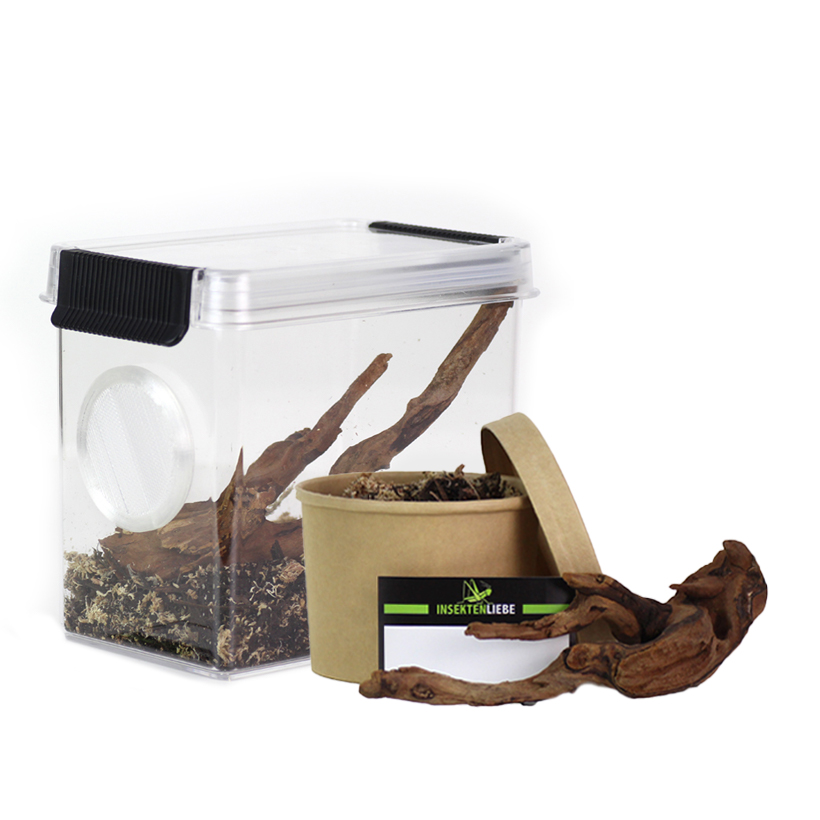
Insektenliebe rearing terrarium
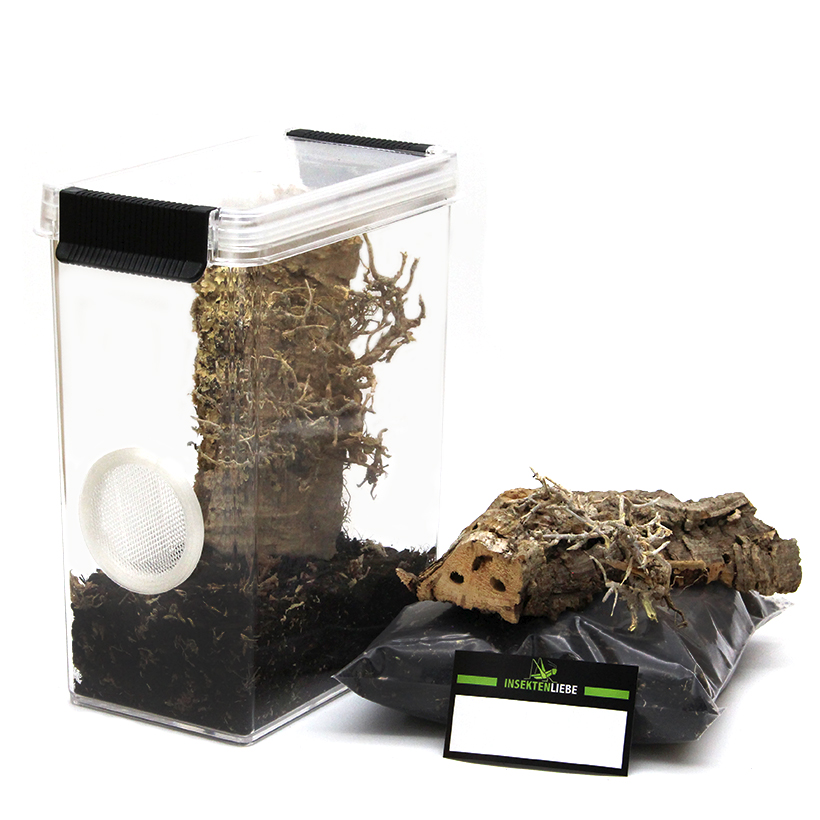
Insektenliebe rearing terrarium XL
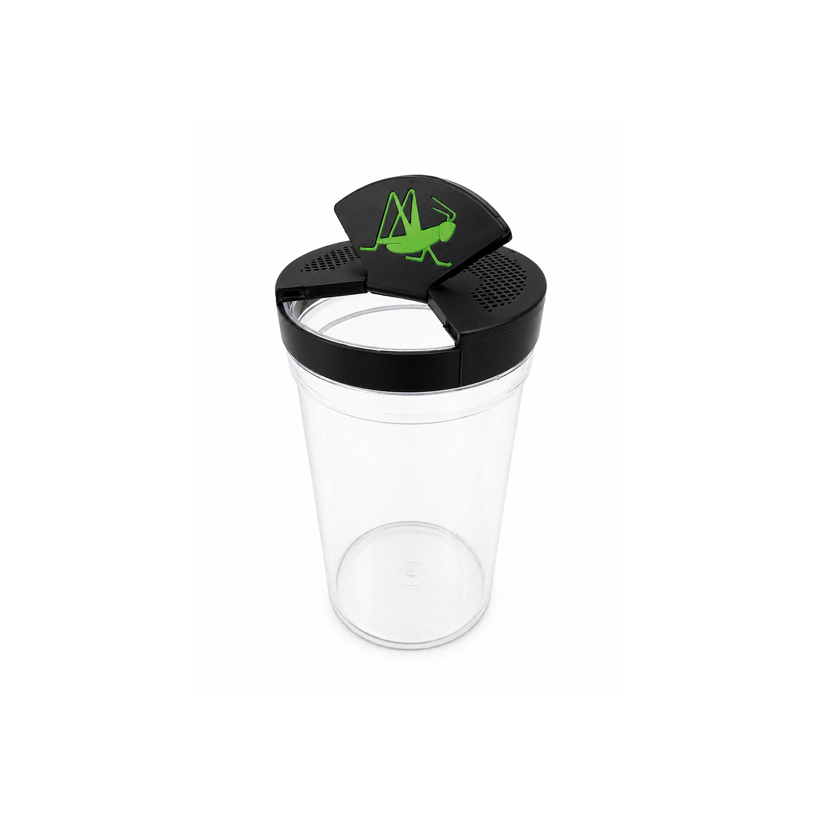
Insektenliebe Rearing Cups
Larger Animals: Moving to the Permanent Terrarium
Starting around FH6, you might want to consider a permanent terrarium. The size alone isn’t enough to make the decision—your spider should be able to hunt reliably inside it. A complete set makes it easier to get started; a single terrarium is fine if you already have the furnishings or want to put them together yourself.
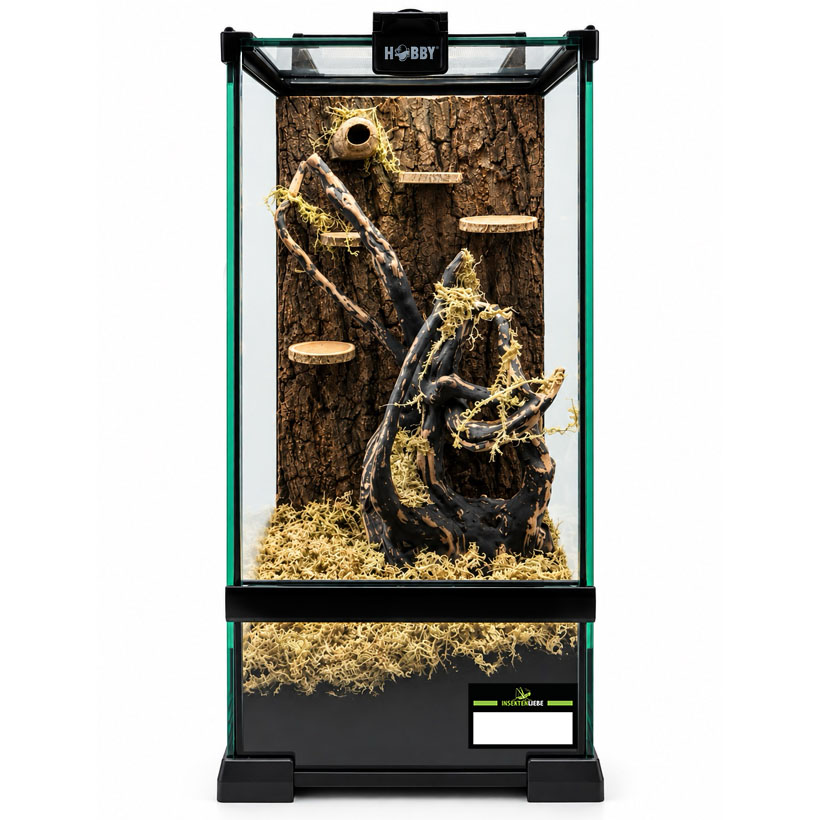
Jumping Spiders Complete Set – Creative
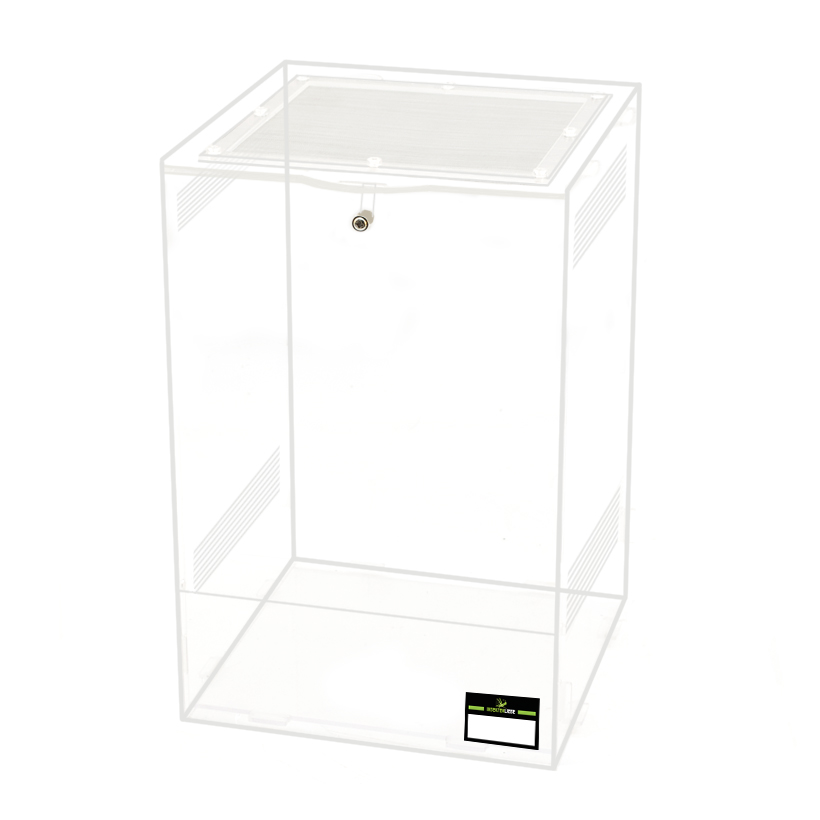
Insektenliebe acrylic terrarium
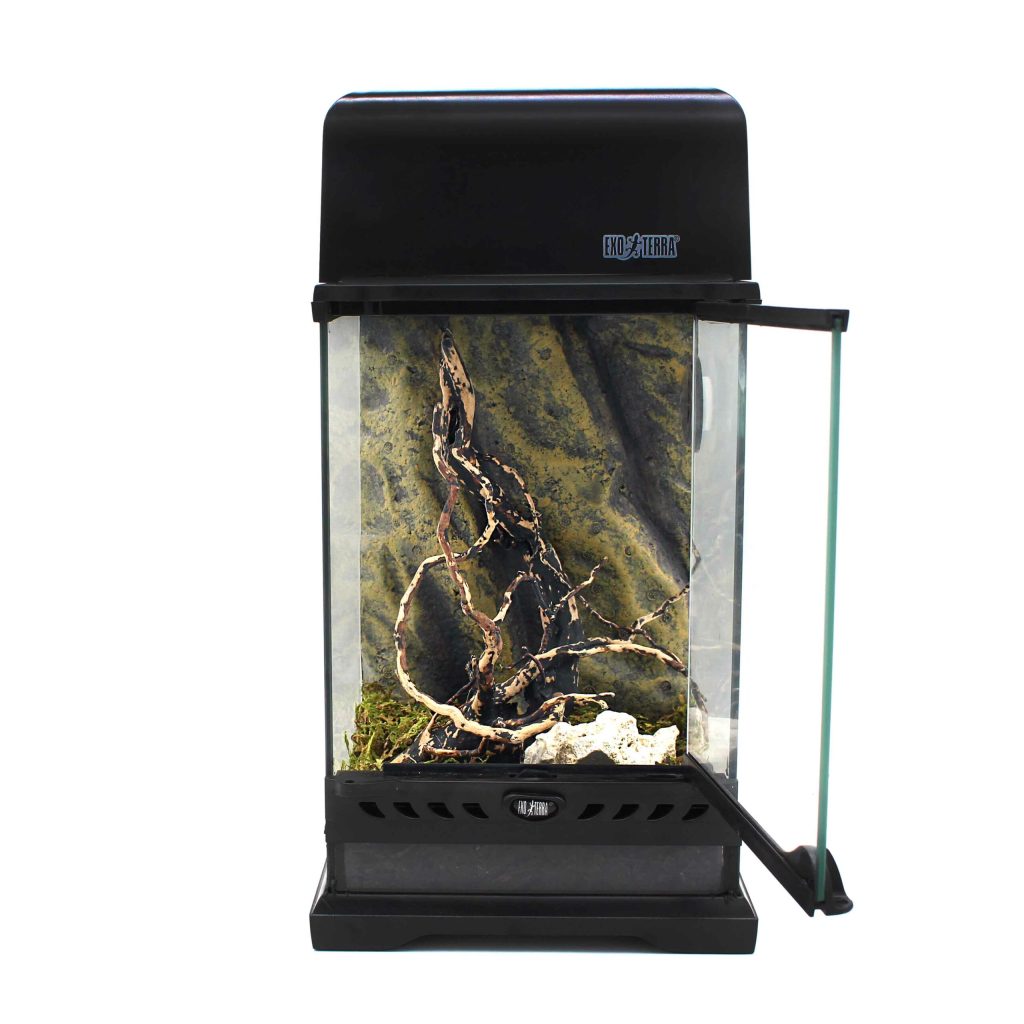
Complete set of jumping spiders
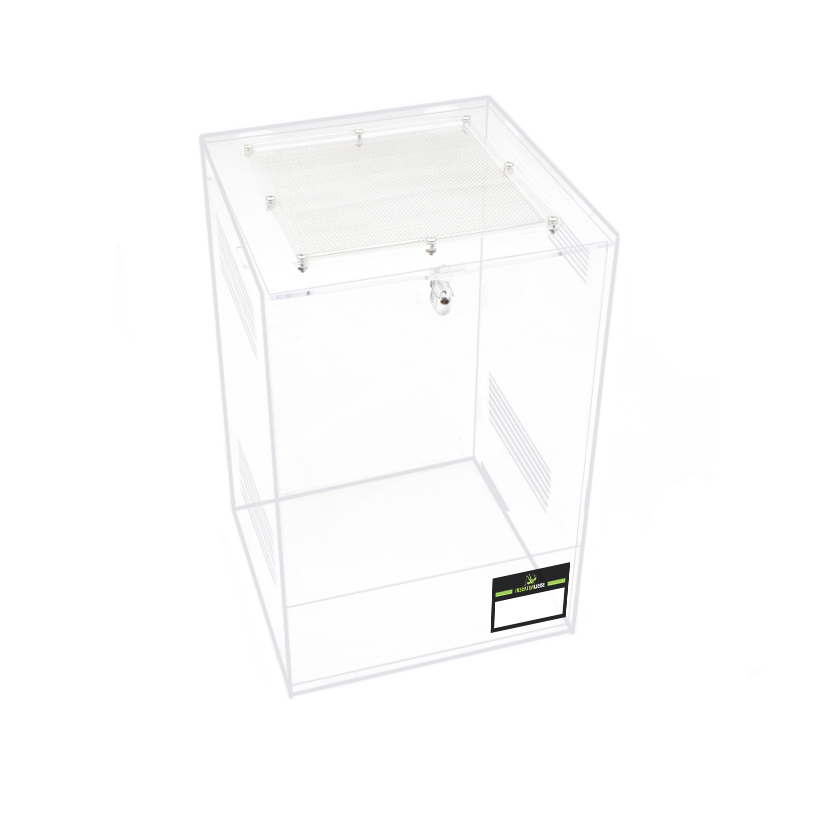
Repto Terra Clear
YOUR READING RECOMMENDATION
Setting Up Your Jumping Spider Terrarium
Where should you place climbing spots, plants, and hiding places? Our guide walks you through the process step by step.
How much light and heat does my jumping spider need?
Jumping spiders are diurnal and hunt by sight. Make sure the terrarium is well-lit and maintains a regular day-night cycle. About twelve hours of lighting per day is a good guideline. Keep the lights off at night. Direct sunlight from a window is unsuitable: small terrariums can quickly overheat under these conditions.
Light and heat serve two different purposes. An LED lights up the terrarium but doesn’t automatically bring it to the right temperature. So check the temperature at the top near the living area and further down before your spider moves in. For Phidippus regius, a temperature of about 24–28 °C during the day is a good guideline; also take note of the specific requirements for your local subspecies. It’s okay for it to get cooler at night.
If your enclosure is already warm enough, you don’t need any additional heating. If it remains too cool, plan for an adjustable heat source with temperature control. The spider must always be able to retreat to a cooler area. Heating devices should not be left unprotected in the spider’s living area.
A Look at the Climate of the Bahamas
The Bahamas are part of the natural range of Phidippus regius. The table shows you the temperatures throughout the year. The monthly values are for reference only and should not be used to set the temperature in your terrarium.
| Month | Deep | Medium | High |
|---|---|---|---|
| Jan | 21 °C | 23 °C | 26 °C |
| Feb | 21 °C | 23 °C | 26 °C |
| Mar. | 22 °C | 24 °C | 27 °C |
| Apr | 23 °C | 25 °C | 28 °C |
| May | 24 °C | 26 °C | 29 °C |
| Jun | 26 °C | 28 °C | 31 °C |
| Jul | 26 °C | 28 °C | 31 °C |
| Aug | 26 °C | 28 °C | 31 °C |
| Sep | 26 °C | 28 °C | 31 °C |
| Oct | 25 °C | 27 °C | 30 °C |
| Nov | 24 °C | 25 °C | 28 °C |
| Dec | 22 °C | 24 °C | 27 °C |
For lighting, for example, these two options are worth considering: The Repto Flat LED rests on a suitable cover. The Repto Compact LED attaches to the appropriate edge and can be adjusted. Before purchasing, check which mounting option is compatible with your terrarium.
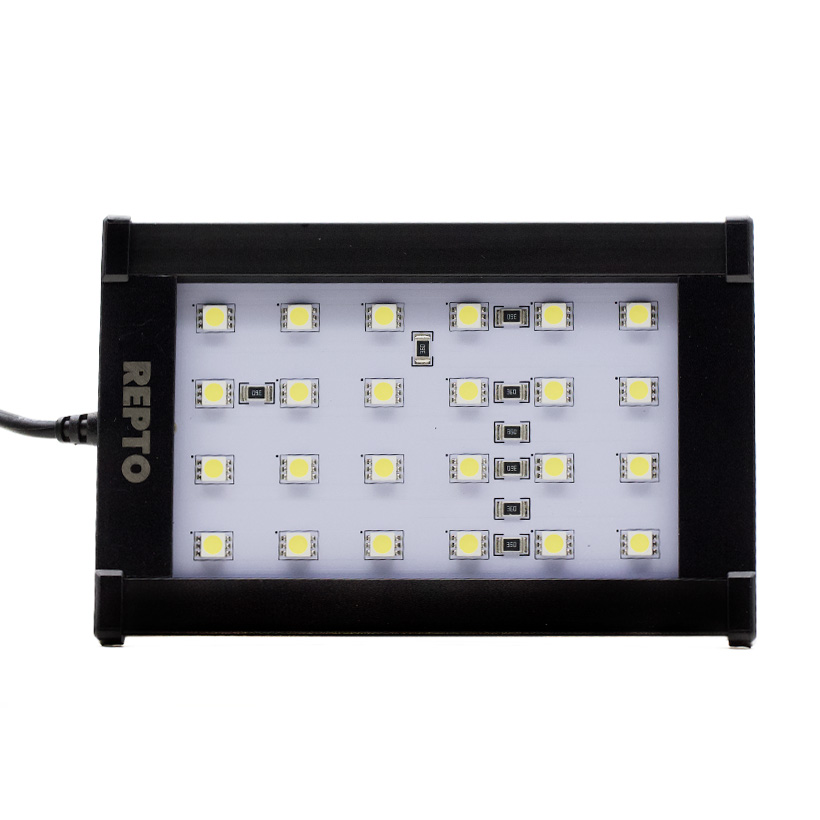
Repto Flat LED
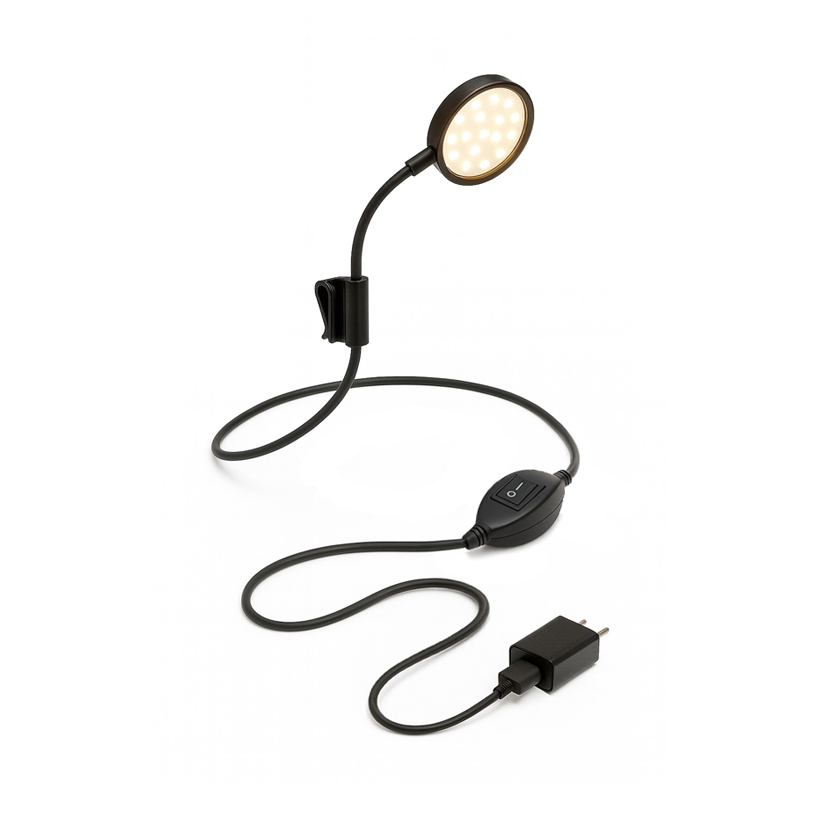
Repto Compact LED
YOUR READING RECOMMENDATION
The Right Lighting for Your Terrarium
Not sure which lamp is right for your setup? Here, we’ll show you the differences and what to look for when making your choice.
How do I give my jumping spider water?
Place small drops of water on a side wall or on a leaf. Your spider can drink from them. Do not spray directly on the spider or into its web. Especially with tiny young spiders, avoid creating large drops.
Check daily to see if water needs to be provided. How quickly the droplets disappear depends on the temperature and ventilation. The terrarium should then be allowed to dry out again. You don’t want the interior to be constantly wet or the glass to be fogged up.
What does a jumping spider eat, and how often?
Jumping spiders eat live prey. Young spiders start with small prey; as they grow, their prey can become larger. It’s better to choose a portion that’s easy for them to handle rather than the largest possible prey.
A fixed feeding schedule doesn’t work for every spider. Young spiders usually need to be fed more often than adults. Observe the abdomen and hunting behavior: If the abdomen is still well-filled, it’s okay to take a break. An abdomen that’s getting thinner may indicate that it’s time for the next meal. If your spider isn’t eating, also check the lighting, temperature, and whether it might be molting.
Remove any uneaten prey. Especially during molting, do not leave any animals in the terrarium that could injure your spider. You can find out which prey is suitable for each developmental stage by referring to the corresponding product cards in our feeding guide:
YOUR READING RECOMMENDATION
The Right Food for Your Jumping Spider
From small juveniles to fully grown jumping spiders: Here you’ll find a selection of foods organized by developmental stage.
Even your small supply of food needs some care. Storing it properly will help ensure you have healthy live food on hand for your next feeding.
YOUR READING RECOMMENDATION
Storing Live Feed Properly
Here’s how to care for your small collection at home—with practical tips for the various types of feed animals.
My jumping spider is hiding—what should I do?
A denser web and a break in feeding may indicate an impending molt. Leave your spider alone at that point. Do not open its web, even if you haven’t seen it for a while. The fact that it has retreated is not, in itself, a reason to intervene.
Keep the conditions stable and carefully offer water outside the web. After molting, the spider is initially soft. Wait to feed it until it has hardened and is actively hunting again. How long this takes depends on its stage of development.
A Quick Checklist Before You Move In
Housing: One animal per terrarium. Make sure the size, ventilation, and openings are appropriate for your spider.
Setup: There are climbing routes and resting spots at the top. You can open it without damaging the web that will form later.
Light and Temperature: The daily rhythm is set. You’ve measured the temperatures upstairs and downstairs.
Care: Suitable live food is available. You can check on the animal, the water, and the cleanliness briefly each day.
That completes the basic setup. Spend the first few days quietly observing your jumping spider: You’ll quickly learn where it likes to sit and how it hunts.
Still unsure? Feel free to ask us your question in the comments section below the article.


Leave a Reply
You must be logged in to post a comment.