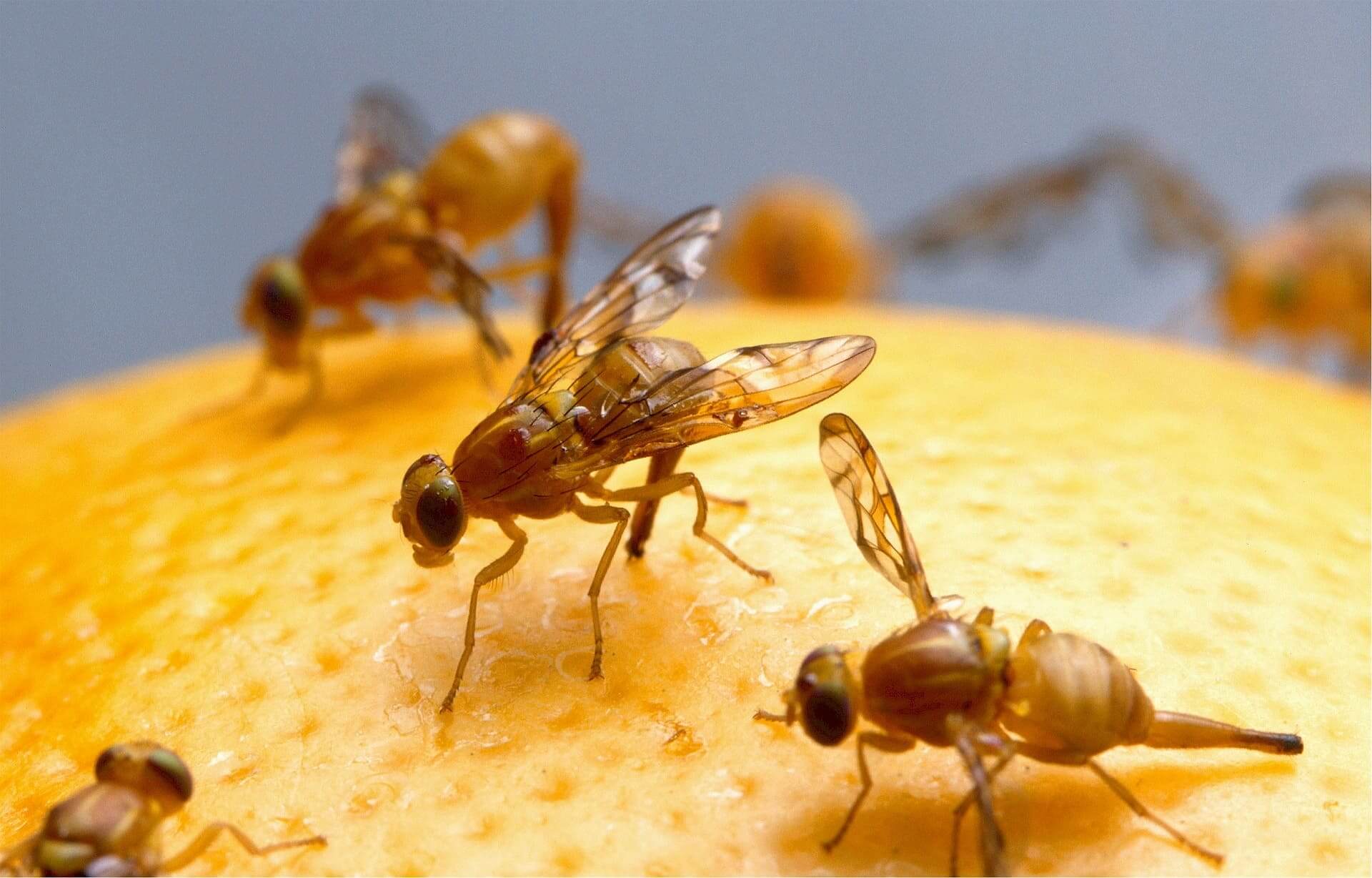


Storing feed insects properly means keeping a small supply in a way that fits your pets’ needs and your daily routine. Here, you’ll learn what fruit flies, gold flies, soldier flies, waxworms, crickets, feed cockroaches, mealworms, and ovenfish need after delivery.
For a single jumping spider or just a few mantises, you don’t need a large prey-rearing operation. It’s often enough to order small quantities, set up the containers properly, and take a quick look inside every day. It’s important to note that a maggot doesn’t need the same care as a fly that has hatched later.
Go straight to your feed animals: fruit flies · golden flies and blowflies · soldier flies · waxworms · crickets and cockroaches · mealworms · ovenworms
Not every can of feed belongs in the refrigerator.
The type of feed animal and its developmental stage are key factors. Briefly cooling the feed before removing it is different from long-term storage. Follow the instructions included with your delivery, and do not refrigerate unfamiliar feed animals just because you suspect they might need it.
Storing Feed Animals Properly: Getting Started After Delivery
Open the shipping package as soon as possible and check the cans for damage, moisture leakage, and dead insects. Remove the outer packaging so that the designated ventilation areas remain unobstructed. A food can needs a secure lid and proper air circulation.
Choose a spot that isn’t in direct sunlight and doesn’t have a radiator underneath it. Also, don’t place the container on a warm terrarium. Check for leftover food and moisture daily. Remove spoiled food and dead animals before mold or an unpleasant odor spreads.
You don’t have to implement everything right away. If the delivery container is intact, properly ventilated, and suitable for the quantity, you can continue using it for now. An additional box is worth having if it gets too cramped or if you want to keep hatched flies separate.
Fruit Flies: Maintaining the Culture
Both small and large fruit flies are practical food sources for many young jumping spiders and mantises. In addition to the visible flies, a culture also contains larvae in the food mash. Leave this culture in its cup and keep the ventilation unobstructed.
Place the cup at normal room temperature, away from direct sunlight. Your current batch is not intended for long-term storage in the refrigerator. The mixture should neither dry out nor be submerged in water. Therefore, do not simply pour water into it.
To remove some, first tap the flies from the lid into the cup and transfer a small portion to a second, empty cup. Close the container again. This makes it easier to measure out the right amount, and you won’t have to open the entire container over the terrarium.
For very small young insects, we offer the “Ant” fruit fly and the “Turkish Glider” fruit fly. The “Ant” has no fully developed wings. The “Turkish Glider” has wings and can glide, but cannot fly actively. Both are domesticated strains of Drosophila melanogaster.
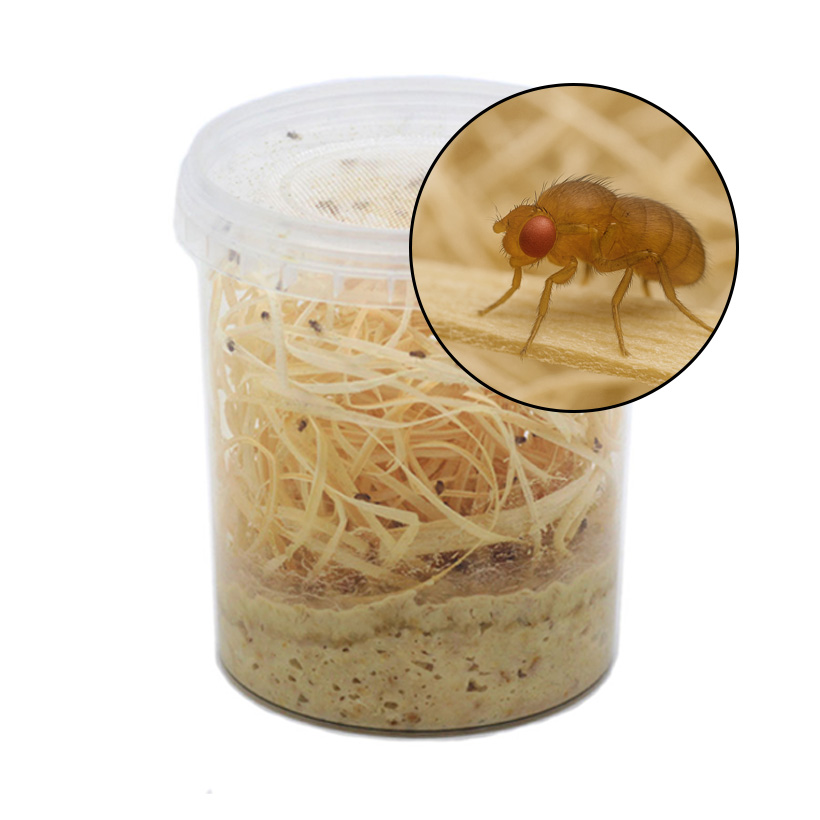
Small fruit fly “ant”
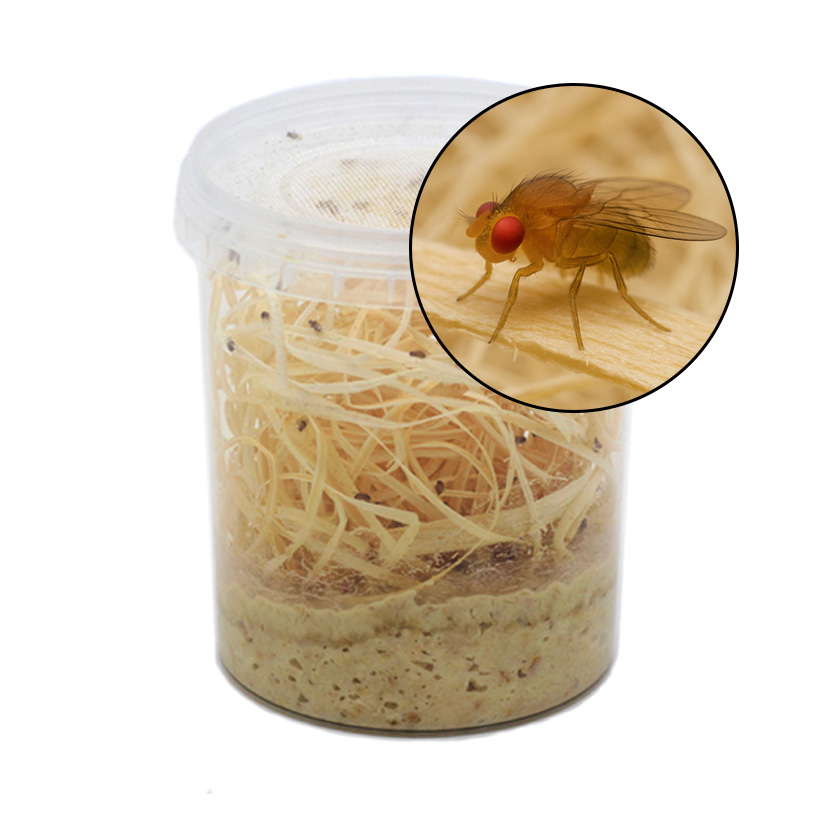
Small fruit fly “Turkish glider”
If your animal can handle larger prey, consider the Large Fruit Fly and the slightly larger “Big” Fruit Fly. Both belong to the species Drosophila hydei. Choose based on the size of your pet; you don’t need all the varieties at once.
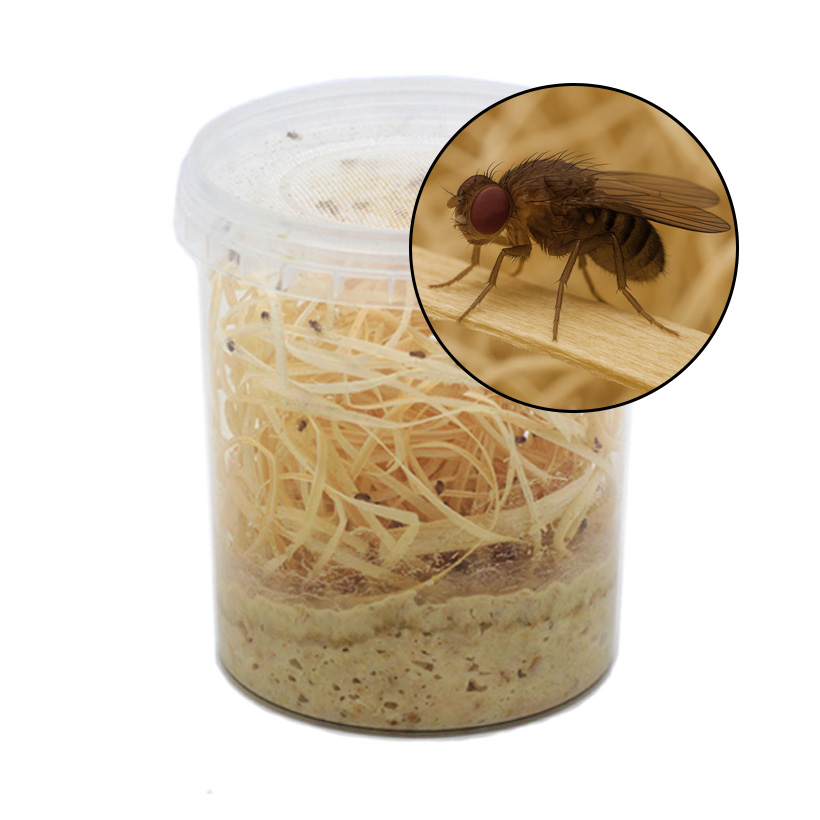
Large fruit fly
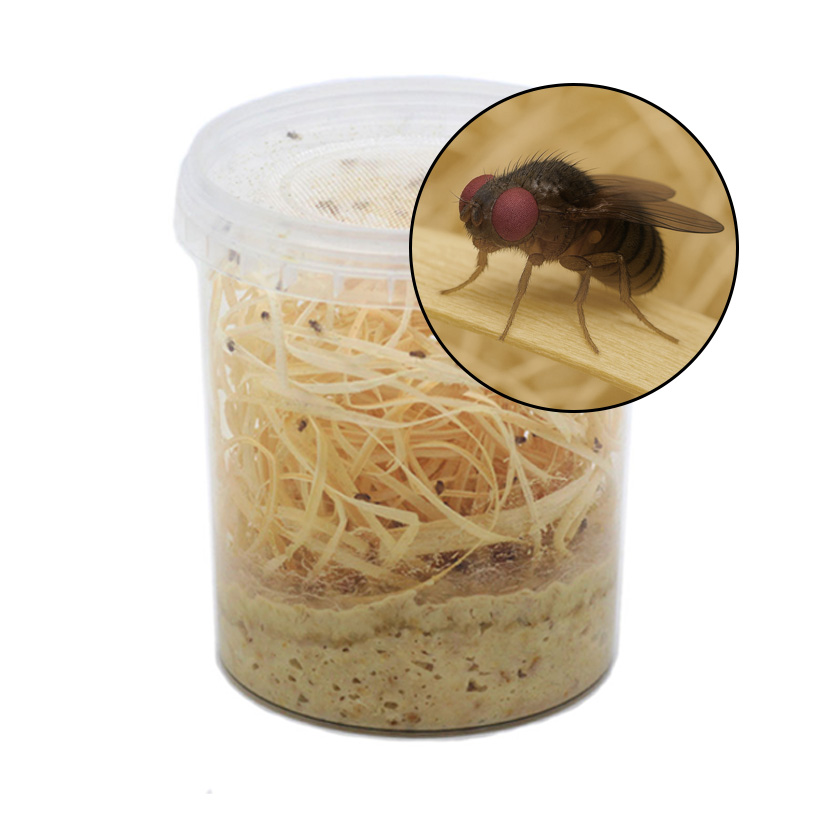
Big fruit fly “Big”
YOUR READING RECOMMENDATION
How to Breed Fruit Flies Yourself
Want to turn your small supply into your own breeding colony? Here’s how to set up and maintain a culture of Drosophila hydei.
Goldflies and blowflies: Place the maggots directly into the terrarium
With goldflies and blowflies, you can feed both the larvae and the adult flies. Choose a size that’s appropriate for your jumping spider or mantis.
Our practical tip: Take only the maggots you need and place them directly into the terrarium. Your mantis or jumping spider can eat the maggot right away. If any are left over, they can pupate there. Under the right conditions, a fly will hatch after a few days, which your pet can then hunt. How quickly this happens depends on the temperature and the fly’s stage of development.
Put only a few maggots in and keep an eye on what’s already in the terrarium. This way, you’ll avoid having too many flies hatch at once later on. Pause feeding during a molt.
You can store the remaining supply in the refrigerator to slow down their development. Use a securely sealed, ventilated container and keep it separate from open food items. The maggots must not freeze. Check on them regularly, as refrigeration does not halt their development indefinitely.
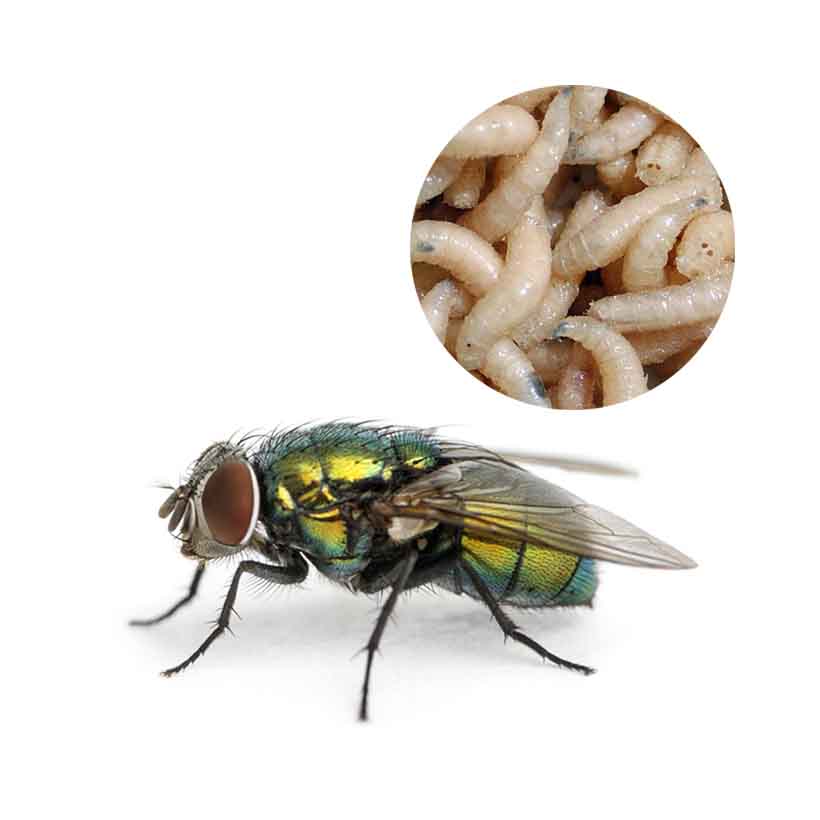
Gold flies
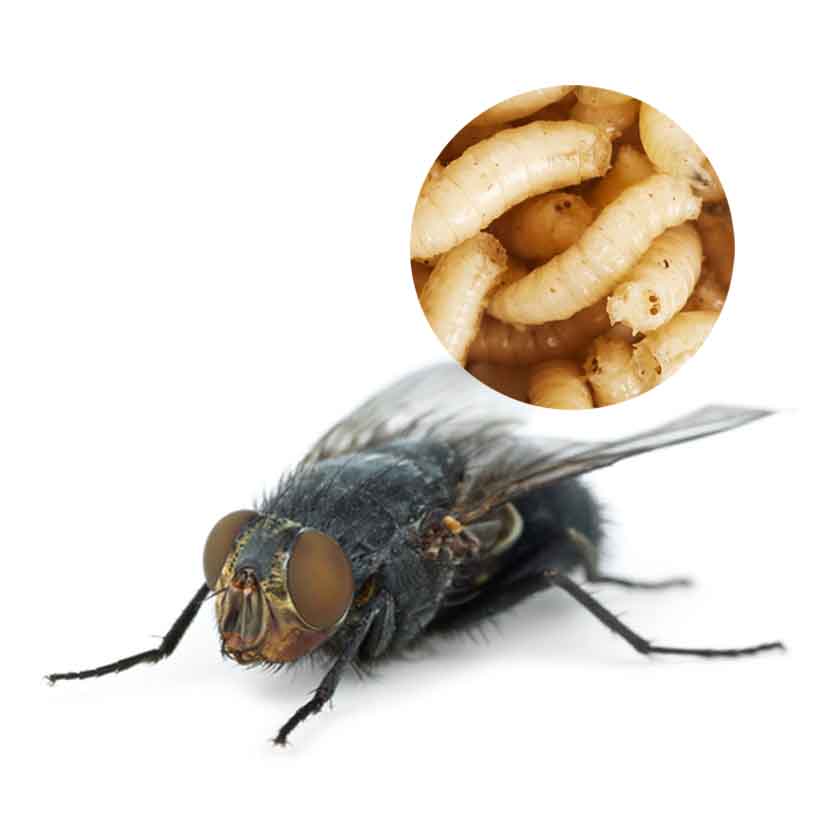
Blowflies
If you let flies hatch separately and keep them for a longer period, they’ll need food. Offer them some sugar water or honey water. You can use our magnetic water dishes for this. Alternatively, an absorbent pad on which the flies can drink the liquid will suffice. Refresh the mixture daily and clean the water dishes regularly. An open liquid dish is unsuitable because the flies can drown in it. As a container, you can use a ventilated tin you already have or our BraPlast tin with a gauze lid.
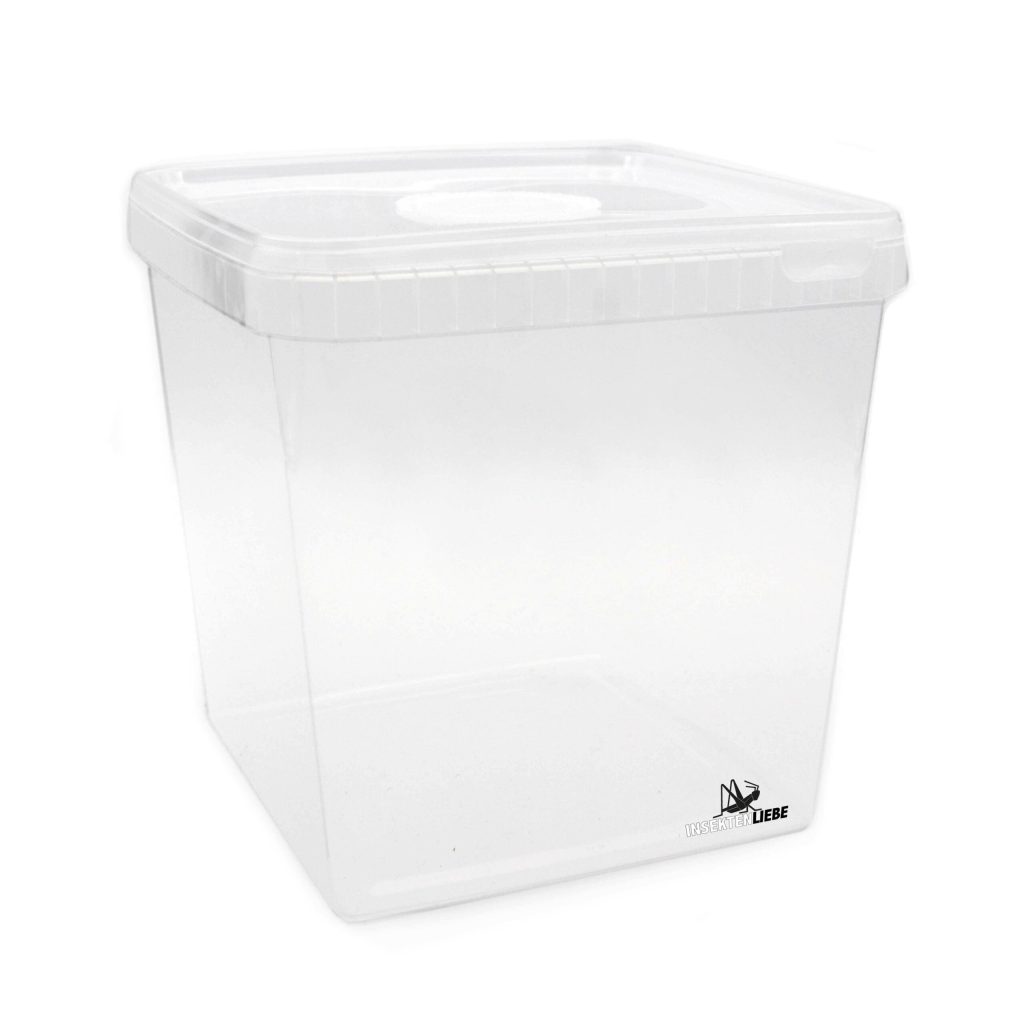
BraPlast can with gauze lid
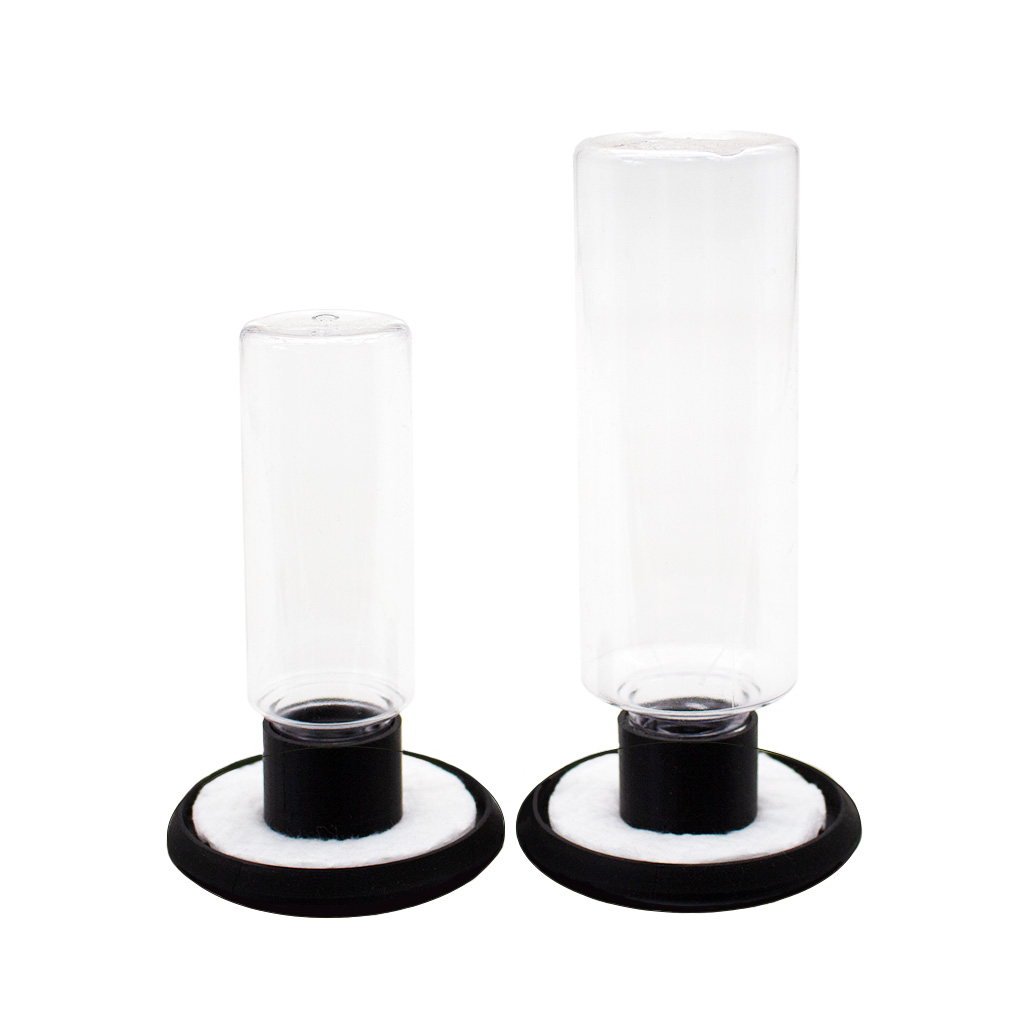
Magnetic drinker
Military flies: Feed the larvae; feed the flies promptly
For our soldier fly larvae, you can choose between larvae and pupae. Therefore, check first which stage you ordered. For short-term storage, we recommend room temperature. Do not place the container in a standard household refrigerator, as you would with goldfly larvae.
The larvae need food: Mash some ripe banana into a paste and offer them a small portion. Alternatively, you can use our Beetle Jelly. Add just enough so that it doesn’t turn into a fermenting, wet mess. Check daily and remove any spoiled leftovers.
Pupae do not eat. Let them hatch in a safe, well-ventilated container. You do not need to provide banana puree or jelly for feeding the newly hatched soldier flies right away. This feeding recommendation applies to the larvae; keeping or breeding the adult flies for a longer period is a separate scenario.
Larvae, pupae, and adult flies vary in size and mobility. Choose the stage that best suits your pet. Many mantises and larger jumping spiders respond particularly well to newly hatched flies.
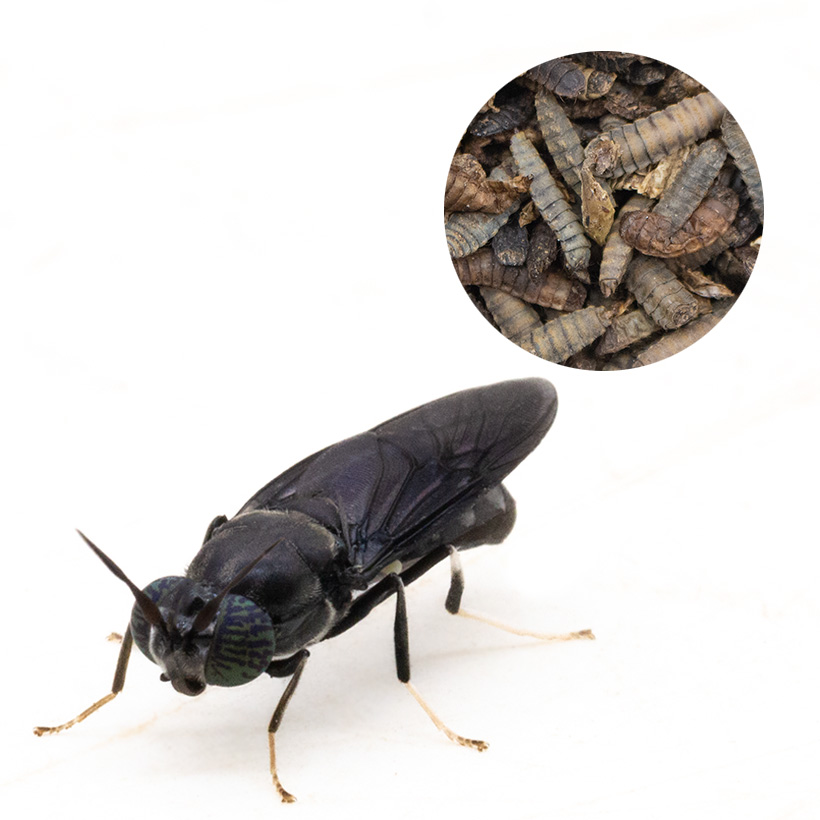
Soldier flies
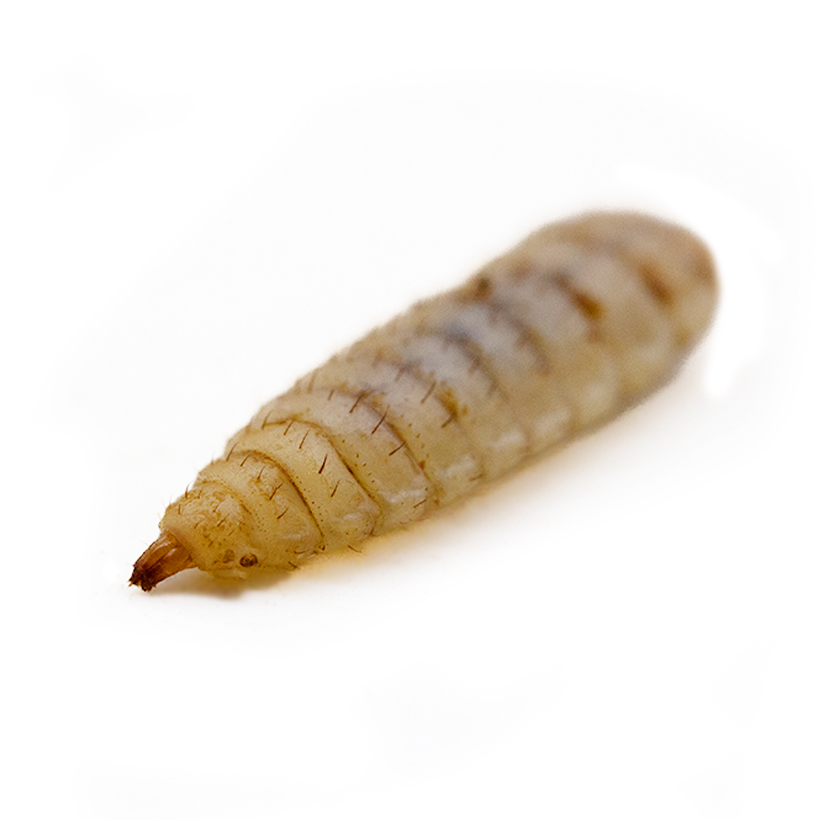
Soldier flies – Larvae, 60 pieces

Beetle Jelly
Waxworms: Food is already included in the shipping container
Our waxworms come in a container with food that they can eat while in storage. Leave them in this container for immediate use and ensure proper ventilation. The material is therefore not merely packaging, but actually nourishes the insects.

Choose a cool place away from direct sunlight and heat sources. Follow the storage instructions included with your shipment. Check the container regularly and remove dead larvae and spoiled material.
As long as there is enough high-quality food available, you don’t need to add anything to maintain a small supply. If you’re raising your own waxworms or want to continue feeding waxworms you’ve been keeping for a while, you can find waxworm food here. Order the waxworms in a quantity that you can use as a supplement.
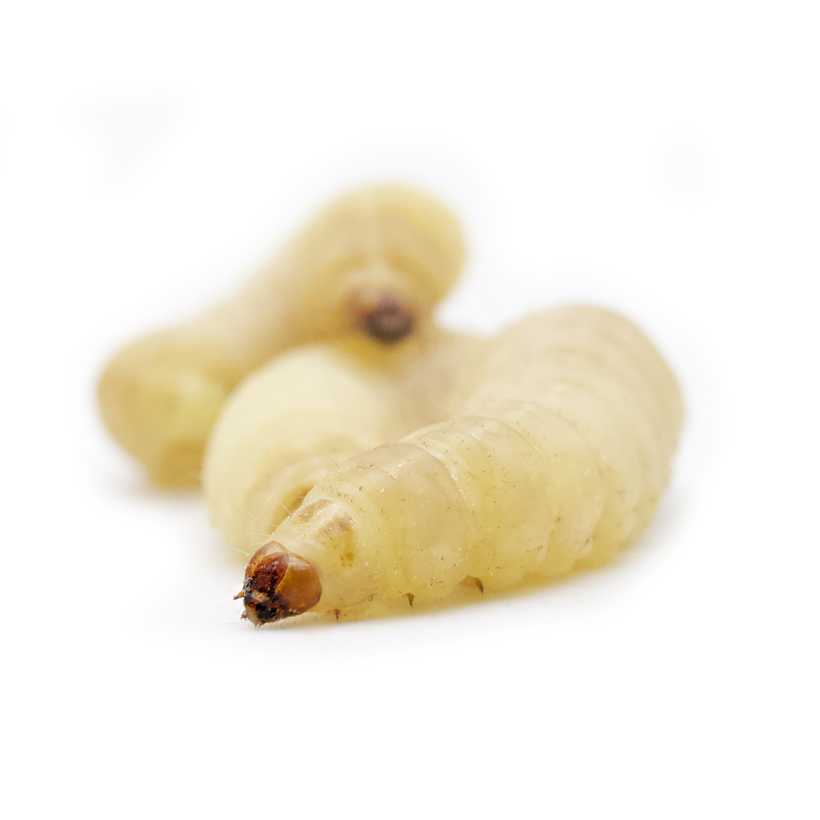
Wax maggots
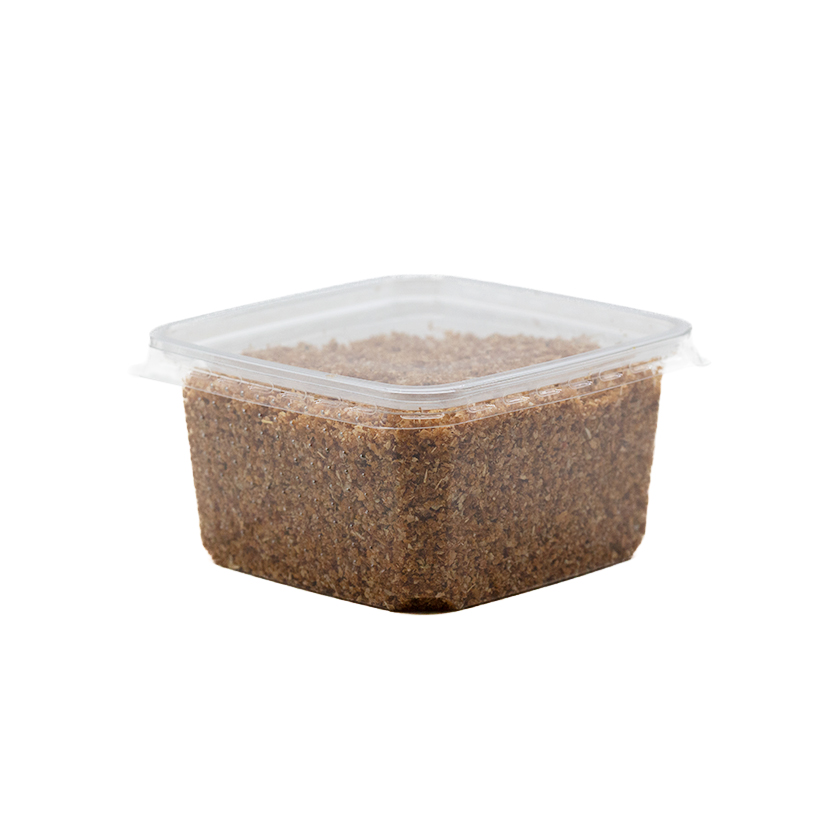
Wax maggot food
Crickets and feed cockroaches: Feed them a small supply as well
For suitable tarantulas, scorpions, and other insectivorous invertebrates, house crickets or Argentine forest cockroaches can serve as food sources. Keep them separate in escape-proof, well-ventilated containers. The refrigerator is not a suitable storage solution in this case.
Pieces of an egg carton provide a walking surface and hiding spots. Keep the container clean and avoid a constantly damp environment. In addition to food, the animals need a reliable source of moisture, such as small pieces of suitable fresh food or an appropriate insect water dish, like our magnetic water dish. Remove food scraps promptly.
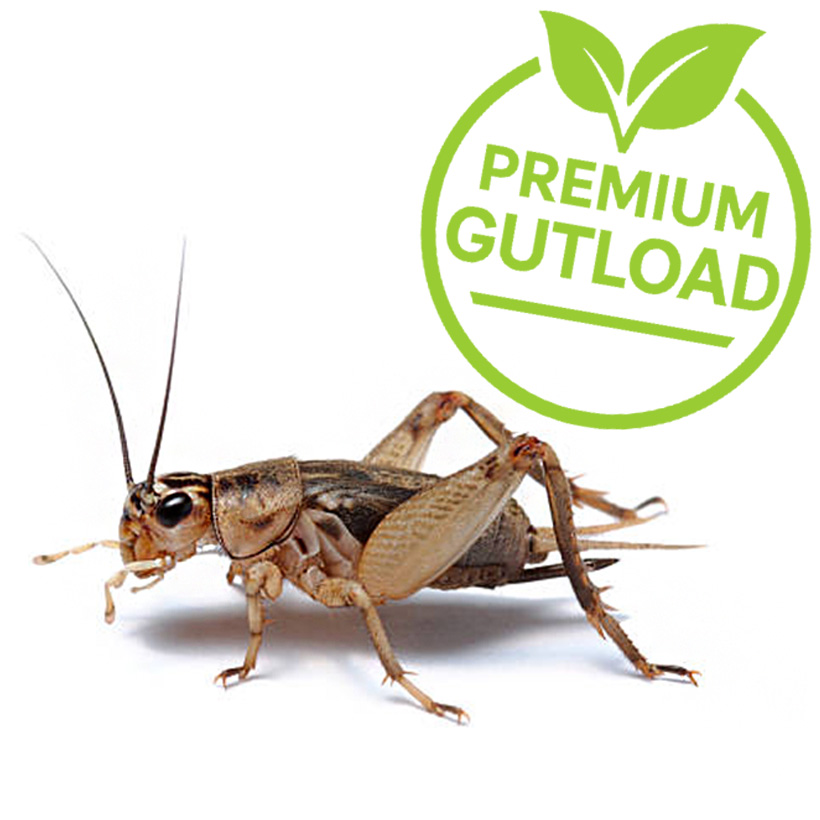
Cricket
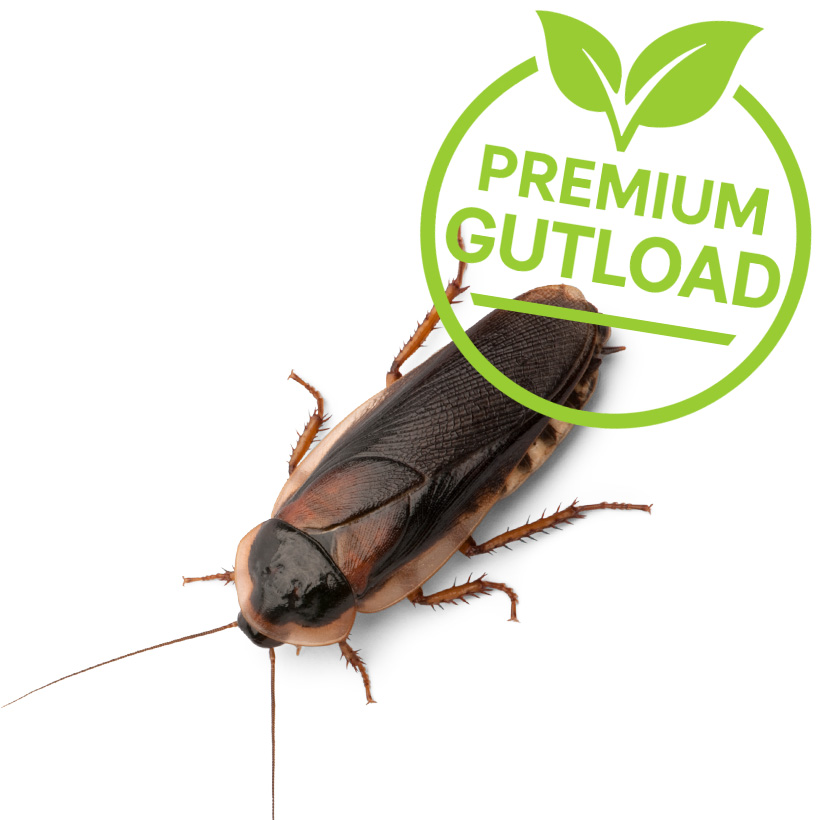
Blaptica dubia “Argentine forest cockroach”
Even during a short stay, crickets and cockroaches need something to eat. Start offering them appropriate food as soon as they arrive. Our cricket and grasshopper food and our cockroach food can be served in small portions. Keep dry food dry and place it separately in a shallow food dish instead of covering the entire floor with it.
Start by using the food that came with the kit, provided there’s still enough left and it’s fresh. The food varieties sold separately are suitable for refilling—whether you’re stocking up a small supply or setting up a breeding program.
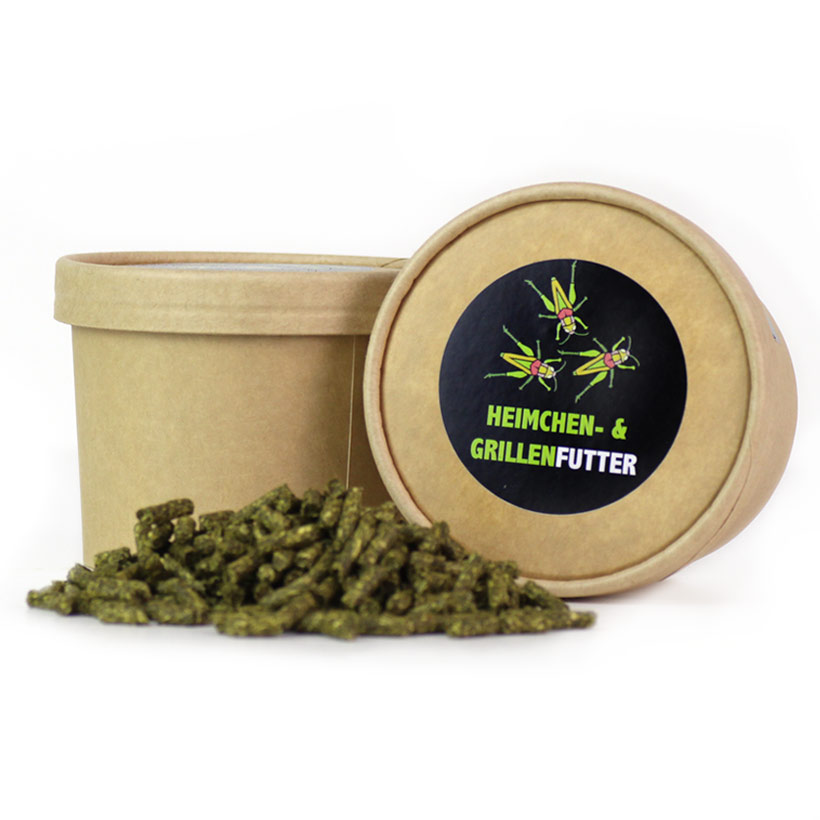
Crickets & cricket food
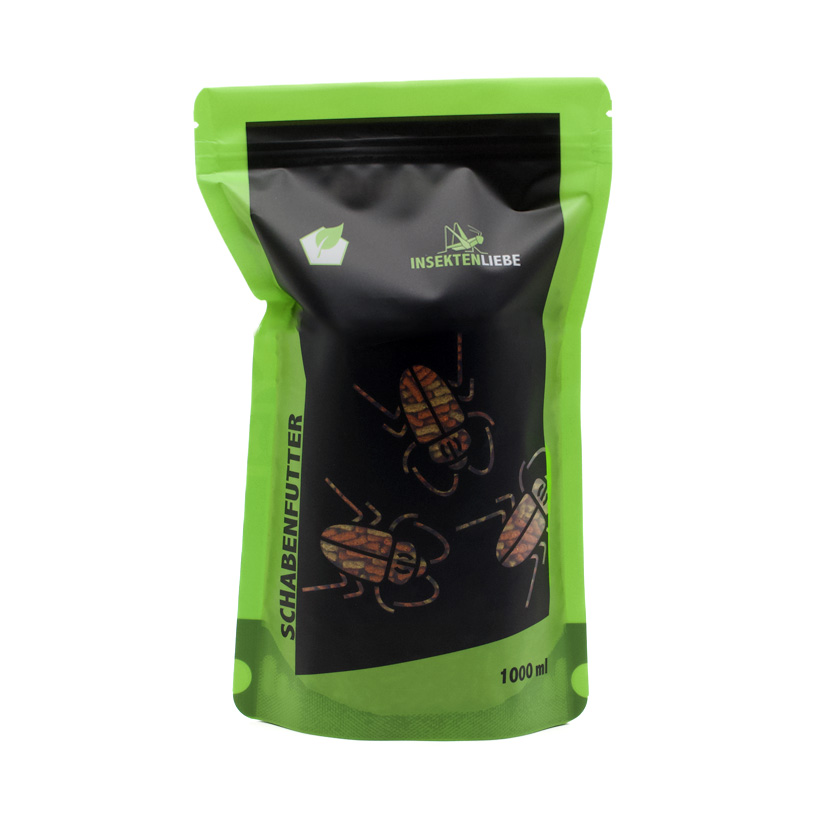
Cockroach food
Breeding crickets and cockroaches yourself: when is it worth it?
If you regularly care for several tarantulas or other insectivores, starting your own breeding program may make sense. However, it requires space, regular care, and time before offspring are available. For just a few feed animals now and then, a well-stocked storage box is often sufficient.
For house crickets, you’ll need sexually mature insects, hiding places, food, water, and a suitable egg-laying container. The Insektenliebe House Cricket and Field Cricket Breeding Complete Set includes, among other things, food, a magnetic water dispenser, an egg carton, and an egg-laying kit with coconut humus. Keep the egg-laying area slightly moist, while the food and the rest of the box remain dry and clean. Young crickets need a breeding environment that’s particularly escape-proof.
With Argentine forest cockroaches, you don’t need a separate egg-laying tray like you do with crickets: the females give birth to live young. Keep some of the adult insects as a breeding group. Our Insektenliebe Complete Cockroach Feeding Set includes, among other things, egg cartons, cockroach food, and a magnetic water dish. Ensure appropriate warmth, good ventilation, and clean feeding areas. The conditions depend on the cockroach species.
Both sets already include food. You’ll only need the food types linked above to restock. Live feed is not included in the boxes as listed. Therefore, plan to start your breeding program with a suitable breeding group and a small supply of food for the transition period.
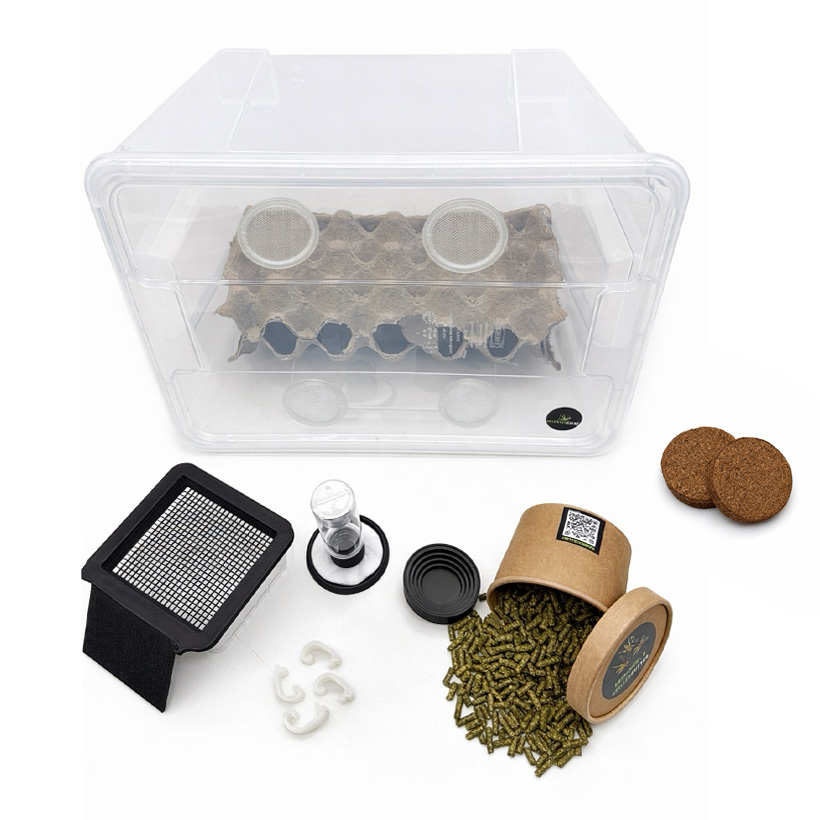
Insektenliebe: Crickets and Grasshoppers Breeding Complete Set
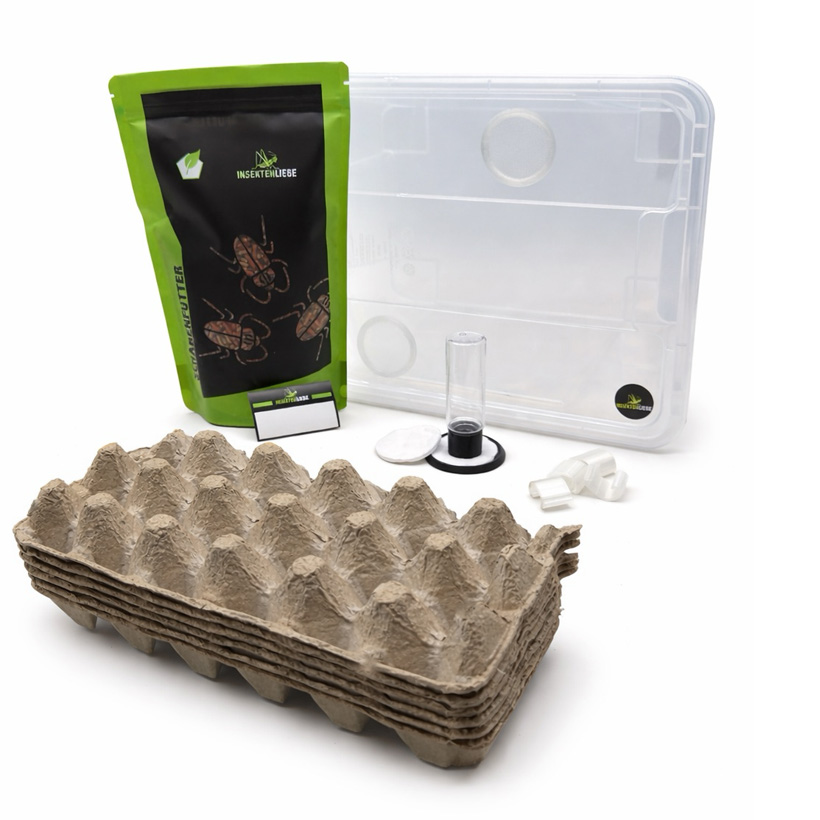
Insektenliebe: Complete Cockroach Feeding Set
Storing Mealworms: Wheat Bran as Food and Bedding
Our mealworms are delivered already mixed with wheat bran. The bran serves as a substrate and is eaten by the larvae. Keep a small supply in a clean, well-ventilated plastic container. Store them away from direct sunlight and without additional heat. A room at normal temperature is suitable for short-term care; in warm conditions, the larvae develop more quickly.
You can use wheat bran to supplement used food. As long as there is enough clean bran in the feeding container, you don’t need to refill it. A small piece of carrot is good for moisture. Check it daily and remove any leftovers before they get moldy. The bran itself should stay dry; don’t pour water into it.
Take only the amount you need and choose the larval size that’s appropriate for your pet. Mealworms can hide in the substrate. Therefore, monitor feeding and remove any uneaten worms.
YOUR READING RECOMMENDATION
From Mealworms to Your Own Breeding Program
We’ll show you how the larvae develop into mealworms and how to care for your breeding colony in the corresponding care guide.
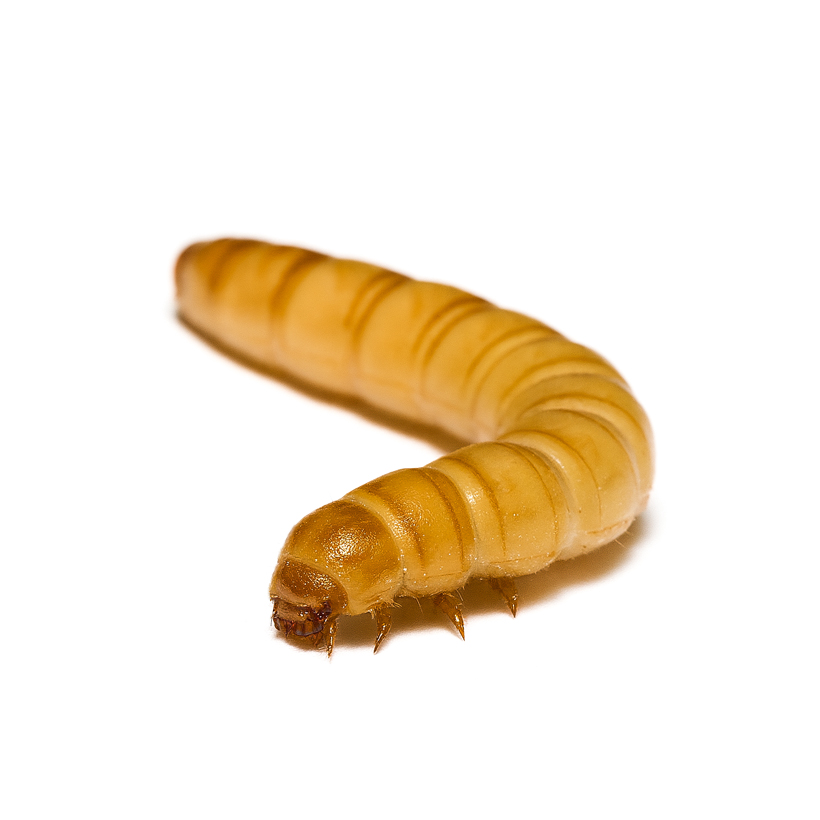
Mealworms
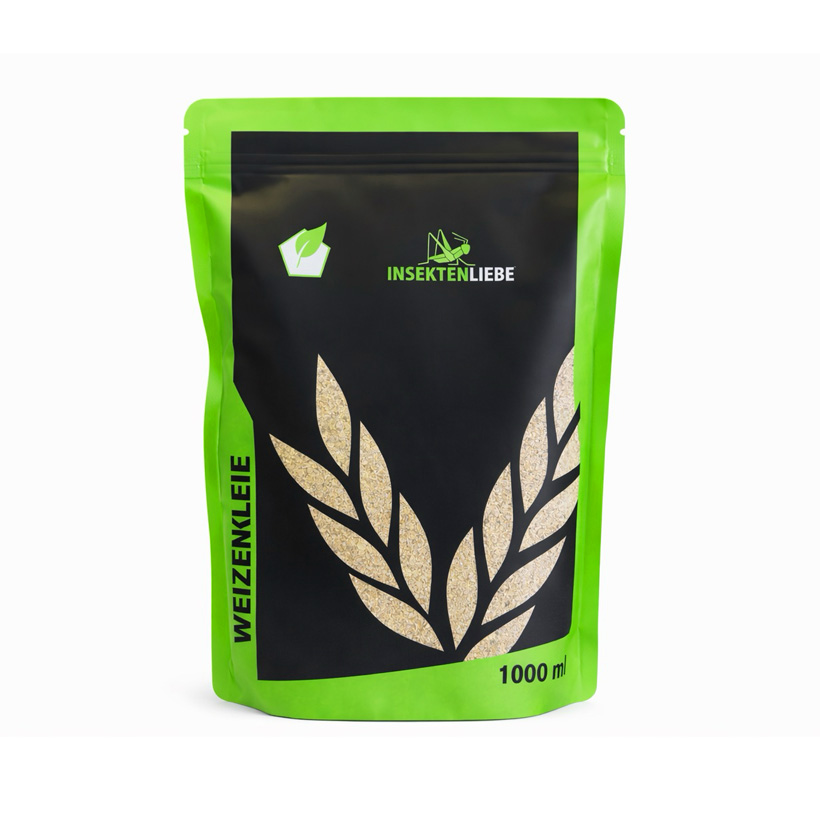
Wheat bran
Storing Baked Fish: Dry Food and the Right Level of Moisture
Oven bugs (Thermobia domestica) are agile food sources for suitable jumping spiders, mantises, and small tarantulas. Keep them in a securely closed, ventilated container with dry hiding spots. The refrigerator is unsuitable for these heat-loving animals. For a small, short-term supply, you don’t need your own breeding setup.
Offer wheat bran as a dry staple food in small portions. Keep it dry and replace any soiled food. Unlike with mealworms, do not put any moist fruit or vegetables in the container.
Just because the food is dry doesn’t mean the animals can do without moisture. Ovenfish need the right level of humidity. In a long-term housing box, a stable water dish with a fine-mesh, snug-fitting cover ensures this. The animals must not be able to get into it. Avoid condensation and keep food and hiding spots dry.
Breeding them yourself requires significantly warmer conditions than a short-term stay. Always give them only a small portion of food so you can keep track of what’s happening in the terrarium.
YOUR READING RECOMMENDATION
Successfully Breeding Ovenfish
Suitable temperature and humidity are key to breeding them yourself. Our care guide will help you set up the terrarium and provide ongoing care.
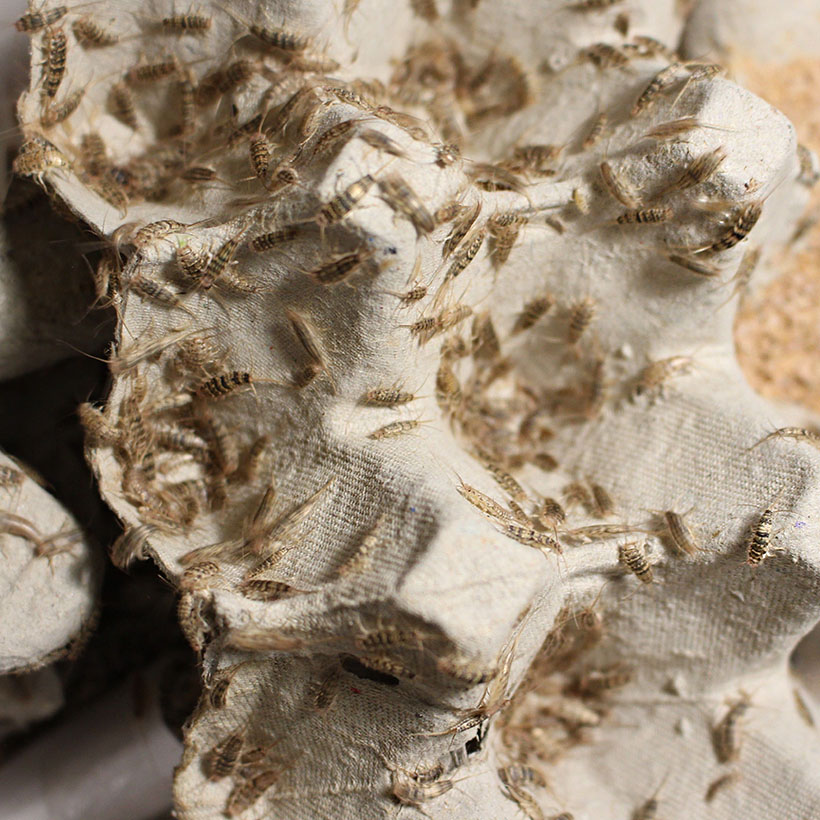
Thermobia domestica “Ovenfish”
Wheat bran
Storing Live Feed: How Much Should You Stockpile?
Base your decision on how many animals you’re actually caring for and what kind of food they’re currently eating. A young jumping spider needs different portion sizes than several large mantises. Molting phases also change their needs. A large package is only practical if you can properly care for the live food until it’s used up.
The next time you place an order, keep track of how much you use and how much is left over. It’s best to start with a small amount. You don’t need to keep several types of feed in stock at the same time just because they’re generally suitable for your pet.
YOUR READING RECOMMENDATION
What kind of food is right for your jumping spider?
From tiny spiderlings to adults: Find suitable prey and use your jumping spider’s molted exoskeletons as a guide.
Storing Feed Animals: Frequently Asked Questions
Can I keep all my live feed animals in the same container?
Keep the species separate. This way, you can choose the right food, humidity, and location, and it’s easier to tell if a particular batch is causing problems.
How long does a can of pet food last?
It’s not possible to specify a fixed shelf life for all shipments. The type, age, developmental stage, transportation, and care of the animals all affect how long you can keep them. Check your supply daily and don’t plan for months of supply based solely on the number of items.
Are dark larvae always dead?
No. Soldier fly larvae, in particular, become darker and less active before pupation. Therefore, assess the species and developmental stage before discarding any insects. Mold and rot, on the other hand, are reasons to remove the affected insects and material.
Can I feed mealworms and ovenfish at the same time?
Both can eat wheat bran, but they require different care. You can offer mealworms a small piece of carrot as a source of moisture. For ovenfish, the food remains dry; appropriate humidity is maintained separately. Keep both species in their own containers.
Still unsure? Feel free to ask us your question in the comments section below the article.
Leave a Reply
You must be logged in to post a comment.