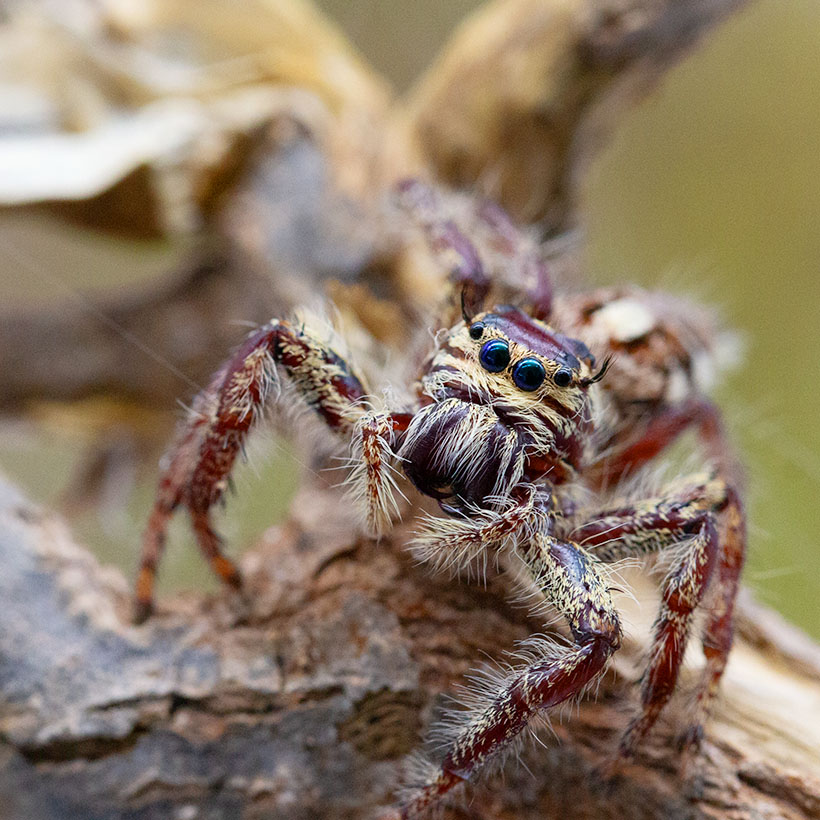
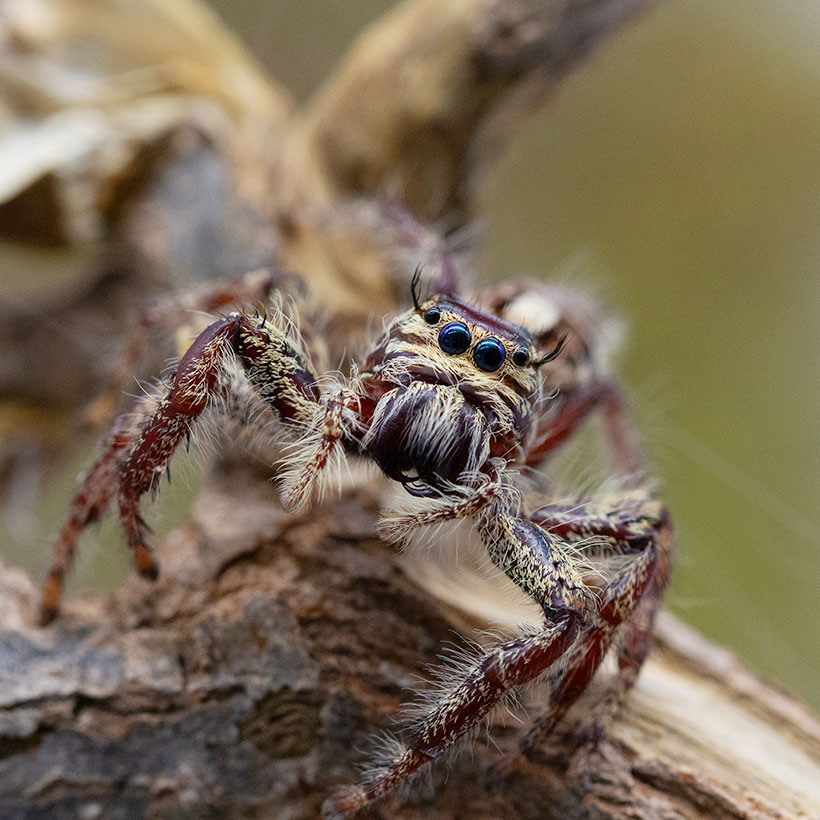
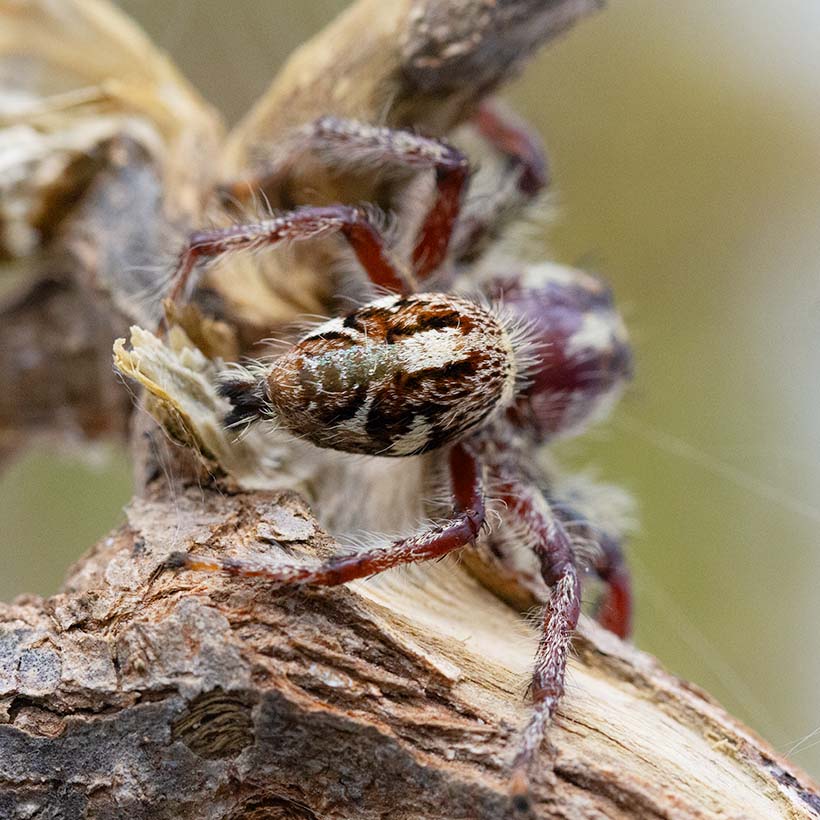
Hyllus giganteus
72,00 € incl. VAT, plus shipping
Category: Jumping spiders
SKU:
925
More information
DifficultyMedium
GenderFemale Male indeterminate
Animal Size (mm) < 25 mm
Temperature (°C)25°C – 28°C
g

Medium

Indonesia

< 25 mm

25°C – 28°C
Hyllus giganteus – an impressive, large-sized jumping spider
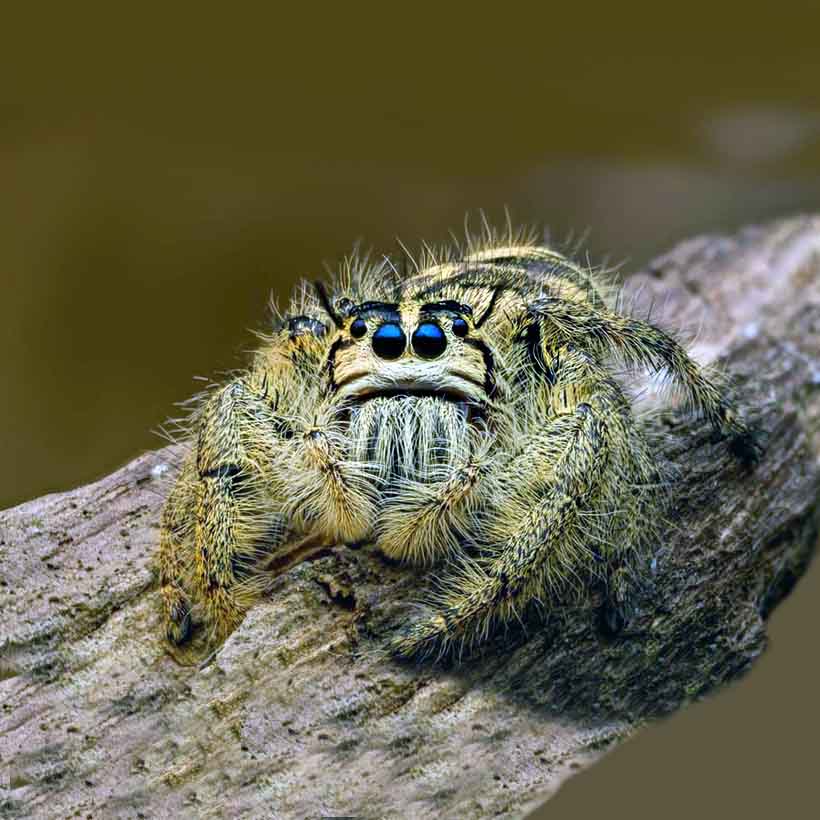
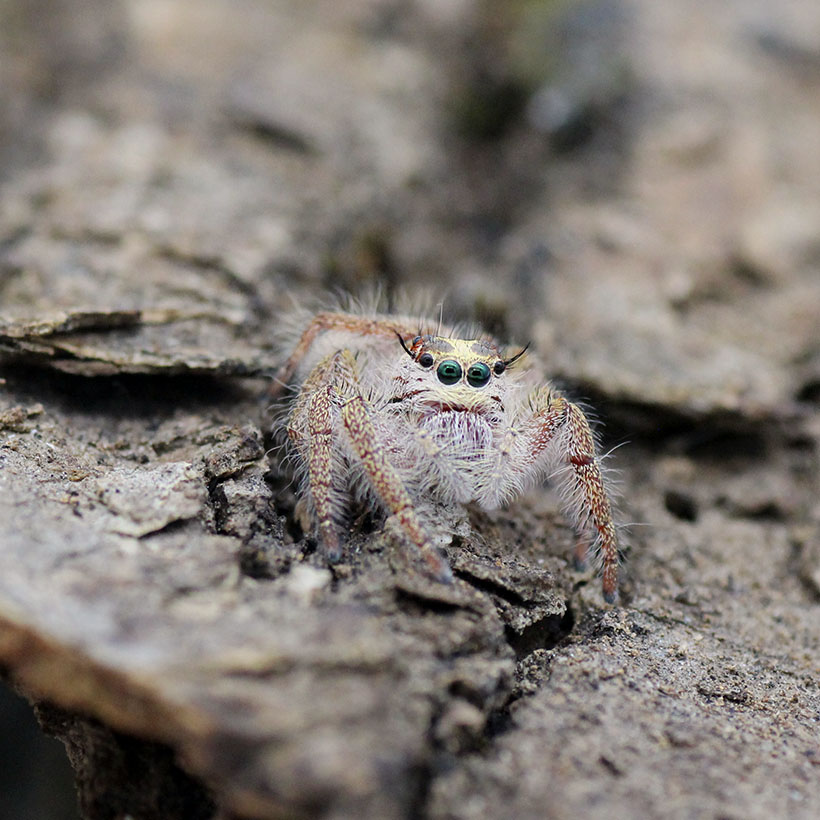
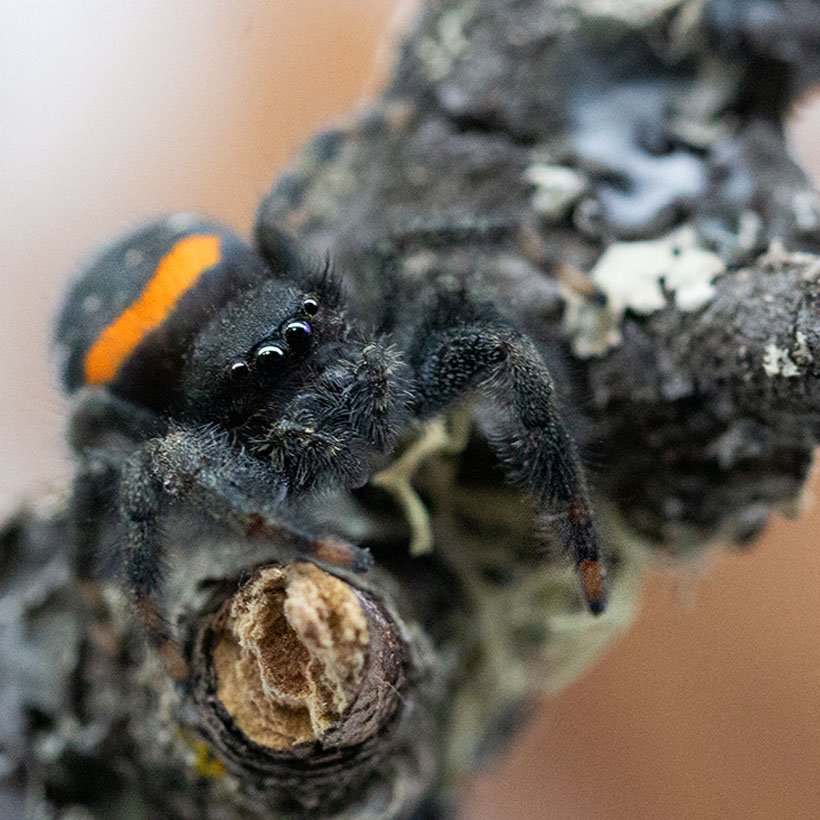
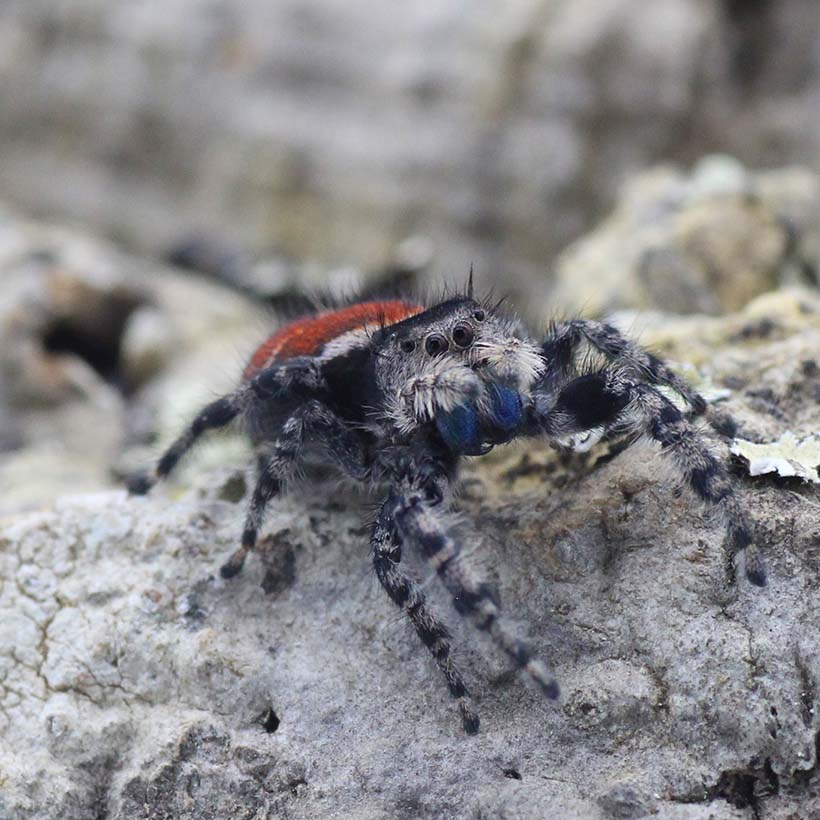
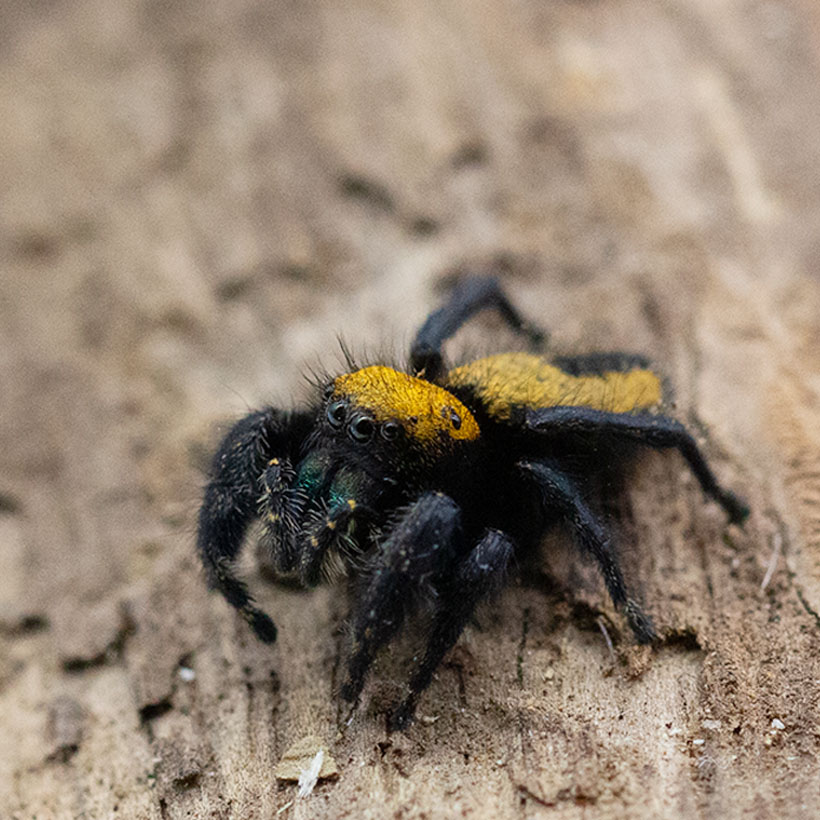
Hyllus giganteus truly lives up to its name. It is one of the largest and most robust jumping spiders and, even at first glance, appears significantly more massive than many species commonly found in terrariums.
The species was first described by Carl Ludwig Koch in 1846. It belongs to the family Salticidae (jumping spiders) and is the type species of the genus Hyllus. According to current knowledge, its natural range extends from Indonesia to Australia.
Anyone who is primarily familiar with Phidippus regius will quickly notice some differences when it comes to Hyllus. It’s not just the size that stands out; their build, origin, and the resulting care requirements also differ.
Large, robust, and unmistakably Hyllus
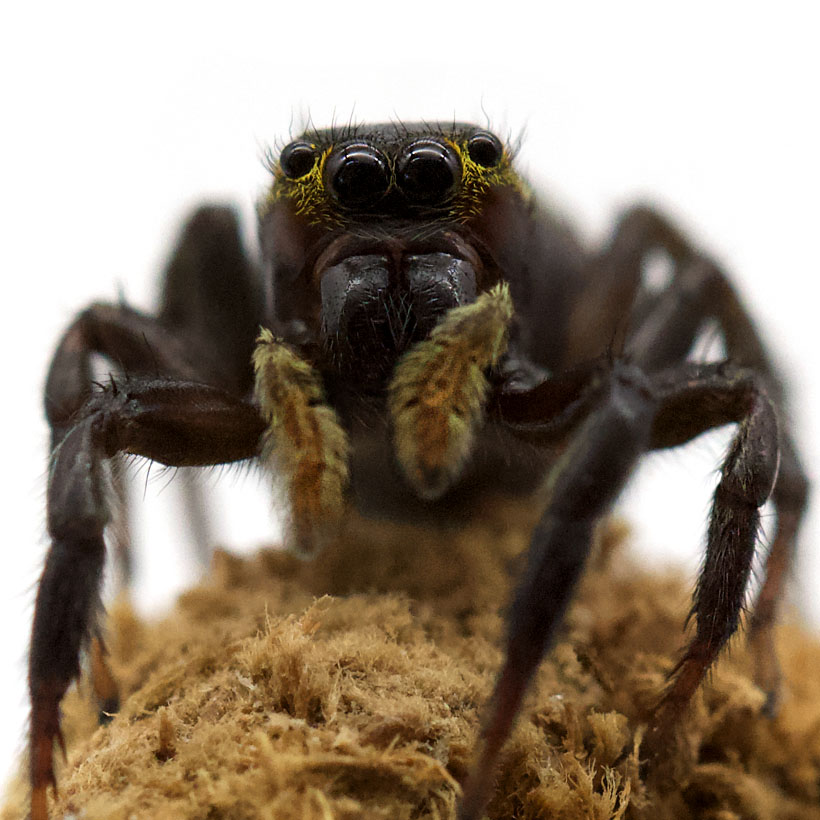
Members of the genus Hyllus are generally distinguished by a sturdy, robust-looking, and often heavily hairy body. Scientific descriptions of the genus characterize Hyllus as large, compact jumping spiders with a broad and relatively tall cephalothorax.
It is precisely this physique that makes Hyllus giganteus so impressive.
Compared to Phidippus regius, it often appears longer and more robust overall. Adult specimens, in particular, develop an appearance that makes it clear why this species bears the name “giganteus.”
Like other jumping spiders, it has large, forward-facing compound eyes. It therefore relies heavily on its sense of sight to navigate and observes its surroundings very closely.
Hyllus giganteus and Phidippus regius are not simply the same species but larger
At first glance, one might simply view Hyllus giganteus as a larger alternative to Phidippus regius. However, this perspective would be too simplistic when it comes to keeping them as pets.
The most important difference starts with their origin.
Phidippus regius is native to North America and the Caribbean, with Florida and various island populations being particularly well-known in the terrarium hobby. Hyllus giganteus, on the other hand, is native to the Southeast Asian-Australian region. The World Spider Catalog lists its range as extending from Sumatra to Australia.
This means they are two different genera from different regions.
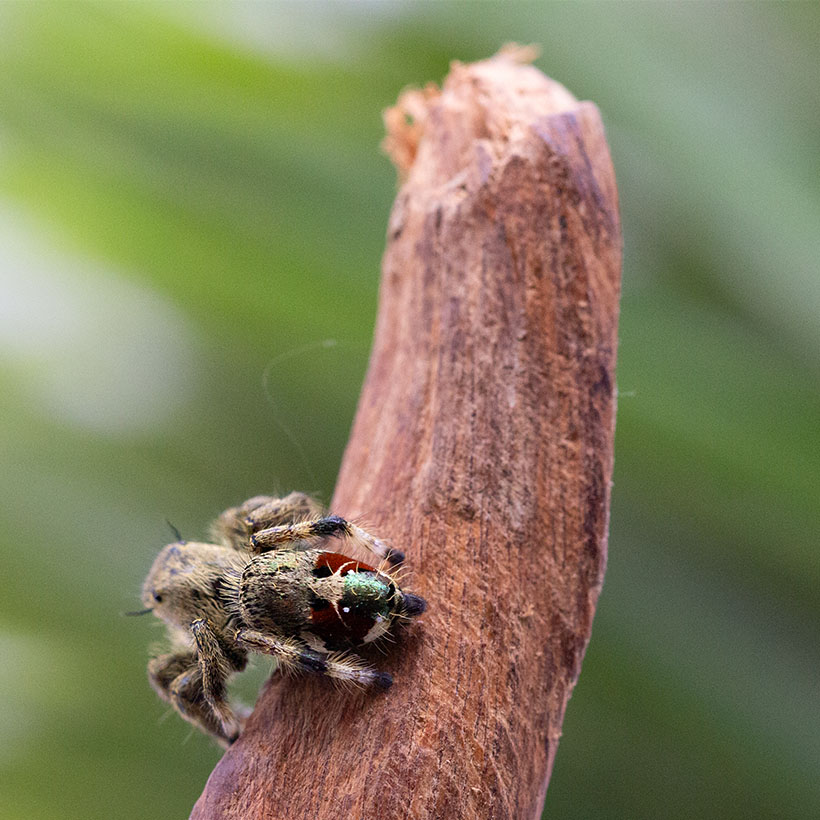
There are also distinct visual differences. Phidippus regius exhibits a wide variety of colors depending on sex and local form. Females, in particular, can be orange, beige, brown, or gray. Hyllus giganteus, on the other hand, typically appears more robust and hairier.
More space than with a traditional Phidippus regius
Of course, the size should also be reflected in the terrarium.
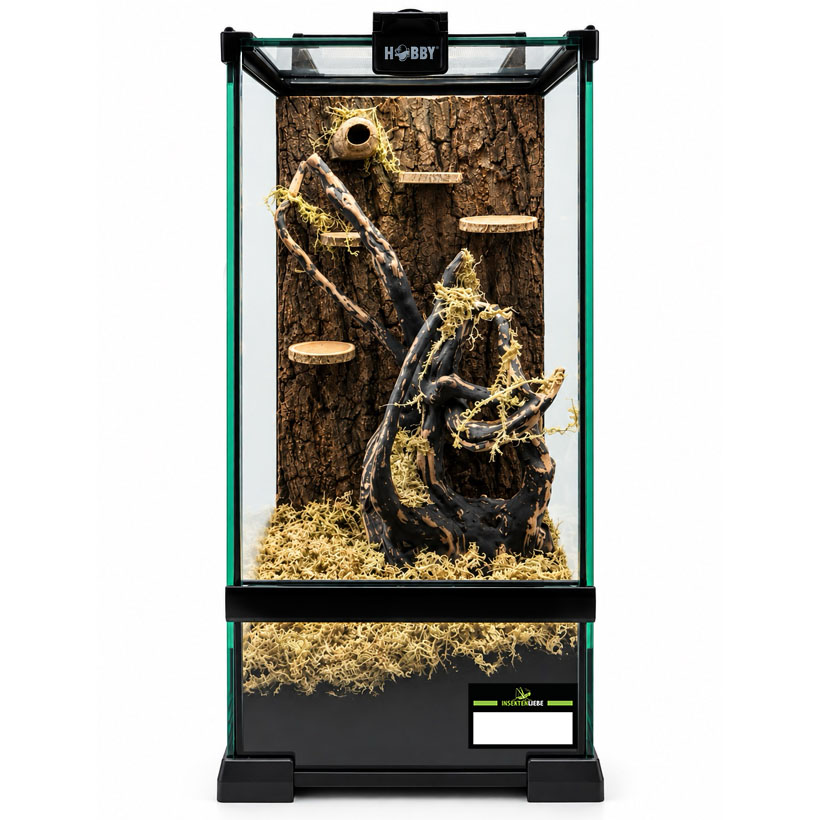
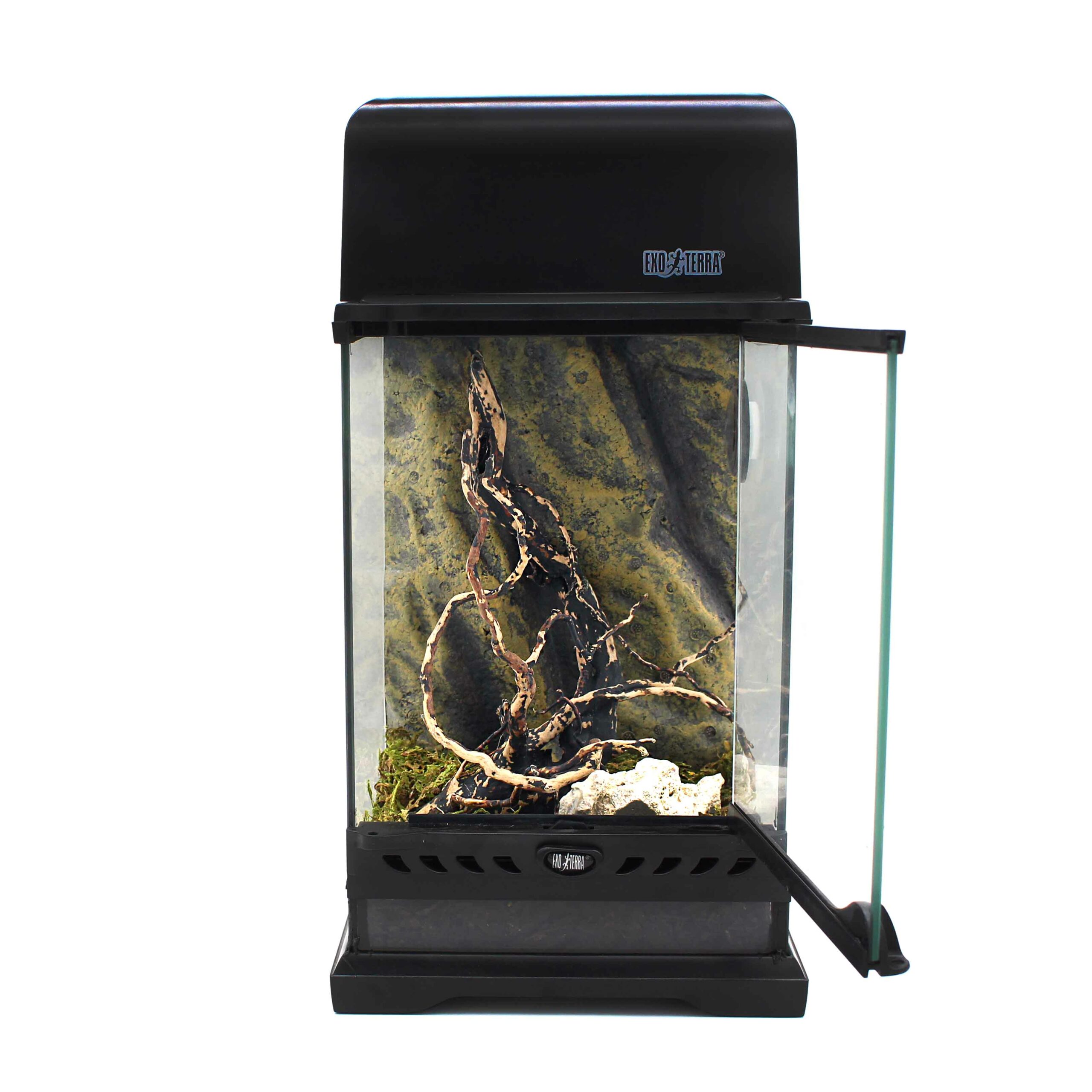
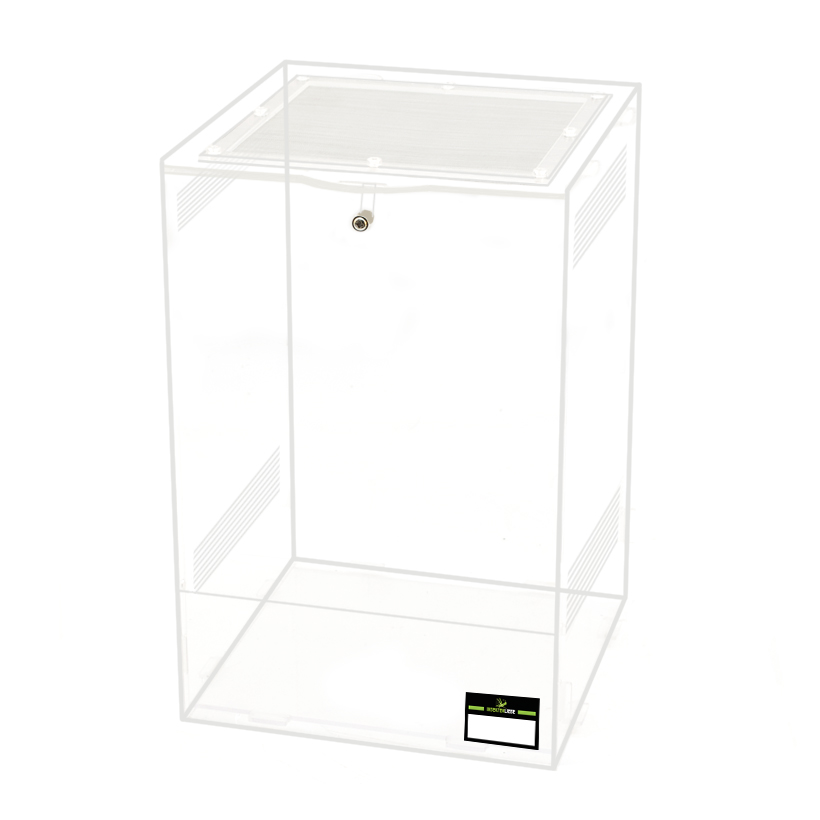
While we already use terrariums measuring around 20 × 20 × 30 cm for adult Phidippus regius, you should provide more spacious housing for Hyllus giganteus. A tall terrarium measuring approximately 20 × 20 × 40 cm or larger offers significantly better options for adapting the setup to this large jumping spider.
It’s not just the sheer volume that matters. What’s most important is that the height is actually usable.
Branches, cork, roots, plants, and other structures should therefore extend from the lower section all the way up to the top.
The upper section is particularly important
As with other jumping spiders, a large part of Hyllus giganteus’s life takes place above the ground.
That’s why you shouldn’t leave the top section blank.
Cork, branched twigs, and plants create pathways and various elevated resting spots. At the same time, some areas should remain relatively open so that the large spider can move and jump around easily.
A terrarium full of decorations may look interesting, but it’s not very useful if the animal has hardly any room to move around.
Warm and tropical instead of just constantly wet
When keeping Hyllus giganteus, it is important to take their Southeast Asian origin into account. At the same time, “tropical” should not be confused with a terrarium that is constantly wet.
A warm climate with high humidity has proven to be ideal for keeping these animals. At the same time, good ventilation is particularly important.
Humidity and fresh air must therefore work together.
The substrate or individual areas with sphagnum moss can temporarily store moisture, while other areas are allowed to dry out again. This creates a much more balanced environment than constant, heavy misting.
Temperature – here’s where it differs from Phidippus regius
Hyllus giganteus can generally be kept at a warmer temperature than many of our Phidippus regius.
For keeping them, I would aim for a range of about 25–28 °C during the day. At night, the temperature may drop slightly.
However, it is important not to maintain exactly the same temperature throughout the terrarium. Lighting or heat coming from above allows for different temperature zones. This enables the spider to choose a suitable spot on its own.
This is precisely where a practical difference emerges compared to how we care for Phidippus regius. Regius thrives very well under more moderate temperatures in our care, whereas Hyllus giganteus prefers significantly warmer conditions.
Combine Humidity with Good Ventilation
When it comes to humidity, you shouldn’t simply treat Hyllus giganteus the same way you would a Phidippus regius.
Moderately high humidity and regular access to water are well-suited to tropical conditions. At the same time, stale, very humid air must be able to escape from the terrarium.
Therefore, it’s better to humidify selectively and ensure air circulation rather than keeping the entire terrarium constantly wet.
Water droplets on plants or other terrarium decorations can also be used directly as a source of water.
An active hunter with a healthy appetite
When feeding, Hyllus giganteus exhibits the typical behavior of a jumping spider.
The spider first spots its prey with its large eyes. It then approaches and subdues the prey with a well-aimed leap.
Due to its size, Hyllus giganteus can handle prey that is larger than what a small or medium-sized Phidippus regius can manage.
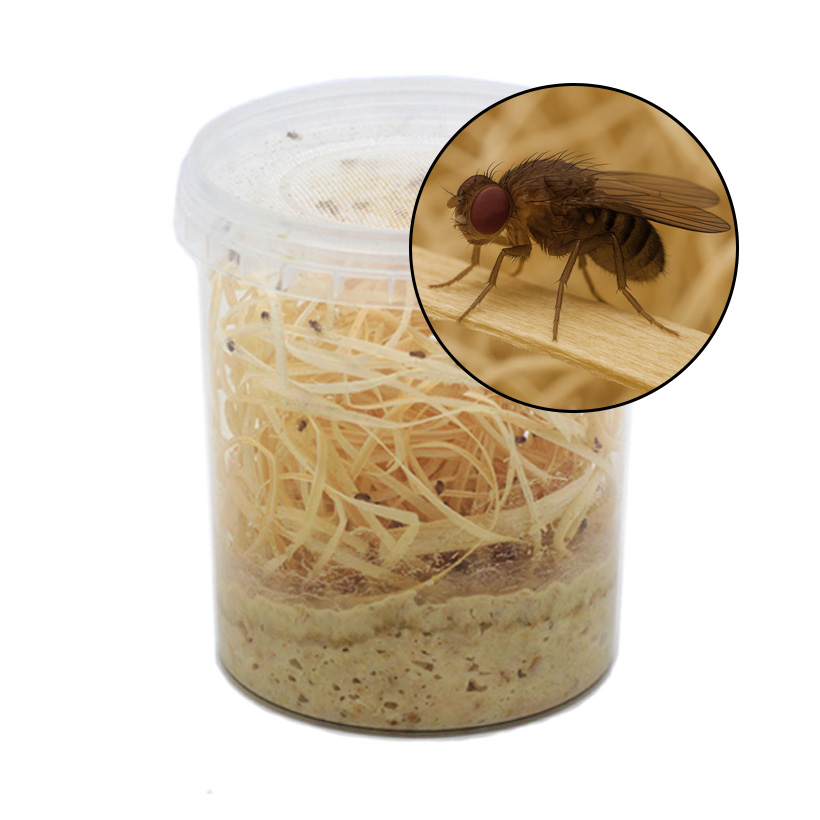
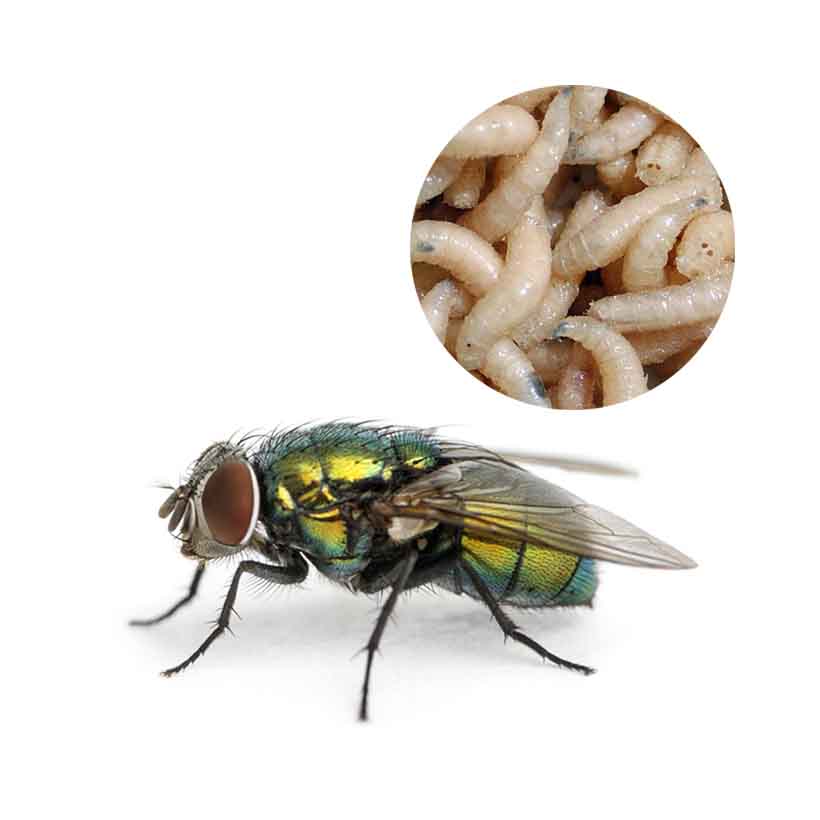
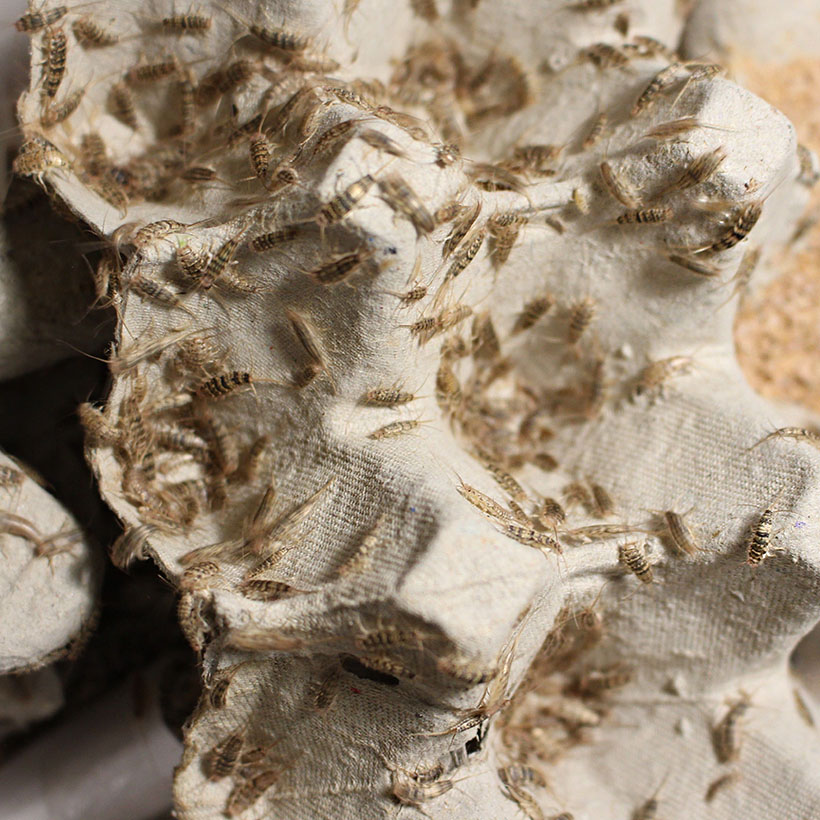
Depending on the stage of development, suitable prey includes fruit flies, houseflies, appropriately sized cockroaches, and other feed insects.
The size of the prey should always match the spider’s current size.
For juveniles, the prey simply grows along with them
Of course, young Hyllus giganteus don’t need large prey yet.
As they grow, you can gradually adjust the size of their food. For smaller juveniles, small flies or fruit flies are a good starting point. As they get bigger, you can then switch to larger prey.
This makes it very easy to tailor feeding to the development of each individual animal.
Keeping them separately is the right choice
Even if several juveniles may seem peaceful at first, you should keep Hyllus giganteus separately.
Jumping spiders are active hunters, and members of their own species may be viewed as competitors or prey. For this reason, each animal is given its own rearing container or, later on, its own terrarium.
Especially with such a large and powerful jumping spider, it’s not worth taking any unnecessary risks when it comes to housing them.
Hyllus giganteus or Phidippus regius?
Anyone who has kept Phidippus regius before will recognize many typical jumping spider behaviors in Hyllus giganteus. Nevertheless, the two species differ significantly from one another.
The most noticeable difference is size. Hyllus giganteus is one of the largest and most robust jumping spiders. In direct comparison, a Phidippus regius appears more compact and smaller overall. That’s why you should provide Hyllus with more space accordingly. A well-structured vertical area is especially important.
Their origins also differ. While Phidippus regius is native to North America and the Caribbean, Hyllus giganteus is native to Southeast Asia and Australia. As a result, the climatic conditions we must consider when caring for them also differ.
Hyllus giganteus prefers warmer, more tropical conditions. However, the terrarium should never be permanently damp or stuffy. Good ventilation is therefore essential. Phidippus regius, on the other hand, can be kept very well at slightly more moderate temperatures and lower humidity.
Another difference is evident in their diet. Due to its considerable size, a fully grown Hyllus giganteus can overpower larger prey items. Juveniles naturally start with small prey as well, but as the spider grows, the size of its prey increases accordingly.
For beginners, Phidippus regius remains an excellent choice due to its relatively simple care requirements. Hyllus giganteus, on the other hand, is particularly well-suited for keepers who have already gained some experience with jumping spiders and would now like to try keeping a larger species with slightly more tropical care requirements.
It is important to note that Hyllus giganteus is not simply a larger version of Phidippus regius. It is a distinct species belonging to a different genus and found in a different range. It is precisely these differences that make it particularly interesting to more experienced jumping spider keepers.
Advantages at a glance
- A particularly large species of jumping spider
- Robust and impressive build
- Species validly described since 1846
- Type species of the genus Hyllus
- Natural range from Indonesia to Australia
- Very interesting hunting and behavioral patterns
- Requires a well-structured, tall terrarium
- Can be fed larger prey animals than smaller jumping spiders
- An exciting alternative for owners who are already familiar with Phidippus regius
The Right Accessories for Your Setup
The Jumping Spiders Complete Set – Creative – offers plenty of height at 20 × 20 × 40 cm and can be decorated in a variety of ways using cork, wooden discs, and natural textures.
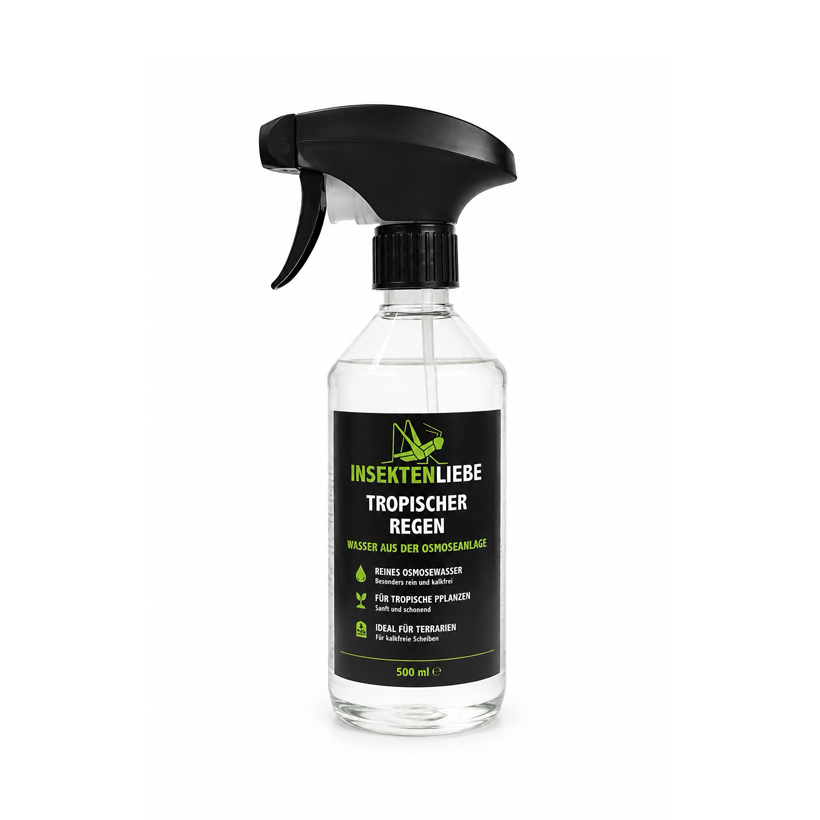
Insektenliebe Tropical Rain – allows for targeted humidification while providing the jumping spider with water droplets to drink.
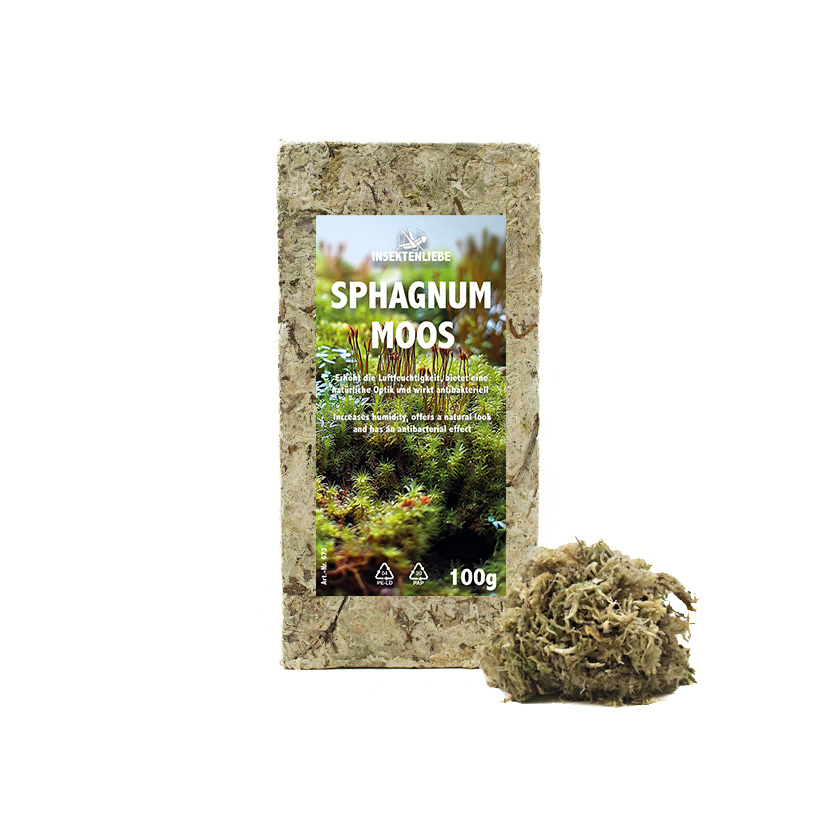
Insektenliebe Sphagnum Moss – retains moisture and helps create specific, more humid areas in the terrarium.
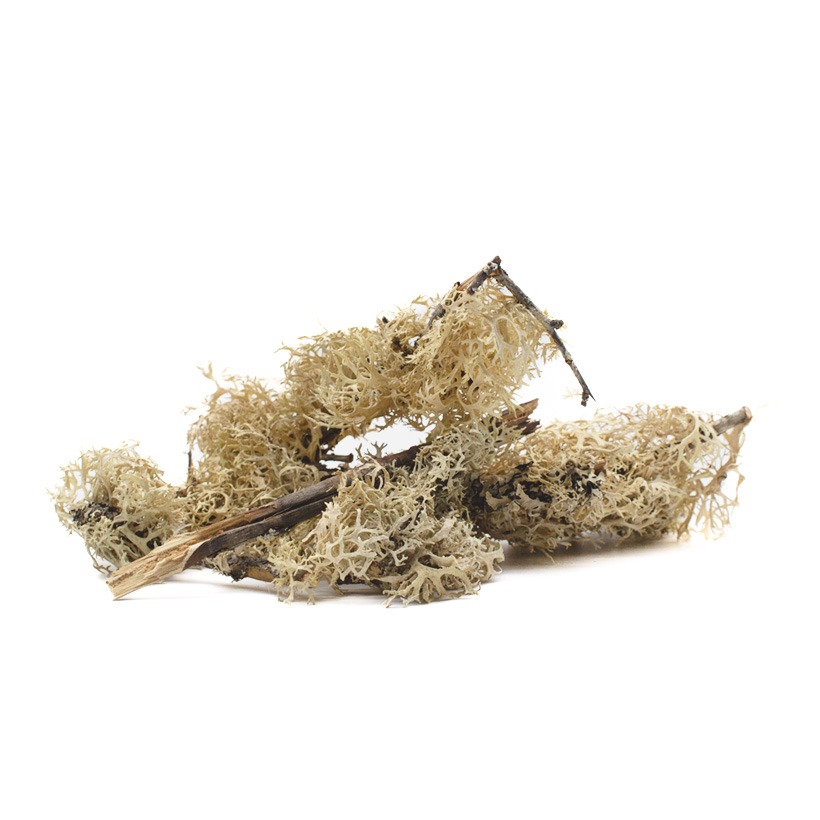
Moss Branches – create branching paths for walking and climbing and help make better use of the upper area of the terrarium.
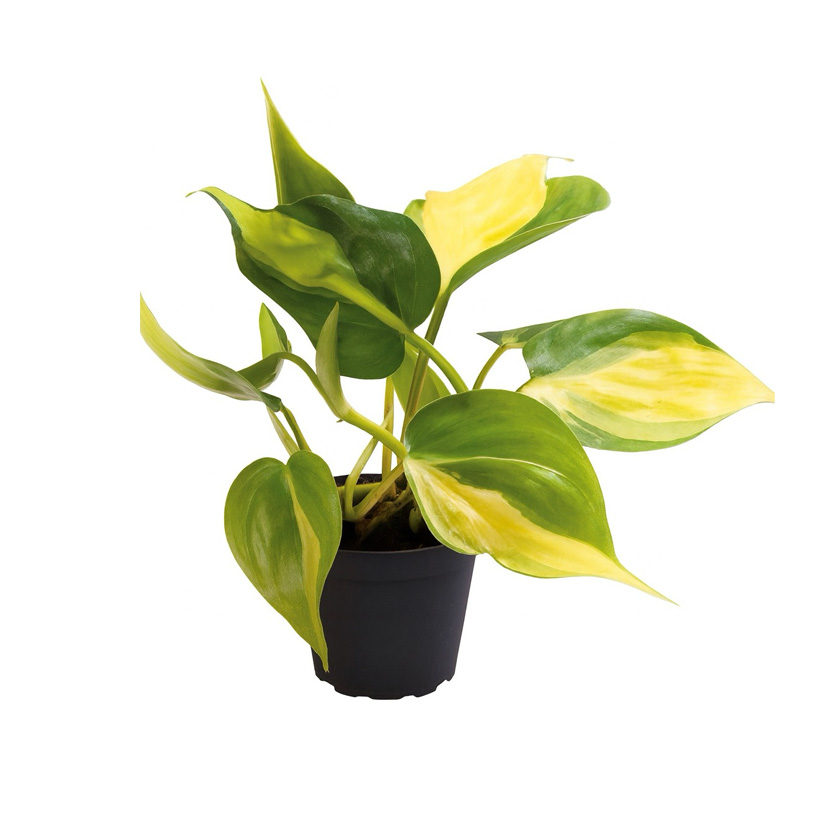
Philodendron scandens “Brasil” – adds living greenery and extra cover to the warm, tropical terrarium.
Appropriate live food – the size of the food should always be adjusted to the current developmental stage of your Hyllus giganteus.
Conclusion
Hyllus giganteus is not simply a particularly large version of Phidippus regius. It belongs to a different genus, originates from a different region, and therefore has slightly different care requirements.
Its size, in particular, makes it an extraordinary jumping spider. A tall, generously structured terrarium, warm temperatures, moderately high humidity, and good ventilation provide a suitable environment.
Anyone already familiar with Phidippus regius will recognize many of the typical behaviors of a jumping spider. At the same time, its more robust build, impressive size, and more tropical appearance make Hyllus giganteus a unique experience in its own right.
One important issue, however, remains identification: particularly in the case of Hyllus giganteus, there are uncertainties in the classification of individual specimens in older literature and databases. The World Spider Catalog currently recognizes Hyllus giganteus as a valid species, while a specialized Salticidae database points out uncertainties regarding the historical classification of certain females. For this reason, I would not provide additional locality or subspecies information for commercial or breeding lines unless their origin is clearly documented.
Perfect combined with
-
Insektenliebe Sphagnum Moss
4,99 € – 16,99 €Price range: 4,99 € through 16,99 € incl. VAT, plus shipping -
Jumping Spiders Complete Set – Creative
152,41 €Original price was: 152,41 €.149,98 €Current price is: 149,98 €.