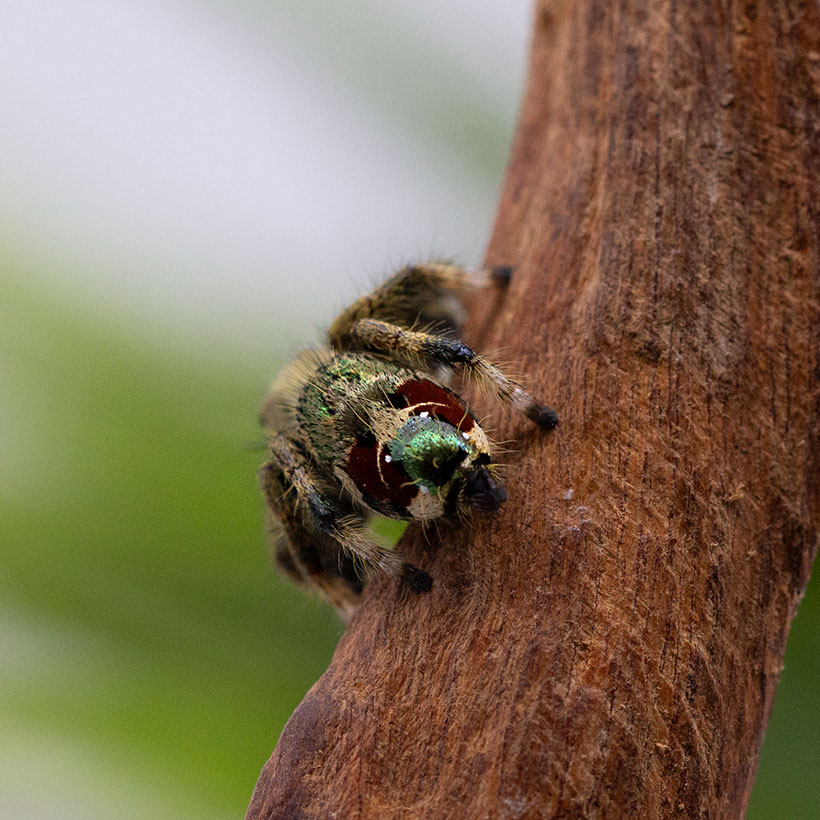


At first glance, jumping spiders’ behavior seems unremarkable. Many of them sit still for long periods, move only briefly, and then disappear from view again. However, a closer look reveals that this very apparent stillness is a central part of their behavior. Jumping spiders observe, assess, and make decisions before they act.
This behavior clearly distinguishes them from many other spider species. They do not merely react to stimuli; rather, they selectively choose what to respond to.
Observe rather than act immediately
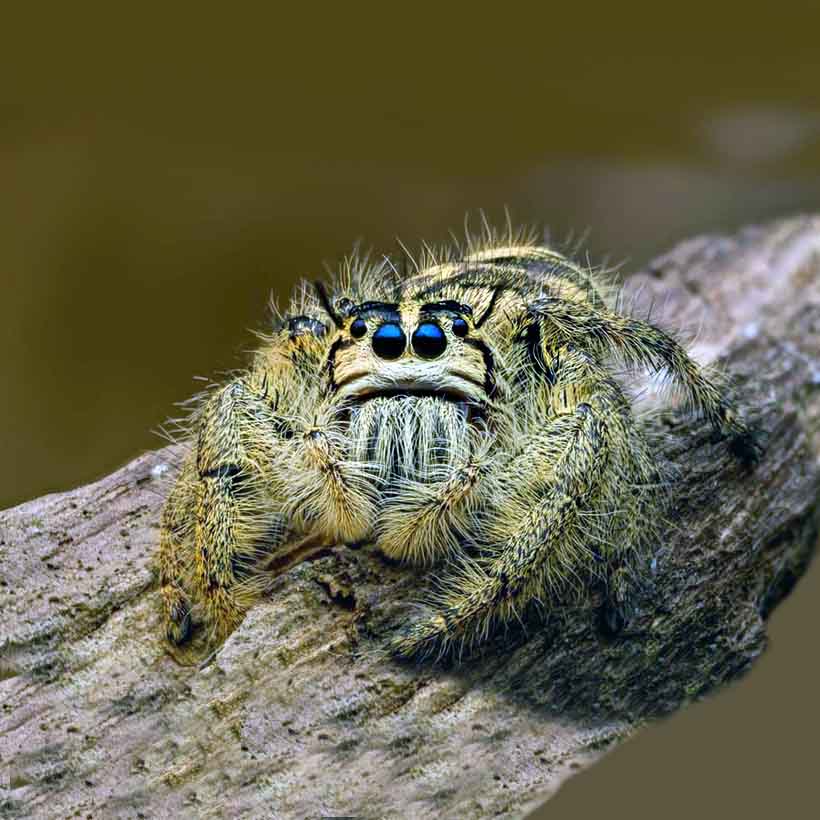
A large part of jumping spider behavior consists of observation. The animals often remain in one spot for extended periods of time, carefully orienting their bodies. In doing so, they use their highly developed visual system to detect movements and structures in their surroundings.
Selectivity is key here. Not every movement triggers a response. Jumping spiders filter stimuli and focus on what is relevant to them. This form of perception conserves energy and reduces unnecessary risks.

Spatial Orientation
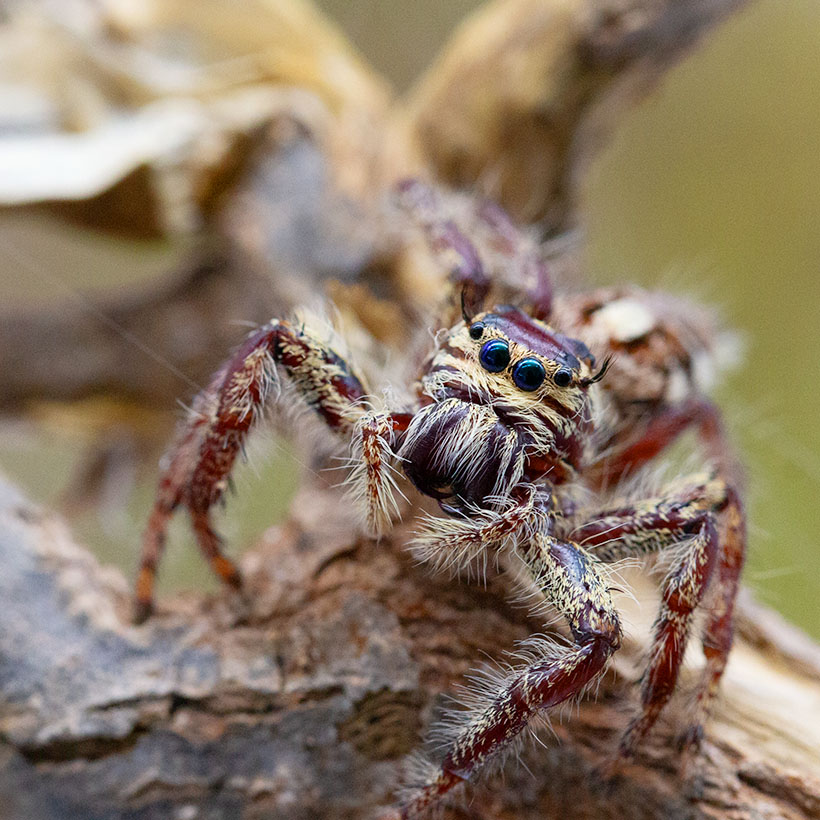
Jumping spiders do not move randomly. Their behavior shows that they actively use structures. Leaf veins, bark edges, or wall ledges serve as landmarks. They choose specific paths rather than simply trying them out.
Short pauses while moving are typical. These pauses may seem insignificant, but they are part of the decision-making process. The spider assesses its surroundings before taking the next step.
Hunting as a Deliberate Act
Hunting behavior is a particularly noticeable aspect of jumping spider behavior. Unlike web-spinning spiders, they actively hunt. Their attacks are not impulsive but carefully planned.
The spider fixes its gaze on its prey, assesses the distance and position, and positions its body accordingly. Only when all factors are right does it pounce. If the pounce fails, the hunt is often abandoned rather than continued frantically.
This restraint is part of an efficient strategy. Energy is used only when the chances of success are high.
Response to Environmental Stimuli
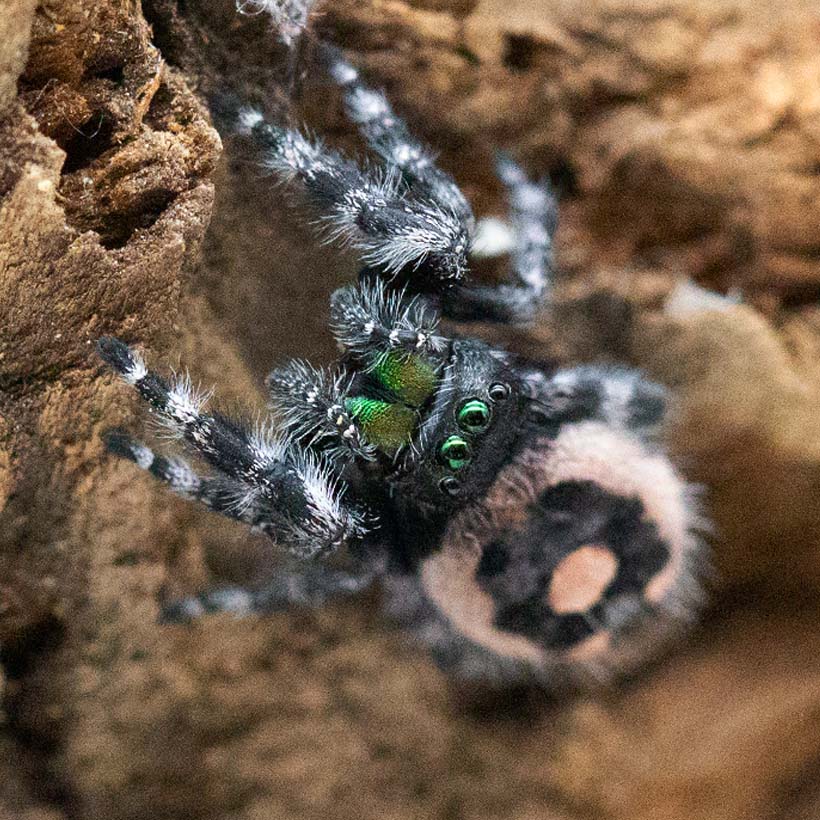
Jumping spiders exhibit a graded response to disturbances. Slight movements or vibrations often result only in a change of position. They flee only in response to stronger stimuli.
Jumping spiders use various strategies in this situation. They can retreat, change levels, or jump in a targeted manner. Panic-like reactions are rare. Their behavior remains controlled and adaptive.
Behavior Toward Other Members of the Same Species
In everyday life, we encounter jumping spiders more often than it might seem at first glance. Nevertheless, direct contact is rare. Jumping spiders are designed to keep their distance.
Even small signals are enough to prevent conflicts. A change in direction or a slight body movement is often enough to defuse the situation. Only when these signals are ignored can a situation escalate.
Adaptation Through Experience
In their daily lives, jumping spiders adapt to their environment. They tend to frequent areas with good hunting conditions, while avoiding areas with high levels of disturbance. This behavior is not fixed but changes with experience.
The animals learn which situations are successful and which should be avoided. This results in behavior that responds flexibly to the environment at hand.
Implications for Observation and Management
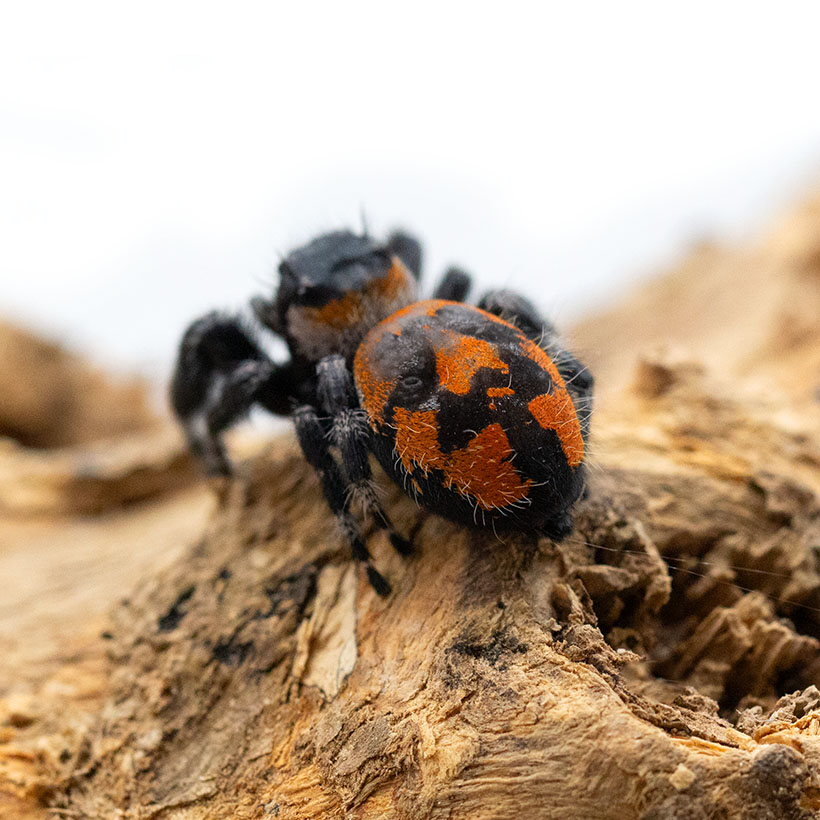
In terrarium keeping, understanding jumping spider behavior is crucial. A structured environment with different levels, light zones, and hiding spots supports natural behavior.
Monotonous environments lacking visual stimuli, on the other hand, often lead to passive behavior. Anyone observing jumping spiders should give them time and not constantly interfere. Many behaviors only become apparent when the animals are left undisturbed.

Conclusion
The behavior of jumping spiders shows that these animals actively engage with their environment. They observe, make decisions, and act purposefully. Their behavior is not frantic, but calm and efficient.
It is precisely in everyday life that we see how closely perception, movement, and decision-making are intertwined. Those who take the time to explore this will discover a remarkable complexity in seemingly simple processes.

Leave a Reply
You must be logged in to post a comment.