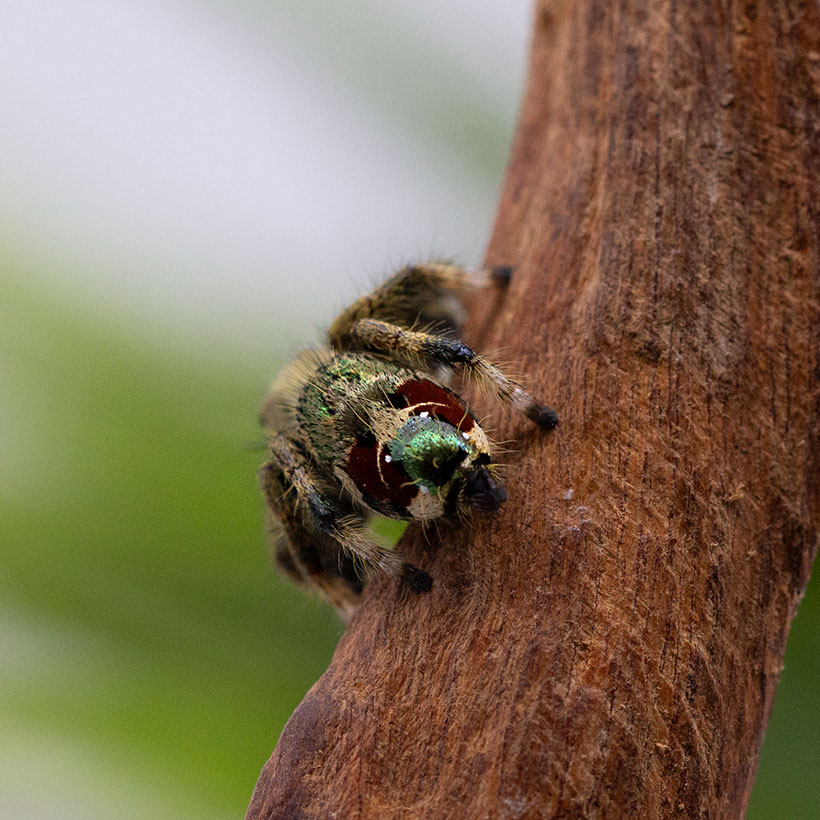
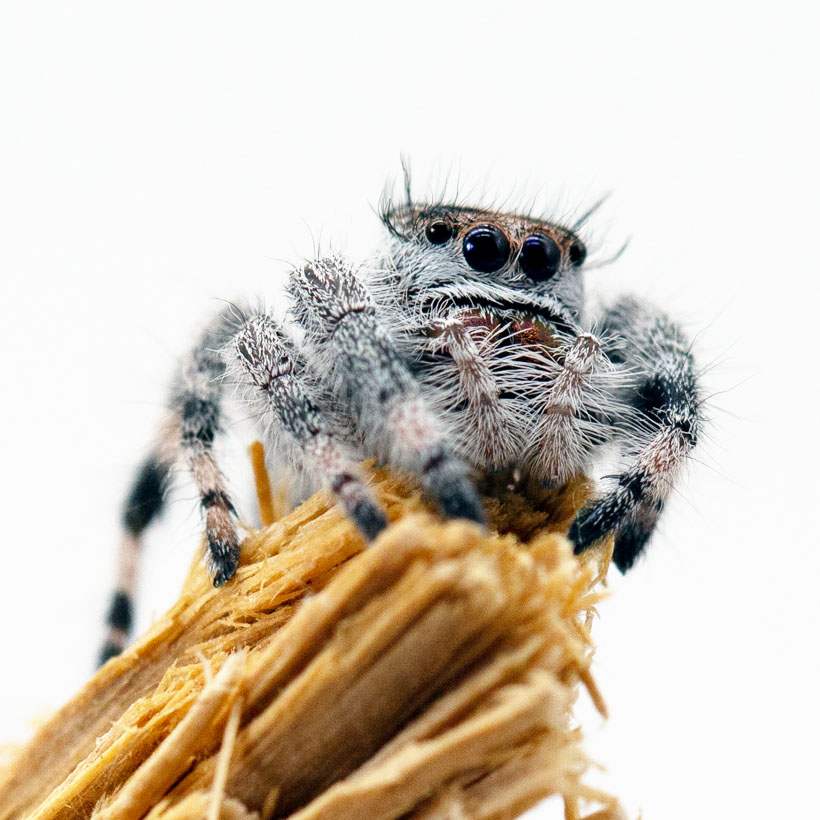
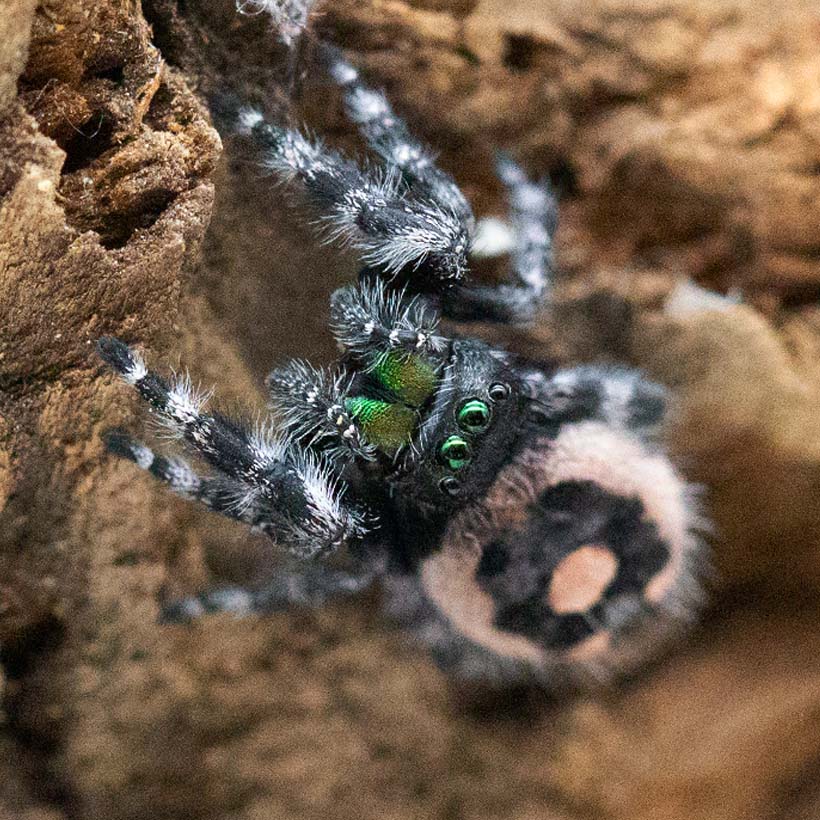
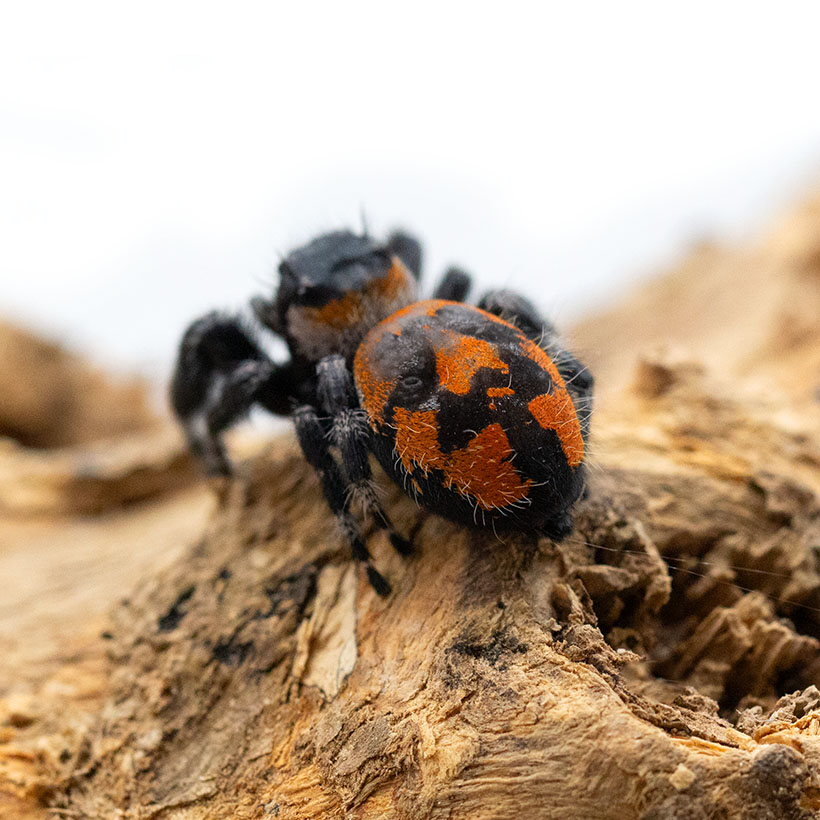
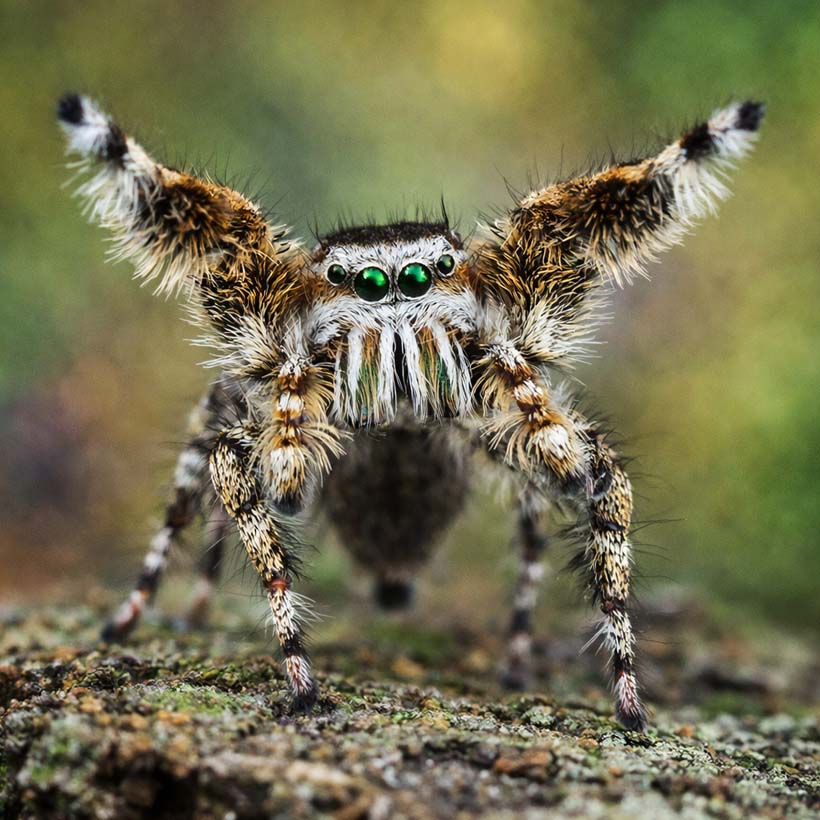
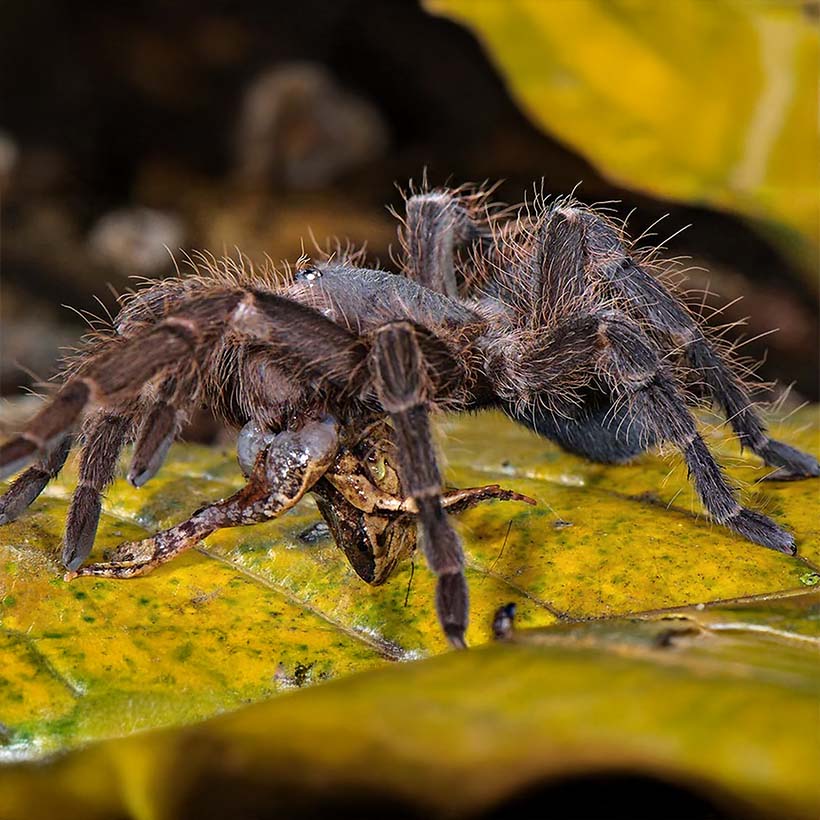
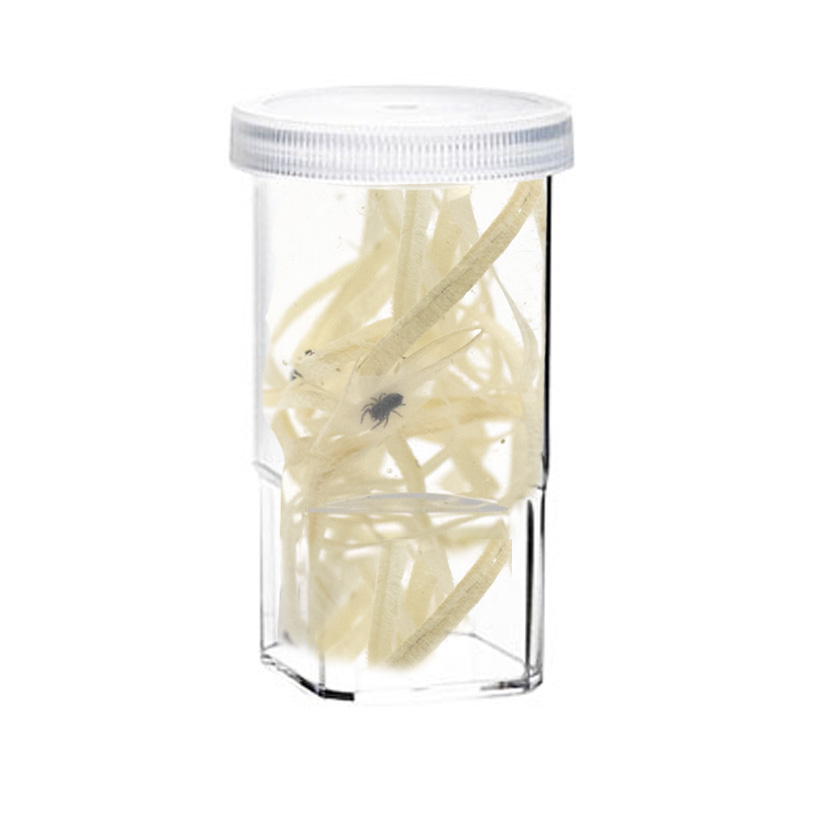
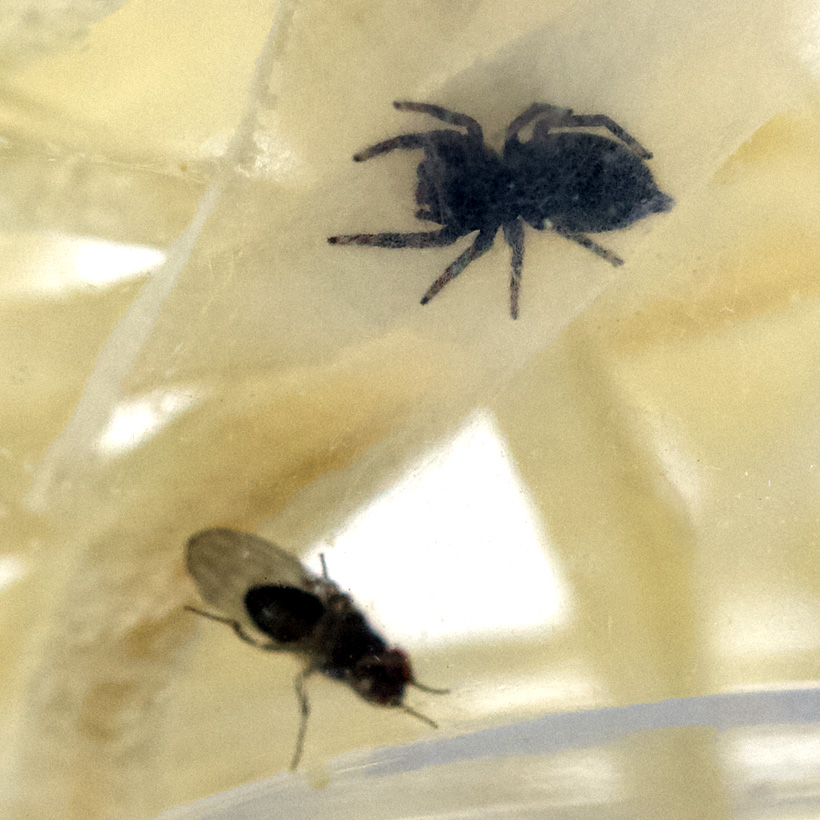
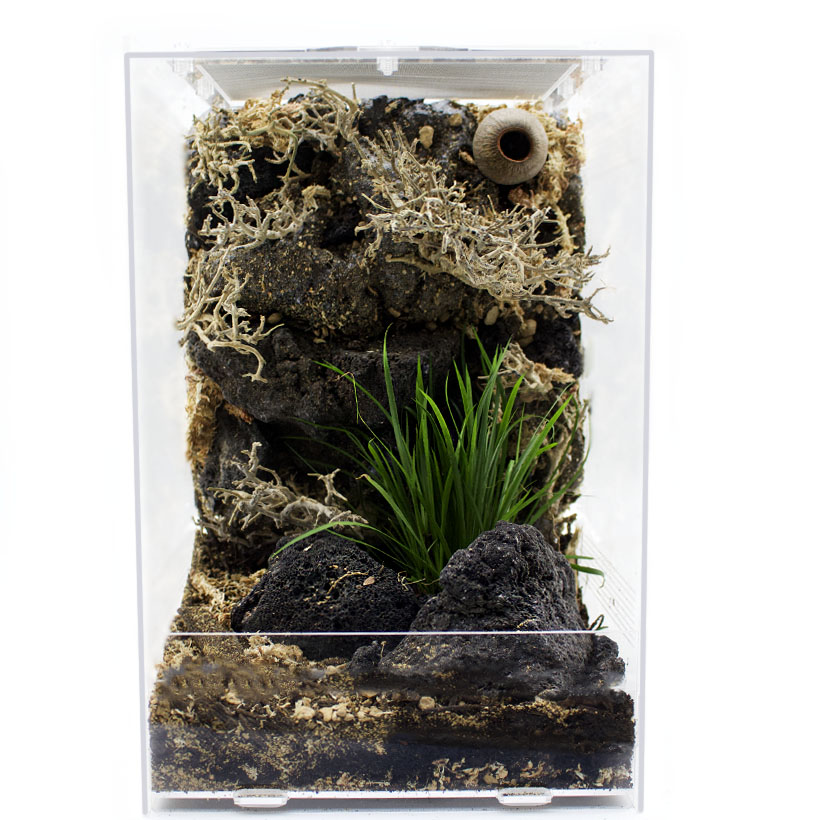
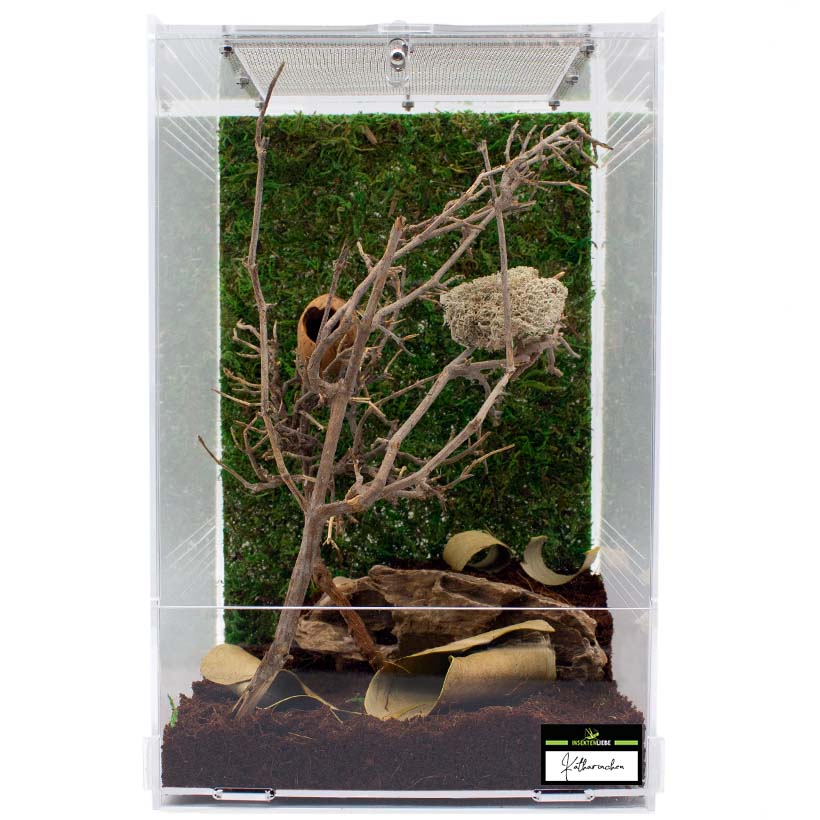
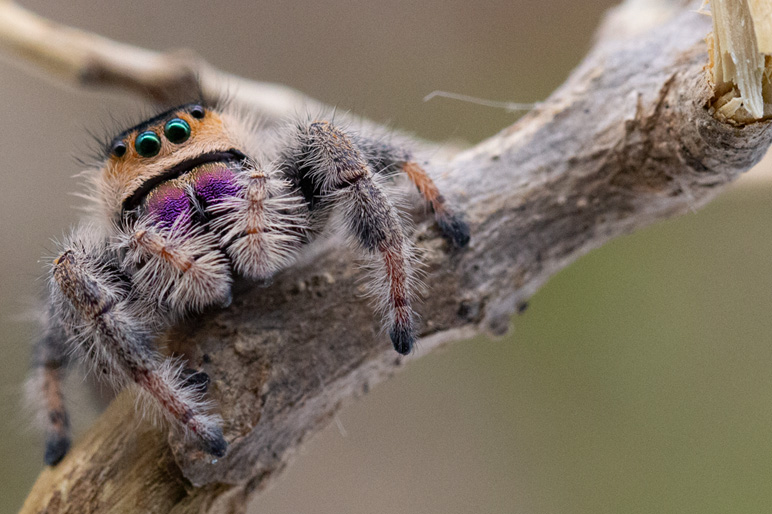
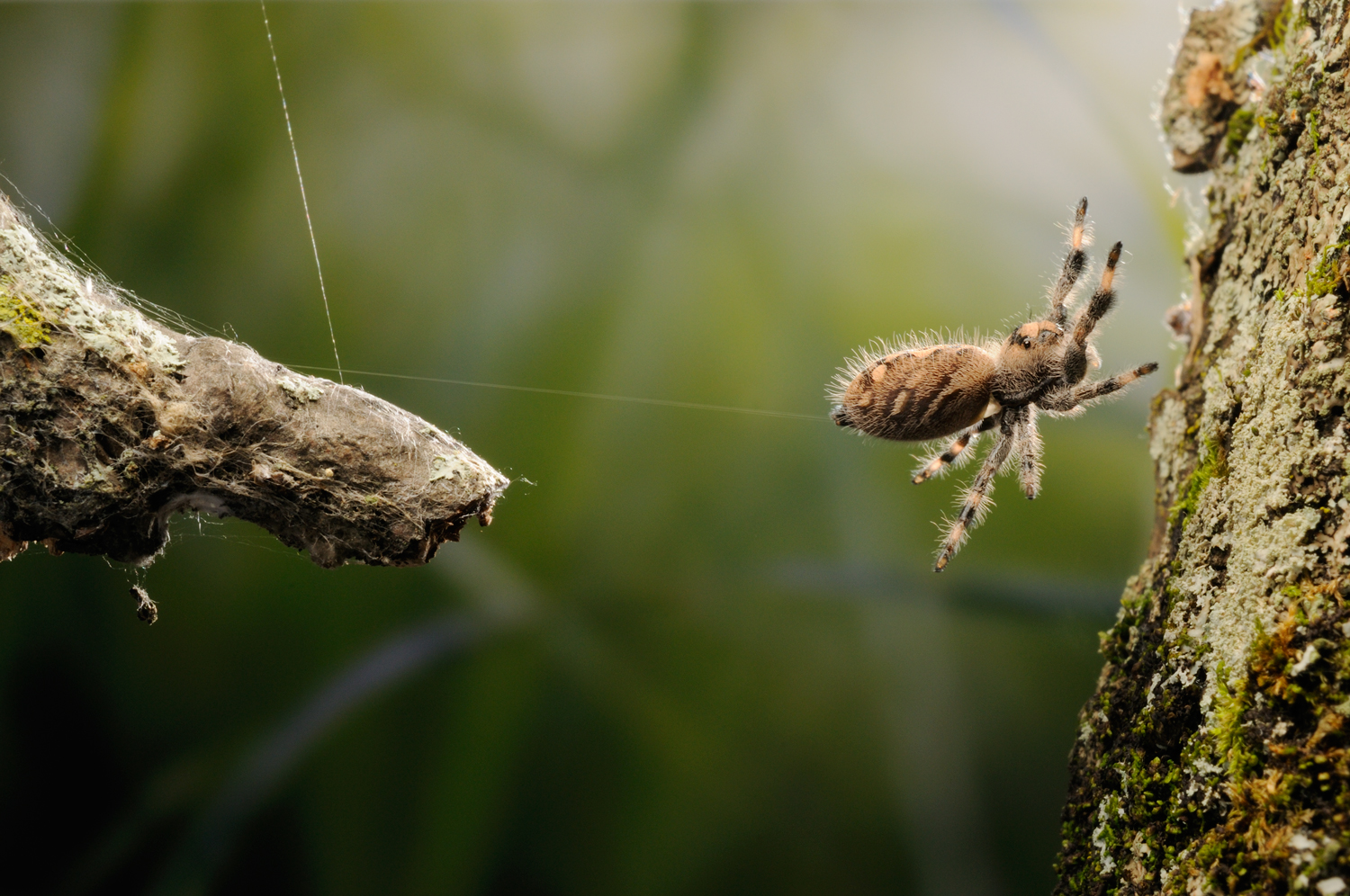
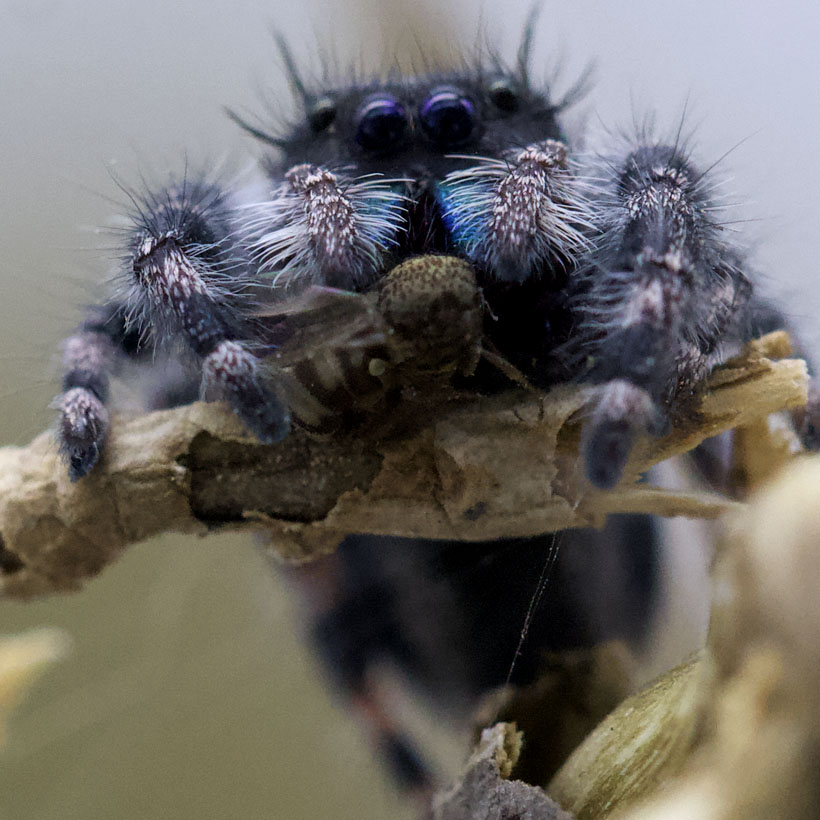
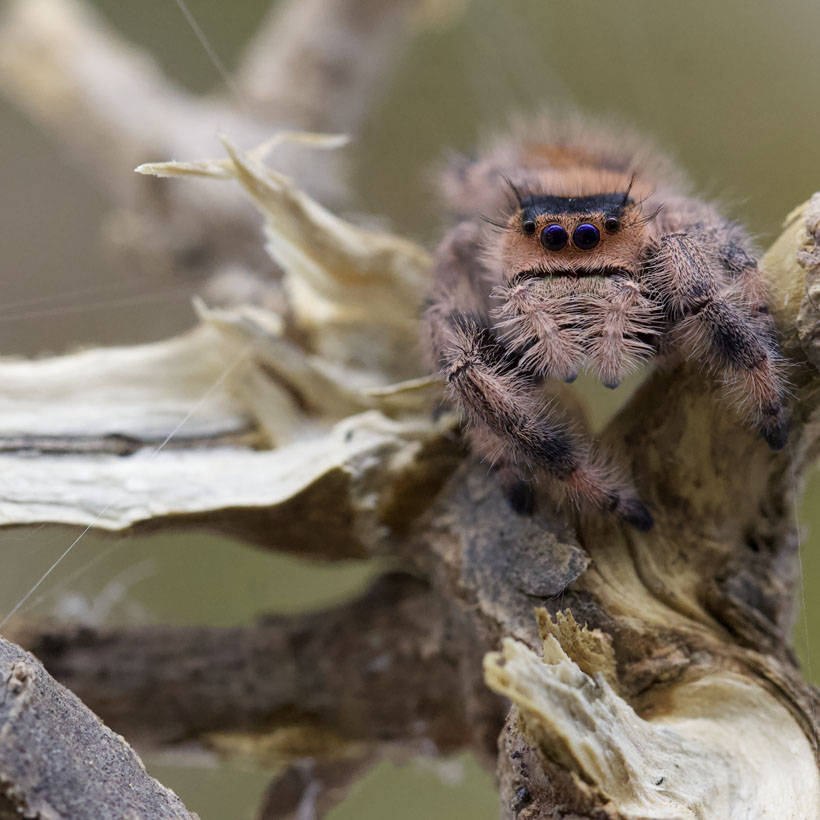
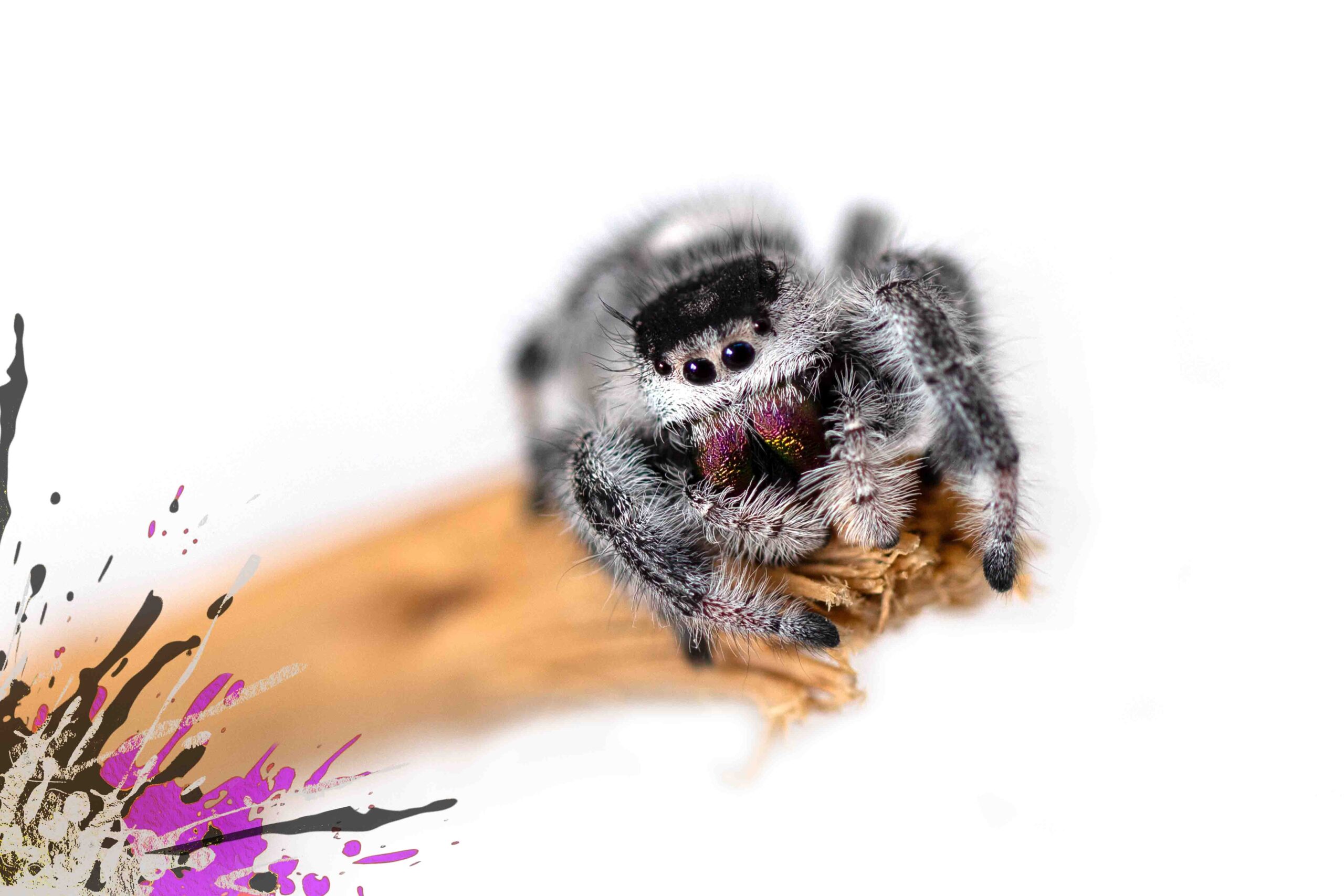
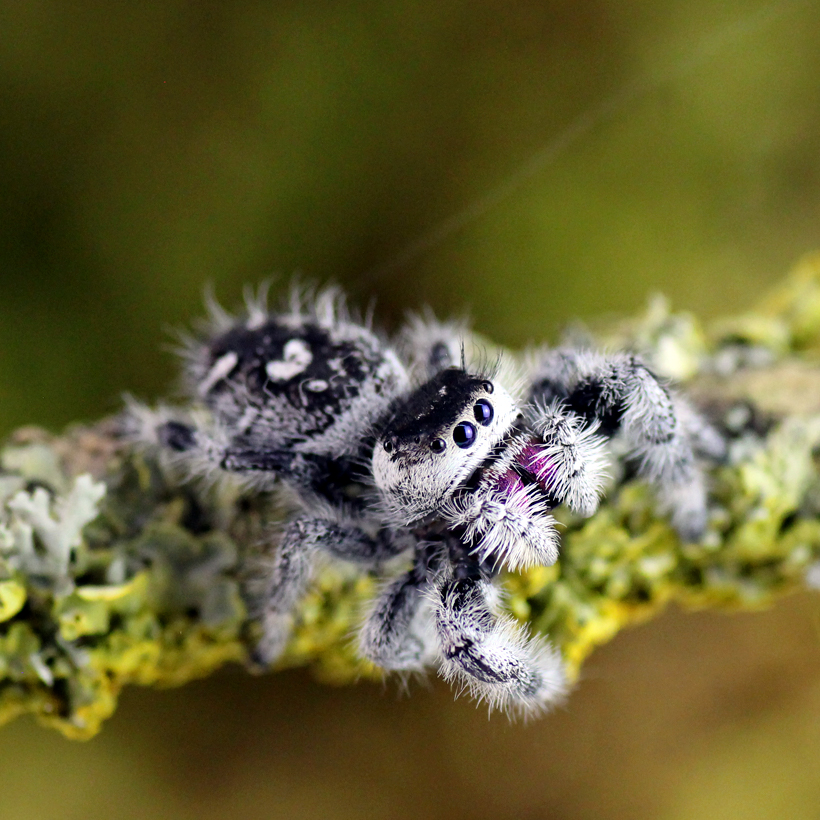
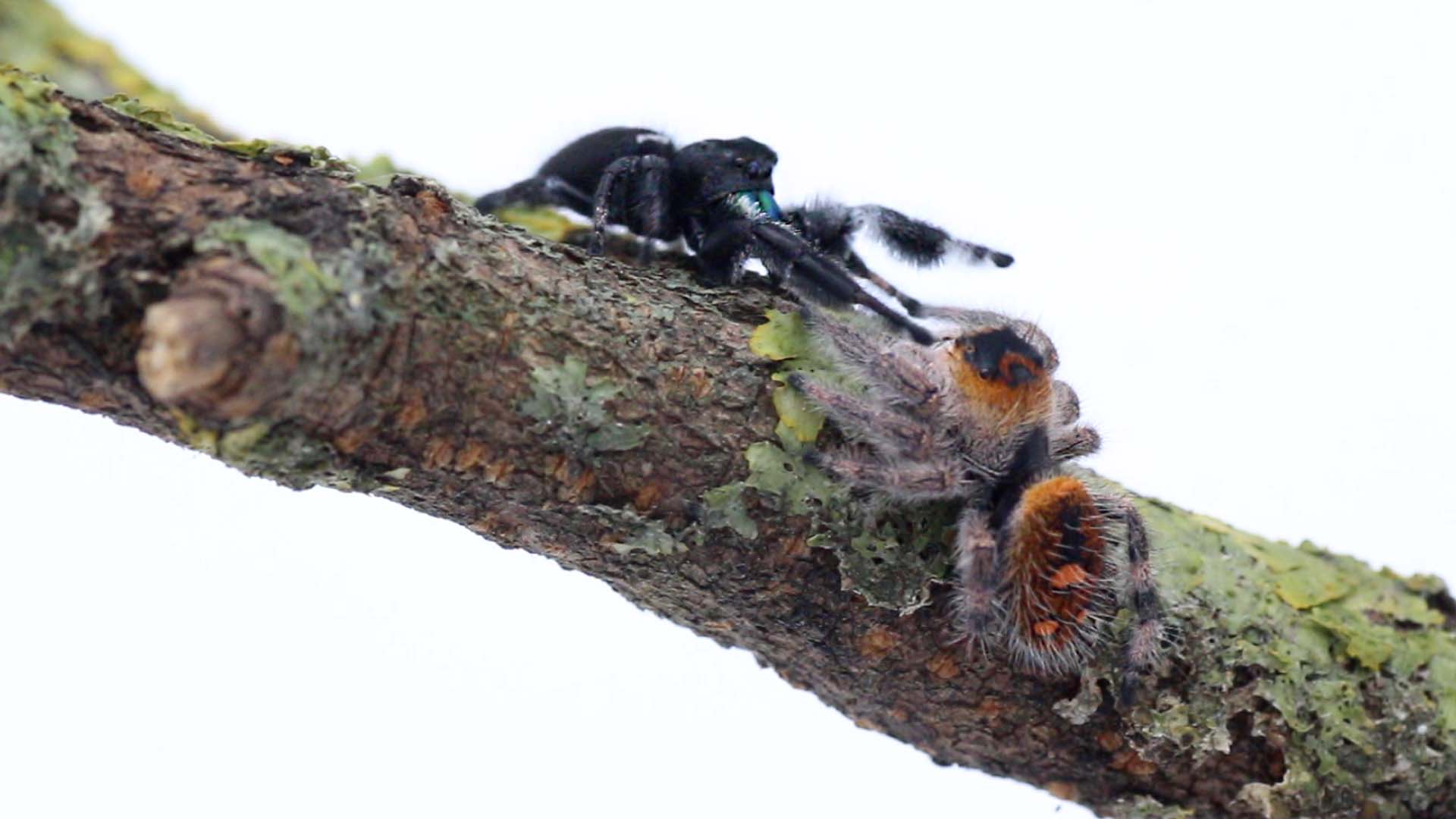
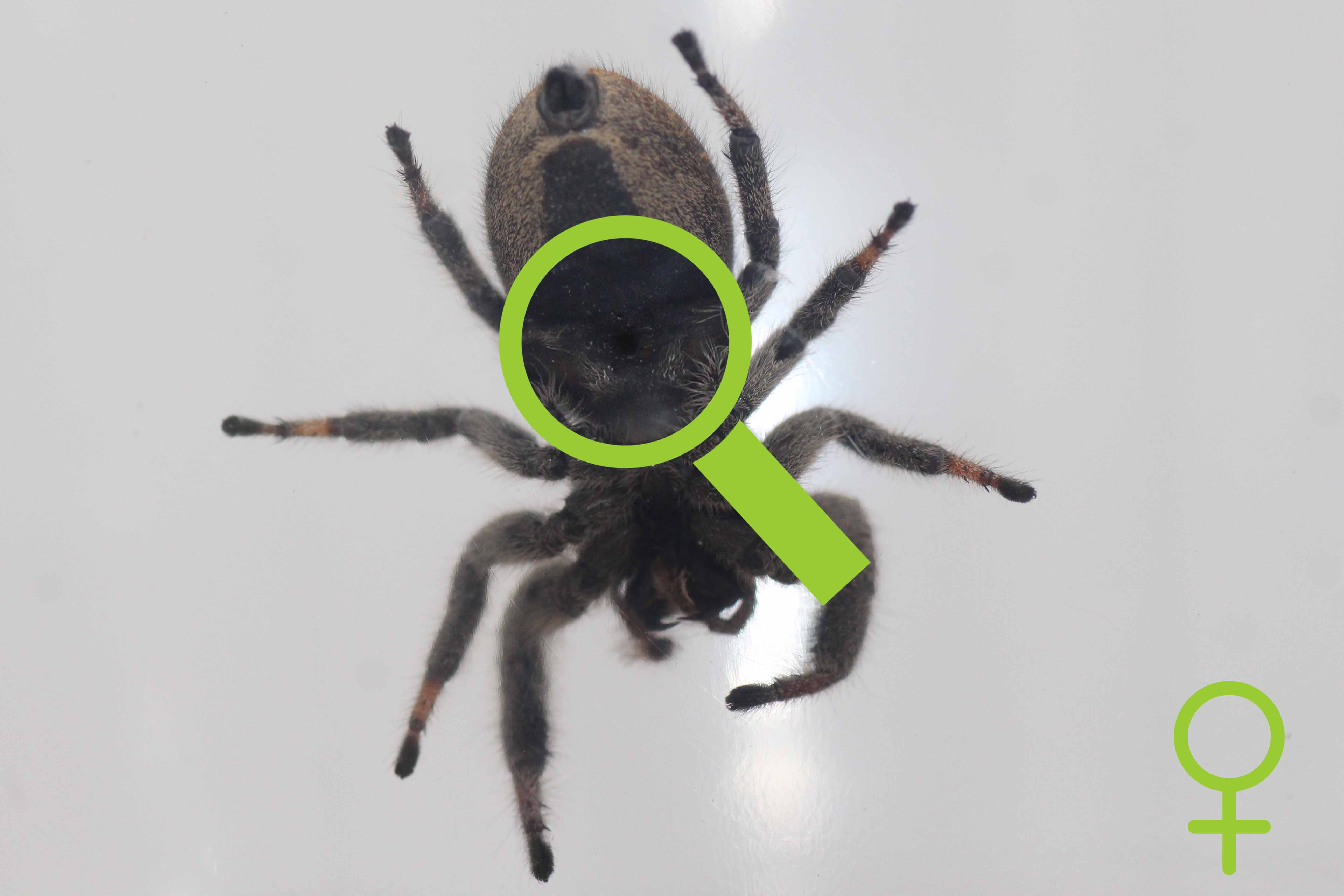
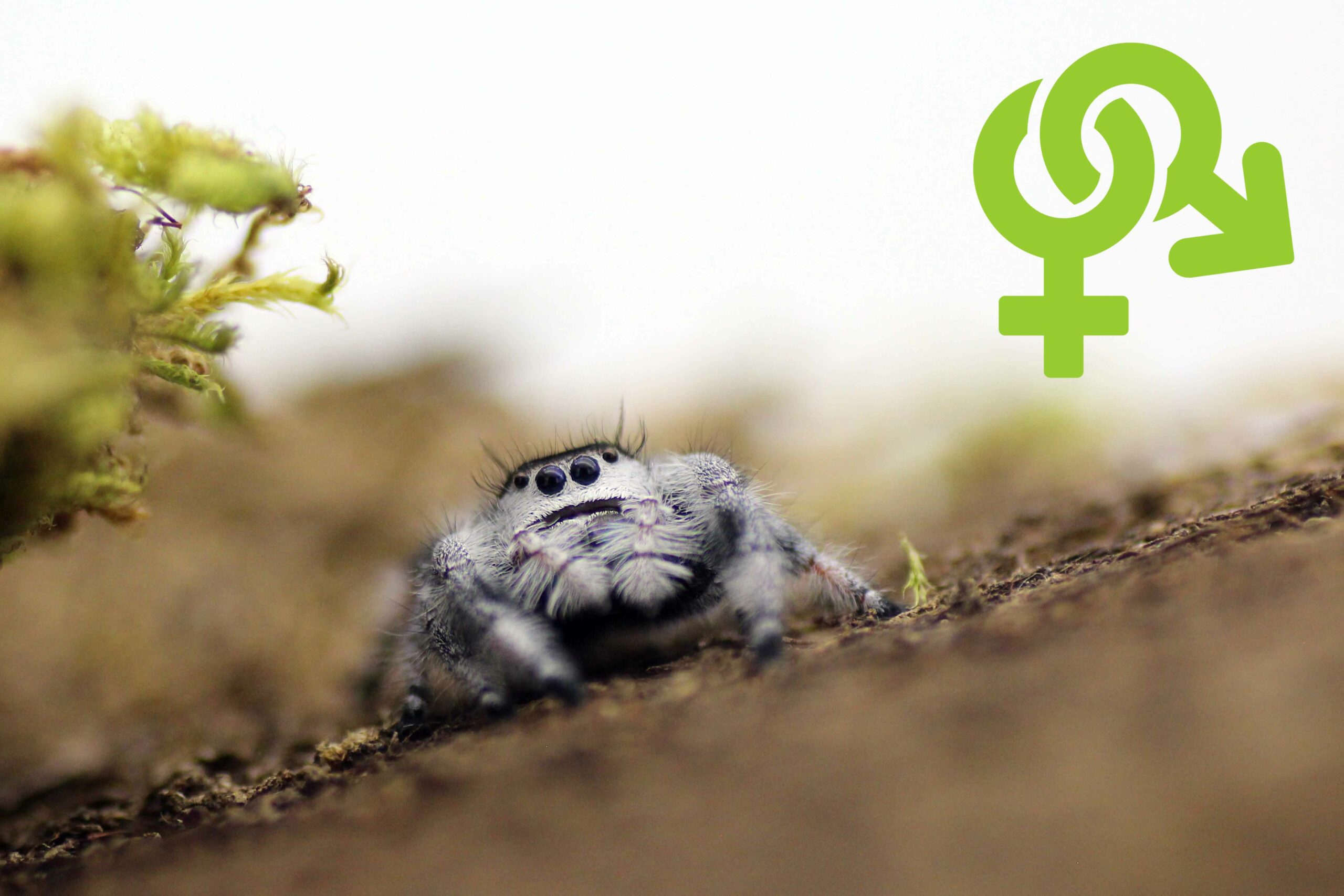
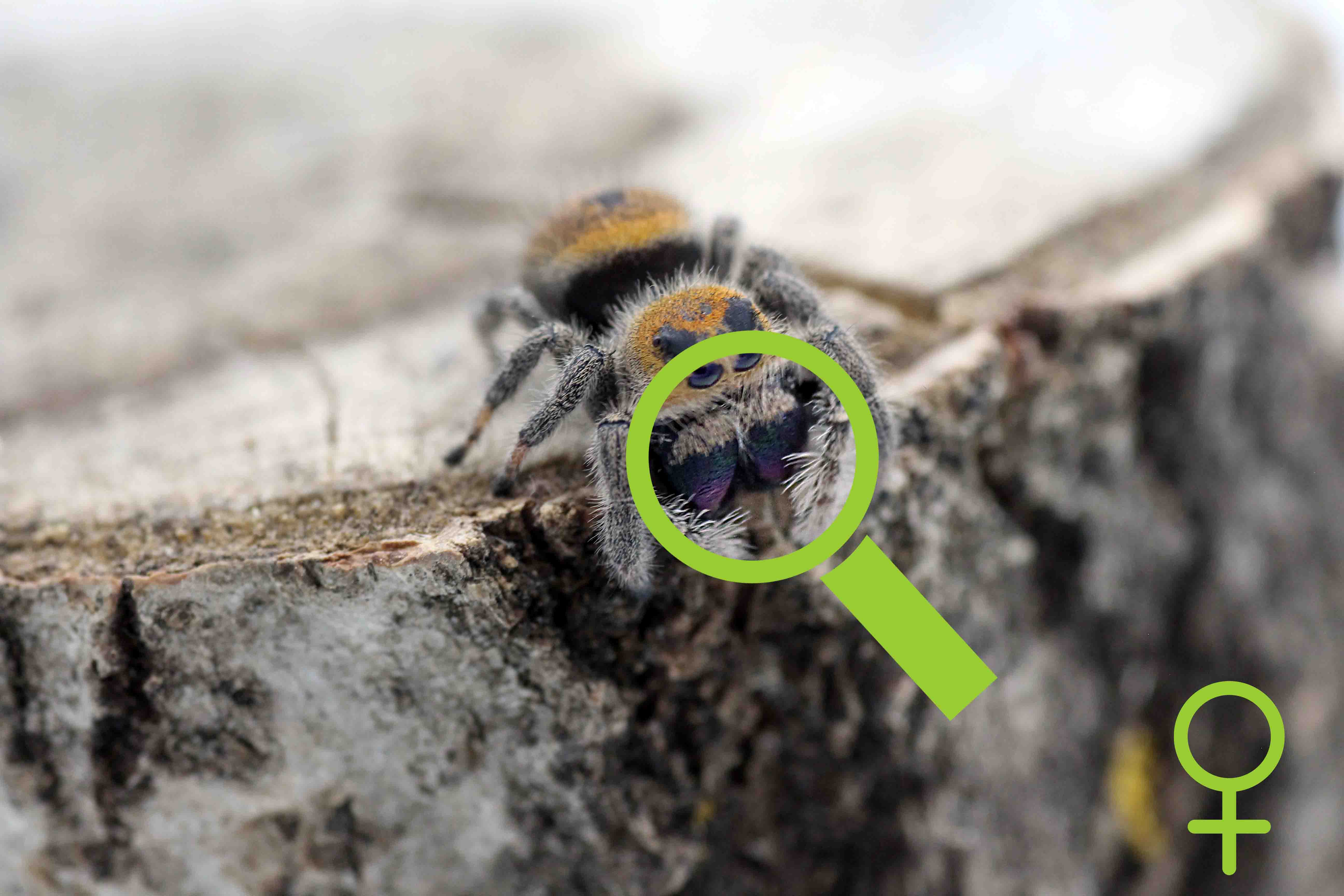
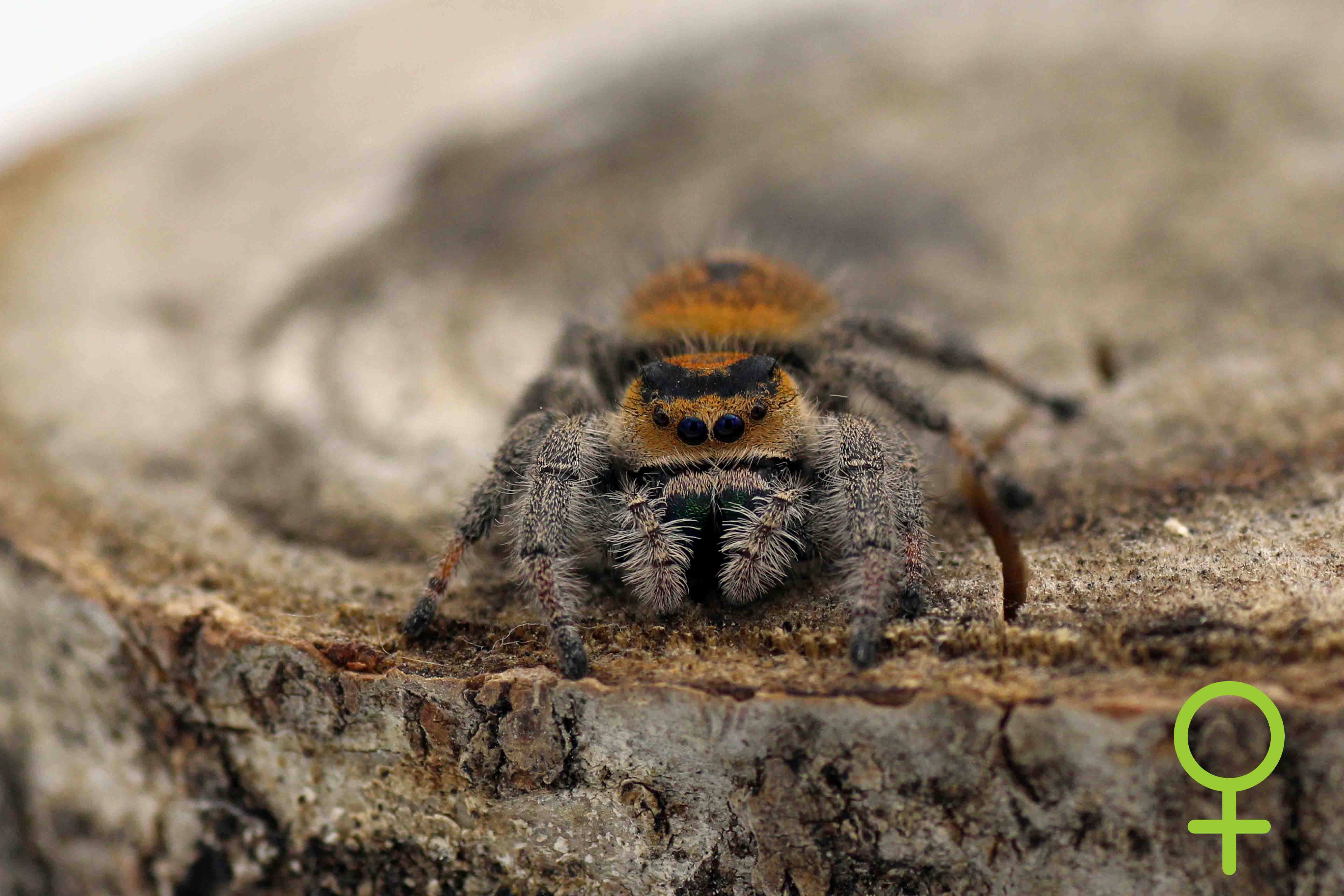
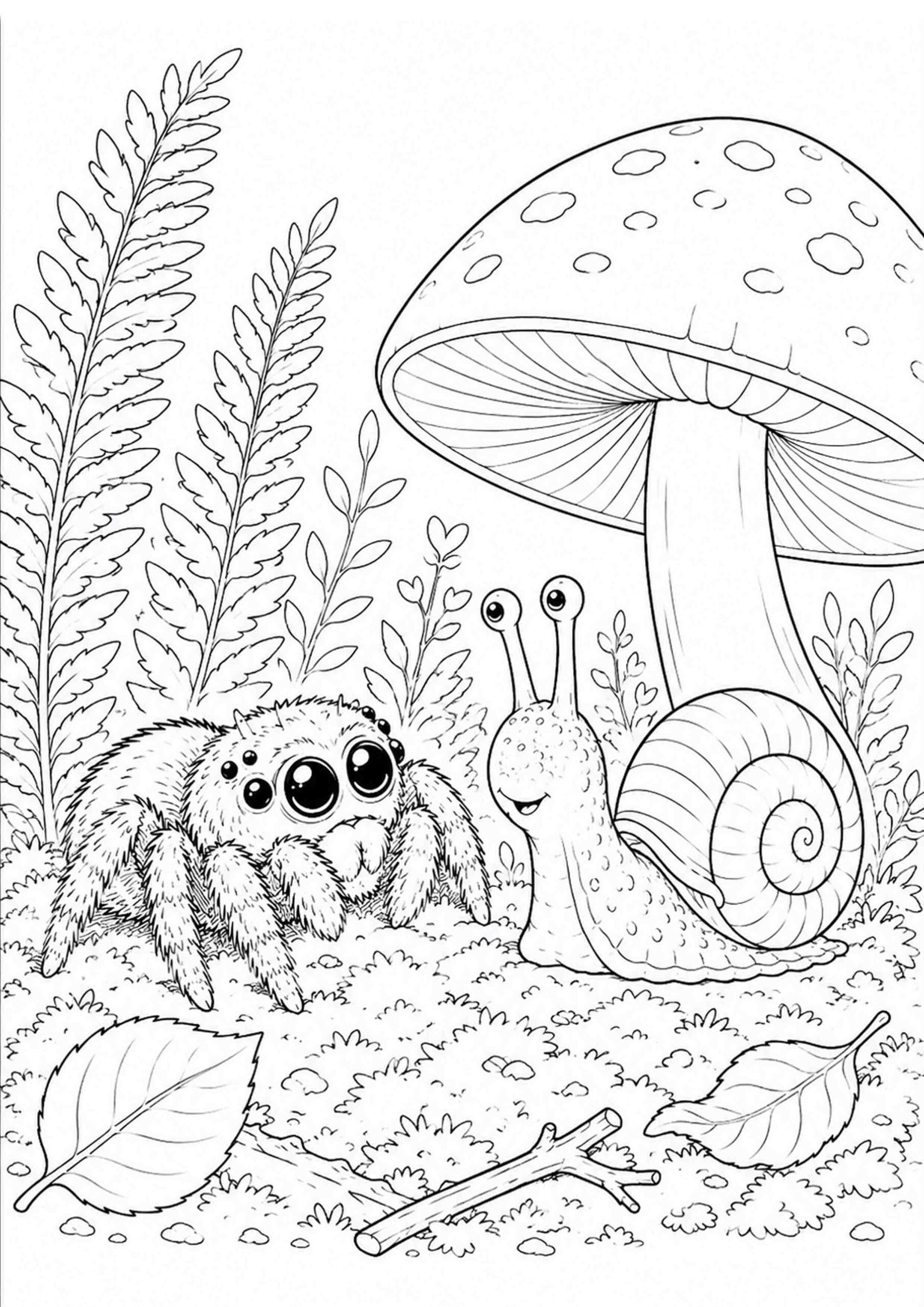
At first glance, jumping spiders’ behavior seems unremarkable. Many of them sit still for long periods, move only briefly, and then disappear from view again. However, a closer look reveals that this very apparent stillness is a central part of their behavior. Jumping spiders observe, assess, and make decisions before they act.
This behavior clearly distinguishes them from many other spider species. They do not merely react to stimuli; rather, they selectively choose what to respond to.
Observe rather than act immediately
A large part of jumping spider behavior consists of observation. The animals often remain in one spot for extended periods of time, carefully orienting their bodies. In doing so, they use their highly developed visual system to detect movements and structures in their surroundings.
Selectivity is key here. Not every movement triggers a response. Jumping spiders filter stimuli and focus on what is relevant to them. This form of perception conserves energy and reduces unnecessary risks.
Spatial Orientation
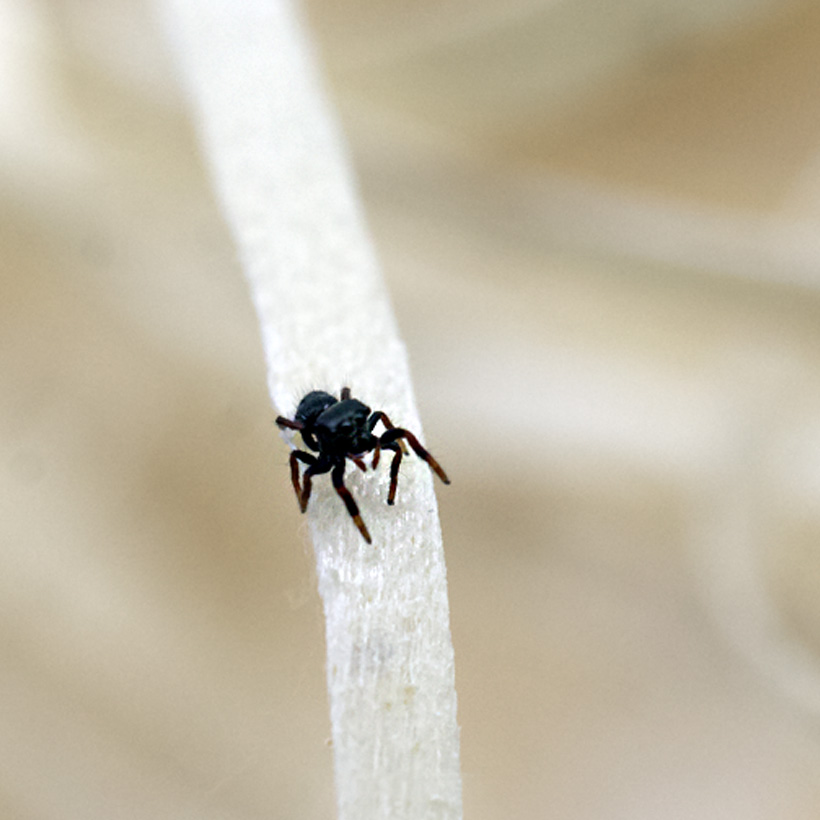
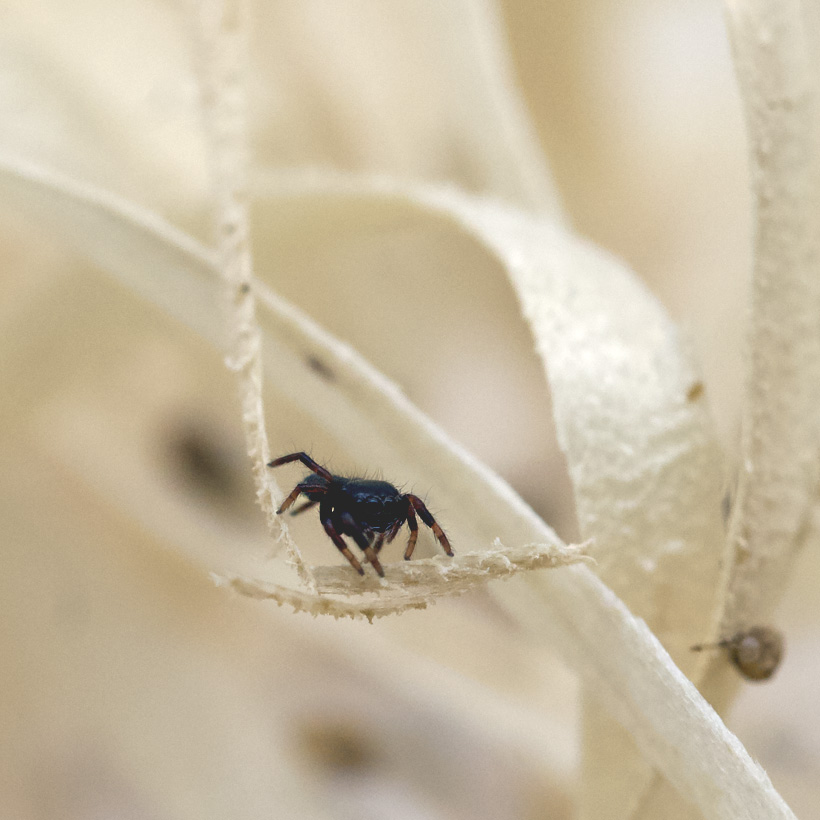
Jumping spiders do not move randomly. Their behavior shows that they actively use structures. Leaf veins, bark edges, or wall ledges serve as landmarks. They choose specific paths rather than simply trying them out.
Short pauses while moving are typical. These pauses may seem insignificant, but they are part of the decision-making process. The spider assesses its surroundings before taking the next step.
Hunting as a Deliberate Act
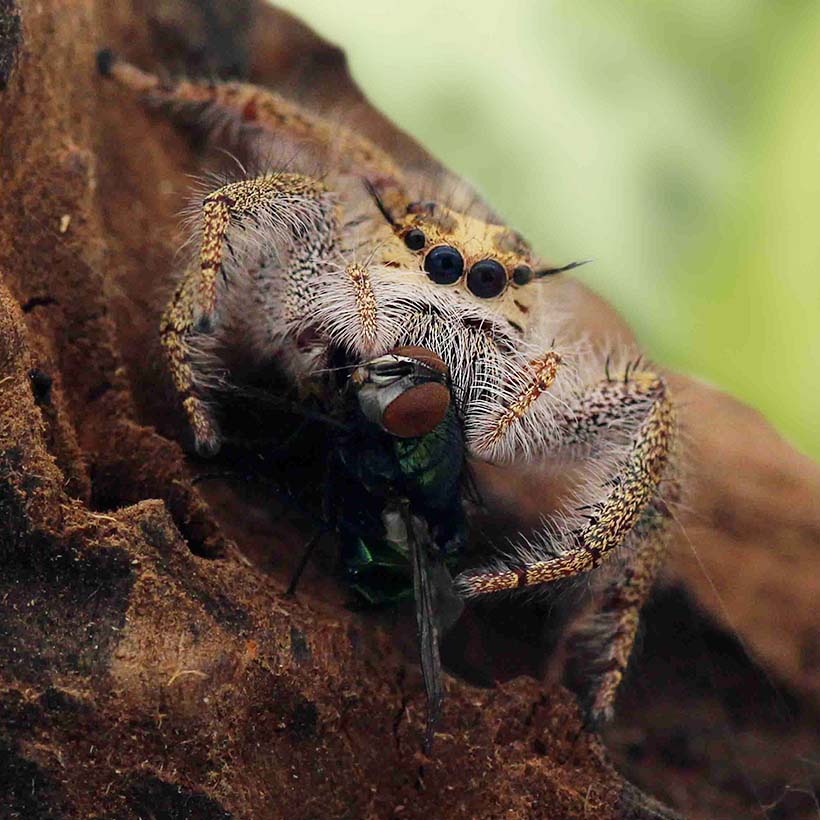
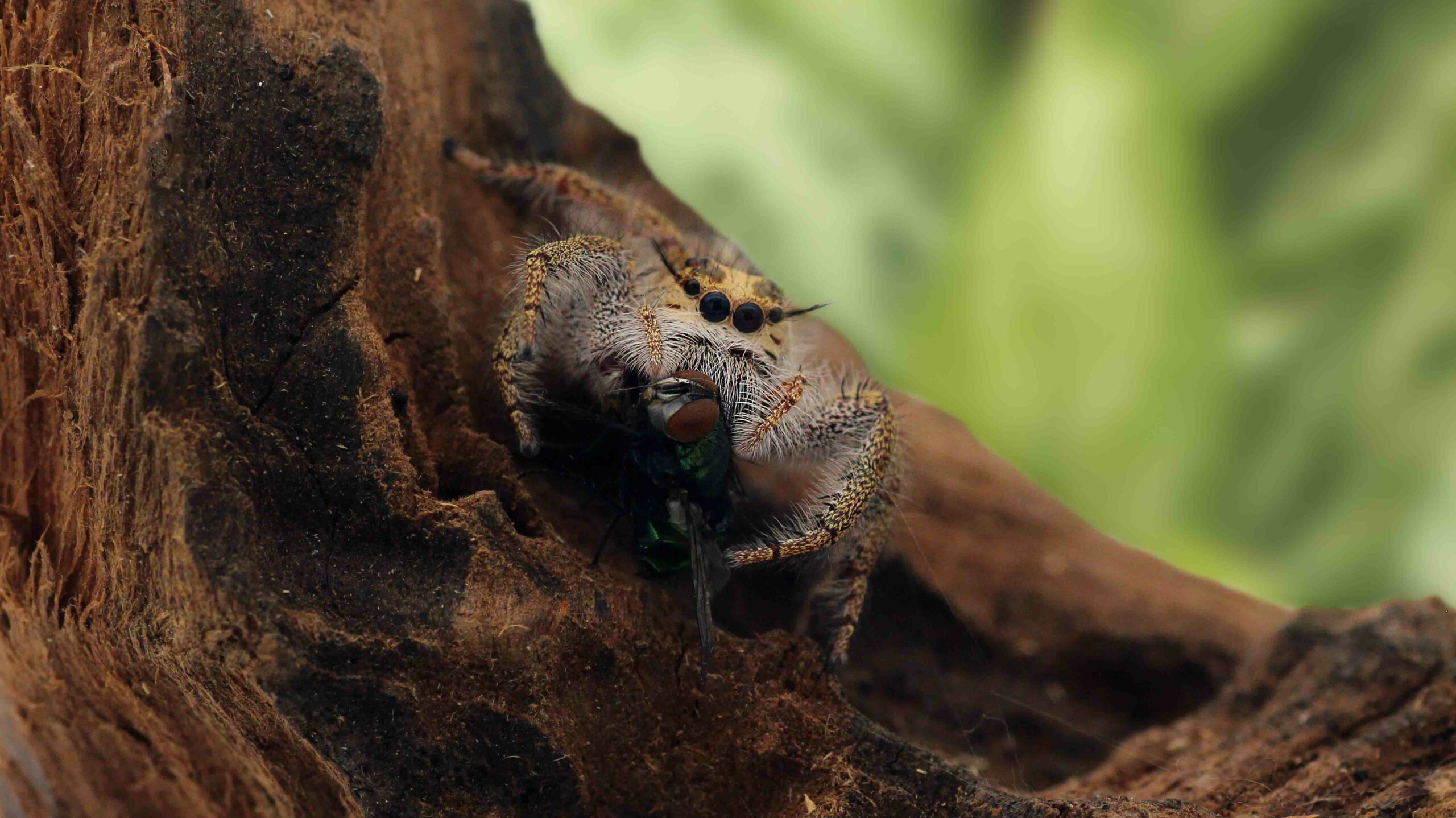
Hunting behavior is a particularly noticeable aspect of jumping spider behavior. Unlike web-spinning spiders, they actively hunt. Their attacks are not impulsive but carefully planned.
The spider fixes its gaze on its prey, assesses the distance and position, and positions its body accordingly. Only when all factors are right does it pounce. If the pounce fails, the hunt is often abandoned rather than continued frantically.
This restraint is part of an efficient strategy. Energy is used only when the chances of success are high.
Response to Environmental Stimuli
Jumping spiders exhibit a graded response to disturbances. Slight movements or vibrations often result only in a change of position. They flee only in response to stronger stimuli.
Jumping spiders use various strategies in this situation. They can retreat, change levels, or jump in a targeted manner. Panic-like reactions are rare. Their behavior remains controlled and adaptive.
Behavior Toward Other Members of the Same Species
In everyday life, we encounter jumping spiders more often than it might seem at first glance. Nevertheless, direct contact is rare. Jumping spiders are designed to keep their distance.
Even small signals are enough to prevent conflicts. A change in direction or a slight body movement is often enough to defuse the situation. Only when these signals are ignored can a situation escalate.
Adaptation Through Experience
In their daily lives, jumping spiders adapt to their environment. They tend to frequent areas with good hunting conditions, while avoiding areas with high levels of disturbance. This behavior is not fixed but changes with experience.
The animals learn which situations are successful and which should be avoided. This results in behavior that responds flexibly to the environment at hand.
Implications for Observation and Management
In terrarium keeping, understanding jumping spider behavior is crucial. A structured environment with different levels, light zones, and hiding spots supports natural behavior.
Monotonous environments lacking visual stimuli, on the other hand, often lead to passive behavior. Anyone observing jumping spiders should give them time and not constantly interfere. Many behaviors only become apparent when the animals are left undisturbed.
Conclusion
The behavior of jumping spiders shows that these animals actively engage with their environment. They observe, make decisions, and act purposefully. Their behavior is not frantic, but calm and efficient.
It is precisely in everyday life that we see how closely perception, movement, and decision-making are intertwined. Those who take the time to explore this will discover a remarkable complexity in seemingly simple processes.
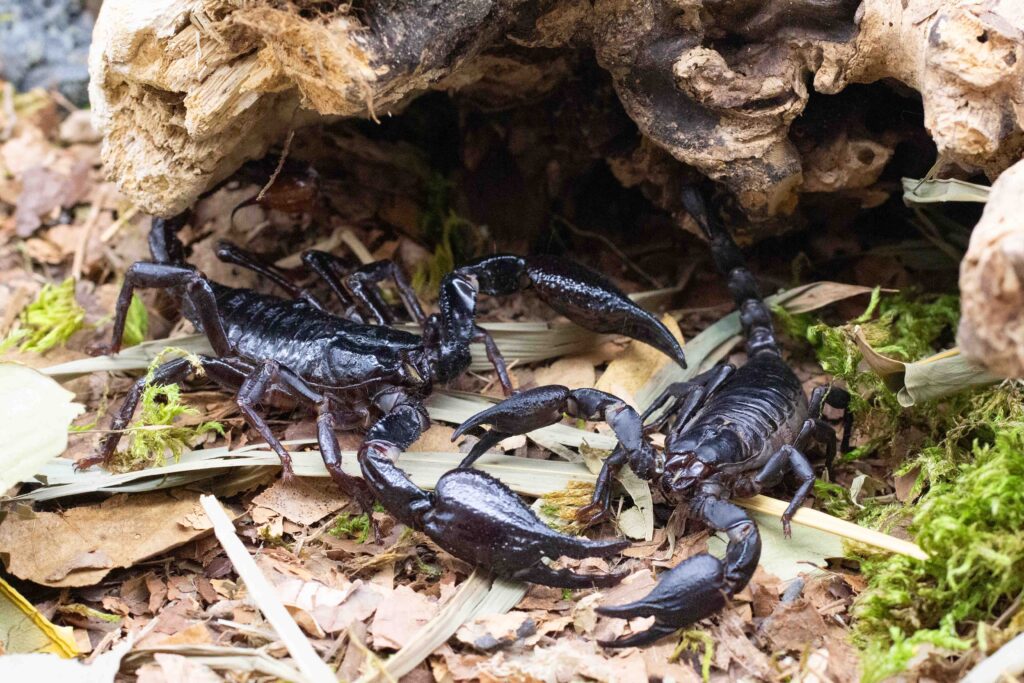
The Heterometrus spinifer vs Heterometrus silenus difference is one of the most frequently asked questions in scorpion keeping. Both species belong to the family Scorpionidae and the genus Heterometrus, which includes a variety of large, dark-colored scorpions from South and Southeast Asia.
Their external similarity regularly leads to misidentification. At the same time, a closer look reveals several features that allow a distinction to be made, even if this is not always clear in individual cases.
Morphological characteristics in comparison
Body proportions and habitus
Both species reach comparable size ranges. Differences are less apparent in the overall length than in the proportions:
Heterometrus spinifer often appears somewhat more elongated, especially in the metasoma
Heterometrus silenus appears more compact and more massive overall
However, these differences are variable and can be influenced by age, gender and nutritional status.
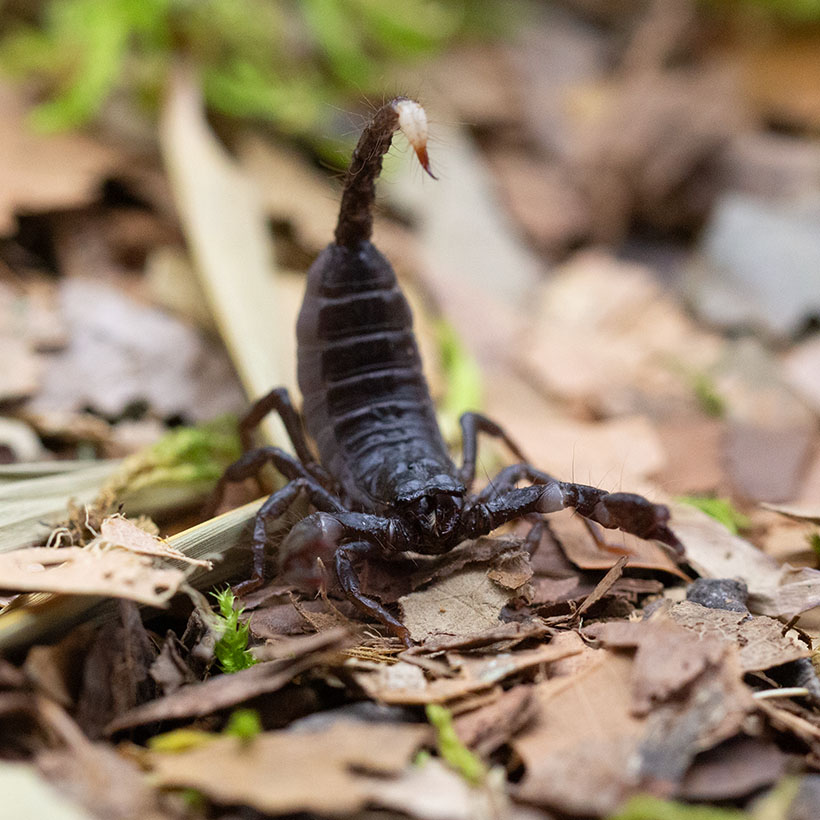
Telson and coloring
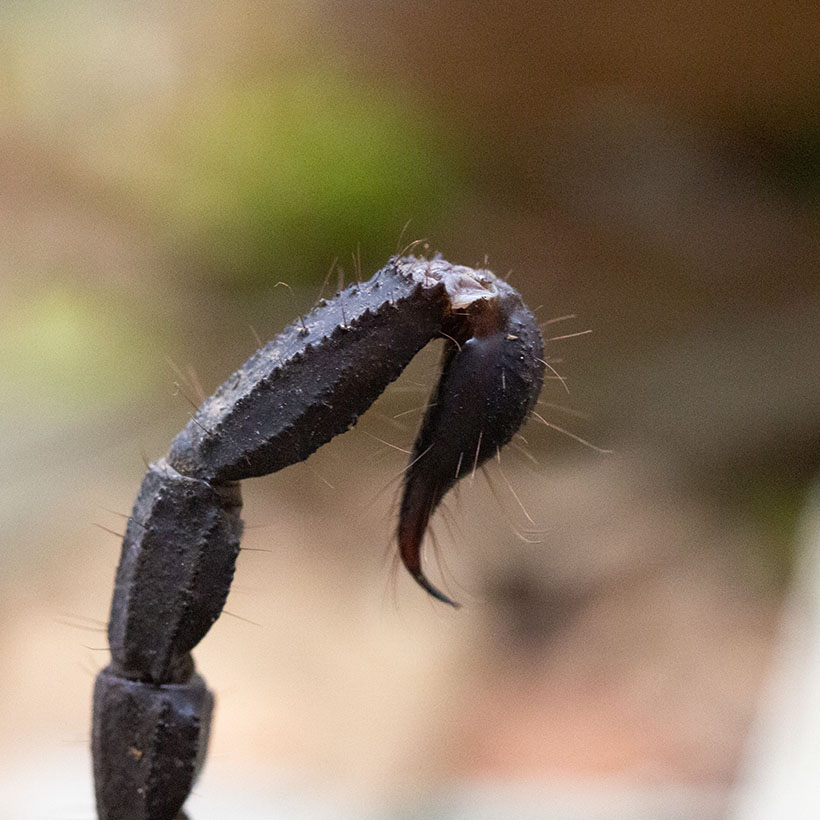
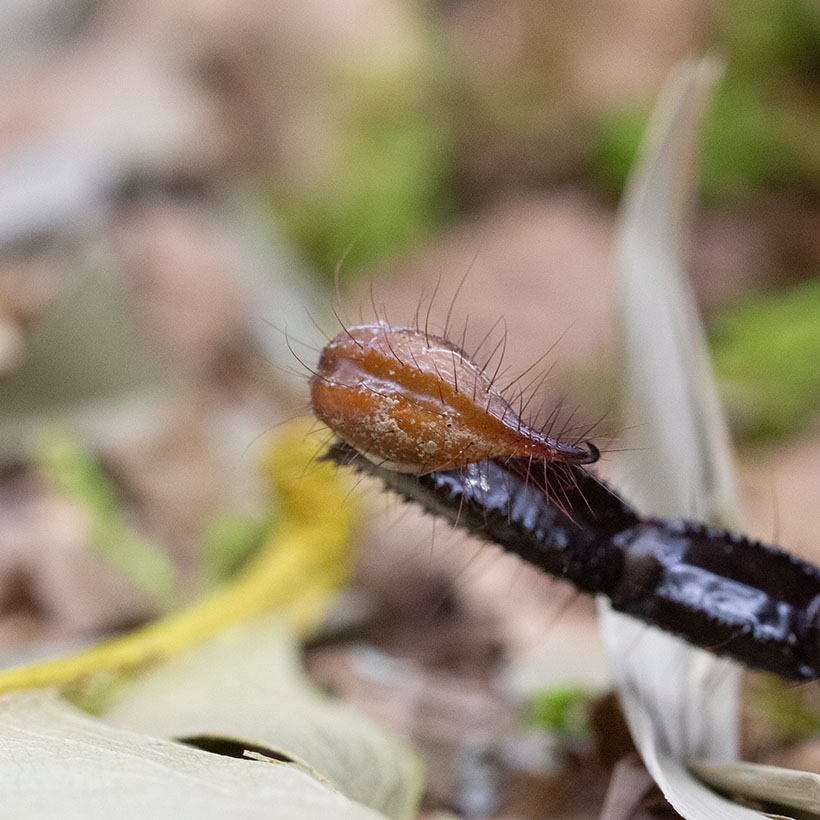
A frequently used characteristic is the telson, i.e. the poison bladder:
Heterometrus silenus:
usually uniformly dark in color
Heterometrus spinifer:
often lighter, partly reddish-brown in color
This characteristic can serve as a guide, but is not sufficient on its own for a reliable determination.
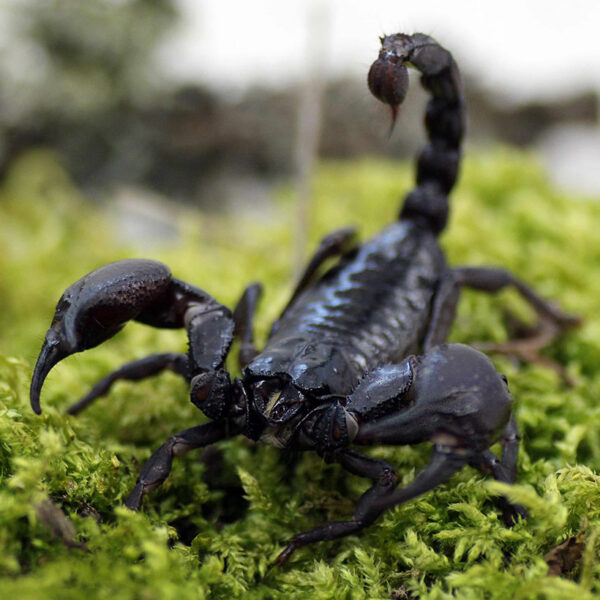
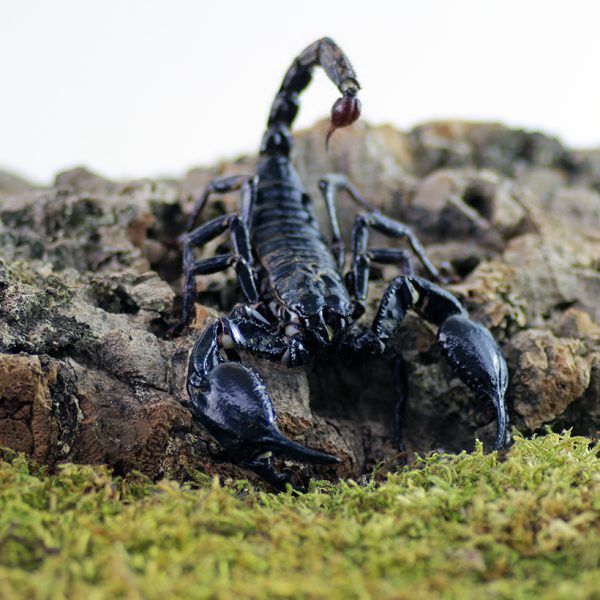
Heterometrus silenus venomous bladder
Heterometrus spinifer venomous bladder
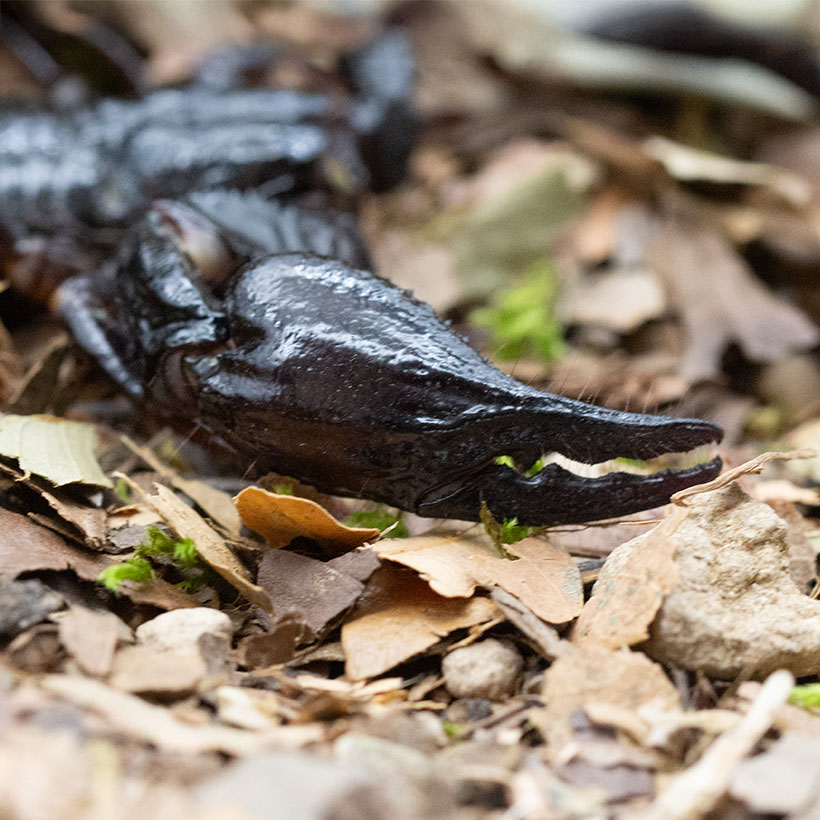
Gloss and surface texture
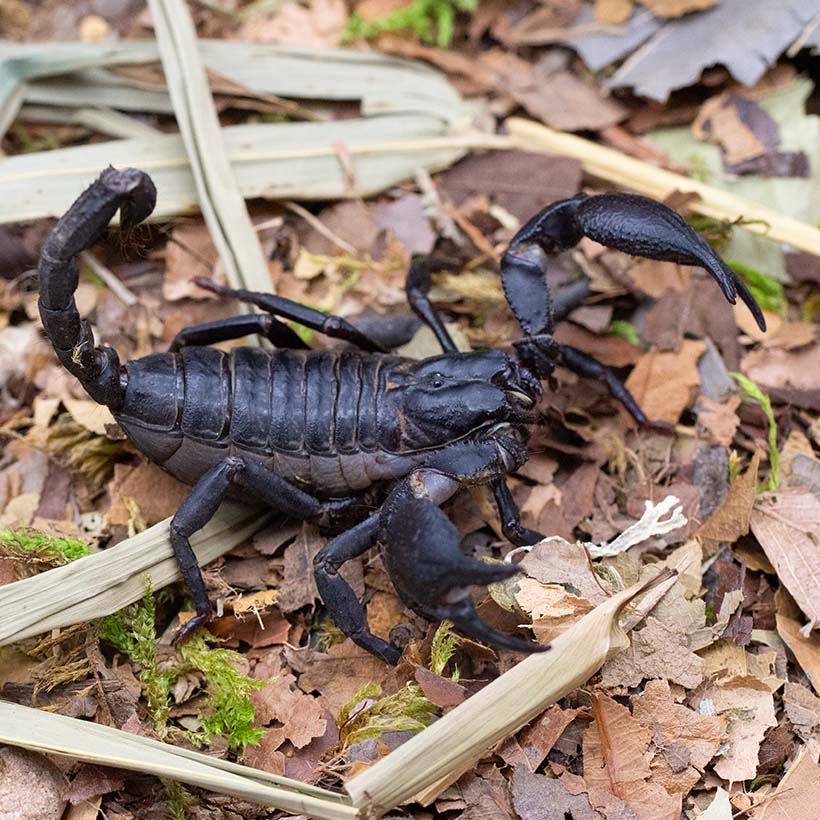
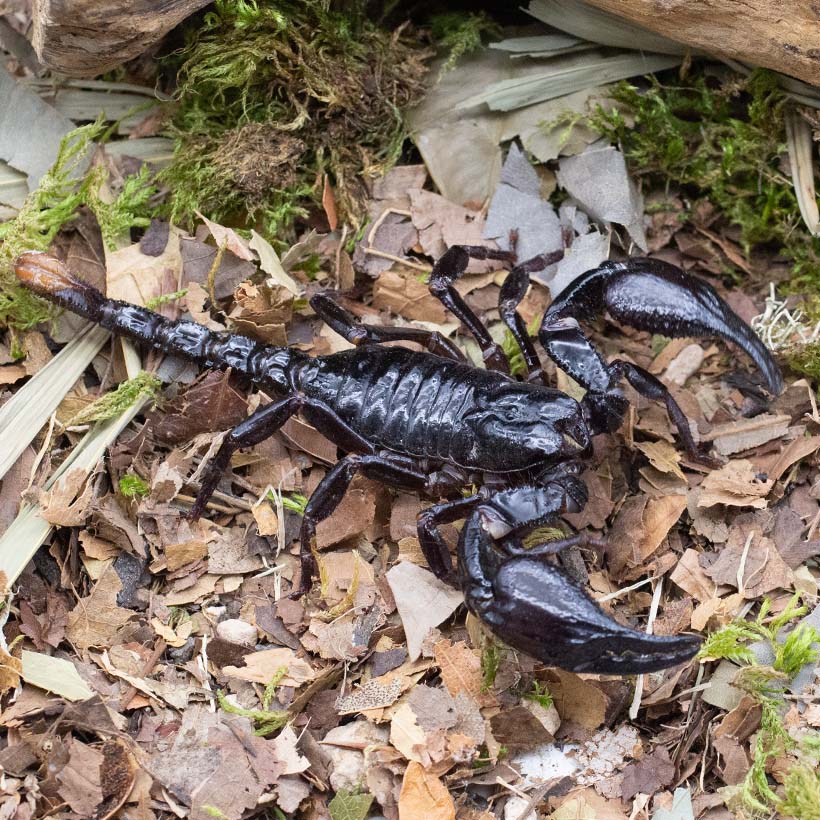
A conspicuous, although not sufficient, difference can be seen in the surface effect of the exoskeleton. Heterometrus spinifer often appears much shinier, especially on the carapace and pedipalps. The surface reflects light more strongly, which gives the animal an overall “smoother” appearance. Heterometrus silenus, on the other hand, usually appears duller. The cuticle is less reflective and therefore appears duller. This difference is presumably related to subtle structural variations in the exoskeletal surface. In practice, the surface effect can play a supporting role in identification, but should always be considered in conjunction with other characteristics.
Heterometrus silenus
Heterometrus spinifer
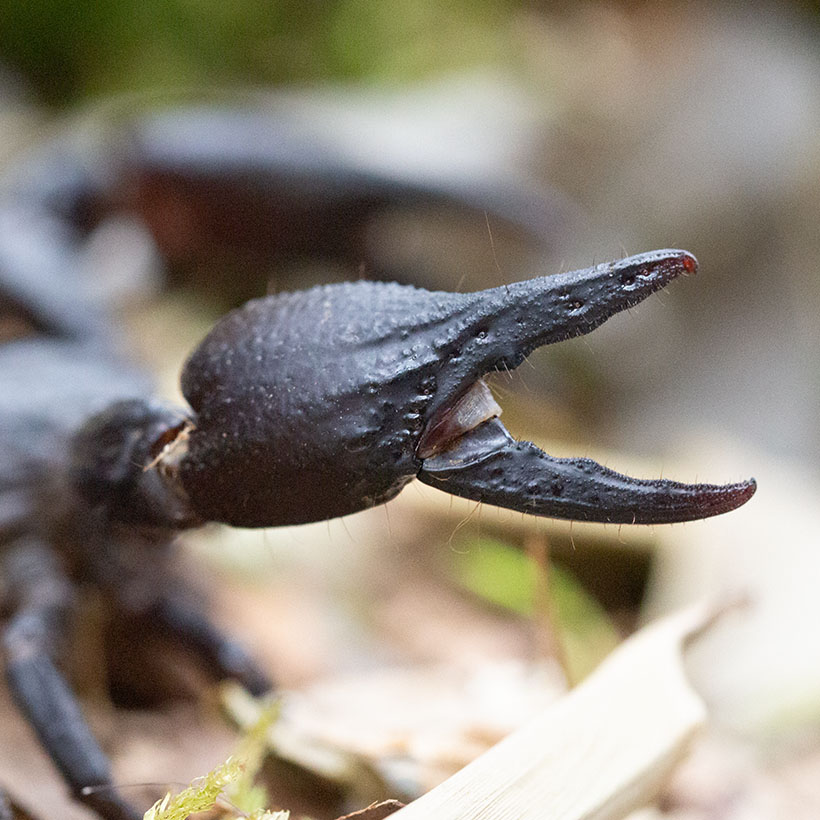
Pedipalps and structural features
The pedipalps (claws) and their surface structure play a role in making a reliable distinction:
Differences can be seen in:
Grain size (granulation)
Shape of the scissor hand
Ratio of length to width
However, these characteristics require experience and are difficult to assess without direct comparison.
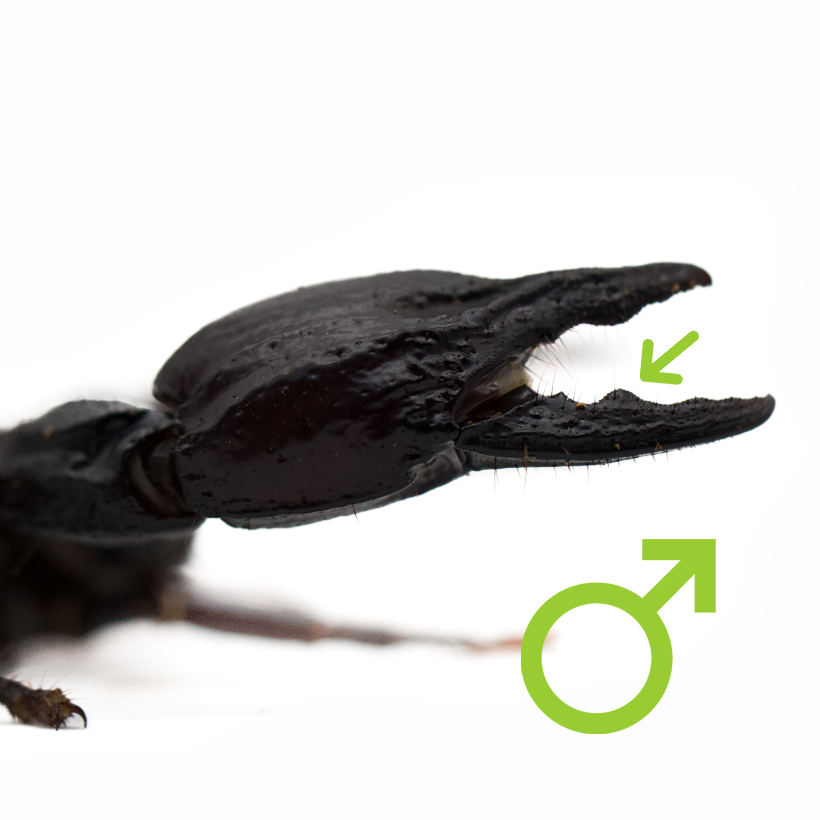
Heterometrus silenus Pedipalps
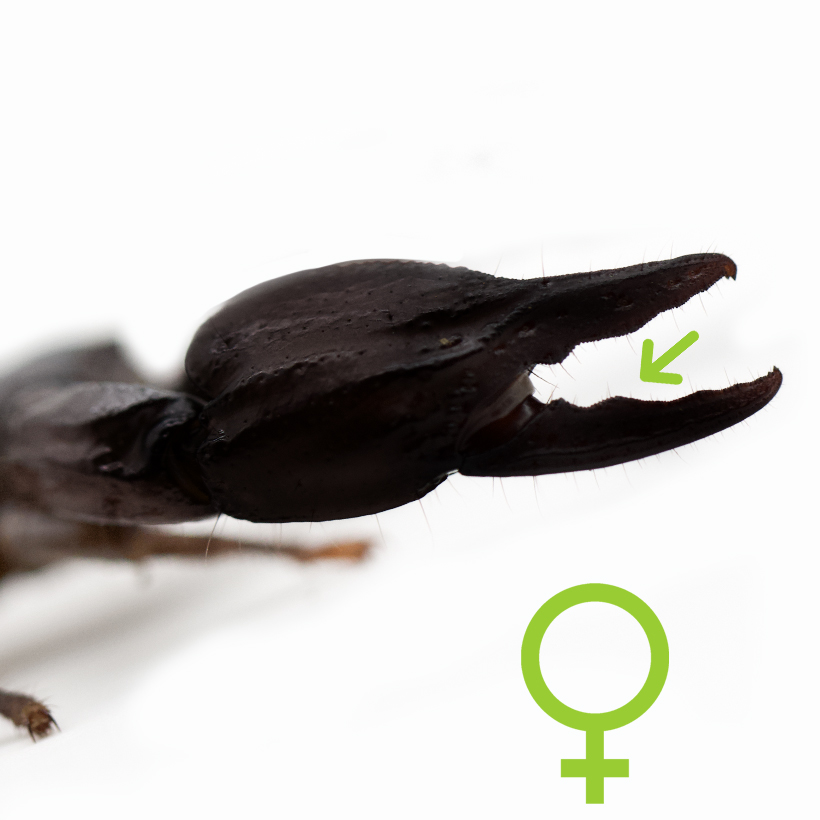
Heterometrus spinifer Pedipalps
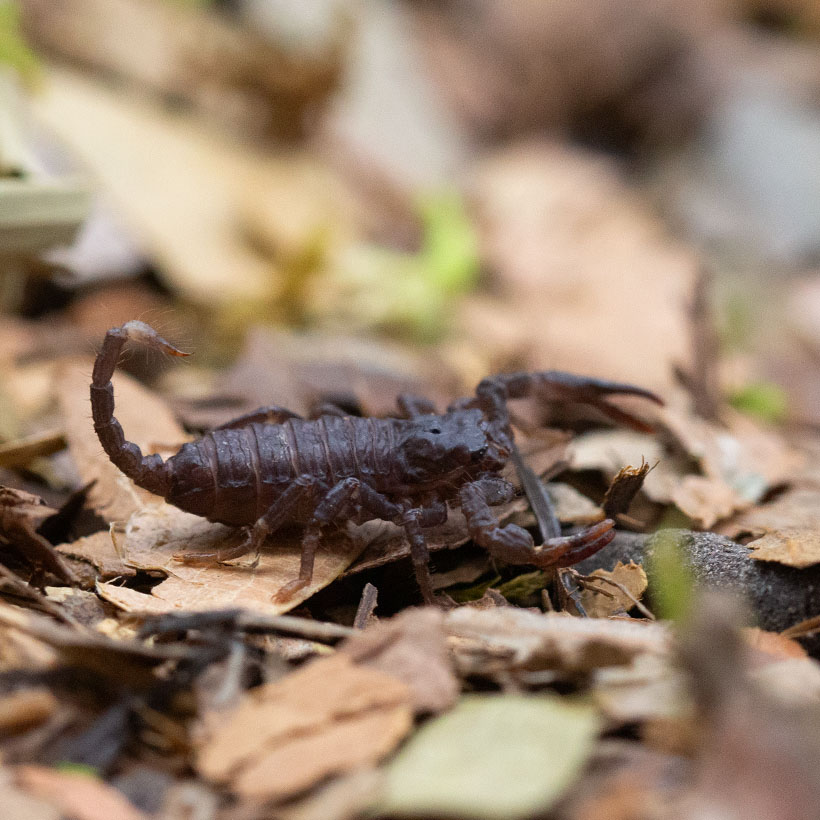
Differences in young animals
Differences between the two species can also be observed in juveniles. Juveniles of Heterometrus spinifer show a comparatively light, sometimes whitish-looking venom sac (telson). In addition, their basic coloration is usually deep black and may show a slight sheen early on. Heterometrus silenus, on the other hand, has a consistently dark telson in juvenile stages without any clear brightening. The body coloration often appears rather pale black to dark brown and has a duller overall appearance. These characteristics can provide an initial orientation.
Heterometrus silenus juvenile
Heterometrus spinifer juvenile
Distribution and habitats
Geographical differences
Heterometrus spinifer:
Particularly widespread in Malaysia
Heterometrus silenus:
Focus on Vietnam and neighboring regions
These distribution areas do not completely overlap, which is an important basis for taxonomic separation.
Habitat structure
Both species are typical inhabitants of humid tropical forests. They live close to the ground and use:
Loose soils for digging
Leaf litter as cover
Deadwood and root areas as retreats
The microhabitats are characterized by stable humidity and low temperature fluctuations.
Behavior and ecological role
Behavioral differences are often described, but should be classified with caution. Individual variation is considerable in scorpions.
In general it can be said:
Both species are predominantly nocturnal
They react defensively when disturbed
The use of the venomous sting depends on the situation
As predators, they fulfill an important function in the ecosystem. They regulate populations of small invertebrates and are themselves part of the food chain.
Importance for terraristics
The problem of misidentification
In practice, both types are often referred to collectively. This has several consequences:
Difficult assignment of posture parameters
Problems with offspring
Loss of taxonomic clarity in the hobby
A reliable determination therefore requires more than visual assessment.
Posture in comparison
The basic requirements are similar:
moist, diggable substrate
Stable humidity
Structured retreat areas
Differences lie more in the details than in the basic principle. Both species react sensitively to conditions that are too dry and a lack of retreat options.
Responsibility and classification
The comparison Heterometrus spinifer vs Heterometrus silenus difference shows how important precise knowledge of the species is in terraristics. External similarity must not lead to simplified assumptions.
An objective discussion of origin, morphology and lifestyle enables a well-founded attitude and reduces misinterpretations.
Conclusion
The differences between Heterometrus spinifer and Heterometrus silenus lie mainly in details of morphology, distribution and subtle differences in appearance.
Both species are typical representatives of tropical soil fauna with comparable ecological roles. However, their differentiation requires a close look and a certain amount of experience.
The difference between Heterometrus spinifer and Heterometrus silenus is therefore less a question of clear contrasts than one of careful observation and classification.
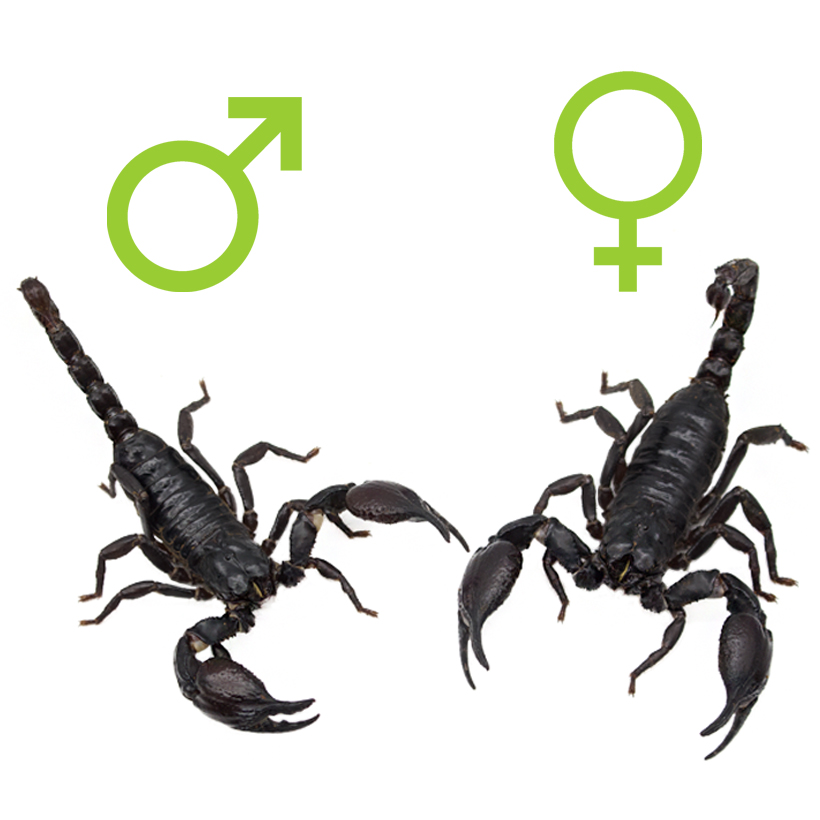
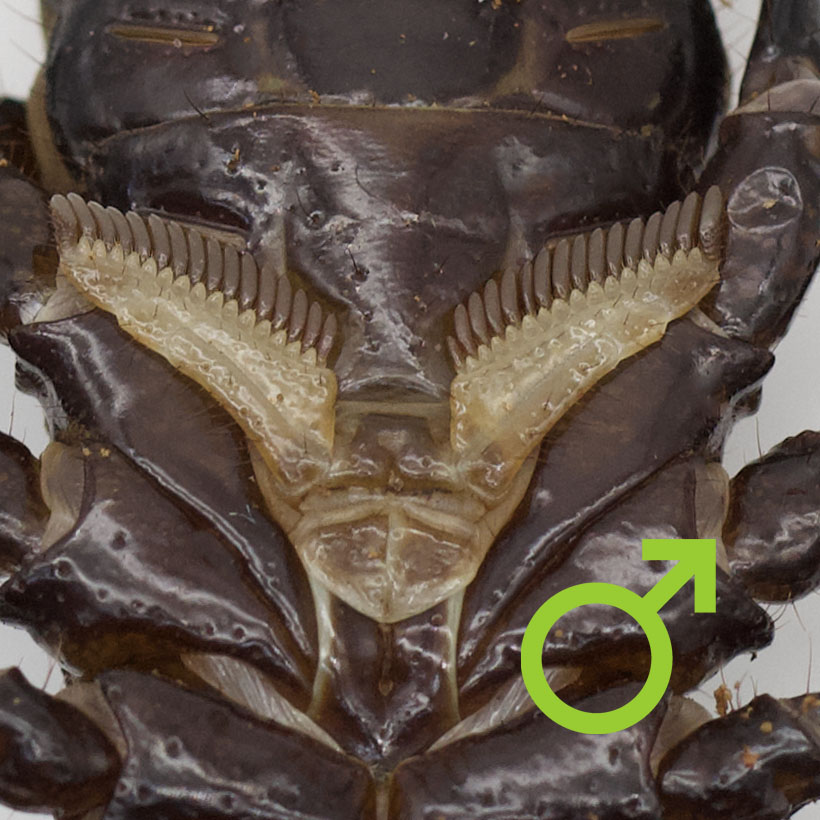
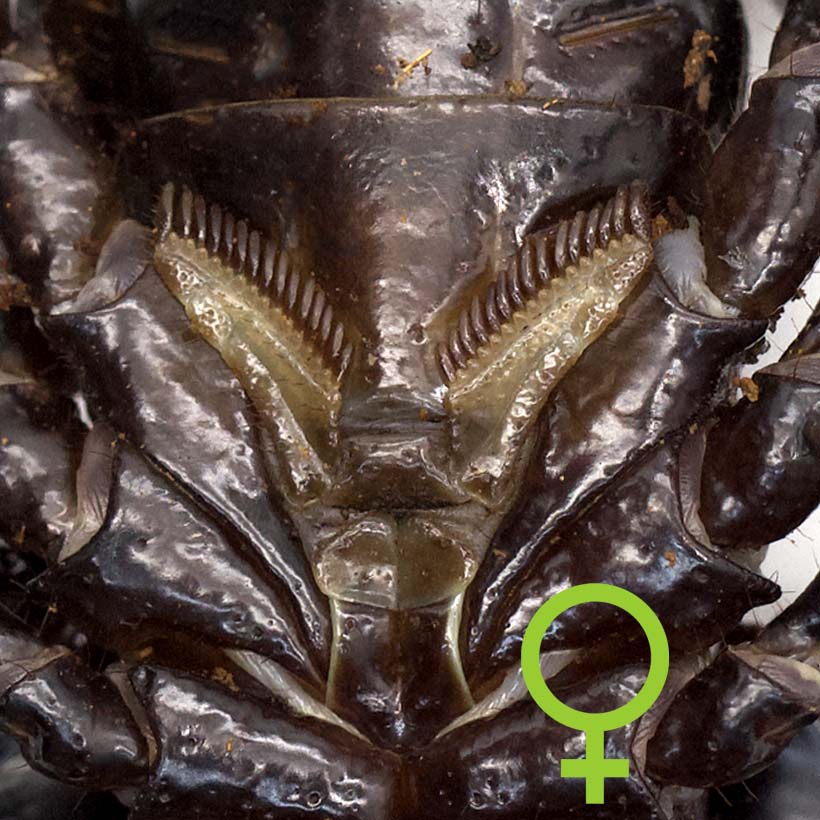
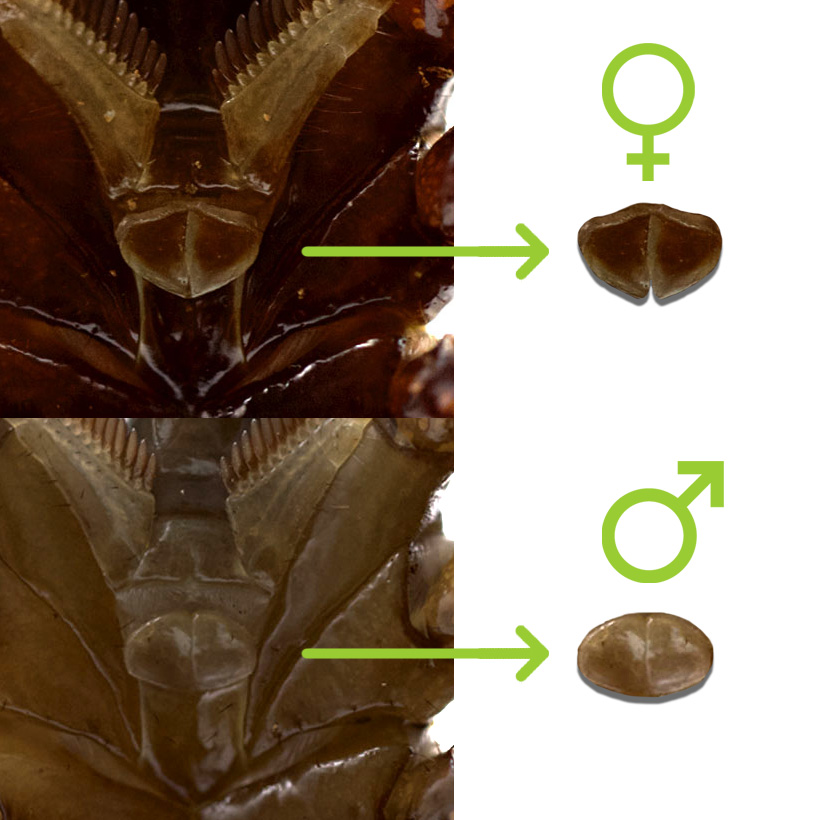
Based on these differences, it should be possible to tell from the photo which specimen is Heterometrus silenus and which is Heterometrus spinifer.
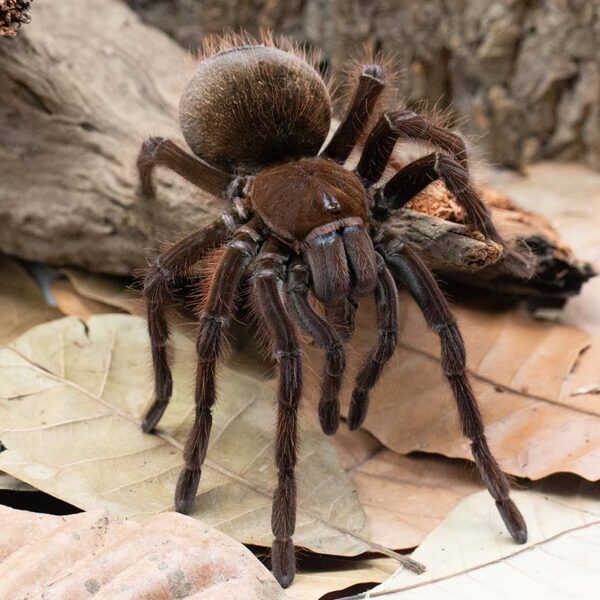
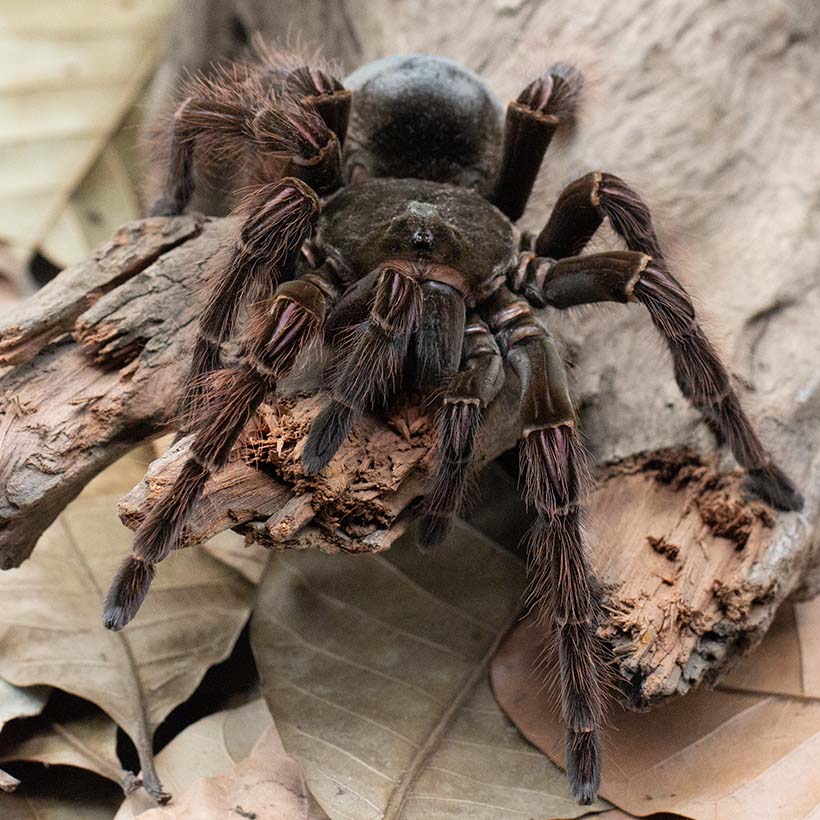
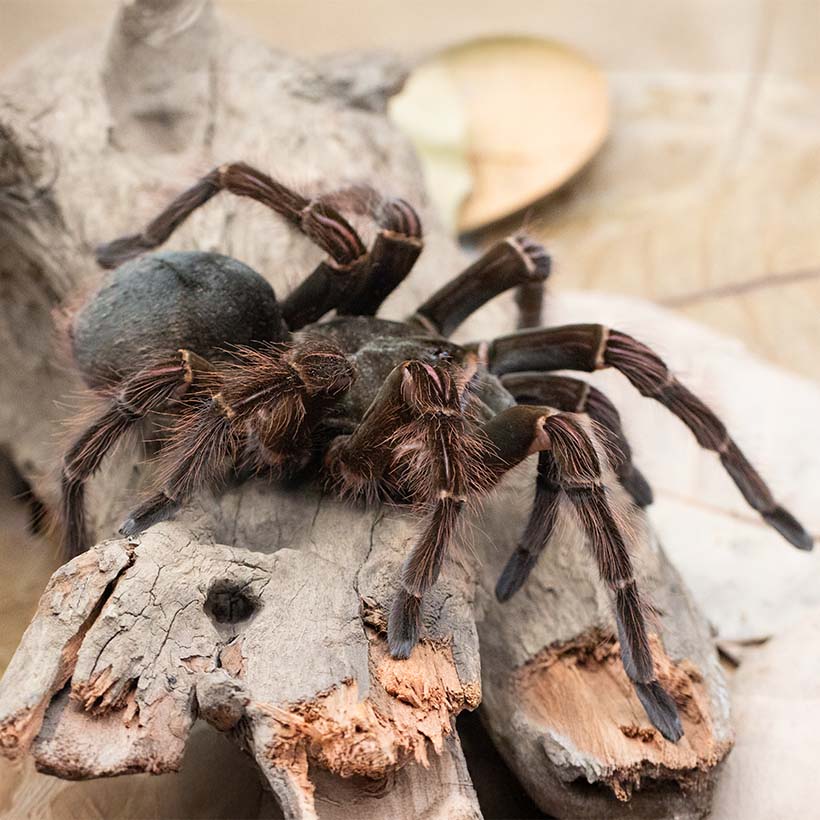
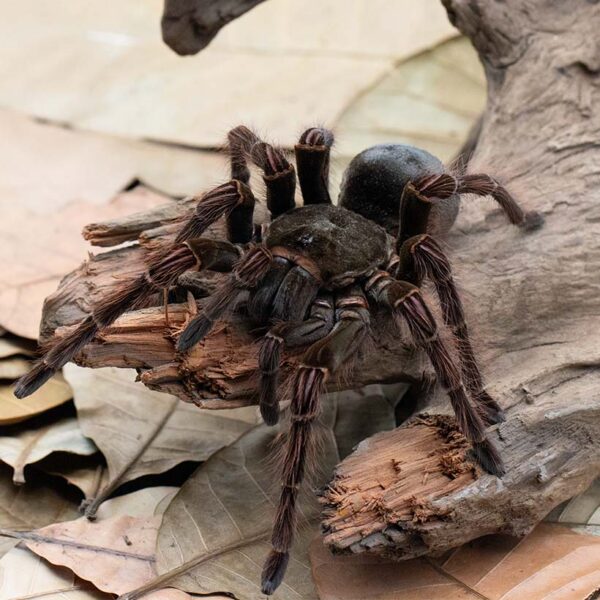
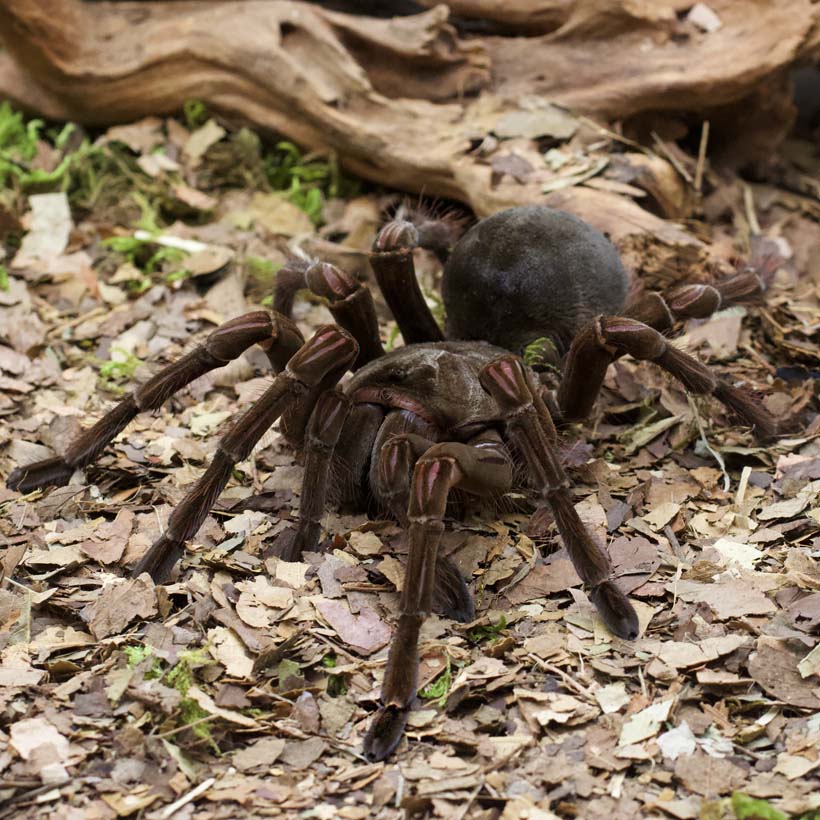
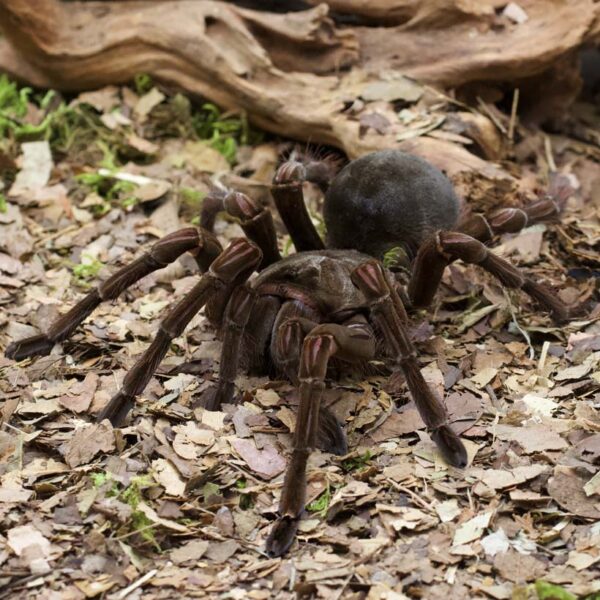
When we talk about the largest tarantula in the world, we usually mean animals with an extraordinary body size and leg span. In tarantulas of the Theraphosidae family, size is usually indicated by the leg span. It describes the distance between the tips of opposite legs when they are stretched out. This measurement gives a good impression of the total space an animal occupies and is the most common standard of comparison for large species in the literature. In this article, we work our way from 5th to 1st place along various species that are among the largest known representatives of their family.
Acanthoscurria geniculata is one of the larger tarantulas in South America and is very well known and popular in the terrarium hobby. It originates from the tropical rainforest of northern Brazil, where it lives as a ground-dwelling hunter in leaf litter, under wood and stones. Typical adult specimens reach a leg span of up to around 20 cm. This makes it one of the largest species, even if it does not reach the extremes of the genus Theraphosa.
Biologically, A. geniculata is a typical terrestrial tarantula. It uses ground structures for burrowing and hiding and regulates local invertebrate populations. In terms of husbandry, this means that a terraced, structured terrarium floor with burrows and retreats is conducive to their natural way of life – an example of how natural husbandry can be implemented responsibly.
Lasiodora parahybana is one of the largest tarantulas known and is often referred to in the hobby as the “Brazilian giant tarantula”. It is endemic to north-eastern Brazil and reaches leg spans of up to around 28 cm – a size that puts it well above many large species in the New World.
Ecologically, L. parahybana is a ground-dwelling hunter with a high level of activity. Large females can use a particularly large number of prey species in the wild and hold their own against competition. In terraristics, their size means that this species requires sufficient floor space and cover. A species-appropriate husbandry reduces stress and allows individual behavior from digging to skinning.
3rd place: Theraphosa apophysis – large Goliath tarantula with impressive size
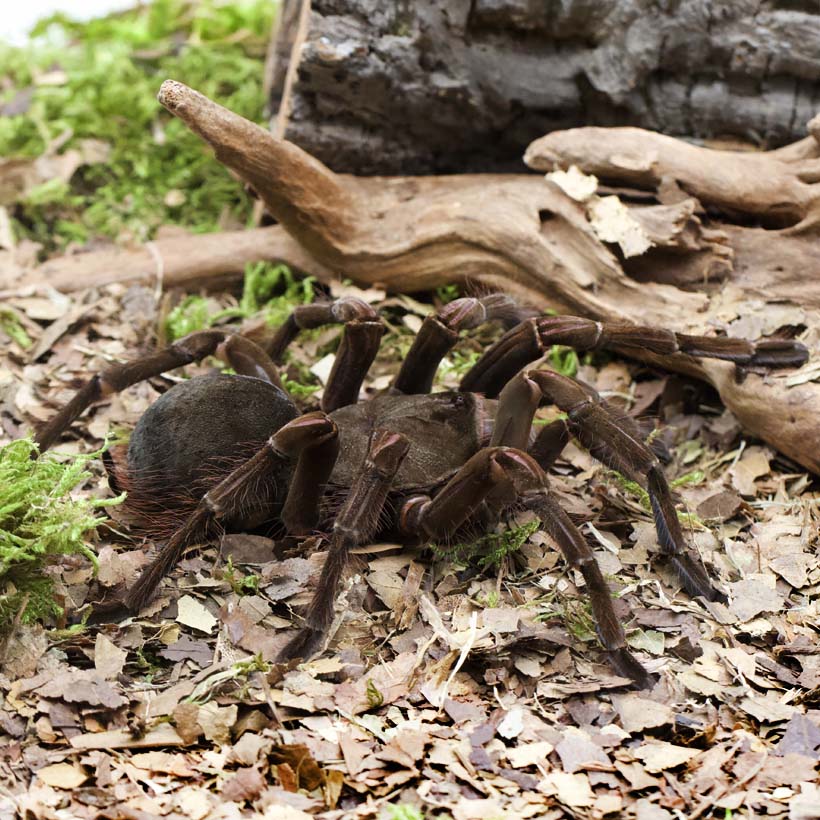
Theraphosa apophysis belongs to the well-known group of “Goliath tarantulas” and is one of the largest species in the world alongside T. blondi and T. stirmi. Adult specimens also reach leg spans in the range of large Theraphosa species and are considered imposing in the hobby – often with body lengths of around 10 cm and a correspondingly massive build. Within the genus Theraphosa, apophysis is the only species in which sexually mature males develop tibial apophyses.
In their natural habitat of tropical rainforests in South America, these animals live on the ground and are opportunistic in their choice of food. They use hiding places, but also dig in loose substrates. For keepers, this means A large terrarium surface area, deep substrate for burrowing behavior and stable climatic conditions are important. Large bodies and strong legs correspond to a lifestyle that needs space and structure – not just a “show terrarium”.
2nd place: Theraphosa blondi – the world-famous Goliath tarantula
Theraphosa blondi is widely regarded as one of the largest spiders in the world in terms of body mass and length. In popular literature, it is often referred to as the classic “Goliath tarantula”, producing adults with very massive bodies. It is found in the tropical rainforests of northern South America.
In rankings for leg span, T. blondi is close to other large species. However, it is best known for its high weight and body mass. Ecologically, such large theraphosids are bottom dwellers with a diverse prey spectrum of invertebrates and small vertebrates. When kept, T. blondi requires a lot of space, peace and quiet and a stable, humid climate – aspects that make the difference between simply “having” and responsible terraristics.
1st place: Theraphosa stirmi – largest tarantula in the world
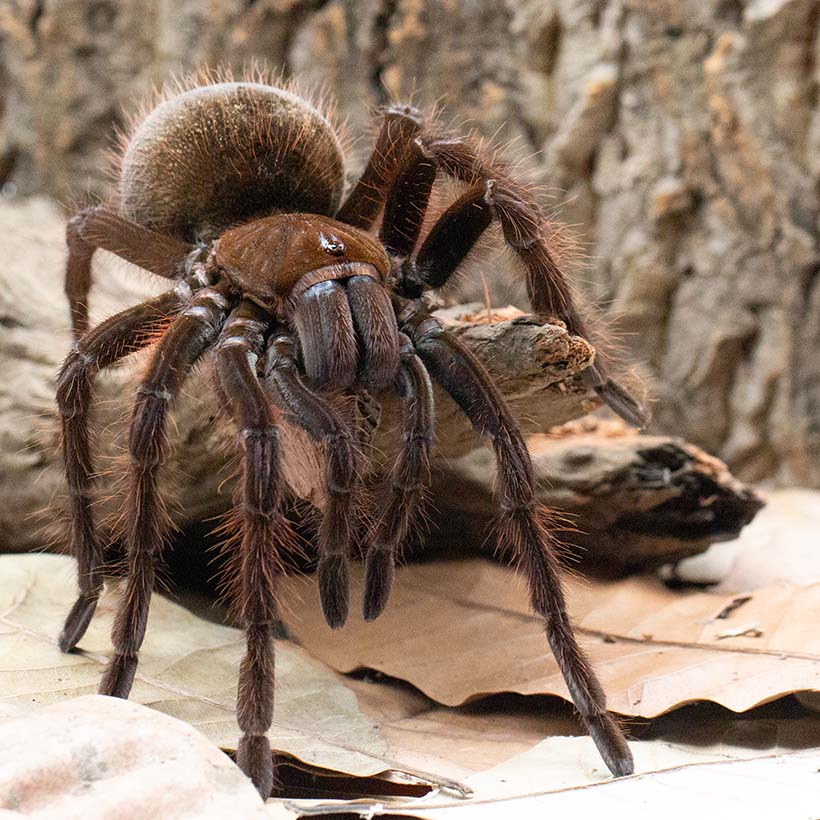
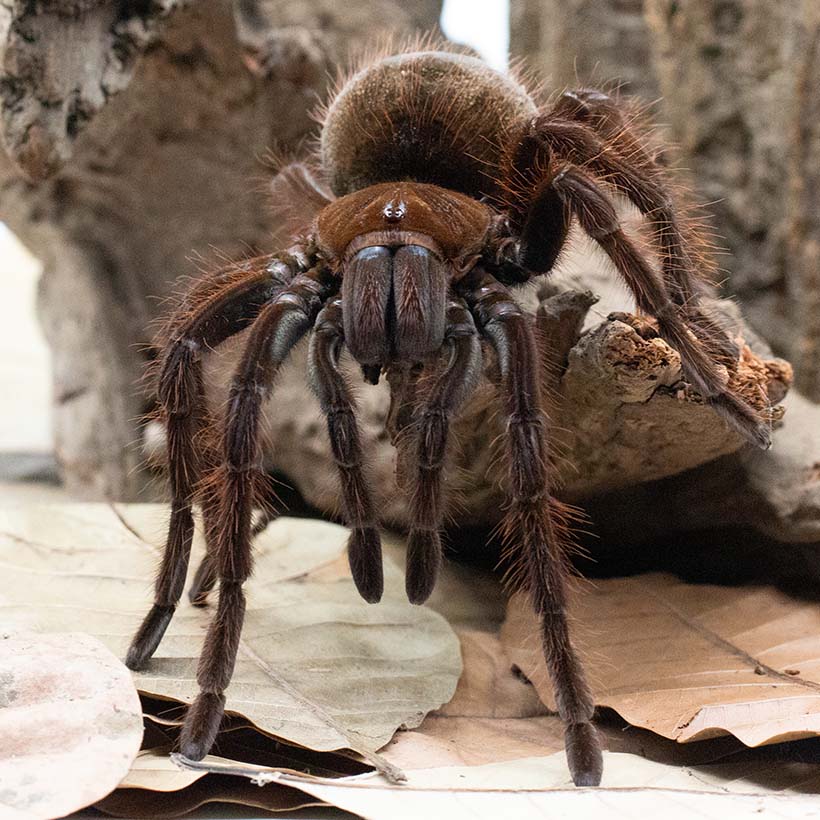
Theraphosa stirmi – often referred to as the “Burgundy Goliath tarantula” – reaches the largest overall dimensions within its genus according to recent reports and measurements, placing it at the top of our ranking of the world’s largest tarantulas. Females can reach leg spans that regularly rival or slightly exceed those of other large Theraphosa species, especially in large individuals (sometimes around 30 cm at the upper end).
This species is an impressive example of how closely size, habitat and ecological function are linked: It is at home in humid, warm rainforest regions of South America, where close to the ground, hiding places and microhabitats form its niche. For terrariums, this means more floor space, deeper substrates and a sensitive approach to their space and climate requirements.
Tarantulas of this size class are not “record objects”, but concrete components of ecological systems. Their role as predators of insects and other soil animals influences local food webs. At the same time, these spiders are habitat indicators: the loss of structurally rich rainforest areas through deforestation and fragmentation has a direct impact on their populations.
In terraristics, this results in a responsibility that goes beyond mere keeping: professional care, consideration of natural needs and a critical examination of the origin and legal situation break with romanticized ideas and instead create a factual basis.
Responsibility in attitude
Large tarantulas not only require space, but also an understanding of their natural way of life. Species-appropriate husbandry means:
Terrarium design with sufficient floor space and structures,
stable temperature and humidity values,
Opportunities for natural behavior (digging, hiding),
objective consideration of handling and stress avoidance.
A look at the world’s largest tarantula thus leads from mere numbers to a holistic understanding: size is a fascinating biological characteristic, but it also entails responsibility.
From Acanthoscurria geniculata in 5th place to Lasiodora parahybana and Theraphosa apophysis to Theraphosa blondi and Theraphosa stirmi, this is a group of spiders that reach impressive dimensions both in the wild and in the hobby. The largest tarantula in the world is not an abstract record, but a starting point for sound knowledge, respectful husbandry and an awareness of how animal size, ecology and human responsibility are connected.
If you have any further questions, please leave them in the comments below the article.
The release of insects is often underestimated. Particularly in the case of invertebrates, the idea persists that a single animal cannot cause any damage outdoors. However, research has clearly shown in recent years that this assumption is deceptive. The example of invasive mantids, which have become established in various regions of Europe, illustrates this particularly well.
Invasive mantids in human-dominated habitats
Asian mantis of the genus Hierodula (Hierodula tenuidentata / patellifera) have now been recorded in many parts of Europe, especially in cities and suburban areas. They benefit from heat islands, structurally rich gardens and a constant supply of insects. The decisive factor here is not just their size or their hunting behavior, but a combination of biological characteristics that are particularly effective in new habitats.
In such environments, invasive mantids encounter conditions that favor their spread without the existing ecosystem being prepared for them.
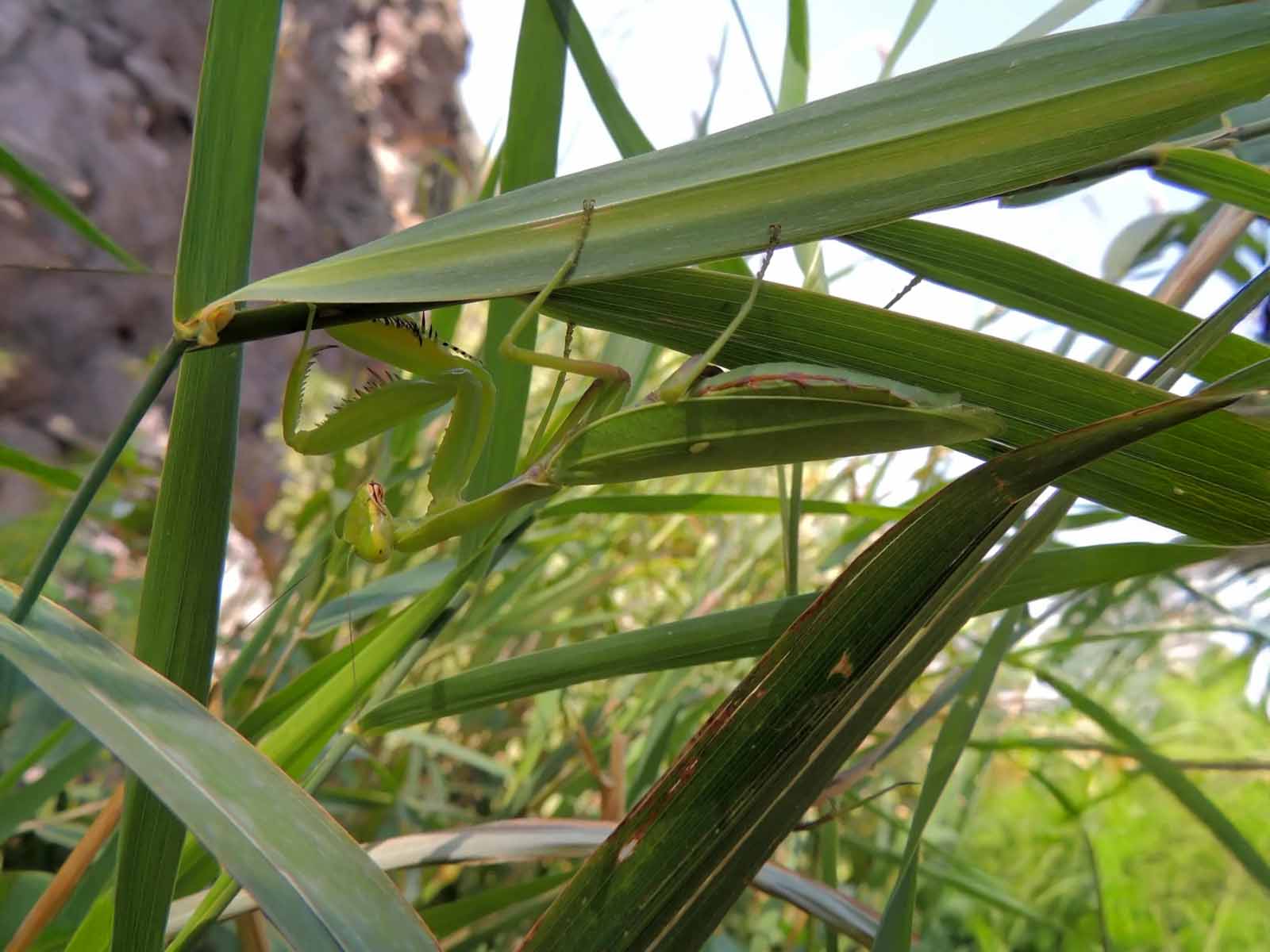
Hierodula patellifera
Reproduction and population dynamics
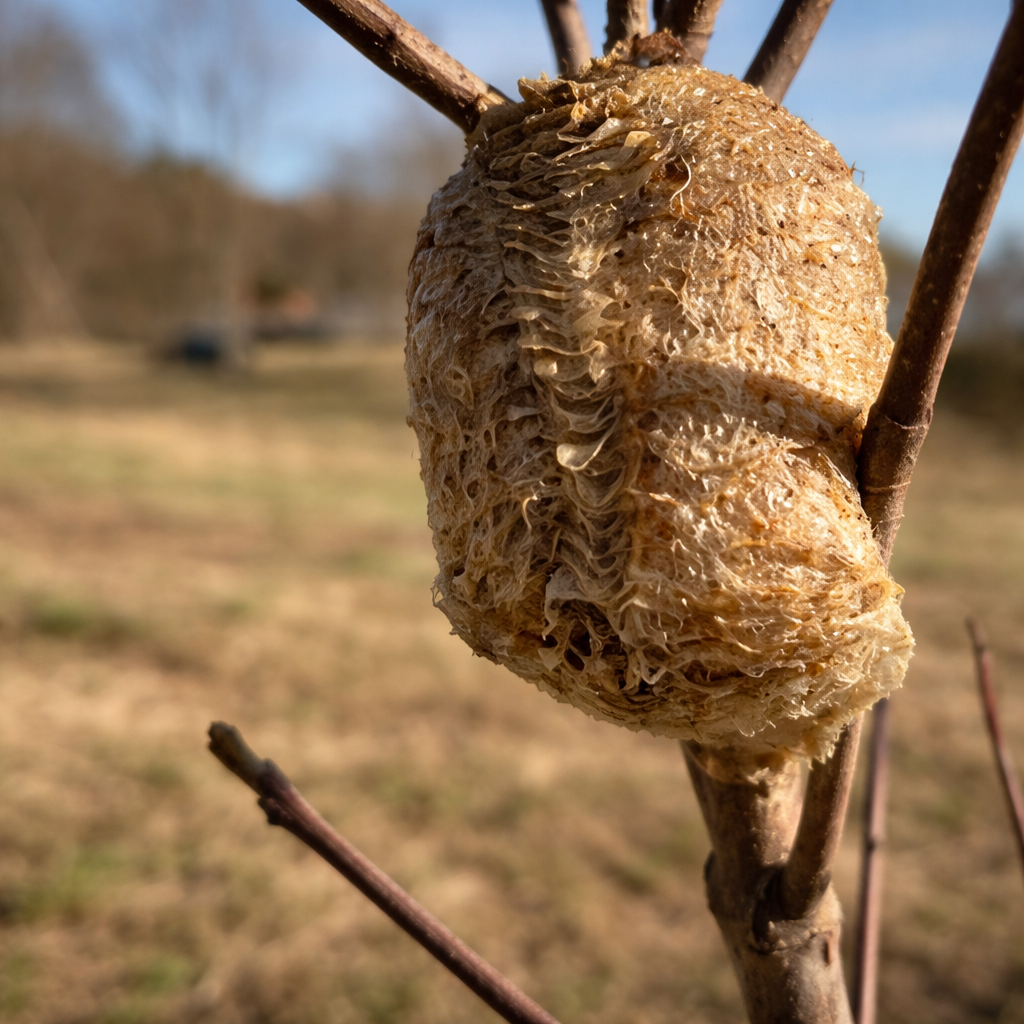
Studies show that invasive mantids have a high reproductive output. On average, significantly more young hatch from a single ootheca than in the native Mantis religiosa. At the same time, early mortality due to cannibalism is lower than was long assumed.
This combination means that populations can expand rapidly within a short period of time, especially where human structures create favorable conditions.
Mismatches as an underestimated displacement mechanism
One aspect that has long received little attention concerns reproductive biology. In controlled experiments, males of the native Mantis religiosa reacted not only to females of their own species, but also to females of Hierodula. The chemical signals are apparently not strictly species-specific.
This misorientation is fatal for the males. They are eaten on approach. Such processes are not just a laboratory phenomenon, but a biologically plausible mechanism that can occur in mixed populations.
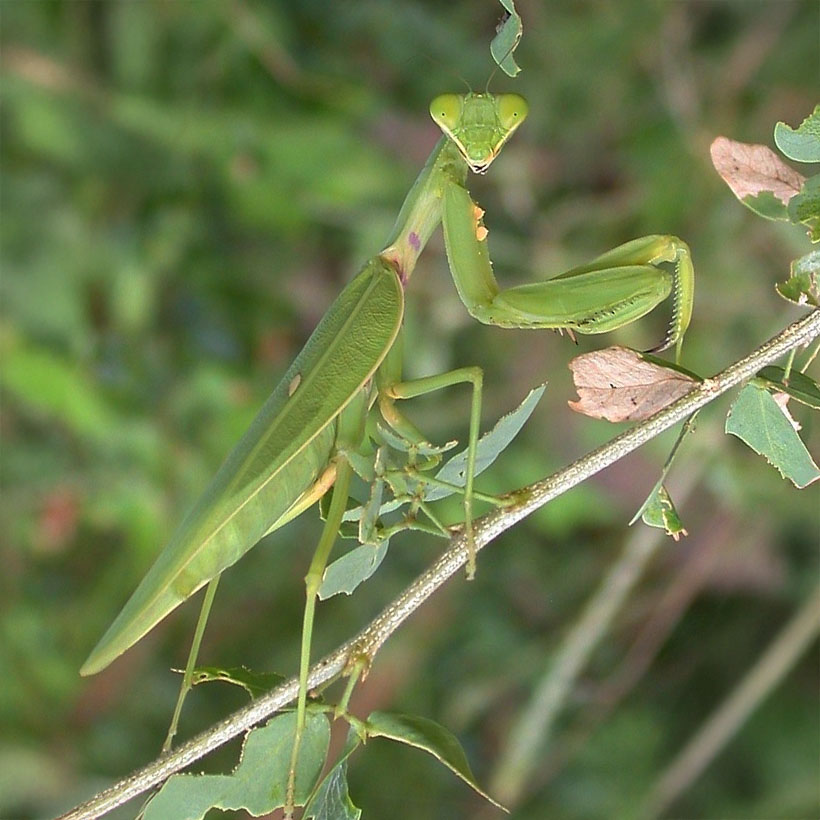
Mantis religiosa
Effects on native species
For the native praying mantis, this effect is more than just a spectacular detail. Males represent the most mobile life phase of the species. If they are lost in significant numbers due to such mismatches, this can affect the reproduction of the population.
Displacement does not occur here through open competition, but through subtle disturbances in the reproductive system. It is precisely such mechanisms that make invasive mantids ecologically effective without being immediately visible.
Hunting behavior and ecological range
In addition, Hierodula have a generalist hunting behavior. The animals use a wide range of prey, from small flying insects to large, defensive species. In individual cases, even small vertebrates have been documented as prey.
Such observations are rare, but show the ecological potential of invasive mantids once they have become established. This can be particularly relevant in fragmented habitats or limited areas.
Why releases work immediately
None of these effects arise because invasive mantids are more aggressive or more problematic than native species. They arise because these animals enter systems that are not adapted to them. Evolution works slowly. Releases have an immediate effect.
Once an animal has been released, it cannot be brought back. An established population is almost impossible to control.
Responsibility in terraristics
This is where responsibility becomes concrete. Anyone who keeps, breeds or passes on animals decides whether such processes are triggered at all. This applies not only to large, conspicuous species, but also to egg packs, young animals or supposedly harmless insects that freeze to death in winter anyway.
Releasing animals is not a solution, but a risk. For the animal itself, which often has poor chances of survival outside, and for the environment into which it is uncontrollably introduced.
Reception centers as a sensible alternative
This is exactly where rescue centers come in. At Insektenliebe there is a collection station for insectswhich is intended as a practical alternative to abandonment. Animals can be handed in, professionally classified and rehomed or placed in a controlled manner.
The result is a solution that does justice to both animal welfare and the protection of native ecosystems.
The example of invasive mantids shows how quickly well-intentioned decisions can have real ecological consequences. But it also shows that responsibility does not have to be complicated. It starts with not simply releasing animals and continues by accepting help before an individual solution becomes a collective problem.
Terraristics and insect keeping only have a future if they are taken seriously. This also includes acknowledging uncomfortable consequences and acting accordingly.
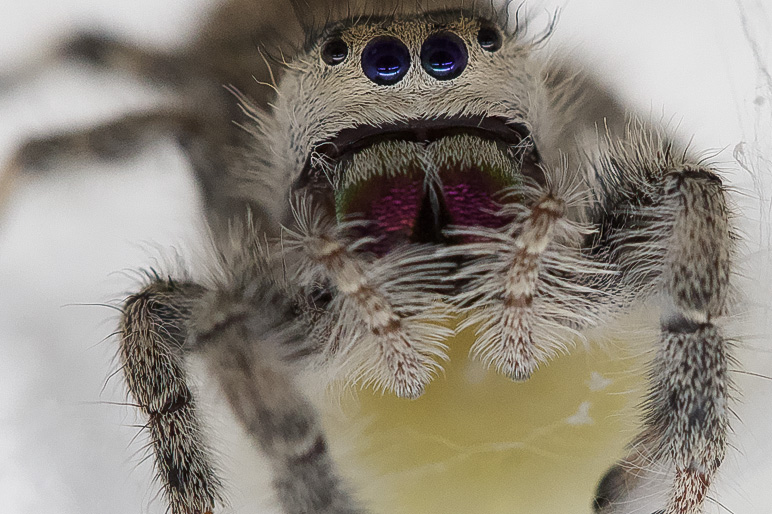
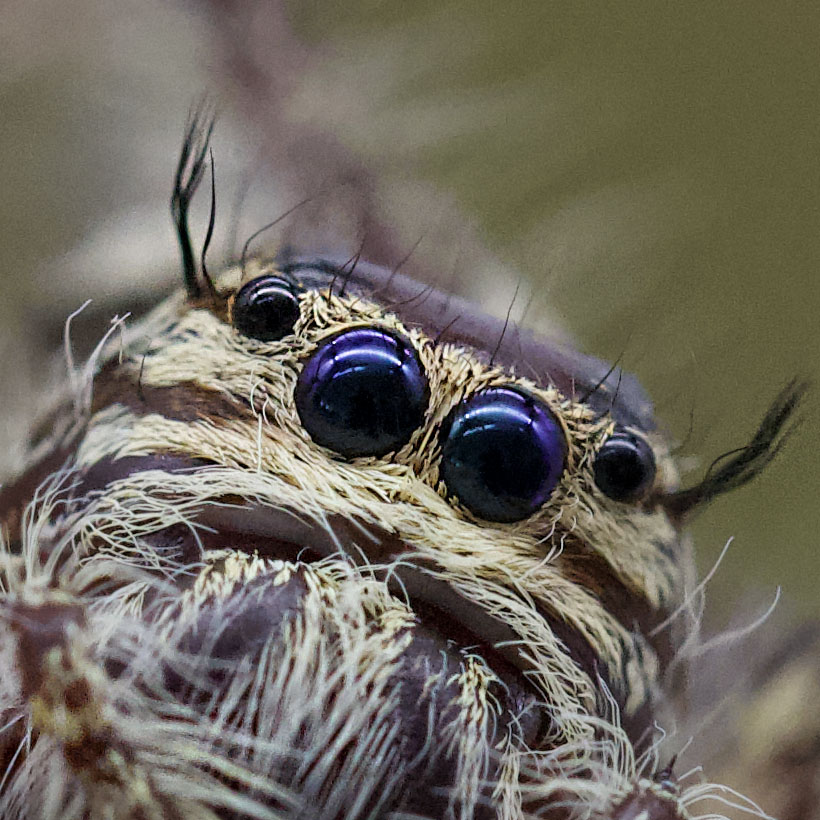
The jumping spider’s visual system is one of the most powerful visual apparatuses in the entire invertebrate kingdom.
What at first glance appears to be a cute detail – the large, forward-facing eyes – is in fact the center of a highly developed perception. Jumping spiders don’t just see well. They see purposefully, selectively and functionally. Their gaze is decisive for hunting, mating and survival.
If you want to understand why jumping spiders dance, communicate and hunt, you first have to understand how they see.
Eight eyes, but no redundancy
Spiders usually have eight eyes. In jumping spiders, however, these are not equivalent. The jumping spider’s visual system is strictly functionally organized. Each pair of eyes fulfills its own task.
The two large front eyes – the so-called main eyes – provide an extremely high resolution. They have a tubular structure and work in a similar way to telephoto lenses. This allows jumping spiders to recognize details, colors and shapes. Movements, patterns and even fine contrasts can be resolved, even though the animal is only a few millimetres in size.
The other eyes are smaller and differently aligned. They primarily detect movement and changes in brightness in the environment. You can think of them as a permanent early warning system. As soon as something moves, the main pair of eyes is aligned.
The result is not an all-round view, but a dynamic interplay of overview and focus.
Seeing as the basis of hunting
Jumping spiders do not build webs. They actively hunt. The jumping spiders’ visual system is therefore directly linked to their hunting behavior. Prey is recognized from a distance, assessed and targeted.
Jumping spiders calculate distances with astonishing precision. They use minimal movements of their body to gain depth information. Even before they jump, they know whether an attack makes sense.
This clearly distinguishes them from many other spider species. While web spiders react to touch, jumping spiders plan their hunt visually. Here, sight replaces the sense of touch as the primary tool.
Color vision in jumping spiders
A widespread misconception is that spiders only see in black and white. The jumping spider visual system clearly disproves this assumption. Many species have the ability to see in color, at least in the area of the main eyes.
Jumping spiders are particularly good at distinguishing between green and red. This is made possible by special filter structures in the eye that filter out certain wavelengths of light. This solution is evolutionarily unusual, but effective.
Color vision plays an important role in courtship. Striking body parts, shiny hair or high-contrast patterns are only effective if they can be recognized visually. The visual system is therefore not only crucial for hunting, but also for choosing a mate.
Movement before detail
As impressive as the detail resolution of the main eyes is, they only cover a small section of the image. The jumping spider’s visual system therefore prioritizes movement. The lateral pairs of eyes react extremely sensitively to the smallest changes in the environment.
If something moves, the system switches over. The spider aligns its body, fixes the object and then uses the high-resolution front eyes. This sequence takes place in fractions of a second.
For jumping spiders, this means that nothing goes unnoticed for long. At the same time, they don’t waste energy on irrelevant details.
Vision and courtship behavior
The jumping spiders’ visual system is closely linked to their courtship behavior. Dances, leg movements and body postures are precisely coordinated with the visual perception of the female.
It is important to note that color vision and high resolution are only available in the center of the field of vision. This explains why males often try to attract the female’s attention – for example by making sudden movements or striking contrasts.
The dance only works when it is seen. The visual system therefore directly determines the sequence and structure of courtship.
Habitat and visual adaptation
Jumping spiders live in very different habitats. Forests, meadows, rocky landscapes and human settlements have different visual requirements. The jumping spider’s visual system is flexibly adapted to this.
Bright, open areas favor visual hunting. Structurally rich environments with many contrasts facilitate orientation and movement detection. It is therefore no coincidence that jumping spiders often sit in places exposed to the sun – on leaves, walls or window frames.
This relationship is also evident in the terrarium. A structured environment with light and contrasts promotes natural behavior. Pure glass boxes without visual stimuli are not suitable for the visual system.
Misunderstandings about “spider’s eye”
Large eyes quickly lead to anthropomorphization. But the jumping spider’s visual system works differently to the human eye. Jumping spiders do not see sharply all the time. They scan their surroundings selectively.
There is no permanent image of the world, but rather a sequence of targeted perceptions. This makes their behavior efficient, but also difficult to predict. What we interpret as “curiosity” is often simply visual analysis.
Significance for research and understanding
Today, jumping spiders are important model organisms for research into visual perception. Their visual system shows that high performance is not tied to size. They achieve impressive results with minimal neuronal effort.
The jumping spider vision system provides insights for biology, robotics and neuroscience. How can complex decisions be made with limited resources? How does selective attention work? Jumping spiders provide answers.
A look that shapes behavior
The jumping spiders’ visual system is more than just a sensory organ. It is the key to their entire behavior. Hunting, courtship, communication and orientation are all based on it.
When you observe jumping spiders, you see animals that actively capture their environment. Not passively. Not reflexively. But focused, planned and adapted.
Eight eyes are enough to read an astonishingly complex world.
If you have any further questions, please leave them in the comments below the article.
Jumping spider communication is more complex than it appears at first glance.If you watch jumping spiders mating, you only see half the story.
Because while legs are lifted, pedipalps are swung and postures are changed, something happens that remains invisible to the human eye. The floor begins to “speak”.
Jumping spiders don’t just dance. They generate vibrations. Fine vibrations that spread over wood, stone or earth and are precisely perceived by the female. This interplay of movement and vibration is a central component of jumping spiders’ courtship behavior – and one of the most complex communication systems among invertebrates.
Jumping spiders Communication beyond the audible
Spiders have no ears. And yet they “hear”. Not via airborne sound like us, but via substrate vibrations. Every movement a jumping spider makes is transmitted to the substrate. The female perceives these vibrations via highly sensitive sensory hairs on her legs.
What is silence for us is a stream of information for a jumping spider. The frequency, rhythm and intensity of the vibrations provide data on species affiliation, distance and activity of the male. Jumping spider communication makes targeted use of this form of perception.
How jumping spiders generate vibrations
The vibrations do not occur by chance. Jumping spiders use their bodies in a targeted manner. The abdomen in particular plays an important role. Rapid muscle contractions generate vibrations that propagate through the ground like a signal.
Leg movements also enhance this effect. Some species literally drum. Others produce continuous, pulsating patterns. Modern research methods, such as laser vibrometry, make these vibrations visible and show how precisely they are coordinated with the visible dance movements.
Movement and vibration do not exist side by side. They belong together.
Multimodal jumping spider communication as an evolutionary advantage
Biologists refer to this as multimodal communication – a central principle of jumping spider communication. This means that several sensory channels are addressed simultaneously. In jumping spider courtship behavior, these are primarily sight and touch.
This dual channel is no coincidence. In natural habitats, visual signals are susceptible to interference. Light conditions change. Plants move in the wind. Shadows move. Vibrations, on the other hand, remain reliable – as long as there is direct contact via the ground.
By combining both types of signal, jumping spiders increase the probability of being correctly understood. An evolutionary advantage that has been selected for over generations.
Rhythm instead of volume
The interesting thing is that it’s not about strength. Louder is not better. Rhythm is the decisive factor. Females react sensitively to regular, recognizable patterns. Irregular or interrupted vibrations can be interpreted as a sign of weakness or insecurity.
The dance appears playful on the outside. In fact, it follows a strict biological protocol. The jumping spiders’ courtship behaviour is organized rhythmically – comparable to a piece of music that is only convincing if the timing and structure are right.
Perception via the legs
The sensory hairs with which jumping spiders perceive vibrations are extremely finely tuned. They react to even the slightest movement of the ground. This gives the female a detailed picture of what the male is doing – even if it is partially out of her direct field of vision.
This explains why courtship functions even when visual signals are limited. The vibrations carry information about distance, speed and endurance. They supplement what the eyes provide.
Living spaces as resonating bodies
Not every surface transmits vibrations equally well. Bark, wood, dry earth or stone have different resonance characteristics. Jumping spiders adapt their behavior accordingly. This form of communication is particularly effective in structured habitats with many contact surfaces.
This also plays a role in the terrarium. Smooth glass surfaces hardly transmit any vibrations. Natural materials such as wood, cork or stone, on the other hand, enable behavior that is closer to the natural courtship behavior of jumping spiders. If you look closely, you can observe these differences.
Avoid misinterpretations
A common misconception is that jumping spiders “only dance”. This view ignores an essential part of their behavior. Without the vibrations, the dance is incomplete. Visible movements alone do not explain mate choice or termination of courtship.
Jumping spider courtship behavior is not a visual spectacle for observers. It is a finely tuned communication system for spiders.
Significance for research and understanding
Jumping spiders are now regarded as model organisms for research into animal communication. Their combination of good vision, precise vibration perception and clearly structured behavior makes them ideal for answering fundamental questions: How are signals generated? How are they interpreted? And how honest are they?
The answers go far beyond spiders. They help us to better understand communication in the animal kingdom in general.
More than just a dance
Jumping spider communication shows how limited our human perception is. What we see is only a fragment. Beneath the surface – literally – there is a second level of communication.
Anyone who observes jumping spiders learns to look more closely. And sometimes also to listen more closely. Not with your ears, but with the knowledge that even silence can be full of signals.
If you have any further questions, please leave them in the comments below the article.
Cockroaches are considered loners. As animals that live for themselves, hide and show as little interaction as possible. This image is widespread – and biologically incomplete. For many species, social proximity is no coincidence, but a decisive factor for survival, development and long-term success.
Social cockroaches are no exception. They exhibit behavior that goes far beyond occasional aggregations. Proximity has a measurable effect on them – on growth, stress levels and resilience. Sociality is not an accessory for cockroaches, but part of their survival strategy.
Proximity is not comfort, but protection
Dehydration is one of the greatest dangers for small insects living close to the ground. Cockroaches constantly lose moisture through their body surface. Hiding places divided into groups offer a decisive advantage here. Fluctuations in temperature and humidity are buffered and the water loss of individual animals is reduced.
These effects are not theoretical. Studies show that cockroaches specifically seek out places where conspecifics are already present. Even if alternative hiding places are available, they prefer social locations. Proximity creates a more stable microclimate – and therefore better chances of survival.
Isolation leaves its mark
The importance of social proximity becomes particularly clear when it is withdrawn. Cockroaches kept in isolation develop more slowly, react more sensitively to stress and show altered activity behavior. Animals kept in groups grow more evenly and stably.
In cockroaches, social contact not only affects behavior, but also the entire organism. It influences development, metabolism and resistance. For many social cockroaches, proximity is not a bonus, but a biological necessity.
Chemical communication keeps groups together
The fact that social cockroaches form specific groups is due to their pronounced chemical communication. They use scents to mark suitable locations. These so-called aggregation pheromones signal safety and attract other animals.
Young animals in particular react strongly to these signals. Proximity to conspecifics provides protection and orientation, but also access to important microorganisms. Sociality begins early in the life cycle of cockroaches and remains relevant throughout their lives.
Flexible groups instead of fixed states
In contrast to termites, which have developed highly complex states with fixed castes within the cockroach lineage, most other cockroach species do not form rigid social systems. Nevertheless, their groups are not disorganized.
There are clear patterns within aggregations. Certain hiding places are preferred by juveniles, others by adults. Activity times differ and stable but flexible social structures develop. This openness allows social cockroaches to adapt quickly to changing environmental conditions.
Sociality as the basis of evolutionary biology
From an evolutionary perspective, this form of sociality is particularly significant. Group proximity, chemical communication and breeding proximity are considered to be prerequisites for the subsequent development of highly social systems within the cockroach lineage.
Termites did not develop their complex states out of nothing. They are based on social mechanisms that were already present in cockroaches. Without this foundation, the later development of division of labor, castes and collective brood care would hardly be conceivable.
Why social cockroaches are so successful
Cockroaches are one of the oldest and most resilient insect groups on earth. Their social flexibility is a central part of this success. It allows them to survive both individually and in groups, depending on the species, habitat and environmental conditions.
Social cockroaches are successful not because they allow proximity, but because they use it. Proximity reduces risks, stabilizes development and creates the basis for adaptability – a decisive advantage in a constantly changing environment.
A new look at an underestimated behavior
Anyone who considers cockroaches only as individual animals overlooks an essential part of their biology. Their social behavior is functional, quiet and extremely effective. It not only explains their long-term success, but also their role as the starting point for one of the most complex social developments in the insect kingdom.
Sociality in cockroaches is not a spectacular spectacle. It is a silent mechanism – and therein lies its significance.
Sociality as a silent success factor
Cockroaches do not demand admiration. But they deserve attention. Anyone who observes them will recognize a finely tuned interplay of behaviour, physiology and environmental adaptation.
Their sociality is not a spectacular spectacle. It is quiet, functional and extremely effective. And this is precisely where its importance lies – not only for cockroaches themselves, but for the understanding of social evolution as a whole.
If you have any further questions, please leave them in the comments below the article.
In a small, quiet residential area, perhaps not so dissimilar to yours, lived a cheerful boy called Max. Max was eight years old and had a large garden behind the house. This garden used to be a wild paradise: full of flowers, buzzing insects and bushes that provided perfect hiding places.
But over time, Max’s parents had made the garden “tidier”. The wild shrubs disappeared and were replaced by perfectly trimmed bushes. The lawn was as short as a green carpet, as Robbie, the little robot mower, tirelessly mowed the lawn. Colorful flower pots were everywhere – pretty, but strangely lifeless.
One afternoon, while the children were eating ice cream, Lina suddenly remarked: “It’s so… quiet.” Max nodded. “It used to hum everywhere here.” Everyone sensed something was missing.
The next day, Max, Lina, Tom and Sophie came back to the garden equipped – Max with a magnifying glass, Lina with a nature guide, Tom with a butterfly net and Sophie with her curiosity.
They crept through the grass until Max noticed a single tired bee sitting on a geranium. “Hello, little bee,” he whispered. “Why are you so sad?” The bee buzzed weakly. “Your garden looks colorful… but many of these flowers don’t help us. Geraniums, for example, have no nectar and hardly any pollen. They’re pretty for humans – but for us they’re like empty plates.” The children looked at each other in amazement. “So a flower can pretend to be tasty – but it’s not?” asked Sophie. The bee nodded.
Shortly afterwards, Sophie giggled as a ladybug hopped over her hand. “It’s doing somersaults!” The ladybug looked indignant. “I’m just looking for food. But there aren’t even any aphids here. Everything is so clean… too clean.” The children became thoughtful.
Their garden was beautiful – but not alive. “We’ll help you,” said Tom resolutely. “We’ll make the garden a home again,” added Lina.
They went to Grandma and Grandpa for advice. Grandma beamed: “Lavender, sunflowers and clover are wonderful for bees. They also like wild herbs like thyme.” Grandpa nodded. “And butterflies love lilacs and mallows. It’s important that there are lots of different plants so that something is always in bloom.” The children eagerly took notes. But Grandpa asked: “Have you spoken to your parents? After all, the garden belongs to everyone.”
In the evening, the children told everything: the tired bee, the hungry ladybug and their plan to bring the garden back to life. Max’s parents listened attentively. Finally, his mother smiled. “If you really take care of it, you can redesign part of the garden.”
The children cheered.
Over the next few weeks, they sowed, planted, dug and screwed. They set up an insect hotel, let a corner grow wild and planted flowers that really provided food – the kind of flowers that welcome insects.
And one day, when the sun was turning the garden golden, they heard it again. A humming. Softly at first. Then stronger. Then warm and familiar like an old friend. Bees danced over the clover. Butterflies hovered over the mallows. A ladybug sat full and content on a leaf. Max smiled. “The buzzing is back.”
And finally the garden felt like a garden again – full of life.
Dancing is life-threatening for a male jumping spider. Every movement decides whether it is allowed to reproduce – or becomes prey itself. No courtship behavior in the animal kingdom is as open, as risky and as precisely coordinated as jumping spider courtship behavior. What appears playful or even cute to us is actually an evolutionary test. Visible. Inevitable. And mercilessly honest.
A jumping spider straightens its body. It raises its front legs. It seems to hesitate briefly. Then it begins to move. Rhythmically. Controlled. With a precision that you would hardly expect from an animal of this size. It is not an improvised twitch, but a predetermined sequence. Every phase has meaning. Every mistake has consequences.
Jumping spiders belong to the Salticidae family. They hunt during the day and rely almost entirely on their eyesight. Unlike many other spiders, they do not build webs. They observe, plan and jump. It is precisely this visual way of life that has given rise to a form of communication that is unique in the invertebrate kingdom. The dance is not an ornament. It is necessary.
Jumping spiders courtship behavior as a high-risk strategy
Spiders are predators. Fast. Reactive. A female jumping spider instinctively distinguishes between prey and conspecifics. For a male, this means that it must clearly communicate in a fraction of a second that it is not food. The dance is the core of jumping spider courtship behavior.
First it signals species affiliation. Then physical fitness. Finally, coordination and stamina. The dance is therefore not a decorative accessory, but a filter mechanism. Only animals in good condition can perform it fully. Weakness cannot be concealed.
In evolutionary terms, this openness makes sense. Every unnecessary approach costs energy. Any mistake can be fatal. Dancing reduces this risk – for both sides.
Movements with a clear function
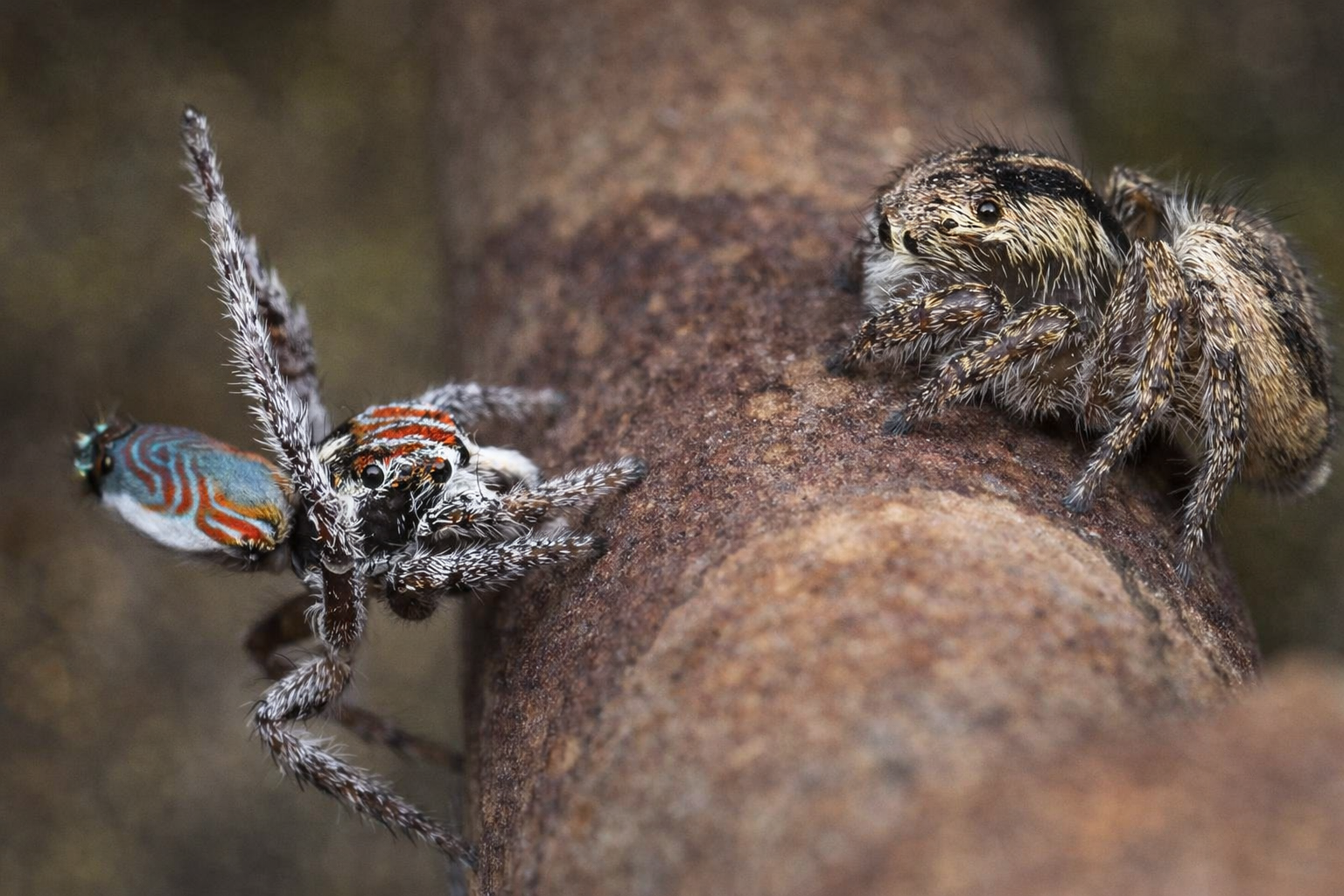
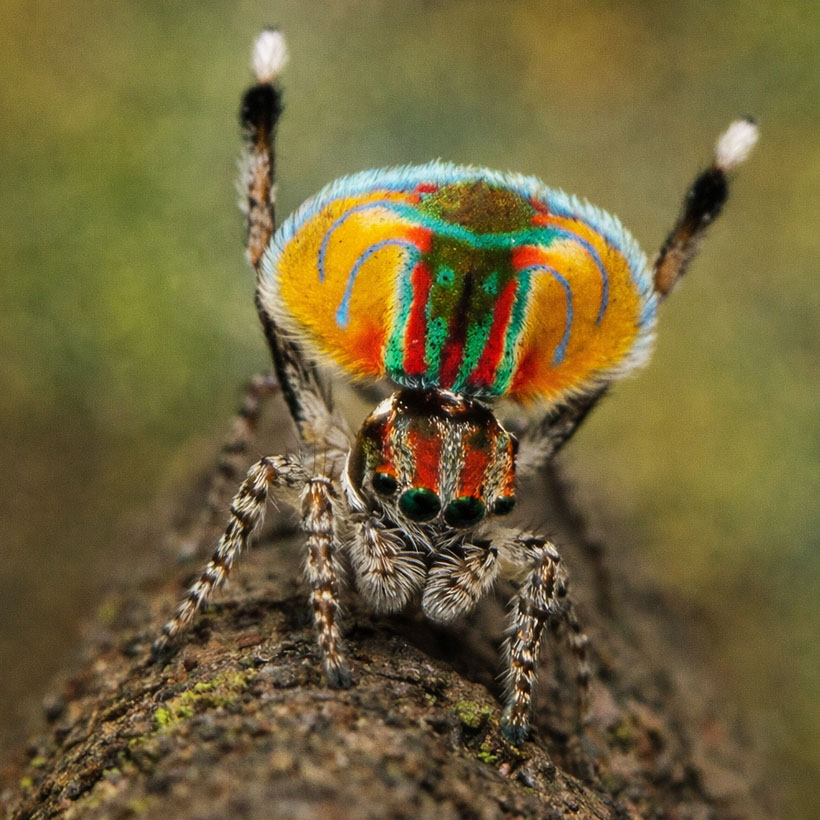
The individual dance movements differ depending on the species. Some jumping spiders only lift one pair of legs. Others present conspicuous pedipalps. Still others show colored knee joints or shiny body parts. The so-called peacock spiders, whose males erect colored abdominal segments and deliberately expose them to light, are particularly well-known.
The decisive factor here is not a single detail. Females react to the overall impression. How even is the process? How long does the male last? Does the rhythm remain stable? Research shows that energy expenditure plays a particularly important role. The dance becomes an honest performance test – a central element in jumping spider courtship behavior.
See and feel at the same time
What distinguishes jumping spiders from many other mating animals is the combination of visual signals and vibrations. While the male dances, it produces fine vibrations that spread across the ground. Wood, stone or earth become the transmission medium.
The female perceives these vibrations via sensory hairs on her legs. It sees the dance – and “hears” it at the same time. Certain movement phases are precisely coupled with certain vibration patterns. This multimodal communication is typical of jumping spiders’ courtship behavior.
This double protection is not a luxury. In natural habitats with changing light, wind movement and visual disturbances, it increases the chance of being understood.
A visual system as a basis
The visual dominance of jumping spiders is the foundation of this behavior. Their visual system is one of the most powerful among invertebrates. The large front eyes function like small telescopes. They provide a resolution that even many much larger animals cannot achieve.
Jumping spiders also have several smaller pairs of eyes that detect movements from all directions. As soon as something moves in their surroundings, they focus their main eyes on it. They only see color in the center of their field of vision – exactly where the dance is taking place.
The courtship dance is thus precisely tuned to the female’s perception. It utilizes her sensory strengths and circumvents her weaknesses. Evolution in concentrated form.
Habitats between forest and windowsill
Jumping spiders are found almost worldwide. They can be found in forests, meadows, rocky landscapes and increasingly also in human settlements. Window frames, house walls and balconies replace natural structures such as tree bark or stones.
The dance remains the same. Whether in the tropical undergrowth or at the flower pot on the terrace – the sequence follows a fixed biological program. For nature observers, this opens up a rare opportunity: highly complex behavior can be observed directly in everyday life.
Misconceptions about spiders
Spiders are still considered primitive or purely instinct-driven. Jumping spiders clearly contradict this image. Their behavior shows planning, adaptation and situation-dependent decisions. The dance is innate. But its execution varies depending on the distance, the female’s reaction and the environment.
A common mistake is to regard dance as a “cute gimmick”. In fact, it is the result of massive selection pressure. Dance is precise, purposeful and biologically necessary.
Significance for observation and terraristics
Jumping spiders also exhibit this behavior when kept. The prerequisites are structured surfaces, sufficient space and visual contact. Anyone keeping a jumping spider in a terrarium often experiences for the first time how active and alert these animals are.
The dance makes it clear that jumping spiders are not decorative pets. They react to light, movement and room structure. A near-natural design not only serves animal welfare, but also makes behavior visible and understandable.
A new look at the small things
Jumping spider courtship behavior is not a curious detail of nature. It is evidence of the extent to which evolution can shape behavior when perception, risk and reproduction come together. In an animal smaller than a fingernail, decisions that have been optimized over generations are condensed.
Those who observe jumping spiders do not see primitive reflexes. They see a system. Communication that is seen and felt. Signals that must be honest because deception does not work. A biological contract whose conditions are clear.
You don’t have to like them.
But once you have understood them, you will never see spiders as background noise again.
If you have any further questions, please leave them in the comments below the article.
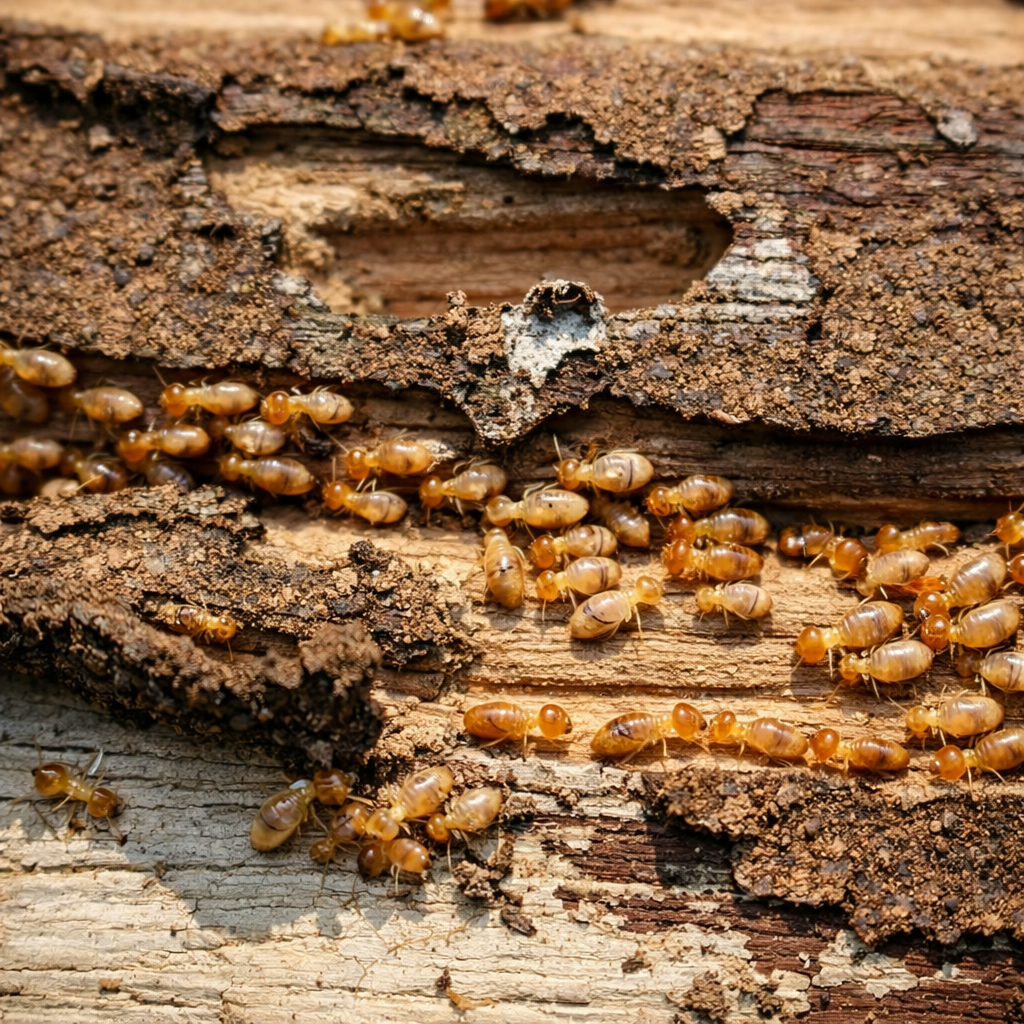
Termites are among the best-known insects of all. Their large colonies, complex colonies and impressive structures have always made them a popular subject of research. Cockroaches, on the other hand, are usually perceived quite differently. They are considered less spectacular and are often underestimated biologically.
All the more exciting is a finding that was only clearly formulated comparatively late in modern entomology: Termites and cockroaches are closely related – so closely that termites are now classified within the cockroach family
A reassessment on a genetic basis
In 2007 , researchers published extensive genetic studies that shed new light on the relationships between these insects. The results clearly showed that termites do not form an independent insect order, but have evolved from a cockroach-like lineage.
This reassessment was not a sudden break with earlier knowledge, but the result of more precise methods. While earlier classifications were based primarily on external characteristics and lifestyle, genetic analyses allowed a direct view of evolutionary origins for the first time.
The special way of life of termites
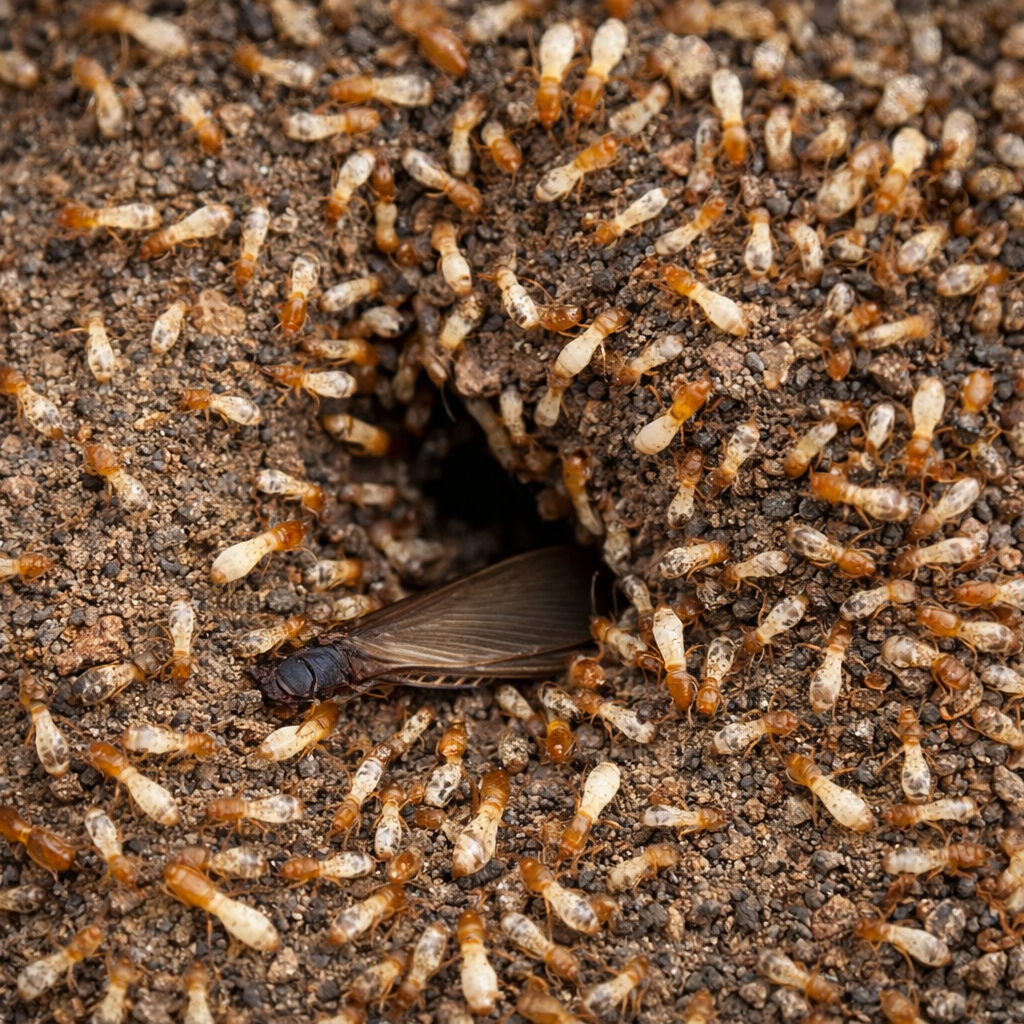
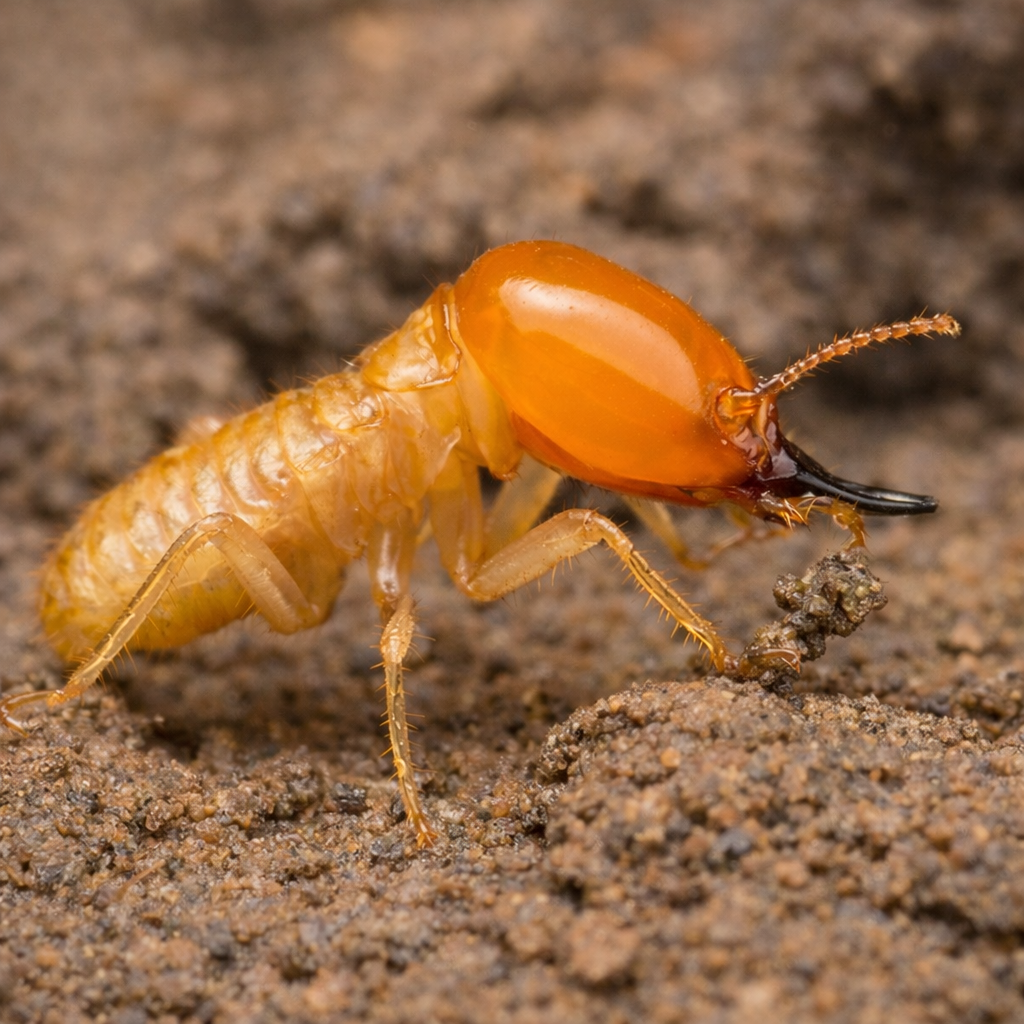
Termites live in highly organized communities. A colony consists of different castes that perform clearly defined tasks. Reproduction, nest building, foraging and defense are distributed among many individuals that act together as a functional unit.
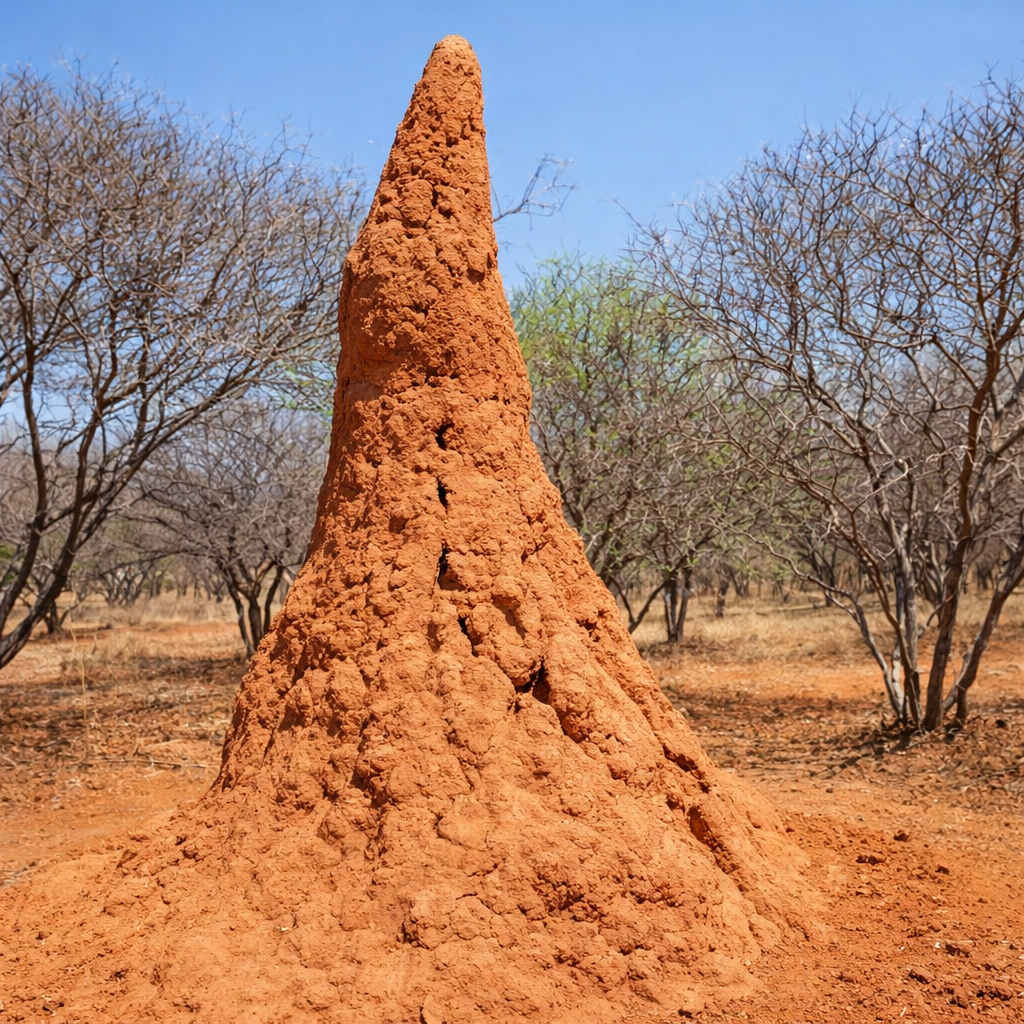
This way of life makes termites particularly successful. Individual animals are barely able to survive, but as a community they can maintain stable structures over long periods of time. Their burrows influence soils, microclimate and nutrient cycles and play a central ecological role in many regions.
Nutrition, symbiosis and cooperation
An essential part of the termites’ way of life is their diet. Most species feed on wood or plant material with a high cellulose content. Cellulose is difficult for animals to utilize, which is why termites are dependent on close cooperation with microorganisms.
These microorganisms live in the intestines of the termites and enable the breakdown of cellulose. Without this symbiosis, termites could not exist. Food exchange within the colony also ensures that the necessary microflora is passed on – another reason for the close social bond between the animals.
Transitions instead of contrasts
A closer look at cockroaches reveals that social organization is not a unique feature of termites, but occurs in various degrees within cockroaches. There are species that live permanently in groups, use common hiding places and actively protect their offspring. In some cockroaches, the young stay close to the mother for a longer period of time, while others already show forms of division of labor or coordinated foraging.
Termites are not outside this spectrum, but at the extreme end. Their highly complex states are not a completely new development, but the consistent continuation of social tendencies that are already present in cockroaches.
This transition is particularly evident in the species Mastotermes darwiniensis. It still has several characteristics that are otherwise known from cockroaches, such as a cockroach-like egg capsule (ootheca) and certain original structures in the body structure. At the same time, it already lives in organized colonies with a division of labour. It is particularly important for research because it shows how the highly social way of life of termites could gradually develop from a cockroach-like initial form – without an abrupt break, but through many small evolutionary intermediate steps.
Dictyoptera – a common ancestry
Cockroaches, termites and praying mantises are now classified together as Dictyoptera . This group shares basic anatomical and developmental characteristics. The differences in behavior and lifestyle are the result of different adaptations, not separate origins.
The classification of termites within the cockroach family helps to better understand these relationships. It shows how diverse a common blueprint can develop – from rather inconspicuous soil dwellers to complex state builders.
What this classification means
Today’s perspective does not change what termites are or do. Rather, it complements our understanding of their origins. Instead of isolated special cases, it shows how closely different insect groups are connected.
Biological systematics is not a rigid construct, but a tool that evolves with new findings. The history of termites and cockroaches is a good example of how research clarifies and expands existing knowledge – calmly, gradually and comprehensibly.
A look at familiar animals with new questions
If you look at termites and cockroaches together, a more differentiated picture of both groups emerges. One appears less alien, the other less simple.
This is precisely the appeal of this insight: it invites us to take a fresh look at familiar animals – not with a raised index finger, but with interest in the paths that evolution can take.
If you have any further questions, please leave them in the comments below the article.
Whether a tiny spiderling or an adult beauty – feeding your tarantula correctly will ensure a long, healthy life. Here you can find out what should be on the menu, when and how often – with tips straight from our range!
From hunting behavior to feeding animals: Understanding tarantulas correctly
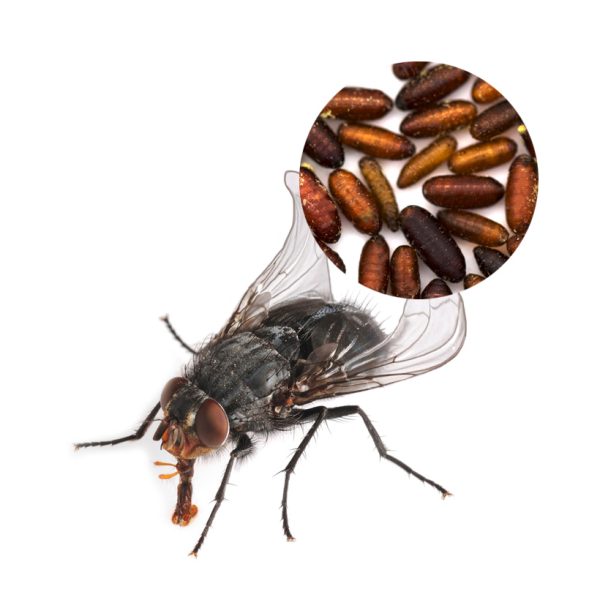
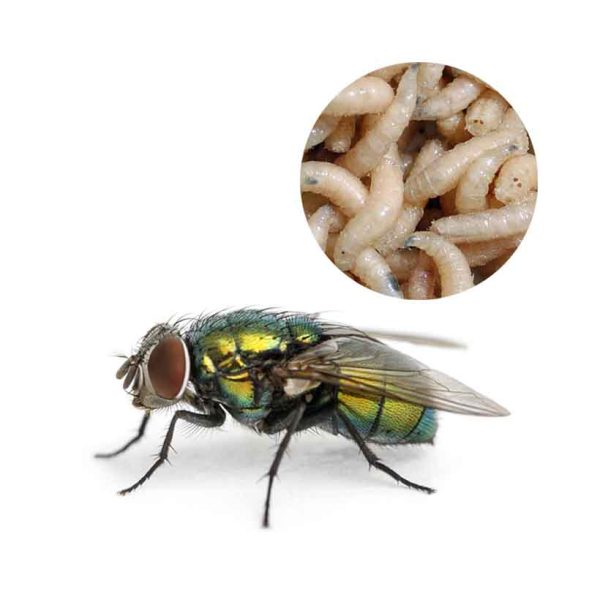
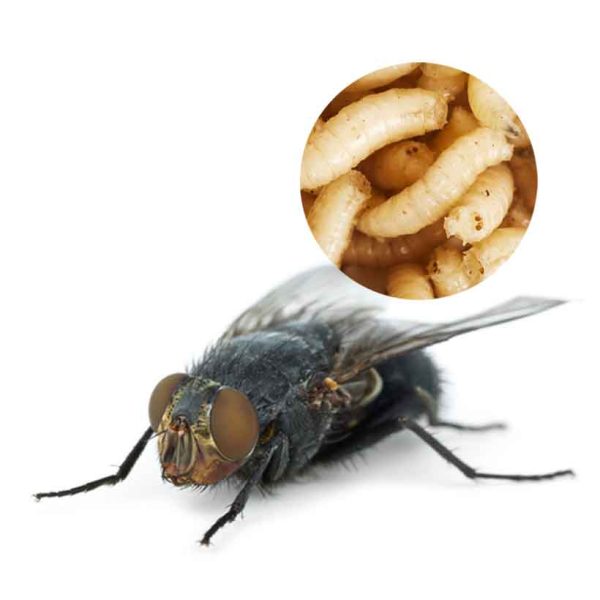
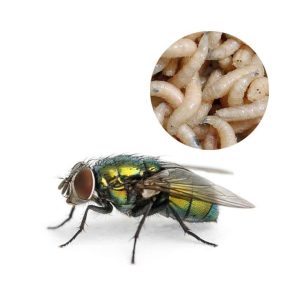
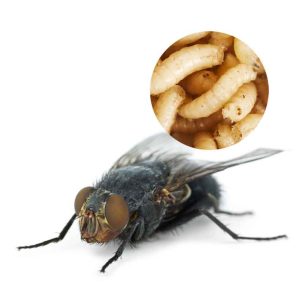
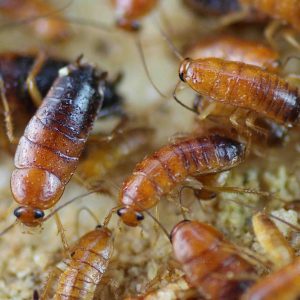
Before discussing specific food animals, quantities and feeding intervals, it is worth taking a look at the way tarantulas live. This is because it largely determines which food is actually perceived and successfully preyed upon. Basically, tarantulas can be roughly divided into three groups: arboreal, ground-dwelling and subterranean species. Tree-dwelling tarantulas mainly live on vertical structures such as bark or branches. They respond particularly well to food animals that fly or actively run upwards. Flying insects such as Drosophilas, gold flies, terflies and blowflies are particularly suitable here, as they optimally trigger the natural hunting behavior. Ground-dwelling tarantulas, on the other hand, hunt directly on the substrate or from their hiding places. Food animals that move mainly on the ground and do not immediately move upwards are ideal for them. Oven fish and crickets have proven to be particularly reliable here. Tarantulas that live underground spend a large part of their lives in burrows they have dug themselves. They usually leave these at dusk or at night to hunt prey. It therefore makes sense to use food animals that run into the burrows, such as cockroaches, which move quietly, close to the ground and at the appropriate times of day.
If you take these fundamental differences into account, you create the perfect basis for successful, low-stress feeding – regardless of whether it’s a question of “how often”, “with what” or “when”.
Feeding small tarantulas – mini but hungry
Newly hatched tarantula babies, so-called spiderlings, need to be fed regularly, but in very small and easily controllable portions. Spiderlings should be fed two to three times a week during this phase. Regular, small meals support even growth and help to avoid moulting problems without overtaxing the animals.
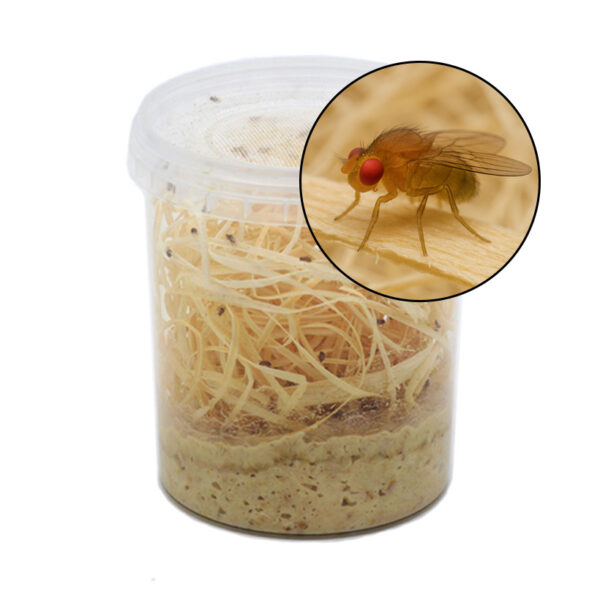
Small fruit flies (Drosophila melanogaster) are ideal from a body length of around 2 mm. They are active enough to trigger the hunting instinct, but pose no danger to the sensitive young animals.
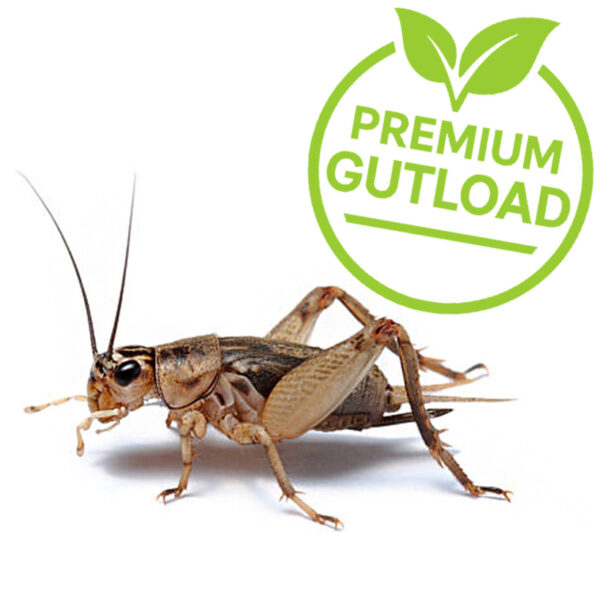
If the spiderlings continue to grow and reach a size of around 2-10 mm, large fruit flies (Drosophila hydei) or crickets XS can be offered without any problems.
From a body length of around 10-20 mm, cricket S, terfly or oven fish are a very good choice, as they provide more substance and can still be easily overwhelmed.
A tried and tested practical tip: Place a tiny piece of apple in the terrarium when feeding fruit flies, terfly, oven fish or crickets. This keeps the food animals vital and active for longer, which makes hunting easier and at the same time supports a consistently good supply of nutrients for the spiderlings – ideal for healthy growth in the early stages of life.
As soon as tarantulas leave the pure spiderling phase behind them, an important growth period begins. During this phase, the need for nutrients increases and at the same time the animals become more robust and much more confident when hunting. Now is the right time to diversify the food and gradually adjust the size of the prey. During this growth phase, it is advisable to feed the tarantulas about twice a week. This rhythm supports even growth and ensures sufficient energy between moults without unnecessarily overfeeding the animals.
With a body length of around 20-30 mm, Argentine wood cockroaches in size S, gold flies, blow flies and crickets in size M have proven effective. These food animals already provide significantly more substance without overtaxing the spider. Their movement reliably triggers the hunting reflex and supports active, healthy growth.
If the tarantulas reach a size of 30-40 mm, the portions can be increased further. In this range, Argentine forest cockroaches in size M and crickets in size L are very suitable. The animals are now strong enough to safely overpower larger prey, but still benefit from switching between different food animals.
Variety is particularly important during this growth phase. Different food animals provide different nutrient profiles and promote even development. At the same time, varying prey species makes it easy to observe how active and ready to feed the tarantula is – a valuable indication of its general state of health.
Tarantulas are considered fully-grown from a body length of around 40 mm. In this phase, growth slows down considerably, the metabolism works more slowly and the need for food decreases noticeably. Frequent meals are now less important than suitable, nutritious food animals.
With a size of 40-50 mm, Argentine wood cockroaches in size L and crickets L are very suitable. They provide sufficient energy and are easily overpowered by strong animals. From a body length of 50 mm and more, Argentine cockroaches in sizeXL can be fed. These represent a substantial, species-appropriate prey and are well suited to the natural hunting behavior of large tarantulas.
At this stage, it is perfectly sufficient to feed adult tarantulas only once a week with just one food animal. Longer feeding breaks are completely normal and no cause for concern. It is more important to keep an eye on the condition of the body. A well-proportioned abdomen shows that the spider is optimally fed. Excessive feeding should be avoided as it can lead to a bulging abdomen and thus to an increased risk of injury.
Patience pays off, especially with large tarantulas. Less food, used in a targeted manner, corresponds to their natural rhythm and ensures long-lived, healthy animals.
Finally, one point is particularly important, which is often underestimated in practice: Food animals are not always the same size, even if they are assigned to the same size category. Particularly with crickets or cockroaches, there can be significant differences in size after moulting. A freshly molted animal is often softer, lighter in color and sometimes noticeably larger than expected. You should therefore not rely solely on the size information, but always briefly compare the food animal with the tarantula before feeding it.
The tried and tested rule of thumb is:
The feeder should be about a third of the tarantula’s body length.
This size is large enough to provide nutrients and trigger the hunting instinct, but small enough not to pose a danger to the spider. Food animals that are too large can cause stress or, in the worst case, even cause injury, while prey that is too small is often ignored.
If you keep a close eye on your tarantulas, take their way of life into account and adjust the size of their food individually, you will always be on the safe side. In the end, it is not rigid tables but a sense of proportion, experience and calmness that make for successful and species-appropriate feeding.
Important note on moulting – remove food animals in good time
Moulting is a particularly sensitive moment in the life of a tarantula. During this phase, the animal is extremely vulnerable. This is exactly when food animals can become a real danger. Crickets and cockroaches in particular should be consistently removed from the terrarium before a moult. These food animals are not only active, but also opportunistic and can nibble on a defenceless tarantula, eat it or injure it – in the worst case with a fatal outcome.
Other food animals such as fruit flies or oven fish are not considered directly dangerous, but they can still disturb the spider by walking over it or causing it unnecessary stress.
As a general rule, therefore, as soon as a moult is imminent or a spider consistently refuses food, all food animals should be removed from the terrarium. Even after moulting, you should wait a few days until the shell has completely hardened before feeding again. Attention and timely action are crucial here and contribute significantly to a safe and successful moult.
If you have any further questions, please leave them in the comments below the article.
Cockroaches have an image problem. Hardly any other animal is so reflexively rejected. The word alone is often enough to trigger disgust. Many people think of nocturnal rustling, of kitchens, of something you’d rather not take a closer look at. From a biological point of view, this is absurd – and this is precisely the real problem.
Because what we perceive as a “cockroach” in everyday life is not the rule, but an extreme exception.
The cockroach we know is almost non-existent
Around 7,000 cockroach species are known worldwide. Of these, only a handful live permanently in close proximity to humans. Depending on the definition, there are around ten species that are regularly found in homes, cellars or kitchens. All the others – i.e. over 99% – have nothing to do with our everyday lives.
They live in rainforests, in layers of leaves, under bark, in the ground, in caves or in treetops. Many of them spend their entire lives in places where no human has ever had a kitchen.
And yet they all have the same name: Cockroach.
We confuse an exception with an entire group of animals
Our image of cockroaches is based almost exclusively on the species that have adapted to humans. These few cultural successors are extremely successful in using our buildings. Warm, dry, available all year round – for them, humans are not an enemy, but an ecological niche.
The problem is that we automatically transfer everything we think about these few species to thousands of others.
It’s like judging all birds by pigeons in train stations.
Cockroaches are not gray shadowy creatures
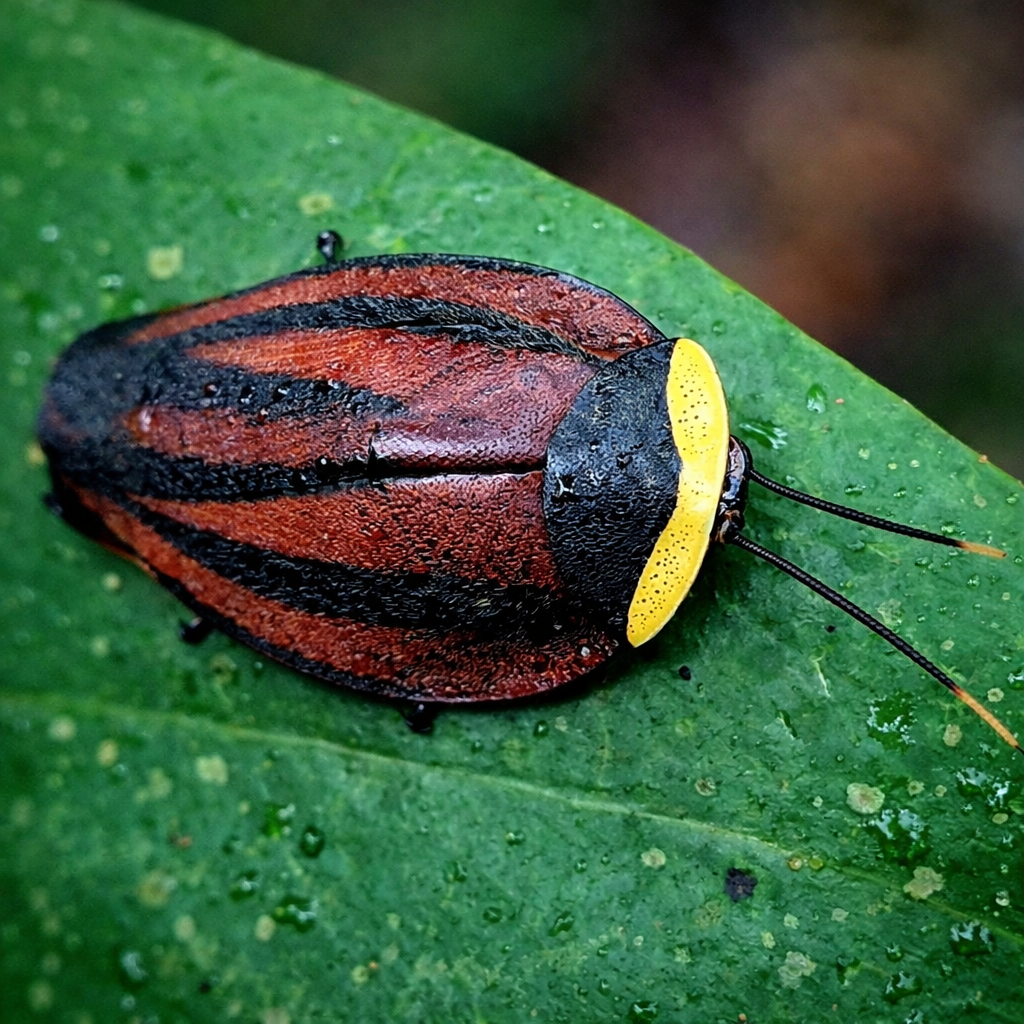
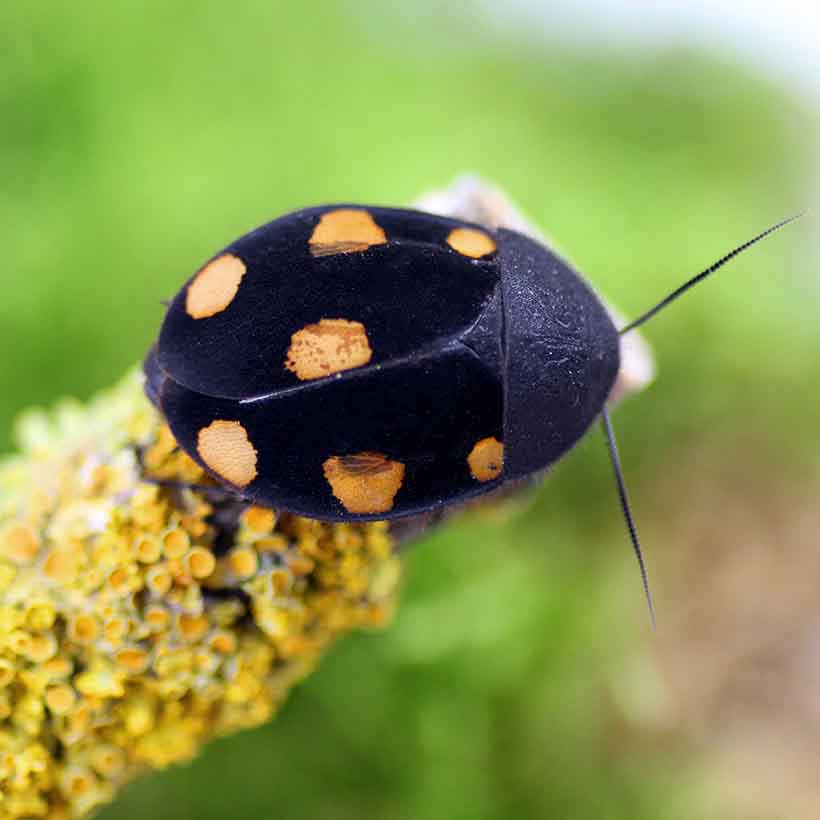
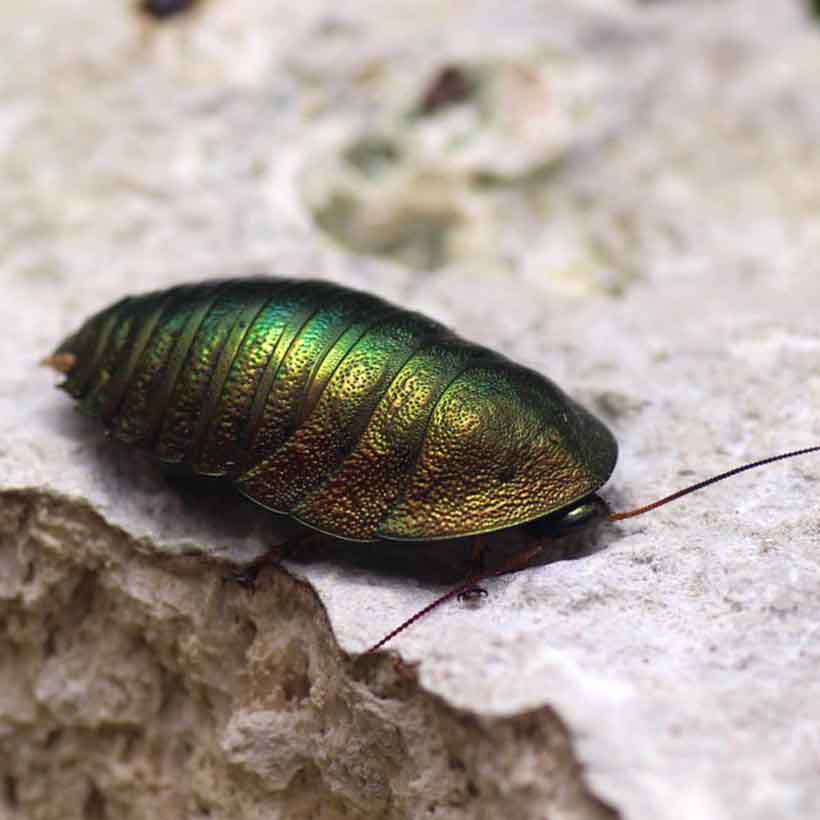
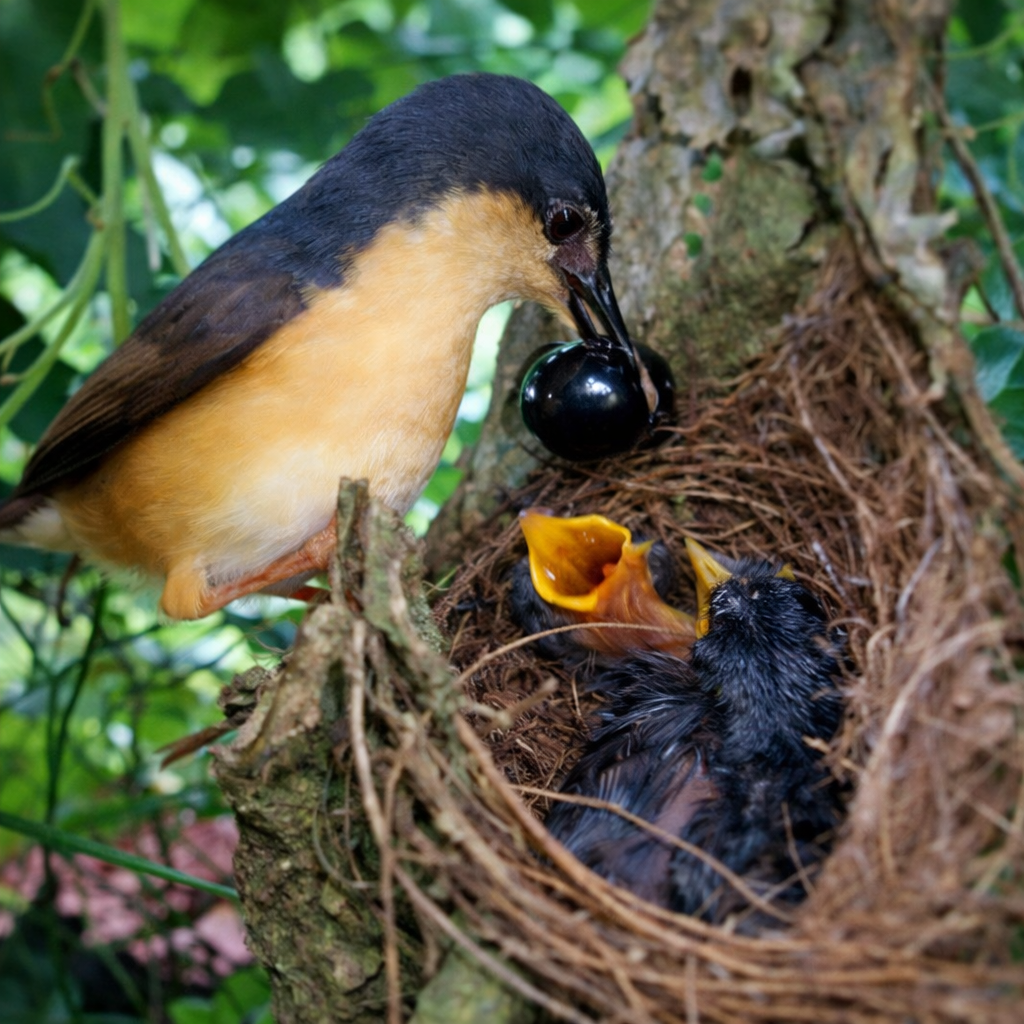
Away from our homes, cockroaches look completely different. There are species with a metallic sheen, with bright green or reddish colors, with striking patterns that are more reminiscent of beetles than what we associate with cockroaches. Some are barely a centimeter in size, others are surprisingly massive.
Many of these species are slow, calm and easily visible. They do not flee in panic, they do not scurry through crevices. They live openly in their habitat – simply where we never look.
The fact that we don’t know them is not down to them. It is because of us.
Why cockroaches are ecologically important – and we ignore it
Cockroaches are among the most important decomposers in many habitats. They process dead plant material, fungi and organic residues. In tropical ecosystems, they make up a significant proportion of animal biomass and are a key food source for reptiles, birds and other animals.
Without cockroaches, material cycles would run more slowly. Forests would look different.
That’s not an exaggeration – it’s biology.
The bad reputation is not a biological fact
Cockroaches are not “dirty”. They are not “disease-carrying per se”. Nor are they aggressive or dangerous. Their bad reputation is the result of proximity, not characteristics. Animals that live where we live are judged more quickly – and judged more harshly.
The thousands of species that live quietly in the forest and do their ecological work do not appear in this picture. They do not fit into the narrative.
Why it’s worth taking a closer look
Anyone who begins to see cockroaches not just as a nuisance, but as a group of animals, quickly discovers something else: an enormous diversity, sophisticated adaptations and an evolutionary history that begins long before that of humans.
Cockroaches are not a marginal phenomenon of nature. They are a cornerstone.
And perhaps that is precisely the reason why they are so easily overlooked – and so quickly condemned.
Why this view is important
Educating people about animals such as cockroaches is not a gimmick. It changes our perception – and therefore our view of nature as a whole. Anyone who understands how an animal lives, why it exists and what role it plays often loses some of their fear. Disgust gives way to curiosity, defense becomes understanding. Not because cockroaches suddenly become “likeable”, but because it becomes clear that nature does not function according to whether it meets our aesthetic expectations.
Those who begin to see cockroaches differently usually also change their view of many other animals. On those that live in obscurity, that have no lobby and are rarely considered worthy of protection. This is precisely where a deeper biological understanding emerges: if even an animal that is rejected in this way is meaningful, complex and indispensable, then this applies all the more to the rest of the diversity.
And it is at this point that real fascination for biology begins – not as a collection of facts, but as a new way of looking at the world.
If you have any further questions, please leave them in the comments below the article.
Finding tarantulas for beginners can seem quite overwhelming at first glance. After all, there are countless species, colors and characters – but not all of them are suitable for beginners. If you’re new to the fascinating world of these animals, you’ll want to choose a species that is easy to keep, has a calm temperament and doesn’t throw you in at the deep end straight away. That’s why we at Insektenliebe have put together five recommended tarantulas for beginners to help you get off to a relaxed and safe start.
1. brachypelma hamorii – the classic for beginners
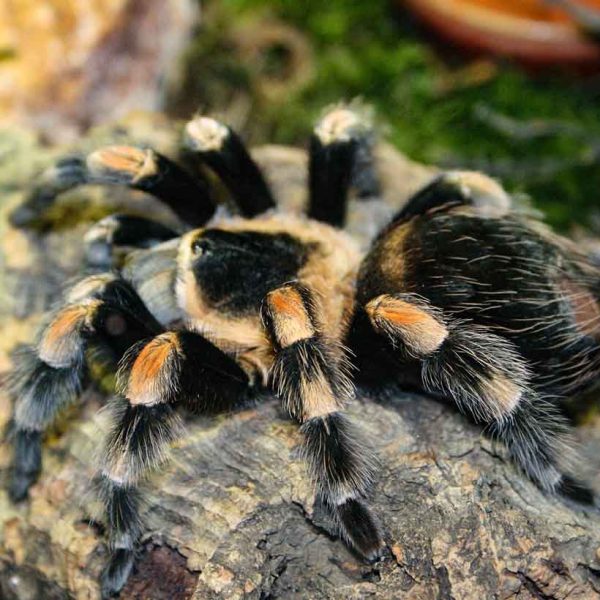
If there is one tarantula that almost everyone knows, it is Brachypelma hamorii formerly Brachypelma smithi – the red-kneed tarantula. With its contrasting orange and black legs, it is not only a real eye-catcher, but also a prime example of calm and serenity.
She is not very jumpy, rarely bombs and moves at a rather leisurely pace. Perfect for anyone who wants to approach the subject carefully. Care is also uncomplicated: A simply furnished terrarium with forest humus and desert sand, a cave and a drinking bowl is completely sufficient. Of course, you can also get a little more creative.
Why it is ideal for beginners: peaceful, long-lived, easy to care for – and simply beautiful.
Formerly known as Brachypelma albopilosum, this species has absolutely earned its reputation as “the friendliest tarantula in the world”. Its slightly tousled, fluffy appearance has earned it the nickname “Curly Hair Tarantula” – and its calm nature makes it a favorite of many keepers.
It likes to dig, eats well and often shows itself in the terrarium. It is also uncomplicated when it comes to terrarium design: a little loose substrate, a hiding place, occasionally some foliage – that’s it.
Why it is ideal for beginners: very robust, active and easy to care for – ideal for observation.
3. tliltocatl vagans – temperamental but reliable
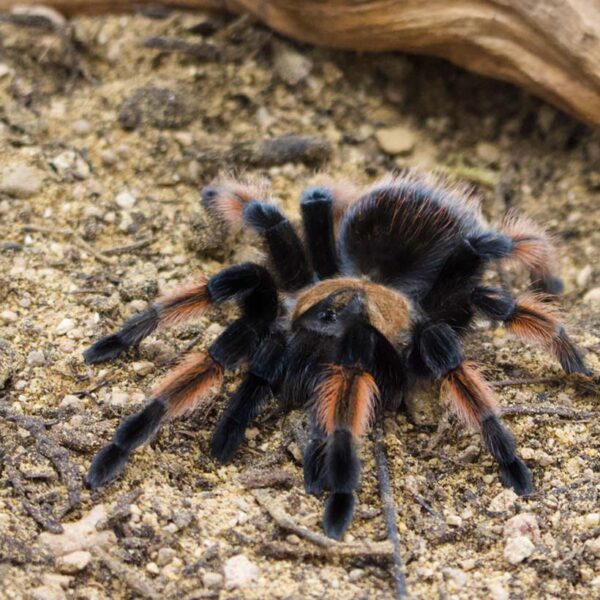
The Mexican black and red tarantula is perhaps a tad more active than its conspecifics – but that’s exactly what makes it so exciting. It is quite adaptable, eats well, grows more quickly and likes to show itself off. This makes it a popular beginner species for people who like a bit more action.
It doesn’t need any special requirements for keeping: a dry to slightly damp setup with plenty of hiding places is sufficient. It likes to dig and actively changes its environment – so you will often discover new small “construction sites” in the terrarium.
Why it is ideal for beginners: for active observers who are still looking for a species that is easy to handle.
4. brachypelma emilia – gentle, pretty and elegant
This tarantula is a real insider tip for beginners looking for a particularly beautiful species. Brachypelma emilia impresses with a warm play of orange, black and brown colors – and a very calm temperament.
She is hardly prone to nervousness, eats reliably and shows herself regularly. Their slow growth ensures that they can be kept for many years. And care is also uncomplicated.
Why it is ideal for beginners: particularly pretty, gentle in nature and long-lasting.
5. caribena versicolor – for the brave with a heart
Admittedly: This species is not quite as robust as the others – but if you dare, you will get one of the most colorful tarantulas ever! Even as a young animal it is metallic blue, later it shimmers in purple, green and red. Caribena versicolor is a tree-dwelling species that needs slightly higher humidity and good ventilation.
It is a little more sensitive, but with a well-equipped terrarium with a heat lamp, a little sensitivity and patience, you will be rewarded with a real gem.
Why it is ideal for beginners: a visual highlight with impressive behavior – for those who want a little more.
Conclusion – start your hobby with heart and knowledge
The first steps into keeping tarantulas are exciting – but with the right species at your side, your start will not only be easy, but also really beautiful. We at Insektenliebe will help you: with information, accessories, lovingly selected animals – and honest advice.
If you still have questions or are unsure which species is right for you, write to us in the comments below this article. Together we’ll find your first tarantula.
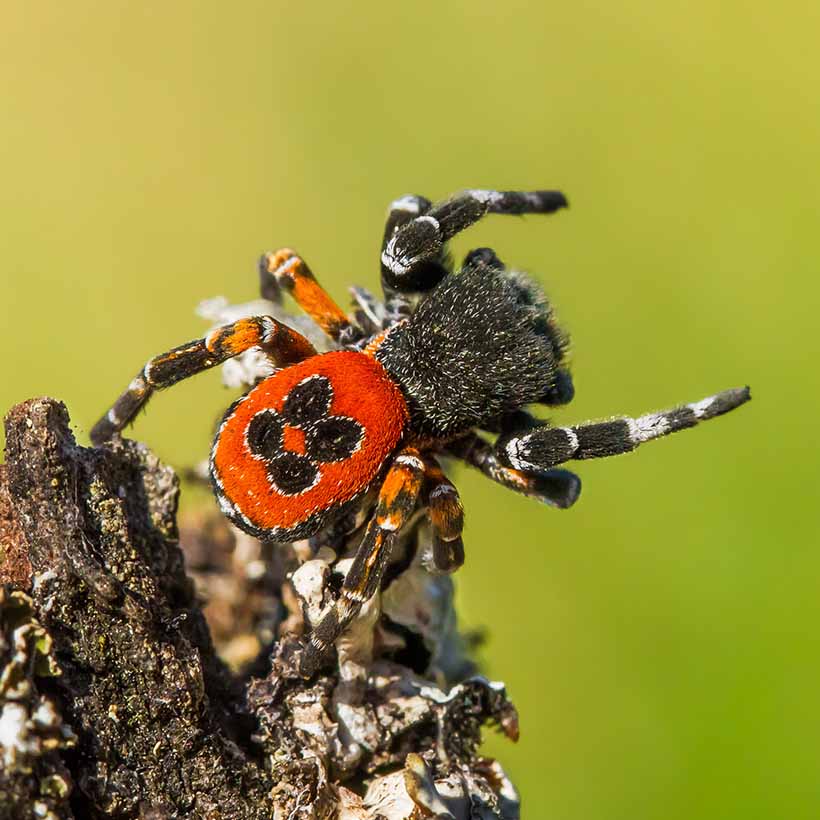
Some spiders fascinate us with their size. Others by their speed. Eresus species, on the other hand, are fascinating because they seem to ignore all the “rules” of the spider world. Anyone who takes a closer look at these animals soon realizes that they are not just about beautiful colors, but about a concept of life that is extreme, strange and almost emotional in many respects.
Let’s start with the obvious: the colors. The males of many Eresus species look as if they have climbed straight out of a warning sign. Bright red, deep black, high-contrast dots – an appearance that you would hardly expect from European spiders. And this is no coincidence. This coloration is aposematic, i.e. a warning coloration. Eresus males signal very clearly: “I am not easy prey.” For many keepers, this is precisely the first point of contact – these spiders do not look like “classic” eight-legged creatures, but almost like small works of art.
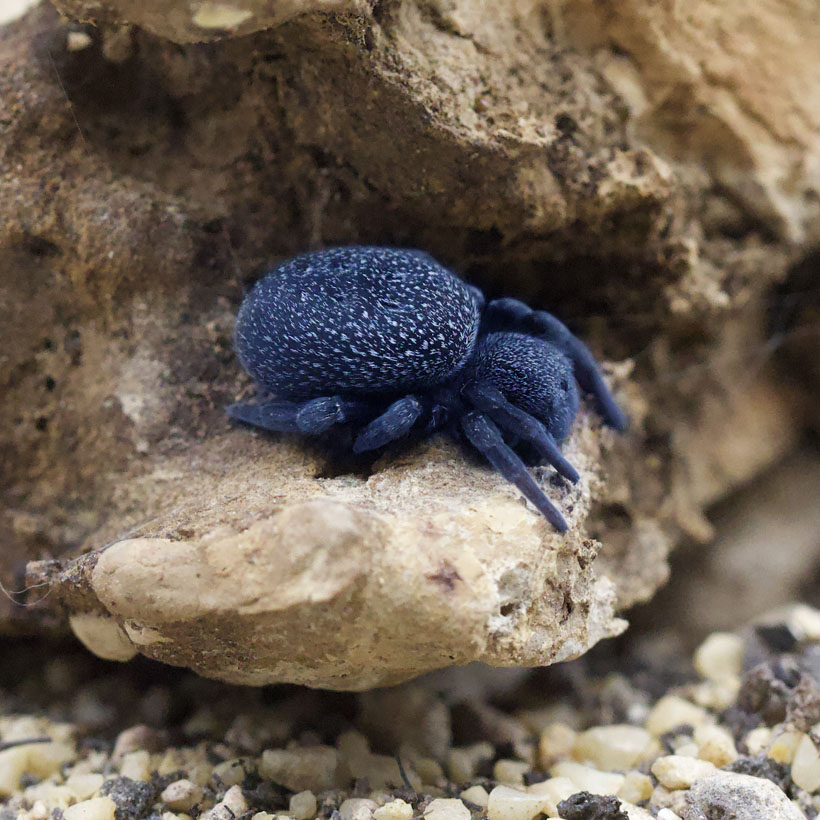
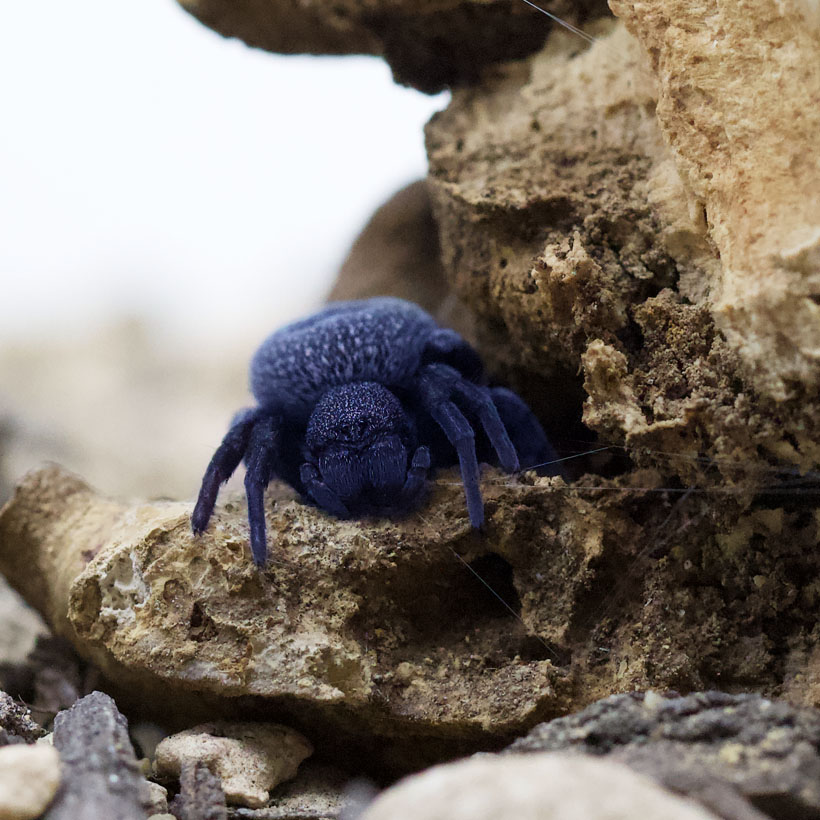
But it gets really exciting when you look at their behavior. Eresus are not restless hunters, not constantly visible terrarium inhabitants. They live secluded lives in stable living tubes, which they line with webbing and often camouflage with plant material or substrate. This “home” is not easily changed – it is the center of their lives. If you keep Eresus, you will see less action, but more structure, planning and consistency. This is exactly what makes them so appealing to many enthusiasts.
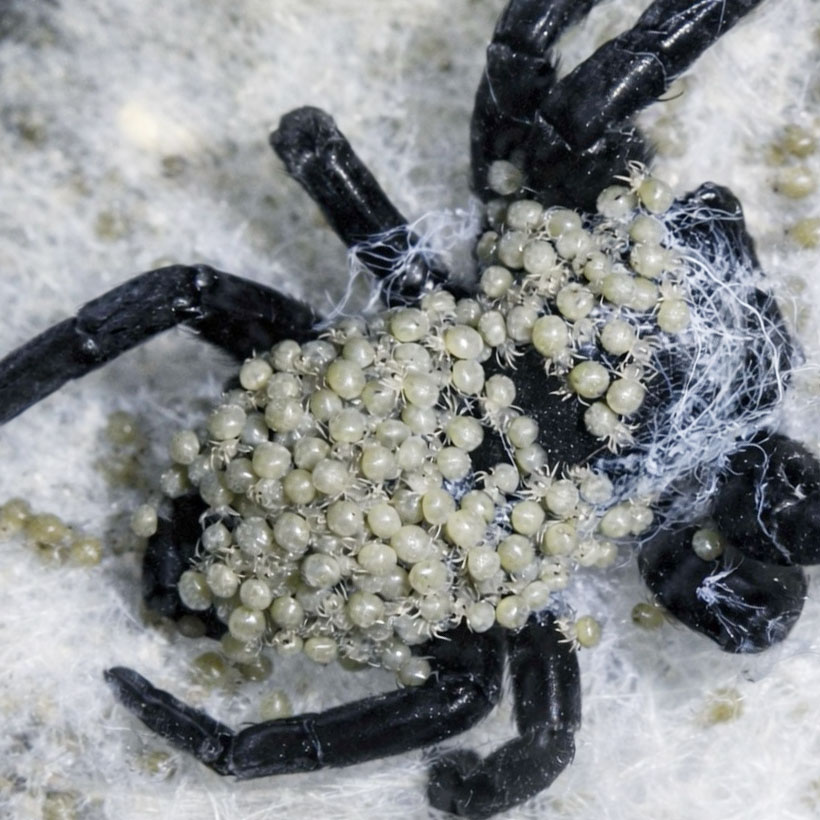
Reproductive behavior is an absolutely exceptional case in the spider world. After mating, the female does not simply remain “functional”, but invests herself completely in her offspring. The young animals hatch protected in the living tube – and then something happens that often makes even experienced terrarium keepers gulp: The mother is gradually consumed by her own offspring. Not an accident, not stressful behavior, but an evolutionarily established strategy. The mother’s body serves as the first, vital source of food. Radical? Yes. Effective? Absolutely. And biologically speaking, a fascinating example of maximum brood care.
The young animals themselves also behave unusually. Instead of dispersing immediately, they initially stay together, share the web and grow up together. This almost social behavior is a real rarity among spiders and also makes Eresus highly interesting from a breeding perspective. Anyone who follows these animals for any length of time soon realizes that they are not dealing with “throwaway biology”, but with a well thought-out life strategy.
Another detail that makes Eresus even more unusual is a behavior that many owners only notice on closer observation – or only once they have experienced it: Eresus warn before they bite. And not with threatening gestures, but with subtle, sometimes clearly perceptible vibrations.
Shortly before an Eresus actually grabs, the animal often begins to move its body minimally but rhythmically. These vibrations are transmitted via the substrate and the web and are not a random product of stress or breathing. Rather, it is a consciously used signal. In nature, it most likely serves to deter predators or troublemakers without having to invest energy or risk in a bite. A kind of last “better go away” before things get serious.
This behavior can be observed surprisingly well in the terrarium. If you get too close to the living tube with tweezers or when moving it, you sometimes notice that the spider suddenly “comes to life” – not frantically, not in panic, but in a controlled manner. The legs often remain in position, the body appears tense, and then this fine trembling begins. For experienced keepers, this is a clear sign: Now it is communicating, not attacking.
The exciting thing about this is that Eresus demonstrate a form of escalation control that is rarely seen so clearly in spiders. They don’t bite reflexively, they don’t blindly shoot forward. They warn. And that fits perfectly with their entire lifestyle: energy-efficient, deliberate, uncompromising only when it is really necessary.
For many people, this detail is a key moment. It takes some of the myth of the “unpredictable spider” away from Eresus and replaces it with respect. Anyone who reads and understands these animals quickly realizes that they are not aggressive – but extremely clear in their communication. And that is what makes them not only biologically fascinating, but also so special as terrarium animals.
In plain language, this means that Eresus are not impulse buys. They are animals for people who want to take a closer look, read and understand. But this is precisely where their enormous potential lies. Once you get involved with this species, you often develop a strong bond – not because of their constant activity, but because of the story these spiders tell. Of patience, sacrifice and evolutionary consistency.
Anyone who keeps this species knows that spiders can be more than just “moving decoration”. They are pure biology, uncompromising and fascinatingly honest. And that’s exactly why Eresus stay in your head – long after you’ve seen them for the first time.
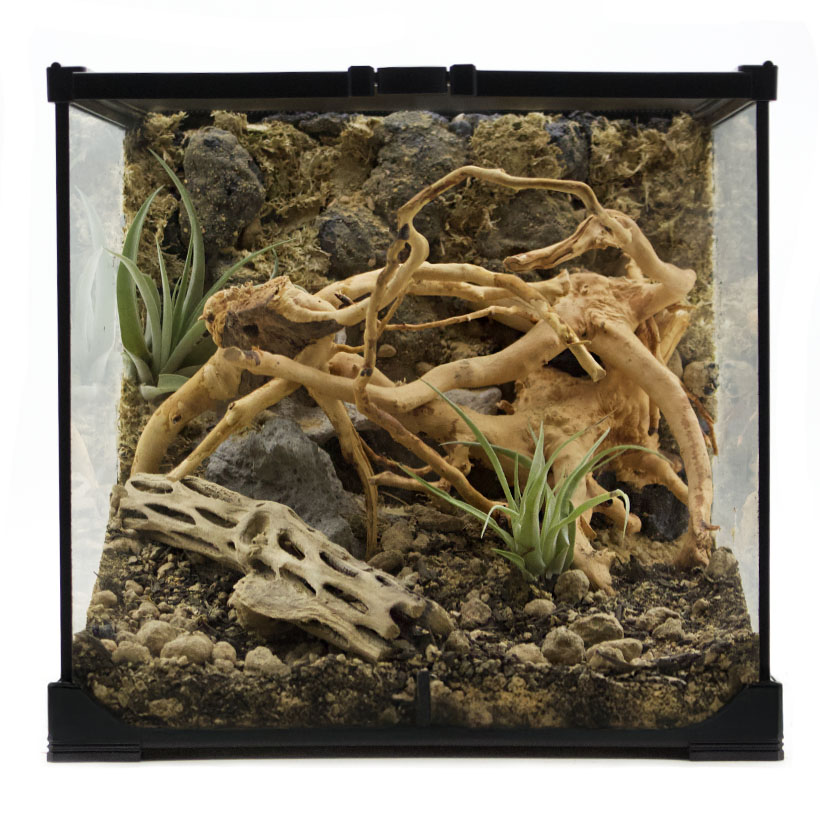
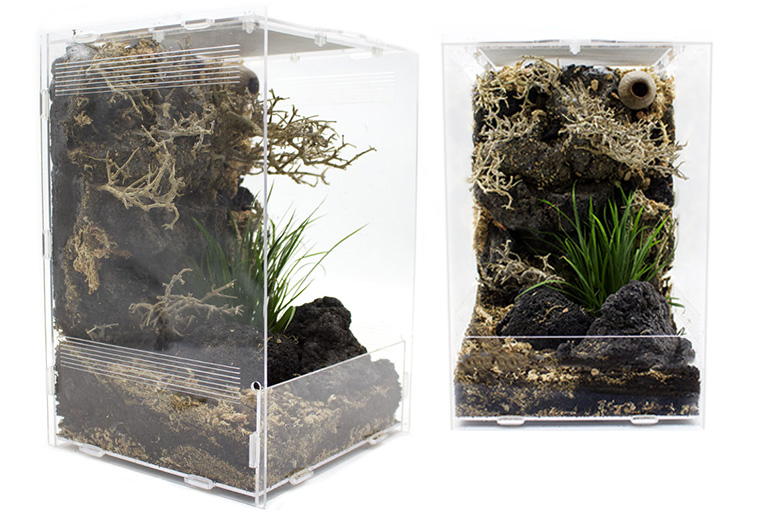
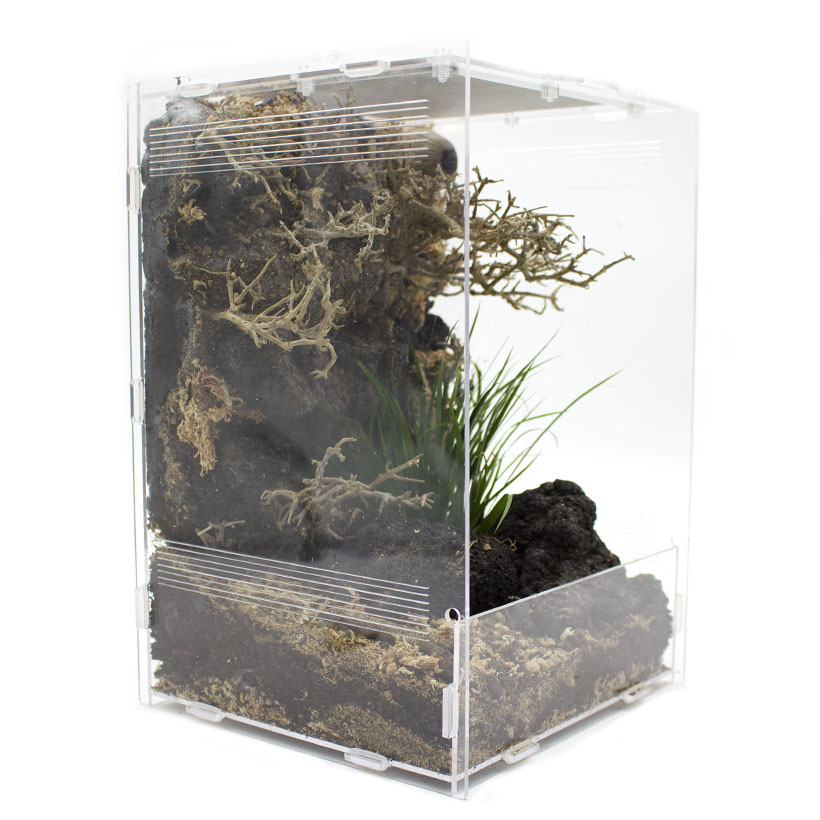
Would you like to create a beautiful home for your favorite member of the Brachypelma group? Then you’ve come to the right place! Using one of our own setups, we’ll show you step by step how you can build a stable, natural and safe terrarium with simple means. Whether Brachypelma hamorii, vagans, auratum or albiceps – these instructions are suitable for all species of this genus. All the materials used can of course be found in our store – tested, tried and tested and selected with a lot of Insektenliebe.
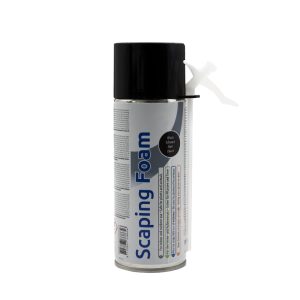
Step 1: Designing the back wall with modeling foam and lava stone in the Insektenliebe terrarium
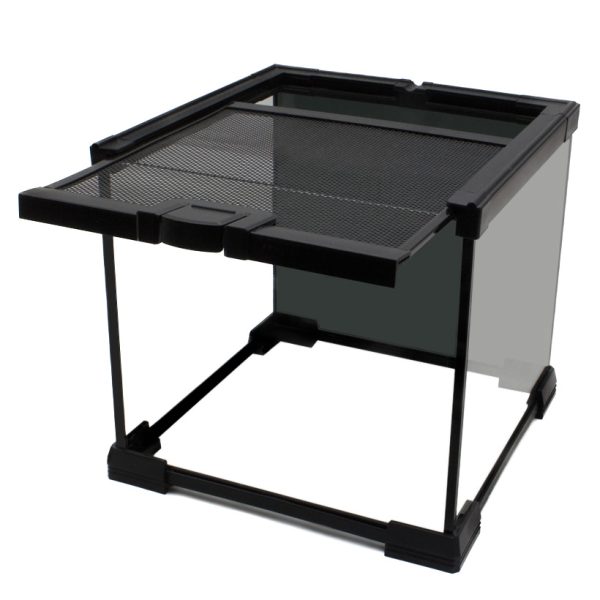
Before you start with the substrate, the construction of your Brachypelma terrarium begins with the back wall – because if you fill in the substrate first, you will quickly get in your own way when modeling. For our example, we are using an Insektenliebe terrarium measuring 30 × 30 × 30 cm. This size is ideal for many species of the genus Brachypelma, such as B. hamorii, B. vagans, B. albiceps or B. auratum.
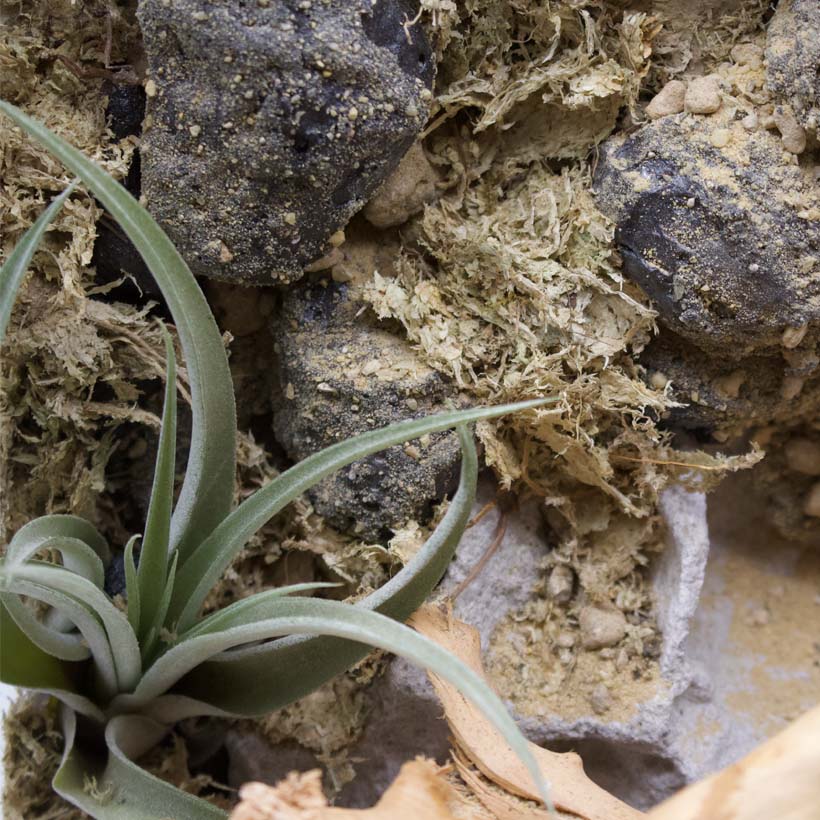
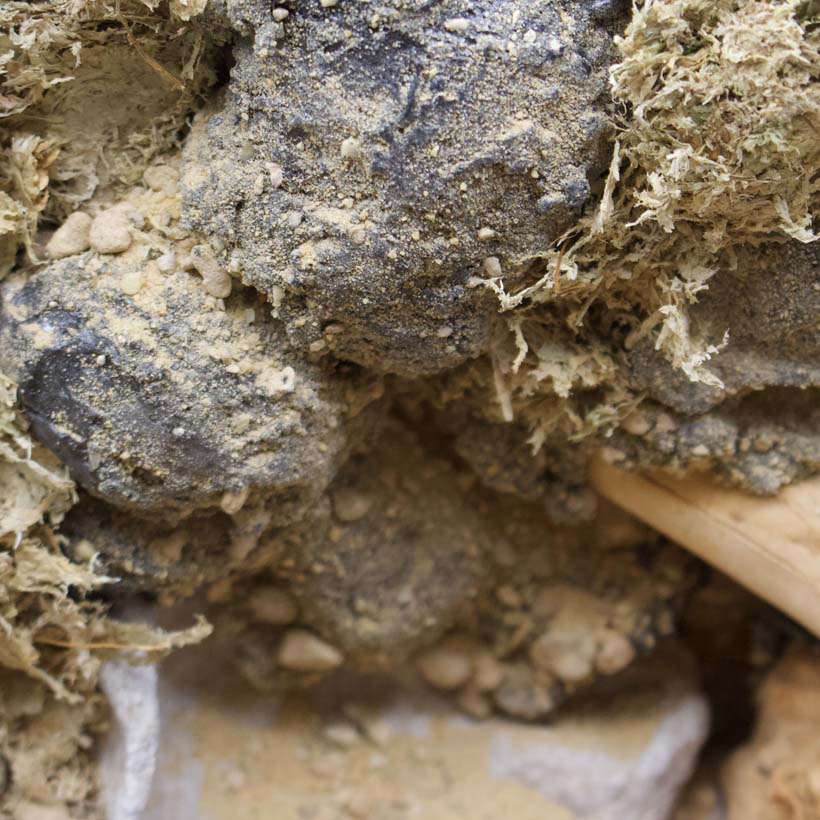
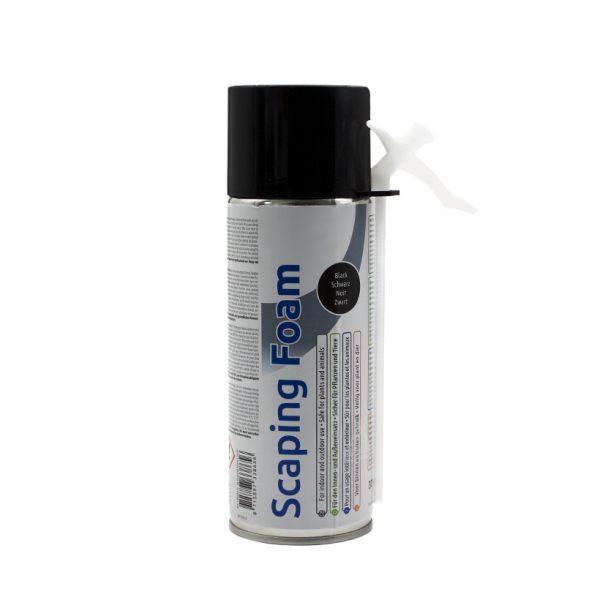
We create the back wall with modeling foam, which is sprayed on directly from the can. It is worth pressing the nozzle into the foam surface from time to time and then pressing it down again – this creates natural-looking ridges that later look like small rock structures or earth outcrops. These irregular shapes not only create visual depth, but also provide orientation for the animal in the terrarium.
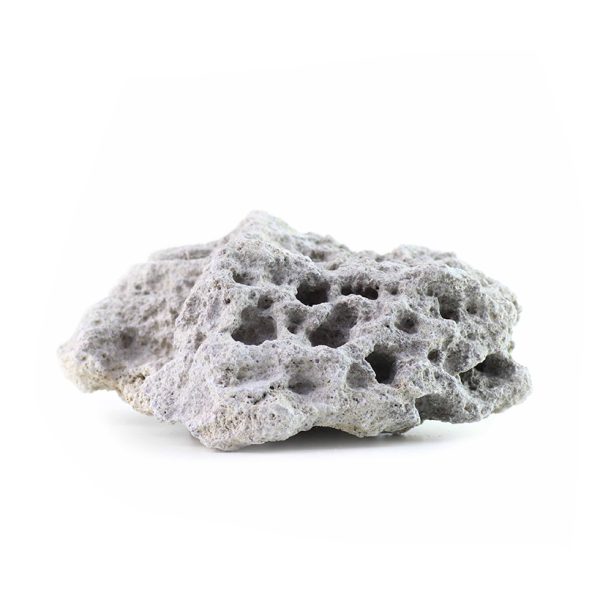
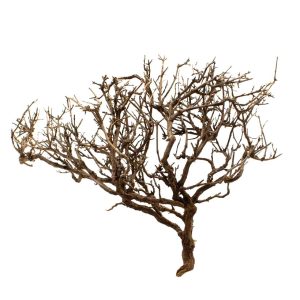
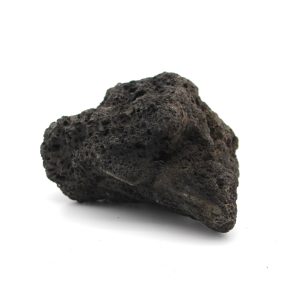
A special highlight: a gray lava stone is integrated into the wet foam and later used for a natural cave. The stone is incorporated in such a way that it is half exposed, covered with modeling foam and blends harmoniously into the back wall. This combination creates a stable, visually appealing hiding place that is very likely to be accepted by your tarantula.
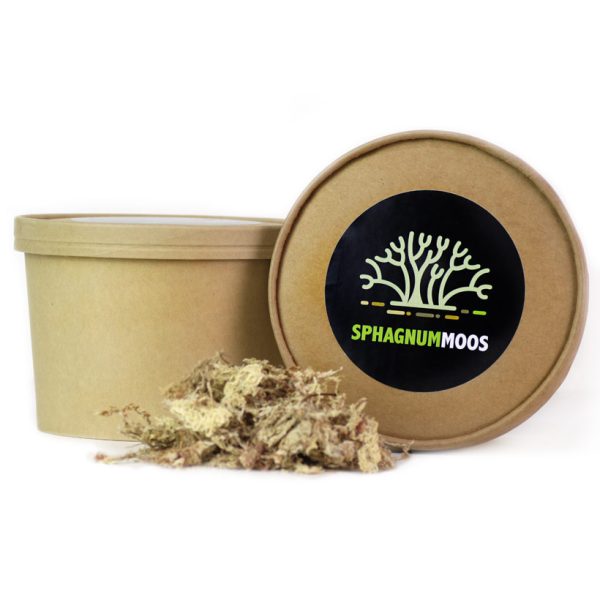
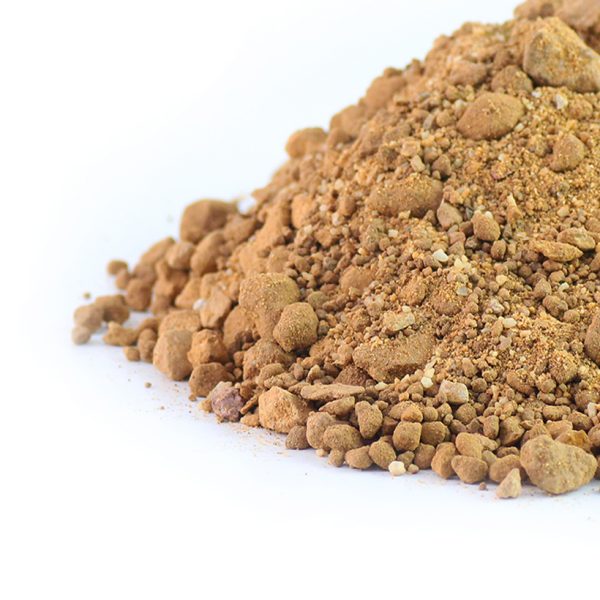
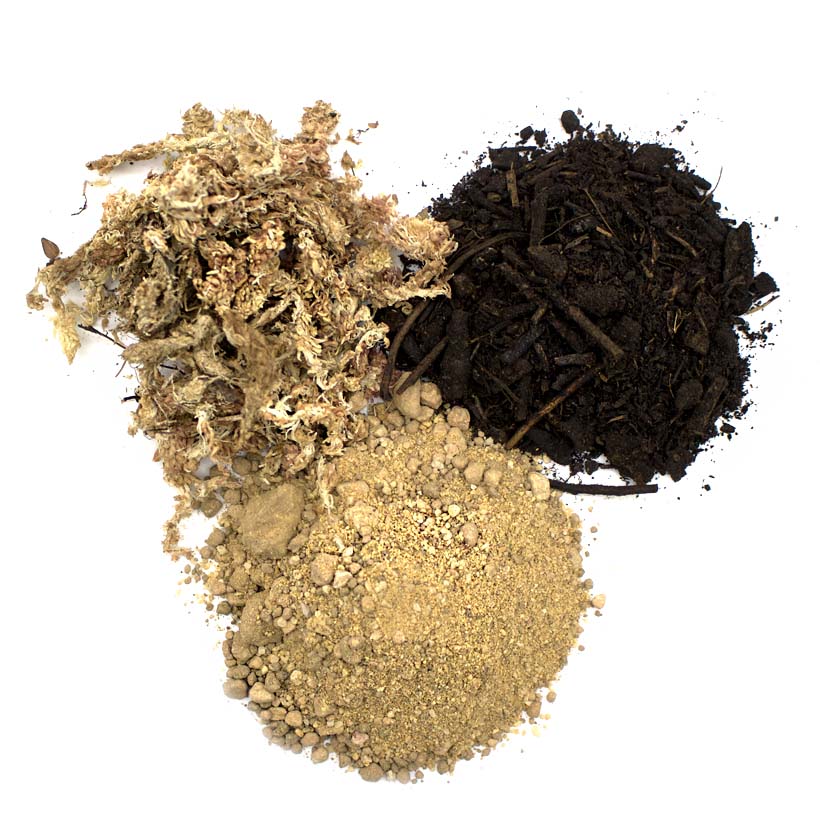
While the foam is still moist, we press sphagnum moss to the edge of the rock or stone imitations. Then sprinkle desert sand over the entire surface. This softens the transitions and makes the back wall look natural right from the start.
After curing – it is best to wait 24 hours – the back panel is stable and ready for the next step.
As soon as the back wall has completely hardened, it is time to add the substrate – a key element for every Brachypelma species. When setting up the terrarium, some desert sand often trickles down from the back wall. You can use this sand straight away as it will later become part of the substrate.
We use a tried and tested mixture: 3 liters of desert sand to 1 liter of forest humus. This combination produces a substrate that is easy to structure, retains moisture but remains stable – ideal for ground-dwelling tarantulas. The mixture is evenly distributed and lightly pressed down without compacting it completely so that it remains burrowable.
Now for the cave: In step 1, we have already integrated a gray lava stone into the back wall. Now we take a second lava rock and place it in front of it to create a natural, protected cave. This provides the spider with a stable retreat that cannot collapse – an important point for the animal’s sense of security.
The finished cave should be easily accessible at ground level, ideally slightly offset to the rear so that it is somewhat in the dark. Now that the foundation has been laid, it’s time to move on to the decoration and structure.
Step 3: Create structure with wood and natural materials
Once the back wall, substrate and cave are in place, we turn our attention to the most exciting part – the structure and decoration. Because not only should the animal feel comfortable, but the terrarium should of course also be pleasing to the eye. In our Insektenliebe set-up, we focus on a natural, harmonious design that is based on the habitats of Central American tarantulas.
We use spiderwood in this terrarium – a decorative, finely branched wood that can be perfectly staged. A branch has been placed in such a way that it lies lightly over the cave and provides additional privacy. At the same time, the wood creates climbing and retreat options, even though brachypelms are not considered to be fond of climbing. Another piece of spiderwood runs diagonally across the right-hand side of the terrarium, creating visual depth.
We also place a piece of Chollawood, which not only has a decorative effect thanks to its textured surface, but also optimizes the microclimate – it can retain moisture well, which benefits the terrarium. The dead columnar cactus also creates a dry, desert-like atmosphere.
The trick with the placement of all decorative elements is: natural, but well thought out. A few well-placed pieces create an exciting structure without overloading the terrarium. In this way, even reserved species such as Brachypelma hamorii feel safe without the view being completely obstructed.
Step 4: Tillandsias and water bowl – finishing touches for a natural habitat
Finally, we give the terrarium a bit of life – in the truest sense of the word. We use tillandsias, which are easy-care epiphytes that do not require soil. These air-loving plants fit perfectly in a Brachypelma terrarium, as they manage with low humidity and at the same time ensure a harmonious, natural overall look.
To fix the plants securely, we used Dupla PlantFix liquid – a plant-compatible liquid adhesive that makes it easy to attach tillandsias to spiderwood or the back wall. Two tillandsias have thus found their place in small crevices in the modeled back wall, while another is clearly visible on a piece of spiderwood.
Of course, a water bowl is also a must. We have placed it discreetly in a corner – stable, flat and easy to reach. If you like, you can fill it with small stones to allow food animals to crawl out safely.
With these final details, the terrarium not only looks complete, but also harmonious all round. It offers your Brachypelma a functional, safe and natural environment – and looks simply beautiful.
Conclusion – your Brachypelma terrarium to recreate
With just a few well-thought-out steps, you can create a home for your Brachypelma that is not only species-appropriate, but also a real eye-catcher. The combination of a sculpted back wall, textured substrate, natural materials such as spiderwood, lava rock and tillandsias creates a terrarium in which your animal feels safe and comfortable – and which is fun to watch at the same time.
At Insektenliebe, we consciously use materials that are both functional and decorative. You can find everything you need for your own terrarium project directly in our store – from modeling foam, desert sand, forest humus, spiderwood and lava rock to the matching 30x30x30 cm terrarium, Dupla PlantFix liquid or decorative tillandsias.
If you set up your terrarium using this template or implement your own creative ideas, we look forward to receiving your photos or feedback! Feel free to share your project with us – and if you have any questions, we’re here for you. From hobby to hobby.
When winter knocks on the door, many customers ask themselves: How will my pets arrive safe and warm? Don’t worry – we have a well thought-out solution and offer you two different packaging options that you can easily choose from when shipping.
Styrofoam or CornPack? You decide!
1. the conventional variant: polystyrene box
Styrofoam is still a popular packaging for shipping live animals – it provides reliable insulation and effectively protects the animals from the cold. The disadvantage: Styrofoam is a plastic, has to be disposed of in the yellow bag and creates more packaging waste. For many, this is not a problem, but for some it is not the ideal solution.
2. the sustainable alternative: CornPack – made from real corn grits
Our second option is much more environmentally friendly – and clever at the same time: CornPack is made from inflated corn grits, is compostable and can even be reused after shipping.
If you have Isopods or millipedes in the terrarium, for example, you can simply add the material to the tank – the animals will nibble on it enthusiastically.
And if you haven’t ordered a soil police? No problem: CornPack can go straight into the compost – where it will decompose without any problems. This means that nothing is left over after shipping except good nutrients.
The CornPack Thermobox is 100% sustainable: the insulation material is made from puffed corn semolina, a waste material from the food industry, and is produced entirely without plastic or harmful substances. In addition, 100% less water and 90% less energy is needed to produce the material than in the production of polystyrene. In addition, CO2e emissions can be reduced by up to 56% compared to polystyrene.
Heat included – adapted to the weather conditions
To ensure that your animals travel safely even in freezing temperatures, we include a heat pack with every winter package. Depending on the outside temperature, we choose between a small or a large heat pack – for just the right amount of warmth on the way to you.
In winter, we deliberately pack our animals a little drier. This keeps the packaging at a better temperature – and your little darlings arrive safely and well protected.
That’s because we don’t pack according to a set pattern, but always the way your animals need it. Incidentally, this applies to both types of packaging – whether Styrofoam or CornPack.
And now it’s your turn
During the ordering process, you can easily choose which packaging option you prefer. This allows you to decide how your parcel arrives – safely, in an appropriate manner and perhaps even with a small contribution to our environment.
The right humidity is a key factor for healthy terrarium animals. Many invertebrates, amphibians and reptiles require regular spraying rain or permanently high humidity. A sprinkler system performs this task reliably – but which one is right for your terrarium? We compare the models available at Insektenliebe by category, tank size, pump pressure (bar) and number of possible nozzles.
Small sprinkler systems – for compact terrariums
Compact sprinkler systems are ideal for small to medium-sized pools. They are easy to install, save space and provide reliable moisture.
The Exo Terra Monsoon NANO is a compact irrigation system with a pump pressure of approx. 2 bar and the option of operating up to 4 nozzles. It is supplied with 2 nozzles as standard. Particularly practical: the spray duration can be set from as little as 1 second – ideal for sensitive species that require very fine dosing. Another advantage is the flexible water tank: instead of a fixed container, the system can be operated with a canister, bottle or other water reservoir. This allows the capacity to be adjusted individually – from small to large, depending on requirements.
It can be programmed with spraying intervals from 1 second to 9 minutes. It can also spray once a day up to once every 30 days – particularly practical for vacation plans or long absences
The Hobby Easy Rain Mini has a 700 ml tank, operates at a pressure of approx. 2 bar and is therefore a compact sprinkler system for small terrariums. It is operated with 2 nozzles as standard, but can be expanded to up to 4 nozzles. Particularly practical: the system can also be removed and used as a hand sprayer. The Easy Rain Mini therefore offers a high degree of flexibility and is the ideal entry-level system for keepers who want to reliably supply a small terrarium with moisture.
The spray duration can be set from 4 seconds to 120 seconds and the intervals can be programmed from 1 to 12 hours. The Easy Rain Mini therefore offers a high degree of flexibility and is the ideal entry-level system for small terrariums that require a reliable supply of moisture.
The Repto Flex Rainmaker2.0 rounds off the category of small systems. With a pressure of approx. 3 bar and the option of operating up to 4 nozzles, it offers an attractive price-performance ratio and a high degree of flexibility at the same time. As with the Exo Terra Monsoon NANO, the water tank is also flexible: the system is not supplied with a fixed container, but can be operated with a canister, a bottle or another reservoir. This means that the capacity can be individually adjusted – from small to large, depending on requirements. The Rainmaker is therefore the right choice for anyone who operates a small to medium-sized pool but would like to use an expandable solution right now. The spray duration ranges from 1 second to 10 minutes, while the interval time can be programmed from 1 hour to 30 days. This makes the Rainmaker ideal for small to medium-sized pools where individually controllable humidification is required.
Medium sprinkler systems – for medium-sized setups or multiple pools
If you maintain a larger terrarium or want to supply several tanks at the same time, the medium-sized systems are the right choice. They offer more tank volume and additional nozzles.
The Exo Terra Monsoon SOLO II has a 1.5 liter tank and operates at a pressure of approx. 2.5 bar. It is supplied with 2 nozzles as standard, but can be expanded to up to 4 nozzles. It is reliable, programmable and therefore ideal for medium-sized set-ups where constant humidity is required. Thanks to the controller, irrigation cycles can be set precisely, which is crucial for many invertebrates, reptiles and amphibians. Programming possible for several spraying processes per 24-hour interval. Spray duration can be set from 2 seconds to 2 minutes.
The Exo Terra Monsoon MULTI II is even more flexible. With an 8-liter tank, a pressure of approx. 4.5 bar and the option of connecting up to 6 nozzles, it is an excellent choice for owners with several terrariums or a large tank that needs to be watered evenly. The scope of delivery already includes 2 nozzles, which can be extended as required. The system is programmable, powerful and ensures even humidification – ideal for anyone who values convenience and flexibility. Can be programmed for multiple sprays per 24-hour interval. Spray duration can be set from 2 seconds to 2 minutes.
Large irrigation systems – for ambitious keepers and breeders
For large terrariums or entire breeding systems, you need systems with high output, a large tank and many nozzles.
The Hobby Easy Rain scores with a large 9-liter tank, a pressure of approx. 6 bar and a reliable pump that also reliably supplies large setups. The scope of delivery already includes 2 nozzles, but the system can be expanded to up to 6 nozzles . This makes the system ideal for several large tanks or demanding terrariums that require constantly high humidity. Thanks to the large tank, the Easy Rain runs for a particularly long time without the need for frequent water refills – a clear advantage for ambitious keepers and breeders. The spray duration can be set from 2 seconds to 120 seconds and the intervals can be programmed from 1 to 24 hours.
The HabiStat Rainmaker Pro is the professional solution par excellence. With a pressure of approx. 8 bar, an individually selectable water tank and the option of operating up to 20 nozzles, it is unbeatable for large projects and professional cultivation systems. The scope of delivery already includes 4 nozzles, so the system is ready for immediate use. An integrated timer ensures that irrigation intervals can be set precisely. The particularly fine misting makes the artificial rain look very realistic and ensures optimum moisture distribution throughout the terrarium. This makes the Rainmaker Pro the first choice for ambitious keepers and breeders who value maximum performance, durability and flexibility. It can be controlled using the digital timer – allowing very short sprays through to longer rain phases to be programmed precisely, ideal for simulating natural weather patterns.
When choosing the right sprinkler system, you should always be clear about the scope of use first. If you want to humidify a small terrarium, you will need a different solution to someone who runs several large tanks or even a breeding facility. Within each category – small, medium or large – there is a suitable model for every requirement.
An important decision factor here is the pump pressure. It largely determines how fine the generated spray mist is and how evenly the moisture is distributed in the terrarium. A nice, fine mist is particularly important to ensure that not only individual areas but the entire habitat is reliably moistened. This creates a stable microclimate that offers your animals optimum conditions.
So if you know the size of your system and pay attention to the performance values – especially the pressure – you will quickly find the right system. With the right sprinkler system, maintenance costs can be reduced, animal welfare ensured and near-natural conditions in the terrarium permanently guaranteed.
If you have any further questions, please leave them in the comments below the article.
Anyone involved in terraristics will quickly realize that calcium is one of the most important minerals for many invertebrates. Whether Isopods, snails, crabs or crustaceans – they all need a reliable source of this mineral to keep their shells, casings or exoskeletons stable. Calcium also plays a key role in moulting, perhaps the most critical moment in the lives of many invertebrates .
The question that many owners ask themselves: How do I make sure that my animals really get enough calcium? There are countless calcium supplements on the market in powder form, often produced synthetically. However, those who prefer naturalness and ease of use prefer to use a classic: cuttlebone.
What is a cuttlebone? What exactly is a cuttlebone?
The cuttlefish shell comes from the cuttlefish Sepia officinalis, commonly known as the “common cuttlefish”. This animal belongs to the cephalopod family and is closely related to squid and octopus. Unlike these, however, the cuttlefish has a solid inner skeleton – the so-called cuttlefish shell.
This skeleton fulfills a very special function in the life of the animal: it serves as a kind of buoyancy regulator. Thanks to a sophisticated system of many small chambers filled with gases and liquids, the cuttlefish can precisely control its position in the water.
It rises, sinks or remains floating in the sea – without any great effort. This makes the cuttlefish shell a perfect example of nature’s ingenuity, in which functionality and lightness are ideally combined. The structure of the cuttlefish shell is porous, light and at the same time amazingly stable. It consists mainly of calcium carbonate, a mineral that is also found in the shells of snails and mussels. This high mineral content makes it particularly interesting for keeping invertebrates, as it is precisely this composition that Isopods, snails and other animals need for their shells or casings.
After the animals have died, their shells are washed up on the beaches by the waves. People have been collecting them there for centuries, drying and cleaning them for reuse. Originally, the cuttlefish shell was primarily known as a beak whetstone and mineral source for ornamental birds. However, it has long since found a permanent place in terrariums, where it serves as a natural source of calcium and thus makes an important contribution to healthy, stable invertebrates.
In short, the cuttlebone is not only a fascinating relic from the underwater world, but also a valuable natural product that can play a central role in the terrarium – without any chemical processing or artificial additives.
Natural composition instead of chemicals
The biggest advantage of cuttlefish shells is that they consist almost entirely of calcium carbonate, a compound that is particularly easily accessible to invertebrates. It also contains small amounts of magnesium and trace elements that are important for the metabolism.
Artificial calcium supplements, on the other hand, are often highly processed. The powder has to be mixed into the feed or sprinkled over the substrate. This always raises the question: Do the animals really eat as much of it as they need? Or is there too much left over? This problem is eliminated with cuttlefish shells, as the animals nibble or grate off exactly as much as their organism needs.
Advantages of cuttlebone at a glance:
100% natural product – unprocessed, sustainable and without additives.
Optimum bioavailability – invertebrates can absorb the calcium very well.
Needs-based supply – animals only take as much as they need.
Additional minerals – magnesium and trace elements round off the mineral profile.
Practical handling – simply place in the terrarium and you’re done.
Long shelf life – stored in a dry place, cuttlebone can be used practically indefinitely.
This means that the cuttlebone beats any artificial preparation – without any dosing problems or chemical additives.
Application in terraristics
It is very easy to use: place a cuttlebone in the terrarium and the animals will take care of the rest. Isopods and snails gradually grate off the shell, while crabs or shrimps often even bite off small pieces. For smaller species, the shell can also be broken or ground into powder.
Another advantage: cuttlebones do not soil the terrarium. Powder preparations can clump together when damp, disappear into the substrate or even lead to mold growth. A cuttlebone remains stable and is also a visible calcium dispenser that can be replaced or supplemented at any time.
Tip: Place the cuttlebone in a dry place in the terrarium with the shell facing downwards. This will keep it durable and hygienic for a long time.
Insektenliebe offer for cuttlefish shells
At Insektenliebe, we offer cuttlebone in different sizes and packaging units – perfectly tailored to your needs:
Sepia powder – perfect for the next generation
Individual bowls in various sizes – ideal for small terrariums.
100-gram packs – practical for owners with several animals.
1 kilo packages – for growers or large collections.
5-kilo bags – our bulk pack for professionals and frequent owners.
This gives you the flexibility to decide which quantity is right for you. Each of our bowls is natural, clean and ready for immediate use.
An aspect that many people underestimate: Cuttlefish shells are a by-product of nature. They do not need to be artificially produced, chemically treated or elaborately packaged. This makes them an ecologically sensible alternative to synthetic calcium supplements, which are often energy-intensive to produce. For those who value sustainability, cuttlefish shells are the perfect solution.
Conclusion
Cuttlefish shells are the ideal source of calcium for invertebrates – natural, effective and uncomplicated. They provide everything Isopods, snails and other terrarium animals need for a stable exoskeleton, healthy molts and a long life. In contrast to chemical powders, the animals feed themselves instinctively – just as nature intended.
Visit our store now and discover our selection of high-quality cuttlebone shells – for healthy and happy invertebrates.
If you have any further questions, please leave them in the comments below the article.
You look into your lovingly decorated terrarium and eagerly await to see your animals – but instead you see… nothing. No crawling, no movement, everything seems empty. Many keepers know exactly this situation and ask themselves: Why is nobody showing up?
Understanding natural behavior
In fact, the behavior of most terrarium animals is naturally characterized by retreat. Many species such as Isopods, jumping spiders or millipedes are crepuscular or nocturnal. So if you take a look in the terrarium during the day, they are most likely sleeping in their hiding places. Isopods in particular prefer to be hidden under leaves, wood or moss, as this is where they feel safest in nature. Jumping spiders also like to retreat to their self-made nests, especially during moulting or after a sumptuous meal. Species such as Typhochlaena seladonia in particular, which live extremely hidden lives in the wild and create elaborate burrows, rarely show themselves openly even in the terrarium.
Settling in takes time
Especially when animals have just moved in, it is completely normal that they hardly show themselves at first. The new environment, unfamiliar smells and lighting conditions are stressful, and every animal deals with this situation differently. It can take a few days or even weeks for a new animal to settle in. During this phase, it is important that you leave it alone as much as possible, even if its curiosity is naturally high. Any disturbance prolongs the acclimatization period.
Retreats create security
In order for the animals to feel safe enough in the terrarium to show themselves more often, suitable hiding places must be available. The more small hiding places you create in the terrarium, the more likely you are to see active animals at some point. It is not a question of hiding places, but of a feeling of security. A well-structured habitat with pieces of bark, islands of moss, layers of leaves and angled elements will give your animals the orientation they need and protect them from stress.
Observe climate and activity
The climate in the terrarium also plays an important role. If the humidity is too low or the temperatures are not right, many species withdraw deep into the substrate. Sometimes a terrarium appears empty at first glance, even though the animals have simply moved to a quieter area. It is therefore worth checking the temperature and humidity regularly and adjusting them if necessary. With nocturnal species in particular, you may only be able to see them with a little patience and at the right time of day.
Incidentally, a good indication of activity is their behavior when feeding. Even if you can’t see your animals directly, you can often tell whether they have eaten. For Isopods or millipedes, for example, leaves, vegetables or cuttlefish shells gradually disappear, while the disappearance of fruit flies is a good indicator for jumping spiders. All this shows you that the animals are active – but only when you’re not looking.
Note the location in the room
The positioning of the terrarium in the room should also not be underestimated. If it is completely free-standing – i.e. without a back or side wall – many animals feel particularly unprotected. From their point of view, there is then a lack of support and protection, which can lead to increased retreating behavior. A protective back wall or side cover can quickly remedy this and give your animals the feeling of living in a safe shelter.
Structure instead of emptiness – the right setup
Sometimes the problem is not the keeping itself, but the design of the terrarium. If the tank is too large or too open, many animals simply lack orientation and retreat structures. An empty terrarium with wide, smooth surfaces has the effect of an open area without shelter for animals that live in the wild under foliage, wood and rocks. In such an environment, they feel defenceless and instinctively stay under cover – even if the housing conditions are otherwise right.
Especially with smaller species such as Isopods or jumping spiders, a terrarium that is too open can quickly lead to insecurity. But even larger animals such as tarantulas usually retreat into their hiding places as soon as they have had their fill. And there is a reason for this: in nature, animals only move around visibly when they are looking for food – anything else would only increase the risk of becoming prey themselves. A freely moving body in an open habitat means a target. It is therefore completely normal for a satiated animal to behave quietly and withdrawn.
You can actively help here: Structure the terrarium in a varied and natural way. Instead of a large, open area, you should create different levels, materials and areas. Small piles of leaves, pieces of cork, roots or lava stones can enliven the area. It is particularly helpful to think vertically: pieces of bark attached to the walls, plants or moss cushions in the corners give the animals orientation and places to retreat to.
Actively promote a sense of retreat
A targeted design creates a feeling of security. At the same time, the location of the terrarium in the room should also be taken into account: If it is free-standing without a back wall or side enclosure, many animals lack a feeling of security. This can be remedied by using back walls, a side panel or simply placing the terrarium in a sheltered corner with a privacy screen.
A varied structure and a deliberately designed environment not only create a visually exciting habitat, but also a real feel-good place for your animals. You will notice: The more structured the terrarium is, the more relaxed and active the inhabitants will be – and the more often you will see them all by themselves.
With the right furnishings, your terrarium will not only be more beautiful, but also the perfect retreat for your animals. Take a look at our most popular decorative elements and plants here and get inspired!
It was a frosty December evening and the forest was covered in a thick blanket of snow. Everything was silent, except for the occasional crackling of branches groaning under the weight of the snow. In an old, gnarled tree stump deep in the heart of the forest lived a little Isopod called Aurelia. She wasn’t like the other Isopods – she was curious, brave and had a taste for adventure.
While the other Isopods stayed in their hiding places to escape the icy cold, Aurelia watched the goings-on in the forest. She loved winter, although it wasn’t exactly the easiest time for an Isopod. But something was different this year. The animals in the forest seemed restless, and everywhere they whispered of a strange apparition: a glowing star had moved across the forest and taken up residence in the old spruce tree on the hill.
“It’s probably just a story!” Benno called out to Aurelia. Benno was Aurelia’s best friend, but like a typical woodlouse, he was always suspicious and cautious.
But Aurelia shook her head thoughtfully. “They say the star has magical powers, Benno. Maybe it will help us get through the winter better.”
Aurelia felt her curiosity begin to prickle. “We have to find out!” she shouted.
In the deep winter night, Aurelia set off, accompanied by Benno and a small group of brave Isopods who were infected by her determination. The path to the old spruce was arduous. They had to climb through mountains of snow, hide from curious foxes and dodge a mischievous squirrel that almost snatched Benno.
When they finally reached the old spruce tree, they paused in amazement. Amidst the snow-covered branches, the star shone brighter than anything they had ever seen. Its warm light penetrated the icy cold and bathed the whole hill in a golden glow.
“That’s beautiful!” whispered Aurelia, but Benno frowned. “What if the stories are true? What if the star really is magical?”
Before anyone could answer, the star began to speak. His voice was quiet, but clear and friendly. “Little Isopods, I have seen your courage. Not many dare to seek me out. What brings you to me?”
Aurelia stepped forward and explained: “We want to know why you’re here. And whether you really are magical.”
The star laughed softly. “Magical? Perhaps. My light brings hope and warmth to this cold time. I am here to help the animals of the forest survive the winter. But I need your help to spread my light.”
“What can we do?” asked Benno eagerly.
“Gather the animals of the forest here. Let every creature, big or small, find strength and warmth in my light,” explained the star.
The Isopods set to work. Aurelia, Benno and the others crept through the forest and informed all the animals they could find: the shy mice, the sleeping badgers and even the skeptical eagle owl. One by one, the forest dwellers gathered under the old spruce tree, where they warmed themselves by the light of the star and told stories.
The night passed and the star shone brighter and brighter. In the morning, the cold was no longer so biting and a gentle calm settled over the forest. The animals were grateful for the warmth and hope that the star had brought.
“That was the best adventure I’ve ever had,” whispered Aurelia as she gave Benno a friendly nudge.
“You really are something special, Aurelia,” the star said before slowly fading away. “Don’t forget: even the smallest being can achieve great things.”
And so Aurelia and her friends returned to the tree stump, filled with the magic of the night. The forest was asleep again, but the memory of Christmas night remained alive – and Aurelia knew that this was just the beginning of her adventures.
Jumping spider breeding is an exciting process that begins with egg laying and ends with the successful rearing of the spiderlings. If your jumping spider has laid eggs and you are now faced with the challenge of looking after the hatched spiderlings properly, you’ve come to the right place. In this article, you will learn how to safely remove the little spiders from the terrarium and raise them in the best possible way so that they develop magnificently.
How to remove the spiderlings from the terrarium
After successful breeding, the first question is how to safely remove the spiderlings from the mother’s terrarium. There are various methods for this step, each of which has advantages and disadvantages.
Cocoon removal in jumping spider breeding
This method is relatively time-saving, but involves certain risks. If you notice that the mother’s cocoon already contains dark-colored spiderlings with long legs that are moving, you can remove the cocoon. It is important that you carefully push the mother out of her cocoon. A soft brush helps here so as not to injure the animal. You can then carefully remove the cocoon from the terrarium wall with a sharp scalpel or knife.
The removed cocoon is placed in a 500 ml box with wood wool. After a few days, the spiderlings hatch from their web and are in development stage FH1. As soon as they are actively moving around in the box, they should be provided with food and water every 2-3 days. For very large cocoons, it is advisable to divide the spiderlings into groups of 10-15 animals each. This promotes growth and reduces losses, as weaker animals are eaten by their more robust siblings. Group rearing is recommended up to development stage FH3.
Risks of this method: There is a possibility that spiderlings may be injured during removal or that the mother may not build another cocoon. However, this strongly depends on the character of the mother.
Collecting spiderlings individually for successful jumping spider breeding
This method is more time-consuming, but gentler on the mother. As soon as the spiderlings leave the cocoon, you can collect them individually from the terrarium using a soft brush and a film canister. This method can take several days, as the spiderlings do not all leave the cocoon at the same time. The advantage is that the mother may lay more eggs in the same web, which can lead to further offspring.
After collection, the spiderlings should also be kept in 500 ml cans with wood wool, as the advantages of group rearing are also important here.
Group rearing and care for spiderlings in jumping spider breeding
After hatching and the successful removal of the spiderlings, the group rearing phase begins – a crucial time for the growth and development of the little spiders. In the group, the spiderlings not only grow faster, but also benefit from natural selection. This selection ensures that the strongest and healthiest animals survive, which later ensures robust offspring.
During group rearing, the spiderlings should be kept in a BraPlast box with wood wool, which serves as a climbing and hiding place. Regular feeding is essential so that the young spiders have enough energy for growth and moulting. Ideally, you should feed the spiderlings tiny prey such as Drosophila melanogaster every 2-3 days. Make sure that the prey is not too large, as this can stress the young spiderlings.
In addition, the correct humidity in the terrarium is crucial. Spray the box lightly with water to ensure sufficient humidity. It is important to maintain a balance: Too much humidity can promote mold growth, while too little humidity can inhibit the development of the spiderlings. Regular checks and good ventilation help to create the right climate.
Group rearing should be continued up to development stage FH3. In this phase, the spiderlings develop stably and prepare for the next moult. After the second moult in group rearing at the latest, it is time to separate the animals in order to avoid rivalry and cannibalism.
When and how you should separate the spiderlings
After about two moults in the group box, it is time to separate the spiderlings. Perforated rearing boxes are ideal for this phase as they are easy to handle and offer sufficient space. Wood wool is recommended for the interior. The spiderlings remain in these boxes for a further one or two moults before moving to a 500 ml box. As soon as the animals have reached a body length of around 1 cm, they can move to their final terrarium.
The next steps after breeding jumping spiders
From development stage FH3, the spiders can be placed in larger terrariums. There should be various hiding places, climbing opportunities and the right plants to create a natural environment. You can find tips on setting up the terrarium in our other articles.
If you have any further questions, please leave them in the comments below the article.
A well-designed terrarium not only offers your jumping spider a safe environment, but also a small adventure land for exploring and climbing. With the right materials from our store, you can create an individual and natural home that will not only please your jumping spider, but also your eye.
For the design, we use an Insektenliebe acrylic terrarium (20x19x29 cm), which is well suited for jumping spiders. Alternatively, you can also use a glass terrarium, depending on your preferences and the decor you want to create in the terrarium.
The start: Designing the back wall and creating structure
First, prepare the basic mixture for the terrarium. Use a mixture of 30 % forest humus, 40 % desert sand and 30 % sphagnum moss. Make sure to mix the three ingredients thoroughly until you have an even, loose substrate mixture. This mixture forms the basis for the design of the back wall and will later provide a natural, well-aerated structure that retains moisture and creates a pleasant climate in the terrarium.
Everything you need for implementation at a glance:
Then cut the mini tree into different pieces, which will later be integrated into the back wall. Now apply the modeling foam to the back wall of the terrarium as a base. While the foam is still wet, spread the prepared mixture evenly to create a natural and non-slip surface.
Once the back wall has been prepared and the mixture of forest humus, sand and sphagnum moss has been evenly applied, the next step is to create a varied and natural structure for the terrarium. To do this, place the pre-cut pieces of Mini Tree L along the back wall. Make sure to arrange the pieces in such a way that different levels and hiding places are created – this promotes the natural behavior of your jumping spider and offers it optimal climbing opportunities.
An overview of the materials required for this step:
The eucalyptus bell can provide a special highlight in the terrarium. This nut is carefully pressed into the upper region of the back wall while the modeling foam is still damp. The eucalyptus bell creates a natural cave that serves as an ideal retreat for the jumping spider.
It can hide here if necessary, for example during moulting or in case of danger. The protected position and dark surroundings offer the spider a safe place that increases its well-being in the terrarium.
Now prepare the substrate to make the base of your terrarium natural and functional. Use the remaining quantities of forest humus, desert sand and sphagnum moss and mix them thoroughly. Spread this mixture evenly over the bottom of the terrarium to create a loose and well-aerated base that provides your jumping spider with a natural substrate.
The next step is to plant the selected plant, which will provide additional shade and a nice green touch to the terrarium. Make sure that the plant is well embedded in the substrate so that it is stable. Finally, place the lava rocks strategically on the floor – they serve as climbing points and ensure that the structure in the terrarium remains varied. This creates an environment in which your jumping spider can feel completely at ease.
You can find the right products for this step here:
Once all the elements have been placed and the modeling foam has dried completely, you should carefully check the terrarium for stability. Make sure that all decorative elements are securely anchored and that the substrate is evenly distributed. Now you can present your jumping spider with its new home! The combination of natural structure, various places to retreat to and climbing opportunities offers ideal conditions in which it can feel comfortable and pursue its natural behavior. Watch as your spider explores the different levels and hides in its eucalyptus bell or between the lava stones – creating a small ecosystem that will delight you and your jumping spider for a long time to come.
If you have any further questions, please leave them in the comments below the article.
It happens again and again: you take a look in your lovingly decorated terrarium and discover white threads running through the substrate or the leaves. Many keepers immediately fear that this is mold. However, in most cases, what you see is not mold, but mycelium in the terrarium – a natural phenomenon in a well-furnished terrarium.
In this article, I’ll explain how to distinguish mycelium in the terrarium from mold and why mycelium can even be helpful for your terrarium. We’ll also take a look at the forest and the fungal mycelium found there and its role in the natural cycle.
What is mycelium in the terrarium and how does it develop?
Mycelium in the terrarium is the underground network of a fungus that forms in moist and nutrient-rich environments. Fungi reproduce by spores, which spread to form a mycelium under suitable conditions. This fungal network looks like white, hair-like threads that run through the substrate, leaves or wood.
In your terrarium, mycelium is often created by fermented leaves, flake soil or white rotten wood – materials that are often used to furnish terrariums. These are not only ideal for the animals in the terrarium, but also for fungi, as they provide a perfect food source.
Mycelium in the forest – The invisible network
The next time you’re out and about in the forest, keep an eye out for mushrooms – or rather for what you can’t see straight away: the mycelium. This network of fungi forms a huge network in the forest floor, connecting trees and plants. This network is often referred to as the “Wood Wide Web” because it allows plants and trees to communicate with each other and share nutrients.
Plants can use the mycelium network to exchange nutrients such as sugar and nitrogen, for example, but also to send signals about pests or environmental changes. If a tree is attacked by pests, it can warn other trees through the mycelium network so that they activate their defense mechanisms. In this way, the mycelium helps to stabilize the forest ecosystem and connect trees over long distances.
Although research has not yet clearly confirmed that trees can react to weather changes such as storms via mycelium networks, the fact that plants and trees “communicate” with each other via the “Wood Wide Web” is impressive.
During my walk in the forest, I took some fascinating photos of mycelium in the forest myself. You can see how the white threads run through the soil and foliage. This natural network shows impressively how important fungi are for the nutrient cycle in the forest.
Mycelium in the terrarium vs. mold – the difference
Many keepers confuse mycelium in the terrarium with mold. Mold is a fungus that usually develops in damp and unhygienic conditions and can be potentially harmful to the animals in the terrarium. Mold often has a grayish or greenish color and usually forms fluffy, cotton-like structures.
Mycelium in the terrarium, on the other hand, is finer and white. It tends to spread evenly and often attaches itself to organic materials such as leaves or wood. Mycelium is usually a natural part of the decomposition process and is harmless to your terrarium inhabitants.
Tip: If you are unsure whether it is mold or mycelium in the terrarium, pay attention to the consistency and color. Mold often smells unpleasant, while mycelium tends to remain neutral or smell like fungus. Mold also often grows in small, isolated patches, while mycelium is spread over a larger area.
Mycelium in the terrarium as a food source for Isopods
For primary decomposers such as Isopods, millipedes and springtails, mycelium is an important source of food in the terrarium. Isopods feed on dead plant material that is decomposed by fungi and mycelium. The decomposition process that mycelium sets in motion in the terrarium makes complex organic compounds such as lignin and cellulose digestible for Isopods.
But it is not only the decomposed plant remains that are valuable to Isopods – Isopods also eat the mycelium itself. Mushrooms contain valuable nutrients such as proteins, fats and carbohydrates, which are an important food source for Isopods. Especially in humid environments where fungi thrive, the mycelium is an optimal source of nutrients.
Mycelium also plays a crucial role in the nutrient cycle of the soil by breaking down organic material and releasing nutrients such as nitrogen and phosphorus. These nutrients are in turn taken up by plants and passed on to Isopods through the food chain. Isopods help to return these nutrients to the soil through their excretions, which supports the nutrient cycle in the terrarium.
Mycelium also promotes the growth of bacteria and other microorganisms, which are also ingested by Isopods. It thus creates a microhabitat that provides a variety of food sources for Isopods and contributes to the stability of the terrarium.
Promoting mycelium in the terrarium
Instead of fighting mycelium in the terrarium, you can see it as part of the natural cycle. To promote the formation of mycelium, you can use materials such as forest humus, fodder leaves, white rotten wood or flake soil . These provide an excellent food base for fungi and help the mycelium to develop well. A balanced moisture level is also important to support the growth of mycelium without encouraging mold growth.
Conclusion – Mycelium in the terrarium: a useful helper
Mycelium in the terrarium is a natural component of a healthy terrarium and contributes to the decomposition of organic material. It supports the circulation of nutrients and provides a valuable food source for many animals, especially Isopods. The mycelium in the terrarium should therefore not be seen as a danger, but as an indicator of a functioning mini-ecosystem.
If you are still unsure whether it is mold or mycelium in the terrarium, the tips mentioned above will help you to differentiate. And next time you’re out and about in the forest, take a closer look – you might discover the fascinating network of mycelium there too!
If you have any further questions, please leave them in the comments below the article.
Arachnophobia, the fear of spiders, affects many people around the world. The idea of an eight-legged creature can immediately cause some people to break out in a sweat and panic. But what if this fear could be alleviated by a very special member of the spider family? Jumping spiders, with their large eyes and inquisitive behavior, offer a way to overcome your own fear of spiders. In this article, we show you how you can combat your arachnophobia step by step with jumping spiders.
What is arachnophobia?
Arachnophobia, also known as arachnophobia, is a specific anxiety disorder that affects around 5% of the population in Germany. The fear of spiders goes far beyond a normal fear. Those affected often experience extreme panic or disgust, even with harmless spider species. This fear can be triggered by direct encounters with spiders, but also by thoughts or images of them. For people who suffer from this phobia, avoiding spiders becomes a central strategy in everyday life.
Despite their harmlessness, many people perceive native spiders, such as the house spider or the spiny finger spider, as a threat. In fact, these species are largely harmless to humans. Even when spiders such as the spiny-fingered spider or immigrant species such as the Nosferatus spider bite, the bite is generally less painful than a wasp sting.
Why jumping spiders are different
Jumping spiders belong to the Salticidae family and are characterized by their unusual appearance and behaviour. Unlike many other spider species, jumping spiders appear almost cute: their large, round eyes and attentive behavior make them look more like curious little adventurers. Jumping spiders do not hunt with webs, but move nimbly and actively through their surroundings, which makes them fascinating for many people.
These characteristics make jumping spiders an ideal introduction to overcoming your own fear of spiders. It is also important to know that native spiders in Germany are generally harmless. Even the larger numbers of spiders in the fall, when they become active during the mating season, pose no danger to humans.
Step 1: Build familiarity
The first step in combating your arachnophobia is to slowly get used to the idea of spiders. You can do this by looking at pictures and videos of jumping spiders. Jumping spiders often move in an almost playful way, and their large eyes appear curious rather than threatening.
Tip: Watch videos on YouTube, TikTok or Instagram in which jumping spiders can be seen in action. These clips often show the funny and harmless side of these small animals.
Step 2: Observe without fear
If you feel comfortable with the videos, you can take the next step and observe a jumping spider in a terrarium. Terrariums provide a safe environment where you can observe the animal from a safe distance. This gives you the opportunity to study their movements and behavior in detail without having to have direct contact.
Jumping spiders are particularly active and hunt their prey in a fascinating way. This behaviour can help you to recognize the beauty and uniqueness of the animals and be less afraid of them.
Step 3: Direct contact
When you feel ready, you can make direct contact. Jumping spiders are harmless to humans, and many keepers report that these animals react curiously to their surroundings and even move towards their keepers. Holding a jumping spider in your hand can help you turn your fear into respect.
It is important that you do not put yourself under pressure. Each step should be taken at your own pace.
Step 4: Positive feedback
As you face your fear step by step, it is important to give yourself positive feedback. You have found a way to confront and overcome your fear. Every positive experience with a jumping spider will help to combat your arachnophobia in the long term.
Why jumping spiders can help
Arachnophobia is often based on irrational fears of spiders. Jumping spiders, with their unusual appearance and behavior, help to reduce these irrational fears. Their curious eyes, which are more reminiscent of a small pet than a threatening creature, and their playful behavior make it easier for many people to overcome their fear.
Unlike other spider species, jumping spiders are small, agile and appear almost “friendly”, which makes them an ideal companion in the fight against arachnophobia.
Conclusion: jumping spiders as a helper against arachnophobia
The fear of spiders can be overwhelming, but with the right approach and the help of jumping spiders, it is possible to overcome this fear. Through gradual approach, observation and finally direct contact, you can learn to control your fear and even develop a new fascination for these amazing animals.
Jumping spiders offer a unique opportunity to get to grips with spiders in a safe and relatively “friendly” way. They are the perfect introduction to free you from your arachnophobia and take the first step into a world full of curious, eight-legged friends.
Scorpions are among the most fascinating and at the same time most mysterious terrarium animals. Many terrarium keepers ask themselves the question at some point: “How can I tell whether my scorpion is male or female?” Sexing scorpions can be tricky, but with the right information and a little practice, the sex can often be clearly determined. In this article, we explain how you can recognize the differences between male and female scorpions and what you should look out for.
External characteristics – What are the differences?
The easiest way to determine the sex of a scorpion is to look at its external features. Although there are differences between the various scorpion species, there are some general clues that can help you distinguish between them.
1. physique: Male scorpions often have a slimmer and longer physique compared to females, which are usually more compact and broader. The tail (metasoma) in particular is usually longer and narrower in males, while it appears shorter and stronger in females.
2. pedipalps (claws): The claws (pedipalps) are another feature that can help with sex determination. In some scorpion species, the claws of the males are narrower and longer, while the females have shorter but stronger claws. However, these differences are not clear for all species, so this method should only be used as an additional indication. Another difference in the males is a small spike on the claws, which helps them to grasp the females during the sexual act.
3. comb organs (pectines): The so-called comb organs or pectines are a characteristic feature of scorpions and are located on the ventral side, near the third pair of legs. In many species, the pectines in males are larger, wider and have more “teeth” (denticulae) than in females. The number and size of these teeth can be a first indication of the sex of your scorpion. The best way to recognize the difference in size of the pectines is to compare them with the limbs – this is where the difference in size becomes particularly clear.
4. genital cover (operculum): The genital cover, also known as the operculum, is another feature that can help determine the sex of scorpions. It is located on the ventral side, directly in front of the comb organs. In male scorpions, the genital operculum is usually smaller, narrower and more rounded in shape, whereas in females it is wider, more pronounced and pointed. Especially in adult animals, the genital cover can be a helpful indication of the sex, as this difference is often not yet clearly recognizable in younger animals.
Behavior – Another indication of gender
In addition to the external characteristics, the behavior of a scorpion can also provide information about its gender. Male scorpions are often more active and move around more, especially during the mating season. They are looking for a female and therefore exhibit pronounced migratory behavior. Females, on the other hand, are usually less mobile and spend more time in their hiding place.
Important notes on sex determination
It is important to note that sexing scorpions, especially young animals, is not always easy. Many characteristics only become clear when they reach adulthood, so patience is required. There are also considerable differences between the various scorpion species, so it makes sense to find out about the specific characteristics of the species you are keeping.
Why is sex determination important?
Sex determination is not only important for breeding scorpions, but also for keeping them in a species-appropriate way. Male scorpions are often more territorial and can be more aggressive towards conspecifics, especially during the mating season. Females, on the other hand, may require special conditions for rearing their young.
Conclusion – sex determination in scorpions
Sexing scorpions requires a keen eye and a certain amount of experience. However, by observing the comb organs, body structure and behavior, you can often get clear indications of the sex of your scorpion. Remember that patience and careful observation are the keys to success. Over time, you will develop a better and better sense of whether your scorpion is male or female.
If you have any further questions, please leave them in the comments below the article.
Millipedes – these mysterious, many-legged crawlers are fascinating survivors that have populated the earth for millions of years. But despite their long history and their important role in the ecosystem, many people – perhaps you too – are more skeptical than sympathetic. One of the most common questions that comes up when someone encounters a millipede is: “Are millipedes poisonous?” This question is not only understandable, but also important, especially for terrarium keepers and nature lovers. In this article, we take a closer look at the world of millipedes and clarify whether you need to worry the next time you go for a walk in the woods or look after your terrarium.
Millipedes and centipedes – two completely different animal species
A common mistake made in many articles is to confuse millipedes and centipedes. Although both belong to the arthropods, they represent completely different classes within this group and therefore have different characteristics and behaviors.
Millipedes (Diplopoda)
Millipedes (Diplopoda) are mainly harmless herbivores that feed on decaying plant material.
They move slowly and curl up when in danger to protect their soft body parts. Their defense mechanisms consist mainly of the secretion of irritating but generally harmless secretions.
Centipedes (Chilopoda)
Centipedes (Chilopoda), on the other hand, are aggressive hunters that hunt prey with their powerful jaw claws (forcipules).
Centipedes have venom glands with which they can paralyze their prey. While most centipede species are not dangerous to humans, larger species can cause painful bites that can lead to stronger reactions in sensitive individuals.
It is important to emphasize that millipedes and centipedes should not be confused with each other, as they have different behaviors, lifestyles and potential dangers. So when you read that “millipedes are said to be poisonous”, it is crucial to ensure that centipedes are not inadvertently referred to. Both species have their own peculiarities that should be considered in separate contexts.
The incredible diversity of millipedes
Millipedes are an extremely diverse group of animals with more than 13,000 known species worldwide. These mostly nocturnal creatures feed mainly on decaying plant material and play an important role in the ecosystem by decomposing organic material and fertilizing the soil. Despite their often bizarre appearance and the diversity of species, most millipedes have one thing in common: they are largely harmless to humans.
Toxicity of millipedes – A differentiated view
When it comes to the question “Are millipedes poisonous?”, the answer is clear: millipedes are generally harmless and have no poison glands that could be dangerous to humans.
However, some millipede species have so-called defensive secretions, special chemical substances that they secrete when in danger to deter predators. These secretions often contain chemical compounds that can cause irritation on contact with human skin. The most common symptoms include slight reddening of the skin, itching or a burning sensation. Such reactions are usually mild and subside quickly if the affected skin area is washed thoroughly.
The harmless representatives – peaceful herbivores
Many of the millipede species kept in terrariums, such as the African giant millipede (Archispirostreptus gigas), are completely harmless. These impressive animals can reach a length of up to 30 centimetres, feed exclusively on plant material and are completely harmless to humans. Their peaceful nature makes them popular terrarium inhabitants that are also easy to keep. However, you should be aware that Archispirostreptus gigas tends to defecate when it feels disturbed. This is a natural reaction of the animal and poses no danger, but can be taken into account when caring for it.
Millipedes with defensive secretions – What you should know
A few species of millipedes, such as certain representatives of the order Polydesmida, can secrete irritating chemicals when threatened. These defense substances, which also include hydrocyanic acid compounds or benzoquinones, are not life-threatening but can cause skin irritation in sensitive individuals.
In the photos below you can see the glands located along the body of these millipedes. Of particular interest is the photo where you can clearly see the defensive secretion coming out of one of these glands. This visual representation makes it clear how the millipede’s defense mechanism works and why it is important to be careful when handling these animals.
If you come into contact with the defensive secretions of a millipede, it is advisable to wash the affected area of skin thoroughly with soap and water immediately. It is also advisable to avoid contact with mucous membranes such as the eyes or mouth to prevent irritation. If you have sensitive skin, gloves can offer additional protection when handling these animals.
Behavior on contact with defense secretions
If, despite taking precautions, you come into contact with the defensive secretions of a millipede and experience unusual symptoms, it is advisable to consult a doctor. This is especially true if the symptoms do not subside or worsen within a short time. In most cases, however, a thorough cleansing of the skin is sufficient and the symptoms will disappear on their own.
It is important to remember that millipedes are not aggressive and only use their defensive secretions when they feel threatened. Careful handling of the animals can minimize the risk of unpleasant contact.
Conclusion: Are millipedes poisonous?
In summary, the answer to the question “Are millipedes poisonous?” is predominantly no. Most millipedes are harmless to humans and pose no danger. Only a few species have defensive secretions that can cause slight irritation on contact with the skin. However, these reactions are rarely serious and can be easily treated with simple measures.
For terrarium keepers and nature lovers, there is therefore no need to worry. So, don’t panic if you come across a millipede – with the right knowledge and precautions, you can keep these fascinating animals in your terrarium without any worries.
If you have any further questions, please leave them in the comments below the article.
Do you love exotic animals and finally want to fulfill your dream of setting up a terrarium in your rented apartment? But maybe you’re also wondering how this fits in with your tenancy agreement and your landlord. Don’t worry – you’re not alone with these questions! In this article, we explain what you should bear in mind as a tenant if you want to keep terrarium animals in your rented apartment and how you can avoid potential conflicts with your landlord.
Your right to small animals in the rented apartment
First of all, the good news: you are generally allowed to keep most small animals, including many terrarium animals, in your rented apartment without having to ask your landlord for permission. These include, for example, small reptiles, amphibians and insects. These animals are considered unproblematic because they do not cause any noise nuisance or damage to the apartment – provided, of course, that the terrarium is well set up.
Rule of thumb for weighing up:
A rule of thumb that is often used is that animals that live in a closed container (such as a terrarium or aquarium) and that have no impact on the rental property or the neighbors are generally allowed. However, in the case of larger or exotic animals, the landlord should always be consulted.
Examples:
Small lizards (e.g. geckos): Generally unproblematic.
Large snakes (e.g. boas): Consent of the landlord required.
Spiders or insects: Usually no problem, but the landlord should be informed in the case of poisonous species.
Tortoises: Depends on the species and size; smaller species are often unproblematic, for large tortoises the landlord should be informed.
But before you go out and buy your new pet, you should definitely take a look at your tenancy agreement. Sometimes there are clauses in there that restrict or prohibit the keeping of animals. But don’t panic: Such clauses are often void if they apply across the board to all animals. So, read the contract carefully and, if in doubt, seek legal advice.
Consent requirement for larger terrarium animals in the rented apartment
However, if you are planning a larger or more exotic animal, such as a larger snake, lizard or even exotic mammals, then you may need the consent of your landlord. The landlord has the right to be informed and can withhold their consent if they have reasonable concerns – for example, about possible damage to the apartment or safety.
Open dialog is the key here. Sit down with your landlord, explain which animal you would like to keep and how you can ensure that there are no problems. Written permission gives you and your landlord peace of mind.
Your obligations as a tenant when keeping terrarium animals in the rented apartment
If you keep a terrarium animal in your home, you are also responsible for ensuring that the animal does not cause any damage. This means that the terrarium must be secure, moisture must not penetrate the floor and your animals must not cause unpleasant smells or noise that could disturb the neighbors.
Of course, you are also responsible for ensuring that your animals are kept in a species-appropriate manner. This is not only important for the well-being of the animals, but also for peaceful coexistence with your flatmates and neighbors. If there are still problems, the landlord can demand that you remove the animal – in the worst case, this could even be grounds for termination.
What your landlord is allowed to do – and what not
Your landlord cannot simply prohibit the keeping of animals arbitrarily. He must have understandable reasons for saying no. For example, if he fears that the animal will cause damage to the apartment or disturb the neighbors. However, they may not simply refuse their consent on principle.
If you are unsure whether your landlord can legally enforce his refusal, it is worth seeking legal advice. Because even as a tenant, you have rights that need to be protected.
Avoid and resolve conflicts
Sometimes conflicts cannot be avoided. If a dispute arises over the keeping of terrarium animals, try to remain calm and objective. It often helps to talk things over and try to find a solution together that is acceptable to both sides. If this does not work, you can contact a tenant protection organization or seek legal assistance.
Conclusion
Keeping terrarium animals in a rented apartment is often not a problem as long as you follow a few important rules. Take a close look at your tenancy agreement, speak openly with your landlord and make sure that your animals don’t cause any damage or disturb the neighbors. With a little preparation and consideration, nothing will stand in the way of your hobby – and you can concentrate fully on caring for your fascinating terrarium animals.
If you have any further questions, please leave them in the comments below the article.
Jumping spiders, scientifically known as Salticidae, are among the most fascinating and versatile hunters in the realm of spiders. With over 6,000 species worldwide, they are the largest family of spiders and impress not only with their impressive jumping abilities, but also with their amazing behavior and colorful appearances.
Jumping spiders have so much more to offer than you might think at first glance. So, let’s buckle up and jump straight into the fascinating world of these little acrobats!
The superheroes of bounce
What sets jumping spiders apart from other spiders is their incredible jumping power. These little hunters can jump 50 to 100 times their body length! But how do they do it? Jumping spiders don’t have particularly strong leg muscles like a frog, but use the hydraulic pressure in their legs. By increasing the pressure within their legs, they can perform enormous leaps in a fraction of a second to catch prey or escape danger.
Master of the hunt
Jumping spiders do not hunt like most other spiders, which spin webs to catch their prey. Instead, they rely on their exceptional eyesight and speed. Their eight eyes are strategically arranged, with the front central eyes being particularly large and powerful. These eyes enable them to detect movements precisely and estimate distances accurately – important skills for a successful leap hunter.
What is particularly fascinating is the ability of jumping spiders to plan and even strategize their surroundings. They are able to circle around potential prey, choose the best angle for an attack and then strike at lightning speed. Their hunting techniques are more reminiscent of those of a small predator than a “typical” spider.
Colorfulness and camouflage
Jumping spiders are not only impressive because of their hunting skills, but also because of their often bright colors and patterns. Many species have iridescent colors or eye-catching patterns that make them a real eye-catcher. Especially the males of many species, such as the peacock spiders (Maratus), are known for their colorful displays, which they show during courtship to impress females.
But not all jumping spiders go for conspicuousness. Some species use their colors and patterns as camouflage to blend in perfectly with their surroundings. This camouflage not only protects them from predators, but also helps them to sneak up on their prey unnoticed.
Intelligent behavior and social behavior
Jumping spiders are surprisingly intelligent for a spider. Studies have shown that they are able to solve simple problems and learn from experience. They can visually perceive and remember their surroundings, which gives them an advantage when hunting.
Another remarkable behavior is their courtship behavior. Male jumping spiders often perform complicated dances to attract the attention of a female. These dances involve rhythmic movements and the display of colorful body parts. Females often choose their mates based on the elegance and precision of these displays.
Jumping spiders are truly amazing little creatures that never cease to amaze us with their abilities and behavior. Whether you keep them in a terrarium or observe them out in the wild, they definitely have the potential to mesmerize you. So, the next time you see a little spider hopping away at lightning speed, take a moment to marvel at the fascinating world of jumping spiders. There’s always something new to discover!
If you have any further questions, please leave them in the comments below the article.
Do you know the feeling? You are totally enthusiastic about your hobby, tell someone enthusiastically about how exciting it is to keep exotic animals such as Isopods, millipedes or tarantulas – and then you get this typical reaction: “Who buys something like that?” or “Why do you keep animals like that?”. Sometimes accompanied by a skeptical look, as if you had just suggested keeping a Tyrannosaurus Rex as a pet. These questions are as common as Isopods in a well-appointed terrarium. It sometimes feels like no one really understands why we are so passionate about these fascinating creatures.
But don’t worry, you’re not alone – the numbers speak for themselves: there are many of us, and we’re getting more and more! Because our hobby is not only unusual, it is attracting more and more people who appreciate the beauty and uniqueness of these animals.
A growing market
If you’ve ever wondered if you’re the only crazy person with a scorpion in your living room, let me tell you: There are around 1.2 million households in Germany that have terrariums. Yes, that’s right – we’re a whole lot of people who love Isopods, millipedes, scorpions and tarantulas (GlobalPETS) (GlobalPETS). And our market is booming: in 2023, we generated a whopping 7 billion euros in sales in the pet market in Germany. This shows that our hobby is not only cool, but also has a promising future (GlobalPETS).
Why exotics?
So why do we keep these extraordinary animals? Quite simply: because they are absolutely fascinating!
There are few things more exciting than watching a jumping spider hunt or marveling at the elegant movements of a tarantula. And let’s be honest, who needs a goldfish when you can have such interesting eight-legged creatures in your living room? For us, keeping terrariums is more than just a hobby – it is a passion that requires knowledge, patience and dedication.
These animals offer us a unique insight into nature that most people never experience. Observing the complex behaviors of these pets, from their feeding habits to the intricate shedding processes, is like a standing invitation to an exciting nature documentary. Each species has its own peculiarities and idiosyncrasies, so every day offers a new opportunity to learn something amazing.
Then there’s the undeniable coolness factor. Not everyone can claim to have a pet that dates back to the time of the dinosaurs! These animals are living fossils and connect us to a time when giant reptiles (Reptiliomorpha) ruled the earth. Having a tarantula or scorpion in your home is not just interesting – it’s a way to feel connected to the ancient history of our planet.
And let’s not forget the joy of creating a mini-ecosystem. Setting up a terrarium is like creating a tiny world in which you control the environment so that it corresponds to the animals’ natural habitat. It’s a mixture of art, science and a deep dive into ecology. Seeing the animals thrive in an environment that you have carefully designed yourself is incredibly satisfying.
Keeping terrariums also teaches us valuable life skills. It develops our powers of observation, encourages us to research and understand the needs of our animals, and requires us to be patient while we wait for them to grow, molt or reproduce. It is a slow, thoughtful process that provides a balance to the fast-paced, instant gratification of our modern culture.
Community and exchange
One of the highlights of our hobby is the strong community behind it. In forums, on social media or at events such as Terraristika Hamm – we exchange ideas everywhere, share our experiences and learn from each other. This community is what makes our hobby so special. We are not alone – we are one big family sharing our passion and knowledge. And yes, we like to talk about our spiders and co. – even if it makes other people’s eyes wide.
A look into the future
And the best thing? Our community continues to grow. With the increasing interest in biological and ecological topics and the technical advances in terrarium keeping, our hobby is becoming more and more attractive. The opportunity to bring a little piece of nature into your own home is inspiring more and more people. Imagine how many new friendships and discoveries await us as our community continues to grow. And maybe soon there will be more people who don’t ask “Why keep this?” but say “Cool, where can I do that?”
Conclusion
So, the next time someone asks you: “Who buys these?”, you can proudly answer: “Many, and more and more!”. We are a passionate, dedicated and inquisitive community who want to experience the beauty and wonder of nature right in our own four walls. You are part of a big family of terrarium enthusiasts that is growing and blossoming every day. Welcome to the club – and make sure your Isopods don’t run away!
If you have any further questions, please leave them in the comments below the article.
It was a normal Saturday and I was at the supermarket with my mom again. I actually just wanted a pack of my favorite gummy bears, but Mum had other plans. ‘We’re having something healthy today,’ she said and put a kiwi in the shopping cart. I was really not thrilled. Kiwis are okay, but they can’t compete with gummy bears!
At home at dinner, I had to eat the kiwi. I reluctantly cut it open and – hey, what was that? In the center of the kiwi was a large, strangely beautiful seed. It almost looked like it was glowing. Suddenly the kiwi wasn’t so boring anymore.
I decided to plant the seed. And why not? I didn’t have a green thumb, but it couldn’t be that difficult. I put the seed in a small pot of soil and placed it on the windowsill in my room. Then I went to bed without giving it much thought.
But the next morning, wow! I could hardly believe my eyes. Overnight, a shoot had developed from the seed and was now sticking out of the pot. It grew so quickly that I could almost see it getting taller. Every day it was a little taller, and after a few weeks the little shoot had become a real tree! It grew so big that we had to plant it outside in the garden.
The kiwi tree quickly became the focal point of our garden. Soon the insects came too. First it was the bees. They buzzed from flower to flower and I learned that they not only made honey, but also helped to pollinate the plants. Without bees, many fruits and vegetables would not exist!
Then I discovered the ladybugs. They were so small and yet so powerful! Mom explained to me that ladybugs eat pests like aphids that could otherwise destroy the leaves of our kiwi tree. Each ladybug was a tiny hero in our garden.
Perhaps the most fascinating were the ants. I watched them marching in long lines, carrying all sorts of things. They worked together like a perfectly coordinated team to take care of their nest. I learned that each ant had a specific task and that their community was very dependent on cooperation.
One day I noticed that the kiwi tree was full of ripe, juicy fruit. I picked one and took a bite. It was sweeter and juicier than any supermarket kiwi I had ever eaten. As I savored the kiwis, I thought about how the small contributions of the insects had allowed the tree to grow such delicious fruit. The wait and care had really been worth it.
These insects all had an important role in our garden. I had quickly learned how valuable each of them was. Not only had they helped to make the kiwi tree a real treasure in our garden, but they had also shown me how everything in nature works together. This adventure – starting with a kiwi that I originally didn’t want to eat – had taught me a lot about nature.
Sexing millipedes can sometimes be a puzzle for beginners as well as advanced keepers. But don’t worry, we’ll guide you through the basic aspects of this topic and illustrate with photos that it’s not rocket science.
Millipedes are wonderful animals with an impressive variety of species, and sexing them can sometimes be an exciting challenge. However, it is important to know which sexes you actually have in order for breeding to work.
Notes from the leg pairs
If you keep millipedes of the Spirobolida group in your terrarium and want to determine the sex of your animals, there is a simple characteristic that can help you do this. The male representatives of this species lack the pairs of legs in the seventh body segment. This is an easily recognizable, visual distinguishing feature.
To check this, you will need good lighting and some patience, as millipedes are often sensitive to disturbance and may curl up. Try to handle your animal carefully or watch it as it moves freely around the terrarium. Count the segments starting from the head – the seventh segment is the key. If you find no legs on this segment, you are looking at a male specimen. This method is not only helpful to determine the sex of your animals, but also interesting to learn more about the biodiversity and anatomy of your pets.
The secret of the seventh segment
Our journey of discovery into the world of male millipedes reveals impressive anatomical adaptations that are specifically geared towards reproduction. One particularly striking adaptation is found in the seventh segment, where the two pairs of legs have been transformed into gonopods. These specialized structures are used exclusively for mating.
This anatomical adaptation illustrates the sophisticated evolutionary processes that have taken place in these species over time. It shows how specially developed features enable millipedes to optimize their reproductive strategies.
These evolutionary developments ensure that reproduction is not only efficient but also particularly effective by ensuring the transfer of genetic material under the best possible conditions. Such adaptations are the result of millions of years of evolution and reflect nature’s ability to adapt to complex environmental conditions.
There is still much to be researched and understood about the biological processes and ecological relationships that determine the lives of these fascinating animals.
The actual sexual organs
The coxal bladder is an organ equipped with special muscles that enable the millipede to protrude the organ at the time of mating and then retract it again.
The central role of the coxal bladder in the reproductive process is that it extends the millipede’s penis during mating, which is a crucial prerequisite for the successful transfer of sperm. These special anatomical adaptations optimize the reproductive capacity of male millipedes by ensuring efficient and targeted sperm delivery.
There is also a counterpart for the females, but it manifests itself in a different way. The sexual organs of females, also known as vulvae, are also located in the seventh body segment. Although these structures are not as conspicuous as the coxal bladder in males, they play an equally important role in the reproductive process of millipedes.
We hope that this article has helped you to better understand the interesting topic of millipede sexing. This knowledge is particularly useful if you keep millipedes at home and want to learn more about their care and possible breeding.
Being able to identify the sex of your millipedes based on certain physical characteristics can enrich your experience as a keeper of these fascinating animals. By understanding these details, you can better approach the breeding of your millipedes.
I therefore hope that the information in this article has not only broadened your knowledge, but also deepened your interest in the careful observation and care of these extraordinary pets.
If you have any further questions, please leave them in the comments below the article.
Jumping spiders, the small and agile hunters, not only attract attention with their impressive behavior, but also with their unmistakable appearance. What particularly catches the eye is the striking difference in coloration between the sexes – an exciting detail that arouses curiosity.
We take a closer look at these fascinating aspects in this article.
The appearance of jumping spiders
Jumping spiders are known for their impressive visual perception, which they achieve thanks to their large and expressive eyes. This feature makes them effective hunters. However, the males and females of these spider species can look very different, which often leads to a preference for females among jumping spider enthusiasts.
Here are a few examples of the female Phidippus species:
Preference based on color
Many people find female jumping spiders more attractive, which is often due to their coloration. Females often present themselves in bright colors such as white or red, which are perceived as particularly appealing.
These colors stand in stark contrast to the often darker, sometimes black males. Black spiders cause unease or even fear in some interested parties, although male jumping spiders behave in exactly the same way as females.
The photos show examples of male Phidippus species:
The lottery of colors when buying
Anyone who decides to acquire a jumping spider is often faced with a kind of gamble when it comes to the sex and therefore the color of the animal.
With young jumping spiders, you can’t say for sure in advance what sex the spider you buy will be. This uncertainty makes the purchase an exciting moment, as the color of the animal is only determined after sexing.
One exception: Phidippus otiosus
The Phidippus otiosus is a particularly fascinating jumping spider species that is popular with jumping spider fans mainly due to its impressive coloration. Both sexes of this species are magnificently colored and offer a spectacular display of colors that is independent of sex.
The females are characterized by a distinctive white face, which can vary from a narrow stripe to a large spot. In contrast, the males always have a black head, which is also wider than that of the females and is a beautiful black and orange color. Their strong forelimbs, reminiscent of “gorilla arms”, emphasize their imposing appearance.
However, determining the sex of Phidippus otiosus is a challenge and can only be done reliably in the subadult stage, i.e. shortly before sexual maturity.
Conclusion
Jumping spiders are an excellent example of how visual beauty and behavior are closely linked in nature. The different perception of the sexes based on their color also reflects human aesthetic preferences and shows how subjective beauty can be.
In the world of the little hunters, however, all colors and shapes play their part in the ingenious game of evolution and survival strategies.
If you have any further questions, please leave them in the comments below the article.
Jumping spiders are fascinating little creatures. With their large, inquisitive eyes and impressive leaps, they can charm even those who normally give spiders a wide berth. If you are thinking of getting a jumping spider or are already the proud owner of one, then this article is for you!
We have noticed that many of you have specific questions about the technology and housing of jumping spiders before you buy them. And after they have found their way into your home, questions arise about their behavior, food intake and activity. No wonder, because these spiders are not only extremely pretty, but also very interesting to watch!
We have therefore decided to address the most frequently asked questions that you have sent us in recent months in this article. We hope that we can provide you with a valuable source of information and clear up any uncertainties.
We would like to draw your attention in advance to our Springspinnen magazine, which already covers many questions and topics.
Basic terms and developmental stages of jumping spiders
Question: What does the abbreviation “FH” mean for spiders and what role does the number behind it play?
Answer: Spiders have a rigid exoskeleton that restricts their continuous growth. To counteract this, they undergo several moulting processes in their lifetime. In this context, the abbreviation “FH” stands for “feeding skin” and refers to the process of moulting. The number listed after “FH” indicates how often the spider in question has already shed its skin in its lifetime. It therefore serves as an indicator of the age and developmental stage of the animal.
An example: A spider with the designation “FH5” has already shed its skin five times in its life.
The photo shows an adult female jumping spider next to a tiny FH1 spiderling.
The photo shows different developmental stages of a jumping spider – from FH1 to FH5 – on graph paper.
Question: What do the terms juvenile, pre-subadult, subadult and adult describe in jumping spiders?
Answer: The terms mentioned refer to different developmental stages of jumping spiders and have their origin in Latin.
Adult: This word means “grown up”. An adult jumping spider is therefore sexually mature and has reached its full size.
Subadult: This can be translated as “half-grown”. In terraristics, this term refers to a jumping spider that is exactly one moult before reaching sexual maturity.
Pre-subadult: This is a stage that is one moult before the subadult stage. This means that the spider still has to go through two moults before it becomes sexually mature.
Juvenile: Translated, this means “youthful”. In jumping spiders, it indicates that the animal has reached an average size but is not yet approaching the later stages of development.
Slings: The term “slings” is widely used in terraristics and refers to the youngest, recently hatched spiders, especially tarantulas and jumping spiders. The term “sling” therefore refers to a baby spider. At this early stage of development, the animals are particularly sensitive and require special attention in terms of keeping and care. Their tiny bodies and fine limbs are not yet as robust as those of older specimens.
Using these terms, keepers can better assess the stage of development of their jumping spiders and adapt their care accordingly.
Moulting and development in jumping spiders
Question: How often does a jumping spider shed its skin in the course of its life?
Answer: The number of moults that a jumping spider undergoes in its lifetime varies and cannot be determined across the board. Male jumping spiders generally need 1 to 2 moults less to reach sexual maturity than their female counterparts. It can happen that female jumping spiders of the same species become sexually mature after the 8th moult, while others only reach this stage after the 9th moult. It is therefore important to keep an eye on the stage of development and the individual needs of each spider.
Question: How much time does a jumping spider need to become sexually mature?
Answer: Typically, a jumping spider becomes sexually mature within about a year, but this time frame can be influenced by various factors. Two of the most important factors are the ambient temperature and the food supply. Jumping spiders are cold-blooded organisms. This means that they do not have the ability to regulate their body temperature independently, but are dependent on the conditions of their environment. Warmer ambient temperatures boost their metabolism, which can accelerate their development and growth. At the same time, a regular and nutritious supply of food can have a positive influence on the spider’s development. It is therefore essential to keep an eye on both temperature and nutrition to ensure the optimal development of the jumping spider.
Question: When should I feed after a moult?
Answer: Moulting is an intensive process for jumping spiders, during which they shed their old exoskeleton and form a new one. In the phase immediately after moulting, their skin is particularly soft and sensitive. It is therefore important to give them time to recover and allow their new exoskeleton to strengthen. A good indication that the spider is ready to feed again can be seen in its behavior: As soon as the jumping spider emerges from its hiding place and actively goes on an exploration tour, this is a sign that it is fit again and can be fed.
Question: How long does the shedding process take for a jumping spider?
Answer: The actual shedding process takes up to one hour. However, the preparation time beforehand and the subsequent recovery phase should not be underestimated – together they can take up to two weeks. The exact period depends on the respective development phase (FH) in which the spider finds itself. The decisive factor is the age of the animals: with increasing age, the entire moulting process tends to take longer.
Question: My jumping spider has lost a leg after moulting. What can I do?
Answer: Don’t worry, spiders have the amazing ability to regrow lost limbs after several moults. If kept too dry during the moult, limbs can get stuck in the old skin. It is therefore important to pay particular attention to the humidity of approx. 70% during the next moult. In the meantime, observe whether your jumping spider can move normally and is eating without any problems. The leg will regenerate completely with subsequent moults.
Keeping and housing
Question: Do I really need double ventilation in the terrarium?
Answer: Yes, double ventilation is indeed essential. It prevents waterlogging in the terrarium, which can be dangerous for jumping spiders. A lack of sufficient ventilation can lead to excessive humidity, and this waterlogging can ultimately lead to the death of your jumping spider. It is therefore in the best interest of your animal to ensure that the terrarium is well ventilated.
Question: Why are there mites in my jumping spider terrarium?
Answer: Mites can appear in a jumping spider terrarium for various reasons. One of the main reasons is the lack of “soil police” – these are beneficial springtails and Isopods that break down organic material to help balance the terrarium. Without these helpers, waste products can accumulate, providing ideal conditions for mites.
In addition, dead food animals that are not removed in time can promote mite growth.
If the terrarium is permanently kept too damp, this also creates a favorable climate for mites.
Another possible reason may be that food cans are stored too close to the jumping spider terrarium. These cans may already be harboring mites, which can then easily find their way into the terrarium.
To solve the problem, it is advisable to clean the terrarium thoroughly, remove dead food animals regularly, check the humidity and store food animal tins in a different place. In addition, a soil police should be established in the terrarium to promote a natural balance.
The chimney effect in the terrarium is the rising of warm air and the drawing in of cooler air from below.
Springtails act as floor police in the terrarium and prevent mold growth.
Question: Why shouldn’t I put a jumping spider in a regular terrarium straight away?
Answer: In the FH3 stage, jumping spiders are only a few millimeters in size. A conventional terrarium often has recesses, for example for cables, as well as ventilation holes and sometimes also small gaps between the glass panes. These places provide ideal escape routes for both the small jumping spiders and their food animals. It is therefore advisable to keep the spiders in a special, well-sealed rearing terrarium until they reach the FH6 stage to prevent them from escaping.
Question: I can’t keep the humidity in my jumping spider terrarium constant? What can I do about it?
Answer: The ideal humidity for jumping spiders, both during rearing and in adulthood, is around 55 percent. This is not high and is quickly reached.
However, it is important to note that the humidity should be temporarily increased to around 70 percent before and during the moulting process. Once the moulting process is complete, the humidity should drop back to the normal level.
Depending on requirements, a mixture of sphagnum moss and forest humus may be suitable as a substrate, as they retain moisture well. A hygrometer placed in the terrarium allows you to monitor the humidity precisely.
Nutrition and behavior
Question: How often should jumping spiders be fed?
Answer: In the first stages of development, more precisely up to stage FH5, jumping spiders have a relatively high food requirement. We therefore recommend offering them food every 3 days during this period. This ensures that they receive all the necessary nutrients for healthy growth. As soon as the spider gets bigger, its metabolism slows down a little. Accordingly, the feeding interval can be adjusted as the spider gets bigger. It is then sufficient to feed them only once a week. However, it is always important to observe the behavior and feeding habits of your own jumping spider to ensure that it is optimally fed.
Question: Should I feed even if my jumping spider is sitting in the web and hasn’t eaten for days?
Answer: I understand your concern if your jumping spider doesn’t eat for several days and hides in its web. But you should know that jumping spiders sometimes have phases in which they are less active or withdraw. There can be various reasons for this, such as an impending moult. You should mainly offer food animals when the spider is actively foraging for food. If your jumping spider is hiding in the web and makes no effort to come out, then it is better to wait before feeding it. Food animals can cause more stress for the spider during such phases. Continue to observe your jumping spider and offer food as soon as you notice increased activity.
Question: Why is my spider only sitting in the web?
Answer: If your jumping spider stays in its web for a long time, there could be various reasons for this. First of all, you should check the parameters in the terrarium. These include, for example, temperature, humidity and general living conditions. If these are set optimally for the spider, it could be that you have fed it too generously in the recent past. A well-fed spider may simply not have the drive to actively search for food and therefore remains in its web.
It is important to emphasize that such behaviour does not necessarily mean something negative. Sometimes jumping spiders feel particularly safe in their webs or are resting after a sumptuous meal. Keep observing your spider’s behavior and try to understand its needs and habits. It is always helpful to check on your spider regularly and adjust its environment accordingly.
Question: Why is my jumping spider not eating even though it is thin?
Answer: If your jumping spider is not eating, despite appearing slim, this could be due to the food offered. It is crucial that the size of the food animals is adapted to the current size of your spider. As the jumping spider grows, its food requirements also change. Food that is too small could be ignored by your spider as it is not considered nutritious enough. Conversely, feeders that are too large may be intimidating for the spider or they may have difficulty overpowering them.
It is therefore advisable to check the food supply regularly and ensure that it is suitable for the current size and developmental stage of your jumping spider. If the problem persists even after you have adjusted the food size, other factors such as stress or imminent moulting processes could also be playing a role.
Reproduction and lifespan
Question: Is it normal for my jumping spider to build a cocoon even though I have not mated it?
Answer: Yes, this is actually normal. Female jumping spiders have the genetic predisposition to lay eggs and build a cocoon accordingly – even without prior fertilization. In such cases, the cocoon contains unfertilized eggs. There will only be offspring if fertilization has taken place beforehand. The unfertilized eggs will die after a few days. As a rule, the jumping spider will shed the cocoon, which contains no viable eggs, by itself.
Question: How long does a jumping spider live?
Answer: The lifespan of jumping spiders is variable and can differ according to sex, although exceptions are not uncommon. While female jumping spiders often live longer, producing 4-5 cocoons in their lifetime, males typically reach their mature molt after 6 months, depending on temperature and food supply. Although many male jumping spiders die within 12 months of reproduction, giving them an average age of around 18 months, there are still males that reach an age of up to 2 years, similar to their female counterparts. Individual differences must therefore be taken into account.
A special thank you to Nadine, whose valuable photos and experience contributed significantly to the success of this article. Your support was invaluable! Thank you for sharing your knowledge and passion with us.
If you have any further questions, please leave them in the comments below the article.
In the fast-paced world you live in, a hectic lifestyle is often the norm. Always on the move, rushing from one appointment to the next, juggling work and personal commitments. In the midst of the hustle and bustle, you can often feel overwhelmed and tense. But there is a little sanctuary that brings a piece of nature into your four walls and allows you to pause for a moment: the terrarium.
These small, artificially created habitats not only serve as a fascinating insight into nature, but also offer you a place where you can relax and focus your gaze on something beautiful. At the same time, they act as a retreat in your home, providing you with an oasis of tranquillity. With little effort and without the need to leave the house, the terrarium provides a natural atmosphere right in your living space.
One look inside is all it takes to marvel at the wondrous world of terrarium inhabitants and feel a connection to nature that is always available. Now that you’ve experienced the calming power and magic that terrariums can bring to your stressful everyday life, let’s focus on another, equally fascinating aspect of this miniature ecosystem.
The fascinating world in miniature: small terrarium, big experience
There’s something magical about terrariums. Even in the smallest of homes, they are the perfect way to bring in a piece of nature, and the size can be flexibly adapted to your space. From the smallest corner to the center of the coffee table, a small terrarium can easily find its place and conjure up an atmosphere full of naturalness and tranquility.
For example, you could position it as a charming highlight on your desk or shelf. Sometimes it can even serve as a book stand, so that functionality and aesthetics go hand in hand. Decorating it with mosses, small plants and orchids is just the first step in creating your own personal microcosm. But a terrarium is more than just a decorative element. You can populate it with small inhabitants such as springtails or tropical Isopods, which help to break down organic materials and thus contribute to natural cleaning. This living microcosm offers constant opportunities for interaction and observation, making it a small, fascinating world in your home.
A step-by-step design is also possible: start with the plants and add animals later to enrich the habitat. This allows you to adapt your terrarium to your individual preferences and create your own personal piece of nature, even in a limited space.
And although the terrarium is small, it is no less remarkable. It’s easy to maintain, and with less space, water and energy consumption, it can still serve as a kind of personal retreat. Your terrarium offers you the opportunity to be close to nature in your own environment.
Your creativity is the key to designing your terrarium. With different plants, stones and mosses, as well as other decorative elements, you can create a small ecosystem that reflects your personal taste and style.
Don’t be fooled by the size – a small terrarium can be just as impressive as a larger one. It’s a personal connection to nature that allows you to integrate the calming effect of the natural environment into your everyday life.
If you have any further questions, please leave them in the comments below the article.
Oh dear, what are those tiny flies buzzing around in my terrarium? Fungus gnats! A shiver runs down my spine, my hand trembles in horror. Panic breaks out in me! What am I supposed to do? I rush to a social media platform and write in panic: “Help, help, my terrarium is being invaded by fungus gnats! What am I supposed to do? My whole life is ruined!” But all you get is the reply: “Don’t worry, it’s nothing serious, it’s definitely much less annoying than your panic attacks!”
It is quite understandable that the first reaction to discovering fungus gnats in the terrarium can be one of panic. After all, you want to maintain the terrarium as a healthy and harmonious habitat for its inhabitants. However, instead of panicking, it is advisable to approach the issue calmly and objectively.
Fungus gnats can multiply rapidly in terrariums, especially if certain conditions are present. The moist soil, organic matter and food scraps provide ideal living conditions for fungus gnats. It is important to understand that their presence is not in itself unusual or a cause for concern. As a rule, they do not pose a direct threat to the inhabitants of the terrarium, but they do pose a threat to the terrarium plants. Even fungus gnats that have escaped from the terrarium can settle on houseplants and open up a new building site there. It is therefore advisable to tackle and eliminate the problem.
A look at the lifestyle of fungus gnats in the terrarium
The family of fungus gnats, scientifically known as Sciaridae, also known colloquially as mourning flies, can be found in nature mainly in damp habitats such as forests, moors and wet meadows. These small flies are black in color and can reach a size of up to seven millimeters. They are able to lay their eggs preferably in moist soil. In the field, this typically occurs during the months of May to June, while in terrariums it can occur all year round. A single female is capable of laying up to 200 translucent eggs, which can lead to rapid reproduction.
About a week after the eggs hatch, the fungus gnat larvae emerge. These larvae are about two millimeters long and have a white glassy appearance with a dark head. They live mainly in the soil and feed on organic material such as dead leaves, fungal mycelium and roots. Due to their feeding behavior, they belong to the first decomposers and play an important role in the decomposition process of dead plant material. They therefore feel particularly at home in terrariums where springtails, Isopods and millipedes also find their place.
The larvae of fungus gnats can become a problem. If there is a lack of dead plant material and fungal mycelium in the terrarium, the hungry larvae will attack living plant roots. This can cause considerable damage to the beloved terrarium plants. The damaged roots can impair the growth of the plants, lead to a stunted appearance and even cause the plants to die.
It is therefore important to keep an eye on the population of fungus gnats and their larvae in the terrarium and take measures to control them if necessary.
Safety first: Use yellow boards in the terrarium against fungus gnats with caution
Yellow boards: A possible solution for controlling fungus gnats in the terrarium, but only if there is no danger to the animals living in it.
If you are struggling with fungus gnats in your terrarium and are looking for a suitable solution, yellow boards could be an option. Yellow boards are yellow cards with a sticky surface that can attract and hold on to adult fungus gnats. Due to their eye-catching color and sticky material, the flies are attracted to the yellow boards and stick to them so that they can no longer fly freely around the terrarium. This can help to reduce the number of flies in the terrarium and thus reduce the nuisance caused by fungus gnats.
However, before using yellow boards in the terrarium, it is extremely important to consider the safety of the animals living in it. Some terrarium animals, especially those that like to climb, could accidentally land on the yellow boards and stick to them. This can result in injury or even death to the animals. It is therefore of the utmost importance that you carefully weigh up the risk to your terrarium animals and use alternative control methods if necessary.
To minimize the risk to your animals, there are a few precautions you can take. Make sure that the yellow plates are placed out of reach of the animals, for example in the middle of the terrarium lid or in places where the animals cannot normally reach. This will prevent them from accidentally coming into contact with the yellow plates. Also make sure to check the yellow boards regularly and replace them if necessary as soon as they are covered with fungus gnats to maintain their effectiveness.
If you have any doubts about whether yellow boards are suitable for your terrarium or concerns about the safety of your animals, it is advisable to consider alternative methods of controlling fungus gnats.
Predatory mites against fungus gnat larvae: a natural control method
If you are struggling with an infestation of fungus gnat larvae in your terrarium, the use of predatory mites could be an extremely effective and natural control method.
Predatory mites are tiny, predatory mites that feed on various insects and their larvae, including fungus gnat larvae. They can be considered natural enemies of fungus gnat larvae and play a crucial role in reducing the population of these pests. The great advantage of this method is that the predatory mites attack the fungus gnat larvae at an early stage of development and thus prevent them from reproducing. They practically get to the root of the problem and enable a rapid reduction in the fungus gnat population.
To use predatory mites against fungus gnat larvae, they can be introduced into the terrarium in a targeted manner. As soon as they are there, they immediately get to work by actively searching for the larvae and using them as a food source. The predatory mites go on the hunt and gradually decimate the population of fungus gnat larvae.
The use of predatory mites to control fungus gnat larvae in the terrarium is not only extremely effective, but also extremely environmentally friendly. It is a natural method that restores the ecological balance in the terrarium, naturally without the use of chemical insecticides. Through the targeted use of predatory mites, the pest population can be controlled, thereby maintaining the health of the plants in the terrarium.
It is important to note that the success of predatory mites as natural enemies of fungus gnat larvae depends on various factors, such as the right type of predatory mite, the environmental conditions in the terrarium and the size of the fungus gnat larvae population. Predatory mites come in different species and subspecies, each with their own preferences and specific prey. While some species of predatory mites specialize on certain mites and are therefore effective against them, others may be less suitable for controlling fungus gnat larvae.
Successful control of fungus gnats in terrariums: patience and the right measures are the key
An infestation of fungus gnat larvae in the terrarium can be worrying at first, but with the right measures and a sound approach, the problem can be successfully controlled. Yellow boards are an effective method of trapping the adult fungus gnats in the terrarium and reducing their population. An alternative to controlling fungus gnat larvae are predatory mites, which act as natural enemies of the larvae and help to control the pest population in the terrarium. These tiny predatory mites feed on various insects and their larvae, including fungus gnat larvae. They can be introduced specifically into the terrarium to control the larvae and thus reduce the infestation. With patience, the right approach and careful implementation of the measures, you can successfully combat fungus gnat larvae and create a healthy terrarium in which your plants and animals can thrive.
If you have any further questions, please leave them in the comments below the article.
Discovering mites in the terrarium is a bit of a rollercoaster ride of emotions. From panic to horror to a mountain of work – we all know it only too well. The first thought is usually to dispose of everything organic in the terrarium immediately and flood the rest with disinfectant. But wait a minute, before we go completely crazy here, let’s calm down a bit and face the facts.
First of all, take a deep breath! Although mites are annoying, in most cases they are not really dangerous for our pets. So, before we clear out the whole terrarium and look forward to the next bulky waste date, let’s take a closer look at the problem.
First of all, let’s say goodbye to our old thoughts about mites in the terrarium. The times when we generally labeled them as annoying pests are over. Mites are undoubtedly among the most fascinating creatures. Their function in the ecosystem is of great importance, as they decompose organic substances, for example, and thus make an important contribution to maintaining the balance in the terrarium.
Snails are not only known for their preference for mosses, lichens and garden vegetables, but also for their unconscious relationship with tiny horned mites, which they often ingest with their food. Incredibly, most of the tiny arachnids survive the journey through the snail’s gut unscathed and are excreted elsewhere in the ecosystem. In this way, the mites can often continue to live undisturbed in other parts, contributing to the ecological balance. It is fascinating how every living creature in nature is connected in a unique way and how even the smallest inhabitants can play an important role in maintaining the ecosystem. There are numerous species of mites, some of which are also useful for the terrarium. Nevertheless, excessive infestation can lead to health problems for the inhabitants of the terrarium, especially for sensitive species. It is advisable to take appropriate measures from the outset to prevent the occurrence of mites in the terrarium.
Mites in the terrarium: causes and prevention
Mites prefer warm and humid conditions! They feel right at home at a humidity of 80-90% and temperatures between 25 and 30°C. They are mainly active at dusk and avoid bright light and UV radiation. Mites can multiply and spread quickly, especially in small or densely populated terrariums. Suboptimal hygiene, such as infrequent cleaning of the terrarium, can encourage the growth and spread of mites. For this reason, leftover food and droppings should be removed regularly to prevent the spread of mites.
It is also advisable to check the ventilation of the terrarium regularly and improve it if necessary. It can happen that a lampshade or plants cover the ventilation in the terrarium and thus obstruct the air circulation. In this case, you should rectify the cause as quickly as possible and ensure that the ventilation works properly again. This is because sufficient air circulation can help to prevent waterlogging in the terrarium and thus inhibit the growth and spread of mites. Special fans can also be used for this purpose. Another option is the use of beneficial insects such as springtails and white Isopods. These little helpers pick up food scraps and droppings and turn them into nutrient-rich soil. This not only keeps the terrarium clean, but also supports the ecological balance in the terrarium.
Different types of mites
There are different types of mites, which should be considered in a differentiated way. Not all mites are parasitic and therefore cannot cause any damage to your animals. It doesn’t matter whether the mites are sitting on the animals, as they like to use means of transportation or can help to clean other animals, such as Archispirostreptus gigas, in places that they cannot reach themselves. It is therefore important to identify the type of mites and understand whether or not they are actually a problem for the health of your animals.
Mites generally move very slowly. If you see a rapid bustle in the terrarium, it is probably dust lice. These feed on grain and pose no danger to the terrarium. To reduce possible infestation, the humidity in the terrarium can be reduced to below 65% and food containing grain can be avoided for a few weeks.
Springtails are another possibility. These move quickly and hop around lively. They can also come in different colors, but their fast movements and slender bodies give them away straight away. Springtails are a valuable addition to any terrarium and can be left in the habitat of terrarium animals without hesitation.
Dust louse
Springtail
With over 50,000 species of mites, it is unfortunately not possible for me to go into every single species. However, I am happy to introduce you to the most common species:
Oribatida (not a parasite)
The Oribatida are a group of mites in which most species are characterized by strong armour and a spherical protective posture. This protective posture serves to protect the animals from enemies such as predators and parasites. In addition, the spherical protective position makes the animals less susceptible to dehydration and therefore able to survive in dry habitats. The horned mite mainly enters the terrarium via leaves and other materials collected in the forest.
Horned mites feed on different parts of the plant, depending on the species. There are three different groups of horn mites in terms of their diet. The macrophytophagous species feed exclusively on large plant debris, the microphytophagous species feed on microorganisms such as algae, bacteria and fungi, and the panphytophagous species feed on mixed food as non-specialists.
Acarus siro (not a parasite)
The males of the flour mite reach a size of only 0.3 to 0.4 millimeters, while the females are somewhat larger at up to 0.7 millimeters. The body color of the flour mite is greyish-white and almost transparent. The flour mite occurs as a storage pest mainly in Central Europe and North America. It can infest entire grain stores, grain silos, mills and bakeries and is one of the most common food pests worldwide.
Flour mites mainly enter the terrarium via food containing cereals. Flour mites feed on various types of grain and do not pose an immediate danger in the terrarium. However, you should avoid adding grain to the food for a few weeks to prevent the mites from multiplying in the terrarium.
Ophionyssus natricis (parasite)
Ophionyssus natricis, also known as the blood mite, is a parasitic mite species from the Macronyssidae family that feeds on blood and occurs specifically in reptiles. This mite species has an elongated and oval shape, is between 0.6 mm and 1.3 mm in size and has a brown body. A heavy infestation of Ophionyssus natricis can lead to a weakening of the immune system of the affected animals and thus increase their susceptibility to other infections. In addition, the mites themselves can pose a risk to the health of the reptiles by transmitting pathogens.
In order to recognize an infection with Ophionyssus natricis, one should look out for clinical symptoms such as increased scratching or rubbing on objects, a longer time spent in the water basin and a general restlessness. In the advanced stage, reluctance to move, tiredness and refusal to eat may also occur.
Trombidium holosericeum (parasite)
Trombidium holosericeum, also known as the red velvet mite, is a parasitic mite species that occurs in various animal species. The red velvet mite is mainly transmitted to terrarium animals via contact with infected food animals such as crickets or grasshoppers. The mites can develop on these host animals and enter the terrarium during feeding, where they can then settle on the inhabitants of the terrarium.
The larvae of Trombidium holosericeum, the red velvet mite, are known to develop parasitically on various insects such as butterflies, grasshoppers and weavers. They feed on the hemolymph (insect blood) of their hosts and form sac-like structures under the legs of the infected animals. After parasitization, the larvae develop into free-moving nymphs whose lifestyle is similar to that of the adult mites. The adult mites prefer to live on the ground and mainly suck insect eggs, but also hunt other small ground animals.
Neotrombicula autumnalis (parasite)
Neotrombicula autumnalis are arachnids about 2 mm in size that lay their eggs in grasses. The eggs of this mite species can therefore enter the terrarium by feeding on self-picked food plants. Incidentally, Neotrombicula autumnalis has many names: it is known as the autumn mite, autumn grass mite, hay mite or grass mite, although it is not related to the plant-sucking grass mites. The names grass louse, earth louse and peach louse are also misleading, as adult autumn mites are eight-legged and are not aphids.
The larvae of Neotrombicula autumnalis parasitize as ectoparasites (live on other organisms) mainly on small mammals such as mice, hedgehogs and rabbits, but also occasionally on birds. Pets such as dogs, cats and humans can also be affected.
Predatory mites as a natural and safe solution against mites in the terrarium
It is important to note that the use of pesticides or other chemical agents to control mites in the terrarium is not an option. The use of such agents can harm not only the mites in the terrarium, but also other inhabitants of the terrarium. For this reason, it is essential to find alternative methods of controlling mites in the terrarium. However, there are natural and safe methods of controlling mites in the terrarium that have no harmful effects on other inhabitants. The best option is to use predatory mites. Predatory mites are excellent mite eaters and help to completely eliminate the mite population in the terrarium. There are various types of predatory mites that are suitable for use in terrariums. We opted for the Hypoaspis miles for several reasons:
Hypoaspis miles are slightly larger than Amblyseius predatory mites, measuring up to 1 mm. They also have a long life expectancy, with an average lifespan of around 7 months for males and 3-5 months for females. Hypoaspis miles can survive in a wide temperature range of 15-30°C and are also active on the surface during daylight hours.
Hypoaspis miles can survive for long periods without food, up to 7 months in males and 9 weeks in females. Even if the eggs of the mite species you want to control have a long incubation period, they will be eliminated by using the Hypoaspis miles predatory mite. Hypoaspis miles can also be used against fungus gnat larvae in the terrarium.
Hypoaspis miles are excellent hunters and beneficial insects in the terrarium, as they are able to control all larval stages of fungus gnats. They not only attack the visible larvae, but also those in cracks and crevices or in the hiding places of the terrarium furniture. They search the entire terrarium in search of prey and eat the fungus gnat larvae before they can develop into pupae. However, it is important to note that the Hypoaspis miles do not attack pupae and are therefore unable to control fungus gnats that have already hatched. For this reason, additional yellow panels should be used to catch adult fungus gnats and thus reduce the population.
Hypoaspis miles can also hunt springtails as prey, but these are more difficult to capture due to their speed and defensiveness. Hypoaspis do not pose a threat to larger species such as white Isopods, as the young Isopods are already too large for the predatory mites.
We know how worrying it can be to discover mites in your terrarium. You can effectively control the mite population in the terrarium by taking various measures such as reducing the humidity, not feeding grain and using beneficial insects such as springtails and, above all, predatory mites.
Overall, it is advisable to carry out regular inspections of the terrarium to enable early detection of mite infestation and to be able to act quickly if necessary. With the right measures and tools, it is possible to successfully combat mites in the terrarium and keep the terrarium in a healthy condition in the long term.
If you have any further questions, please leave them in the comments below the article.
We have great news for you! Stefan and I had an exclusive interview with the Südwest Presse about our work and general questions about insects as pets. And now the article is finally available online as a PDF!
Yes, you heard right. The newspaper recognized us as experts in the field of insect keeping and gave us the opportunity to share our experience and knowledge. We talked about our enthusiasm for spiders, Isopods and millipedes and how we breed and sell these creepy-crawlies.
And what can we say? It was simply fantastic! We were able to live out our passion for the little creepy-crawlies to the full and were even able to dispel a few prejudices about our hairy friends. After all, who says that spiders and cockroaches are scary and disgusting?
So, what are you waiting for? Take a look at the PDF and read through our interview. We’re sure you’ll learn some interesting things about insects as pets.
Seeing or sensing? How flagellate spiders perceive their surroundings
Flagellate spiders, also known as amblypygi, are fascinating and often misunderstood creatures. They belong to the arachnid family and have a unique appearance due to their long legs and striking body structure.
Flagellate spiders have a flat, oval body that is usually between 2 and 8 centimeters long. Thanks to their flat body, they can hide under almost any rock or in tiny crevices. Their bodies are usually brown, black or gray in color and have different patterns and textures depending on the species.
One of the most striking features of flagellate spiders are their long legs, which are also very long in relation to their body. These legs are thin and have joints that allow flagellate spiders to move deftly through their environment. The legs are usually covered with thorns and spines that help them cling to rocks and other structures.
Another notable feature of flagellate spiders are their flagella, which are long, thin antennae that protrude from their head. These flagella can be up to three times the length of the spider’s body and are used to explore their surroundings and catch their prey. The flagella are usually covered with hairs that are sensitive to touch and movement.
Flagellate spiders have eight eyes, which are placed in three groups on their head. These eyes are small and not particularly well developed, which means that flagellate spiders cannot see very well. Instead, they rely on their flagella to perceive their surroundings.
Overall, flagellate spiders have a striking and unusual appearance that sets them apart from other spiders and scorpions. Their physique and their long, thin legs and flagella make them a fascinating sight and arouse the interest of many people.
Adaptability: How they can colonize different habitats
Flagellate spiders are native to many parts of the world and can be found in a variety of habitats, including rainforests, humid areas, deserts and even cities.
Since flagellate spiders do not build webs, they are often found in crevices, caves or under rocks where they can find shelter from predators and the elements. They are also able to climb trees and plants and cling to their branches to find food and hide.
As flagellate spiders are nocturnal, they spend most of the day resting in their hiding place, where they are protected from predators. They then come out at night to forage for food and explore their surroundings. As they move, they hold their flagella ahead to scan their surroundings and detect potential prey.
Most flagellate spiders prefer humid environments and can be found near bodies of water such as rivers, lakes or wetlands. Some species live in forests or rainforests where they can find shelter under leaves and other plant parts.
However, as flagellate spiders are also found in dry areas, they have adapted to these environments and are able to survive for long periods without water. In the desert, they often live in caves or crevices that offer them protection from the heat and direct sunlight.
Overall, flagellate spiders are very adaptable and can survive in many different habitats. In the course of evolution, they have adapted to the conditions and requirements of the respective habitat.
Without poison and cobwebs: How flagellate spiders have developed other hunting methods
Flagellate spiders are fascinating animals that impress not only with their adaptability but also with their behavior. One aspect of their behavior that is particularly interesting is their hunting technique. Flagellate spiders are active hunters and feed mainly on insects and other invertebrates. To catch their prey, they use their flagella to scan their surroundings and locate potential prey. Once they have found their prey, they quickly sprint towards it and bite their prey.
Flagellate spiders have neither venom nor spinning glands and have therefore had to develop other hunting methods. They are known for their ability to run very fast in order to catch their prey or to protect themselves from predators.
Another interesting behavior of flagellate spiders is their ability to dance on their legs to scare off predators. When they feel threatened, they can move their flagella and forelegs up and down to increase their size and scare off potential enemies.
For example, researchers have observed that Euphrynichus bacillifer use their long legs as additional weapons to capture prey. They use their legs to clutch their prey and then bite it with their chelicerae.
This hunting technique has also aroused the interest of engineers who are trying to imitate the movements of Euphrynichus bacillifer in order to develop robots that can be used in difficult terrain.
In addition, flagellate spiders are known for their complex social behavior. Some species live in groups and communicate with each other by touching and vibrating. Researchers have shown that these spiders are even able to create complex patterns of vibrations to communicate with each other.
Due to their interesting behaviors and unique hunting techniques, flagellate spiders are always a topic of study and research. Through further studies we can hopefully learn even more about these fascinating spiders.
Masters of the hunt: How flagellate spiders successfully hunt prey
Flagellate spiders are hunters and feed mainly on insects and other invertebrates. They have a wide variety of prey, including flies, moths, beetles, grasshoppers and spiders. They eat their prey completely, including the body fluids and soft parts. The hard parts such as wings and legs are left behind.
Flagellate spiders have high energy requirements and need to feed constantly to survive. They can move quickly to catch their prey and are able to adapt to different prey types and sizes. This makes them successful hunters that are able to survive in many different habitats.
Overall, flagellate spiders are fascinating animals with a unique hunting technique and diet. They play an important role in the ecosystem and are an important part of the food chain. Although they do not usually pose a threat to humans, they can help control pests and maintain the balance in nature.
How flagellate spiders reproduce: The secret of brood care
Flagellate spiders are egg-laying spiders in which the female lays the eggs and is responsible for caring for the brood. The males often perform elaborate courtship dances to impress and mate with the female. After mating, the female can produce several egg cocoons, which can contain between 20 and 100 eggs, depending on the species and environmental conditions.
The female carries her eggs with her and ensures that they are protected and kept in a warm and humid area. During the incubation period, the female protects the eggs from predators and environmental influences by covering the eggs with her body. The incubation period can last between two and eight weeks, depending on the species and the ambient temperature.
As soon as the young hatch, they initially stay with their mother. She also ensures that the spiderlings are not only protected from enemies, but also helps them to moult and acquire hunting skills. When the young have grown up, they leave their mother and start an independent life.
Reproduction and brood care in flagellate spiders is an important part of their life cycle and helps to maintain this spider species. The mother ensures that her offspring are protected and nourished until they are able to live independently. This allows flagellate spiders to exist successfully in different habitats and play an important role in the ecosystem.
Keeping them in a terrarium: What should I bear in mind?
There are a few things to consider when keeping flagellate spiders in a terrarium. It is important to understand the needs of the flagellate spider in order to create the best environment for its health and well-being.
First of all, it is important that the terrarium is large enough to accommodate the size of the flagellate spider. As a rule of thumb, you can consider using a terrarium measuring 30 x 30 x 30 cm. A larger terrarium also offers more space for hiding places and decorations to create a natural environment. As flagellate spiders can be kept well in groups, this aspect should also be taken into account when choosing the size of the terrarium.
The substrate in the terrarium should consist of a mixture of forest humus and Sphagnum moss to ensure adequate humidity. To achieve a constantly high humidity, it is recommended that the substrate is deep enough. A layer of 7 to 10 cm may be sufficient for this. It is important to check the substrate regularly and moisten or renew it if necessary. Associating with springtails and Isopods not only disposes of waste, but also creates another food source. The small Isopods are eaten by the spiders and thus contribute to the diet of the flagellate spiders.
Humidity is another important factor when keeping flagellate spiders. The humidity in the terrarium should be between 60% and 80%, depending on the type of spider. A hygrometer is a useful tool to monitor the humidity. To increase the humidity, the substrate can be kept moist and the terrarium can be sprayed regularly.
Flagellate spiders prefer temperatures between 22°C and 28°C. It is important to place the terrarium in a location that is protected from direct sunlight and draughts. A heat lamp can be used to regulate the temperature in the terrarium. UV-A or UV-B radiation can be dispensed with.
It is important that flagellate spiders have sufficient hiding places in the terrarium to feel safe and comfortable. This can be achieved by adding plants, artificial plants, caves or cork tubes. When keeping flagellate spiders in groups, it is important that there are enough hiding places to avoid conflicts between the animals. A shallow water basin should also be placed in the terrarium to provide the flagellate spider with drinking water.
Overall, keeping flagellate spiders in a terrarium requires some patience, attention and the ability to adapt their environment to their needs. With the right care, flagellate spiders can live a long and happy life of 7-10 years in the terrarium.
There are several species of flagellate spiders that can be kept as pets. Here is some information on some of the best known species:
Damon diadema
This species can reach a wingspan of up to 15 cm. It originates from Tanzani and Kenya and is very popular due to its size and unusual appearance. Keeping Damon diadema requires a larger terrarium and specific temperature and humidity requirements.
Phrynus marginemaculatus
This species originates from Florida, the Bahamas, Cuba and Hispaniola. With a body length of up to 2 cm, it is one of the smaller species. Phrynus marginemaculatus requires a terrarium with plenty of space to climb, as well as high humidity and temperatures in the tropical range.
Heterophrynus elaphus
This species originates from Peru, Colombia and Bolivia and is popular due to its unusual light body coloration and greenish-brown color. It requires a terrarium with plenty of hiding places and climbing opportunities, as well as high humidity and temperatures in the tropical range.
Euphrynichus spec.
Euphrynichus is a genus of flagellate spiders native to Africa. There are several species within this genus, the best known of which is Euphrynichus bacillifer. This spider can grow up to 8 cm long and is a medium-sized species among the flagellate spiders.
Not only can flagellate spiders sit on your head like in “Harry Potter and the Goblet of Fire”, but they can also serve as quirky and fascinating pets that can be relaxing to watch. Although they are certainly not everyone’s cup of tea, there is a group of people who enjoy them and occasionally have the odd adventure.
If you have any further questions, please leave them in the comments below the article.
Caribena versicolor: An exotic tarantula from the Caribbean
Caribena versicolor, also known as the Martinique tarantula, is native to the Guadeloupe and Martinique rainforest. This region is known for its rich biodiversity and is home to a variety of exotic plant and animal species, including a large number of tarantula species.
Guadeloupe and Martinique are two islands in the Caribbean Sea that form part of the great island arc of the Antilles. The rainforest in the north of Martinique is one of the last primary rainforests in the Caribbean and is home to a variety of flora and fauna, including the Caribena versicolor.
The natural habitats of Caribena versicolor are wooded hills covered with tall trees, shrubs and undergrowth. These spiders are good climbers and often move freely through the undergrowth and trees. In their natural habitat, they feed on small insects such as crickets and grasshoppers.
In terms of their husbandry and breeding, Caribena versicolor are now kept by hobby breeders and enthusiasts worldwide. Although originally from the Caribbean, they are now common in many parts of the world and are often kept as exotic pets.
A tarantula that stands out
Caribena versicolor is an attractive tarantula known for its bright colors and unique pattern. It has a strong, robust body and long, sturdy legs. The spider’s body is usually colored in a combination of red, green and black and can look different depending on age and sex.
Another characteristic feature is the pattern on its body. The spider has a rich, complex pattern of stripes and spots.
The size of Caribena versicolor can vary, but on average they grow to between 5-7 cm long when they have their legs stretched out. Male specimens are often smaller and slimmer than females and have longer legs.
Overall, Caribena versicolor is an attractive and fascinating tarantula that stands out with its bright colors and unique pattern. If you are a fan of tarantulas, Caribena versicolor could be a great addition to your collection.
Important factors when keeping Caribena versicolor
An important factor when keeping Caribena versicolor is the terrarium itself. As these spiders are active climbers, they need a large terrarium that offers them enough space to move around freely. A common size for an adult Caribena versicolor terrarium is at least 20-25 cm wide, 20-25 cm deep and 30-40 cm high.
The following list shows which containers are suitable for the spiders depending on their size:
Like all living creatures, jumping spiders need food and water to survive. The animals should be provided with both two to three times a week to ensure that they are well and thrive. Liquid is best given to the jumping spiders by spraying water onto one side of the terrarium with a spray bottle two to three times a week. There should be enough droplets on the glass to last for 2-4 hours so that the spider has enough time to drink. You can also choose the side where the spider’s web is, as they also like to drink from the spider silk.
Just like the water, the jumping spiders should also be given food two to three times a week. In principle, Phidippus regius can catch food that is 1-1.5 times their own size. In addition, when keeping jumping spiders, care should be taken to provide a wide variety of food animals, as these contain different nutrients that are important for the spider. If the jumping spider does not accept a food animal, you can simply try a smaller food animal at the next feeding. Food animals such as crickets or grasshoppers should be removed from the terrarium if they are not eaten. This protects the jumping spider during moulting, as it can be eaten by these food animals during this period. The following is a list of which food animals are suitable for which size of jumping spider:
In terms of furnishing the terrarium, you should ensure good humidity, as Caribena versicolor requires a relatively high level of moisture. You can achieve this by placing Sphagnum moss or other moisturizing materials on the floor of the terrarium. It is also important that you provide a relatively high layer of substrate, which will also help you achieve a consistently high humidity level.
In addition to the requirements mentioned above, you should also provide a suitable temperature in the terrarium. Caribena versicolor prefers a daytime temperature between 25 and 28 degrees Celsius and a nighttime temperature between 20 and 24 degrees Celsius. Good lighting is also important to promote the growth of plants and to maintain a healthy humidity level.
Feeding and watering depends on a number of factors, such as age, size, temperature and ventilation areas in the terrarium. In general, however, the following applies:
Feeding: As a keeper, you should feed your Caribena versicolor about every 7 to 10 days. Young spiders can be fed more frequently, while adult spiders are happy with slightly longer intervals. Crickets, crickets or cockroaches are usually suitable foods. For young tarantulas up to FH2, Drosophila hydei and oven fish are suitable. It is important that the food is fresh and healthy to ensure that the spider gets enough nutrients.
The following is a list of which food animals are conceivable for which spider size:
Watering: Caribena versicolor needs sufficient moisture to stay healthy. You can provide a moist layer of substrate in your terrarium to keep the humidity at an appropriate level. It is important that you spray the web twice a week. This will ensure that the spider receives a regular supply of liquid. You can also provide a bowl of water. It provides an additional source of evaporation but is not used as a source of water. It is important that you check the bowl regularly and change the water if it gets dirty.
It is important to note that each terrarium and tarantula is unique, so it may take a bit of experimentation and customization to create the best conditions for your Caribena versicolor.
In their natural habitat, these spiders feed on small insects such as crickets and grasshoppers. In the terrarium, you can feed them with various live insects. Pay attention to the size of the food animals! Animals that are too small or too large will not be eaten.
Caribenaversicolor has a life expectancy of 4 to 10 years on average. Life expectancy varies greatly and depends on a number of factors, such as housing conditions, the health of the spider, diet and sex. Males die no later than 1 year after moulting, while females can live for an impressive 10 years or even longer.
In summary, Caribena versicolor are active and demanding spiders that require certain conditions to stay healthy and happy. However, if you are prepared to meet these requirements, you can build an amazing relationship with these fascinating animals.
Rewarding breeding challenges
Caribena versicolor is a species that is relatively easy to breed as long as the husbandry conditions are optimal. The reproduction time of Caribena versicolor can vary, but usually depends on the husbandry parameters in the terrarium.
It is important to note that Caribena versicolor can be somewhat more aggressive during the mating season, especially when laying eggs. It is therefore advisable to secure the terrarium well to prevent the spider from escaping.
When a female Caribenaversicolor is ready to lay eggs, she will build a 5-6 cm cocoon and lay 80-150 eggs in it. After laying, the female will protect the clutch and ensure that it remains sufficiently moist until the eggs hatch.
When the eggs hatch, you can remove the baby spiders from the cocoon and keep them in a separate terrarium until they are large enough to move to a larger terrarium. During their early stages of development, the baby spiders will need fruit flies to feed and grow.
In summary, breeding Caribena versicolor is a rewarding experience that requires time, patience and care. However, if you are willing to fulfill these requirements, you can build up a growing population of these fascinating animals.
Discover the world of exotic tarantulas with Caribena versicolor! This extraordinary spider has a spectacular color variation that will add an unforgettable touch to your terrarium. With its appealing appearance and eye-catching personality, it is sure to be the eye-catcher in any room.
Caribena versicolor is a robust and easy to care for spider that is perfect for beginners and experienced keepers. It is also extremely adaptable and can adapt to many different environments.
Buy your Caribena versicolor now and experience the fascination of the tarantula world up close. It will turn your home into a lively and fascinating place that you will rediscover time and time again. See its beauty for yourself and bring an adventure into your home!
If you have any further questions, please leave them in the comments below the article.
Plants and animals are the natural antidote to the concrete jungle. In today’s fully digitalized world, it is more important than ever to stay in touch with nature. After all, this is a fundamental human need. With the biOrb AIR, you can now create your very own little tropical world. It’s not just a terrarium in your home, but a real eye-catcher!
About the biOrb AIR
How does it work?
As a modern interpretation of a classic terrarium, the biOrb AIR is the perfect combination of nature and technology.
The simulation of natural daylight, air movement and humidity creates the ideal automated environment for tropical plants and animals.
Which plants and animals?
There are no limits to your imagination here, provided the tropical plants do not grow too high and the size is suitable for the animals.
And thanks to the light from the LEDs, the biOrb AIR can be set up anywhere, regardless of the lighting conditions.
How does the facility work?
The biOrb AIR is very easy to set up and is practically maintenance-free. Once it has been set up, your plants and animals will thrive.
When the water supply is running low, your biOrb AIR will remind you to top up with water by flashing discreetly.
Does the terrarium fog up or do odors arise?
An integrated fan circulates the air inside the terrarium to prevent unsightly misting of the walls.
A replaceable carbon filter cleans the incoming and outgoing air and neutralizes odours from the damp floor.
The equipment
LED lighting
With an automatic 12-hour cycle that provides the necessary light for your plants to thrive and offers the animals a natural day and night cycle.
Technical specifications
6 LEDs generate a total luminous flux of 726 lumens, which flows at 350 mA.
Light temperature of 6,000 Kelvin
Each LED has an aperture angle of 80 degrees, which is directed towards the center of the tank.
The focal point of the LEDs has an illuminance of 1928 lux.
Air purification system
Prevents stagnation and condensation by drawing fresh air inwards, circulating it and returning it to the outside through a replaceable carbon filter.
Technical specifications
A reticulated, open-cell polyether-based polyurethane foam that has been pre-treated with activated carbon.
These materials offer low pressure drop combined with the benefits of activated carbon, without the usual handling problems associated with loose powder.
Automatic fog generation
Automatically triggered when the humidity drops. A fine mist supplies the plants with moisture right down to the roots and provides the animals with sufficient humidity.
Technical specifications
Output voltage: DC 24 V
Power: 13.9 W
Generates a mist volume of 200 ml/h
We recommend the use of water with a low dissolved solids content and a conductivity between 0.15~1.00 ms/cm
The ultrasonic atomizer produces an extremely fine mist with a droplet size of 2 μm~4 μm (diameter)
Water level indicator
Unobtrusive and easy-to-read display from the outside for checking the water level in the floor.
Capillary mat
Draws the water upwards into the substrate and keeps it nice and moist without overwatering.
Technical specifications
The green capillary mat is made of PP, PET and viscose. The traditional capillary mat combines an excellent capillary effect with a huge water storage capacity for subsurface irrigation.
Weight: DIN 53 854 / EN ISO 9864 / 250 g/m²
Thickness: EN ISO 9863-1 / 3.0 mm
Water storage capacity: DIN 53 923 / 1.7 l/m²
Capillary rise height: DIN 53 924 / 7.0 cm
Atmosphere control in the biOrb AIR
To ensure that your plants and animals grow in the perfect environment, you can choose from three humidity settings and three fan speeds with the biOrb AIR.
Setting the humidity
Low humidity – recommended for low planting and animals that require a humidity of up to 70 %.
Medium humidity (Automatic) – recommended for medium planting and for animals that require a humidity of between 75 and 80 %.
High humidity – recommended for intensive planting and animals that require high humidity.
The biOrb AIR is preset to level 2 (Automatic). To access the menu and change the setting, first open the lid and briefly press the reset button. The lights will now flash twice to indicate the selected level (level 2); press the button again to go to the next level and the lights will flash the corresponding number of times to confirm the level.
Level 1 = flashes once
Level 2 = flashes twice
Level 3 = flashes three times
The setting is automatically saved when the lid is closed.
Setting the fan speed
Low Medium (Automatic) High
The biOrbAIR is preset to level 2. To access the menu and change the setting, first open the lid and press and hold the reset button until the lights dim; now press the reset button again briefly, the lights flash twice to indicate the selected level (level 2); press the button again to access the next level and the lights flash the corresponding number of times to confirm the level.
Level 1 = flashes once
Level 2 = flashes twice
Level 3 = flashes three times
The setting is automatically saved when the lid is closed.
Warnings:
The lights flash on and off three times when the fog unit needs to be refilled. The lights light up continuously if the fog unit plug has been reinserted incorrectly.
The internal atmosphere is continuously recirculated by a fan through an activated carbon filter. This creates the air movement that is vital for the plants and animals, and a small amount of fresh air is supplied from outside.
The biOrb AIR is a well thought-out, closed system in a spherical shape. It leaves nothing to be desired and makes a statement in the home. Keeping tropical plants and animals is child’s play. The terrarium is therefore suitable for both beginners and professionals. All the necessary technical components are fully integrated in the terrarium and therefore do not cause any ugly cable clutter. This also puts the price into perspective, as an LED strip, an ultrasonic nebulizer and coordinated ventilation are no bargain when bought separately.
If you have any further questions, please leave them in the comments below the article.
Ever since the keeping of reptiles and amphibians become popular, terrariums have changed changed very little. Modern designs can be made from better, lighter or stronger materials become. But their basic design remains unchanged; unsightly basins with external lamps and other accessories have to be screwed on – antiquated and highly unattractive. This is not the case with the new biOrb EARTH 125. case.
The elegant biOrb EARTH 125 is an absolute eye-catcher for any room, even before you are fascinated by its exotic inhabitants.
If your animals look so good, why would you keep them in a drab terrarium?
There’s no denying that the biOrb EARTH 125 looks great and has a sophisticated style that is sure to match your décor. However, the product must also have a “functional beauty” – the performance must be as good as the looks. That’s why biOrb EARTH 125 uses acrylic instead of glass. Not only is it incredibly strong and a good insulator, acrylic doesn’t have the green tint you get with glass. And acrylic lets 23% more light through. So for the first time you can look at the animals in their home in a completely different way.
biOrb EARTH 125- Ideal for experts and beginners!
This terrarium gives you everything you need in a terrarium to create the perfect home for your animals – regardless of your skills or previous experience. While everyone admires the look of the biOrb EARTH 125, experienced pet owners will rave about the precise control they have over every aspect of their biOrb EARTH’s environment. Those new to the incredible world of terrariums will be delighted by the combination of scale and ease of use.
There are several reasons why biOrb EARTH 125 is the best terrarium yet!
No cable clutter
For conventional terrariums, you need lots of sockets: one for each lamp, one for the rain system, one for the electricity, etc. But not with the biOrb EARTH 125! Now there is finally an end to power strips and tangled cables. One cable, one plug, one socket – that’s it!
Full control with the EARTH app
All aspects of the biOrb EARTH 125 are fully controlled via the EARTH app. Temperature, humidity, daylight hours and much more can be set individually day by day, by season or even for the whole year.
Authentic 3-dimensional temperature gradients
Underneath the base of the biOrb EARTH 125, a heating cable continuously ensures the correct substrate temperature. The heating cable can be freely configured to set up a kind of “heat spot” in a certain corner or along one side. The direct heating of the substrate mimics the conditions in nature, where the soil slowly warms up in the morning and cools down in the evening.
But that’s not all, at the back of the terrarium is a specially developed temperature control system Heating, cooling and ventilation are operated via a solid-state Peltier element, and the air is continuously circulated to heat or cool the terrarium as required. The continuously supplied (warm or cooled) air then mixes with the air circulating in the terrarium. Just like in nature!
Optimum humidity for your residents
In conventional terrariums, the correct humidity is either maintained by manual spraying – a time-consuming task – or an external humidifier or fogger is attached to the outside of the terrarium, i.e. additional components that have to be constantly monitored and concealed. The biOrb EARTH 125 has an ultrasonic fogging unit with its own fan and water tank already installed at the back. In addition, the biOrb EARTH 125 has two adjustable rain nozzles for gentle humidification. This is an unbeatable combination, because together the mist unit and spray nozzles create realistic and optimum conditions in the terrarium. As the biOrb EARTH 125 imitates a natural temperature gradient, a single sensor is not enough. To ensure that the temperature and humidity meet the animals’ needs, this terrarium has two sensors concealed at the top and bottom of the terrarium.
Almost as good as real sunlight
In order to mimic the conditions in nature as closely as possible, the sun rises in this terrarium every day, later exceeds the zenith and finally sets in the evening. In the lid of the biOrb EARTH 125, two rows of highly efficient LED lights provide sun-like light throughout the day. Standard LEDs produce white light by coating a blue LED chip with a phosphor layer.
This process gives the emitted light a blue component, which influences the natural biorhythm (day and night rhythm) of the animals. It also works in the same way for humans. Sun-like LED lights are manufactured using a special process to produce the most realistic light radiation possible. And as the lights last longer than average, you won’t have to replace them any time soon. However, the lighting is not only controlled by regulating the brightness of the LEDs. Three separate channels successively increase or decrease the intensity so that the sun rises in the east and sets in the west in the biOrb EARTH 125.
Just like us, other vertebrates also need vitamin D3 for healthy bone growth. For many pet owners, this means adding a food supplement to the feed. In nature, ultraviolet sun rays (UVA and UVB) are absorbed through the skin and then converted into vitamin D3 in the body. In addition to the sun-like LEDs mounted in the lid, this terrarium therefore also has a UV light. This replicates the UVA and UVB radiation found in nature. Reptiles are cold-blooded, which means they are “cold-blooded creatures”. They need the warmth of the sun to reach the correct body temperature. To complete the spectrum of natural sunlight, i.e. to provide more wavelengths, this terrarium emits infrared radiation. The lighting in the biOrb EARTH 125 is not subject to any standard configuration, so it can be arranged entirely according to your wishes and the needs of your animals.
A new dimension
Until now, terrariums have only been able to mimic the natural environment of animals and plants to a certain extent. This terrarium now takes this simulation one step further with a built-in loudspeaker. For animals, sounds are not just part of the background of their environment. Certain sounds trigger certain reactions. An obvious example of this is lure calls. With the biOrb EARTH 125 app, you can choose from various soundscapes for the inhabitants of your terrarium.
Everything in, nothing out
When creating the biOrb EARTH 125, special attention was paid to maintaining constant, natural temperatures and humidity levels. The seals on the lid and all openings contribute to this in particular.
With natural, bioactive planting, the terrarium not only looks like nature, but also smells like it. However, this may not necessarily be desirable in a living space. And that is why the air drawn into the biOrb EARTH 125 is passed through an activated carbon filter to filter out any harmful substances, such as aerosols, and the exhaust air from the terrarium is also cleaned via the activated carbon filters housed in the side wings of the lid. In addition to odor control, these filters and seals also ensure that fruit flies and other live food remain in the terrarium. This means you can set up the biOrb EARTH 125 in any room without any worries.
The biOrb EARTH 125 – maybe one day someone will invent a better, more beautiful terrarium than this one, but we doubt it. The stylish, contemporary complete set is the perfect centerpiece for any room, even before anyone looks inside the terrarium. It is undoubtedly the perfect terrarium to present a stylish accent to the home and dedicate yourself, a piece of nature in your home.
If you have any further questions, please leave them in the comments below the article.
Terrarium systems are not only space-saving, but also look high-quality and professional. This means that you are no longer tied to shelf sizes and can design your own individual system. For these reasons, they are often the dream of every terrarium enthusiast. It is not uncommon for the project to fail for financial reasons and due to the feasibility of procurement. Hobby Terraristik has recently started offering terrariums that can be extended to form a terrarium system. In this article, we look at the implementation and financial aspects of these systems.
The development from terrarium to terrarium system
In the beginning, the focus is on the individual terrarium. It’s nice to know that you don’t have to start with a system straight away, but that you can let your wishes and needs grow over time. This means you can devote yourself to your hobby in peace and buy a new terrarium if necessary.
However, there is one thing you should bear in mind when buying: A terrarium system can be individually equipped in terms of terrarium height. However, you must make sure that the base area of the terrariums is always the same so that you can build on each other. In the case of a Hobby terrarium system, the following terrariums can be combined with each other:
Discover our product for individual terrarium design from HOBBY. Put together your dream terrarium system and automatically receive the right products. Try it out now!
The construction of the Hobby terrarium system
As soon as you have two Hobby terrariums with the same footprint, you can convert them into one terrarium system. This saves space and you can also customize your system. On the one hand, you can attach a light box, which hides the unsightly lighting with the many cables and at the same time makes the system look more compact.
Castors can also be fitted to the lowest terrarium. These are not only practical when moving your terrarium system, but also on cleaning days! The changes with the various hobby accessories are illustrated in the diagram:
The terrariums are supplied as an assembly kit. But don’t worry, you don’t need any tools or manual skills! You will find a video in the product that shows you how easy it is to assemble. The do-it-yourself glass terrarium also has several advantages. It is shipped without any problems or nasty surprises. This saves nerves and protects the environment. If something should break due to careless handling at home, you can also reorder each part individually. You can write us an e-mail at any time. Details on ventilation, filling height and cable routing can be found in the product.
To stack up to three Hobby terrariums, you need the Hobby Terra Fix & Easy Extension Set. This set consists of threaded and support rods that you can easily attach to the terrarium. You then have a distance of 17.2 cm to the next terrarium and can easily attach your lighting or heating mat in between.
As soon as you have the Hobby Terra Fix & Easy Extension Set in use, you can build a light box around the Extension Set. The three acrylic panels are simply slid into the rails of the Hobby Terra Fix & Easy Extension Set, concealing the lighting, heating mat and cables. The light box is open at the back and therefore still allows air circulation. When buying, make sure you choose the right size. The side length of the terrarium can be used as a guide:
A terrarium system is often rigid and inflexible. Hobby Terraristik offers a solution to this and you are more flexible with the four castors than with any other system. They can support a weight of up to 100 kg and are just as easy to assemble as all other accessories. The two rear castors have a parking brake, which gives your system stability despite the castors.
How much does a Hobby terrarium system cost?
Of course, there is no general answer to this question. The factor with which terrariums the system is to be equipped plays a major role. As already described, a major advantage is that you basically only have to spend as much money as you have available at the time. The terrarium system can always be moved later. This is why the entry price is relatively low, as it starts with the purchase of the first Hobby terrarium.
Discover our product for individual terrarium design from HOBBY. Put together your dream terrarium system and automatically receive the right products. Try it out now!
A Hobby terrarium system not only looks great, it is also space-saving and well thought-out! The accessories for the systems can be assembled easily and without tools and are also of high quality. With these sets, Hobby-Terraristik is setting an exclamation mark in terrarium accessories and it will be interesting to see which components will follow.
In a secluded corner of the forest, where the trees were so dense that hardly any sunlight penetrated, lived Sari, a little Isopod. She was a curious little creature who loved to discover new things and explore her surroundings. One sunny day, as she went on her usual exploration of the forest, she came across something strange and exciting: a beautiful butterfly wing. Sari couldn’t help but be drawn to the beauty of the wing and decided to examine it more closely. But when she touched the wing, something incredible happened.
Sari had no idea what was happening to her. She felt a sudden, strong force that pulled her out of her familiar forest surroundings. When she opened her eyes, she found herself in a wondrous garden, surrounded by the most magnificent flowers and plants she had ever seen. There were colorful blossoms everywhere, releasing their scents into the air and captivating the little woodlouse. Sari jumped excitedly from one leaf to the next and nibbled on the delicious leaves with relish. She couldn’t stop marveling at how varied and tasty the leaves in the garden were.
Suddenly she heard a small, desperate noise – it sounded like a call for help, as if someone was in distress. Without hesitation, Sari followed the sound and discovered a small bee trapped in a spider’s web. The bee had become entangled in the threads and was unable to free itself. Sari realized that she now had an important task: she had to help the bee before it was too late.
Sari didn’t hesitate for a moment and began to carefully tear the net until the bee was finally free. The bee gratefully led Sari to her queen, who greeted her warmly and told her a mysterious story about a lost treasure hidden in the forest. Sari realized that this was the adventure she had been waiting for and decided to help the queen and her bee sisters find the treasure.
Together with the bees, Sari set off through the forest and encountered many other creatures along the way, including cheeky squirrels, curious birds and a friendly tortoise. Everyone helped them in their own way and eventually they reached their destination: a secret cave where the treasure was hidden.
But when they opened it, they were surprised because the treasure was not gold or precious stones, but the butterfly wing that Sari had found at the beginning of her journey. The bees explained to her that the wing had a special meaning because it was a symbol of friendship between the creatures of the forest.
Sari was proud of herself and happy that she had helped her new friends find the treasure. The bees, squirrels, birds and the friendly turtle had now become part of her special community. She had learned a lot on this adventure: that it was important to help others, even if you had to risk something yourself. And that if you are brave and curious, you can always find friends and adventures.
Finally, Sari returned to her home in the forest. She knew that she would always find a safe haven here and that she now had friends in the other parts of the forest too. She decided to stay curious and explore new places. Because she knew that there was still so much to discover and that every adventure offered a new opportunity to grow and learn.
If you are interested in breeding jumping spiders, the question soon arises as to how to go about mating them correctly. As is widely known, male jumping spiders enter unsafe territory as soon as they sit opposite the female. If the female is not sufficiently nourished, it could well happen that her lover ends up as dessert. Before the actual jumping spider mating can take place, however, various points must be clarified. What exactly that is, follows now!
Breeding requirements and ethics
To breed jumping spiders, you first need a female and a male specimen of the species of jumping spider you want to breed. The article on sexing jumping spiders can help you to find out whether you have a male and a female at home. Crossbreeding with different jumping spider species such as Hyllus diardi, Phidippus audax or Phidippus comatus is often genetically impossible. For one thing, they are not compatible with each other and mating attempts in this direction should be avoided. These mating attempts usually end with one animal being eaten and if not, the resulting offspring are often not capable of mating. Mating different Phidippus regius local forms such as Phidippus regius “Apalachicola” and Phidippus regius “Everglades” should also be avoided, even if it is theoretically possible. The mixing of different species and local forms is called hybridization. Hybrids are not well regarded in the terrarium hobby and sell poorly. In addition, hybridization is irreversible and ultimately results in the loss of the diversity of species, colour variants and local forms that are only available to a limited extent in the terrarium hobby anyway. For this reason, you should stick to mating a species or local form only among themselves.
How can I tell that my jumping spiders are ready to mate?
Before jumping spiders mate, it is very important to clarify whether your jumping spiders are ready to mate at all. Your jumping spider is ready to mate as soon as it is an adult, i.e. as soon as it has completed its last moult and all sexual characteristics are fully developed. If the bulbs, i.e. the thickenings at the tip of the pedipalps, are clear and defined comma-shaped, your male is an adult and therefore ready to mate. You can find a good example image below. If the thickenings are still rather rice-shaped or oval, your male probably needs one or two more molts. You can recognize the sexual maturity of your female by the fact that her epigyne, the sexual opening between the book lungs on the “abdomen” of your spider, is clearly defined as a black, shiny dot. You can also find a good example picture of this below. In some forums, exact information is given on the number of feeding moults in which the jumping spiders should be sexually mature. This information should not be believed, as the number of moults until sexual maturity within a species is also defined by external influences such as heat and can therefore even differ depending on the individual.
Preparations for jumping spider mating
As soon as your jumping spiders have had their last moult and are adults, you should give them about 1.5-2 weeks before you mate them. This will allow the animals to fully harden. This will also give the male enough time to build a sperm web and charge his bulbs. You should also feed your female regularly and more often than usual during this time. This increases the chance that she will not perceive the male as food.
The day of the jumping spider mating
If your male and female have now been adult for some time and are well fed, nothing stands in the way of the actual jumping spider mating. I recommend feeding the female well again on the day of mating and placing the male with her if she still has food between her fangs. Most of the time she simply continues to eat as long as the male is doing his job. I also recommend putting the male in the female’s terrarium. This way, the male can usually quickly detect the female’s pheromones and find her more quickly. The mating act takes place in such a way that the male performs a kind of mating dance in front of the female for some time with his front legs raised and then climbs onto her back.
In doing so, it turns its opisthosoma, i.e. its rear end, around and pumps its sperm into the female’s epigyne with the bulbs. If you look closely, the pumping can also be observed very clearly.
This mating act can take different lengths of time, e.g. 5-45 minutes or even longer. However, success does not depend on the duration of the mating. If the female is well fed, the mating is peaceful in 8 out of 10 cases and the two go their separate ways without incident. As soon as a successful mating has been observed and the two animals have separated again on their own, the male can be caught again from the female’s terrarium. It is not usually necessary to re-mate after some time. After mating, it usually takes 2-4 weeks for the female to lay her eggs. Then another 4-6 weeks until the babies hatch and leave the nest. Furthermore, it is likely that your female will not just build a cocoon. After mating once, females can lay fertilized eggs one to five times.
Mating jumping spiders is an exciting and delicate moment for us onlookers and for the jumping spiders themselves. However, if you follow the suggested tips, a successful outcome is almost guaranteed.
If you have any further questions, please leave them in the comments below the article.
Sexing jumping spiders is one of the key issues in keeping jumping spiders. This question should not only be answered when selecting breeding animals at an early stage. Even when keeping just one animal, you want to know which sex it is. First of all, sexing jumping spiders is not rocket science. Nevertheless, you are probably unsure in this area at the beginning. But with a little practice and routine, nothing stands in the way of correct sexing.
The safe method of sex determination
When determining the sex of jumping spiders, it is important to know that there is basically only one way to determine the sex of your jumping spider with 100% certainty. This involves looking at the morphological sexual characteristics, i.e. the sexual characteristics recognizable from the external appearance of the spider. If your spider has clearly visible, comma-shaped thickenings at the end of its pedipalps, i.e. on its palps, it is 100% male.
If your spider has a clearly visible epigyne between its book lungs, i.e. on the underside of the spider, it is 100% female. The epigyne is the female sexual opening in jumping spiders and resembles a black, shiny dot.
It is advisable to use reading glasses or a magnifying glass for both variants. It is also often helpful to take a photo with your smartphone, which you can then simply enlarge. Only this method of sexing jumping spiders is valid for all different species, whether Phidippus regius, Phidippus audax, Phidippus adumbratus, etc. In many jumping spider species, the bulbs, as the thickenings on the pedipalps are called, and the epigyne can only be recognized after many moults. In some species, these features only become apparent in the (sub-)adult stage, i.e. when the animals are almost fully grown. For this reason, you should refrain from making hasty sex determinations, e.g. based on color or size.
Special features of the sex determination of Phidippus regius
As Phidippus regius is the most widespread jumping spider species in the terrarium hobby, we will dedicate a separate section to the sexing of this species. The sex determination of Phidippus regius is very easy and early compared to other jumping spider species. The color of the chelicerae, i.e. the teeth of your spider, changes at around FH4. The fangs of the males change color to a green-blue tone, whereas the fangs of the females become pinkish-pink. The easiest way to recognize the color of the chelicerae is to shine a flashlight into the spider’s face. If the pedipalps, i.e. the palps, cover the fangs too much, it helps to feed the spider. If the jumping spider has food between its fangs, their color is usually easier to see. If you have any questions about what to feed your jumping spider, our article ” Jumping spider food – The right diet!” continue!
However, it is not only the color of the teeth that changes at around FH4, but also the general appearance of your spider. From this point on, the males usually remain exclusively black and white in color, whereas the females turn orange, red, brown, gray or white depending on the local form. Although the above characteristics are all good indicators of the sex of your jumping spider, only the external sexual characteristics listed above offer 100% certainty.
Sexing jumping spiders is therefore not that difficult. When sexing Phidippus regius, please make sure that all characteristics match. This increases the hit rate and provides additional certainty. In addition, check the sex determination again after each moult. Sometimes the characteristics change or they were not clear in the previous attempt.
If you have any further questions, please leave them in the comments below the article.
Lena was a little girl who loved animals more than anything. One day, she discovered a millipede called Tobi hiding among the flowers in her garden. Curious, Lena bent down and greeted Tobi in a friendly manner. She asked him if he wanted to play with her, but Tobi was skeptical. He had never played with a human before and wasn’t sure if it was a good idea. But Lena assured him that she was just having fun and didn’t want to hurt him. Tobi finally agreed and the two of them started playing tag, hide and seek and lots of other games. Whenever Tobi tried to run, he fell down because of his many legs. Lena laughed at Tobi’s clumsy sliding around, but she still thought he was very nice.
The next day, Lena missed her best friend very much and was sad. Tobi noticed that Lena wasn’t in the mood to play and asked what was wrong. Lena told him about her friend and how much she had missed her since the move. Tobi was sad to hear that Lena must feel this way and wanted to help her. He thought long and hard about what he could do to cheer Lena up.
Finally, he had an idea. Tobi suggested that they should sing a song together. Lena was skeptical at first, but when Tobi started singing, she was thrilled. Tobi’s voice was so deep and raspy that Lena thought he sounded like a little lion. Together they sang a funny song about adventures in the jungle and forgot all their worries. Lena was happy that Tobi always had a way of cheering her up and knew that she had found a true friend in him.
Lena and Tobi enjoyed singing songs together and met regularly in the garden. Sometimes they sang about the rain, sometimes about the sun, and sometimes they just sang because they were happy. The other animals in the garden listened to them and enjoyed their songs. One day they joined the duo and started singing along too. Soon the garden was full of happy songs sung by Lena, Tobi and all their friends. The music brought all the animals together and created a wonderful community in which everyone was happy.
Lena and Tobi were an unlikely duo, but they had a very special bond with each other. They played, laughed and sang together and had unforgettable experiences. Lena learned from Tobi that it doesn’t matter how many legs you have or what you look like, but what’s in your heart. She appreciated Tobi’s friendliness and reliability and Tobi in turn loved Lena’s laughter and curiosity. They were loyal friends and it was obvious that they were very important to each other. Lena and Tobi realized that friendship knows no boundaries and that you can make friends if you are open and curious.
If you ask yourself the question about the right jumping spider food, the answer is basically very simple: as varied as possible! In everyday life, however, there are always other challenges and questions when feeding the little jumpers. How do I get the jumping spider food into the terrarium? Which food animals can I feed? Why isn’t my spider eating? These and other questions will be answered in this article.
General information on jumping spider nutrition
First of all, it is important to know that the right jumping spider food is exclusively various live insects. One reason why jumping spiders are so special is the fact that they can catch food animals that are up to 1.5 times their own size. The food insects are hunted on sight during the day and their ability to jump can be observed again and again when feeding the little ones. Bright lighting, sufficient warmth and a terrarium that is not too large are important for the animals to find their food and hunt successfully. You can find out more about this in the article on keeping jumping spiders. The rule of thumb for a well-fed spider is that its abdomen, i.e. its rear end, should not be larger than 1-1.5 times the size of its carapace, i.e. its “head”. If the abdomen of a spider is rather oval or elliptical, it may be able to feed again. If its abdomen appears plump and rather round, you can skip a feed without a guilty conscience. A slightly sunken, flat abdomen, on the other hand, is a sign of dehydration, so you should provide your spider with water again.
Which insects serve as jumping spider food?
In principle, all kinds of insects can serve as food for the jumping spider. However, it is important to ensure that the food animals are not larger than 1.5 times the size of your spider. It is also advisable to vary the food animals and not only feed grasshoppers, for example. For example, you can alternate between flies, crickets, crickets, cockroaches, oven fish, maggots, etc. In our experience, food animals that, like the spider, tend to be in the upper part of the terrarium, such as flies and grasshoppers, are also particularly popular. However, these two should not be the only food. Finally, it is also important to know that some food insects, especially crickets, crickets, but also mealworms, can be dangerous to your spider while it is moulting. These insects can injure or even kill your spider when it is in the sensitive moulting phase. For this reason, you should refrain from feeding these insects during this phase if necessary. Flies in particular cannot be dangerous to your spider. You can find a selection of suitable food insects depending on spider size here:
In order to get the food animals into the terrarium successfully and with as few escapes as possible, it makes sense to purchase a variety of tweezers. Spring steel and normal steel tweezers are particularly suitable. These can be used to catch the food animals by a pair of legs and transport them into the terrarium. Caution! Crickets, crickets and grasshoppers, for example, can shed their last and largest pair of legs and thus still escape. For this reason, you should try to catch them by the front pair of legs to minimize escape attempts as much as possible. Many other food insects such as Terfly or Drosophila can often be shaken directly from their sales box into the terrarium in portions. Another uncomplicated feeding method is as follows: Add the desired number of maggots to the terrarium each week. These are much easier to dose with tweezers than flies. With this method, the jumping spider can eat a maggot directly or eat the resulting fly a few days later.
What can I do if my spider is not eating?
The most common husbandry mistakes with jumping spiders are insufficient lighting and too little heat. If your jumping spider is not eating, try moving it to a brighter place and, if necessary, increasing the temperature so that it is at least 26°C, but preferably 28-30°C. If your spider is still not eating afterwards, it may be in a moulting phase. As a rule, a moulting phase is indicated by your spider becoming more inactive, spending much or all of its time in its web and spinning it more densely. In this case, it is best to leave your spider alone and refrain from feeding it until the moult is over and your animal is outside again of its own accord. Nevertheless, regular spraying should not be avoided during this phase, as high humidity helps the spider to moult.
If you have any further questions, please leave them in the comments below the article.