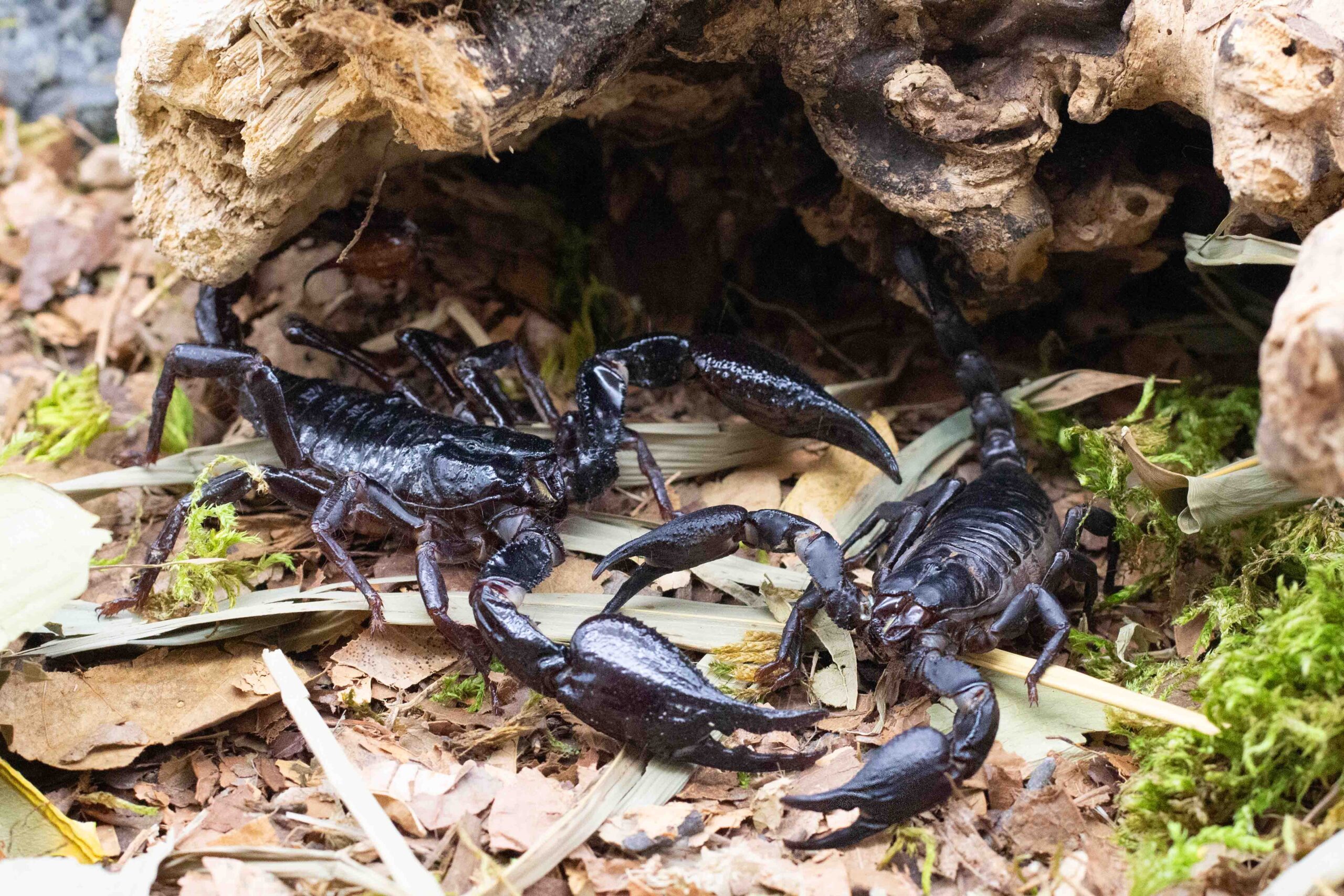


The Heterometrus spinifer vs Heterometrus silenus difference is one of the most frequently asked questions in scorpion keeping. Both species belong to the family Scorpionidae and the genus Heterometrus, which includes a variety of large, dark-colored scorpions from South and Southeast Asia.
Their external similarity regularly leads to misidentification. At the same time, a closer look reveals several features that allow a distinction to be made, even if this is not always clear in individual cases.
Morphological characteristics in comparison
Body proportions and habitus
Both species reach comparable size ranges. Differences are less apparent in the overall length than in the proportions:
- Heterometrus spinifer often appears somewhat more elongated, especially in the metasoma
- Heterometrus silenus appears more compact and more massive overall
However, these differences are variable and can be influenced by age, gender and nutritional status.
Telson and coloring
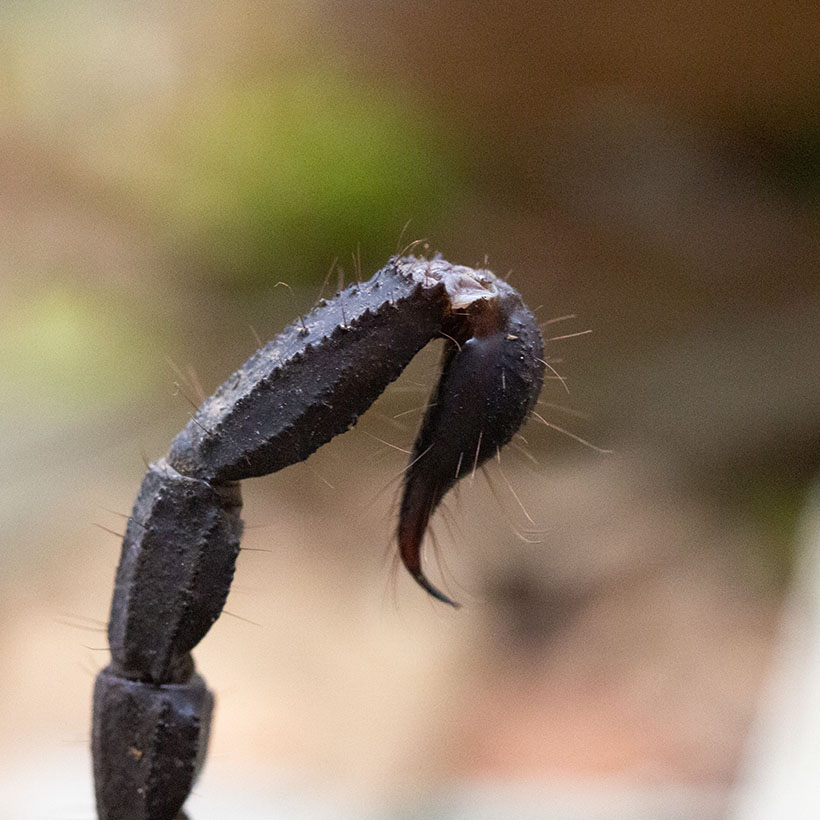
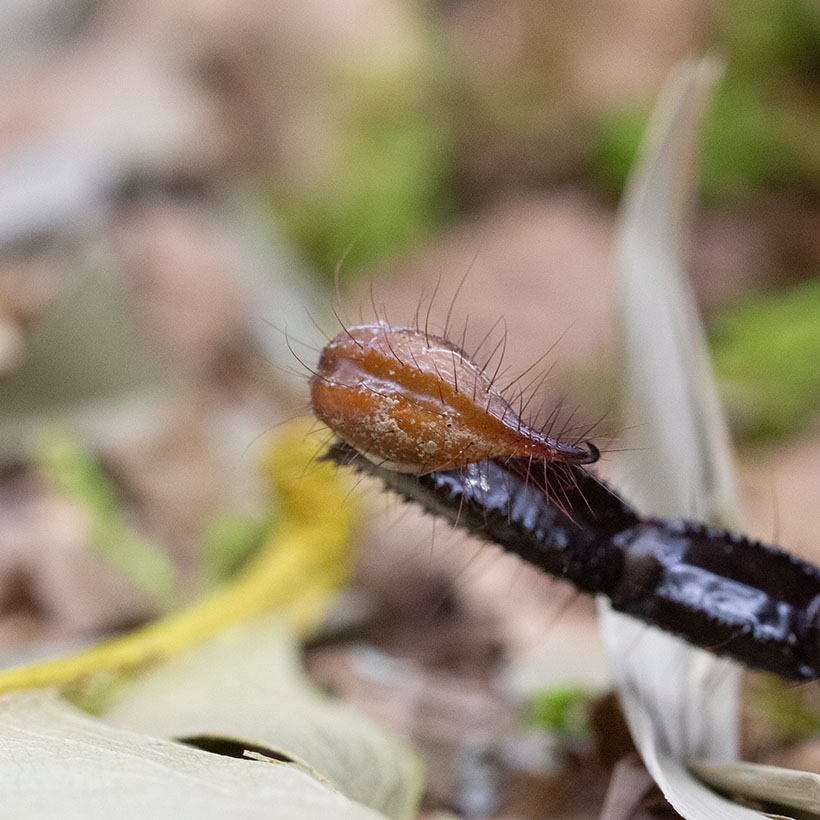
A frequently used characteristic is the telson, i.e. the poison bladder:
- Heterometrus silenus:
- usually uniformly dark in color
- Heterometrus spinifer:
- often lighter, partly reddish-brown in color
- often lighter, partly reddish-brown in color
This characteristic can serve as a guide, but is not sufficient on its own for a reliable determination.
Gloss and surface texture
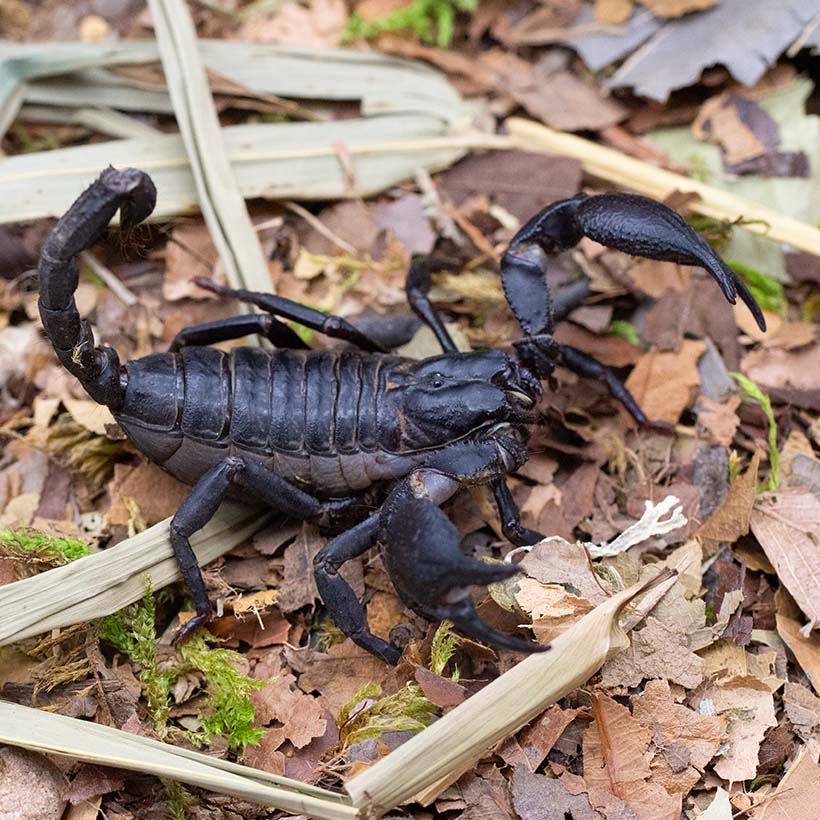
A conspicuous, although not sufficient, difference can be seen in the surface effect of the exoskeleton. Heterometrus spinifer often appears much shinier, especially on the carapace and pedipalps. The surface reflects light more strongly, which gives the animal an overall “smoother” appearance. Heterometrus silenus, on the other hand, usually appears duller. The cuticle is less reflective and therefore appears duller. This difference is presumably related to subtle structural variations in the exoskeletal surface. In practice, the surface effect can play a supporting role in identification, but should always be considered in conjunction with other characteristics.
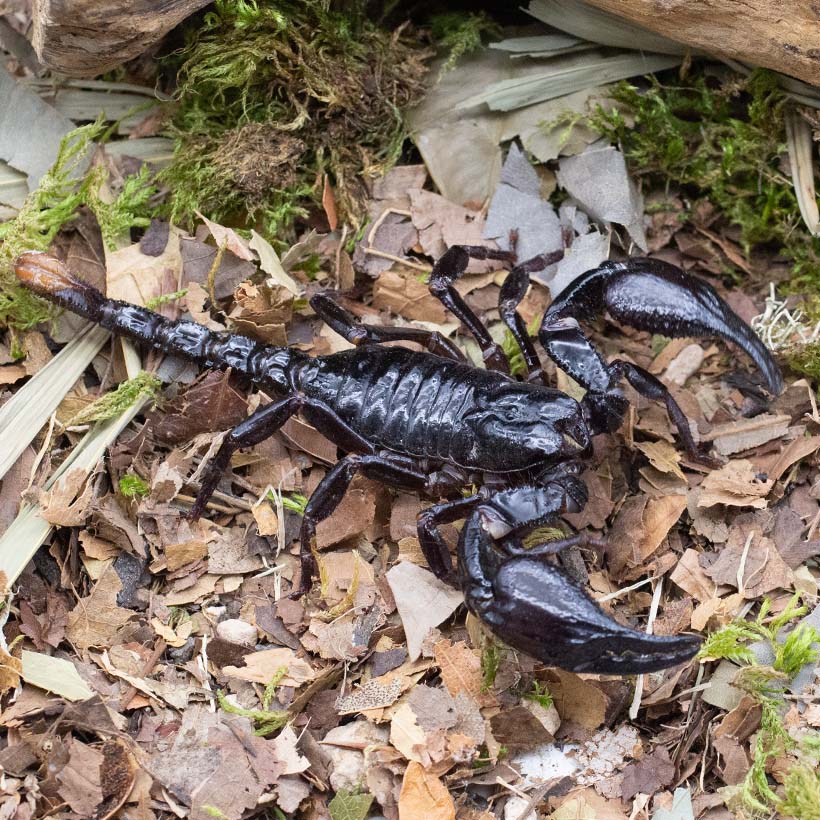
Pedipalps and structural features
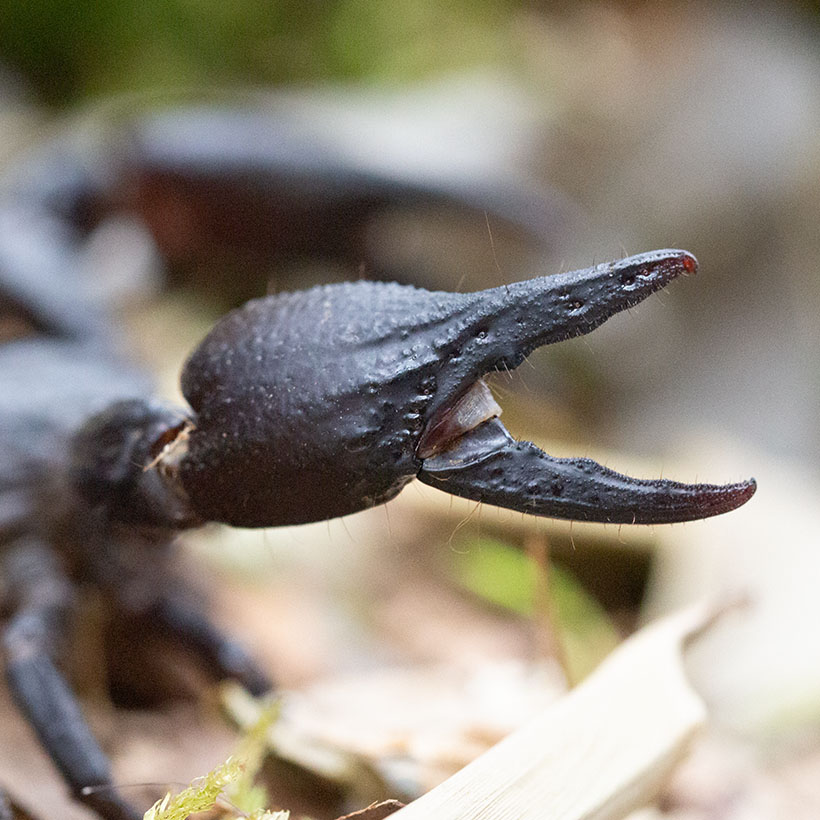
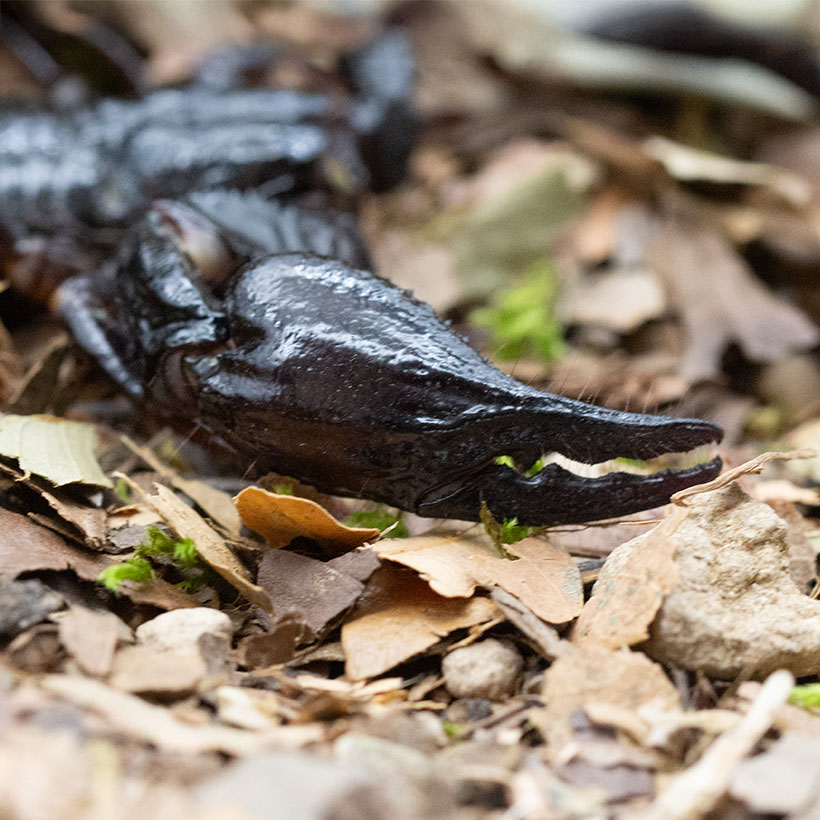
The pedipalps (claws) and their surface structure play a role in making a reliable distinction:
- Differences can be seen in:
- Grain size (granulation)
- Shape of the scissor hand
- Ratio of length to width
However, these characteristics require experience and are difficult to assess without direct comparison.
Differences in young animals
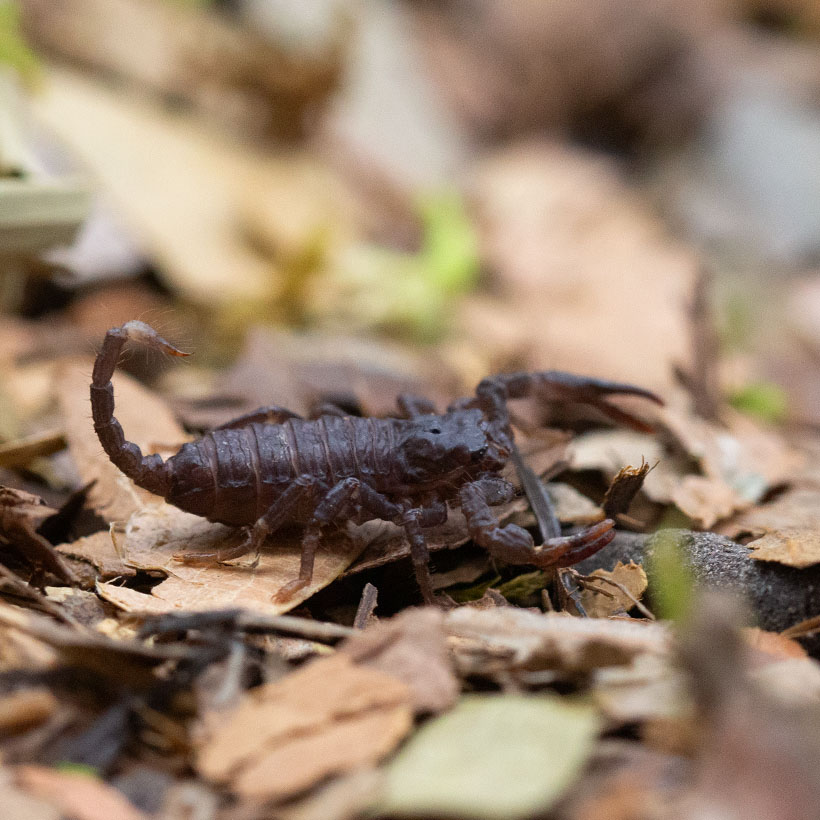
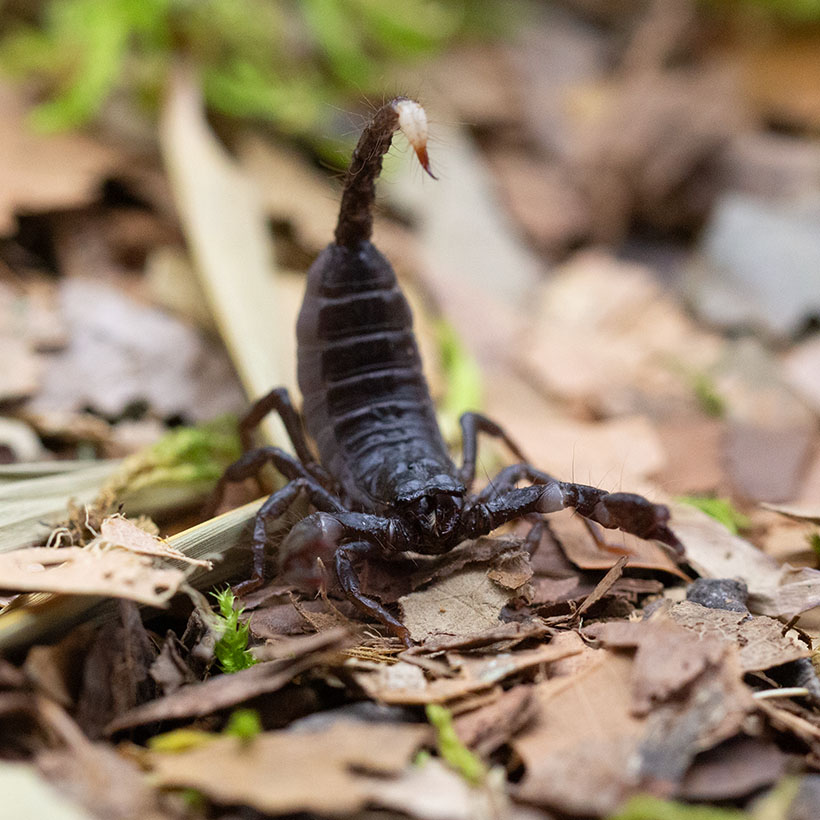
Differences between the two species can also be observed in juveniles. Juveniles of Heterometrus spinifer show a comparatively light, sometimes whitish-looking venom sac (telson). In addition, their basic coloration is usually deep black and may show a slight sheen early on. Heterometrus silenus, on the other hand, has a consistently dark telson in juvenile stages without any clear brightening. The body coloration often appears rather pale black to dark brown and has a duller overall appearance. These characteristics can provide an initial orientation.
Distribution and habitats
Geographical differences
Heterometrus spinifer:
- Particularly widespread in Malaysia
Heterometrus silenus:
- Focus on Vietnam and neighboring regions
These distribution areas do not completely overlap, which is an important basis for taxonomic separation.

Habitat structure
Both species are typical inhabitants of humid tropical forests. They live close to the ground and use:
- Loose soils for digging
- Leaf litter as cover
- Deadwood and root areas as retreats
The microhabitats are characterized by stable humidity and low temperature fluctuations.
Behavior and ecological role
Behavioral differences are often described, but should be classified with caution. Individual variation is considerable in scorpions.
In general it can be said:
- Both species are predominantly nocturnal
- They react defensively when disturbed
- The use of the venomous sting depends on the situation
As predators, they fulfill an important function in the ecosystem. They regulate populations of small invertebrates and are themselves part of the food chain.
Importance for terraristics
The problem of misidentification
In practice, both types are often referred to collectively. This has several consequences:
- Difficult assignment of posture parameters
- Problems with offspring
- Loss of taxonomic clarity in the hobby
A reliable determination therefore requires more than visual assessment.
Posture in comparison
The basic requirements are similar:
- moist, diggable substrate
- Stable humidity
- Structured retreat areas
Differences lie more in the details than in the basic principle. Both species react sensitively to conditions that are too dry and a lack of retreat options.
Responsibility and classification
The comparison Heterometrus spinifer vs Heterometrus silenus difference shows how important precise knowledge of the species is in terraristics. External similarity must not lead to simplified assumptions.
An objective discussion of origin, morphology and lifestyle enables a well-founded attitude and reduces misinterpretations.
Conclusion
The differences between Heterometrus spinifer and Heterometrus silenus lie mainly in details of morphology, distribution and subtle differences in appearance.
Both species are typical representatives of tropical soil fauna with comparable ecological roles. However, their differentiation requires a close look and a certain amount of experience.
The difference between Heterometrus spinifer and Heterometrus silenus is therefore less a question of clear contrasts than one of careful observation and classification.
Based on these differences, it should be possible to tell from the photo which specimen is Heterometrus silenus and which is Heterometrus spinifer.
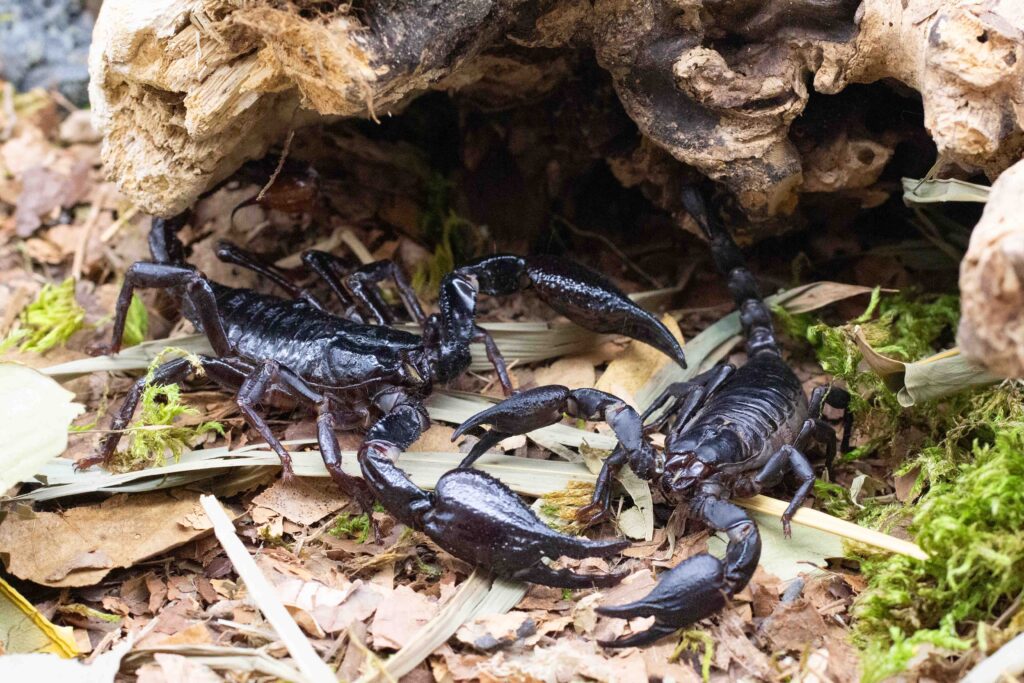
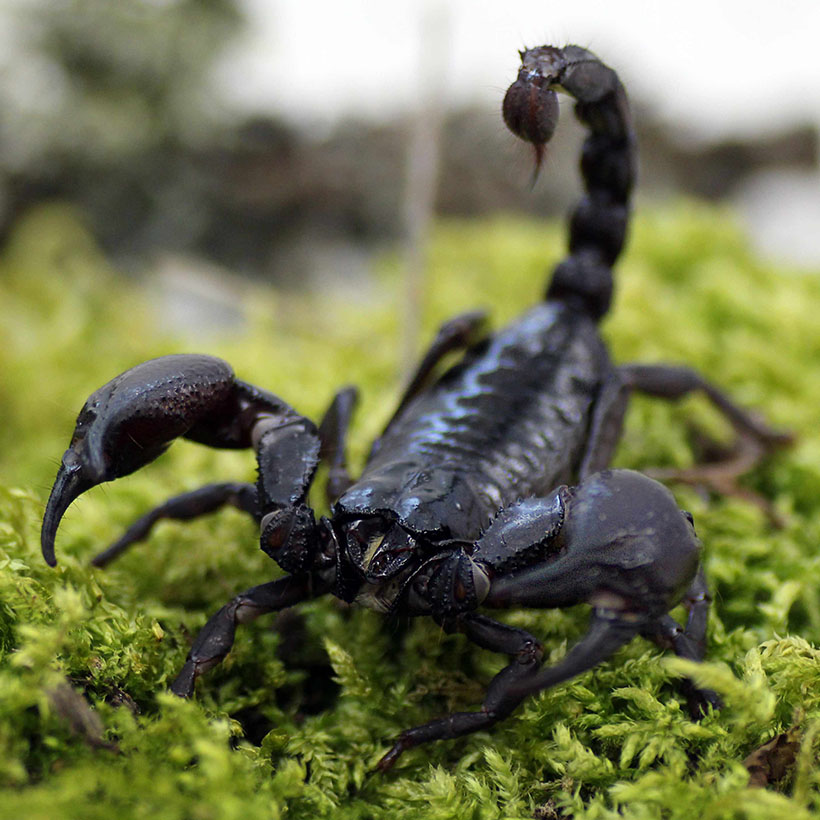
Heterometrus silenus
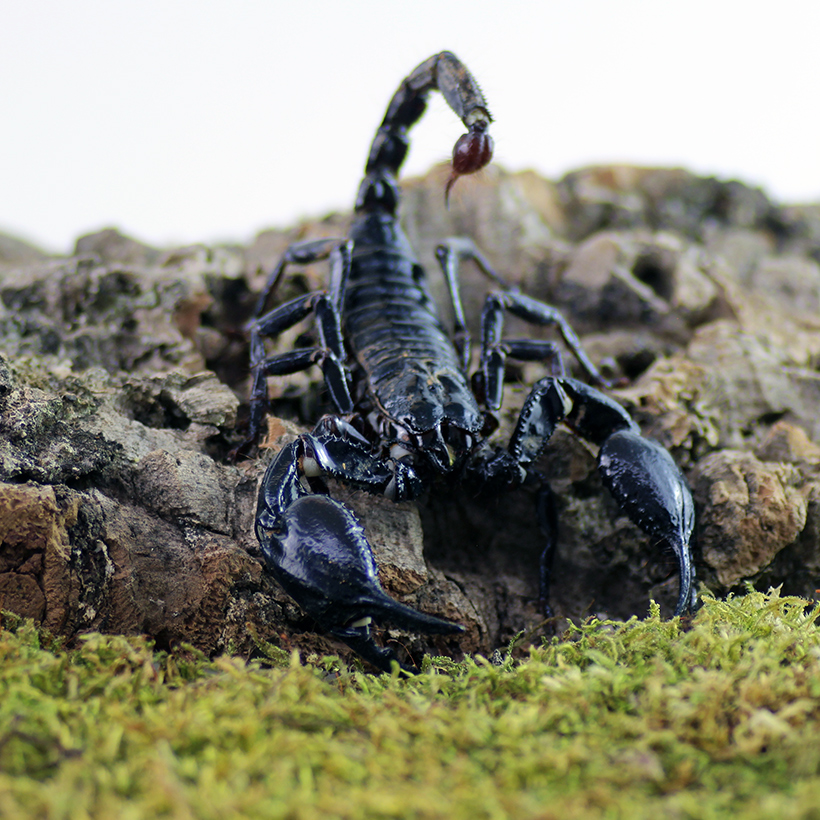
Heterometrus spinifer “Malaysia”
If you have any further questions, please leave them in the comments below the article.
Leave a Reply
You must be logged in to post a comment.