


Which tarantulas are really right for you as a beginner? The most beautiful color alone isn’t the answer. What matters is the animal’s lifestyle, its size when you buy it, and whether you’ll still enjoy it even when it hides for long periods of time. Here, we compare five species from our selection and help you get ready.
“Suitable for beginners” does not mean docile or undemanding. Even an animal that is usually calm can suddenly flee, defend itself, or use its urticating hairs. Tarantulas are animals best observed from a distance. For beginners, we recommend a well-acclimated, larger captive-bred specimen rather than the tiniest spiderling.
Tarantulas for Beginners: Which Lifestyle Is Right for You?
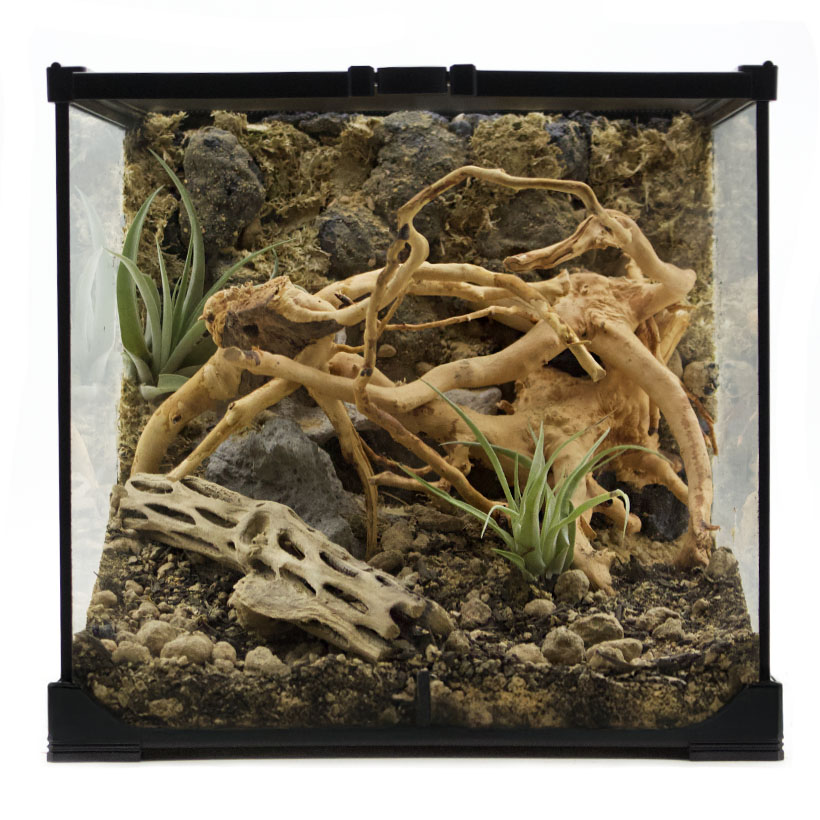
The first four species live on or in the ground. Caribena versicolor, on the other hand, prefers to live at higher elevations. This results in different terrarium setups: a digging area and a cave near the ground for some, and a climbing structure and a sheltered web-building spot for others. A large, empty glass box does not meet either of these needs.
| Type | Lifestyle | To help you make your decision |
|---|---|---|
| Brachypelma hamorii | ground-dwelling creatures | Slow growth; accept periods of retreat. |
| Tliltocatl albopilosus | Lives on the ground, likes to dig | Soil that is easy to dig; not permanently visible. |
| Tliltocatl vagans | Ground-dwelling animals with pronounced digging behavior | Deep burial chamber; expect rapid reactions upon opening. |
| Brachypelma emilia | ground-dwelling creatures | Patience as it grows; also stinging hairs. |
| Caribena versicolor | Tree-dwellers | Tall structure and good cross-ventilation; requires more preparation. |
Our selection guide: If you’re comparing tarantulas for beginners, take a closer look at Brachypelma hamorii and Tliltocatl albopilosus. If you’re primarily interested in a tree-dwelling species, read up on the specific requirements of Caribena versicolor first. You should not buy any of these animals simply because they are supposedly guaranteed to be peaceful.
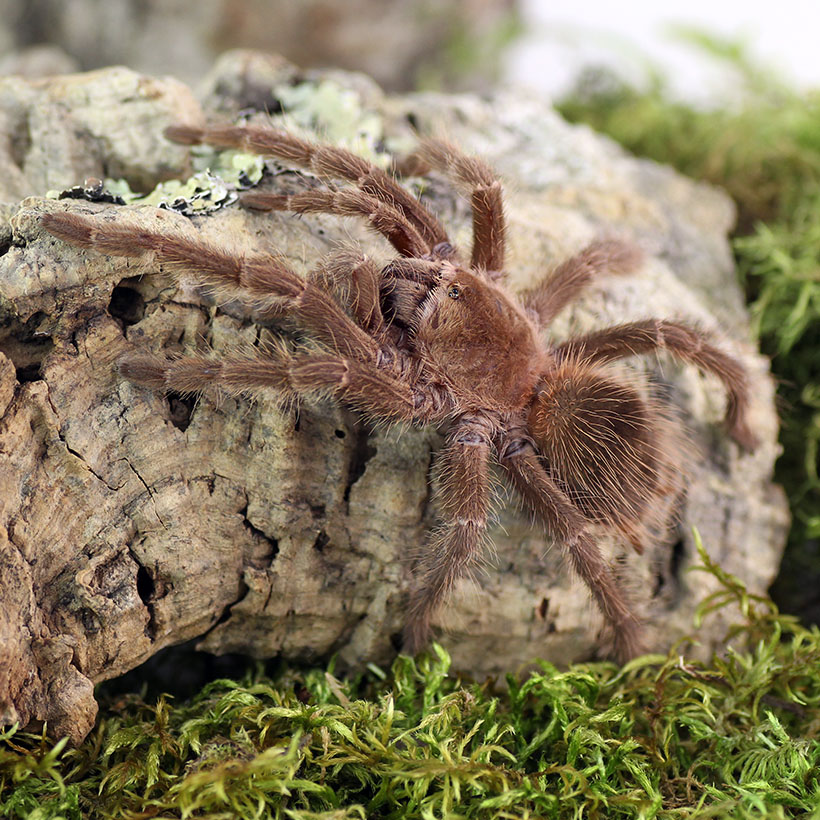
1. Brachypelma hamorii: the classic red-kneed tarantula
The orange knees make Brachypelma hamorii particularly striking. It grows slowly, giving you plenty of time to observe its development. When reading older texts, please note: Brachypelma hamorii and Brachypelma smithi are now recognized as two distinct species, not simply an old and a new name for the same spider.
To care for them, you’ll need substrate they can burrow into, a safe hiding place, and accessible drinking water. Larger animals are generally kept in drier conditions; a small, slightly moister area is an option. That doesn’t mean you should let a tiny spiderling dry out completely.
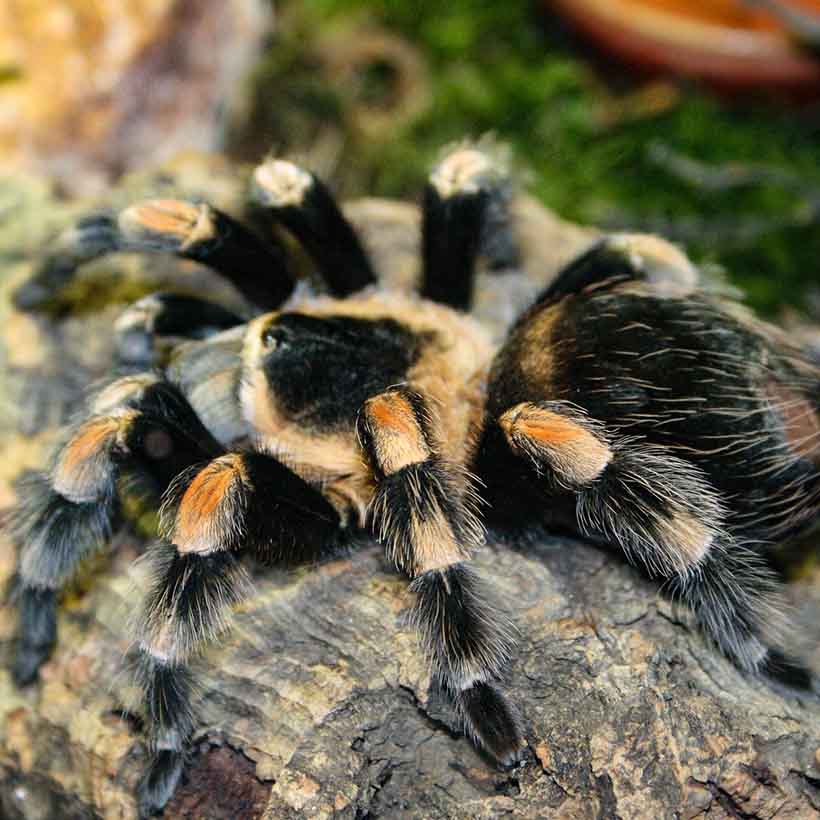
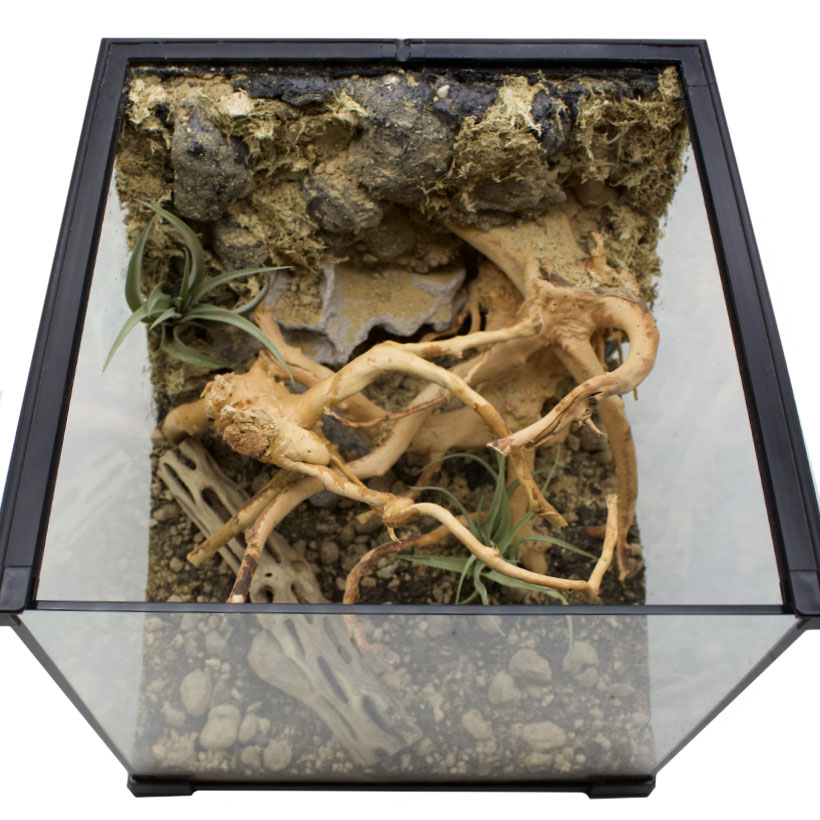
This is a good fit for you if you’re looking for a slow-growing ground-dweller and can calmly observe longer periods of inactivity or fasting.

Brachypelma hamorii “Red-kneed tarantula”
2. Tliltocatl albopilosus: The Joy of Digging
The curly-haired tarantula stands out because of its curly hairs. Among others, we carry the “Nicaragua” variety. It likes to use burrows and reshapes its substrate on its own. That’s precisely part of what makes it so interesting to observe—it’s not just about sitting out in the open in front of the glass.
Provide a sufficiently deep, stable substrate and a spot for a burrow. A slightly moister area is helpful; the entire container should not be constantly wet. Even this commonly recommended species for beginners can use stinging hairs and needs to be left undisturbed during care procedures.
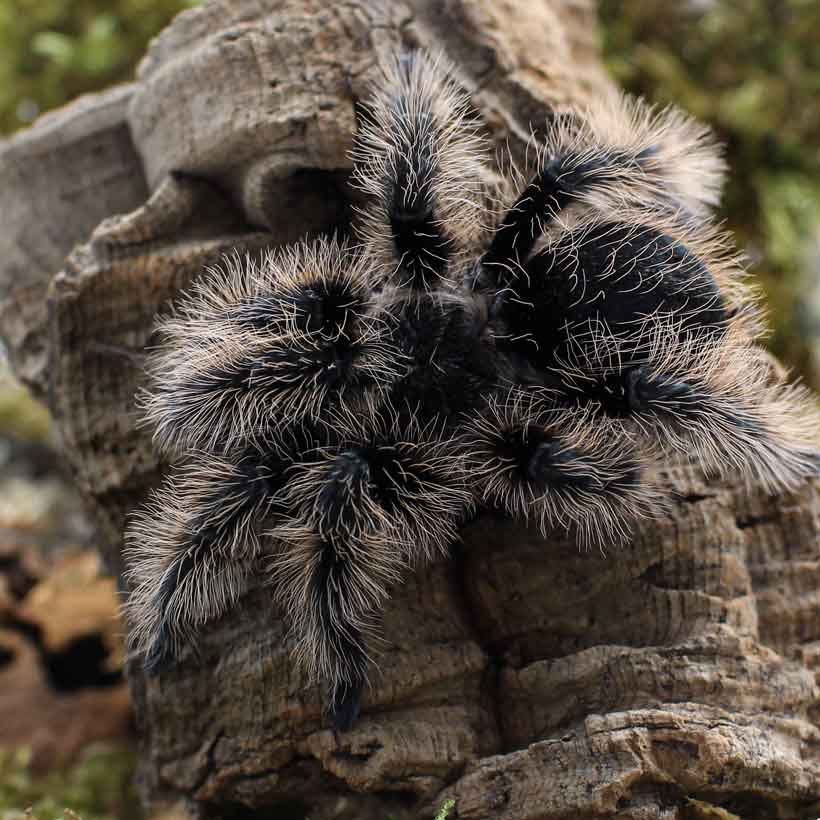
This is for you if you find natural burrowing behavior fascinating and don’t want to lure a spider—which is sometimes invisible—out of its hiding place.
3. Tliltocatl vagans: an avid cave-builder
The dark body and reddish hair on the abdomen create a beautiful contrast. Tliltocatl vagans digs distinct burrows. A flat substrate with a few decorations does not suit this lifestyle. Therefore, plan for the digging space when selecting the tank.
Compared to some Brachypelma species, it can react more quickly when the lid is opened. That doesn’t make it “mean,” but it does require a calm approach and a capture cup at the ready. It’s a possible species for beginners if you’re prepared for it; it’s not a spider that’s constantly active for demonstrations.
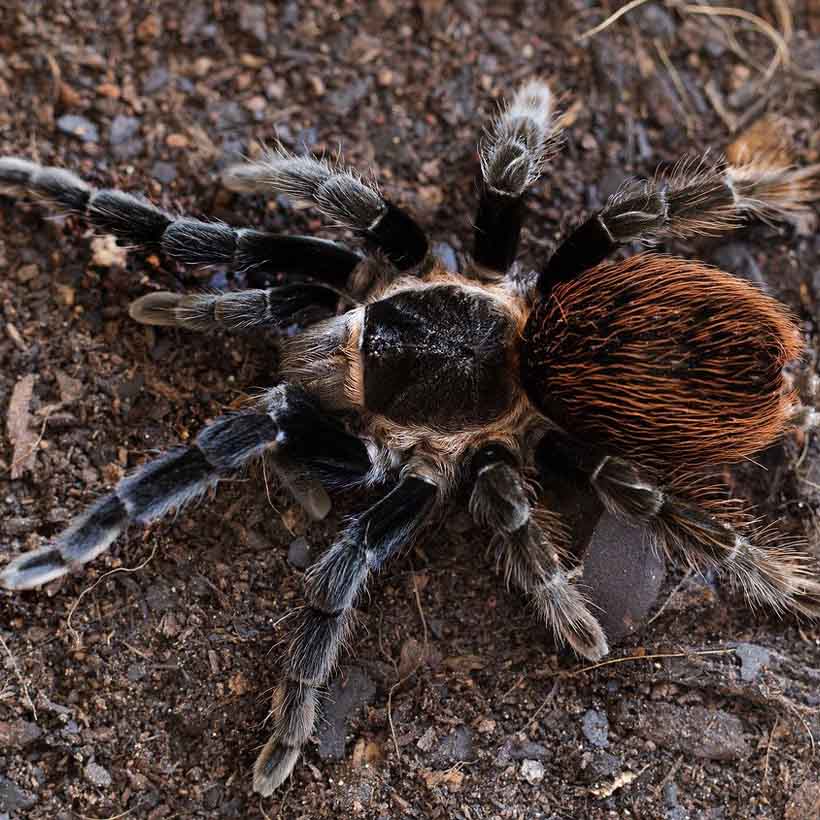
This is a good fit for you if you can provide enough space to dig and respect its need for quick movements, rather than expecting it to be an especially docile animal.
4. Brachypelma emilia: Let it grow slowly
Brachypelma emilia stands out because of its orange-and-black markings and the dark triangle on its cephalothorax. As with Brachypelma hamorii, patience pays off: a small juvenile won’t turn into a large show spider in just a few weeks.
Here, too, the focus is on a stable burrow area, soil suitable for digging, and drinking water. Tall climbing structures are of little use to a heavy ground-dweller and can increase the height of a fall. “Calm” remains a possible observation of an individual animal—it is not a guarantee of its behavior.
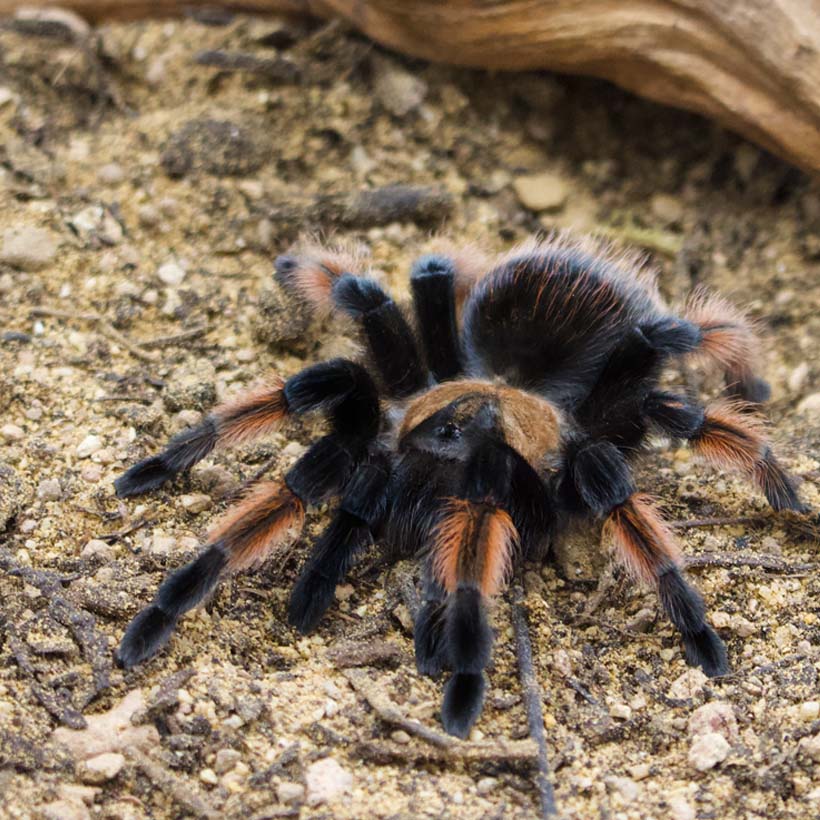
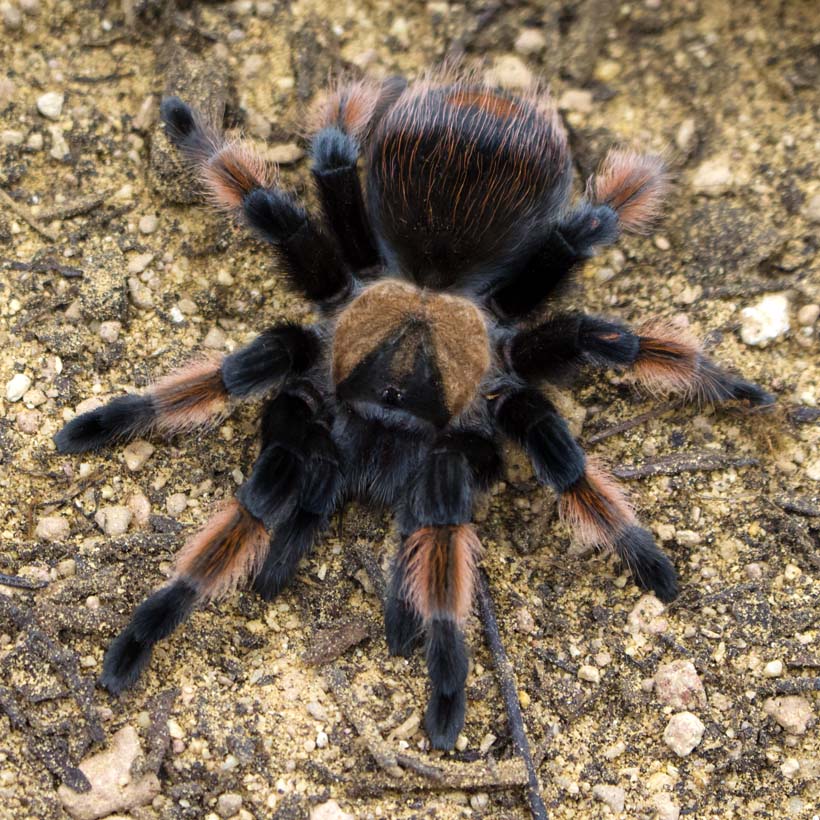
This is a good fit for you if you’re planning for the long term and prefer to watch things develop slowly rather than engage in frequent activity.
5. Caribena versicolor: the exception as a tree-dweller
The blue nymphs undergo a significant change in coloration as they develop. Caribena versicolor builds its web high up and requires vertical or slanted pieces of cork as well as other anchor points to do so. This makes it fundamentally different from the four ground-dwelling species.
Proper ventilation and easily accessible water sources are especially important. “Tropical” doesn’t mean constantly spraying everything with water. A warm, stuffy enclosure isn’t a good solution. This species can also run and jump quickly; plan the access so that you don’t constantly damage the web.

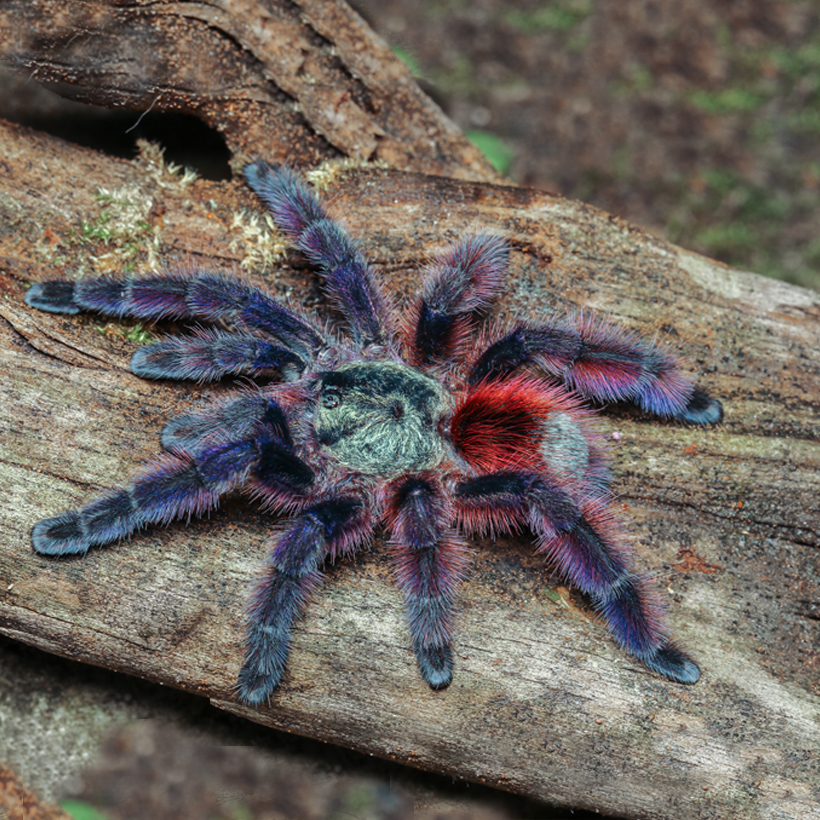
This is a good choice if you’re specifically preparing to care for a tree-dwelling pet. For the easiest way to get started, we’d recommend beginning with one of the ground-dwelling alternatives.

YOUR READING TIP · Setting Up a Brachypelma Terrarium
The setup guide shows how substrate and hiding spots go together. Use it to supplement the information provided for the species you’ve chosen.
Buying Your First Tarantula: Size and Sex
A very small spiderling often costs less, but requires more attention when it comes to food size, humidity, and escape prevention. For beginners, a larger juvenile tarantula is therefore often the simpler choice. Ask about the body length (excluding legs), the stage of development, and the feeding regimen to date. A measurement in millimeters does not indicate age: growth also depends on species, sex, and care conditions.
“Undetermined” means that the sex has not yet been reliably identified. In many tarantula species, females live significantly longer than males. An adult male has already completed its final molt and is therefore less suitable if you plan to care for the animal for many years. Ask for an explanation of the sex determination and keep all documentation regarding its origin and purchase.
Tarantulas for Beginners: What Do You Need Before Bringing One Home?
- Appropriate enclosure: Securely sealed, ventilated, and sized appropriately for the animal’s current size. For ground-dwelling species, provide space for a deep substrate and avoid an unnecessarily large drop height; for Caribena, use a tall enclosure.
- Shelter and water: A stable shelter or place to spin a web and accessible drinking water are essential. You can continue to use any suitable facilities you already have.
- Measuring the climate: Check the intended location during the day and at night. A heat lamp is not a required purchase. Only if the measured conditions are not suitable for the species should a controlled heating solution be planned.
- Organizing food: Determine what size the specific animal has reached so far. Buy a manageable amount and plan how to keep it stocked.
- Preparing to move the spider: A collection cup and a stable surface help ensure a smooth transfer. Do not pick up the spider with your fingers.
YOUR READING TIP · Choosing the Right Lighting and Heating
Our lighting guide will help you determine whether special equipment is needed and which solution is best suited for your pet and its enclosure.
Your First Tarantula: The First Few Days After Bringing It Home
Set up the enclosure before the animal arrives. After the move, give the animal time to settle in and find its hiding spot. Check the water and the lid without repeatedly luring it out. A photo of the finished setup will help you identify any changes later on. Do not dig up a closed cave to visually inspect it.
What should I do if my tarantula won’t eat?
Record the last feeding and check the animal’s physical condition, water, and temperature. A well-nourished, larger animal may take breaks from eating; with tiny animals or those showing visible signs of decline, closer observation is necessary. Remove any uneaten prey. Preparation for molting is a possible cause, but not the only one. If the animal is weak or shows a significant decline in condition, seek expert advice.
My tarantula is lying on its back. Should I turn it over?
No. Tarantulas often molt while lying on their backs. Leave them undisturbed and remove any accessible prey without touching the spider. After molting, do not feed the spider again until its body and fangs have hardened. For larger specimens, this can take longer than a week.
Which species am I guaranteed to see every day?
None. Hiding is an important part of their behavior and not a sign of anything wrong with the animal. Visibility also depends on the animal’s age, its environment, and whether it’s molting. Therefore, choose a species whose lifestyle interests you, rather than taking away its hiding place.
Can I hold my tarantula in my hand?
This isn’t necessary for their well-being. A fall can seriously injure these delicate animals, and even species suitable for beginners can bite or use their stinging hairs. Observe them in the terrarium and use a suitable catching cup if you need to move them.
Are you looking for tarantulas suitable for beginners and can’t decide between two species? Then let us know how much space you have available, the temperatures at your location, and the desired size when you buy them. That way, we can recommend a suitable selection without suggesting too many unnecessary accessories.
Still unsure? Feel free to ask us your question in the comments section below the article.

Leave a Reply
You must be logged in to post a comment.