Phidippus carolinensis
Price range: 28,00 € through 68,00 € incl. VAT, plus shipping

Simple

USA

< 13 mm

23°C – 27°C
Phidippus carolinensis – a rare jumping spider from North America
Phidippus carolinensis is an interesting and relatively rare jumping spider from North America. It belongs to the family Salticidae and possesses all the traits that make the genus Phidippus so fascinating: large, forward-facing eyes, keen eyesight, and active hunting behavior.
The species was described in 1909 by George and Elizabeth Peckham and is now recognized as Phidippus carolinensis Peckham & Peckham, 1909.
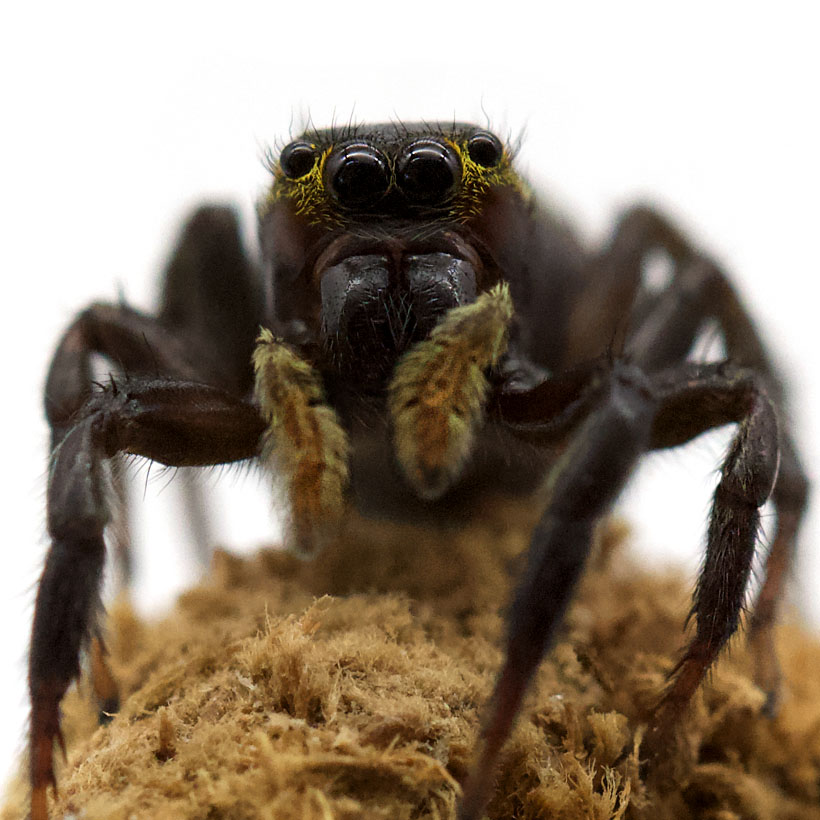
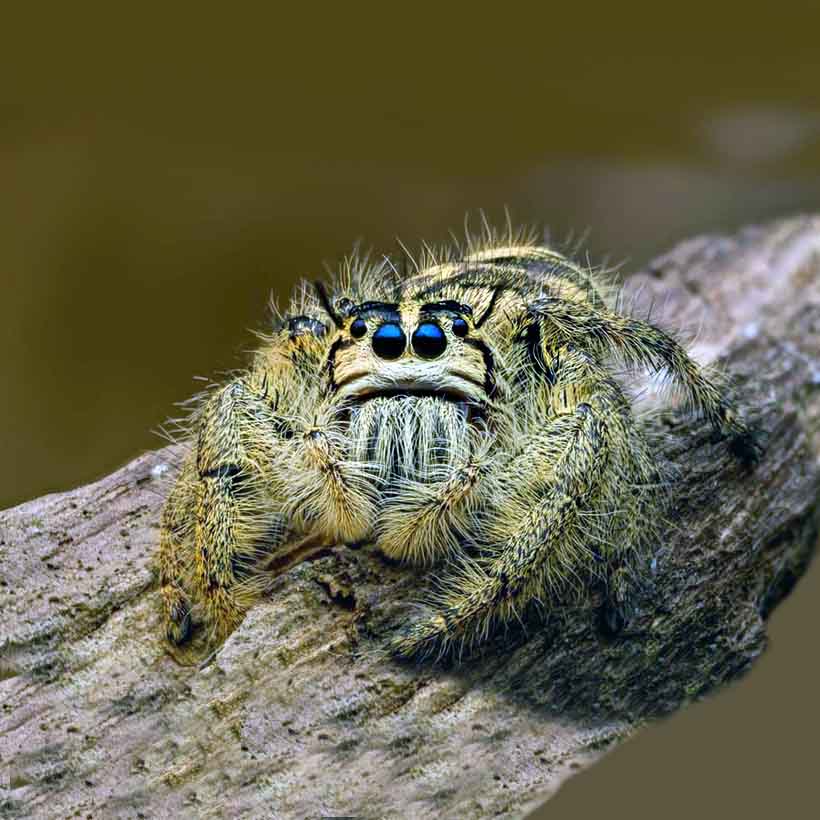
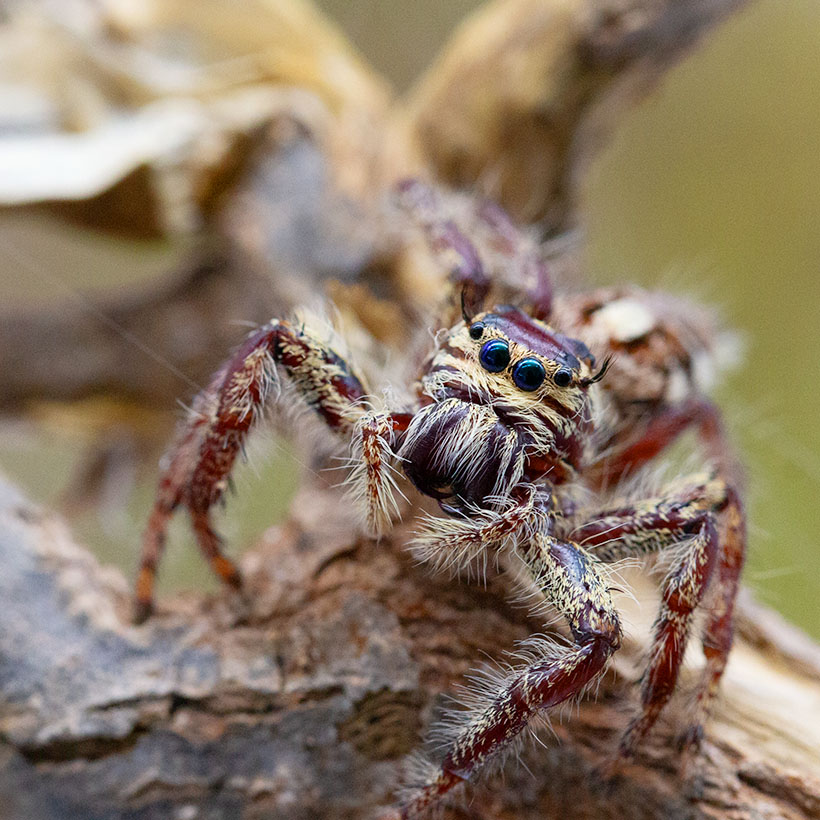
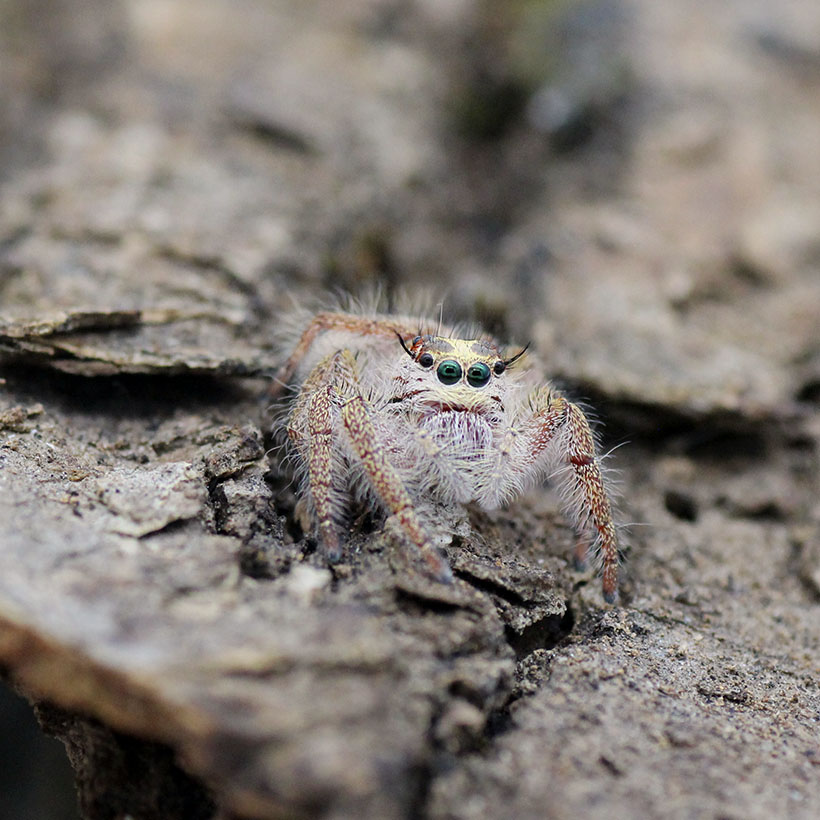
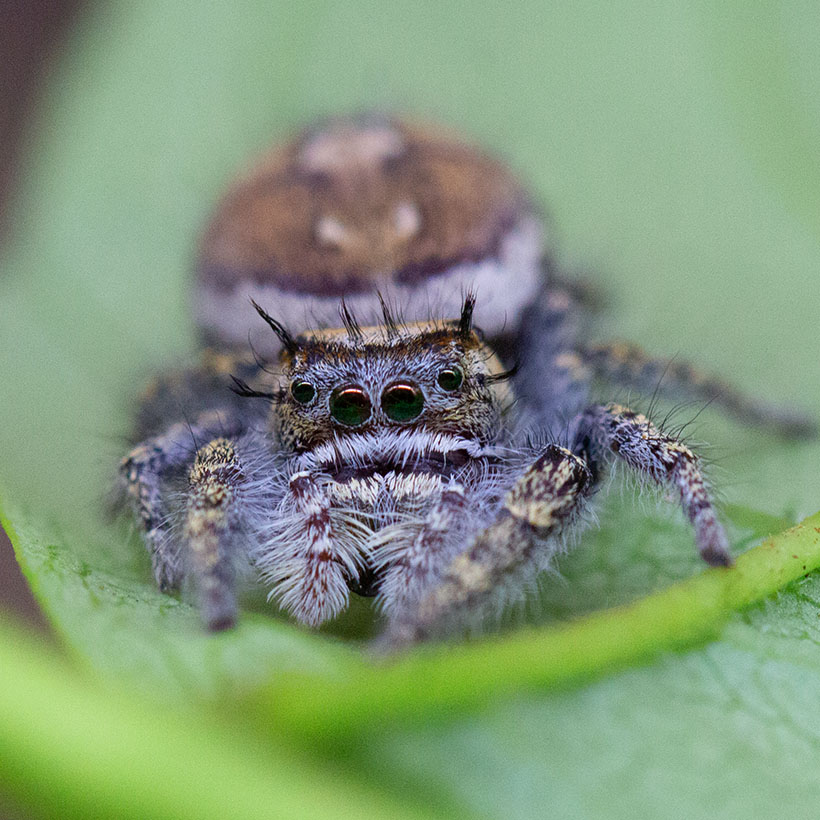
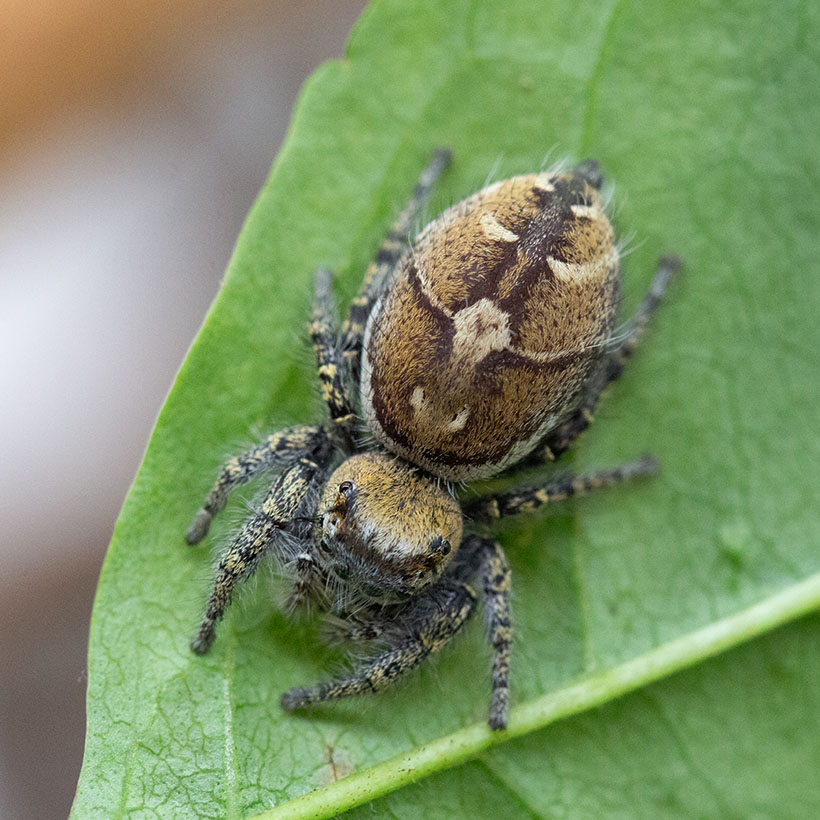
Visually, it differs significantly from the commonly kept Phidippus species, which often have very high-contrast coloration. Females, in particular, can appear rather unremarkable at first glance with their shades of gray, brown, and cream. Upon closer inspection, however, a delicate pattern and numerous details become apparent.
The name Phidippus carolinensis is a bit misleading
The story behind the species name is particularly fascinating.
The original type specimen was described as having been found in North Carolina. However, subsequent studies were unable to confirm the presence of any additional specimens there.
Phidippus specialist G. B. Edwards therefore concluded that the original specimen had likely been mislabeled.
Stephenville, Texas, was proposed as the new reference locality because there are several confirmed records from that area.
Today, its distribution in the U.S. is considered well-documented, particularly in Texas, Oklahoma, and Kansas. Phidippus carolinensis also occurs in Mexico.
A jumping spider from Texas, Oklahoma, Kansas, and Mexico
Its origin is also of interest for keeping the species as a pet.
Phidippus carolinensis is not native to a permanently warm and humid tropical habitat. Many confirmed sightings have come from the central and southern parts of the United States.
In Central Texas, for example, specimens have been observed on or immediately adjacent to opuntia cacti. Edwards’ scientific revision also mentions sightings on coniferous trees.
This already indicates that we do not need a permanently humid tropical terrarium for this species.
Plenty of light, warmth, good ventilation, and areas that can dry out again between mistings are much more suitable.
Body length approximately 10–13 mm
Phidippus carolinensis is one of the medium-sized species in the genus.
The original species description already lists a body length of about 10 mm for males and approximately 10–13 mm for females.
This makes the species smaller than particularly large jumping spiders such as Hyllus giganteus. Even compared to very robust female Phidippus regius, it usually appears somewhat more compact.
Nevertheless, Phidippus carolinensis possesses the typical robust build of the genus Phidippus.
Females with understated but beautiful markings
The females, in particular, are worth a closer look.
The base coloration ranges primarily from gray to brown and lighter cream tones. In addition, there are light markings on the abdomen.
This coloration blends in perfectly with dry vegetation, bark, and other natural structures.
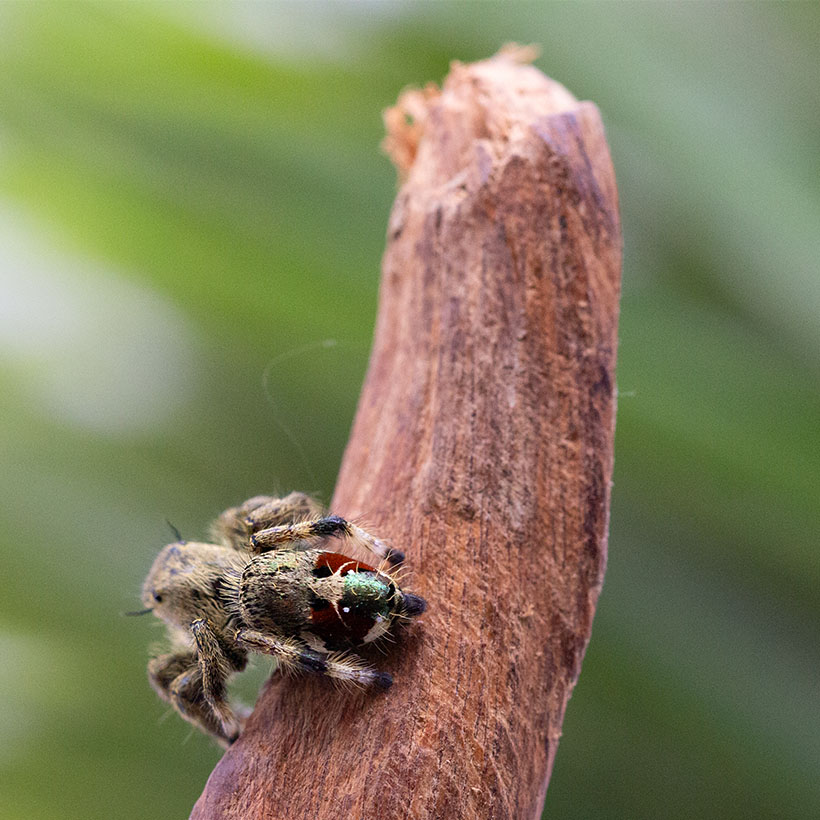
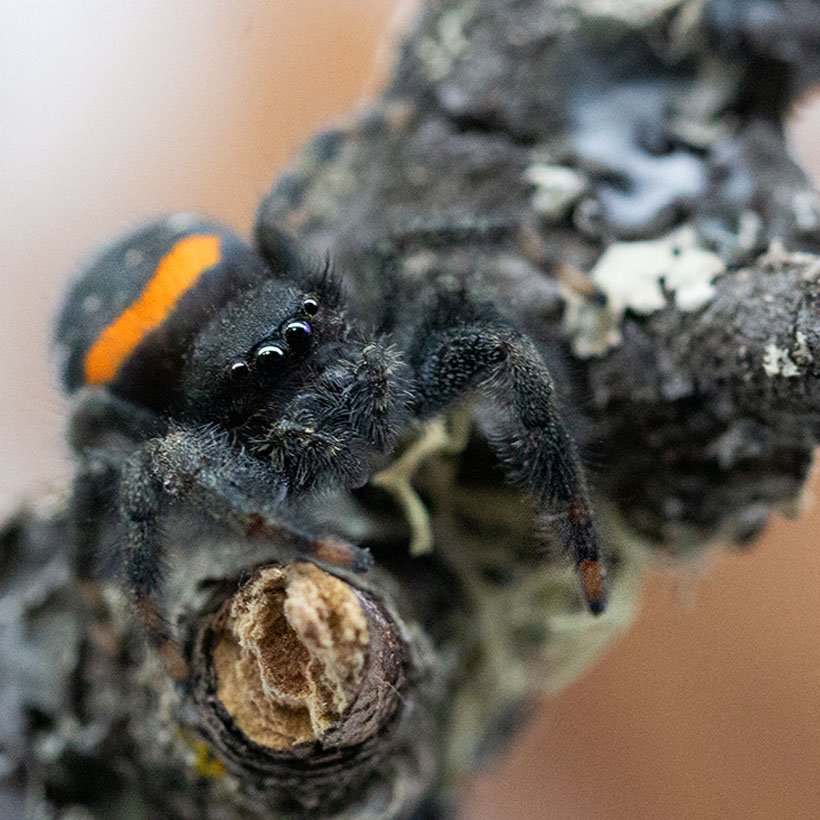
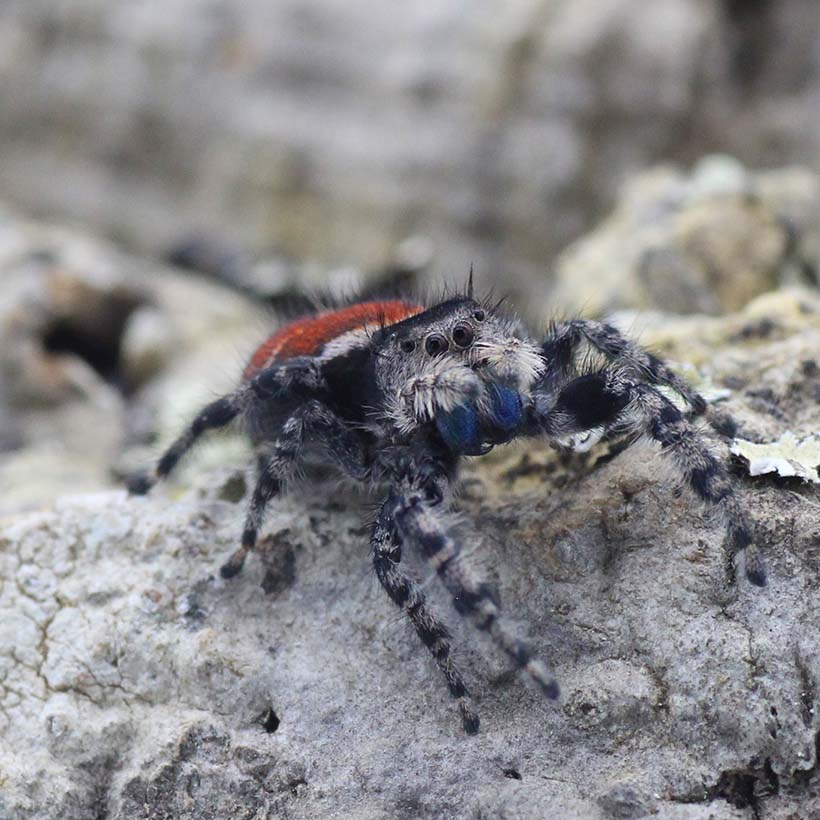
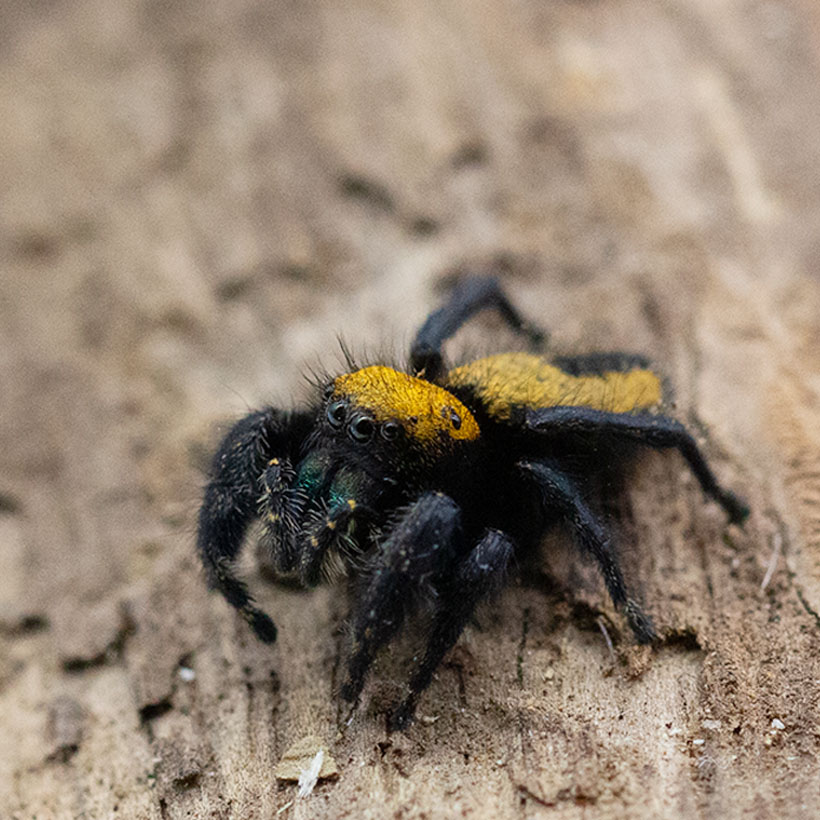
Males differ significantly from females. Particularly striking are the characteristic hair structures on the head.
Phidippus carolinensis belongs to the so-called putnami group. Males in this group have characteristic dorsal hair crests, which serve as an interesting distinguishing feature among related species.
An active hunter with excellent eyesight
Like other jumping spiders, Phidippus carolinensis does not build a web to hunt.
Instead, it actively searches for and observes its prey.
Its large front eyes play a crucial role in this process. Once the spider has spotted a suitable prey item, it aligns its body with it and approaches.
This is followed by its characteristic, precise leap.
Before leaping, the jumping spider anchors a safety thread made of silk. This allows it to secure itself in case a jump does not end as planned.
It is precisely this active behavior that makes Phidippus carolinensis such a fascinating animal to observe.
A bright and well-ventilated terrarium
When setting up the terrarium, I would take cues from its relatively warm North American origin.
The terrarium should be bright and very well ventilated. At the same time, it should offer different levels and plenty of pathways.
Jumping spiders make much greater use of three-dimensional structures than a large open floor area.
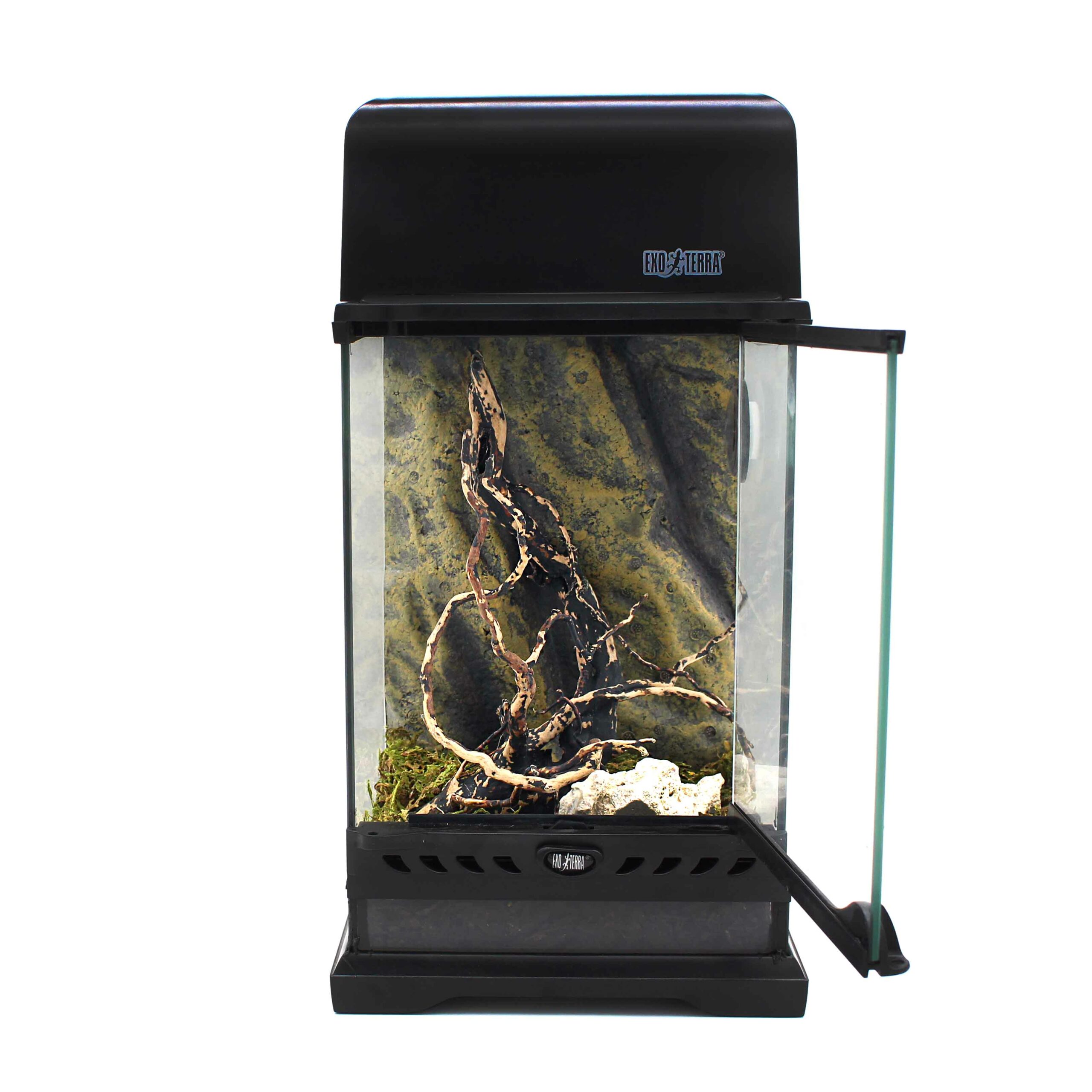
Cork, twigs, wood discs, and plants can therefore be arranged in such a way that the spider can move from the floor all the way up to the upper part of the terrarium.
Approximately 23–27 °C as a practical guideline
There is no scientifically determined optimal terrarium temperature for Phidippus carolinensis.
Therefore, I would not present any retailer’s specifications as scientific species parameters.
For keeping the spider, a temperature range of approximately 23–27 °C during the day is a practical guideline. Lighting from above can also create a slightly warmer area.
At night, the temperature may drop.
A temperature gradient is also important. This allows the spider to decide for itself whether it wants to stay closer to the light or in a slightly cooler area.
No Constantly High Humidity
When it comes to humidity, I would also deliberately avoid sticking to a fixed percentage.
Phidippus carolinensis should not be kept constantly wet.
Instead, you can lightly mist the terrarium regularly. This creates small water droplets on the glass and on the decor, which the spider can use to drink.
Afterward, the terrarium should be allowed to dry out again.
Good ventilation is therefore especially important. It prevents the buildup of constantly damp and stagnant air.
The upper part of the terrarium is especially important
Jumping spiders prefer to build their webs in sheltered areas in the upper part of their habitat.
That’s why you should provide various options specifically in that area.
Cork, twigs, plants, and other structures create different spots where Phidippus carolinensis can spin its web.
A terrarium with a front opening is particularly practical in this regard. This means the web structure is less likely to be damaged when opening it than with a container that opens entirely from the top.
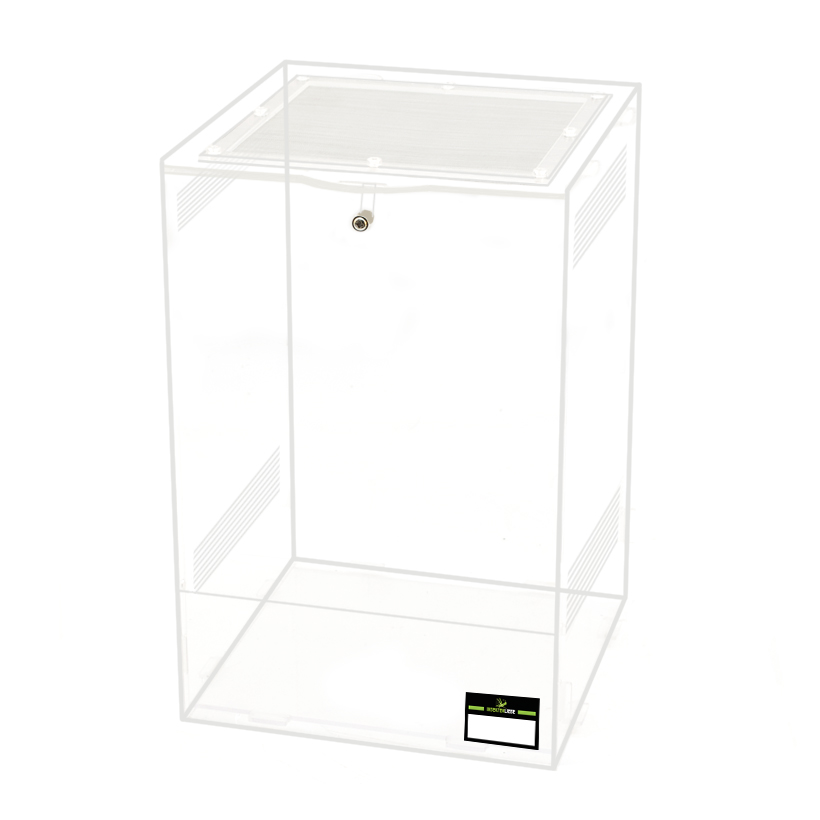
Keep the rearing setup simple at first
Young Phidippus carolinensis do not need to be moved into a large terrarium right away.
A suitable rearing container makes monitoring easier at first. At the same time, the small spider can find its prey more quickly.
As the spider grows, you can then make the switch.
Starting around FH6, a suitably set-up terrarium is appropriate. For an adult spider, for example, a terrarium measuring approximately 20 × 20 × 30 cm already offers plenty of opportunities for a varied vertical setup.
However, a structure that can be put to good use is more important than having as much empty space as possible.
The food source grows alongside Phidippus carolinensis
For young jumping spiders, we start with appropriately small prey items.
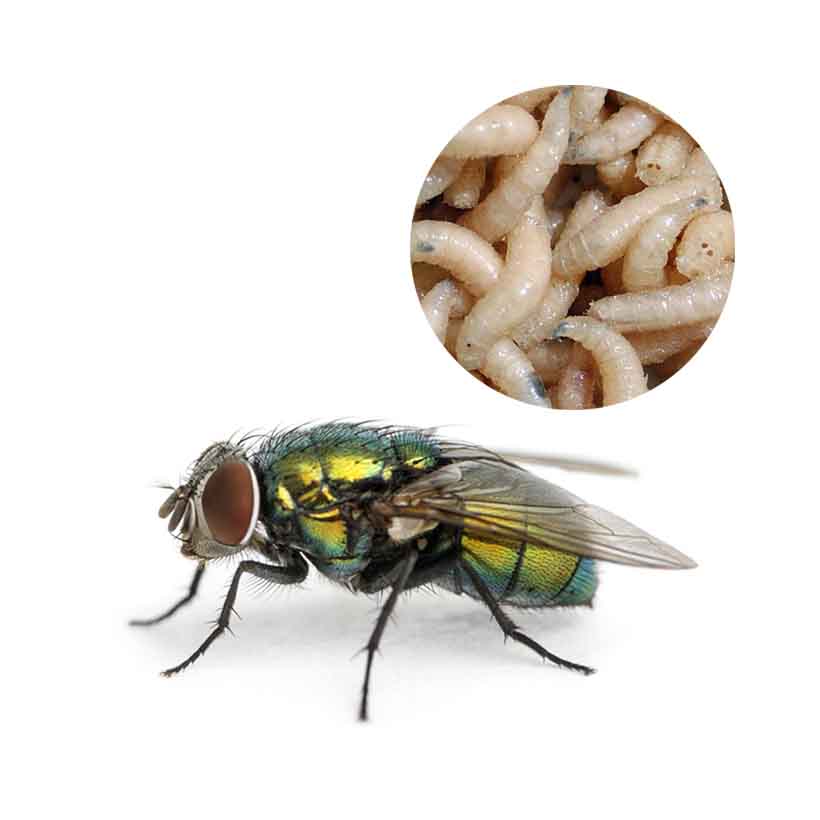
Depending on the stage of development, small fruit flies are a good starting point. Afterward, larger Drosophila can be offered, followed later by larger flies or other suitable feed insects.
The size of the prey should always be adjusted to fit the spider.
Young animals are typically fed smaller portions more frequently. As they get older, the intervals between feedings can become longer.
Be especially vigilant before a molt
If Phidippus carolinensis builds a denser web and suddenly eats less or stops eating altogether, a molt may be imminent.
During this phase, you should not open the web.
Food animals should also not be kept in the immediate vicinity of the spider for extended periods.
After molting, the new exoskeleton needs some time to harden. Afterward, the spider usually resumes hunting.
Always keepPhidippus carolinensis individually
Like our other jumping spiders, we also keep Phidippus carolinensis individually.
Jumping spiders are predatory solitary creatures. They do not need other spiders for company.
Keeping them together, on the other hand, would increase the risk that one of the spiders would be preyed upon by the other.
Sexually mature animals are brought together in a controlled manner only for targeted breeding.
Do not confuse with Phidippus carolinus
There is another taxonomic peculiarity here that can quickly lead to confusion, especially during research.
Phidippus carolinensis and the historical name Phidippus carolinus are not the same.
The name Phidippus carolinus was used for a different spider and was later synonymized with Phidippus otiosus.
Phidippus carolinensis Peckham & Peckham, 1909, on the other hand, remains a distinct and recognized species.
That is why you should always pay close attention to the ending of scientific names.
Benefits at a Glance
- Phidippus carolinensis Peckham & Peckham, 1909
- Recognized species of the family Salticidae
- Distribution: United States and Mexico
- Known in the U.S. primarily from Texas, Oklahoma, and Kansas
- The historical record from North Carolina is likely a misidentification
- Males approximately 10 mm in body length
- Females are approximately 10–13 mm in body length
- Part of the Putnami Group
- Interesting shades of gray, brown, and cream
- An active, visually oriented hunter
- Bright and well-ventilated housing
- Approximately 23–27 °C as a practical daytime temperature
- Do not keep the environment constantly damp
- Starting around FH6, a move to a suitably equipped terrarium is possible
- Keep as a single specimen
Suitable accessories for your setup
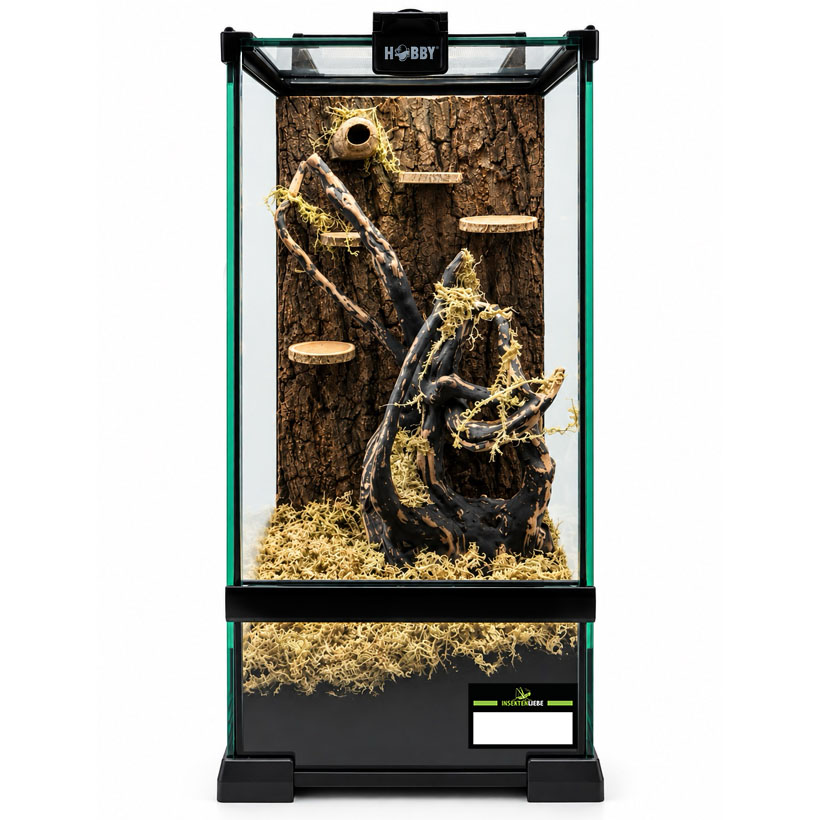
Jumping Spider Complete Set – Creative – offers plenty of vertical space and numerous options for arranging cork, wood, and natural materials to suit the needs of Phidippus carolinensis.
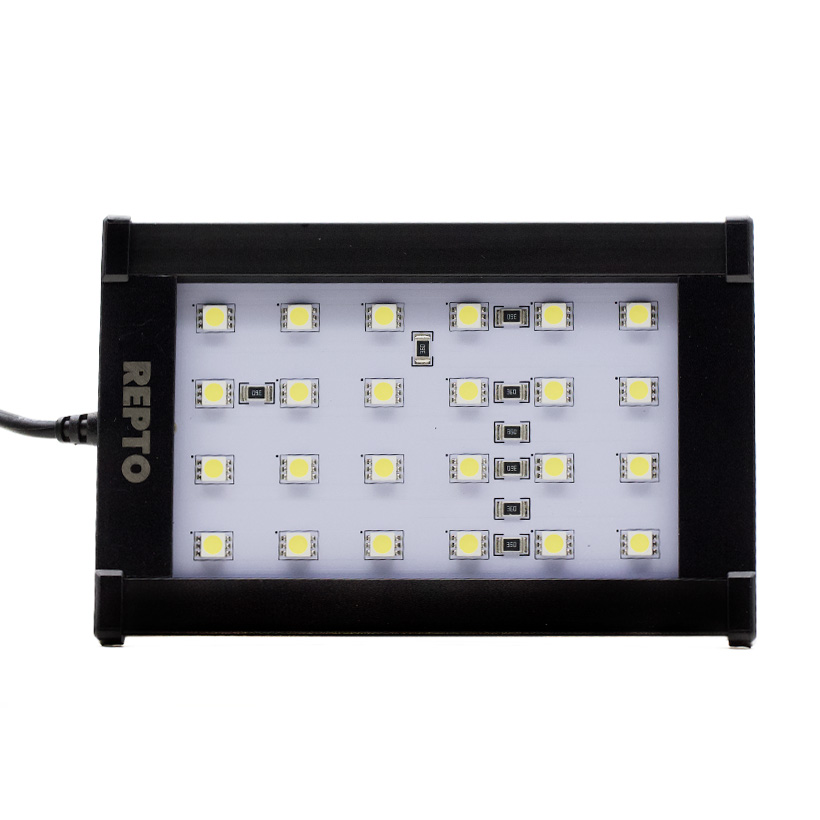
Repto Flat LED – provides bright lighting while also creating a warmer area in the upper part of the terrarium.
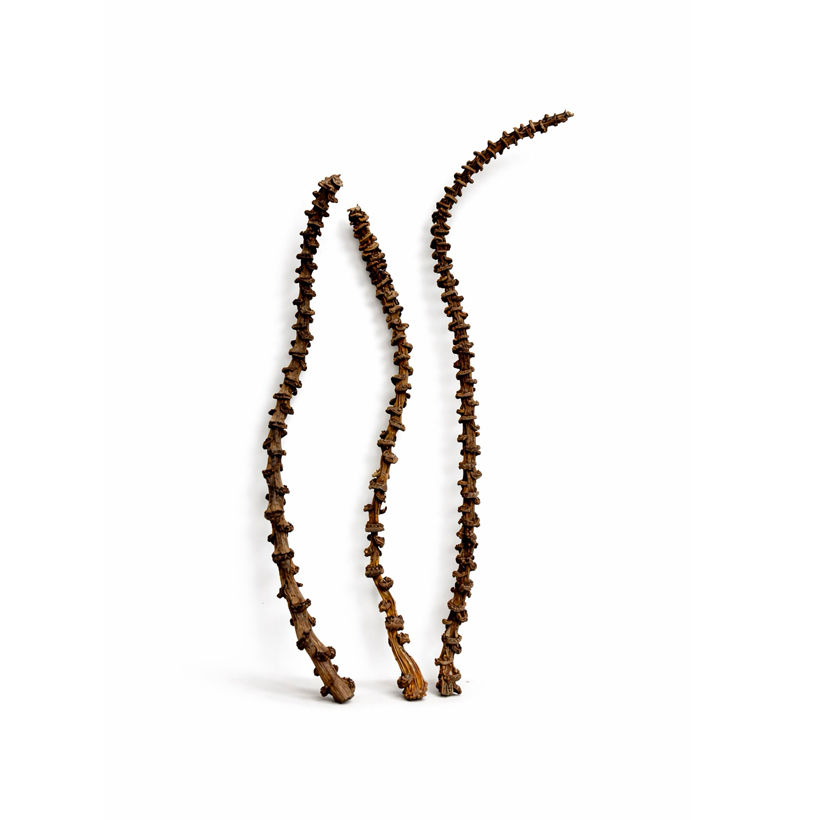
Banana Stem – creates branching pathways and additional elevated seating areas.
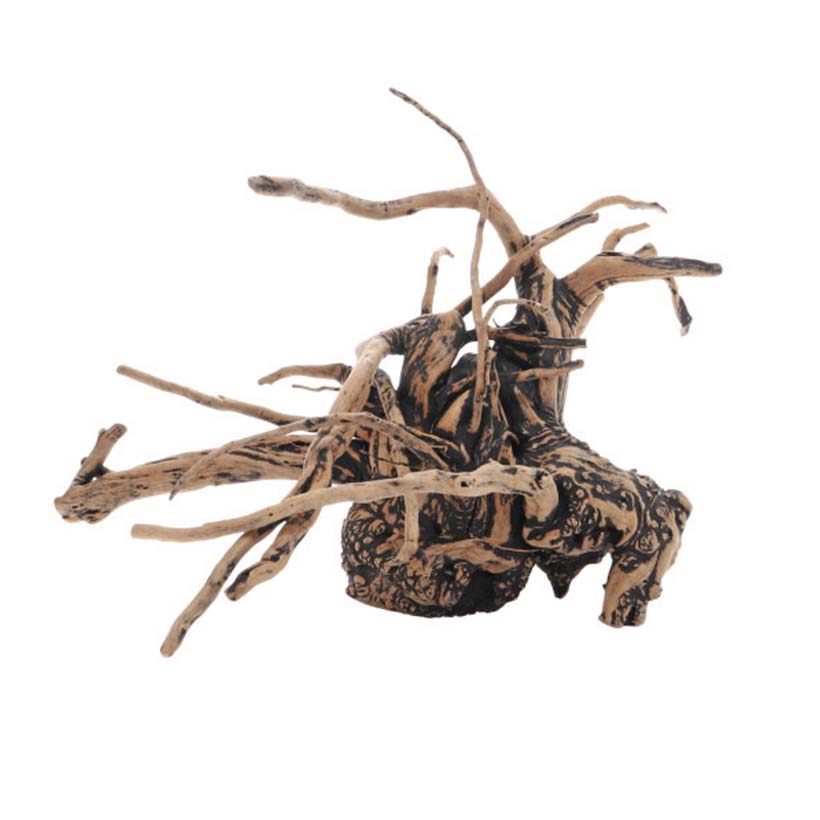
Hobby Fingferwood Shadow – offers natural climbing surfaces and sheltered areas for setting up the enclosure.
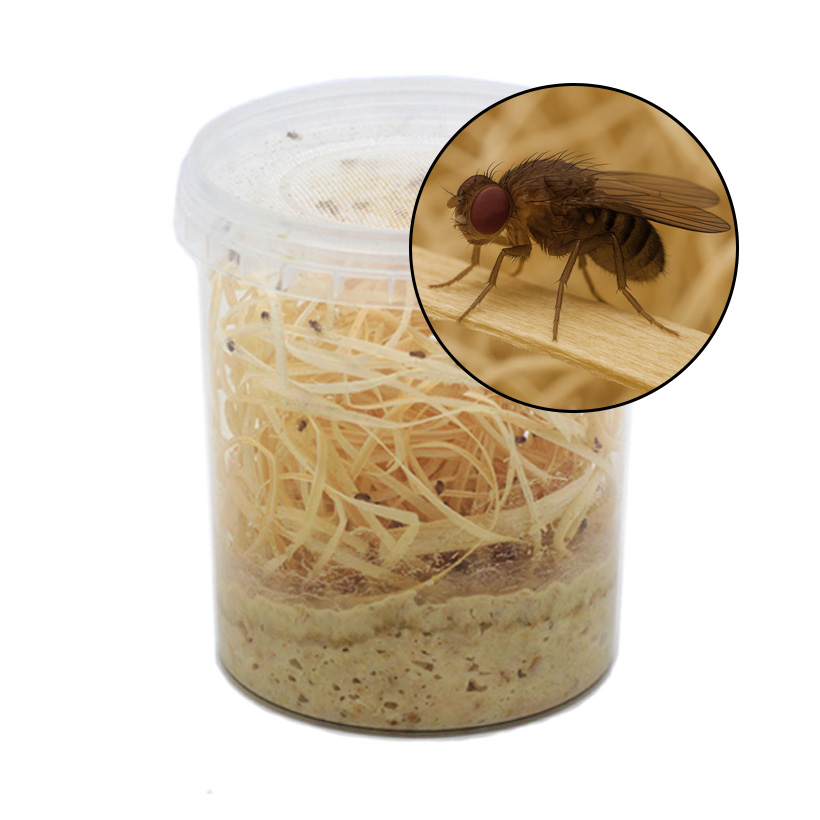
Large fruit fly – suitable as an active live food source for FH3–FH5, depending on the species.
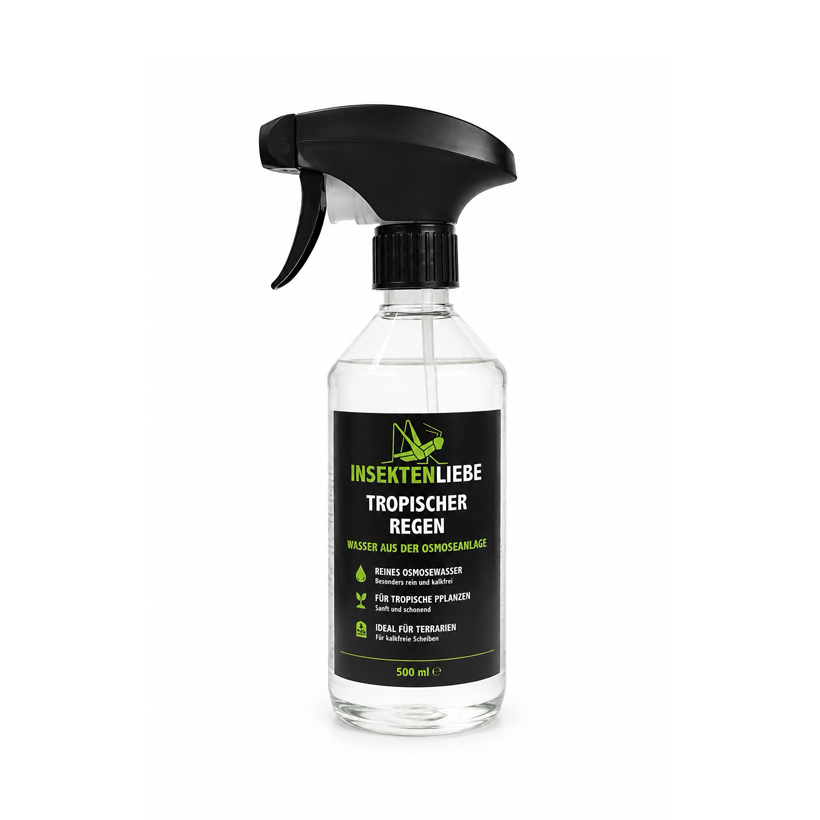
INSEKTENLIEBE Tropical Rain – allows for the targeted provision of water droplets while simultaneously reducing unsightly lime stains on terrarium glass.
Conclusion
Phidippus carolinensis is an exciting jumping spider for keepers who want to get to know a slightly different species in addition to the well-known and often very colorful Phidippus species.
With a body length of about 10 mm in males and 10–13 mm in females, it remains a manageable size. At the same time, it exhibits the robust build and active hunting behavior for which Phidippus is known.
Its unusual taxonomic history is particularly interesting. Although its name is derived from North Carolina, the original location listed there is now likely considered a misidentification. In fact, the species is known in the United States primarily from Texas, Oklahoma, and Kansas, and its range extends as far as Mexico.
When keeping them, we recommend a bright, well-structured, and—above all—well-ventilated terrarium. During the day, a temperature of approximately 23–27 °C is a practical guideline. At the same time, Phidippus carolinensis should not be kept in a constantly damp environment.
This makes this species particularly suitable for jumping spider enthusiasts who are looking for a rarer North American Phidippus with interesting markings and the genus’s characteristic curious hunting behavior.
Perfect combined with
-
Jumping Spiders Complete Set – Creative
Original price was: 152,41 €.149,98 €Current price is: 149,98 €. -
Repto Flat LED
Original price was: 29,99 €.26,99 €Current price is: 26,99 €. incl. VAT, plus shipping