Archispirostreptus gigas “Giant millipede”
Price range: 14,00 € through 17,00 € incl. VAT, plus shipping

Simple

Nigeria

< mixed

22°C – 29°C
Archispirostreptus gigas – the impressive African giant millipede
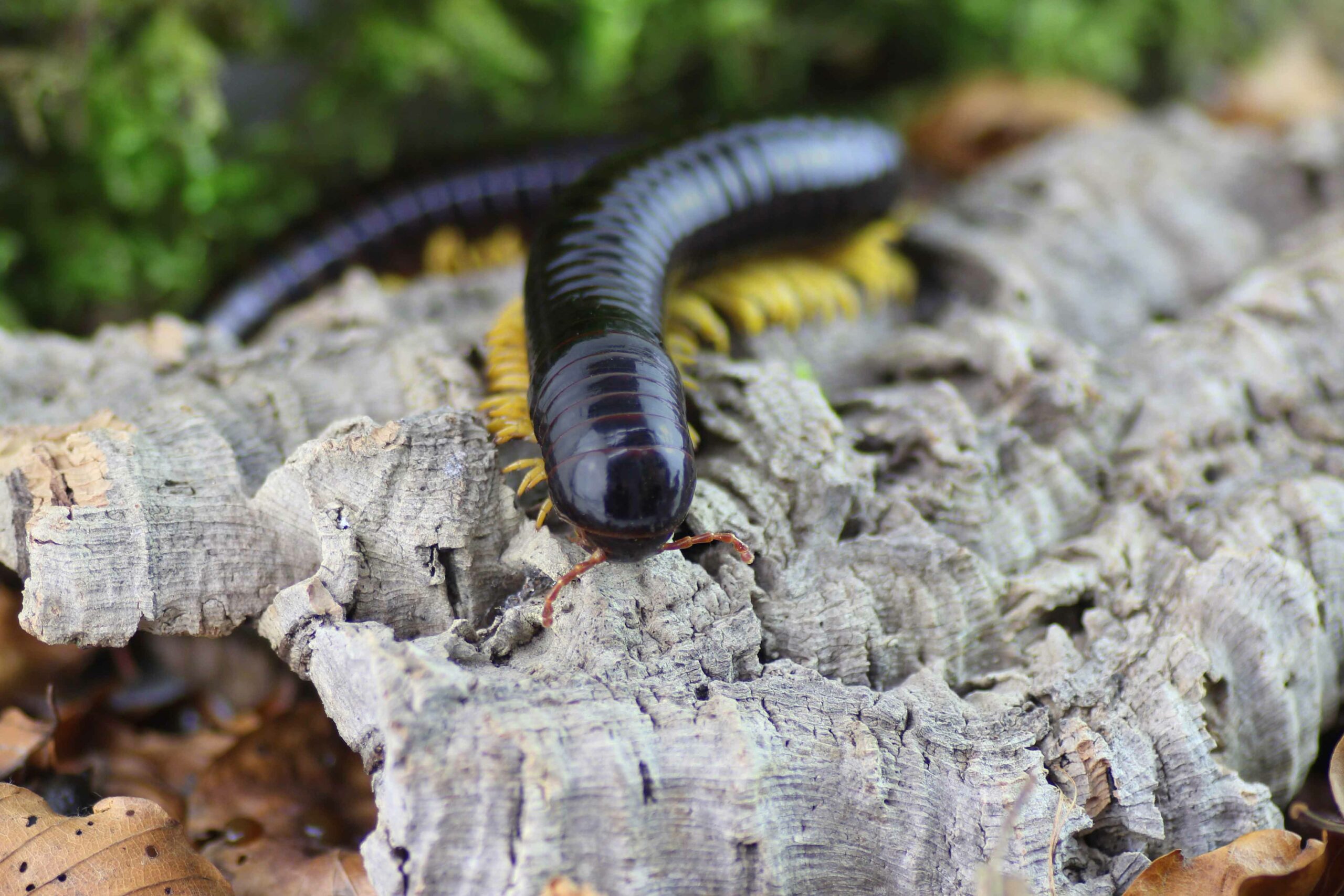
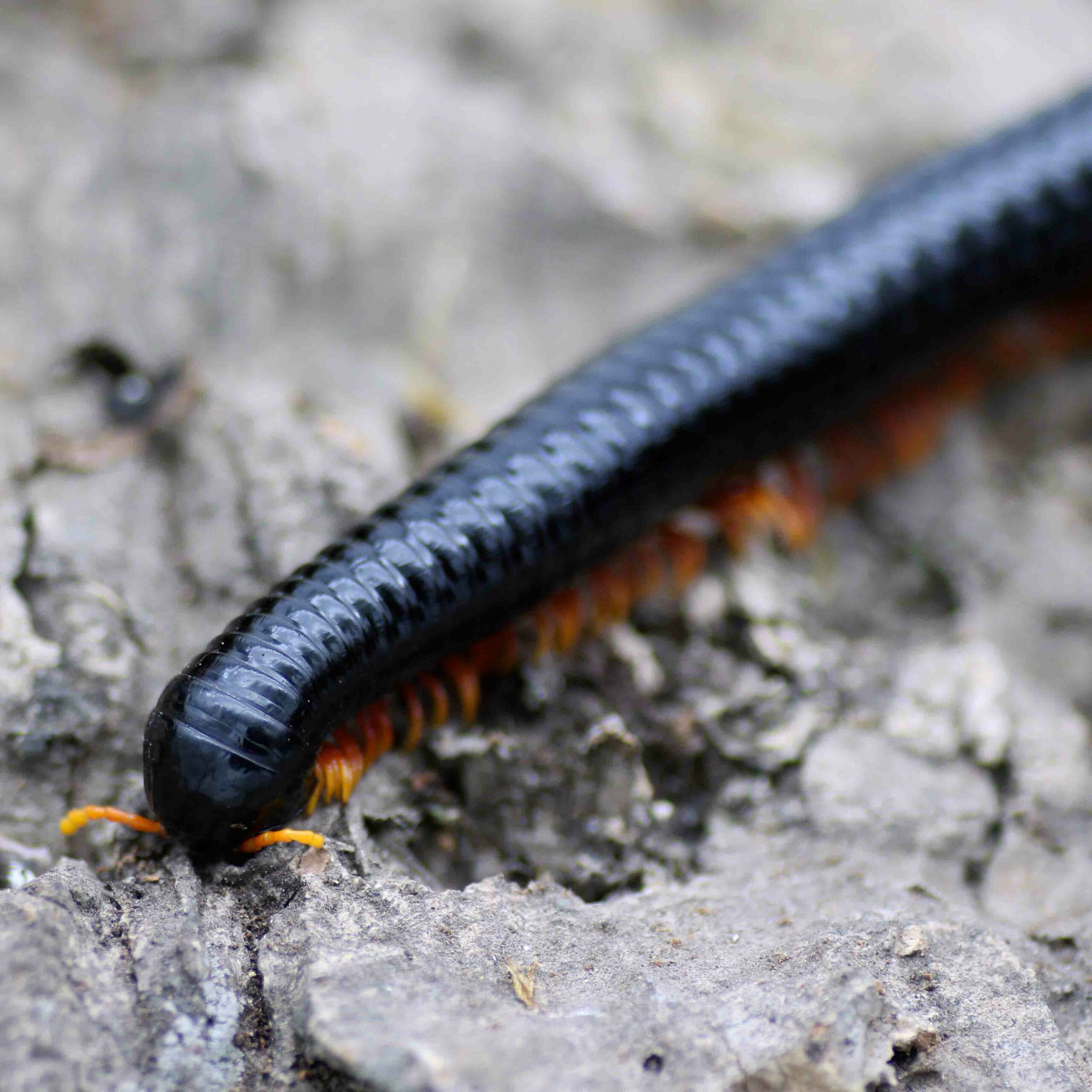
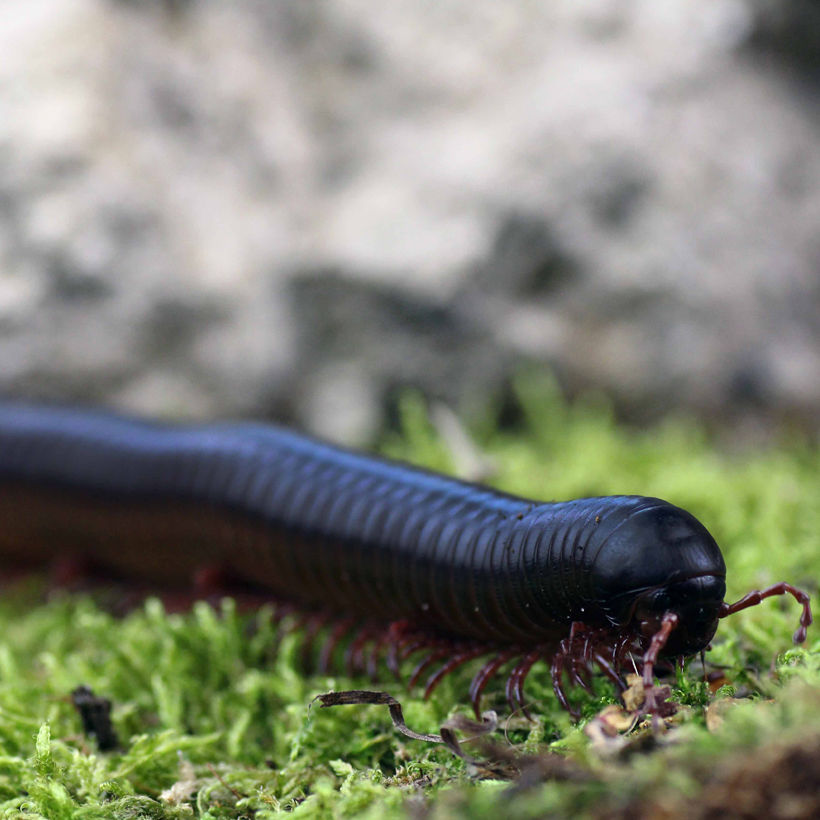
Archispirostreptus gigas is one of the largest living millipedes in the world. With a body length of up to 33 cm, this African giant is an impressive sight in the terrarium. Its sturdy, jet-black body and countless tiny legs give it an extraordinary appearance.
Despite its size, the African giant millipede is an exceptionally peaceful creature. It leisurely roams the substrate, exploring its surroundings and searching for food. Its movement is particularly fascinating. Its numerous legs move in steady waves, making it seem as though it is almost gliding across the ground.
Unlike centipedes, Archispirostreptus gigas does not have venomous claws and does not hunt live animals. Instead, it feeds mainly on dead plant matter. As a result, it plays an important role in the decomposition of organic matter in its natural habitat.
If you love large invertebrates and want to create a natural-looking terrarium, this giant millipede makes for an extraordinary inhabitant.
A Giant from East Africa
Archispirostreptus gigas is native to East Africa. Scientifically documented populations are found in Kenya, Tanzania, and Mozambique, among other places.
These animals inhabit a variety of habitats, including tropical forests, coastal woodlands, and, in some cases, more open landscapes with sufficient soil moisture.
The layer of leaves and humus is particularly important in this regard.
Here, millipedes find food, shelter, and suitable conditions for their development. They can also retreat to deeper layers of soil when temperatures are unfavorable or the ground is dry.
That is exactly why the substrate plays such a crucial role in terrarium care.
Up to 33 cm in body length
Archispirostreptus gigas is one of the longest millipede species living today.
Adult animals often reach a length of about 25–30 cm. Particularly large specimens can even reach a length of about 33 cm.
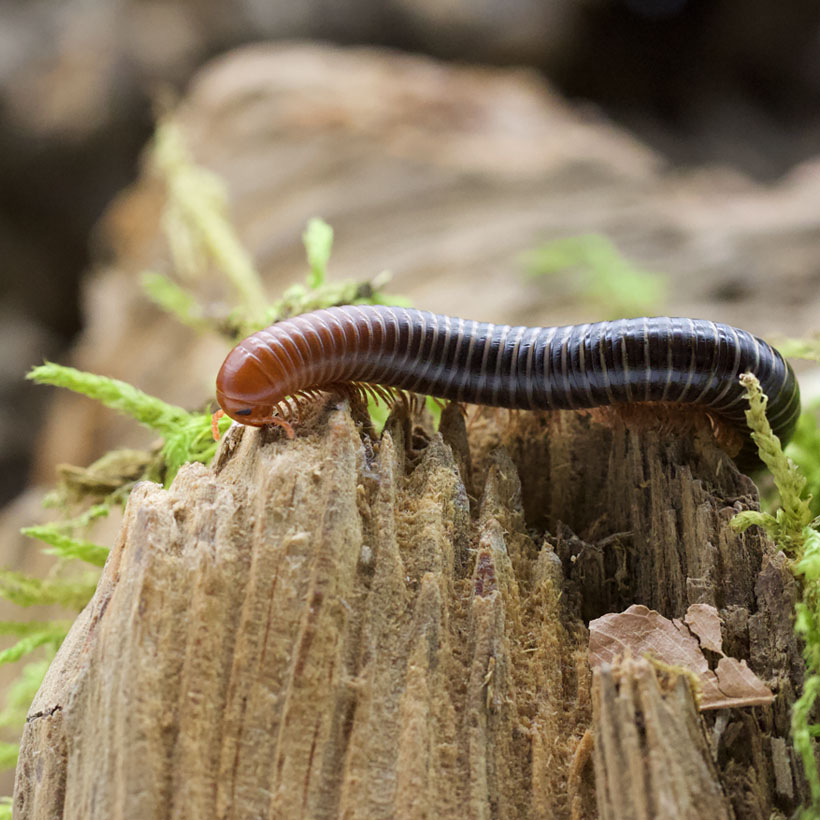
The giant millipede has a sturdy, cylindrical body with numerous segments.
The base color is predominantly deep black to dark brown. At the same time, the legs and the areas between the body segments may appear slightly lighter.
The animal looks particularly impressive thanks to its shiny surface.
Despite its size, Archispirostreptus gigas usually moves calmly and in a controlled manner.
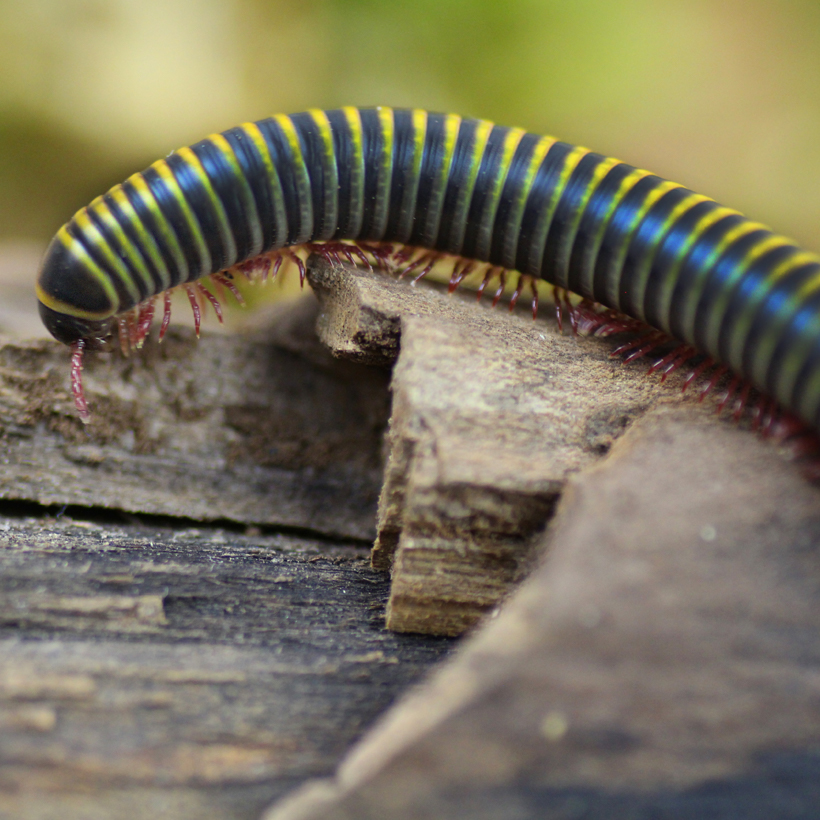
Hundreds of legs create fascinating movements
The German name “Tausendfüßer” is, of course, a bit of an exaggeration.
Archispirostreptus gigas does not have a thousand legs either. Instead, it has several hundred legs, the exact number of which depends on its age and the number of body segments.
The legs do not move at the same time.
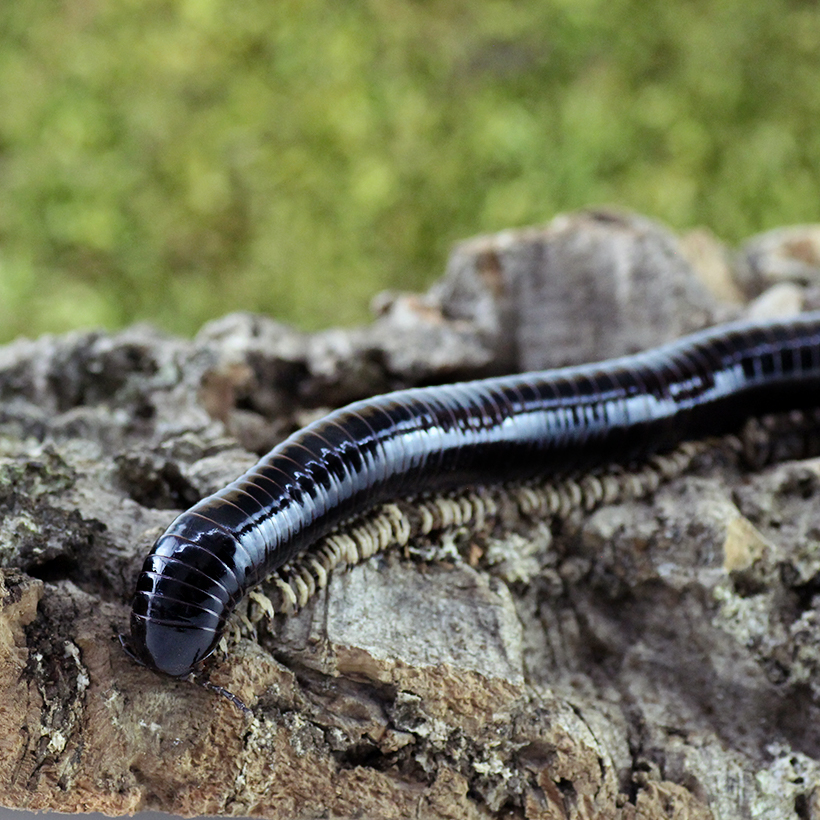
Instead, uniform waves of movement are generated that travel along the body. This allows the millipede to move even through loose substrate.
This behavior is particularly interesting to observe when the animals walk over large roots or pieces of cork.
A peaceful giant with unique defensive abilities
Archispirostreptus gigas is a peaceful invertebrate.
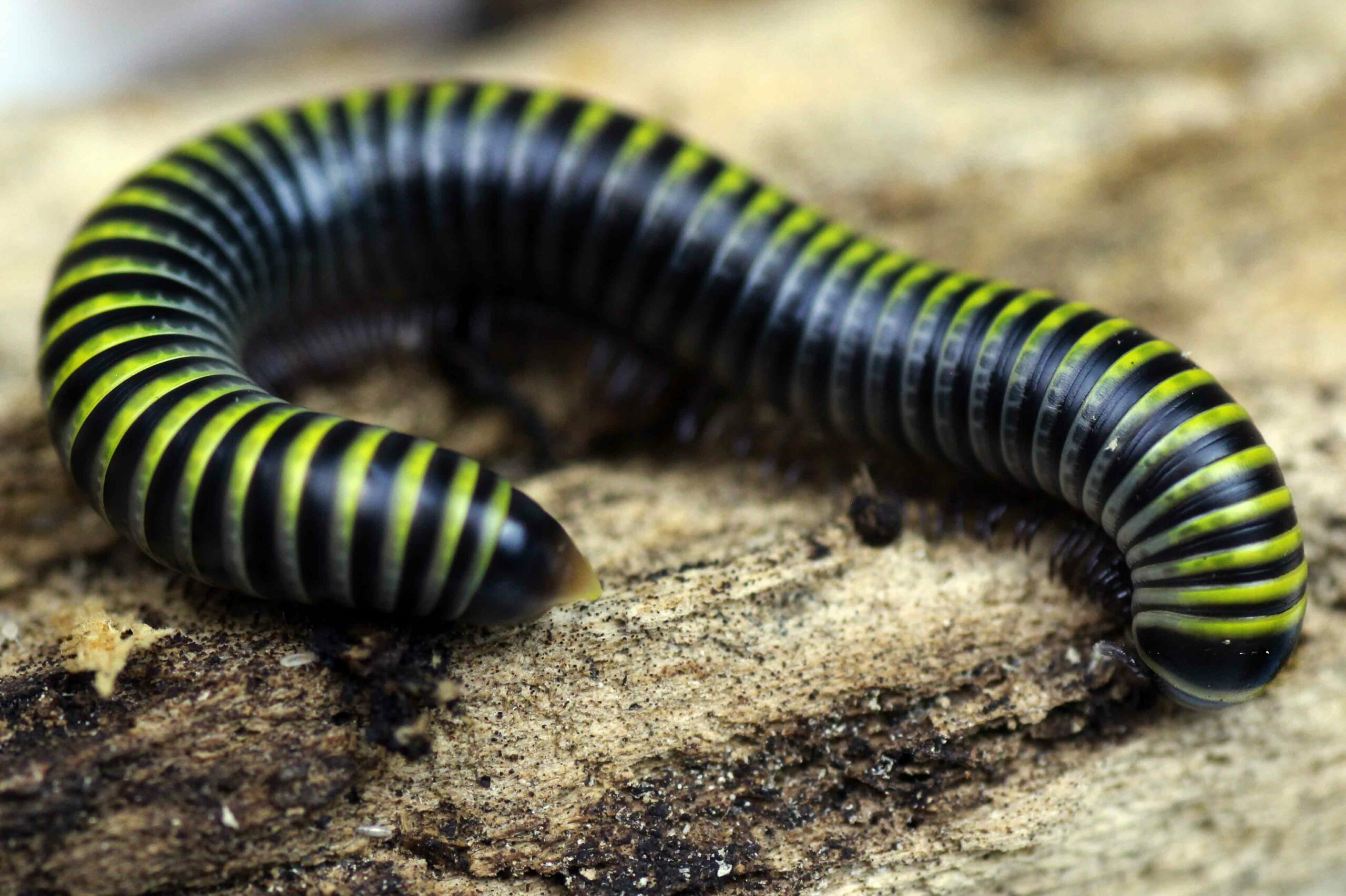
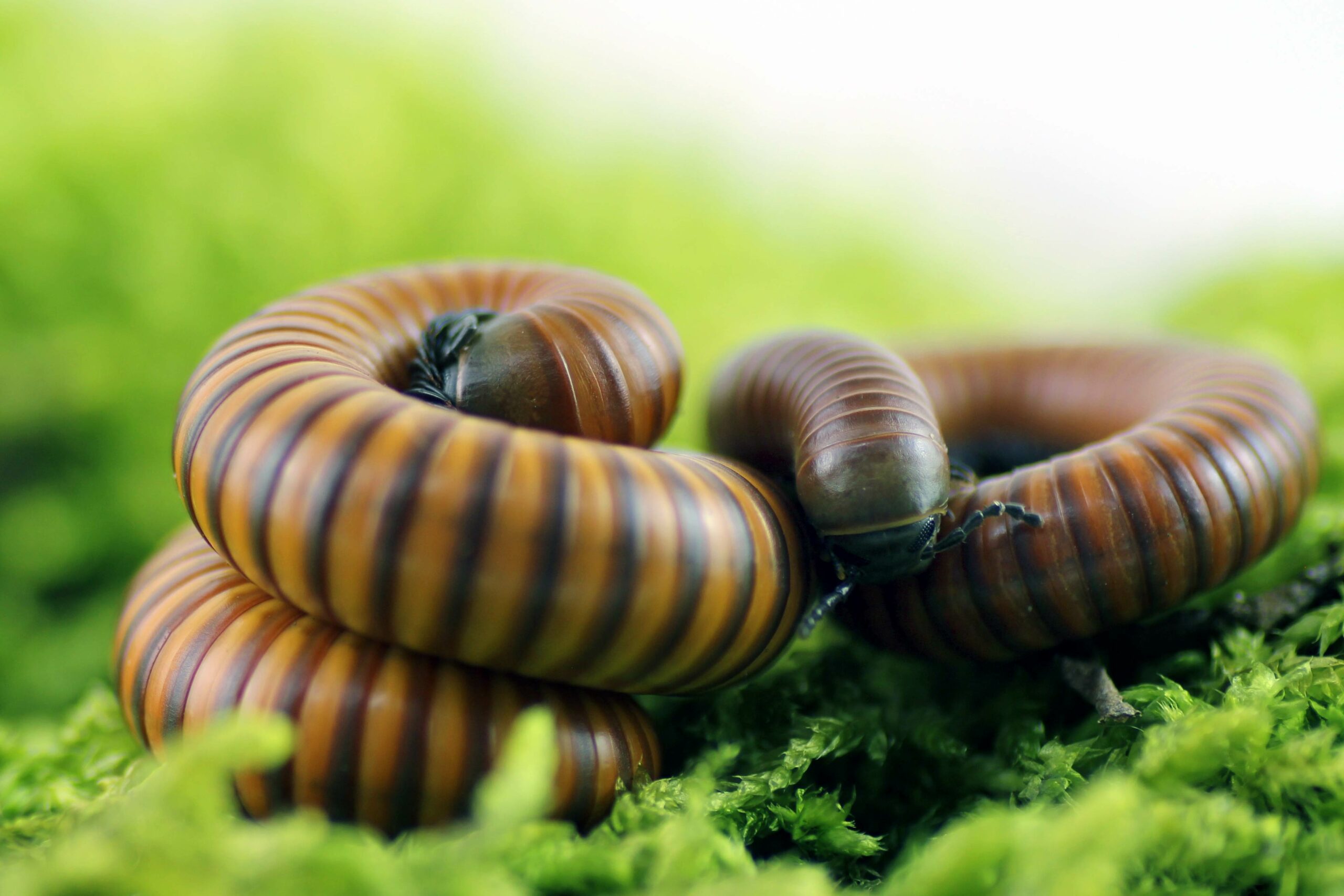
When in danger, it usually does not try to attack. Instead, it curls its body into a tight spiral.
This protects its sensitive underside and its many legs.
In addition, giant millipedes have defensive glands. When faced with a serious threat, they can release a brownish defensive secretion.
This secretion can discolor the skin and irritate sensitive areas.
That’s why you should disturb the animals as little as possible and wash your hands thoroughly after coming into contact with them. In particular, make sure the secretions do not come into contact with your eyes.
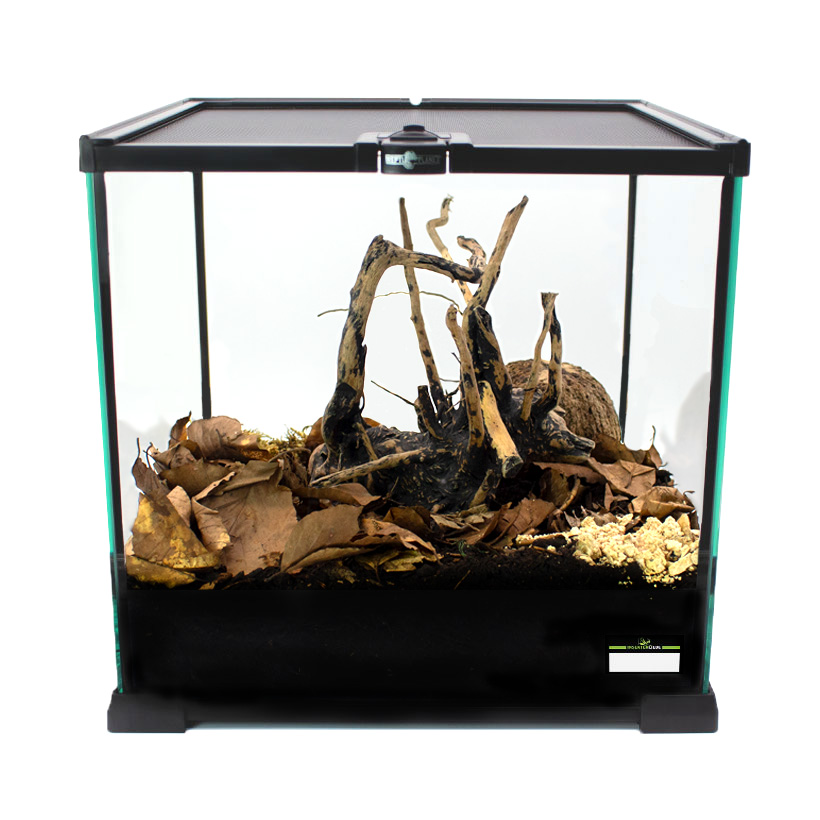
A terrarium measuring at least 60 × 40 × 40 cm
Due to its considerable size, Archispirostreptus gigas requires ample space.
For a pair or a small group, we recommend a terrarium measuring approximately 60 × 40 × 40 cm.
Larger terrariums naturally offer more room to move around. They also allow for a particularly deep layer of substrate.
Above all, it is important to have a sufficiently large floor area.
Although the animals occasionally climb over roots and other structures, they spend a large part of their lives on and in the substrate.
The terrarium should also be well-ventilated, without allowing the substrate to dry out too quickly.
At least 15–20 cm of substrate
For Archispirostreptus gigas, the substrate is the most important component of the entire tank setup.
We recommend a substrate depth of at least 15–20 cm. If there is enough space, the layer can be even deeper.
There are several reasons for this.
For one thing, giant millipedes regularly burrow into the ground. For another, they molt while protected underground.
In addition, the substrate also serves as the most important source of nutrition.
A thin layer of ordinary terrarium soil is therefore not enough.
Our millipede substrate—the perfect foundation
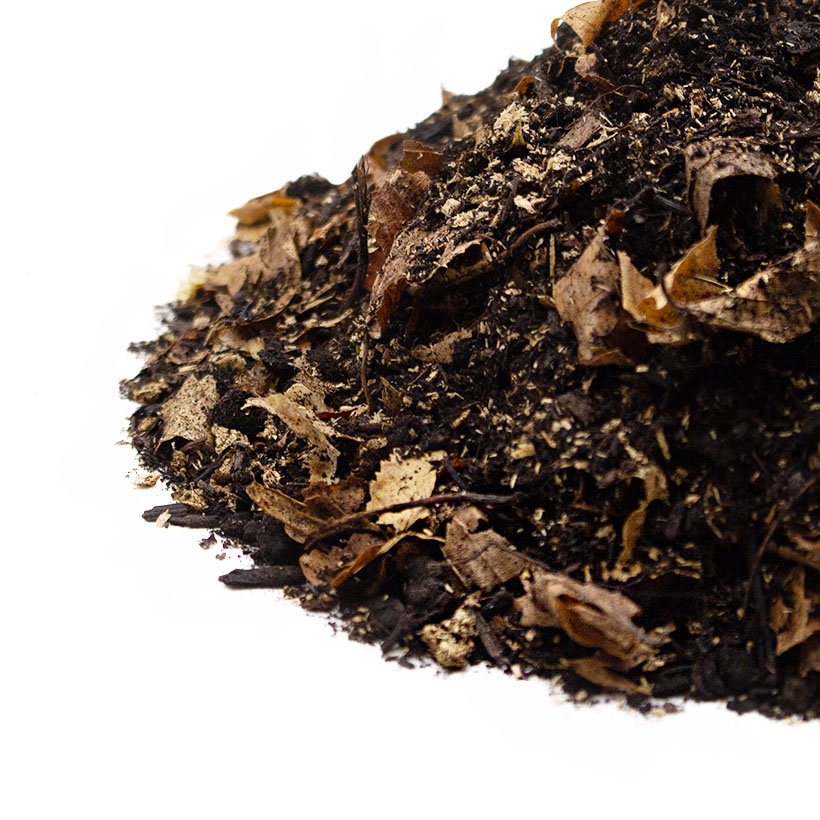
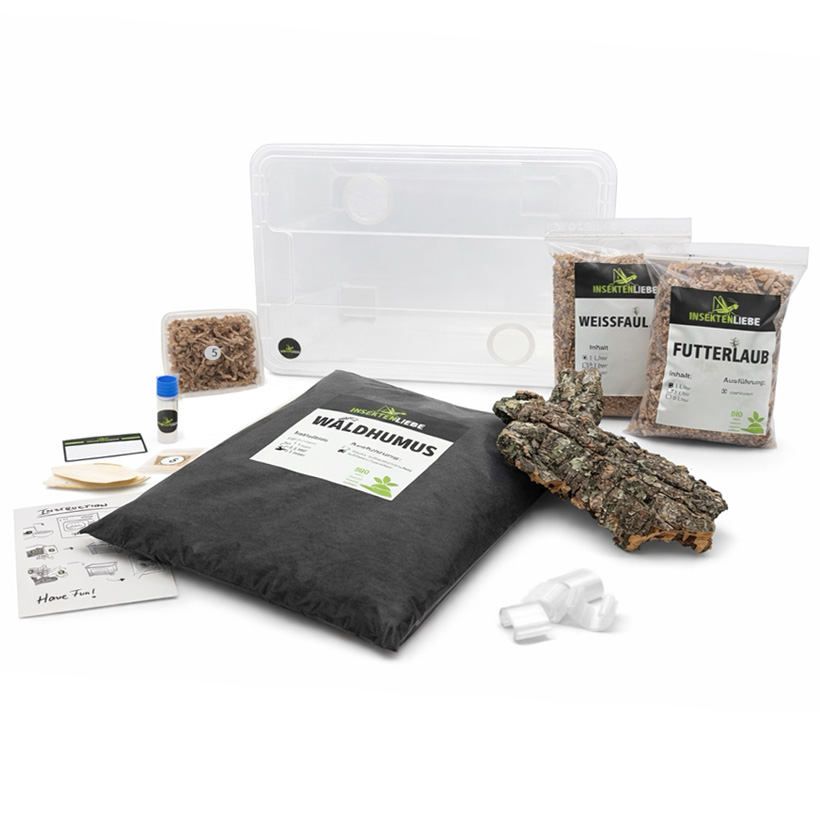
For keeping millipedes, we recommend our Insektenliebe millipede substrate.
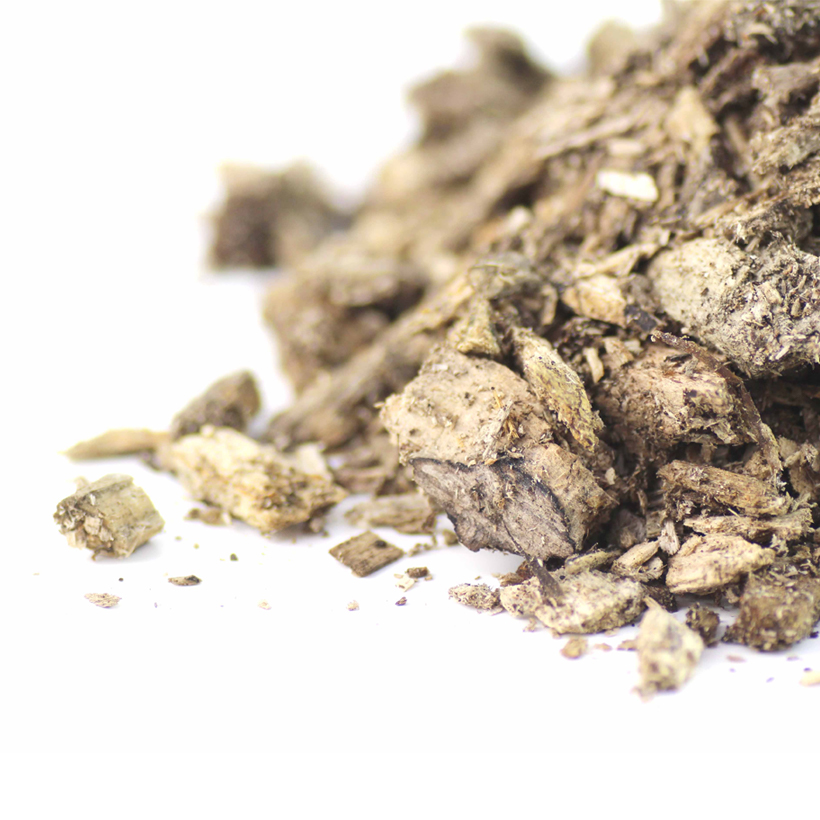
It contains fermented leaves and white-rot-decayed wood. As a result, it not only provides the animals with a suitable habitat but also serves as an important source of food.
This is because Archispirostreptus gigas feeds mainly on decomposed organic matter.
The special millipede substrate should therefore not be mixed with other types of soil. Doing so would simply reduce the proportion of usable nutrients.
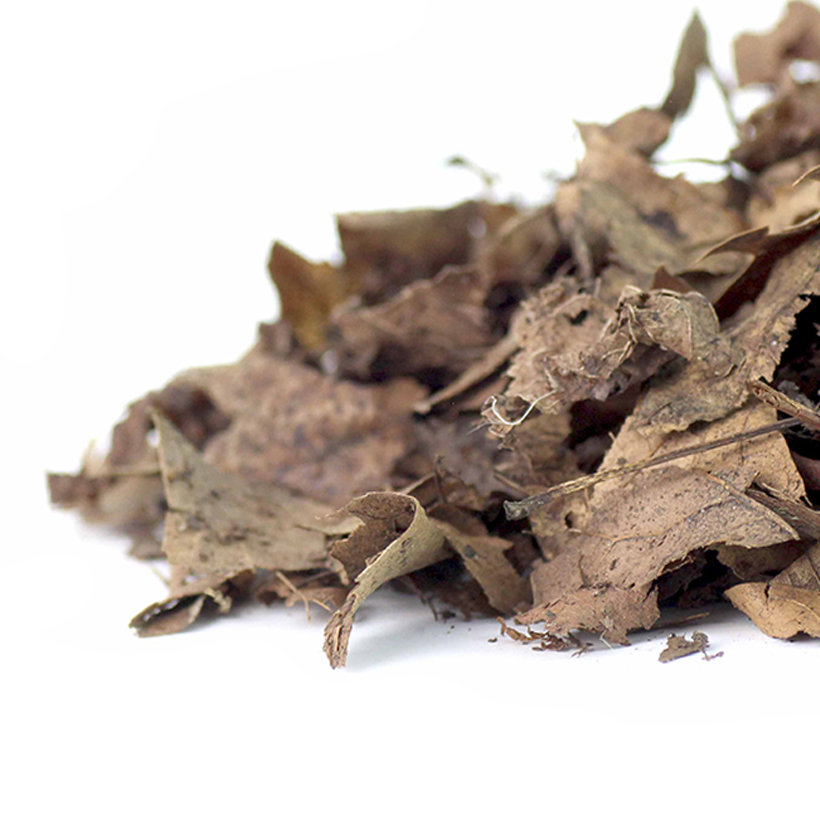
You can also provide larger pieces of white-rotten wood and a thick layer of fallen leaves.
This creates a natural forest floor that the animals gradually traverse and make use of.
Leaves for fodder and rotten wood are part of the basic supply
Many beginners believe that giant millipedes mainly eat fruits and vegetables.
In fact, however, that’s only a small part of their diet.
Decomposed leaves and white rot-infected wood form the most important foundation.
That is why there should always be plenty of food leaves on the substrate.
Dead oak or beech leaves, for example, are suitable.
In addition, white-rotted wood should be a permanent fixture in the terrarium.
This is wood that has already decomposed significantly, becoming soft and ready to be consumed by millipedes.
Fruits and Vegetables as a Supplement to the Diet
Of course, Archispirostreptus gigas also eats a variety of fresh foods.
For example, the following are particularly popular:
- Cucumber and Zucchini
- Pumpkin
- Sweet potato
- Carrot
- Apples and Pears
- Melon
However, these feeds should only be offered as a supplement.
The plant continues to obtain its nutrients from the substrate, fallen leaves, and white-rotten wood.
Also, be sure to use only untreated fruits and vegetables.
You should remove leftover food regularly before it spoils or gets very moldy.
Calcium for a Strong Exoskeleton
Like other millipedes, Archispirostreptus gigas needs minerals to build its exoskeleton.
That is why we recommend an additional source of calcium.
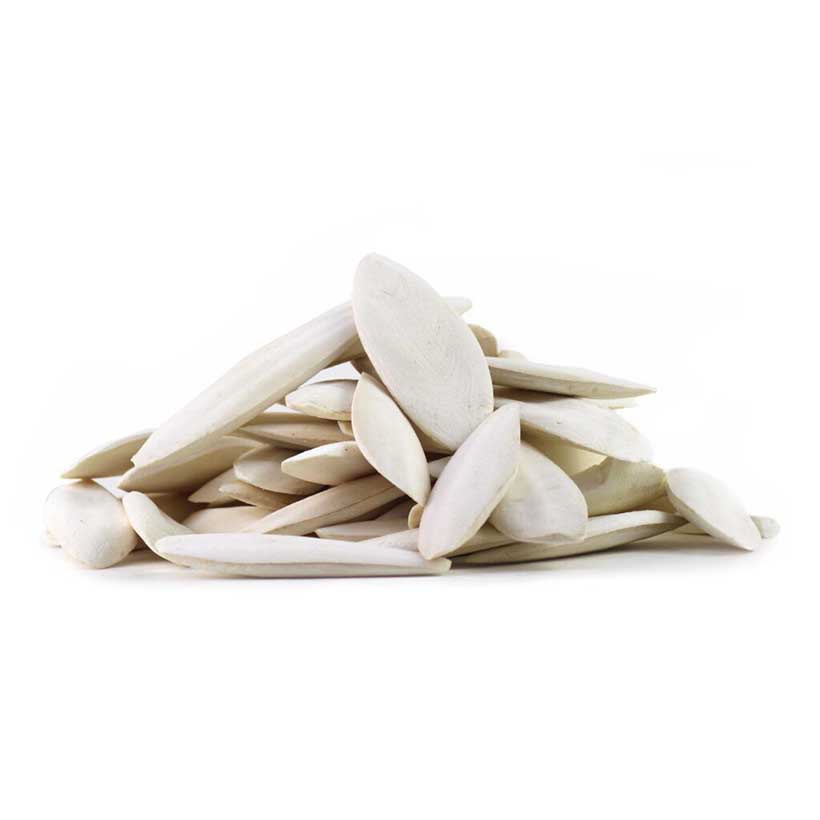
Cuttlefish shells are especially handy.
You can simply place these on the substrate. The animals can eat them as needed.
An adequate supply of minerals is especially important during growth and around the time of molting.
24–27 °C for warm conditions
For Archispirostreptus gigas, we recommend a daytime temperature of approximately 24–27 °C.
At night, the temperature may drop to about 20–22 °C.
An additional heat source is only necessary if the room temperature is insufficient.
You should definitely avoid placing a heating mat directly under the terrarium.
When temperatures are too high, millipedes usually burrow back into cooler layers of soil.
If the floor is heated from below, this natural behavior no longer works.
If additional heat is needed, it should therefore be supplied in a controlled manner from the side or via the ambient temperature.
75–85% humidity
The African giant millipede requires sufficient soil moisture.
As a general guideline, we recommend a relative humidity of approximately 75–85%.
However, the actual moisture content of the substrate is even more important than the displayed value.
The lower layers of the substrate should remain evenly moist, while the surface may dry out slightly in places.
This creates a natural moisture gradient.
You should definitely avoid waterlogging.
At the same time, there must be a sufficient supply of fresh air to prevent the buildup of stagnant, humid air.
Molting takes place underground
If an Archispirostreptus gigas burrows into the substrate for an extended period of time, this is perfectly normal at first.
The animal may be preparing to molt.
When this happens, the millipede retreats to a sheltered area and sometimes remains hidden there for quite some time.
During molting, the new exoskeleton is initially soft and delicate.
That’s why you should never dig up animals that have been buried.
Major changes to the substrate should also be avoided as much as possible during this phase.
Patience is especially important here.
Keeping them in groups is no problem
Archispirostreptus gigas is a peaceful millipede and can be kept with others of its species.
A pair or a small group can therefore be kept together in a sufficiently large terrarium.
However, you should keep in mind that large centipedes require a correspondingly large amount of food.
The more animals there are in the terrarium, the faster the organic components of the substrate are consumed.
For this reason, food leaves, white-rotten wood, and, if necessary, parts of the substrate must be replenished regularly.
Reproduction of the African Giant Millipede
It is also possible to breed Archispirostreptus gigas.
After a successful mating, the females lay their eggs in a protected spot in the substrate.
To do this, they need a substrate that is deep enough and has the right moisture content.
Under favorable conditions, the eggs take about one to two months to develop.
The newly hatched young are very small at first and spend most of their time hidden in the substrate.
That’s why they’re often not discovered until they’ve already grown a bit larger.
It can take about two years for them to reach sexual maturity.
A giant millipede with a long life expectancy
Archispirostreptus gigas is one of the longer-lived invertebrates in the terrarium hobby.
With proper care, these animals can live to be about 5–7 years old. In some cases, they are reported to live even longer, up to 10 years.
This makes the purchase a long-term decision.
That is why it is especially important to maintain suitable temperatures, sufficient humidity, and a high-quality diet.
If you keep these basics in mind, you can enjoy this extraordinary animal for many years to come.
Advantages at a glance
- Archispirostreptus gigas (Peters, 1855)
- German name: African giant millipede
- Origin: East Africa
- One of the largest living millipedes
- Body length up to about 33 cm
- A robust, dark-colored body
- Several Hundred Legs
- Peaceful and calm behavior
- Group housing is possible
- Terrarium measuring approximately 60 × 40 × 40 cm
- At least 15–20 cm of substrate depth
- Daytime temperature: 24–27 °C
- Nighttime temperature approximately 20–22 °C
- Humidity approximately 75–85%
- Millipede substrate as the primary food source
- Provide a constant supply of fallen leaves and white-rotten wood
- Fruits and Vegetables as a Supplement to the Diet
- An additional source of calcium is recommended
- Molting takes place underground
- Life expectancy is approximately 5–7 years, sometimes longer
- Difficulty level: Easy to moderate
Suitable accessories for your setup
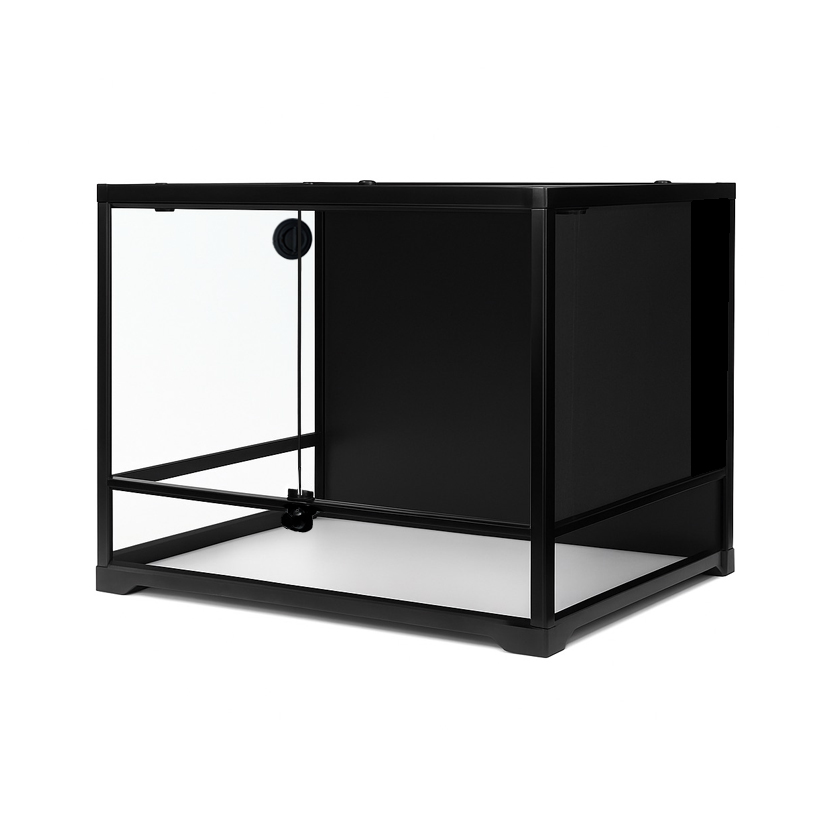
Insektenliebe DIY Glass Terrarium – provides a suitable environment for keeping large millipedes and allows for a sufficiently deep layer of substrate for digging and molting.
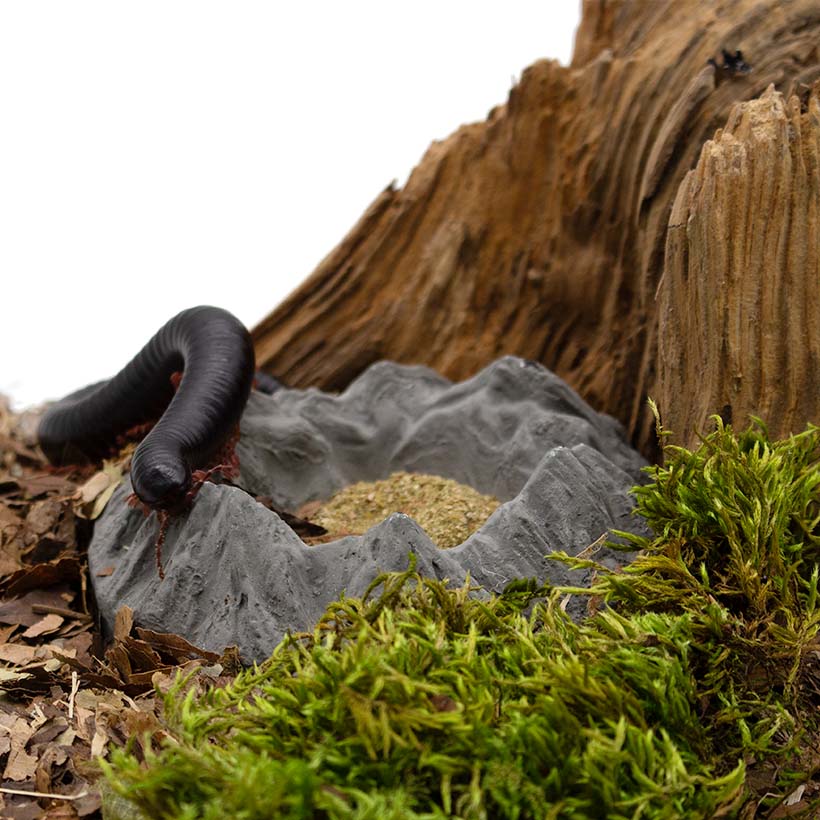
Insektenliebe Futterfels – allows you to present fruits, vegetables, and other supplemental foods in a clean manner, without them lying directly on the damp substrate.
Millipede substrate —serves as both a habitat and the primary food source, consisting of fermented leaves and white-rotted wood.
Leaves for bedding —are part of the ongoing basic care routine and create a natural, protective layer of foliage.
White-rot wood —provides important decomposed wood components and supplements the giant millipede’s diet.
Cuttlefish shells —provide an additional source of calcium for growth and the development of the exoskeleton.
Conclusion
Archispirostreptus gigas is an impressive giant among invertebrates. With a body length of up to 33 cm, it is one of the largest living millipedes and captivates observers with its calm movement and extraordinary appearance.
Despite its size, the African giant millipede is peaceful and can be kept easily in small groups.
However, choosing the right substrate is particularly important. This is because millipede substrate, fallen leaves, and white-rotted wood serve as both a habitat and the primary food source.
A terrarium measuring approximately 60 × 40 × 40 cm, with a substrate depth of at least 15–20 cm and temperatures ranging from 24–27 °C, provides a good foundation for keeping these animals.
In addition, the substrate should remain evenly moist without becoming waterlogged.
If you’re looking for an extraordinary, long-lived, and peaceful terrarium pet, Archispirostreptus gigas is a fascinating choice that will captivate you with its impressive size and natural behavior.
Perfect combined with
-

Insektenliebe do-it-yourself glass terrarium
Price range: 127,99 € through 147,99 € incl. VAT, plus shipping