
Telodeinopus aoutii
12,00 € incl. VAT, plus shipping

Simple

Ghana

< 180 mm

22°C – 24°C
Telodeinopus aoutii – an attractive African millipede
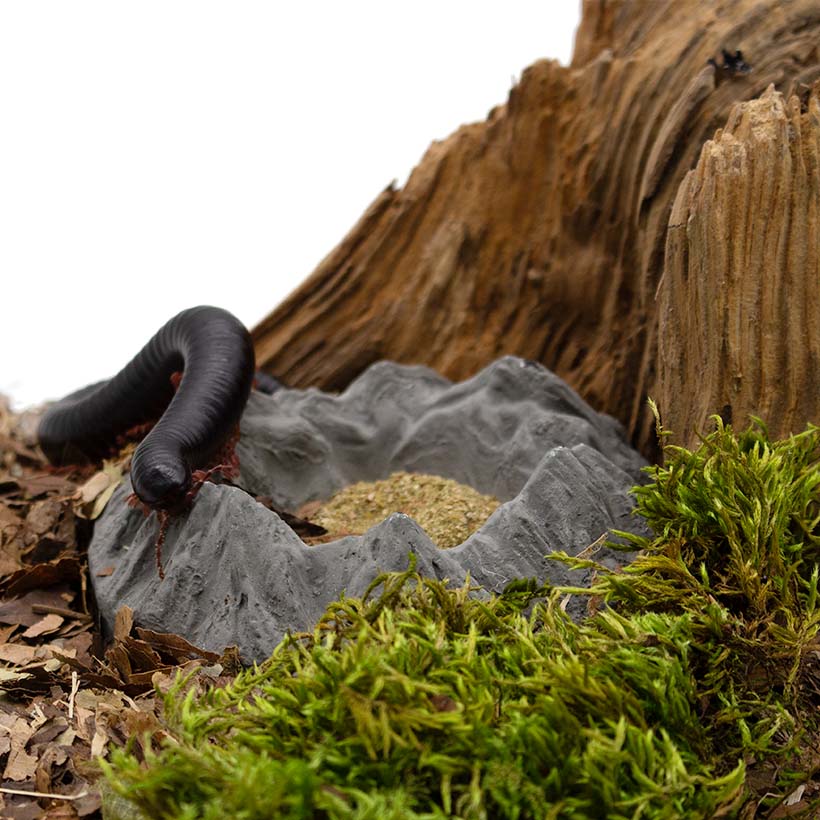
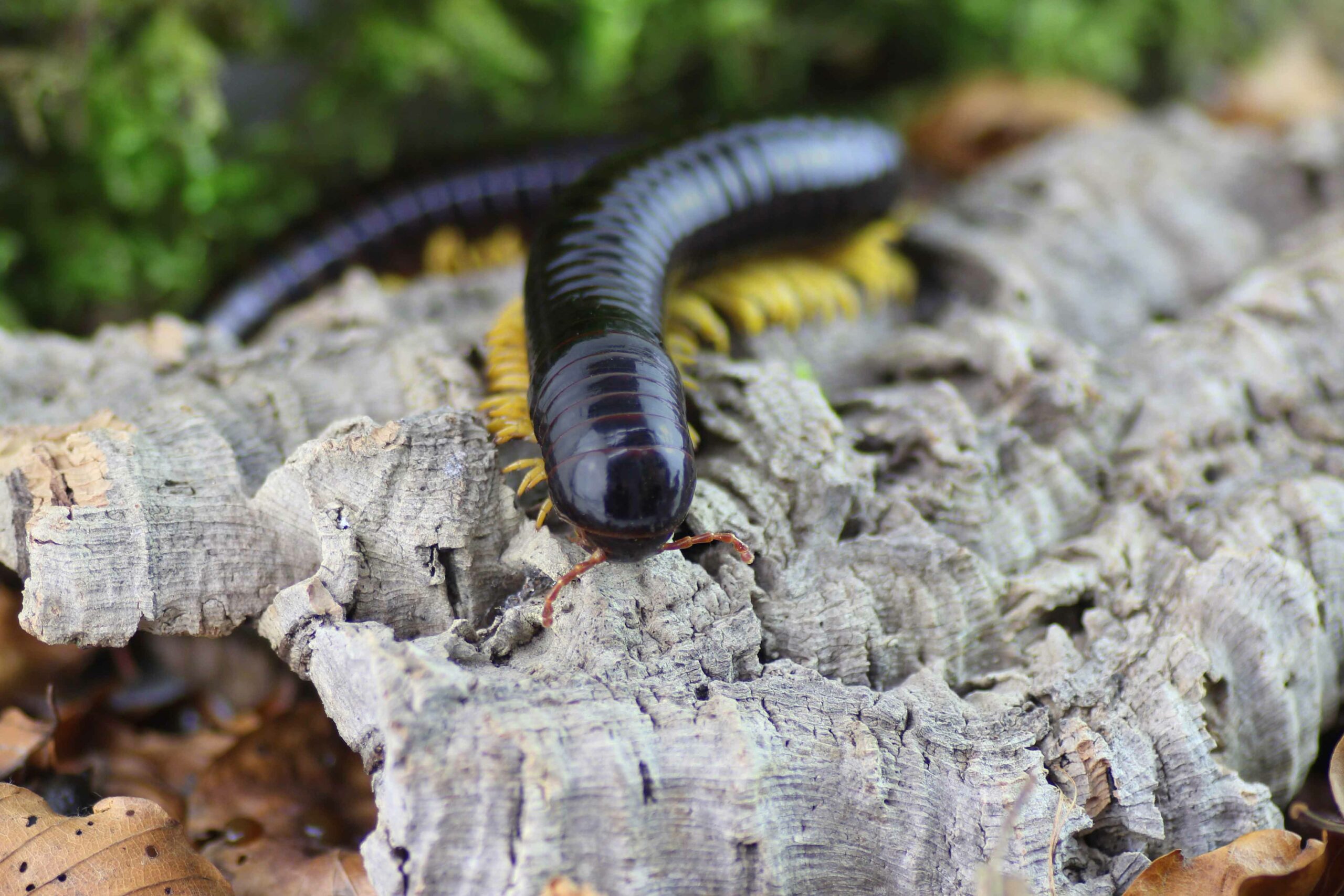
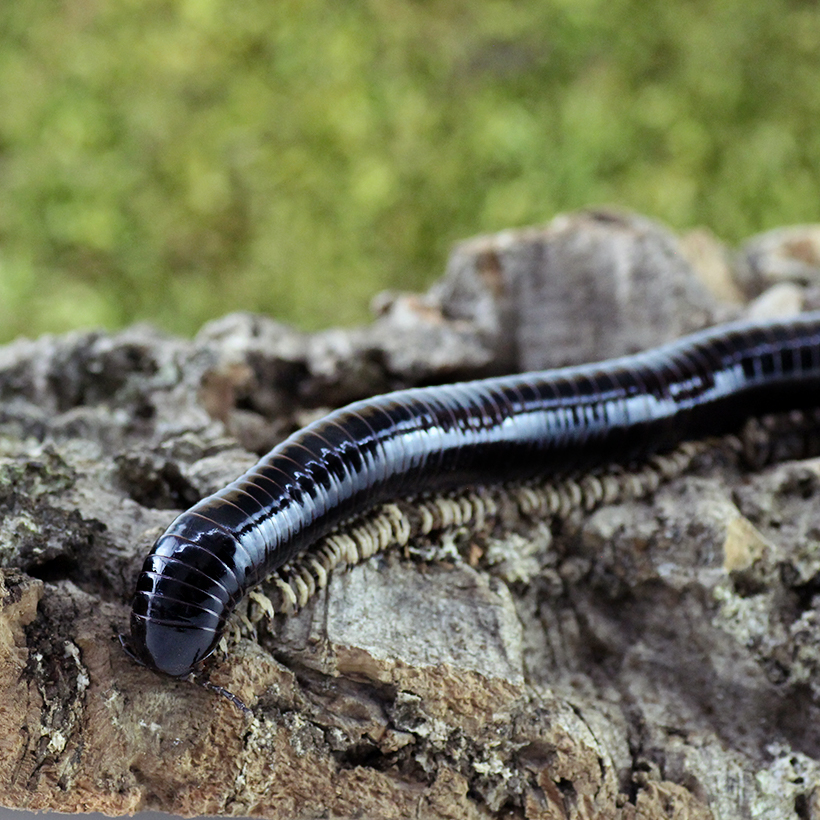
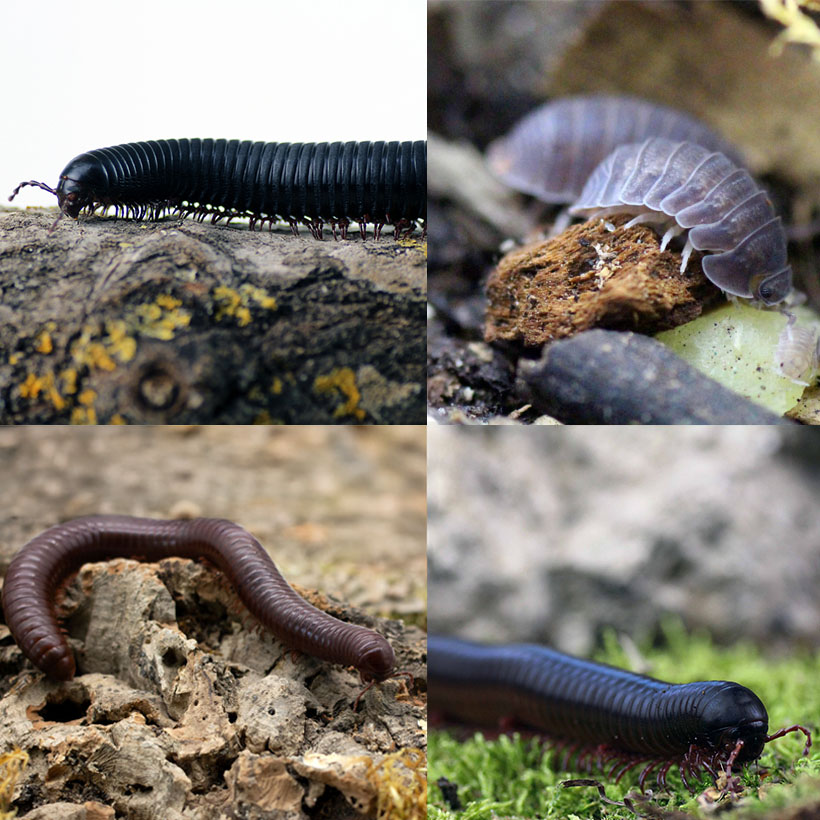
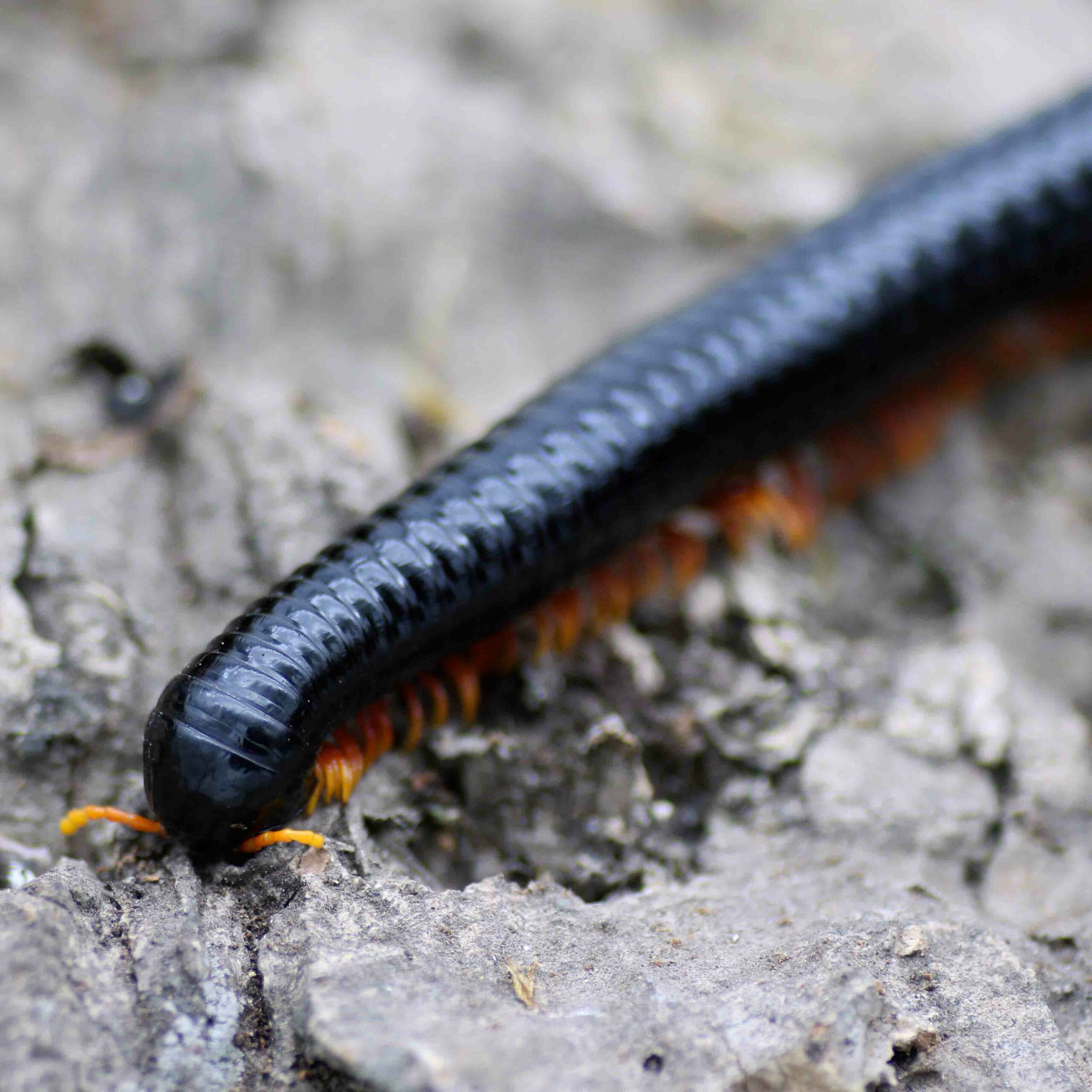
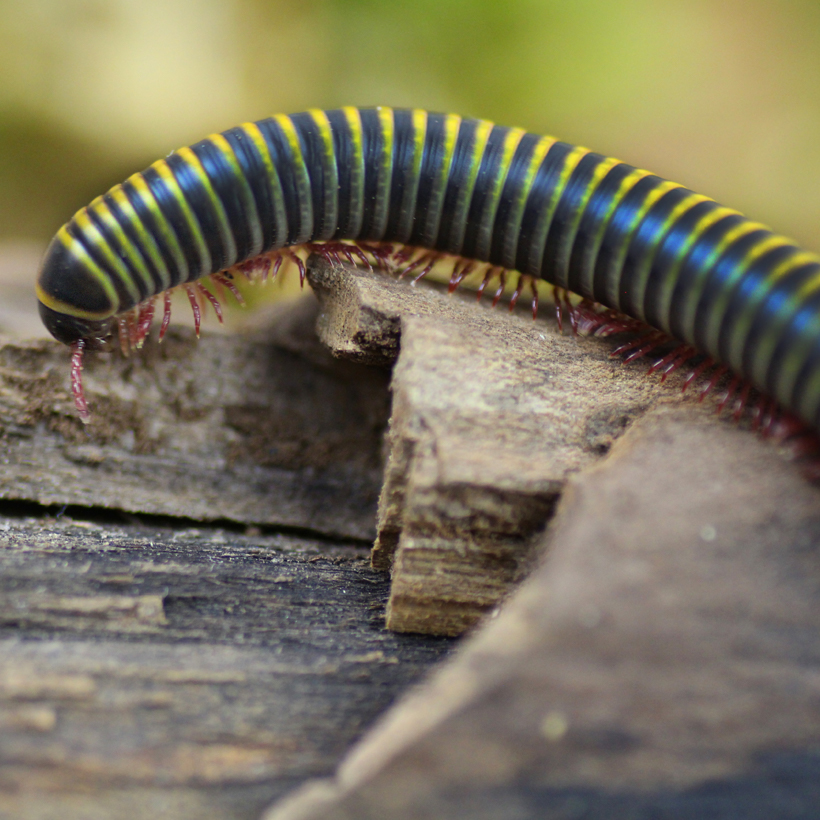
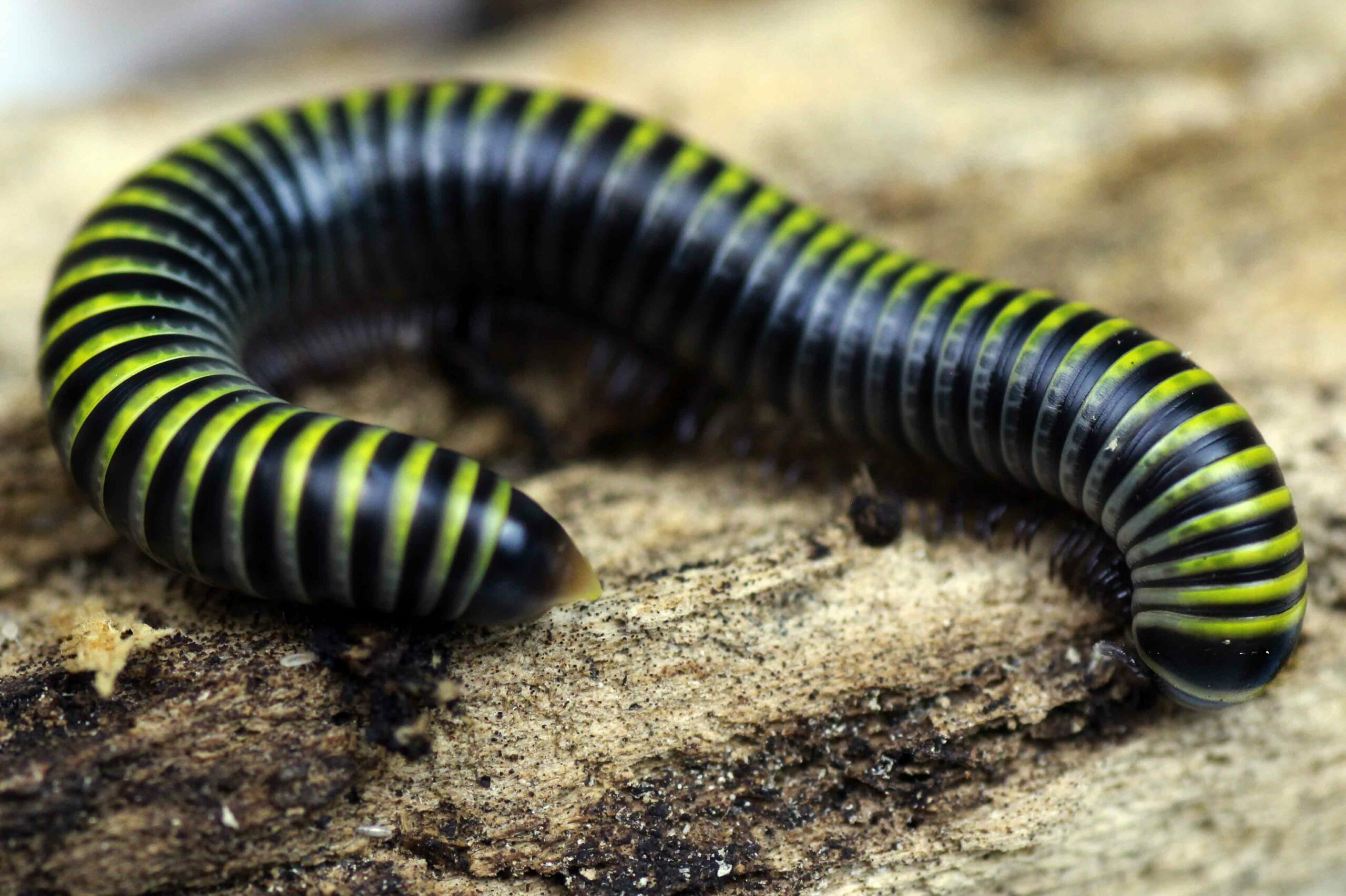
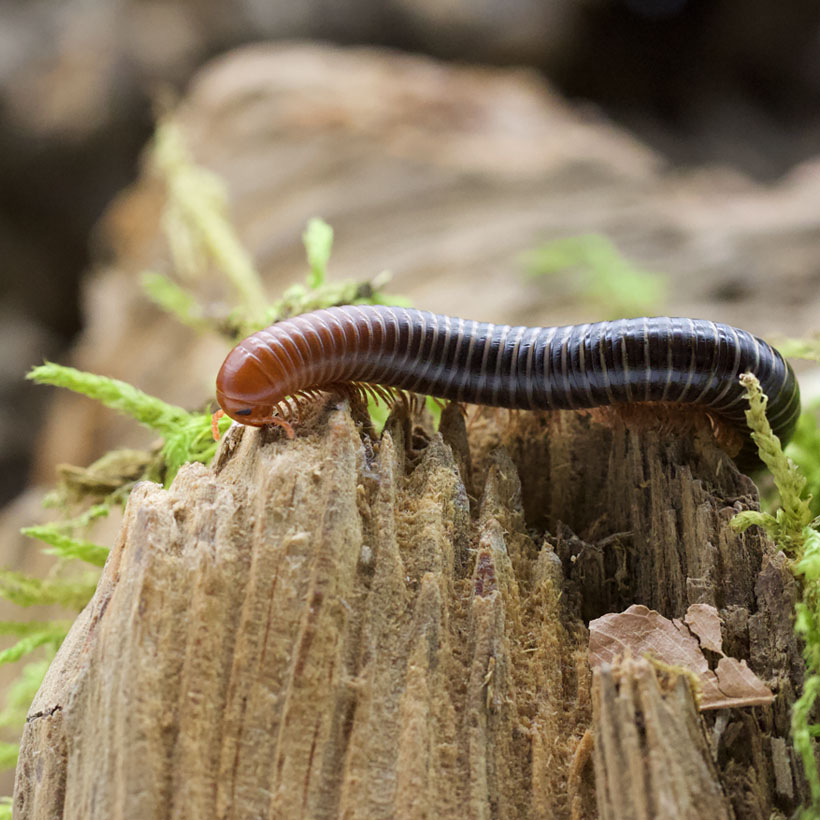
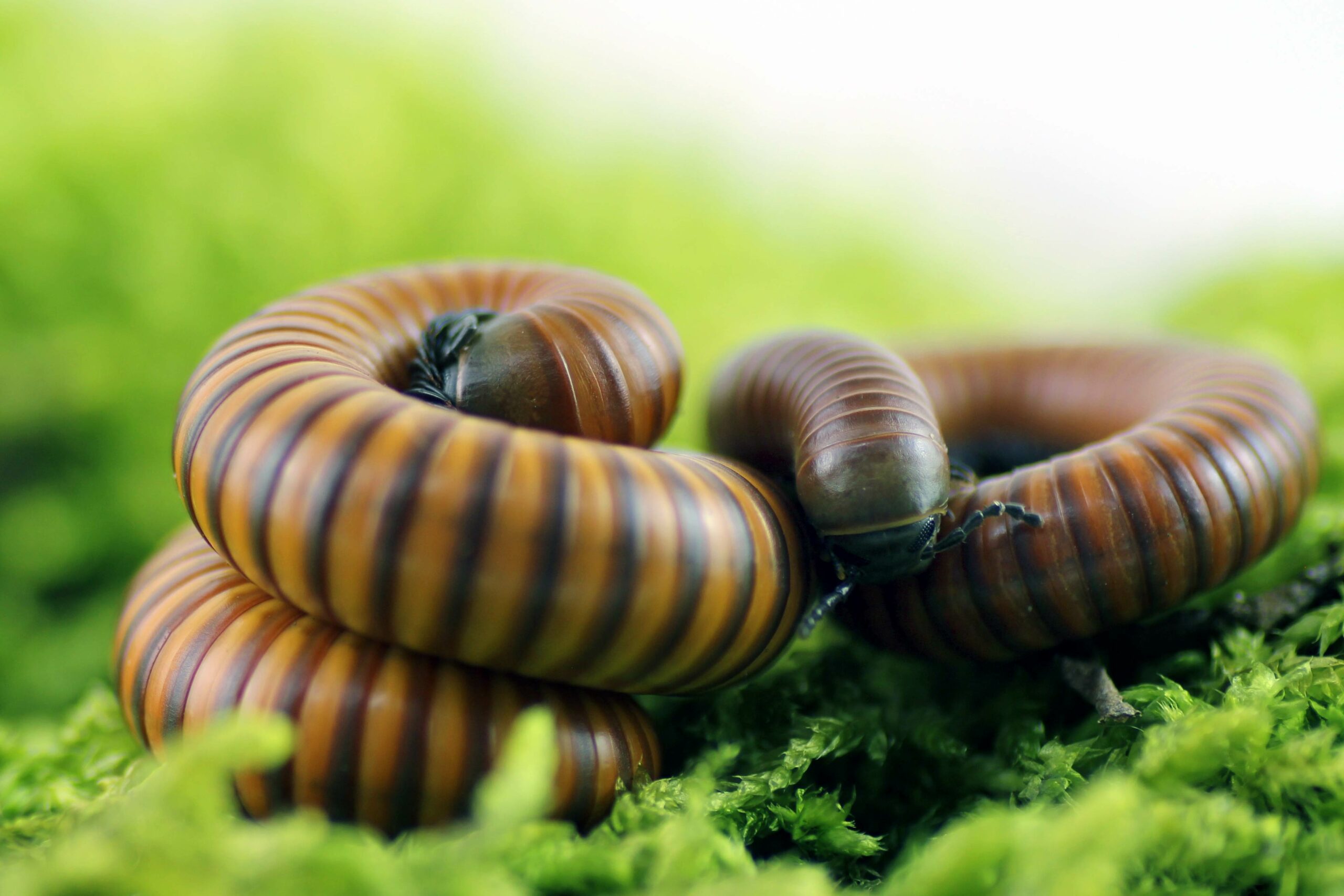
Telodeinopus aoutii is a large African millipede that captivates observers with its elongated body and striking coloration. At the same time, it exhibits the typical calm behavior of large diplopods: it roams the forest floor, burrows into the substrate, and searches for food among leaves and decaying wood.
Telodeinopus aoutii can be observed exceptionally well, especially in a terrarium designed to mimic its natural habitat. It’s not just the animal itself that’s interesting; its habitat also plays a crucial role, because for millipedes , the substrate serves as their habitat, hiding place, molting site, and food source all at once.
Anyone who already keeps Isopods or other soil-dwelling invertebrates will therefore need to adjust their approach. For Telodeinopus aoutii, the quality and depth of the substrate are the key factors in ensuring long-term success in keeping them.
A millipede from West Africa
Telodeinopus aoutii belongs to the family Spirostreptidae and is thus part of a group of predominantly large, elongated millipedes.
The species was originally described by Demange in 1896 and is known from western and west-central Africa.
When it comes to information about origin in the terrarium trade, the details provided can sometimes vary or be very broad. For this reason, when dealing with a specific breeding line, the locality documented by the breeder should always be taken into account as well.
Like other members of its genus, Telodeinopus aoutii lives close to the ground. Leaves, humus, and decaying wood are therefore the most important components of a suitable habitat.
A large but relatively slender centipede
Telodeinopus aoutii grows to an impressive size and can reach a length of about 15–20 cm.
Compared to Archispirostreptus gigas, which appears much more robust, Telodeinopus has a slimmer build. This gives the animal an elegant, elongated appearance.
Each of the numerous body rings supports a pair of legs that move in characteristic waves as they walk.
This mode of movement can be observed particularly well on larger roots or among fallen leaves.
Peaceful and easy to observe
Telodeinopus aoutii is generally a calm and peaceful terrarium inhabitant.
The animals spend a lot of time foraging for food. As they do so, they move across the substrate, disappear among the leaves, or burrow completely underground.
Especially when the temperature is right and the habitat is varied, the animals can be observed regularly at the surface.
Still, you shouldn’t worry if a centipede is nowhere to be seen for several days or even longer.
Burying things is part of his natural behavior.
A terrarium with sufficient floor space
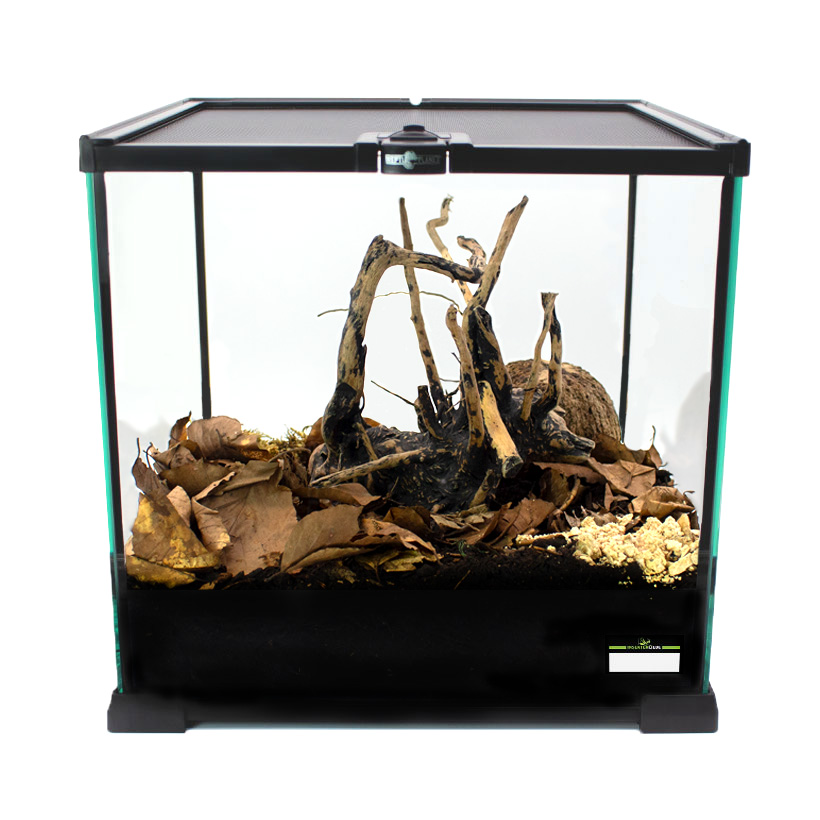
For adult Telodeinopus aoutii, we recommend a terrarium with a sufficiently large base area and enough height to accommodate a deep layer of substrate.
For a small group, for example, a terrarium measuring approximately 30 × 30 × 30 cm provides a suitable starting point. If there are several adult animals, the terrarium should be correspondingly larger.
In this context, usable floor space is more important than a particularly high climbing height.
Roots, cork, and other sturdy structures can still be provided. They offer hiding places and provide additional opportunities for exploration.
However, heavy decorations must be stable and must not endanger animals that have burrowed into the ground.
At least 10–15 cm of millipede substrate
For Telodeinopus aoutii, a sufficiently deep substrate layer is one of the most important requirements.
We recommend at least 10–15 cm; for adult animals and with a correspondingly tall terrarium front, feel free to use more.
After all, millipedes don’t just live on the ground.
They burrow into it, search for food, and retreat to sheltered areas to molt.
A thin layer of ordinary terrarium soil does not meet these requirements.
The substrate also serves as food
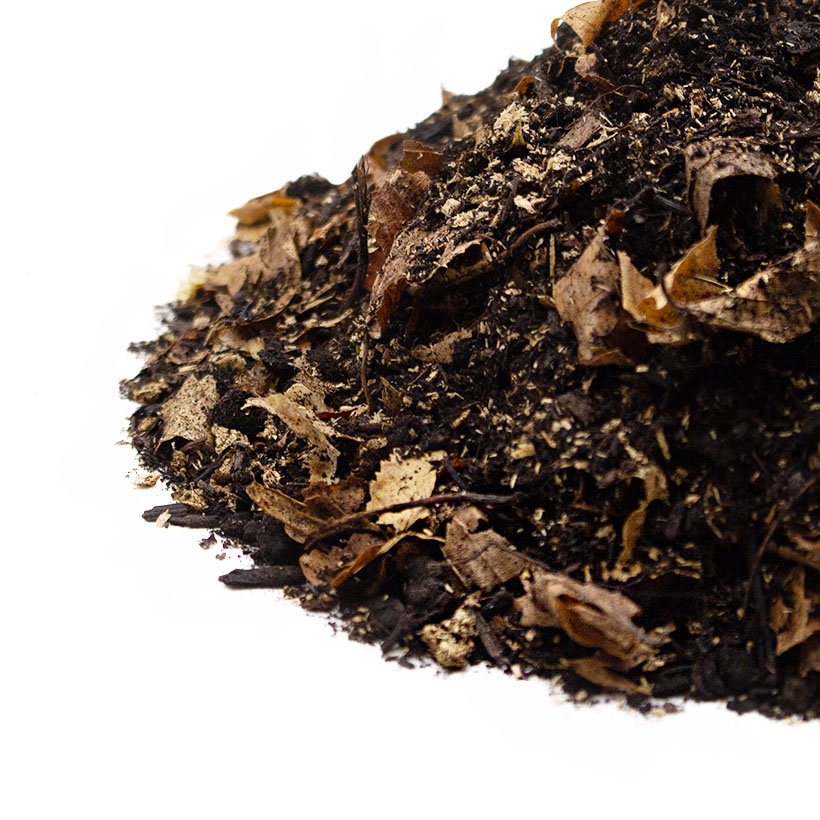
For Telodeinopus aoutii, we recommend our special millipede substrate.
It also contains further-fermented organic material, including fermented leaves and white-rot wood.
That is precisely what sets it apart from ordinary terrarium soil.
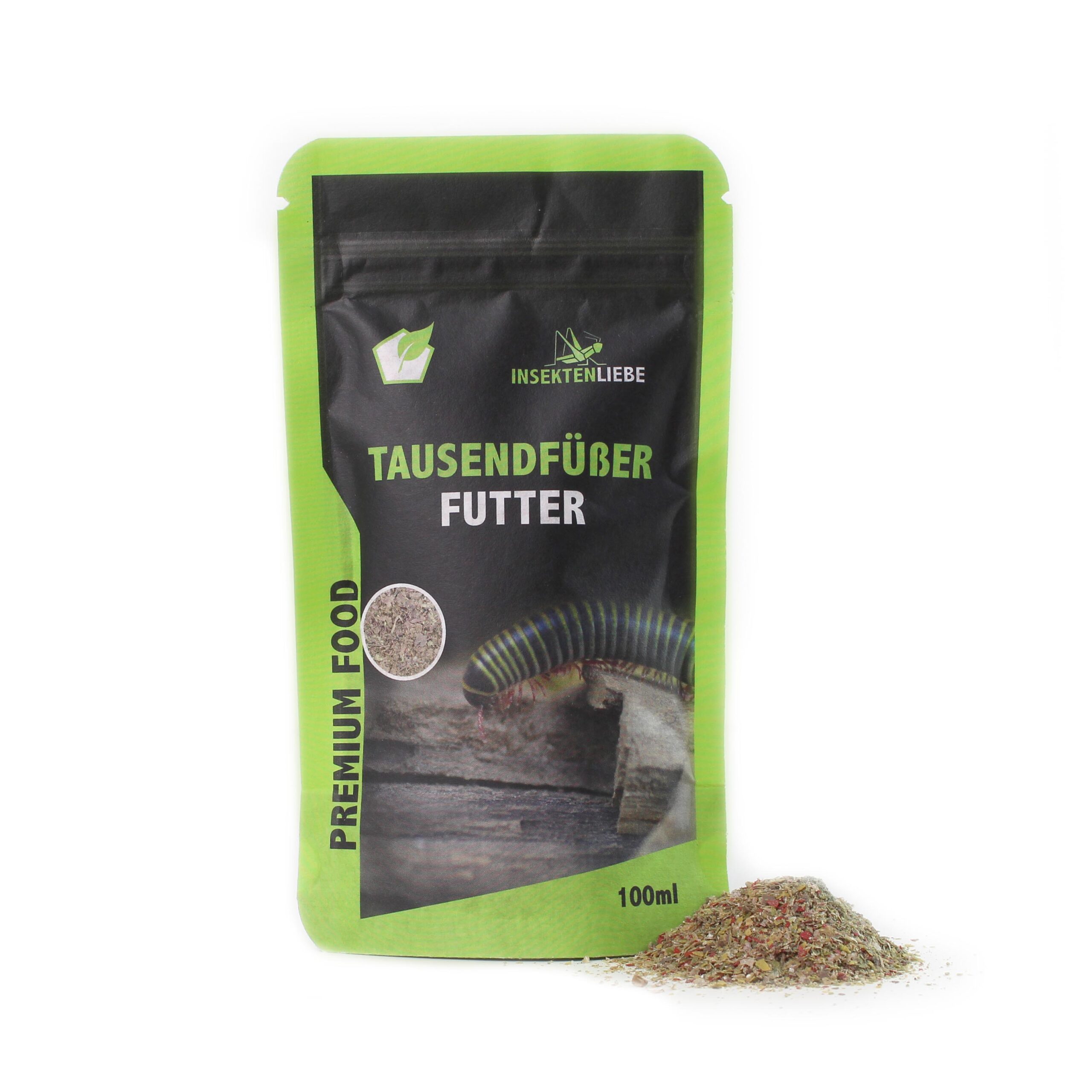
Millipedes eat large amounts of dead plant material that has already been broken down by microbes. The substrate therefore serves more than just to retain moisture.
It is also one of the most important sources of food.
Our millipede substrate should therefore not be mixed with other substrates. Doing so would simply reduce the proportion of usable organic material.
Leaves should always be placed in the terrarium
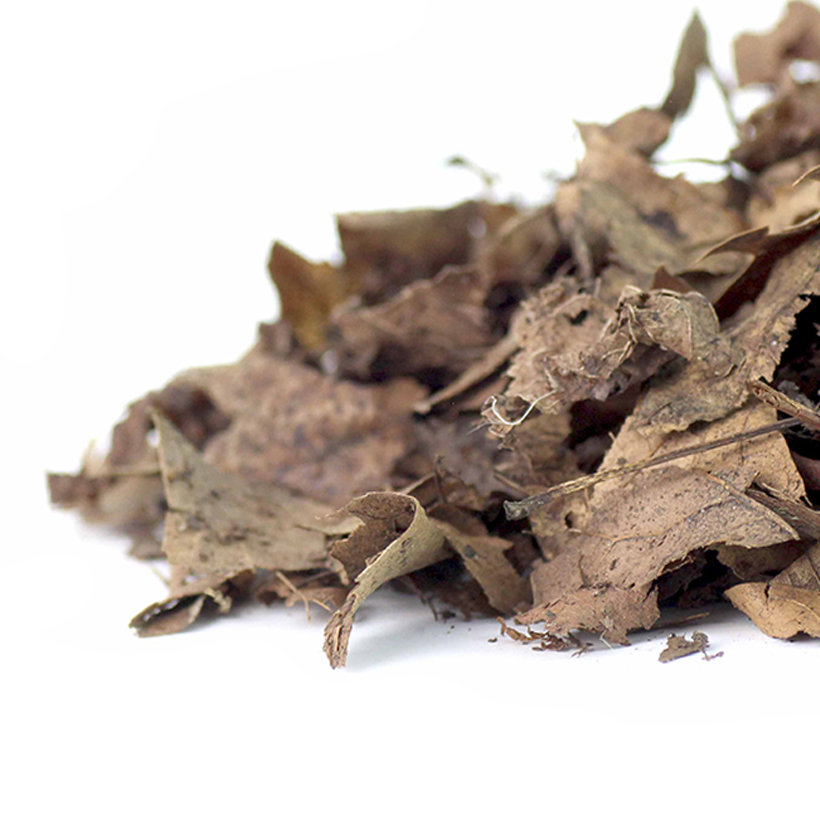
In addition to the substrate, there should always be plenty of fallen leaves available.
The leaves can be spread generously over the surface.
As a result, it serves several purposes at once. It provides nourishment, creates cover, and at the same time protects the underlying soil layers from drying out too quickly.
Little by little, the leaves decompose and are eaten by millipedes.
That is why fresh leaves should be added regularly.
Wood affected by white rot is not a decorative material
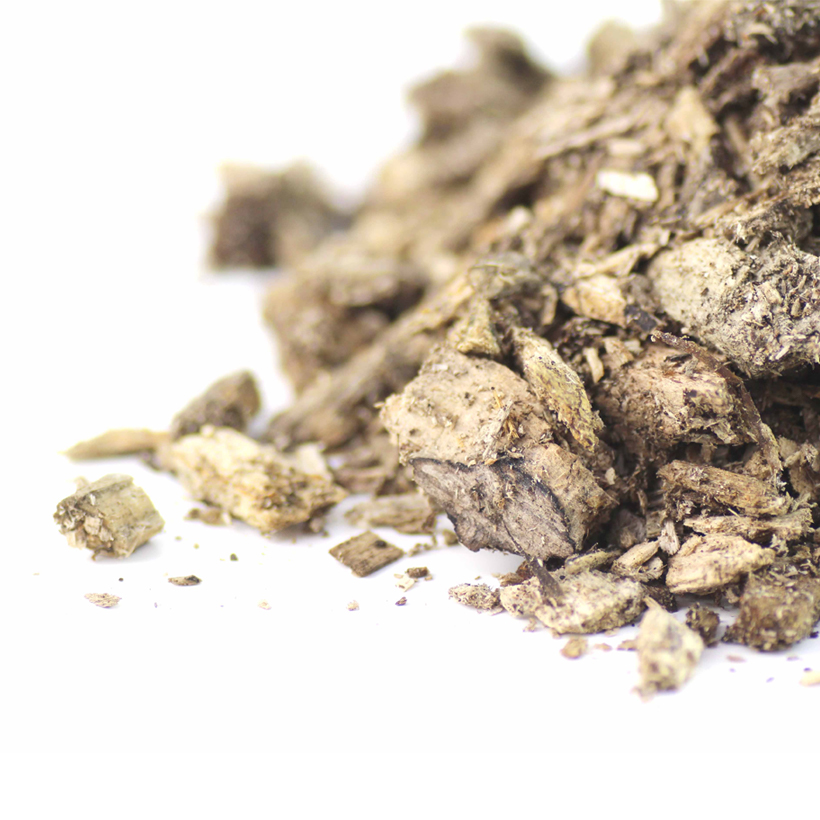
White-rot wood is also part of the basic diet of Telodeinopus aoutii.
This is highly decomposed, soft wood. In some cases, it can even be crushed with your fingers.
It is precisely this degree of decomposition that makes the material attractive to millipedes.
Larger pieces can be placed directly on the ground or partially worked into the substrate.
In this way, they serve as both food and natural structure.
Fruits and vegetables only as a supplement
You can also offer a variety of fruits and vegetables.
Suitable examples include:
- Cucumber
- Zucchini
- Pumpkin
- Carrot
- Sweet potato
- Apple
- Pear
However, these feeds should never form the basis of a pet’s diet.
Food leaves, white-rot wood, and high-quality millipede substrate are much more important.
You should also check fresh supplemental feed regularly. Remove any leftovers before they spoil or become heavily moldy.
Offer additional calcium
An additional source of calcium can be left in the terrarium at all times.
Cuttlefish shells, for example, are suitable for this purpose.
The animals can eat from it on their own.
This is especially convenient because you don’t have to keep sprinkling mineral powder on fresh food.
The cuttlebone remains in the terrarium and is replaced as needed.
Warm, tropical climate
For Telodeinopus aoutii, we recommend a daytime temperature of approximately 23–27 °C.
At night, the temperature can drop a little.
Much more important than achieving the highest possible temperature is maintaining a stable range without extreme fluctuations.
If additional heat is needed, it should never come from below in an uncontrolled manner.
A heating mat placed under the terrarium is not suitable for millipedes.
If a millipede gets too hot or too dry, it usually burrows deeper into the ground. There, it finds cooler and more humid conditions.
With underfloor heating, however, it would be exactly the opposite.
Keep it moist, but don’t overwater it
Telodeinopus aoutii requires a substrate with consistent moisture levels.
However, that doesn’t mean the entire terrarium has to be wet.
A moisture gradient is ideal.
One area can be kept slightly moister, while other areas can be allowed to dry out more on the surface. However, there should still be sufficient moisture in the deeper soil layers.
This allows the animal to decide for itself which area is suitable at the moment.
You should avoid waterlogging.
At the same time, adequate ventilation ensures that the air does not become permanently stuffy.
Burying things is part of natural behavior
If a Telodeinopus aoutii suddenly disappears, it is not necessarily a cause for concern.
The animals regularly burrow into the ground.
There may be various reasons for this. For example, they may be looking for an area with the right humidity, resting, or preparing to molt.
Under no circumstances should the animal be dug up, especially while it is molting.
The new outer shell is soft and delicate at first. Any disturbance during this phase can have serious consequences.
So the rule is: A millipede that’s burrowed underground stays underground.
Molting requires peace and depth
To ensure a successful molt, the millipede creates a sheltered area for itself in the substrate.
That is exactly why having enough substrate is so important.
During molting, the old exoskeleton is shed and a new one is formed. The new exoskeleton then needs time to harden.
The animal can therefore stay underground for a long time.
Even if you don’t see it for several weeks, you shouldn’t look for it in the substrate.
Group housing is possible
Telodeinopus aoutii gets along well with other members of its species.
Therefore, several animals can be kept together in a sufficiently large terrarium.
However, as the number of animals increases, so does the amount of substrate used.
This is because the organic components are continuously being eaten and broken down.
That’s why you should check regularly to make sure there is still enough food leaves, white-rotted wood, and nutrient-rich substrate.
When is the substrate used up?
Over time, the substrate changes.
The initially coarse organic material is gradually being converted into fine material. At the same time, the proportion of usable leaves and wood is decreasing.
By then at the latest, new millipede substrate must be added, or part of the old substrate must be replaced.
It is not always necessary to completely replace the entire terrarium.
You should also be especially careful when checking, because young animals and those molting may be buried deep in the substrate.
Advantages at a glance
- Telodeinopus aoutii
- Family Spirostreptidae
- African millipede
- Body length approximately 15–20 cm
- Elongated, relatively slender build
- Peaceful Behavior
- Group housing is possible
- Terrarium measuring approximately 40 × 30 × 30 cm
- At least 10–15 cm of substrate depth
- Temperature approximately 23–27 °C
- Evenly moist substrate
- A humidity gradient is recommended
- Avoid waterlogging
- Millipede substrate as a habitat and food source
- Provide food leaves on a permanent basis
- White-rot wood is part of the basic supply
- Fruits and vegetables only as a supplemental food
- An additional source of calcium is recommended
- Molting takes place in the substrate, where the insect is protected
- Do not place a heating mat under the terrarium
Suitable accessories for your setup
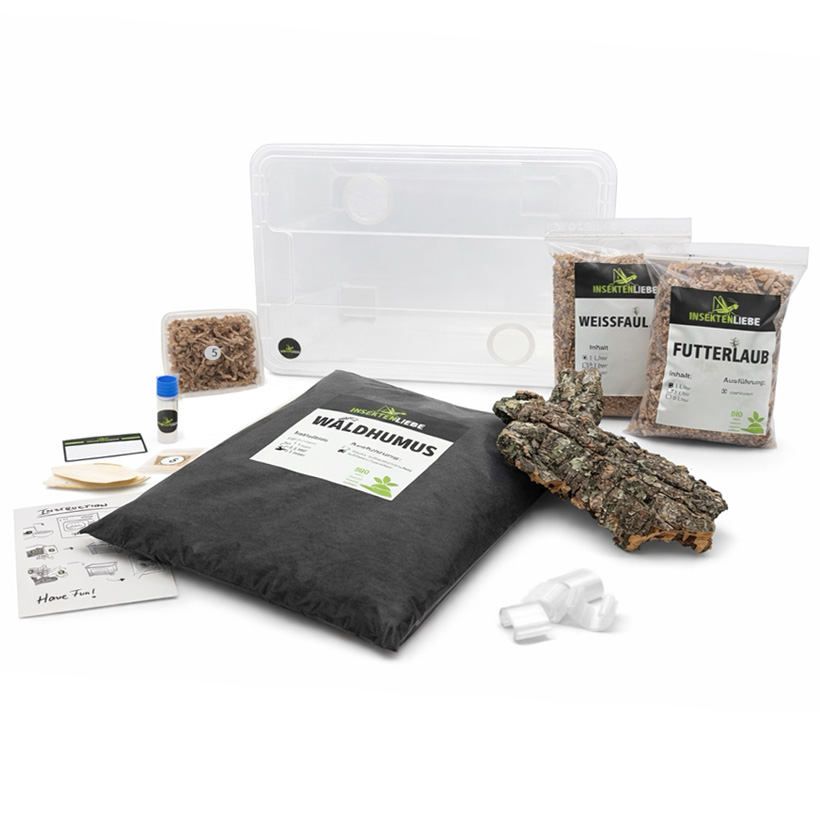
- Millipede Terrarium Complete Set – offers ample floor space and allows for a deep layer of substrate for digging, hiding, and molting.
- Insektenliebe Millipede Starter Kit – includes basic equipment tailored to keeping millipedes and makes it easy to get started with Telodeinopus aoutii.
- Millipede substrate —serves as both a substrate and an important food source, made from fermented leaves and white-rotted wood.
- Leaves – serve as a natural, long-lasting food source, provide cover, and protect the ground beneath them from drying out too quickly.
- White-rot wood —one of the most important food components—can be placed directly on top of or partially embedded in the substrate.
- Insektenliebe Futterfels – allows you to present fruits, vegetables, and other supplemental foods in a clean manner without them resting directly on the damp substrate.
Conclusion
Telodeinopus aoutii is an interesting, large millipede for a naturalistic forest terrarium. Its calm nature, elongated body, and characteristic burrowing and feeding behaviors make it a fascinating animal to observe.
The key to successful care lies right under the animal’s feet.
A substrate layer at least 10–15 cm deep, made of high-quality millipede substrate, serves as a habitat, a place for molting, and a food source. This should include a constant supply of fallen leaves and white-rotted wood.
Fruits and vegetables can be offered as a supplement, but should never replace a child’s basic nutritional needs.
Telodeinopus aoutii thrives in conditions of approximately 23–27 °C, with a consistently moist substrate and ample space. It is also particularly important never to dig up animals that have burrowed into the substrate, as they may be in the midst of a delicate molting phase.
This makes Telodeinopus aoutii ideal for keepers who want to observe not only a large invertebrate but also the entire ecosystem of a living forest floor.