Spirostreptus spec. 9
Price range: 12,00 € through 16,00 € incl. VAT, plus shipping

Simple

Cameroon

< 250 mm

23°C – 27°C
Spirostreptus spec. 9 – the orange-banded giant millipede from Cameroon
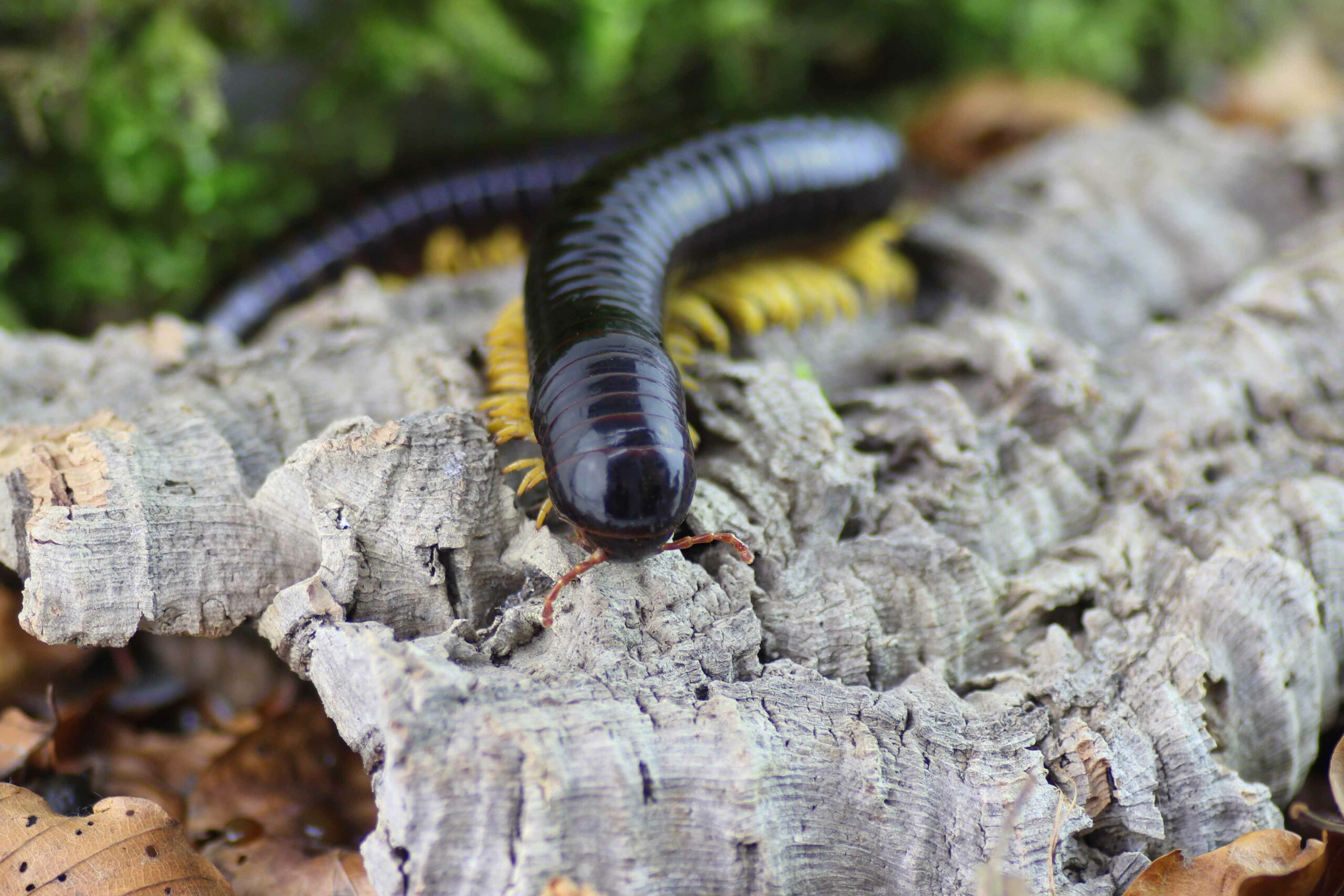
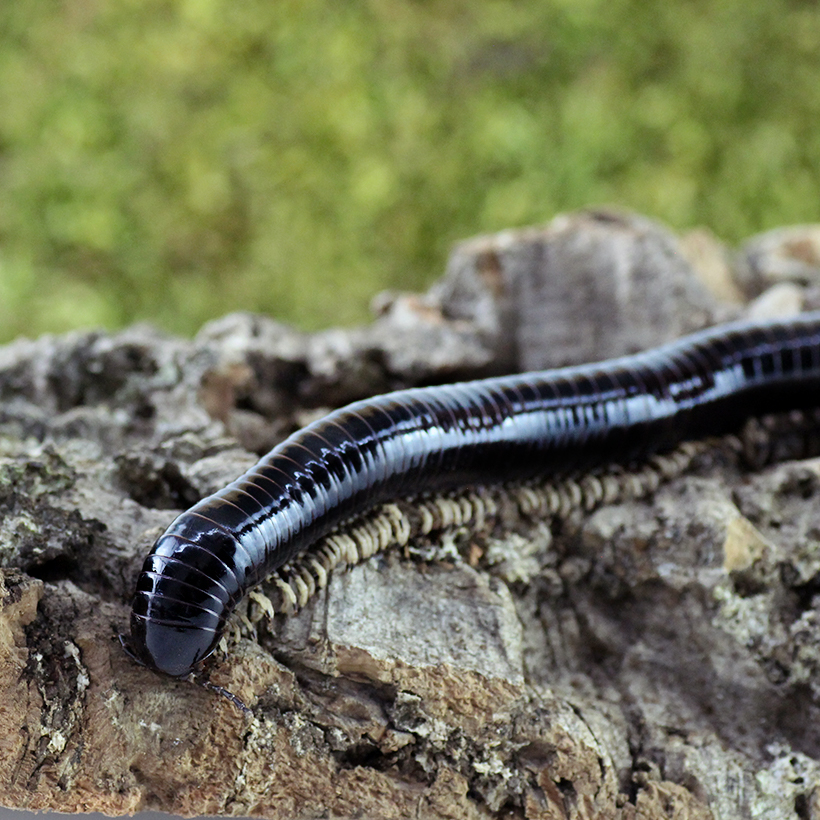
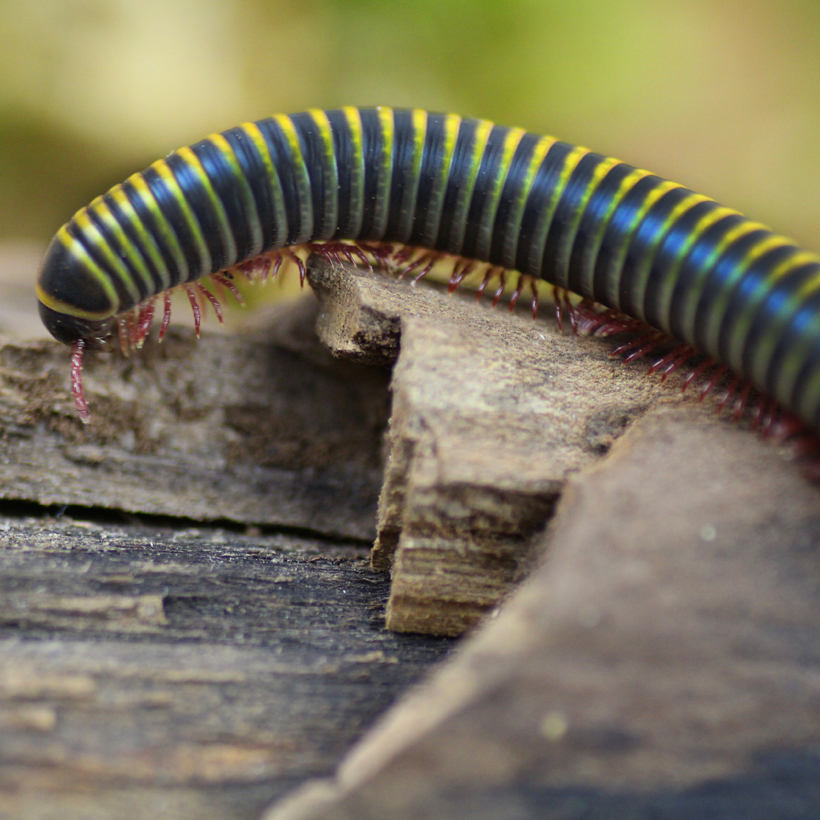
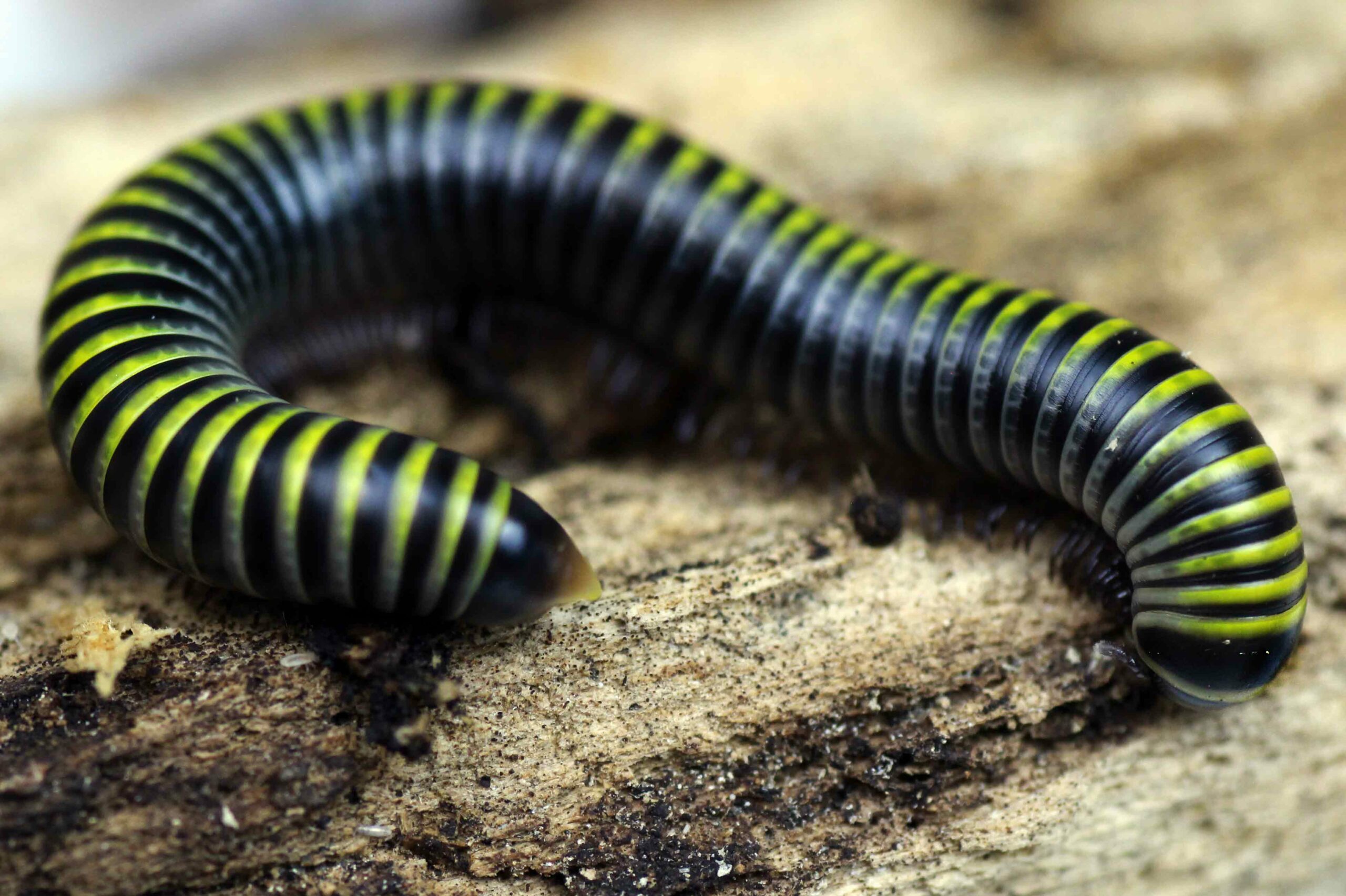
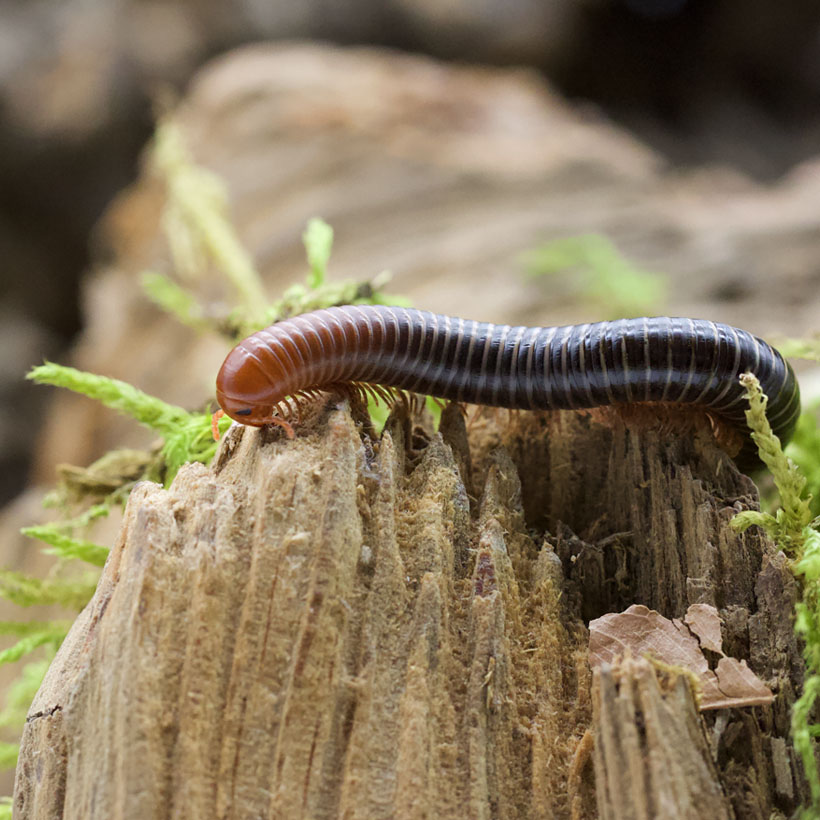
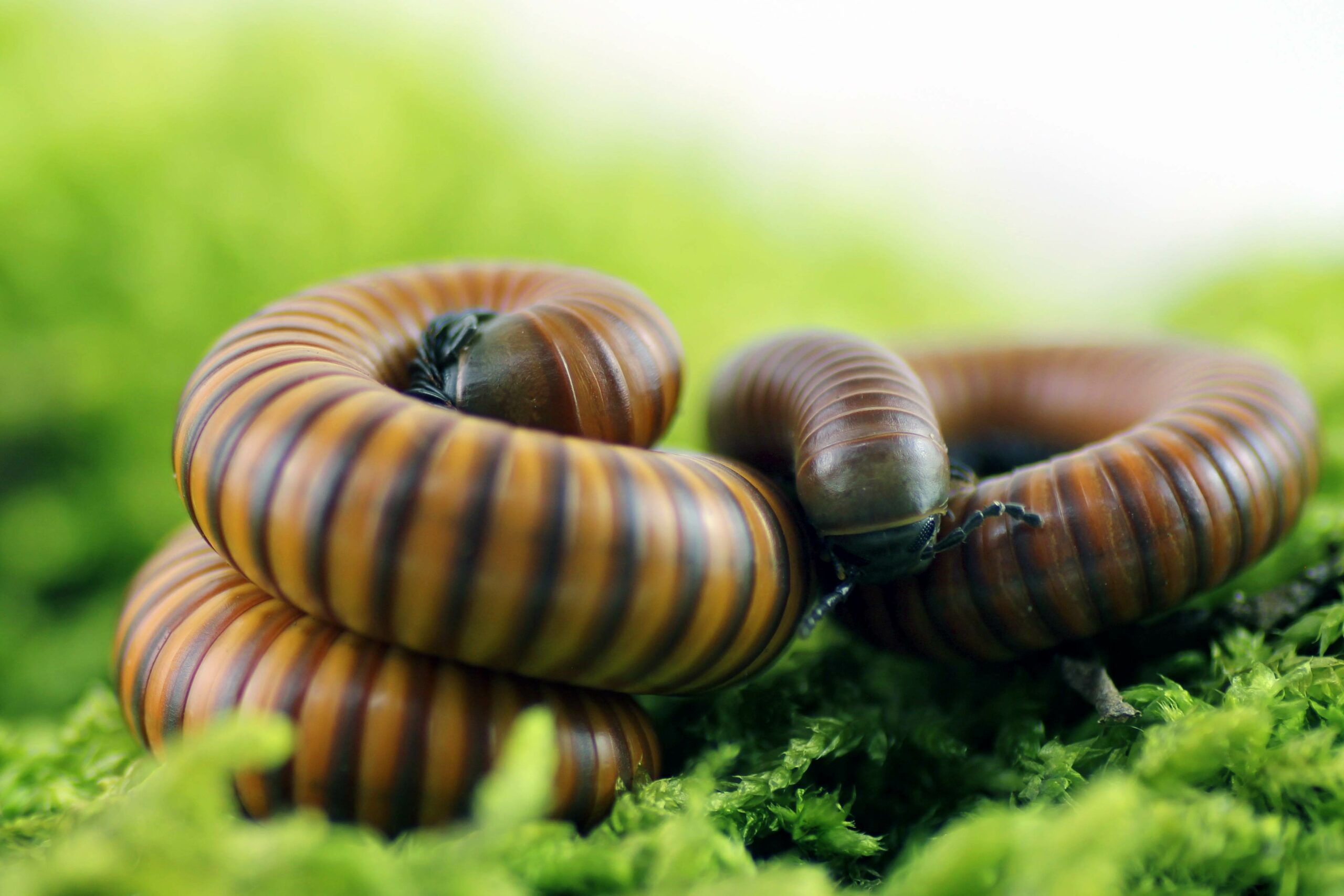
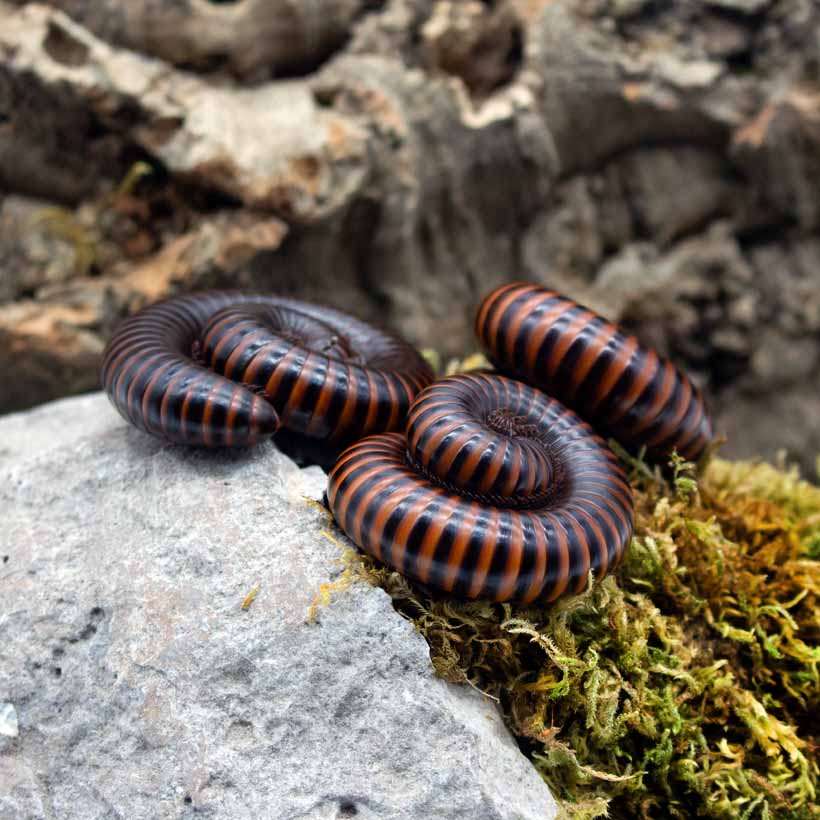
Spirostreptus spec. 9 is one of the most striking large millipedes from Africa. Its orange-yellow banded pattern, dark brown body, and gray legs, in particular, make it a real eye-catcher in the terrarium.
With a body length of up to 25 cm, this millipede reaches an impressive size. At the same time, its elongated, glossy body gives it a distinctly elegant appearance. When its numerous legs move in smooth, even waves, its extraordinary coloration is shown off to its best advantage.
These animals are native to Cameroon, where they prefer to inhabit moist, shady forest areas. Therefore, in a terrarium, they need a deep, nutrient-rich substrate, sufficient moisture, and a variety of hiding spots.
Their behavior is also particularly interesting. Under the right conditions, Spirostreptus spec. 9 can regularly be observed at the surface. This makes this species ideal for anyone who not only wants to keep large millipedes but also wants to observe their natural behavior.
A unique find from the forests of Cameroon
Spirostreptus spec. 9 is native to the humid forest regions of Cameroon.
There, the animals spend a large part of their lives on and in the forest floor. Among dead leaves, rotten wood, and loose soil, they find food and shelter.
However, the name ” Spirostreptus spec. 9 ” is a trade name or working name. The exact scientific classification of the species has not yet been definitively determined.
Therefore, the number 9 should not be confused with a valid scientific species name.
Nevertheless, this term is useful in terrarium keeping because it allows these animals to be distinguished from other similar-looking African millipedes.
Dark brown with bright orange-yellow rings
The most striking feature of Spirostreptus spec. 9 is its high-contrast coloration.
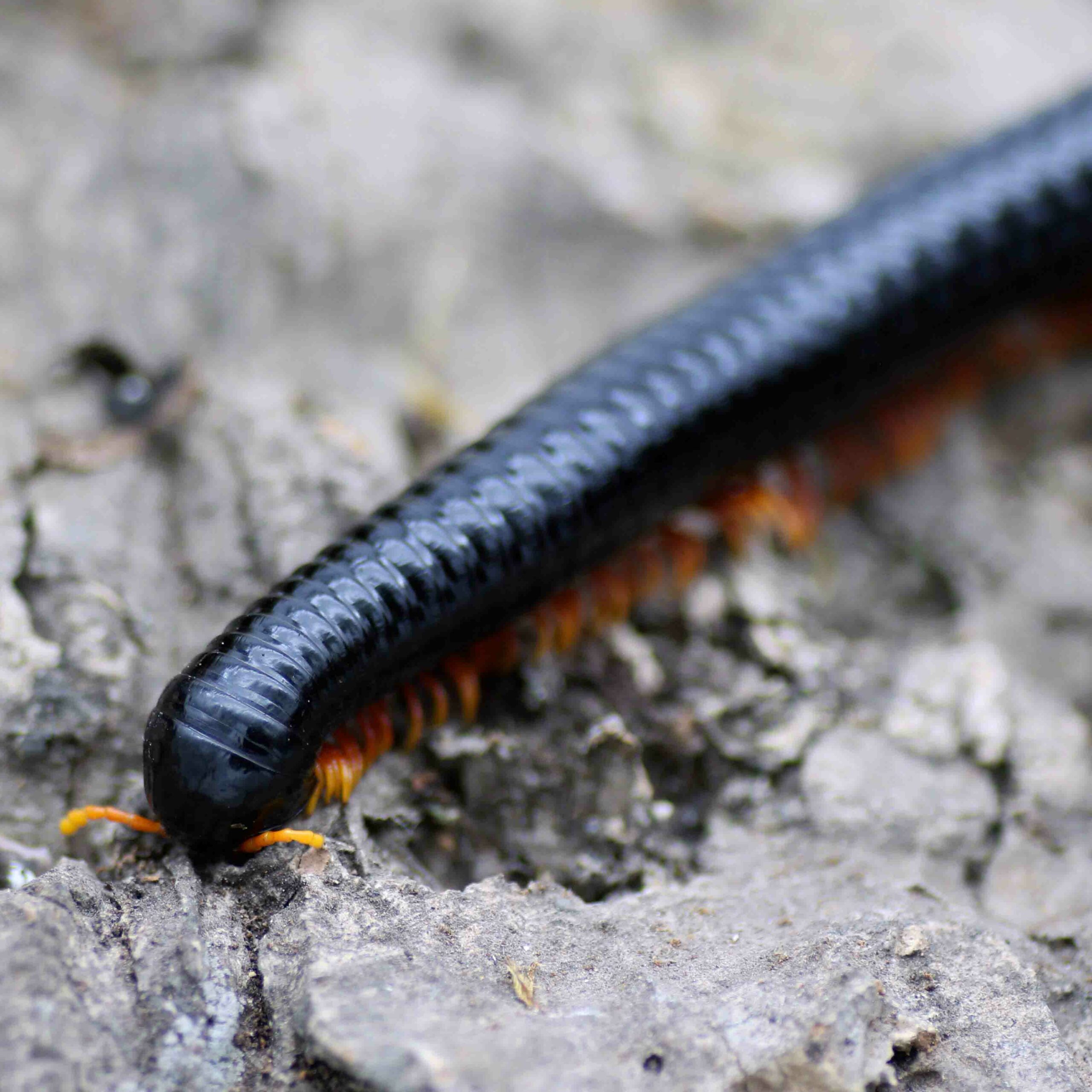
The body has a dark brown base color. At the same time, the individual body segments feature orange-yellow bands, creating a particularly beautiful striped pattern.
The legs and antennae, on the other hand, are mostly gray.
In addition, the body has a very smooth and glossy surface. This makes the colors appear particularly vivid.
The orange-yellow markings really stand out, especially against the dark forest floor.
What is the difference between Spirostreptus spec. 9 and spec. 8?
Spirostreptus spec. 9 resembles Spirostreptus spec. 8, which is also found in Africa.
Both forms grow to a considerable size and have an elongated body.
The most noticeable difference is in the color.
While Spirostreptus spec. 9 stands out due to its orange-yellow ring pattern, Spirostreptus spec. 8 exhibits a different color pattern.
However, since the scientific classification of these trade forms has not yet been fully clarified, the distinction should not be based solely on individual color characteristics.
Up to 25 cm in body length
With a length of approximately 20–25 cm, Spirostreptus spec. 9 is one of the larger millipedes kept in terrariums.
Adult animals have a robust, elongated body with numerous segments.
Most body segments have two pairs of legs each. This results in their characteristic undulating movement.
Its behavior when crossing roots and other natural obstacles is particularly interesting.
The animals move with surprising agility and explore their surroundings with their antennae.
Peaceful and easy to observe
Spirostreptus spec. 9 is one of the peaceful millipedes.
The animals spend a lot of time searching the substrate for food. As they do so, they move across leaves, explore pieces of wood, or disappear among natural structures.
Reports from the field describe this species as being active on the surface relatively often.
Nevertheless, an animal can burrow completely into the ground at any time.
Especially during molting or under unfavorable conditions, millipedes often retreat into deeper layers of soil.
This is part of their natural behavior and is not a cause for concern at first.
A spacious terrarium with a large floor area
Because of its size, Spirostreptus spec. 9 needs plenty of space.
For a small group, we recommend a terrarium measuring approximately 80 × 40 × 50 cm.
The substrate is particularly important here. This is because the animals spend most of their lives on and in the substrate.
At the same time, there must be sufficient height to allow for a sufficiently deep layer of substrate to be added.
Roots and pieces of cork create additional hiding spots and provide interesting climbing opportunities.
However, heavy pieces of furniture must be stable so that they do not tip over if someone tries to dig under them.
At least 15 cm of millipede substrate
The substrate is the most important component of tank maintenance.
For Spirostreptus spec. 9, we recommend a substrate depth of at least 15 cm. If there is enough space, the layer can be even deeper.
After all, millipedes don’t just live on the ground.
They burrow into the ground, rest in deeper layers, and retreat to molt.
In addition, the substrate is also their most important source of food.
That is why standard terrarium soil is not sufficient for long-term care.
Our millipede substrate as a food source
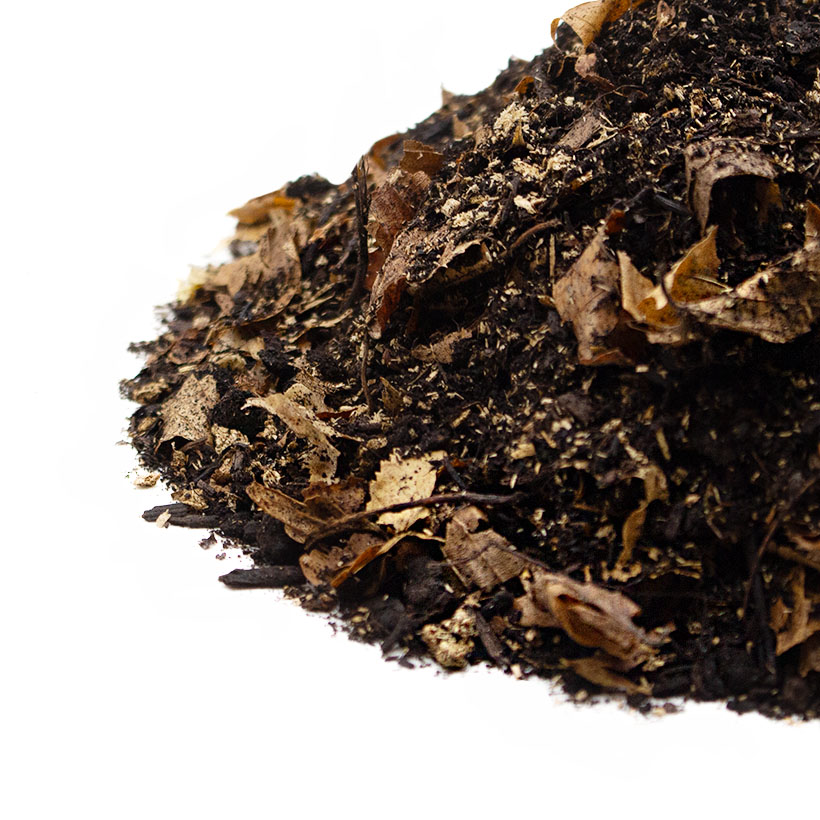
For Spirostreptus spec. 9, we recommend our special millipede substrate.
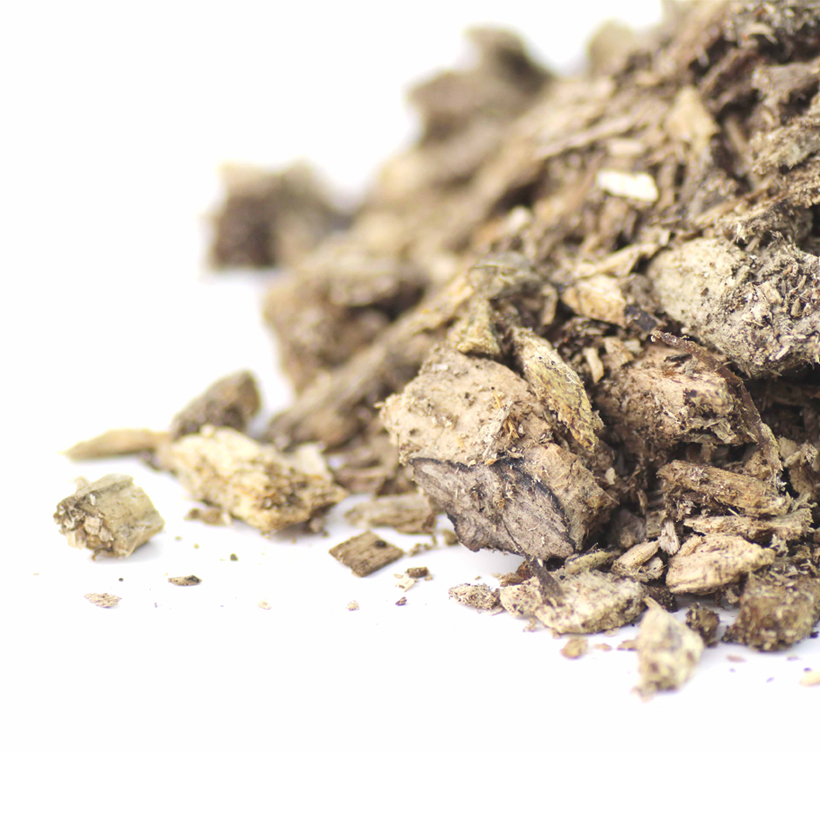
It contains fermented leaves and wood affected by white rot.
As a result, it not only provides the animals with a natural habitat but also with important sources of food.
This is because large millipedes feed mainly on dead and already decomposed plant material.
The substrate should therefore not be mixed with other types of soil. Doing so would only reduce the proportion of usable nutrients.
Food leaves belong in the terrarium at all times
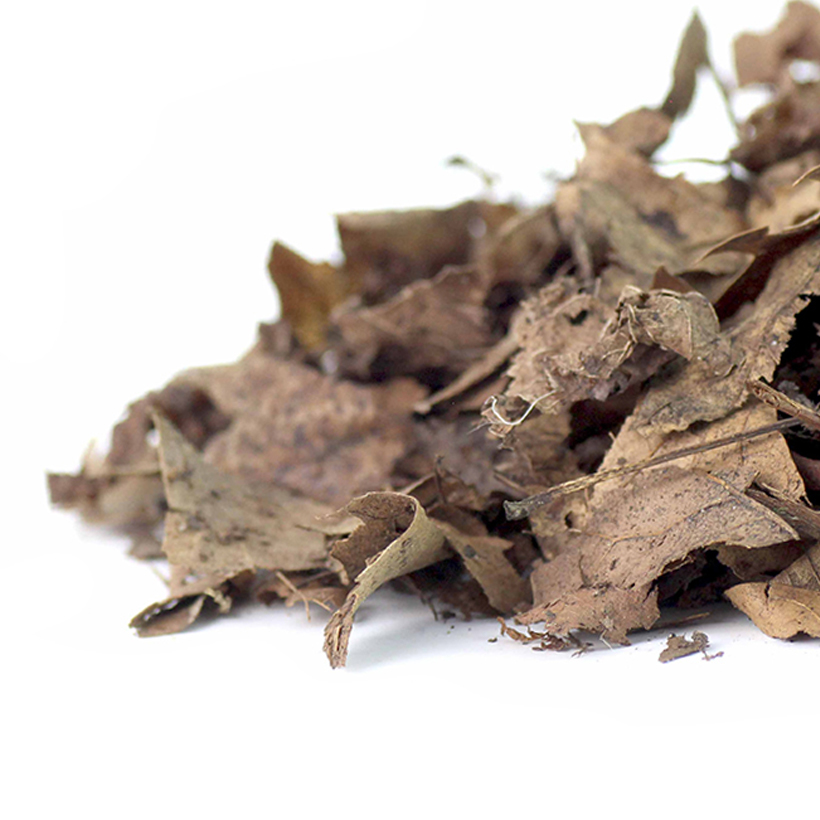
In addition to the substrate, there should always be plenty of food leaves available.
Dead oak and beech leaves, for example, are particularly suitable.
The leaves serve as food and also provide natural hiding places.
In addition, a thicker layer of leaves protects the soil beneath from drying out too quickly.
Over time, the material is eroded and further broken down.
That’s why you should regularly add fresh leaves.
White-rot wood is indispensable
White-rot wood is also part of the basic supply.
This is wood that has already decomposed significantly and has become soft due to fungal activity.
Millipedes are particularly good at breaking down this very material.
You can place larger pieces directly on the substrate or partially work them into it.
This creates both natural structures and additional feeding sites.
Fruits and Vegetables as a Supplement to the Diet
In addition to their main natural diet, the animals will eat various types of fruits and vegetables.
Suitable examples include:
- Zucchini
- Cucumber
- Pumpkin
- Carrot
- Sweet potato
- Apple
- Pear
- Melon
However, these feed products should only be offered as a supplement.
Feeding leaves, white-rotted wood, and millipede substrate remain their primary food sources.
You should check fresh supplemental food regularly and remove it before it spoils.
Calcium for Growth and Molting
An additional source of calcium should also be provided.
Cuttlefish shells are especially handy.
You can simply place these on the substrate. The animals can eat them as needed.
Calcium is needed for the formation and mineralization of the exoskeleton.
That is why it is important to ensure an adequate supply, especially during growth.
23–27 °C for successful care
For Spirostreptus spec. 9, we recommend a daytime temperature of approximately 23–27 °C.
This temperature range has also proven effective in INSEKTENLIEBE’s care practices to date.
At night, the temperature can drop a little.
An additional heat source is only necessary if the room temperature is insufficient.
You should definitely avoid placing a heating mat directly under the terrarium.
Millipedes usually burrow deeper when they are looking for cooler, more sheltered areas.
Underfloor heating would reverse this natural temperature gradient.
Moist forest soil instead of waterlogging
Spirostreptus spec. 9 is native to moist forest areas and therefore requires a substrate with sufficient moisture.
As a general guideline, a relative humidity of approximately 65–85% can be used.
However, the actual moisture content of the substrate is more important than a single measurement.
The deeper layers of soil should remain evenly moist. At the same time, the surface may dry out slightly in places.
This creates a natural moisture gradient.
You should definitely avoid waterlogging.
In addition, adequate ventilation is important to prevent damp air from becoming trapped for long periods of time.
Molting takes place in the soil, where the animal is protected
If your Spirostreptus spec. 9 burrows into the substrate for an extended period of time, it may be about to shed its skin.
During this phase, the millipede retreats to a sheltered area.
There, the old outer shell is removed. Afterward, the new shell must cure completely.
The animal is particularly sensitive during this time.
That’s why you should never dig up millipedes that have burrowed into the ground.
Major changes to the substrate should also be avoided whenever possible.
Group housing is possible
Spirostreptus spec. 9 can be kept successfully with other members of the same species.
Therefore, several animals can be kept together in a sufficiently large terrarium.
However, as the number of animals increases, so does the amount of substrate used.
This is because the organic components are constantly being eaten.
That’s why you should check regularly to make sure there are still enough leaves and white-rotted wood available.
Over time, the substrate becomes increasingly fine. At that point, worn-out areas must be replaced with fresh millipede substrate.
Breeding is a particular challenge
Breeding Spirostreptus spec. 9 is possible, but it is not always successful.
There are documented breeding successes. At the same time, experienced keepers report that this species breeds significantly less frequently than some other African millipedes.
Seasonal changes may play a role.
In Cameroon, distinct regional rainy and dry seasons alternate. Such changes could also be significant for the reproduction of certain millipedes.
However, there is currently insufficient reliable data available for Spirostreptus spec. 9 to reliably recommend a specific breeding procedure.
That is why breeding should be viewed more as an interesting long-term project.
Advantages at a glance
- Spirostreptus spec. 9
- Large African millipede
- Origin: Cameroon
- Body length up to about 25 cm
- Dark brown base color
- Distinctive orange-yellow ring pattern
- Gray legs and antennae
- Shiny, smooth body
- Peaceful Behavior
- Often observed on the surface
- Group housing is possible
- Terrarium for small groups, measuring approximately 80 × 40 × 50 cm
- At least 15 cm of substrate depth
- Temperature approximately 23–27 °C
- Humidity as a guideline: 65–85%
- Millipede substrate as the primary food source
- Provide a constant supply of fallen leaves and white-rotten wood
- Fruits and Vegetables as a Supplement to the Diet
- A source of calcium is recommended
- Molting takes place in the substrate, where the animal is protected
- Breeding is possible, but not always reliable
- Difficulty Level: Easy
Suitable accessories for your setup
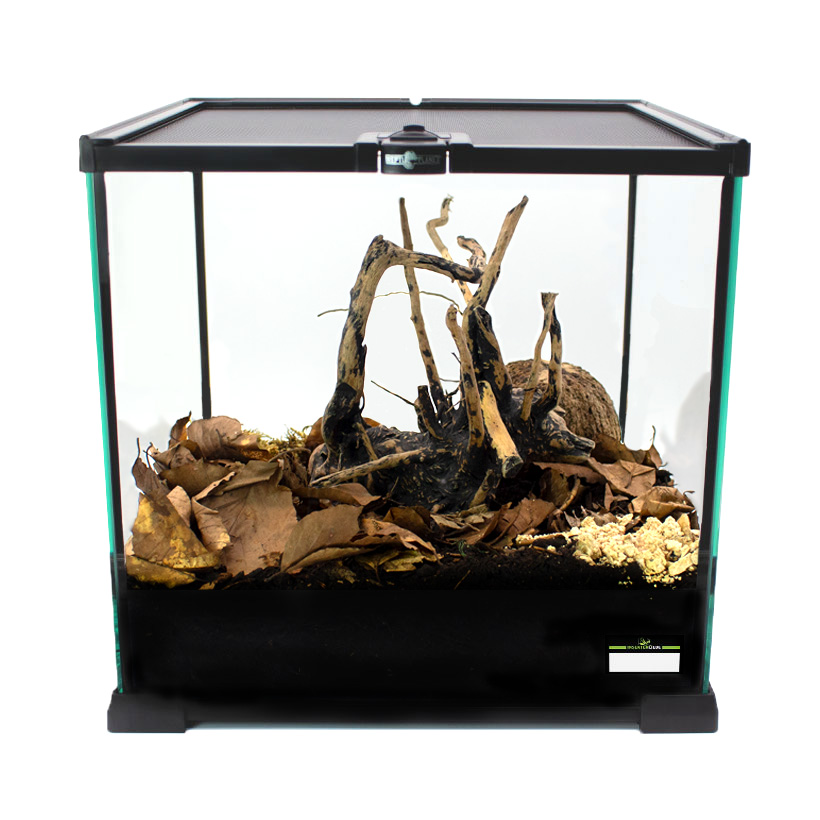
Millipede Terrarium Complete Set – offers ample floor space and allows for a deep layer of substrate for digging, hiding, and molting.
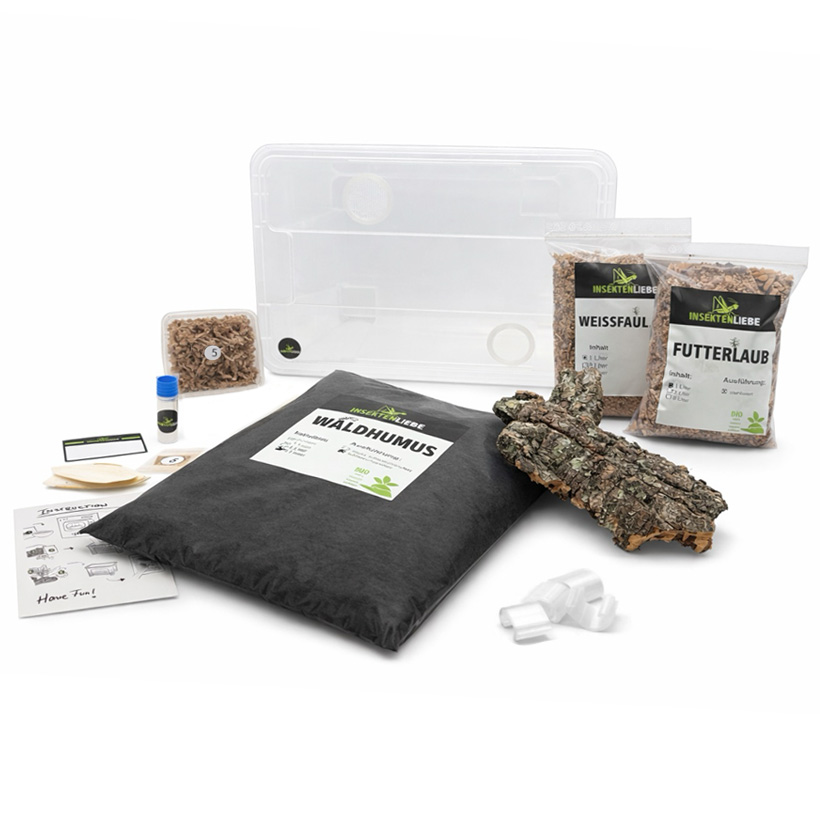
Insektenliebe Millipede Starter Kit – includes basic equipment tailored to the needs of millipedes and makes it easy to get started keeping Spirostreptus spec. 9.
Millipede substrate —serves as both a habitat and an important food source made from fermented leaves and white-rotten wood.
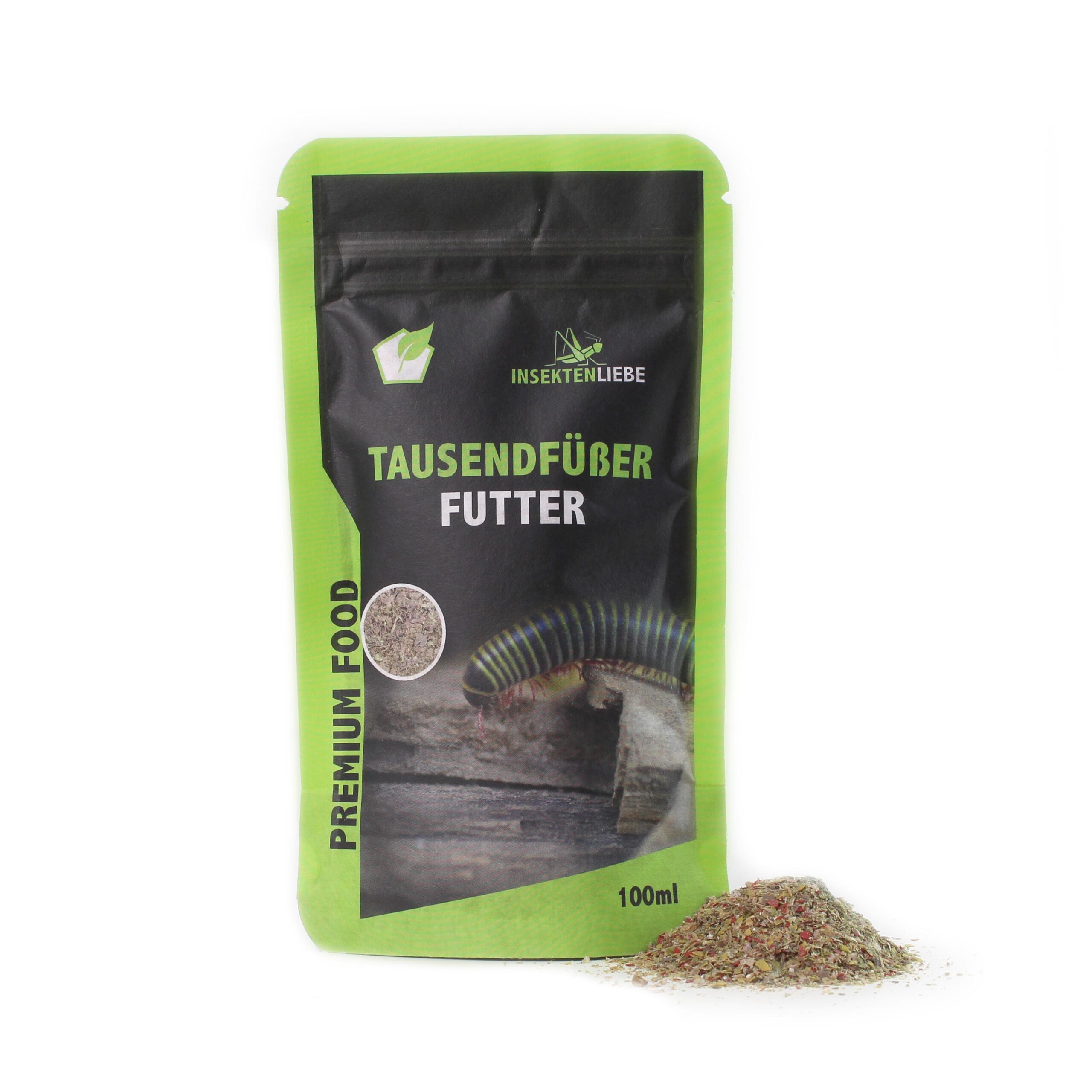
Leaves for feeding —serve as a natural, long-lasting food source and protect the substrate beneath them from drying out too quickly.
White-rot wood —provides important decomposed wood components and is part of the natural food supply.
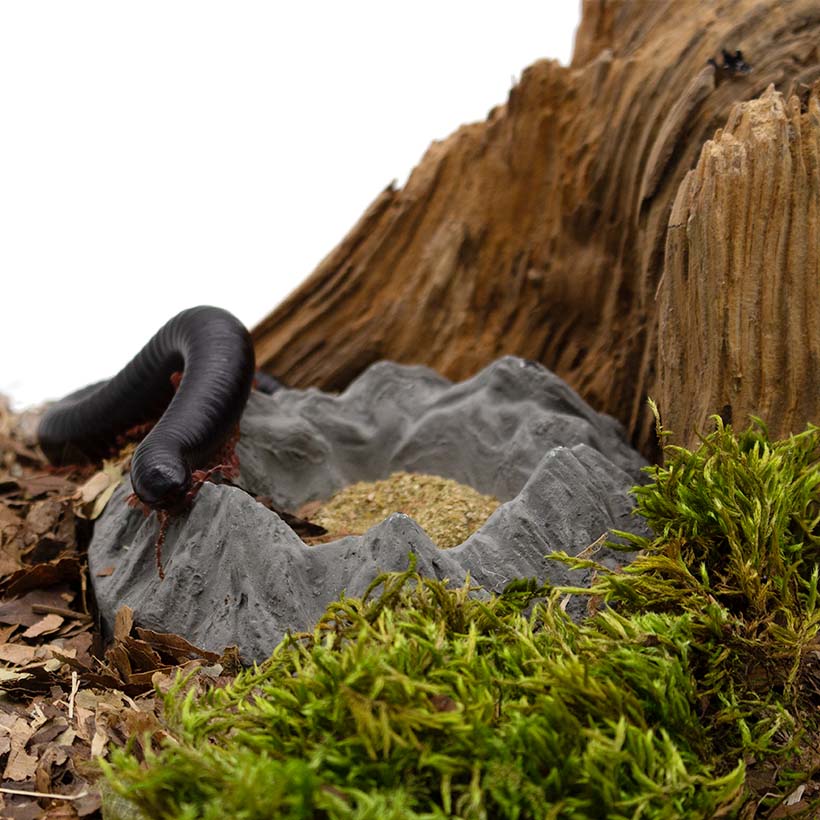
Insektenliebe Futterfels – allows you to present fruits, vegetables, and other supplemental foods in a clean manner without them resting directly on the damp substrate.
Conclusion
Spirostreptus spec. 9 is an exceptionally beautiful millipede from Cameroon. Its orange-yellow body segments, gray legs, and shiny dark brown body make it truly distinctive.
With a length of up to 25 cm, it is also one of the larger species in the terrarium hobby.
It is peaceful and, under the right conditions, can regularly be seen at the surface.
For successful care, we recommend a spacious terrarium, temperatures of 23–27 °C, and a substrate at least 15 cm deep.
Our millipede substrate is particularly important, as it serves both as a habitat and as the primary food source. Feeding leaves and white-rotted wood should also be available at all times.
If you’re looking for a large, colorful, and peaceful millipede, Spirostreptus spec. 9 makes a fascinating addition to a natural-looking forest terrarium.