Phidippus won
65,00 € incl. VAT, plus shipping

Simple

USA

< 13 mm

23°C – 27°C
Phidippus nikites – a vibrantly colored jumping spider from North America
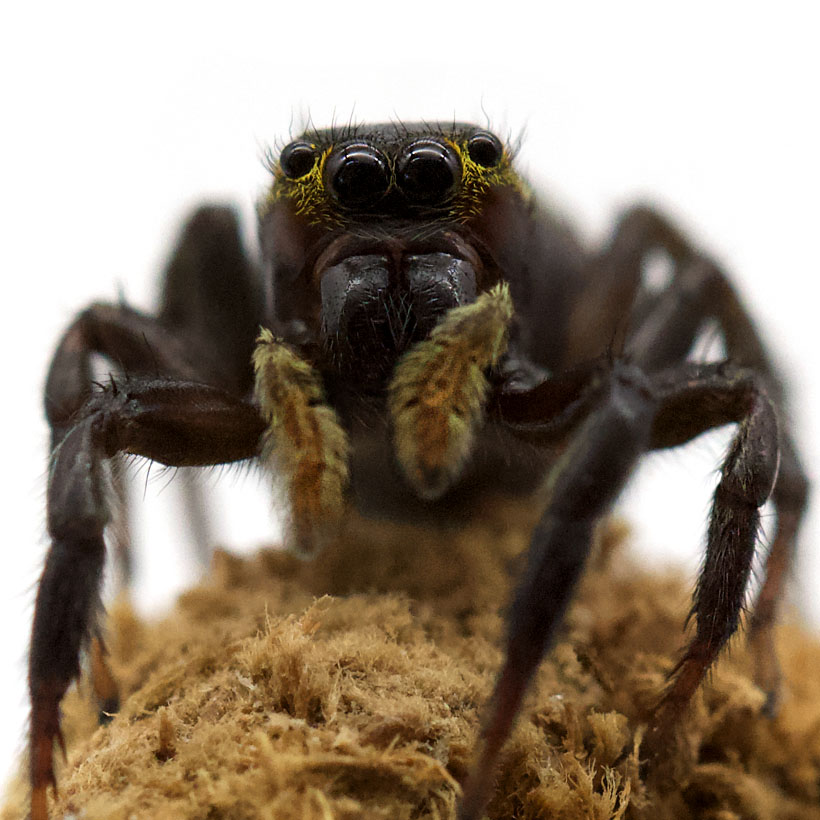
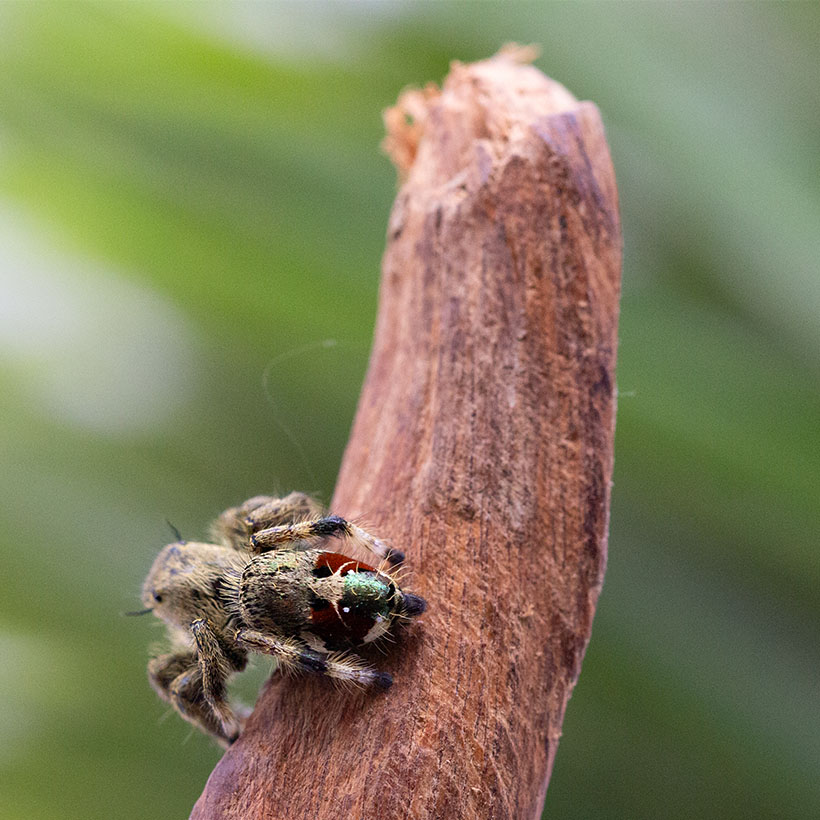
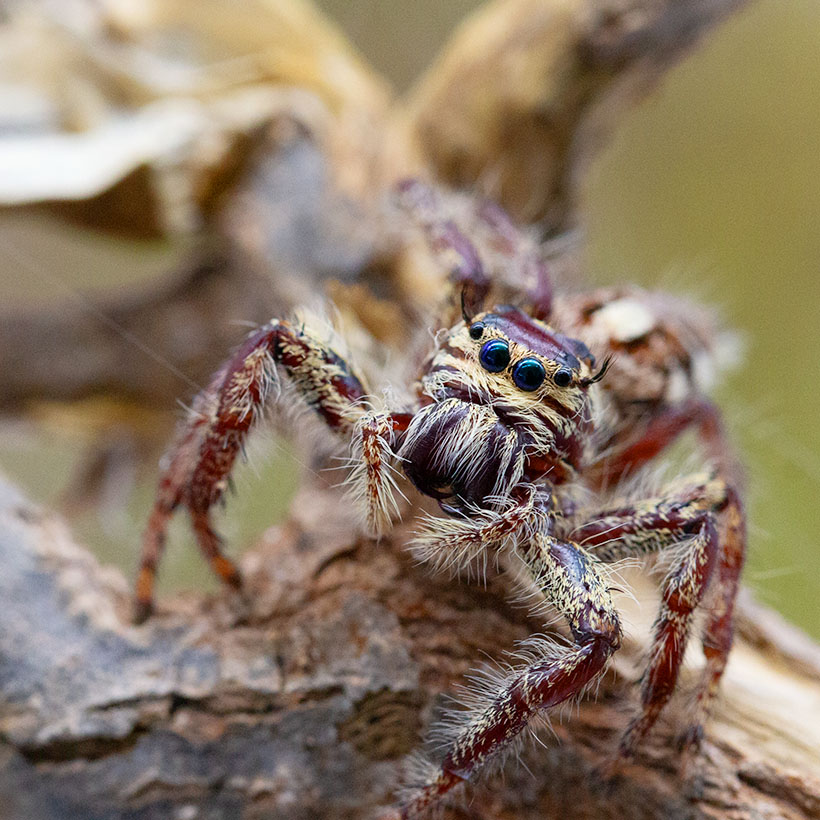
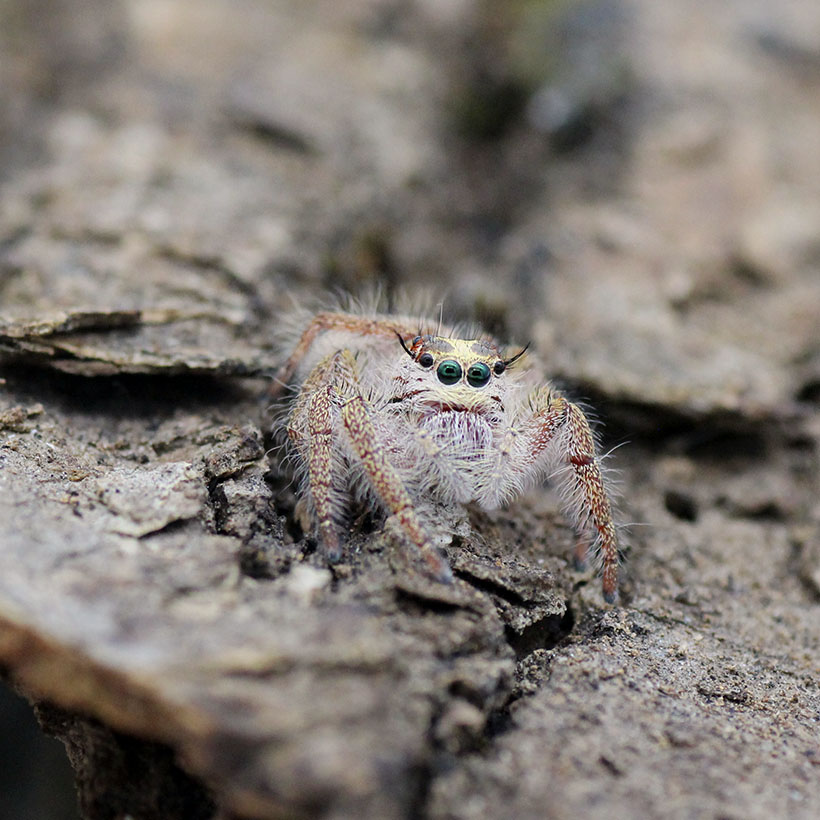
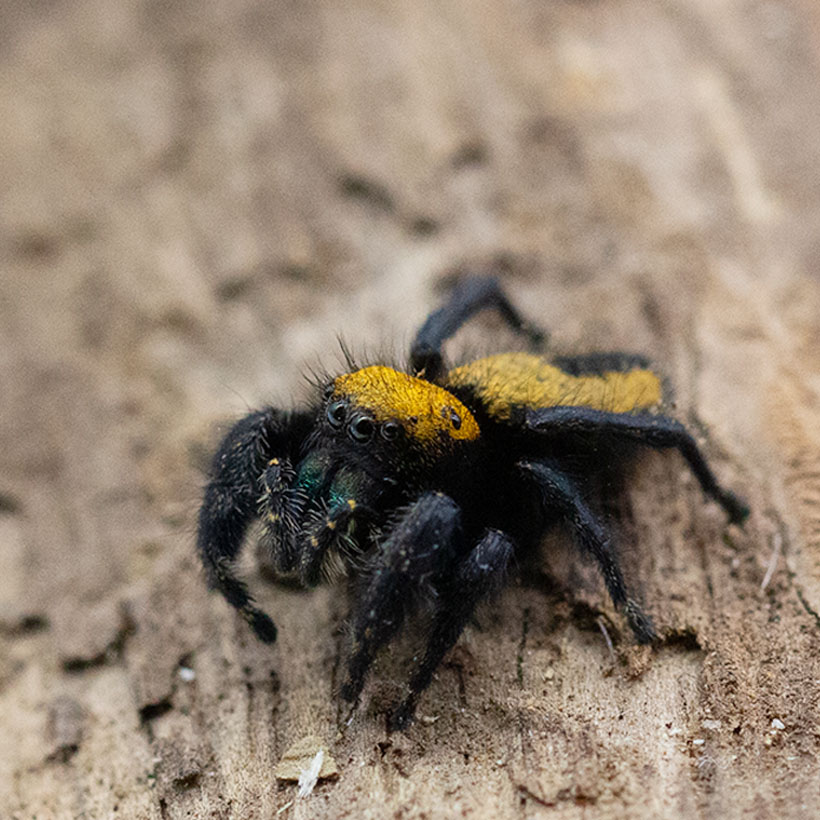
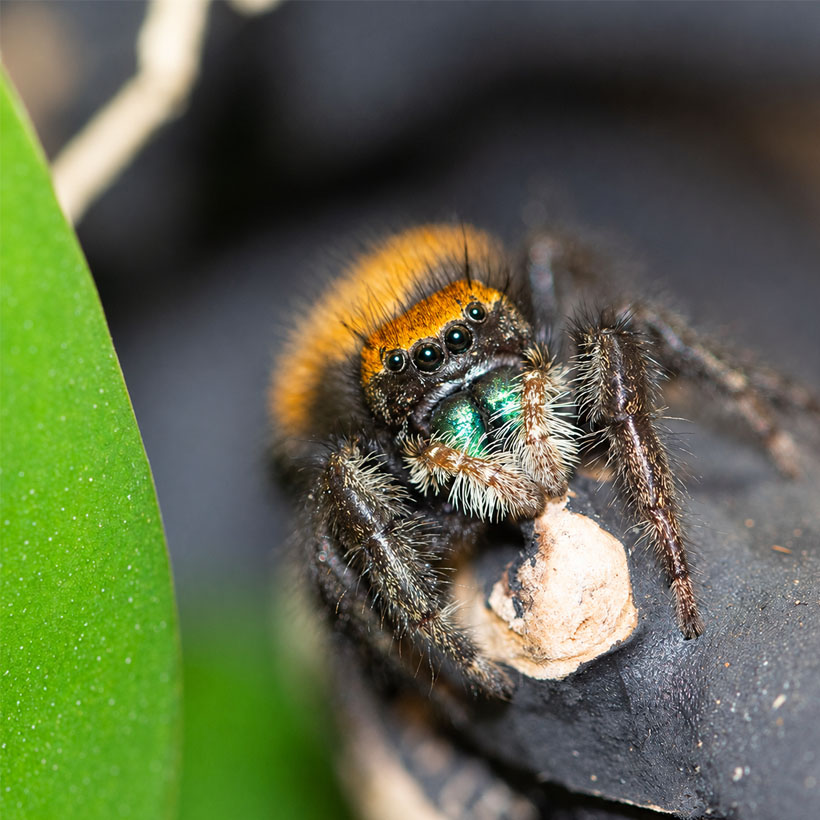
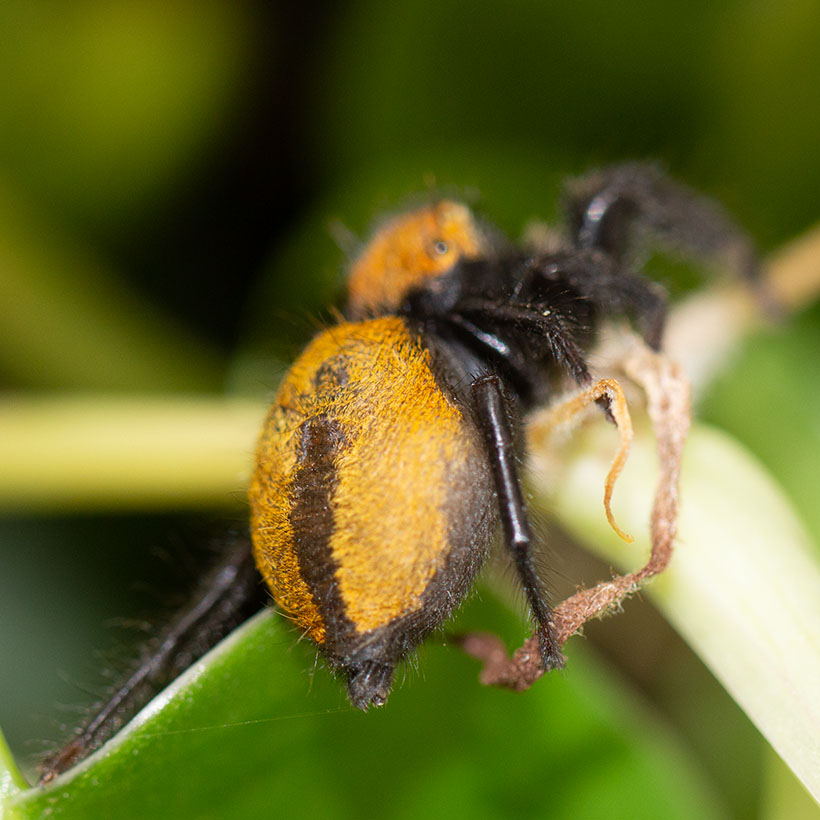
Phidippus nikites is an exceptionally attractive jumping spider that stands out primarily for its vivid coloration. Depending on the stage of development, shades of yellow, orange, and deep red may appear. It is precisely this color change during development that makes the species particularly interesting.
The species was described in 1935 by Chamberlin and Ivie and belongs to the family Salticidae (jumping spiders). Its natural range includes parts of the United States and Mexico. Documented occurrences include the western United States and the Mexican peninsula of Baja California, among other locations.
However, Phidippus nikites is not a tropical jumping spider. It has been found in the wild in habitats such as grasslands, arid regions, desert vegetation, and coastal dunes. This is an important distinction from tropical jumping spiders when it comes to keeping them as pets.
With a body length of 8–13 mm, it is rather compact
Phidippus nikites is not one of the largest members of its genus.
Adult males reach a body length of approximately 8–12 mm, while females can grow slightly larger, reaching a body length of about 9–13 mm. The body is measured without the legs.
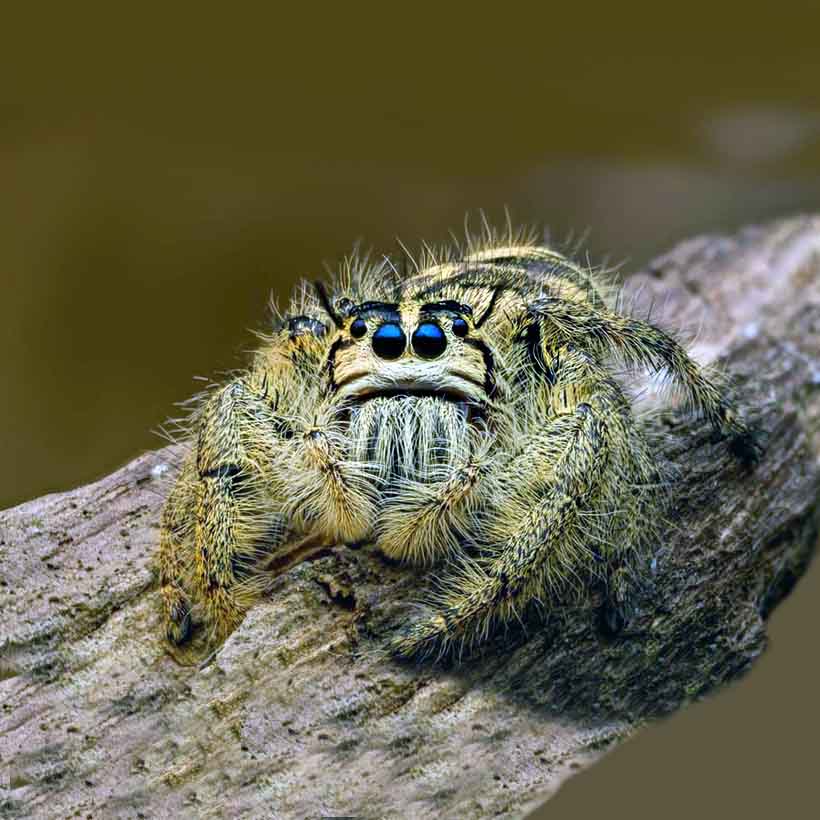
This means the species remains significantly smaller than large Hyllus species, for example. At the same time, it possesses the robust build typical of Phidippus and therefore does not appear delicate at all, despite its modest body length.
From yellow to orange to deep red
The development of the coloration is particularly fascinating.
Phidippus nikites belongs to the so-called ” purpuratus” group and is closely related to Phidippus apacheanus. The two species can look very similar. However, an interesting distinguishing feature is the development of their coloration.
According to Edwards’s taxonomic revision of the genus, Phidippus nikites can change color during various stages of development. Color changes ranging from yellow to orange to red have been described, although some individuals may remain yellow. Phidippus apacheanus, on the other hand, tends to retain its basic coloration throughout its development.
That’s why, especially with young animals, you shouldn’t assume that their current color will be the same as their adult coloration.
Males and females also show differences
A scientific study from 2022 provides a more detailed description of adult specimens.
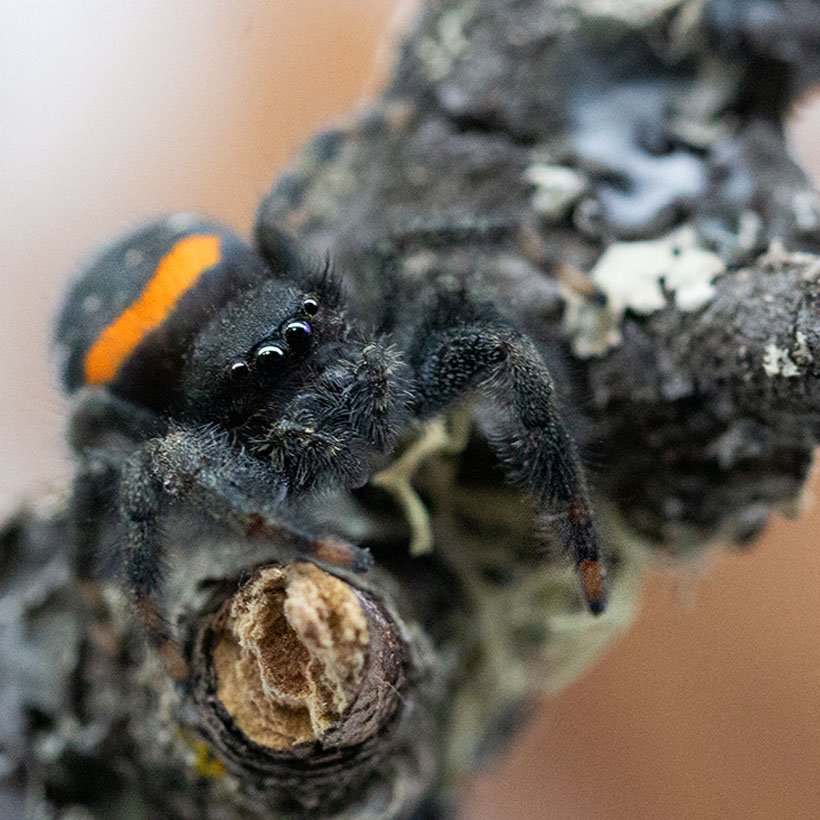
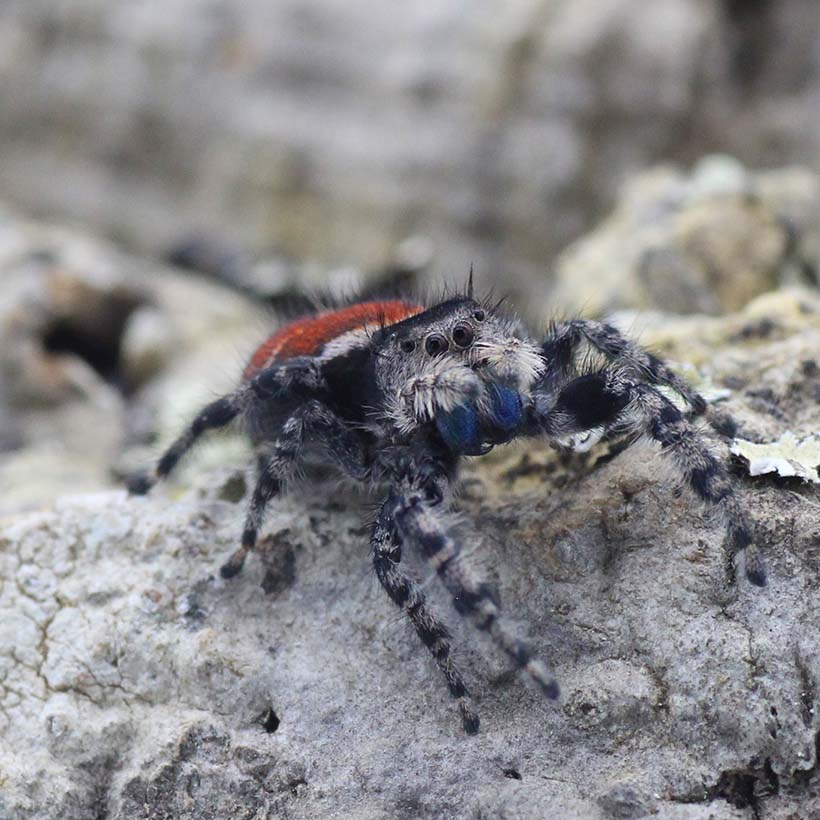
In males, the carapace is predominantly black. On the abdomen, red scales may appear on the sides, or large areas may be red in color. Females are generally similar to males but may additionally have white spots on the abdomen. In females, the red scaling tends to be located on the lateral areas.
As a result, individual animals can look quite different from one another. It is precisely this variability that makes Phidippus nikites particularly fascinating to observe.
From the drier regions of North America
When keeping this species, its natural habitat is important.
NatureServe lists grasslands, desert areas, and sandy and dune habitats, among others, as habitats for Phidippus nikites. The species is also found on creosote bushes and other vegetation in arid regions.
For terrarium care, this means one thing above all: Phidippus nikites should not be kept in very humid conditions on a long-term basis.
A well-ventilated terrarium, regular access to water, and areas that can dry out between waterings are much more in line with its natural habitat than a constantly wet tropical terrarium.
Keep it warm, but don’t create constant tropical humidity
There are very few published scientific husbandry guidelines for Phidippus nikites. Therefore, I would not present any seemingly precise temperature and humidity values as species-specific.
However, based on the origin and typical husbandry practices for North American Phidippus species, it can be inferred that a warm environment with good air circulation is appropriate for keeping them in terrariums.
A temperature range of approximately 23–27 °C during the day is recommended for keeping this species. However, the terrarium should have different temperature zones so that the spider can choose a suitable spot on its own.
I would also keep the humidity at a moderate level. Individual areas may be slightly damp after spraying, but they should be able to dry out again afterward.
This is a recommended guideline and not a species-specific optimal value determined through scientific research.
Good ventilation is especially important
Consistently high humidity is of little benefit if there is hardly any air exchange at the same time.
That’s why you should keep Phidippus nikites in a well-ventilated container or terrarium. You can also lightly mist certain areas from time to time.
The water droplets that form as a result are often used by jumping spiders as a source of water.
The substrate, on the other hand, does not need to be constantly moist. Precisely because of the natural habitats of Phidippus nikites, I would keep it significantly drier than I would for a distinctly tropical species.
Making the Most of Your Terrarium’s Height
Like other Phidippus species, Phidippus nikites also likes to stay in elevated places.
That’s why the terrarium shouldn’t just look nice at the bottom. Branches, cork, wooden discs, and plants create paths all the way up to the top.
That’s exactly where the spider will often spin its web.
It’s therefore also important to ensure that this exact area isn’t constantly destroyed when the terrarium is opened. A terrarium with a front-opening door is particularly practical for this purpose.
Starting at FH5, it can be moved to a larger terrarium
When raising Phidippus nikites, we would initially keep them in a suitable rearing container. This makes it easier to monitor small prey animals, and the spider can reliably find its prey.
Starting around FH5, the animal can then be moved to a larger terrarium.
For an adult specimen, a terrarium measuring approximately 20 × 20 × 30 cm provides ample opportunities for a varied vertical setup.
However, it is not so much the size in centimeters that matters as the actual structure. A well-set-up terrarium with branches, cork, and elevated areas offers the jumping spider significantly more usable space than a larger but nearly empty enclosure.
Choose food appropriate for the developmental stage
With Phidippus nikites, too, the food grows along with the spider.
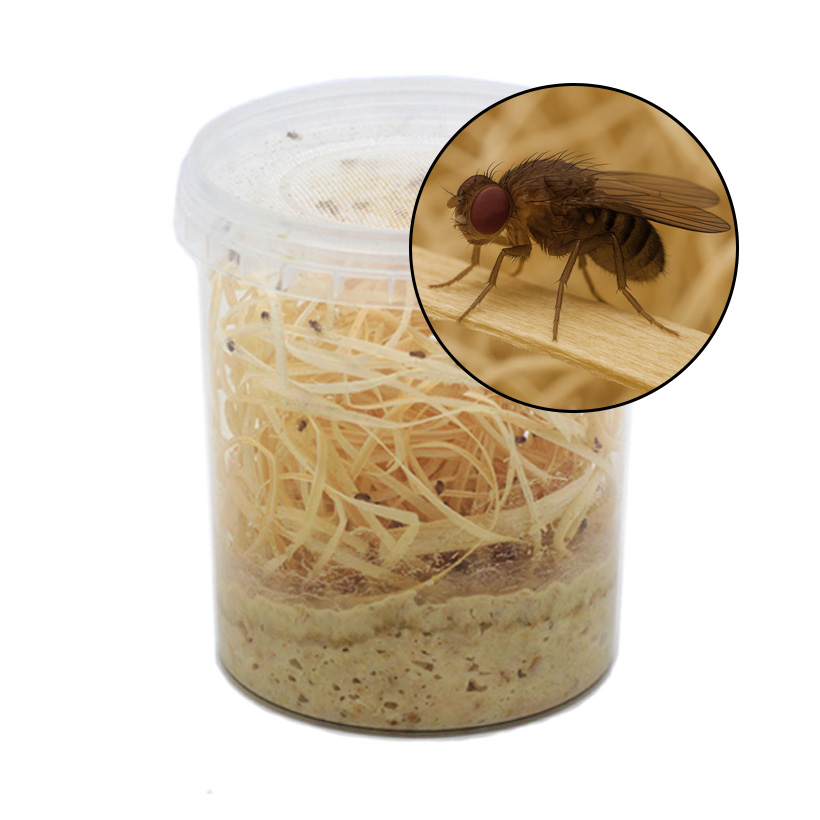
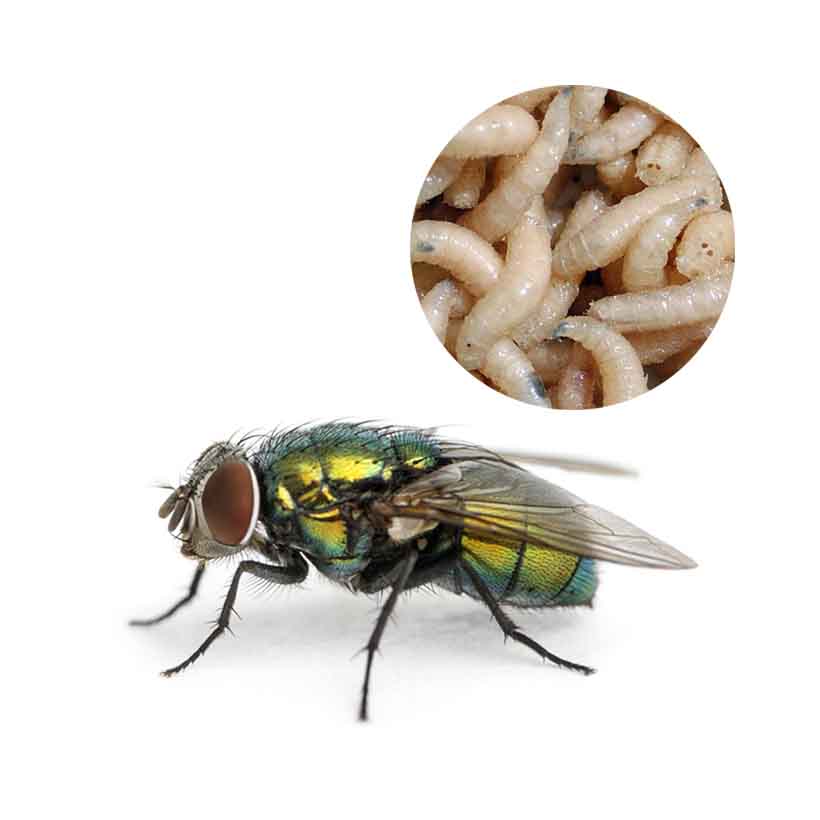
Small juveniles can initially be fed small fruit flies. Later, larger Drosophila are suitable, and eventually flies or other appropriately sized prey items.
This is when the jumping spiders’ typical hunting behavior is particularly striking. The spider first observes its prey with its large main eyes. It then approaches and subdues the prey with a well-aimed leap.
You can feed young spiders more frequently with small portions. As they grow older, the intervals between feedings become longer.
Phidippus nikites is not Phidippus apacheanus
This point is particularly interesting in this context.
Phidippus nikites and Phidippus apacheanus are, in some respects, very similar. In fact, specimens have even been misidentified in the past. The World Spider Catalog cites a 1965 publication in which specimens were described as Phidippus apacheanus, but which Edwards later classified as Phidippus nikites.
For this reason, too, the determination should not be based solely on a single photo or the red color.
One visible difference may be the color change mentioned earlier. Phidippus nikites can change from yellow to orange to red as it grows, while P. apacheanus typically retains its color more consistently. However, other characteristics are crucial for a reliable scientific identification.
Keeping Your Phidippus nikites Separately
Phidippus nikites should be kept alone.
Jumping spiders are active hunters and do not need companions to thrive. Keeping them together, however, would increase the risk that one of the spiders would view the other as prey.
Adult spiders are placed together under controlled conditions solely for the purpose of breeding.
Advantages at a Glance
- Recognized species: Phidippus nikites Chamberlin & Ivie, 1935
- Distribution in the U.S. and Mexico
- Males are about 8–12 mm in body length
- Females approximately 9–13 mm in body length
- Striking yellow, orange, to red coloration
- Interesting color changes may occur during development
- Naturally occurs in grasslands and dry habitats, among other places
- Active, visually oriented hunter
- An interesting alternative to the much more commonly kept Phidippus regius
- Single-specimen housing
- A well-structured enclosure with plenty of usable vertical space
Suitable accessories for your setup
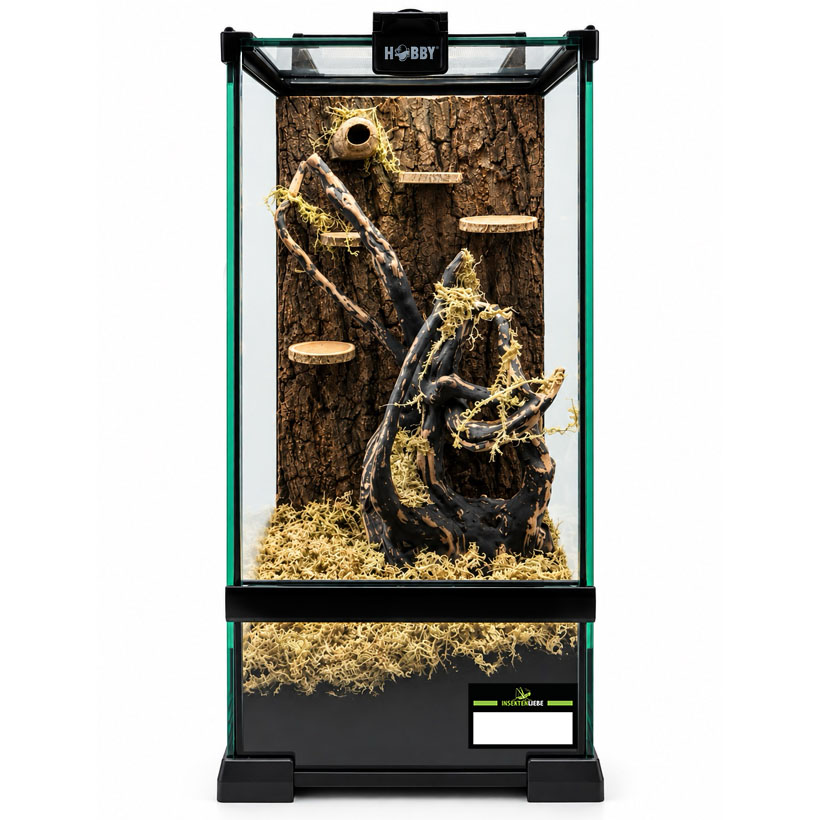
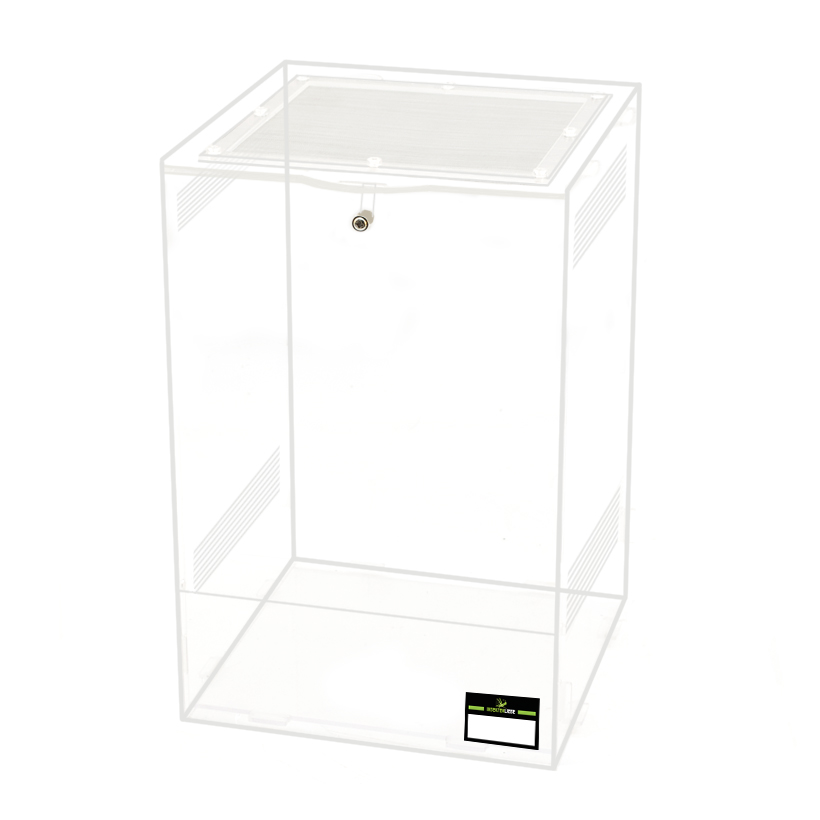
Insektenliebe Acrylic Terrarium – provides a larger Phidippus nikites with a safe and easily observable habitat that allows for vertical arrangements.
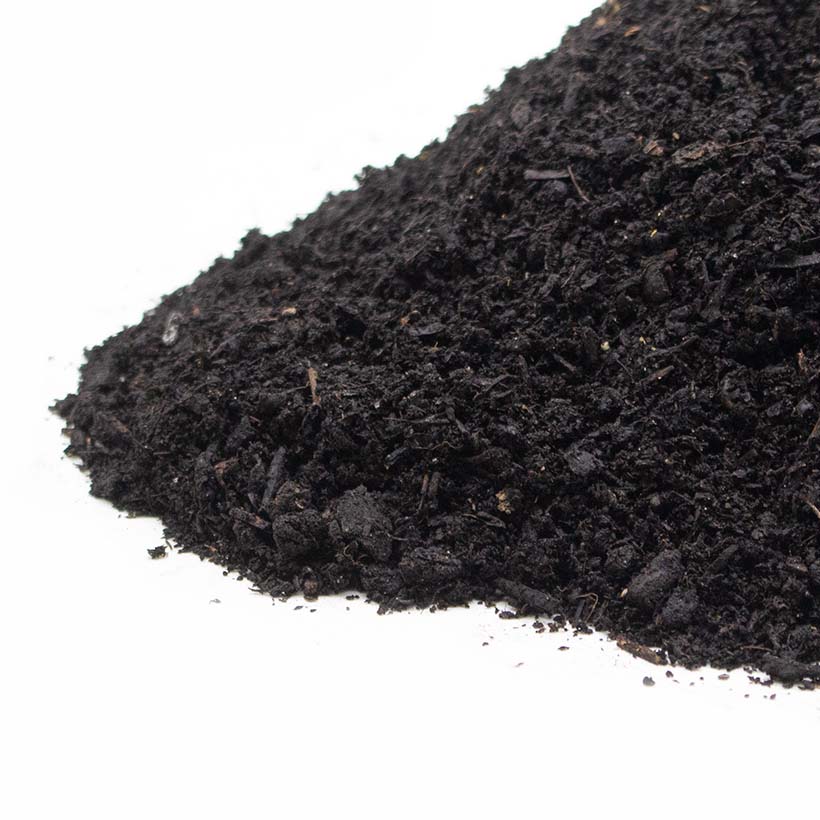
Forest humus – creates a natural substrate and can be combined with drier areas and other natural materials.
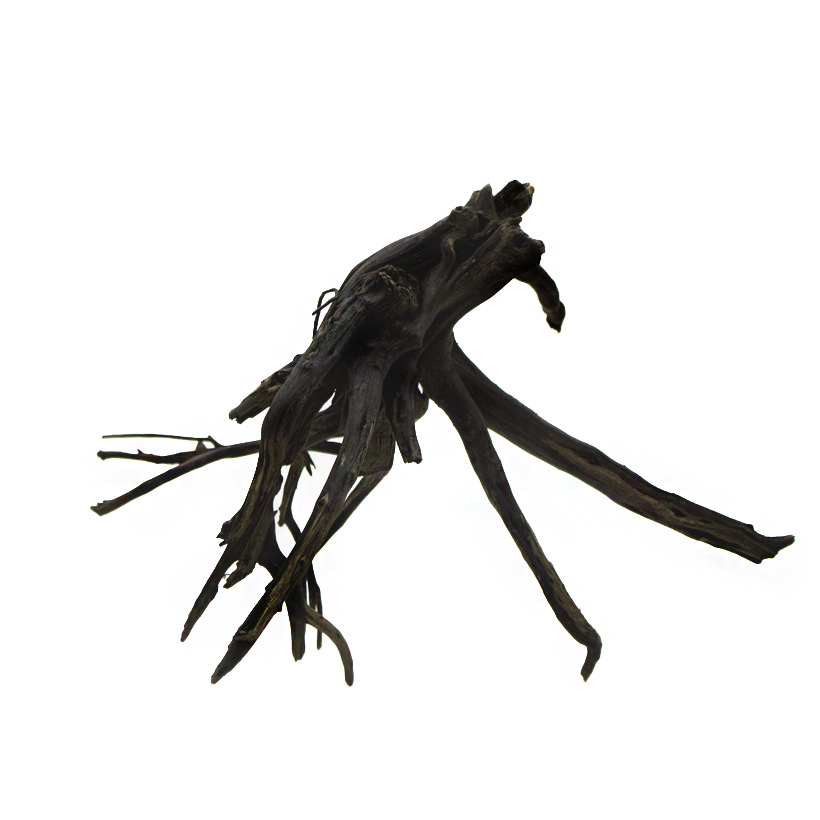
Black Spider Root —provides textured climbing surfaces and can be placed both vertically and at an angle inside the terrarium.
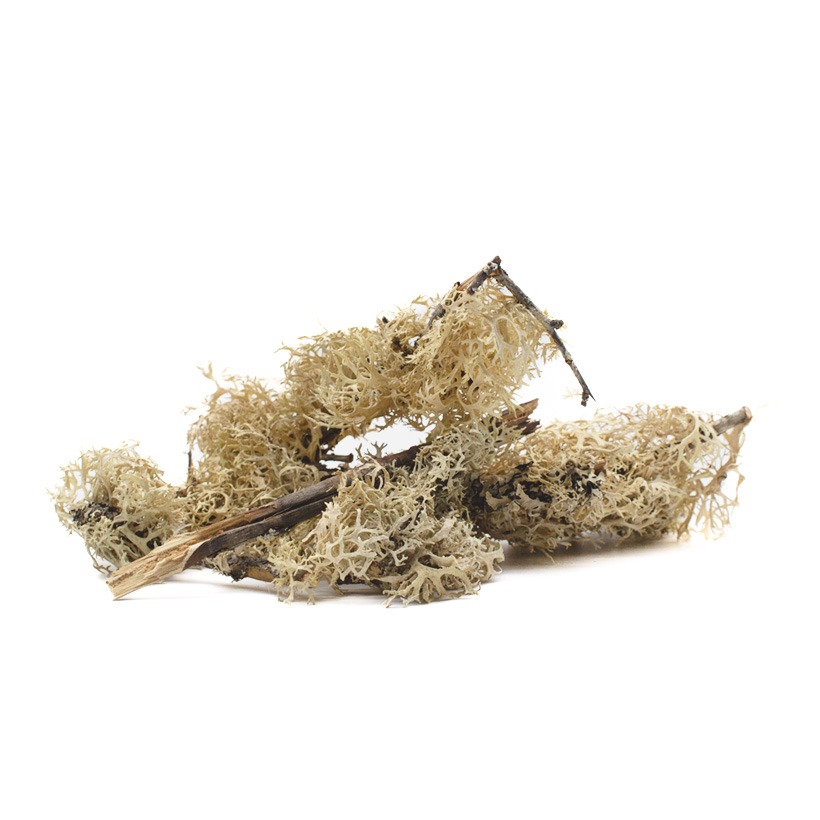
Moss Branches – create additional pathways and add texture all the way to the upper part of the terrarium.
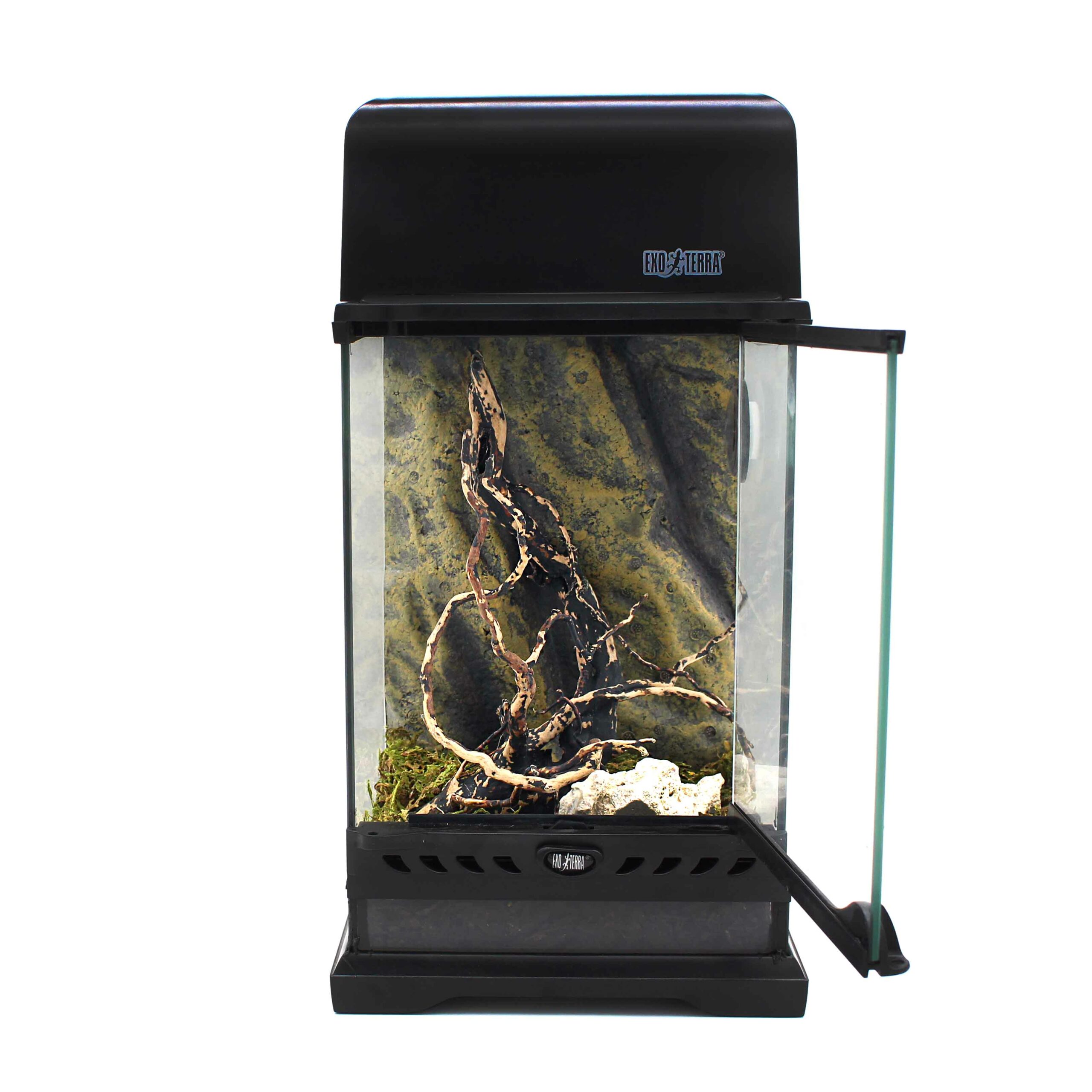
Jumping Spider Complete Set – Creative – measures 20 × 20 × 40 cm, offering plenty of space for a varied setup, and comes with lighting included.
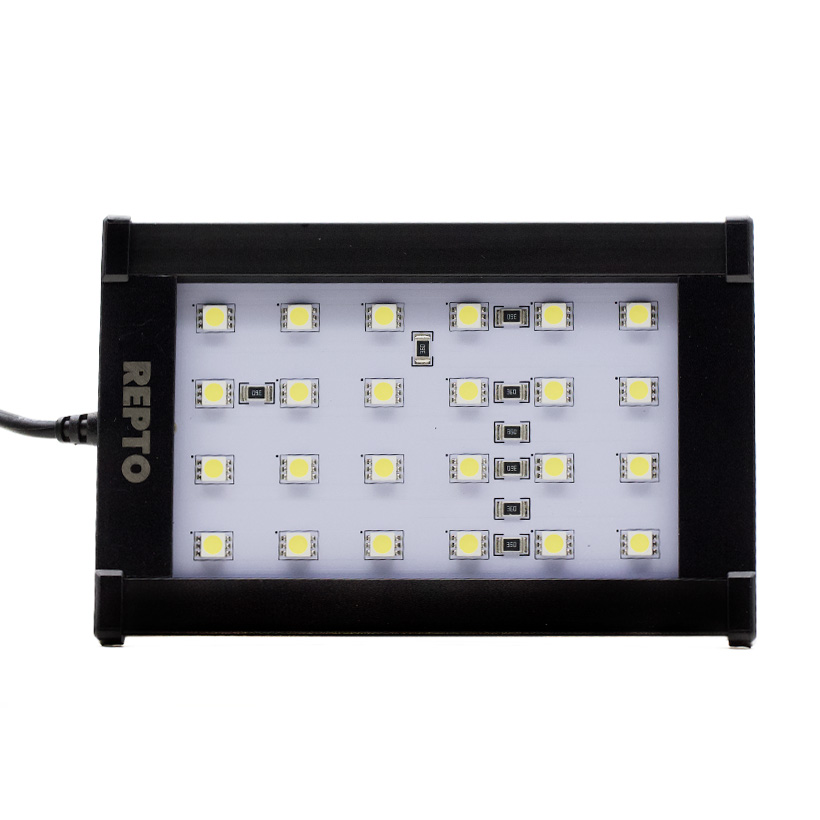
Repto Flat LED – provides bright illumination for the terrarium and creates a warm area from above that jumping spiders like to use as a resting spot.
Conclusion
Phidippus nikites is particularly interesting for keepers who are looking for something special in addition to the well-known Phidippus species. With a body length of about 8–12 mm for males and 9–13 mm for females, it remains relatively compact but stands out due to its vivid coloration.
The development of color is particularly fascinating. A juvenile may initially appear yellow and, over the course of several molts, develop into an orange or deep red color. At the same time, not all individuals exhibit exactly the same color progression.
When caring for this species, its natural habitat should be taken into account. Phidippus nikites is not a classic tropical jumping spider. Documented habitats include, among others, grasslands, desert vegetation, and coastal dunes. For this reason, we prioritize warmth, regular access to water, and, above all, good ventilation for this species, rather than keeping the terrarium constantly humid.
It is precisely the combination of its compact size, vivid coloration, and interesting color change that makes Phidippus nikites an extraordinary species within the genus Phidippus.
Perfect combined with
-
Repto Flat LED
Original price was: 29,99 €.26,99 €Current price is: 26,99 €. incl. VAT, plus shipping -
Jumping Spiders Complete Set – Creative
Original price was: 152,41 €.149,98 €Current price is: 149,98 €. -
Insektenliebe acrylic terrarium
Price range: 13,99 € through 25,69 € incl. VAT, plus shipping