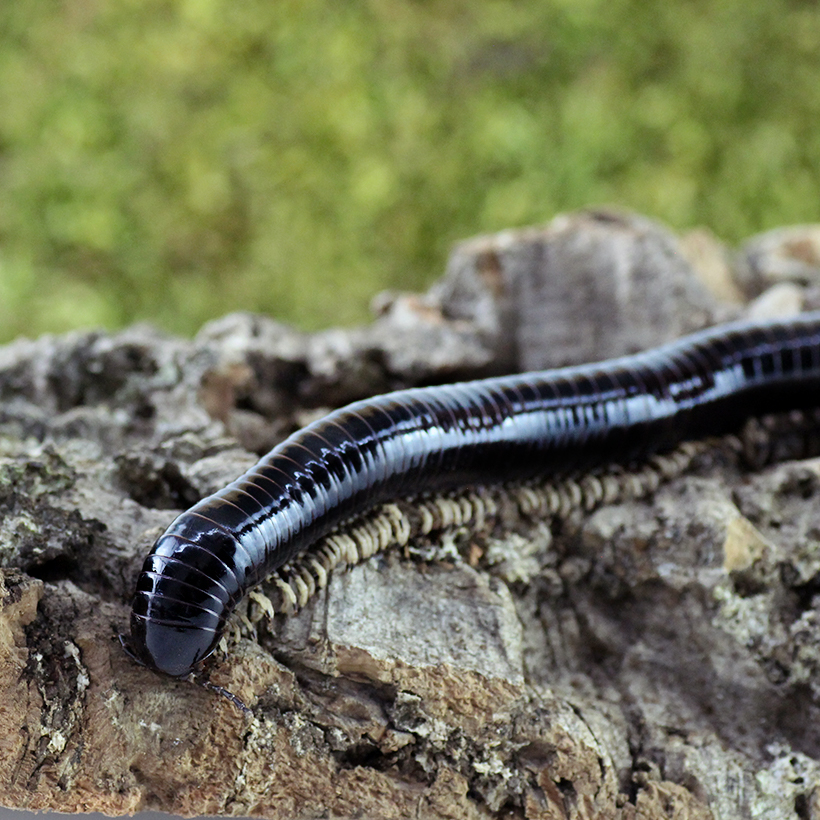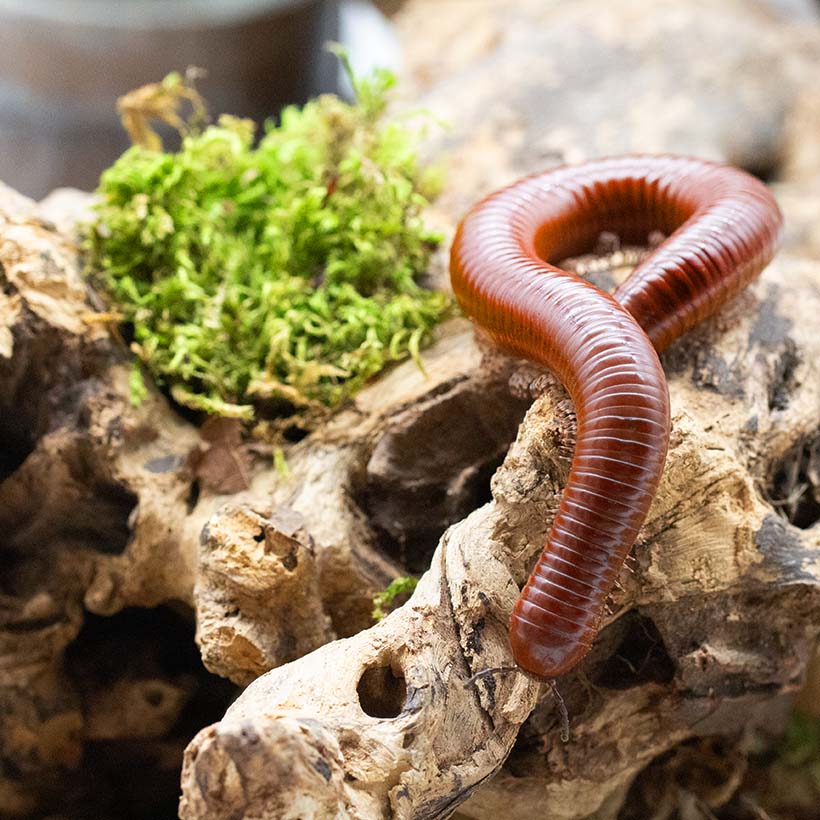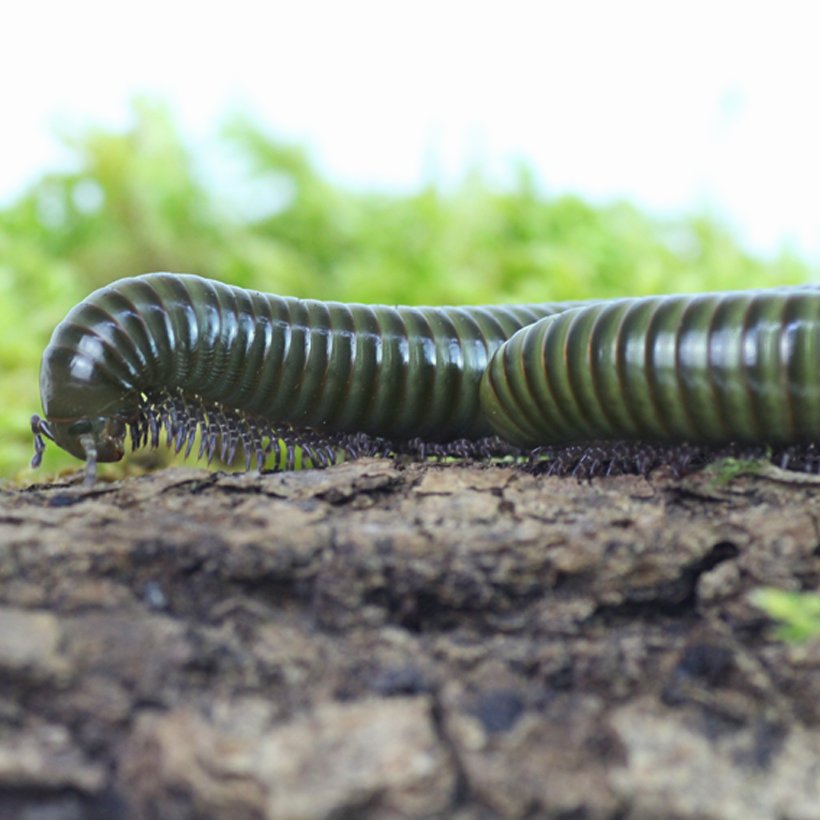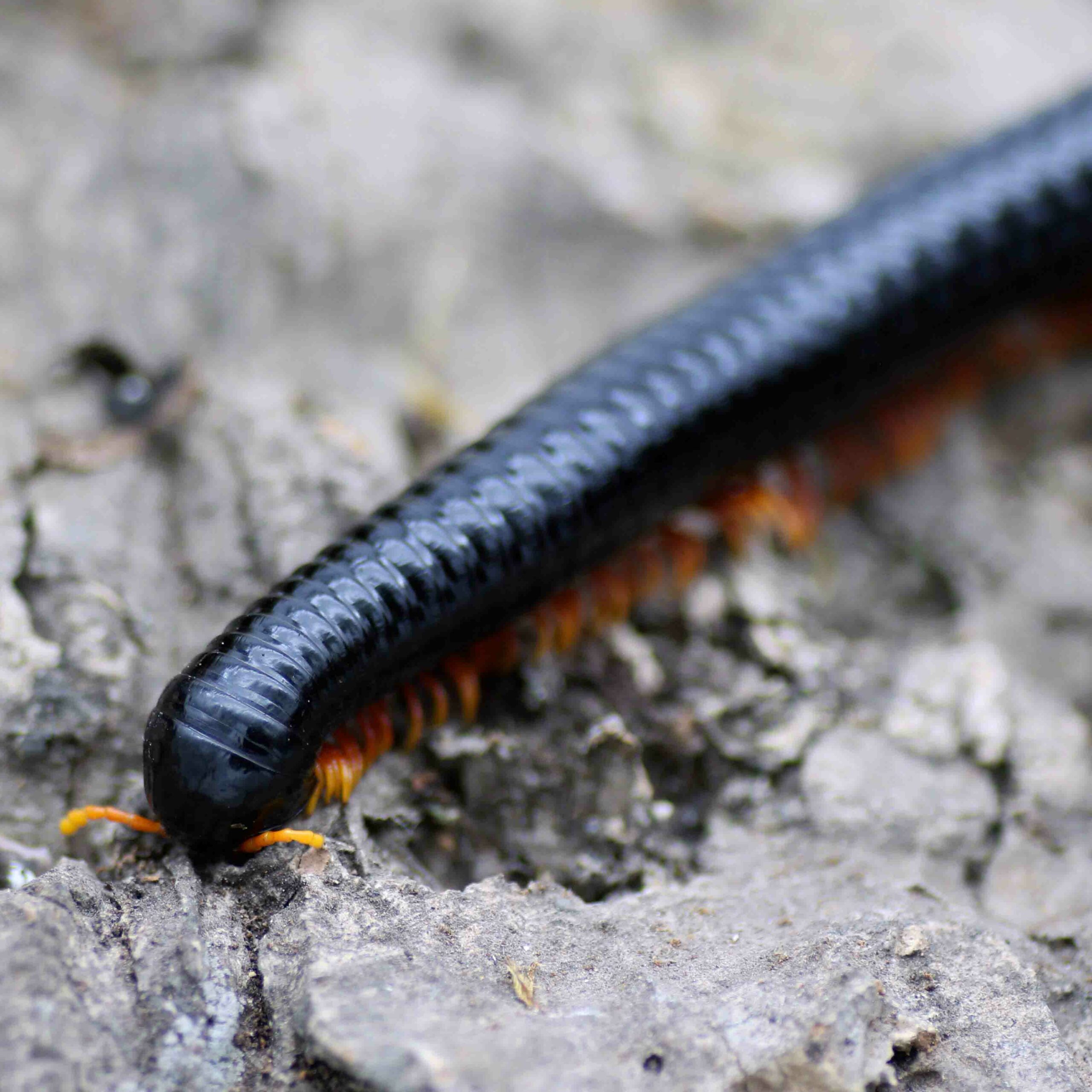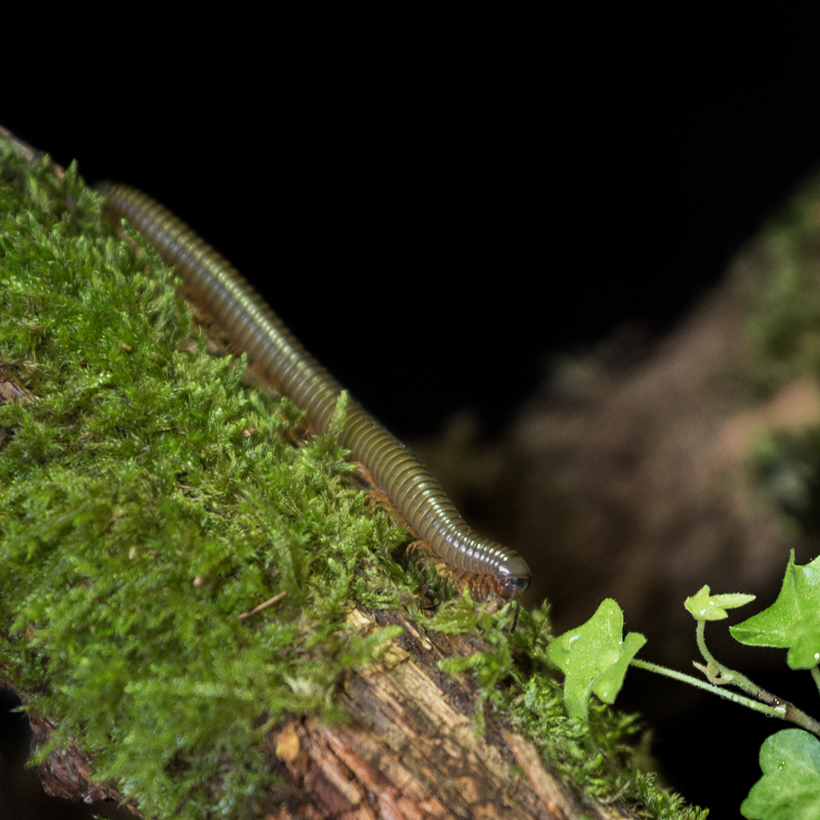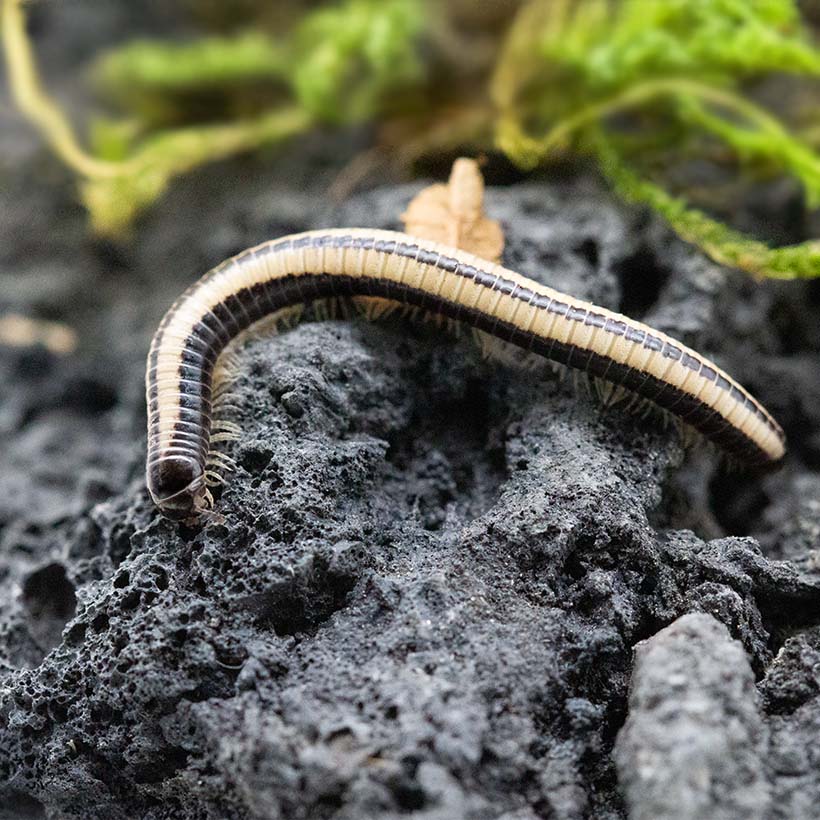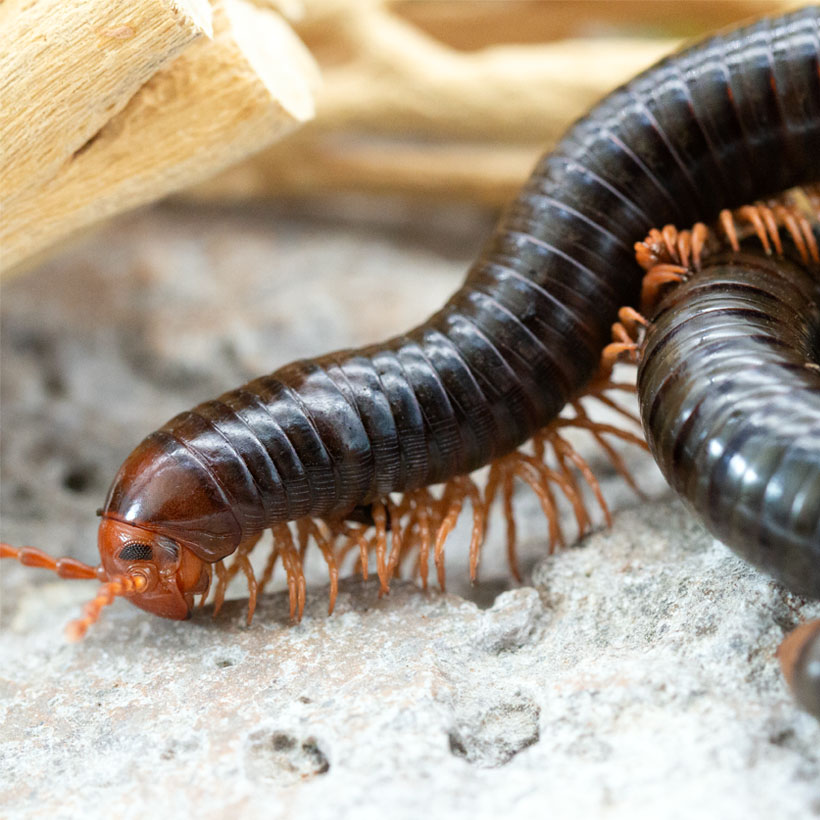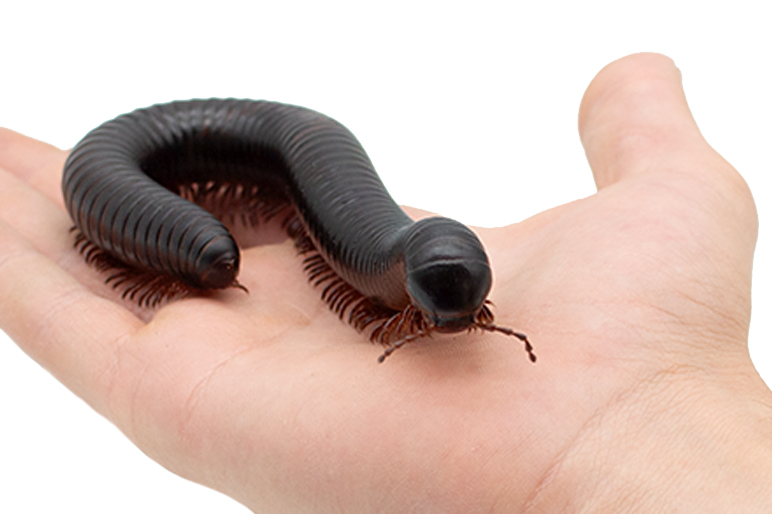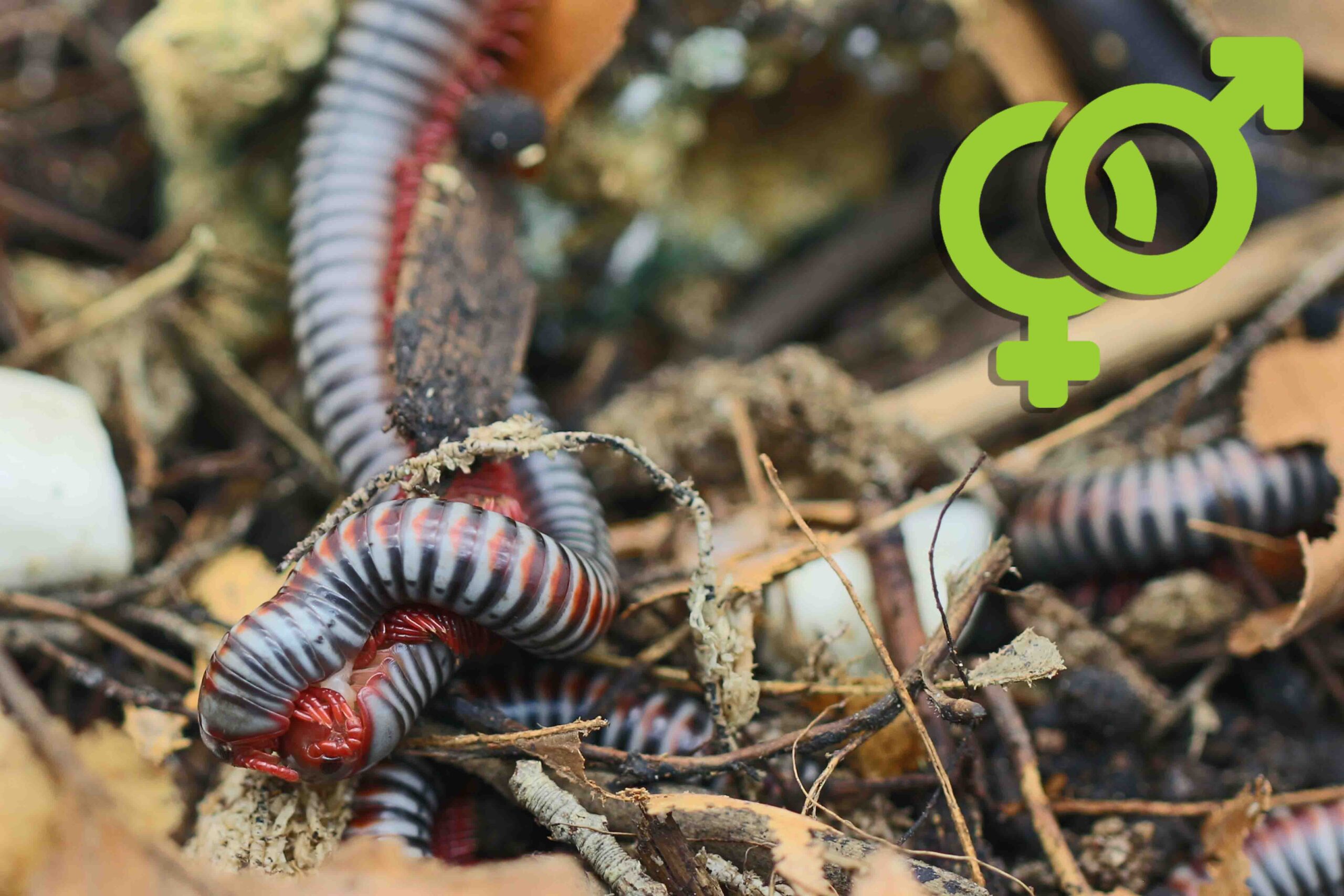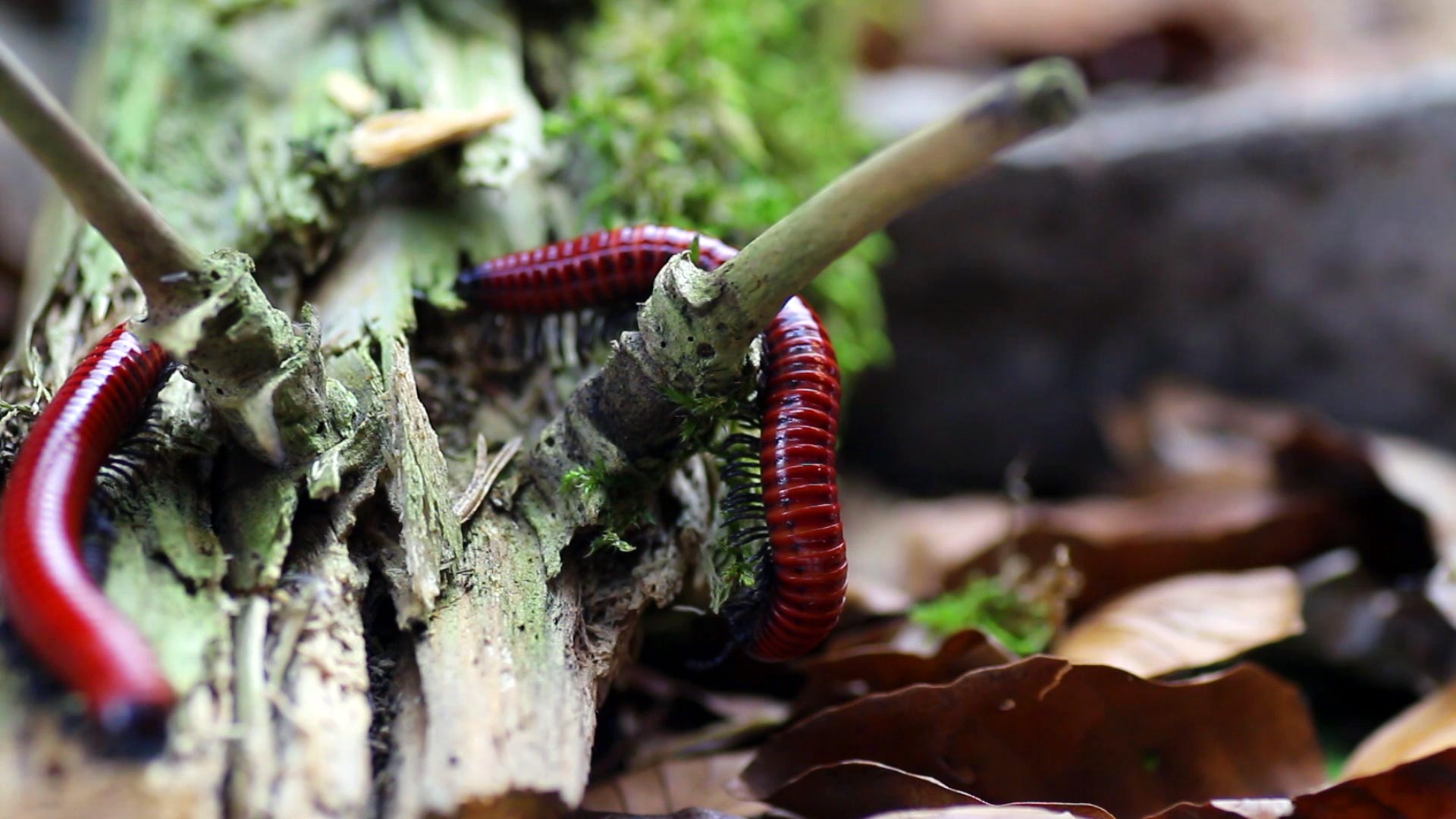


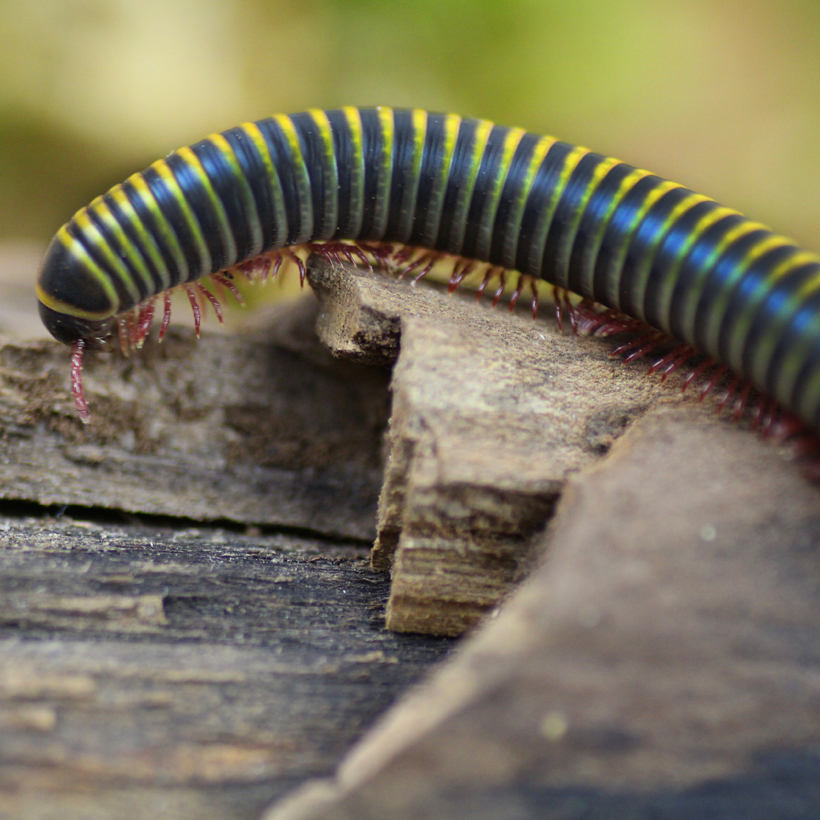
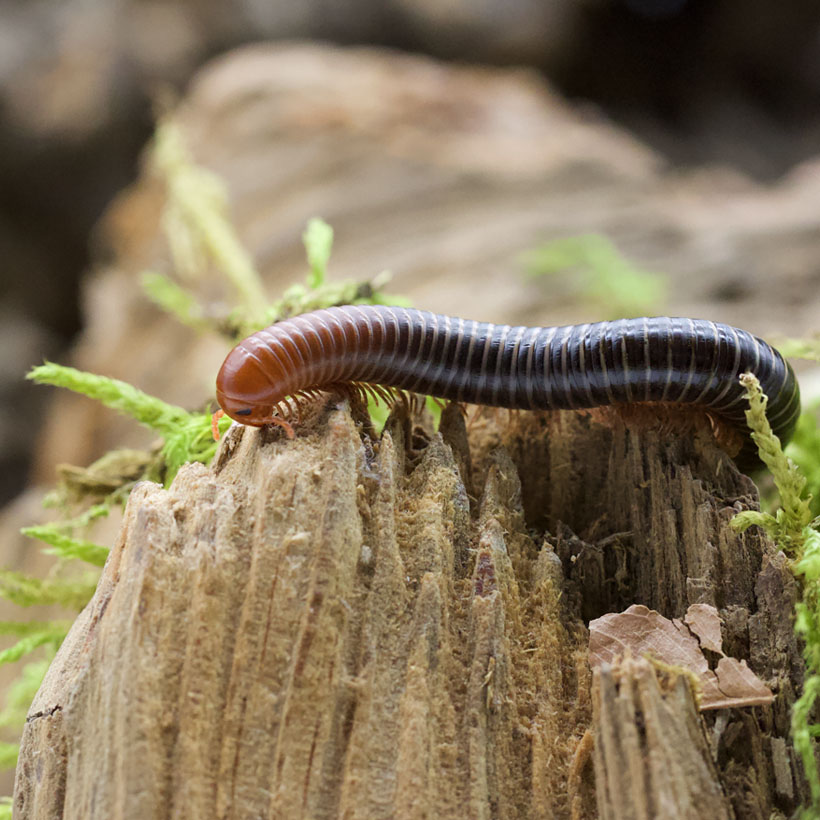
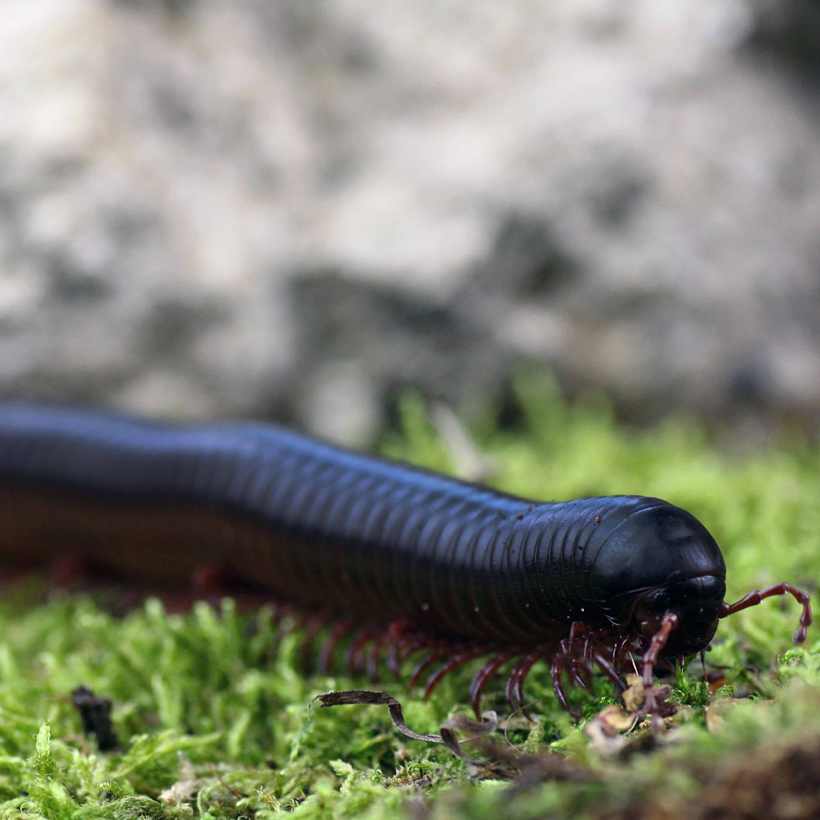
Tonkinbolus caudulanus is a strikingly colored millipede that spends a lot of time in the substrate. Its care depends entirely on a deep, edible substrate. If you’re looking for an animal that’s constantly visible, you should take this hidden lifestyle into account before purchasing one.
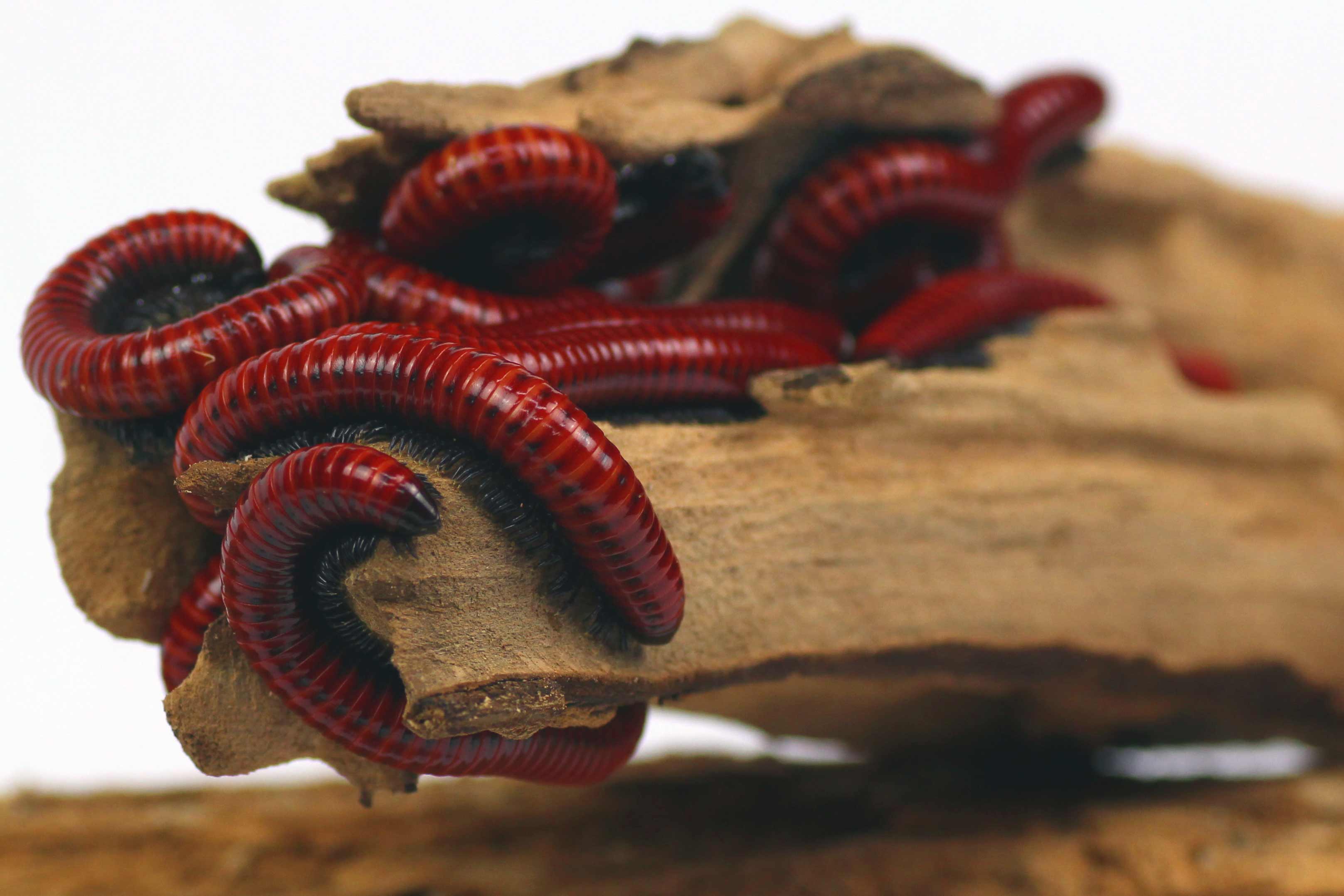
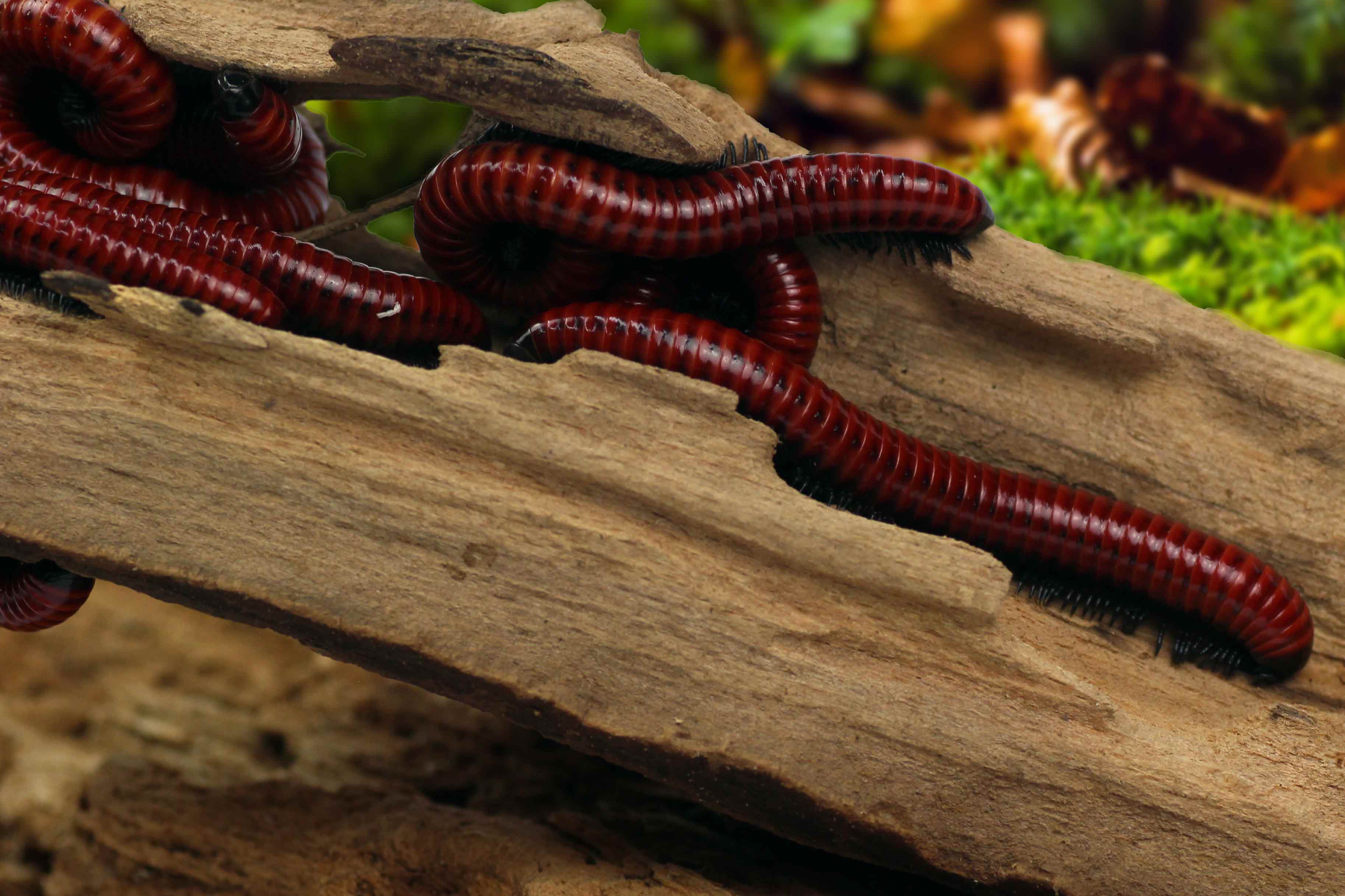
Tonkinbolus caudulanus at a Glance
| Size | up to about 13 cm |
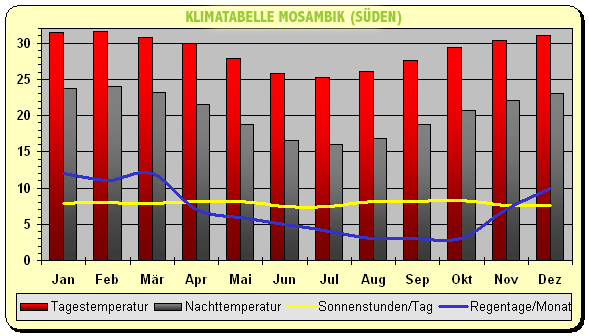
| Temperature | 23–26 °C during the day, about 21–24 °C at night |
| Substrate | Deep, edible substrate containing decomposed leaves and white-rot-infected hardwood |
| Humidity | Slightly moist, well-aerated, and free of waterlogging |
| Keeping | Quiet places to retreat and space to dig |
This species is native to Southeast Asia. Our previous report lists Thailand, Vietnam, Laos, and Myanmar. However, information about the species’ origin does not replace information about the specific breeding line. Make a note of the name under which you received your animals.
Caring for Tonkinbolus caudulanus: Terrarium and Substrate
Allow for about 15–20 cm of substrate; for large animals, the usable layer should be as close as possible to their body length. The enclosure needs enough space above the substrate to provide safe climbing opportunities. Determine the enclosure’s size based on the size and number of the animals.
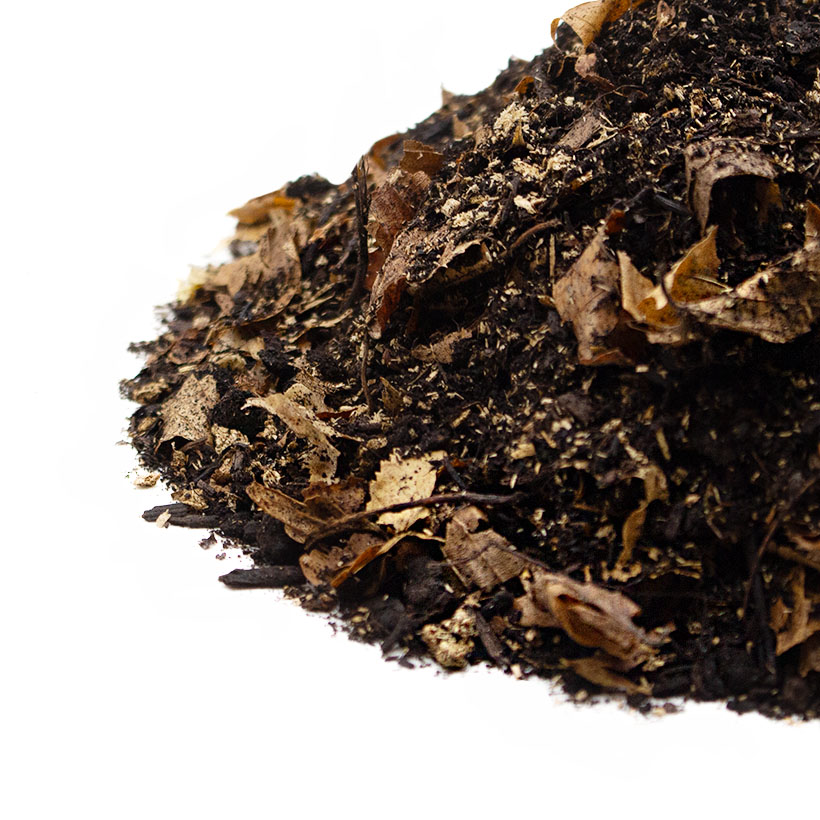
The substrate serves as both a habitat and a primary food source. Decayed leaves and soft, white-rotted hardwood should therefore be included in the mixture. Pure coconut fiber does not fulfill this purpose. Ready-made millipede substrate is convenient if you don’t want to put together the appropriate ingredients yourself.
Millipede Substrate
Millipede Substrate – Substrate and Natural Food Source in One For millipedes, the substrate is much more than just the floor of their terrarium. Many species spend a large part…
Climate and Molting
Keep the lower layers of the substrate slightly moist, but not wet. A slightly drier area gives the animals a choice. Check the substrate carefully at the edges instead of digging up the entire terrarium. Adequate ventilation prevents stuffy, constantly wet conditions.
Check the temperature in the set-up terrarium. If your room is too cold, consider placing a regulated heat source on the side. A heater under the substrate can dry out the hiding area. Direct sunlight is not suitable. Do not dig up buried animals to check on them—they may be in the middle of shedding their skin.
Food for Tonkinbolus caudulanus
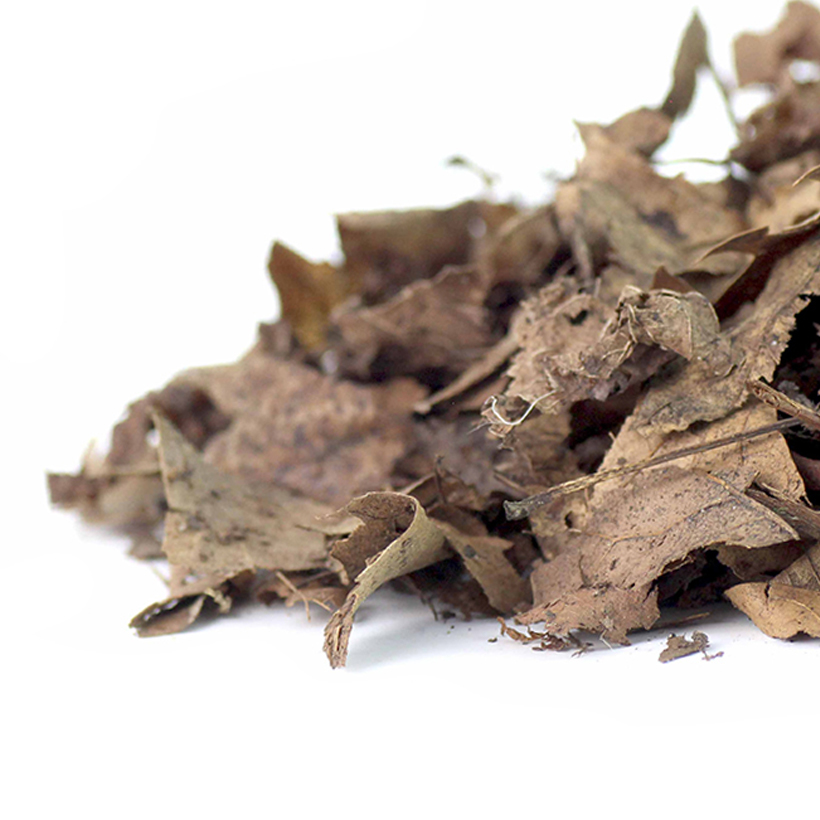
Regularly add fallen leaves and decaying wood. You can also offer small pieces of suitable, unsprayed vegetables. If they aren’t eaten, remove them promptly. Fruit and vegetables are not a substitute for edible substrate.
Fodder leaves
Staple food for many invertebrates.
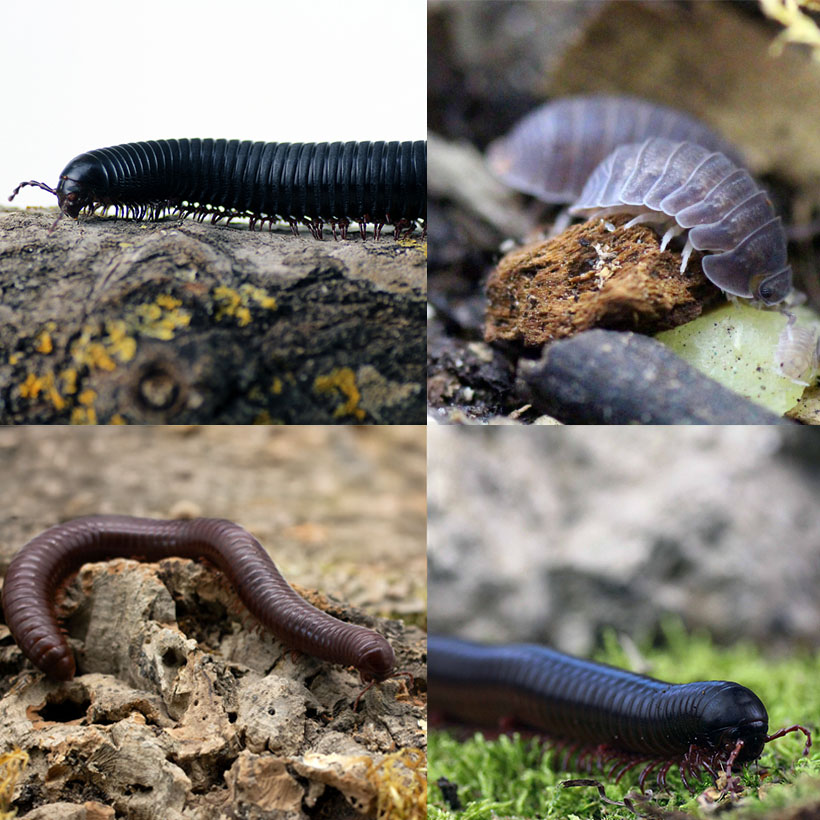
Keep the animals in their own group whenever possible. Isopods are not necessary for cleaning and may harass animals that have just molted. You can maintain cleanliness primarily by providing small, supplemental food portions and removing spoiled leftovers.
Offspring and Daily Care
We have not yet documented any confirmed captive breeding of this species in this report. It would therefore be inappropriate to make any promises regarding a fixed development period. Give a new group time and, above all, monitor the condition of the substrate.
It’s better to observe the animals rather than handle them frequently. If disturbed, millipedes may release a defensive secretion. Wash your hands after working in the terrarium and avoid contact with your eyes and mucous membranes. Also, check regularly to make sure the branches and lid are secure.
Discover More Millipedes
Here you’ll find a selection from our store. Compare the specific needs of each species with your existing terrarium.
-

Archispirostreptus gigas “Giant millipede”
Price range: 14,00 € through 17,00 € incl. VAT, plus shipping
Still unsure? Feel free to ask us your question in the comments section below the article.