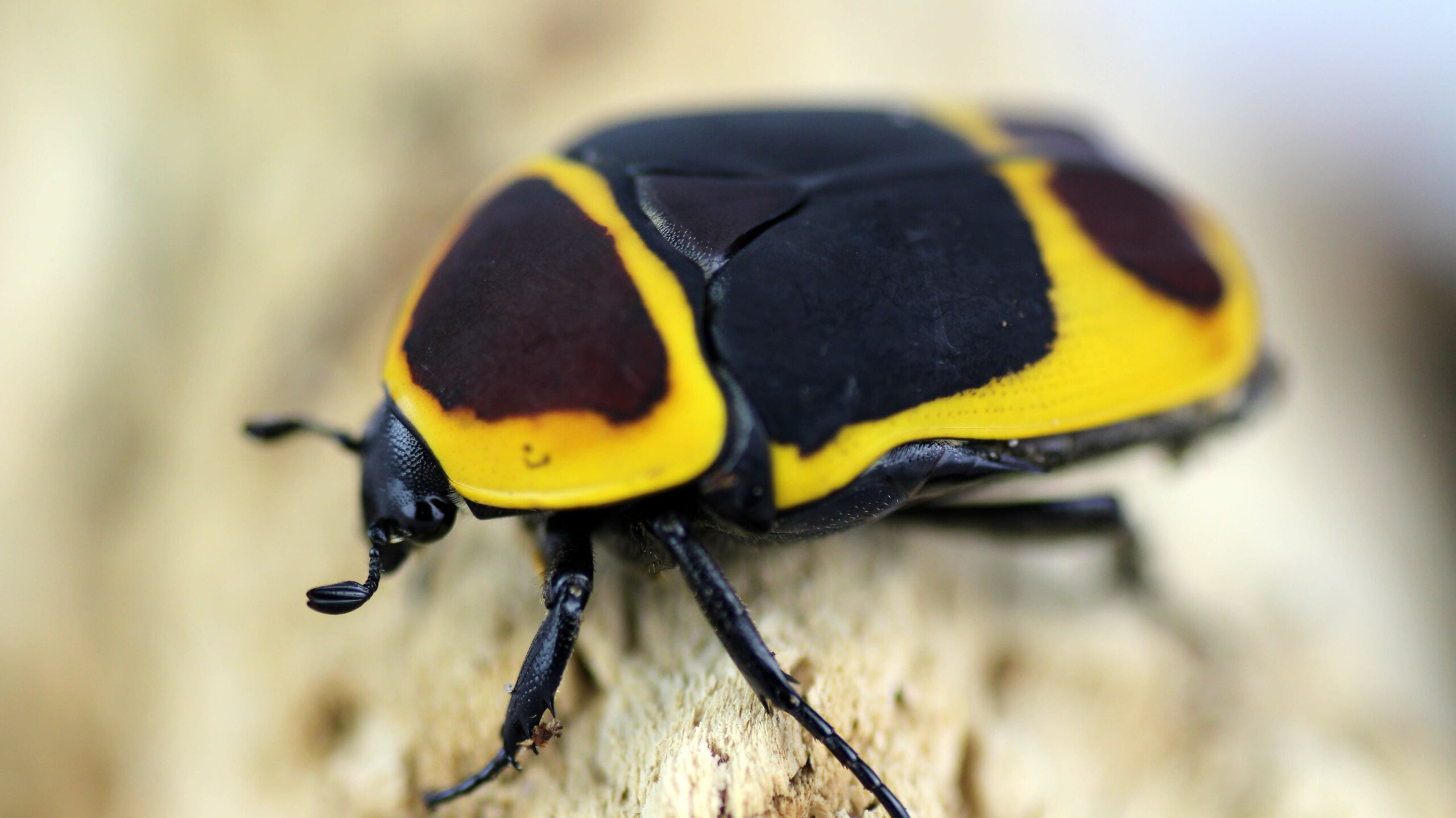


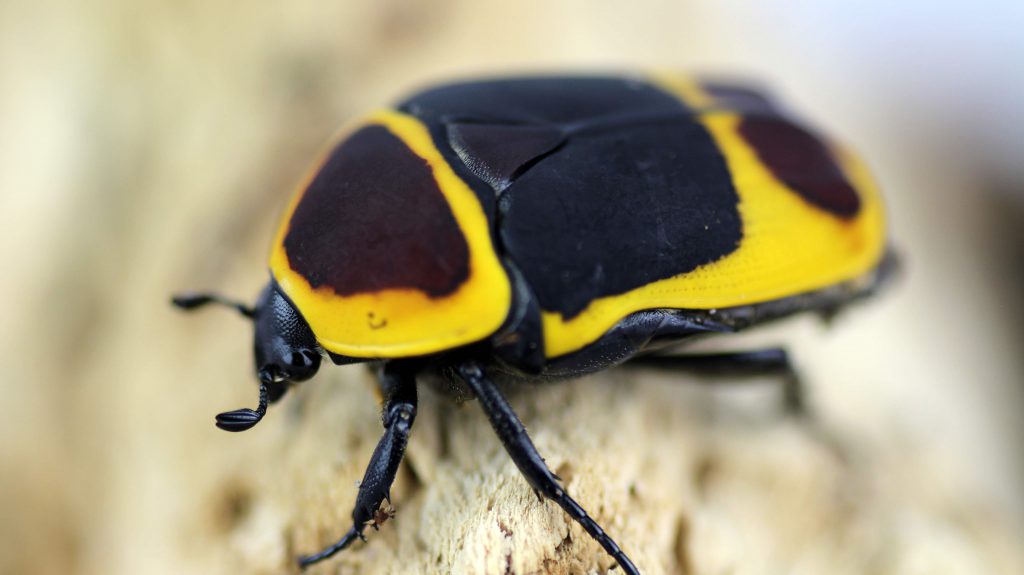
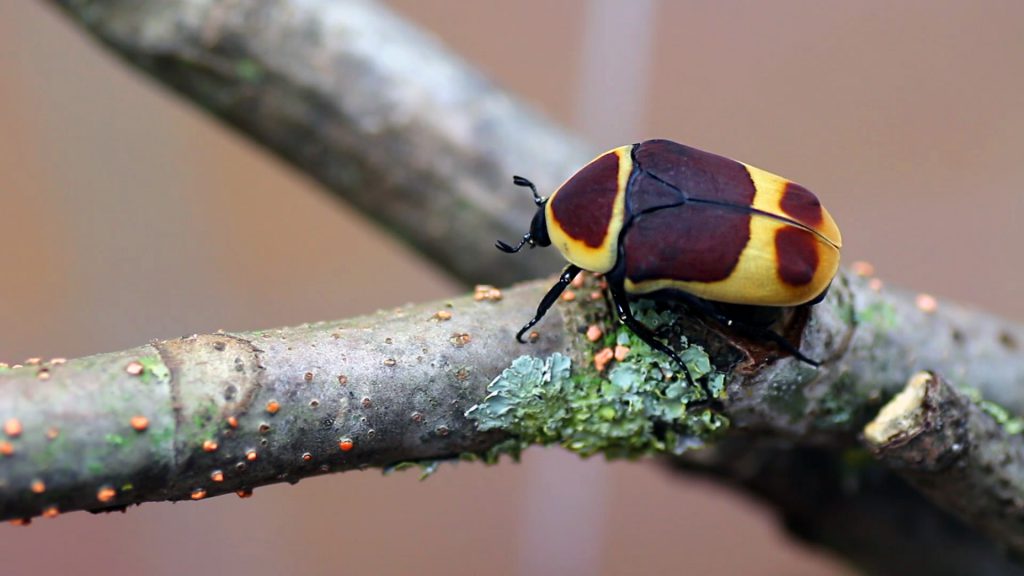
The Congo rose beetle, *Pachnoda marginata peregrina*, exhibits two very different lifestyles: The beetles are active on the surface, while their larvae live and feed in the soil. To keep them successfully, you must therefore set up both areas appropriately.
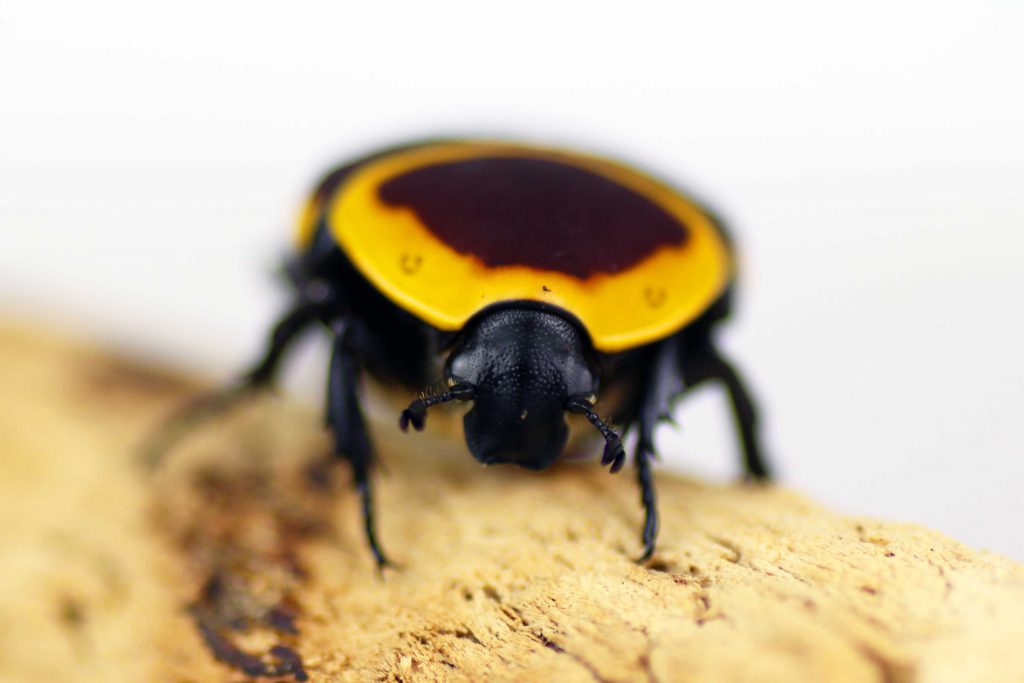
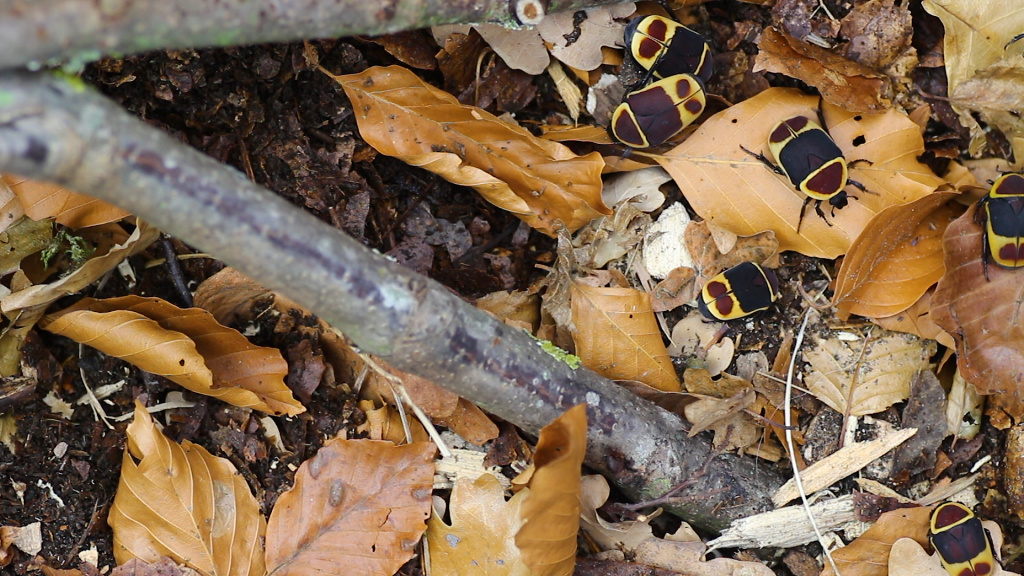
An Overview of the Congo Rose Beetle
| Size | About 2–2.5 cm as a beetle |
| Temperature | 22–28 °C as a guideline for keeping them |
| Substrate | About 15–20 cm of nutrient-rich substrate consisting of decomposed leaves and white-rotted hardwood |
| Beetle Food | Ripe Fruit or Beetle Jelly |
| Larval food | Decomposed plant material in the soil |
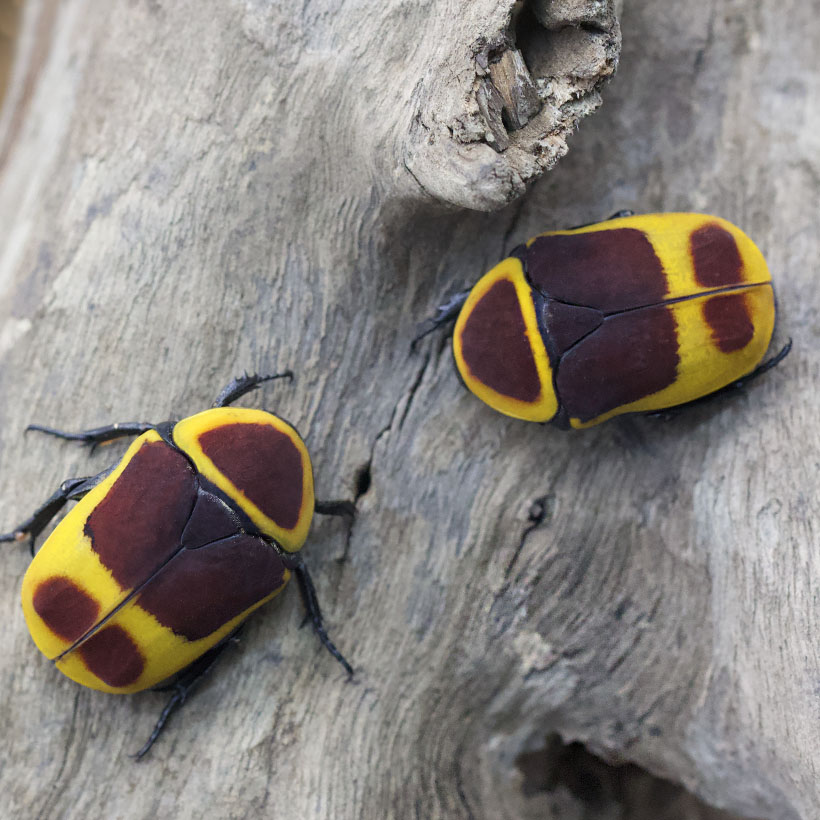
Pachnoda marginata peregrina “Congo rose chafer”
A very easy to keep starter animal, or also a great food animal supplier.
Terrarium for Congo rose beetles
Choose a well-ventilated, securely sealed container. The beetles need space above the deep bottom to walk and climb. Pieces of bark and sturdy branches also help them right themselves if they fall on their backs.
A bright daily routine suits these active beetles. However, a lamp isn’t a one-size-fits-all heating solution: Check the temperature and avoid direct sunlight. The appropriate wattage depends on the room, the container, and the distance.
Provide food for the soil and larvae
Decayed leaves and white-rotted hardwood form the basis of the larvae’s diet. Pure coconut fiber or decorative potting soil are not sufficient for this purpose. In our previous rearing setup, we mixed nutrient-rich deciduous forest material with decayed wood. Keep it slightly moist, without water seeping out when squeezed.
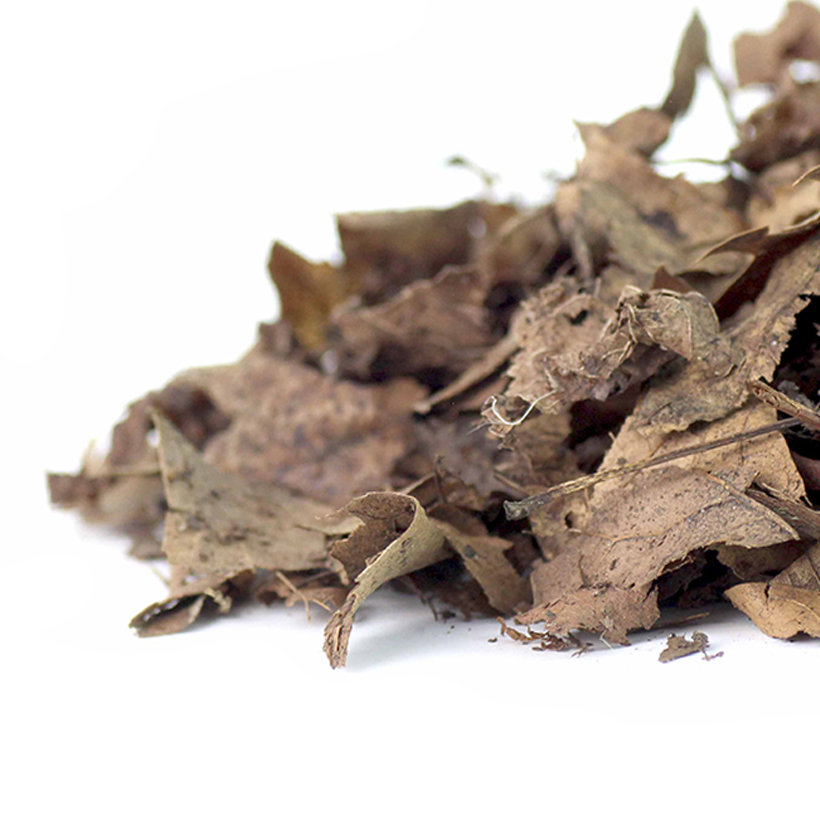
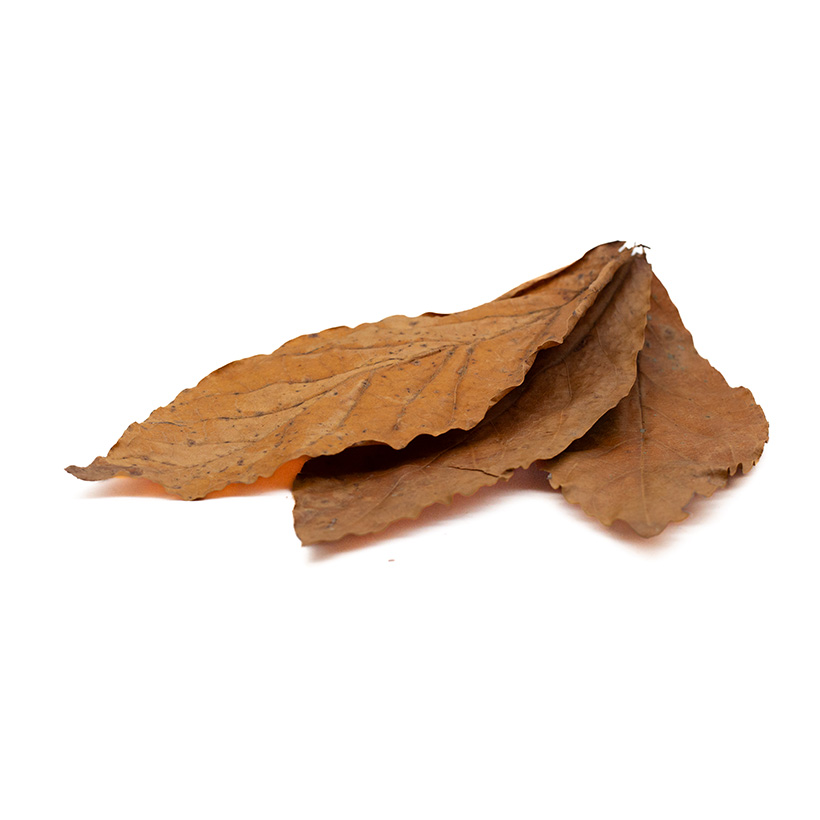
Fodder leaves
Staple food for many invertebrates.
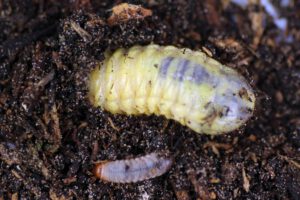
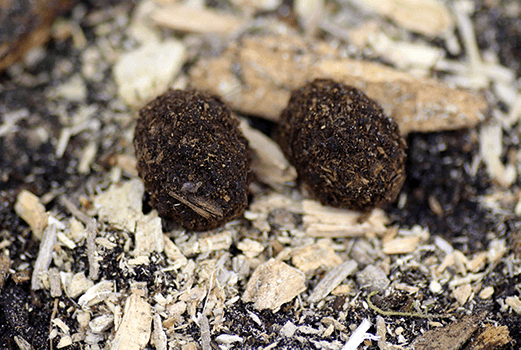
Check to see if there are still enough edible parts left, and add more if necessary. Work carefully, as eggs, small larvae, and solid pupal cocoons may be present in the soil. Do not open or crush the cocoons.
What do adult beetles eat?
Offer small portions of ripe fruit in a bowl that’s easy to access. Beetle Jelly is a clean, easy-to-portion alternative. Remove any spoiled leftovers promptly. Even food with a longer shelf life is no substitute for daily checks of the animals and the terrarium.
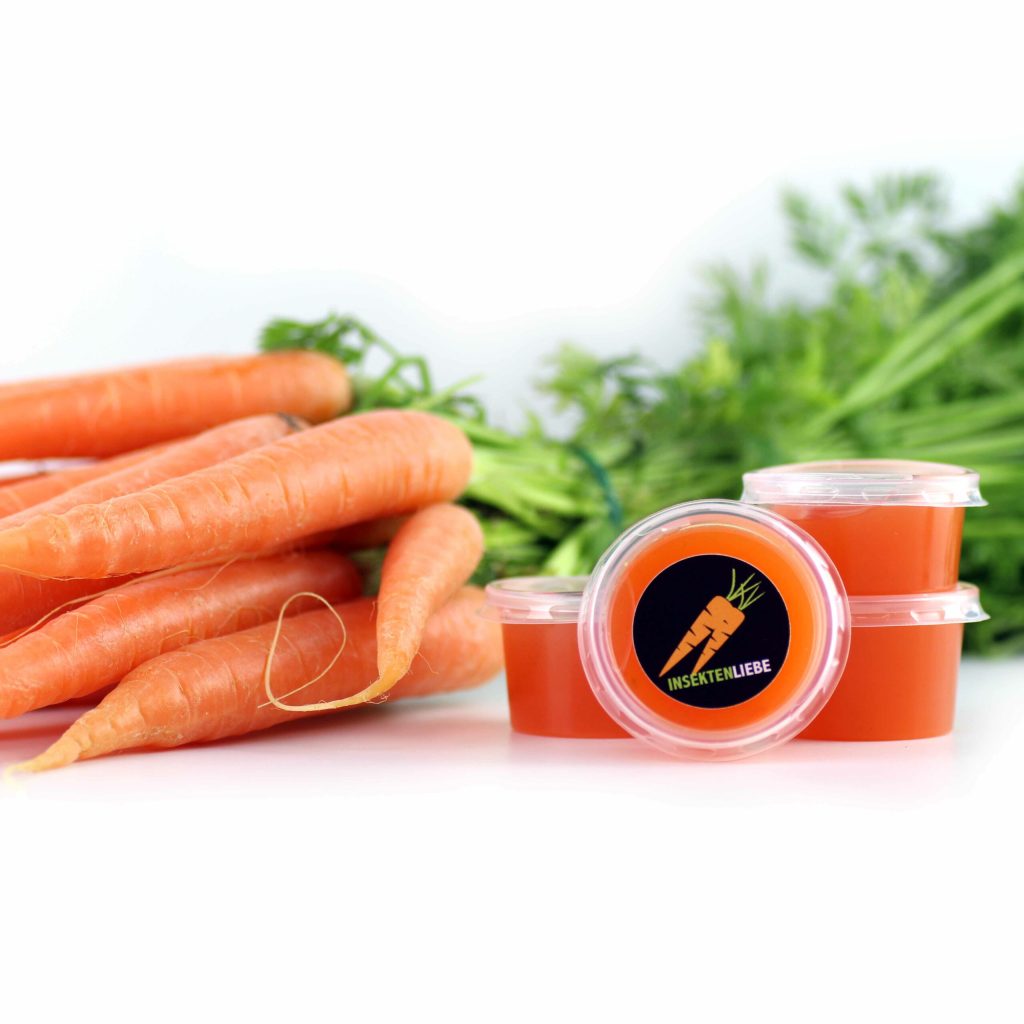
Beetle Jelly
Beetle Jelly – Fruity Energy for Your Terrarium Pets Many invertebrates enjoy eating fresh fruit. However, it dries out quickly, can develop mold, and often attracts fruit flies. That’s why…
Breeding Congo Rose Beetles
The females lay their eggs in a suitable substrate. These develop into larvae, which later form a cocoon. Depending on the conditions, it can take several months for new beetles to emerge. It is not possible to specify a fixed number of eggs or a guaranteed hatching date.
If space is limited, transfer some of the population to another suitable container. More larvae require more substrate. You can’t tell if a breeding setup is good by how densely packed the animals are, but rather by whether the different life stages can develop undisturbed.
Use as feed
Rose beetle larvae are only suitable for animals that can handle their size. Other food sources are more appropriate for small jumping spiders and young mantises. Always choose based on your pet and its current size; high nutritional value alone does not make a larva suitable.
Discover more feed animals
Here you’ll find a selection from our store. Before purchasing, make sure the specific species’ needs are compatible with your terrarium.
-

Blaptica dubia “Argentine forest cockroach”
Price range: 3,99 € through 39,99 € incl. VAT, plus shipping -
Cricket
Original price was: 3,99 €.2,99 €Current price is: 2,99 €. incl. VAT, plus shipping
Still unsure? Feel free to ask us your question in the comments section below the article.