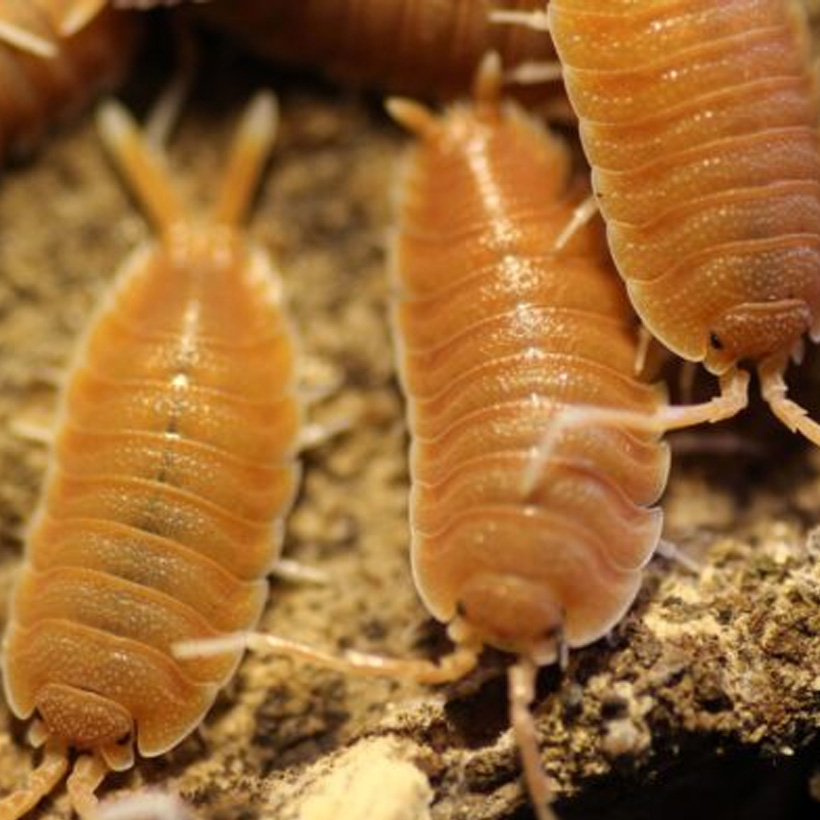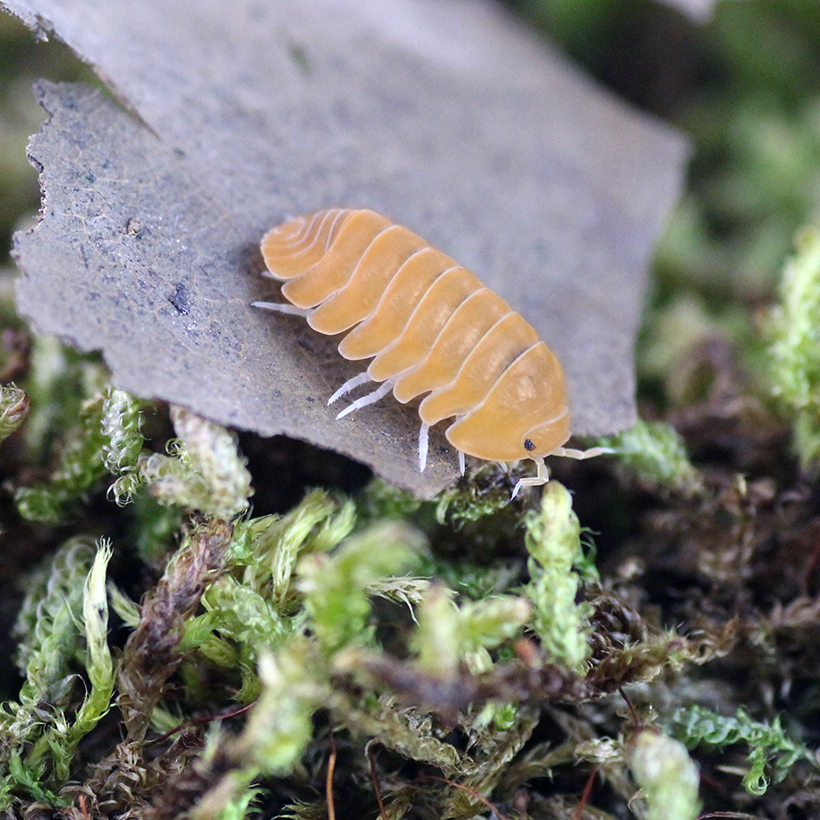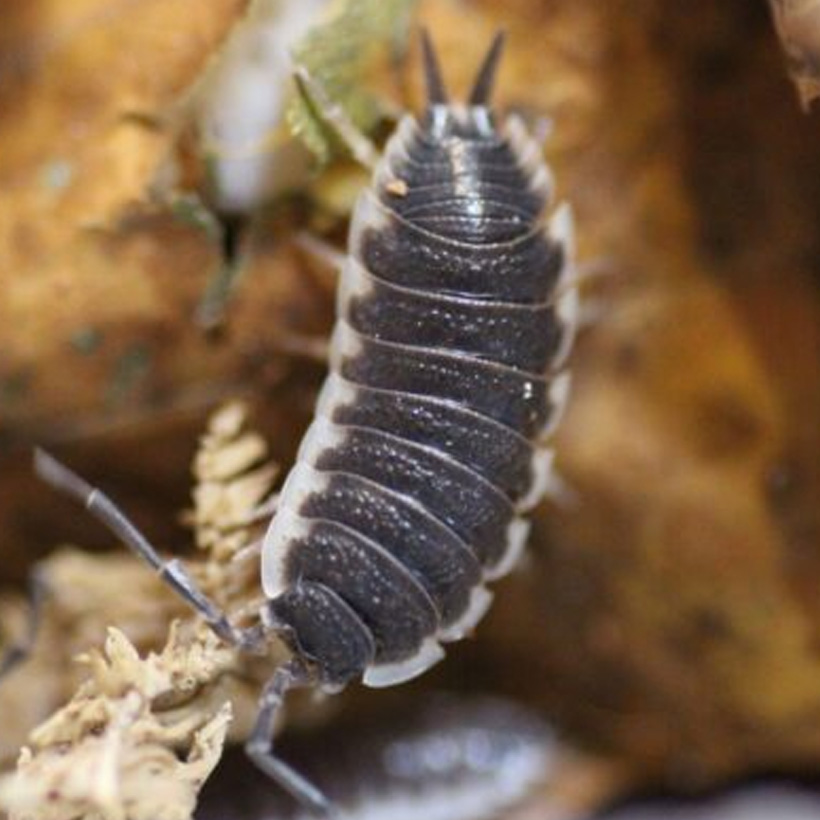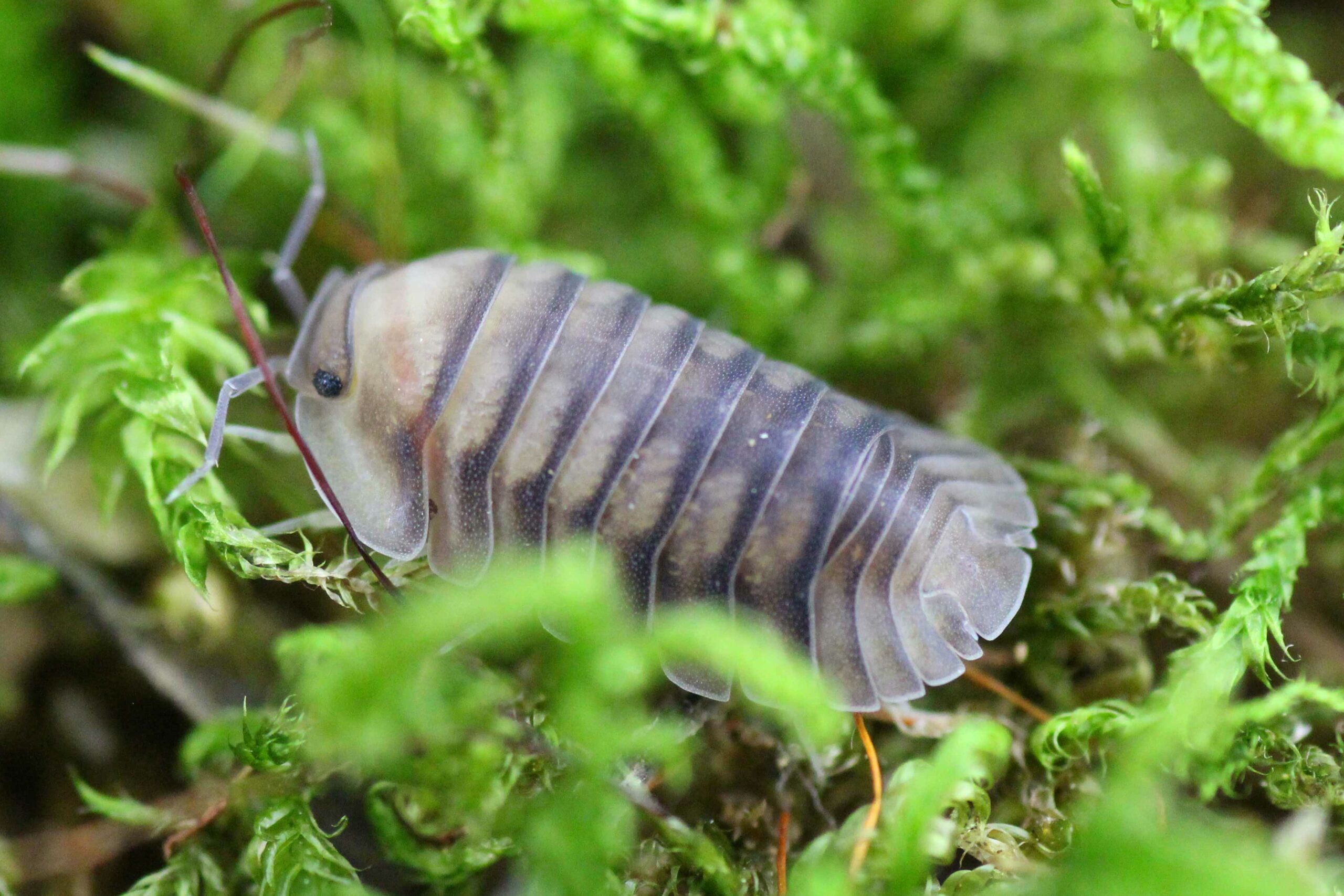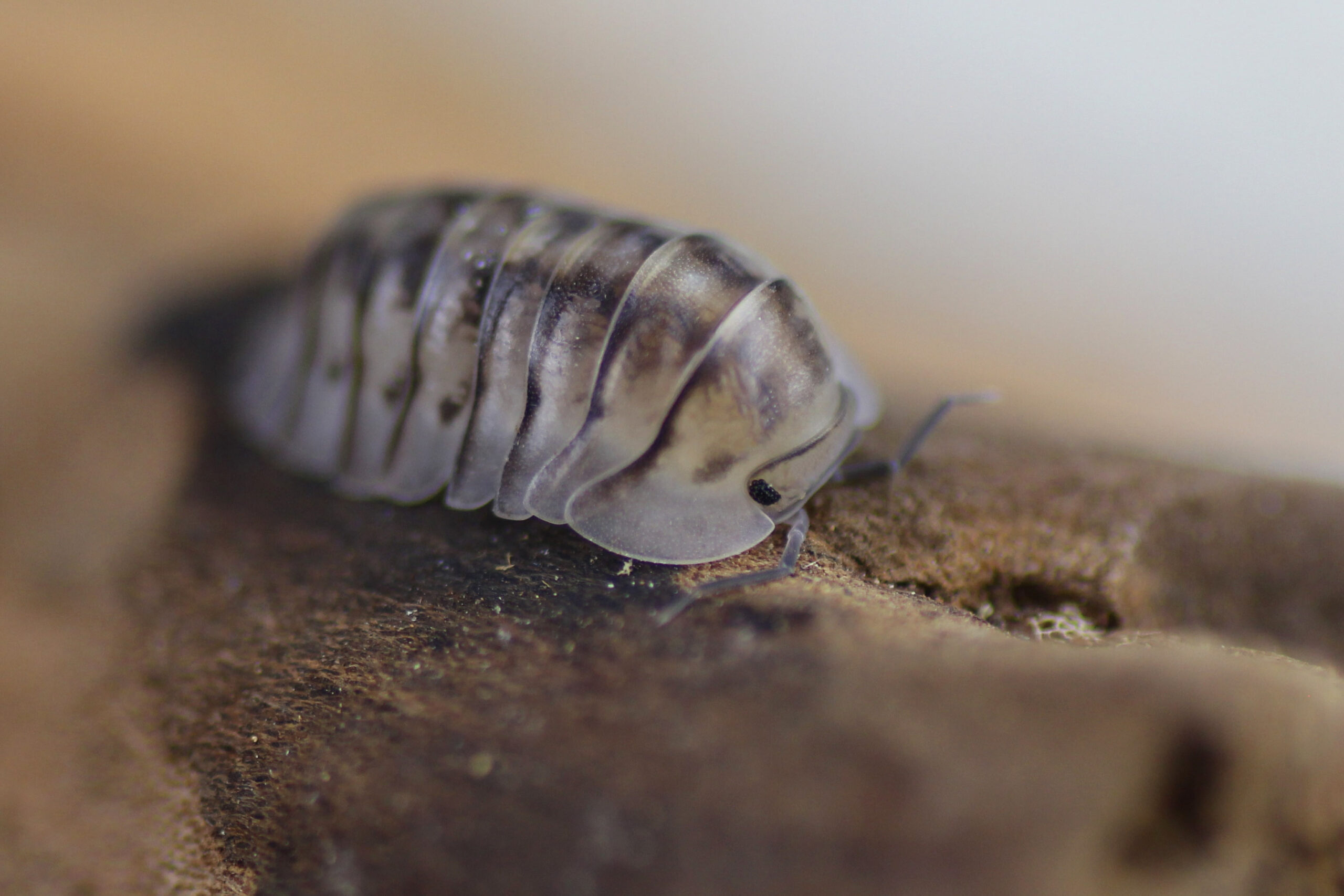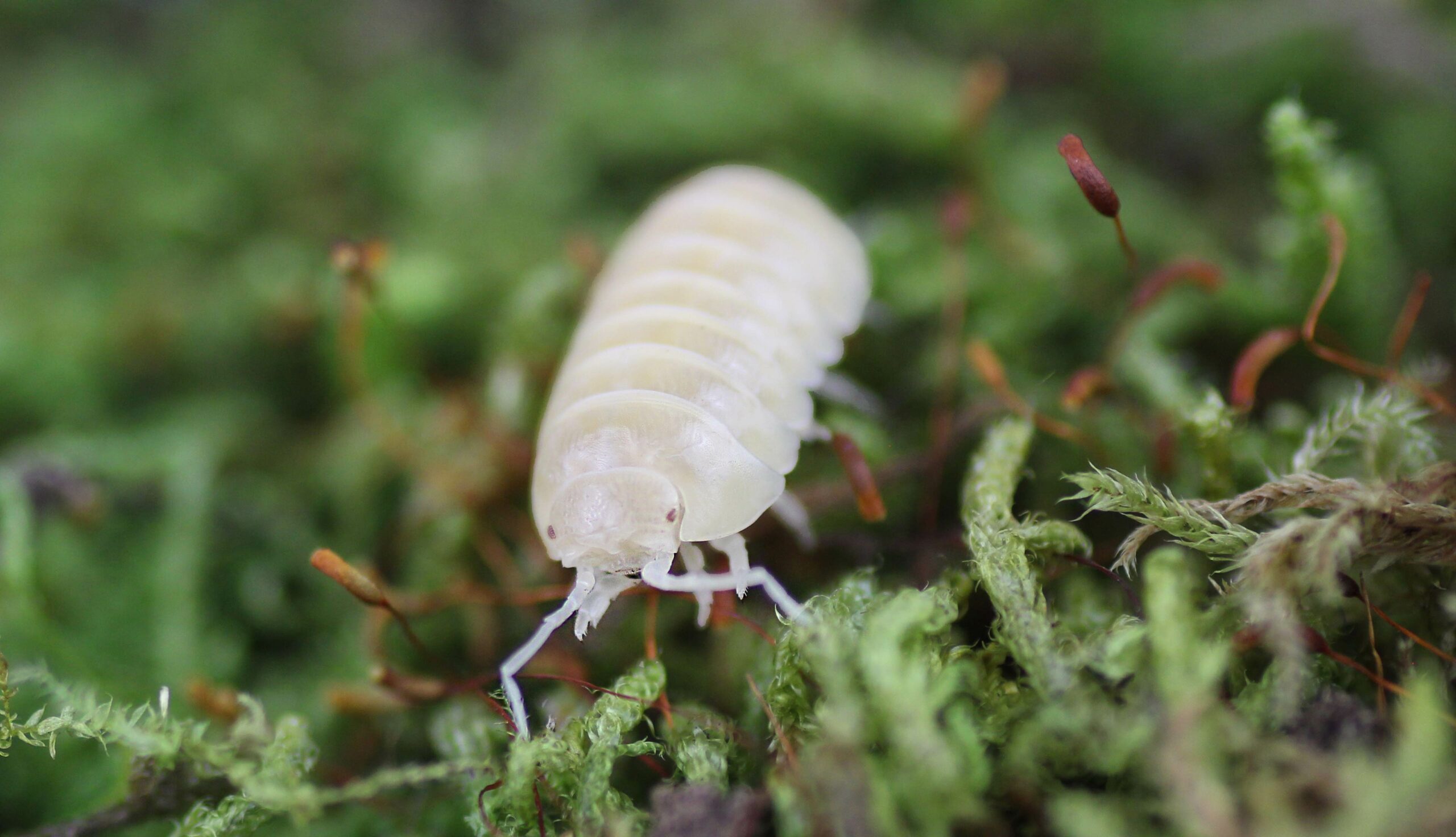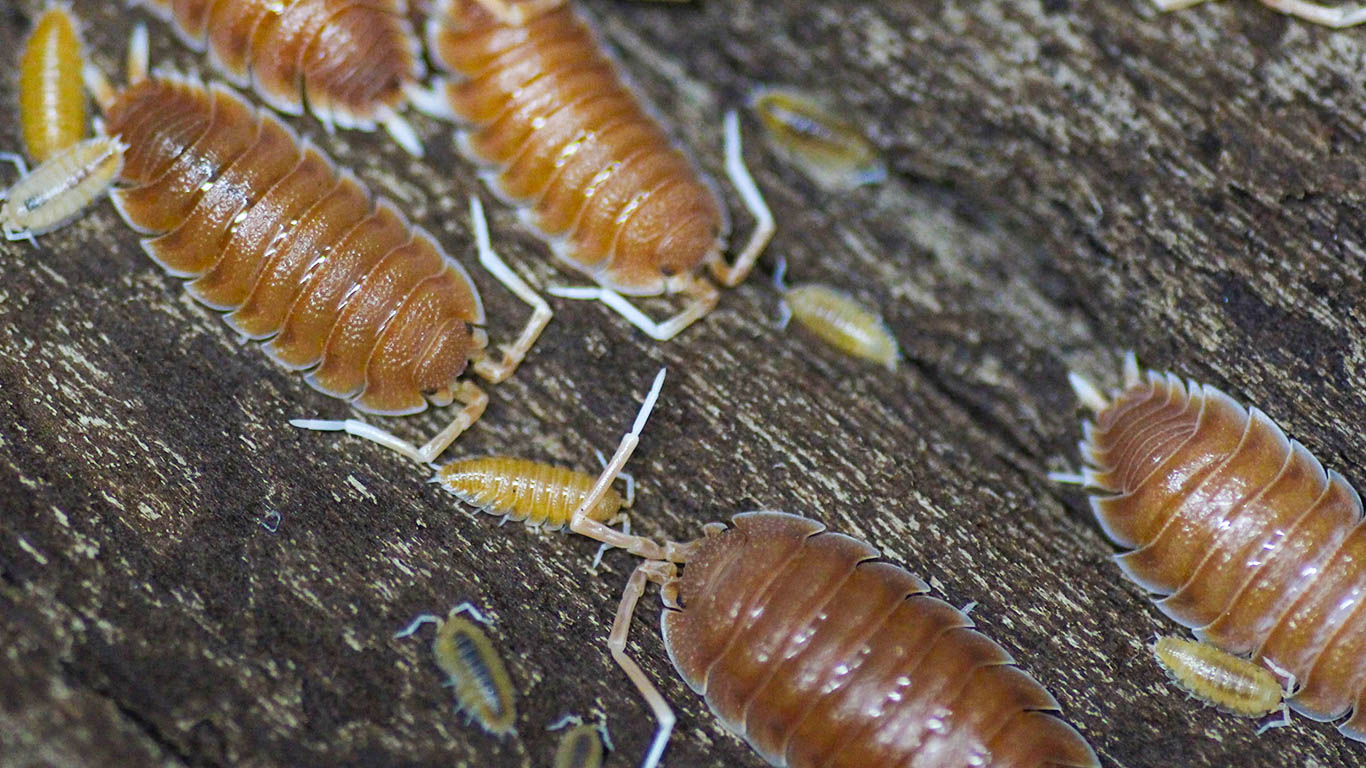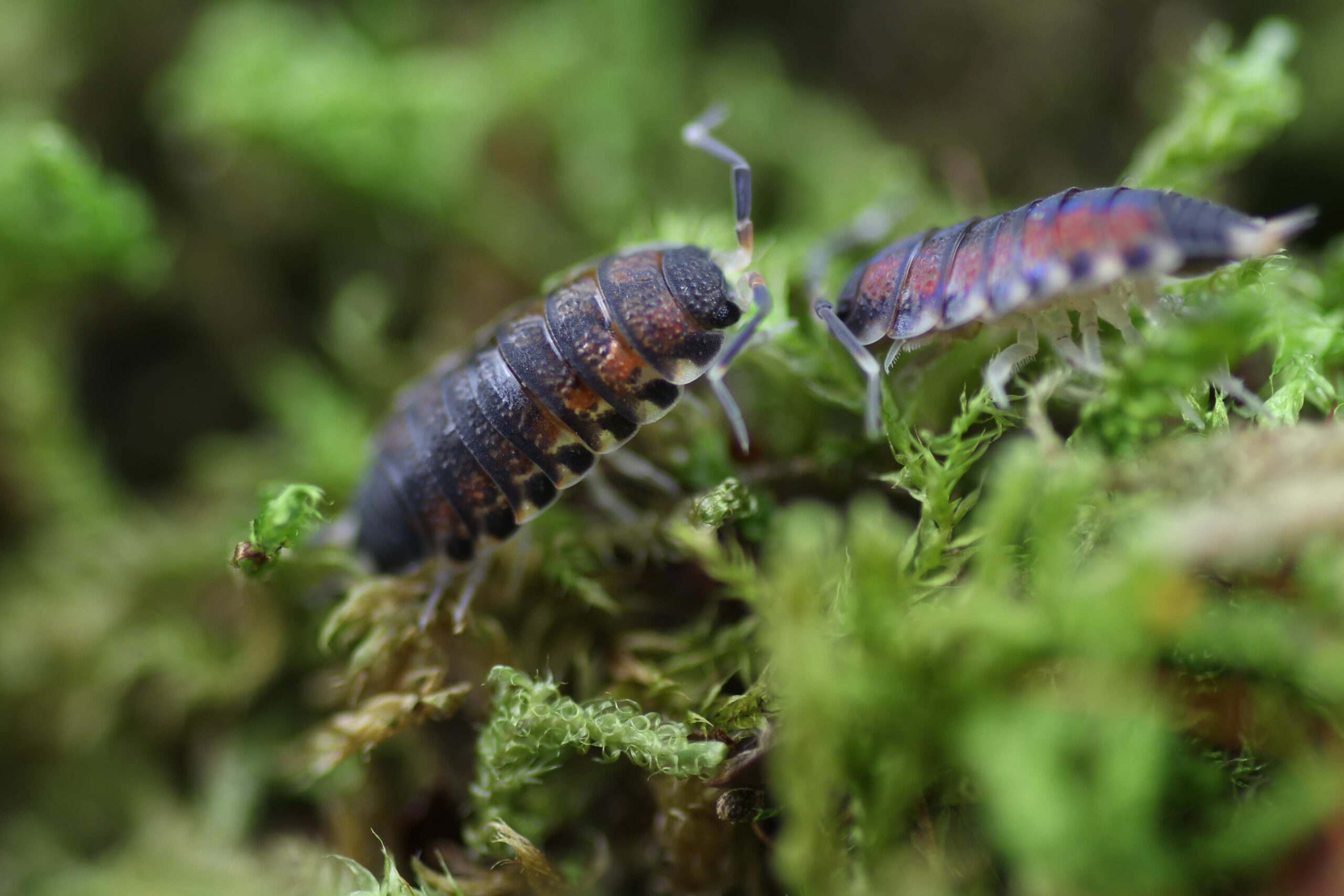


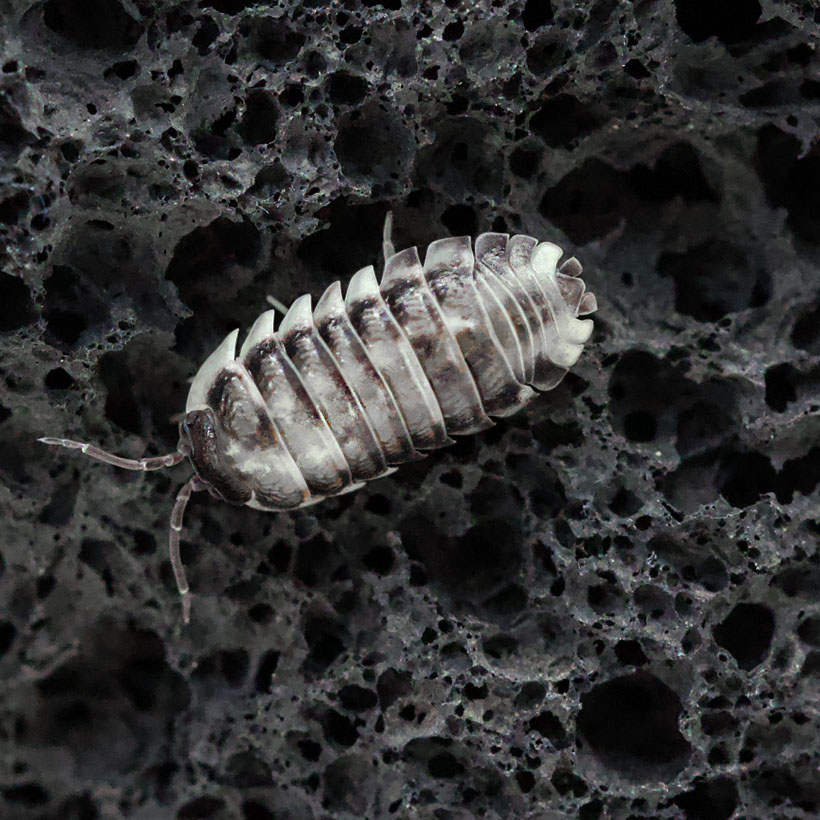
Philosciidae spec. “Northern Thailand” stands out for its active nature. In our care, these small Isopods are frequently on the move. The designation describes the strain we are keeping; it does not yet constitute a definitive species identification.
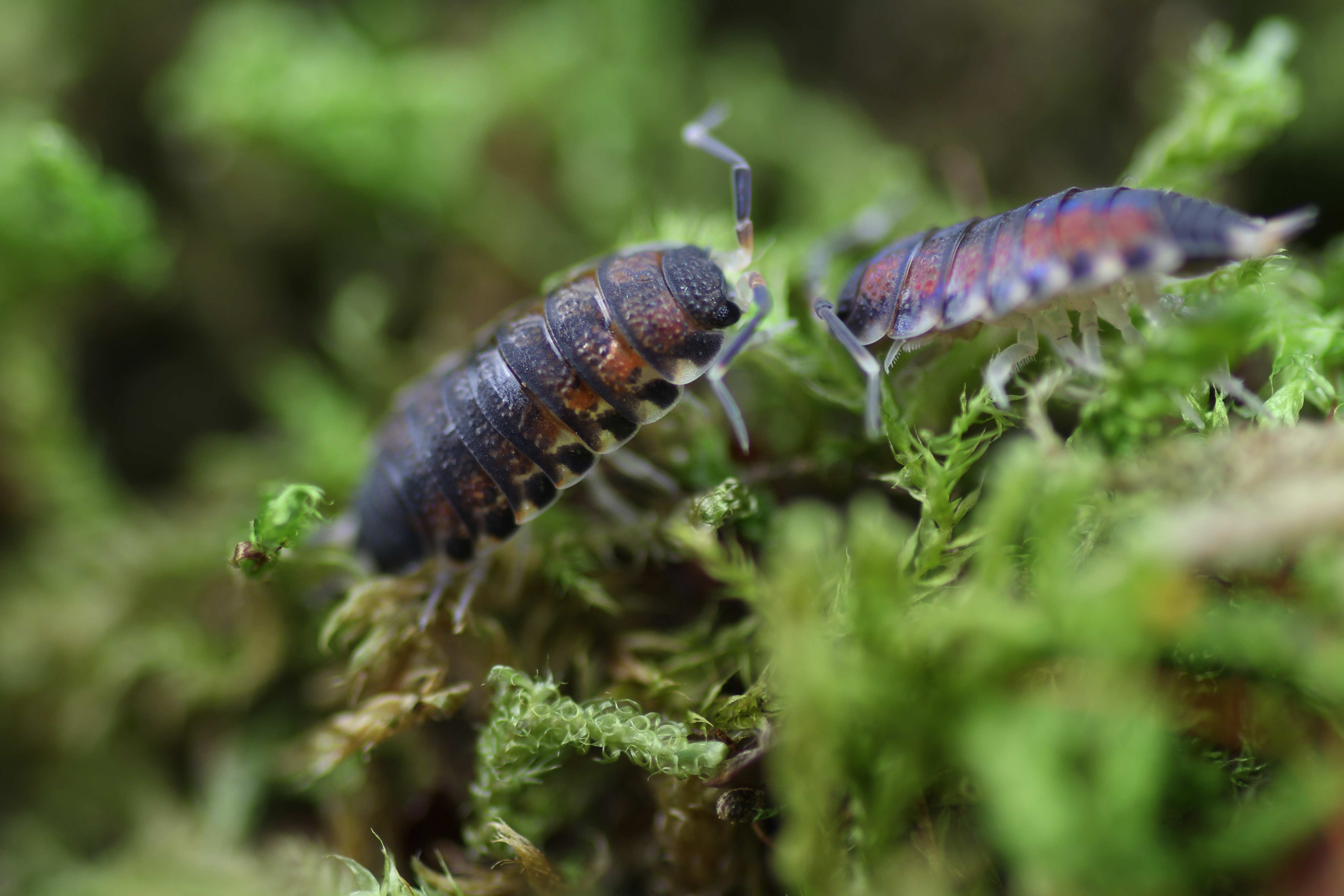
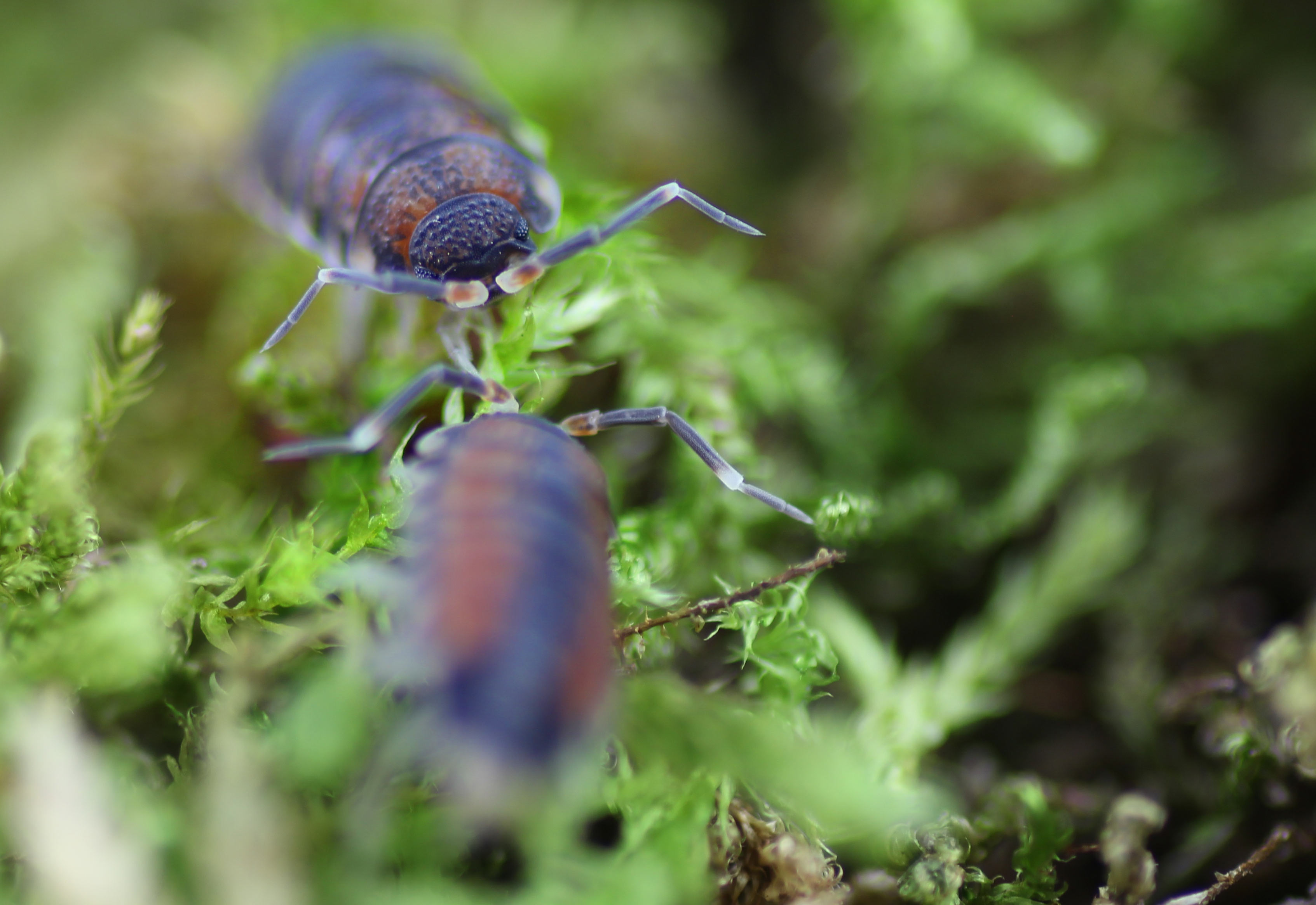
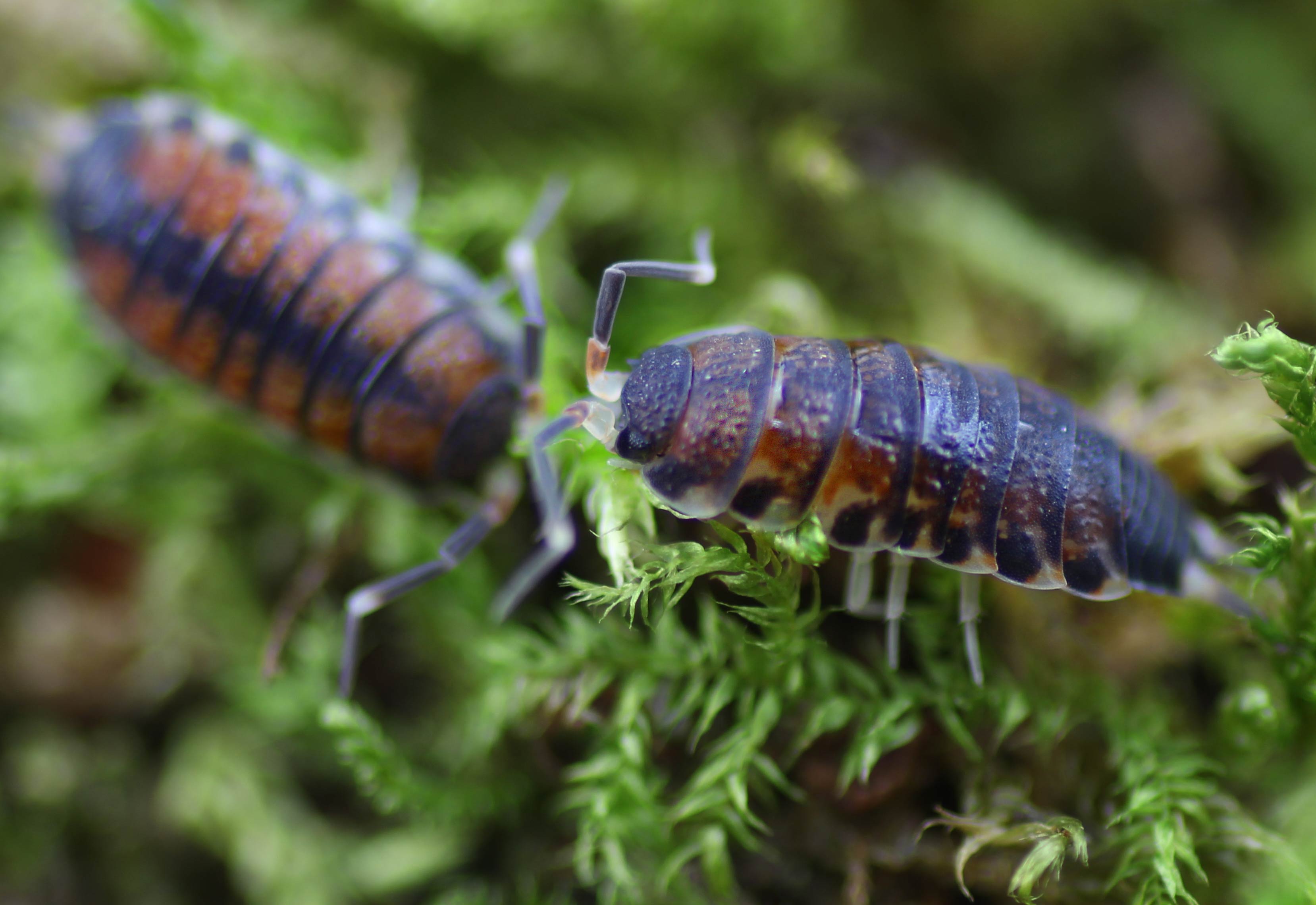
An Overview of Philosciidae spec. “Northern Thailand”
| Origin | Northern Thailand |
| Temperature | 16-23 °C |
| Size | up to 1.1 cm |
| Substrate | Nutrient-rich soil with decomposed leaves and decayed hardwood |
| Humidity | Moist hiding places and a less moist alternate location |
The temperature figures are approximate values based on previous experience. Measure the temperature at the location of the box. Direct sunlight and an uncontrolled heat source can quickly cause the container to overheat.
Keeping Philosciidae spec. “Northern Thailand”: Enclosure and Environment
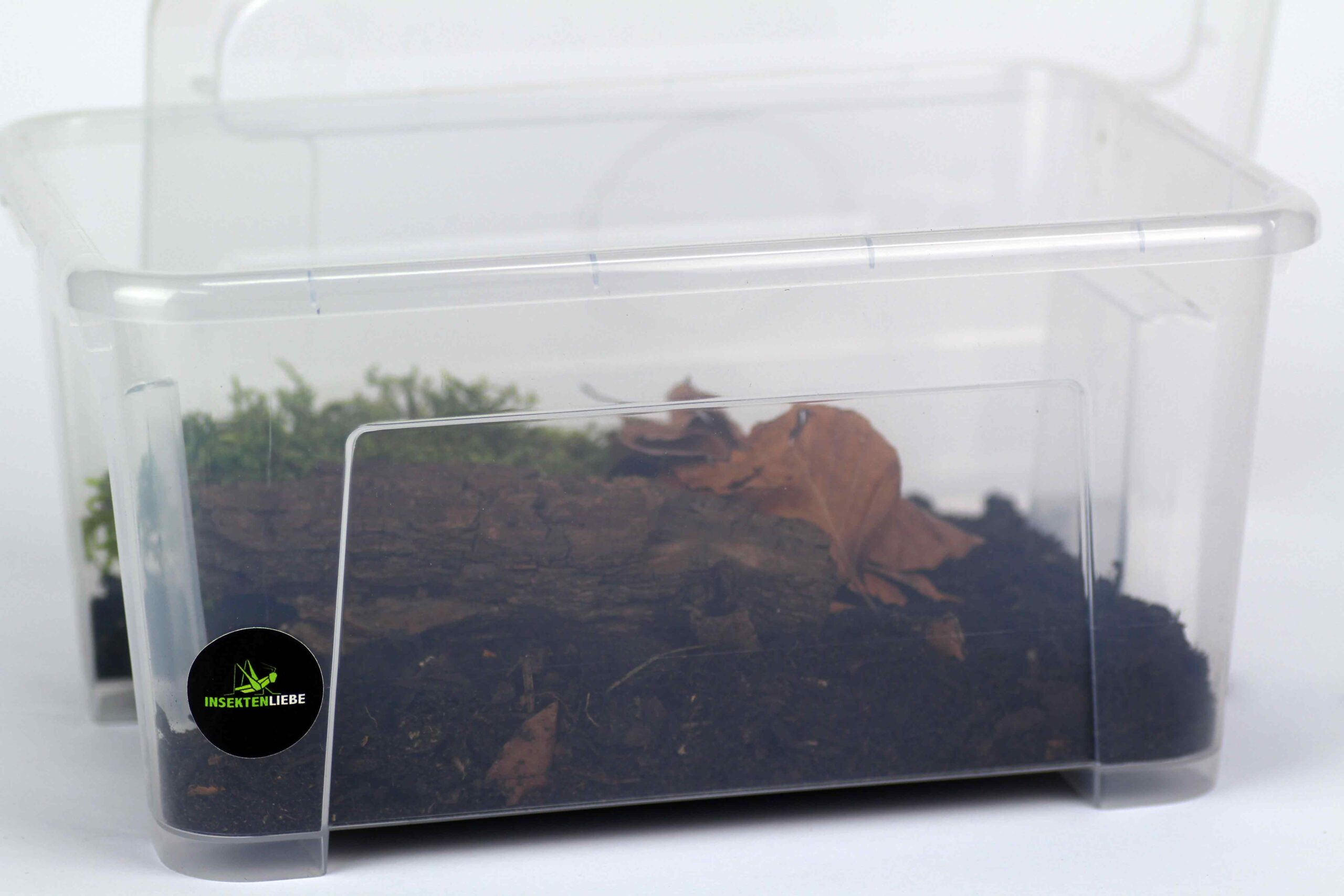
Choose an escape-proof box with securely covered ventilation openings. Larger species and growing groups require more floor space. Fill the enclosure with several centimeters of nutrient-rich soil and cover it with decomposed leaves. Flat pieces of bark provide hiding places. Pure coconut fiber is not a sufficient food source.
Keep the substrate under the hiding spots consistently slightly moist. However, the animals still need air circulation and a less damp alternative spot. Check the ground under the leaves with your finger: A dry surface doesn’t tell you much about how much moisture is present underneath.
Food for Philosciidae spec. “Northern Thailand”
Leaves and white-rotten hardwood should always be kept in the box. They serve as both food and shelter. You can collect clean, suitable leaves yourself; if you don’t have a safe place to collect them, pre-prepared leaf litter is a practical alternative.
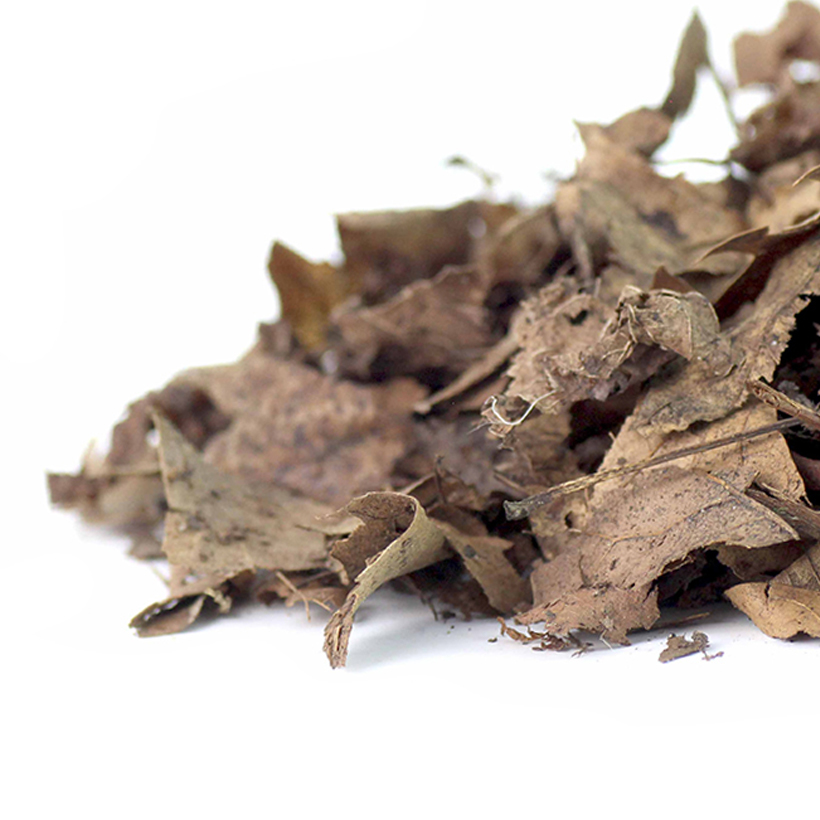
Fodder leaves
Staple food for many invertebrates.
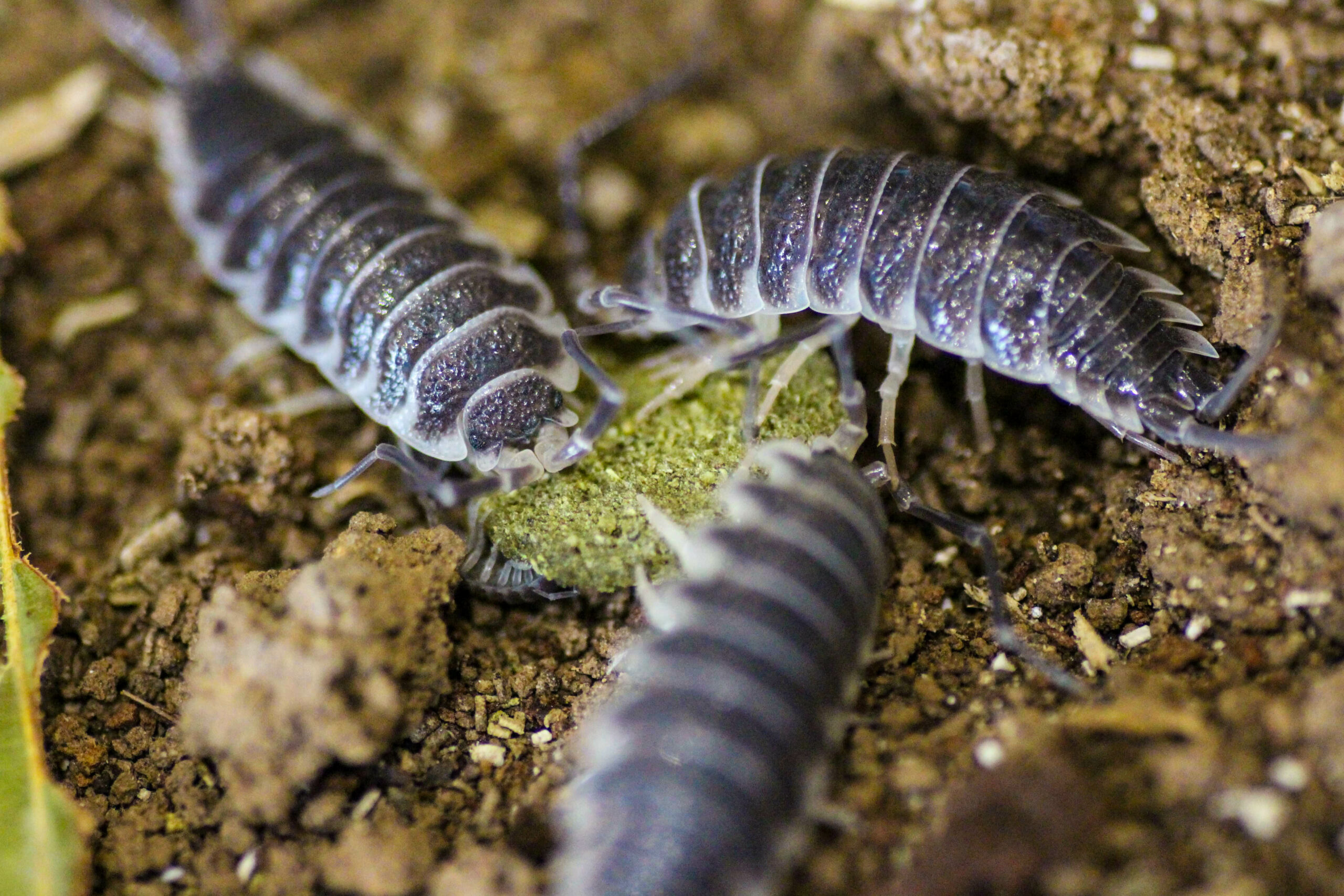
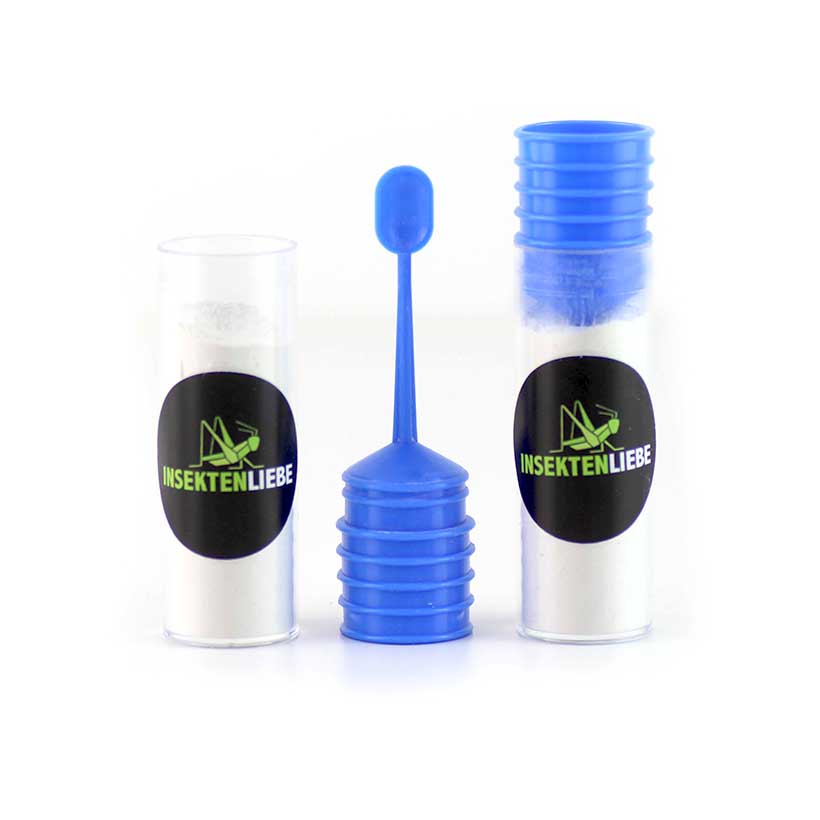
A source of calcium supplements their diet. Cuttlefish powder can be offered sparingly in an easily accessible spot. Small portions of earthworm food are a supplement, not a substitute for leaves and wood. Check for leftovers the next day and remove any perishable items promptly.
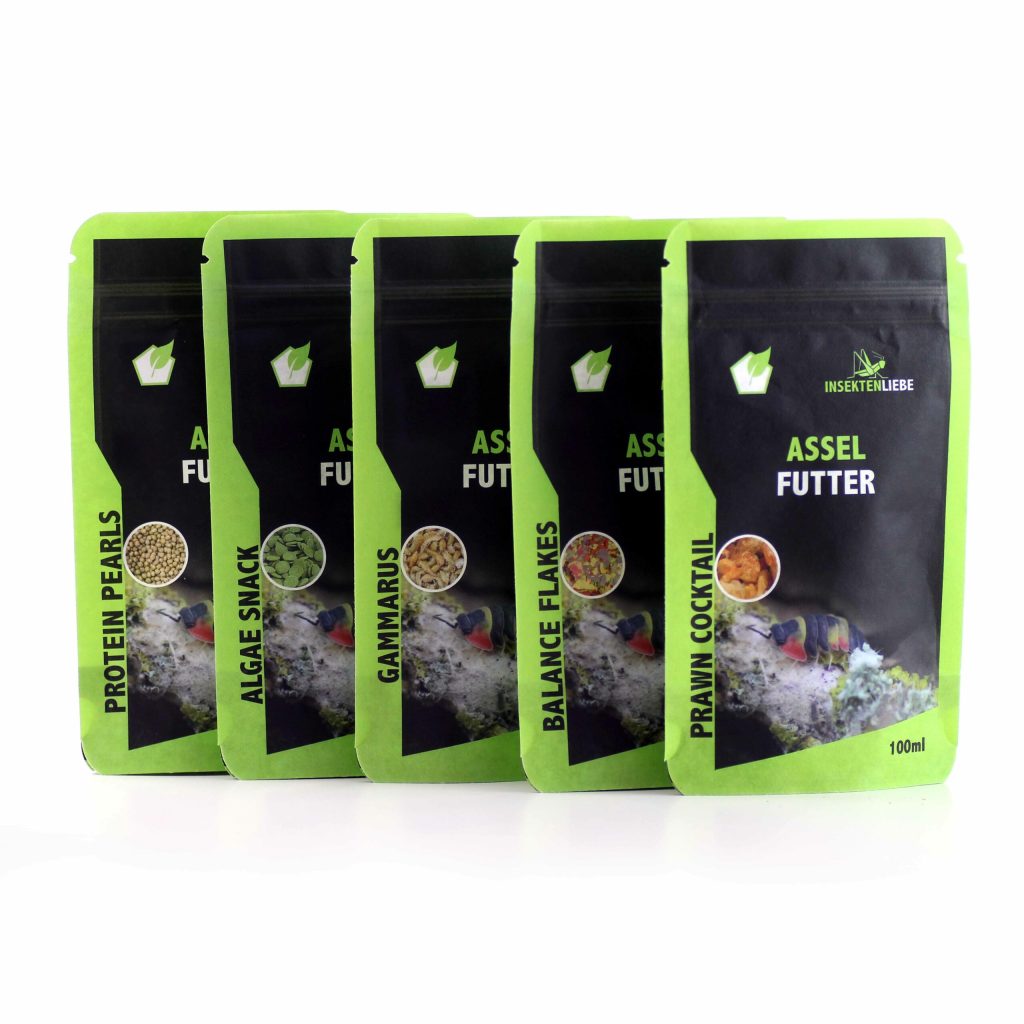
Isopod food
Perfectly complementary Isopod food in a resealable zip bag!
Behavior and Offspring
These isopods are less likely to be found clustered tightly under a single piece of bark than many other species. Therefore, a thick layer of leaves provides a particularly large number of hiding places. The orange longitudinal marking described in the old report may be noticeable in some individuals; do not rely on it alone for sex determination.
Our group grew well. However, growth and reproduction depend on the climate, food, and the initial population. To use them as soil helpers, you need a suitable, moist environment and other organisms that won’t eat the population right away.
Check the food and humidity levels regularly without rearranging the entire setup. If you find mold, first remove the affected food dish and check the amount of food and the ventilation. A complete bedding change is usually unnecessary for a group that is otherwise stable.
Discover More Isopods
Here you’ll find a selection from our store. Before purchasing, make sure the specific species’ needs are compatible with your terrarium.
-
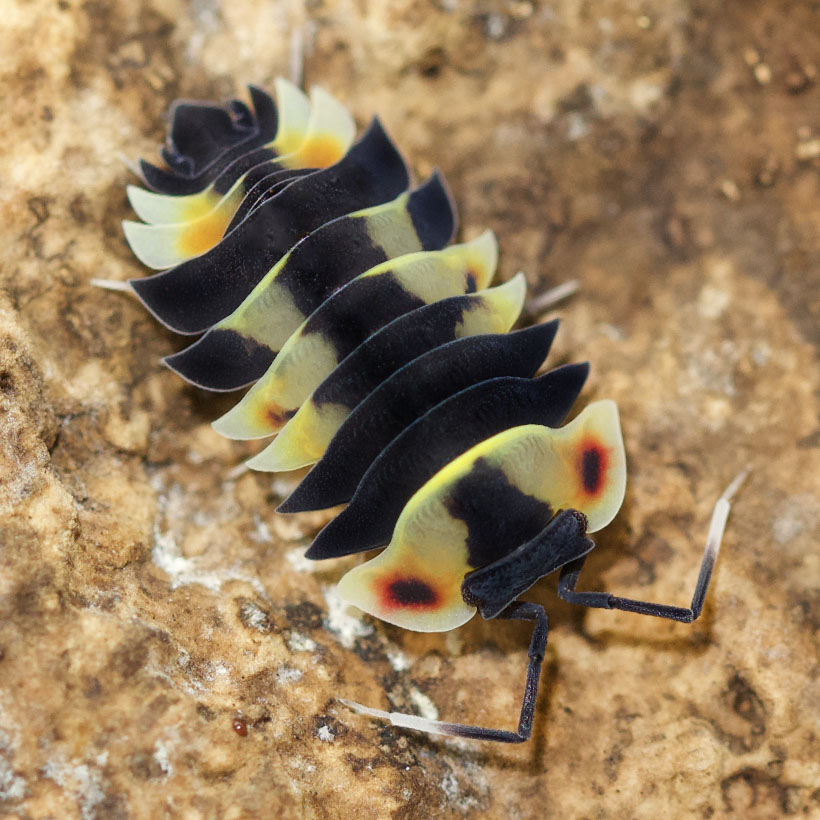
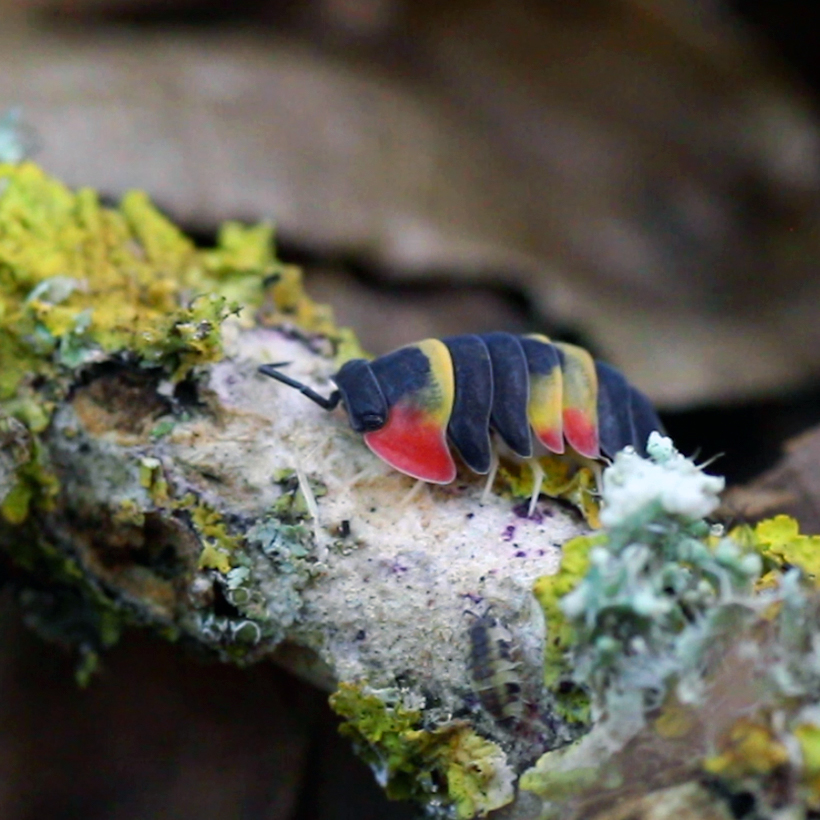
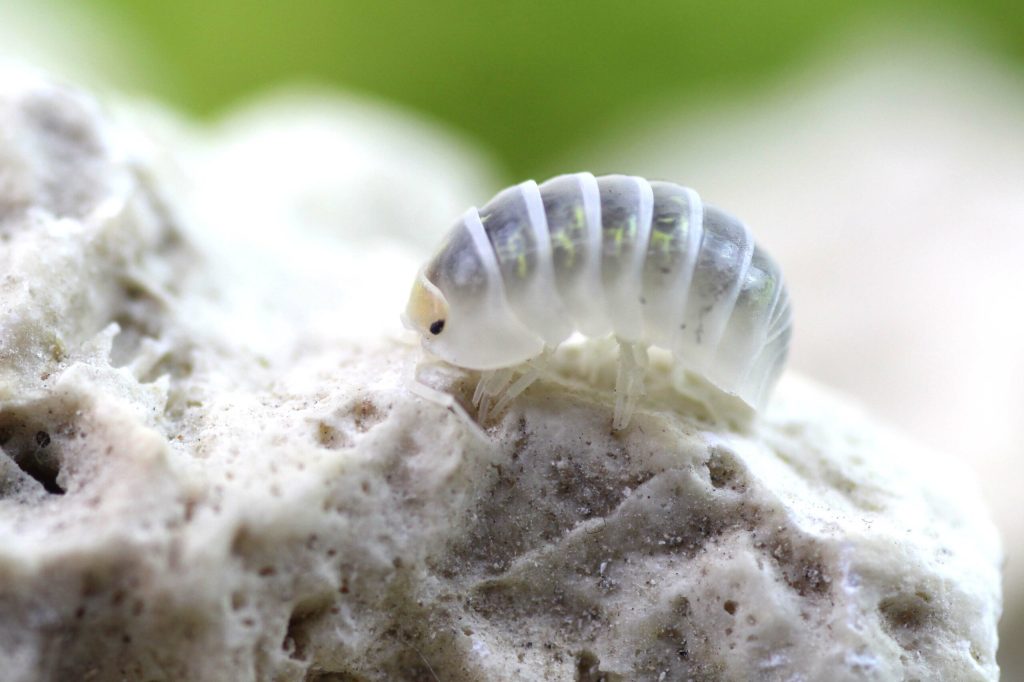
Ardentiella spec. “Pastel”
Price range: 18,00 € through 160,00 € incl. VAT, plus shipping -
Ardentiella spec. “Tricolour”
Price range: 18,00 € through 160,00 € incl. VAT, plus shipping
Still unsure? Feel free to ask us your question in the comments section below the article.