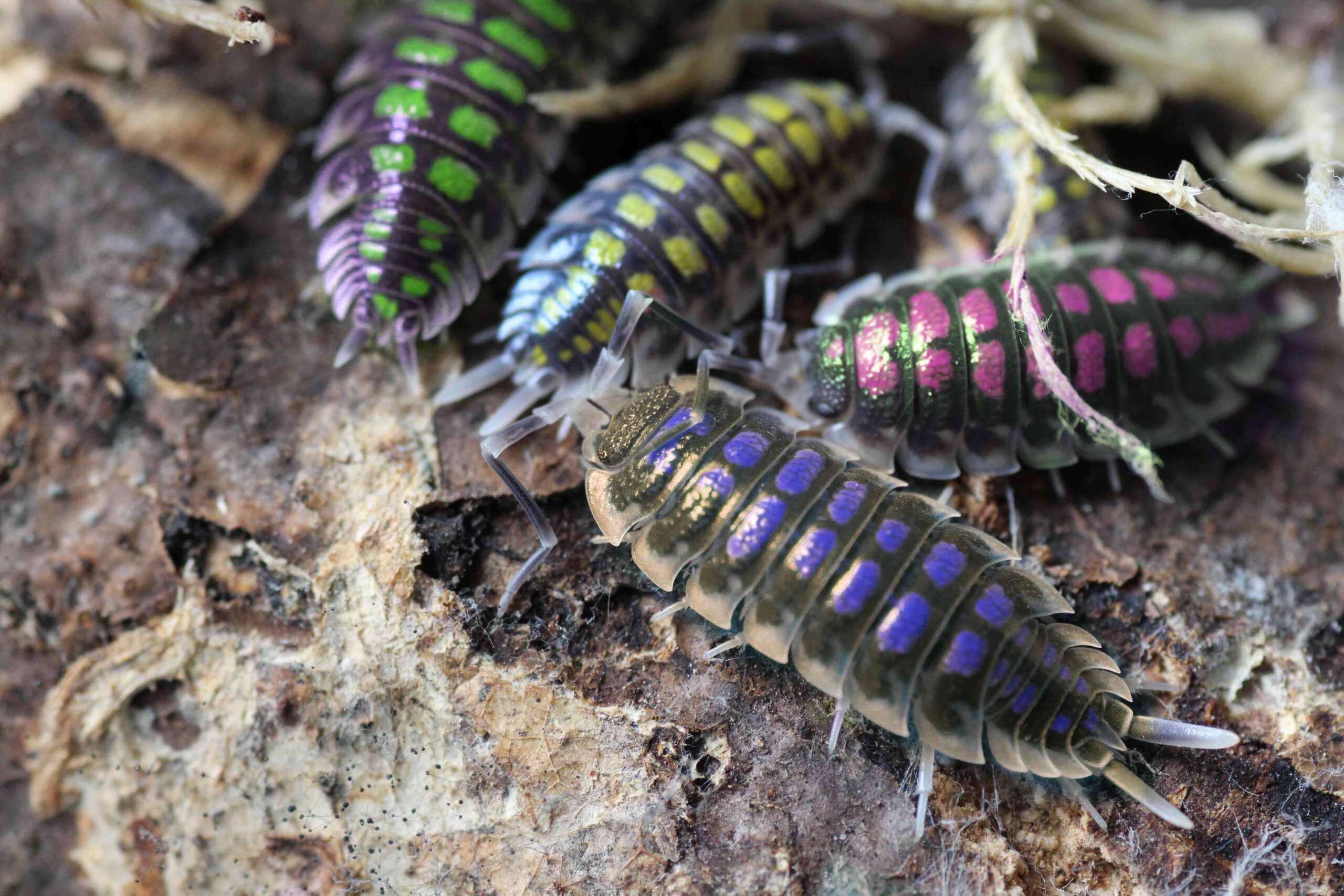


Updates on our latest breeding varieties.
Today, isopods are available in a wide variety of bred colors and patterns, known as color morphs (morph = form). The selection of beautifully colored, unique, or rare specimens is constantly growing.
Such mutations also appear time and again in our breeding stocks, and I will be reporting on them regularly on this page. It is important to me to keep you informed about everything from the discovery of a new color morph to the breeding and selection process.
We devote part of our daily work to our Isopod color morphs. In doing so, we distinguish between naturally occurring mutations and so-called designer morphs.
While, for example, Albino, Orange, Caramel, Dalmatian, and High Yellow were each discovered at some point in the wild or through domestic breeding and are also “purebred,” designer morphs are combinations of two or more natural mutations.
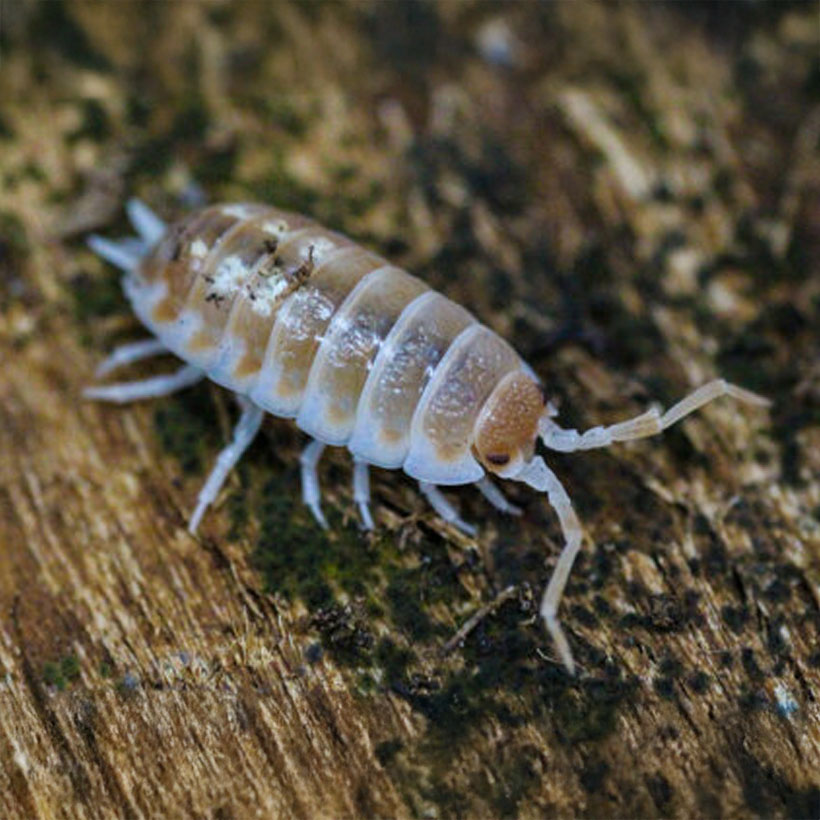
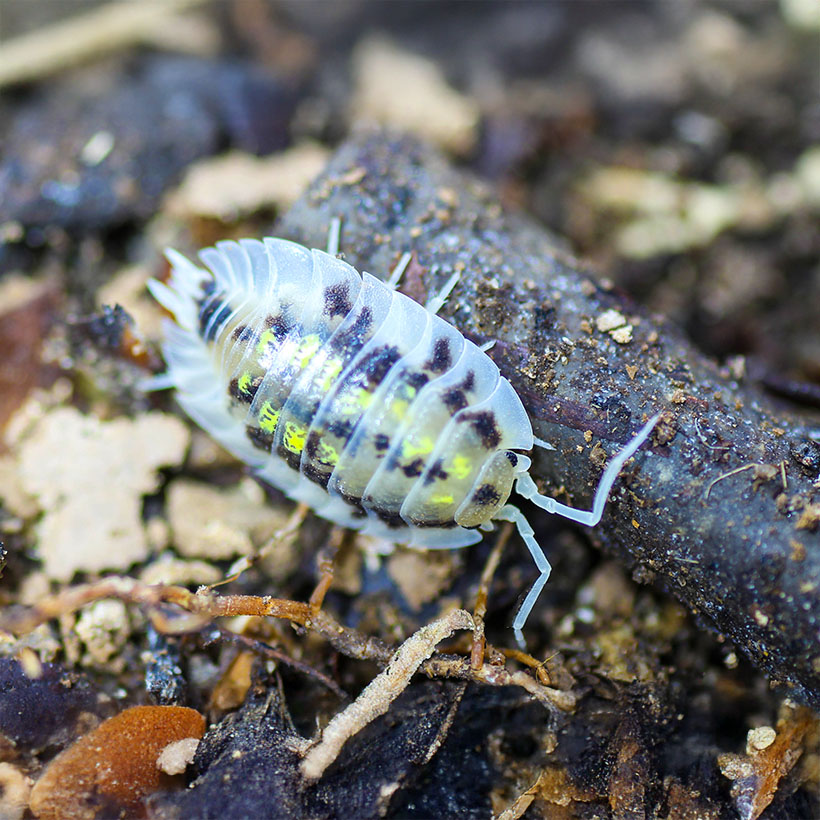
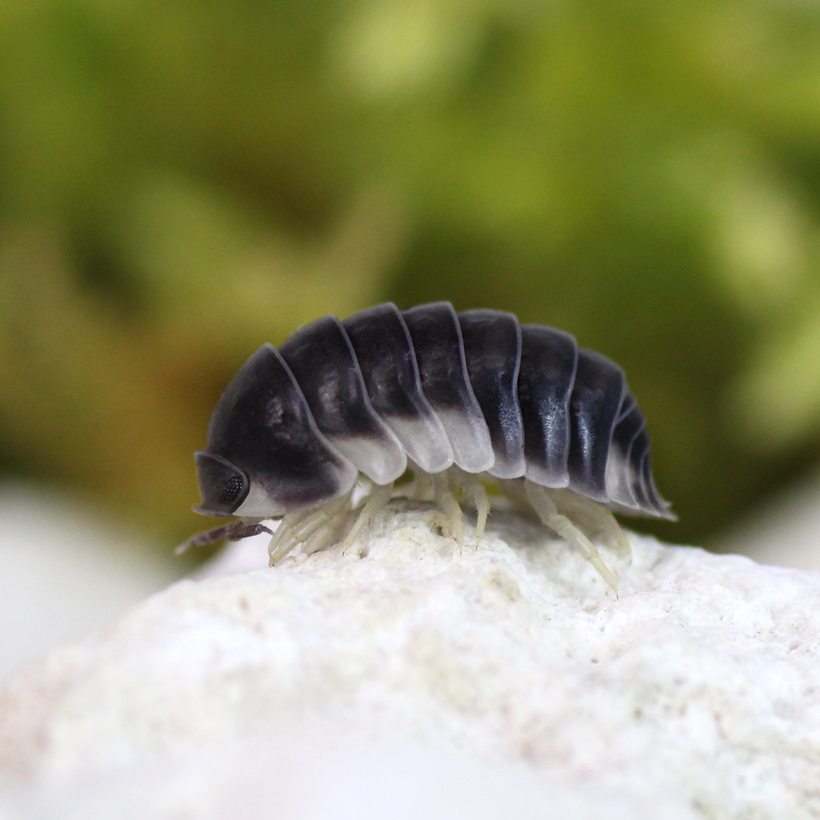
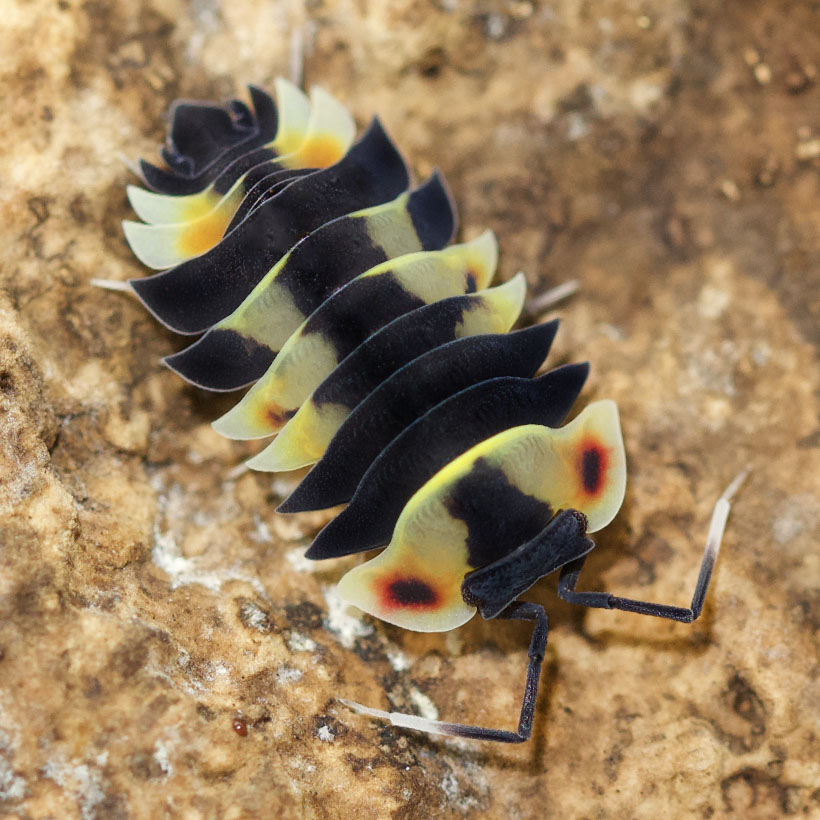
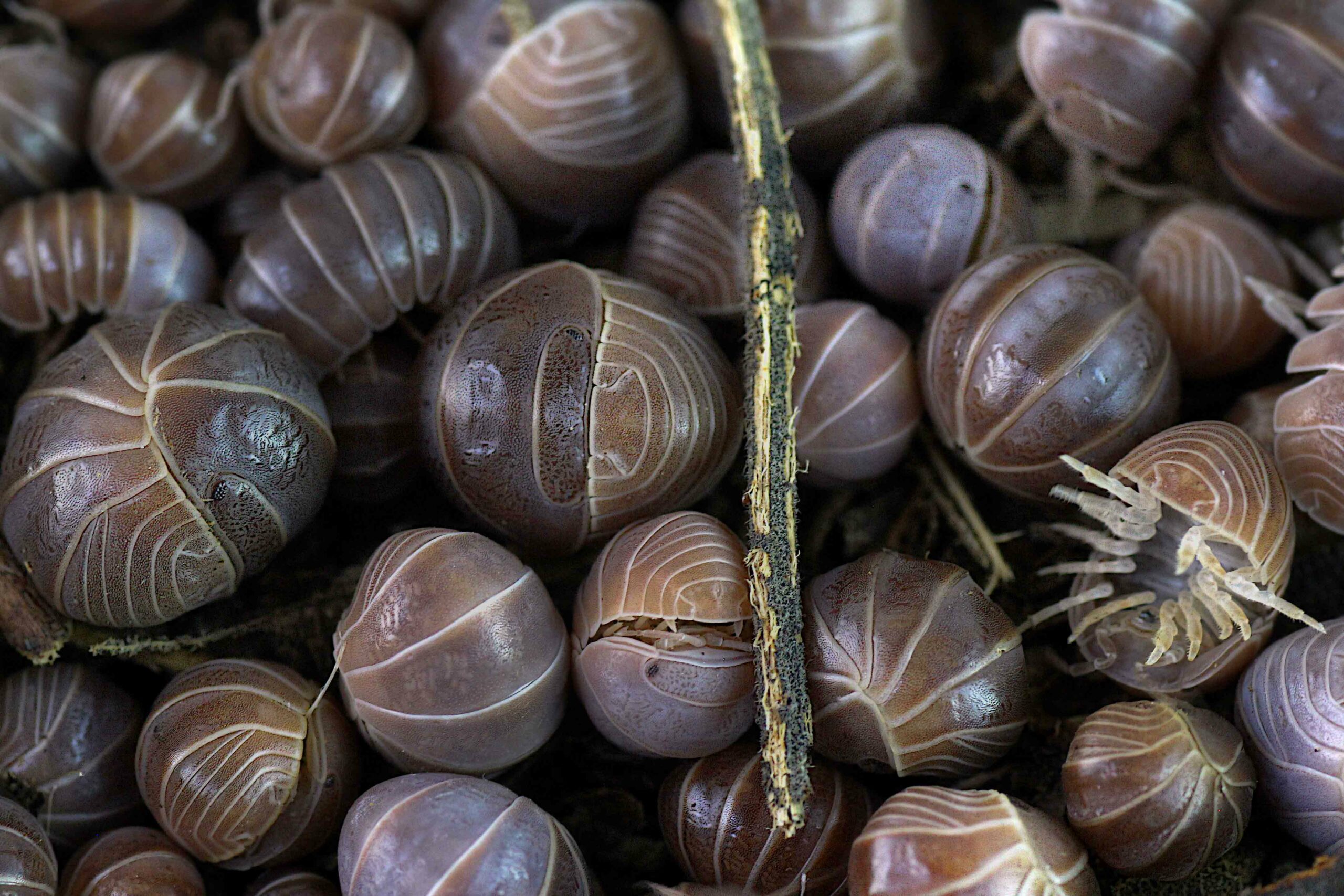
Oniscus asellus “Mardi Gras”
What does “heterozygous” actually mean?
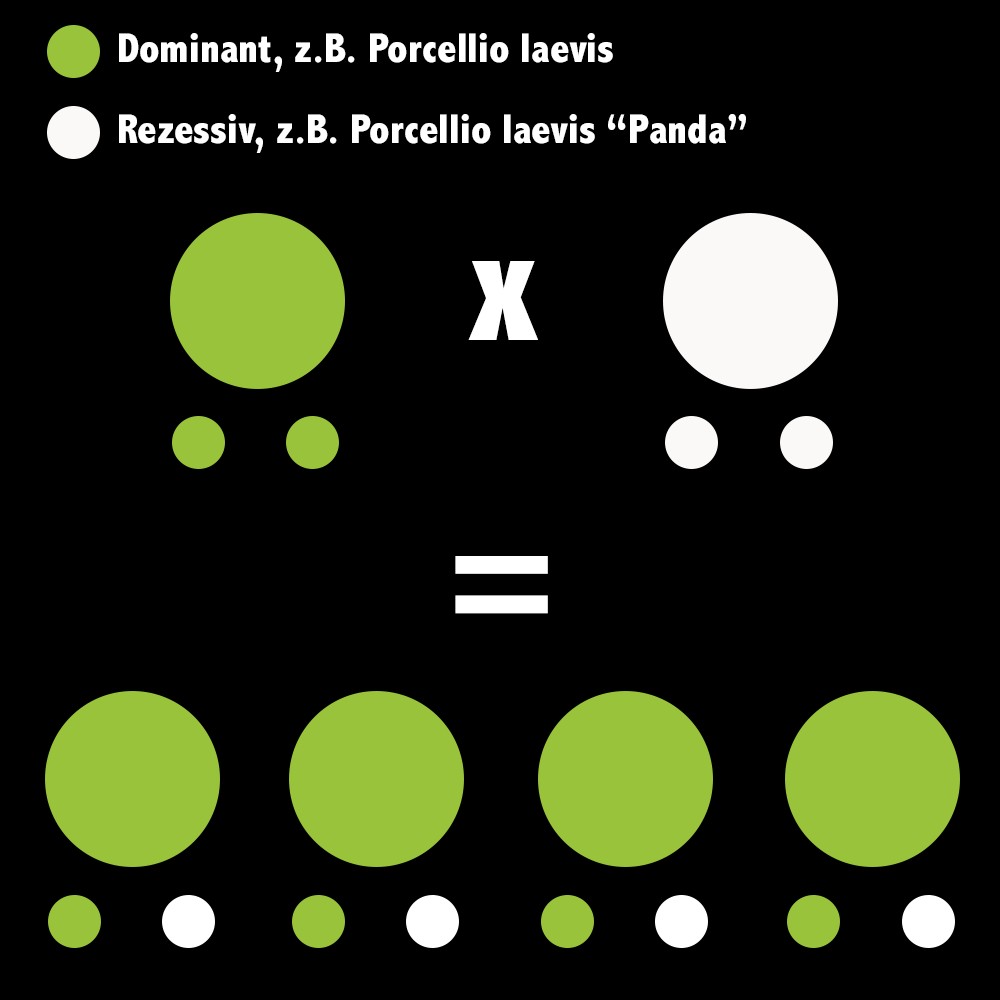
If we take as an example two homozygous parents—a Porcellio laevis (dominant, green)—and breed them with a Porcellio laevis “Panda” (recessive, white), the offspring will be heterozygous. The offspring carry both the “Panda” gene and the wild-type gene. In this scenario, the offspring appear wild-type but are heterozygous for the “Panda” gene.
A heterozygote is defined as a situation in which a “mutated” gene on one chromosome is accompanied by a healthy gene on the other chromosome. In such cases, the effect of the mutation is often suppressed and completely offset by the “healthy” gene (= recessive inheritance).
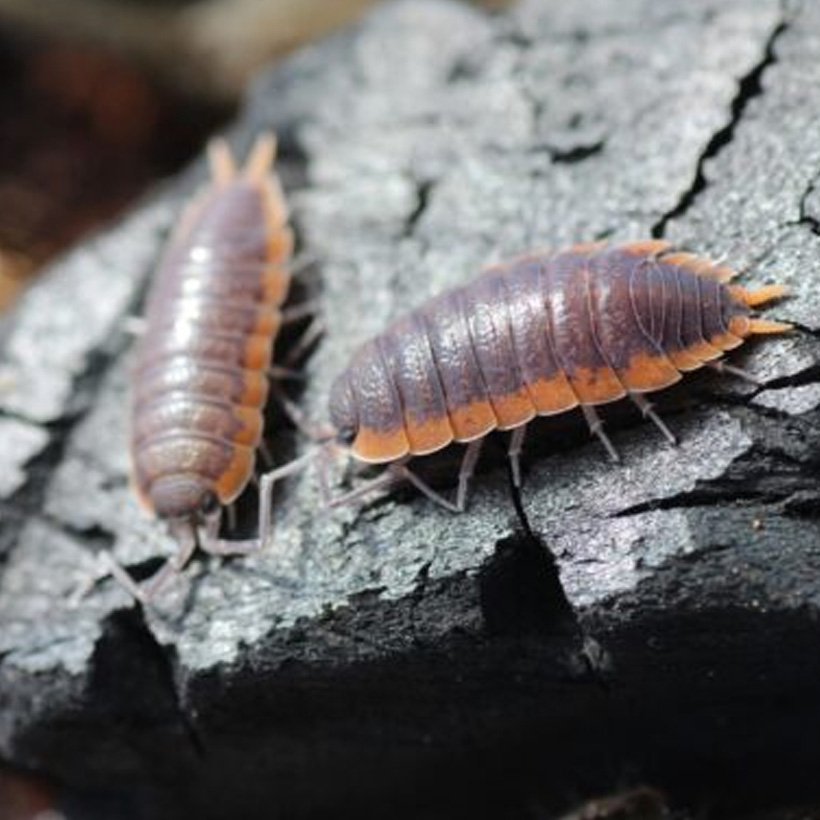
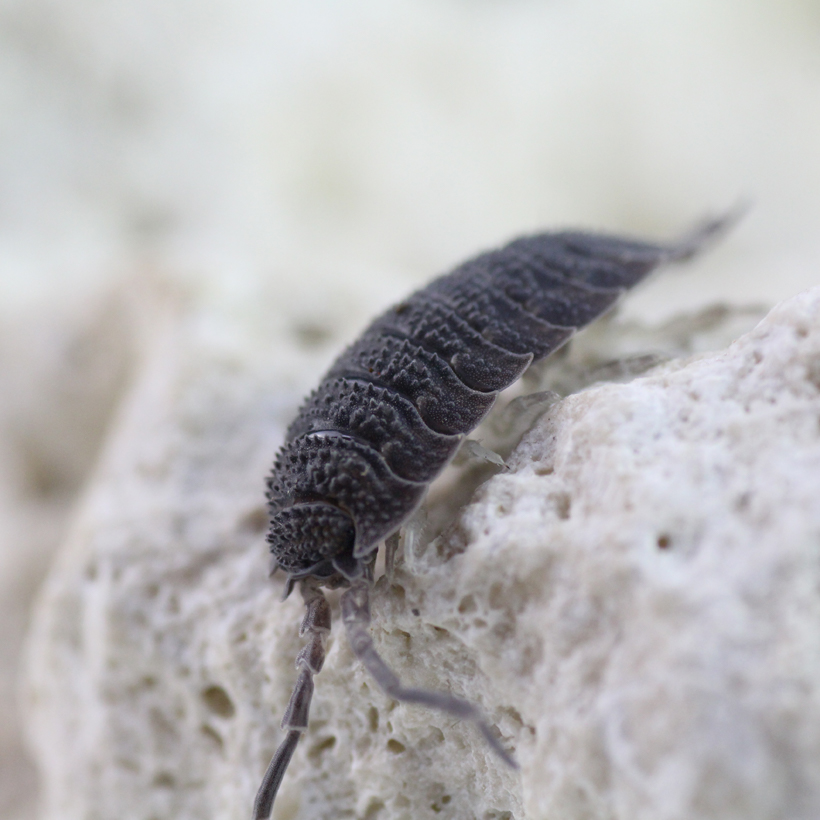
Porcellio ornatus sandstone
What happens when we breed heterozygous offspring with each other?
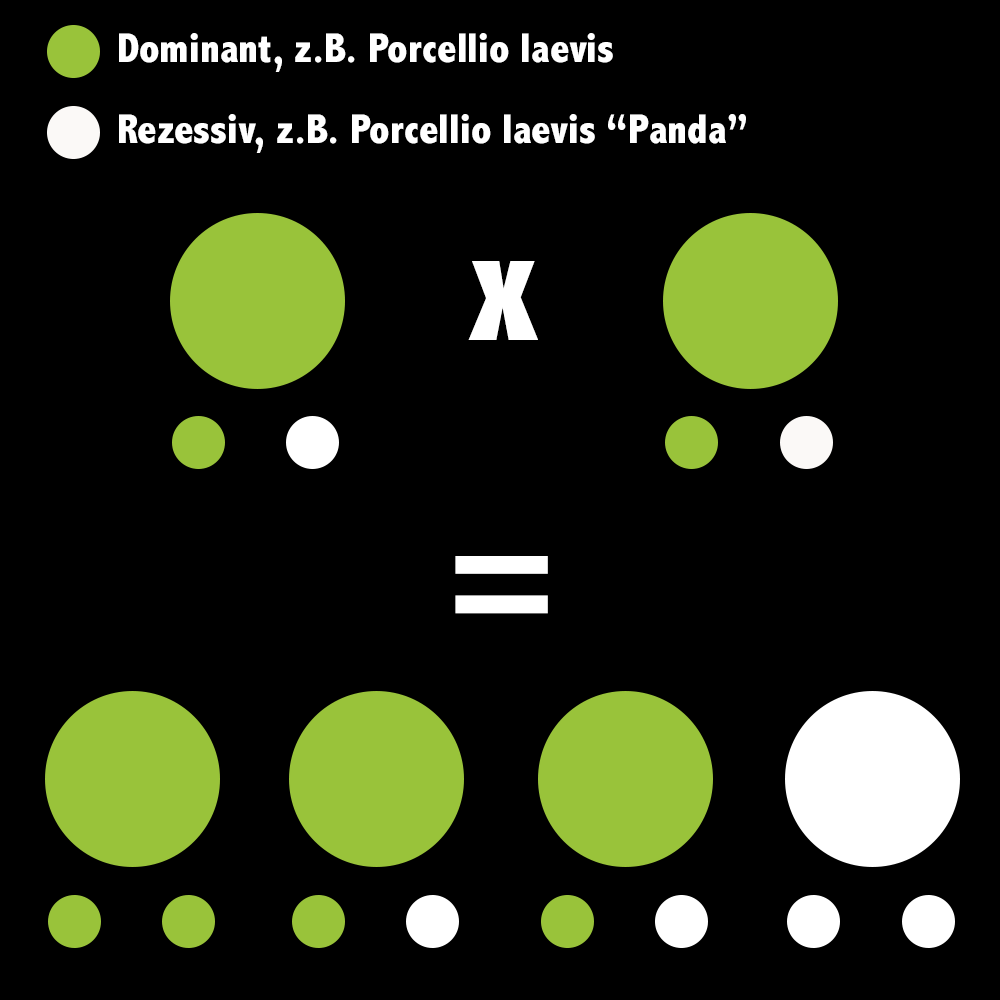
The second example shows the mating of this so-called F1 generation—that is, the offspring from our first example. It is common practice to mate siblings with one another in order to select for specific color traits. Any abnormalities, such as deformities or dwarfism, should be removed from the breeding stock.
In our example, we are mating two Porcellio laevis “het. (heterozygous) Panda”
The young woodlice would then be as follows:
1 x Porcellio laevis,
2 x Porcellio laevis “het. Panda”
1 x Porcellio laevis “Panda”
Of course, we’ll produce more young woodlice when they mate. You just have to put these numbers into perspective: 25% Porcellio laevis; 50% Porcellio laevis “het. Panda”; 25% Porcellio laevis “Panda”
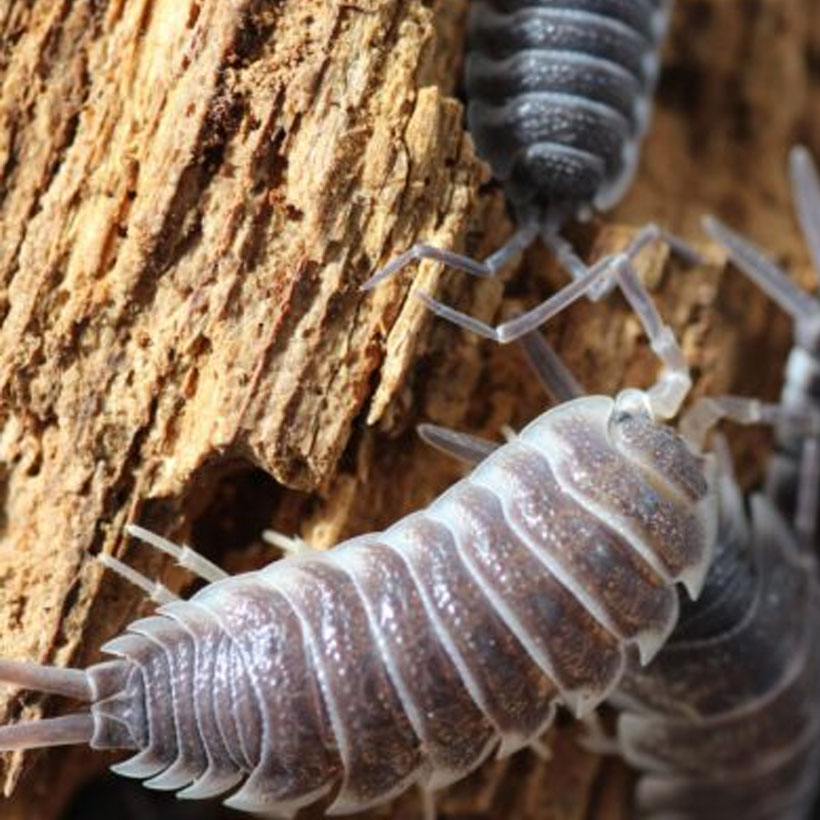
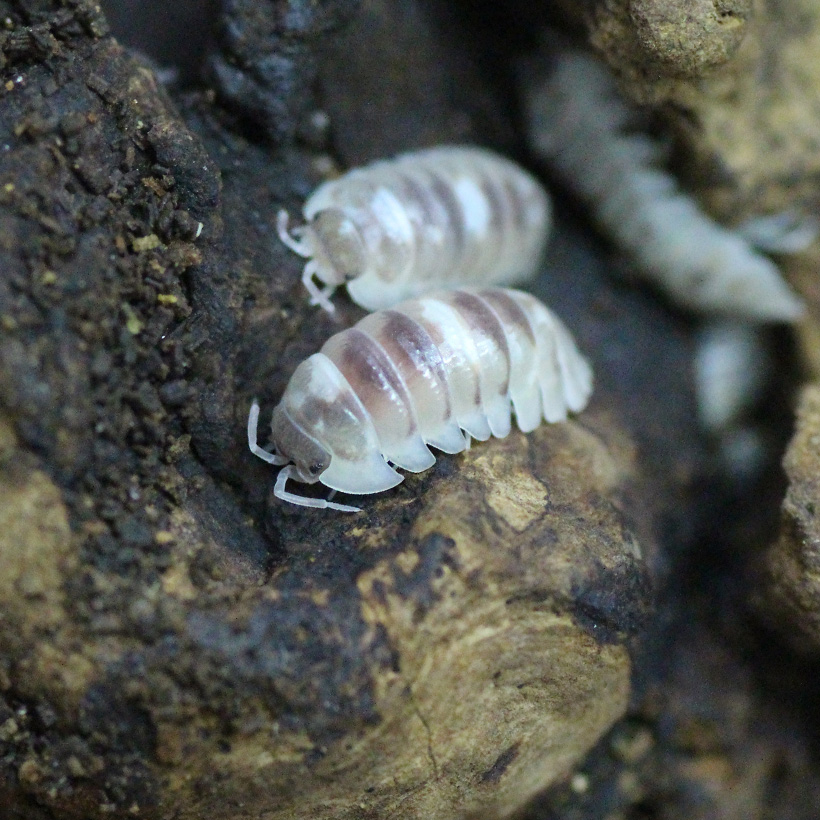
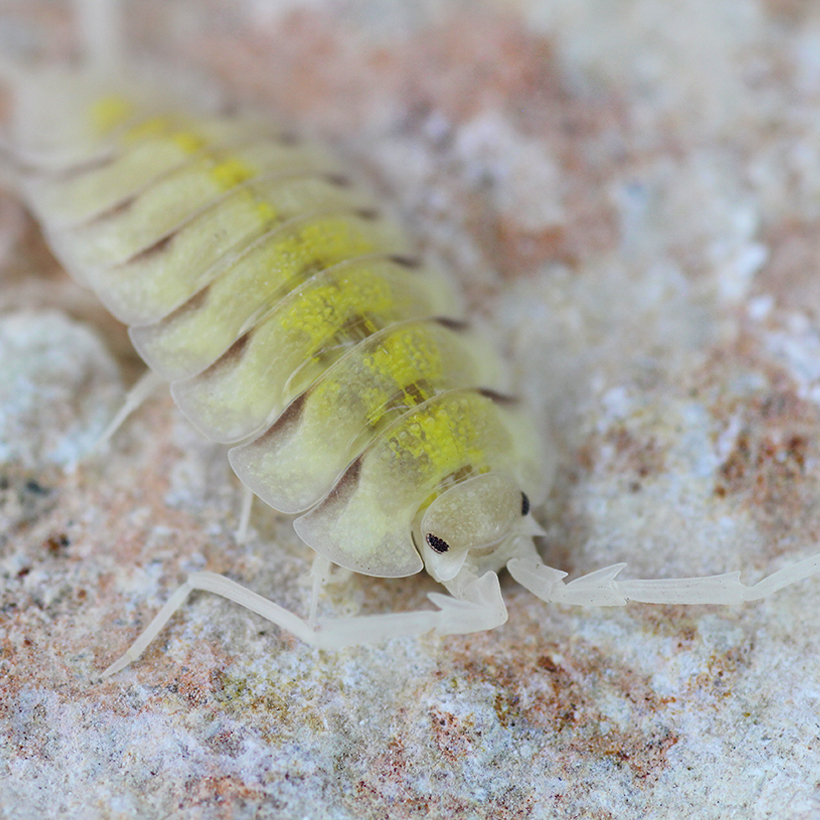
Porcellio hoffmannseggi brown & Porcellio spec. Morocco 8i
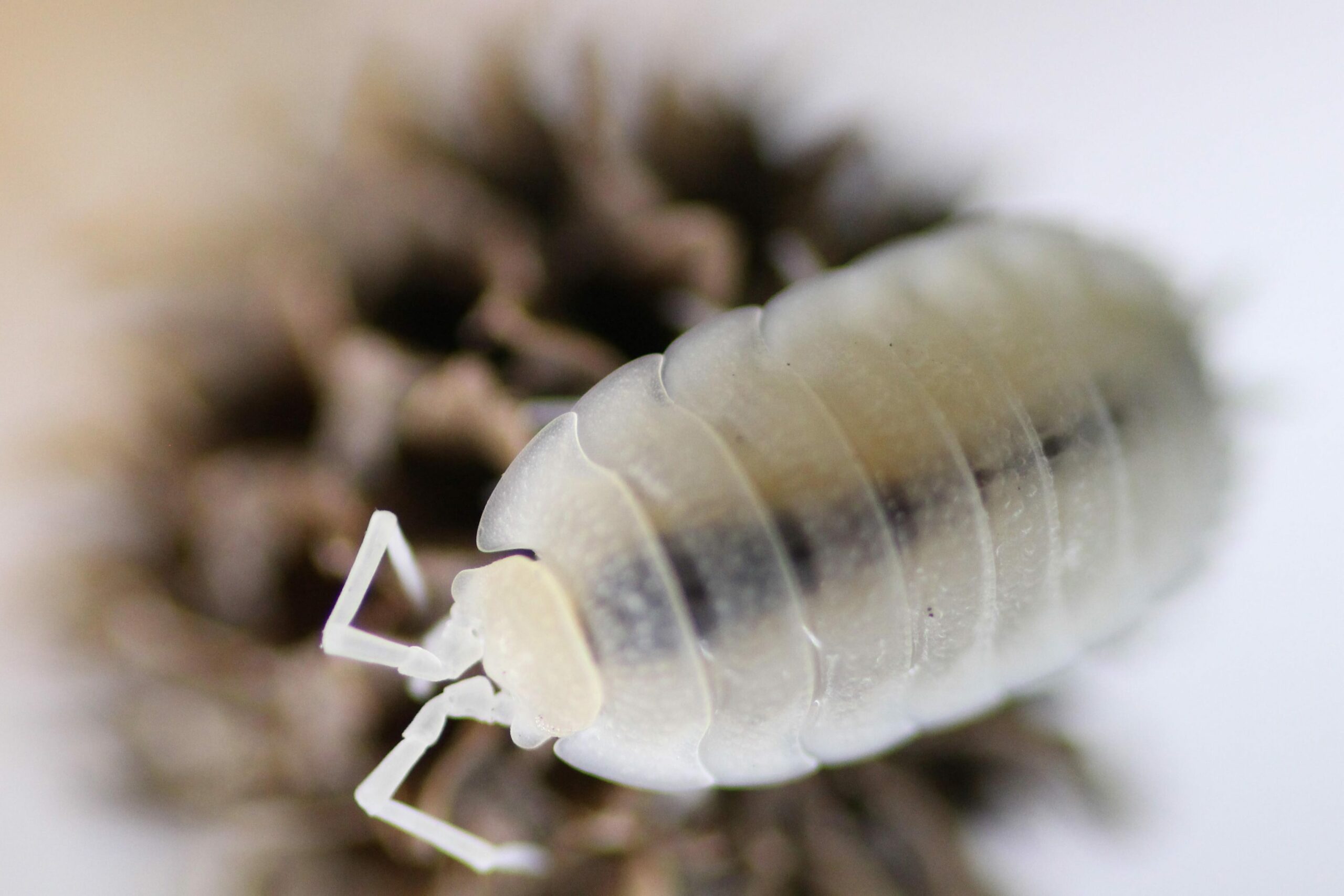
What does the (T) mean in the case of albinos, and what is the difference between (T-) and (T+)?
The “T” stands for tyrosinase, which plays a key role in the production of melanin in animals and humans, among other things. Melanins are color pigments that give our hair, skin, and eyes their color. The same is true for Isopods. Melanins are responsible for the coloration of our Isopods. The key commonality among all Isopods “affected” by albinism is a lack of melanin pigments.
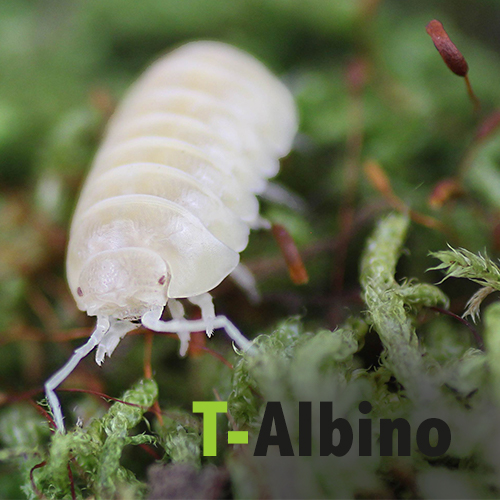
In a T-albino, the tyrosinase is either completely defective or absent altogether. As a result, these animals lack melanin pigments and appear white with red eyes. However, the eyes themselves are not red; rather, the lack of pigmentation makes the red blood vessels visible.
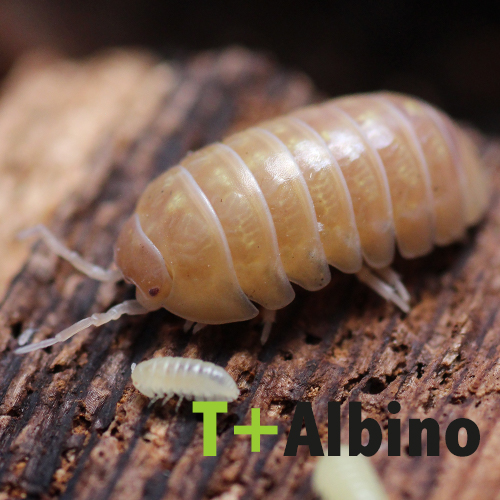
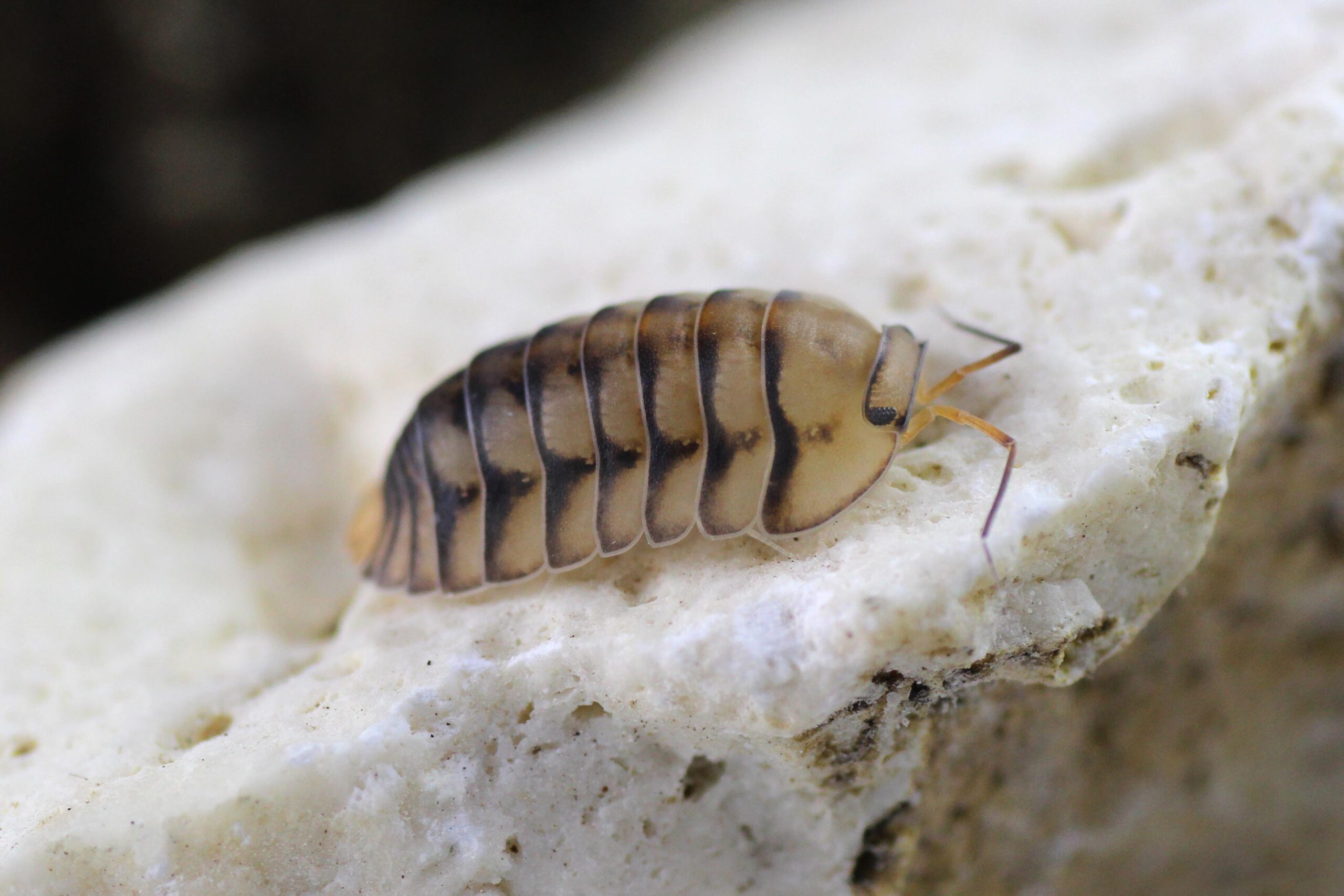
The T+ albino has a functioning tyrosinase, and therefore melanin pigments are also present. However, due to missing proteins, the T+ albino can only carry out the first two or three steps of the melanin production process and is therefore unable to produce dark pigments. As a result, T+ albinos are typically recognizable by their caramel-colored appearance.
Leave a Reply
You must be logged in to post a comment.