Tamolanica tamolana
12,90 € incl. VAT, plus shipping

Medium

New Guinea

< 90 mm

26°C – 28°C
Tamolanica tamolana – An Impressive Shield Mantis from New Guinea
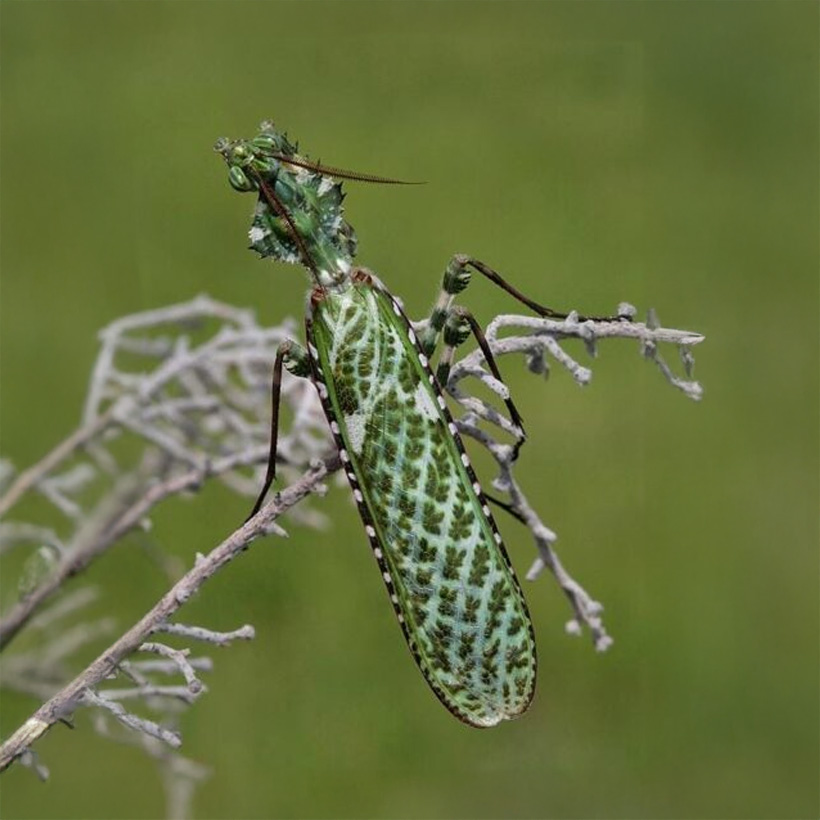
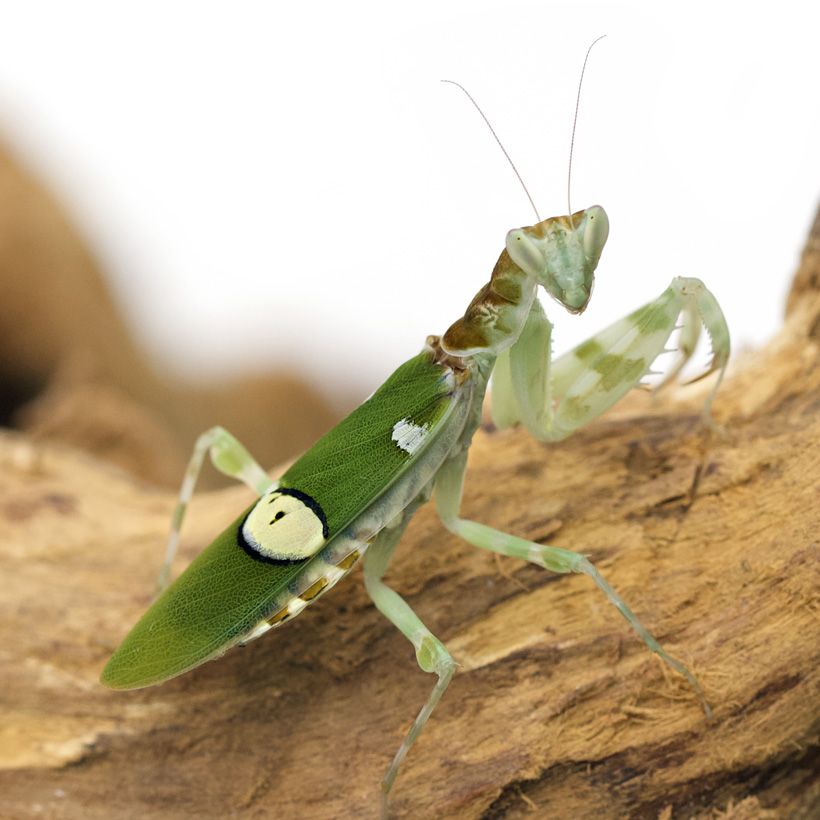
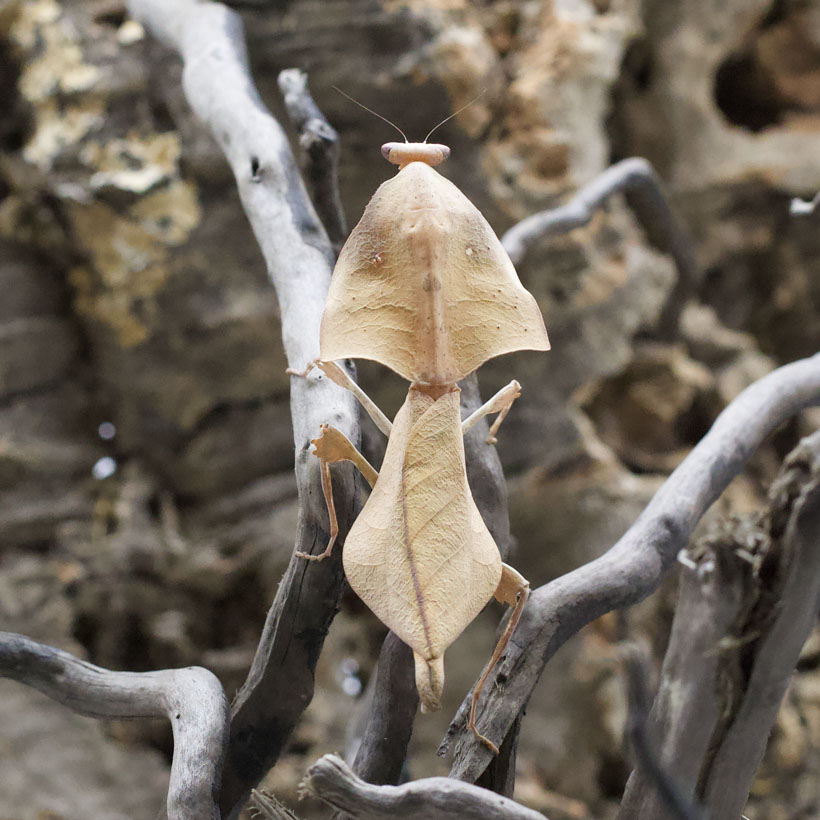
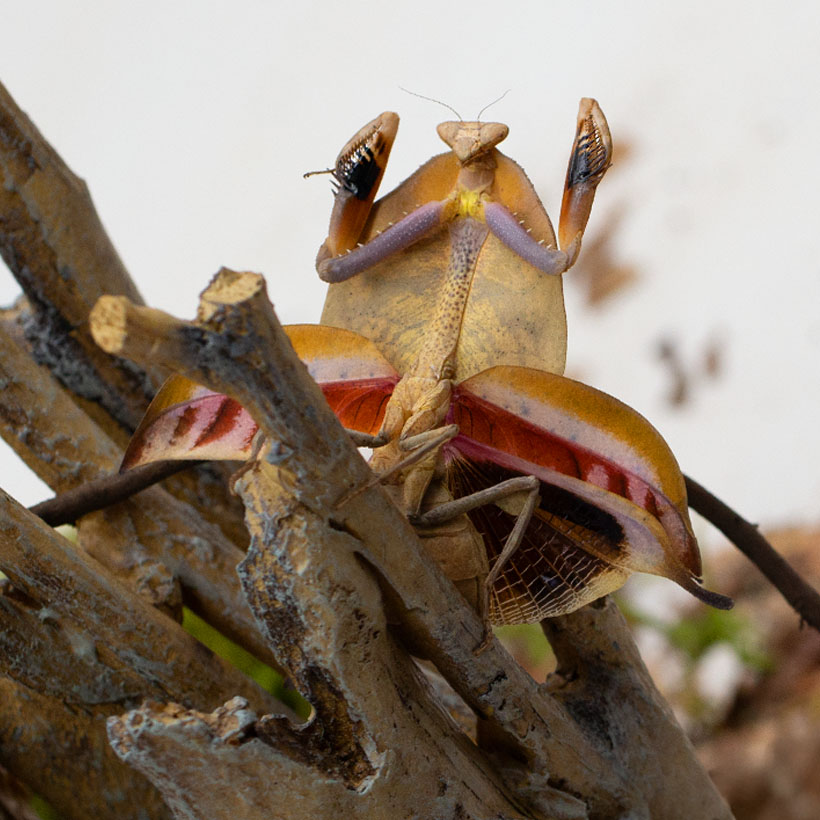
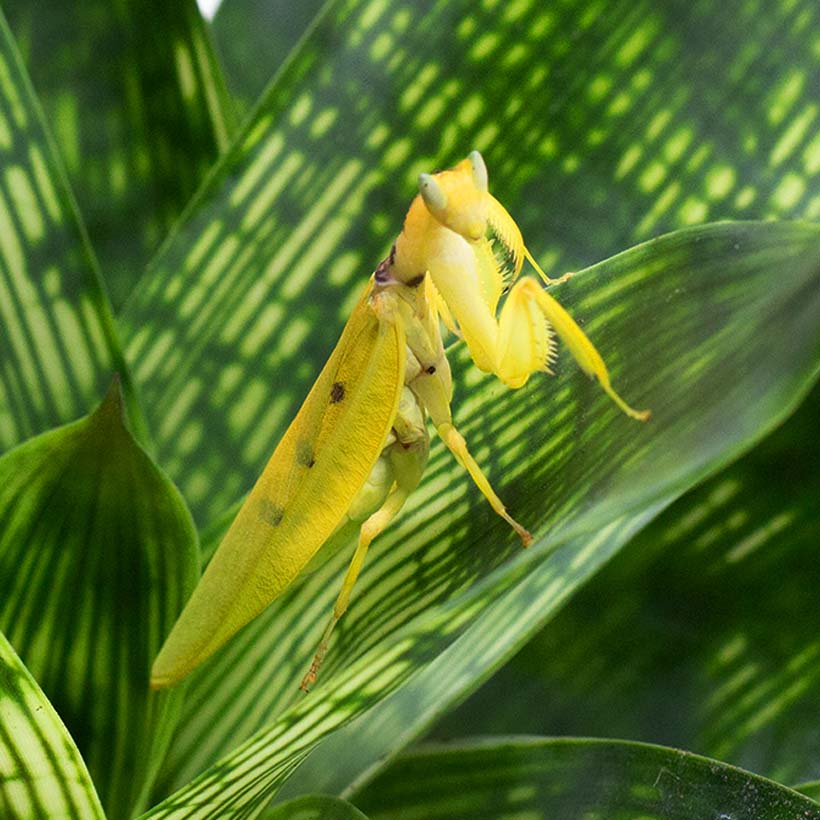
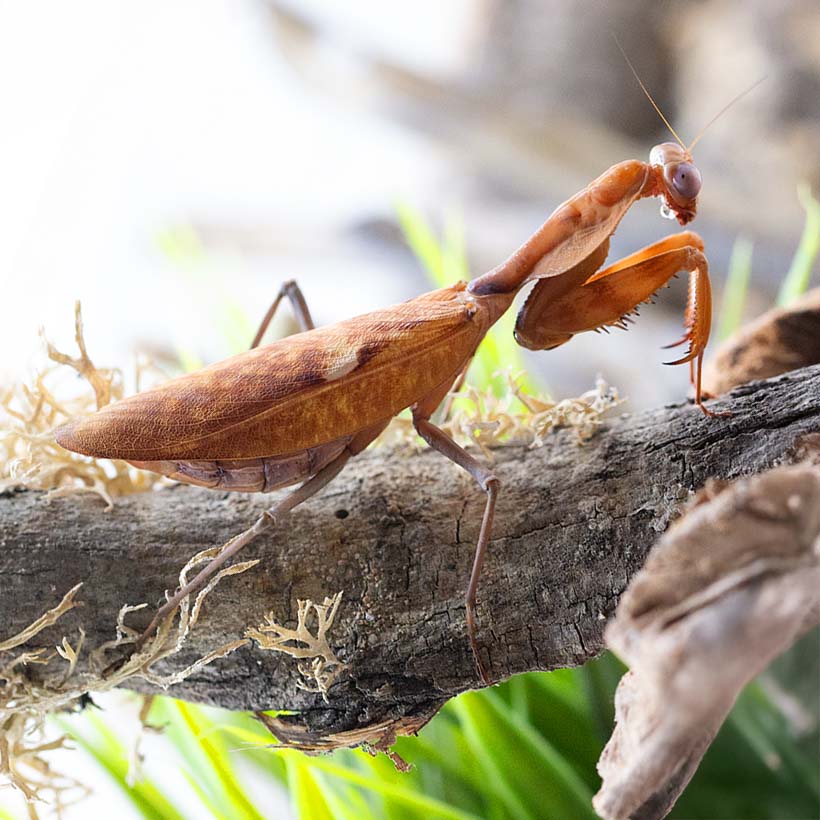
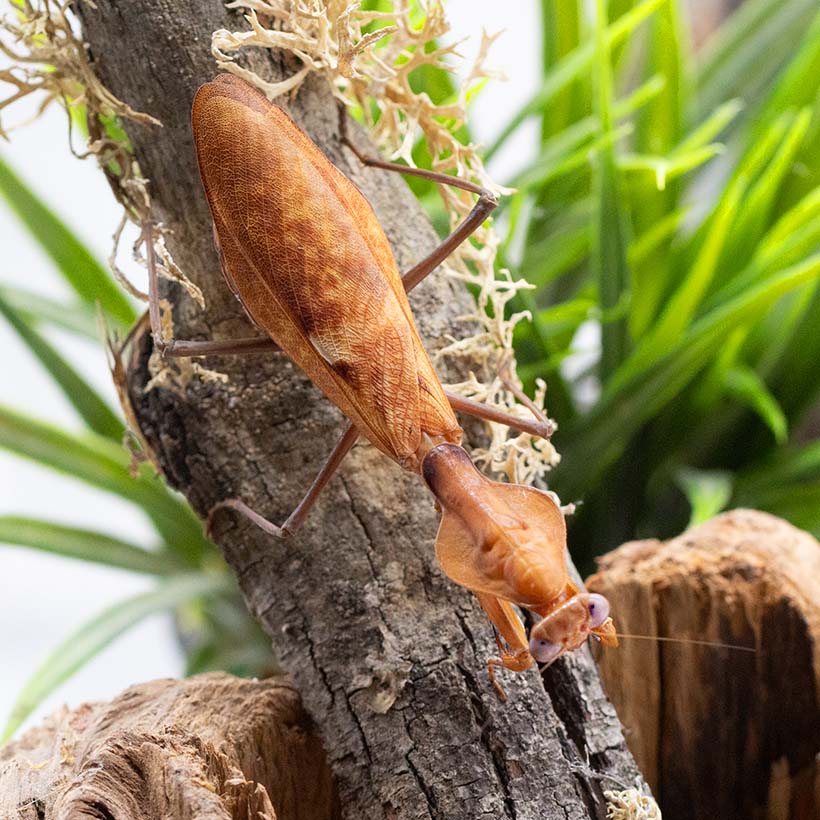
Tamolanica tamolana is an extraordinary mantis that immediately stands out due to its robust build. Particularly distinctive is its broadened nuchal scutellum, which, together with its bronze-colored plumage, gives the species a striking appearance.
The species was described by Brancsik in 1897. Today, it is classified within the family Mantidae, subfamily Hierodulinae. Its English common name, “New Guinea Shield Mantis,” already points to one of its most striking features: the shield-like, broadened pronotum.
Tamolanica tamolana is particularly interesting for terrarium keeping because it combines size, a robust build, and typical ambush predator behavior.
Tamolanica tamolana is native to New Guinea
When it comes to its origin, some of the information found online is inconsistent or inaccurate. For New Guinea However, there is solid evidence.
The Biological Museum at Lund University houses museum specimens of *Tamolanica tamolana* from New Guinea. Other faunal sources also list the species as occurring in Papua New Guinea.
This means it is a tropical praying mantis. This is crucial when keeping it, because a terrarium that remains very dry at all times does not reflect its natural habitat.
At the same time, “tropical” does not mean that the terrarium should be constantly wet. Humidity and, above all, good ventilation must go hand in hand.
The broad nuchal shield makes this species unmistakable
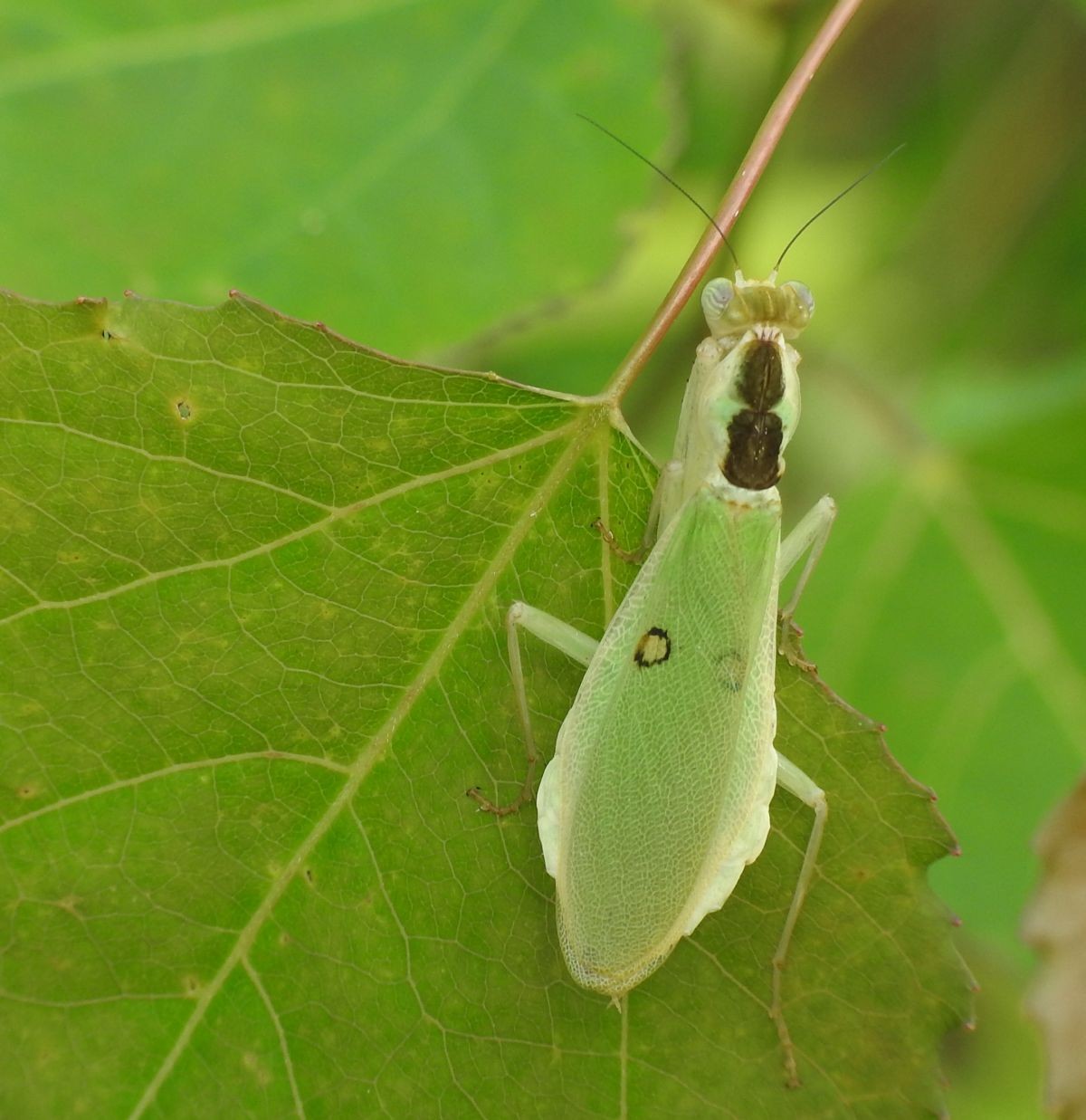
Particularly striking is the greatly widened pronotum, which is the front part of the thorax.
This creates the shield-like silhouette that gave the species its English name. Combined with its broad body and predominantly green coloration, Tamolanica tamolana appears exceptionally robust.
At the same time, its shape helps it blend in among green leaves and dense vegetation.
There, the mantis can sit for a long time, almost motionless, waiting for suitable prey.
Females grow significantly larger than males
In adult animals, a distinct sexual dimorphism can be observed.
Females are more robust and have a more massive abdomen. Their characteristic neck shield is also particularly pronounced.
Males, on the other hand, remain slimmer and lighter. Their wings are more pronounced in relation to their bodies, making adult males significantly more agile.
A tall terrarium is especially important
As a tree-dwelling or vegetation-dwelling mantis, Tamolanica tamolana requires, above all, sufficient vertical space.
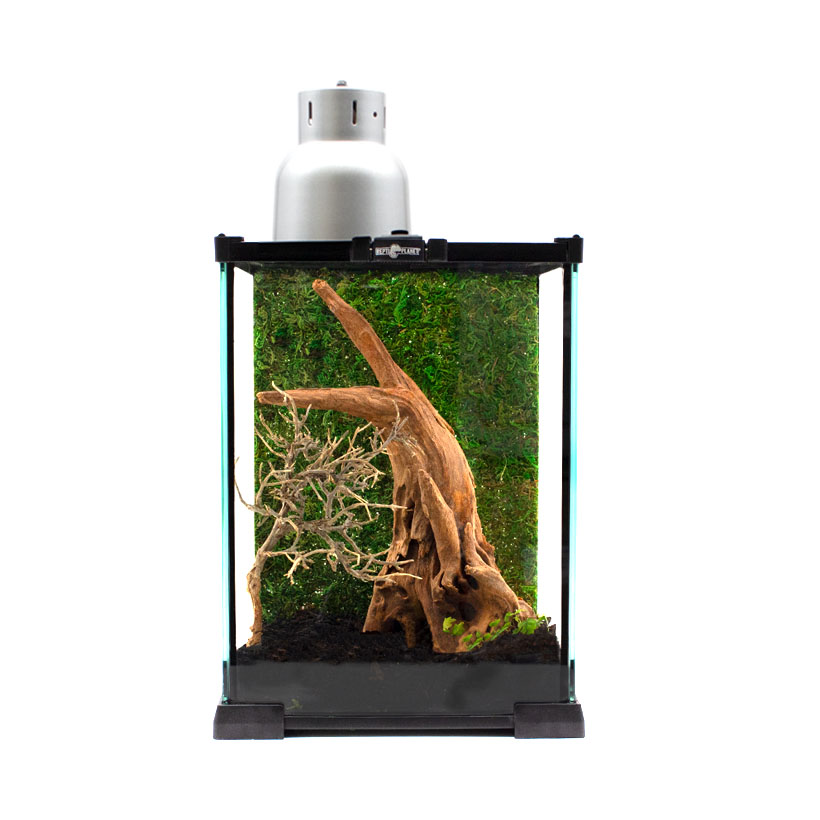
For an adult female, I would recommend a terrarium measuring at least approximately 30 × 30 × 42 cm. It can, of course, be larger.
This measurement is a practical recommendation for care and not a scientifically established minimum size.
More important than a difference of a few centimeters is the interior setup. Branches, twigs, and plants should extend all the way to the upper part of the terrarium so that the mantis can use various perches.
At the same time, the terrarium should not be completely enclosed.
Be sure to leave space for molting
This is particularly important for mantids.
To molt, Tamolanica tamolana hangs upside down from a suitable surface. It then sheds its old exoskeleton downward.
Therefore, there must be sufficient free space beneath the animal.
As a rule of thumb, at least twice the body length should remain free beneath a suitable molting spot. For a large and robust mantis, I would prefer to plan a bit more generously.
A beautiful but far too densely furnished upper half of the terrarium can therefore actually be problematic.
Keep it warm and tropical
For Tamolanica tamolana, various care guidelines are found among hobbyists, though there is a lack of reliable scientific studies on an optimal temperature range.
For terrarium care, I would aim for approximately 25–28 °C during the day. At night, the temperature may drop slightly.
However, the entire terrarium should not be kept at exactly the same temperature. Lighting or a heat source from above creates a warmer upper area, while slightly cooler zones remain lower down.
This allows the mantis to choose its preferred habitat on its own.
These values are practical guidelines for care, not scientifically determined optimal values.
Humidity: Yes—Waterlogging: No
When it comes to humidity, I wouldn’t present a fixed percentage as a scientific fact either.
In captivity, a moderately to distinctly humid tropical climate with regular misting intervals works well. At the same time, the terrarium should be allowed to dry out somewhat between misting sessions.
In particular, the combination of high humidity and poor ventilation should be avoided. Even specialized care guides for the species emphasize that the terrarium should be allowed to dry out at least partially between misting sessions.
That is why ample ventilation is at least as important as regular misting.
Water droplets also serve as a source of water
Light misting creates water droplets on leaves, twigs, and other surfaces.
Tamolanica tamolana can drink directly from these.
Therefore, it’s better to mist in a targeted and controlled manner rather than keeping the entire substrate constantly wet. This provides drinking opportunities while allowing the terrarium to dry out afterward.
The spray should be very fine, especially for young animals.
A powerful and alert hunter
When hunting, Tamolanica tamolana exhibits exactly the behavior that makes mantises so fascinating.
She can sit almost motionless for long periods, observing her surroundings. When a suitable prey comes within range, her powerful forelegs strike with lightning speed.
The prey is then held firmly between the spiny forelegs and eaten.
Adult females, in particular, can overpower prey of a corresponding size thanks to their size and strength.
The prey grows along with the mantis
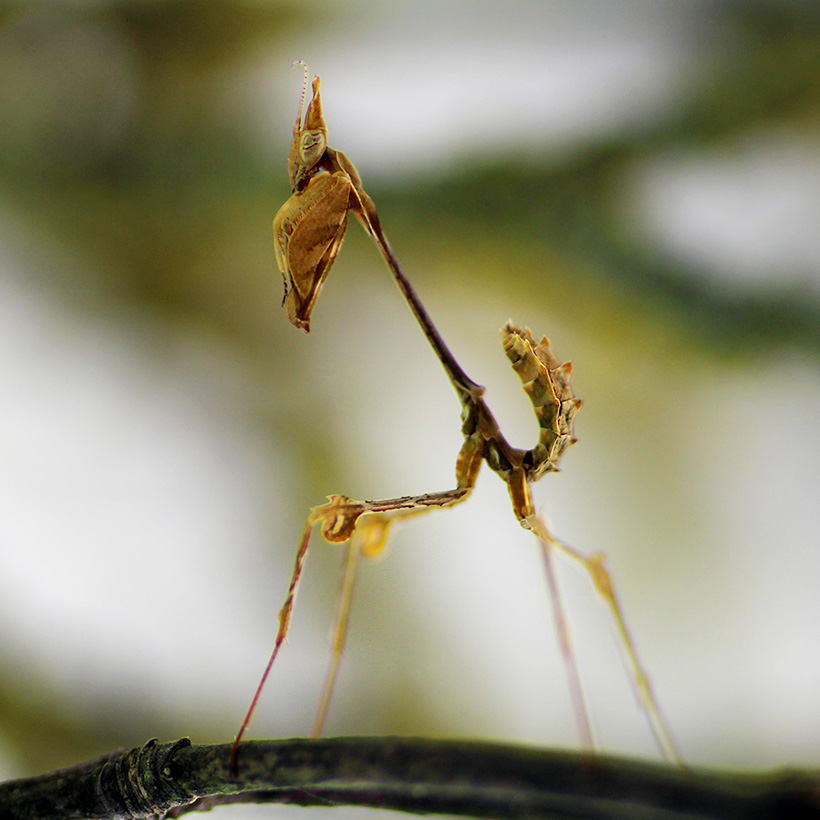
Young Tamolanica tamolana naturally require smaller prey than adult specimens.
For example, fruit flies are suitable for small nymphs. As they grow larger, you can then offer them larger flies and other appropriate feed insects.
For larger nymphs and adults, suitable food sources include larger flies, cockroaches, or other appropriately sized prey items. Practical care guides also mention a wide range of prey.
However, the size of the food should always be appropriate for the animal’s current stage of development.
Flies are particularly interesting prey items
Flying prey animals, in particular, offer a major advantage for praying mantises: they move through different areas of the terrarium and can thus reach the mantis even when it is perched high up.
Goldflies or blowflies are therefore very suitable, depending on the size of the animal.
In addition, their typical stalking and hunting behavior can be observed particularly well.
It is advisable to keep Tamolanica tamolana in individual tanks
As a general rule, I would keep Tamolanica tamolana in solitary housing.
Praying mantises are predatory insects and may view conspecifics as prey. The risk increases, especially when there are size differences.
Even specialized care resources describe the species as cannibalistic and advise against long-term group housing.
Keeping them individually also makes it easier to monitor food intake, molting, and development.
Only place females and males together under controlled conditions
When planning to breed, adult animals should not simply be kept together permanently.
The female should be well-fed before mating. The male is then carefully introduced to the female, and their behavior is observed.
This is because even during mating, there is always the possibility that the smaller male will be viewed as prey.
After a successful mating, the animals are therefore separated again.
The ootheca is part of the life cycle
Like other mantids, Tamolanica tamolana does not lay its eggs individually.
The female produces an ootheca in which numerous eggs are surrounded by a protective foam mass.
During breeding, the ootheca should not be constantly moved or handled unnecessarily. Instead, it is important to maintain suitable environmental conditions and ensure good air circulation.
There are varying reports circulating among hobbyists regarding the incubation period and the exact number of hatchlings. I was unable to find any reliable scientific sources on this, which is why I would not include these values as definitive species parameters in a product description.
Good ventilation remains important throughout the entire care period
When it comes to tropical mantises, it’s easy to focus too much on humidity.
For Tamolanica tamolana, however, it is the interplay that is crucial.
The terrarium should be lightly misted regularly, but it should also have sufficient ventilation. This allows excess moisture to escape.
Plants, moss, and a suitable substrate can help regulate humidity, while ventilation ensures that this does not result in persistently stagnant, damp air.
Advantages at a glance
- Tamolanica tamolana Brancsik, 1897
- Praying mantis of the family Mantidae
- Subfamily Hierodulinae
- Native to New Guinea
- Common English name: “New Guinea Shield Mantis”
- Distinctively broadened pronotum
- Robust build
- Females are significantly more robust than males
- Tropical Care
- A tall, well-ventilated terrarium
- During the day, approximately 25–28 °C is a practical temperature range
- Plenty of open space beneath the molting sites
- Active ambush hunter
- Prey size is adjusted to the developmental stage
- Keeping as a single specimen is recommended
Suitable accessories for your setup
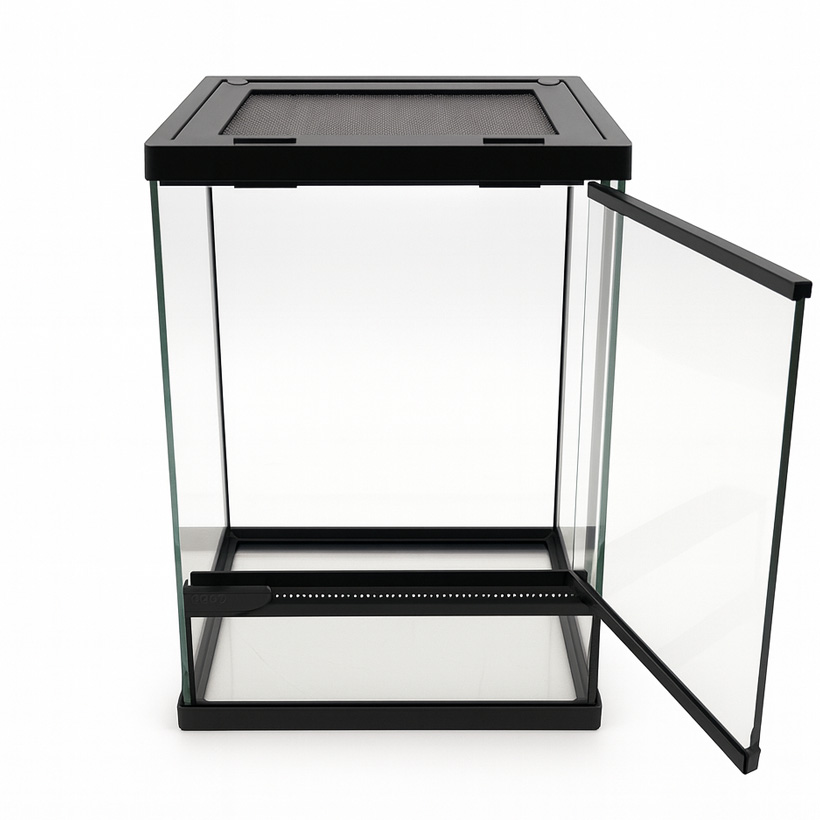
Repto Terra Sky – offers ample height and generous ventilation for keeping a large tropical praying mantis.
Insektenliebe Hygro-Therm – helps you reliably control temperature and humidity.
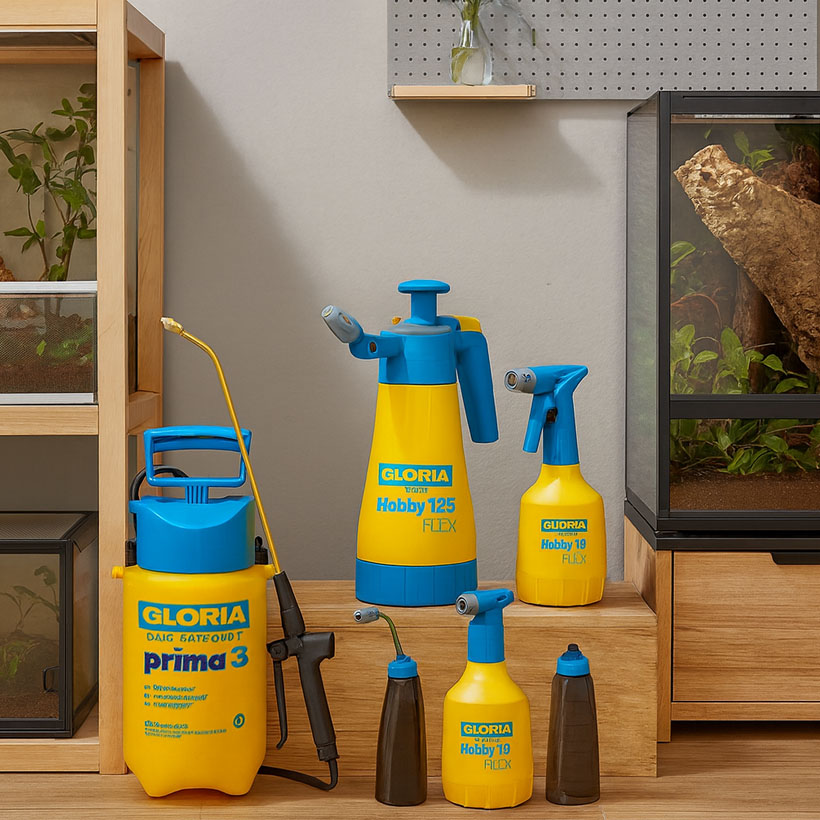
GLORIA pressure sprayers – produce a fine mist and are therefore well-suited for targeted humidification of the terrarium.
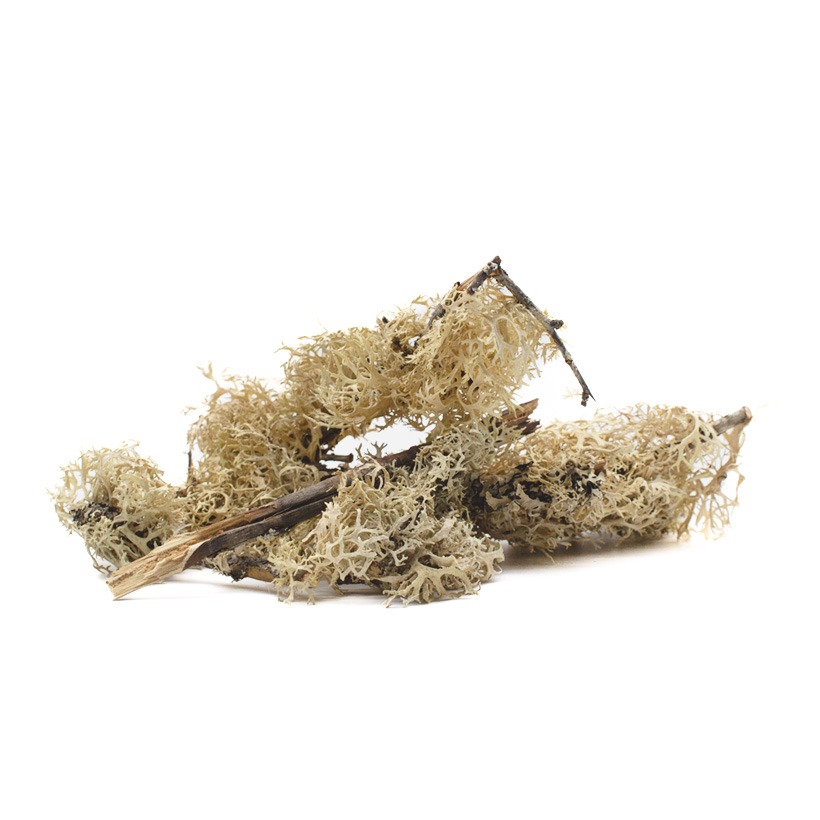
Moss branches —provide natural places to sit and climb and can be incorporated even into the upper part of the terrarium.
Insektenliebe Tropical Rain —ideal for regular misting and leaves significantly fewer annoying water spots on windows and plants.
Appropriate feed animals —fruit flies, larger flies, or cockroaches—can be selected based on the respective developmental stage.
Conclusion
Tamolanica tamolana is an extraordinary tropical mantis from New Guinea that is particularly notable for its robust build and broadened nuchal shield. Taxonomically, the species is recognized as Tamolanica tamolana Brancsik, 1897, and is currently classified within the Mantidae family, in the subfamily Hierodulinae.
When keeping these animals, a tall, well-ventilated terrarium is essential. Branches and plants provide elevated perches, while sufficient open space must be left beneath suitable molting sites. A warm tropical climate with temperatures of approximately 25–28 °C during the day serves as a practical guideline. At the same time, the terrarium should not remain constantly damp.
Its hunting behavior is particularly interesting. Tamolanica tamolana can sit quietly among the vegetation for long periods and strikes with lightning speed as soon as a suitable prey comes within reach.
One point is particularly important to me in my research: When it comes to body size, humidity, incubation period, and the number of young per ootheca, there are numerous specific figures available online, but very little primary literature that can be reliably verified. I wouldn’t simply copy this information from other retailers for your store. When it comes to reliable facts, a slightly more conservative product description is better than seemingly precise data whose source cannot be verified.