
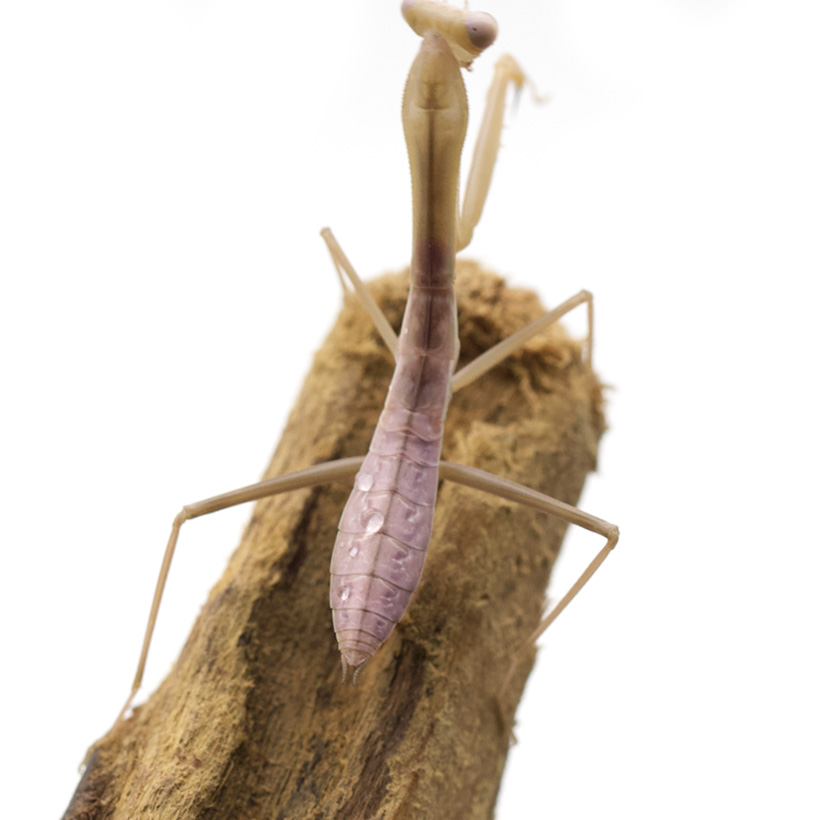
Hierodula venosa “Multicolor”
9,00 € incl. VAT, plus shipping

Simple

India

< 90 mm

24°C – 28°C
Hierodula venosa “Multicolor” —a praying mantis that shows its true colors
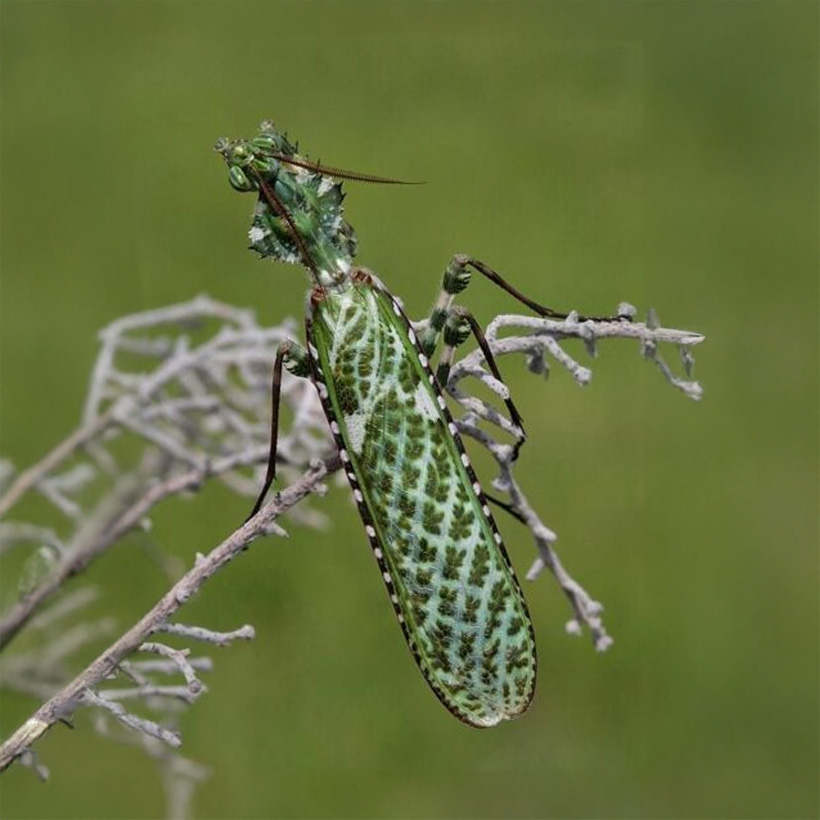
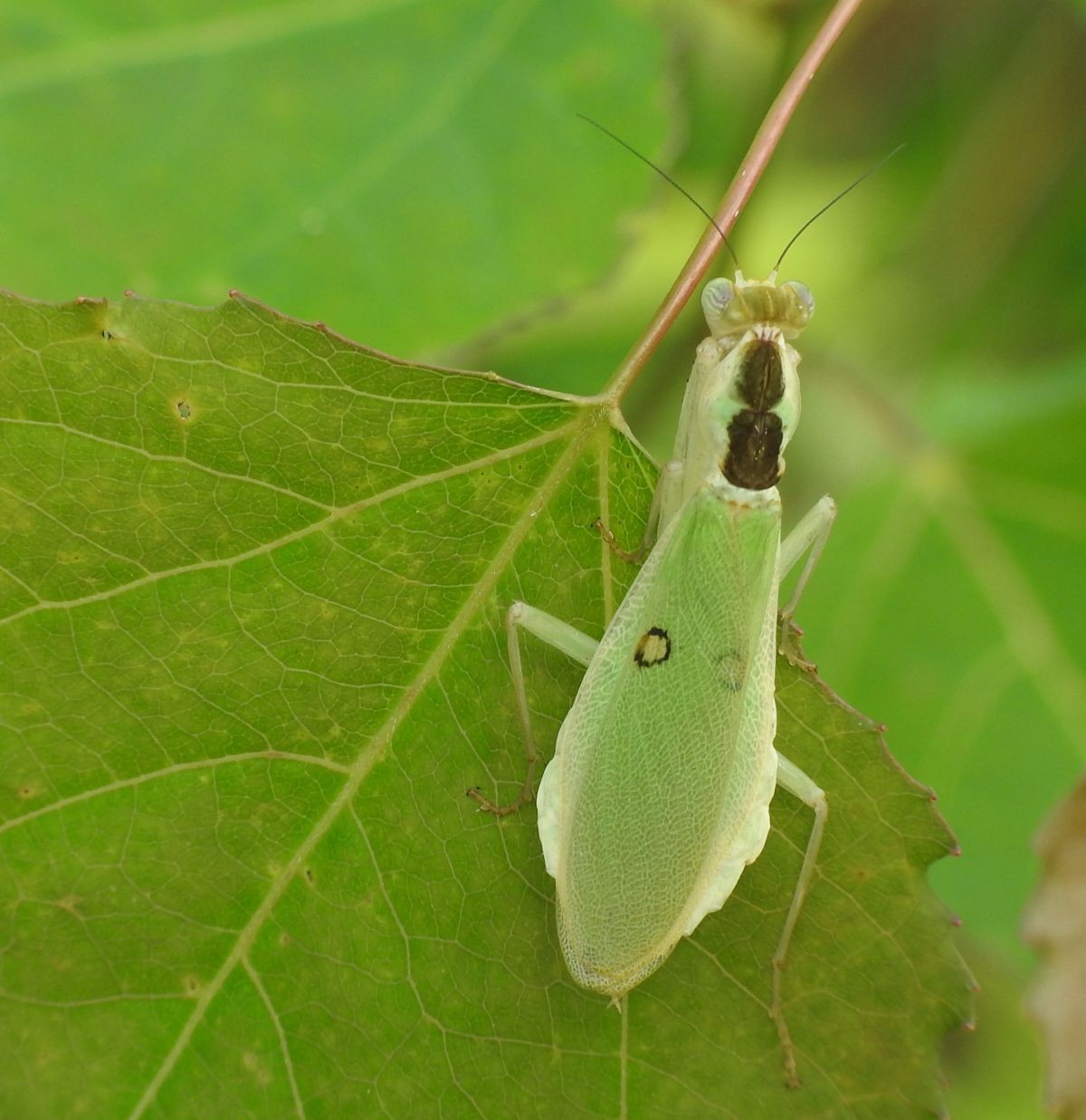
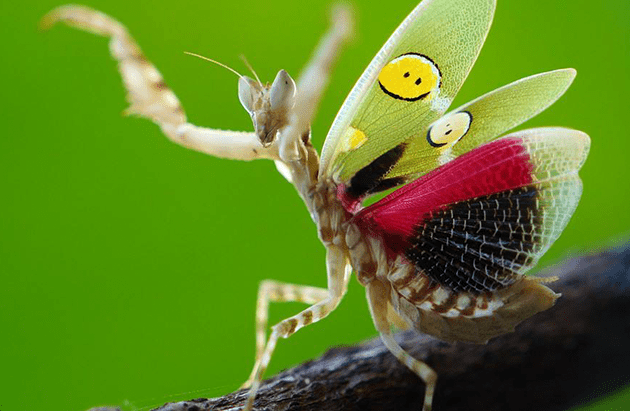
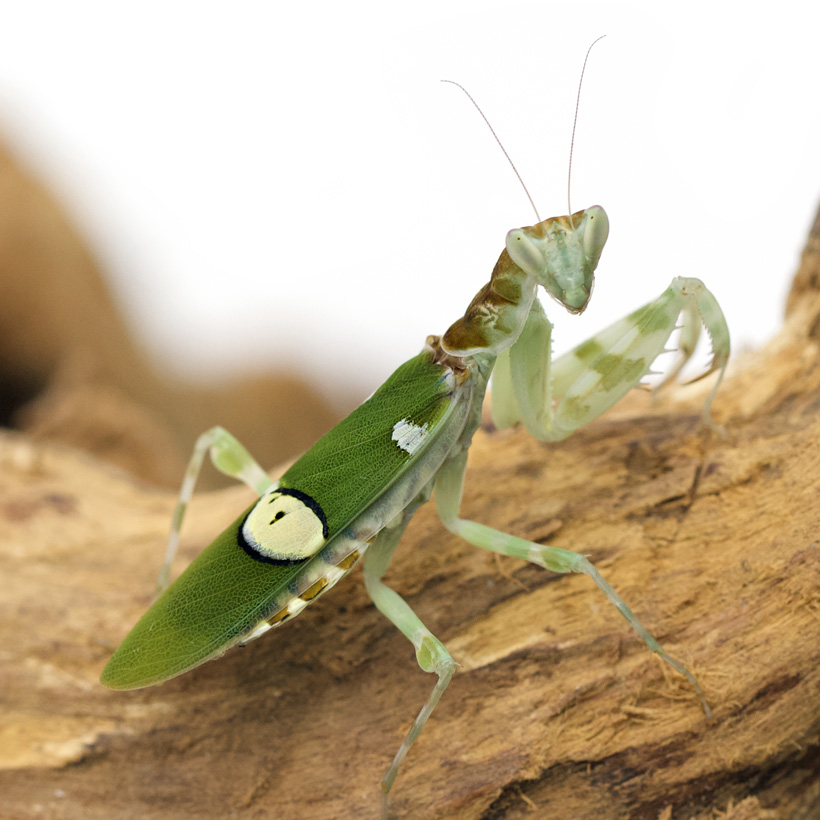
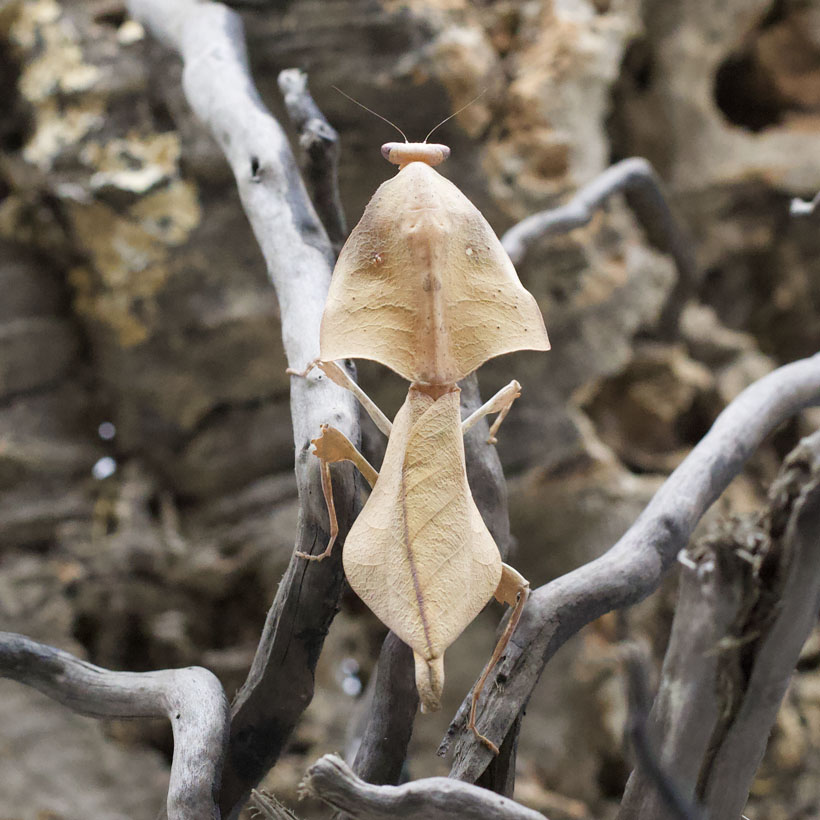
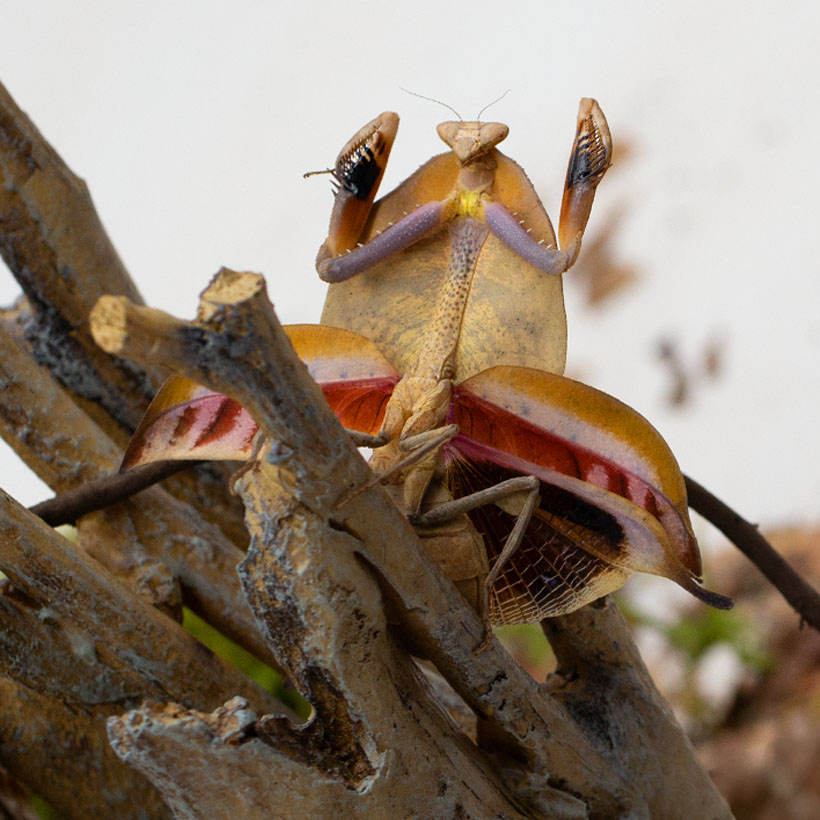
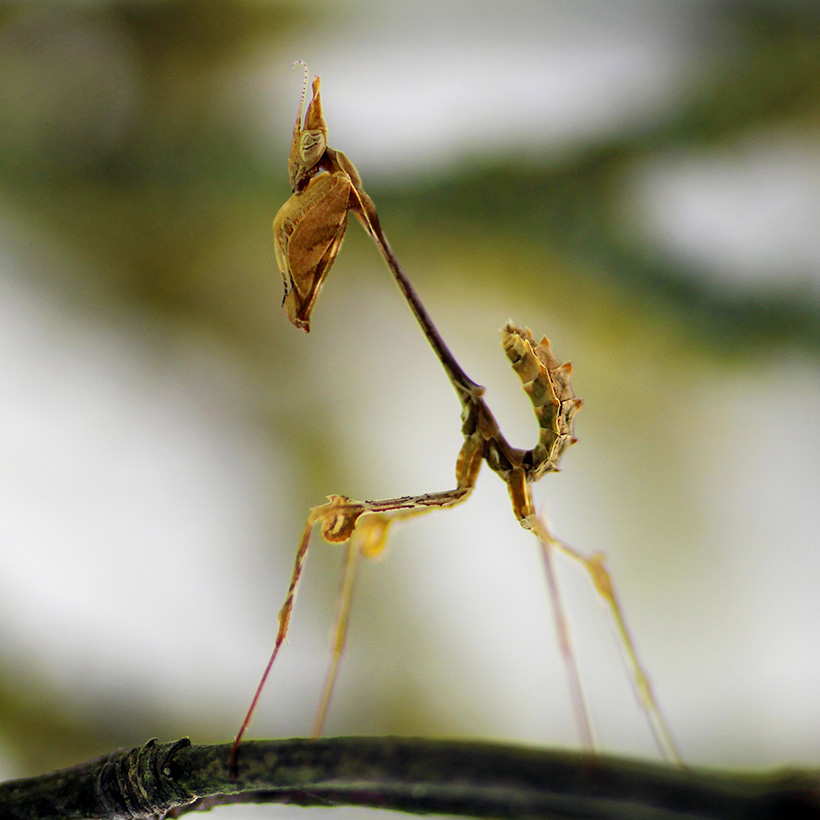
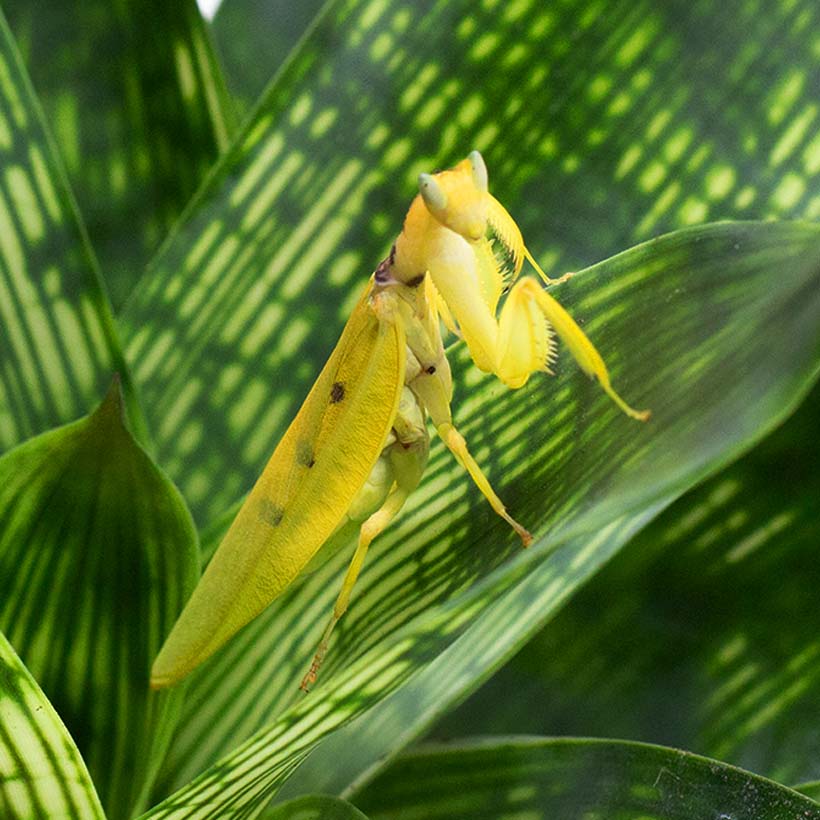
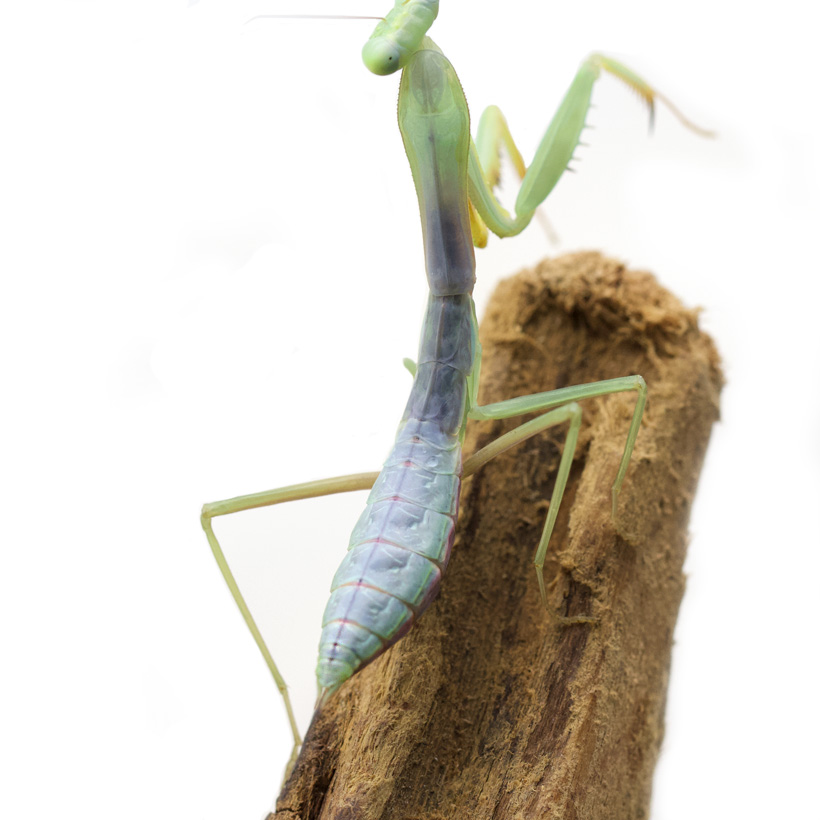
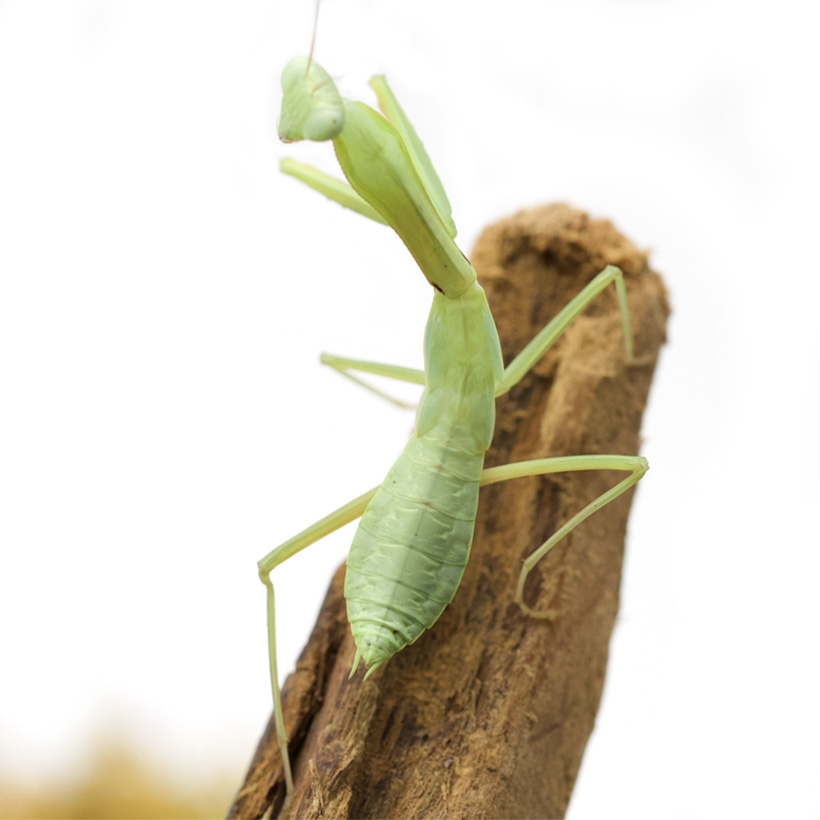
With Hierodula venosa “Multicolor,” the name says it all. This large Asian praying mantis captivates not with a single, fixed color, but precisely because of its variable coloration. Green, yellow-green, beige, brown, or various shades in between may appear, giving each individual a unique appearance.
Thus, “Multicolor” is not a distinct scientific species. Rather, the term describes a color variant or breeding line of Hierodula venosa commonly kept in the terrarium hobby.
But its color is only part of what makes this mantis so interesting. Hierodula venosa is robustly built, alert, and an exceptionally efficient ambush hunter. It observes its surroundings, tracks movements with its head, and reacts with lightning speed as soon as a suitable prey comes within range.
This makes it an excellent choice for anyone looking for a larger mantis that actually offers something to watch in the terrarium.
Not every animal looks the same
That is precisely what makes Hierodula venosa “Multicolor” so fascinating.
While some species of mantis are found predominantly in a specific color, the coloration within that species can vary significantly.
One animal may appear a deep green, while another may be more yellowish or beige. Brown and mixed shades are also possible.
For this reason, we cannot guarantee what the final coat color of young animals will be once they reach adulthood.
And that’s exactly what makes this color pattern so appealing to us: You don’t know right from the start what your adult animal will look like.
A large representative of the genus Hierodula
Hierodula venosa belongs to the family Mantidae and the genus Hierodula.
Members of this genus are often referred to as large Asian mantises. They have a robust body, long antennae, and a comparatively broad nuchal shield.
Adult females can grow to a considerable size and appear significantly more robust than the slimmer males.
As a general guideline, adult animals are about 7–9 cm in body length, although this can vary depending on sex and the individual animal.
Females have a more robust abdomen. Males, on the other hand, remain slimmer and are significantly lighter in build as adults.
A hunter who notices every movement
Anyone who has ever watched a Hierodula venosa hunting will quickly understand why mantises are so fascinating.
At first, the animal sits motionless on a branch.
Only the head moves.
With its large compound eyes, the mantis observes its surroundings and can track moving prey with great precision.
When a prey animal comes within range, everything suddenly changes.
In the blink of an eye, the thorny tentacles shoot forward and seize the prey.
This alternation between moments of calm and bursts of speed is what makes feeding particularly interesting.
She can do more than just sit on a branch
Hierodula venosa is not one of those mantises that wait motionless for prey.
The animals change their positions, explore branches, and react attentively to their surroundings.
They often sit in the upper part of the terrarium.
That is precisely why the furnishings should not only look nice, but also be functional.
The branches must be arranged so that the mantis can reach various positions. At the same time, it needs open spaces for molting.
A terrarium that is completely overgrown is therefore just as unsuitable as one that is completely empty.
For adult animals, height is the most important factor
For an adult Hierodula venosa “Multicolor,” we recommend a terrarium measuring at least approximately 30 × 30 × 42 cm.
Height is particularly important.
A mantis does not grow continuously. Instead, it must periodically shed its entire exoskeleton.
To do this, it hangs upside down in a suitable spot and sloughs off its old skin as it lowers itself.
Therefore, there must be sufficient open space beneath the animal.
As a rule of thumb, a suitable molting site should have at least twice the animal’s body length of open space.
The ceiling is an important part of the living space
When keeping a mantis, don’t forget the terrarium lid.
The animals often stay in the upper part of the enclosure and also use the ceiling to prepare for molting.
A non-slip gauze surface is therefore particularly practical.
Branches should also extend all the way to the top so that the mantis can choose from a variety of perches.
Smooth surfaces alone are not enough to create a species-appropriate environment.
24–28 °C for active animals
For Hierodula venosa “Multicolor,” we recommend a temperature of approximately 24–28 °C during the day.
A small area may be slightly warmer, as long as the animal can move away at any time.
At night, the temperature can drop to normal room temperature.
Bright lighting is also helpful. It ensures a clear day-night cycle and, when combined with a suitable heat source, creates a natural temperature gradient.
However, it is important to measure the actual temperature.
Small terrariums, in particular, can heat up surprisingly quickly under lamps.
Spraying, yes—stalactite cave, no
In terms of humidity, Hierodula venosa does not require a constantly wet environment.
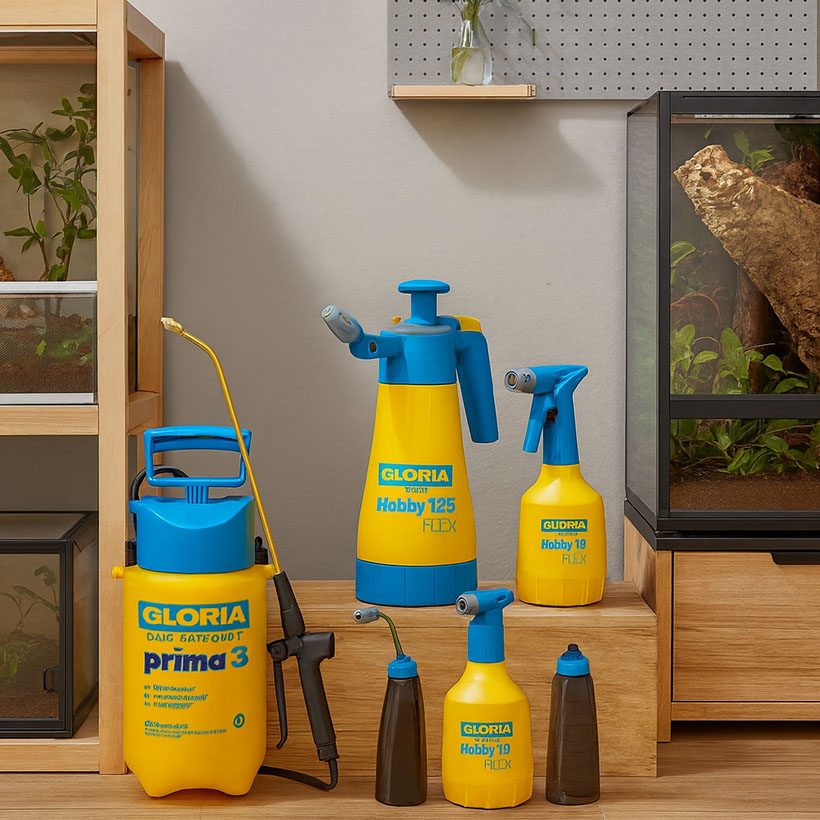
We recommend maintaining a moderate level of humidity and lightly misting the plant regularly.
After spraying, the humidity may rise briefly. Afterward, the leaves and furnishings should be allowed to dry off again.
This balance makes much more sense than a terrarium that’s constantly wet.
As a general guideline, a relative humidity of approximately 50–70% is recommended, although sufficient humidity is particularly important during molting phases.
Fresh air is just as important—if not more so
A common mistake with tropical mantises is to focus only on humidity.
Ventilation is just as important.
Stagnant, constantly damp air creates unfavorable conditions.
That is why the terrarium should have ample ventilation. Good air circulation makes it possible to mist the terrarium regularly without keeping the entire terrarium constantly damp.
That is exactly why a well-ventilated mantis terrarium is much better suited than a nearly enclosed container.
From fruit flies to large flies
The size of the prey must grow as the mantis grows.
Young animals start by hunting prey that is appropriately small.
Suitable examples include:
Tiny Nymphs: Drosophila
Medium-sized nymphs: large Drosophila, Terfly, and smaller flies
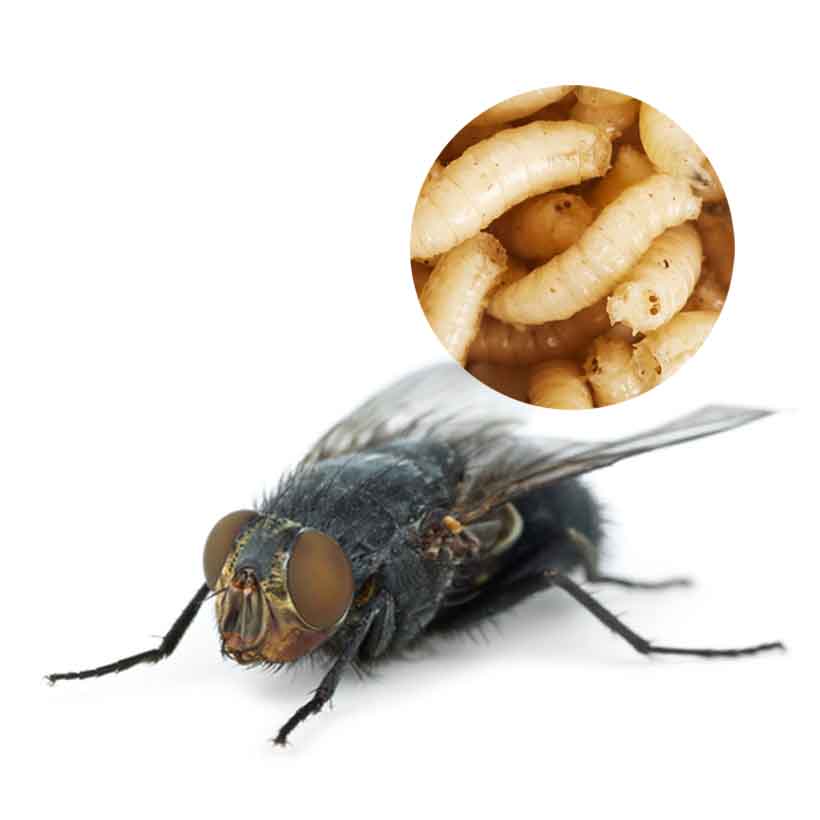
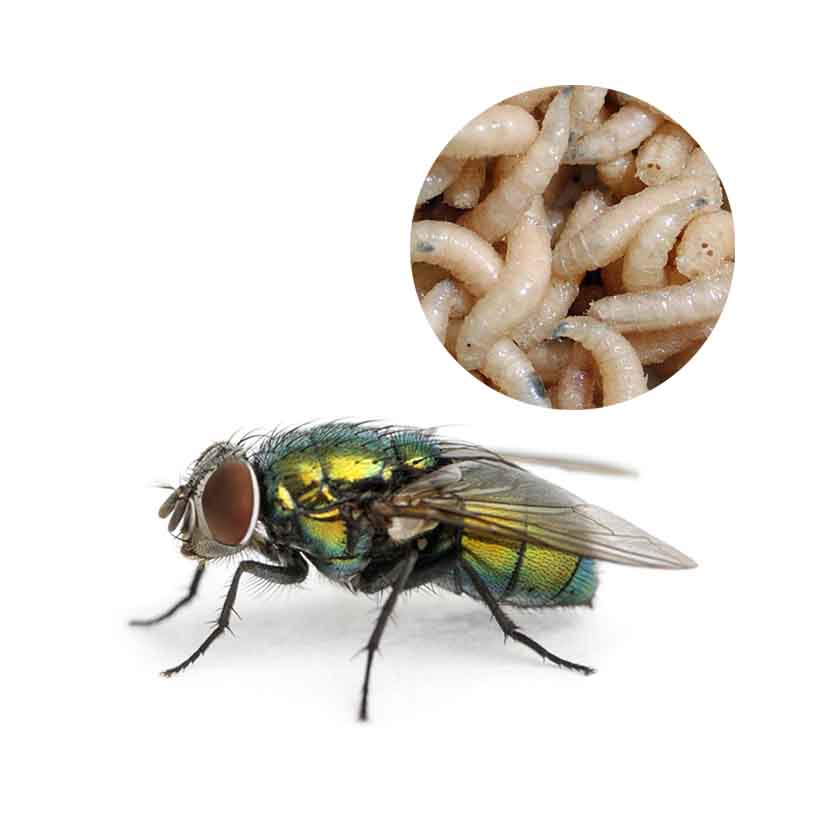
Large nymphs and adults: goldflies, blowflies, and other suitable feed insects
However, a Hierodula doesn’t need to eat every day.
It is much more important to assess nutritional status based on the abdomen.
A well-fed animal has a visibly full abdomen. If it is already quite full, there is no need to feed it again right away.
Large prey does not automatically mean better food
Hierodula venosa is a powerful hunter and can overpower prey that is surprisingly large.
However, that does not mean that the largest possible feed animals should be provided.
Prey of the right size is easier to catch and reduces the risk of injury.
Especially right before a molt, no large live food should be left in the terrarium.
A mantis that is in the process of molting cannot defend itself.
Uneaten feed should therefore be removed.
When the mantis suddenly stops eating
A break in feeding doesn’t necessarily mean there’s a problem.
Before molting, mantises often stop eating.
The animal calms down and looks for a suitable spot in the upper part of the terrarium.
You shouldn’t try to get it to eat by constantly offering it new types of live food.
Instead, it needs peace and quiet.
If, at the same time, the abdomen looks normal and no other abnormalities are apparent, the upcoming molt may be the reason for the refusal to eat.
Molting determines future development
During molting, Hierodula venosa hangs upside down.
Little by little, she pulls her legs, tentacles, and finally her entire body out of the old exoskeleton.
Afterward, it hangs limply and almost motionless beneath its old skin.
She is extremely sensitive during this phase.
The new body shell has to cure first.
That’s why you shouldn’t touch a freshly molted mantis or feed it right away.
Depending on her stage of development, you should give her enough time before offering her food again.
Why a Lack of Space Can Be Dangerous
Molting problems are among the greatest risks associated with keeping mantises.
If there isn’t enough open space beneath the animal, it may come into contact with the enclosure or substrate while molting.
As a result, legs or tentacles cannot be completely pulled out of the old skin.
Crashes during molting can also have serious consequences.
That is why, when it comes to mantises, a functional terrarium setup is more important than having as many decorations as possible.
Keeping pets as single pets is the safe choice
As peaceful as a mantis may seem to its owner, things are quite different when it comes to another mantis.
Hierodula venosa is a predator.
Consequently, members of the same species may be viewed as competitors or even as prey.
For this reason, we generally recommend keeping them alone.
Even animals of similar size should not be kept together on a long-term basis.
Cannibalism is not an unusual behavior among mantises; rather, it is part of their natural diet.
Female or male?
As they develop further, it becomes easier to distinguish between the sexes.
Females become stronger and have a noticeably fuller abdomen.
Males tend to be slimmer and lighter.
In mantises, the number of visible abdominal segments can also be used to determine sex. This can be done even before the adult stage, but it requires some experience.
Adult males have wings that are longer in proportion to their bodies and are significantly more active fliers than the heavier females.
Reproduction Requires Attention
Anyone who wants to breed Hierodula venosa “Multicolor” should not simply put the animals together and leave them unattended.
The female should be well-fed before mating.
The male approaches cautiously and tries to climb onto the female’s back.
Even with good preparation, cannibalism can still occur.
For this reason, a planned mating should be supervised, and there should be sufficient space available.
After successful mating, the female produces oothecae, which are protective egg cases.
An ootheca is not an ordinary egg capsule
When laying eggs, the female produces a mass that is initially soft and foam-like.
Numerous eggs are embedded in it.
The material then hardens and protects the developing young.
The ootheca is usually attached to a branch or another solid surface.
After a period of development, numerous small nymphs hatch.
From this point on, the real challenge of breeding begins: many small, hungry predators must be reliably supplied with suitable live food.
Advantages at a glance
- Hierodula venosa “Multicolor”
- Giant Asian Praying Mantis
- Varied shades of green, yellowish, beige, and brown
- No guarantee of a specific adult coloration
- A powerful and active ambush hunter
- Females are larger and more robust than males
- Body length approximately 7–9 cm
- Terrarium measuring approximately 30 × 30 × 45 cm
- Temperature approximately 24–28 °C
- Humidity as a guideline: 50–70%
- Good ventilation is particularly important
- Regular spraying and drying cycles
- Requires sufficient space to molt
- Live food appropriate for the developmental stage
- Flies are excellent as food
- Single husbandry
- Breeding via oothecae is possible
- A good choice for beginners who are well-prepared and for experienced mantis keepers
Suitable accessories for your setup
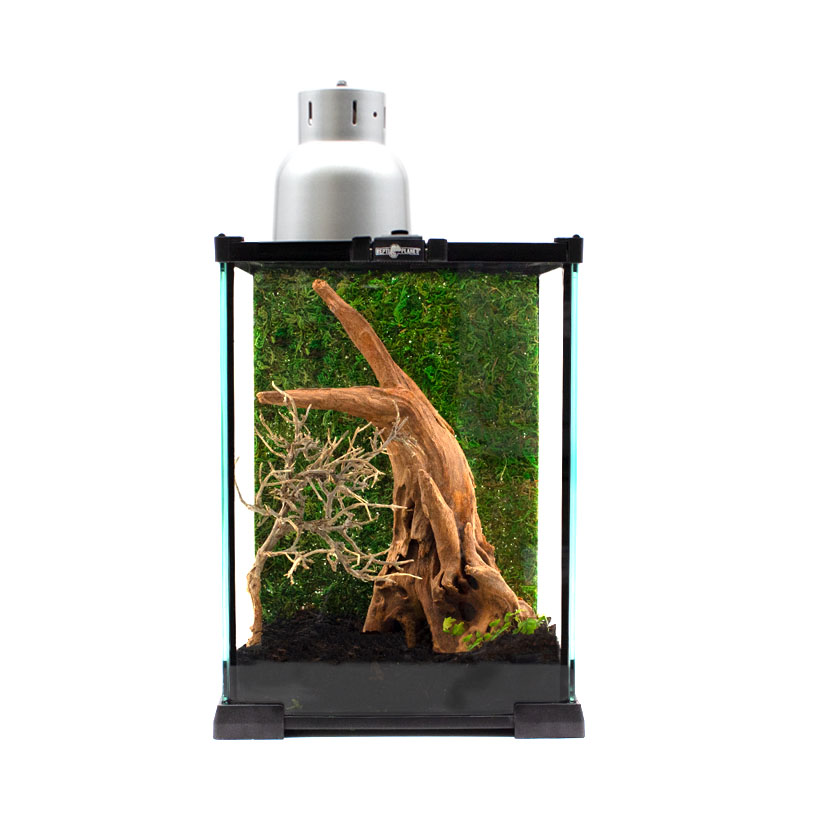
Mantid Terrarium Complete Set – offers plenty of ventilation space and sufficient height for safe molting and a structured setup.
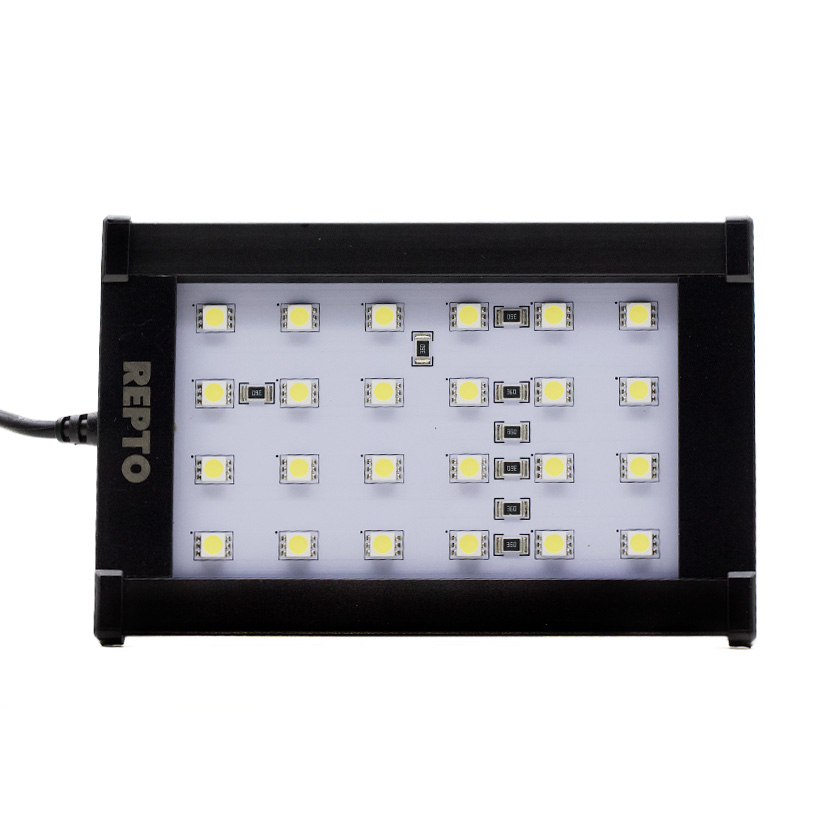
Repto Flat LED – provides bright lighting while also creating a warm area in the upper part of the terrarium.
Insektenliebe Hygro-Therm —helps you keep track of temperature and humidity instead of relying on your gut feeling.
Repto Plant vines —create secure perching, climbing, and hiding spots without overcrowding the terrarium.
Gold flies —are ideal as live flying food for larger nymphs and adults.
Blowflies —provide an attractive, active prey source, especially for large females.
Bottom line: With “Multicolor,” surprises are part of the fun
Hierodula venosa “Multicolor” is not a mantis whose only interesting feature is its color.
It is large, alert, and an impressive hunter. Feeding is a particularly good time to see just how precisely a mantis perceives movement and can switch from complete stillness to an attack in the blink of an eye.
The term “Multicolor” still adds an extra appeal. Depending on the animal, different shades of green, yellow, beige, or brown may appear. Especially with young animals, it’s exciting to see how their coloration develops with each subsequent molt.
Hierodula venosa is easy to care for when kept at a temperature of approximately 24–28 °C, with good ventilation, regular misting and drying periods, and, above all, enough space for molting.
If you’re looking for a larger praying mantis whose hunting behavior, development, and variable coloration are equally interesting, Hierodula venosa “Multicolor” makes for a fascinating terrarium inhabitant.
Perfect combined with
-
Repto Flat LED
Original price was: 29,99 €.26,99 €Current price is: 26,99 €. incl. VAT, plus shipping