

I normally answer questions from visitors to my Insect Love page and Facebook in person via email or Messenger. As there is a lot of hype about keeping isopods at the moment and the length and also the time is sometimes too much, I have decided to write a blog article on this topic. I hope it will help to answer the first questions that arise. If I have forgotten any questions, please write them in the comments below and I will include them in the article.
I am looking for Isopods for my snail terrarium. Which species can you recommend?
As there is usually very high humidity in a snail tank, not all isopod species can be used. I can recommend the following species, which are already being used successfully:
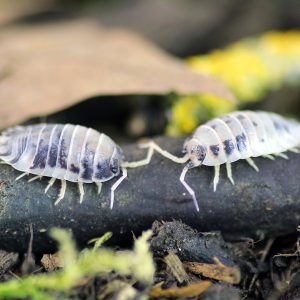
Porcellio laevis “Panda”
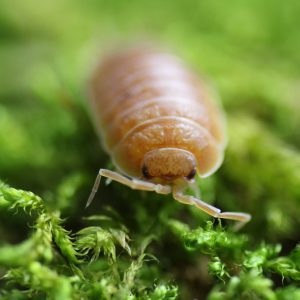
Porcellio laevis “Orange”
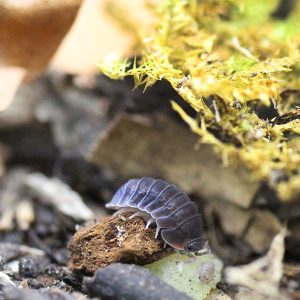
Cubaris murina
I am looking for Isopods as ground police. Which species are best suited for this?
In this case, all isopod species that are relatively undemanding, eat leftovers unconditionally and reproduce well are suitable. I have listed two species in which we have bred different color forms.
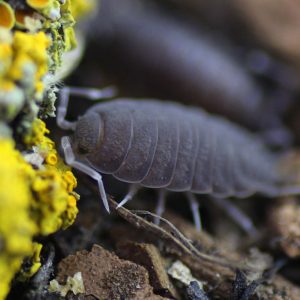
Porcellionides pruinosus “Cuban isopod”
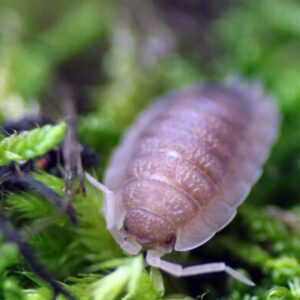
Porcellio scaber “Ghost”
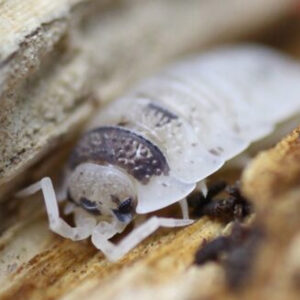
Porcellio scaber “Dalmation”
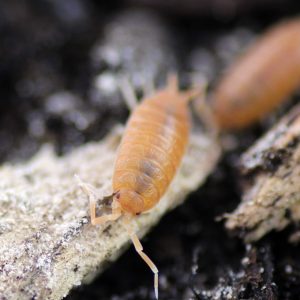
Porcellionides pruinosus “Cuban Isopods Orange”
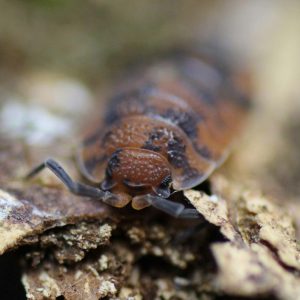
Porcellio scaber “Lava”
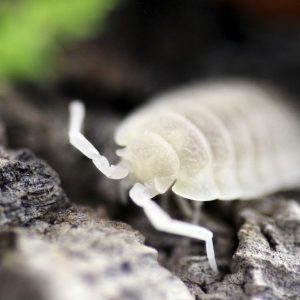
Porcellio scaber “White Out”
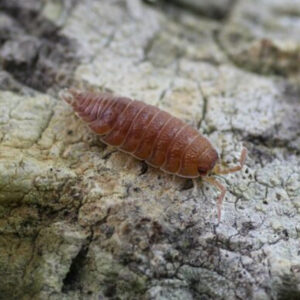
Porcellio scaber “Orange”
Which isopod species are suitable for beginners?
I find it difficult to classify isopod species into different categories. Beginners often have a better feel for their animals or quickly familiarize themselves with the subject and implement what they have learned better than some “old hands”. However, I can recommend isopod species that allow you to make a few mistakes and can put up with a lot.
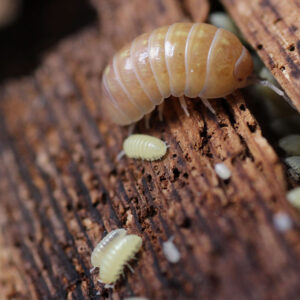
Armadillidium spec. “Albino”
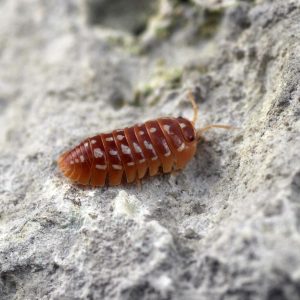
Armadillidium werneri “Orange”
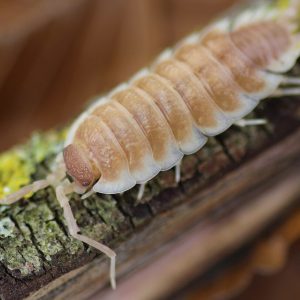
Porcellio spec. “Sevilla Caramel”
Porcellio laevis “Panda”
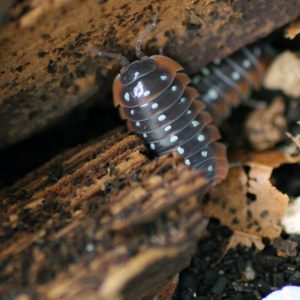
Armadillidium klugii “Montenegro”
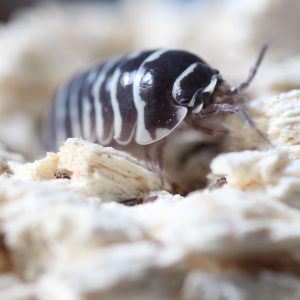
Armadillidium maculatum “Zebra woodlouse”
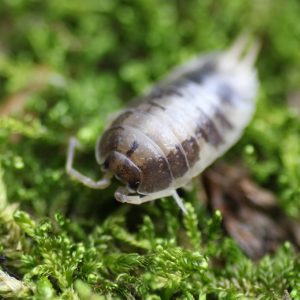
Porcellio laevis “Milkback”
Porcellio laevis “Orange”
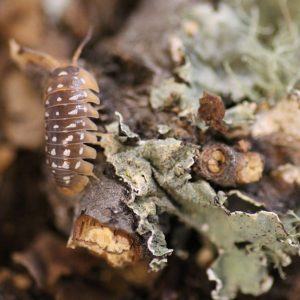
Armadillidium werneri
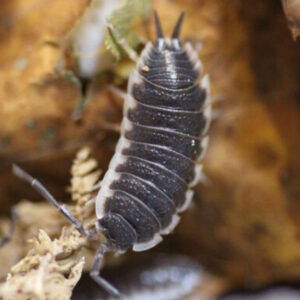
Porcellio spec. “Sevilla”
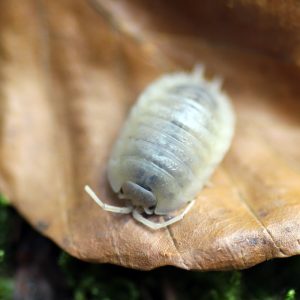
Porcellio laevis “White”
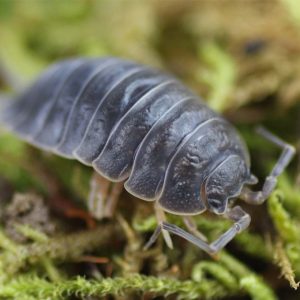
Porcellio laevis “Black”
Which isopod species are suitable as food animals?
Isopods are popular food animals in nature for a wide variety of tailed amphibians, frogs and pangolins. The Isopod’s very high calcium content makes it an excellent food animal. Breeding the animals also has a number of advantages over some conventional types of food animal. There is no unpleasant odor during breeding, escaped animals dry out in the home and there is no chirping noise. All Isopod species that breed quickly and easily are suitable as food isopods.
Porcellio laevis “Panda”
Porcellionides pruinosus “Cuban Isopods Orange”
Porcellio laevis “Orange”
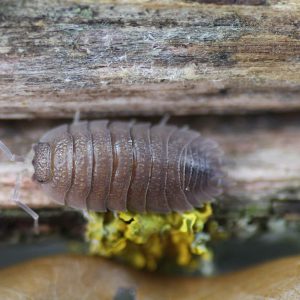
Porcellio incanus
Porcellionides pruinosus “Cuban isopod”
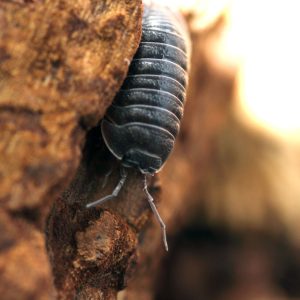
Armadillidium frontirostre
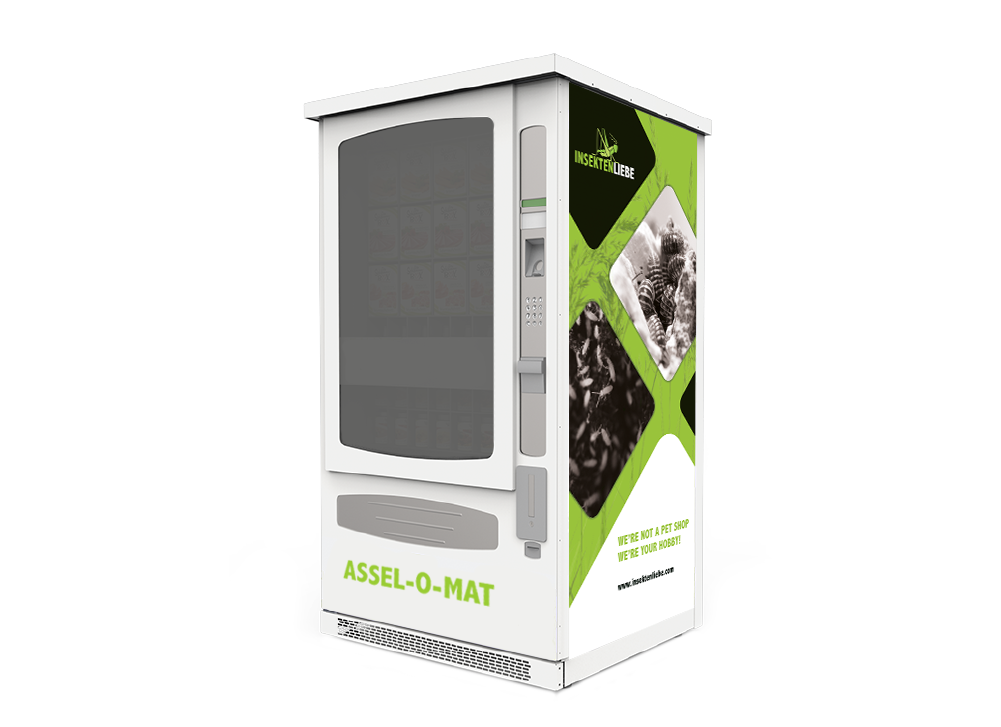
ASSEL-O-MAT
We will find the right isopod species for your requirements. Click through a few questions and finally choose from the isopod species that are suitable for you.
Can different species be kept together?
I myself do not mix species unless I am planning a cross or a new color form. In principle, it is possible to keep different species of isopod! It is important that no species reproduces to the extreme with another. This could result in one isopod species being displaced. This means that you should always intervene as soon as one species reproduces faster and remove and separate some animals. Of course, it always depends on the size of the container or tank how often you need to intervene. For smaller isopod boxes, I would advise against socialization.
What should be the minimum size of the isopod tank for a breeding batch of 12 animals?
For some types of woodlouse, you can start with a 1.3 liter BraPlast can. However, this will not last very long and you will have to switch to larger boxes. If you consider where you find Isopods in nature, namely under stones or dead wood in confined spaces, you should refrain from putting yourself in the Isopods’ shoes and think the bigger the better. It is often better to start in a smaller box, especially at the beginning of breeding. The Isopods will find it easier to mate and find food there.
Does it have to be a terrarium or is an aquarium or plastic box also suitable?
As you have silicone edges in an aquarium, this offers Isopods a great escape route. This means you need a lid, but a normal aquarium lid is not suitable without conversion measures, as there is no ventilation. You can either convert this lid and add gauze surfaces or build a wooden frame and add sufficient ventilation. It is best to use gauze that is fine enough to prevent fungus gnats from entering the aquarium, otherwise they will multiply incredibly in the Isopod tank.
Terrariums with two ventilation surfaces, at the front of the bar and at the top of the lid, ensure perfect air circulation. Fresh air flows in at the front and the warm, stale air flows out at the top. This is ideal for all Porcellio species that do not tolerate stagnant air. The disadvantage of many terrariums is that there are often slots in the sliding doors. A trap door is recommended for smaller terrariums as it can be closed tightly. If necessary, the doors must be sealed with e.g. window insulation.
In my opinion, a plastic box is the best way to work. They are inexpensive, you can easily work on them yourself and install ventilation where you want it. The boxes can often be stacked on top of each other, which creates space and room for even more Isopod species. Protection against Isopods is also absolutely guaranteed thanks to a perfectly lockable lid.
Can I leave the container open?
You run the risk of the boxes drying out. I would therefore advise every beginner to install a lid. If you are worried about ventilation, I would prefer a terrarium. The above-mentioned fungus flies and fruit flies also breed prolifically in a breeding box without a lid.
Which substrate should I use?
A mixture of 1/3 humus and 2/3 deciduous forest humus is best. I like to add some extra leaves and dead wood, which serves as a source of food and moisture at the same time. I recommend my YouTube video on this topic.
How high should the substrate be filled?
This depends on the particular isopod breeding box and the possible filling height. A height of 5 cm is always recommended. This height guarantees a certain basic moisture level in the soil. If the substrate height is lower, the box will dry out quickly, which is particularly dangerous for beginners.
Do springtails absolutely have to be in the isopod tank?
I wouldn’t add them to the bottom as they usually settle on their own sooner or later due to the leaves or wood they bring with them. If it is purely an isopod tank, you don’t need the springtails as the ornamental isopods will keep the tank clean.
Is the room temperature sufficient or should I heat the isopod box?
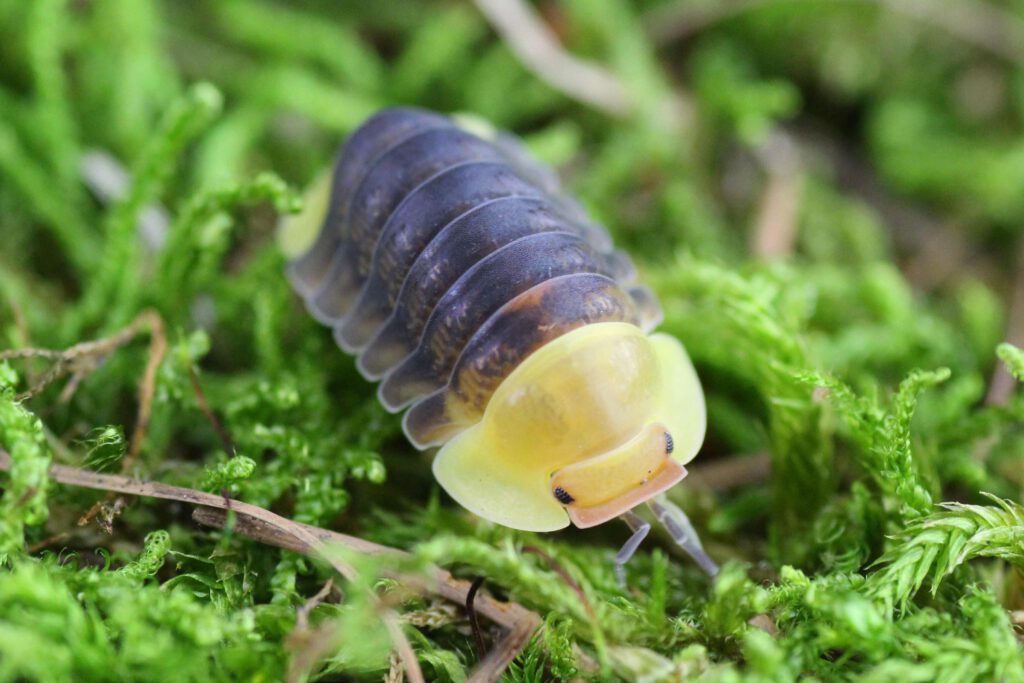
Room temperature is perfectly adequate for almost all species currently in circulation. Therefore, no extra heat source is required. For isopod species that require an additional heat source, such as the Cubaris spec. “Rubber Ducky” the heating mat should only be attached to one side. Never heat the Isopod containers from below, as this causes the soil to dry out very quickly, which can result in the death of the Isopods.
Do Isopods need a light source?
Basically no. However, many people install a light to be able to observe the Isopods better. LED lamps are well suited as they do not emit heat and have low energy requirements.
Should the forest floor be heated beforehand?
Many isopod keepers have controversial discussions about this. If you don’t want any uninvited guests in your isopod box, then yes. 30 seconds in the microwave or 10 minutes in the oven at 140 degrees will kill all the animals inside. You can also freeze the soil in a freezer for 48-72 hours. This will also kill all pests, but retain most of the beneficial components. It also protects against mite infestation.
Why can’t you use softwood or softwood flooring?
Coniferous wood repels various resins, most of which are deadly for our Isopods. The needles may also have come into contact with the resin and are just as dangerous. It is therefore best to avoid them completely and seek out a deciduous forest.
What needs to go into an isopod terrarium?
Substrate, cuttlefish powder or cuttlefish shell as a calcium donor, some leaves, white rotten wood mixed into the soil and a nice large piece of dead wood as a hiding place on top, optionally cork or tree bark is also possible. As Isopods often live in limestone-rich areas, you can also add one or two pieces of limestone. Small pieces of charcoal or charcoal dust are also ideal in the substrate to prevent mold. For this question, I recommend my YouTube video on how to set up a complete Isopod set.
Does it have to be sepia or is a calcium preparation also sufficient?
A preparation is also possible but is usually much more expensive. It is important that the calcium content is high, as Isopods need to cover their calcium requirements. If this is not offered, they will quickly go to their living conspecifics. On the other hand, it is completely normal for Isopods to eat their dead conspecifics.
How often should the isopod container be moistened?
This is due to the overall condition of the growing container. Size, substrate height, aeration area and location. Therefore, this question cannot be answered in general terms and requires some practice and sensitivity. As a rule, however, 1-2 times a week should be sufficient. I look sideways into the corner of the container that I keep moist; if there is still condensation there, I do not moisten it.
Zebra woodlice no longer reproduce if the population density is too high. Does this also happen with other species?
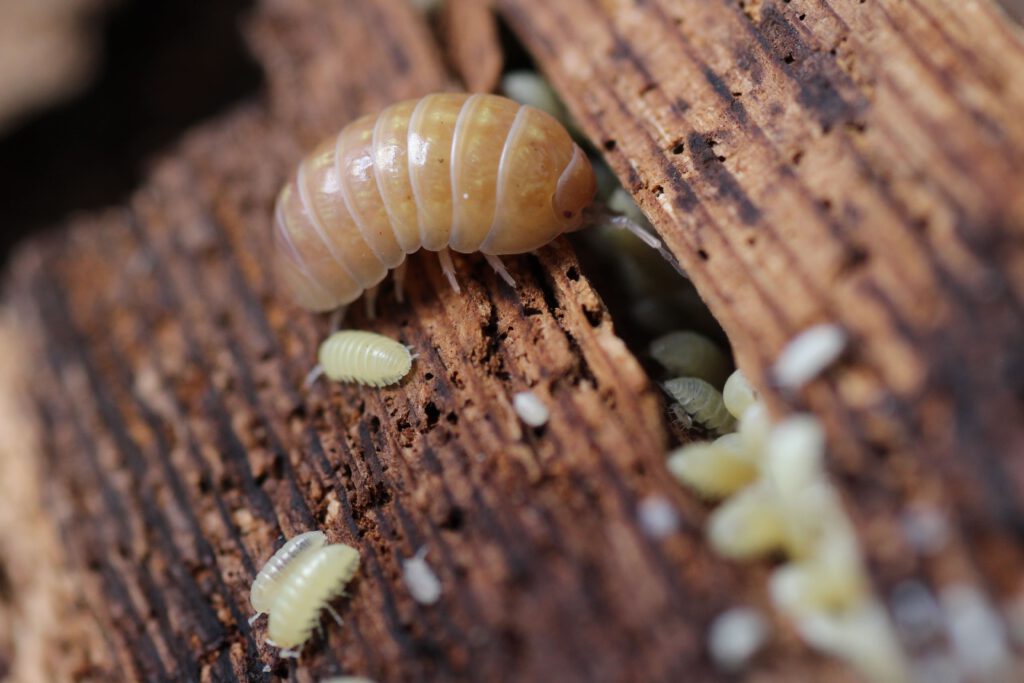
This is not necessarily only due to the population density, but also to unmet needs or an incorrect substrate or missing components. The higher the stocking density in the Isopod container, the more proteins need to be supplied as otherwise the large Isopods will help themselves to the small young Isopods.
How can I tell if the crew density is too high?
If you find a lot of dead animals in the box but have actually done everything right. A high stocking density often means that not all basic needs can be met in the long term and an unusually high number of animals die as a result. You develop your own instincts and notice when there are too many animals in the box. If this is the case and you don’t know what to do with the animals, you are welcome to contact me.
Are there also live-bearing isopod species?
I don’t know any species and I can’t imagine that there are viviparous Isopods, as they are very closely related to crustaceans and they all lay eggs. Our known isopod species incubate their eggs in a brood sac under the shell until they hatch.
How do I recognize the sex of Isopods?
The easiest way to do this is via the brood sac of the females. With the Porcellio species you can also recognize the sex by the length of the “tails”. You have to compare Isopods of the same size and those with a longer tail end are males.
How old do Isopods get?
It is difficult to give a precise answer to this question, as Isopods and the various species have not yet been sufficiently researched in the laboratory to give a concrete answer. It is probably 2-3 years. According to my personal observations, rather less.
Which food is best for Isopods?
The best food comes directly from nature. Leaves and white rotten wood are a major component of isopod food.
I also offer the following:
- Carrot
- Cucumber
- Chinese cabbage
- Sweet potato
- Potato
- Zucchini
How often should protein be offered?
I offer my animals protein on a permanent basis. This gives them more offspring and the young isopods grow faster.
How often should I feed the Isopods?
It is important that there is always something on offer. The easiest way is with leaves and dead wood. It is best to feed in such quantities that it is eaten within 2-3 days. In this way, there will be few to no unloved guests in the form of mites.
Help my isopod tank is moldy! Is that bad?
Isopods cope quite well with a certain amount of mold, but the ratio has to be right. I myself go through all the containers once a week to check for mold and remove it. If the mold infestation is so high that it can no longer be easily removed, I would move the Isopods immediately.
An Isopod has died, I’m worried!
One or two animals are not bad and represent “natural selection”, but if several animals die every day or over the week, the conditions should be changed.
You should then consider the following options:
- It went well and I changed something and then got problems. Then you should reconsider the change and possibly put it back again
- It runs poorly right from the start. Then check the aeration again and improve it if necessary. Check the food and switch to organic food. If there is still no improvement, I would recommend a new substrate with more minerals.


Leave a Reply
You must be logged in to post a comment.