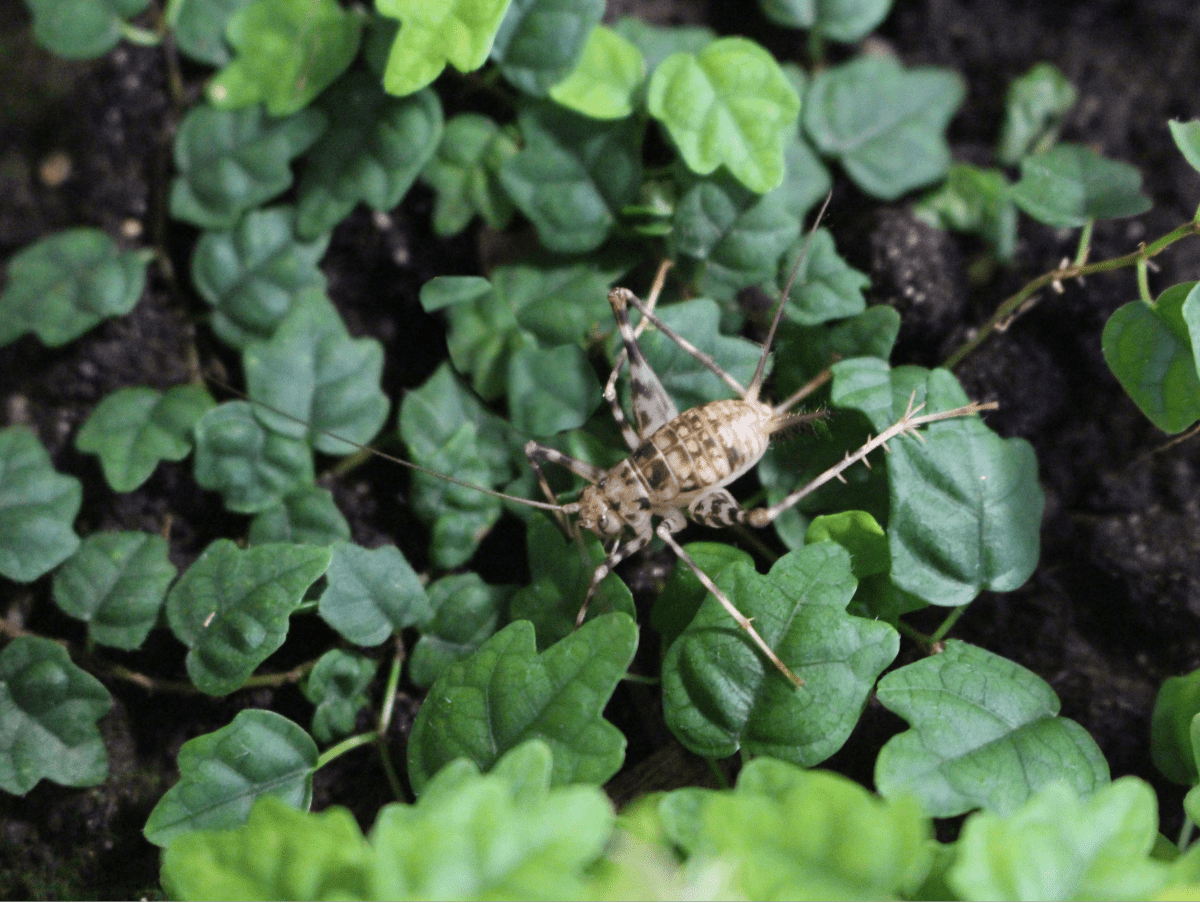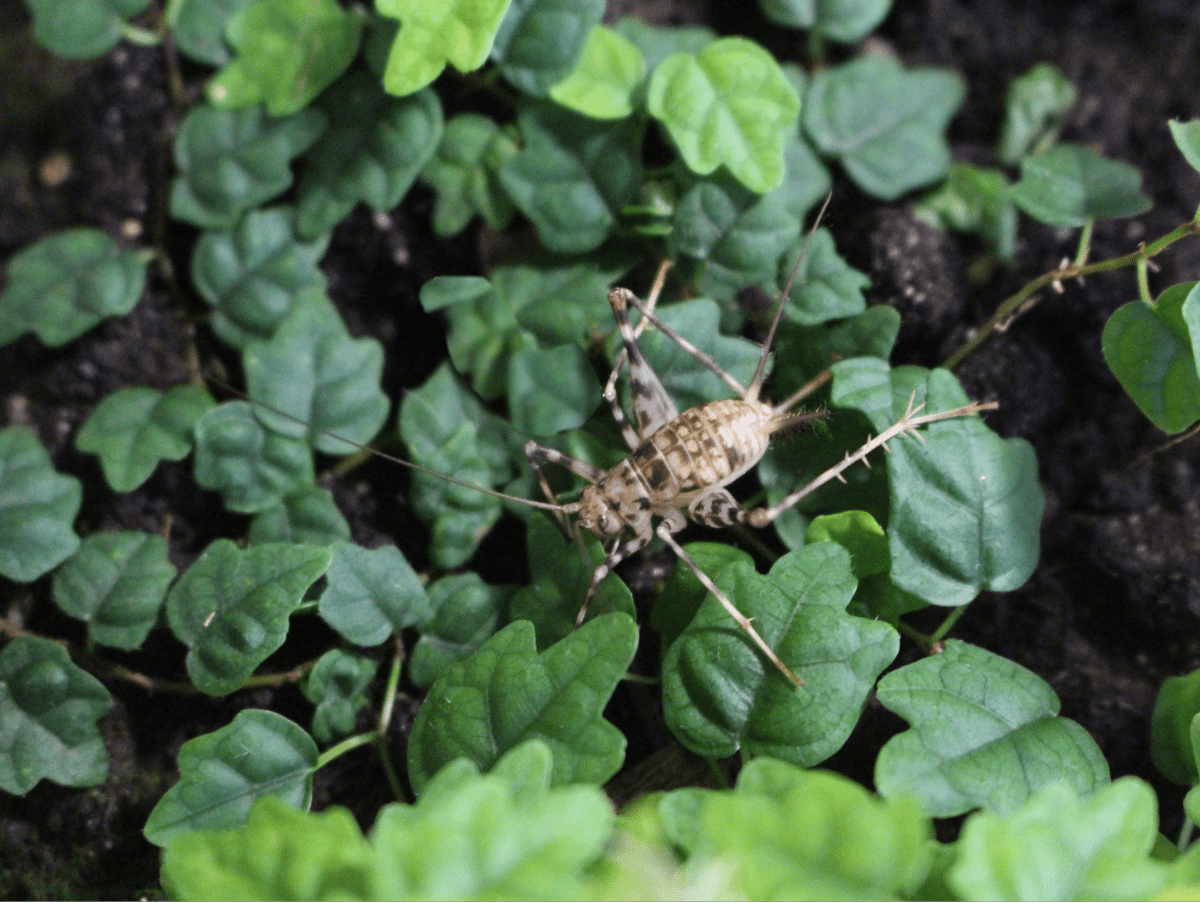


Phaeophilacris bredoides cave crickets are notable for their long legs and antennae. Unlike many other crickets, they do not chirp. They are interesting animals to observe and can serve as food for suitable larger terrarium inhabitants. Breeding them requires space, quiet, and patience.
An Overview of Cave Crickets
| Height | About 1.5–2 cm, without legs or antennae |
| Activity | Especially at night; during the day, they seek out sheltered hiding places |
| Temperature | In the current breeding setup, the temperature in the warm area is about 28 °C |
| Humidity | A damp egg-laying area, dry hiding spots, and good ventilation |
| Food | Appropriate food for crickets and small, fresh supplements |
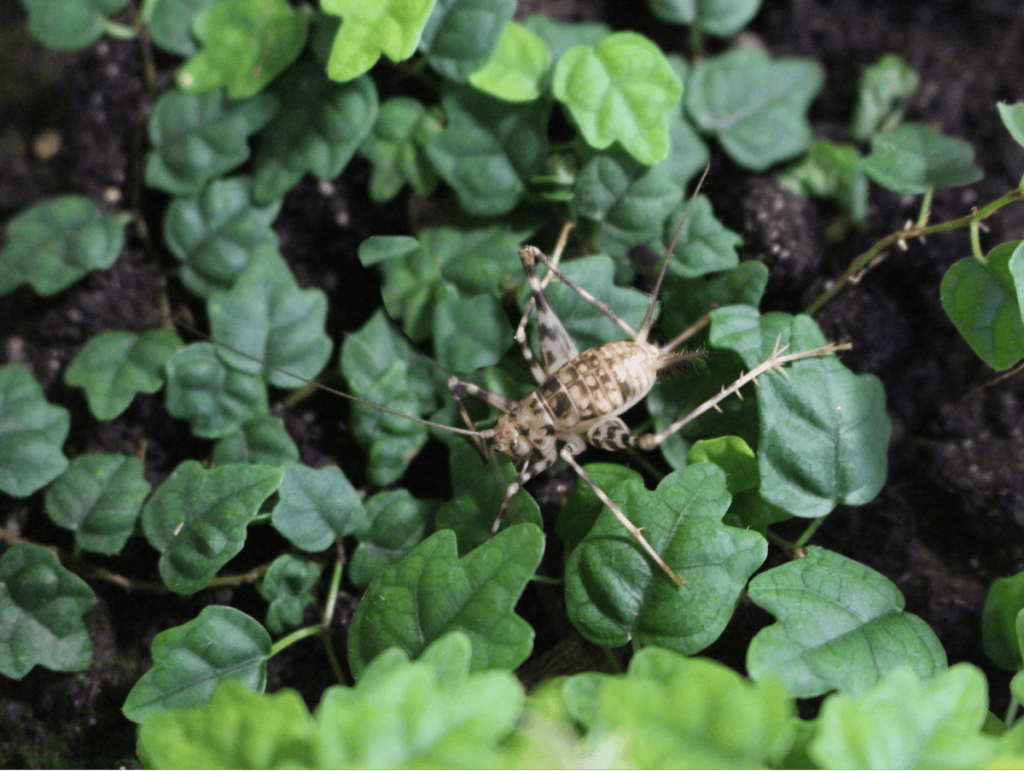
East African cave cricket
East African cave crickets do not chirp and are relatively odorless, yet they look absolutely fascinating with their huge antennae and long limbs.
Out of stock
Setting Up a Box for Cave Crickets
Our previous 5.8-liter box proved to be too small even for the early stages. When setting up a breeding area, plan for a significantly larger box with plenty of usable space. Cardboard rolls and egg cartons provide dark hiding spots. Arrange them so that the animals can move around freely and you can reach any leftover food.
A spacious, well-secured ventilation system keeps even the tiniest young insects from escaping. The lid must close securely. If you already have a suitable box, you can continue using it. If you’re starting from scratch, the crickets and grasshoppers breeding kit includes a 22-liter box as well as food, water, and accessories. Check the mesh size before hatching and reinforce it if necessary.
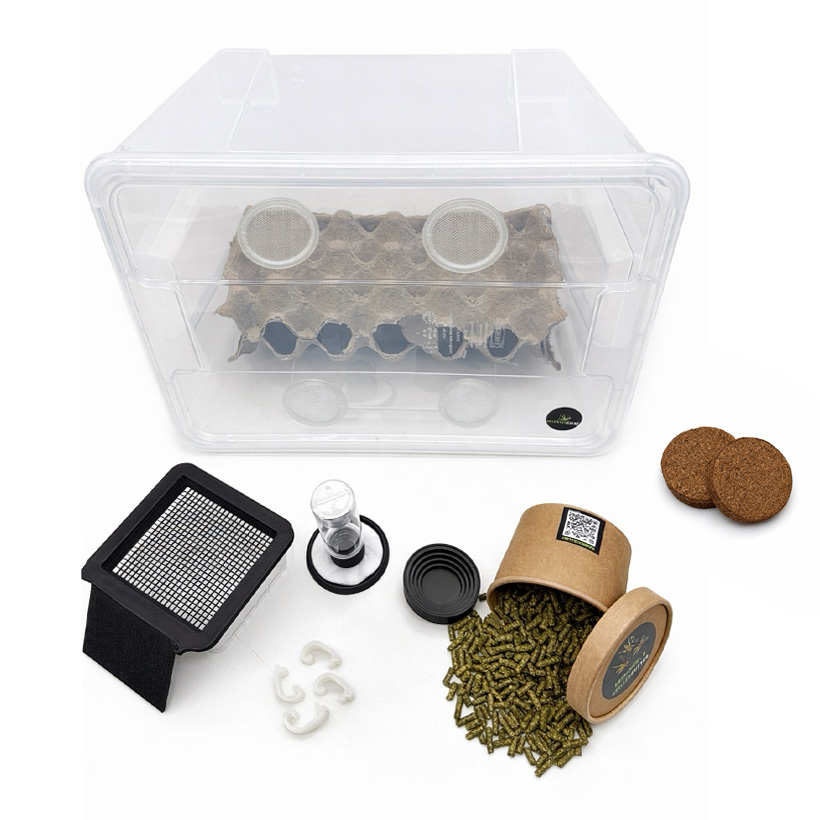
Insektenliebe: Crickets and Grasshoppers Breeding Complete Set
Insektenliebe: Crickets & Grasshoppers Breeding Complete Set – Easy Breeding, Long-Term Savings With the Insektenliebe complete cricket and cricket breeding set, you get a fully thought-out system that allows you…
Heating and Water Supply
In the previous setup, the animals preferred to stay in the 28 °C range. A regulated heat source mounted on the side allows for cooler refuge areas. Measure the temperature directly inside the enclosure. Additional lighting is not necessary for this nocturnal species.
Keep the egg-laying area slightly moist without constantly soaking the cardboard hiding spots. A secure water dish supplements their water supply. Check the water level, cleanliness, and access for young animals daily. Open, deep bodies of water are unsuitable.
What do cave crickets eat?
Crickets and grasshoppers can be offered dry and clean on a small dish. Add tiny portions of suitable vegetables or a little fruit. Check fresh food daily and remove any leftovers before they spoil. A large portion meant to last several days is not a good solution when kept in a warm box.

Crickets & cricket food
High-quality food for high-quality food animals!
Keep an eye on your group’s food intake. Simply providing more food won’t result in more offspring. If there are leftovers, reduce the portion size and check to see if there are enough safe hiding spots and appropriate temperatures.
Breeding Cave Crickets: Egg-Laying and Offspring
The females lay their eggs using their long ovipositor in loose, moist material. Provide a separate tray with at least 3–4 cm of substrate for this purpose. Suitable coconut coir retains moisture but must not become waterlogged or dry out completely.
Under the previous approach, juveniles appeared about four to eight weeks after egg laying. This is a rough estimate, not a fixed hatching date. It takes several more months for the animals to reach maturity. Start by harvesting only a small amount and let the population grow.
Males may harass one another. If there are injuries, frequent fights, or a lack of space, increase the usable area or split up the group. A high stocking density is not the goal. Their long legs and antennae also make it clear that these crickets aren’t suitable for every young hunter.
Recommended Reading: How to Store Live Feed Properly
If you just want to keep a small stock, you’ll find the right care instructions here instead of a complete breeding guide.
Discover more feed animals
Here you’ll find a selection from our store. Before purchasing, make sure the specific species’ needs are compatible with your terrarium.
-

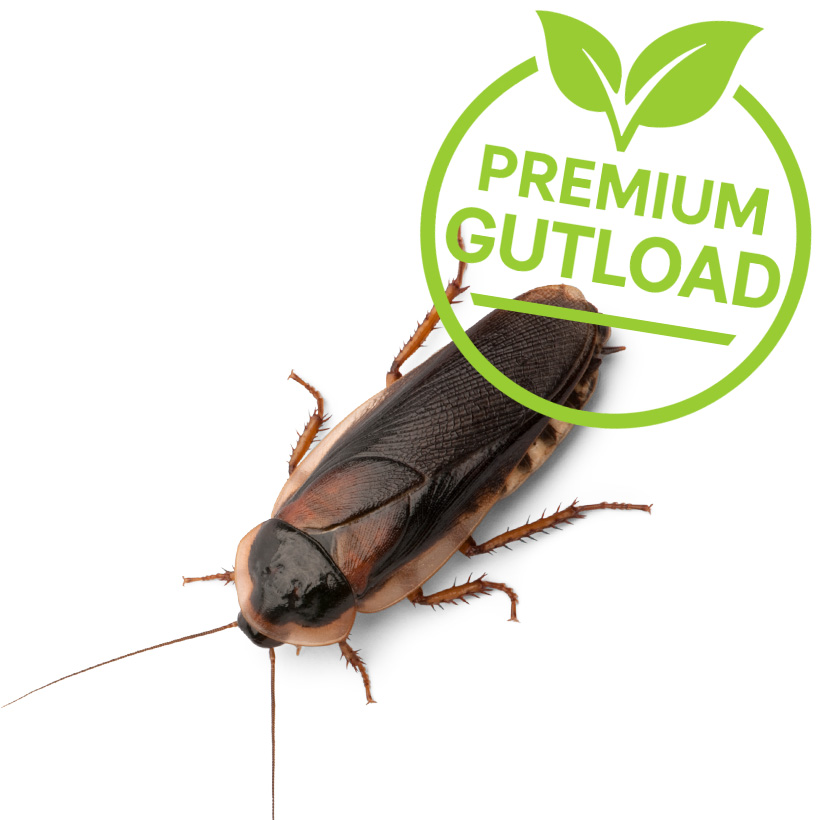
Blaptica dubia “Argentine forest cockroach”
Price range: 3,99 € through 39,99 € incl. VAT, plus shipping -
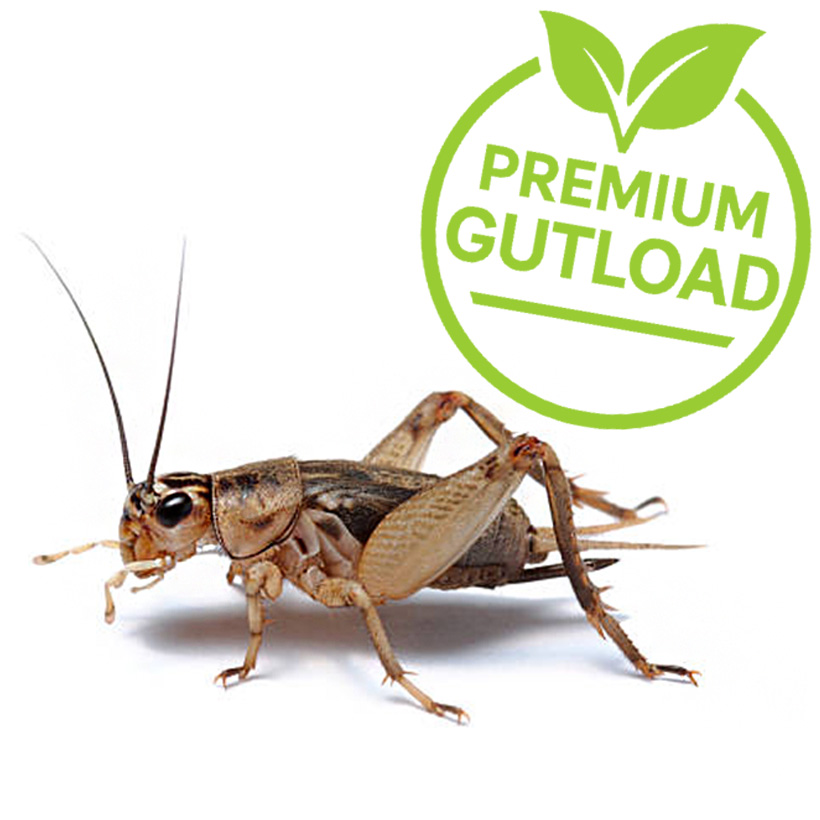
Cricket
Original price was: 3,99 €.2,99 €Current price is: 2,99 €. incl. VAT, plus shipping
Still unsure? Feel free to ask us your question in the comments section below the article.