
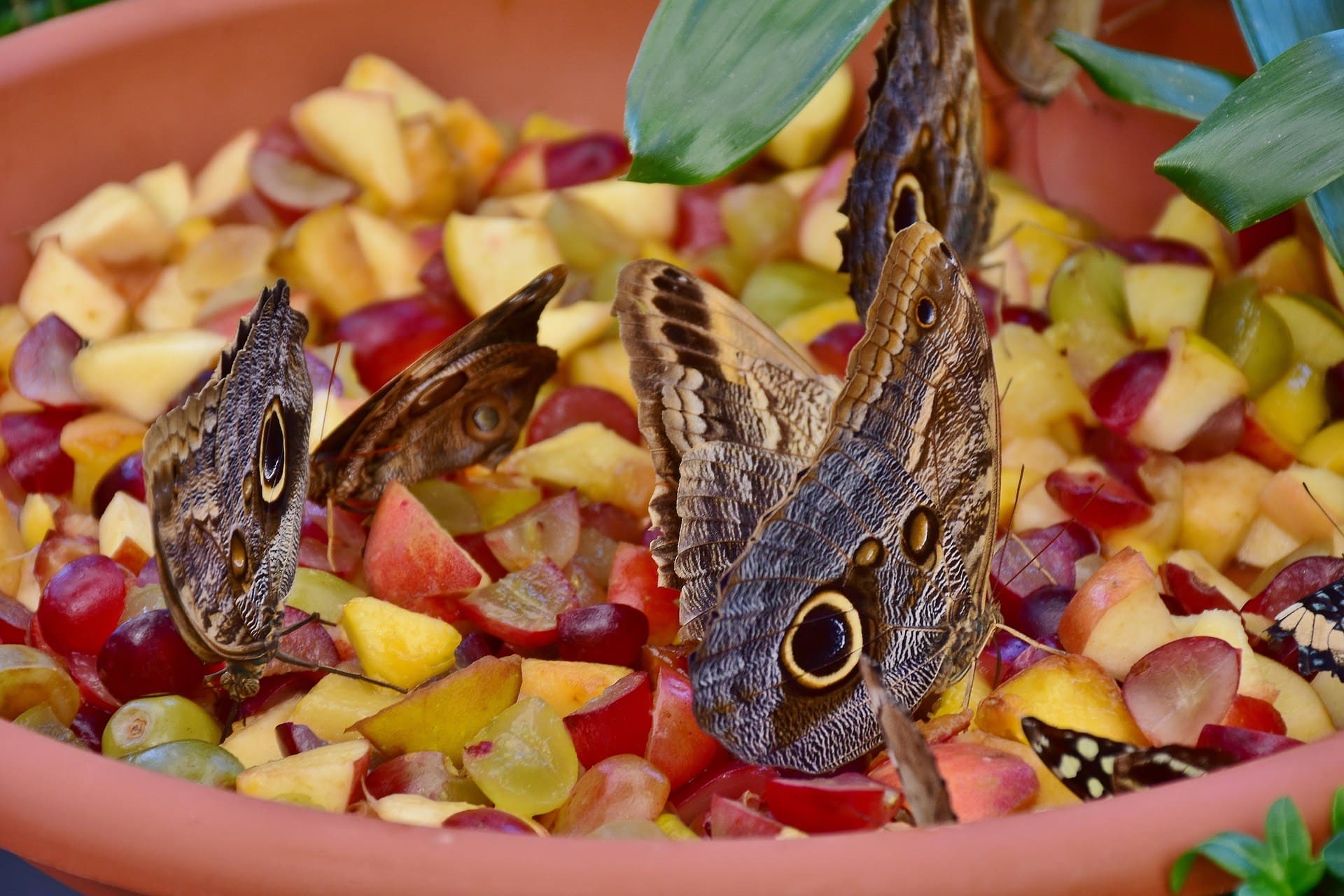
Food plays an important role in keeping our animals healthy. For us humans, variety in the composition of our food is very important. But what about our insects? Naturally, they have specialized and adapted to different food insects over the course of time. This also applies to our captive animals.
In my opinion, however, the biggest role played by food animals is often a completely different one:
- quick to breed
- Easy to hold
- Low odor
- inexpensive
- Low noise
The food insects offered depend heavily on the developmental stage of the praying mantis. Not all insects go through developmental stages that correspond to the size of all the different larval stages of the praying mantis. I therefore switch to different types of food insects that are actually exclusively dedicated to the size of the mantis.
Another point that you should not lose sight of is the nutritional value of the food animals. Most of you will know that mealworms are a real “calorie bomb”. Even in dried worms, the fat content is still quite high at 25-30 percent. The fat content reaches its maximum in live food. What used to be the sole food in the winter months, as no other food animals were available, is nowadays more of a rare treat or emergency food.
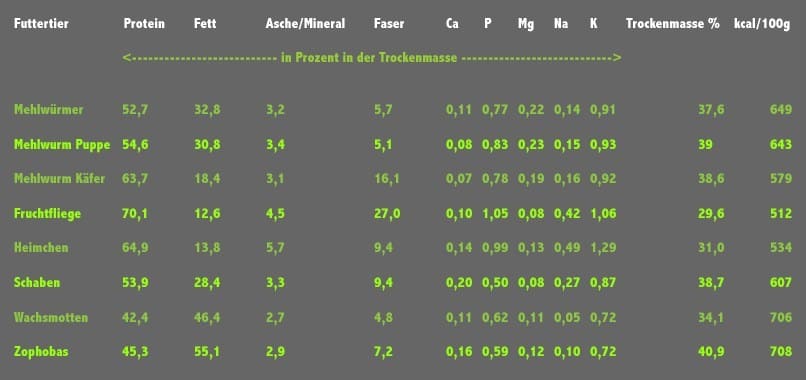
Explanation of terms from the table
Protein: The body does not have a store of protein. Our pets must therefore consume protein daily from protein-rich foods. If you take in too little protein, your body will resort to the muscles. High = Good
Fat: Without fat there would be no intact cell membranes, so fat is important. However, too much is bad for the organism, because insects can also get fat! There is a scientific study on obese mosquitoes. The fat-mobilizing hormone was also bred out of fruit flies, which reduced the number of offspring and the lifespan of the animals. Low = Good
Crude ash: The sample is heated to 550 °C to determine the crude ash content. This burns off all organic components and the residue is the crude ash content. The crude ash content corresponds to the mineral content if no other impurities such as sand or soil are present. High = Good
Fiber: Crude fiber or dietary fiber stimulates digestion and prevents constipation. Fiber satisfies hunger without providing the body with calories. High = Good
Ca: Calcium is one of the most important nutritional building blocks of our pets. The exoskeleton (outer skeleton) is a supporting structure for the organism that forms a stable outer shell around it. Without sufficient calcium, deficiency symptoms occur here. High = Good
P: Phosphorus is an important mineral that is also important for building the exoskeleton. High = Good
Mg: Magnesium has an anti-inflammatory effect and is involved in the body’s own protein production and thus in muscle building. High = Good
Na: Sodium occurs in the body as a positively charged particle – especially outside the cells. It contributes to the build-up of electrical voltage at the cell membranes and is therefore important for the transmission of nerve impulses, the heart rhythm and muscle function. High = Good
K: Potassium is found in the body’s cells and plays an important role in the electrolyte balance of the cells. It is responsible for the development of nerve impulses and their transmission within the nervous system, to the muscle fibers and to the heart. High = Good
Dry matter: The dry matter or dry substance is the component of a substance that remains after deducting the mass of water it contains. The higher the dry matter, the less moisture the feed contains. Neutral
Kcal: The more kilocalories a food contains, the more energy it provides. Neutral
But what about the other food animals? Are Zophobas more nutritious than cockroaches? I have put together a list that you can use as a guide. Unfortunately, not all food animals can be researched, but I will keep adding new information.
Of course, I also put this list in relation to the points listed above.
Conclusions from the table
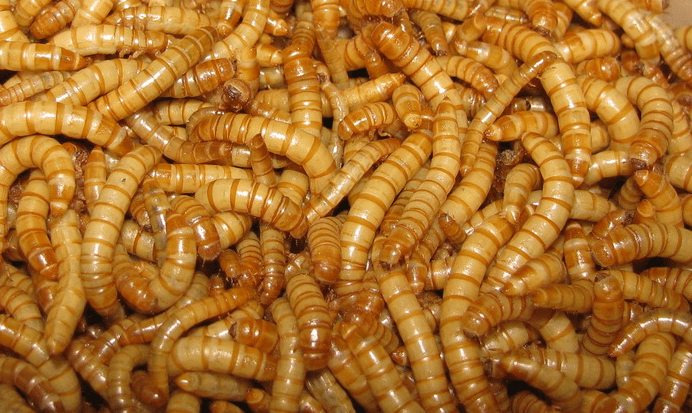
Tenebrio molitor- mealworm larva, mealworm pupa, flour beetle
“The most indispensable food animal for the hobbyist is probably the yellow and smooth larva of the black flour beetle known as the mealworm, which most animals love to eat.”
Quote from “Der Terrarien-Freund” from the year 1927
This shows us perfectly today how little thought was given to nutritional values back then and how few alternatives there were. Even today, mealworms are still readily available and easy to breed. That’s why I also breed them and offer them to my animals once a month. Based on the nutritional table, it offers a good contrast to the Drosophilas as a source of magnesium.
My conclusion: food animal for emergencies
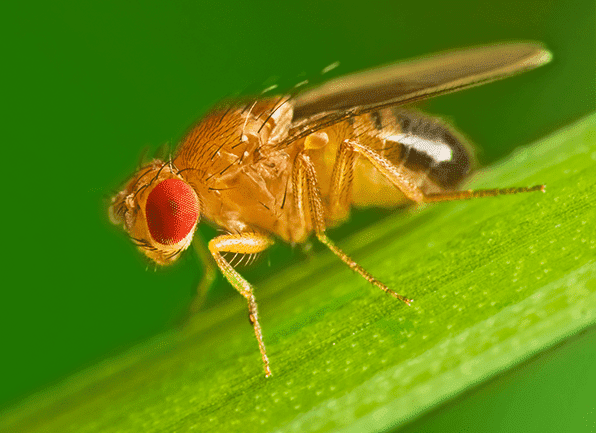
Drosophila melanogaster / Drosophila hydei- Small / Large fruit fly
The fruit fly puts all the food animals listed in the food animal nutritional value table in the shade!
It has the highest protein values, the lowest fat content and is at the top for all minerals, with the exception of magnesium. If you counteract this by occasionally dusting the Drosophilas with Korvimin ZVT, or a similar vitamin preparation, you have the ideal food animal for rearing our young mantids.
My conclusion: Valuable food animal!
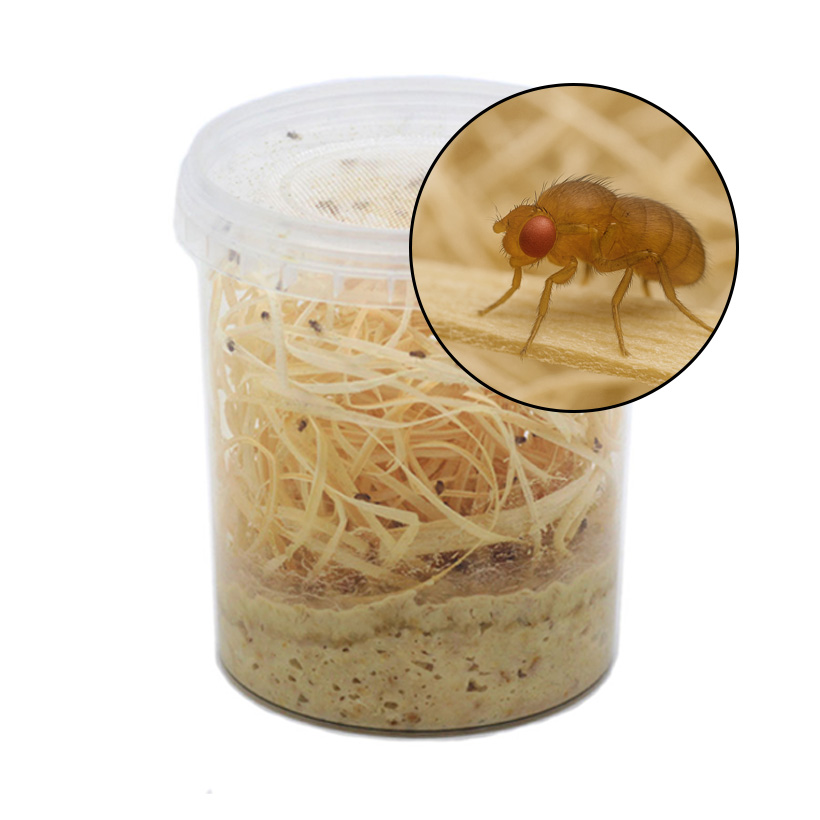
Small fruit fly “ant”
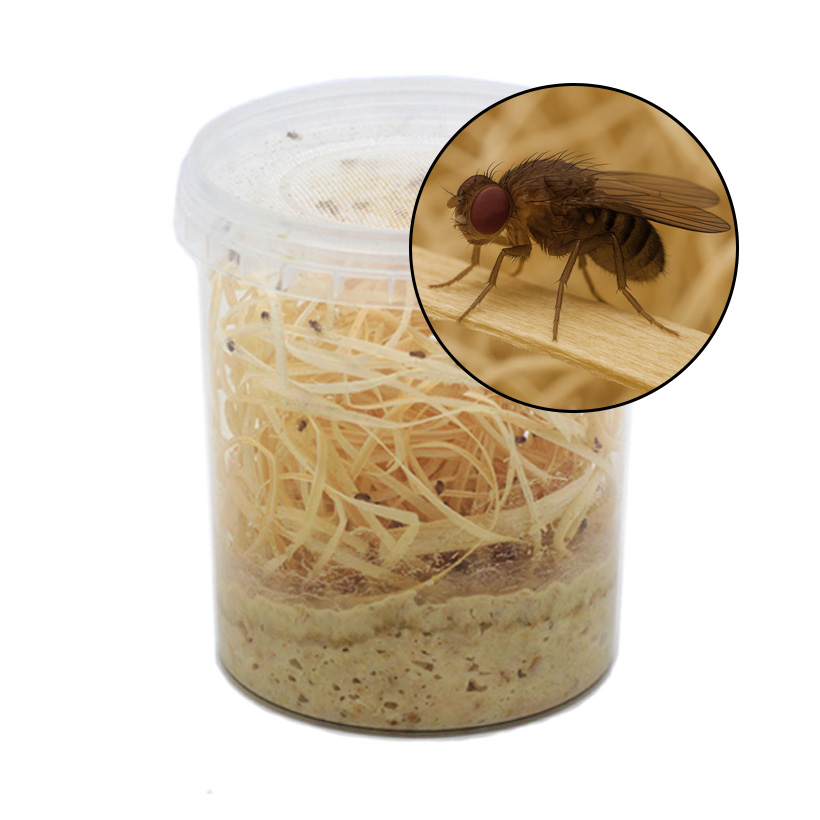
Large fruit fly
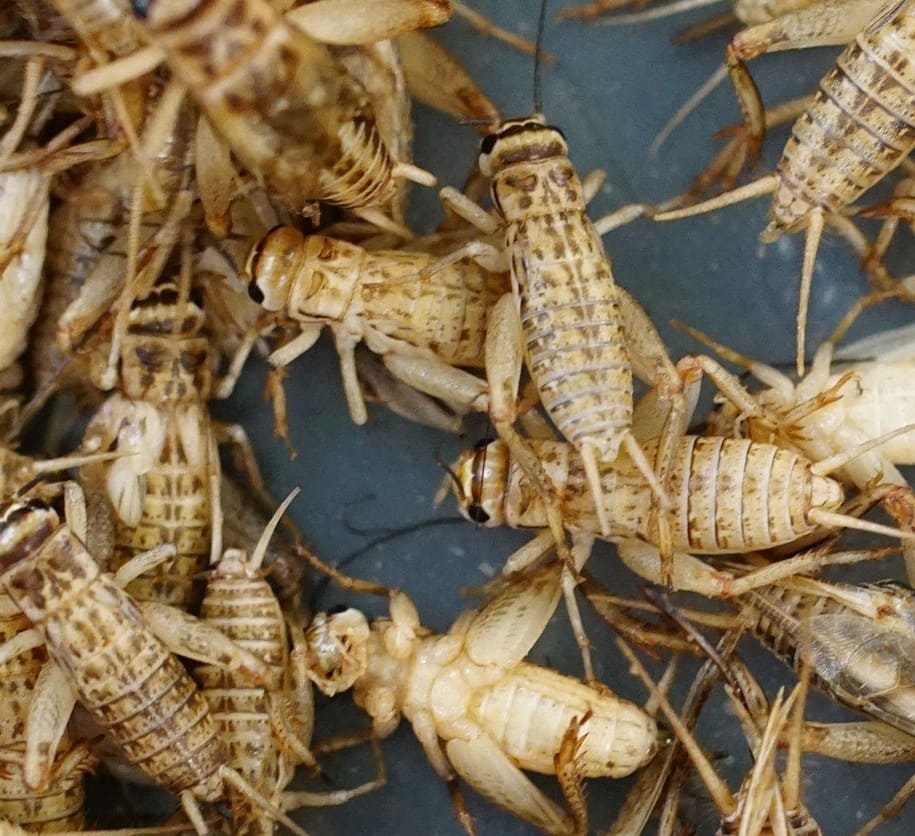
Acheta domesticus- cricket
If you strictly follow the food animal nutritional value table, the cricket would be the best subsequent food after the Drosophilas. The body length of 2.3 to 20 millimeters would also be a perfect size to accompany our invertebrates through many larval stages. I am speaking in the subjunctive, as I cannot recommend this food animal to you. There are several reasons for this:
- they eat your animals (during moulting)
- they chirp loudly and for hours
- they eat through back walls
- they reproduce in the terrarium
- they multiply in the home
My conclusion: substantial but too many disadvantages!
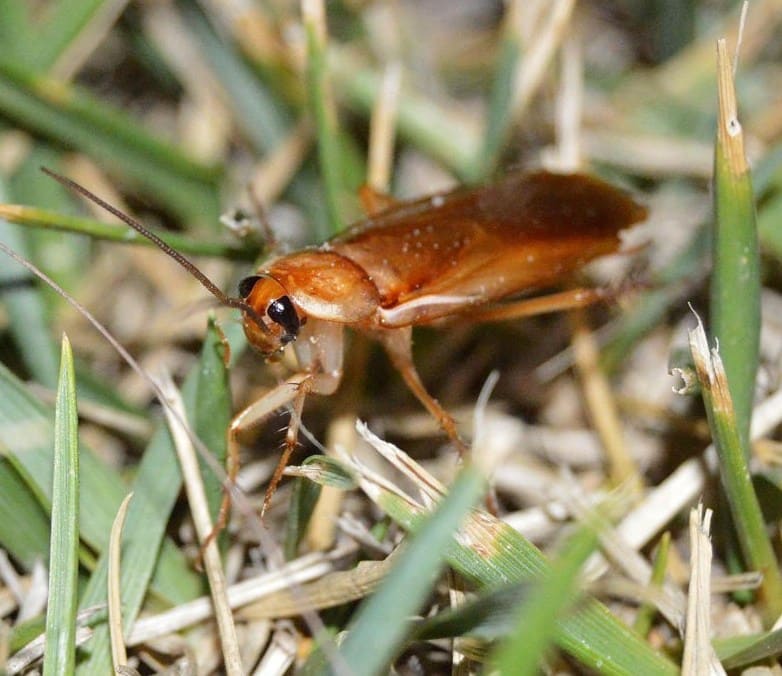
Blatta lateralis- Chocolate cockroach
Cockroaches have almost as high a fat content as mealworms!
On the positive side, the proportion of fiber is relatively high and the calcium value is the highest. Many people feed their animals chocolate cockroaches because they are incredibly productive and easy to breed. The disadvantage is obvious given the advantages.
Here is a small excerpt from a forum:
Super feeder, multiplied enormously without much effort.
Could give away boxes of cockroaches. But I always had a bad feeling.
But when I found individual cockroaches running free in the room, it got too hot for me. So I got rid of them all. Every now and then one would appear in the terrarium and I would kill it.
Then we moved house.
I cleared out / dismantled the terrariums and disposed of the last cockroaches (about six months after getting rid of them).
I inspected the empty apartment but luckily didn’t find any more.
I rearranged the terrariums in the new house and they were fine.Six months later:
Flowers need to be repotted. First pot lifted, SHOCK!!!
Several cockroaches grin at me. The hunt begins. After several actions, I’ve probably caught them all.
It’s been 3 years now.
So I won’t have any more chocolate cockroaches in the house.
My conclusion: Simply NO!
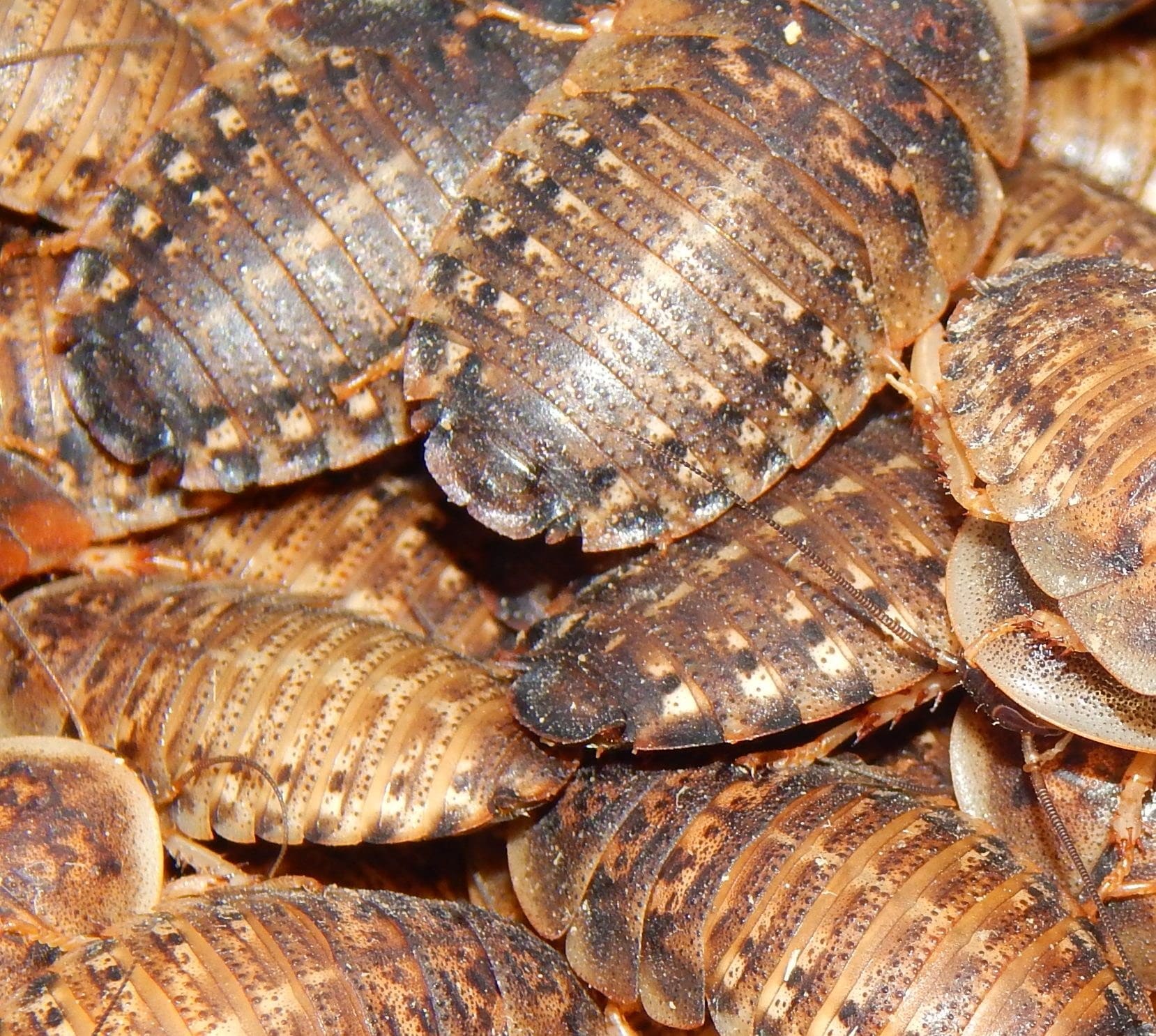
Blaptica dubia- Argentine forest cockroach
The disadvantage, which is also an advantage of the Argentine wood cockroach, is the high heat requirement, the high humidity and the long development times. This means that there is no risk of uncontrolled reproduction within your own four walls.
It does not chirp, does not jump, cannot crawl up smooth walls such as plastic or glass and is therefore easy to keep. They do not stink, move relatively slowly and are very undemanding in their diet. Measured by the proportion of indigestible chitin, Argentine cockroaches provide a portion of protein and are therefore a nutritious prey with a relatively soft body. The relatively high fat content should also not be overlooked.
My conclusion: Not suitable as a complete food!
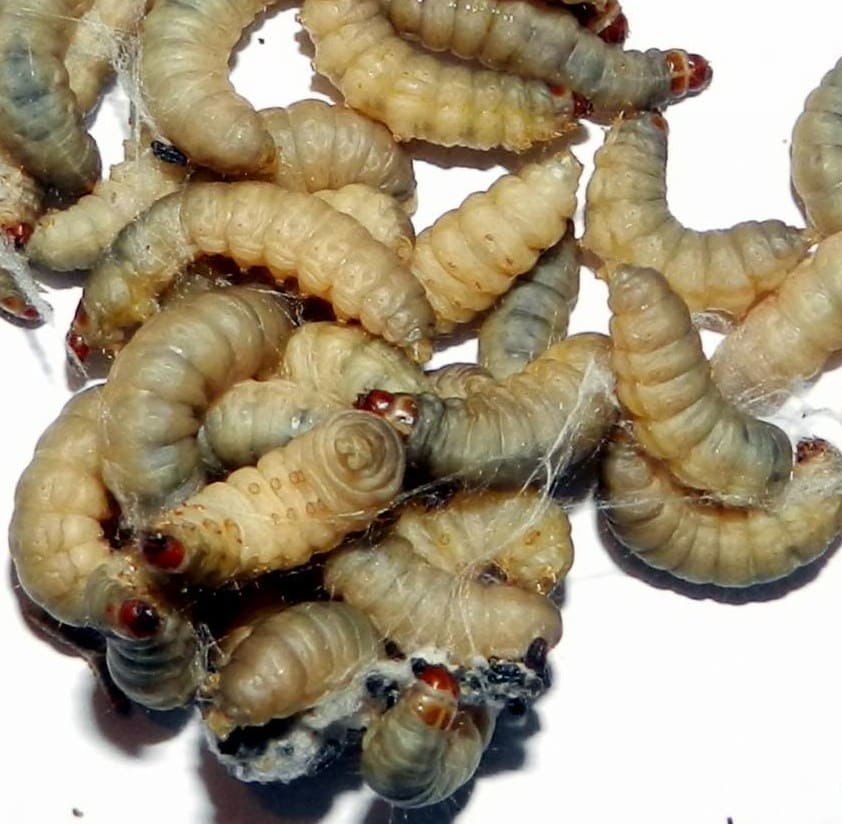
Galleria mellonella- wax moths
The biggest advantage is that it is one of the few feed animal breeds that smells very good. Based on the fat values, you can imagine how unhealthy the long-term feeding of wax moths must be. I like to give females a larva as build-up food after they have laid an ootheca. As I can easily get hold of honeycomb, breeding is almost a no-brainer. However, I wouldn’t buy them separately on the basis of these nutritional values, especially as they are not exactly cheap.
My conclusion: For people who have beekeepers as friends!
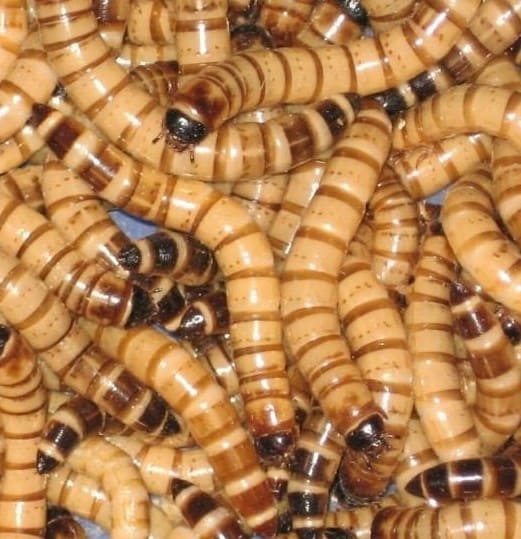
Zophobas morio- Large black beetle larva
Despite their high fat content, Zophobas are in great demand as food animals in the terrarium hobby. They are easy to breed and therefore available at a reasonable price. The values in the nutritional table speak a clear language that cannot and should not be ignored. Here, too, it should be said that in rare exceptional cases as emergency food, when nothing else is available, you can fall back on it.
My conclusion: For large mantids as emergency food!
Not listed feed animals
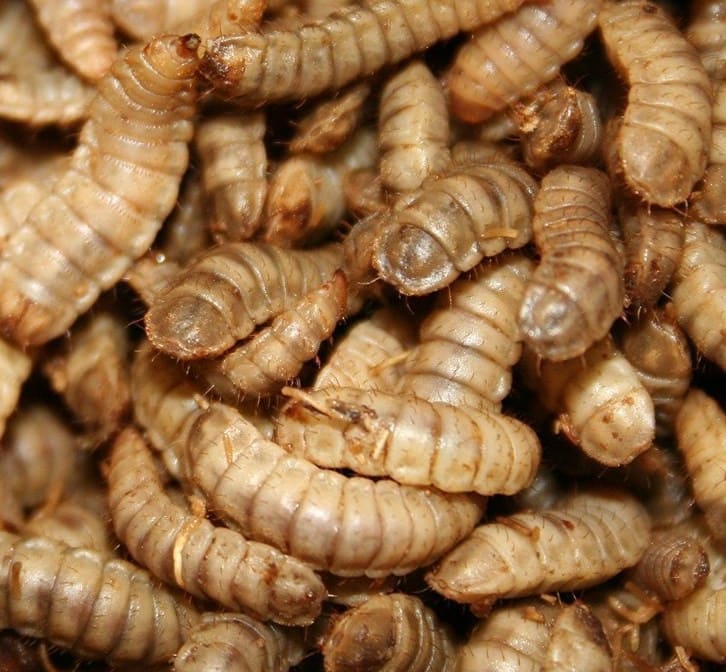
Hermetia illucens- soldier fly
Unlike mealworms, zophobas, rose chafer larvae and other larval species, soldier fly larvae can often be fed. Their excellent ratio of calcium to phosphorus makes them an extremely interesting food for our pets.
My conclusion: Excellent food animal!
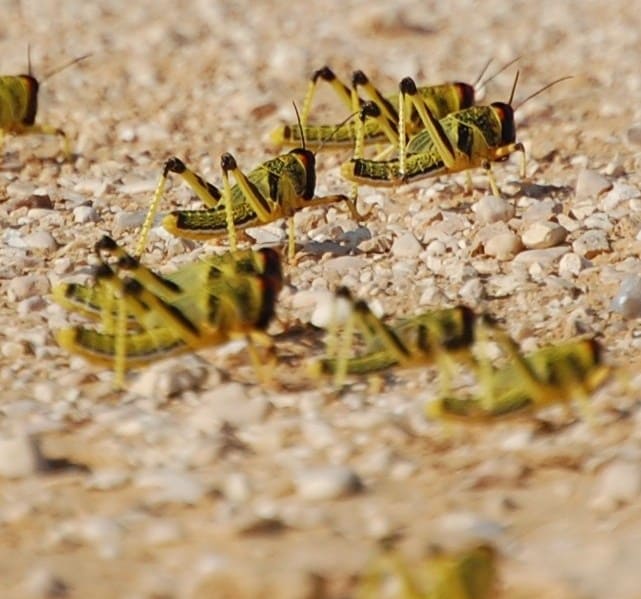
Schistocerca gregaria- Desert locust
When feeding grasshoppers, it is also important to remove any uneaten animals from the terrarium if possible, as grasshoppers can eat our animals while they are moulting.
My conclusion: Only feed from the tweezers!
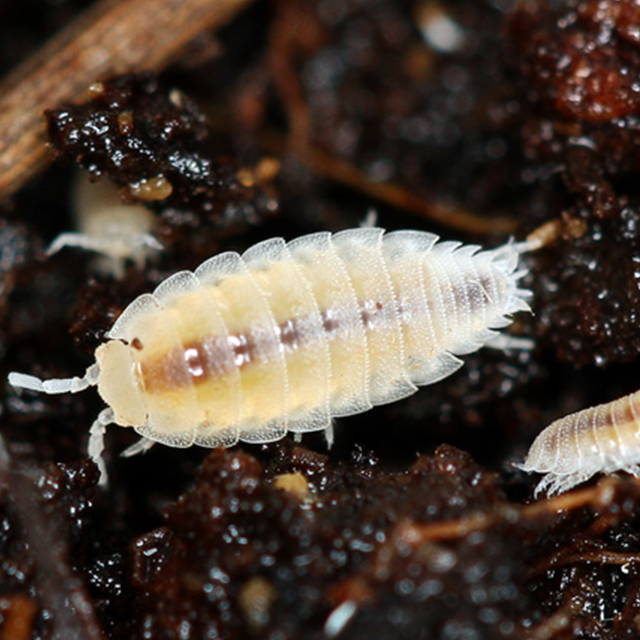
Trichorhina tomentosa- White Isopods
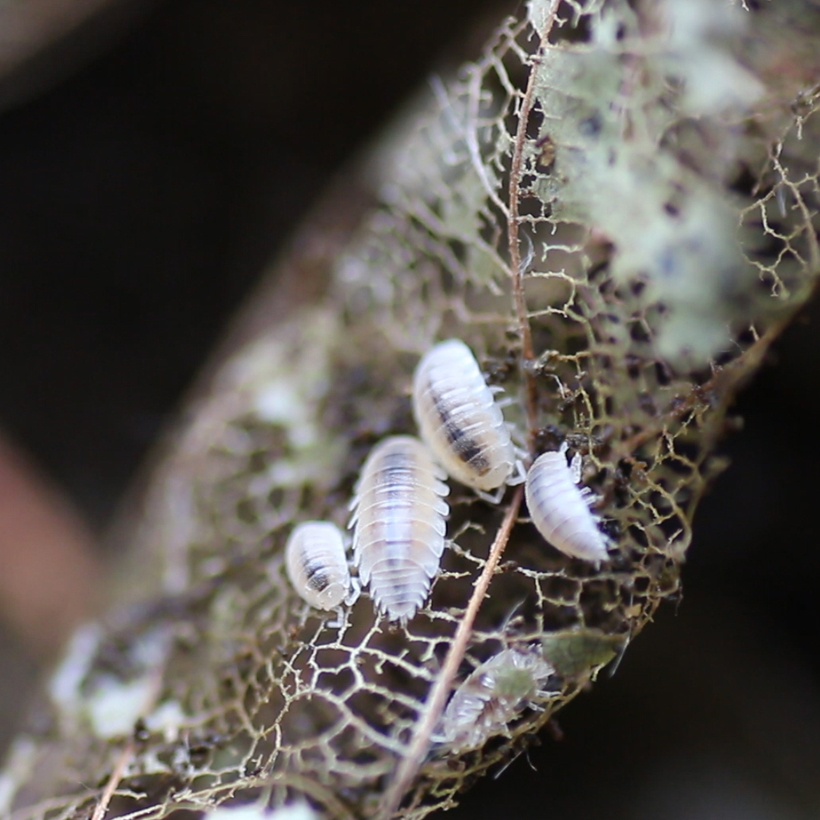
Isopods are known to be great suppliers of calcium. They are known to be soil police, which is why they are often added to the terrarium. However, I don’t do this with mantids because, generally speaking about all Isopods species, Isopods can and do eat oothecae. They come out at night and climb up the branches to get at the ootheca.
My conclusion: Only feed to male mantids!
White Isopods
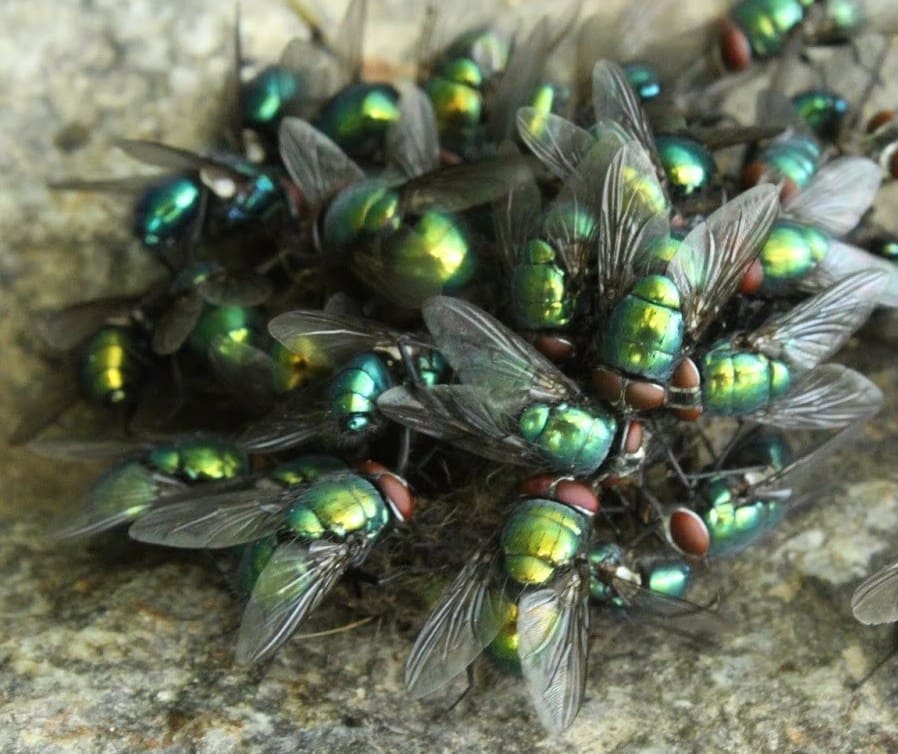
Lucilia sericata- Gold fly
Maggots are very high in protein and fat, which is why they should only be fed rarely and in small quantities. Flies have a rather low nutritional value, which is why they should be enriched with appropriate food before feeding.
You can see how to do this here:
For me, flies, as nectar-seeking insects, come closest to the natural prey pattern of a praying mantis. That’s why I use flies as the main food from the appropriate size of mantid.
My conclusion: I use flies as my main food!
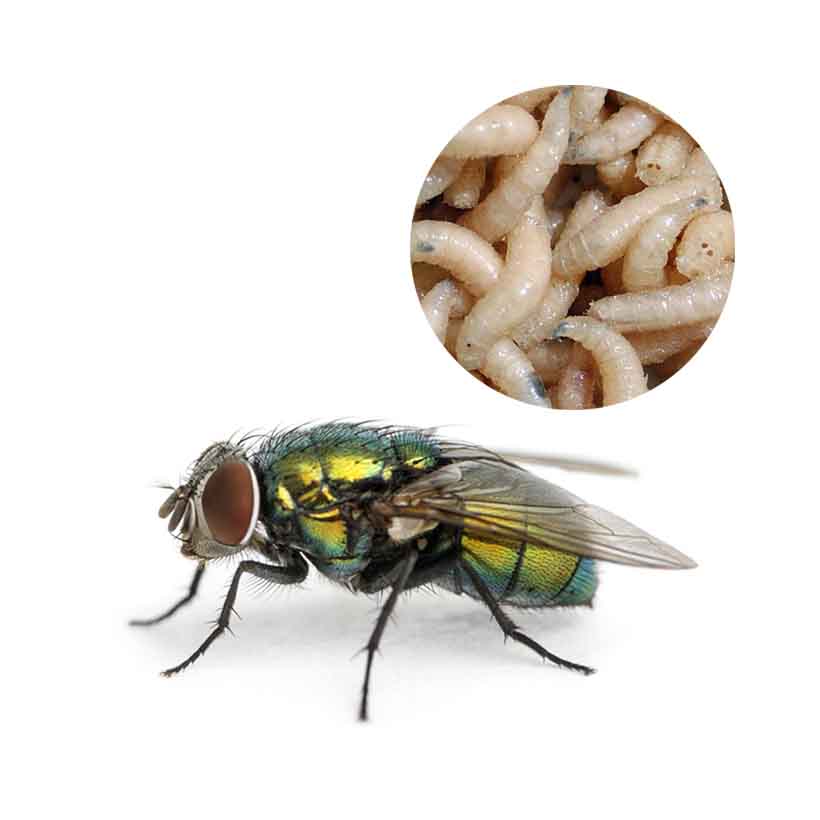
Gold flies – 30 ml