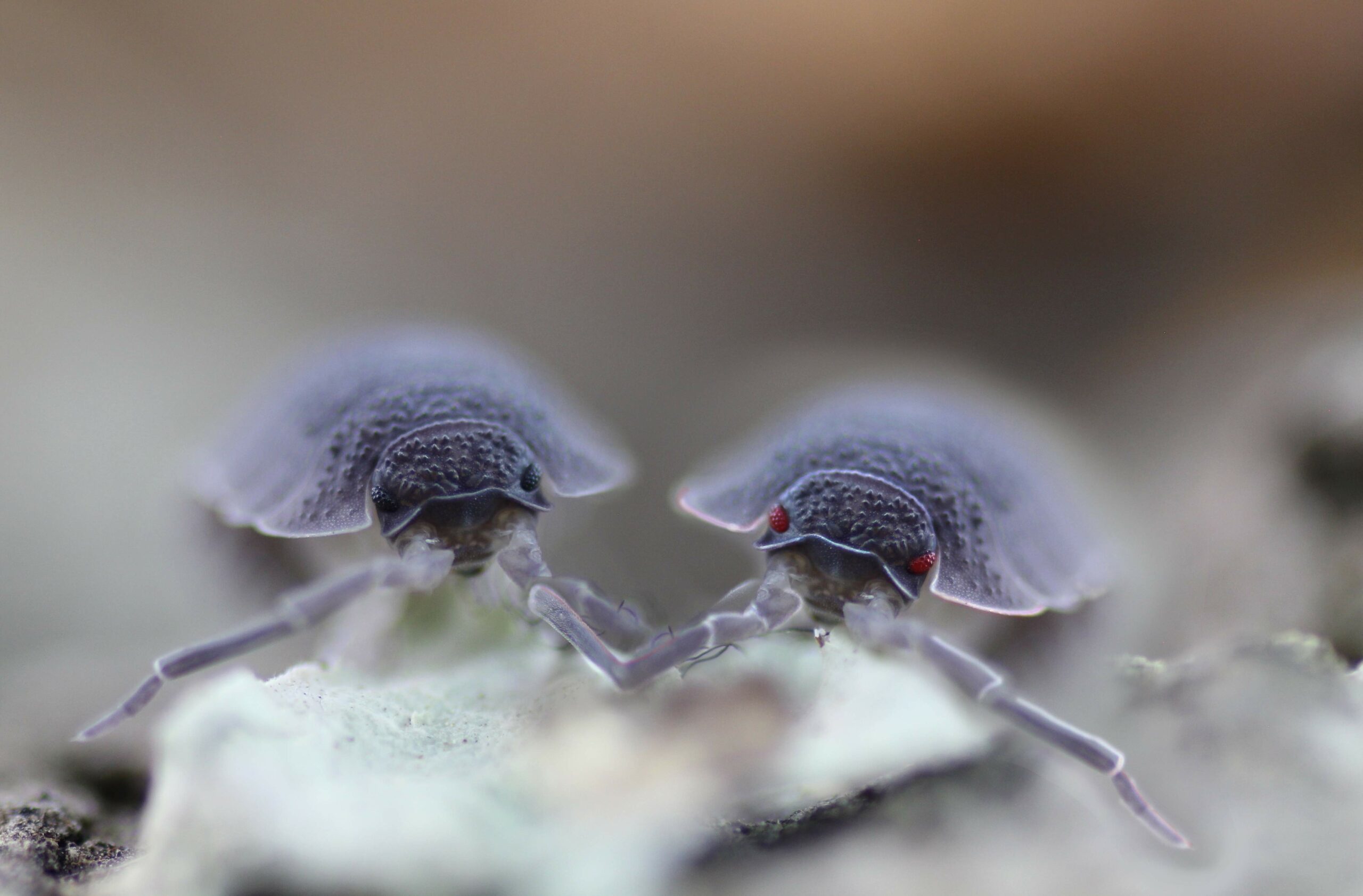


Today I would like to discuss the topic of designer morphs with you in more depth. For me, this is already the second attempt to cross color mutations with each other, but more on that later. In my last article, I wrote about Porcellio scaber “White Out” and whether we can succeed in combining different color mutations with each other. In our case, the white appearance of Porcellio scaber “White Out” with a Porcellio scaber “Orange”. We may be able to design a combination of the two species. But let’s start at the beginning: what is a designer morph?
Designer Morphen
The concept of designer morphs seems abstract at first, as if one wanted to play God or intervene in nature to change it according to one’s own wishes and ideas. In fact, these breeding forms involve crossing animals with each other that would be very unlikely to cross with each other in nature. The starting point for breeding the designer morphs is the mating of the different basic morphs.
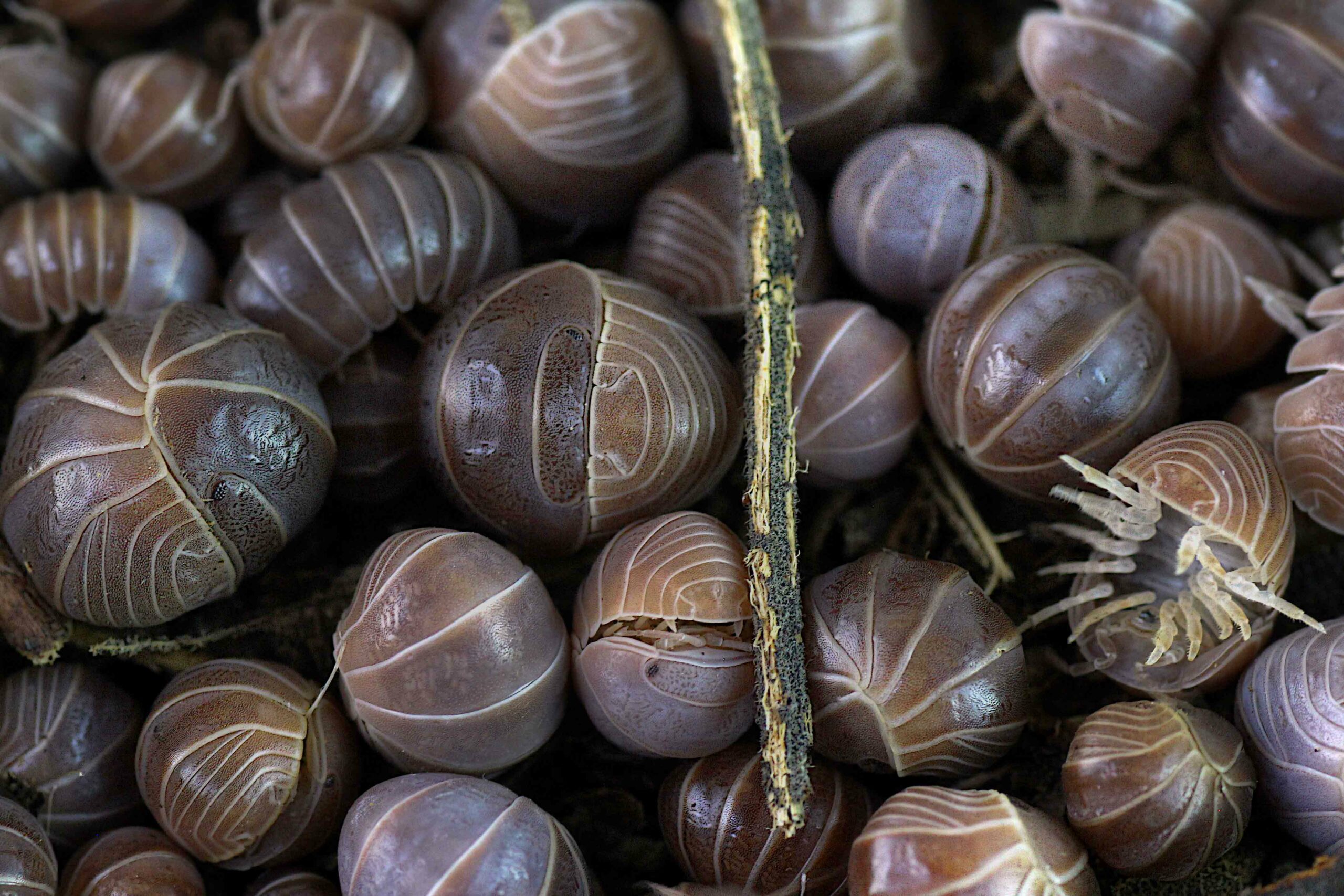
Basic morphs arise randomly through mutations in nature and in our breeding boxes. Mutations that immediately catch the eye are the so-called color mutations. Sometimes the external appearance changes so obviously that the observer selects the animal from the box and tries to breed out the random color mutation. This is how very different basic morphs were and still are created:
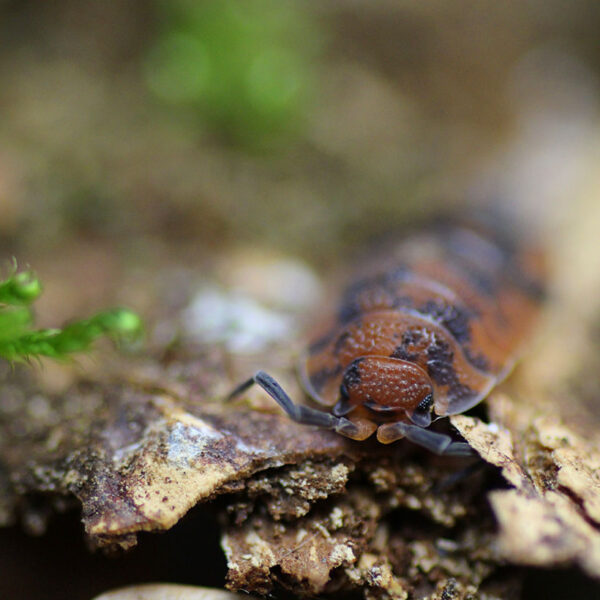

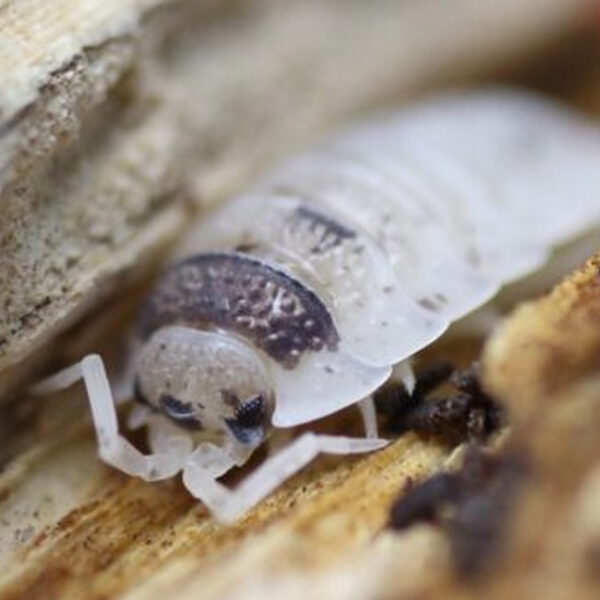
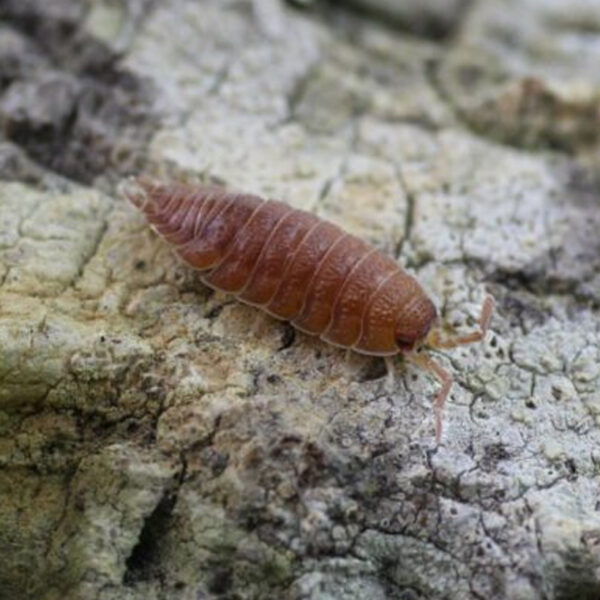
As these animals do not meet and mate with each other in nature, the crossbreeding between the different basic morphs is referred to as designer morphs. But which basic morphs are suitable for experimentation?
Selection of the basic morphs
As mentioned in the introduction, this is my second attempt to breed designer morphs. In my first test I used Porcellio laevis “Panda” and Porcellio laevis “Orange”. My imagination developed an orange spotted Porcellio laevis. In other words, a cross between the color of Porcellio laevis “Orange” and the pattern of Porcellio laevis “Panda”. But even after x generations, I didn’t even come close to my desired result.
My conclusion was that the patterning and color traits are on the same gene. Therefore, there is no mixing. Due to my lack of documentation, I cannot say exactly whether the ratio of the offspring of the two color mutations was 50/50 or whether one mutation prevailed more strongly than the other. I will therefore keep a detailed record of my new experiment and report it to you in new articles.
The idea based on the first experiment was that the eye colors of basic morphs of Porcellio scaber could be transferred to another color morph. Two colors that are easy to recognize at first glance are best suited for this. The big difference in color helps me later with the selection and therefore I choose the following ground morphs for my experiment.
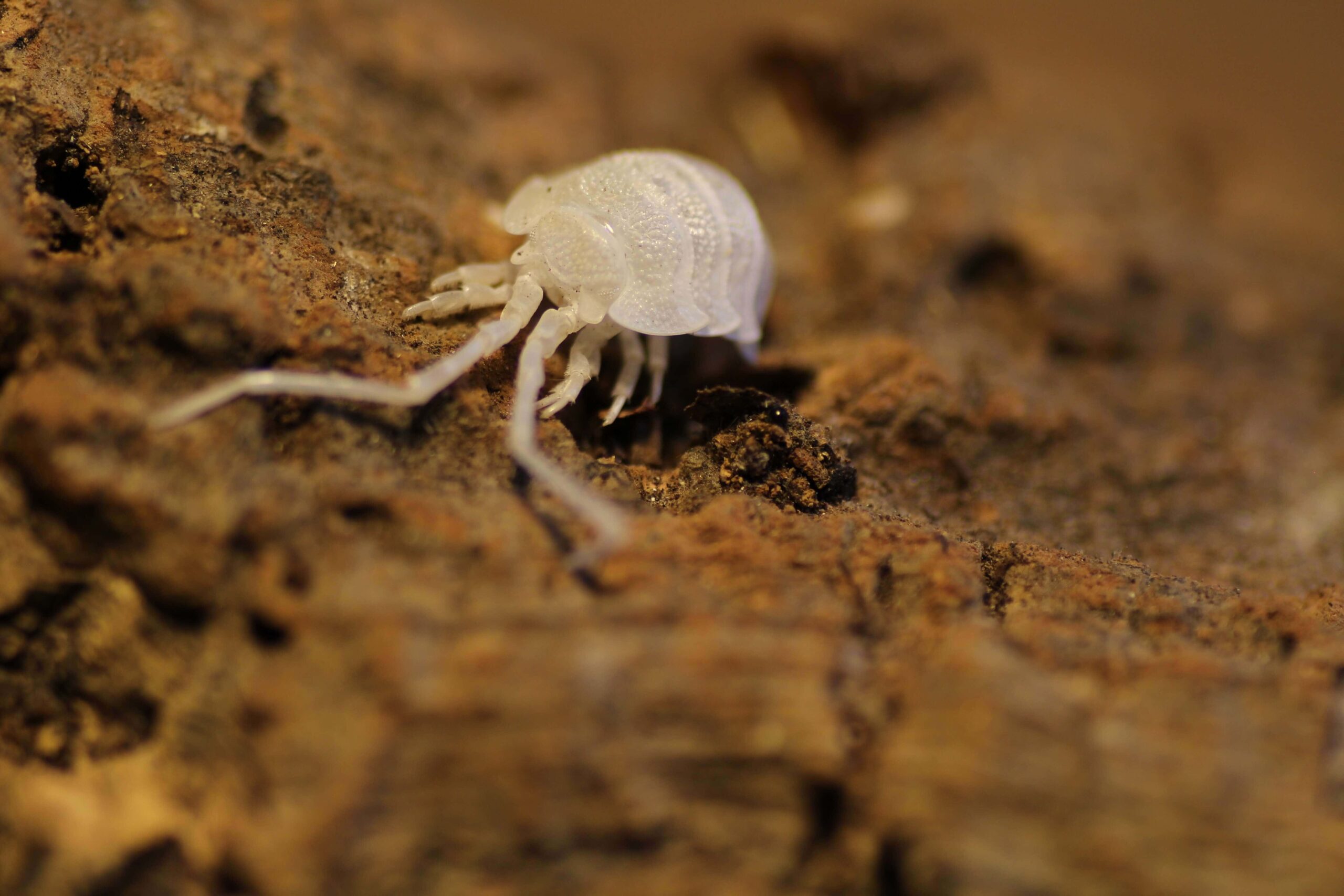
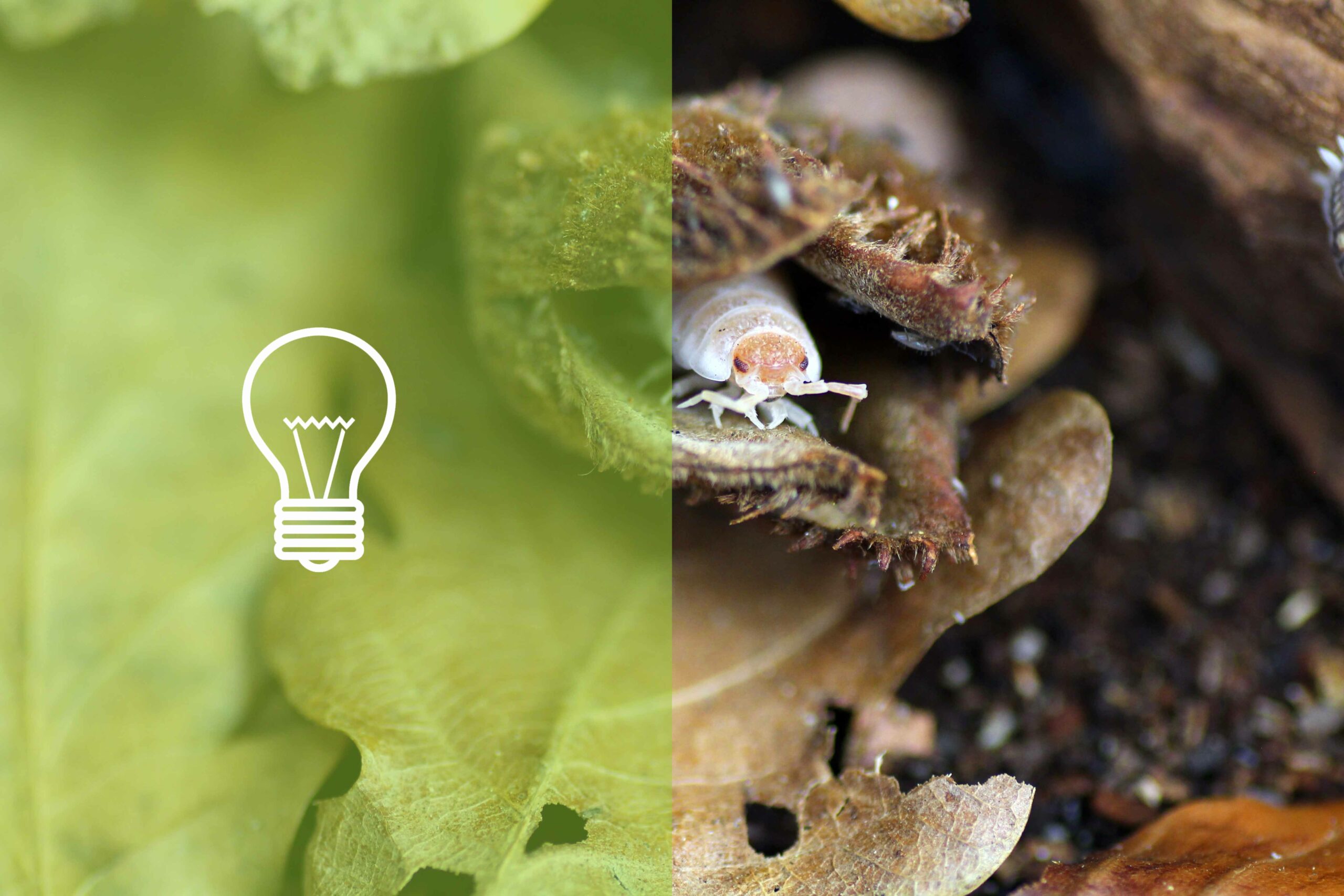
Porcellio scaber “White Out” x Porcellio scaber “Orange”
True to the motto “two are better than one”, I also test the transferability of the eye color:
Porcellio scaber “Orange” x Porcellio scaber “Dalmation”
Of course, I also like to be surprised and wouldn’t be disappointed if the colors of the respective base morphs blended together. That makes me curious about the test results.
The ground morph Porcellio scaber “Ghost” stands out not only because of its lavender basic coloration, but also because of its massive physique. Perhaps this characteristic can be transferred to a, in comparison, rather dainty ground morph. That’s why I choose it for my third attempt:
Porcellio scaber “Ghost” x Porcellio scaber “White Out”
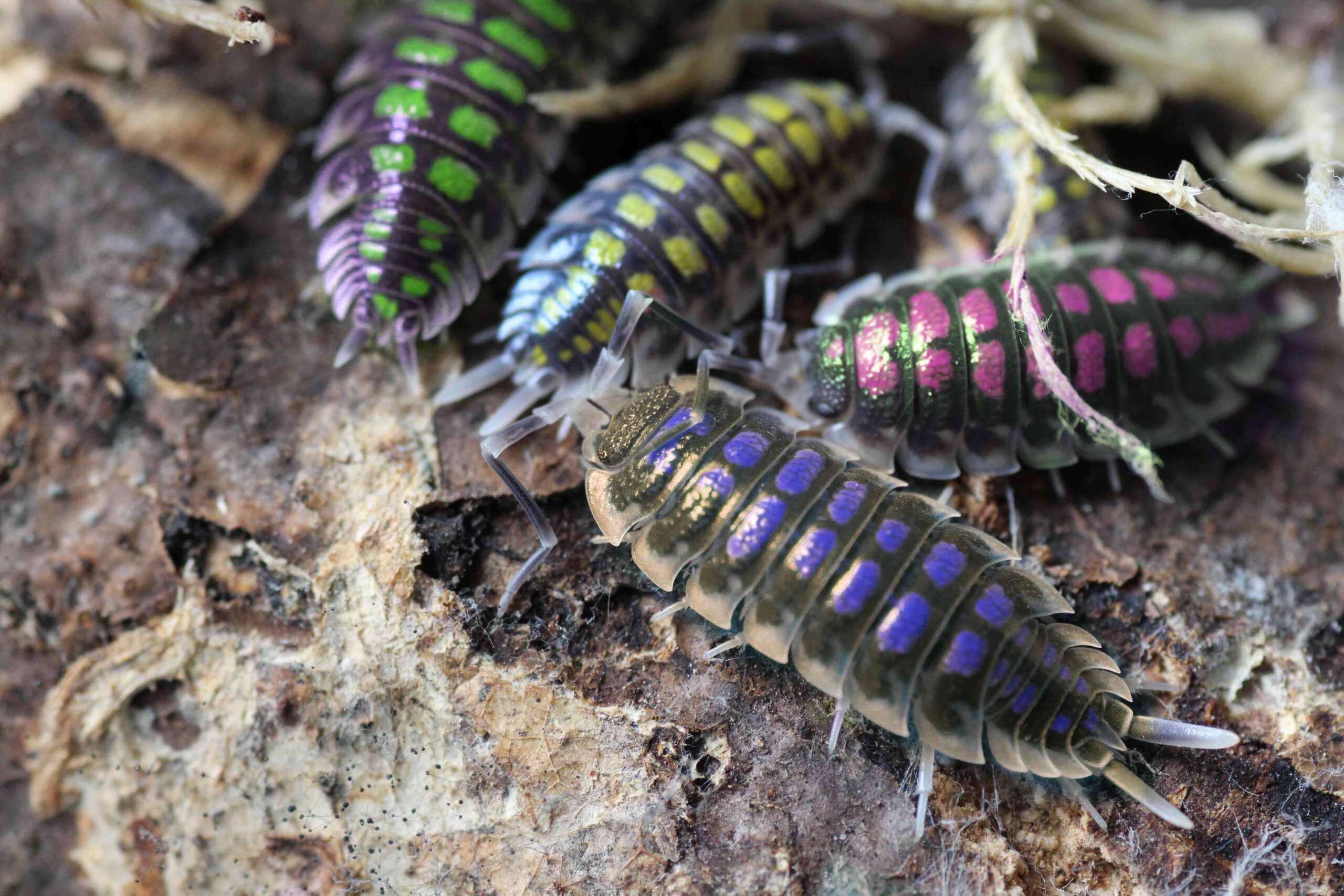
Last but not least, I create the experiment with my favorite color variant Porcellio scaber “Lava”. It is large, its colors are bright and contrast beautifully with each other. They also reproduce best of all the basic morphs of Porcellio scaber. I therefore put the following animals together in my last attempt:
Porcellio scaber “Lava” x Porcellio scaber “White Out”
The Porcellio scaber “White Out” is so numerous in the experiment because it has a very interesting color mutation and therefore changes can be detected very quickly.
I’m looking forward to the experiment and hope to see some successes. Perhaps we will succeed in creating a new color mutation here.
You can find out more about the exact implementation in my next article.


Leave a Reply
You must be logged in to post a comment.