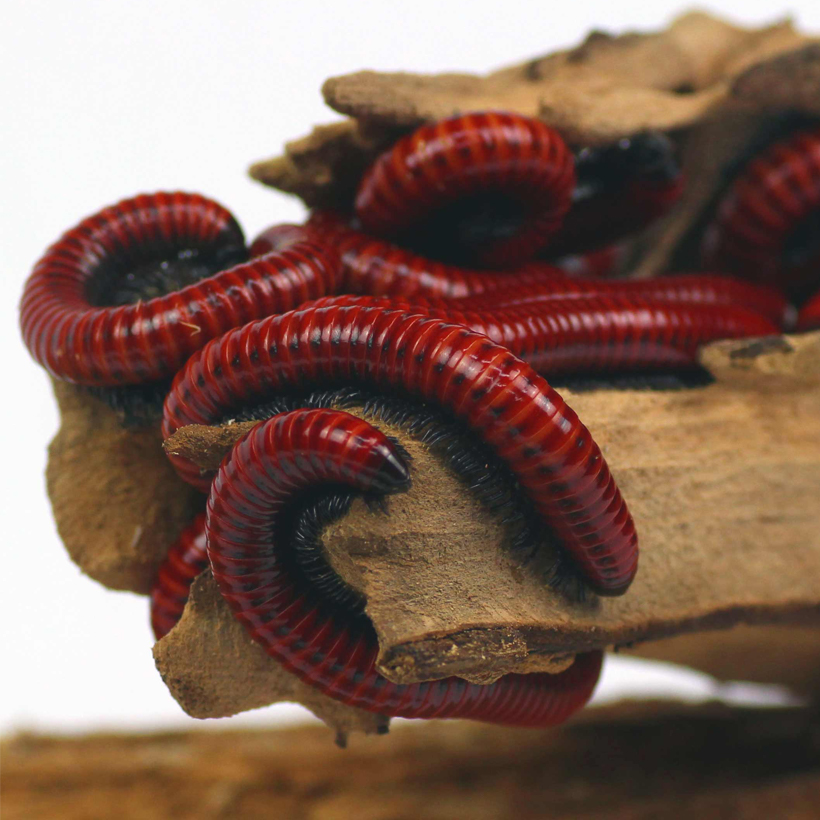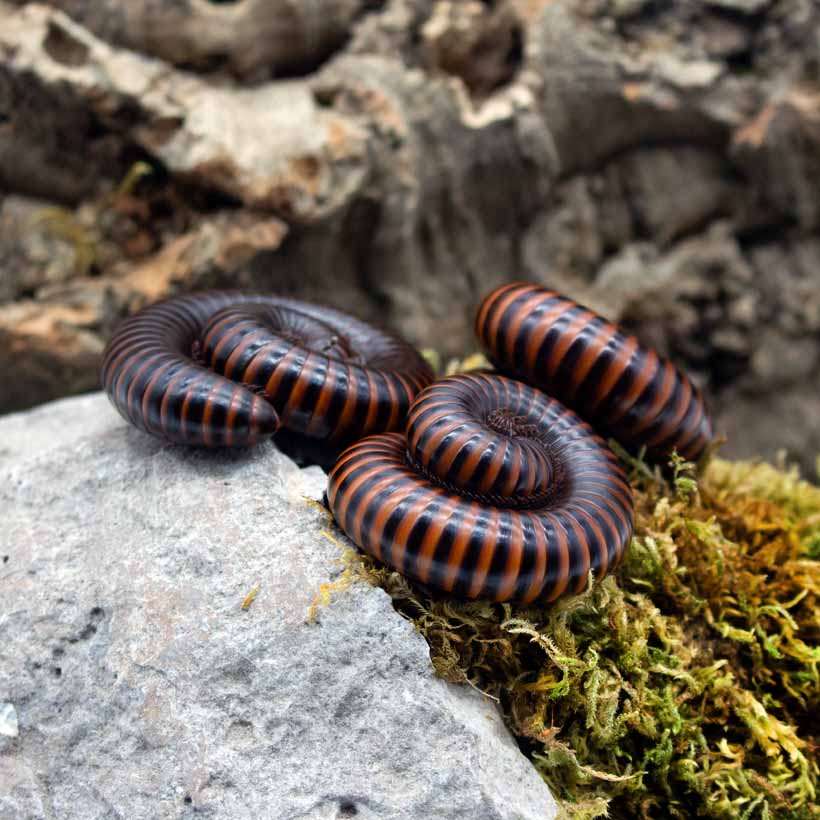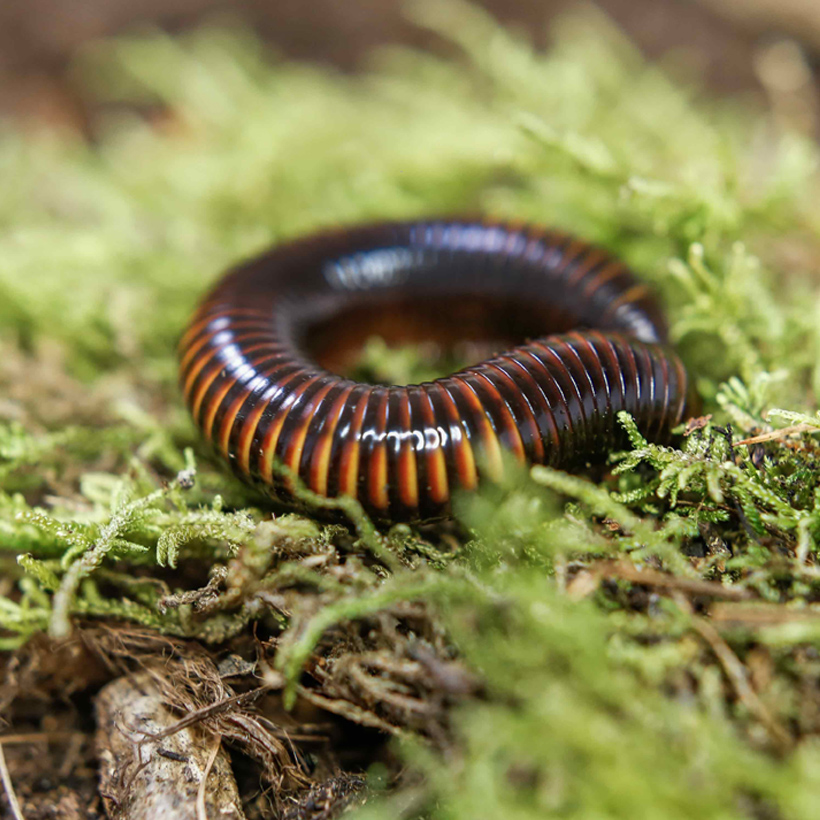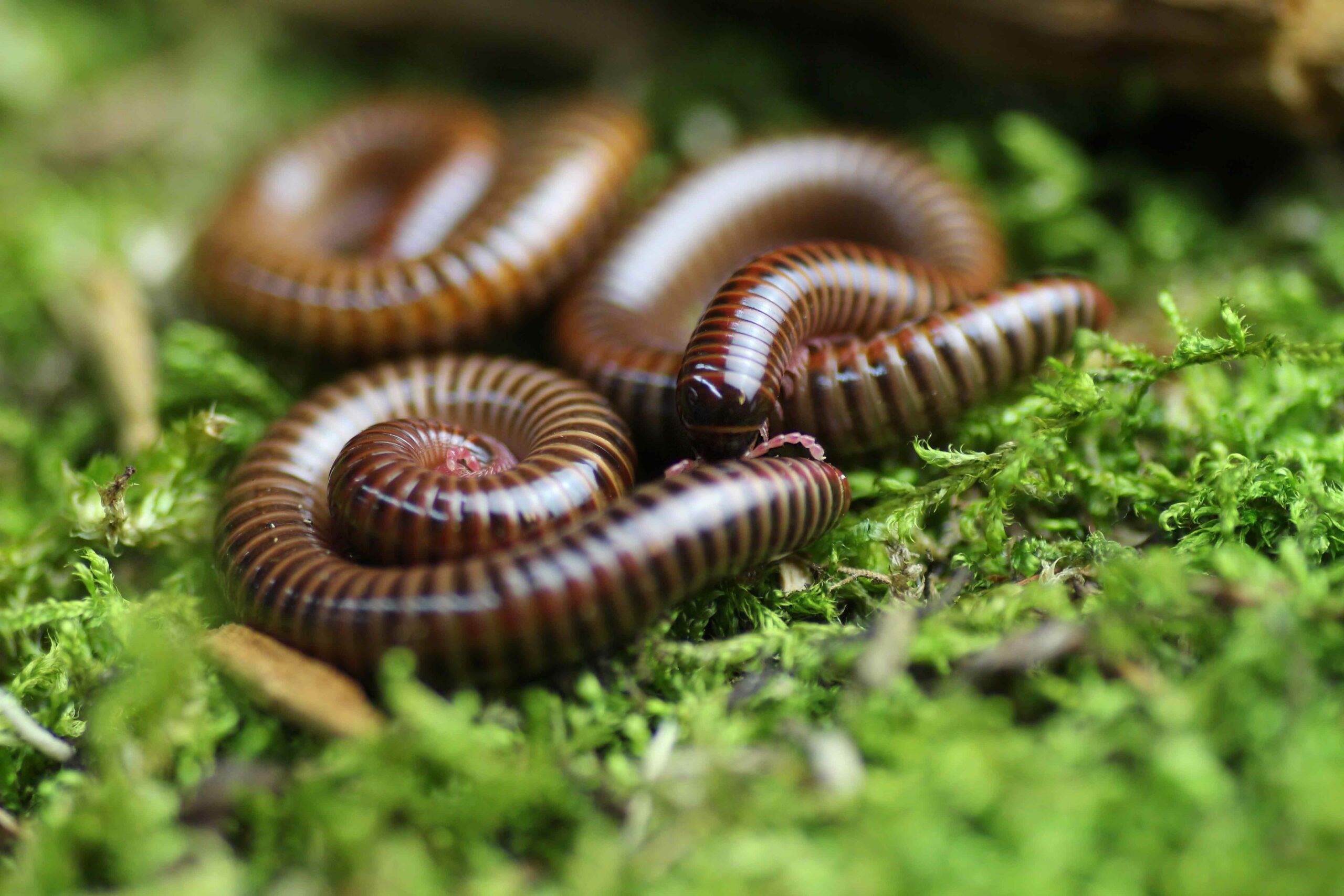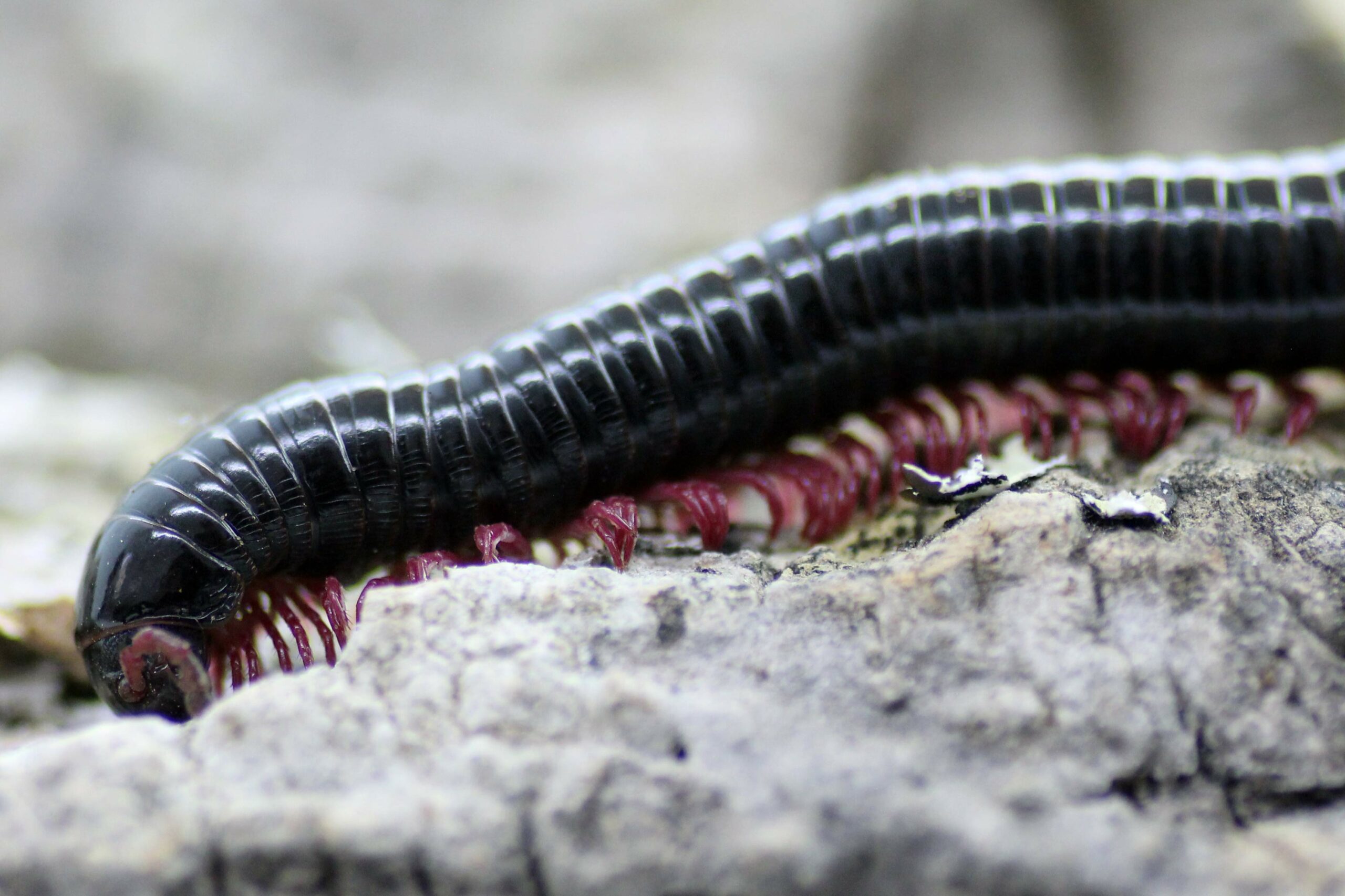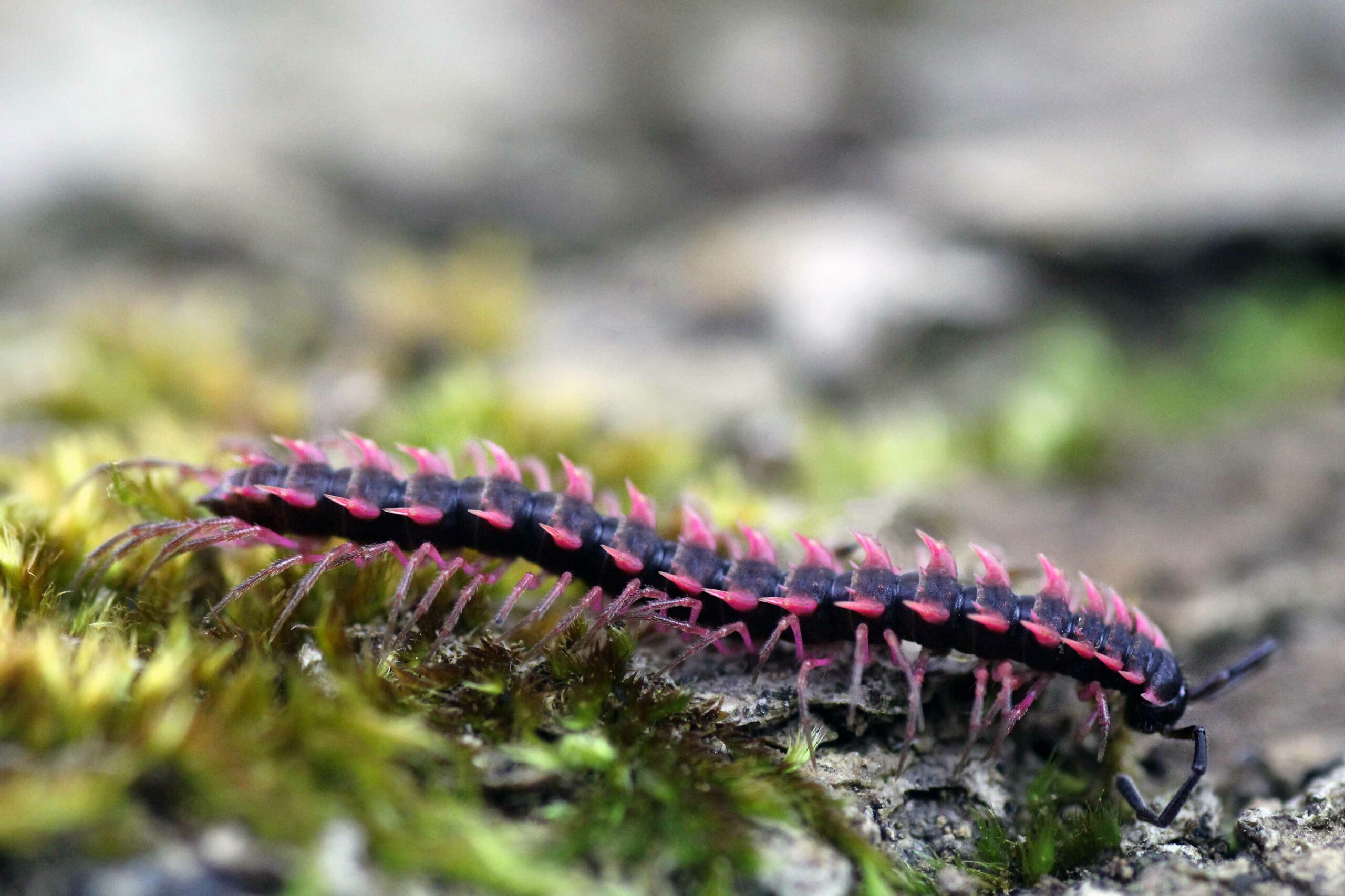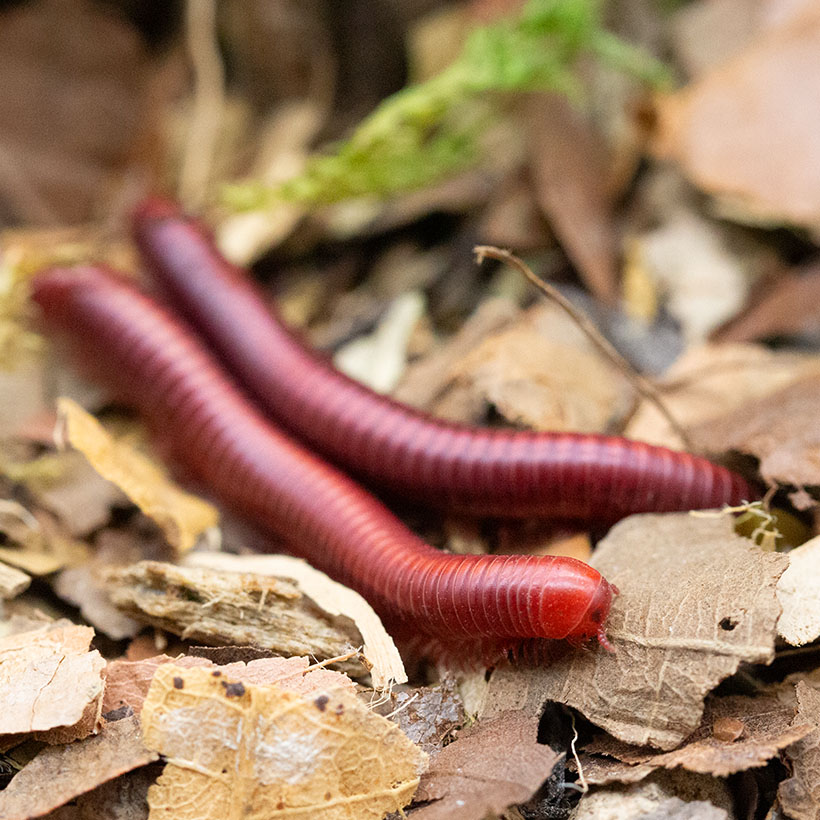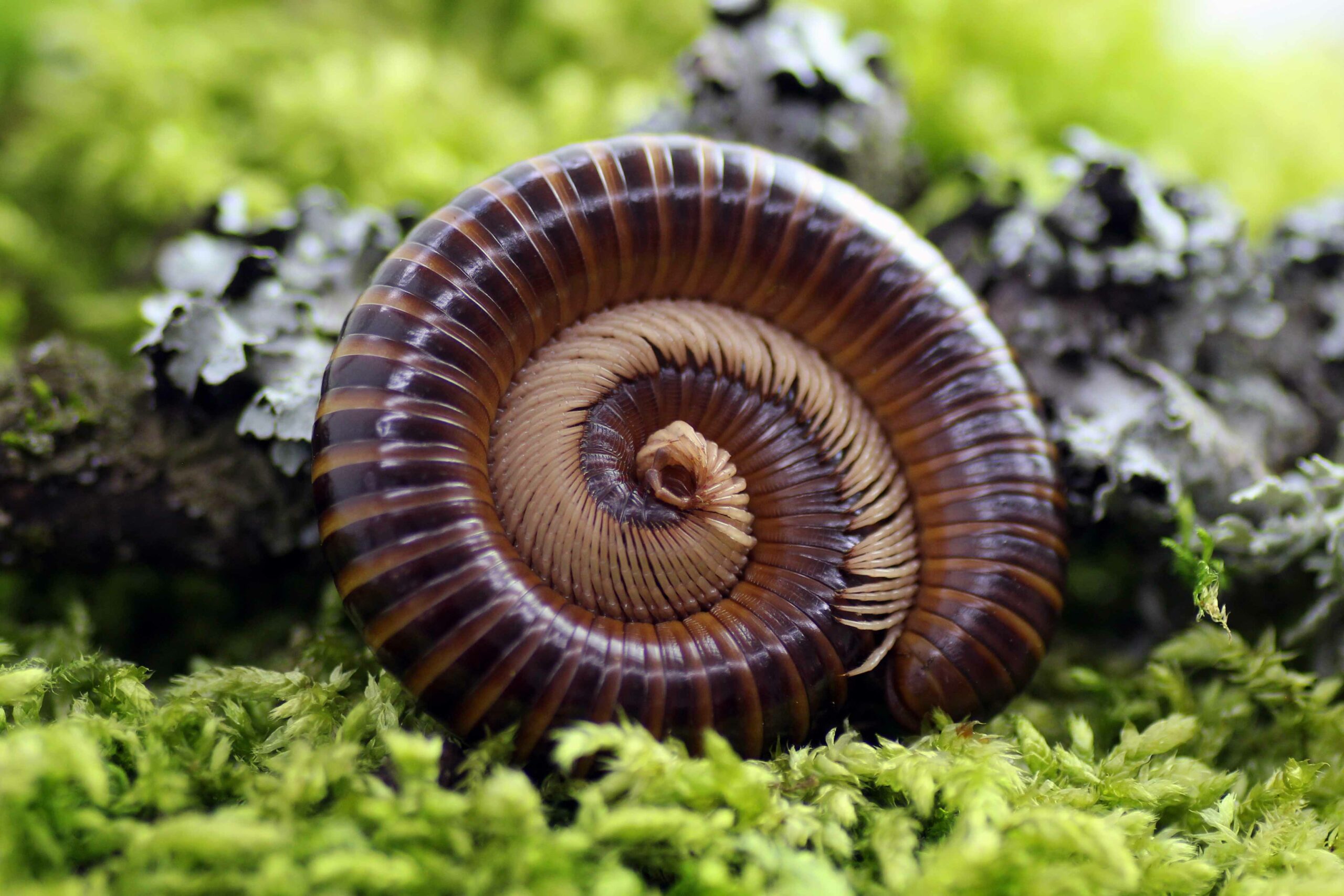


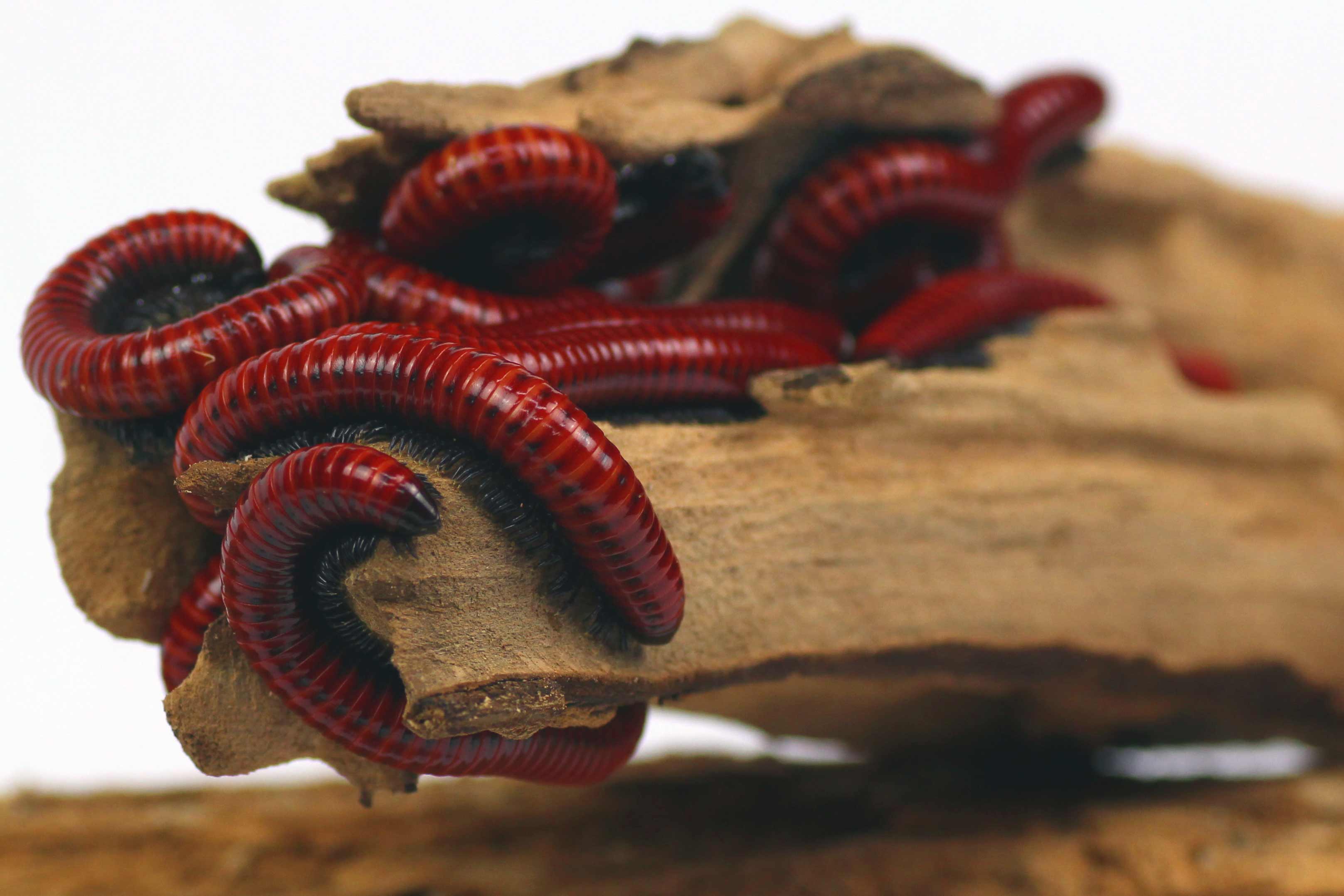
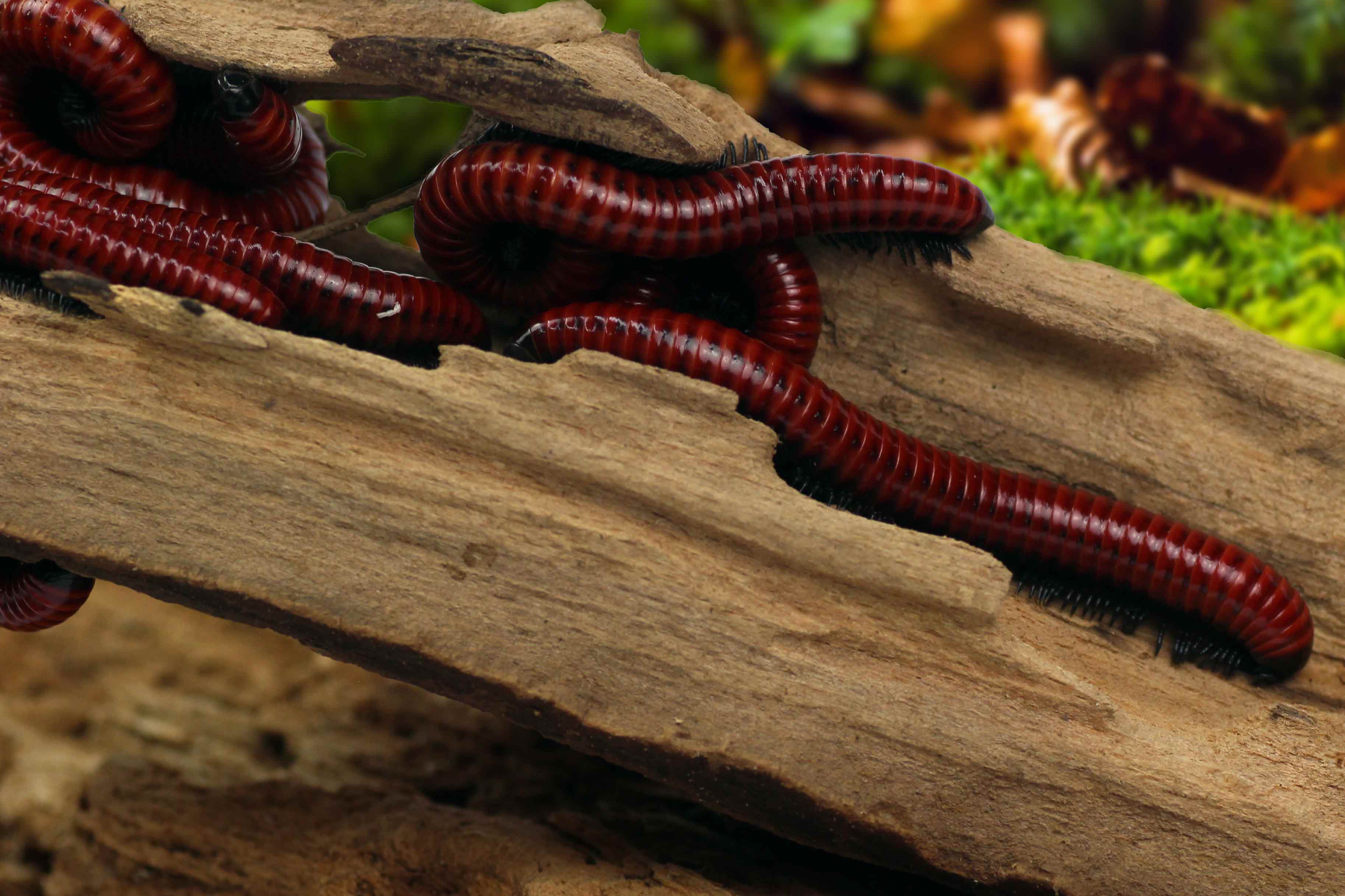
| Name | Centrobolus sp. |
| Order | Spirobolida |
| Family | Pachybolidae |
| Subfamily | Centrobolinae |
| Origin | KwaZulu-Natal (region in the northeast of South Africa), Mozambique (south, bordering South Africa) |
| Temperature | 24-28 °C during the day, 21-24 °C at night |
| Size | Length up to 6cm, width 6mm, segments 44 |
Behavior:
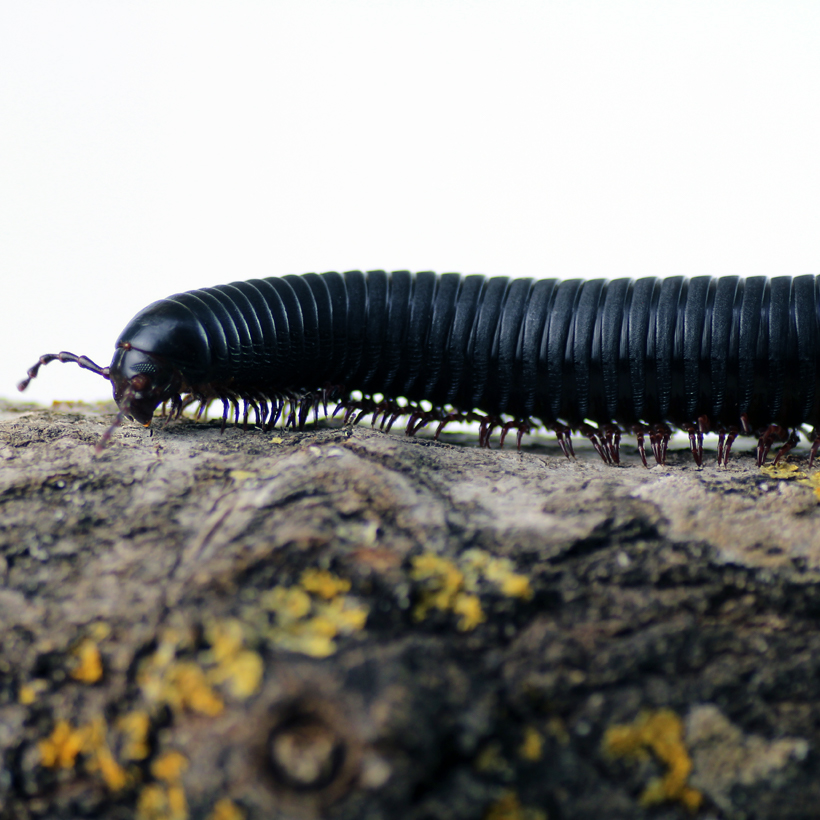
Centrobolus spec. “Mozambique” is an extremely showy and very active beginner species. When looking into the terrarium you can always see animals running around on the substrate or climbing on branches. It is therefore advisable to offer this diplopod species plenty of climbing opportunities.
They like to eat tunnels in large pieces of dead wood, where they like to stay in groups. It is generally noticeable with Centrobolus spec. “Mozambique” that they often occur in groups. I would therefore advise you not to keep this species individually.
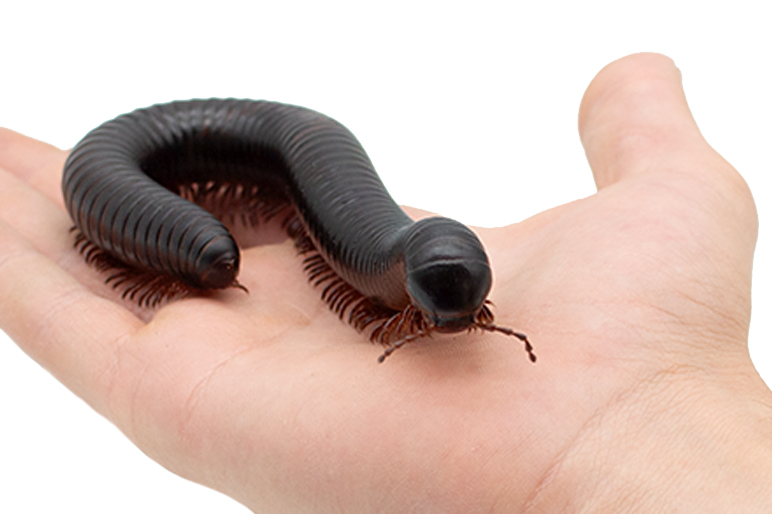
Sometimes you want to take your animals in your hand. Be it to recognize the sex or to check whether everything went smoothly during moulting. Centrobolus spec. “Mozambique” absolutely calm and not at all anxious. On the contrary, they are still very active on the hand or fingers. It has never happened to us that we had secretion on our hands afterwards. Even when it comes to sexing, they remain relaxed and it is easy to see which sex they are.
Container:
Up to 10 Centrobolus spec. “Mozambique” can be kept in a container measuring 30 cm x 30 cm x 40 cm. The substrate height should be at least 10 cm so that the animals can burrow into it without any problems. This is particularly important during the moulting phase, as the animals moult in the forest leaf humus.
If you use a plastic box, you should drill sufficient air holes in the container. It should be ensured that a humidity of 60-80% can be kept constant.
When climbing on branches, you should be careful not to simply place them on the substrate. This creates the risk of the animals undermining the supporting points and the branches then falling over, which could harm the animals.
To avoid this beginner’s mistake in advance and still offer your Centrobolus spec. “Mozambique” a safe place to climb, simply place the branches on the bottom of the terrarium when setting up the terrarium and then fill in the substrate. If you already have an existing terrarium, you can of course simply move the substrate to the side and place the branches on the bottom of the terrarium. Incidentally, anything that is completely dry and stable enough for the animals is suitable as branches.
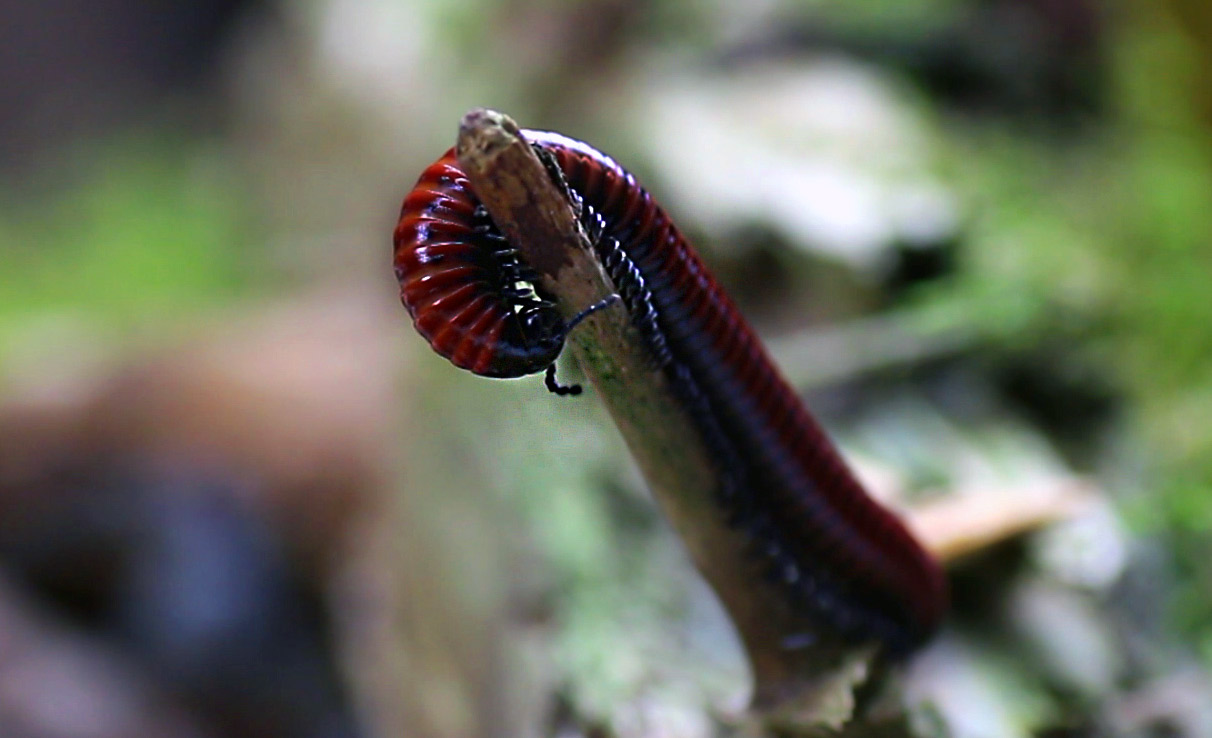
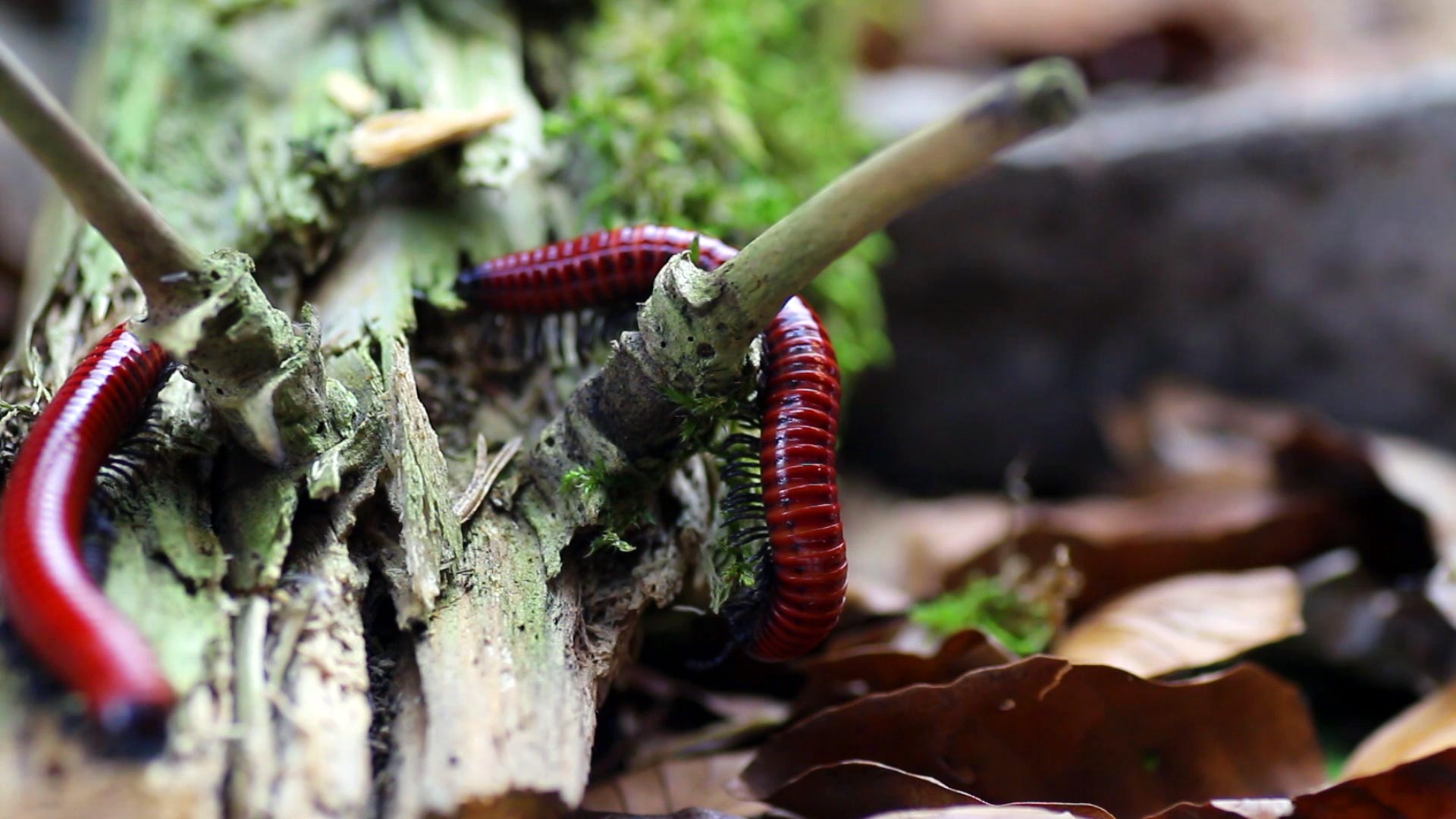
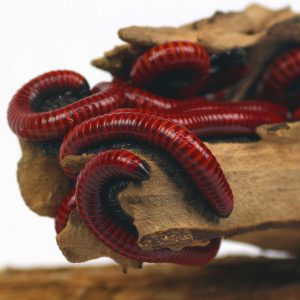
Centrobolus spec. “Mozambique”
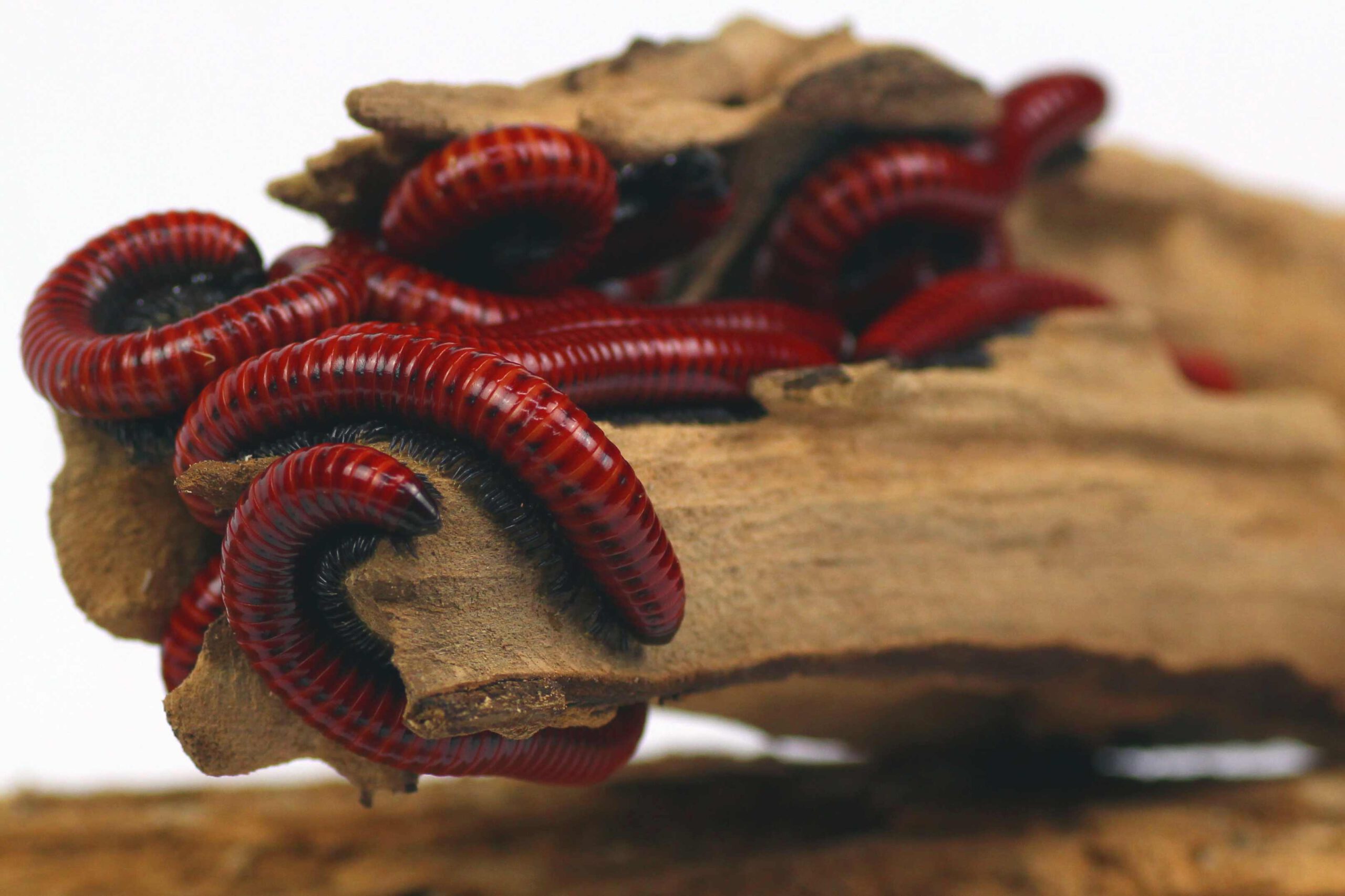
Small, bright red millipede that is also suitable for small terrariums.
Out of stock
Breeding:
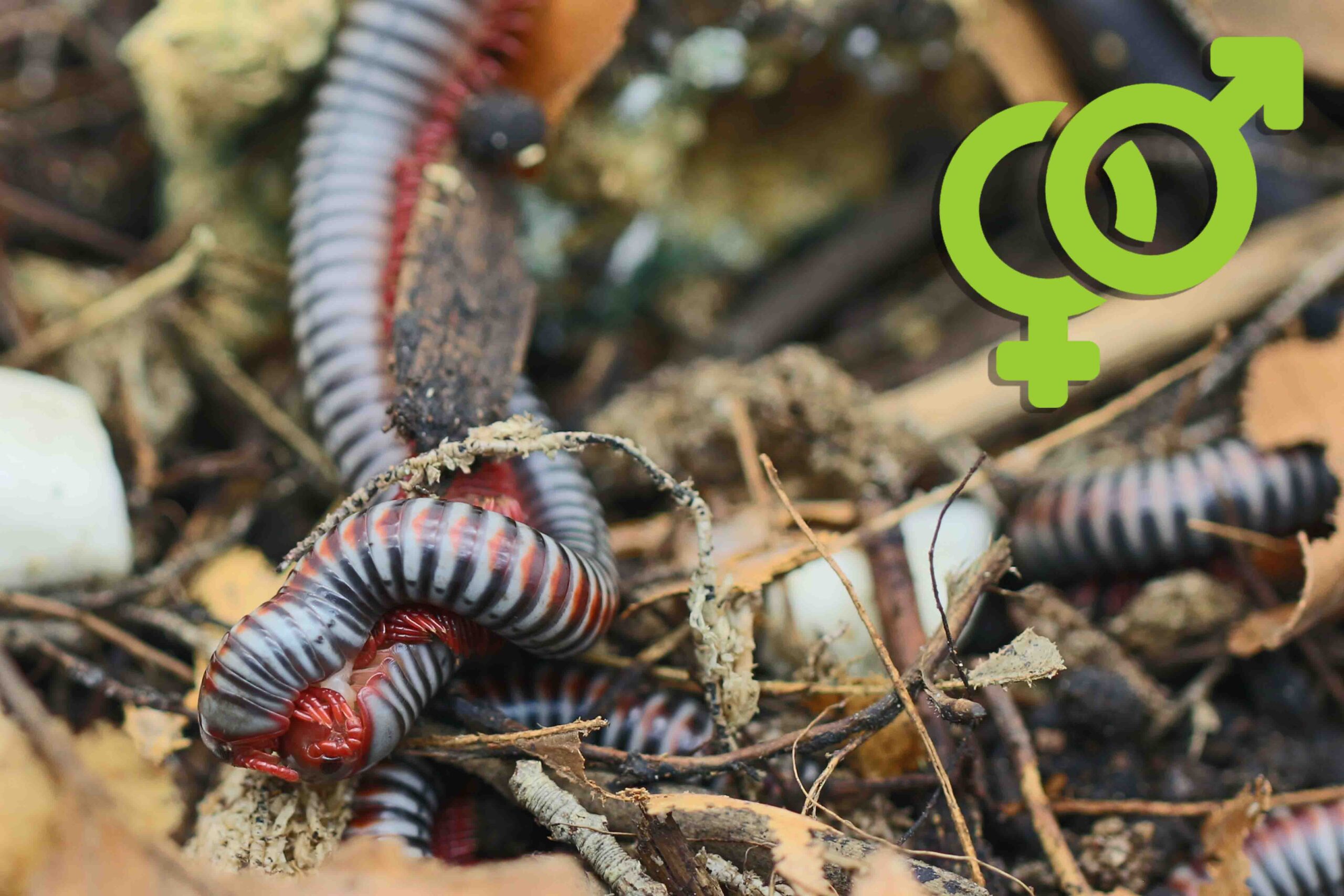
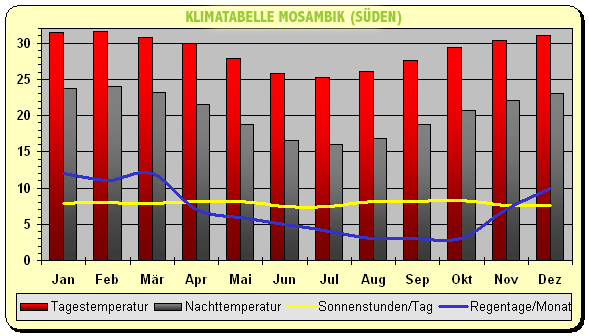
If all the husbandry parameters are correct, Centrobolus spec. “Mozambique” can be observed mating very frequently. Occasionally, however, difficulties can occur during reproduction. These problems become noticeable if no animals are ever observed during mating. It is then preferable to lower the night-time temperature to 16-18 degrees in winter. This simulates the protruding north-east monsoon, which brings humid air masses and precipitation in the months of November to March. Eggs are laid in the wild during this time.
It is advisable to leave the larvae in the box of the adults and let them grow up, as they feed on the feces of the older animals, especially at the beginning.
Special Features:
In contrast to other diplopod species, they eat virtually no vegetables!
Fruit, especially bananas and apples, are occasionally eaten. It is therefore better to feed smaller pieces so that no mold develops in the terrarium.
Instead, they consume a lot of protein in the form of protein pearls. Although the Centrobolus spec. “Mozambique” is a relatively small representative, it is the species that consumes the most protein. The offspring also come out of the substrate when fed protein and like to eat plenty of granules.
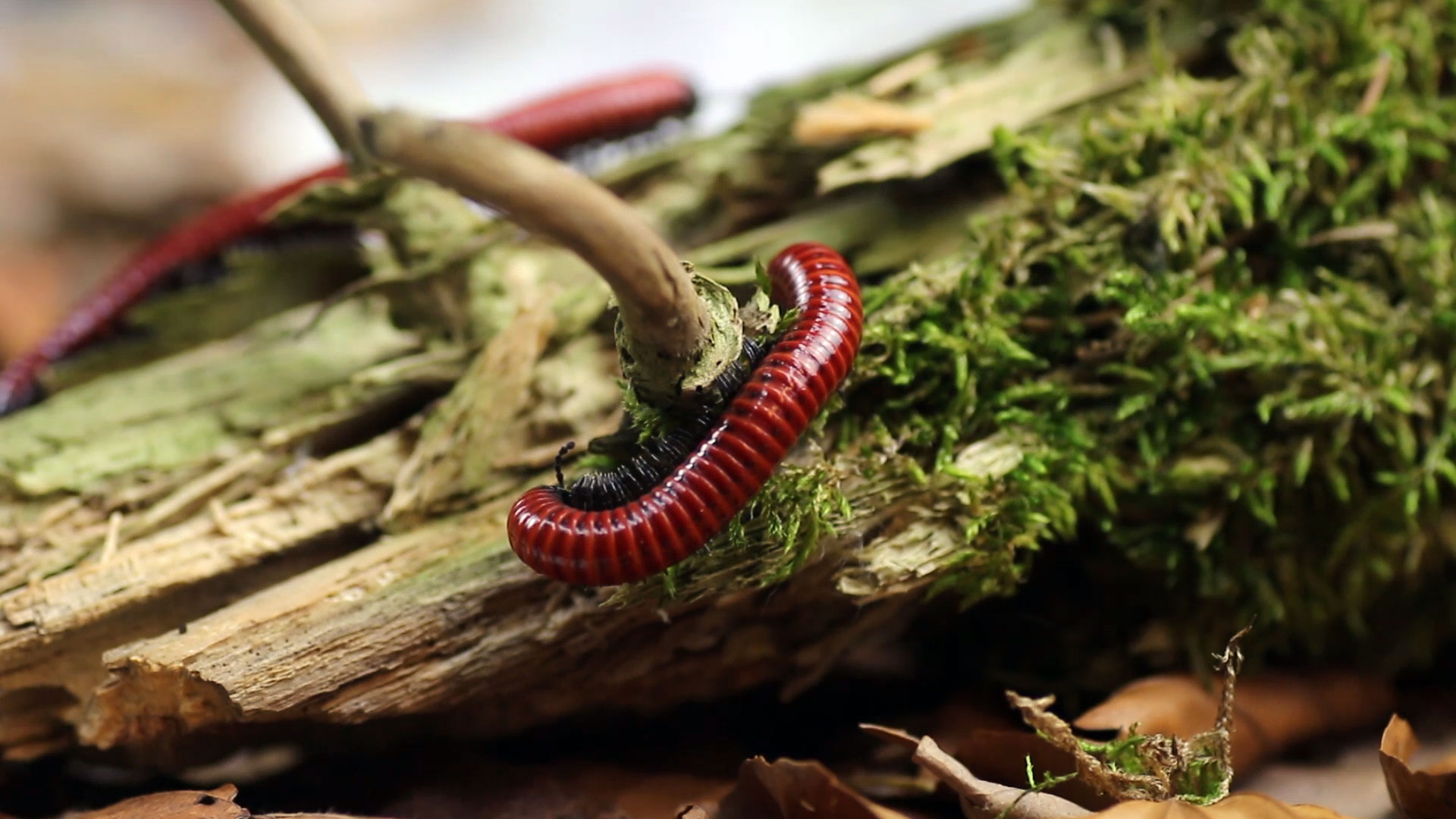
Tip: When changing the protein food, make sure that there are no larvae left in the food bowl.