Treptogonostreptus intricatus
Price range: 11,00 € through 13,00 € incl. VAT, plus shipping

Simple

Cameroon

< mixed

25°C – 28°C
Treptogonostreptus intricatus – the African millipede with striking red legs
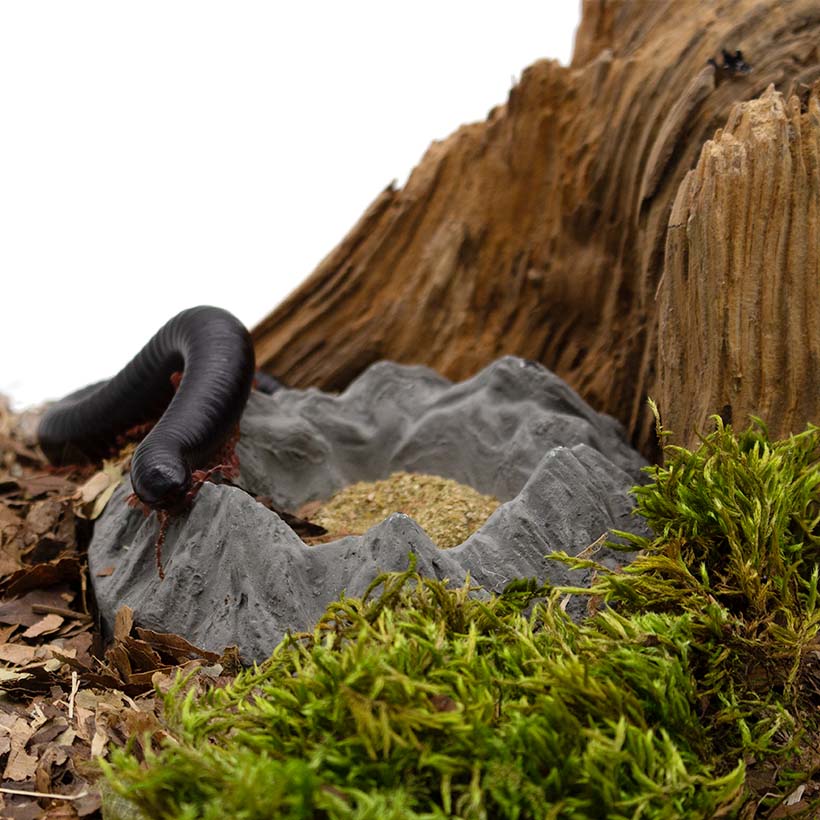
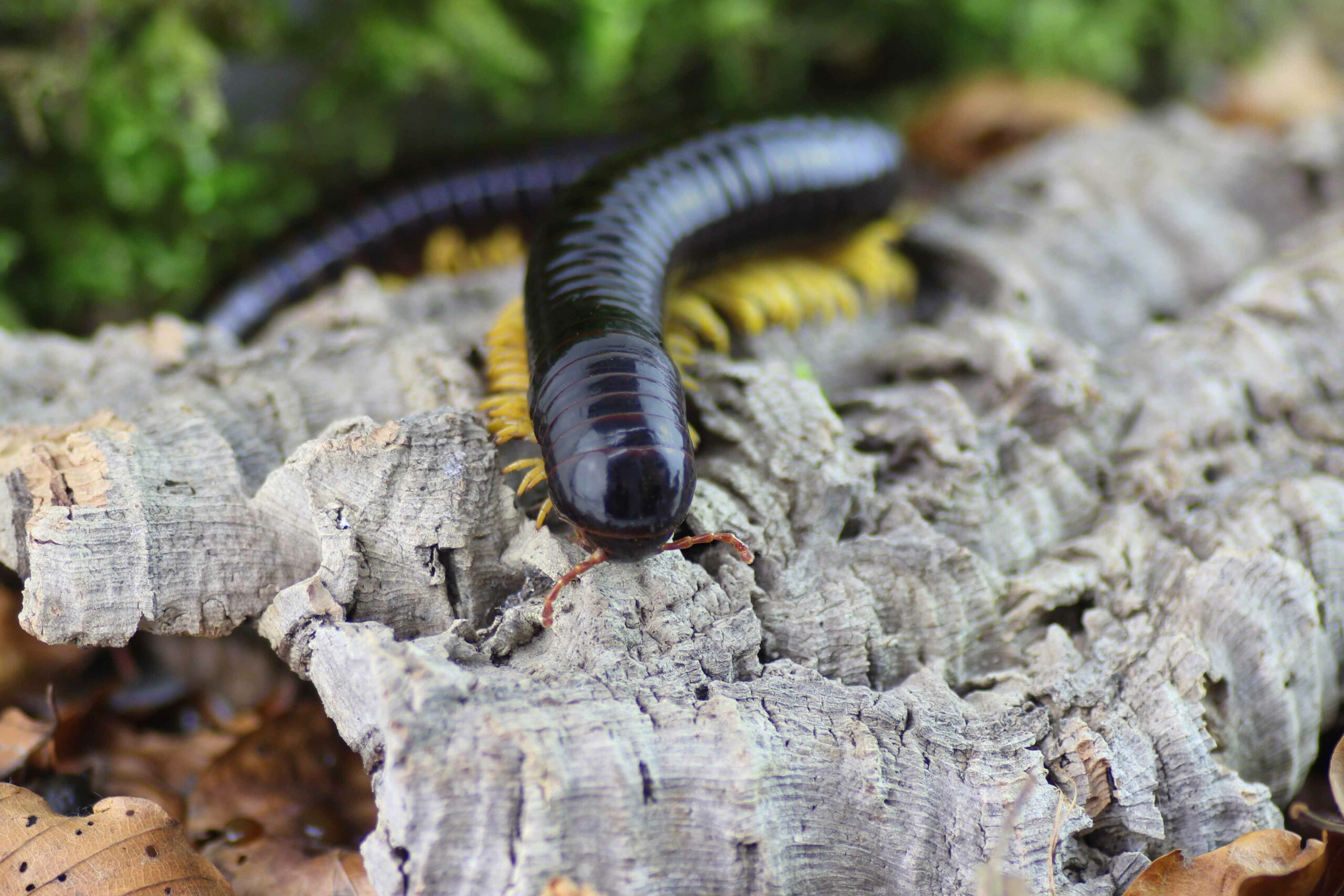
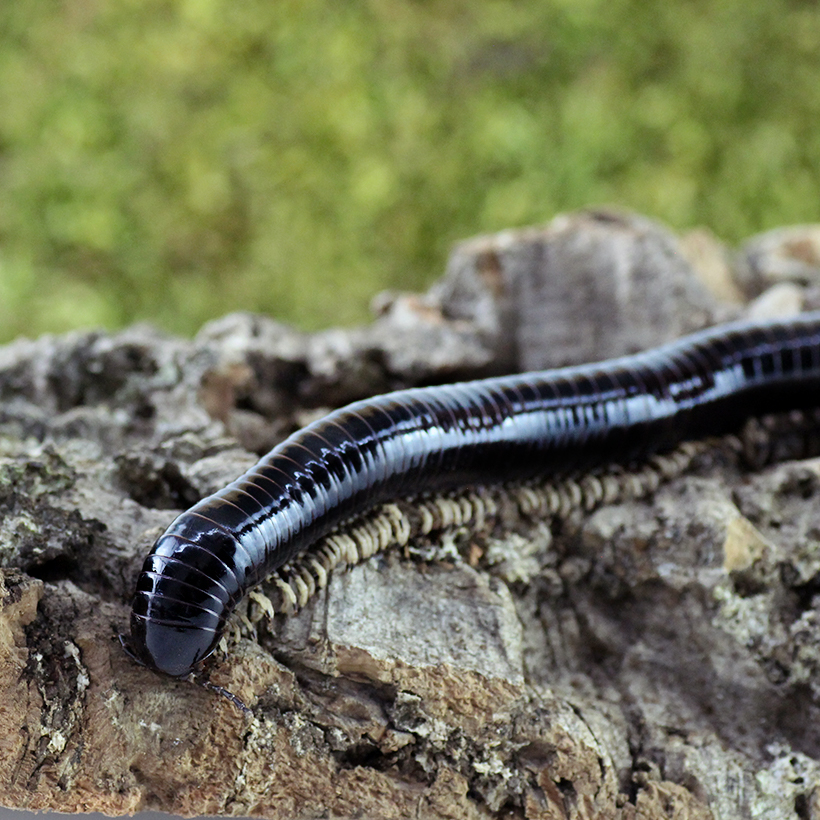
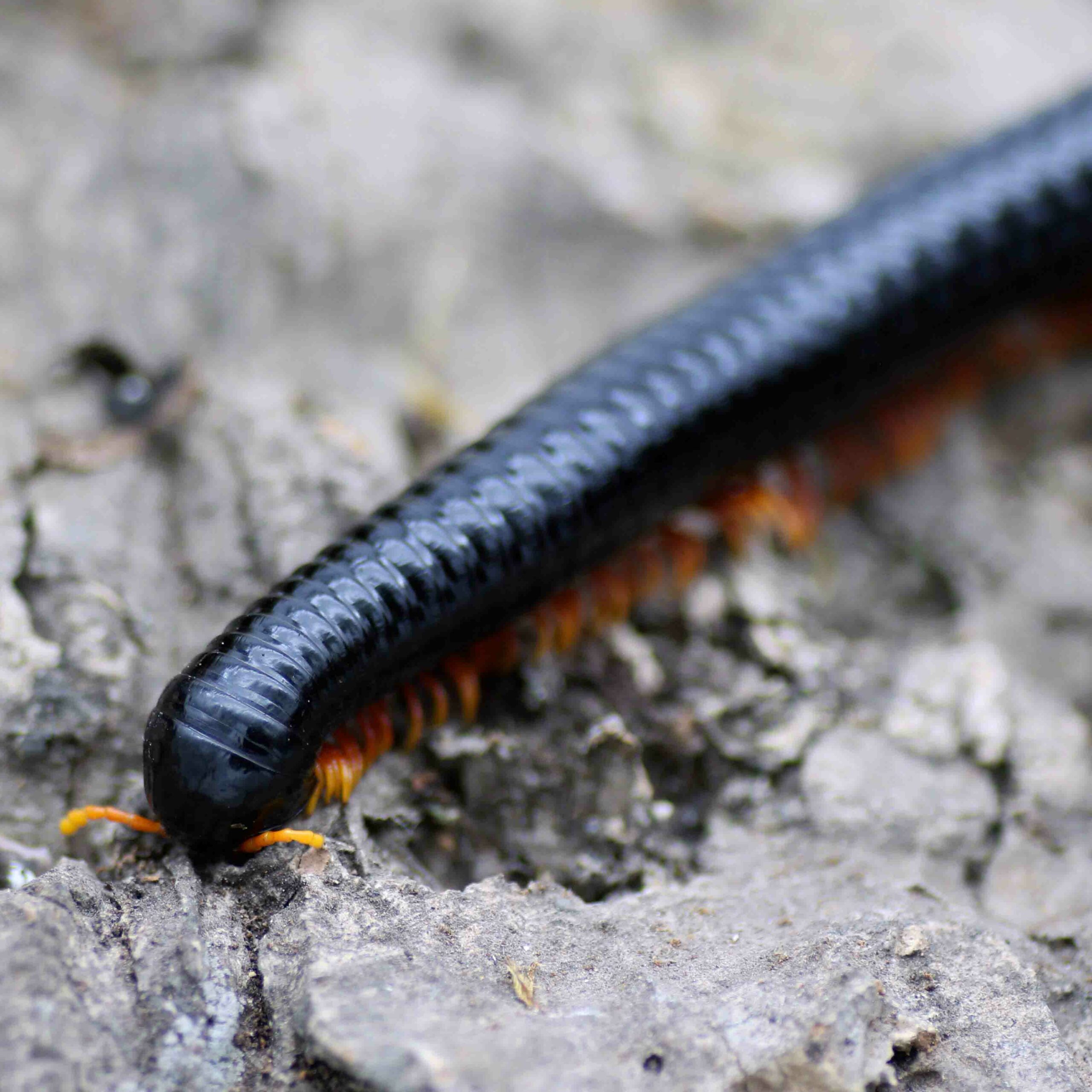
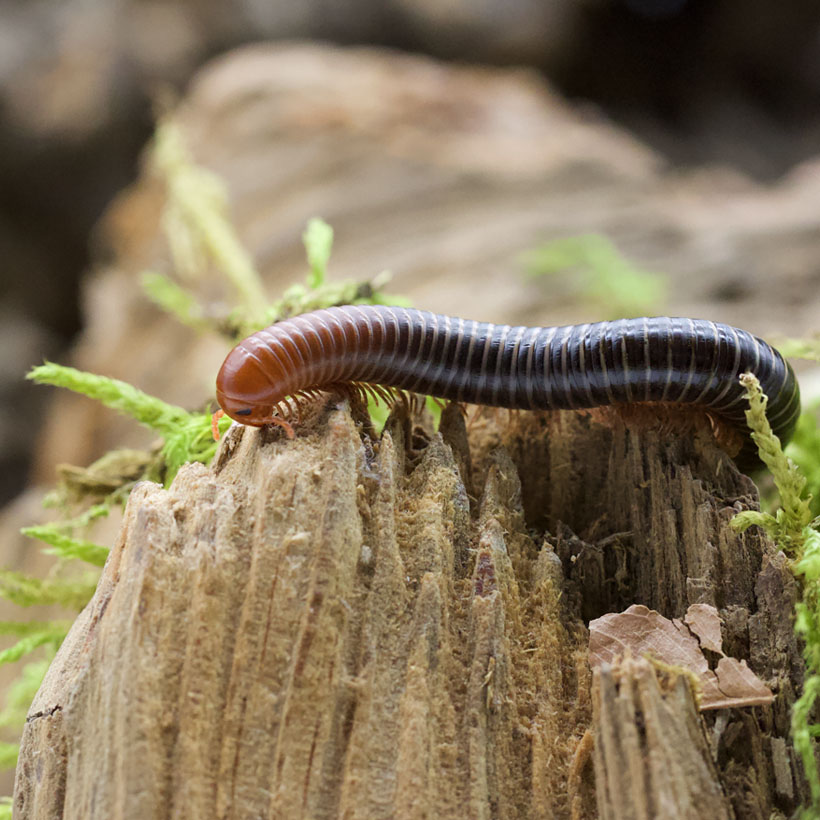
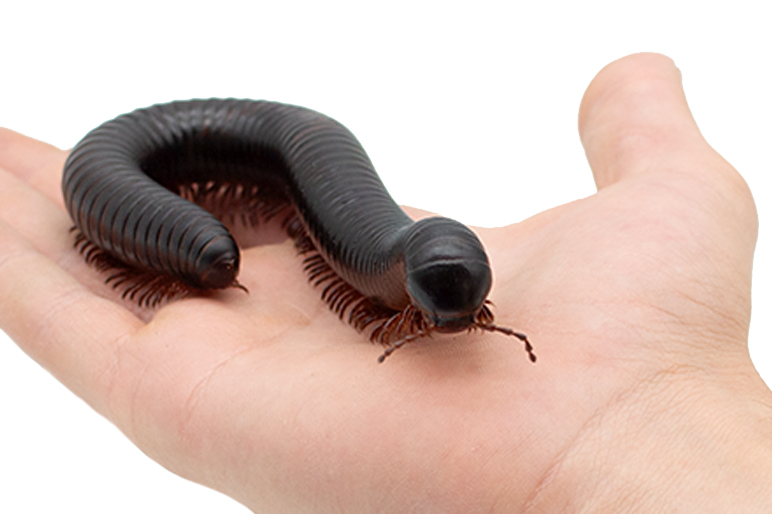
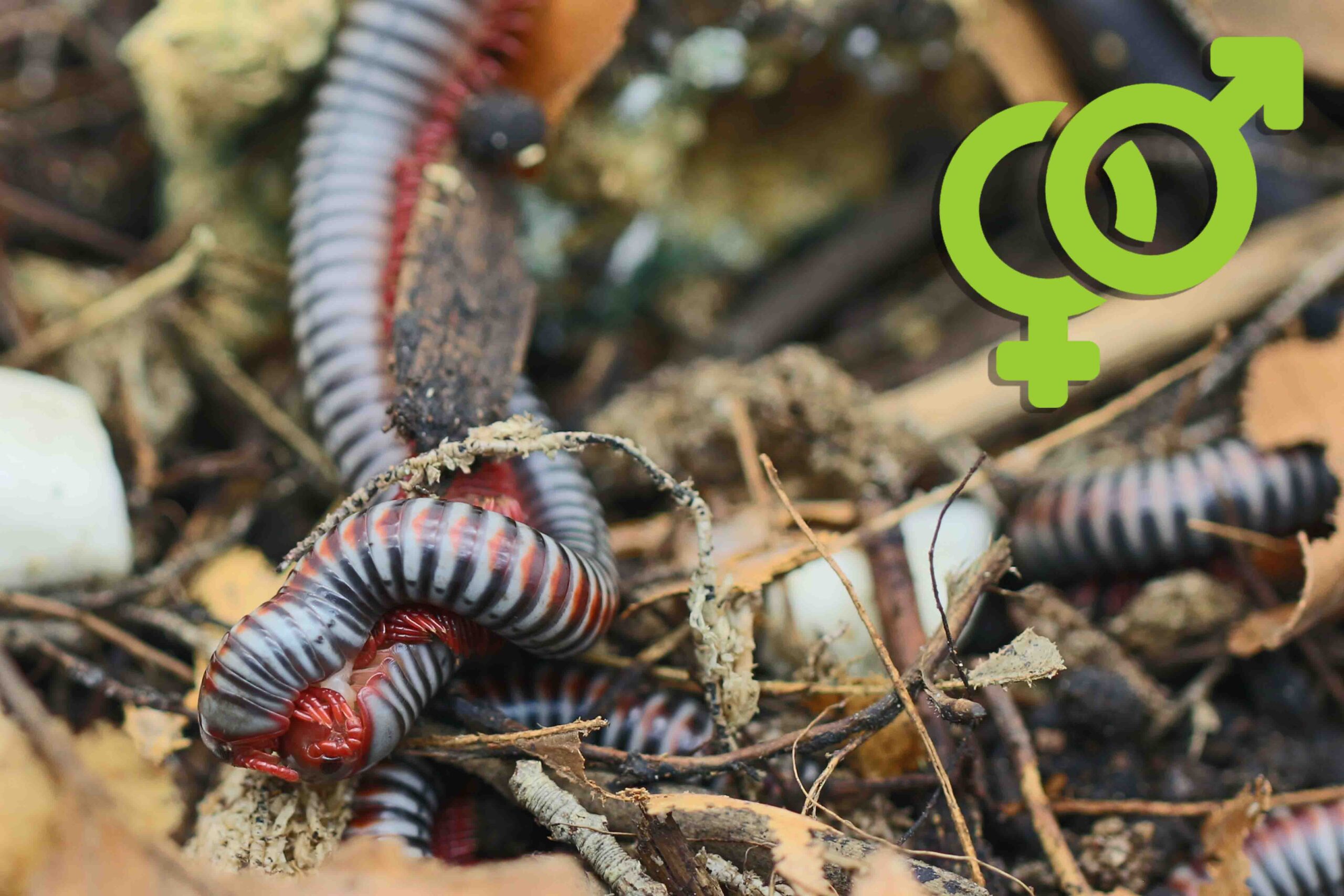
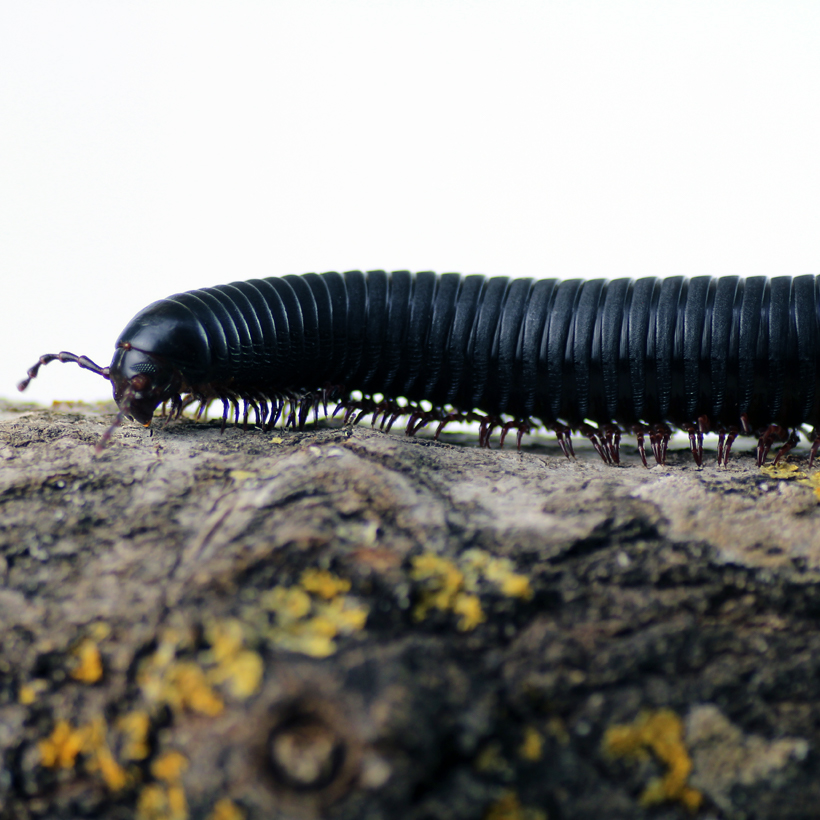
Treptogonostreptus intricatus is an attractive African millipede that stands out particularly for its elongated body and the striking coloration of its numerous legs.
Until now, this species has been listed in our database as Mardonius spec. “Cameroon Red Leg.” Due to the updated classification, you can now find this species listed as Treptogonostreptus intricatus. The previous name will remain in our description so that you can recognize the species and continue to find it using the old name.
Like other large millipedes, this species is a quiet ground-dweller. The animals roam the terrarium in search of decomposed plant material, disappear among leaves and wood, or burrow completely into the substrate.
It is precisely this natural way of life that makes Treptogonostreptus intricatus an interesting inhabitant for a forest terrarium designed to mimic nature.
From Mardonius sp. “Cameroon Red Leg” to Treptogonostreptus intricatus
Many of our customers still know these animals as Mardonius spec. “Cameroon Red Leg.”
This is the name under which the breeding line has been listed in the terrarium hobby until now. We can now classify these animals as Treptogonostreptus intricatus.
Of course, the name change doesn’t alter the animals themselves. If you’ve already purchased Mardonius spec. “Cameroon Red Leg” from us, you’ll still recognize your millipede by its new name.
The striking leg markings, which led to the previous trade name “Red Leg,” also remain one of the characteristic features of our millipedes.
An African millipede with striking coloration
Treptogonostreptus intricatus belongs to the African Spirostreptidae family.
The contrast between the darker body and the more strikingly colored legs is particularly interesting. The large number of leg pairs creates a fascinating play of colors as the animal runs.
As they do so, their legs move in characteristic waves along their bodies.
For us, it is precisely this calm, almost flowing movement that is one of the most interesting characteristics of large millipedes.
Peaceful and a delight to watch
Treptogonostreptus intricatus is a peaceful terrarium inhabitant.
The animals spend a lot of time foraging on the ground and eating organic matter. As they do so, they walk over leaves and roots or disappear among natural structures.
At other times, they burrow completely underground.
It is therefore normal for a millipede to be out of sight for a few days or even much longer.
Especially before molting, the animals often retreat deep into the substrate.
The substrate serves as both habitat and food
For Treptogonostreptus intricatus, successful care begins with the right substrate.
Unlike with many other terrarium animals, the substrate serves more than just as a base. Millipedes live in it, burrow in it, molt in it, and eat the substrate.
That’s why we recommend our special millipede substrate.
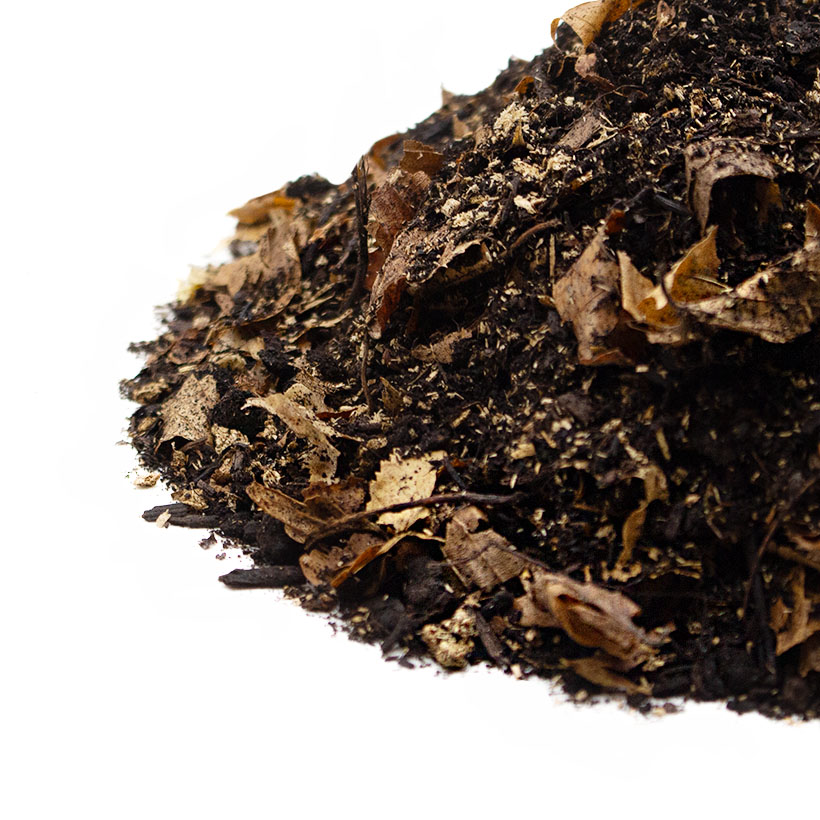
This substrate contains fermented leaves and white-rotted wood, thereby providing important components of their natural diet.
The millipede substrate should not be mixed with other substrates, as this would only reduce the proportion of usable food.
At least 10–15 cm of substrate depth
The substrate should be filled to a depth of at least approximately 10–15 cm. For adult animals and a terrarium of sufficient height, it may be even deeper.
A sufficient substrate depth allows the animals to burrow in completely.
This is particularly crucial for molting.
At the same time, different moisture levels develop. While the surface may become slightly drier, the deeper layers remain moist for longer.
This allows the millipede to choose the area that best suits its current needs.
Food leaves should always be available
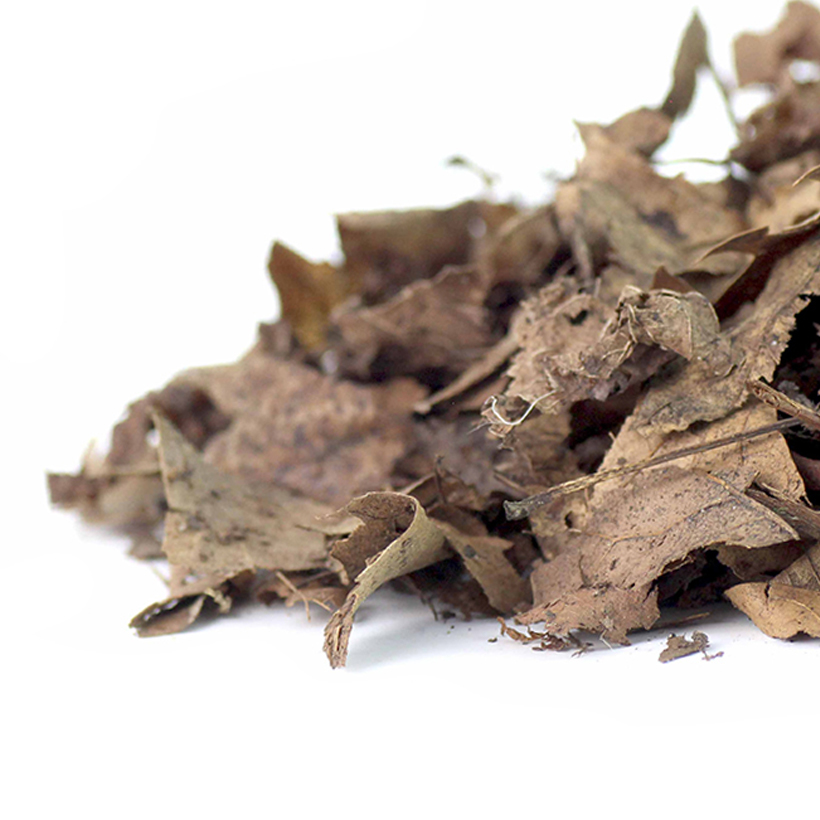
In addition to the millipede substrate, a generous layer of leaf litter should be added to the terrarium.
The leaves serve several purposes.
They provide food, create natural hiding spots, and protect the substrate beneath from drying out too quickly.
Over time, the leaves decompose and are eaten. That’s why you should regularly add new material.
It’s perfectly fine to have a clearly visible layer of leaves on the substrate.
White-rotten wood is part of their diet
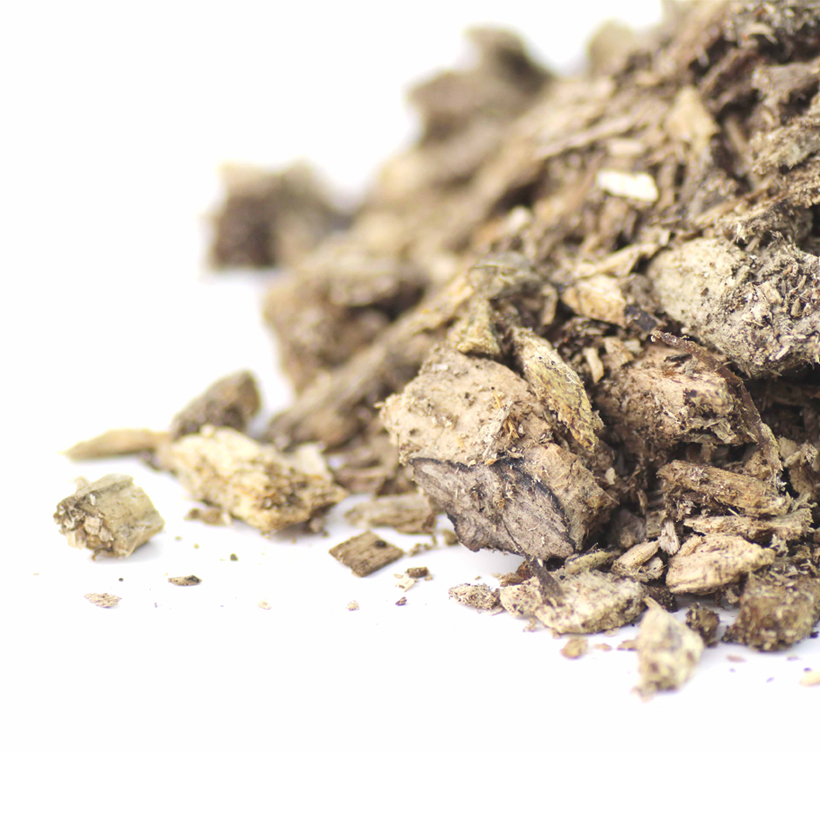
White-rotten wood is also an important part of their diet.
This is not simply normal, dry wood.
White-rotten wood has already been heavily decomposed by fungi and other microorganisms. This makes it soft, and it can sometimes be crushed with your fingers.
Millipedes are particularly good at utilizing this material.
Larger pieces can be placed directly in the terrarium and partially worked into the substrate.
Offer fruits and vegetables only as a supplement
Treptogonostreptus intricatus also eats various types of fruits and vegetables.
Suitable examples include:
- Zucchini
- Cucumber
- Squash
- Carrot
- Sweet potato
- Apple
- Pear
However, these foods are considered supplemental.
Their primary food source continues to consist of decomposed leaves, white-rot wood, and suitable millipede substrate.
Although water-rich vegetables like cucumbers are often readily accepted, they do not have the nutritional composition that a millipede needs as a long-term staple food.
Provide a constant source of calcium
We also recommend a source of calcium.
A cuttlebone can simply be left on the substrate. The animals will feed on it as needed.
This ensures that additional calcium is available at all times.
This is especially important during growth and for the development of the exoskeleton.
Warm and Consistently Humid
For keeping Treptogonostreptus intricatus, we recommend a warm area of approximately 23–27 °C.
At night, the temperature may drop slightly.
At the same time, the substrate should maintain a consistent level of moisture.
However, keeping the terrarium in tropical conditions does not mean that the entire terrarium has to be wet.
A gradient of moisture is much better.
One area can be slightly more moist, while the surface in other areas dries out more at times. Nevertheless, there should still be sufficient moisture in the deeper layers of the substrate.
Avoid waterlogging at all costs
Permanently wet, muddy substrate is not the goal.
That is why excess water must be avoided.
At the same time, the terrarium needs adequate ventilation.
This creates a humid forest climate without the air becoming stagnant.
The layer of leaves and the deep substrate also help keep the humidity stable over a longer period of time.
No Heating Mat Under the Terrarium
If additional heat is necessary, a heat source should not be placed under the terrarium.
The reason for this lies in the animals’ natural behavior.
If it gets too hot or too dry for a millipede at the surface, it burrows deeper into the ground. There, it finds cooler and more humid conditions.
Underfloor heating would reverse this natural temperature gradient.
Therefore, any additional heat—if needed at all—should be generated in a controlled manner from the side or via the ambient temperature.
Burying itself is completely normal
If your Treptogonostreptus intricatus has suddenly disappeared, you shouldn’t start looking for it right away.
Burying itself is part of its natural behavior.
This becomes especially important during molting.
To do this, the millipede retreats into a sheltered chamber in the substrate. There, it molts and then waits until its new exoskeleton has fully hardened.
This process can take some time.
Therefore, never dig up animals that have burrowed in.
Group housing is possible
Treptogonostreptus intricatus can be kept with other members of its species.
This requires sufficient space and, above all, enough high-quality substrate.
The more animals living in the terrarium, the faster the food leaves, white-rotted wood, and the usable components of the substrate are consumed.
That’s why you should check the substrate regularly.
As it gets used up, it becomes finer and finer, while visible pieces of leaves and wood disappear.
Then it’s time to add fresh material.
A Living Forest Floor Instead of a Sterile Setup
When setting up a millipede terrarium, the goal isn’t to cram in as many decorative items as possible.
A functional floor area is much more important.
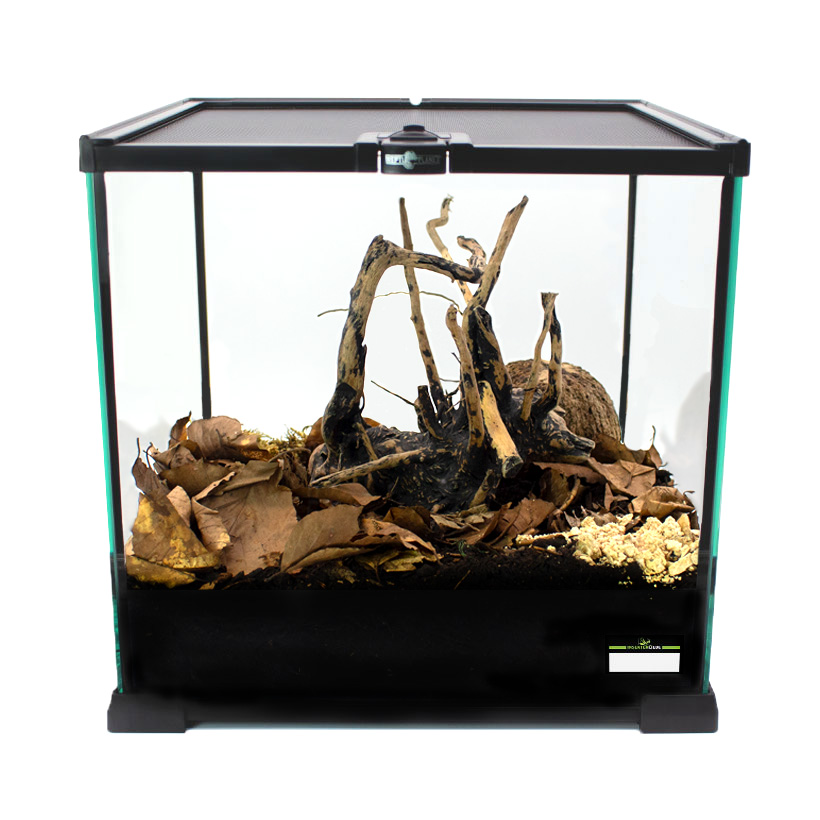
A thick layer of suitable substrate, plenty of food leaves, and white-rotted wood create a habitat that also provides food.
Roots and cork can also be used. However, heavy objects must always be stable so they don’t tip over onto the animals when they dig underneath them.
This creates a natural-looking terrarium that constantly changes over time.
Advantages at a glance
- Treptogonostreptus intricatus
- Previously known here as Mardonius spec. “Cameroon Red Leg”
- African millipede
- Distinctive leg markings
- Peaceful ground-dweller
- Can be kept in groups
- Temperature approximately 23–27 °C
- Substrate depth of at least 10–15 cm
- Evenly moist substrate
- A humidity gradient is recommended
- Avoid waterlogging
- Millipede substrate as habitat and food
- Provide fresh leaves on a regular basis
- White-rotted wood is part of the basic diet
- Fruit and vegetables should be used only as supplemental food
- A source of calcium is recommended
- Molting takes place protected in the substrate
- Never dig up animals that have burrowed in
- Do not place a heating mat under the terrarium
Suitable accessories for your setup
- Millipede Terrarium Complete Set – offers ample floor space and allows for a deep layer of substrate for digging, hiding, and molting.
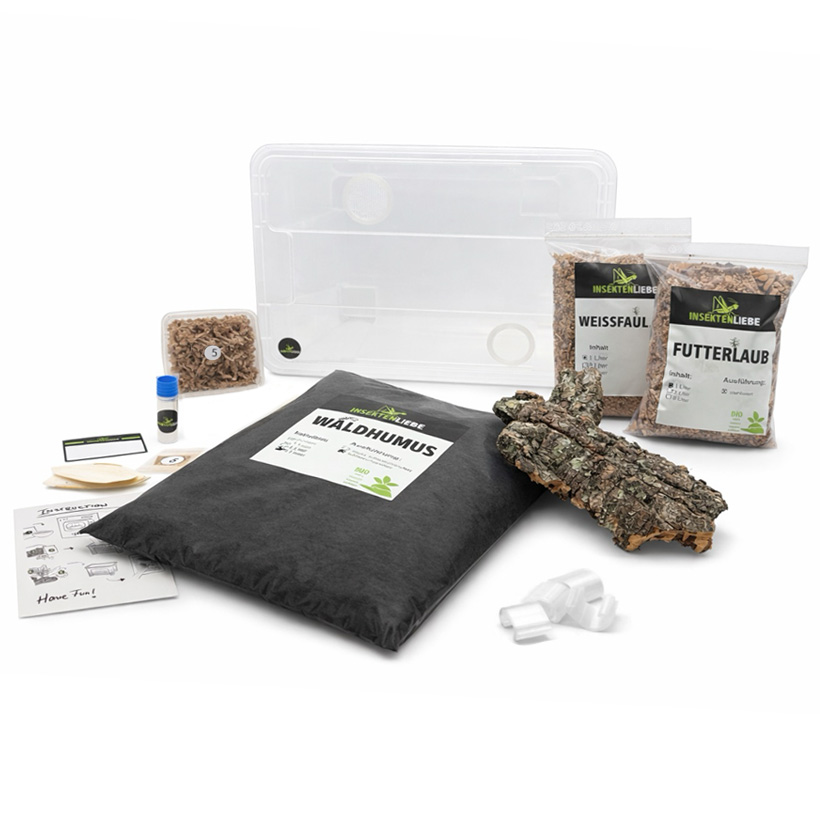
- Insektenliebe Millipede Complete Set – includes basic equipment tailored to millipede care and makes it easy to get started with Treptogonostreptus intricatus.
- Millipede Substrate – serves as both a habitat and an important food source, made from fermented leaves and white-rotted wood.
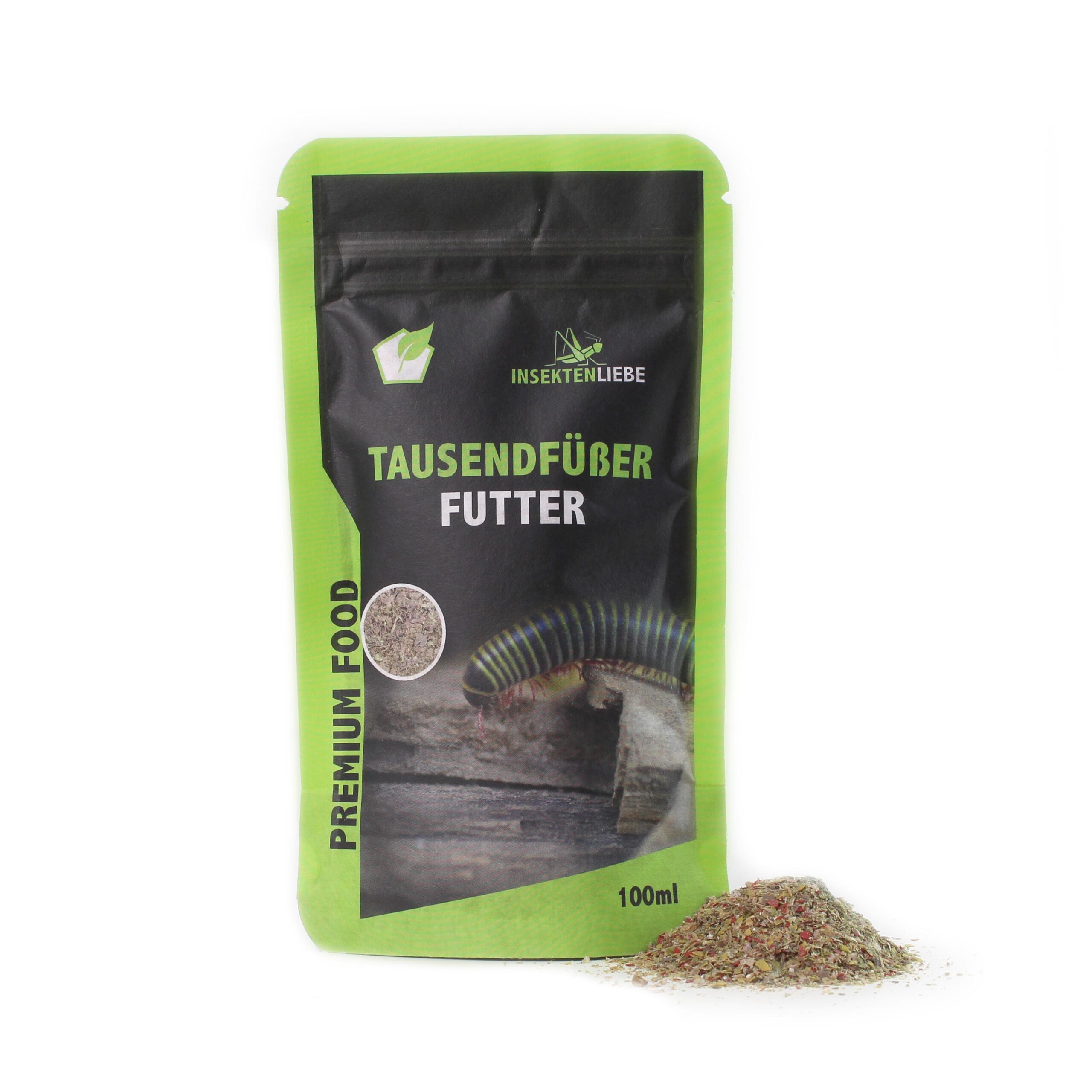
- Feeding Leaves – serve as a natural, long-lasting food source while also protecting the underlying substrate from drying out too quickly.
- White-rotted wood – provides important decomposed wood components and is part of the natural basic diet.
- Insektenliebe Feeding Rock – ideal for presenting fruit, vegetables, and other supplemental foods in a clean manner, without them resting directly on the damp substrate.
Conclusion
Treptogonostreptus intricatus is an attractive African millipede that stands out for its striking leg markings and calm demeanor.
Many of our customers will still know it by its previous name: Mardonius spec. “Cameroon Red Leg”. We’ve been listing these animals under that name until now. Effective immediately, you’ll find them listed under the classification Treptogonostreptus intricatus.
For successful care, a high-quality and sufficiently deep substrate is essential. At least 10–15 cm of millipede substrate, plenty of fallen leaves, and white-rotted wood form the foundation.
A suitable environment is created at a temperature of approximately 23–27 °C, with consistent moisture levels and good ventilation. Fruit and vegetables can be provided as supplements, but they should never replace the actual food in the substrate.
This makes Treptogonostreptus intricatus an excellent choice for anyone who wants to observe an extraordinary millipede while also creating a small, natural forest ecosystem in a terrarium.