Spirostreptus spec. 8 “Green Fairy”
Price range: 16,95 € through 19,95 € incl. VAT, plus shipping

Medium

Nigeria

< mixed

25°C – 28°C
Spirostreptus spec. 8 “Green Fairy” – a large centipede with a fascinating green sheen
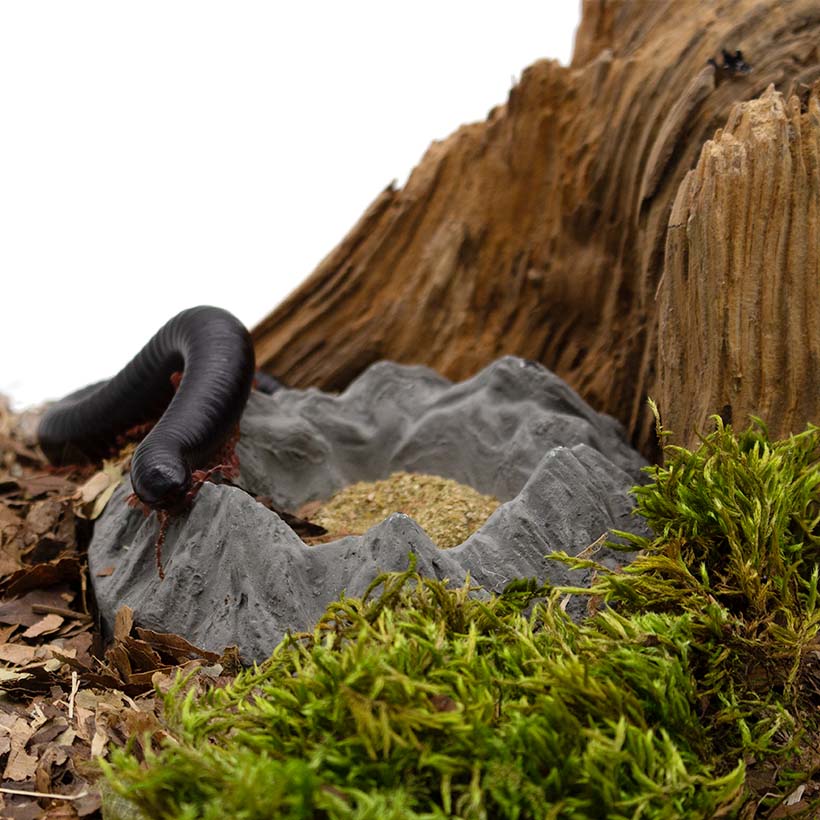
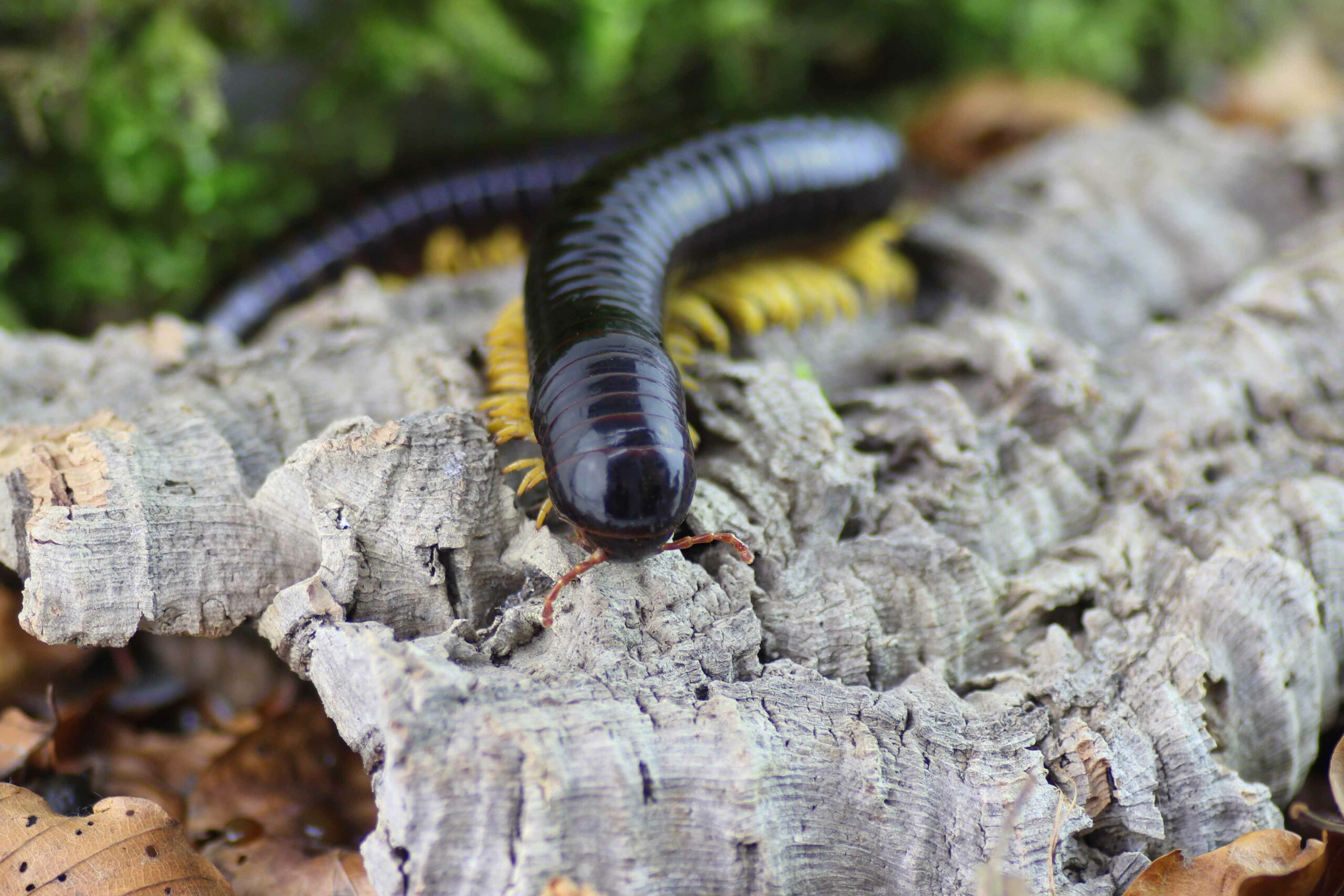
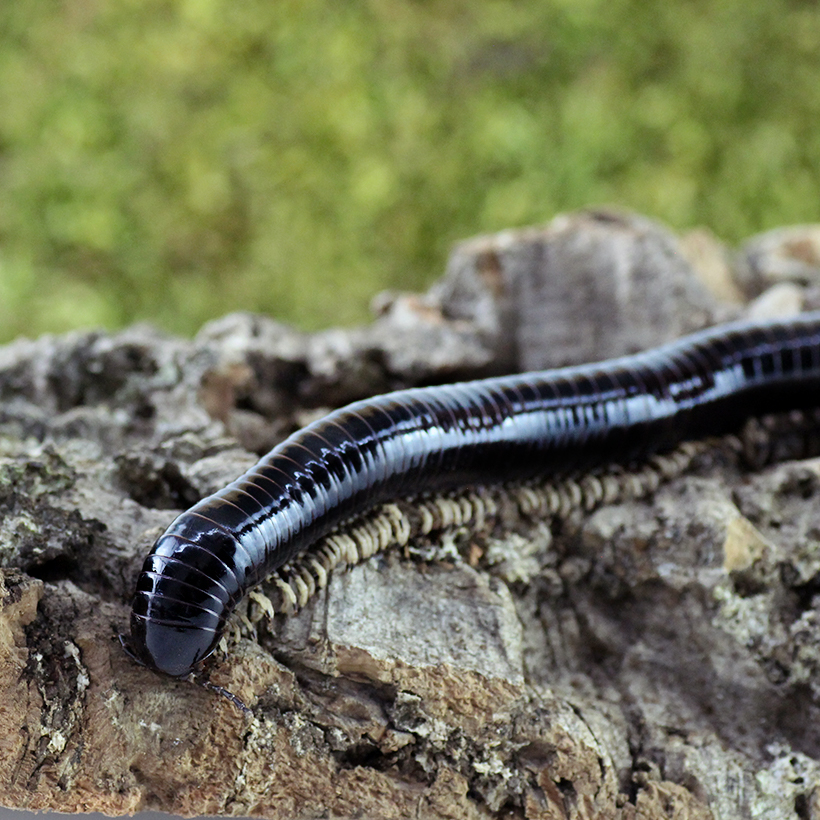
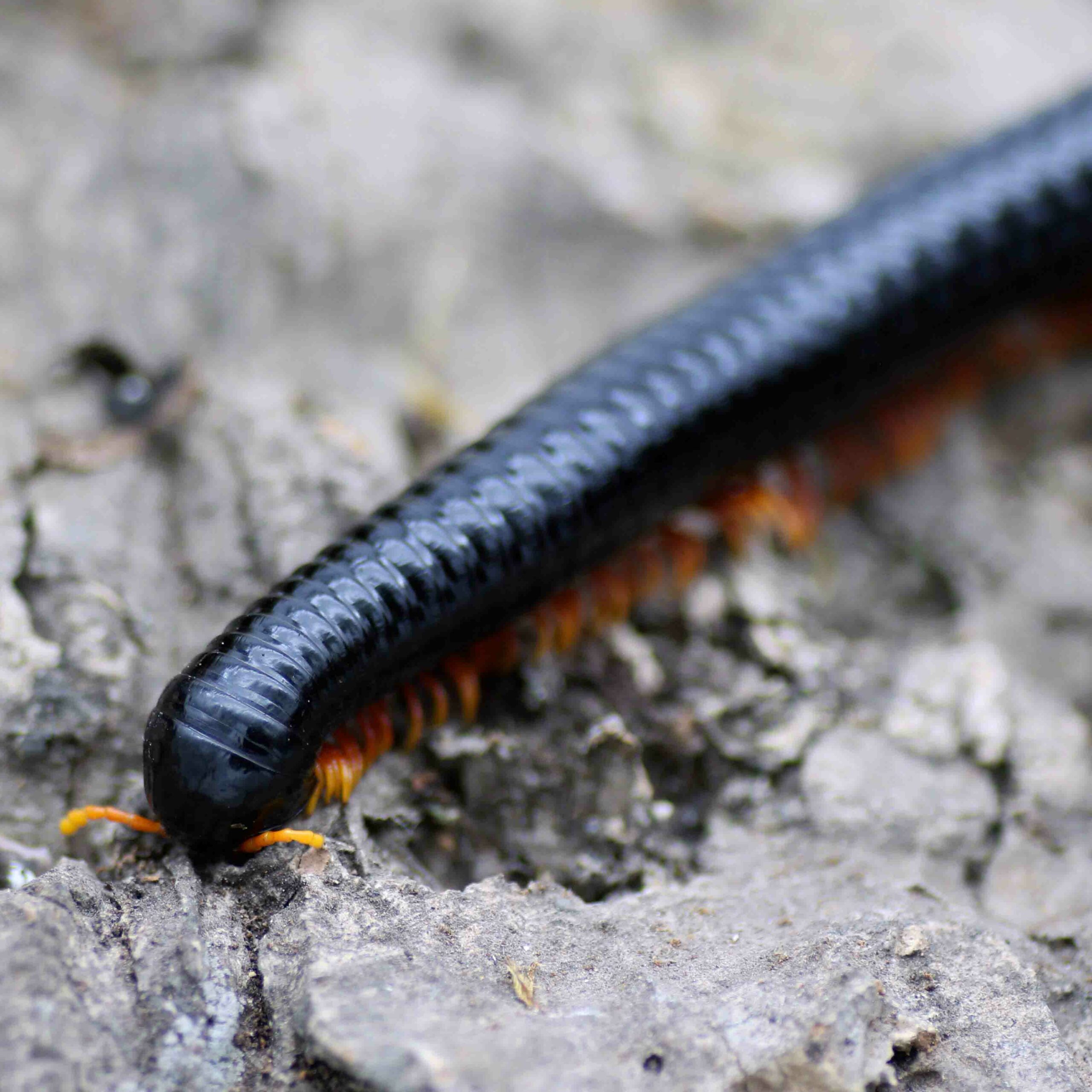
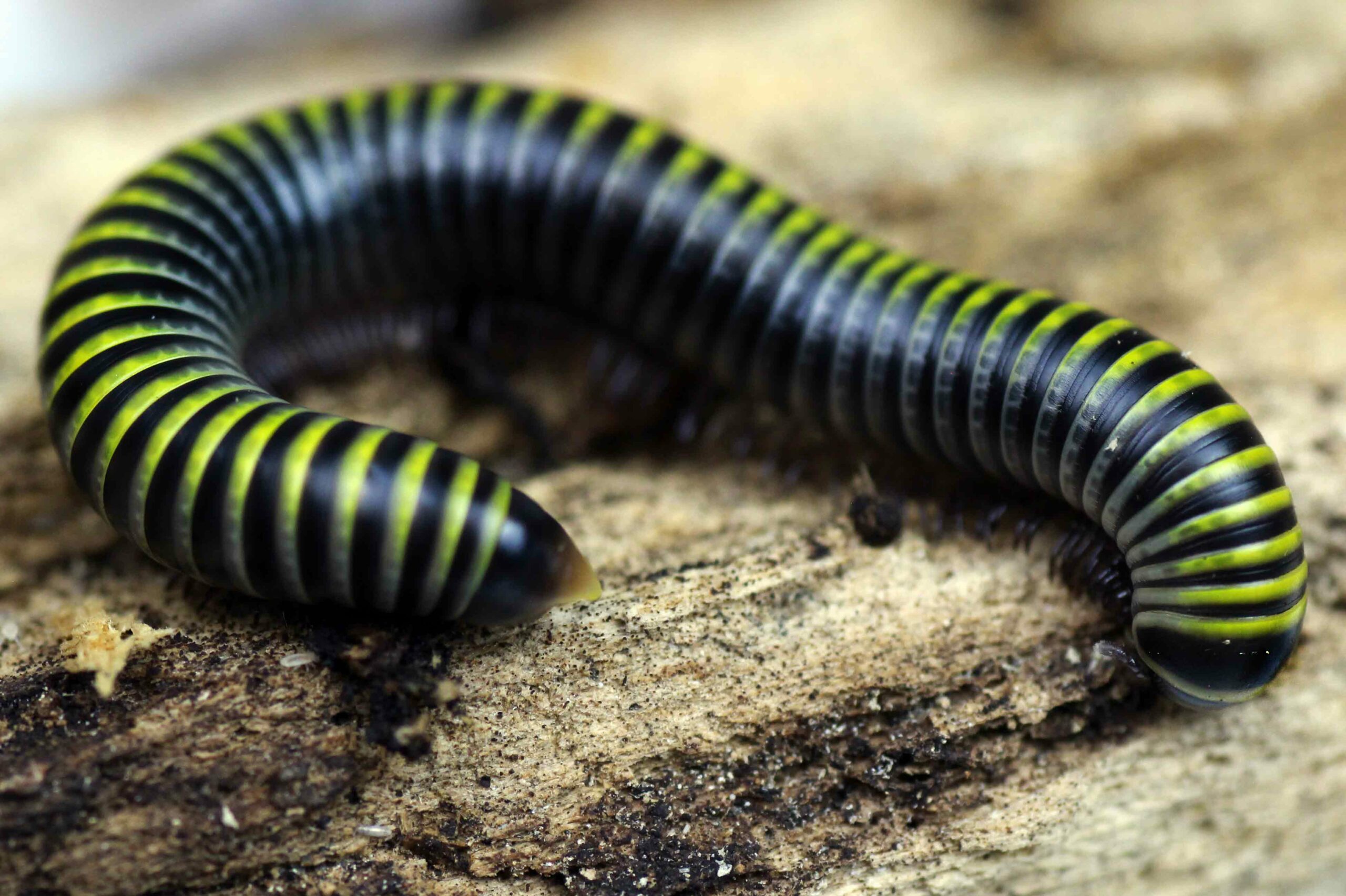
Spirostreptus spec. 8 “Green Fairy” is an exceptionally beautiful African millipede. It owes its German trade name to its distinctive appearance: depending on the lighting, its dark body takes on a greenish to metallic sheen, giving the animal a completely different look than many of the classic brown or black millipedes.
Its size also makes the “Green Fairy” an impressive terrarium inhabitant. At the same time, it exhibits the calm behavior that makes large diplopods so interesting. These animals roam the forest floor, disappear among leaves and white rot, and, when necessary, burrow completely into the substrate.
The substrate plays a crucial role in this regard. For Spirostreptus spec. 8, the substrate is not merely a piece of decor. It serves as a habitat, a hiding place, a shedding site, and one of the most important sources of food.
If you love naturally designed forest terrariums and large African millipedes, the “Green Fairy” is a particularly attractive representative of this fascinating group of animals.
What does ” Spirostreptus spec. 8” actually mean?
” Spirostreptus spec. 8 ” is a term used in the terrarium hobby and is not a fully described scientific species name.
The abbreviation “spec.” indicates that the animal is classified within a genus or corresponding group, but the exact species has not been definitively determined. The additional number 8 helps distinguish this breeding or commercial form from other forms that have not been definitively determined.
That is why one should not be too quick to classify the “Green Fairy” as a specific Spirostreptus species.
For consistency, it makes sense to use the established name Spirostreptus spec. 8 “Green Fairy” to maintain. This ensures that the origin and breeding line remain traceable within the terrarium hobby.
The greenish sheen is what makes the “Green Fairy” so special
The most striking feature is, of course, its coloration.
At first glance, the body appears dark. However, under the right lighting, a greenish to metallic sheen becomes visible.
As a result, its appearance changes depending on the angle of the light.
This effect is especially beautiful to observe when the animal is moving across dark forest floor, fallen leaves, or a root.
The intensity of the green effect can vary from one animal to another and depending on the lighting. The term “Green Fairy” should therefore not be interpreted to mean that the entire body is a vivid green color.
An impressive millipede
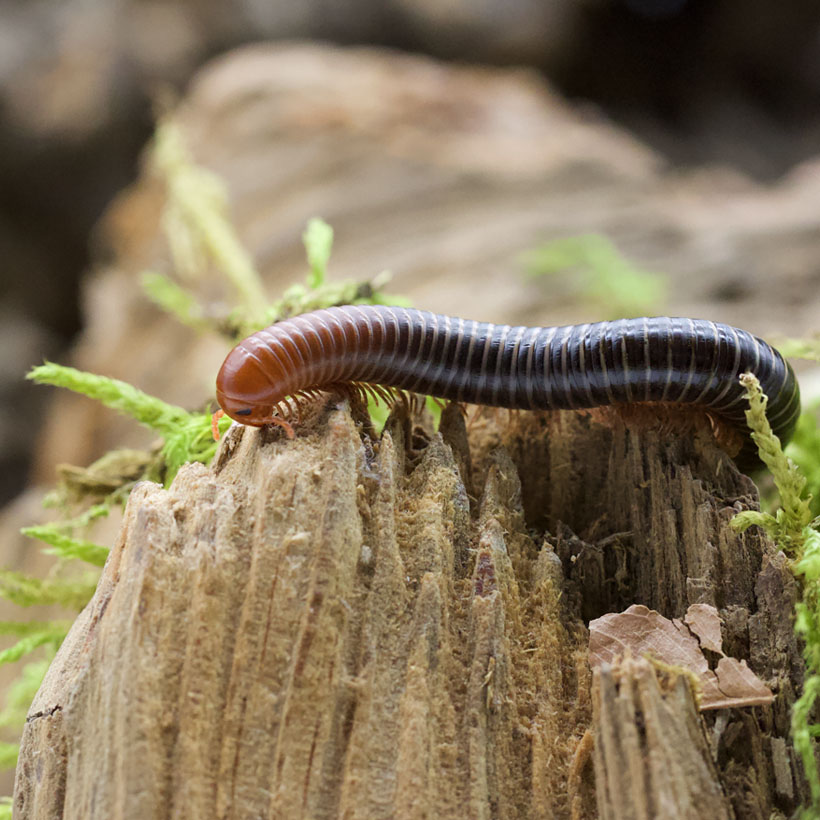
Spirostreptus spec. 8 is one of the larger millipedes kept in terrariums.
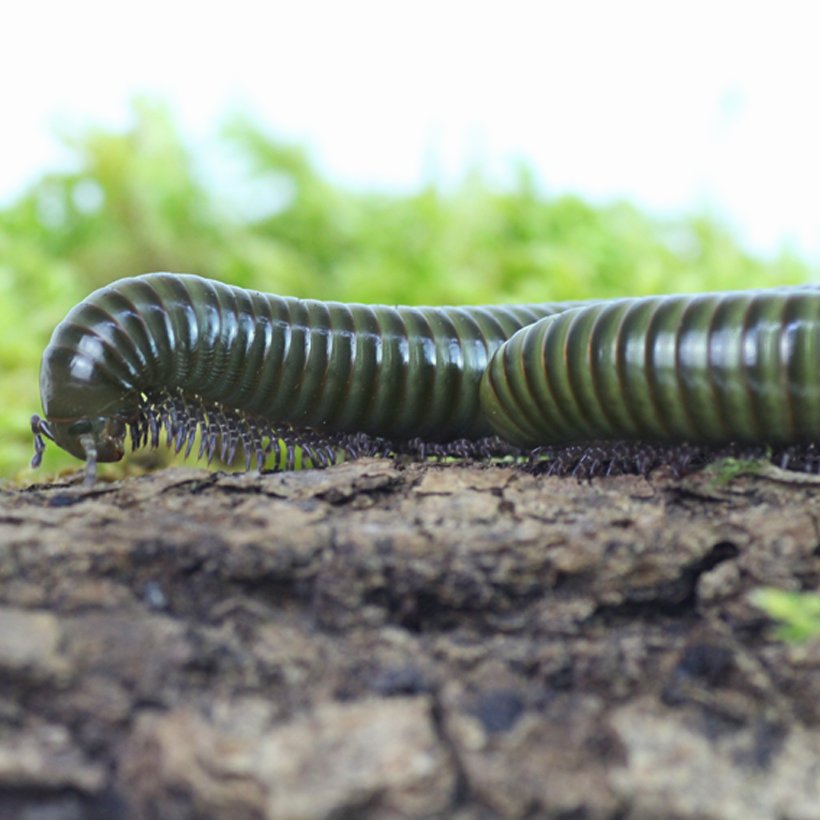
These animals develop a long, cylindrical body with numerous segments. As a result, they have several hundred legs.
When running, these aren’t simply moved at the same time. Instead, waves of movement travel across the sides of the body.
This interaction is particularly impressive to watch in larger animals.
As they do so, the millipedes explore their surroundings with their short antennae and are constantly on the lookout for usable organic material.
Peaceful inhabitant of the forest terrarium
The “Green Fairy” is a quiet millipede.
It doesn’t hunt other terrarium inhabitants, nor does it have poisonous claws like a centipede.
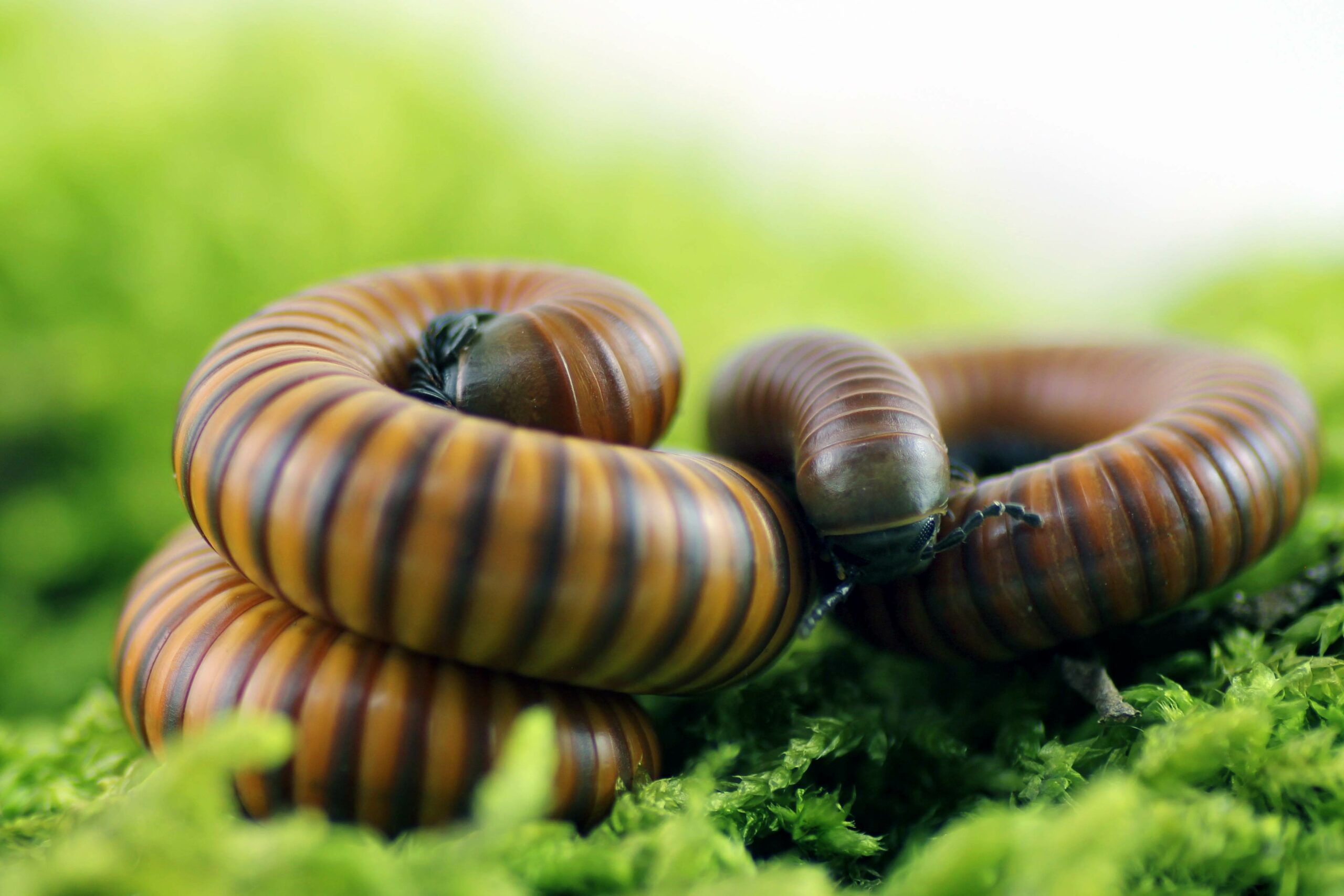
When in danger, it relies instead on its sturdy outer shell and can curl up tightly.
Like many millipedes, it can also release a defensive secretion when faced with a serious threat. That’s why you shouldn’t stress the animals unnecessarily and should wash your hands after direct contact.
First and foremost, Spirostreptus spec. 8 is an animal meant to be observed anyway.
A terrarium with plenty of floor space
For large millipedes, floor space is more important than a particularly tall terrarium.
Although the animals use roots and other low-lying structures, they spend a large part of their lives on—and, above all, in—the substrate.
Therefore, there should be enough floor space for a small group.
At the same time, the terrarium must be tall enough to accommodate a deep layer of substrate.
When setting the table, it’s better to create a high-quality, deep forest-themed table setting than to fill the available space with too many decorative elements.
Allow for at least 15 cm of substrate
For adults Spirostreptus spec. 8 “Green Fairy” We recommend a substrate depth of at least about 15 cm.
If there’s enough space, it definitely makes sense to do more.
This is because the animals regularly burrow themselves completely underground. In addition, their delicate molting takes place safely beneath the surface.
A substrate that is only a few centimeters deep cannot fulfill these functions.
At the same time, a deep substrate creates areas with varying levels of moisture. This allows the animals to find a suitable spot depending on their needs.
Millipede substrate also serves as food
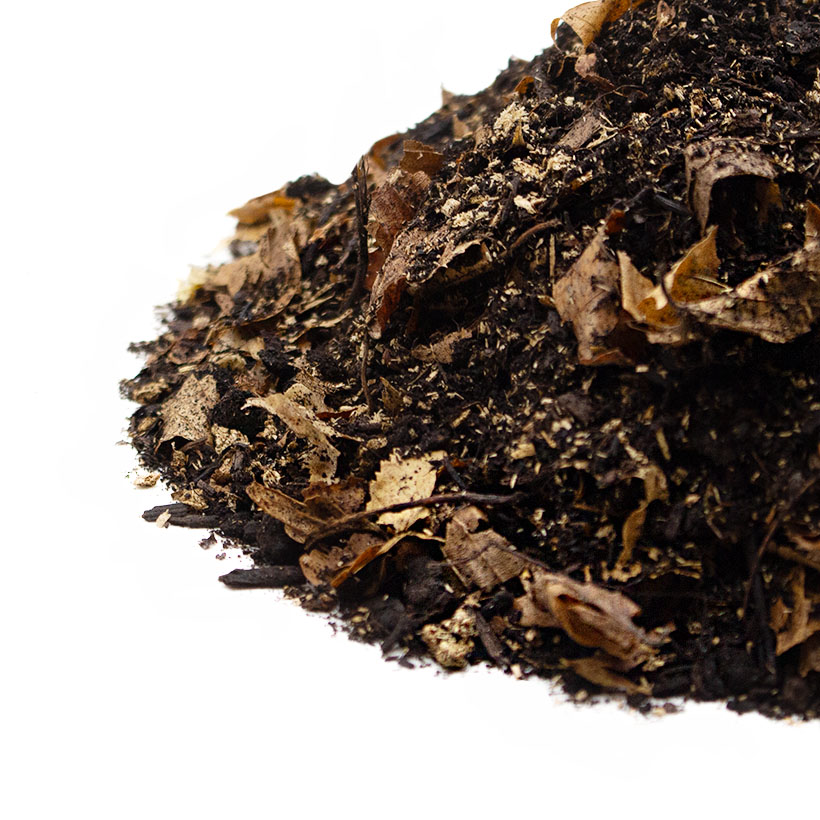
We recommend our millipede substrate for keeping them.
It also contains further-fermented organic material, including fermented leaves and white-rot wood.
These components are particularly important because millipedes feed mainly on dead and decomposed plant material.
That is why the substrate should not be viewed merely as a decorative base, as is the case with many other terrarium animals.
Spirostreptus spec. 8 literally eats away at its habitat in some cases.
Our millipede substrate should therefore not be mixed with other substrates. Doing so would simply reduce the proportion of valuable organic food material.
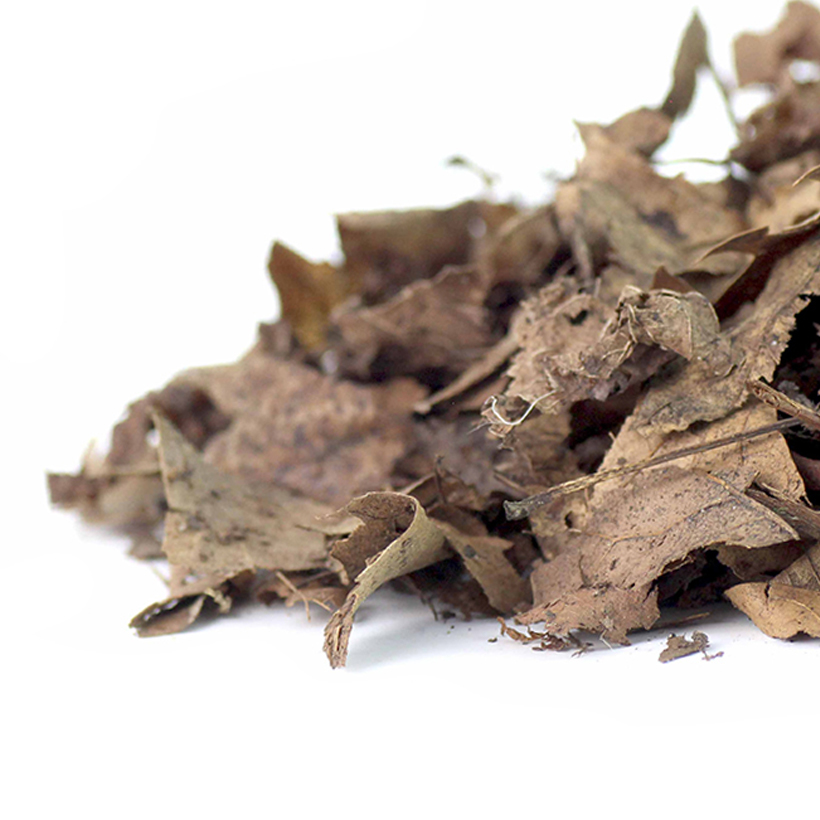
There should always be leaves for food
There should also be a generous layer of fallen leaves on the substrate.
The leaves serve as food and, at the same time, as a natural mulch.
This helps retain moisture in the substrate beneath for longer. It also allows the animals to hide among the leaves.
Over time, the leaves continue to decompose and are eaten.
That’s why you should keep adding more regularly.
A clearly visible layer of leaves in a millipede terrarium is not waste, but an important part of the habitat.
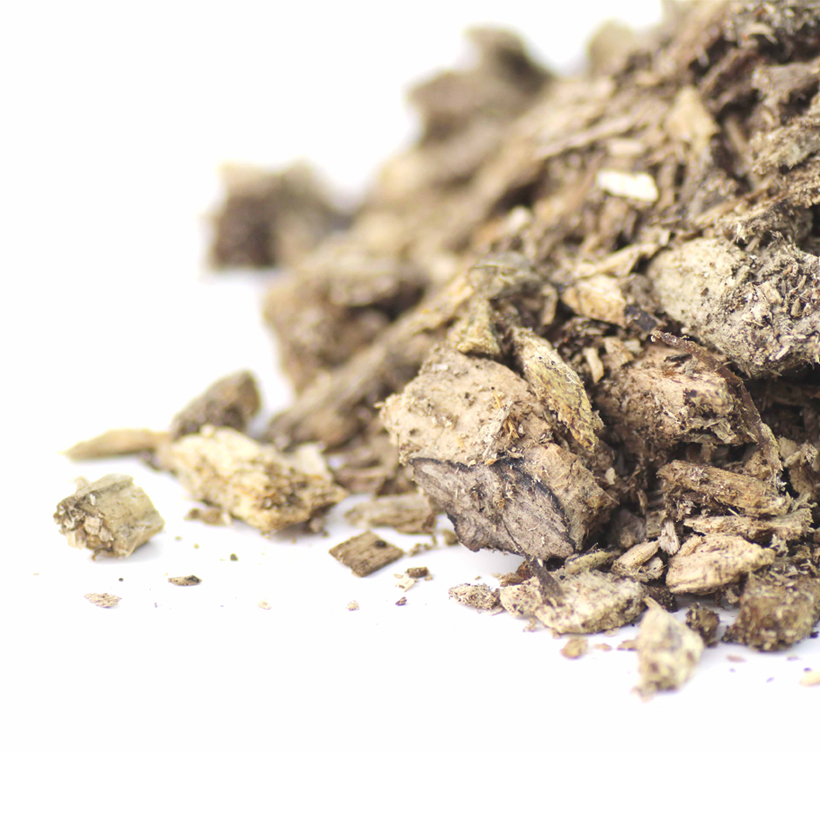
White-rot wood is part of the basic supply
In addition, Spirostreptus spec. 8 requires white-rotted wood.
This refers to wood that is heavily decayed and already soft. It is clearly different from a normal, dry branch found in the forest.
The material is eaten by millipedes and provides important organic components.
Larger pieces can simply be placed on top of the substrate or partially buried in it.
They can just keep falling apart.
It is precisely this condition that makes white-rotten wood attractive to animals.
Fruits and vegetables only as a supplement
You can also offer the “Green Fairy” some fresh supplemental food.
Suitable examples include:
- Zucchini
- Pumpkin
- Carrot
- Sweet potato
- Cucumber
- Apple
- Pear
Soft fruits and vegetables, in particular, are often well received.
Still, it shouldn’t become their main source of food.
The base continues to consist of millipede substrate, fallen leaves, and white-rotted wood.
You should check leftover fruits and vegetables regularly and discard them before they spoil.
Provide additional calcium
A source of calcium can be provided in the terrarium on a permanent basis.
Cuttlefish shells are ideal for this.
The animals can decide for themselves when and how much of it to eat.
This makes the calcium available for growth and the formation of the outer shell.
The cuttlebone can simply be placed on the substrate and replaced as needed.
23–27 °C as a practical guideline
We recommend a temperature of approximately 23–27 °C for keeping Spirostreptus spec. 8.
At night, the temperature can drop a little.
However, it is not necessarily required to use additional heating. If the room temperature is already within the appropriate range, additional heat is often unnecessary.
It is also important not to heat the terrarium from below.
A heating mat placed under the terrarium is not suitable for millipedes.
If it gets too hot or dry for the animals, they usually burrow deeper into the ground. There, they find cooler and more humid conditions.
Underfloor heating would reverse this natural slope.
Moist substrate instead of a wet terrarium
The substrate should be kept evenly moist.
In this context, a humidity gradient is particularly useful.
One area can be moistened more thoroughly, while another remains slightly drier on the surface. There should still be sufficient moisture in the deeper soil layers.
This way, the “Green Fairy” can choose her favorite spot herself.
You should avoid waterlogging.
At the same time, the terrarium must be adequately ventilated. High baseline humidity should not be confused with stagnant, stuffy air.
It’s perfectly normal to dig in
If your Spirostreptus spec. 8 has suddenly disappeared, there’s no need to worry just yet.
Burying things is part of their natural behavior.
Some of these animals spend long periods of time completely underground.
This is especially important during molting.
During this process, the millipede retreats to a sheltered area. It sheds its old exoskeleton, and the new exoskeleton must then harden completely.
During this phase, the animal is extremely sensitive.
Therefore, never dig up millipedes that have burrowed into the ground.
Group housing is possible
Spirostreptus spec. 8 “Green Fairy” Can generally be kept with other members of the same species.
The prerequisites are sufficient space and enough high-quality growing medium.
This is because the more animals there are in the terrarium, the faster the organic components of the substrate are broken down.
Feeding leaves and white-rotten wood must also be replenished more frequently.
This makes keeping them in groups straightforward, as long as the amount of food and space available are sufficient for the number of animals.
When does the substrate need to be replaced?
A good millipede substrate doesn’t last forever.
Over time, the animals eat and break down the usable components. As a result, the substrate becomes increasingly fine and contains fewer and fewer recognizable pieces of leaves and wood.
Then, fresh material should be added, or some of the used substrate should be replaced.
You have to be very careful when doing this.
Eggs, young animals, or animals in the process of molting may be buried deep in the substrate.
That is why you should never just thoughtlessly empty out a millipede terrarium completely.
Advantages at a glance
- Spirostreptus spec. 8 “Green Fairy”
- Large African Spirostreptid form
- A striking greenish to metallic sheen
- Calm and peaceful behavior
- An interesting, large ground-dwelling creature
- Group housing is possible
- At least 15 cm of substrate depth
- Temperature approximately 23–27 °C
- Evenly moist substrate
- A humidity gradient is recommended
- Good ventilation is important
- Avoid waterlogging
- Millipede substrate as a habitat and food source
- Provide food leaves on a permanent basis
- White-rot wood is part of the basic supply
- Fruits and Vegetables as a Supplement to the Diet
- A source of calcium is recommended
- Molting takes place in the substrate, where the animal is protected
- Never dig up animals that have been buried
- Do not place a heating mat under the terrarium
Suitable accessories for your setup
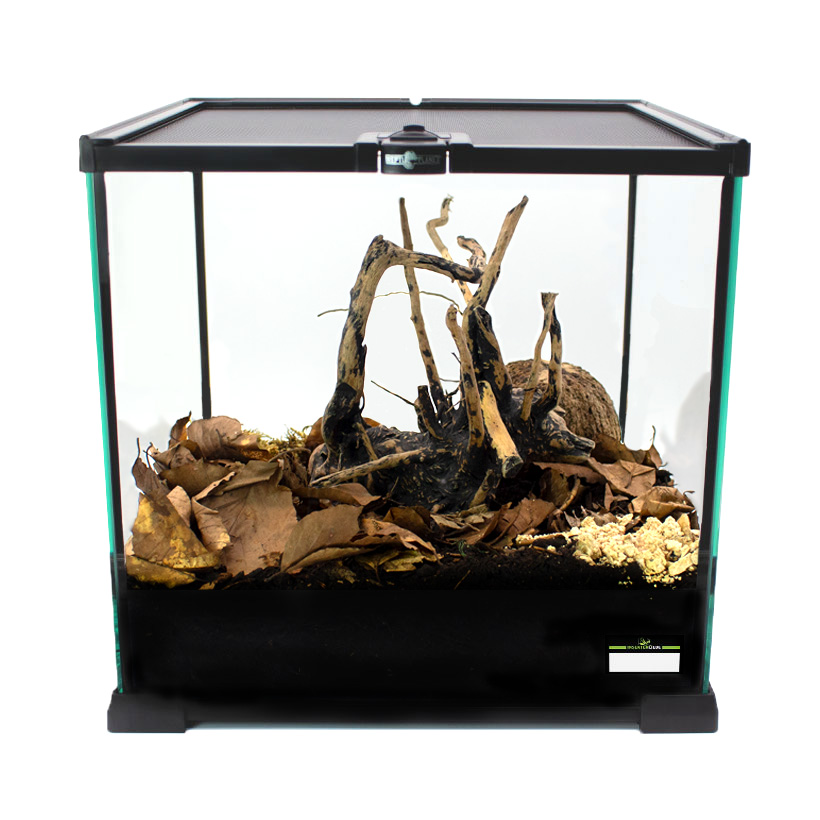
- Millipede Terrarium Complete Set – offers ample floor space and room for a deep layer of substrate for digging, hiding, and molting.
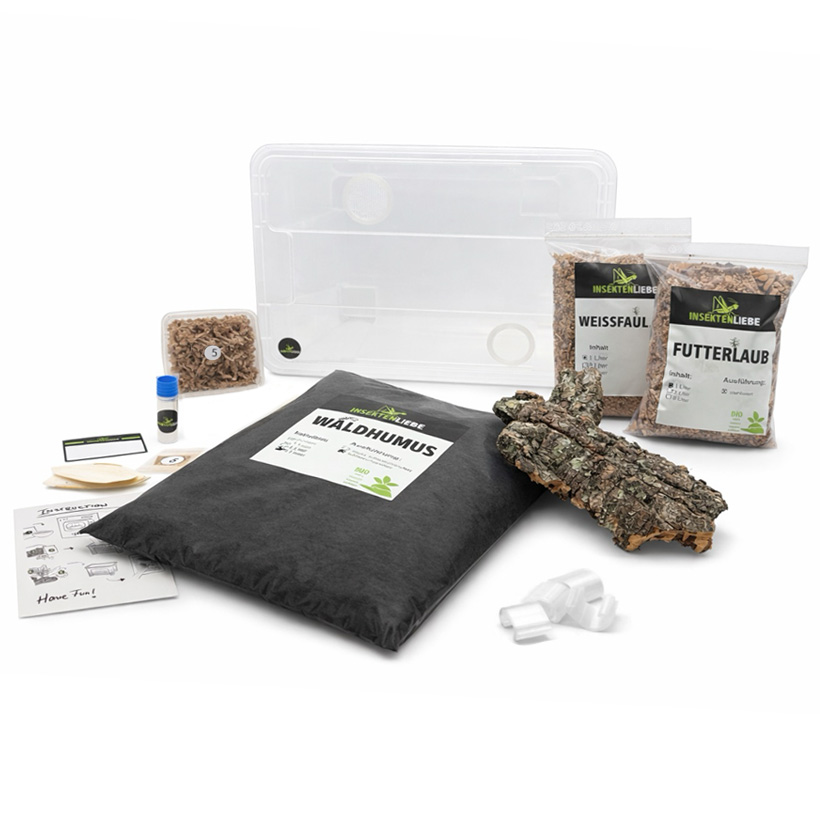
- Insektenliebe Millipede Starter Kit – includes basic equipment tailored to keeping large millipedes and makes it easy to get started with the “Green Fairy.”
- Millipede substrate —serves as both a habitat and an important food source made from fermented leaves and white-rotten wood.
- Leaves for food —serve as a natural, long-lasting food source, provide cover, and protect the substrate beneath them from drying out too quickly.
- White-rot wood —is part of the natural ecosystem and provides important decomposed wood components.
- Insektenliebe Futterfels – allows you to provide fruit, vegetables, and other supplemental food in a clean way, without it lying directly on the damp substrate.
Conclusion
Spirostreptus spec. 8 “Green Fairy” It is a fascinating millipede, primarily because of its extraordinary appearance. When the light hits it just right, its dark body takes on a greenish to metallic sheen, which has earned this species its apt common name.
But the “Green Fairy” isn’t just a pleasure to look at. Its calm demeanor, its regular digging, and the characteristic undulating movement of its numerous legs make it an interesting creature to observe.
The substrate is the most important factor for successful care. A layer of millipede substrate at least 15 cm deep, plenty of decaying leaves, and white-rotted wood form the most important foundation. Fruits and vegetables serve only as a supplement.
Spirostreptus spec. 8 thrives at temperatures of approximately 23–27 °C, with a consistently moist substrate and good ventilation.
If you’re looking for a large millipede that stands out visually from the many dark brown or black species, the “Green Fairy” is an exceptional addition to a natural-looking forest terrarium.