
Peridontopyge rubescens
11,00 € incl. VAT, plus shipping
In stock

Simple

Tanzania

< 100 mm

20°C – 26°C
Peridontopyge rubescens – a slender millipede with an unusual red coloration
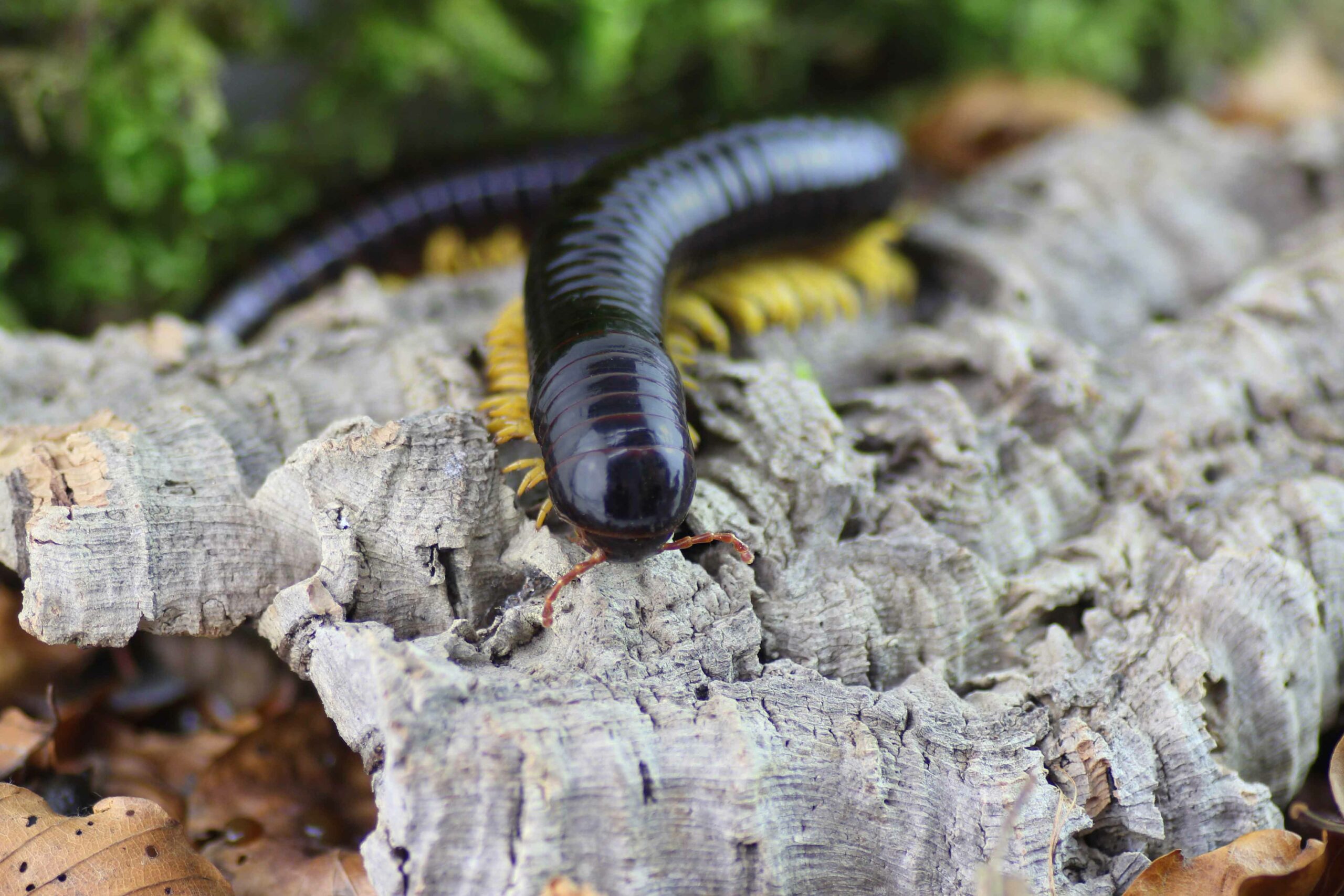
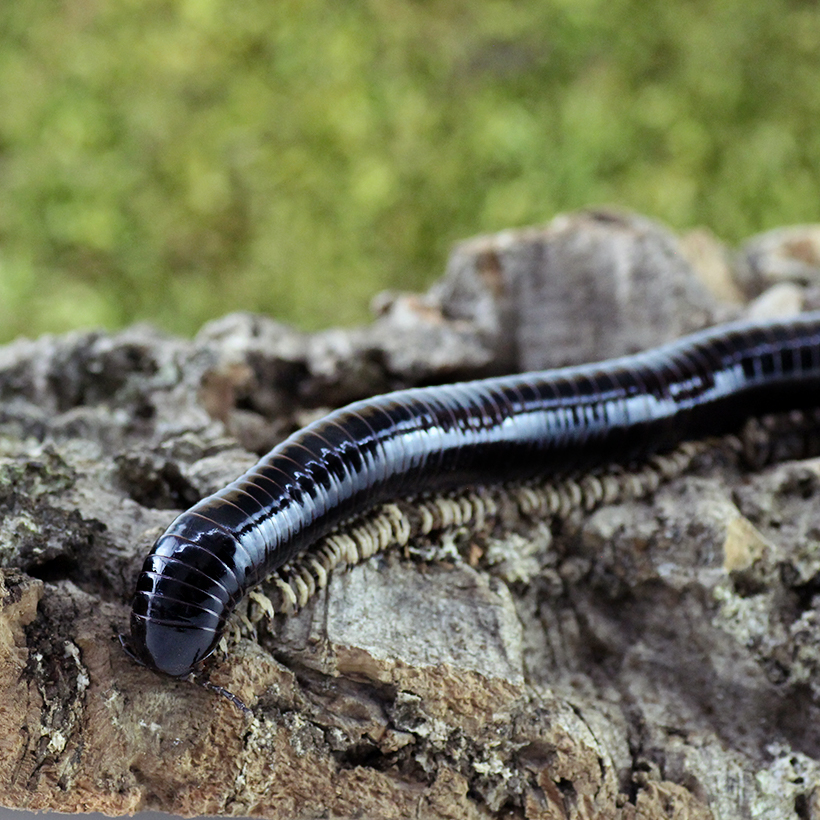
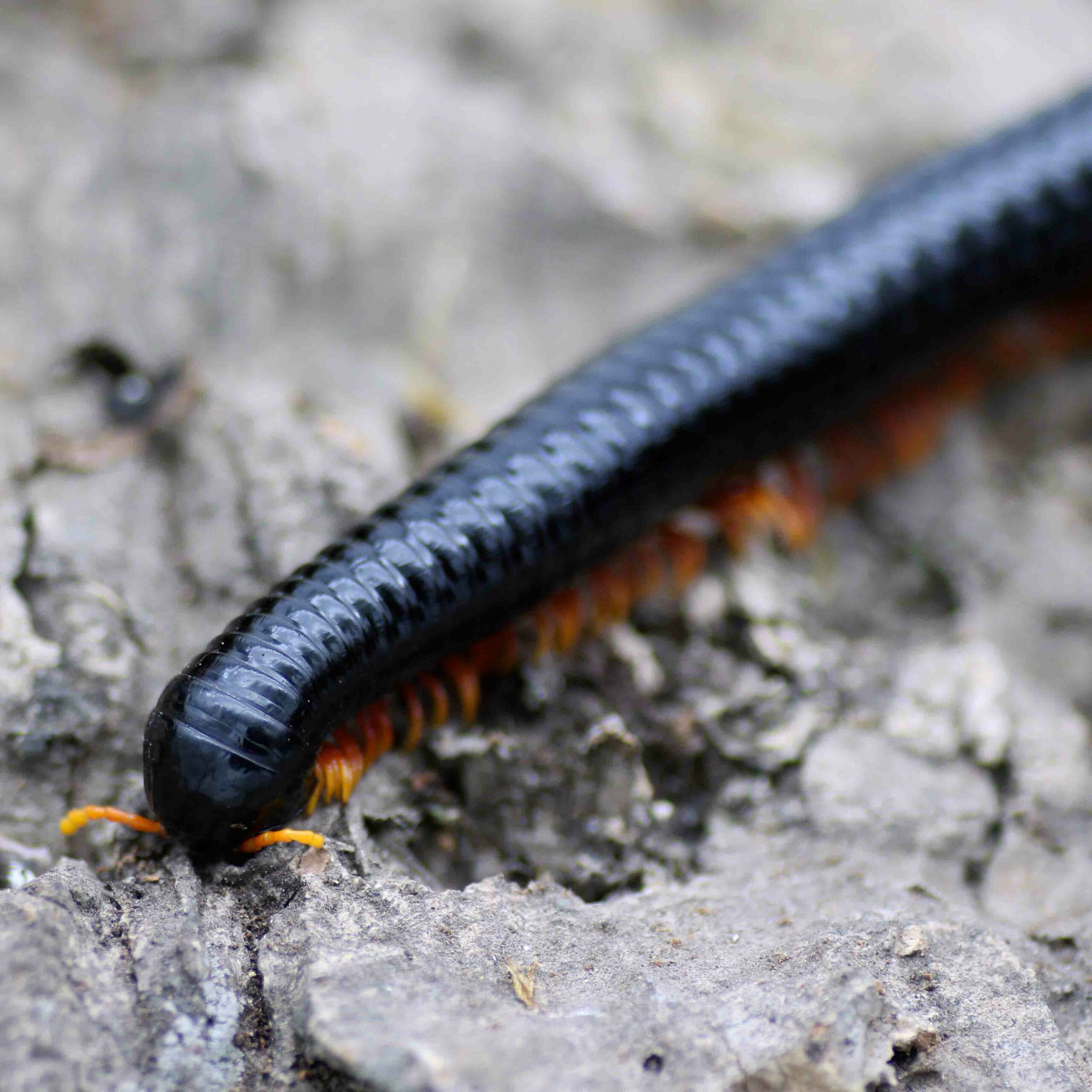
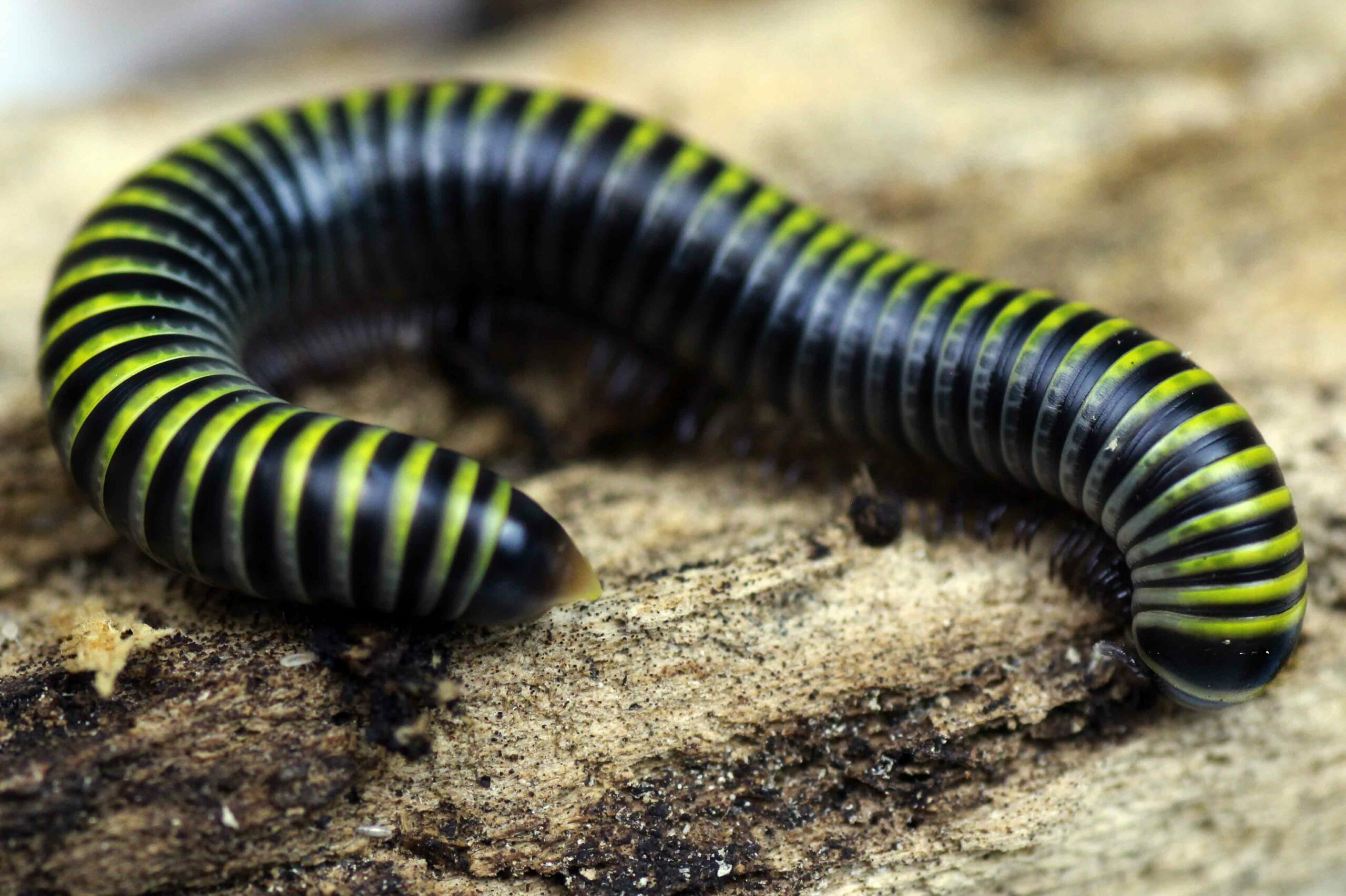
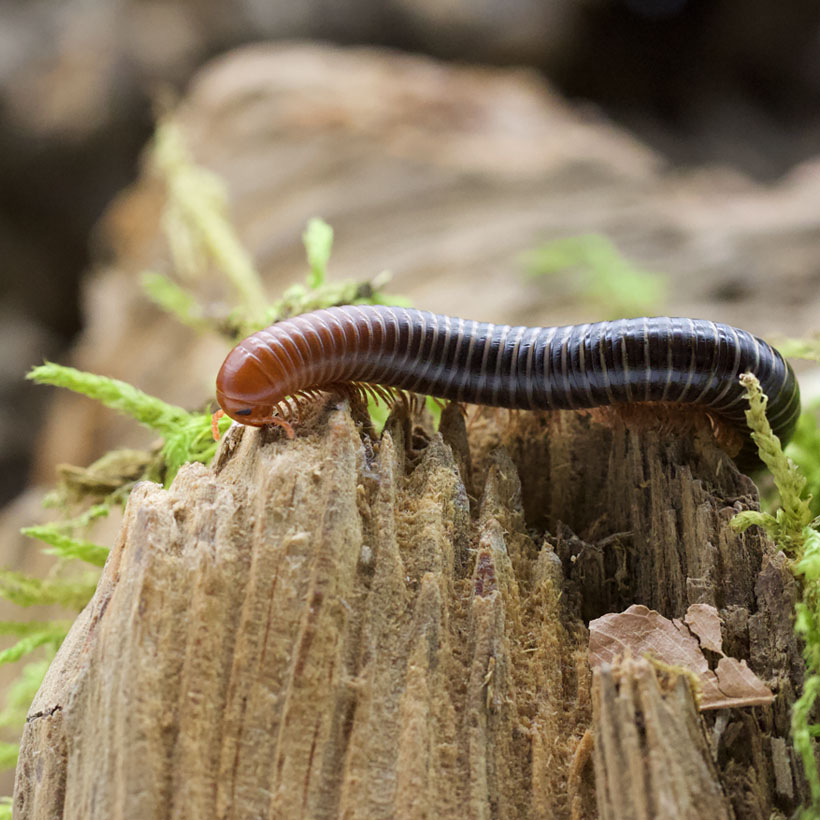
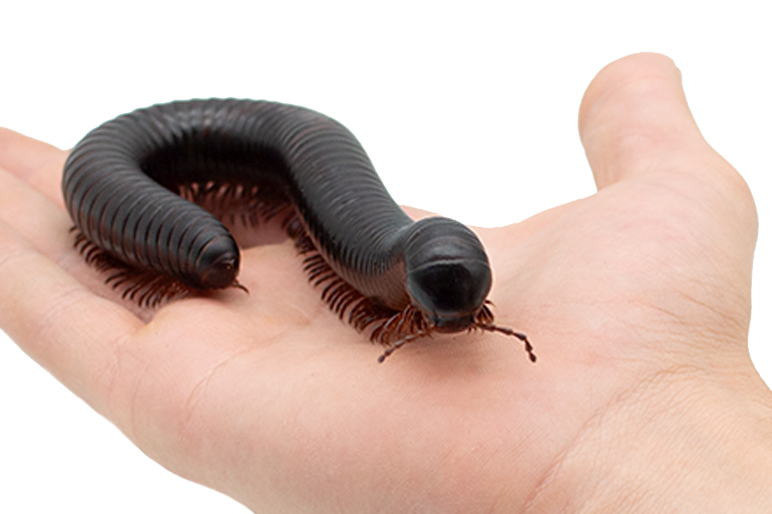
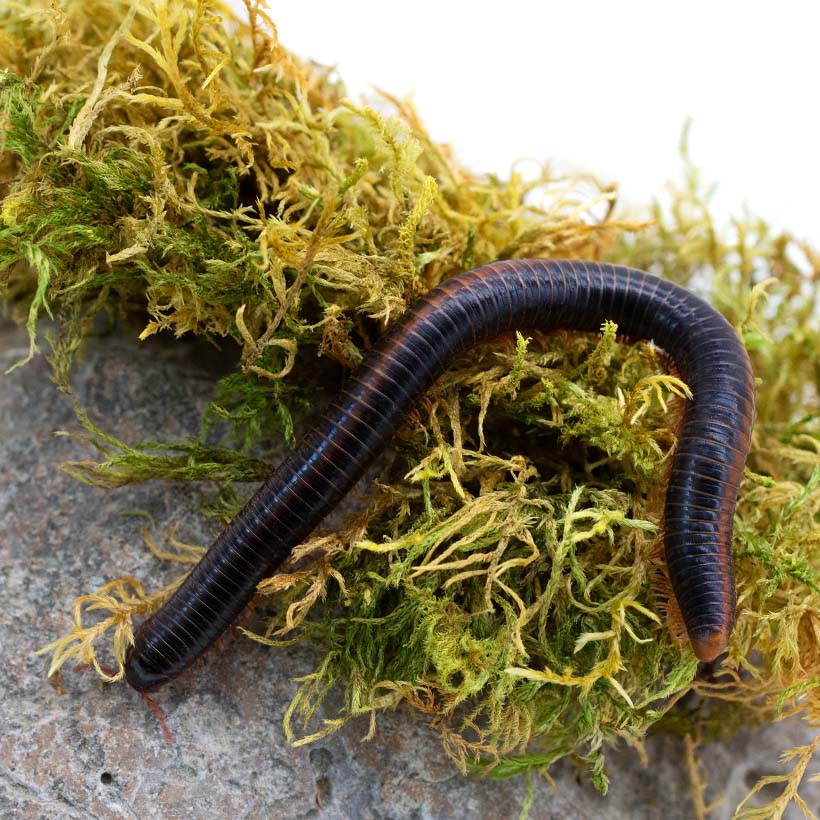
Peridontopyge rubescens is a particularly attractive African millipede that immediately catches the eye with its slender build and reddish to reddish-brown coloration. This sets it apart from many of the sturdily built, dark brown or black giant millipedes.
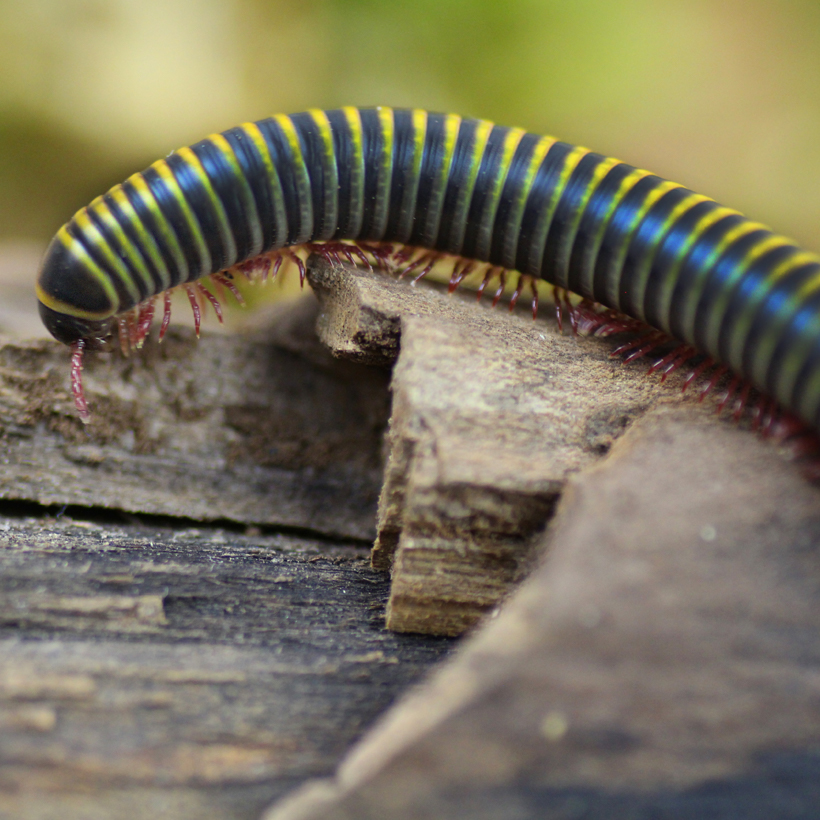
Its numerous legs and elongated body give Peridontopyge rubescens an elegant appearance. It becomes particularly interesting when the animal walks across leaves and wood. Then its legs move in smooth, undulating waves along its body.
Yet this species is by no means just beautiful to look at. Like other millipedes, it plays an important role in its natural habitat. It eats and further decomposes dead leaves, rotten wood, and other plant material.
That is exactly why we need to take a different approach to housing them than we do with many other terrarium animals: For Peridontopyge rubescens, the substrate is not just a base layer. It is a habitat, a hiding place, a place to molt, and a source of food all at once.
An African millipede of the family Odontopygidae
Peridontopyge rubescens belongs to the family Odontopygidae. This group is particularly widespread in Africa and includes numerous slender, elongated millipedes.
This means that the species already differs taxonomically from many well-known large terrarium millipedes in the family Spirostreptidae.
For the owner, its physique is particularly striking. Peridontopyge rubescens appears significantly slimmer and more delicate than particularly stocky species.
Nevertheless, it exhibits many of the behaviors that make millipedes so interesting: It scours the ground for food, disappears among leaves and wood, and regularly buries itself completely.
The red color makes all the difference
The species name *rubescens* perfectly describes its appearance.
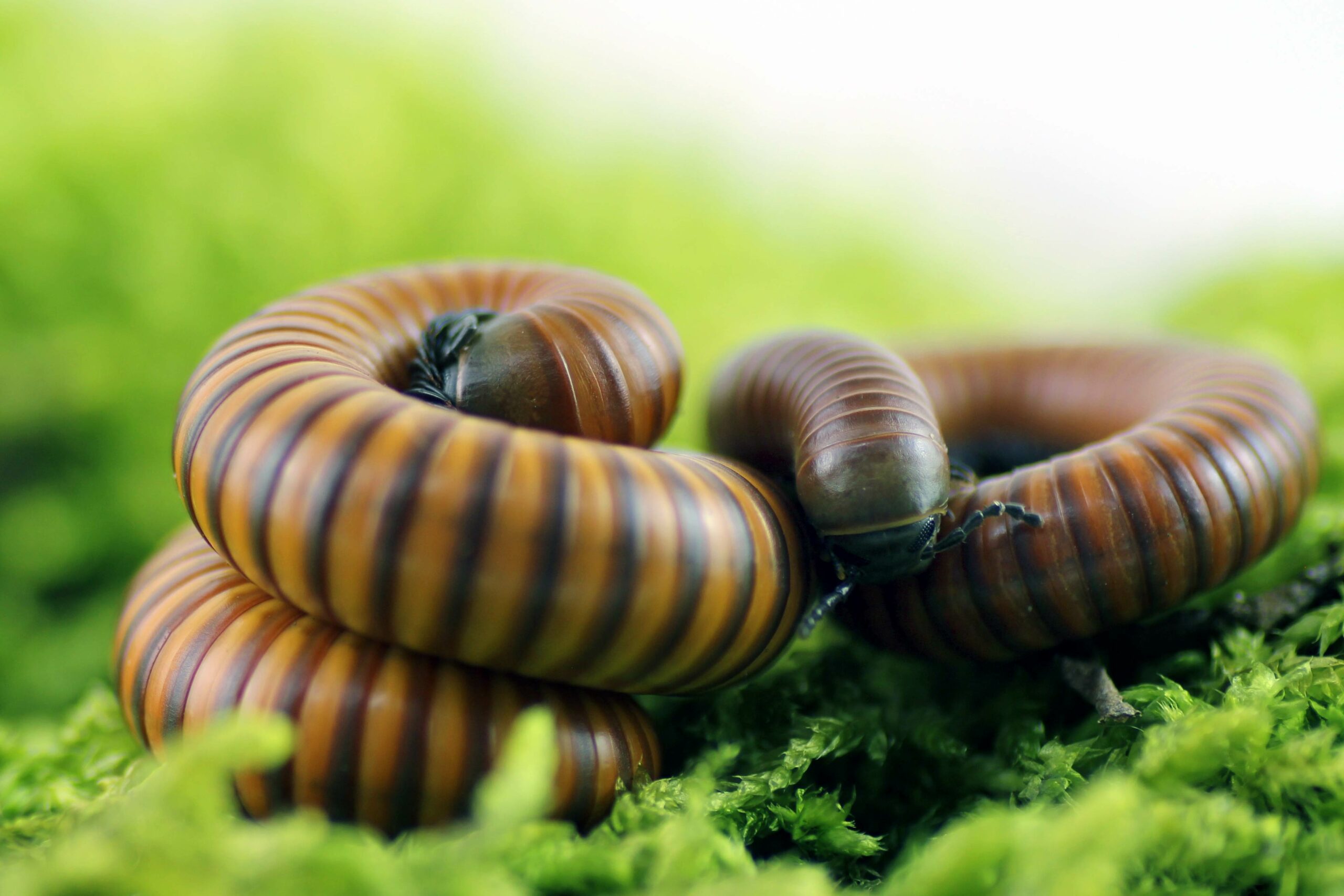
The animals display reddish to reddish-brown hues, which can appear with varying intensity depending on their age, molting stage, and lighting conditions.
This creates a beautiful contrast, especially against light-colored fallen leaves or wood with white rot.
Nevertheless, color should not be viewed as a fixed characteristic. Individual animals may appear lighter or darker.
A slender body with captivating movement
The body of Peridontopyge rubescens consists of numerous segments.
Most body segments have two pairs of legs each. When they walk, this creates the undulating motion characteristic of millipedes.
At the same time, the animal uses its antennae to explore its immediate surroundings.
However, the animals do not spend all their time on the surface. A large part of their natural behavior takes place in the substrate.
That is exactly why a millipede terrarium should never be set up like a traditional display terrarium with only a few centimeters of soil.
Peaceful Behavior
Peridontopyge rubescens is a peaceful bottom-dweller.
The animals spend a lot of time searching for edible plant material and do not actively prey on other terrarium inhabitants.
When disturbed, millipedes usually try to flee first, or they curl up or roll their bodies for protection.
Like many diplopods, they can also release defensive secretions. For this reason, the animals should be disturbed as little as possible. It is also recommended to wash your hands thoroughly after direct contact.
The best thing to do is simply observe Peridontopyge rubescens in its terrarium.
The floor is more important than elaborate decorations
When setting up your tank, you should focus primarily on the substrate.
A large usable floor area and a sufficiently deep substrate layer are much more important than having a particularly high ceiling.
Roots, cork, and other natural materials can still be provided. They offer cover and additional structures.
However, heavy decorative items must be stable.
Because when the animals dig underneath, rocks or heavy roots must not under any circumstances sink and trap a millipede.
At least 10–15 cm of substrate
For *Peridontopyge rubescens*, we recommend a substrate layer of at least 10–15 cm.
For adult animals, the substrate can be even deeper.
This allows the animals to burrow completely underground and seek out suitable hiding places.
At the same time, a natural moisture gradient develops within the soil. The surface may be slightly drier at times, while the deeper layers remain moist for longer.
Such sheltered areas are especially important for molting.
Millipede substrate also serves as food
We recommend our millipede substrate for keeping them.
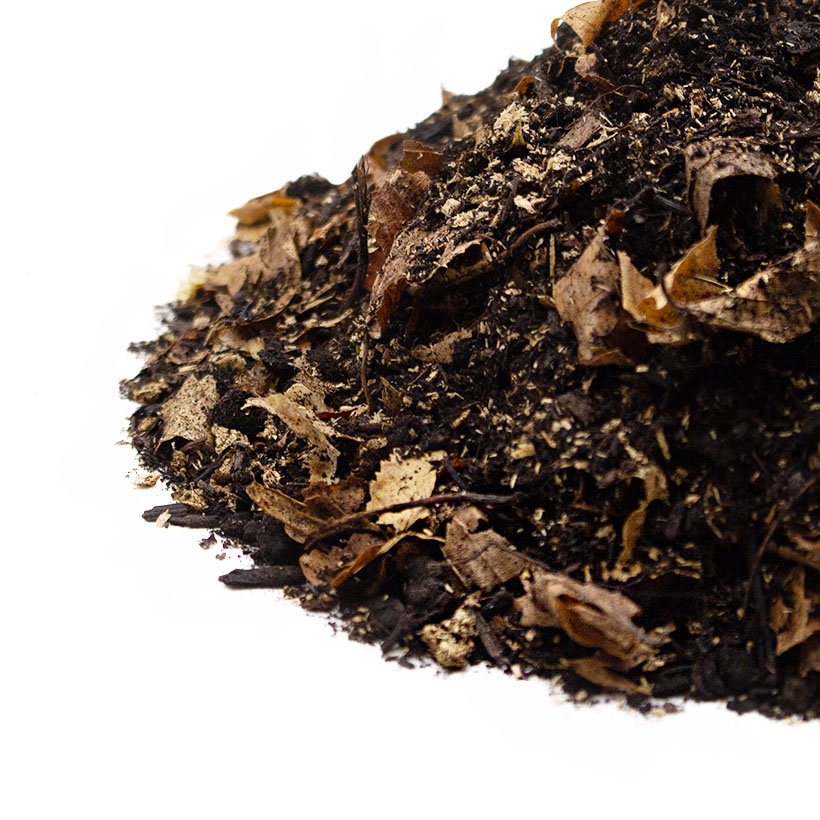
It contains fermented leaves and white-rotted wood. As a result, it not only provides the animals with a habitat where they can burrow but also serves as an important food source.
Millipedes feed mainly on dead and already decomposed plant material.
As a result, the substrate is actually used up over the course of the pet’s life.
Our millipede substrate should not be mixed with other substrates. Doing so would only reduce the proportion of usable organic matter.
A thick layer of fallen leaves
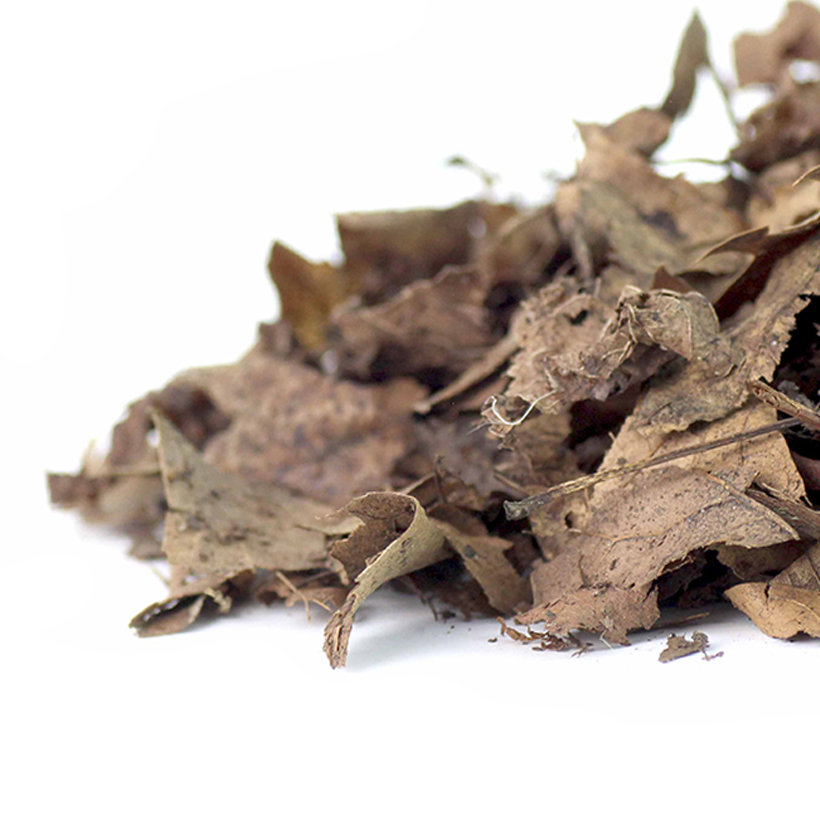
In addition, a generous amount of fallen leaves should be placed on the substrate.
It serves as a natural, long-lasting food source and provides protection at the same time.
In addition, a closed layer of leaves reduces evaporation. As a result, the soil beneath dries out more slowly.
As decomposition progresses, the leaves become more and more appealing to millipedes.
As soon as the layer gets noticeably thinner, you can simply add more fallen leaves.
White-rot wood is part of the basic supply
White rot-infected wood should also be present on a permanent basis.
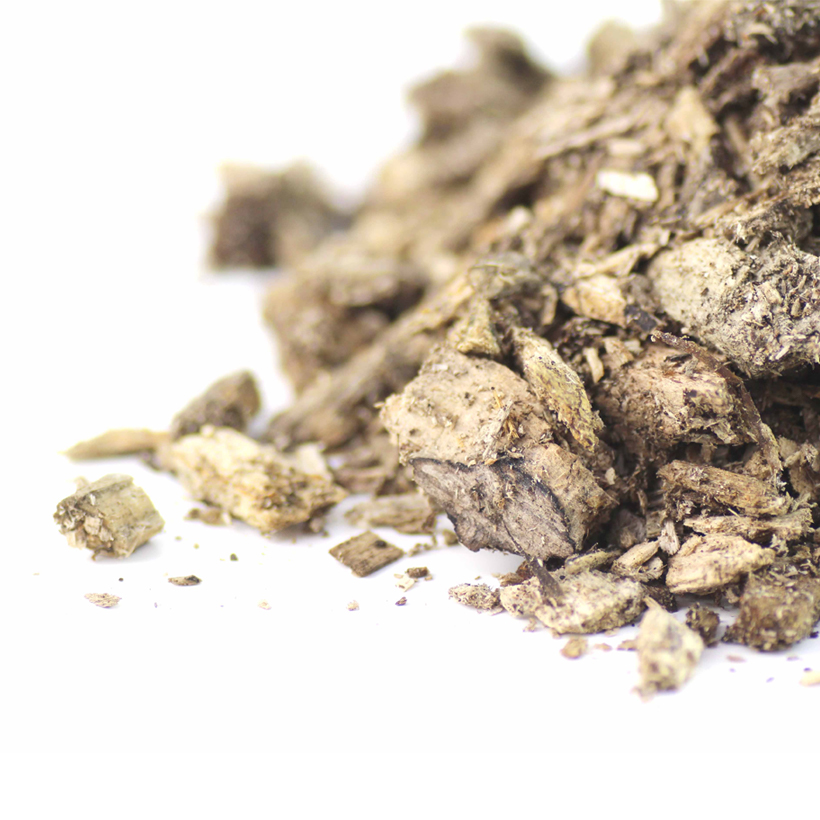
This is wood that has already decomposed significantly and has become soft and brittle due to the breakdown of its components.
It is precisely this material that serves as an important food source for many millipedes.
You can place larger pieces directly on the substrate or partially bury them in it.
This also creates natural hiding places.
Fruits and vegetables round out the diet
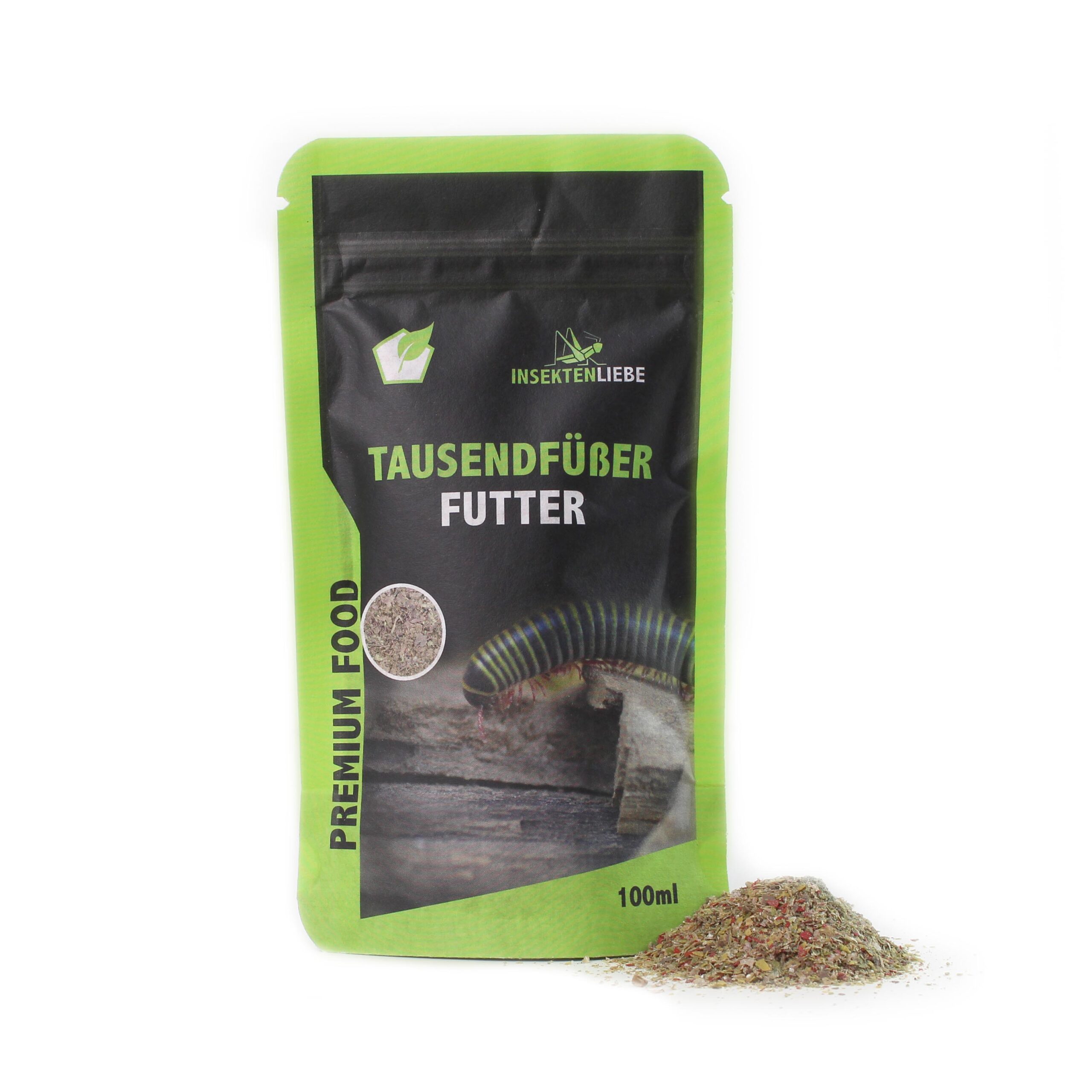
You can also offer a variety of fruits and vegetables.
Suitable examples include:
- Pumpkin
- Zucchini
- Carrot
- Sweet potato
- Cucumber
- Apple
- Pear
However, these feed products should only be offered as a supplement.
Their primary food sources are millipede substrate, fallen leaves, and white-rotten wood.
You should also check fresh food regularly and remove it before it spoils badly.
Provide a source of calcium
In addition, a cuttlebone can be placed in the terrarium.
This ensures that the animals have a source of calcium available at all times.
They can eat on their own when the need arises.
This is especially convenient because the cuttlebone can remain in the terrarium permanently.
A warm forest climate without overheating
For Peridontopyge rubescens, we recommend a practical temperature range of approximately 23–27 °C.
At night, the temperature can drop a little.
You shouldn’t try to reach the highest possible temperatures. A stable, warm range is much more effective than intense heat.
If the room temperature is already comfortable, no additional heating is needed.
Do not use floor heating
We do not recommend using a heating mat under the terrarium for millipedes.
The reason lies in natural behavior.
When it gets too hot or too dry on the surface, the animals burrow deeper into the ground. There, they find cooler and more humid conditions.
If the space is heated from below, this natural behavior no longer works.
For this reason, any necessary additional heat should never be introduced uncontrolled from below through the entire substrate.
Consistent humidity with different zones
The substrate should have a good level of moisture.
However, not every spot has to be equally wet.
A humidity gradient makes much more sense.
One area can be moistened more thoroughly, while another can be allowed to dry out slightly on the surface.
This allows Peridontopyge rubescens to choose its own suitable habitat.
There should always be sufficient moisture in the deeper layers of the substrate.
On the other hand, you should avoid waterlogging.
Good ventilation is part of it
Humidity alone does not make for a suitable tropical terrarium.
The air also needs to be replaced.
Adequate ventilation prevents the buildup of stagnant, extremely humid air and helps maintain a stable soil environment.
That’s why you shouldn’t try to increase humidity by closing off all ventilation openings.
What is more important is having a substrate that is sufficiently moist.
When the centipede suddenly disappears
The fact that Peridontopyge rubescens is sometimes not visible is a normal part of its behavior.
The animals regularly burrow into the ground.
In doing so, they seek, for example, shelter or suitable humidity conditions.
In addition, molting takes place safely in the substrate.
That’s why you should never dig for a missing animal.
Never disturb the animal while it is molting
Before molting, the millipede usually retreats into the ground.
He can stay there for an extended period of time.
After molting, the new exoskeleton is initially soft and delicate. Only then does it harden completely.
A malfunction during this phase can have serious consequences.
That’s why the rule is: Animals that have been buried stay buried.
Group housing is possible
Peridontopyge rubescens can generally be kept with other members of the same species.
If there are multiple animals, the floor space and amount of substrate must be adjusted accordingly.
You should pay special attention to feed consumption.
This is because a larger group also breaks down more fallen leaves, white-rotted wood, and usable components of the substrate.
That is why fresh material must be added regularly.
When is the substrate used up?
Over time, the substrate becomes increasingly finer.
Large pieces of foliage disappear, and the proportion of wood affected by white rot also decreases.
This shows that the animals made use of the available material.
Then, fresh millipede substrate should be added, or part of the used substrate should be replaced.
Caution is required whenever working on the substrate.
There may be young animals, eggs, or animals in the process of molting inside.
Advantages at a glance
- Peridontopyge rubescens
- Family Odontopygidae
- African millipede
- Distinctive reddish to reddish-brown coloration
- Slender, elegant build
- Peaceful Ground-Dweller
- Interesting Burying and Feeding Behaviors
- Group housing is possible
- At least 10–15 cm of substrate depth
- Operating temperature range: approximately 23–27 °C
- Evenly moist substrate
- A humidity gradient is recommended
- Good ventilation is important
- Avoid waterlogging
- Millipede substrate serves as a habitat and food source
- Provide food leaves on a permanent basis
- White-rot wood is part of the basic supply
- Fruits and vegetables only as a supplement
- A source of calcium can also be provided
- Molting takes place in the soil, where the animal is protected
- Never dig up animals that have been buried
- Do not place a heating mat under the terrarium
Suitable accessories for your setup
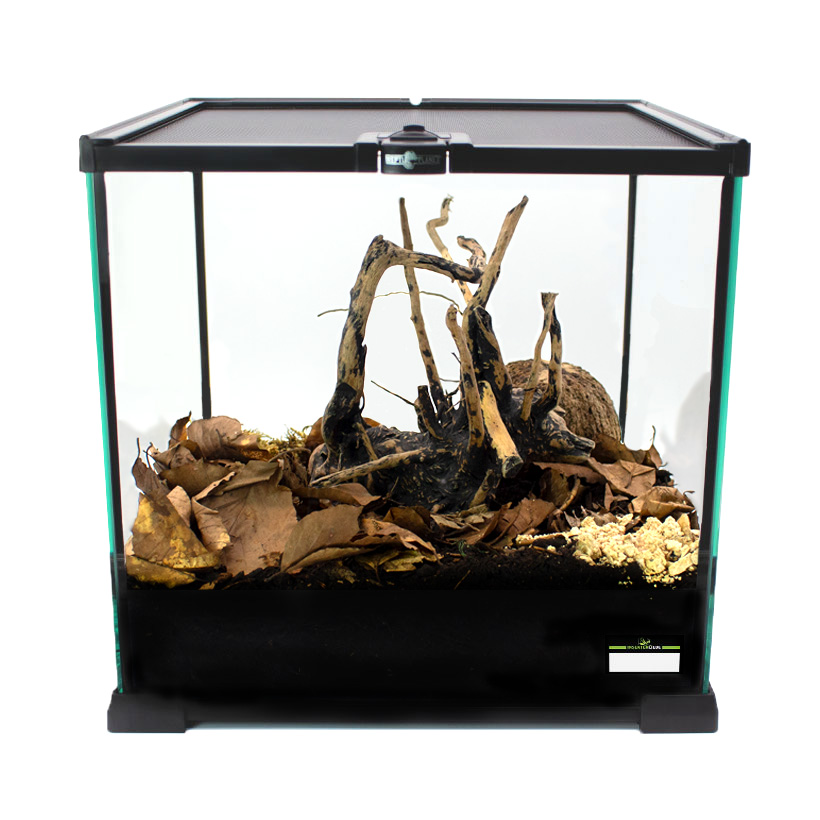
Millipede Terrarium Complete Set – provides ample floor space and allows for a deep layer of substrate for digging, hiding, and molting.
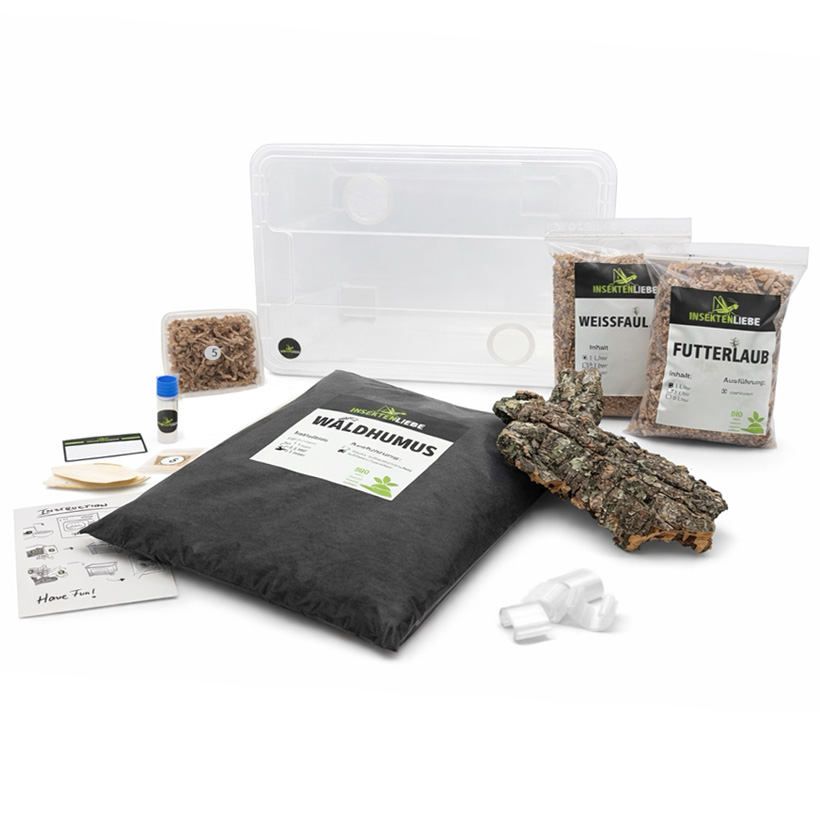
Insektenliebe Millipede Starter Kit – provides a basic set of supplies tailored to keeping millipedes, perfect for beginners.
Millipede substrate —provides both a burrowing habitat and an important food source consisting of fermented leaves and white-rotten wood.
Leaves – serve as a natural, long-lasting food source, provide cover, and protect the underlying substrate from drying out too quickly.
White-rot wood —provides decomposed wood as an important component of a natural diet.
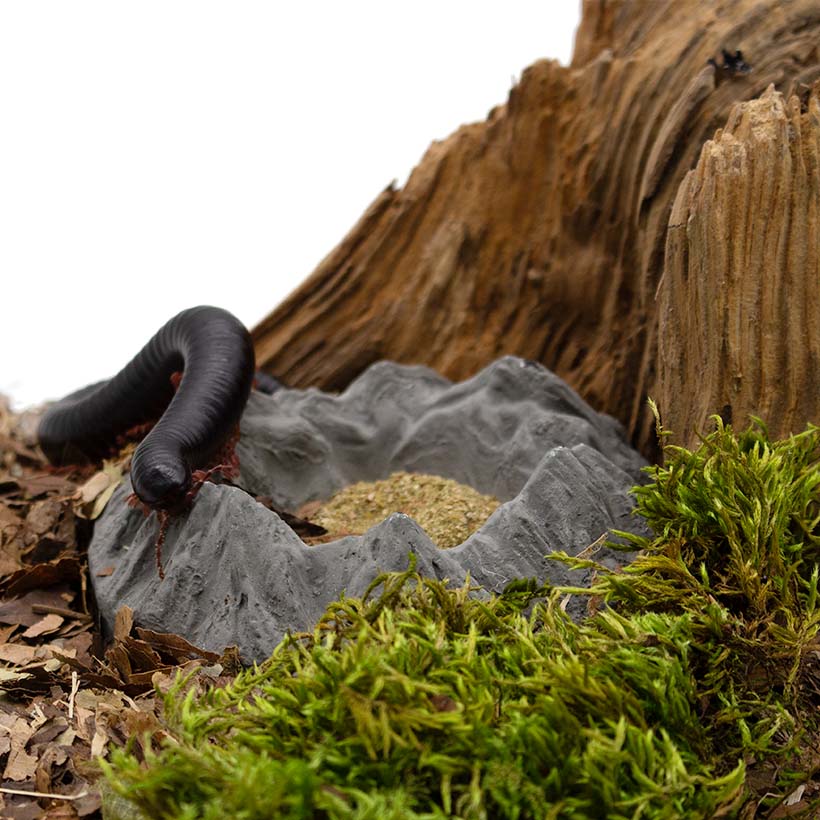
Insektenliebe Futterfels – keeps fruit, vegetables, and other supplemental food off the damp substrate and makes cleaning easier.
Conclusion
Peridontopyge rubescens is an extraordinary African millipede that stands out particularly for its slender body and reddish to reddish-brown coloration. As such, it offers a visually interesting alternative to the much more robustly built giant millipedes.
The substrate is key to successful care. At least 10–15 cm of millipede substrate, along with a generous layer of fallen leaves and white-rotted wood, provide both a habitat and a food source.
A temperature range of approximately 23–27 °C, moist but never waterlogged soil, and good aeration create the right conditions. Fresh fruits and vegetables supplement the diet but do not replace the soil’s natural components.
If you’re looking for a peaceful millipede with distinctive coloring and an elegant build, Peridontopyge rubescens makes for an interesting addition to a natural-looking forest terrarium.