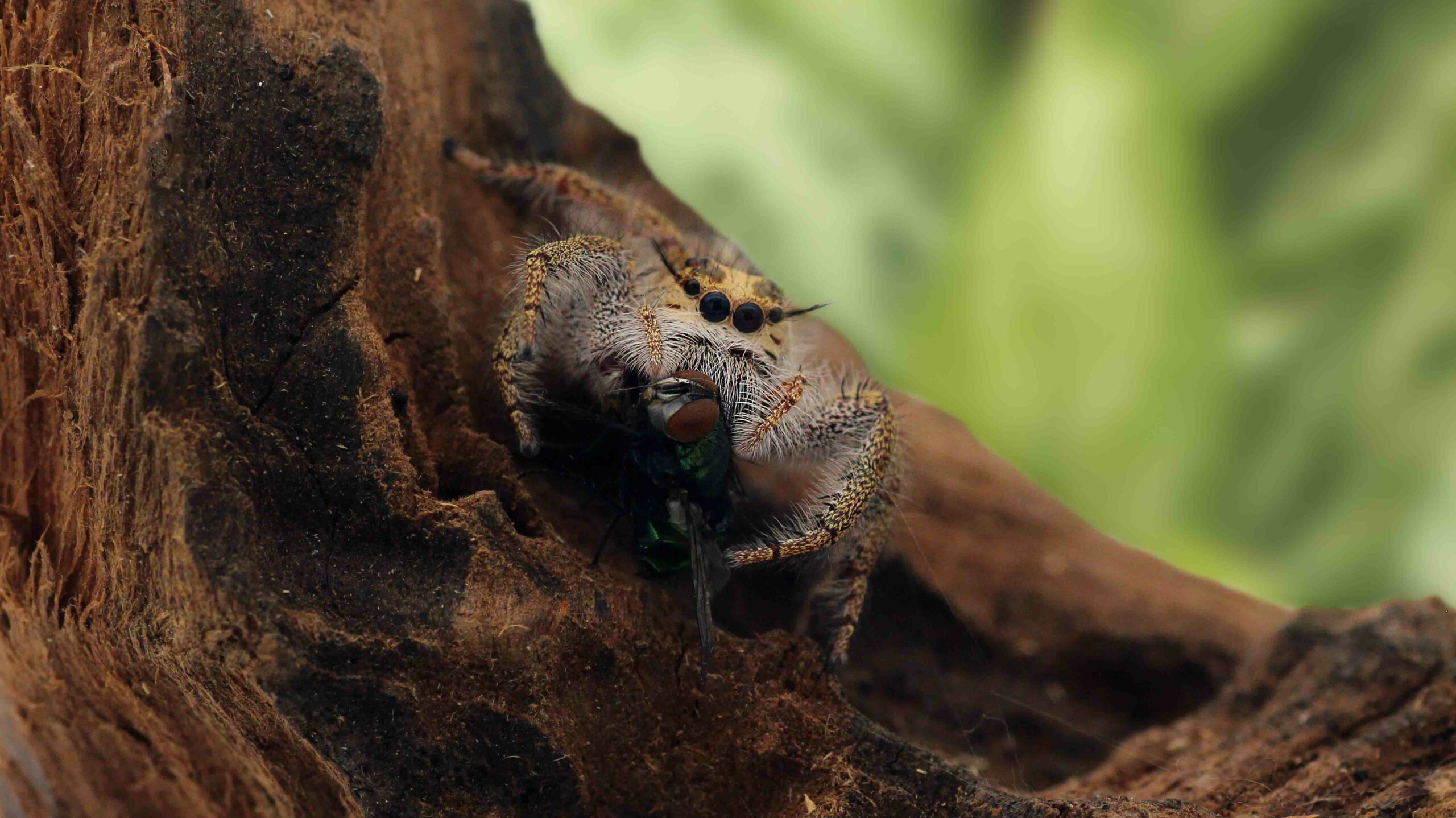


If you ask yourself the question about the right jumping spider food, the answer is basically very simple: as varied as possible! In everyday life, however, there are always other challenges and questions when feeding the little jumpers. How do I get the jumping spider food into the terrarium? Which food animals can I feed? Why isn’t my spider eating? These and other questions will be answered in this article.
General information on jumping spider nutrition
First of all, it is important to know that the right jumping spider food is exclusively various live insects. One reason why jumping spiders are so special is the fact that they can catch food animals that are up to 1.5 times their own size. The food insects are hunted on sight during the day and their ability to jump can be observed again and again when feeding the little ones. Bright lighting, sufficient warmth and a terrarium that is not too large are important for the animals to find their food and hunt successfully.
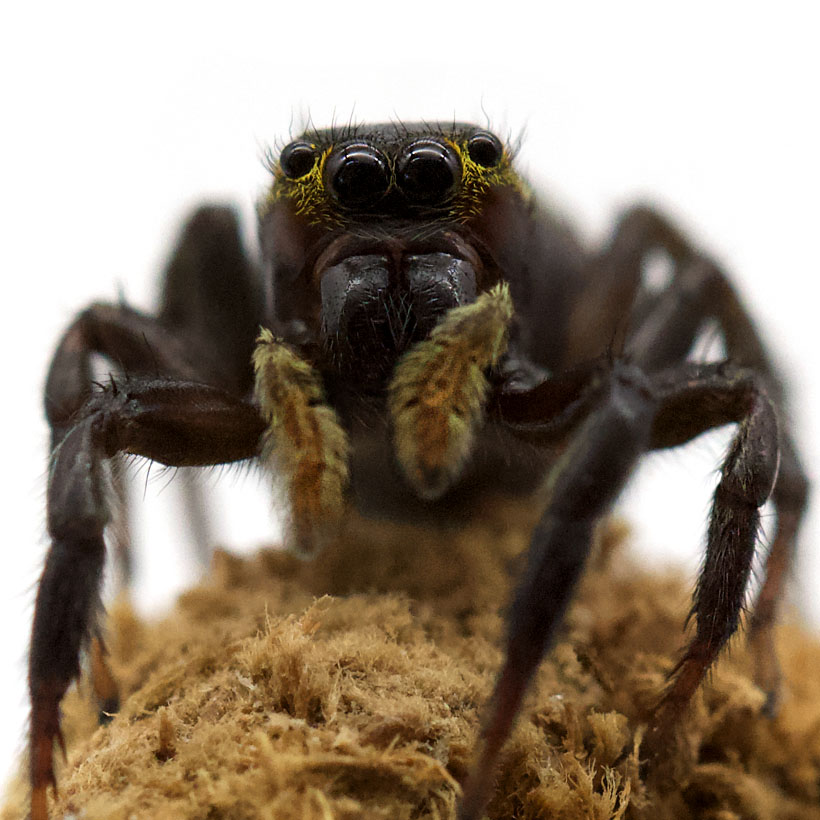
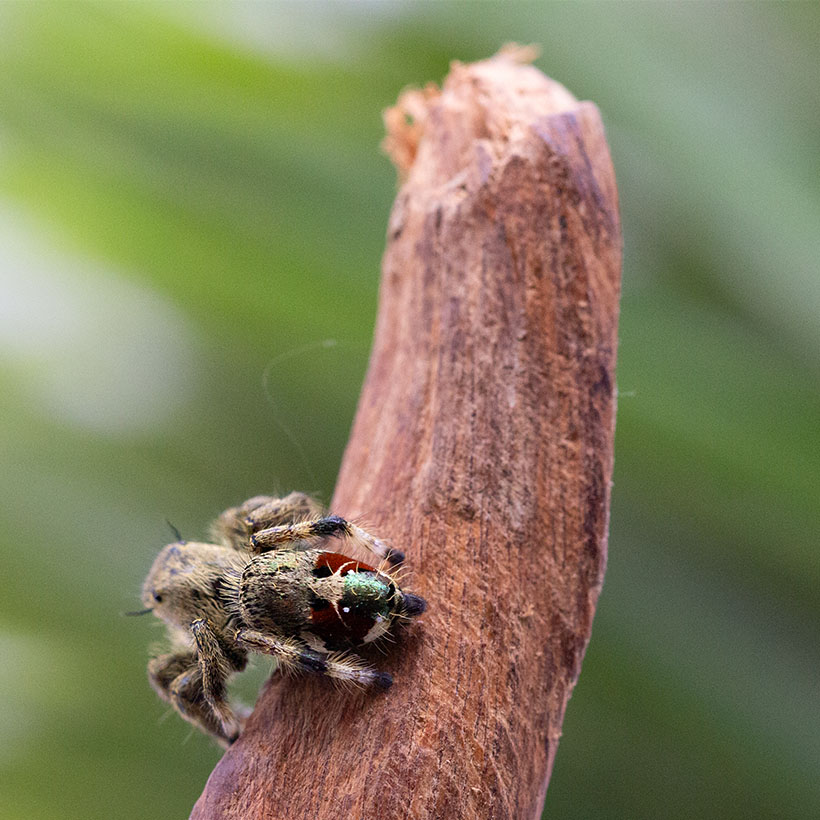
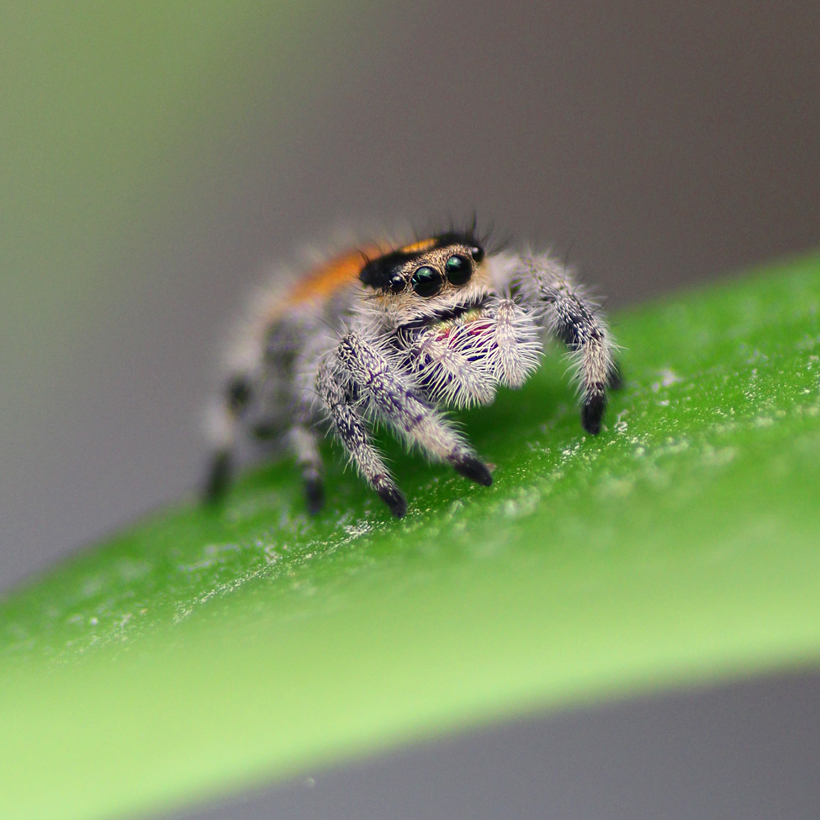
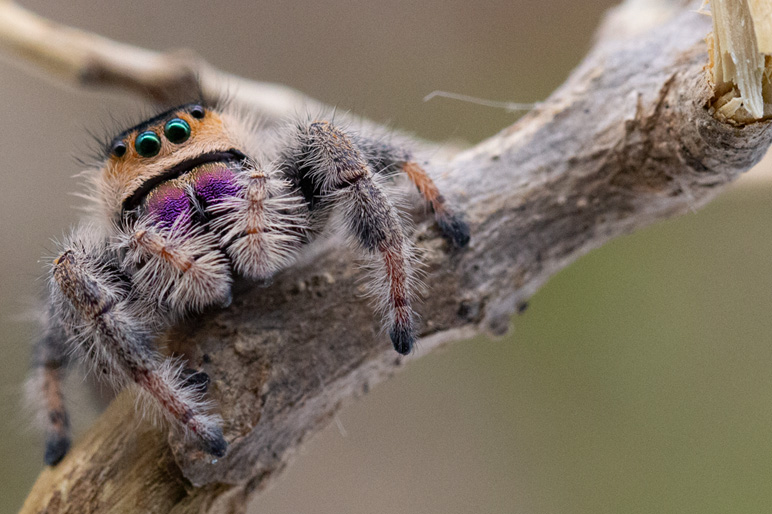
You can find out more about this in the article on keeping jumping spiders. The rule of thumb for a well-fed spider is that its abdomen, i.e. its rear end, should not be larger than 1-1.5 times the size of its carapace, i.e. its “head”. If the abdomen of a spider is rather oval or elliptical, it may be able to feed again. If its abdomen appears plump and rather round, you can skip a feed without a guilty conscience. A slightly sunken, flat abdomen, on the other hand, is a sign of dehydration, so you should provide your spider with water again.
Which insects serve as jumping spider food?
In principle, all kinds of insects can serve as food for the jumping spider. However, it is important to ensure that the food animals are not larger than 1.5 times the size of your spider. It is also advisable to vary the food animals and not only feed grasshoppers, for example. For example, you can alternate between flies, crickets, crickets, cockroaches, oven fish, maggots, etc.
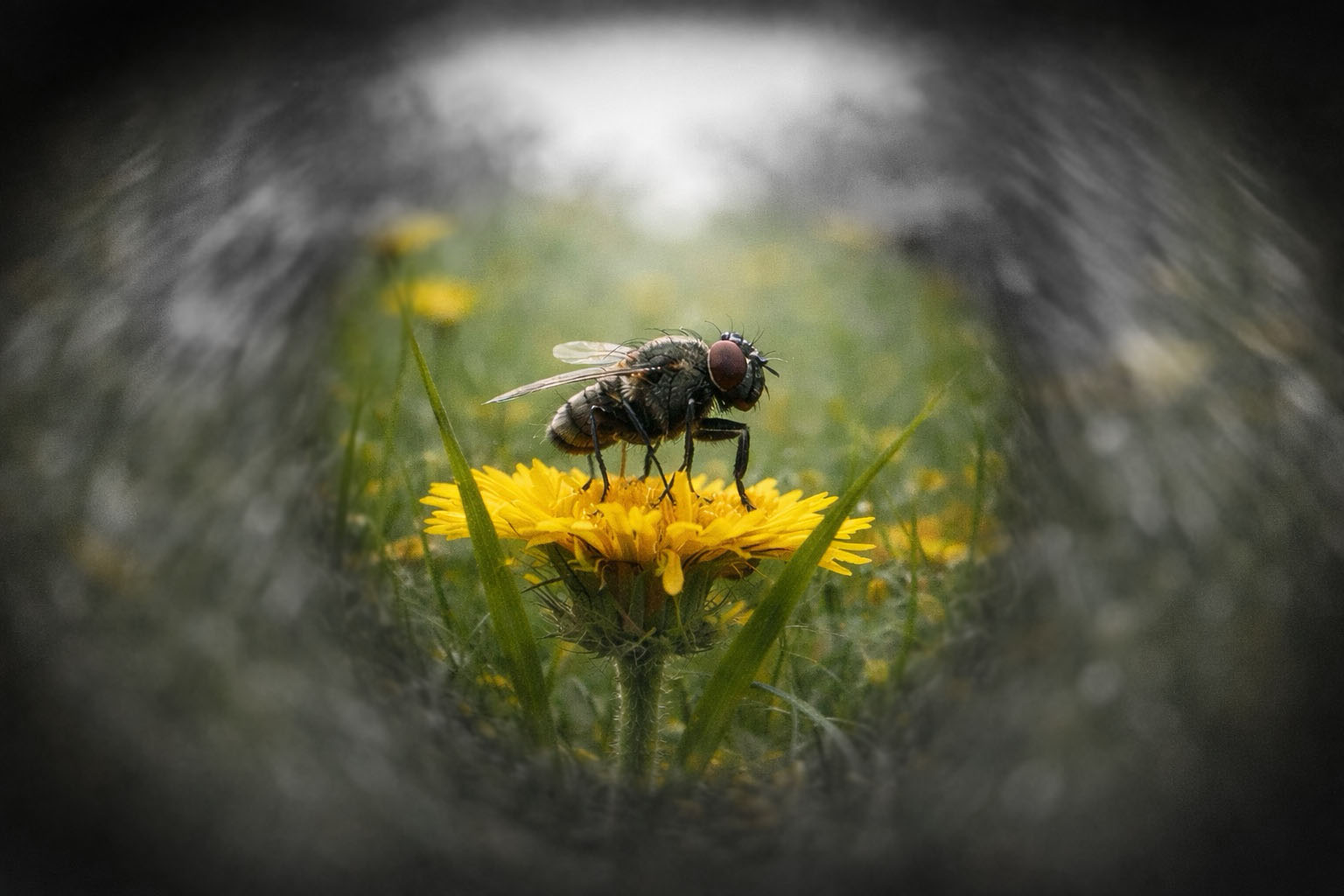
In our experience, food animals that, like the spider, tend to be in the upper part of the terrarium, such as flies and grasshoppers, are also particularly popular. However, these two should not be the only food. Finally, it is also important to know that some food insects, especially crickets, crickets, but also mealworms, can be dangerous to your spider while it is moulting. These insects can injure or even kill your spider when it is in the sensitive moulting phase. For this reason, you should refrain from feeding these insects during this phase if necessary. Flies in particular cannot be dangerous to your spider. You can find a selection of suitable food insects depending on spider size here:
FH1-2:
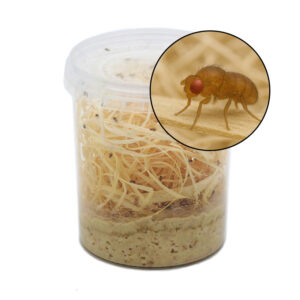
Small fruit fly “ant”
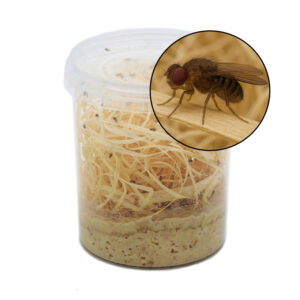
Large fruit fly
FH3-4:
Large fruit fly
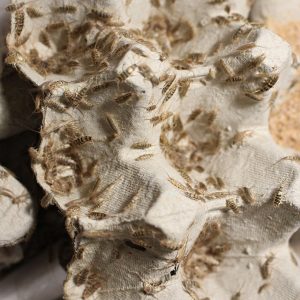
Thermobia domestica “Ovenfish”
FH5-7:
Thermobia domestica “Ovenfish”
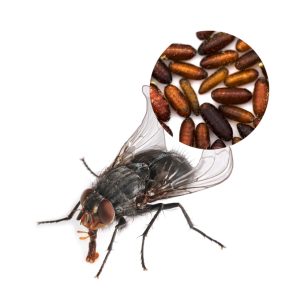
Terfly
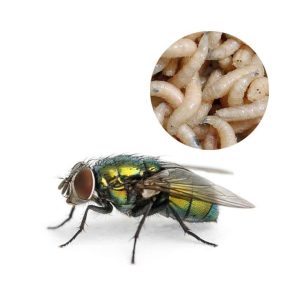
Gold flies
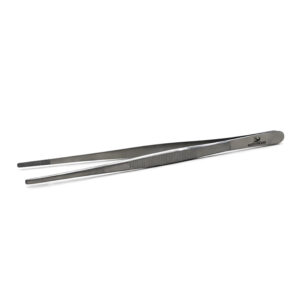
Feeding tweezers
from FH7:
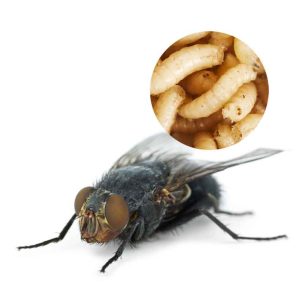
Blowflies
How do I get the food animals into the terrarium?
In order to get the food animals into the terrarium successfully and with as few escapes as possible, it makes sense to purchase a variety of tweezers. Spring steel and normal steel tweezers are particularly suitable. These can be used to catch the food animals by a pair of legs and transport them into the terrarium. Caution! Crickets, crickets and grasshoppers, for example, can shed their last and largest pair of legs and thus still escape. For this reason, you should try to catch them by the front pair of legs to minimize escape attempts as much as possible. Many other food insects such as Terfly or Drosophila can often be shaken directly from their sales box into the terrarium in portions. Another uncomplicated feeding method is as follows: Add the desired number of maggots to the terrarium each week. These are much easier to dose with tweezers than flies. With this method, the jumping spider can eat a maggot directly or eat the resulting fly a few days later.
What can I do if my spider is not eating?
The most common husbandry mistakes with jumping spiders are insufficient lighting and too little heat. If your jumping spider is not eating, try moving it to a brighter place and, if necessary, increasing the temperature so that it is at least 26°C, but preferably 28-30°C. If your spider is still not eating afterwards, it may be in a moulting phase. As a rule, a moulting phase is indicated by your spider becoming more inactive, spending much or all of its time in its web and spinning it more densely. In this case, it is best to leave your spider alone and refrain from feeding it until the moult is over and your animal is outside again of its own accord. Nevertheless, regular spraying should not be avoided during this phase, as high humidity helps the spider to moult.
If you have any further questions, please leave them in the comments below the article.



Leave a Reply
You must be logged in to post a comment.