
Insektenliebe · Feeding Guide
Small animals.
Big differences.
What’s in your pet food? Our pet food nutrition chart helps you compare protein, fat, and minerals. You’ll also learn what these numbers mean when choosing pet food.

Nutritional Information Table · Understanding the Values · Feed Animals & Products · Frequently Asked Questions
More than just a single number
What makes a suitable feed animal?
An analysis reveals what’s in the sample being examined. But when choosing food, other factors also matter: Can your animal overpower its prey? Does the prey fit its hunting style? And is the prey’s size appropriate for its age?
Type and Stage
Larvae, pupae, and adult insects may differ in their nutritional values. For this reason, the table lists them separately. Furthermore, the values apply only to the species studied.
Prey and Predator
First, check the guidelines for caring for and feeding your specific animal. A general comparison is no substitute for a feeding plan tailored to your pet.
Origin and Care
The diet of the feed animals can also affect the composition of the feed. Therefore, values cited in the literature are not guaranteed product values.
An Overview of the Values
Nutritional Value Table for Feed Animals
Historical analysis data from 1997. No current measurements are available for the feed animals we offer.
| prey | Crude protein % DM | Crude fat % DM | Crude ash % DM | ADF % TM | Dry matter % fresh matter | Gross energy kcal / 100 g DM |
|---|---|---|---|---|---|---|
Mealworms (Tenebrio molitor) · Larvae | 52,7 | 32,8 | 3,2 | 5,7 | 37,6 | 649 |
| Mealworm Pupae Tenebrio molitor · Pupae | 54,6 | 30,8 | 3,4 | 5,1 | 39 | 643 |
(Tenebrio molitor) · adult beetles | 63,7 | 18,4 | 3,1 | 16,1 | 38,6 | 579 |
, Drosophila melanogaster | 70,1 | 12,6 | 4,5 | 27,0 | 29,6 | 512 |
| Crickets Adult Crickets | 64,9 | 13,8 | 5,7 | 9,4 | 31,0 | 534 |
| American cockroaches Periplaneta americana | 53,9 | 28,4 | 3,3 | 9,4 | 38,7 | 607 |
wax moth larvae (Galleria mellonella) | 42,4 | 46,4 | 2,7 | 4,8 | 34,1 | 706 |
DM = Dry matter. On narrow screens, you can scroll horizontally through the table.
Minerals in Detail
| prey | Calcium % DM | Phosphorus % DM | Magnesium % DM | Sodium % DM | Potassium % DM |
|---|---|---|---|---|---|
Mealworms (Tenebrio molitor) · Larvae | 0,11 | 0,77 | 0,22 | 0,14 | 0,91 |
| Mealworm Pupae Tenebrio molitor · Pupae | 0,08 | 0,83 | 0,23 | 0,15 | 0,93 |
(Tenebrio molitor) · adult beetles | 0,07 | 0,78 | 0,19 | 0,16 | 0,92 |
, Drosophila melanogaster | 0,10 | 1,05 | 0,08 | 0,42 | 1,06 |
| Crickets Adult Crickets | 0,14 | 0,99 | 0,13 | 0,49 | 1,29 |
| American cockroaches Periplaneta americana | 0,20 | 0,50 | 0,08 | 0,27 | 0,87 |
wax moth larvae (Galleria mellonella) | 0,11 | 0,62 | 0,11 | 0,05 | 0,72 |
The benchmark is the deciding factor
How to Read the Information Correctly
Dry weight
TM stands for dry weight, that is, the weight without water. In contrast, the “Dry Weight” column shows how much of it was contained in the fresh sample.
Crude Protein & Crude Fat
The lab calculates crude protein based on the nitrogen content. This calculation includes nitrogen that does not come from protein. Crude fat, on the other hand, is the portion that the lab extracts from the sample using ether.
Crude Ash & ADF
Crude ash remains after the sample is burned. ADF, on the other hand, measures a specific fiber fraction of the sample. It is not possible to determine the proportion of “healthy dietary fiber” from this.
Gross energy is energy that cannot be used
The energy column lists the calorific value of 100 g of dry matter. It therefore does not refer to 100 g of live feed animals. Furthermore, it does not indicate how much energy your animal can derive from it.
There is no overall nutritional winner
In an experiment, researchers altered the ratio of fat to protein in the prey. Two species of wolf spiders reacted differently to this. Therefore, this experiment does not support a general rule of “high protein, low fat” for all mantises and spiders.
The table also does not indicate a need for additional calcium or vitamins. Therefore, we do not generally recommend such supplements here. Furthermore, guidelines for insect-eating vertebrates do not automatically apply to mantises and spiders.
Types, Development Stages, and Product Links
An Overview of Feed Animals
Here you’ll find the feed animals and their classifications in the table. The links also take you directly to the products in the store. If any relevant measurements are missing, this is noted next to the respective animal.

Beetles, fruit flies, and crickets
Mealworms, pupae, and flour beetles
Tenebrio molitor
The table lists larvae, pupae, and adult beetles separately because their values differ. Therefore, be sure to note the specific life stage. In addition, the size and movement of the prey must be appropriate for your animal. A conclusion such as “only emergency food” cannot be drawn from the numbers alone.
In the store: mealworms
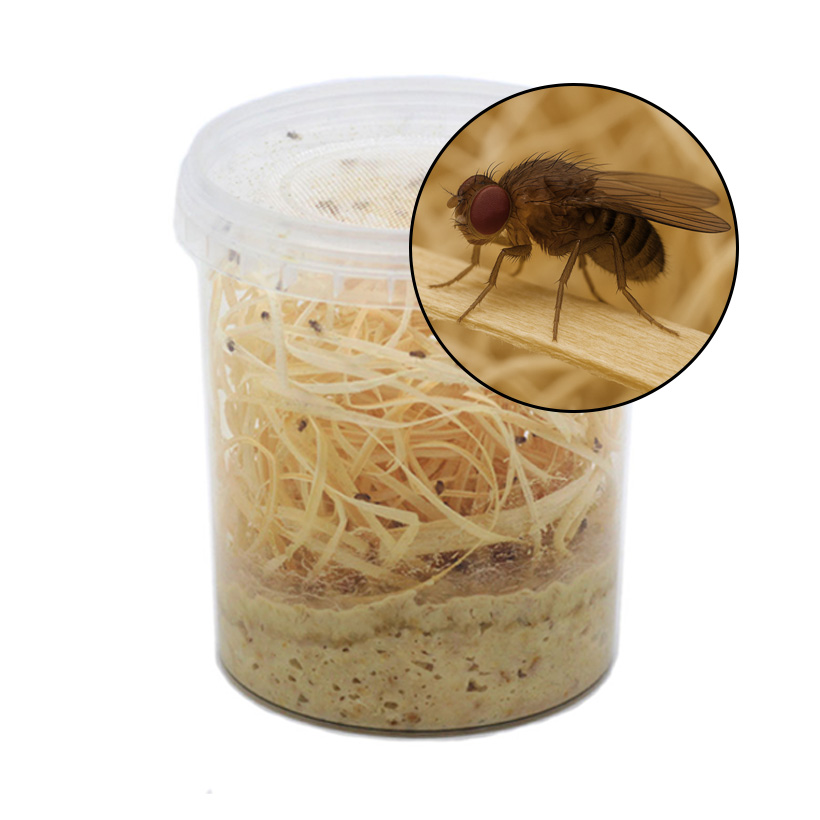
Small and Large Fruit Flies
Drosophila melanogaster · Drosophila hydei
These values apply to Drosophila melanogaster. They do not automatically apply to the larger Drosophila hydei or to a specific strain sold in the store. You can find both species in our product lineup. Be sure to check the size and strain there as well. After all, a high protein content alone does not make a feed insect a complete food source.
In the Shop: Small Fruit Fly “Ant” · Large Fruit Fly
Cricket
Acheta domesticus
The table contains values for adult crickets. Therefore, do not apply these values to young crickets without verifying them first. Also, check the available sizes and feeding guidelines for your specific species. The numbers alone do not indicate whether crickets are suitable for them.
In the Store: Crickets
Cockroaches and wax moth larvae
Chocolate cockroaches
Lateral leaf
The nutritional values are based on Periplaneta americana, the American cockroach. That’s why we don’t list fat or calcium values for chocolate cockroaches derived from this species. If you want to breed them yourself, be sure to check the housing conditions. Make sure to use a securely closed container.
In the Store: Chocolate Bars
Argentine forest cockroaches
Blaptica dubia
This table does not include specific measurements for Dubia roaches. Therefore, the values listed for the American cockroach do not apply to them. However, you can find information on care and size on the product page. Keep the container tightly closed to prevent any roaches from escaping.
In the Shop: Argentine Forest Cockroaches
Wax moth larvae
Galleria mellonella
These figures apply to larvae, not adult moths. How often you can feed them, however, depends on your pet’s species and its feeding schedule. This analysis also does not confirm any specific effect after egg-laying.
In the Shop: Wax moth caterpillars (waxworms)
Other Feed Animals
Zophobas
Large black beetle larvae
The source does not contain any entries that we can definitively attribute to Zophobas. Therefore, there are no figures for these larvae here. However, this does not imply any judgment regarding their suitability as food. For that, we need properly categorized data and information about your animal.
Soldier flies
Hermetia illucens
This table lacks measured values for soldier flies. In addition, larvae and adult flies must be considered separately. Furthermore, the calcium-to-phosphorus ratio alone is not sufficient to establish a feeding recommendation. To do so, the nutritional requirements of the specific species being reared must be known.
In the Shop: Military Bow Ties
Desert locusts
Schistocerca gregaria
The table does not include measurements for desert locusts. Therefore, adjust their diet based on your specific species and its size. Whether tweezers are necessary cannot be determined based on nutritional values alone.
Isopods and goldflies
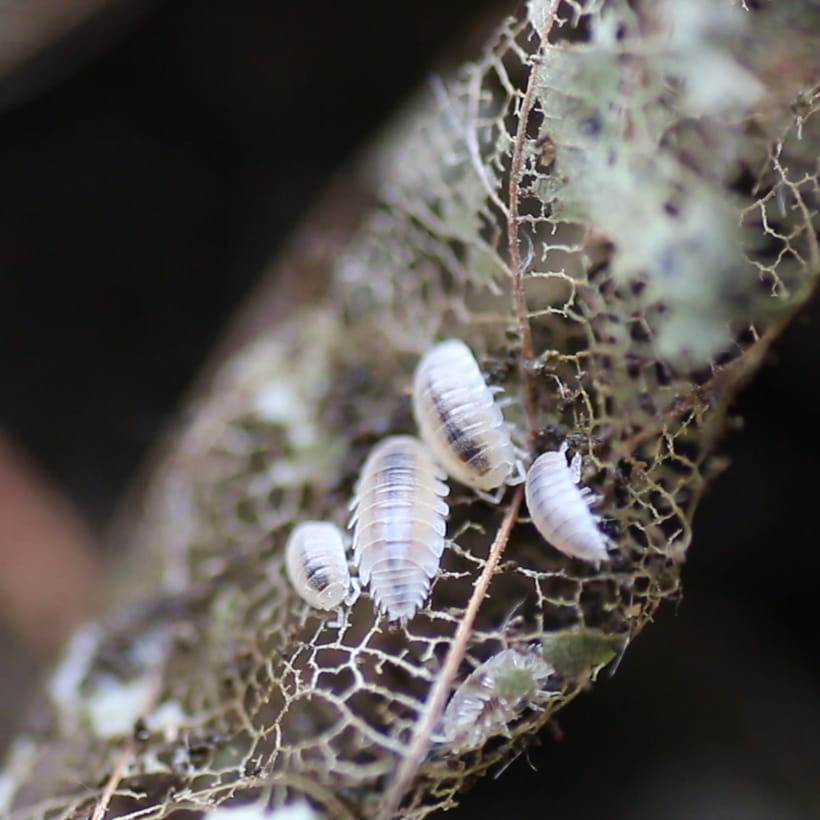
White Isopods
Trichorhina tomentosa
White Isopods live in the substrate, among other places. However, their role there should be distinguished from their use as prey. They lack nutritional value in this context. Furthermore, the sources do not support the idea that mantises choose their food based on gender. If keeping them together, also check the conditions in the terrarium.
In the Shop: White Isopods
Gold flies
Lucilia sericata
You can find gold flies in the store. However, their nutritional values are not listed in the table. Therefore, do not apply the nutritional values for Drosophila to them. We also distinguish between larvae and adult flies. Whether they are suitable for your pet’s diet depends on your pet’s species. This comparison does not serve as a recommendation for them as a complete diet.
In the Shop: Goldfliegen · 30 ml · Goldfliegen · 300 ml
A Quick Explanation
Frequently asked questions
Which live feed is right for my pet?
First, consider the species and size of your pet. For small animals, for example, small fruit flies are a good option. If your pet needs larger prey, it’s worth checking out large fruit flies or gold flies. Also, compare the sizes and product descriptions on the product pages. This will help you tailor your selection to your pet.
How do I know which food size is right for me?
Your animal should be able to grip and subdue its prey effectively. Therefore, don’t just choose the largest available prey item. When feeding, observe how your pet handles the prey. Also pay attention to its movement: A fly behaves differently than a larva or a cricket.
How can I add variety to my dog’s diet?
Variety starts with choosing prey that’s right for your pet. You can switch between suitable species and observe which prey your pet will eat. The nutritional chart also helps you compare options. But don’t base your decision solely on the highest protein content—consider size and hunting behavior as well.
How do I store my live feed?
That depends on the type of feed insect, since not all species require the same conditions. Be sure to read the instructions on the respective product page—for example, for wax maggots and soldier flies. Don’t just put all feed insects in the refrigerator. Also, make sure to use a well-ventilated, securely closed container.
The Right Food for Your Pet
Use the prey animal nutritional chart for an initial comparison. Also, be sure to consider which prey is best suited for your pet. You’ll find our current offers and product details in our prey animal selection.