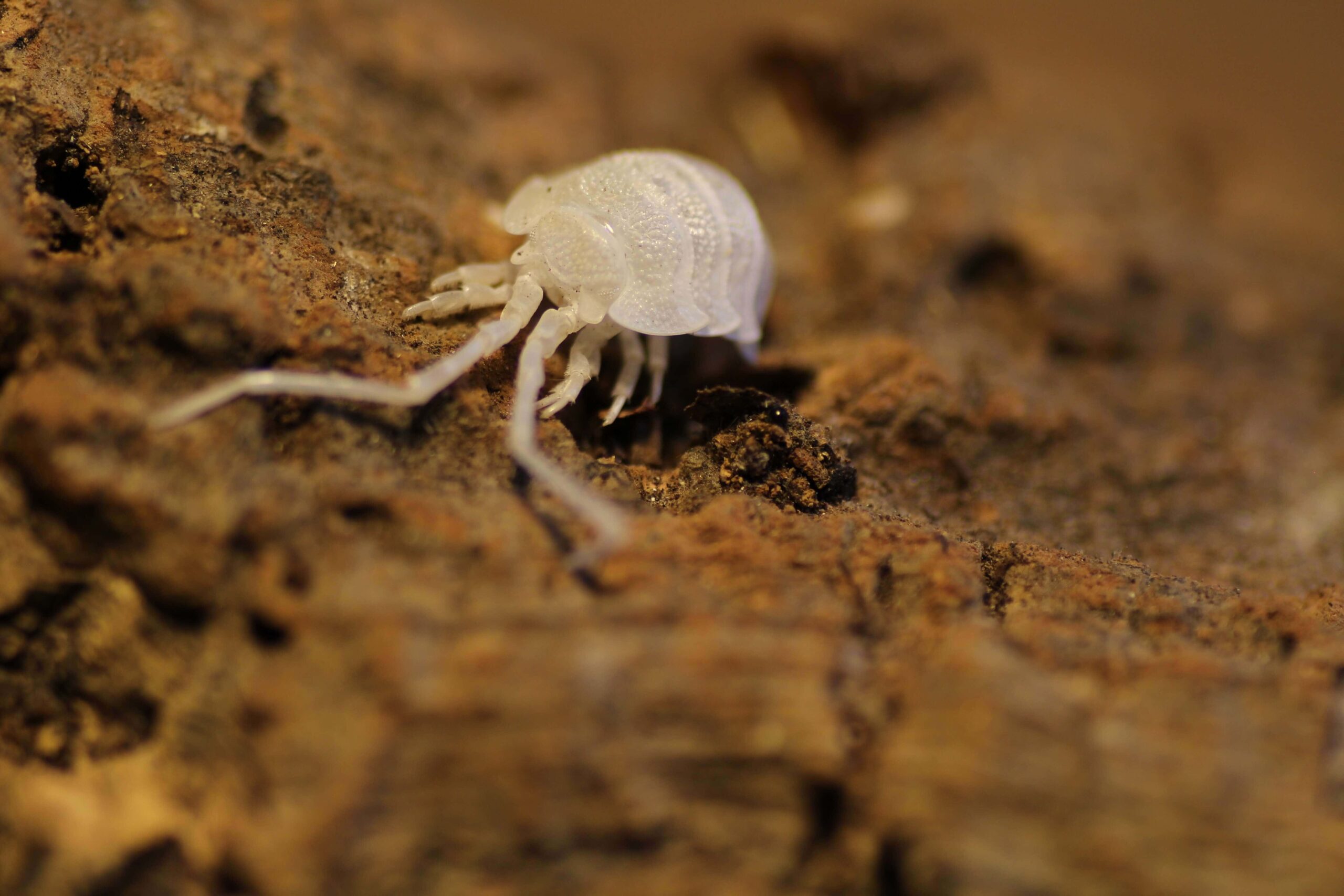


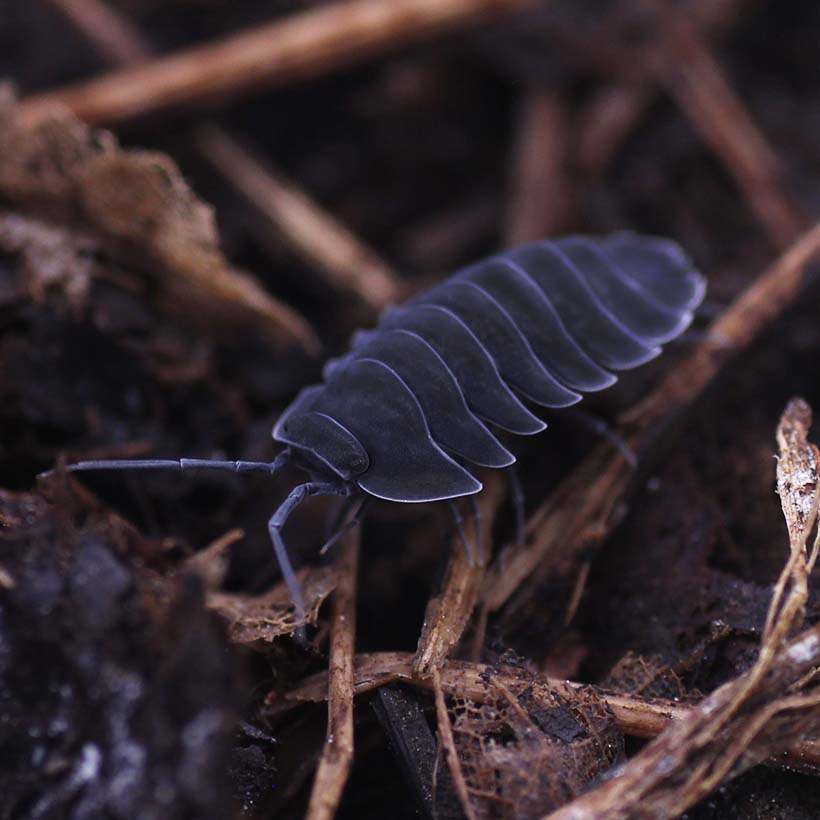
Isopods certainly have a special appeal to many terrarium keepers because they differ from many other terrarium inhabitants. A special feature of Isopods is, of course, their shell. This shell not only serves as protection for Isopods, it is also responsible for the fact that Isopods can move and survive at all – after all, they lack an internal skeleton as we know it from humans. However, the Isopods’ carapace has a decisive disadvantage compared to the human skeleton: it cannot automatically adapt to the Isopod’s growth. To ensure this, the Isopod must moult. Below you can find out more about how often Isopods molt, how this molt takes place and how Terrians can deal with molt problems in their Isopods.
How often Isopods shed their skin
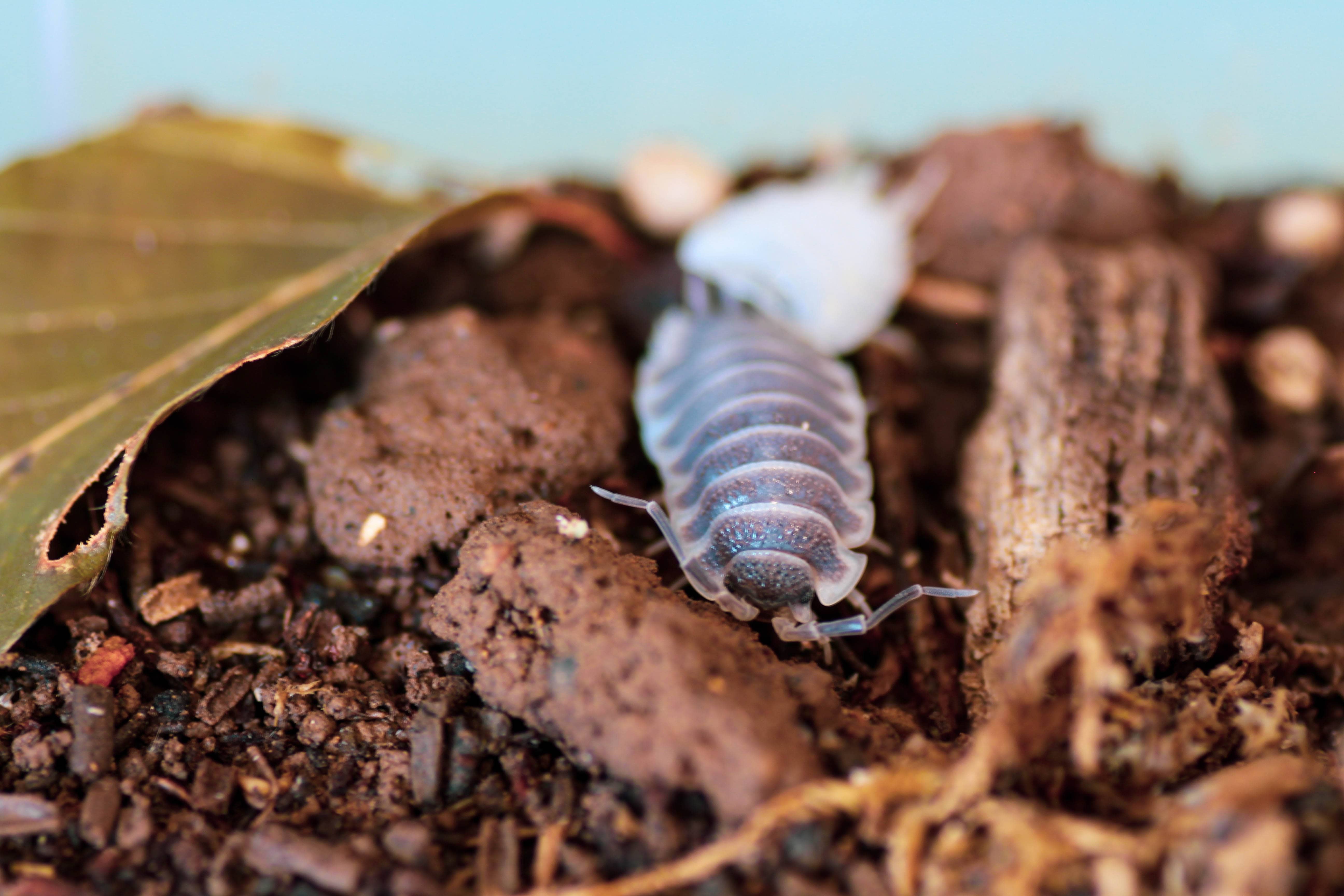
Moulting accompanies the life of Isopods and takes place repeatedly. However, as Isopods age, the intervals at which the individual moults take place shift. It is easy to understand why this is the case if you consider that moulting depends on the Isopods’ growth. Young Isopods grow relatively quickly at the beginning of their lives, so they have to moult very often so that their shell can grow with them. Older Isopods, on the other hand, moult less and less frequently as their growth has almost come to a standstill. However, middle-aged Isopods still usually moult every few weeks.
The carapace bursts open in the middle of the animal and the rear part of the carapace is stripped off by pumping movements. The front part is then shed by further contractions. This can take anywhere from a few hours to two days. Terrians should keep an eye on whether the moulting of the Isopods goes smoothly. Difficulties in the shedding process can be due to a variety of causes (see below).
The moulting process
It is not difficult to imagine that Isopods have to perform an enormous physical feat when a moult is carried out. Moulting is initiated by moulting hormones (cell messengers). Under the influence of the moulting hormones, enzymes are produced, some of which are pressed between the skins with the lymphatic fluid. Nevertheless, Isopods usually manage to complete the moult very quickly.
They are able to do this because a new protective shield has already formed before the old carapace is shed, which protects the animal during and after moulting. The old skin remains detached from the Isopods in the terrarium and is often eaten by the Isopods as it contains important nutrients. However, the new protective shield – the Isopod’s carapace – is not as resistant as the old one after moulting. This is one reason why Isopods are often easy prey for predators during this phase. Before Isopods emerge from their old skin, they can sometimes appear slightly tired and exhausted. However, this disappears once the moult has been completed without complications. Incidentally, the phase after mating is also the phase in which moulting takes place in adult animals.
Problems with moulting
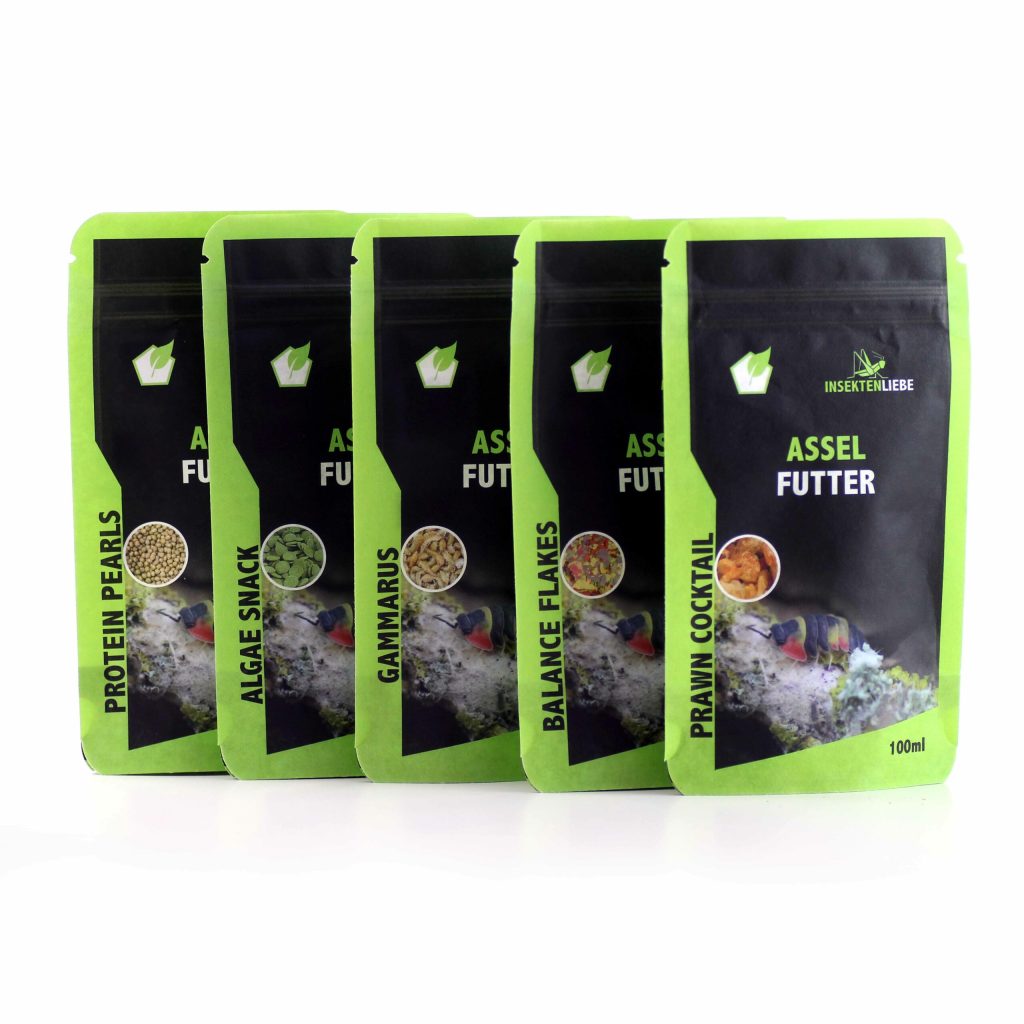
There are basically at least two aspects that can make moulting Isopods problematic. Firstly, the moulting process itself is always a challenge for the Isopods, during which something can go wrong. If the Isopods cannot completely remove themselves from their old shell, this can lead to their death. On the other hand, it is also a warning signal if Isopods are unable to shed their skin at all. In this case, but also in the case of moulting processes that fail, it is reasonable to assume that the Isopods are either suffering from incorrect housing conditions (humidity, temperature) or are not receiving sufficient nutrients to make moulting possible in the first place. This aspect underlines how important it is to know the needs of Isopods with regard to housing conditions and food. The animals often seek out a damp corner in the terrarium shortly before moulting, where they complete the entire moulting process. If Isopods are unable to moult, they usually die. If the Isopods are healthy and a moult is successful, there is a high probability that the Isopods will reproduce.
Can I help my animal to molt?
Isopod food
As Isopods moult on their own in the wild, there is no need for human help. In principle, you can make it a little easier for the animal to moult by increasing the humidity a little. However, this only makes sense if you do this while the isopod is preparing to moult. If the Isopod is already in the process of moulting, there is no need to moisten the substrate as this will no longer have a positive effect on the moult. It can happen that an Isopod (especially a young or very old one) gets stuck in the old skin. If the moult is not complete after more than 48 hours, or if the animal is still dragging the old skin behind it, you probably have a failed moult. Unfortunately, this happens from time to time and you should not immediately panic.
In this case, it can be helpful to moisten or spray the affected part of the body with water. Only if the animal still does not come out after this measure can you carefully try to remove the skin with tweezers. Experiments with scissors and a knife should be avoided at all costs. In general, the husbandry parameters should be questioned again after such an incident, checked and readjusted if necessary.
Leave a Reply
You must be logged in to post a comment.