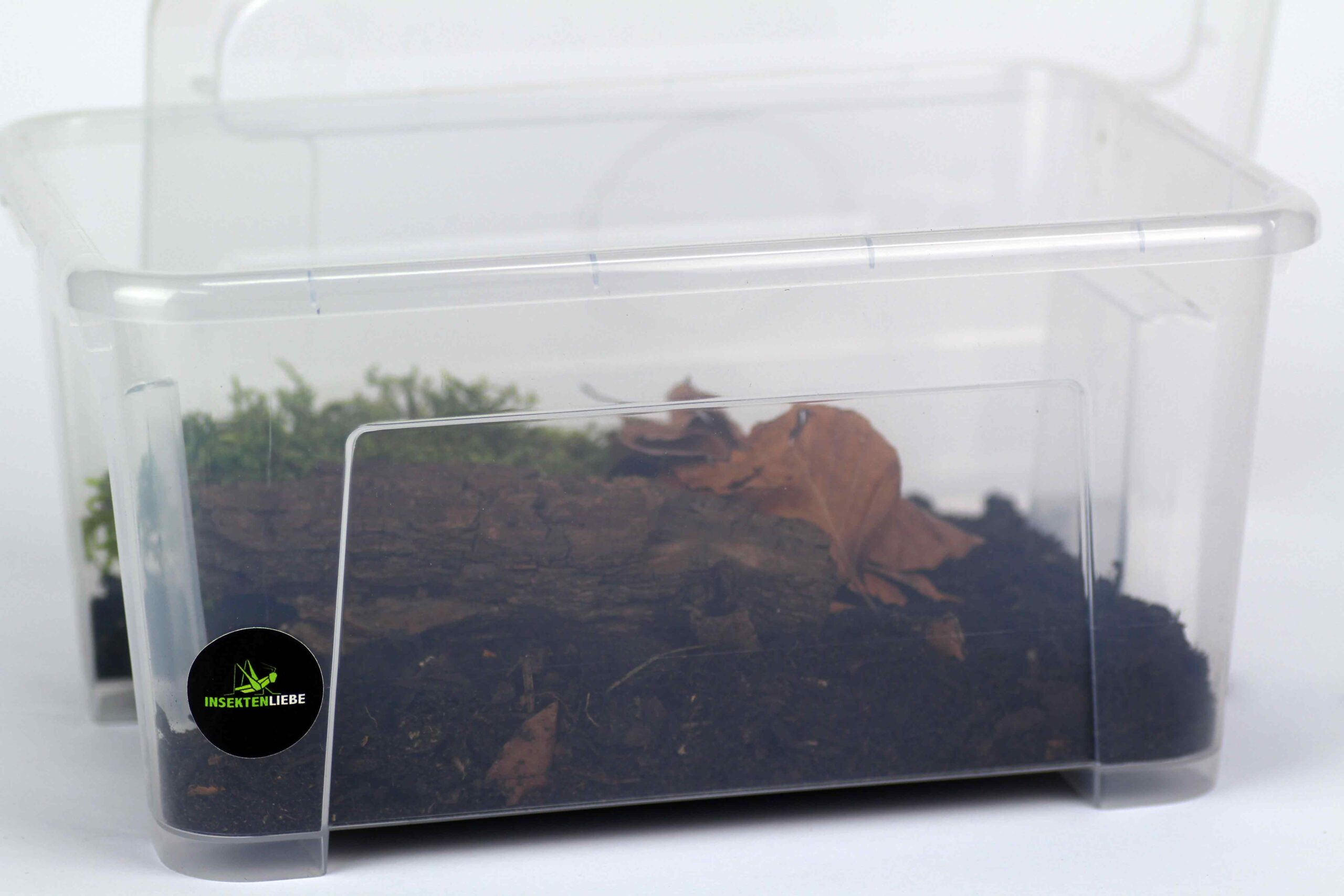


Once the decision to purchase and design an Isopod terrarium has matured, numerous questions arise, especially for newcomers. It is clear that Isopods should be kept in groups – at least twelve, preferably more, animals should find a home with the new owner.
However, before you can start placing the animals in the terrarium, you need to make some preparations: A suitable enclosure with a species-appropriate substrate and suitable utensils must be selected. This is followed by a short run-in phase during which the substrate can acclimatize to the future inhabitants. You can find out below what you need to consider in the individual steps involved in providing an isopod terrarium.
The right size for an isopod terrarium
Isopods are relatively undemanding animals and can be kept in a very small terrarium. When I started keeping Isopods, I used boxes with a capacity of 1.3 liters. This provides a very inexpensive introduction to this fascinating hobby.
However, I quickly realized that larger containers of 5 liters or more are much more appealing for me and also for the animals. A larger isopod terrarium offers more scope for design and allows better observation of the behavior of the interesting animals. It is also much easier to constantly maintain the necessary husbandry parameters, which include a dry and a moist part. As offspring can often be expected quickly, at least in the case of woodlouse species, a larger terrarium also pays for itself quickly.
The material of an isopod terrarium
As Isopods are very good climbers, a smooth-walled material should be used. Of course, aquariums are also suitable as housing, but you should make sure that there is a tight-fitting lid, as Isopods can climb along the silicone joint without any problems. In general, the enclosure should be fitted with a tight-fitting lid. This keeps the animals in their terrarium and ensures that the humidity in the Isopod terrarium increases.
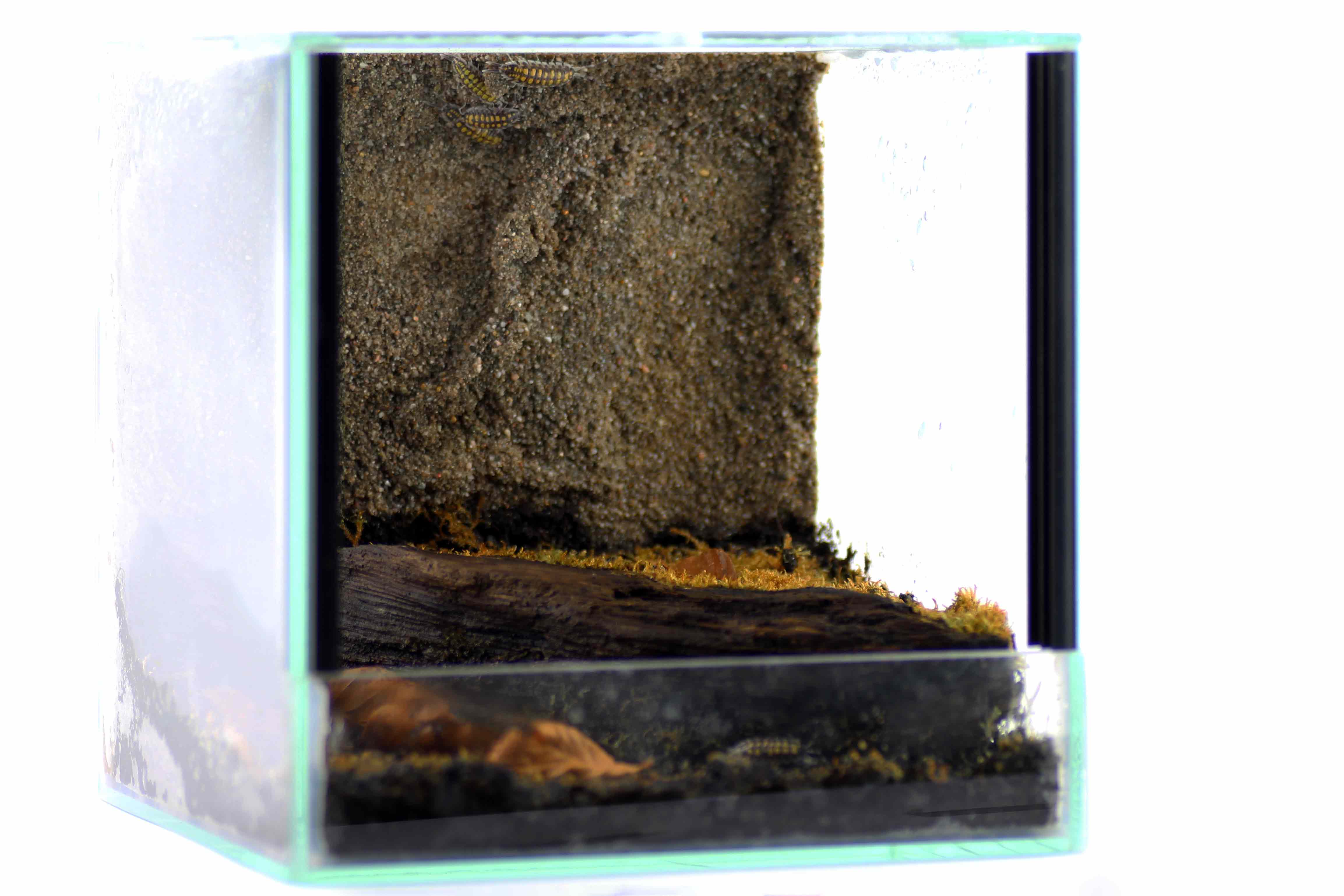
Terrariums can also be used as housing. I would advise against using sliding doors, as young woodlice can get out unhindered between the panes. You should therefore use trapdoor terrariums that close well. Some isopod keepers also use wooden terrariums. These must be treated with epoxy resin beforehand to prevent moisture from penetrating the wood and damaging it in the long term.
I can’t say whether the effort required to do this justifies the benefits, as I have no experience of this myself.
The disadvantage of glass terrariums compared to plastic boxes or wooden terrariums is obvious. They are virtually impossible to stack due to the ventilation areas at the top. It is much more difficult to work with them than with plastic and therefore it is no longer possible to improve the ventilation or make the work easier. I therefore only use plastic boxes that close well.
The bottom line is that Isopods don’t care what material the terrarium is made of, they will thrive in all types of material. It is much more important to ensure sufficient ventilation.
Ventilation for the isopod terrarium
Without ventilation, the terrarium would sooner or later become a musty and moldy shelter. It is therefore very important that oxygen exchange can take place to a certain extent. However, only up to a certain degree, as too much ventilation also lowers the humidity in the isopod terrarium and can lead to the small crustaceans drying out. I therefore advise against so-called chimney ventilation for containers under 25 liters. This ensures a permanent draught and if you look at the habitat of the animals in nature, this definitely does not take place in the forest under rotten wood or leaves.
I have found that it is perfectly sufficient to attach an aeration surface to the isopod terrarium. For Porcellio species, the ventilation should be somewhat larger than for Armadillidium species. Porcellio species occur in drier and therefore lower humidity conditions in nature than woodlice. They therefore thrive much better in larger aeration areas.
I cannot give you a general formula for the exact size of the aeration area, as the terrarium volume, the substrate height and the temperature have a decisive influence on the oxygen exchange in the isopod terrarium. My experience at the beginning was that it is advisable to start with a larger aeration area and then slowly reduce it by taping it off until the optimum size is found. By “optimum size” I mean when the substrate is still slightly damp after a week, it is not moldy and the air in the isopod terrarium does not smell musty.
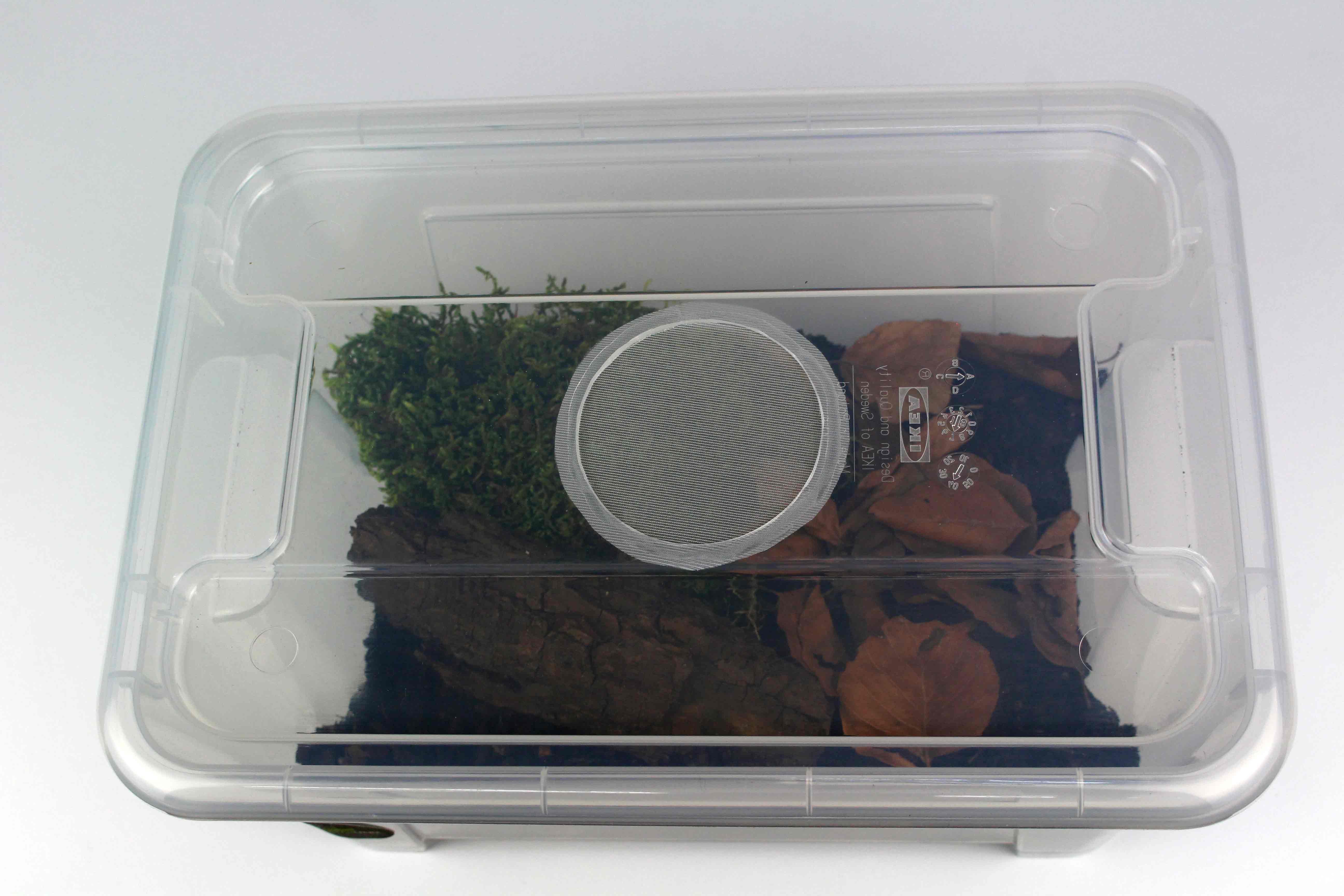
We attach an aeration surface with a diameter of 6 cm to our 5 liter complete isopod sets. This size is a good compromise and is well accepted by all isopod species. If you want to attach the ventilation to your isopod terrarium yourself, you should make sure that you attach a very fine-meshed ventilation grid.
This prevents the entry of many pests such as fruit flies. Fine-mesh wire gauze or organza have proven to be very effective. They keep the intruders outside the box and, if flies should form in the accommodation due to fruit, vegetables, etc. on offer, also in the isopod terrarium.
Substrate in the isopod terrarium – species-appropriate and functional
Once you have selected a suitable terrarium and adjusted the ventilation, the question quickly arises as to how the Isopods terrarium can best be set up so that the Isopods and you can enjoy the new tank.
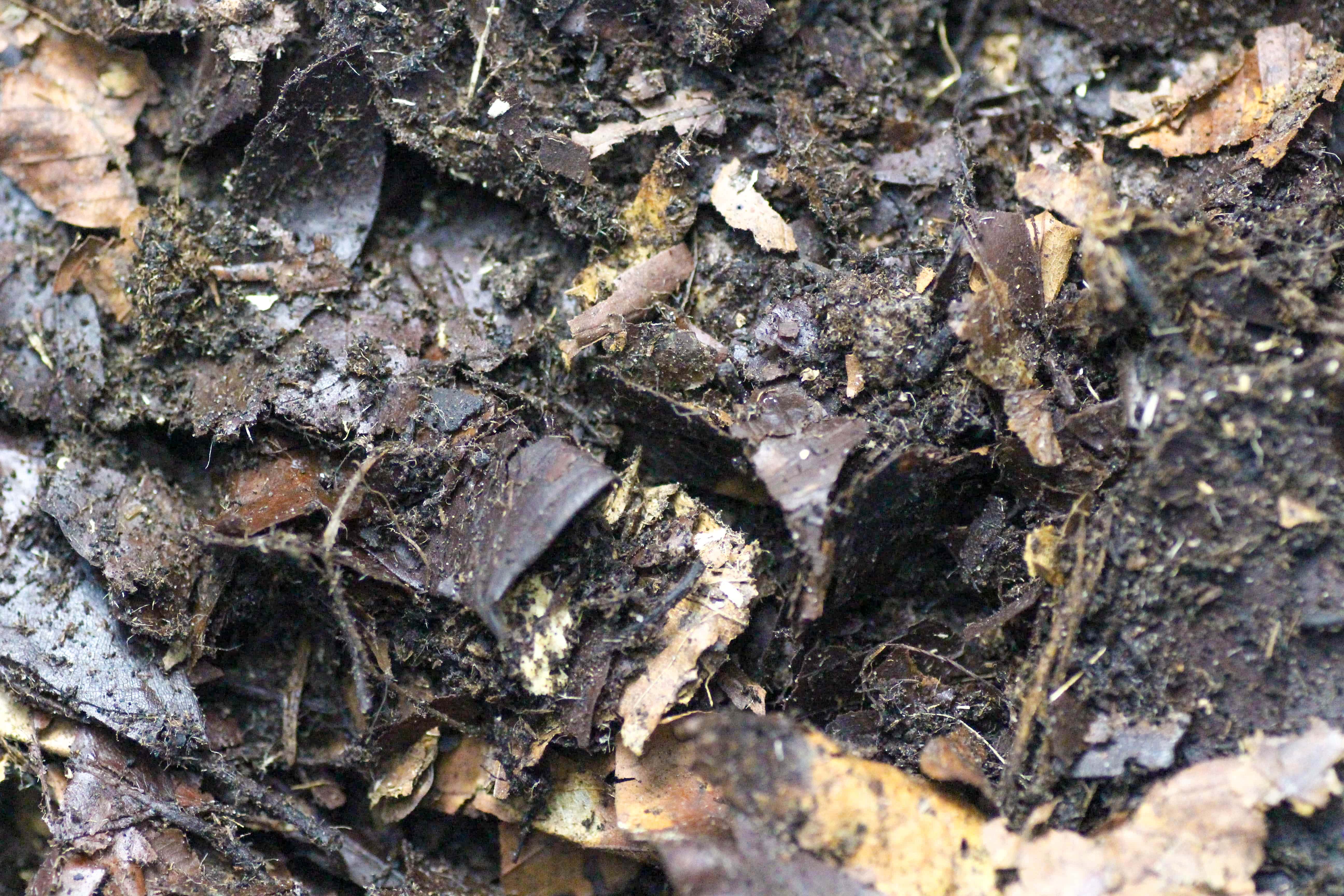
When it comes to soil, no pesticides or fertilizers should be present, so substrates offered from the garden center are only suitable to a limited extent. Organic compost or potting soil are the end result after the Isopods have utilized the plant waste. They therefore offer no added value for the Isopods. The small animals are constantly on the lookout for food and chew through the entire substrate. It is best to offer Isopods what they prefer in nature, namely deciduous forest humus. This provides them with the varied food they need. I only use resinous soil from coniferous forests for the Oniscus asellus (woodlouse), as it is the only species I have found in such areas. All other species have digestive problems due to the resinous substrate.
We treat the deciduous forest humus with heat in the microwave before we use it. This prevents invasions of uninvited guests in a closed habitat in which we actually only want to keep Isopods. As the heat unfortunately also kills off beneficial animals such as native springtails, we inoculate the substrate with tropical springtails. These do not reproduce as massively as the native species and keep any mold spores at bay.
Soil calculator
Automatically calculates how many liters of forest humus and lime granulate you need for your container!
As Isopods are increasingly found on calcareous substrate in nature, I enrich the approx. 5 cm high substrate in the Isopod terrarium with lime granules. This provides an important component for the structure of their exoskeleton and also makes the substrate more airy. You can also add 10% sand to the substrate – although this is not absolutely necessary. I currently only use sand for African species such as Armadillidium officinalis “Israel”, Porcellio spinipes and Armadillidium spec. “Cameroon”.
White rotten wood is much more valuable than sand. I use it to add food to the forest leaf humus and thus create a natural substrate. I use approx. 20% white rotten wood and 80% forest leaf humus and mix the whole thing once.
If you have the time, it would be advantageous to observe the substrate with the added springtails and the newly added aeration for one to two weeks without Isopods. This will allow the substrate and the springtails to acclimatize and you will get a feel for the weekly addition of water without endangering the Isopods. This is a good way of gaining the necessary confidence, especially if you have no experience of keeping terrariums and don’t want to experience any setbacks at the start.
But before you do that, you can add the furnishings and decorations.
Furnishings for the isopod terrarium
In addition to the substrate, hiding places must also be added to the new terrarium to provide Isopods with a species-appropriate home. Nearly all Isopod keepers agree that pieces of bark in the terrarium create optimal hiding places for the Isopods. The pieces should always be adapted to the size of the tank so that the Isopod terrarium is not completely covered and the inhabitants can still be easily observed. I use an area of approx. 1/5 of the floor area for the piece of bark. This gives the Isopods enough space to hide and leaves room for a moss corner and feeding areas. Alternatively, you can also offer egg cartons as a hiding place. I use this for species that I control relatively frequently. As the egg carton is much lighter than a piece of bark, the Isopods are in no danger of being crushed when you put the hiding place back on the ground. Of course, this is not exactly what you would imagine a forest terrarium to look like, so I would not use it for a display terrarium.
One corner of the Isopod terrarium is turned into a so-called moss corner. This is the place that needs to be moistened regularly. The moss stores moisture very well and the moss corner creates a place in the Isopod terrarium that the animals will go to before moulting. They will find the ideal conditions there and you won’t have any problems with your Isopods moulting. You can find various mosses in nature that you can use. However, you should inform yourself beforehand, as there are types of moss that are protected. Please don’t be careless, as 54 moss species have already become extinct in Germany and 335 moss species are threatened with extinction or highly endangered. When I find a beautiful unprotected species in the forest, I simply harvest a small piece so that the population can regenerate quickly.
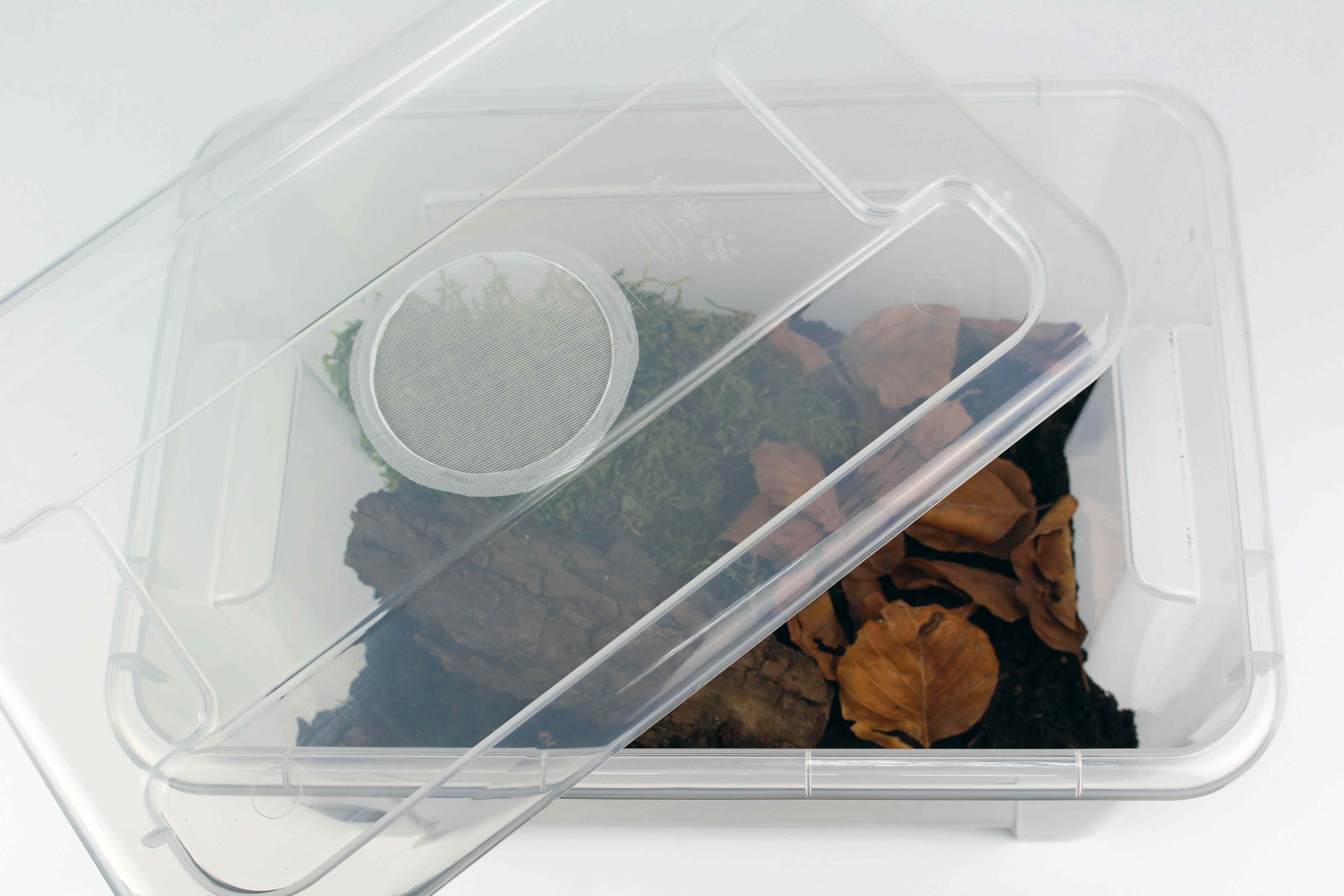
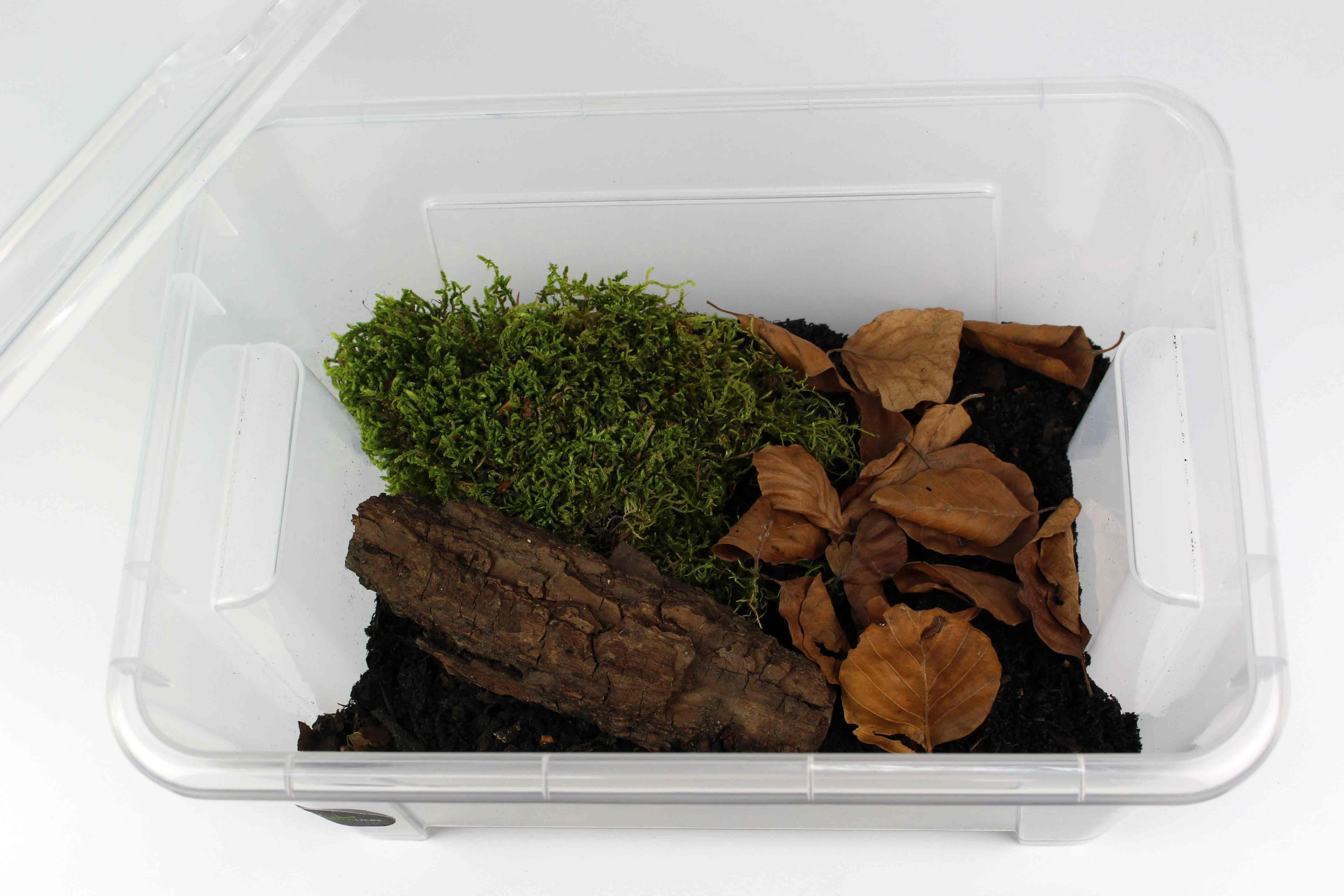
Finally, I cover the bare spots on the soil with leaves. I have had the best experiences with oak and beech leaves, as they rarely become moldy and also lower the pH value in the soil substrate. The leaves also prevent rapid evaporation of the soil and provide the Isopods with a natural food source that should never run out.
Leave a Reply
You must be logged in to post a comment.