

Foreword:
Did you know that ovenfish (Thermobia domestica) go through the most molts? From the first stage to death, which can take up to 5 years, there can be up to 60 moults!
General information:
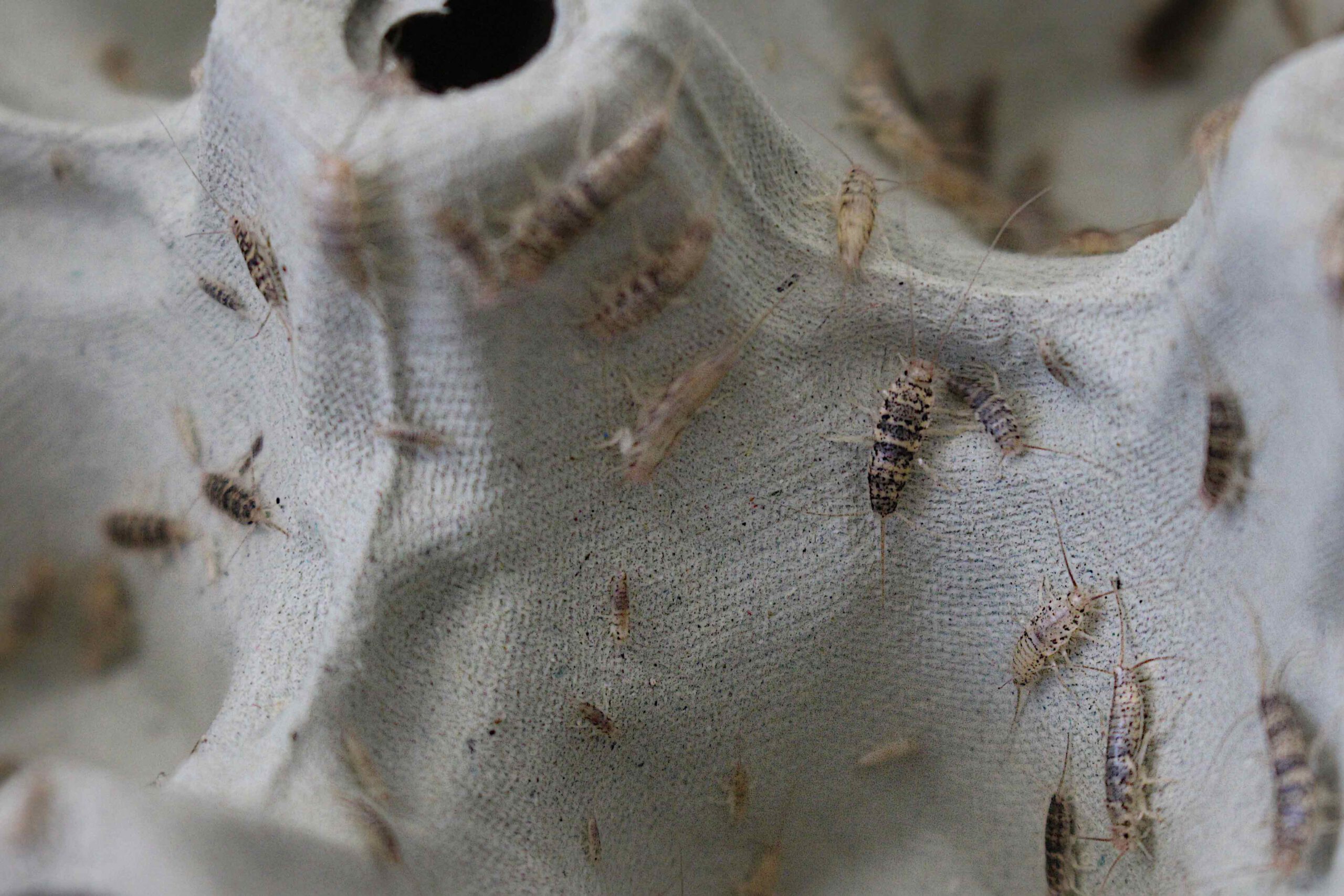
Ovenfish are among the oldest animals on earth. Adult animals reach a body size of 12mm. They love sugar and hate light and are as threatening to the book collections in libraries as fire or the bookworm. The ovenfish (Thermobia domestica) is just one representative of the 425 different species worldwide, all of which are thermophilic. Zygentoma is the name given to the order of insects that have existed for around 300 million years. In our latitudes, if you stagger sleepily into the bathroom in the morning and switch on the light, you will occasionally come across a silverfish (Lepisma saccharina).
You should not immediately panic at the sight of a silverfish, but rather be glad that this rarity lives with you. Among other things, they eliminate mold spores and house dust mites and are therefore very useful companions in poorly ventilated bathrooms. Only when the population rises sharply, to 50 animals or more, should you start to worry about your own health. Not because the silverfish are disease carriers, but because it is a sign of increased mold growth.
Isolated silverfish in the bathroom or kitchen are harmless. An extreme infestation can indicate a moisture problem and mold infestation. The silverfish are only a warning signal here. They even mitigate the mold infestation as they feed on these fungi. They also eat house dust mites, which can trigger allergies in humans. They are therefore also to be regarded as beneficial insects. They are not carriers of disease; control is not necessary from a hygienic point of view.
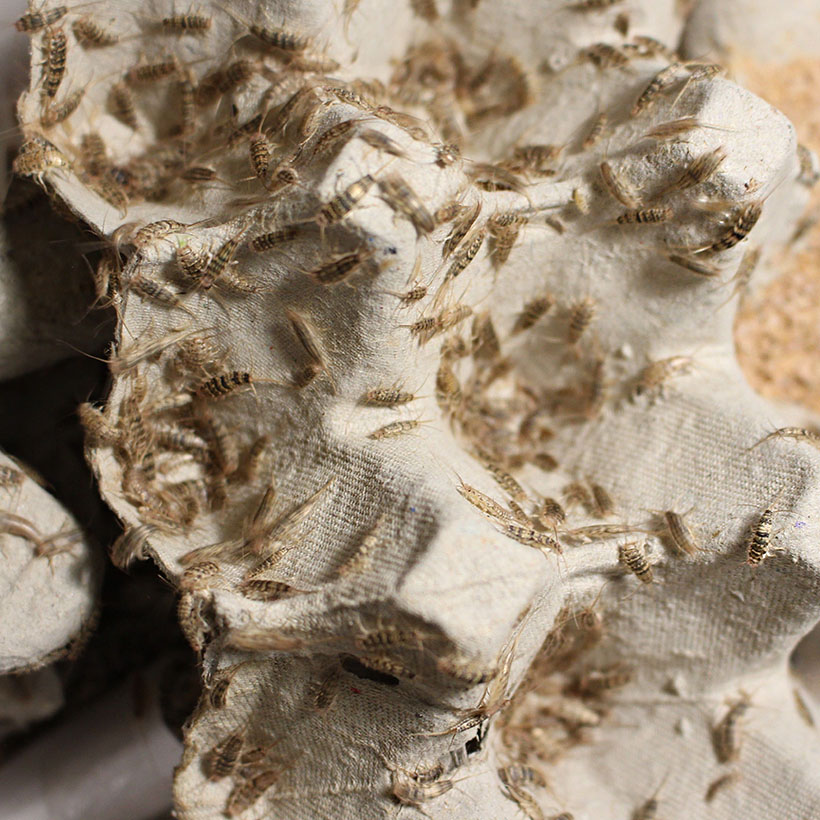
Thermobia domestica “Ovenfish”
Tasty and wholesome: why oven fish are very popular with many keepers! Natural, nutritious and easy to digest – the oven fish are a real treat for your amphibians, mantids,…
Breeding:
I use plastic boxes as breeding containers. Depending on how large and comprehensive the breeding is to be, the size must be adjusted. As the animals tolerate a very high stocking density and do not show any intra-species aggression, you can choose a smaller container.
It is best to use egg cartons stacked in the breeding box to increase the surface area. The ovenfish (Thermobia domestica) can hide in these and a higher stocking density per breeding container can be achieved.
It is important to maintain a high temperature of 35-40 °C. Despite constant high temperatures, the development time takes 3-6 months. Reproduction does not take place below 30 °C! I have therefore installed a 7W heating mat under the box. This ensures a constant 40 °C day and night in the breeding container.
The electricity costs for breeding, when the heating mat is running day and night, amount to 17.88 EUR per year and are therefore absolutely worthwhile if you keep a few mantids at home and often have to feed ovenfish. For comparison, a can of crickets with approx. 4g of oven fish costs 3.50 – 4.00 EUR in the shops. With a breeding box like the one presented, you can breed 40 – 100g of oven fish per year. (The average electricity price in 2017 is 29.16 C/kWh)
As the females particularly like to lay their eggs in absorbent cotton, it is best to add a few cotton balls as a substrate. I tear up 4-5 absorbent cotton pads to give them plenty of opportunities to lay their eggs.
Lining:
I do not feed wet food and therefore have no problems with mites. I only use feed:
- Fish flake food
- Wheat bran
- Brewer’s yeast
- Chick starter
They are not particularly fussy and can digest something that no one from cows to caterpillars can: cellulose. This substance is the main component of plant cell walls and is made up of hundreds of sugar units linked together. Bacteria live in the digestive tract of cows and many other animals and break down cellulose into its individual components, making it usable for the host. Oven fish, on the other hand, do not need any help in breaking down plant food. They produce celluloses and cellubiases, enzymes with which they successfully process and digest long-chain cellulose, something that is otherwise reserved for certain types of bacteria and fungi. They can therefore feed on cellulose-containing materials such as cotton or paper. So when the food is used up, there is no need to panic immediately as they can also feed on the egg cartons brought in for a while.
Ovenfish only absorb moisture through the air. It is therefore essential to integrate a container with water in the breeding box. This should be covered with a nylon stocking or fabric so that no ovenfish can get into it. I myself use a vase which I fill with water and place in the breeding box. I close the opening with a piece of toilet paper. Be careful, the population will collapse if there is no water available!
The humidity should be balanced so that there is no condensation inside the breeding box. As soon as condensation forms, the little ovenfish drown in it and the food soon starts to mold. This can easily be counteracted by a larger ventilation area, which is best placed at the top of the lid.
Feeding oven fish
Especially in the Mantodea scene, oven fish are indispensable as food animals. They pose no danger to the fish and their soft body makes them a tasty and easily digestible treat. Their body size of up to 12 mm also makes them a perfect link between feeding Drosophila hydei and gold flies. They can survive for weeks in the terrarium and can therefore also be fed in stock. For me personally, ovenfish are one of my main food animals after Drosophilas.