Dicronorhina derbyana derbyana
5,50 € incl. VAT, plus shipping

Simple

< 50 mm

25°C – 27°C
Dicronorhina derbyana derbyana – Colorful beginner beetle
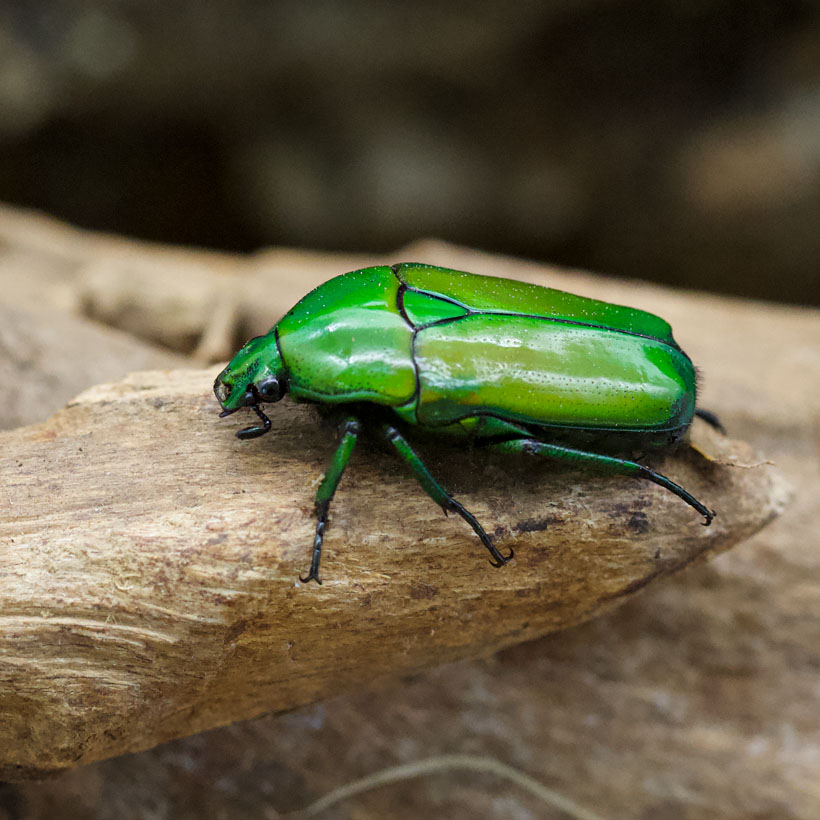
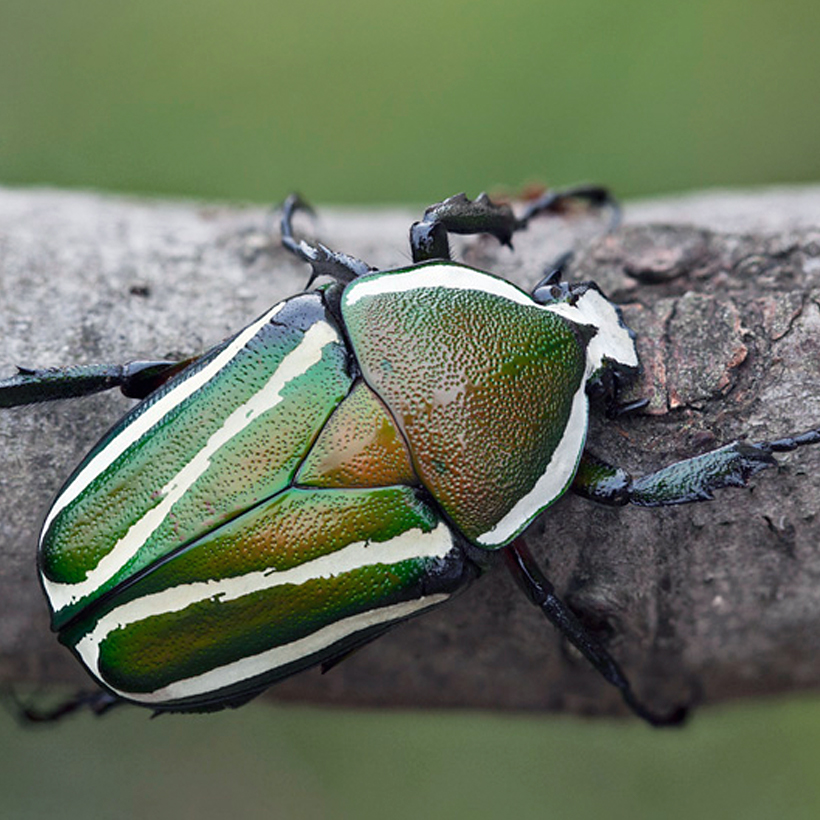
Dicronorhina derbyana derbyana is one of the most impressive rose beetles in terraristics. The animals have a Metallic green basic colorationalthough some specimens can also show reddish tones. The entire upper side of the body is covered with a characteristic pattern of white stripeswhich makes the beetle particularly conspicuous.
With a body length of up to 5 cm this rose chafer looks very massive and imposing. Many animals also have a shiny metallic red spot on the neck shieldwhich makes the beetle appear even more attractive. The legs also show a metallic green color, while only the tarsi are black. The underside of the body appears completely black. On the head, the animals also have a small T-shaped hornwhich is typical for this species.
Due to their impressive coloration and their relatively easy keeping these beetles are becoming increasingly popular among terrarium keepers. The Generation time is about 10 to 12 monthsso that the species is also well suited for breeding.
The natural habitat of Dicronorhina derbyana derbyana is in the shrub and tree vegetation of Africa. shrub and tree vegetation of Africa. Although the beetles can fly well, they usually move around in the terrarium. crawling and like to use branches or other structures.
For keeping the imagines a terrarium from 30 × 30 × 40 cm. However, larger tanks offer the animals significantly more room to move around and are therefore recommended. The Larvae have lower space requirements and can be easily stored in BraPlast tins rearing.
The terrarium or breeding box should contain a substrate layer of about 10-20 cm contain. The following are particularly suitable as substrate Flake Soilas the larvae feed on it and can develop well in it.
The beetles can survive at temperatures between 18 °C and 28 °C be held. However, the animals are particularly active at temperatures around 25-27 °C. During the larval stage, the animals feed mainly on the soil substrate.
After pupation, the beetle hatches in the substrate and initially remains hidden there. Only after about two weeks it begins to appear on the surface. After that, the animals live on average for about five months.
Dicronorhina derbyana derbyana prefers rather dry dry conditions. A humidity of approx. 50-60 % has proven to be ideal. Special lighting is not necessary, but a Natural day-night rhythm be present. Like many species of rose chafer, this species is also diurnal.
Suitable food is overripe fruitwhich is best offered in small bowls. The animals also like to eat Beetle Jelly an. Additional Proteins can be easily supplied to both larvae and beetles via gammarus to both larvae and beetles.
The following are suitable for setting up the terrarium climbing brancheswhich the beetles like to use. Furthermore, the species does not place high demands on the design of the terrarium.
Thanks to its uncomplicated cultivation Dicronorhina derbyana derbyana as ideal entry-level beetle for keeping beetles and at the same time inspires even experienced keepers with its impressive appearance.