

Seeing or sensing? How flagellate spiders perceive their surroundings
Flagellate spiders, also known as amblypygi, are fascinating and often misunderstood creatures. They belong to the arachnid family and have a unique appearance due to their long legs and striking body structure.
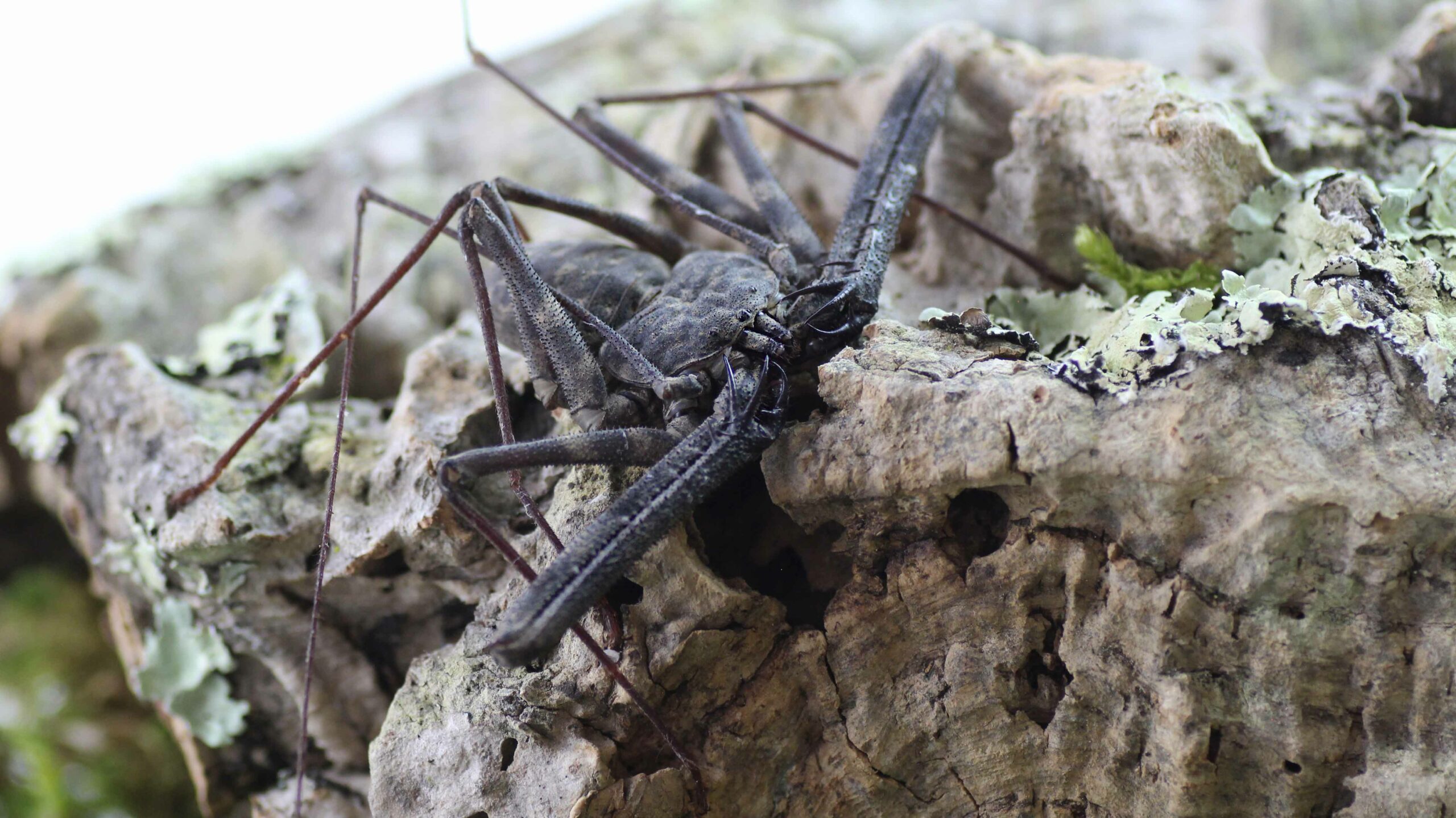
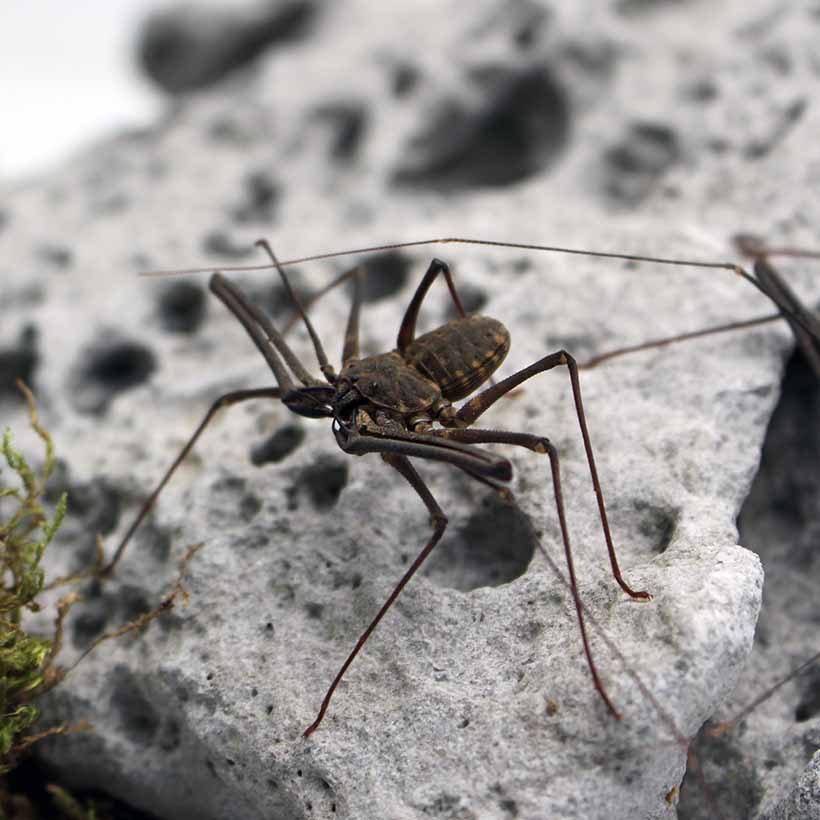
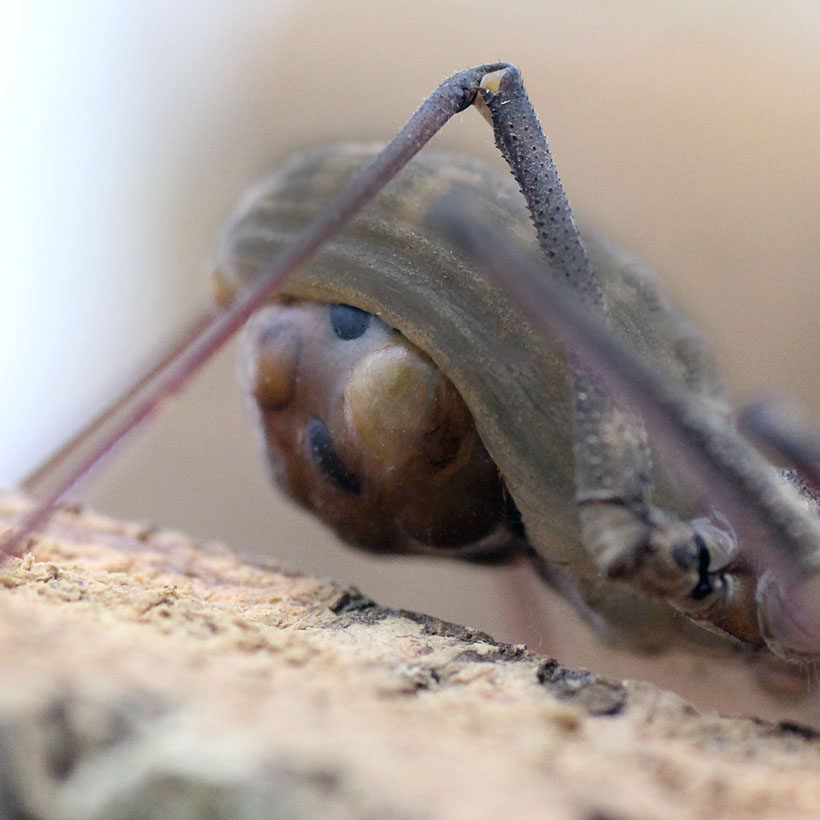
Flagellate spiders have a flat, oval body that is usually between 2 and 8 centimeters long. Thanks to their flat body, they can hide under almost any rock or in tiny crevices. Their bodies are usually brown, black or gray in color and have different patterns and textures depending on the species.
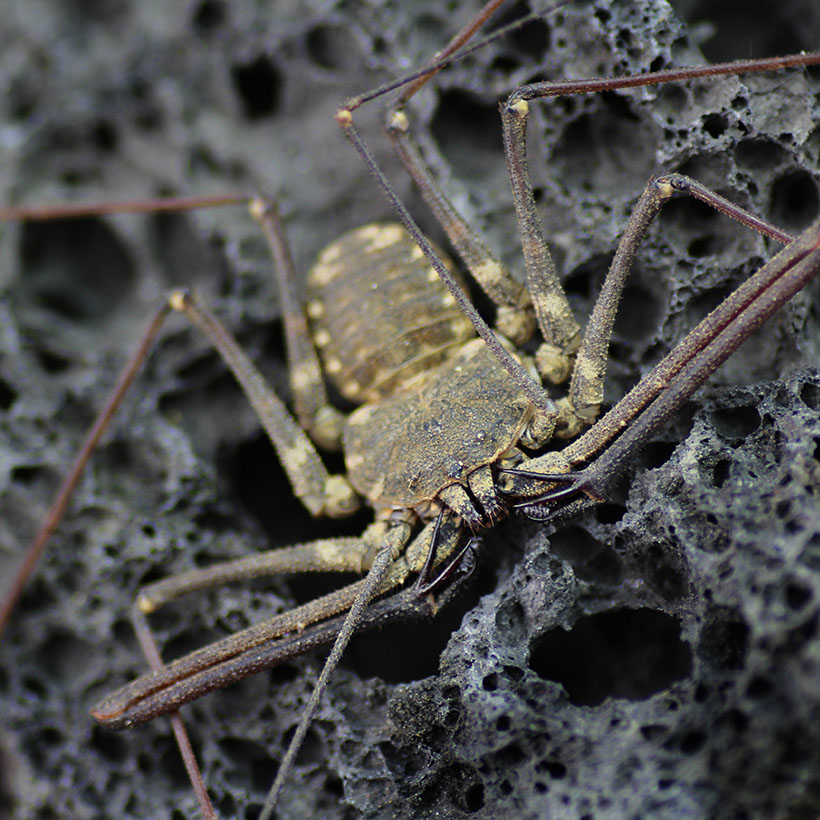
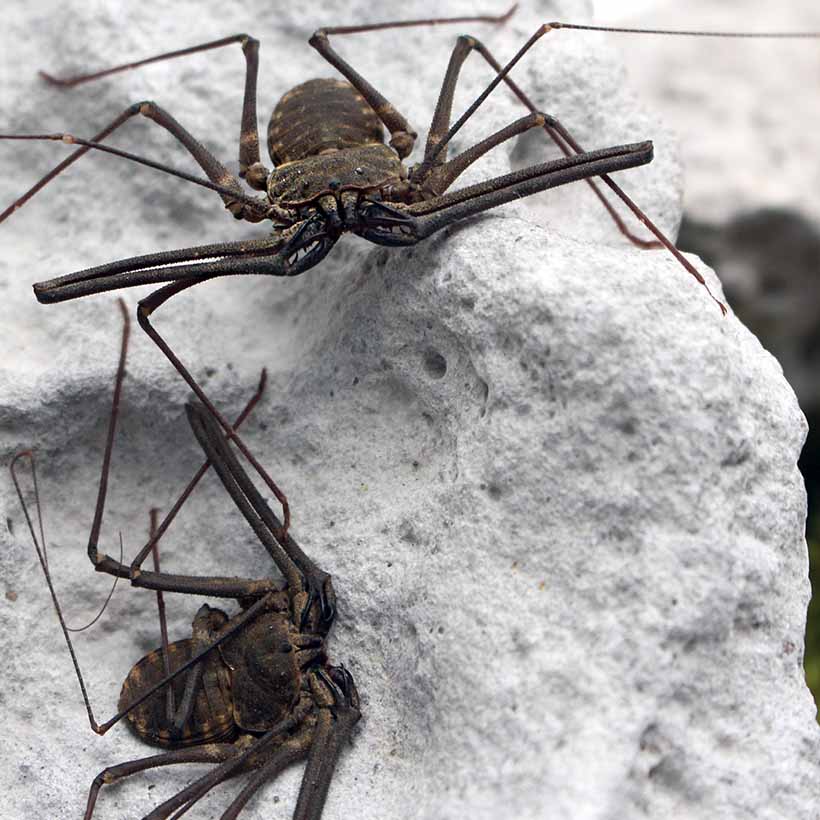
One of the most striking features of flagellate spiders are their long legs, which are also very long in relation to their body. These legs are thin and have joints that allow flagellate spiders to move deftly through their environment. The legs are usually covered with thorns and spines that help them cling to rocks and other structures.
Another notable feature of flagellate spiders are their flagella, which are long, thin antennae that protrude from their head. These flagella can be up to three times the length of the spider’s body and are used to explore their surroundings and catch their prey. The flagella are usually covered with hairs that are sensitive to touch and movement.
Flagellate spiders have eight eyes, which are placed in three groups on their head. These eyes are small and not particularly well developed, which means that flagellate spiders cannot see very well. Instead, they rely on their flagella to perceive their surroundings.
Overall, flagellate spiders have a striking and unusual appearance that sets them apart from other spiders and scorpions. Their physique and their long, thin legs and flagella make them a fascinating sight and arouse the interest of many people.
Adaptability: How they can colonize different habitats
Flagellate spiders are native to many parts of the world and can be found in a variety of habitats, including rainforests, humid areas, deserts and even cities.
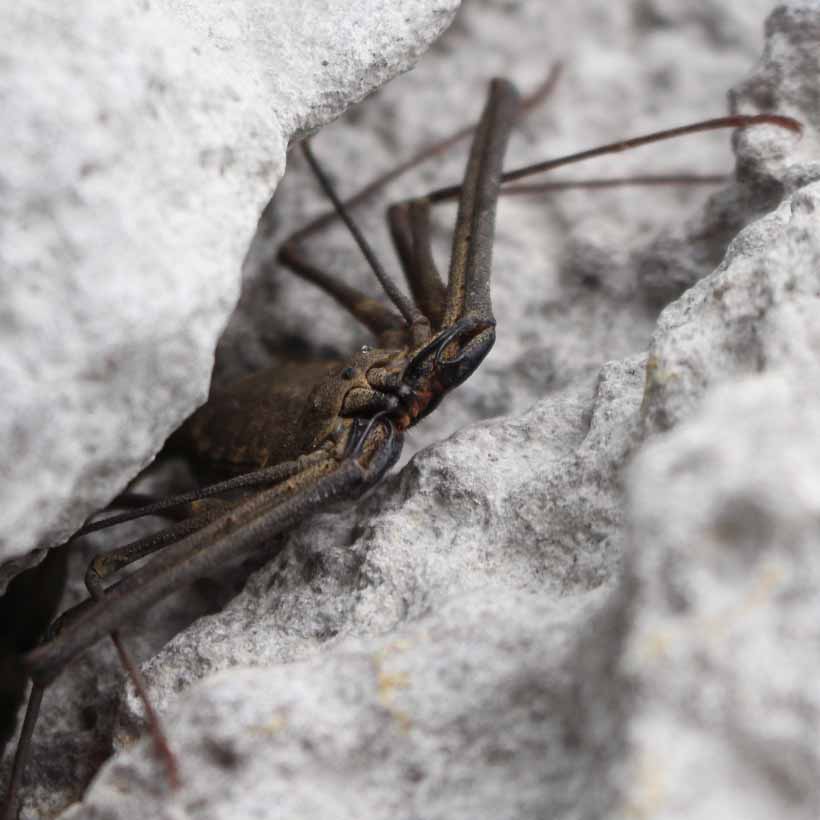
Since flagellate spiders do not build webs, they are often found in crevices, caves or under rocks where they can find shelter from predators and the elements. They are also able to climb trees and plants and cling to their branches to find food and hide.
As flagellate spiders are nocturnal, they spend most of the day resting in their hiding place, where they are protected from predators. They then come out at night to forage for food and explore their surroundings. As they move, they hold their flagella ahead to scan their surroundings and detect potential prey.
Most flagellate spiders prefer humid environments and can be found near bodies of water such as rivers, lakes or wetlands. Some species live in forests or rainforests where they can find shelter under leaves and other plant parts.
However, as flagellate spiders are also found in dry areas, they have adapted to these environments and are able to survive for long periods without water. In the desert, they often live in caves or crevices that offer them protection from the heat and direct sunlight.
Overall, flagellate spiders are very adaptable and can survive in many different habitats. In the course of evolution, they have adapted to the conditions and requirements of the respective habitat.
Without poison and cobwebs: How flagellate spiders have developed other hunting methods
Flagellate spiders are fascinating animals that impress not only with their adaptability but also with their behavior. One aspect of their behavior that is particularly interesting is their hunting technique. Flagellate spiders are active hunters and feed mainly on insects and other invertebrates. To catch their prey, they use their flagella to scan their surroundings and locate potential prey. Once they have found their prey, they quickly sprint towards it and bite their prey.
Flagellate spiders have neither venom nor spinning glands and have therefore had to develop other hunting methods. They are known for their ability to run very fast in order to catch their prey or to protect themselves from predators.
Another interesting behavior of flagellate spiders is their ability to dance on their legs to scare off predators. When they feel threatened, they can move their flagella and forelegs up and down to increase their size and scare off potential enemies.
For example, researchers have observed that Euphrynichus bacillifer use their long legs as additional weapons to capture prey. They use their legs to clutch their prey and then bite it with their chelicerae.
This hunting technique has also aroused the interest of engineers who are trying to imitate the movements of Euphrynichus bacillifer in order to develop robots that can be used in difficult terrain.
In addition, flagellate spiders are known for their complex social behavior. Some species live in groups and communicate with each other by touching and vibrating. Researchers have shown that these spiders are even able to create complex patterns of vibrations to communicate with each other.
Due to their interesting behaviors and unique hunting techniques, flagellate spiders are always a topic of study and research. Through further studies we can hopefully learn even more about these fascinating spiders.
Masters of the hunt: How flagellate spiders successfully hunt prey
Flagellate spiders are hunters and feed mainly on insects and other invertebrates. They have a wide variety of prey, including flies, moths, beetles, grasshoppers and spiders. They eat their prey completely, including the body fluids and soft parts. The hard parts such as wings and legs are left behind.
Flagellate spiders have high energy requirements and need to feed constantly to survive. They can move quickly to catch their prey and are able to adapt to different prey types and sizes. This makes them successful hunters that are able to survive in many different habitats.
Overall, flagellate spiders are fascinating animals with a unique hunting technique and diet. They play an important role in the ecosystem and are an important part of the food chain. Although they do not usually pose a threat to humans, they can help control pests and maintain the balance in nature.
How flagellate spiders reproduce: The secret of brood care
Flagellate spiders are egg-laying spiders in which the female lays the eggs and is responsible for caring for the brood. The males often perform elaborate courtship dances to impress and mate with the female. After mating, the female can produce several egg cocoons, which can contain between 20 and 100 eggs, depending on the species and environmental conditions.
The female carries her eggs with her and ensures that they are protected and kept in a warm and humid area. During the incubation period, the female protects the eggs from predators and environmental influences by covering the eggs with her body. The incubation period can last between two and eight weeks, depending on the species and the ambient temperature.
As soon as the young hatch, they initially stay with their mother. She also ensures that the spiderlings are not only protected from enemies, but also helps them to moult and acquire hunting skills. When the young have grown up, they leave their mother and start an independent life.
Reproduction and brood care in flagellate spiders is an important part of their life cycle and helps to maintain this spider species. The mother ensures that her offspring are protected and nourished until they are able to live independently. This allows flagellate spiders to exist successfully in different habitats and play an important role in the ecosystem.
Keeping them in a terrarium: What should I bear in mind?
There are a few things to consider when keeping flagellate spiders in a terrarium. It is important to understand the needs of the flagellate spider in order to create the best environment for its health and well-being.
First of all, it is important that the terrarium is large enough to accommodate the size of the flagellate spider. As a rule of thumb, you can consider using a terrarium measuring 30 x 30 x 30 cm. A larger terrarium also offers more space for hiding places and decorations to create a natural environment. As flagellate spiders can be kept well in groups, this aspect should also be taken into account when choosing the size of the terrarium.
The substrate in the terrarium should consist of a mixture of forest humus and Sphagnum moss to ensure adequate humidity. To achieve a constantly high humidity, it is recommended that the substrate is deep enough. A layer of 7 to 10 cm may be sufficient for this. It is important to check the substrate regularly and moisten or renew it if necessary. Associating with springtails and Isopods not only disposes of waste, but also creates another food source. The small Isopods are eaten by the spiders and thus contribute to the diet of the flagellate spiders.
Humidity is another important factor when keeping flagellate spiders. The humidity in the terrarium should be between 60% and 80%, depending on the type of spider. A hygrometer is a useful tool to monitor the humidity. To increase the humidity, the substrate can be kept moist and the terrarium can be sprayed regularly.
Flagellate spiders prefer temperatures between 22°C and 28°C. It is important to place the terrarium in a location that is protected from direct sunlight and draughts. A heat lamp can be used to regulate the temperature in the terrarium. UV-A or UV-B radiation can be dispensed with.
It is important that flagellate spiders have sufficient hiding places in the terrarium to feel safe and comfortable. This can be achieved by adding plants, artificial plants, caves or cork tubes. When keeping flagellate spiders in groups, it is important that there are enough hiding places to avoid conflicts between the animals. A shallow water basin should also be placed in the terrarium to provide the flagellate spider with drinking water.
Overall, keeping flagellate spiders in a terrarium requires some patience, attention and the ability to adapt their environment to their needs. With the right care, flagellate spiders can live a long and happy life of 7-10 years in the terrarium.
There are several species of flagellate spiders that can be kept as pets. Here is some information on some of the best known species:
Damon diadema
This species can reach a wingspan of up to 15 cm. It originates from Tanzani and Kenya and is very popular due to its size and unusual appearance. Keeping Damon diadema requires a larger terrarium and specific temperature and humidity requirements.
Phrynus marginemaculatus
This species originates from Florida, the Bahamas, Cuba and Hispaniola. With a body length of up to 2 cm, it is one of the smaller species. Phrynus marginemaculatus requires a terrarium with plenty of space to climb, as well as high humidity and temperatures in the tropical range.
Heterophrynus elaphus
This species originates from Peru, Colombia and Bolivia and is popular due to its unusual light body coloration and greenish-brown color. It requires a terrarium with plenty of hiding places and climbing opportunities, as well as high humidity and temperatures in the tropical range.
Euphrynichus spec.
Euphrynichus is a genus of flagellate spiders native to Africa. There are several species within this genus, the best known of which is Euphrynichus bacillifer. This spider can grow up to 8 cm long and is a medium-sized species among the flagellate spiders.
Not only can flagellate spiders sit on your head like in “Harry Potter and the Goblet of Fire”, but they can also serve as quirky and fascinating pets that can be relaxing to watch. Although they are certainly not everyone’s cup of tea, there is a group of people who enjoy them and occasionally have the odd adventure.
If you have any further questions, please leave them in the comments below the article.

Leave a Reply
You must be logged in to post a comment.