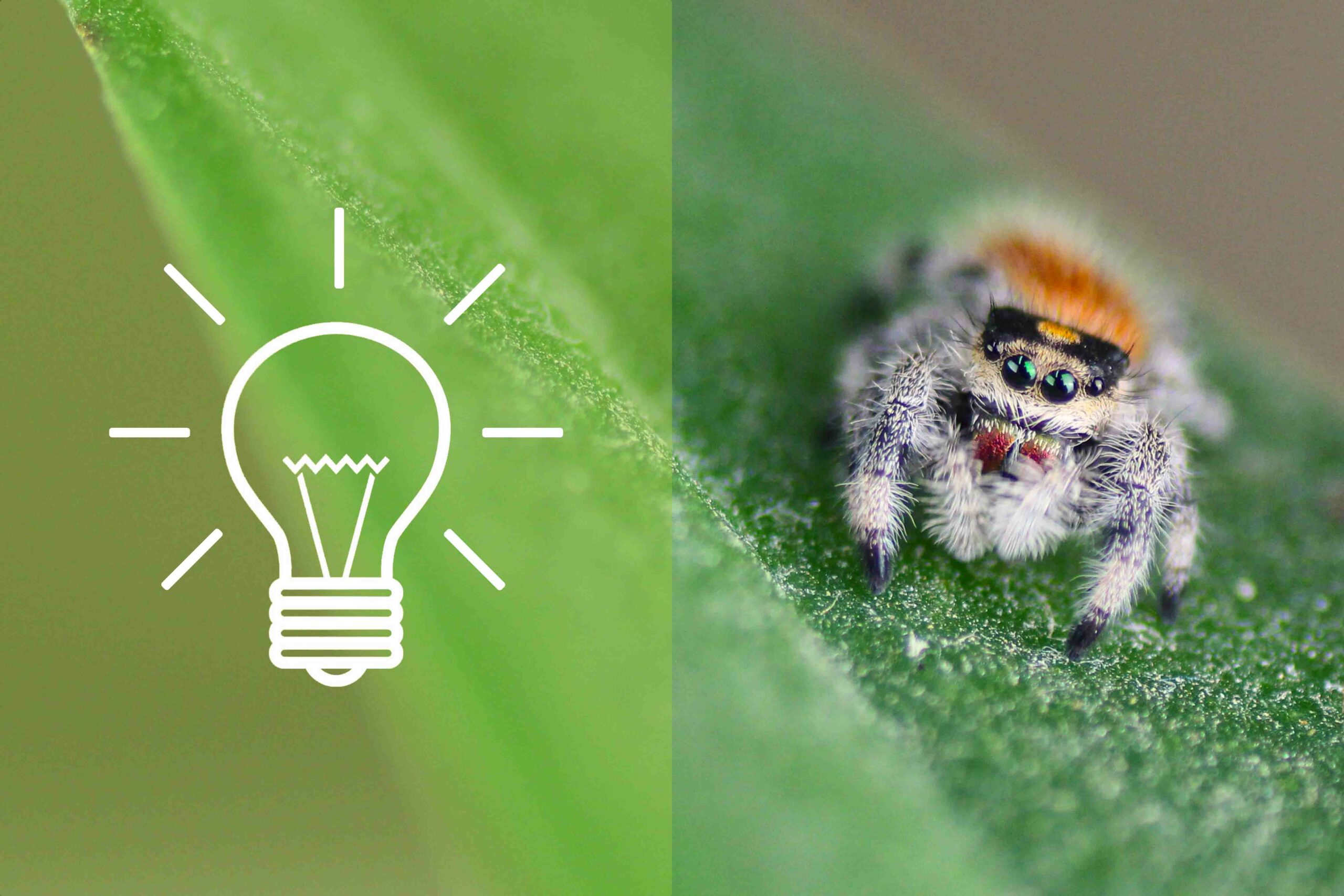


Jumping spiders are fascinating little creatures. With their large, inquisitive eyes and impressive leaps, they can charm even those who normally give spiders a wide berth. If you are thinking of getting a jumping spider or are already the proud owner of one, then this article is for you!
We have noticed that many of you have specific questions about the technology and housing of jumping spiders before you buy them. And after they have found their way into your home, questions arise about their behavior, food intake and activity. No wonder, because these spiders are not only extremely pretty, but also very interesting to watch!
We have therefore decided to address the most frequently asked questions that you have sent us in recent months in this article. We hope that we can provide you with a valuable source of information and clear up any uncertainties.
We would like to draw your attention in advance to our Springspinnen magazine, which already covers many questions and topics.
-
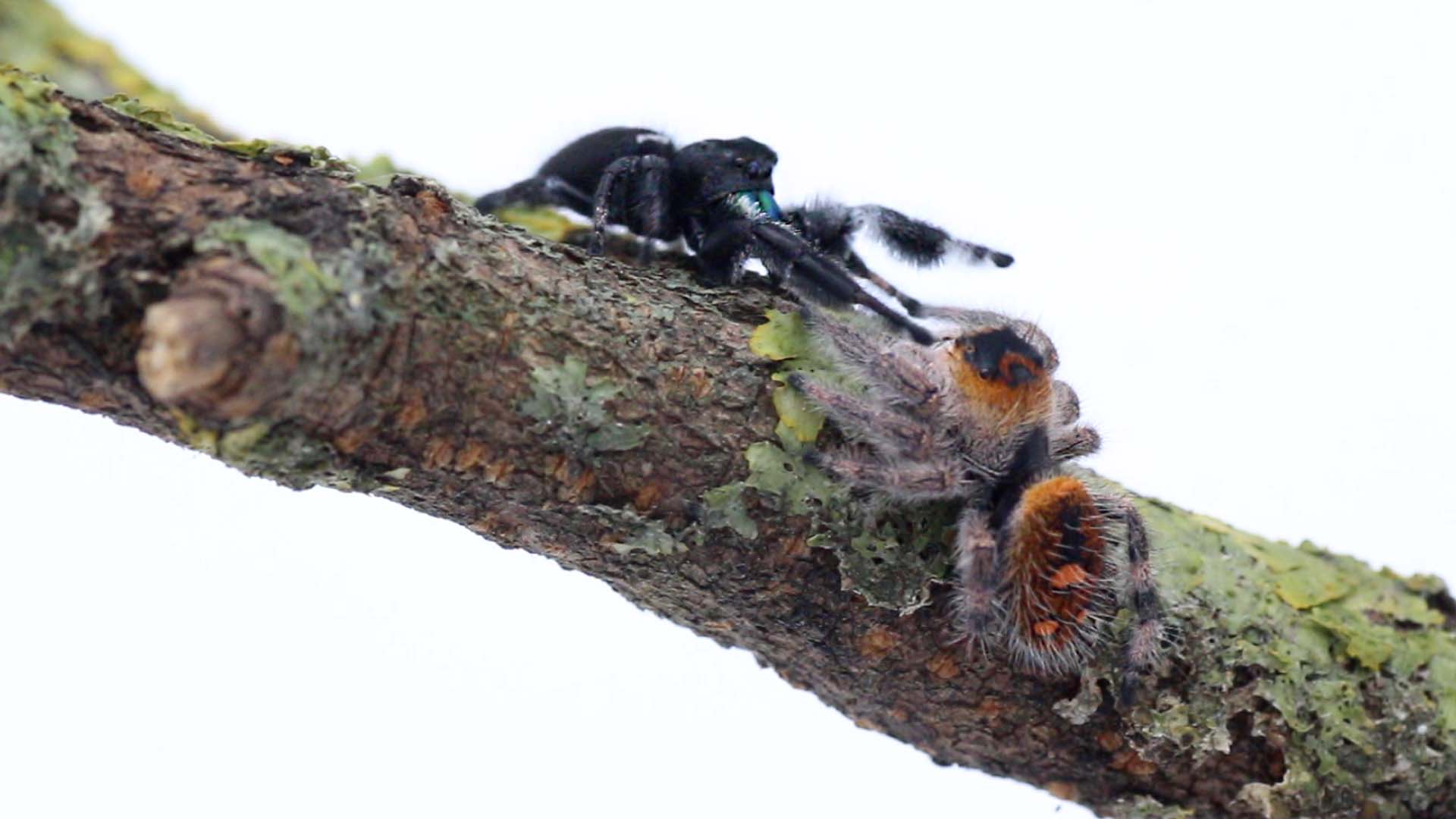
Jumping spider mating – Take care of your males!
If you are interested in breeding jumping spiders, the question soon arises as to how to go about mating them…
-
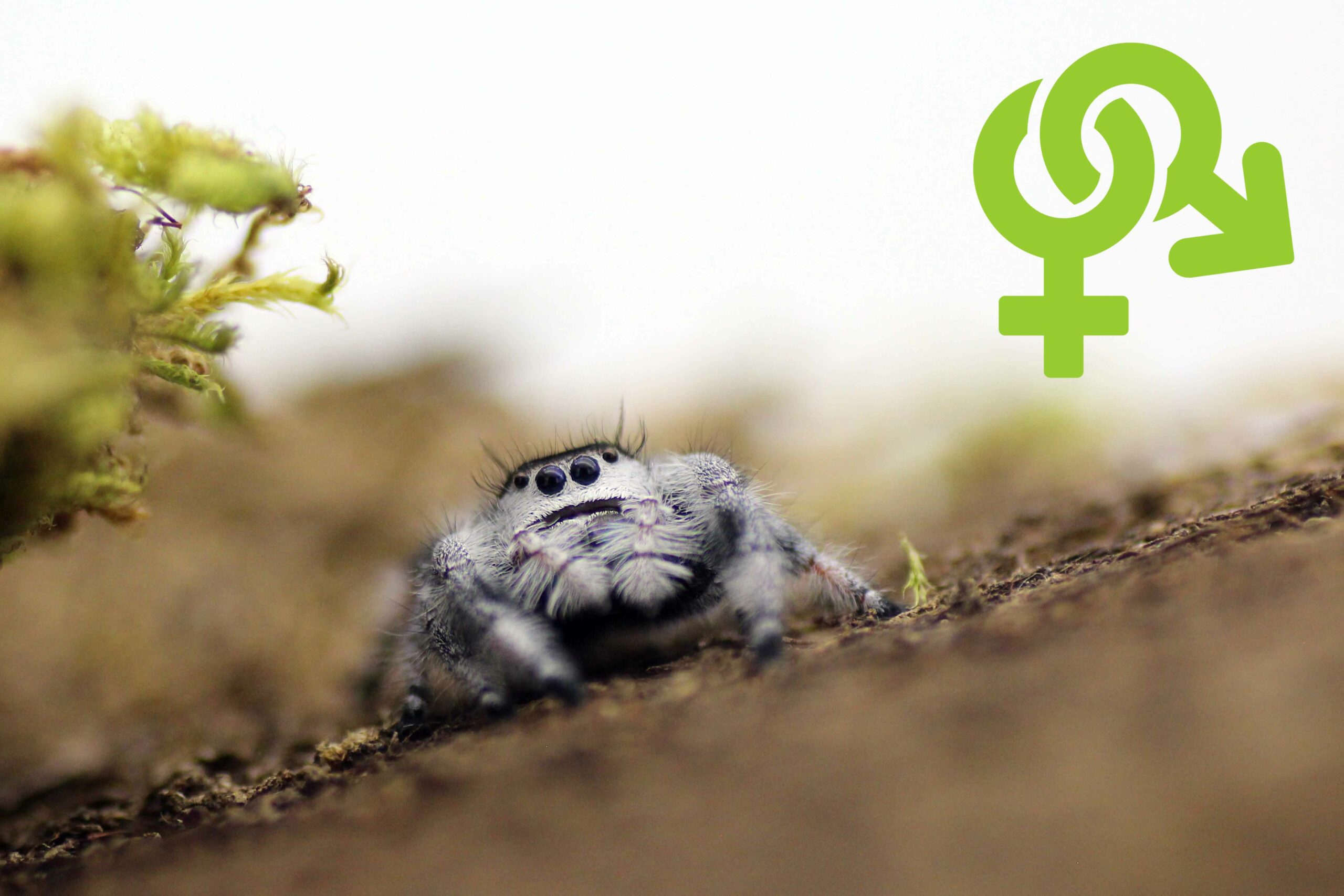
Sex determination of jumping spiders
Sexing jumping spiders is one of the key issues in keeping jumping spiders. This question should not only be answered…
-
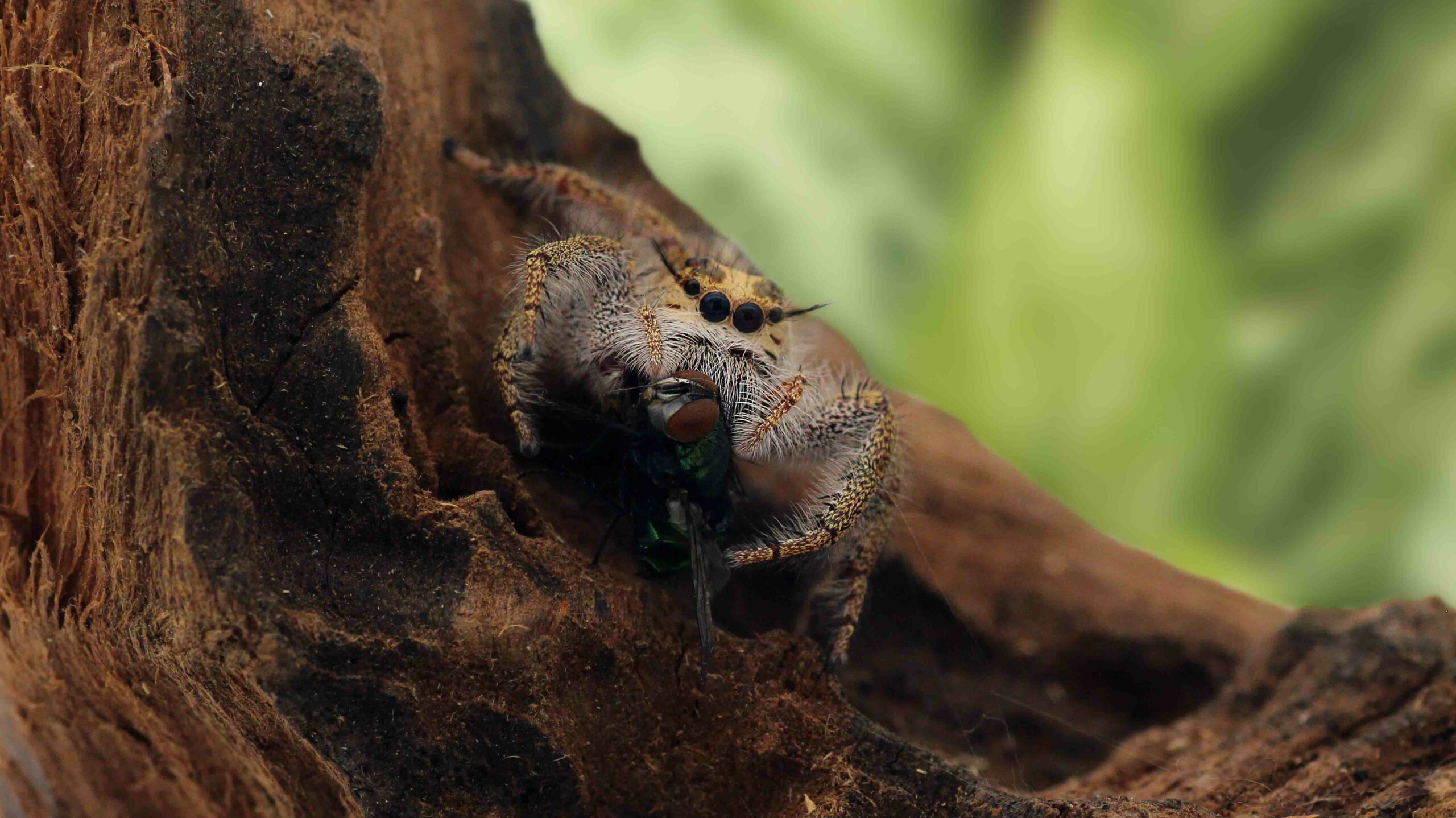
Jumping spider food – The right diet!
If you ask yourself the question about the right jumping spider food, the answer is basically very simple: as varied…
-
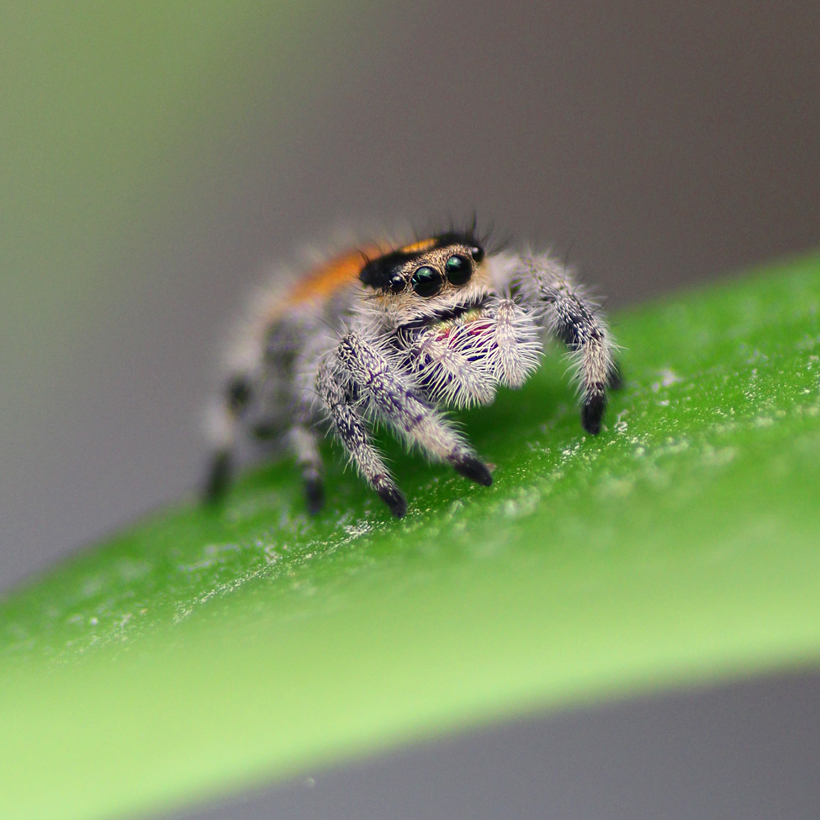
Jumping spider husbandry – explained quickly and simply!
In this article, we go into the keeping of jumping spiders. All the important points are explained briefly and clearly…
Basic terms and developmental stages of jumping spiders
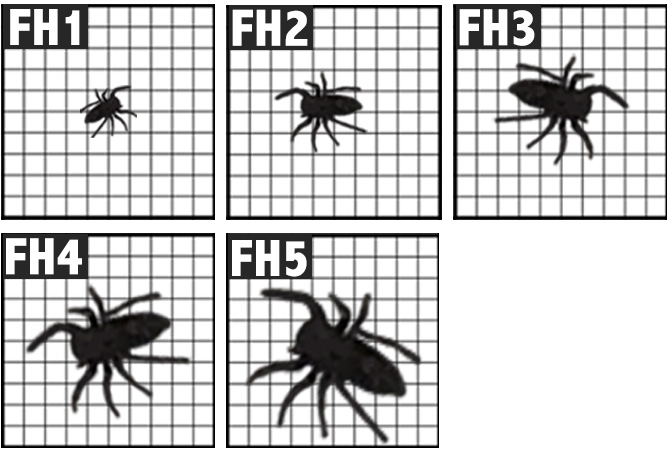
Question: What does the abbreviation “FH” mean for spiders and what role does the number behind it play?
Answer: Spiders have a rigid exoskeleton that restricts their continuous growth. To counteract this, they undergo several moulting processes in their lifetime. In this context, the abbreviation “FH” stands for “feeding skin” and refers to the process of moulting. The number listed after “FH” indicates how often the spider in question has already shed its skin in its lifetime. It therefore serves as an indicator of the age and developmental stage of the animal.
An example: A spider with the designation “FH5” has already shed its skin five times in its life.
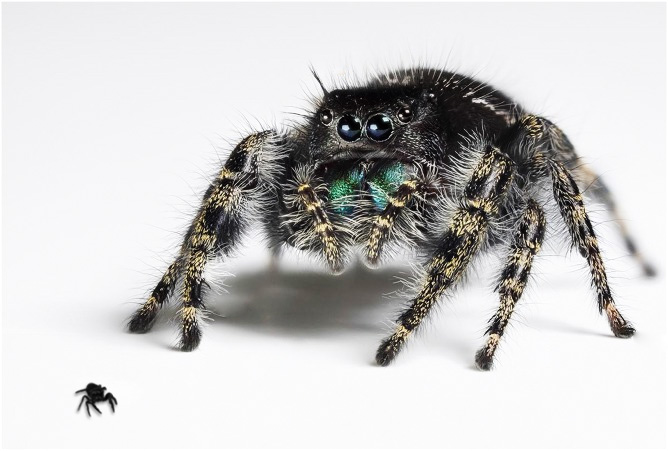
Question: What do the terms juvenile, pre-subadult, subadult and adult describe in jumping spiders?
Answer: The terms mentioned refer to different developmental stages of jumping spiders and have their origin in Latin.
- Adult: This word means “grown up”. An adult jumping spider is therefore sexually mature and has reached its full size.
- Subadult: This can be translated as “half-grown”. In terraristics, this term refers to a jumping spider that is exactly one moult before reaching sexual maturity.
- Pre-subadult: This is a stage that is one moult before the subadult stage. This means that the spider still has to go through two moults before it becomes sexually mature.
- Juvenile: Translated, this means “youthful”. In jumping spiders, it indicates that the animal has reached an average size but is not yet approaching the later stages of development.
- Slings: The term “slings” is widely used in terraristics and refers to the youngest, recently hatched spiders, especially tarantulas and jumping spiders. The term “sling” therefore refers to a baby spider. At this early stage of development, the animals are particularly sensitive and require special attention in terms of keeping and care. Their tiny bodies and fine limbs are not yet as robust as those of older specimens.
Using these terms, keepers can better assess the stage of development of their jumping spiders and adapt their care accordingly.
Moulting and development in jumping spiders
Question: How often does a jumping spider shed its skin in the course of its life?
Answer: The number of moults that a jumping spider undergoes in its lifetime varies and cannot be determined across the board. Male jumping spiders generally need 1 to 2 moults less to reach sexual maturity than their female counterparts. It can happen that female jumping spiders of the same species become sexually mature after the 8th moult, while others only reach this stage after the 9th moult. It is therefore important to keep an eye on the stage of development and the individual needs of each spider.
Question: How much time does a jumping spider need to become sexually mature?
Answer: Typically, a jumping spider becomes sexually mature within about a year, but this time frame can be influenced by various factors. Two of the most important factors are the ambient temperature and the food supply. Jumping spiders are cold-blooded organisms. This means that they do not have the ability to regulate their body temperature independently, but are dependent on the conditions of their environment. Warmer ambient temperatures boost their metabolism, which can accelerate their development and growth. At the same time, a regular and nutritious supply of food can have a positive influence on the spider’s development. It is therefore essential to keep an eye on both temperature and nutrition to ensure the optimal development of the jumping spider.
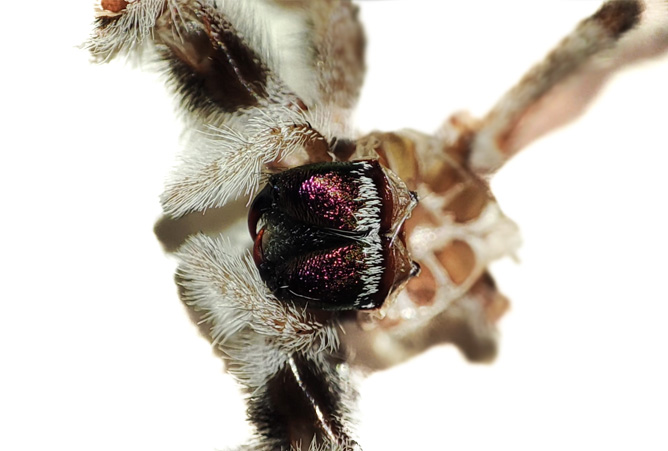
Question: When should I feed after a moult?
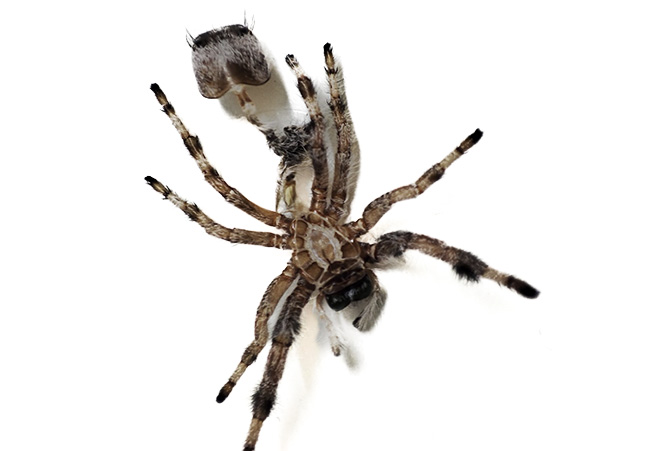
Answer: Moulting is an intensive process for jumping spiders, during which they shed their old exoskeleton and form a new one. In the phase immediately after moulting, their skin is particularly soft and sensitive. It is therefore important to give them time to recover and allow their new exoskeleton to strengthen. A good indication that the spider is ready to feed again can be seen in its behavior: As soon as the jumping spider emerges from its hiding place and actively goes on an exploration tour, this is a sign that it is fit again and can be fed.
Question: How long does the shedding process take for a jumping spider?
Answer: The actual shedding process takes up to one hour. However, the preparation time beforehand and the subsequent recovery phase should not be underestimated – together they can take up to two weeks. The exact period depends on the respective development phase (FH) in which the spider finds itself. The decisive factor is the age of the animals: with increasing age, the entire moulting process tends to take longer.
Question: My jumping spider has lost a leg after moulting. What can I do?
Answer: Don’t worry, spiders have the amazing ability to regrow lost limbs after several moults. If kept too dry during the moult, limbs can get stuck in the old skin. It is therefore important to pay particular attention to the humidity of approx. 70% during the next moult. In the meantime, observe whether your jumping spider can move normally and is eating without any problems. The leg will regenerate completely with subsequent moults.
Keeping and housing
Question: Do I really need double ventilation in the terrarium?
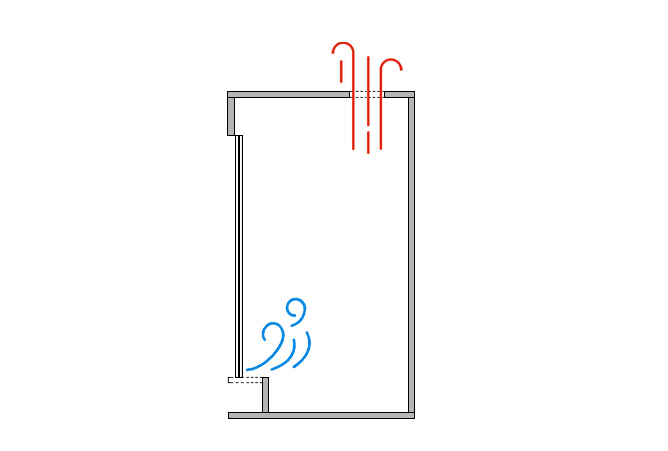
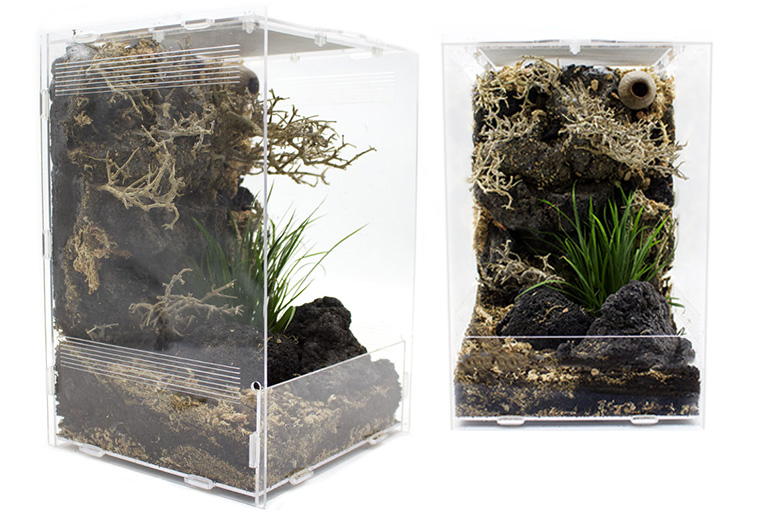
Answer: Yes, double ventilation is indeed essential. It prevents waterlogging in the terrarium, which can be dangerous for jumping spiders. A lack of sufficient ventilation can lead to excessive humidity, and this waterlogging can ultimately lead to the death of your jumping spider. It is therefore in the best interest of your animal to ensure that the terrarium is well ventilated.
Question: Why are there mites in my jumping spider terrarium?
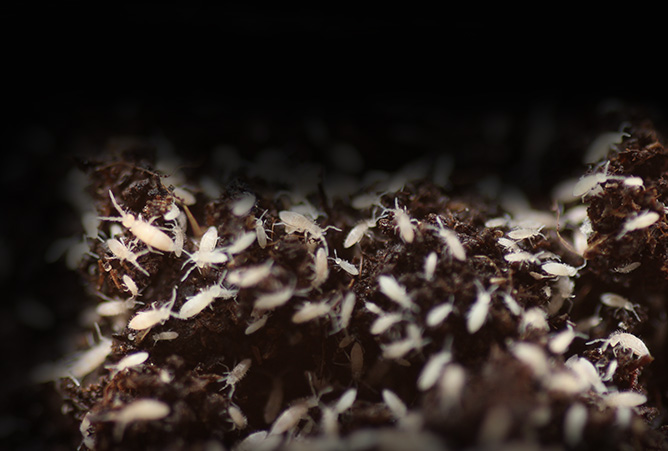
Answer: Mites can appear in a jumping spider terrarium for various reasons. One of the main reasons is the lack of “soil police” – these are beneficial springtails and Isopods that break down organic material to help balance the terrarium. Without these helpers, waste products can accumulate, providing ideal conditions for mites.
In addition, dead food animals that are not removed in time can promote mite growth.
If the terrarium is permanently kept too damp, this also creates a favorable climate for mites.
Another possible reason may be that food cans are stored too close to the jumping spider terrarium. These cans may already be harboring mites, which can then easily find their way into the terrarium.
To solve the problem, it is advisable to clean the terrarium thoroughly, remove dead food animals regularly, check the humidity and store food animal tins in a different place. In addition, a soil police should be established in the terrarium to promote a natural balance.
Question: Why shouldn’t I put a jumping spider in a regular terrarium straight away?
Answer: In the FH3 stage, jumping spiders are only a few millimeters in size. A conventional terrarium often has recesses, for example for cables, as well as ventilation holes and sometimes also small gaps between the glass panes. These places provide ideal escape routes for both the small jumping spiders and their food animals. It is therefore advisable to keep the spiders in a special, well-sealed rearing terrarium until they reach the FH6 stage to prevent them from escaping.
Question: I can’t keep the humidity in my jumping spider terrarium constant? What can I do about it?
Answer: The ideal humidity for jumping spiders, both during rearing and in adulthood, is around 55 percent. This is not high and is quickly reached.
However, it is important to note that the humidity should be temporarily increased to around 70 percent before and during the moulting process. Once the moulting process is complete, the humidity should drop back to the normal level.
Depending on requirements, a mixture of sphagnum moss and forest humus may be suitable as a substrate, as they retain moisture well. A hygrometer placed in the terrarium allows you to monitor the humidity precisely.
Nutrition and behavior
Question: How often should jumping spiders be fed?
Answer: In the first stages of development, more precisely up to stage FH5, jumping spiders have a relatively high food requirement. We therefore recommend offering them food every 3 days during this period. This ensures that they receive all the necessary nutrients for healthy growth. As soon as the spider gets bigger, its metabolism slows down a little. Accordingly, the feeding interval can be adjusted as the spider gets bigger. It is then sufficient to feed them only once a week. However, it is always important to observe the behavior and feeding habits of your own jumping spider to ensure that it is optimally fed.
Question: Should I feed even if my jumping spider is sitting in the web and hasn’t eaten for days?
Answer: I understand your concern if your jumping spider doesn’t eat for several days and hides in its web. But you should know that jumping spiders sometimes have phases in which they are less active or withdraw. There can be various reasons for this, such as an impending moult. You should mainly offer food animals when the spider is actively foraging for food. If your jumping spider is hiding in the web and makes no effort to come out, then it is better to wait before feeding it. Food animals can cause more stress for the spider during such phases. Continue to observe your jumping spider and offer food as soon as you notice increased activity.
Question: Why is my spider only sitting in the web?
Answer: If your jumping spider stays in its web for a long time, there could be various reasons for this. First of all, you should check the parameters in the terrarium. These include, for example, temperature, humidity and general living conditions. If these are set optimally for the spider, it could be that you have fed it too generously in the recent past. A well-fed spider may simply not have the drive to actively search for food and therefore remains in its web.
It is important to emphasize that such behaviour does not necessarily mean something negative. Sometimes jumping spiders feel particularly safe in their webs or are resting after a sumptuous meal. Keep observing your spider’s behavior and try to understand its needs and habits. It is always helpful to check on your spider regularly and adjust its environment accordingly.
Question: Why is my jumping spider not eating even though it is thin?
Answer: If your jumping spider is not eating, despite appearing slim, this could be due to the food offered. It is crucial that the size of the food animals is adapted to the current size of your spider. As the jumping spider grows, its food requirements also change. Food that is too small could be ignored by your spider as it is not considered nutritious enough. Conversely, feeders that are too large may be intimidating for the spider or they may have difficulty overpowering them.
It is therefore advisable to check the food supply regularly and ensure that it is suitable for the current size and developmental stage of your jumping spider. If the problem persists even after you have adjusted the food size, other factors such as stress or imminent moulting processes could also be playing a role.
Reproduction and lifespan
Question: Is it normal for my jumping spider to build a cocoon even though I have not mated it?
Answer: Yes, this is actually normal. Female jumping spiders have the genetic predisposition to lay eggs and build a cocoon accordingly – even without prior fertilization. In such cases, the cocoon contains unfertilized eggs. There will only be offspring if fertilization has taken place beforehand. The unfertilized eggs will die after a few days. As a rule, the jumping spider will shed the cocoon, which contains no viable eggs, by itself.
Question: How long does a jumping spider live?
Answer: The lifespan of jumping spiders is variable and can differ according to sex, although exceptions are not uncommon. While female jumping spiders often live longer, producing 4-5 cocoons in their lifetime, males typically reach their mature molt after 6 months, depending on temperature and food supply. Although many male jumping spiders die within 12 months of reproduction, giving them an average age of around 18 months, there are still males that reach an age of up to 2 years, similar to their female counterparts. Individual differences must therefore be taken into account.
A special thank you to Nadine, whose valuable photos and experience contributed significantly to the success of this article. Your support was invaluable! Thank you for sharing your knowledge and passion with us.
If you have any further questions, please leave them in the comments below the article.

Leave a Reply
You must be logged in to post a comment.