

General information:
In the wild, cave crickets live in the Chibongwe cave in Zambia. They were discovered in 1968 and were originally called Pholeogryllus geertsi. After they had been extensively studied and bred for several years in the “Natural History Museum Vienna”, Pholeogryllus geertsi was renamed Phaeophilacris bredoides.
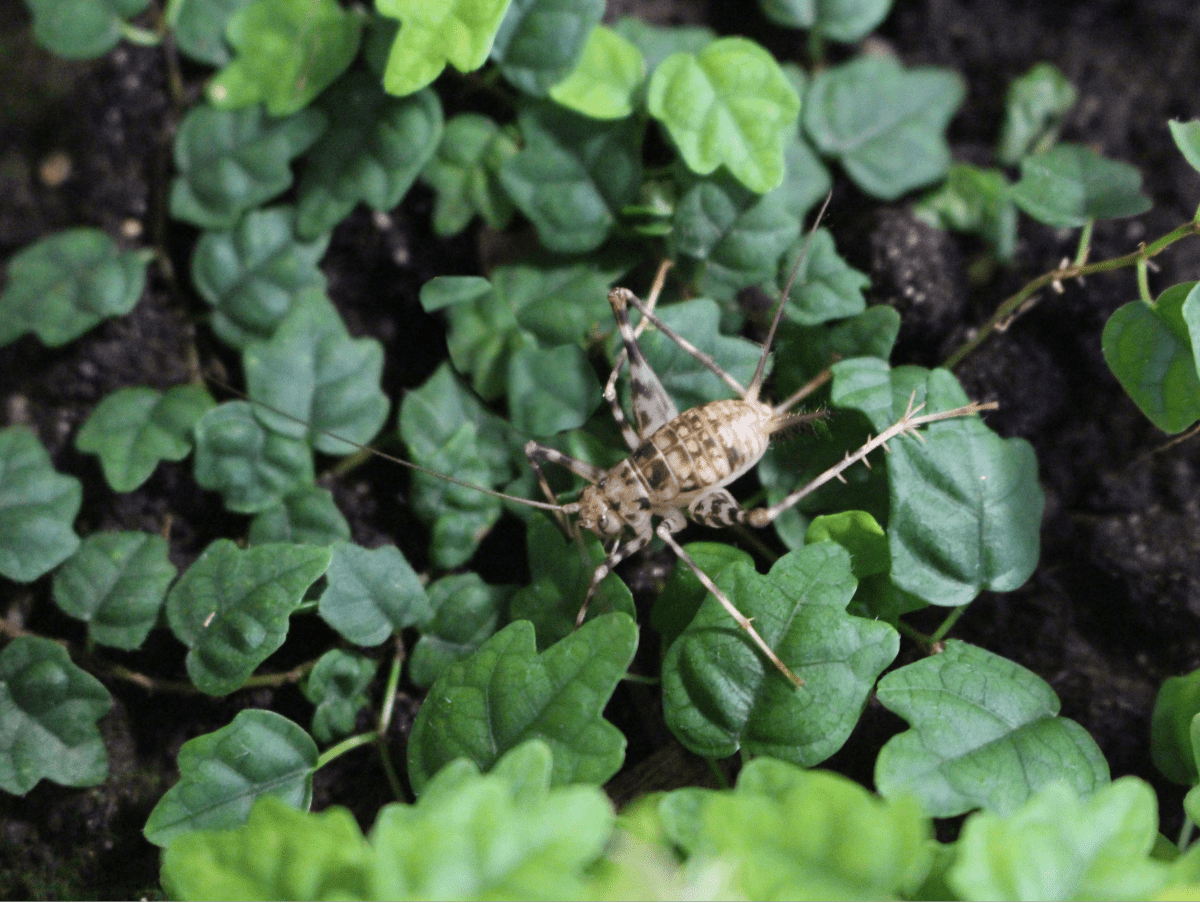
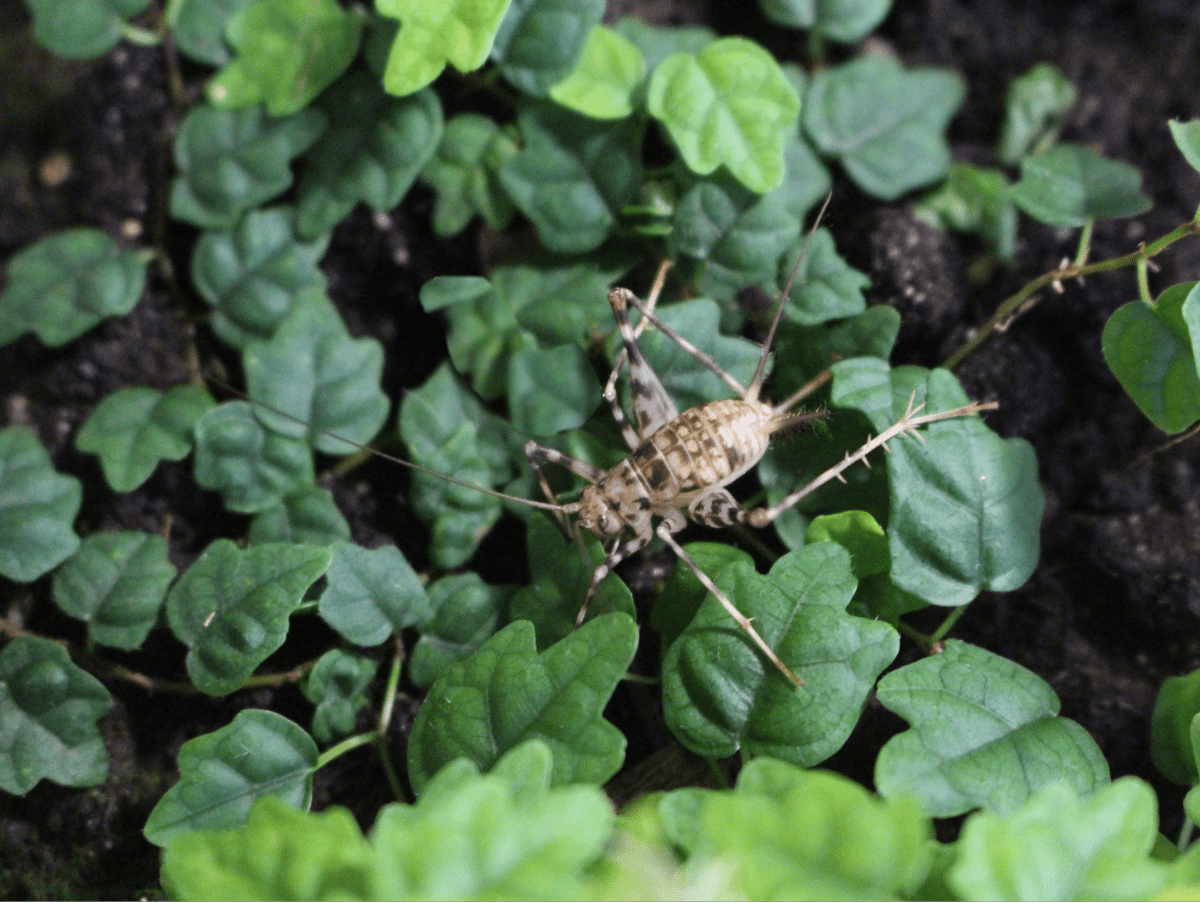
The cave cricket (Phaeophilacris bredoides) – is for me one of the most extraordinary crickets in the world. Its appearance is so peculiar that at first glance you might think it is not a cricket but a kind of spider. Their Antennae and legs are extremely long, the cercus at the end of the abdomen is also elongated. The general color of the cave cricket is yellowish-grey, the legs are covered with small dark spots. The length of the body is 1.5 – 2 cm, the females are slightly larger than the males. Both sexes have no hearing organs. Female cave crickets are completely wingless and have a long needle-shaped ovipositor (ovipositor spine). The males also lack the lower pair of wings. In contrast to other cricket species, the upper pair of wings of males has a smooth surface. This means that the male cave crickets cannot chirp, which makes them a pleasant food insect that can also be bred silently in the home.
Here you can see how I unpacked the cave crickets and placed them in a BraPlast tin:
UNBOXING! | What the hell is that grilling?
Breeding:
At the moment I still use a BraPlast box with a capacity of 5.8 liters for breeding, but I noticed at the beginning that it would be better to double the size of the breeding box. Adequate ventilation is achieved by attaching a large gauze surface to the lid. This should be drosophila-tight, as otherwise fruit flies will be in the breeding box and the newly hatched cave crickets, which are very small, will escape. The cave crickets like to climb along the gauze at night, so you also increase the walking surface of the container.
I use cardboard rolls as hiding places in which they like to hide during the day. I will also try inverted flower pots later and see what they accept better. Clay pots for the reason that the clay can soak up water and thus increase the humidity in the breeding container. However, as I said, this is still pure theory.
I am currently heating the side of the breeding tank with a heating mat so that there are different temperatures in the tank. At the moment they prefer to stay in the 28°C range. The humidity is between 50-75%. I have created a more humid zone in the tank with an egg-laying box, but they rarely visit it. They prefer to stay at 60% humidity. I achieve this value by spraying lightly every 2 days in the egg-laying box and once briefly on the cardboard rolls. As Phaeophilacris bredoides live in caves in the wild and are also nocturnal, additional lighting is not necessary for the animals. In nature, crickets only come out into the light to mate. However, this is not a prerequisite for the act of mating itself.
So far they have eaten everything I have offered them. Oat flakes, bran, fish flake food, chick starter, dry food for cats and dogs (increases the fluid requirement), carrots, cucumber, apples and dandelion leaves.
I feed them as I do with all my food animals and feed them every 2-3 days and then only enough so that everything is eaten within 2-3 days. Leftover food must be removed after this period at the latest. I keep observing how the birds soak up the water splashes after I have sprayed the egg-laying box. I will therefore place a bird bath in the container to see if they will accept it. I also proceed as usual and place a absorbent cotton pad in the exit area to protect the smaller birds from drowning.
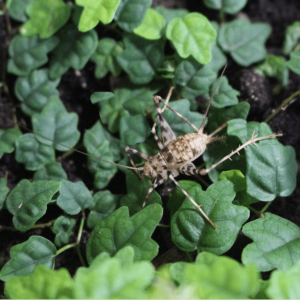
East African cave cricket
East African cave crickets do not chirp and are relatively odorless, yet they look absolutely fascinating with their huge antennae and long limbs.
Out of stock
Adult males are territorial and try to drive away the other male rival. In the event of a collision, they wag their wings and drum with their front legs and sometimes bite. However, such skirmishes are harmless and rarely lead to mutilation of the opponent.
Before mating, the male cave cricket performs a mating ritual. He touches the female with his antennae and moves his wings in a rhythm.
The females lay their eggs exclusively in moist, loose soil. A small container with a depth of at least 3 – 4 cm filled with moist peat or coco soil must be provided for this purpose. The female scans the soil substrate with her ovipositor in search of a suitable place and lays 1 to 5 eggs in one place. The female can lay several hundred eggs in her lifetime, thus ensuring sufficient offspring.
The substrate with the eggs should be moistened regularly so that the eggs do not dry out. E about 4-8 weeks after egg laying, depending on the temperature, tiny crickets emerge from the eggs. I will determine the exact incubation times in relation to the temperature. I only recognize the sex of preadult cave crickets by the laying spine approach. At room temperature, the larvae develop into adults in around ten months; at 28°C for approx. 6 months. The animals then live for about 6 months. Larvae of all sizes and imagines are compatible with each other and can therefore be kept together. This species also tolerates a surprisingly high population density.