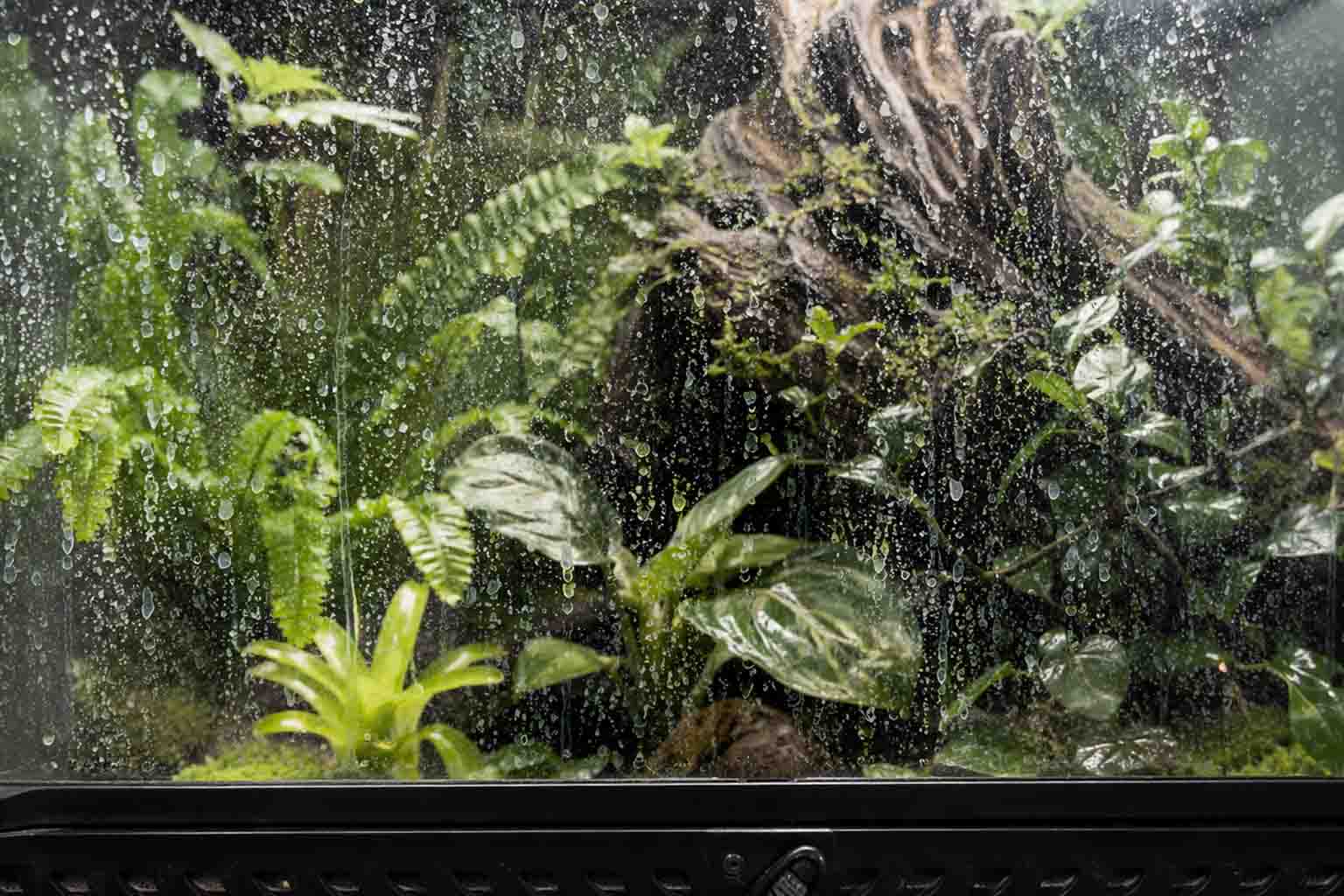


Anyone who regularly mist their terrarium is familiar with the problem: Over time, white lime deposits form on the glass panes. At first, they’re barely visible, but after a few weeks, the panes look dull and unkempt. Especially in beautifully arranged terrariums with lush vegetation, these deposits quickly distract from the real focal point—the animals and their natural environment.
But calcium deposits don’t just build up on the glass panes. Over time, plants, roots, back walls, and decorations also become covered with fine mineral deposits. Many terrarium owners therefore remove these deposits regularly to keep the terrarium looking clean and natural.
Another problem concerns automatic sprinkler systems. Hard tap water can gradually clog fine nozzles. This alters the spray pattern; some nozzles may not spray as well, or in the worst case, may stop working entirely. Anyone who operates a sprinkler system should therefore use water with as little calcium as possible.
Why do limescale stains form?
The cause is almost always the water used. Tap water contains varying amounts of calcium and magnesium, depending on the region. While these minerals pose no problem at all in drinking water, they leave behind visible limescale deposits on glass surfaces, plants, and furnishings after the water evaporates.
The harder the tap water is and the more frequently the terrarium is misted, the faster limescale stains form. Especially in tropical terrariums, which are misted daily or even several times a day, significant deposits build up within a short time.
Some terrarium owners turn to bottled mineral water as an alternative. The name sounds promising at first, but in reality, mineral water is usually not suitable for misting a terrarium. It naturally contains dissolved minerals—often in even higher concentrations than tap water. This can also cause lime stains or even cause existing deposits to build up more quickly.
If you want to prevent limescale buildup in the long term, you should therefore use water with as little calcium as possible, such as reverse-osmosis water, distilled water, or water that has been treated accordingly. This type of water leaves significantly fewer residues when it evaporates and is therefore much better suited for regular misting of terrariums.
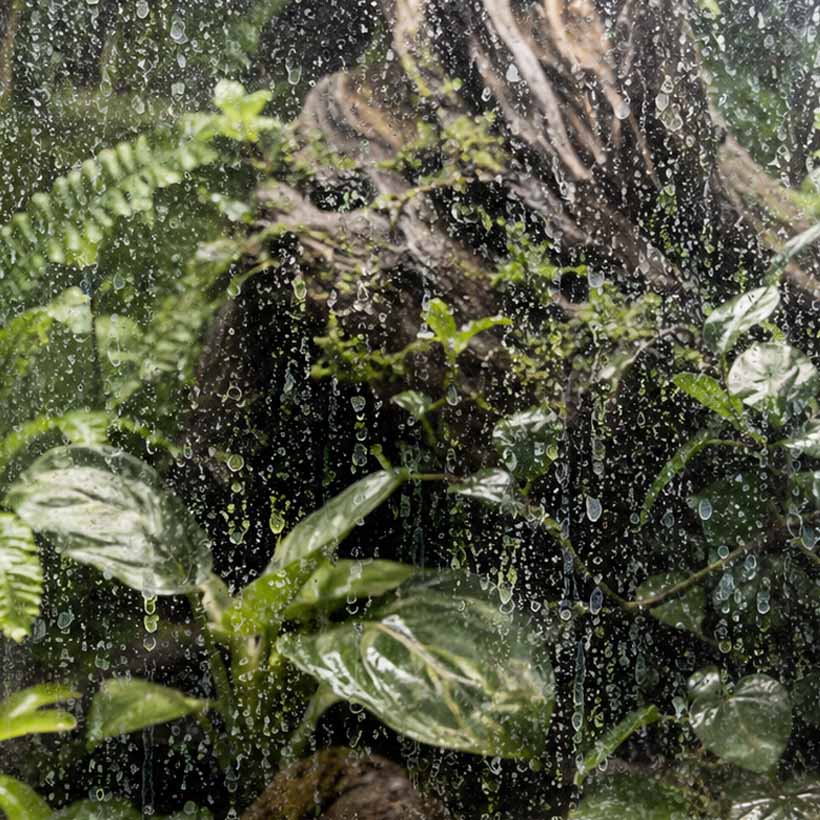
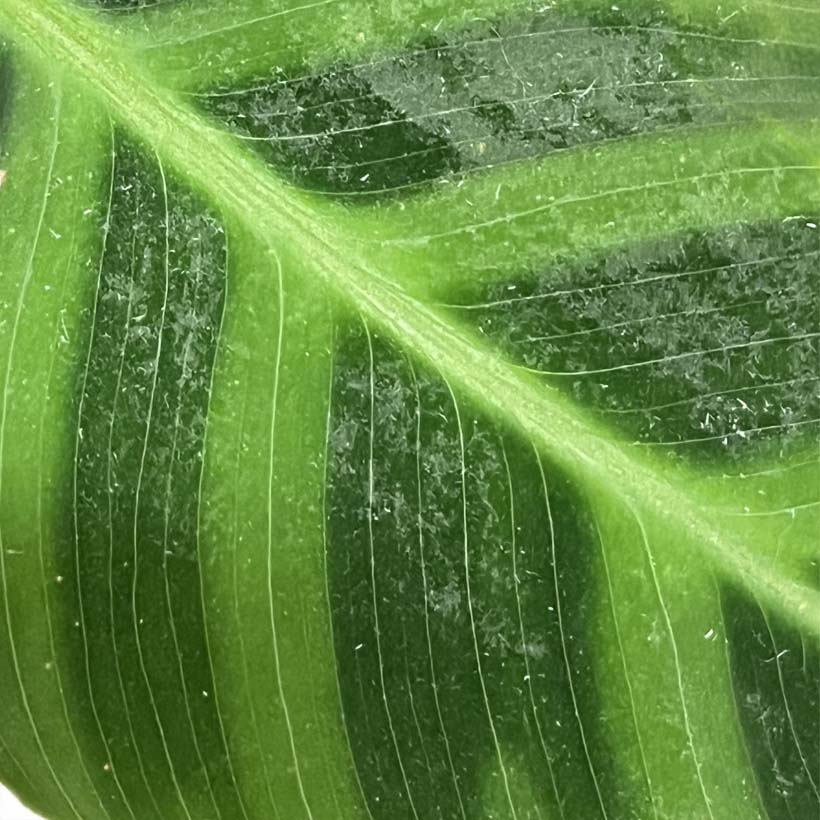
Removing Existing Lime Stains
Before you can prevent new limescale buildup, it’s a good idea to thoroughly remove any existing deposits.
TerraFresh Limescale Remover was developed for this purpose. The cleaner reliably removes even stubborn limescale deposits from glass surfaces and is specifically designed for use in terrariums. Neither plants nor animals need to be removed from the terrarium during use. This allows even heavily calcified panes to be cleaned until they are clear again, providing the ideal foundation for permanently preventing future limescale stains.
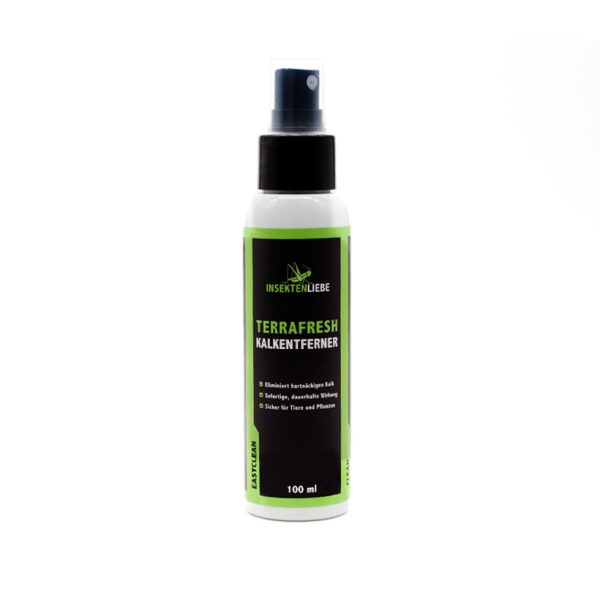
TerraFresh limescale remover
Prevent New Lime Stains
Once the terrarium is clean again, the key question arises: How can you prevent the lime stains from reappearing?
The answer depends on how the terrarium is used. Not every terrarium owner needs the same solution. While some only occasionally mist a small terrarium, others maintain several large rainforest terrariums or use automatic misting systems.
Depending on the area of application, there are various options available.
For individual terrariums: Insektenliebe Tropical Rain
If you have only one or a few terrariums and don’t need large amounts of water, ” INSEKTENLIEBE Tropischer Regen ” is a particularly practical solution.
This is already mineralized osmosis water that comes ready to use in a high-quality spray bottle. There is no need to transfer it to another container or mix it—the bottle is ready for immediate use.
Since the distilled water used is virtually free of minerals that cause limescale, regular spraying results in significantly fewer limescale deposits on the terrarium glass. At the same time, the fine mist from the spray bottle ensures an even distribution. This allows plants, moss, and decorations to be moistened particularly gently and evenly.
For individual terrariums or keepers with low water consumption, ” INSEKTENLIEBE Tropischer Regen ” is therefore a convenient solution for preventing lime stains from the very beginning.
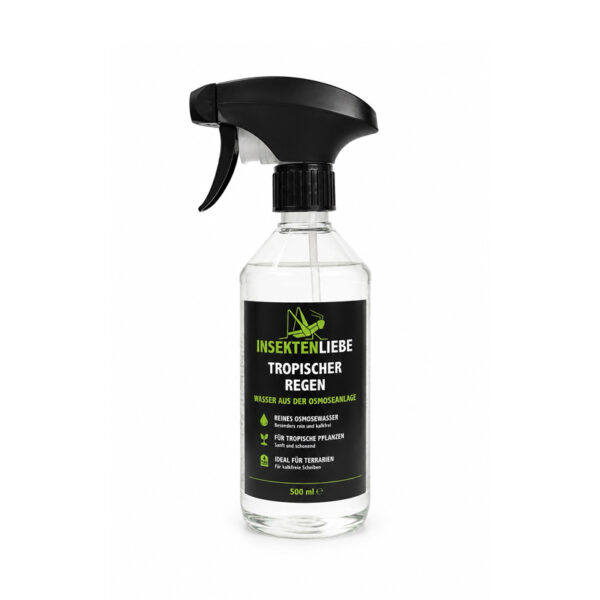
INSEKTENLIEBE Tropical rain
For irrigation systems: AquaGuard Water Softener
For anyone who operates a single sprinkler system and wants to continue using tap water, the AquaGuard water softener offers a particularly convenient solution.
The water softener can be used directly in the irrigation system’s water tank. There, it binds the lime-forming minerals in the water. These minerals are then trapped by the irrigation system’s water filters. As a result, significantly less lime enters the irrigation system and accumulates on the terrarium glass panels.
This not only reduces new limescale buildup on glass and fixtures, but also helps protect the fine spray nozzles from limescale buildup. These nozzles, in particular, are sensitive to hard water and can become partially or completely clogged over time.
Alternatively, distilled water can also be used. This can be specifically remineralized with Insektenliebe Water Mineral and is also ideal for irrigation systems.
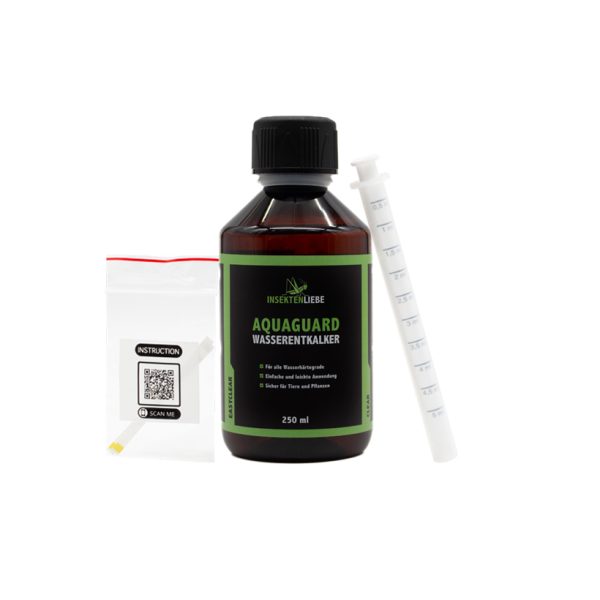
AquaGuard water softener
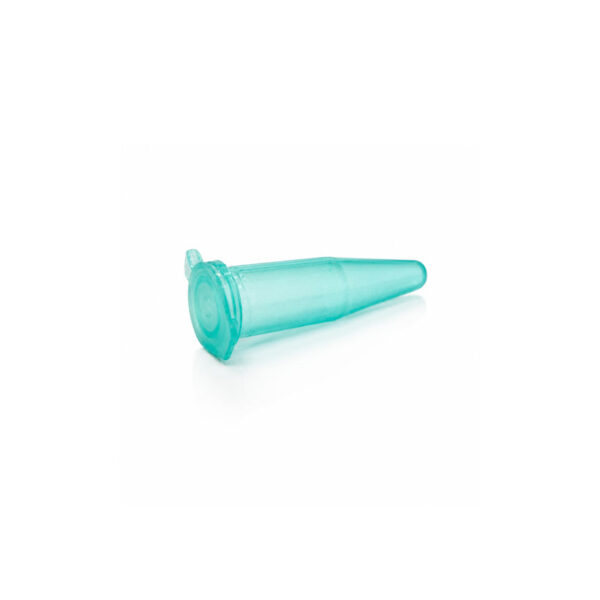
Insektenliebe Water-Mineral
For multiple terrariums: Insektenliebe Water Mineral
People who maintain multiple terrariums or multiple misting systems often use many liters of water per week. In this case, regularly buying distilled water is usually a hassle and, in the long run, costly.
A practical solution is to install your own reverse osmosis system. It removes most of the minerals that cause limescale directly from the tap water and provides low-mineral water for irrigation.
The osmosis water can then be specifically remineralized using INSEKTENLIEBE Water Mineral. This ensures that a larger quantity of treated water is available at all times, without limescale buildup on windows or in the sprinkler system’s nozzles becoming a problem.
This combination is particularly well-suited for dedicated terrarium keepers with multiple terrariums or larger setups that regularly require large amounts of water.
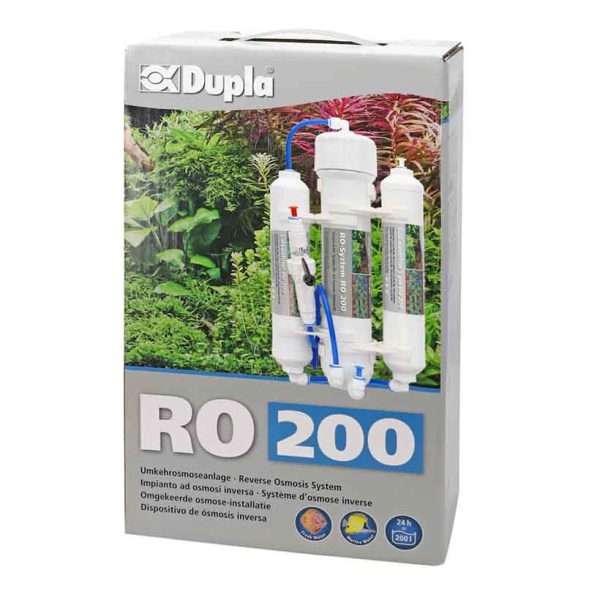
Dupla osmosis system
Insektenliebe Water-Mineral
Which solution is right for your hobby?
Which method makes the most sense depends primarily on the size of the terrarium and water consumption.
- TerraFresh Limescale Remover is designed to safely and thoroughly remove existing limescale deposits.
- Insektenliebe Tropical Rain is the practical solution for individual terrariums and low water requirements.
- The AquaGuard water softener is particularly appealing to terrarium owners with misting systems or higher water consumption who still want to use tap water.
- Insektenliebe Water Mineral is recommended for anyone who wants to use large quantities of reverse-osmosis or distilled water on a regular basis.
Conclusion
Lime stains in terrariums are usually caused by minerals found in tap water. Over time, they detract from the terrarium’s appearance and can even cause nozzles to clog in misting systems.
The good news is that this problem can be permanently solved. Existing deposits can be removed with a suitable limescale remover. Afterward, the right water treatment system helps prevent new limescale stains from forming in the first place. Which solution is best ultimately depends on how many terrariums you maintain and how much water you need each day.
If you have any further questions, please leave them in the comments below the article.

Leave a Reply
You must be logged in to post a comment.