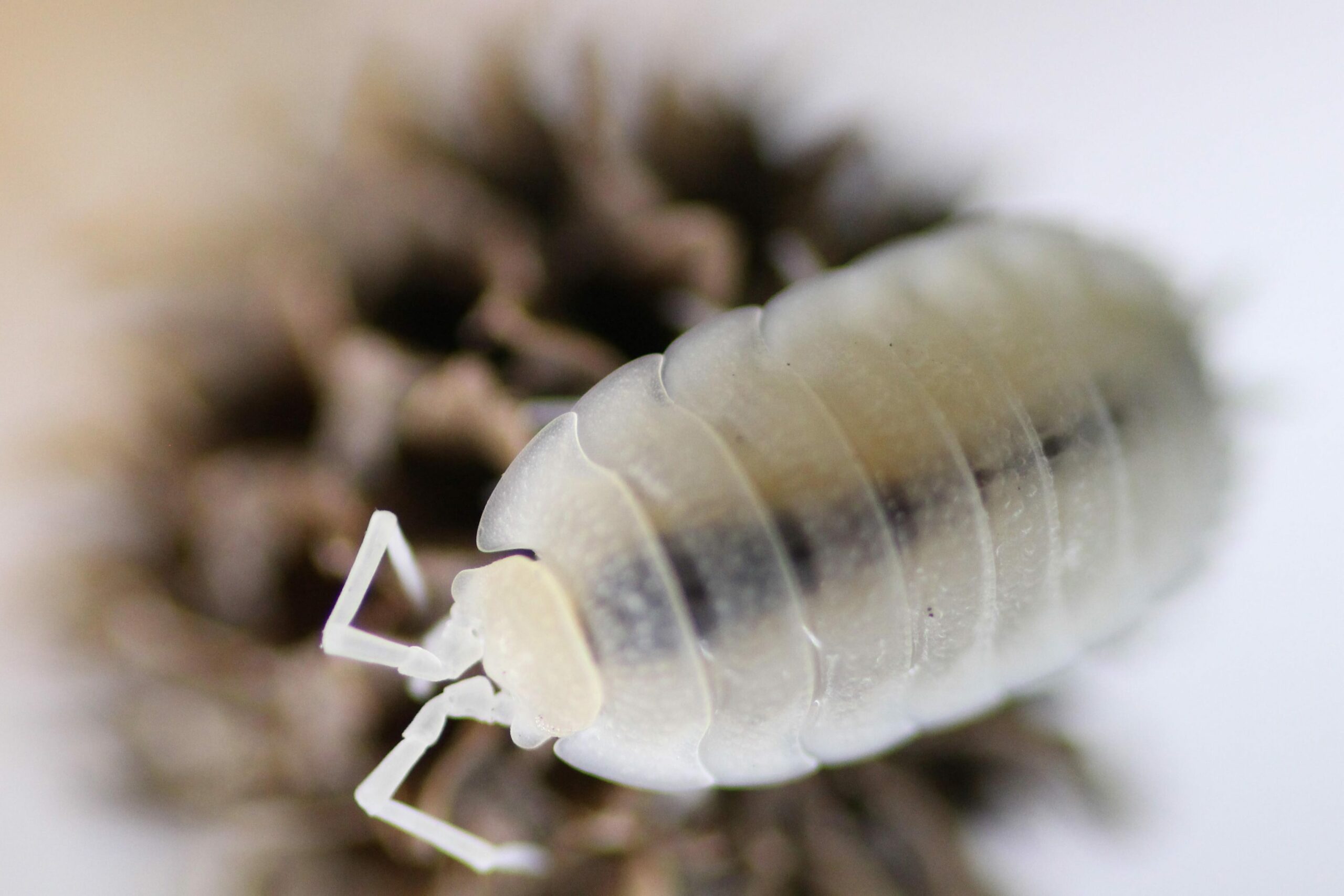


In my new YouTube video “Unboxing Terraristika Hamm | Isopods without eyes?” you could marvel at my latest color morph. Naturally, I wanted to take a closer look at it.
Anyone who has not yet seen the video can catch up here.
I traded them in because the previous owner had problems with breeding this morph. She told me that she occasionally transfers the color variant from the normal breeding box to a separate box. Unfortunately, she had no breeding success in the box containing only this color morph. At first glance, you can’t see any eyes on this Isopod. I was therefore quite curious to see whether this would also be the case with a macro photograph and whether I would then be able to see more with my old eyes.
Since Porcellio scaber are generally very hectic contemporaries and very difficult to photograph with a macro lens, Stefan held on to the Isopod and I was able to focus the lens calmly.
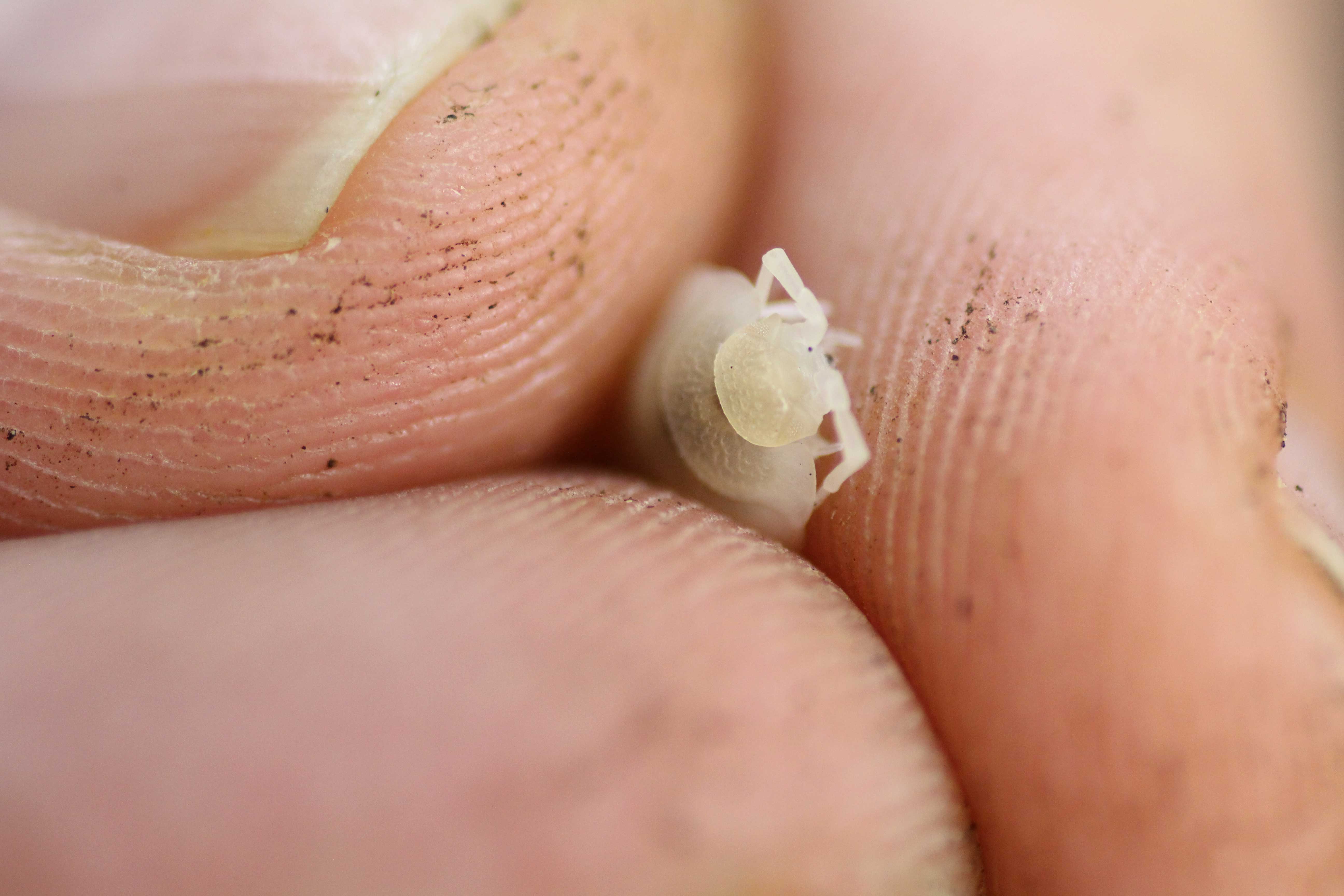
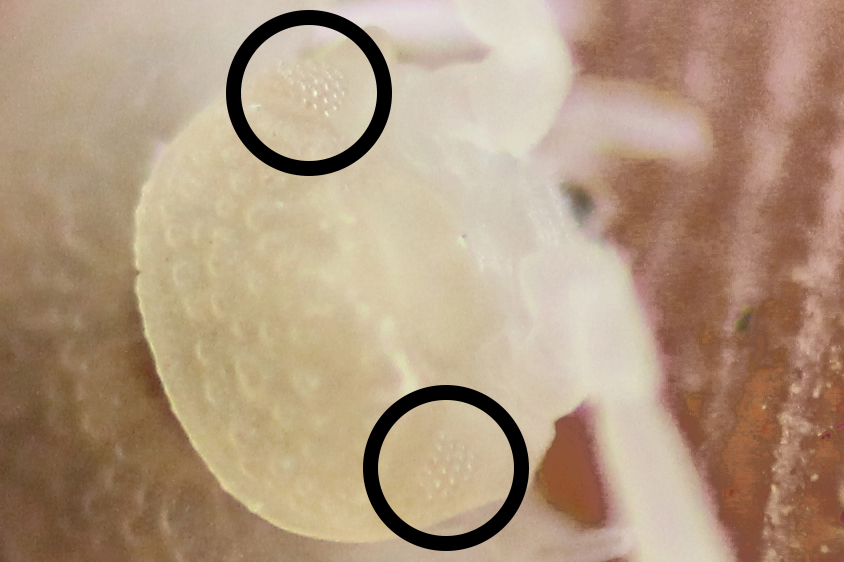
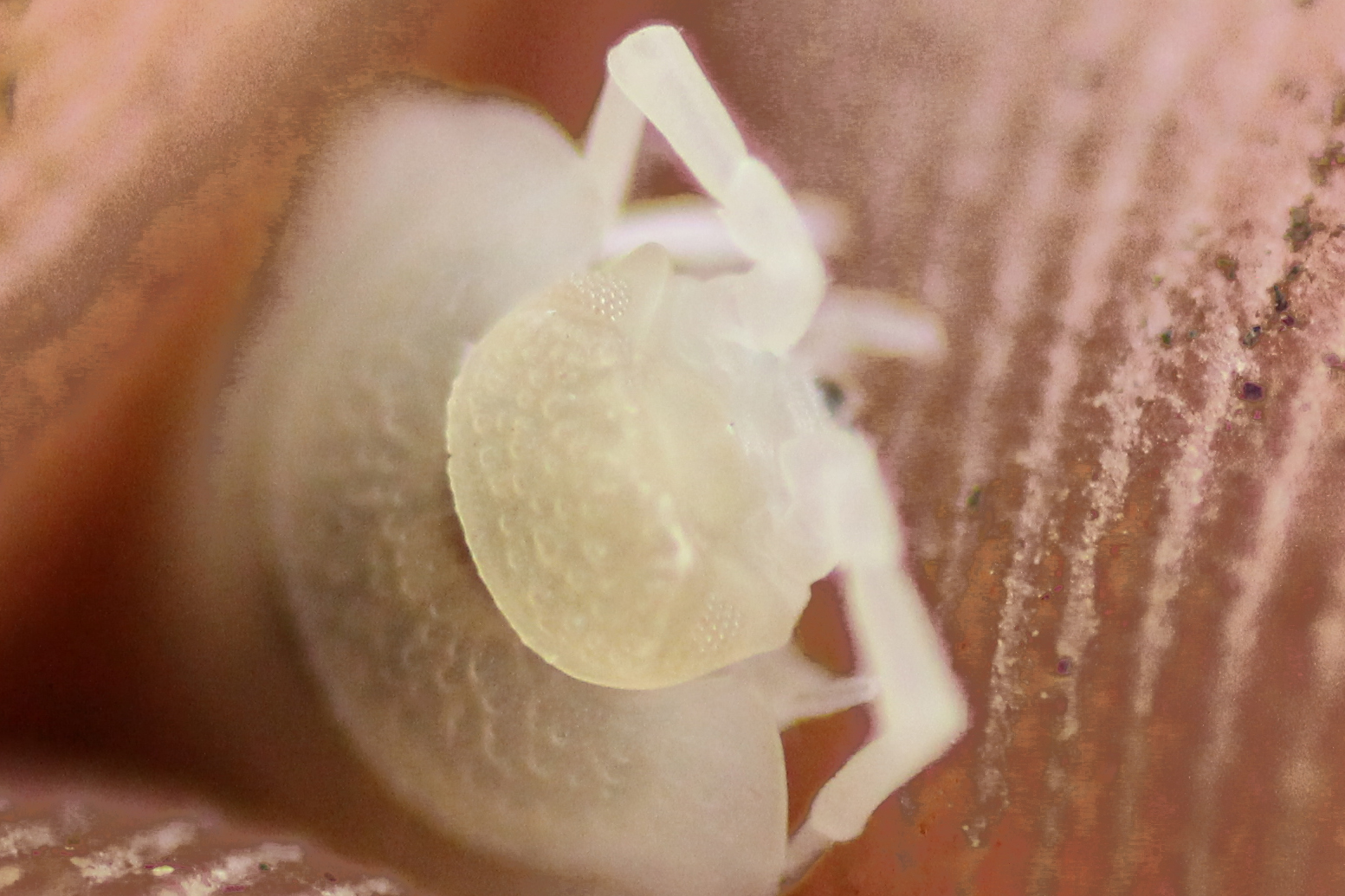
The two compound eyes are located on the left and right sides of the head. The compound eyes of insects consist of many individual eyes, the ommatidia. The more important the sense of sight is, the larger the eyes are and the more ommatidia they have. Isopods do not see such sharp images as we do, but they can perceive movements much better and react accordingly quickly.
After taking the picture, I knew why I first thought there were no eyes. They are completely white and therefore almost unrecognizable. However, white eyes do not mean that the animals do not produce melanin. Otherwise the Isopod’s eyes would be red, as you can see the red blood vessels due to a lack of pigmentation.
It is therefore much more likely that this color morph can only produce white melanin and that this is also reflected in the white eyes. I then researched such mutations on the Internet and found an interesting article about Thomas Hunt Morgan.
He experimented for years with Drosophilas in his “fly room”. Drosophilas are ideal for genetic research as they are easy to breed and the generation sequence is very short.
Back to Thomas Hunt Morgan – One day, the lucky man discovered a sensation in one of his many breeding batches: a Drosophila with white eyes! This was something very special, as Drosophilas normally have red eyes.
He tried to breed out this mutation and discovered that the mutation only ever occurred in male flies, never in female flies. After further investigations, it turned out that the eye color gene is located on both sex chromosomes of the fruit fly. This means that the white eye color is directly linked to the sex of the animals, in this case the male animals. Thomas Hunt Morgan was therefore the first person to be able to assign a gene to a specific chromosome. He was awarded the Nobel Prize for this in 1933.
Congratulations belatedly from me.
(Source: books.google.de)
If this could also be applied to Isopods, it would be clear to me why the previous owner had problems with breeding. With exclusively male animals, even the best husbandry conditions do not lead to breeding success
However, it should not be forgotten that Thomas Hunt Morgan worked with wild-colored animals with white eyes and not with completely white animals as in our case. Therefore, the tension remains high for me as to whether the Isopods are actually exclusively male animals. If this is the case, I would have to add wild-colored female Porcellio scaber to the group and cross-breed the offspring so that this morph species does not die out. As my “Asselbude” is an hour’s drive away from where I live and I am very busy after work, I will unfortunately have to wait until the weekend.
If you don’t want to miss my next blog article, just sign up here.
You want to know what happens next?
Click here for the next part
Leave a Reply
You must be logged in to post a comment.