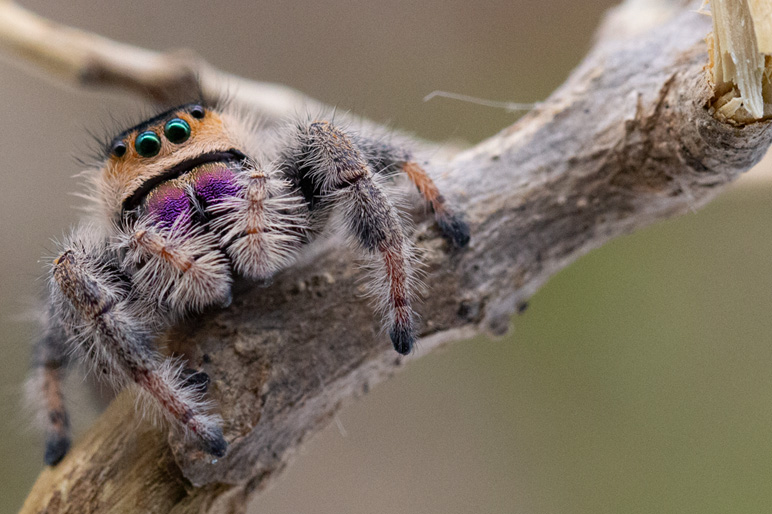


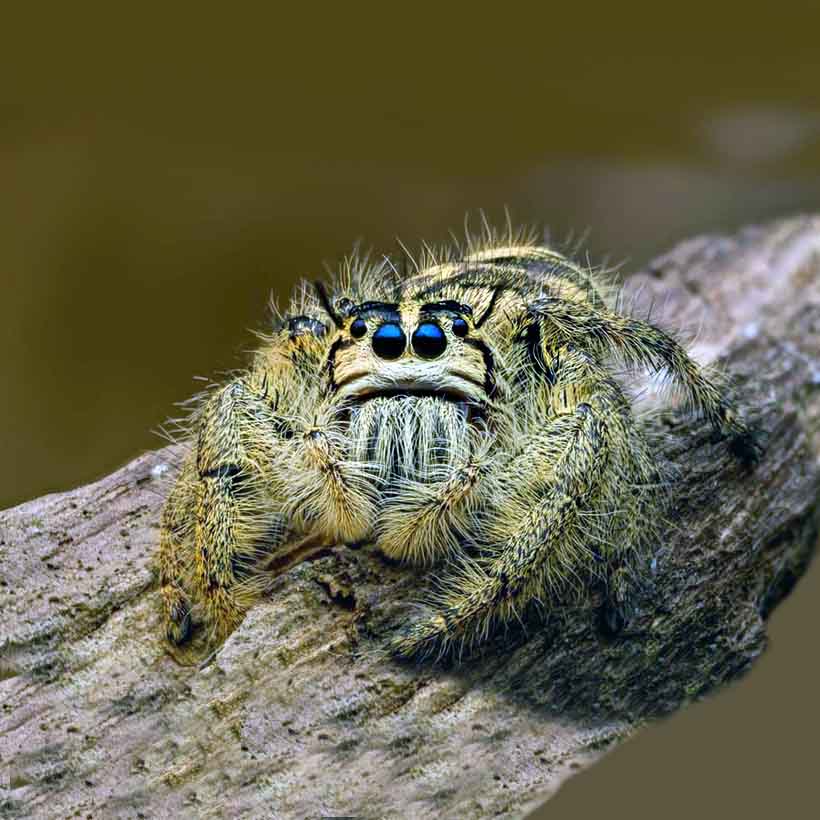
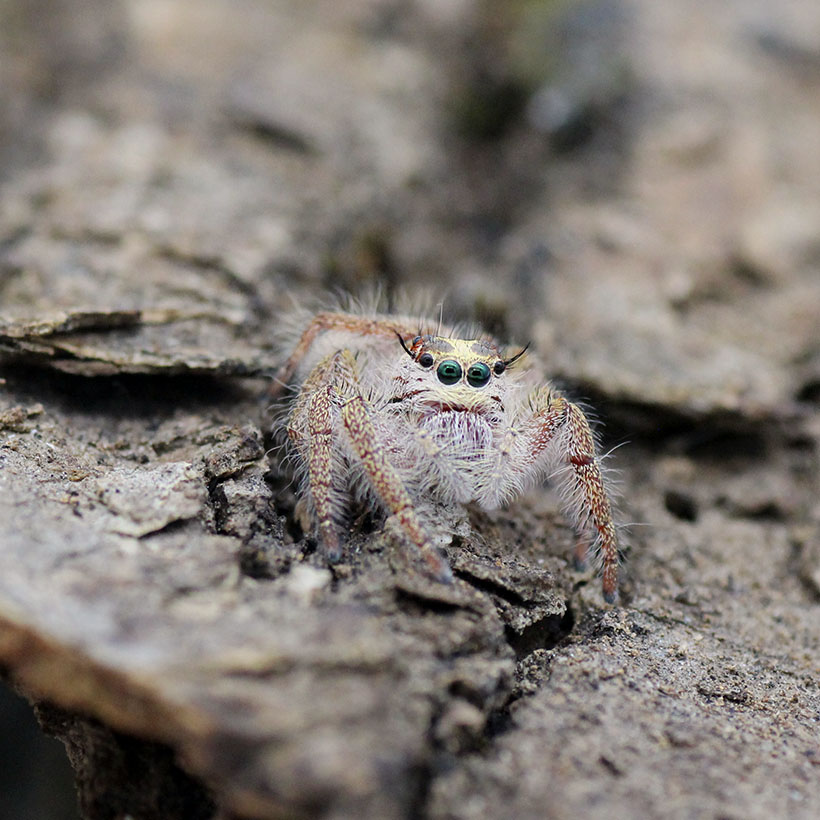
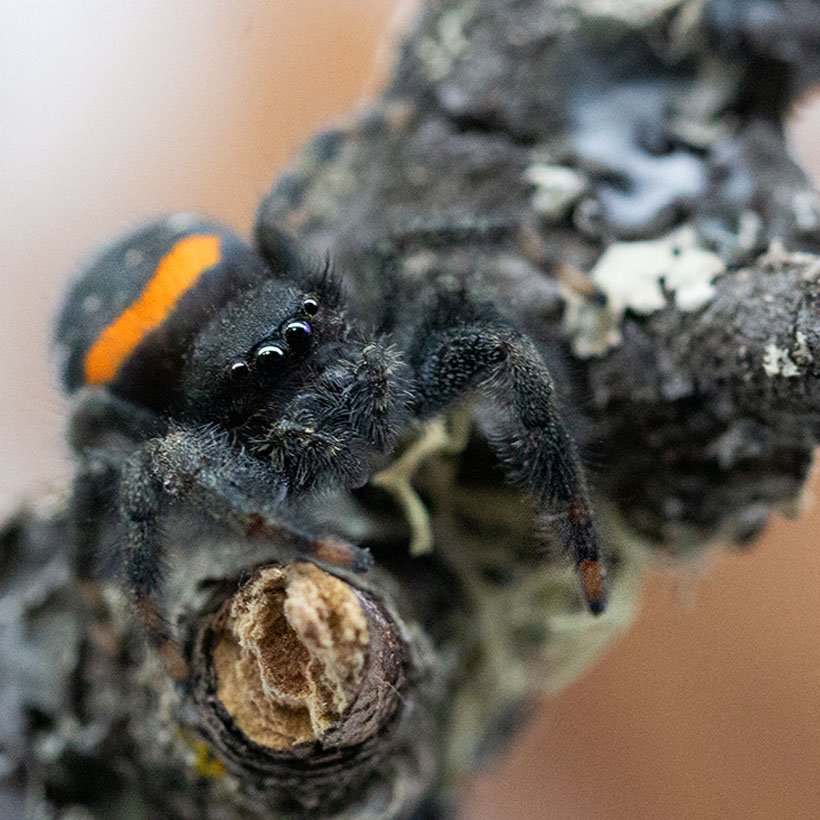
Jumping spiders, scientifically known as Salticidae, are among the most fascinating and versatile hunters in the realm of spiders. With over 6,000 species worldwide, they are the largest family of spiders and impress not only with their impressive jumping abilities, but also with their amazing behavior and colorful appearances.
Jumping spiders have so much more to offer than you might think at first glance. So, let’s buckle up and jump straight into the fascinating world of these little acrobats!
The superheroes of bounce
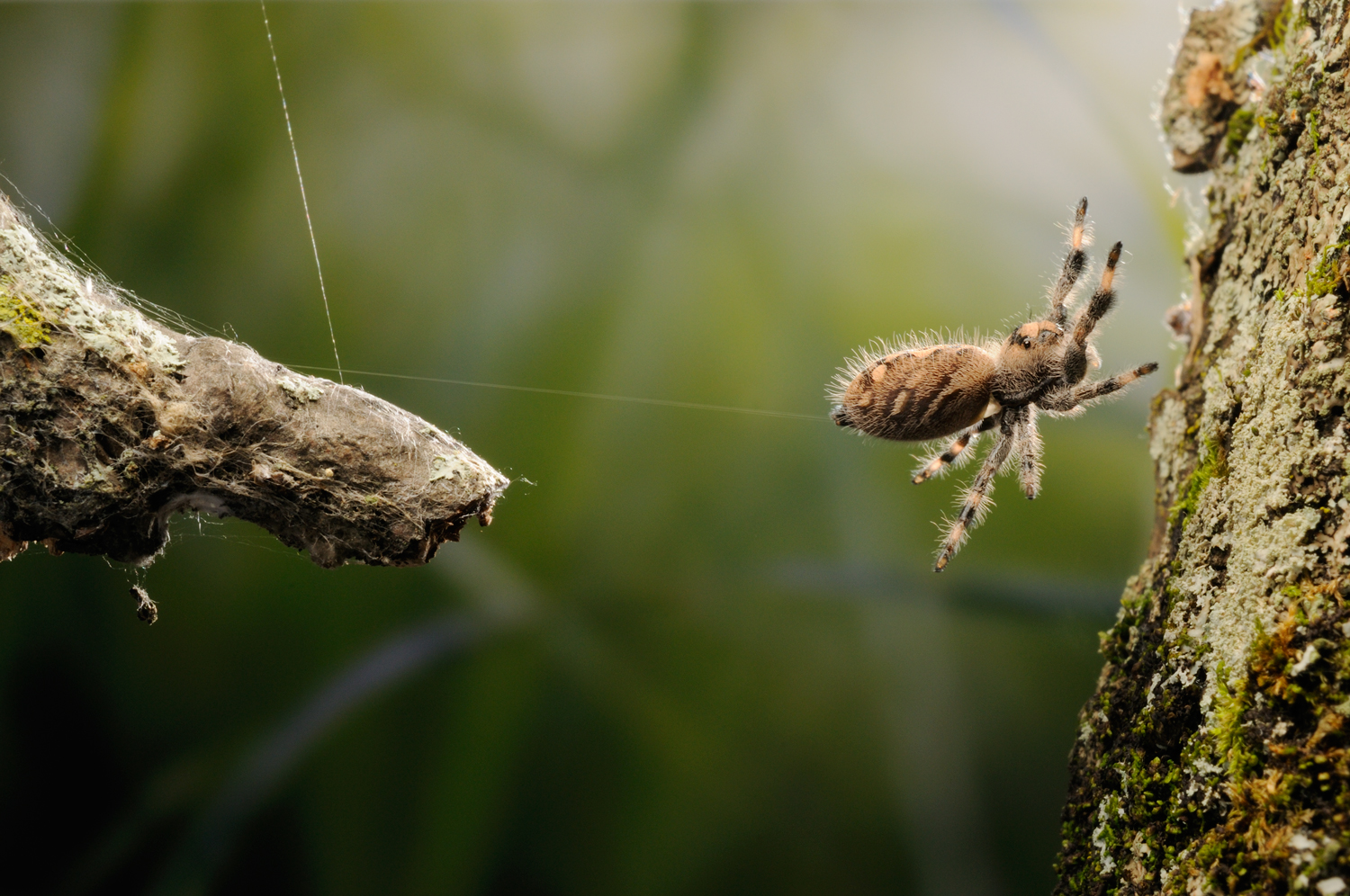
What sets jumping spiders apart from other spiders is their incredible jumping power. These little hunters can jump 50 to 100 times their body length! But how do they do it? Jumping spiders don’t have particularly strong leg muscles like a frog, but use the hydraulic pressure in their legs. By increasing the pressure within their legs, they can perform enormous leaps in a fraction of a second to catch prey or escape danger.
Master of the hunt
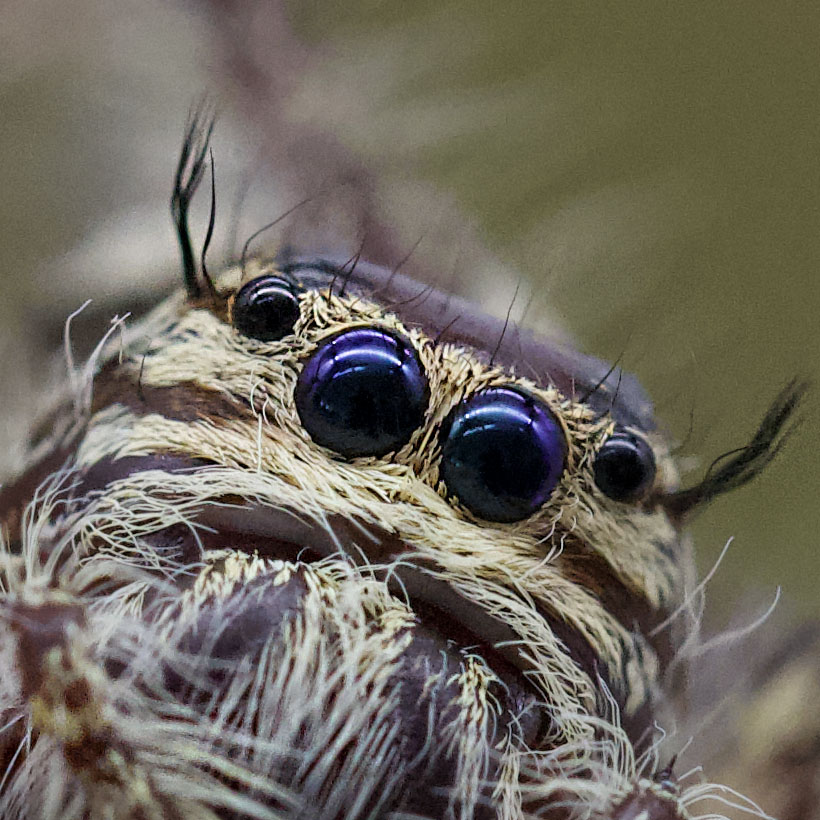
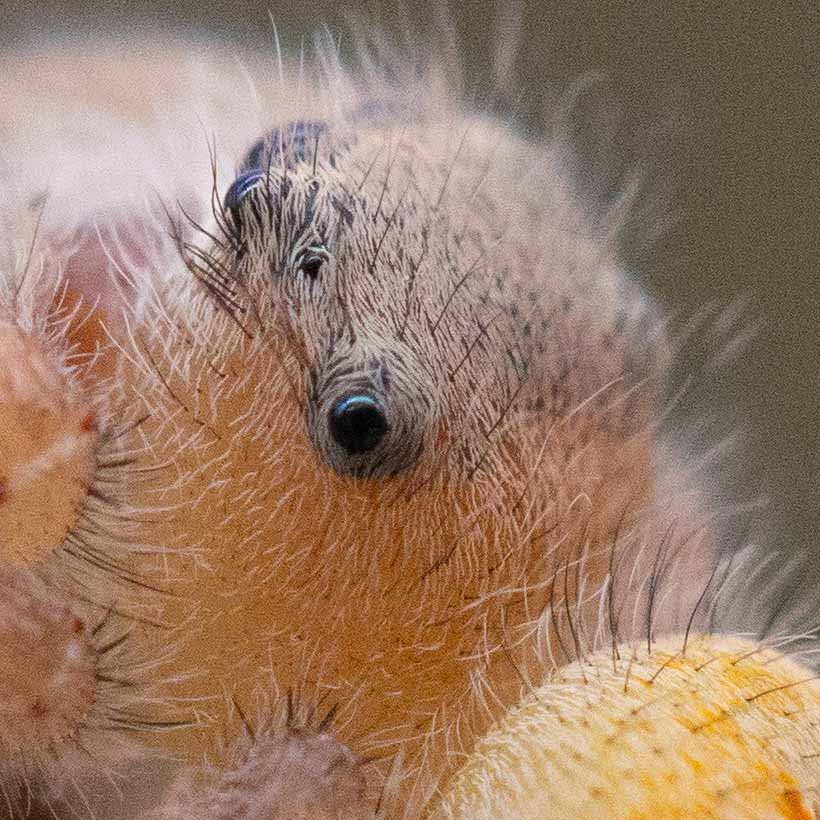
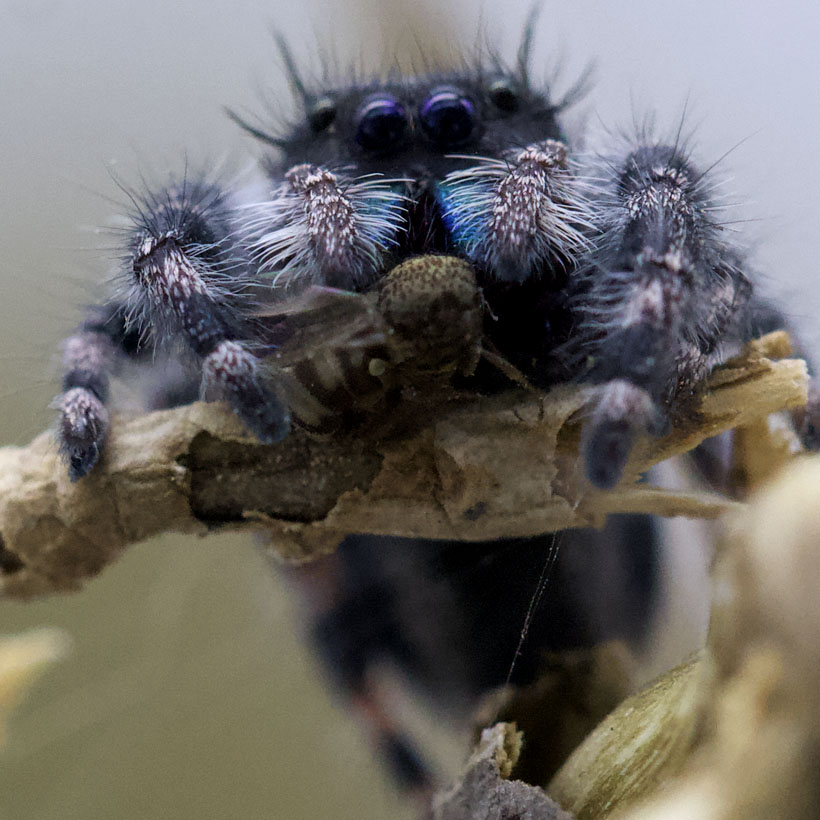
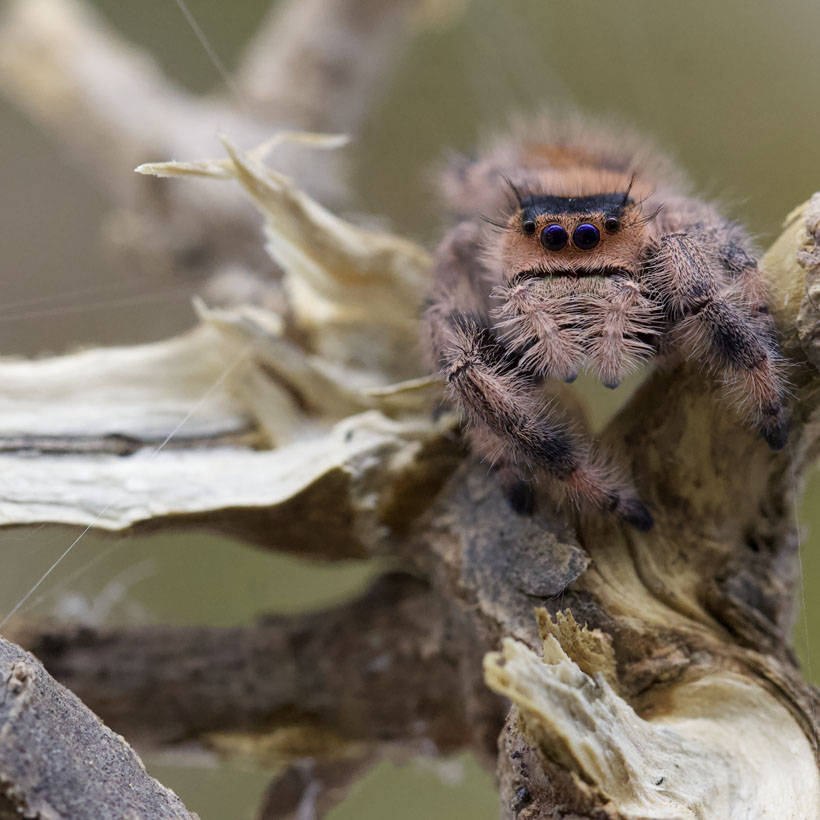
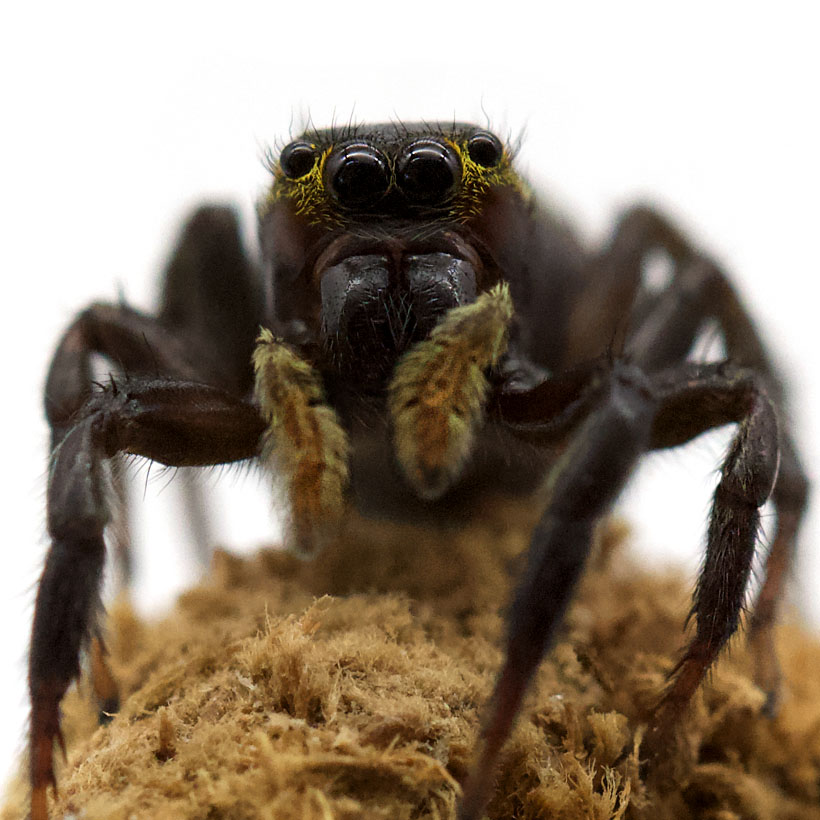
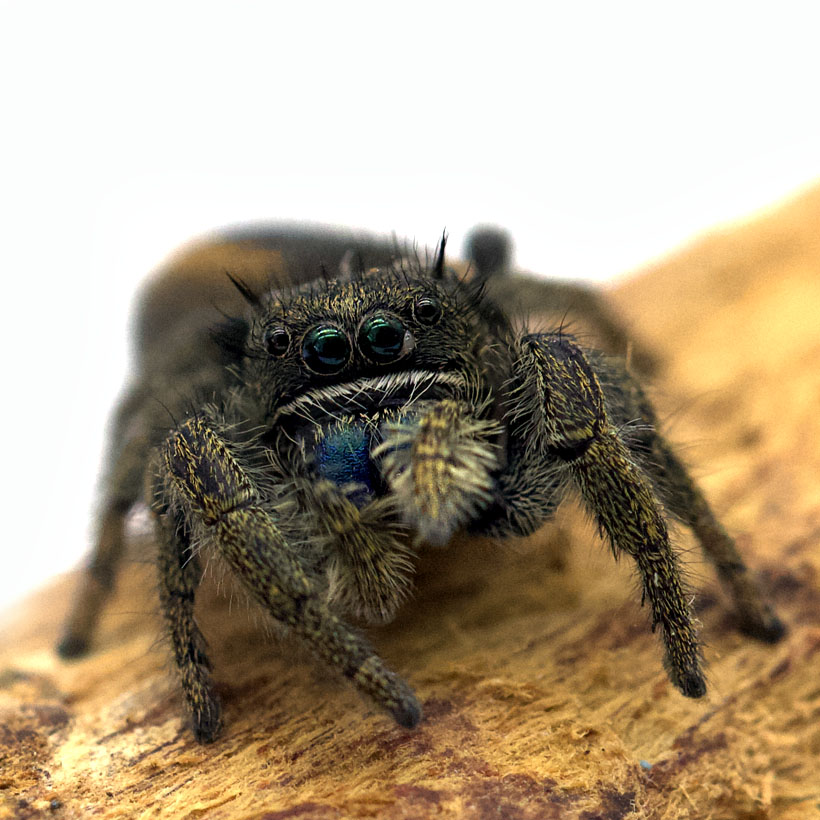
Jumping spiders do not hunt like most other spiders, which spin webs to catch their prey. Instead, they rely on their exceptional eyesight and speed. Their eight eyes are strategically arranged, with the front central eyes being particularly large and powerful. These eyes enable them to detect movements precisely and estimate distances accurately – important skills for a successful leap hunter.
What is particularly fascinating is the ability of jumping spiders to plan and even strategize their surroundings. They are able to circle around potential prey, choose the best angle for an attack and then strike at lightning speed. Their hunting techniques are more reminiscent of those of a small predator than a “typical” spider.
Colorfulness and camouflage
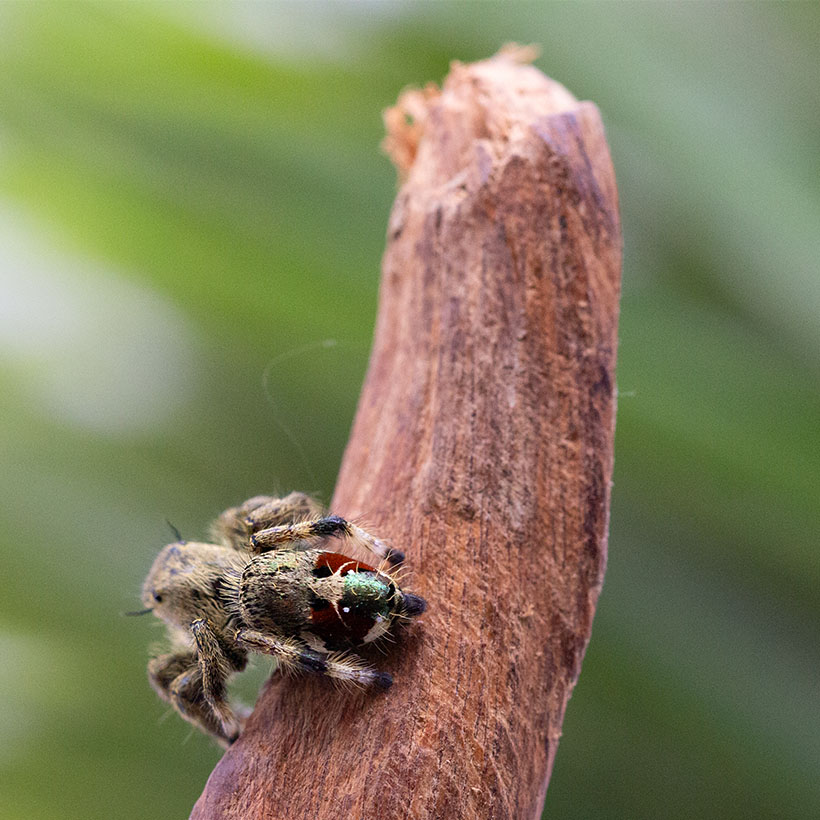
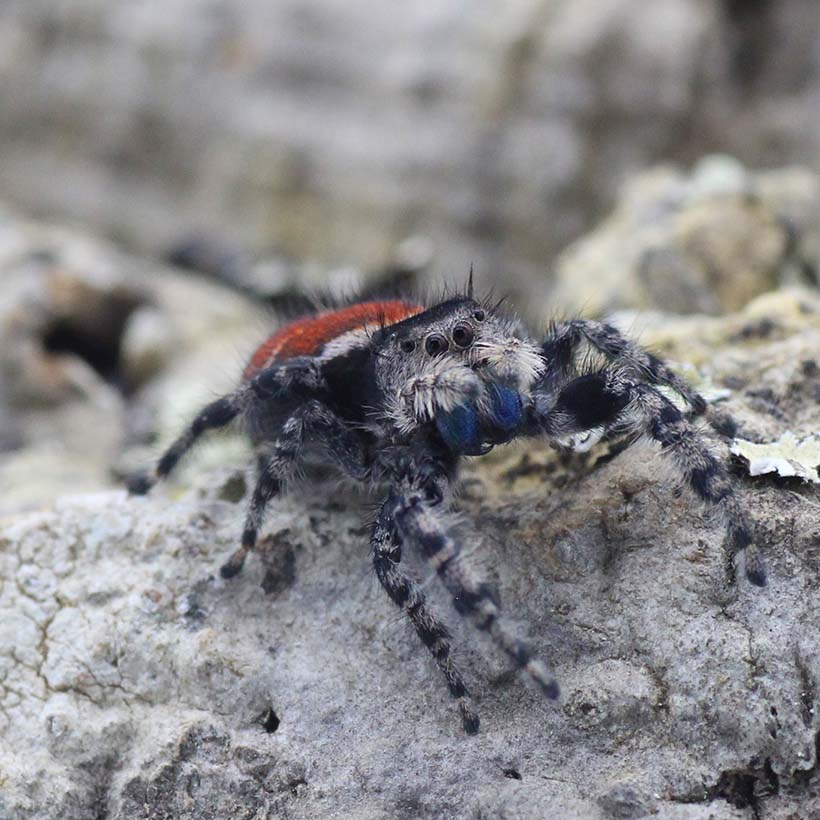
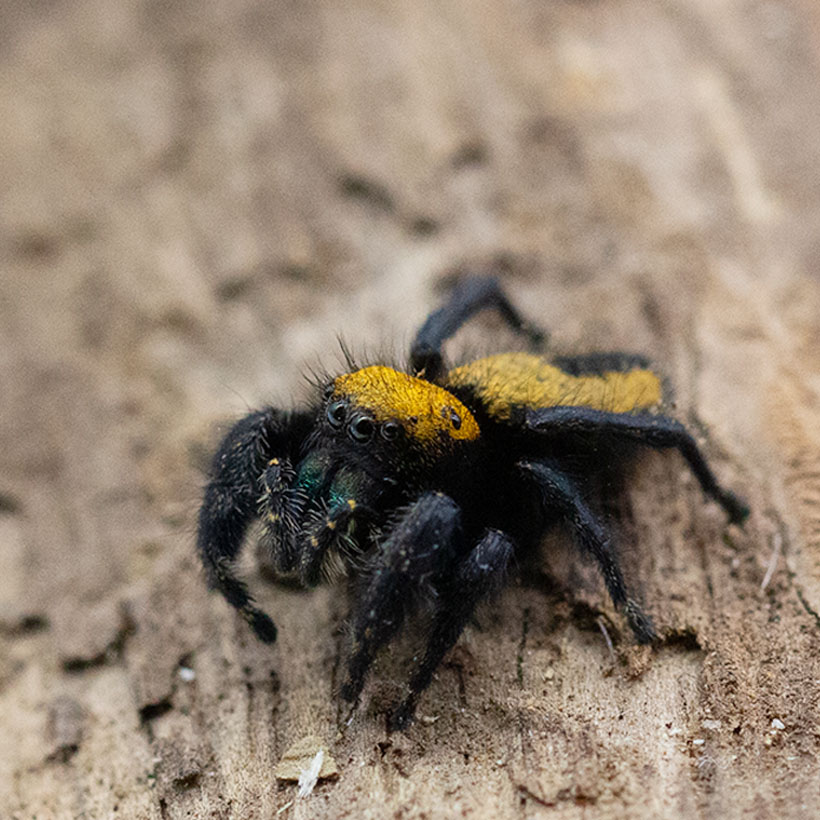
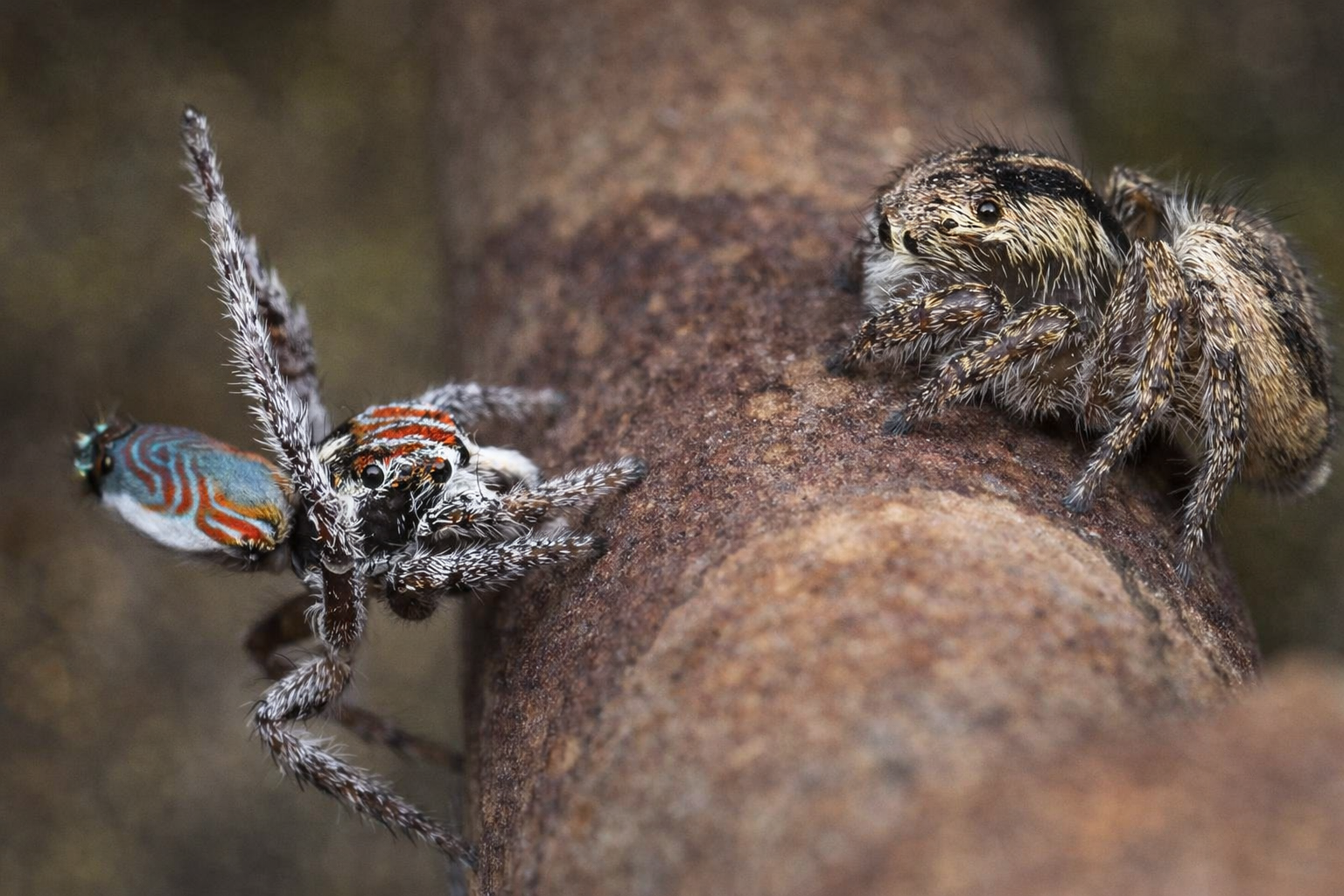
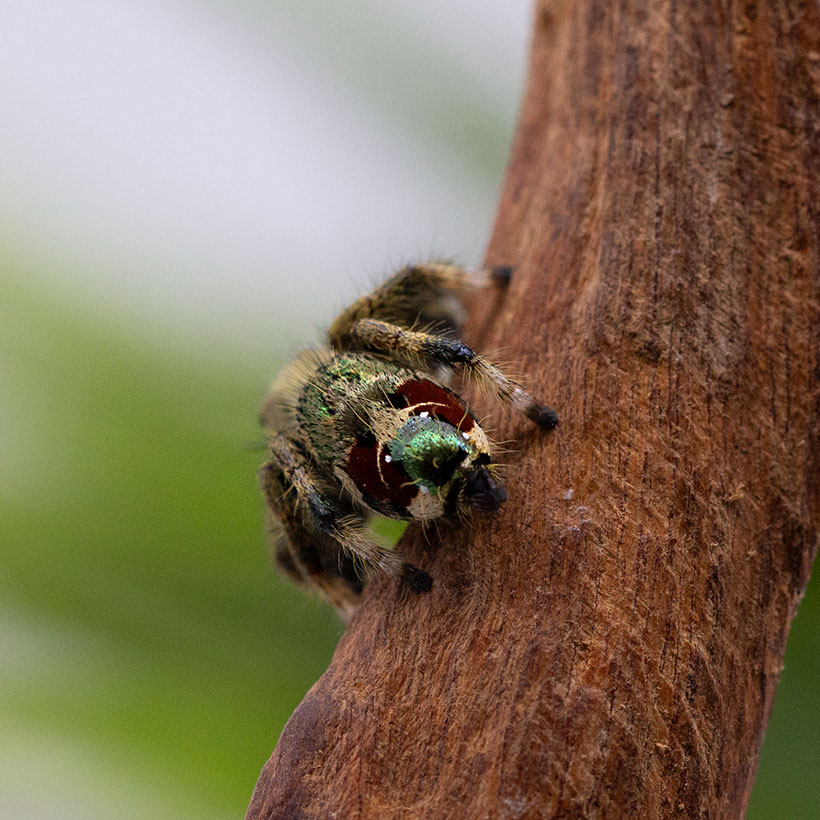
Jumping spiders are not only impressive because of their hunting skills, but also because of their often bright colors and patterns. Many species have iridescent colors or eye-catching patterns that make them a real eye-catcher. Especially the males of many species, such as the peacock spiders (Maratus), are known for their colorful displays, which they show during courtship to impress females.
But not all jumping spiders go for conspicuousness. Some species use their colors and patterns as camouflage to blend in perfectly with their surroundings. This camouflage not only protects them from predators, but also helps them to sneak up on their prey unnoticed.
Intelligent behavior and social behavior
Jumping spiders are surprisingly intelligent for a spider. Studies have shown that they are able to solve simple problems and learn from experience. They can visually perceive and remember their surroundings, which gives them an advantage when hunting.
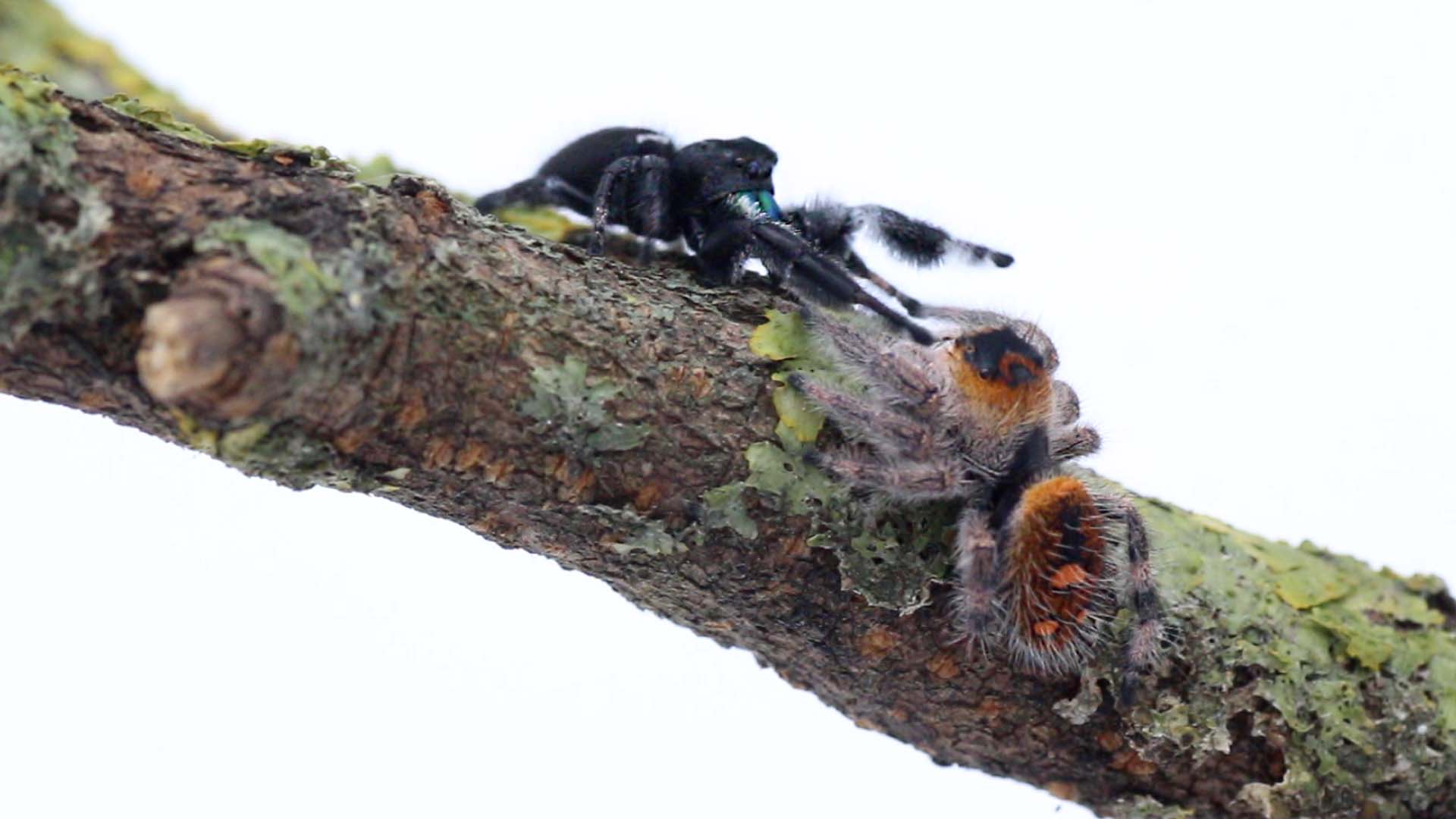
Another remarkable behavior is their courtship behavior. Male jumping spiders often perform complicated dances to attract the attention of a female. These dances involve rhythmic movements and the display of colorful body parts. Females often choose their mates based on the elegance and precision of these displays.
Jumping spiders are truly amazing little creatures that never cease to amaze us with their abilities and behavior. Whether you keep them in a terrarium or observe them out in the wild, they definitely have the potential to mesmerize you. So, the next time you see a little spider hopping away at lightning speed, take a moment to marvel at the fascinating world of jumping spiders. There’s always something new to discover!
If you have any further questions, please leave them in the comments below the article.


Leave a Reply
You must be logged in to post a comment.