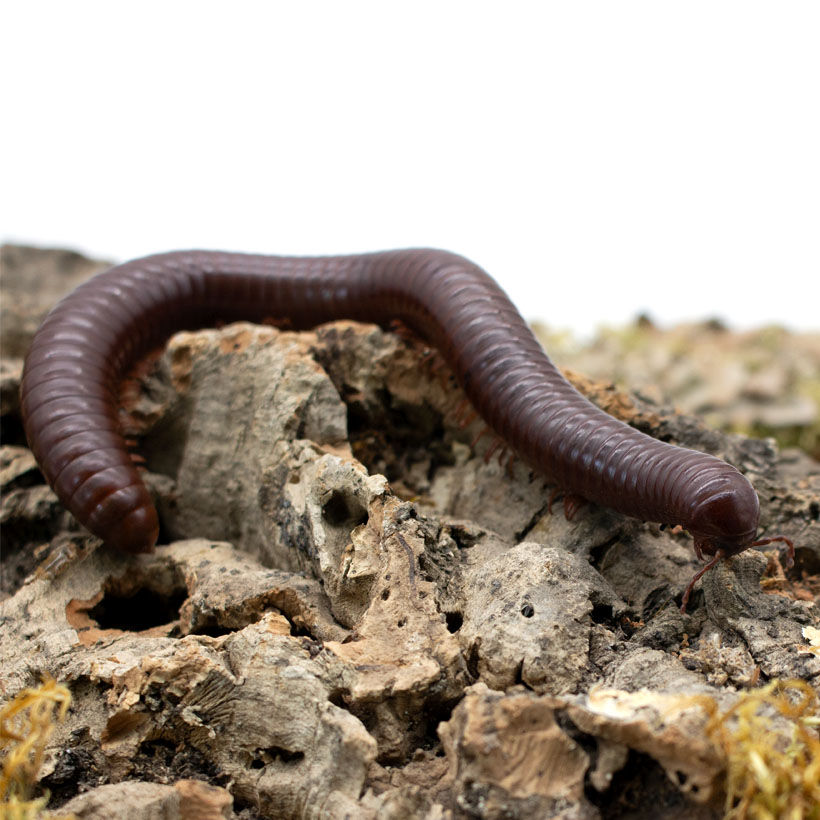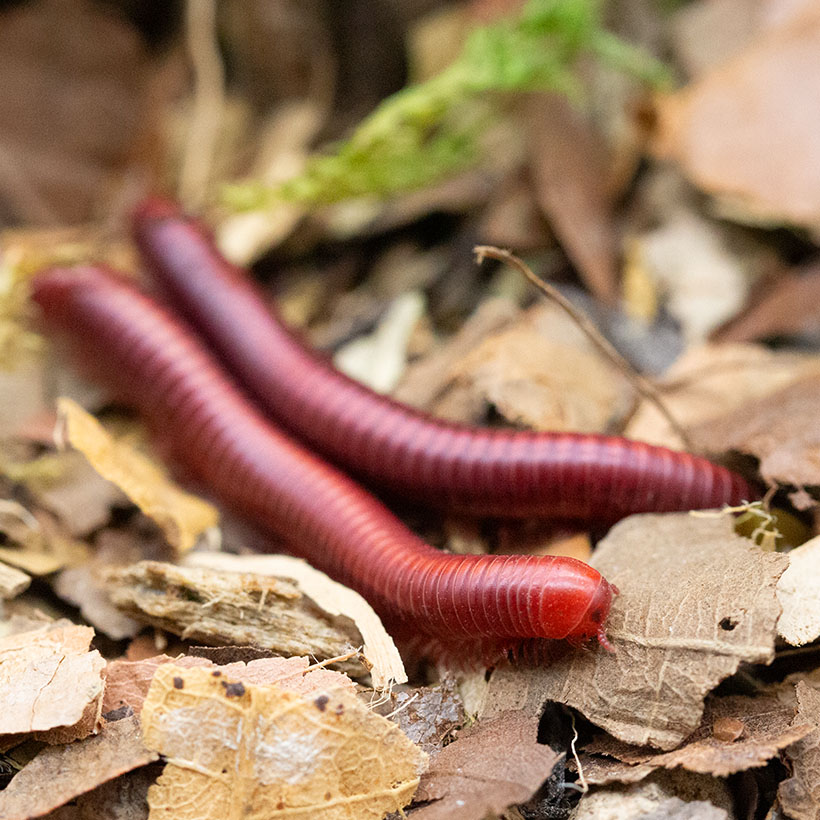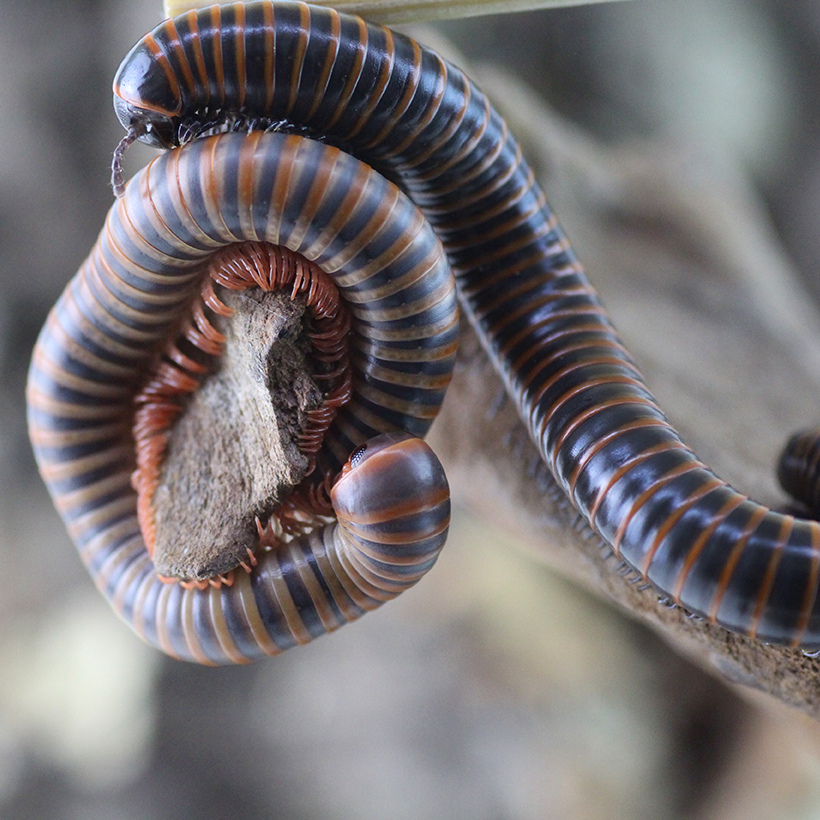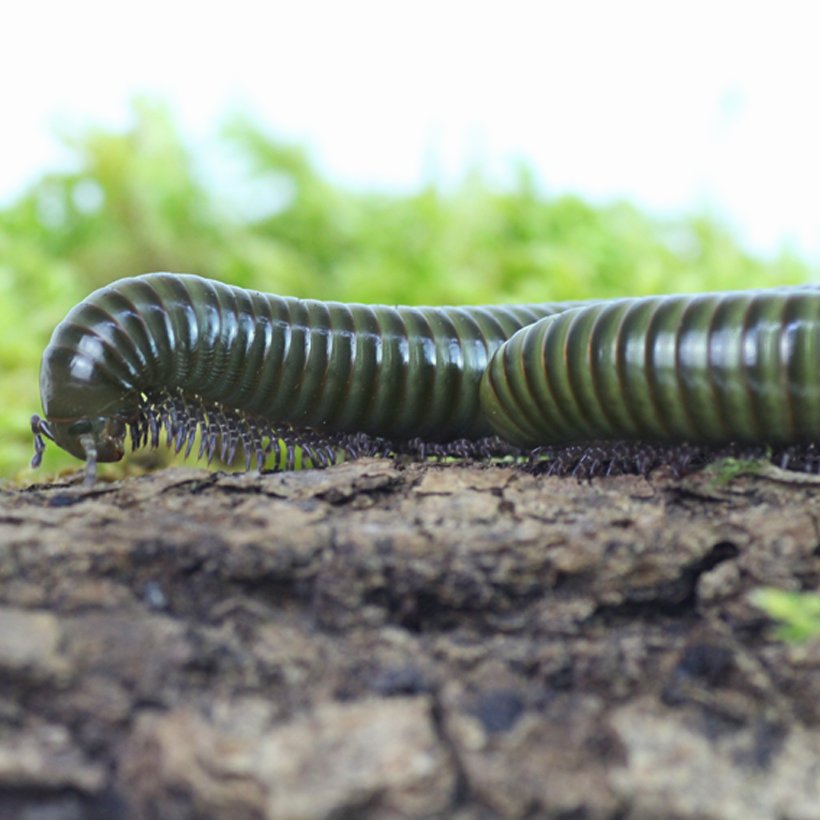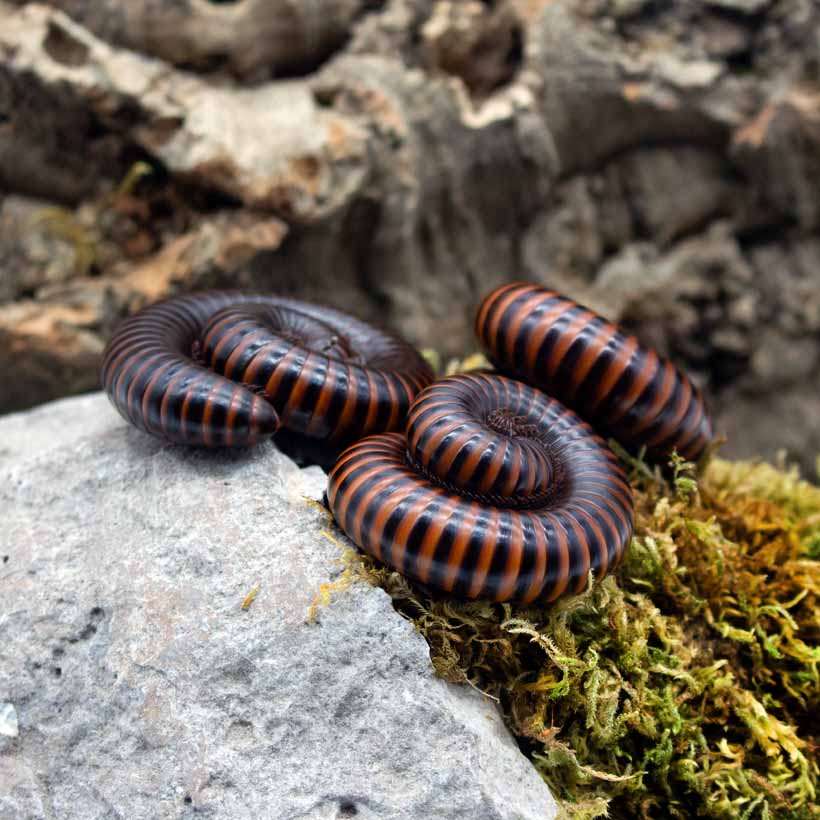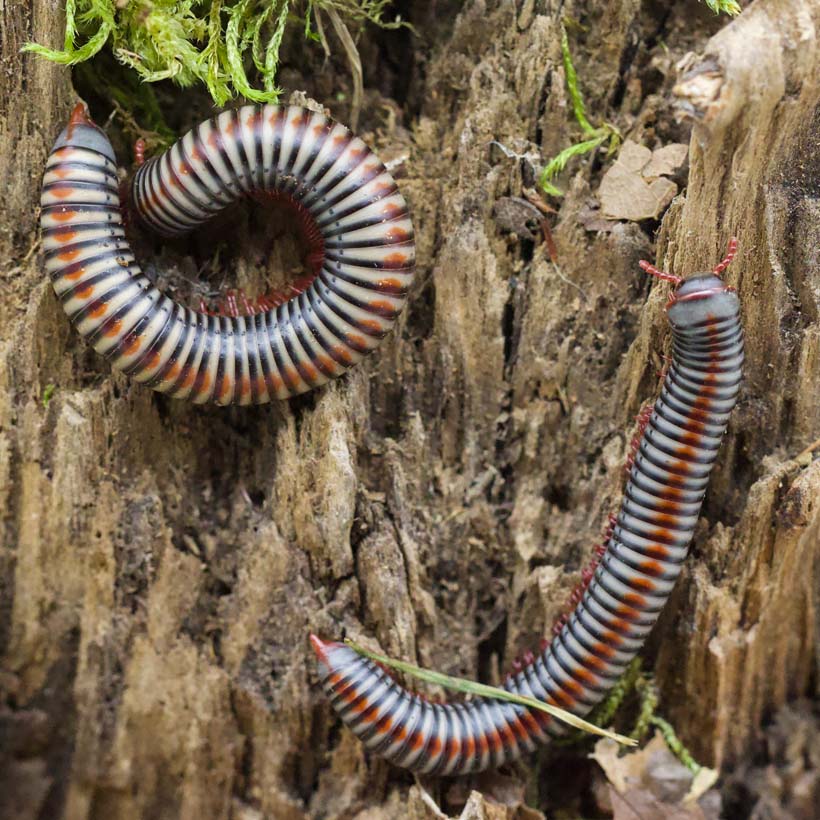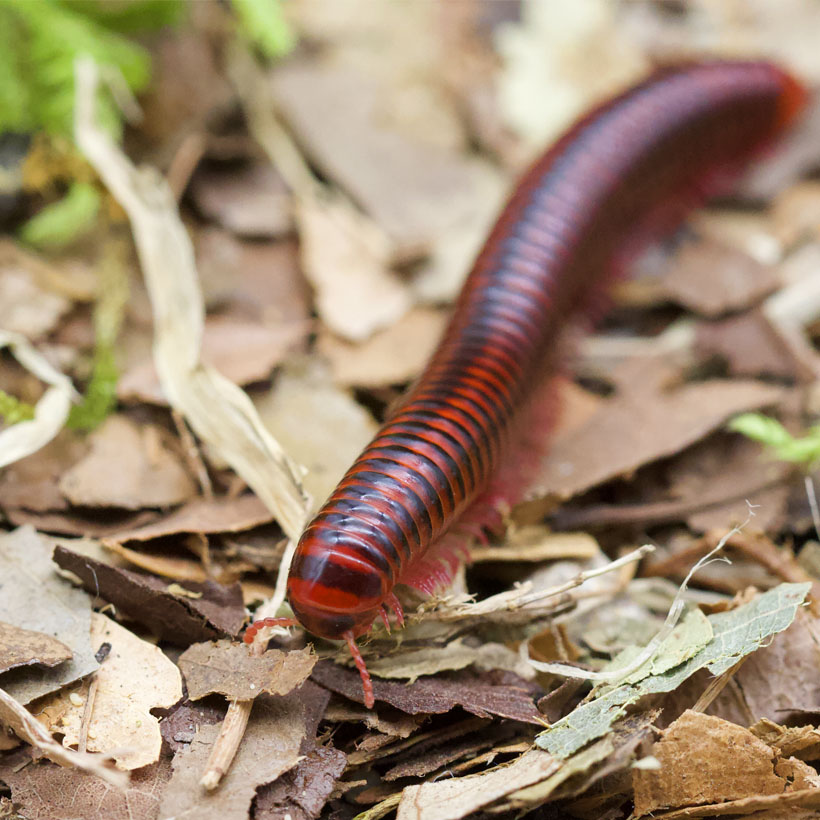


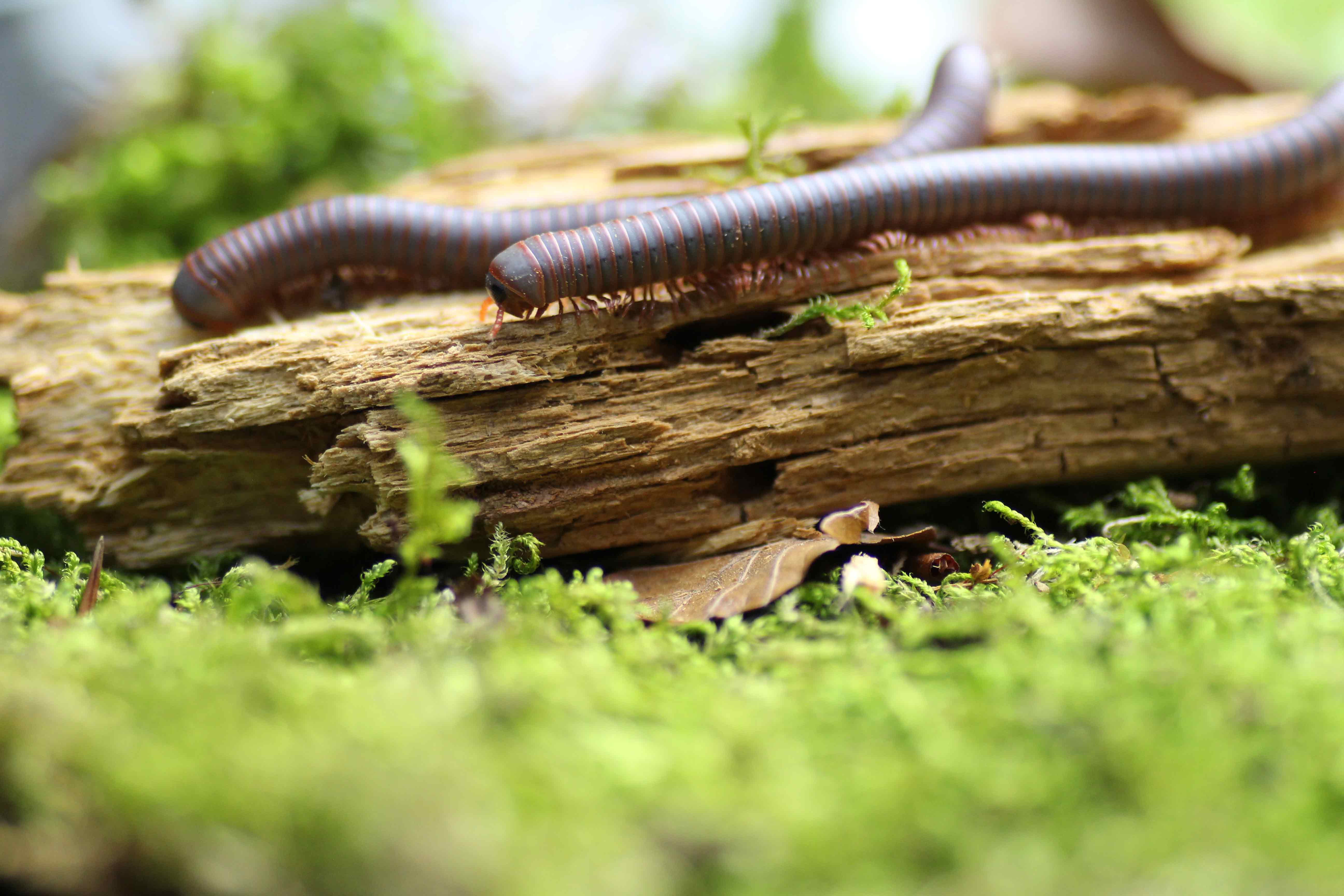
| Name | Rainbow centipede |
| Order | Spirobolida |
| Family | Pachybolidae |
| Subfamily | Tonkin bolus |
| Origin | Thailand, Vietnam |
| Temperature | 24-28 °C during the day, 21-24 °C at night |
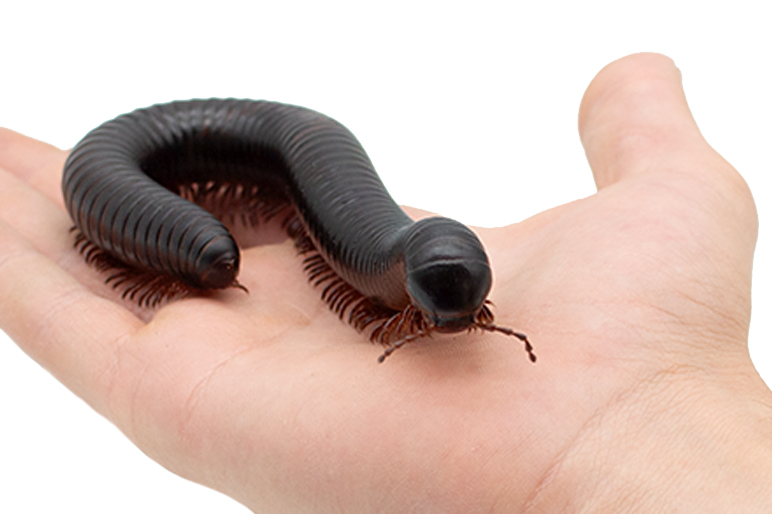
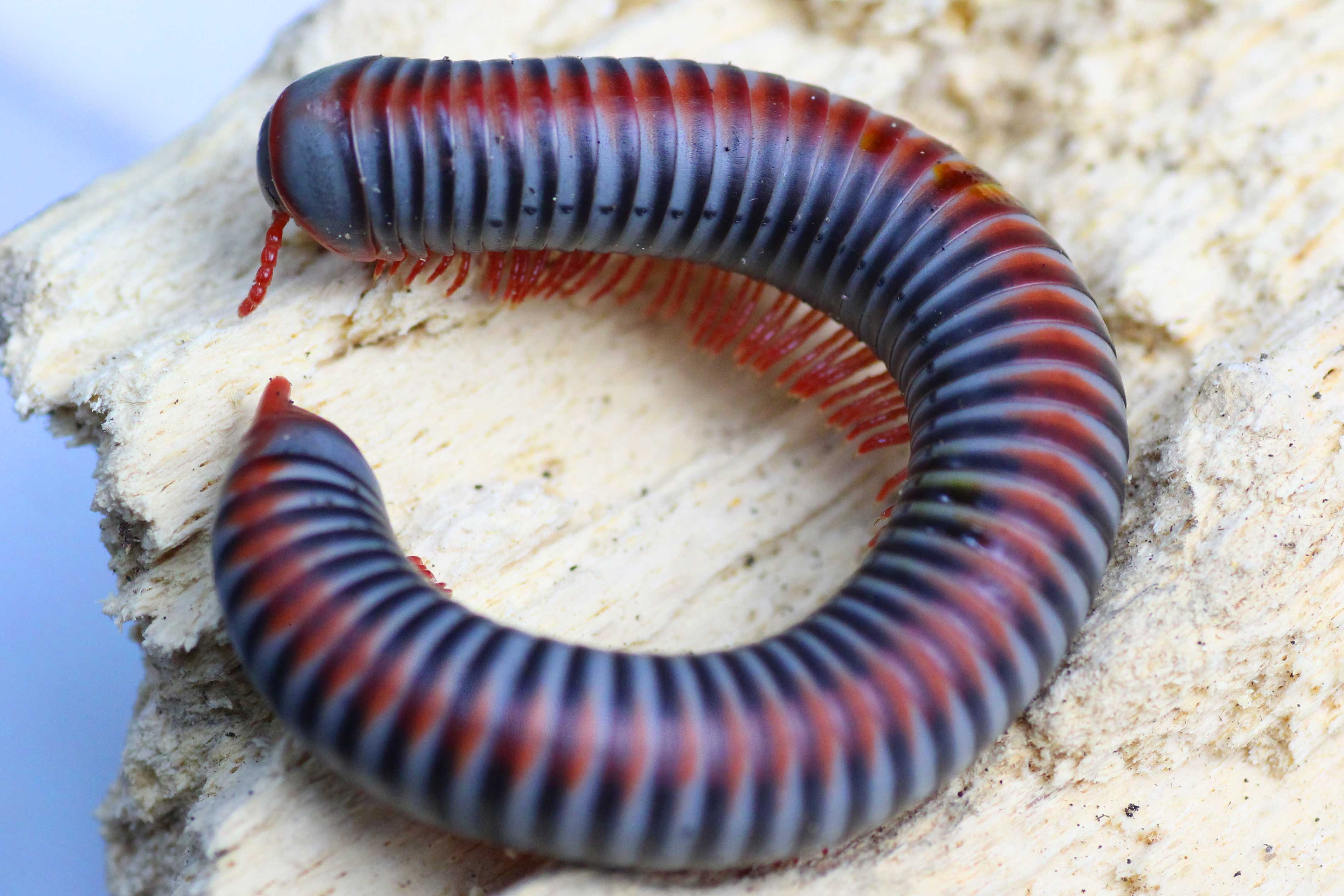
| Size | Length up to 11cm, width 6mm, segments 51 |
Behavior:
Tonkinbolus dollfusi is active in phases. The resting period before and after a moulting phase is longer than in some other species. This is why you only see completely hardened animals on the surface, but they are then also active.
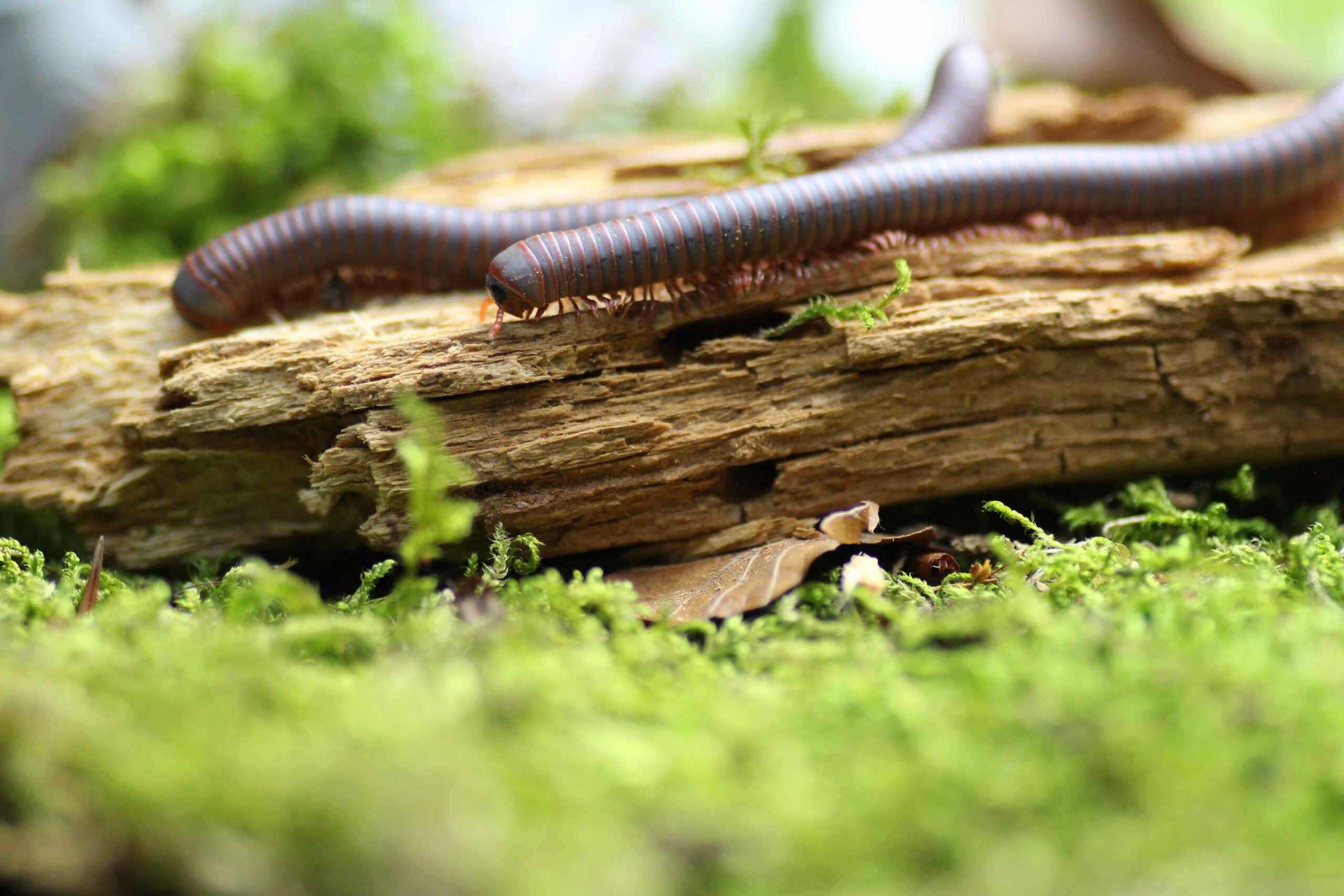
The short legs are not really designed for climbing. Therefore, climbing animals are very rarely seen.
Sometimes you want to take your animals in your hand. Be it to recognize the sex or to check whether everything went smoothly during moulting. Tonkinbolus dollfusi sometimes behaves anxiously. In general, you should only remove completely hardened animals. These are then a little more sociable, but you should still wear gloves.
Container:
Up to 10 Tonkinbolus dollfusi can be kept in a container measuring 40 cm x 30 cm x 30 cm. The substrate height should be at least 10 cm so that the animals can burrow into it without any problems. This is particularly important during the moulting phase, as the animals moult in the forest leaf humus.
If you use a plastic box, you should drill sufficient air holes in the container. It should be ensured that a humidity of 70-80% can be kept constant.
As the animals do not climb, a few pieces of dead wood lying on the ground are sufficient, which they also like to seek out during the drying phase.
Breeding:
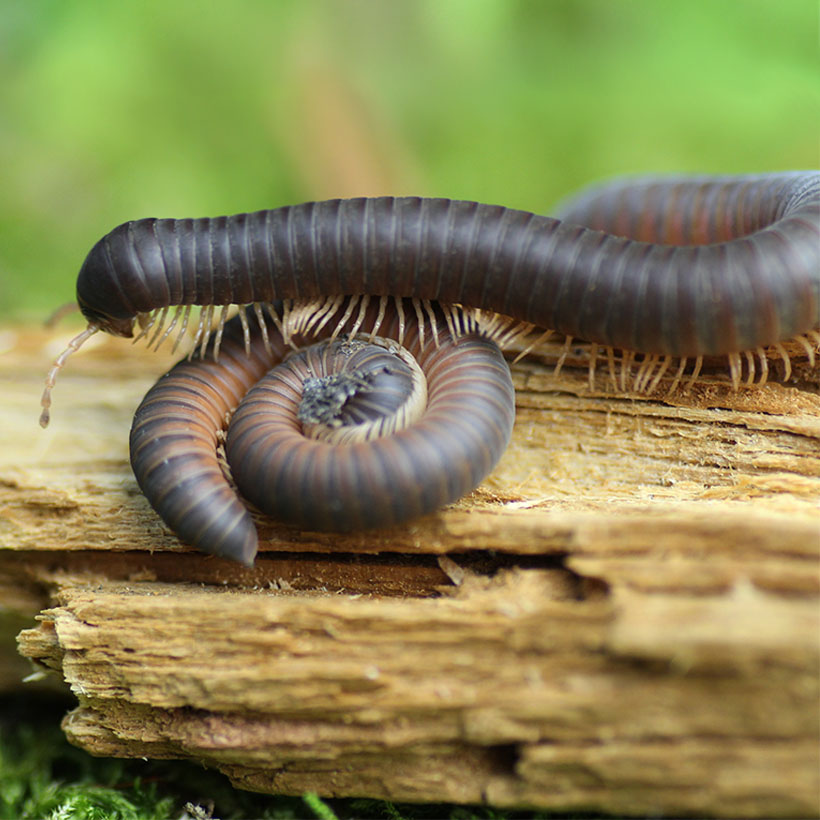
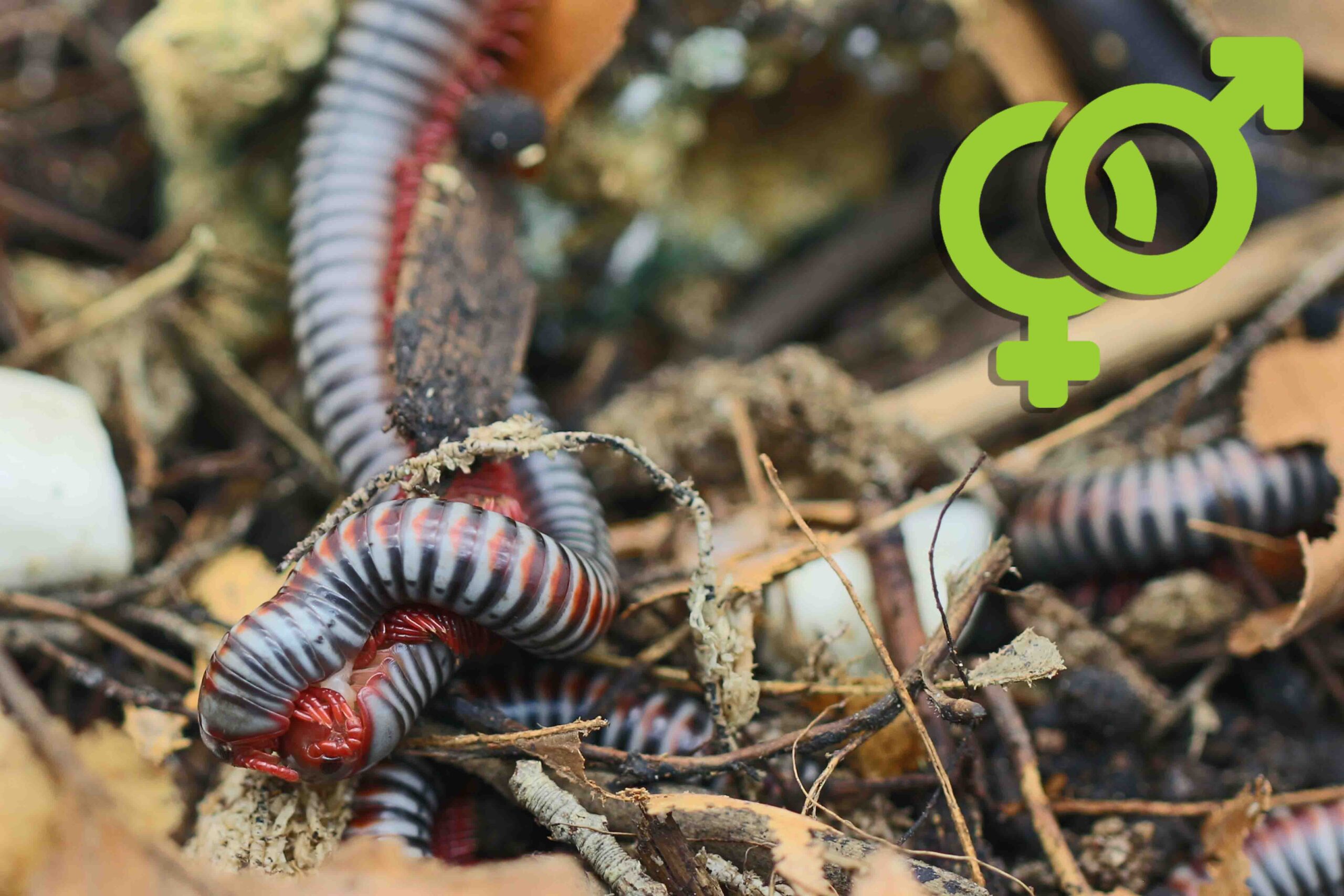
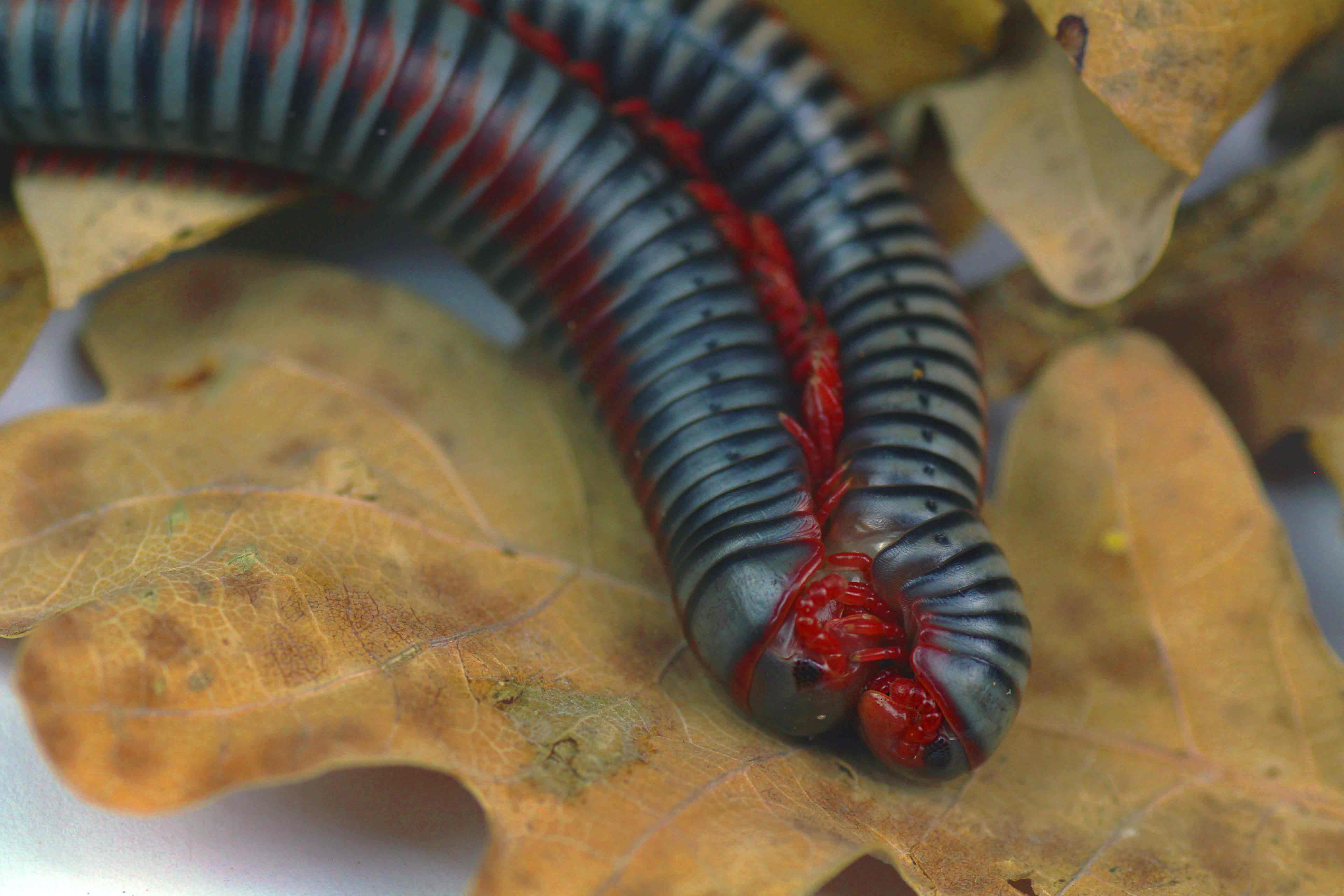
If all the husbandry parameters are correct, Tonkinbolus dollfusi can be bred relatively easily. The male hooks into the female and transfers the sperm with the gonopods (white).
It is advisable to leave the larvae in the box of the adults and let them grow up, as they feed on the feces of the older animals, especially at the beginning.
Special Features:
As the animals are somewhat susceptible to waterlogging and fluctuations in the husbandry parameters, I do not recommend them as starter animals.
They hardly eat vegetables at all, preferring sweet fruit in the form of watermelon or papaya.
They love to eat protein in the form of Balance Flakes.
Tip: Particularly for species that are often found in the substrate and only sparingly eat additional food, it is important to ensure that there is sufficient foliage and white rotten wood to feed on.