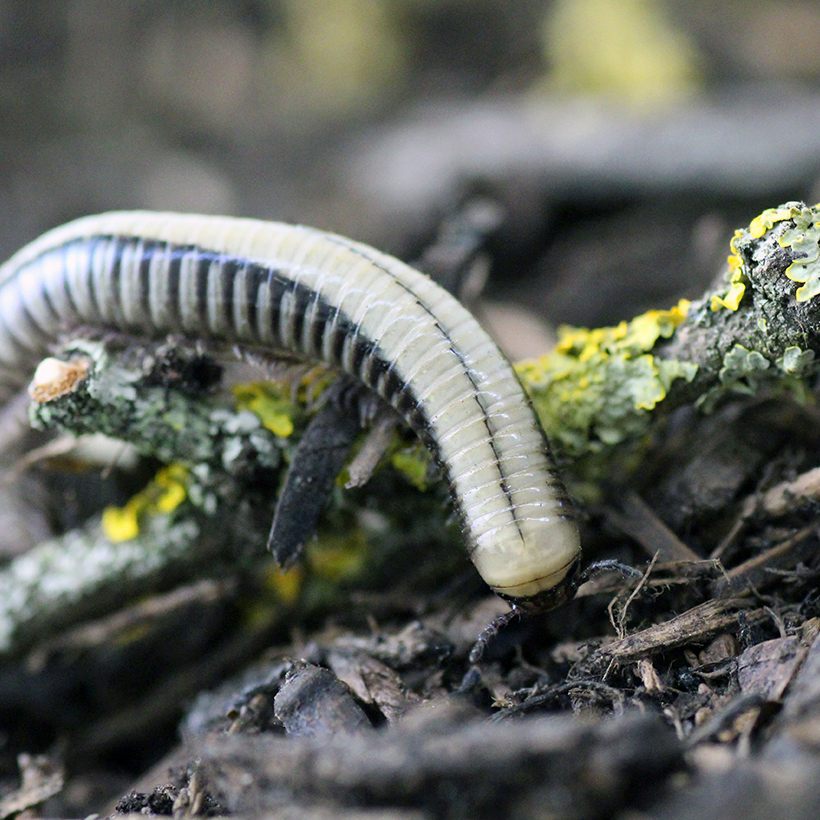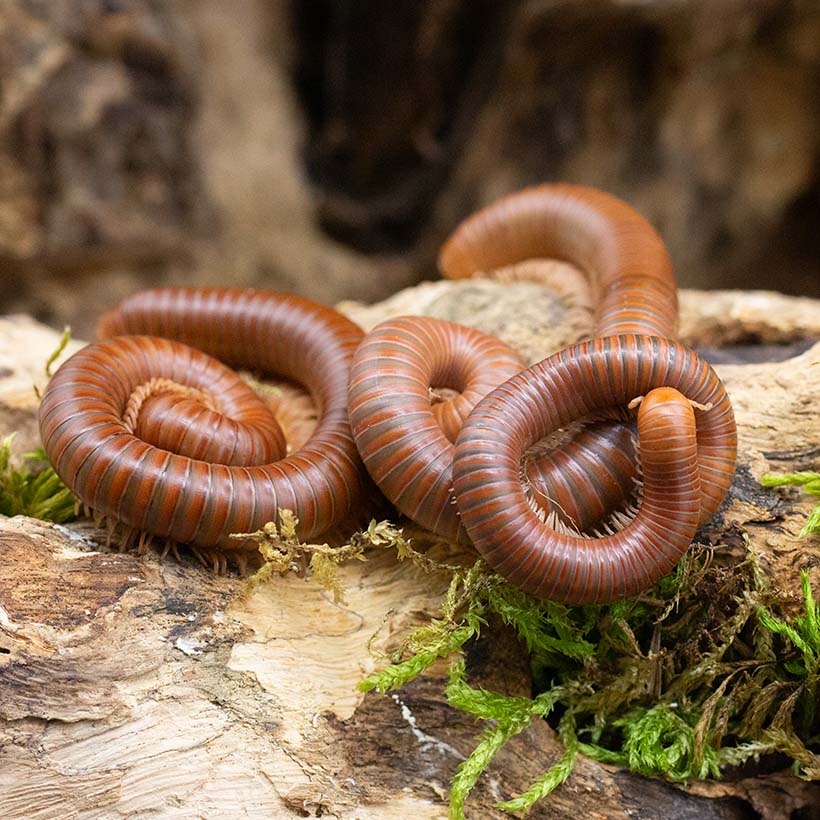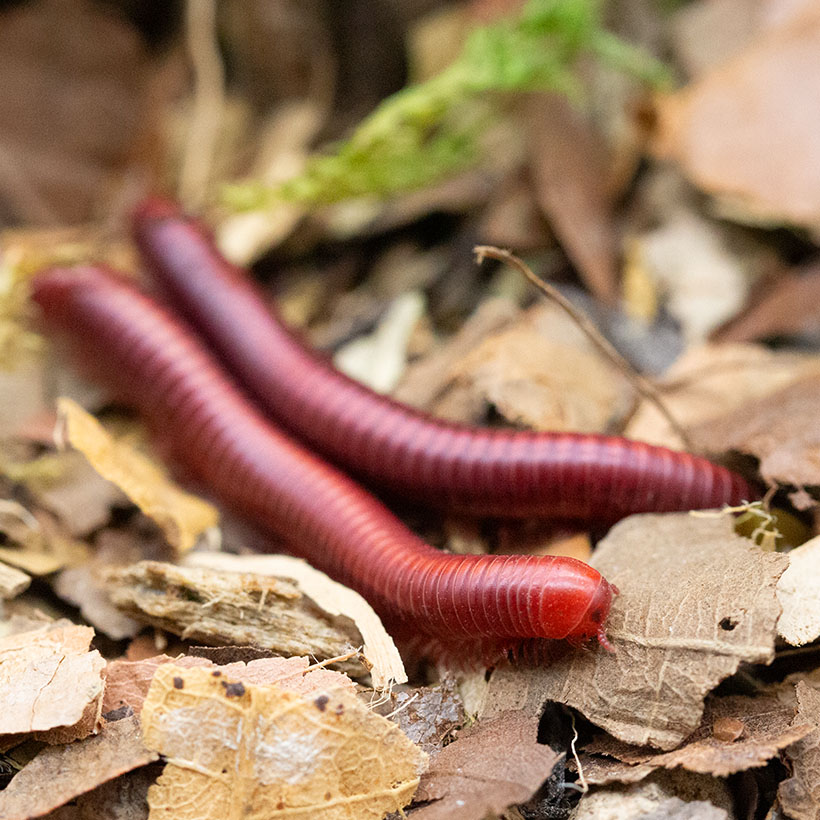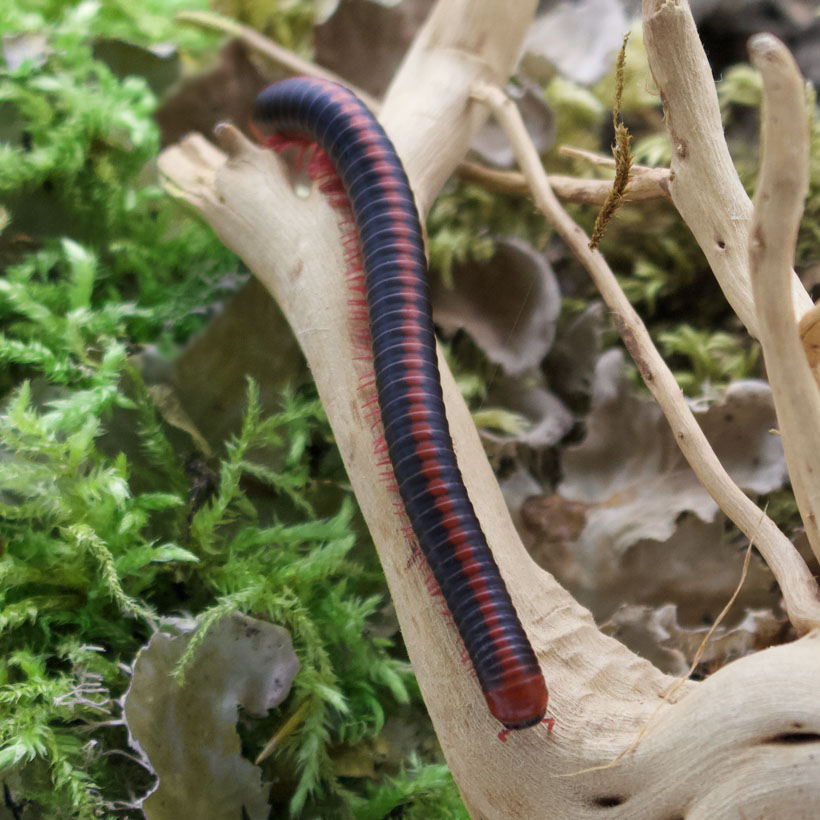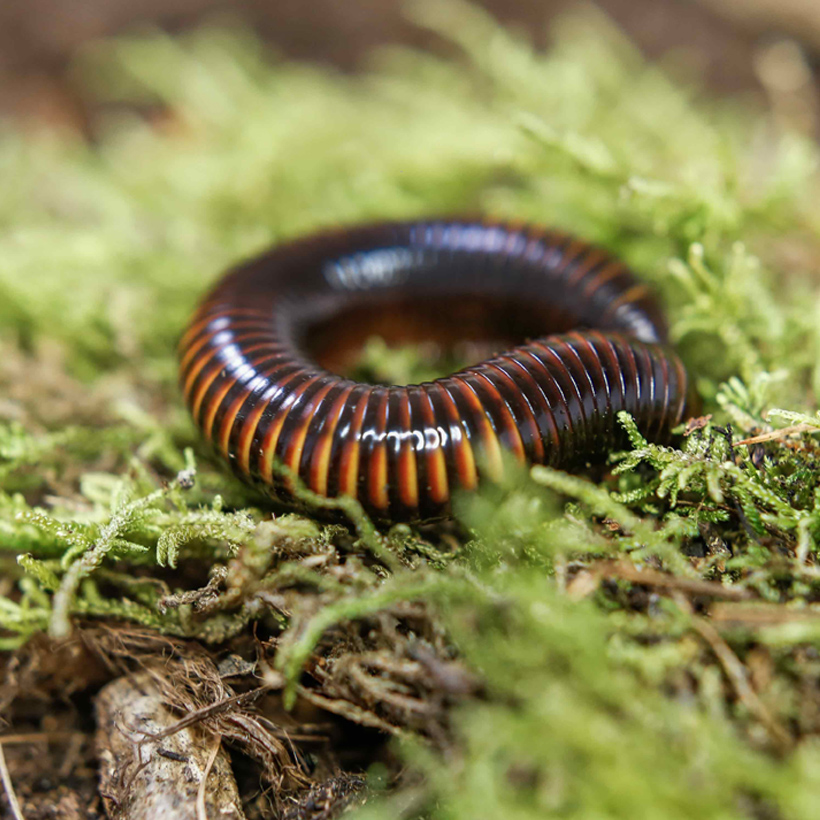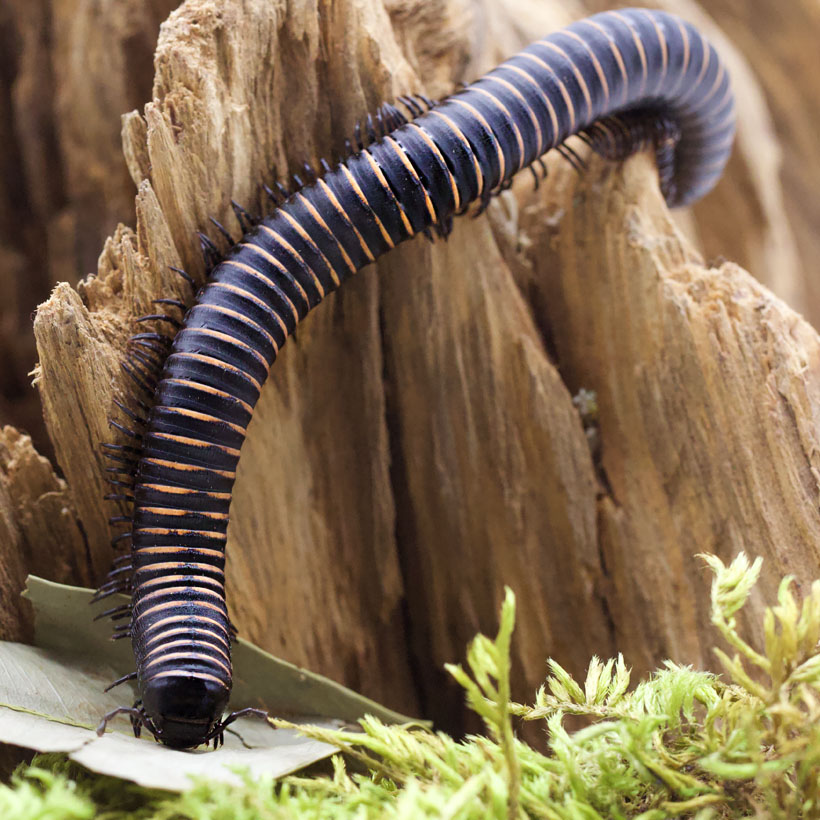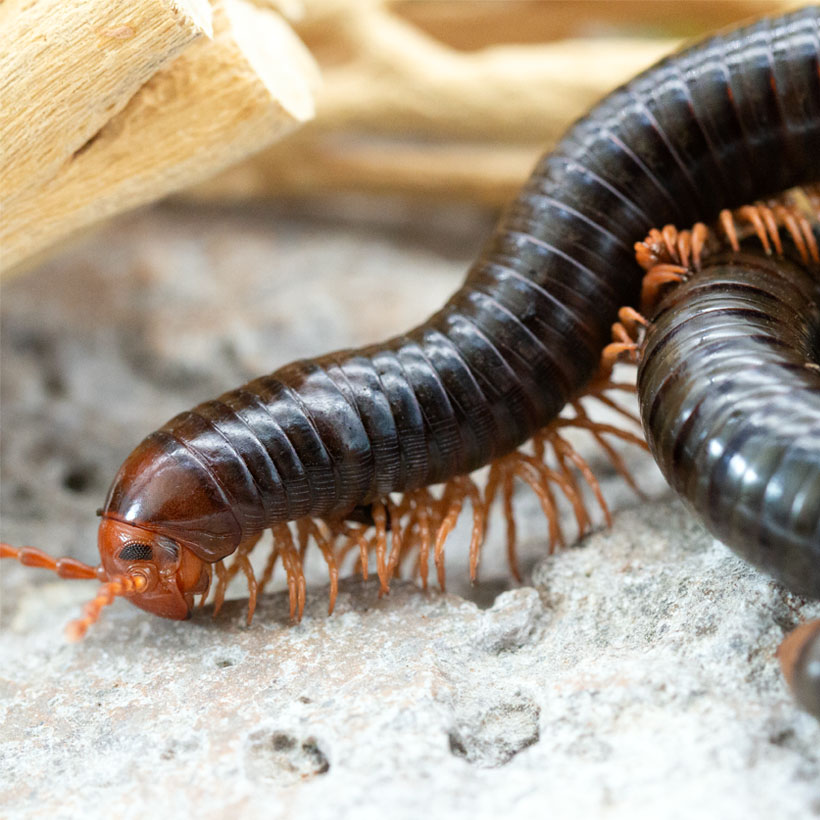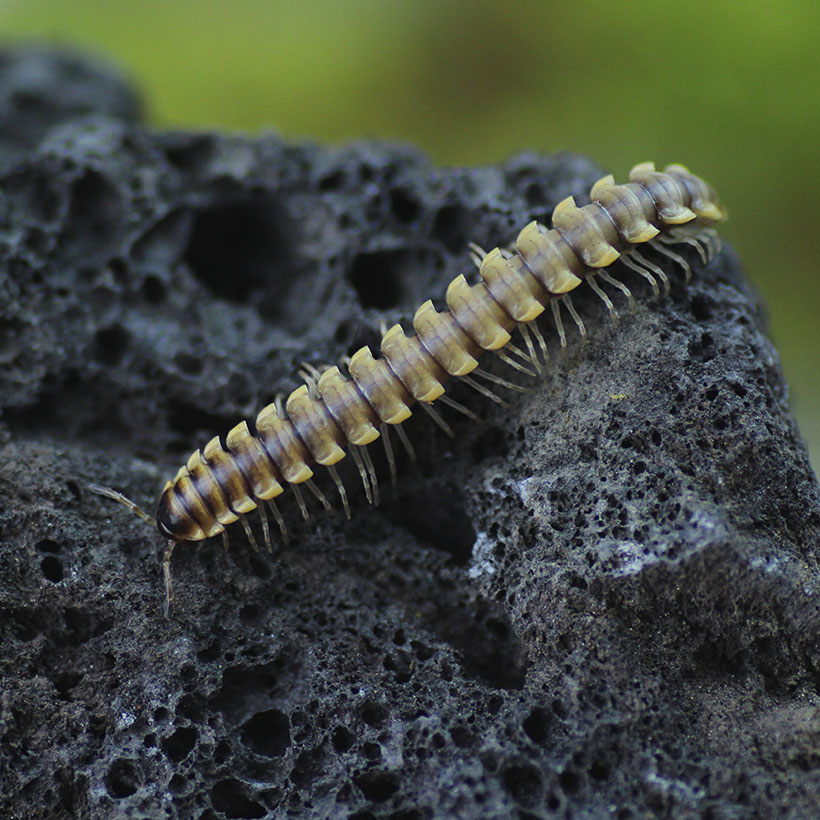


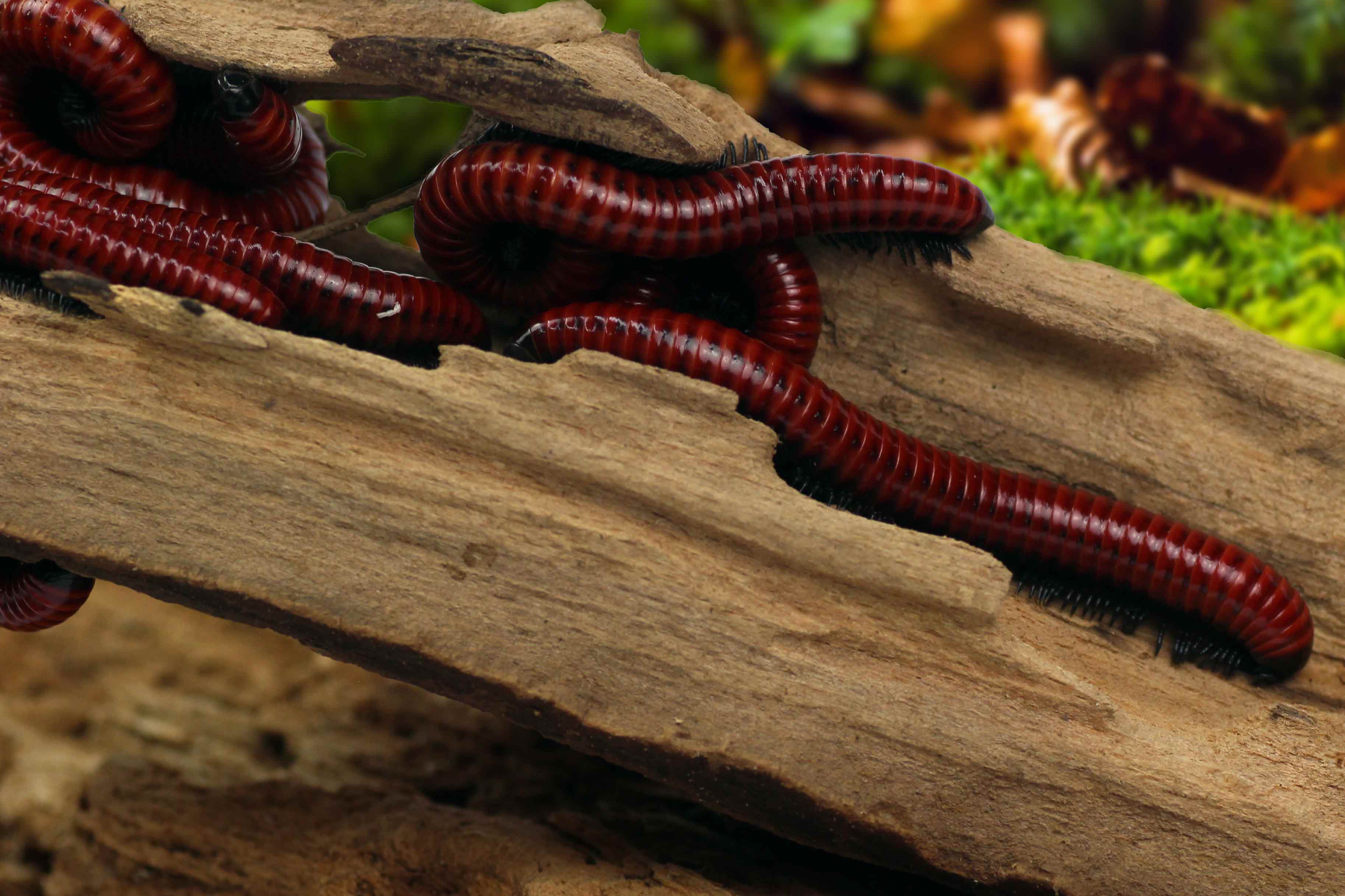
| Name | Tonkinbolus caudulanus |
| Order | Spirobolida |
| Family | Pachybolidae |
| Subfamily | Tonkin bolus |
| Origin | Thailand, Vietnam, Laos, Myanmar |
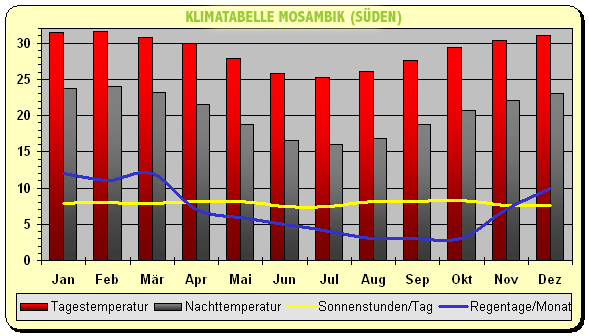
| Temperature | 23-26 °C during the day, 21-24 °C at night |
| Size | Length up to 13cm, width 5mm, segments ? |
Behavior:
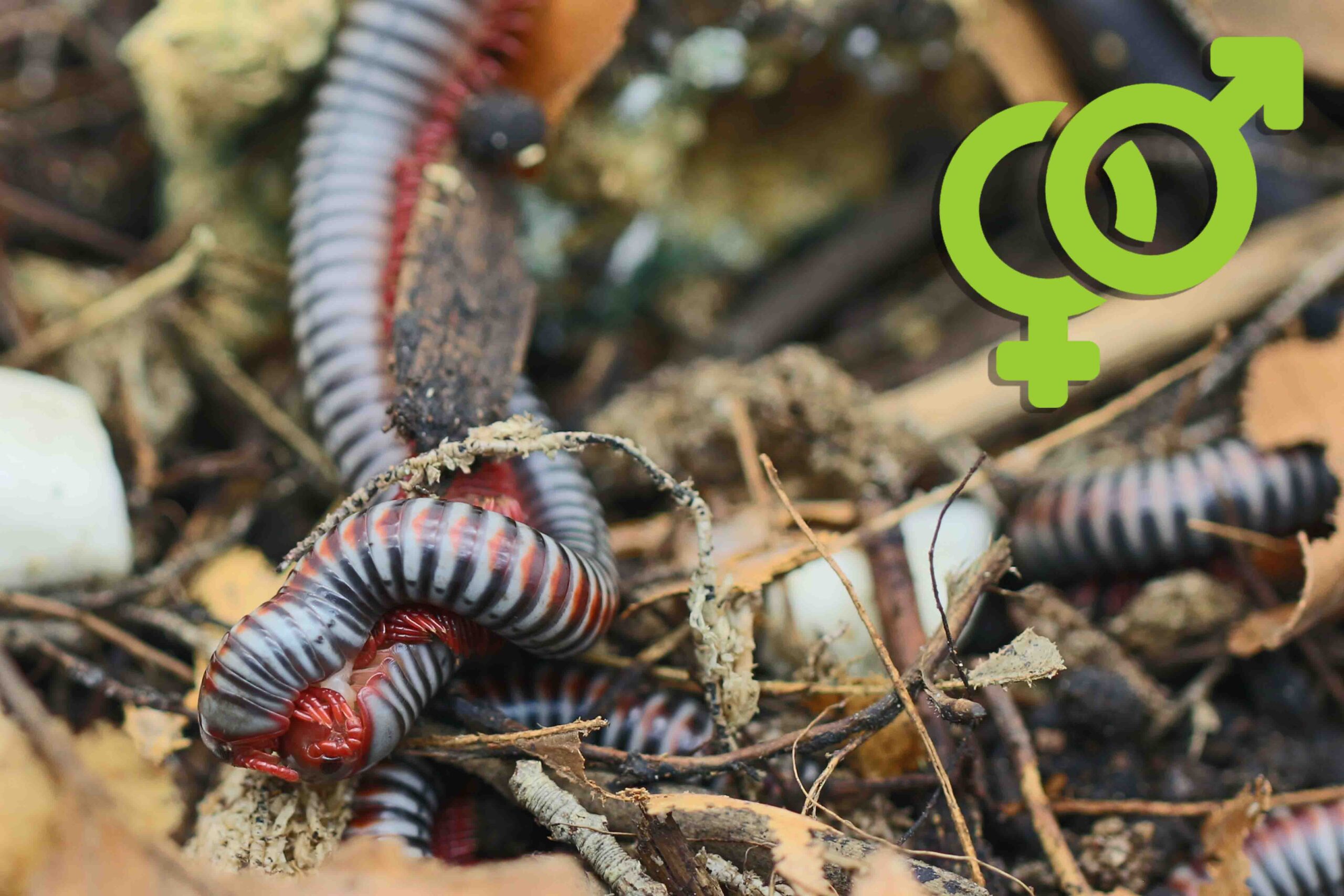
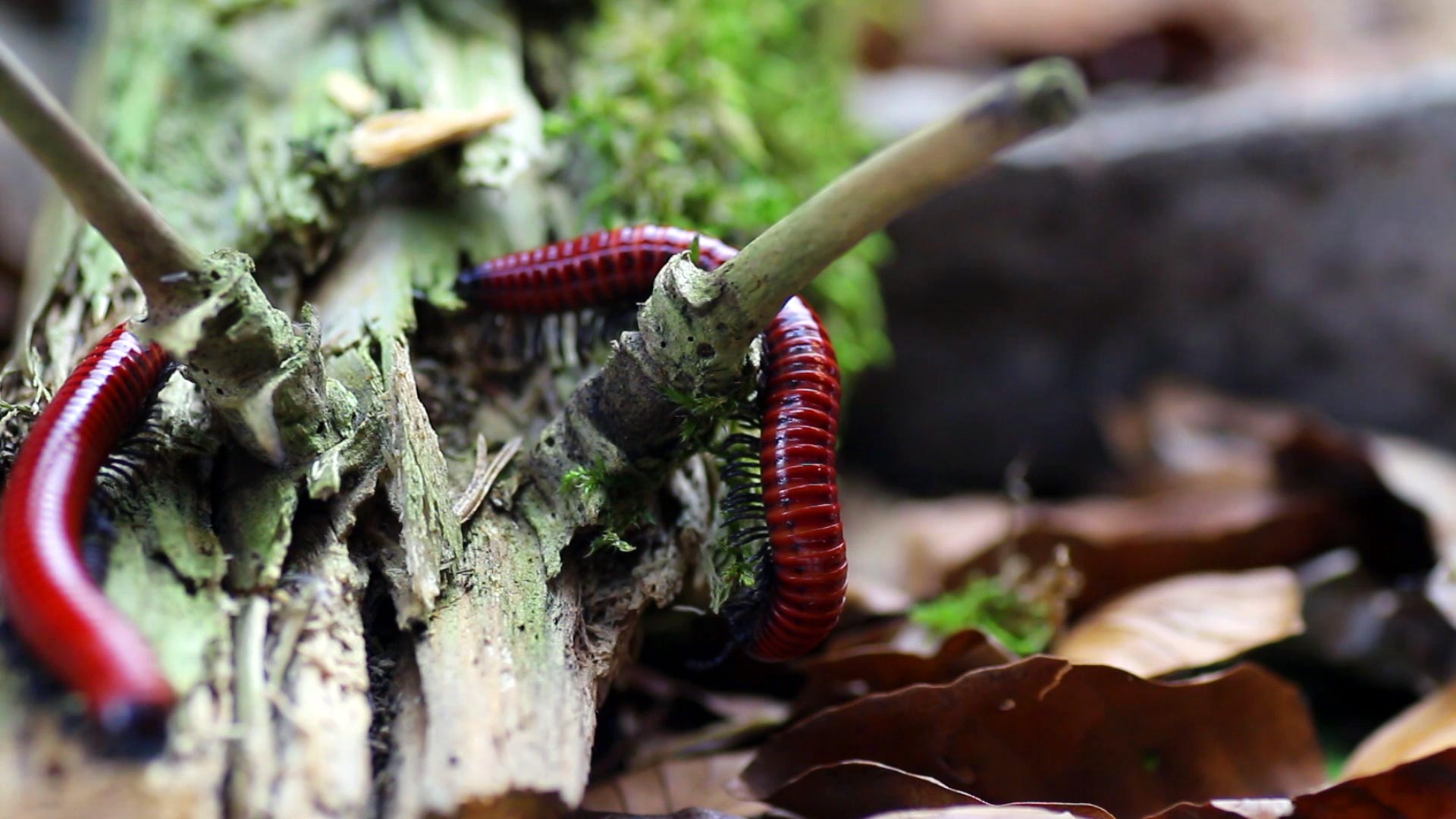
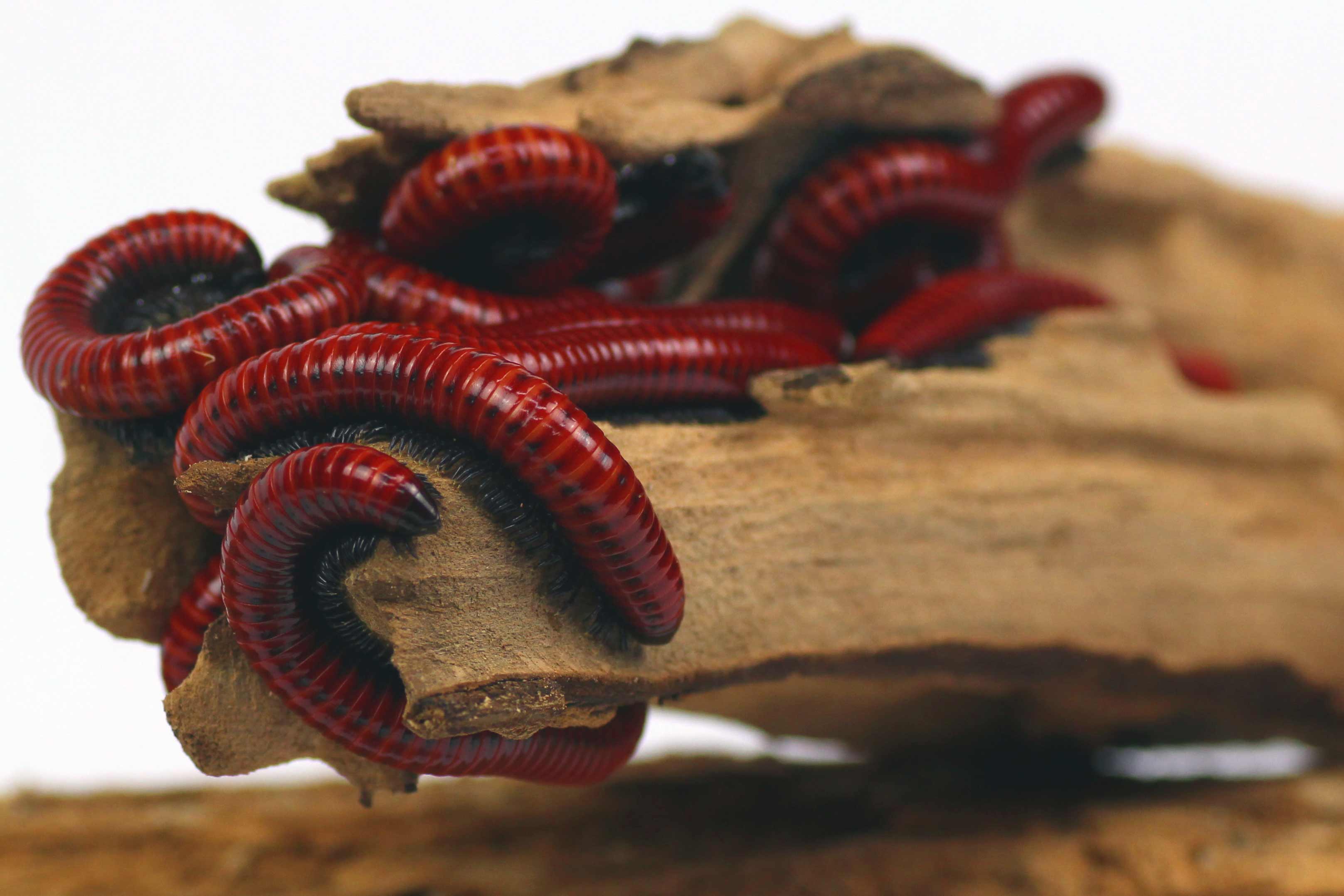
Tonkinbolus caudulanus is a great starter species that thrives almost on its own. They are very social and like to sit together in damp places, preferably under pieces of bark. It is generally noticeable that they often occur in groups. I therefore advise you not to keep this species individually.
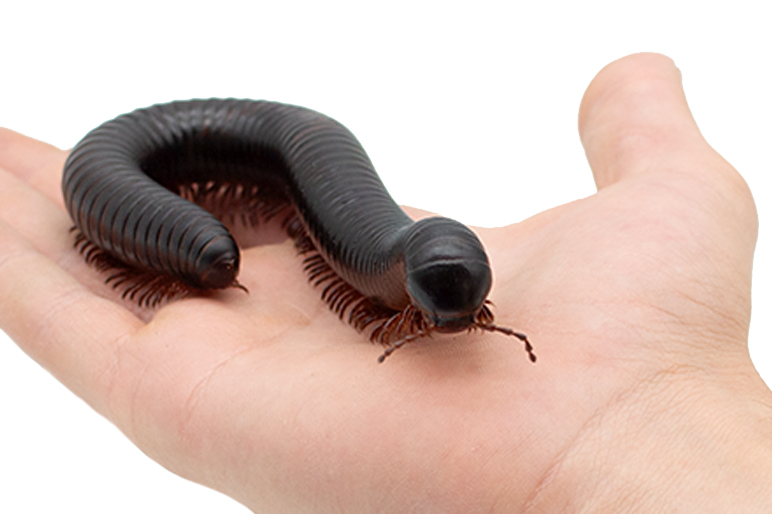
Sometimes you want to hold your animals in your hand. Be it to recognize the sex or to check whether everything went smoothly during moulting. Tonkinbolus caudulanus behaves in a very relaxed manner. It is therefore also very suitable for taking a few nice photos in peace. Secretion is very rarely secreted.
Container:
Up to 10 Tonkinbolus caudulanus can be kept in a container measuring 40 cm x 30 cm x 30 cm. The substrate height should be at least 10 cm so that the animals can burrow into it without any problems. This is particularly important during the moulting phase, as the animals moult in the forest leaf humus.
If you use a plastic box, you should drill sufficient air holes in the container. It should be ensured that a humidity of 70-90% can be kept constant.
A large, well-dried piece of bark from a deciduous tree is often used as a hiding place.
Breeding:
Even if not all the husbandry parameters are right, you can expect Tonkinbolus caudulanus to produce offspring.
It is advisable to leave the larvae in the box of the adults and let them grow up, as they feed on the feces of the older animals, especially at the beginning.
Special Features:
Unlike other species of diplopods, they eat virtually no vegetables!
Fruit, especially bananas and apples, is eaten occasionally. Therefore, it’s best to feed smaller pieces to prevent mold from growing in the terrarium.
To meet this need, they consume a great deal of protein in the form of protein pearls. Although Centrobolus spec. “Mozambique” is a relatively small species, it is the one that consumes the most protein in our aquarium. The young also feed on the protein in the substrate and readily consume large amounts of granules.
Tip: When switching to a new protein-based food, make sure there are no more larvae in the food bowl.