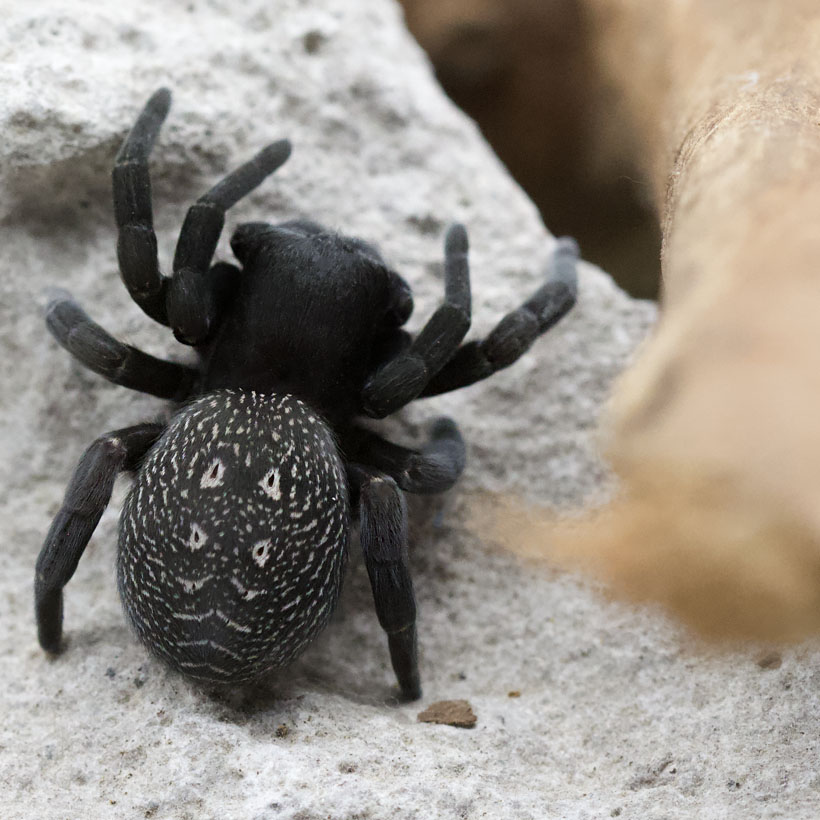
Gandanameno spec.
Price range: 28,00 € through 60,00 € incl. VAT, plus shipping

Simple

South Africa

< 30 mm

24°C – 28°C
Gandanameno spec: The black velvet spider – A communal jewel
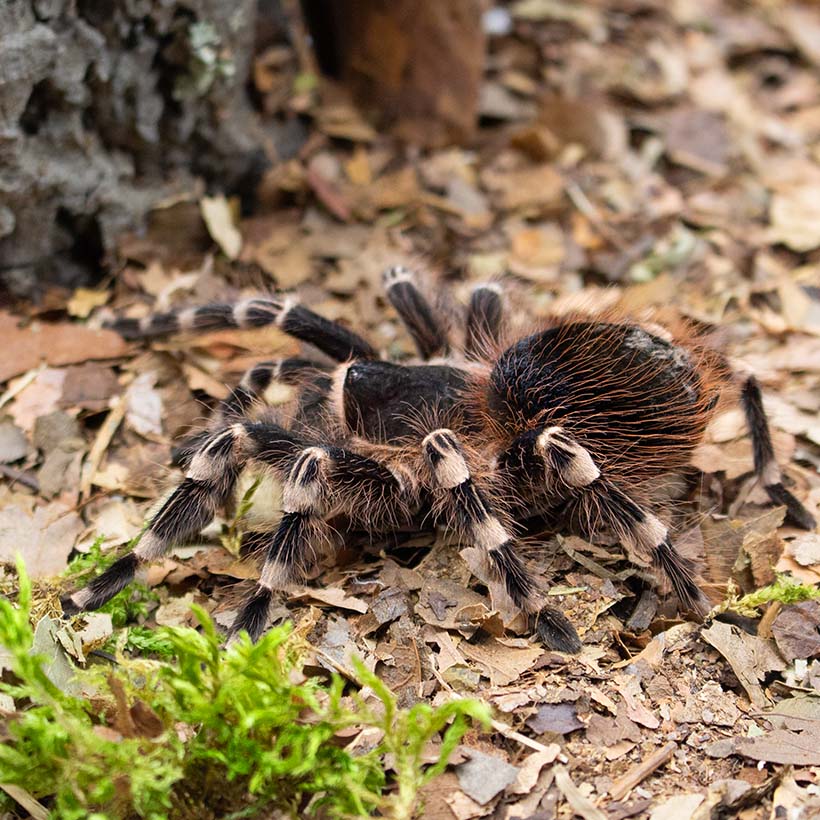
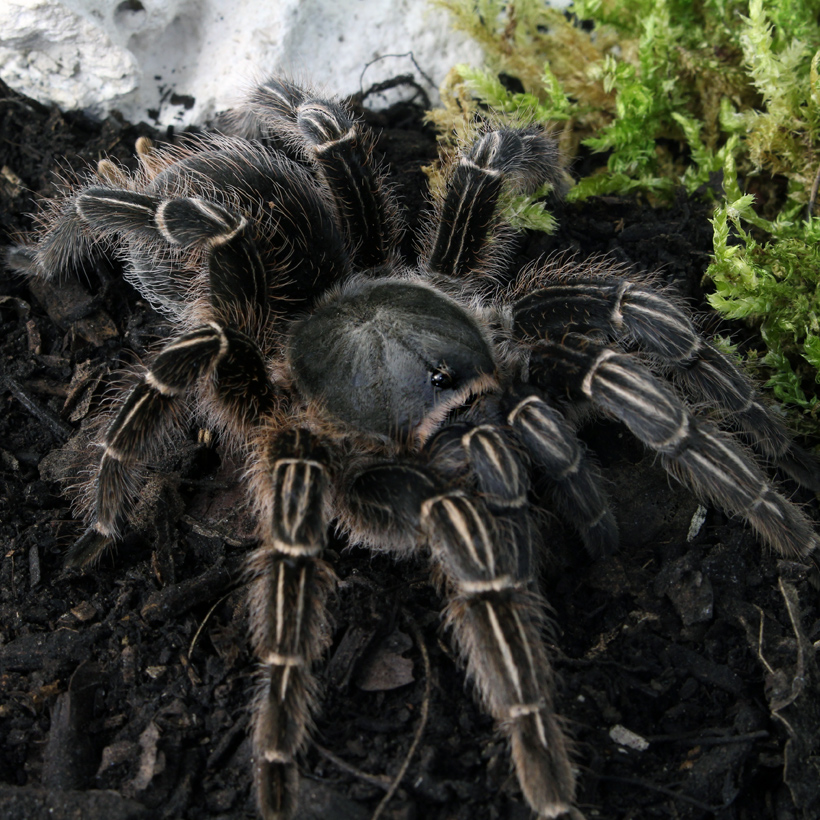
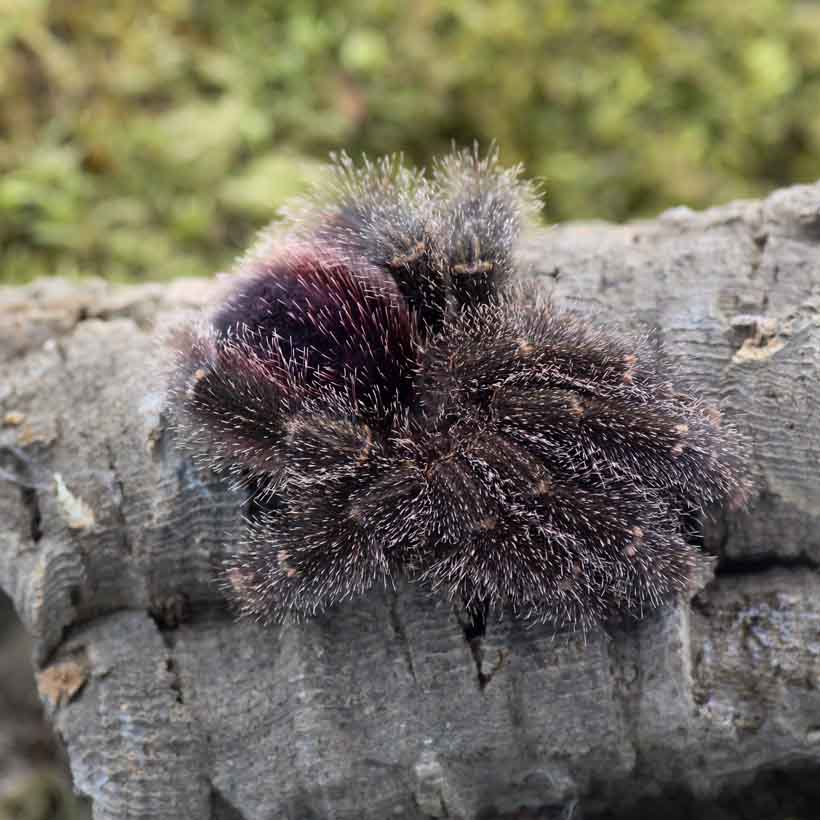
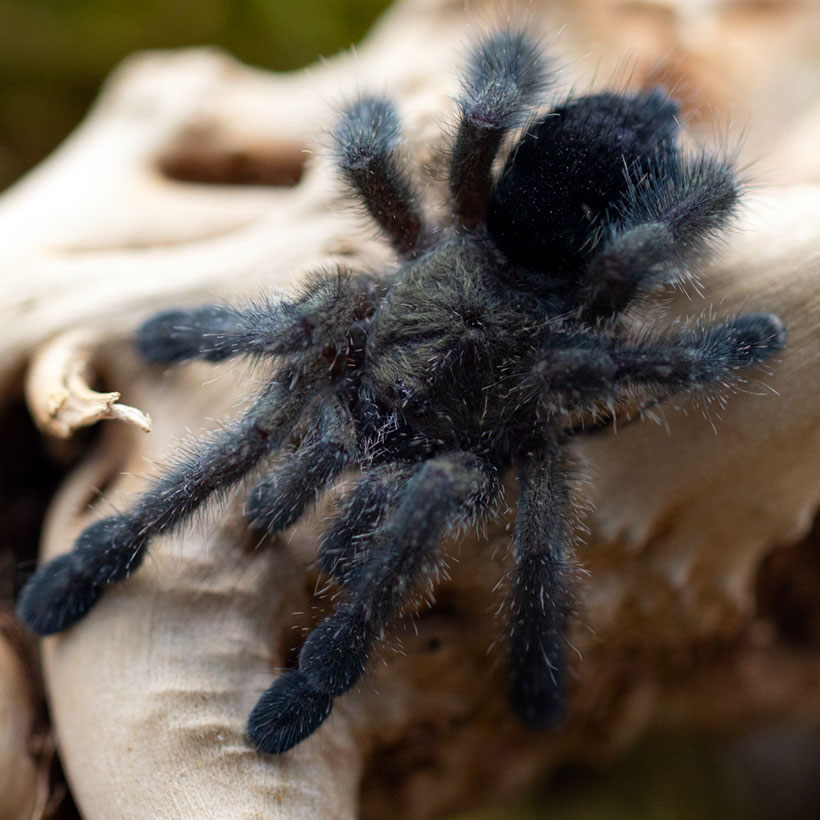
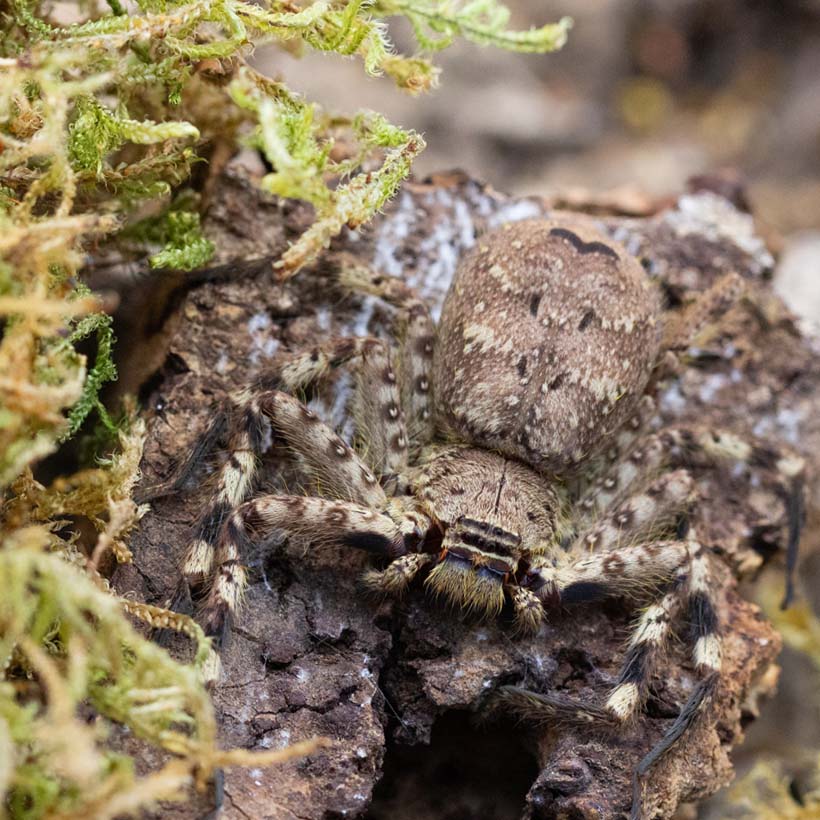
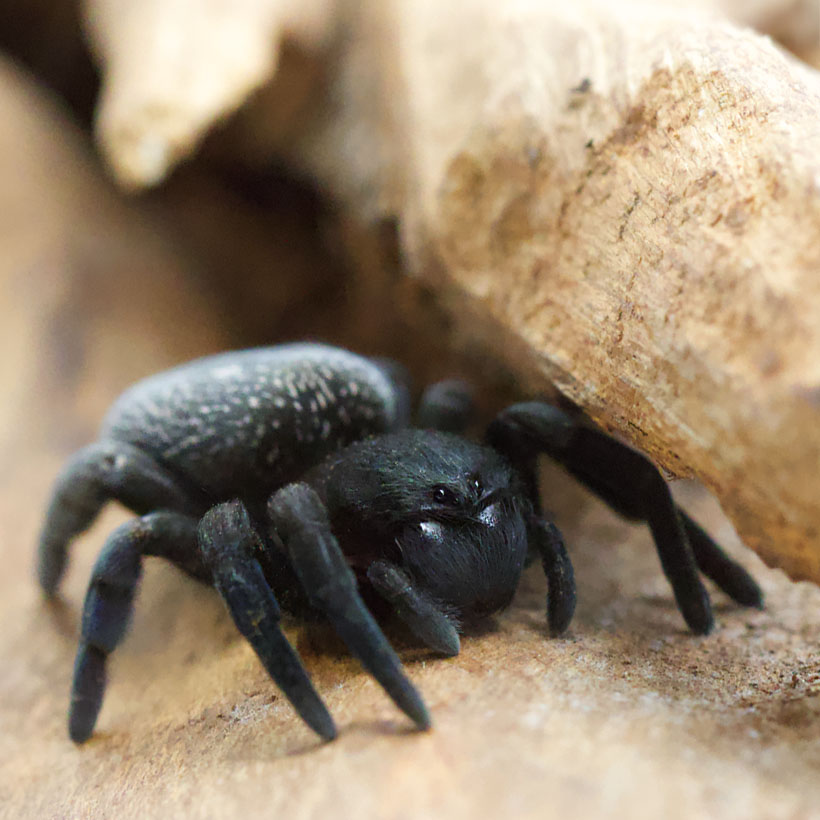
Gandanameno spec. is a member of the tube spider family, which is particularly characterized by its social characteristics and unique appearance. Native to Africa, this spider is popular not only for its fascinating behavior, but also for its visual resemblance to small, thick black brambles. The basic black coloration with white dots on the plump abdomen and a slight bluish shimmer when exposed to light give it an unusual appearance.
The Gandanameno spec. lives in a dry and warm habitat and feels most comfortable at temperatures between 24°C and 28°C. It meets its fluid requirements mainly through its prey, which is why the floor in its terrarium should remain dry for the most part, apart from occasional, light moistening.
With a body length of up to 3 cm, the black velvet spider remains rather small, with the males only growing to around half the size of the females.
The females of this species can live up to five years and are sexually mature after about 2.5 to 3 years, while the males grow up faster and have a shorter lifespan.
Unique to the Gandanameno spec. is their ability to be kept in groups, which makes it possible to rear several animals together. They live communally, with young spiders initially creating their living tubes close to each other, but later each spider claims its own small zone in the communal terrarium. In contrast to other tube spider species, the females do not die by matriphagy after brood care, which offers the possibility of several successful cocoon deposits per female.
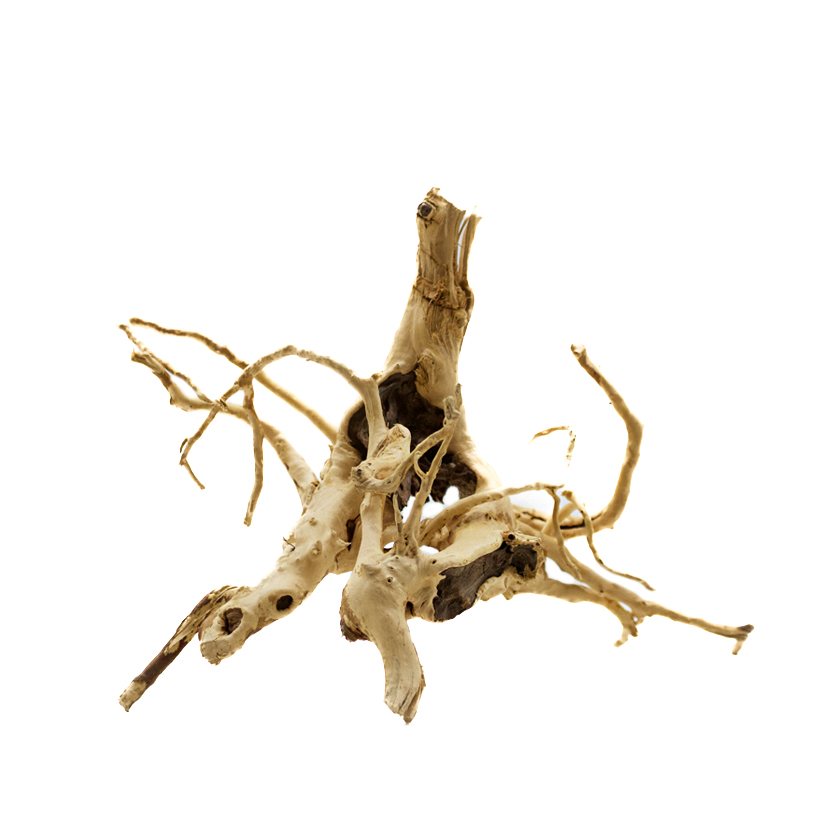
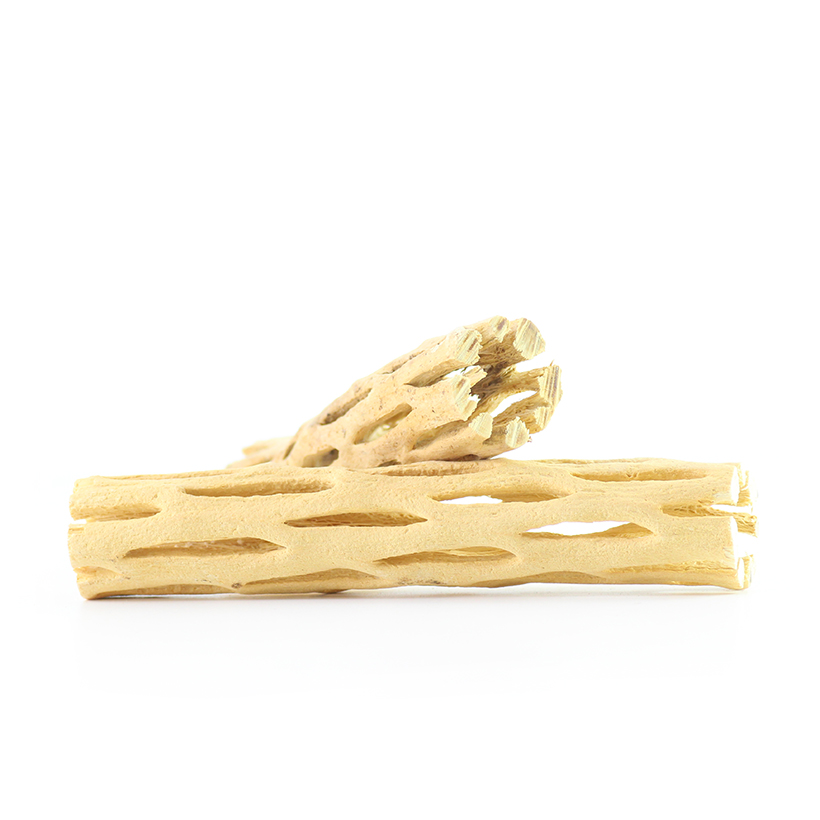
Cork tubes are particularly suitable for furnishing the terrarium, as the spiders like to use these for their burrows. Alternatively, the terrarium can also be attractively decorated with dry grasses, tillandsias and branches to simulate the spiders’ natural habitat.
Crawling insects such as cockroaches, crickets, crickets or grasshoppers, which should be about the same size as the spider itself, are recommended as food. Feeding takes place about once a week, with the spiders taking a break from feeding around the moulting phases.
If you are looking for a fascinating and visually appealing terrarium dweller that also exhibits interesting social behaviors, the Gandanameno spec. is an excellent choice.