Sale!

Annam Stick Insect
Original price was: 12,00 €.9,00 €Current price is: 9,00 €. incl. VAT, plus shipping
Sales Unit: 4 animals
Sales Unit: 4 animals

Simple

Vietnam

< 120 mm

22°C – 24°C
Medauroidea extradentata – the Annam stick insect from Vietnam
Medauroidea extradentata is one of the best-known and easiest-to-care-for stick insects in the terrarium hobby. Native to Vietnam, this species is also known as the Annam stick insect or the Vietnamese stick insect and is an excellent choice for beginners in the hobby of keeping phasmids.
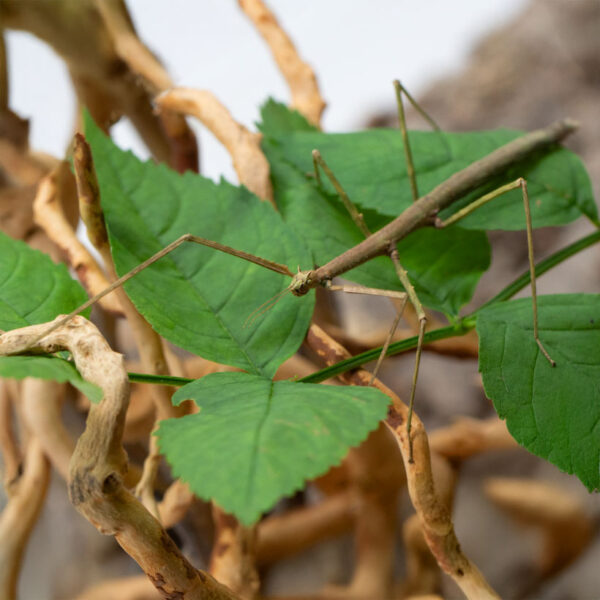
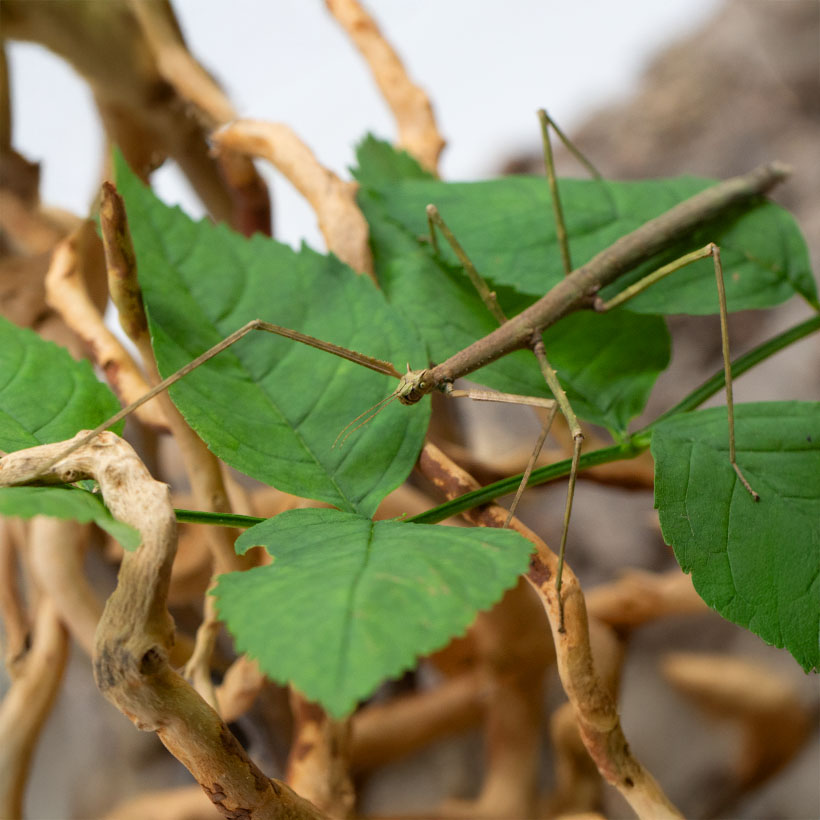
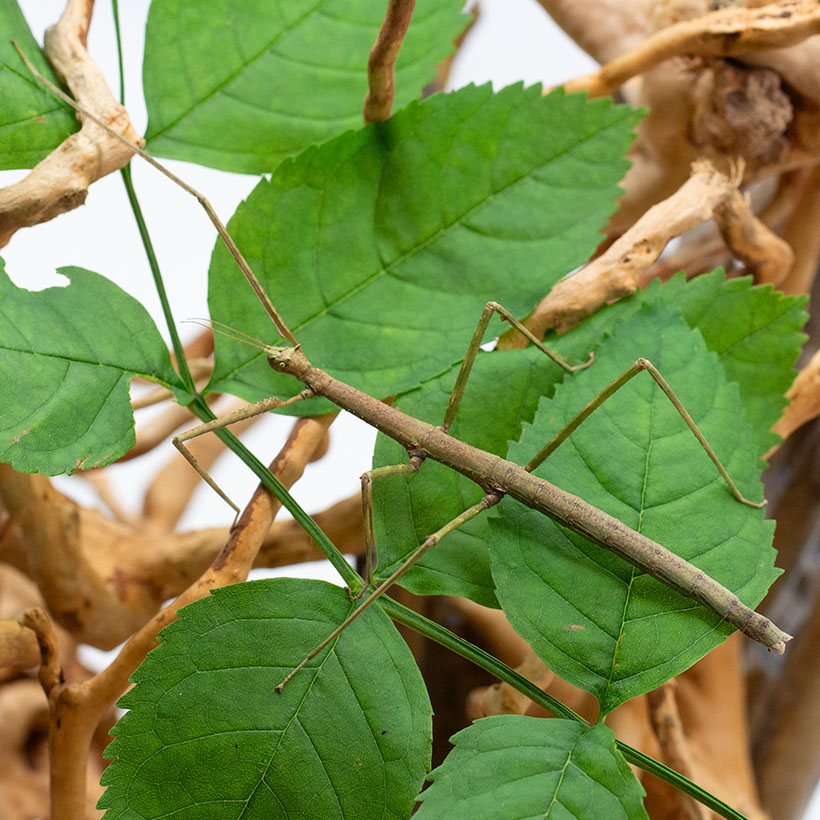
With its long, slender body, it bears a striking resemblance to a dry twig. This perfect camouflage is called astmimese. When Medauroidea extradentata sits motionless among its food twigs, you sometimes have to look twice to spot it at all.
Yet this species is peaceful, can be kept well in groups, and does not require extreme climatic conditions. Its reproductive behavior is also particularly fascinating: females can produce offspring even without males.
Medauroidea extradentata is native to Vietnam
The Annam stick insect is native to Vietnam. The older name, Baculum extradentatum, therefore still appears frequently in older books and husbandry reports.
Today, the recognized scientific name is Medauroidea extradentata (Brunner von Wattenwyl, 1907).
The species belongs to the order Phasmatodea and has adapted exceptionally well to life among twigs and leaves.
It relies primarily on its camouflage rather than on active defense.
Females grow significantly larger than males
In *Medauroidea extradentata*, the sexes are clearly distinguishable from one another.
Females reach a body length of approximately 10–12 cm and have a noticeably sturdier body. In addition, females have small, horn-like projections on their heads.
Males remain considerably smaller and slimmer, at about 7–8 cm. They also have longer antennae.
Both sexes are wingless.
Their coloration can vary between different shades of brown, gray, and green. This allows the animals to blend in exceptionally well with twigs and vegetation.
A true master of camouflage
If the Annam stick insect is disturbed, it often remains completely still.
As she does so, she stretches her legs along her body in such a way that her entire silhouette resembles a twig even more.
In addition, when danger approaches, the animals can freeze in place and let themselves fall. This combination of camouflage and immobility protects them from predators.
Another survival strategy is to shed a leg. That’s why you should never hold onto or lift a Medauroidea extradentata by one of its legs.
Younger animals, in particular, can partially regenerate lost limbs through subsequent molts.
22–24 °C is usually perfectly sufficient
One of the major advantages of this species is its undemanding temperature requirements.
An established European care guideline specifies 22–24 °C as the appropriate range. At night, the temperature may drop by a few degrees, but should not, if possible, fall below approximately 19 °C for extended periods.
This means that these animals can be kept in many living rooms without the need for a strong additional heat source.
Other care reports also show that Medauroidea extradentata tolerates a relatively wide temperature range. Extreme heat is therefore just as unnecessary as keeping the environment consistently very cool.
Fresh air is more important than extreme humidity
When it comes to humidity levels, the values reported for Medauroidea extradentata vary surprisingly widely.
For this reason, I would not base care guidelines on a single percentage value.
Regular access to water and very good ventilation are essential. The animals drink water droplets from leaves and other surfaces.
You can therefore lightly mist the food plants with water. However, the terrarium should be allowed to dry out again afterward.
You should avoid waterlogging, permanently wet substrate, and stagnant, humid air.
A tall terrarium is particularly important
For stick insects, it’s not just the floor area that matters.
Much more important is sufficient height to allow for safe molting.
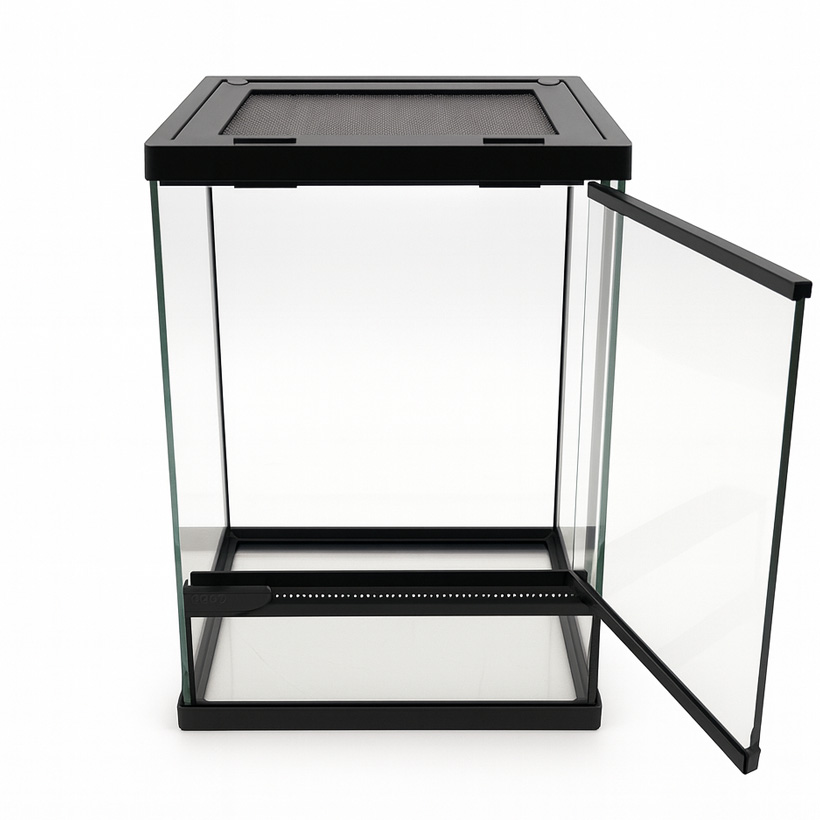
For a small group, for example, a terrarium measuring approximately 30 × 30 × 40 cm is suitable. More height and additional space are, of course, advantageous, as they make it much easier to accommodate even large food branches.
The terrarium should also have ample ventilation openings.
Molting requires open space
Like other insects, Medauroidea extradentata grows through several molts.
To do this, the stick insect clings to a twig or another suitable surface and pulls itself downward out of its old skin.
Therefore, there must be sufficient free space beneath the animal.
As a general guideline, there should be enough space—roughly twice the snake’s body length —under a potential shedding spot.
A terrarium crammed full of branches is therefore not automatically better. Food branches and decorations should be arranged so that there are still enough open areas for molting.
Blackberry leaves are the perfect staple food
Feeding Medauroidea extradentata is straightforward.
Blackberry leaves have proven particularly effective. Blackberries also have the great advantage that, in sheltered locations, green leaves can often be found even in winter.
In addition, the following plants, among others, are considered suitable:
- Blackberry
- Raspberry
- Rose
- Oak
- Hawthorn
- Hazel
Fresh branches should be available at all times, if possible.
It is also very important that the plants have not been treated with pesticides. Roses from bouquets or of unknown origin are therefore not a good choice.
Feeding branches stay fresh longer in water
To keep the leaves from drying out too quickly, you can place the cut twigs in a container of water.
The opening must be secured so that no animals can fall into it.
This is especially important for newly hatched nymphs.
This keeps the leaves fresh longer and, at the same time, creates a natural habitat made up of real food plants. The animals can eat, sit, and molt on them.
Peaceful Group Behavior
Medauroidea extradentata is excellent for group housing.
The animals typically do not exhibit problematic aggressive behavior toward one another. This allows you to keep several specimens together in a sufficiently large terrarium.
However, it is important that the stocking density does not become too high.
Too many animals in a confined space make molting difficult and also cause fresh food branches to be eaten up particularly quickly.
With this species in particular, the population can also grow surprisingly quickly.
Offspring Without Males
One of the most fascinating characteristics of Medauroidea extradentata is its ability to reproduce via parthenogenesis.
In this process, females lay unfertilized eggs, from which female offspring can in turn develop.
This is not just an observation from the field of terrarium keeping. The parthenogenetic reproduction of *Medauroidea extradentata* has been well studied scientifically. As a result, the species is even used as a model organism in research.
In many breeding lines that have been maintained for many years, the population consists almost exclusively of females.
The eggs are simply laid
The females do not need a complicated nest.
The eggs are dropped one by one and land on the bottom of the terrarium.
Depending on temperature and rearing conditions, development takes several months. A European management guideline for invertebrates specifies an incubation period of approximately 1.5–3 months, while other breeding reports describe longer development periods.
That’s why you need to be patient with the eggs.
At 25 °C and 60% humidity, eggs of this species have even been successfully incubated under controlled scientific laboratory conditions.
From Nymph to Adult Stick Insect
Newly hatched nymphs already look like tiny versions of the adult insects.
During their development, they undergo several molts. Under suitable conditions, they can reach adulthood in about 4–6 months.
Especially during this growth phase, sufficient space, fresh food, and suitable moulting areas are particularly important.
After the final molt, the adult stage finally begins.
An excellent species for beginners
For those looking to keep phasmids for the first time, Medauroidea extradentata is a particularly interesting species.
It requires no complicated equipment, accepts a variety of readily available food plants, and can be easily observed in groups.
At the same time, it exhibits many fascinating behaviors.
Camouflage, freezing in fear, molting, and parthenogenetic reproduction keep keeping them interesting even over the long term.
That is precisely why the Annam stick insect has been a staple among phasmid keepers for many years.
Advantages at a Glance
- Medauroidea extradentata
- German name: Annam stick insect
- Origin: Vietnam
- Females about 10–12 cm
- Males about 7–8 cm
- Wingless species
- Excellent mimicry of tree branches
- Can be kept peacefully in groups
- Very well suited for beginners
- Can be kept at approximately 22–24 °C without any problems
- Good ventilation is important
- Fresh food branches should be available at all times
- Blackberries are an excellent main food source
- Raspberries, roses, oak, hawthorn, and hazel are also accepted
- Females can reproduce parthenogenetically
- Development to adulthood takes approximately 4–6 months
- A tall container with sufficient space for molting is required
Suitable accessories for your setup
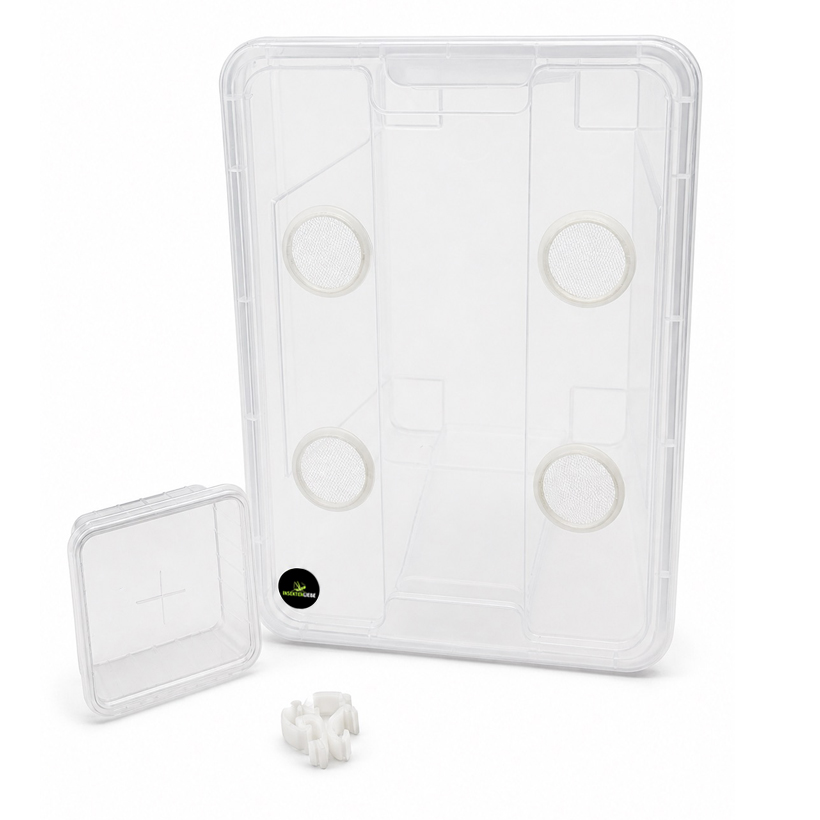
Insektenliebe Phasmida Complete Set – provides a practical starter kit for keeping and breeding Medauroidea extradentata.
Repto Terra Sky – provides ample height for food branches and shedded skins while ensuring proper air circulation.
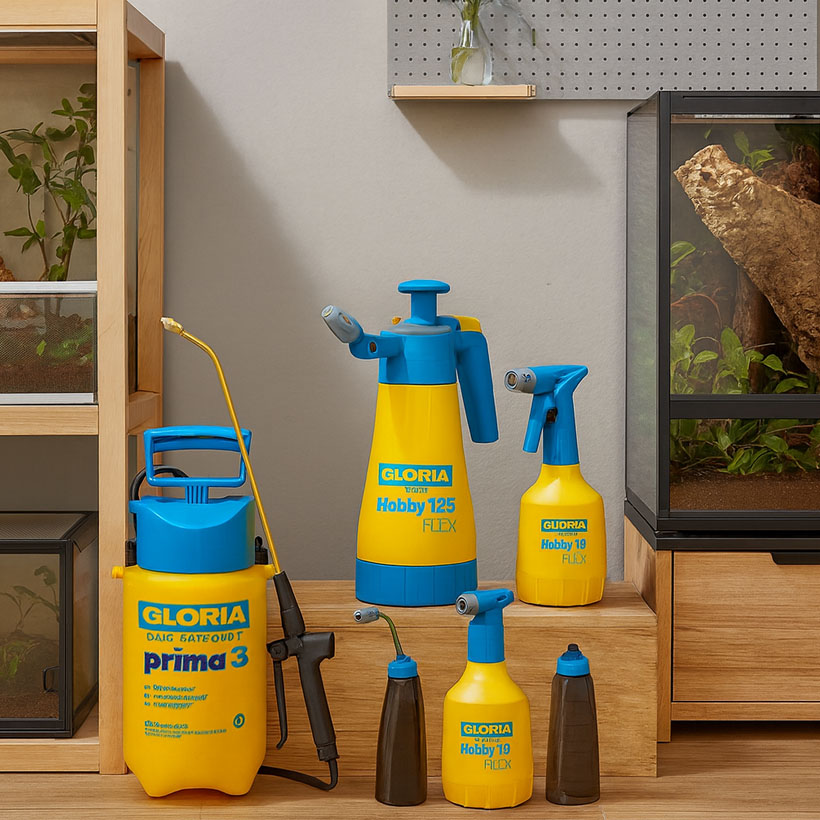
GLORIA pressure sprayers – allow for gentle misting of the food plants so that the animals can drink the water droplets.
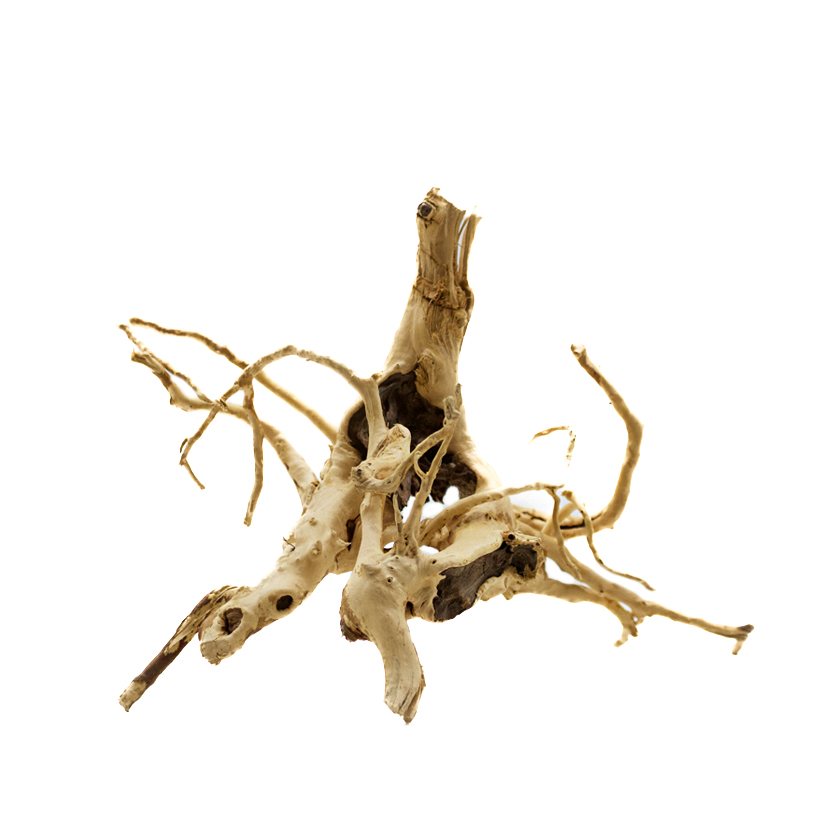
Spiderwood – provides additional climbing, resting, and molting surfaces among the feeding branches.
Species Name Stickers – ideal for clearly labeling the terrarium with the species name and breeding information.
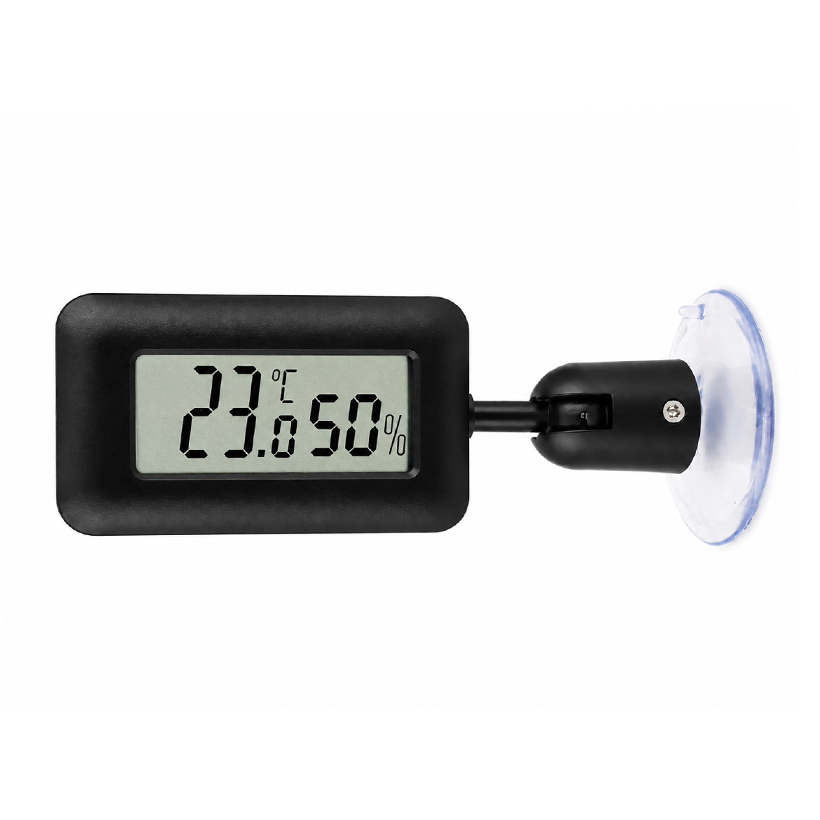
Insektenliebe Hygro-Therm – allows you to control temperature and humidity in the phasmid terrarium.
Conclusion
Medauroidea extradentata is a classic in phasmid husbandry for good reason. The Annam stick insect is peaceful, hardy, and at the same time incredibly fascinating to observe.
This species thrives even at moderate temperatures of about 22–24 °C. Much more important than extreme heat or consistently high humidity are a well-ventilated terrarium, regular access to water, and enough space for safe molting.
Feeding them is also straightforward. Blackberry leaves, in particular, are excellent and can be supplemented with raspberries, roses, oak, hawthorn, or hazel.
Reproduction, however, is particularly fascinating. Medauroidea extradentata can reproduce parthenogenetically, meaning that even a single female can, in principle, produce offspring.
This makes the species ideal for beginners, but its perfect camouflage, molting, and unusual reproductive behavior also make it an interesting specimen for experienced invertebrate keepers to observe.
Perfect combined with
-

Species name” sticker
0,20 € incl. VAT, plus shipping
(from 10 SU = 10% Discount, from 50 SU = 15% Discount, from 100 SU = 20% Discount)