


Whether a tiny spiderling or an adult beauty – feeding your tarantula correctly will ensure a long, healthy life. Here you can find out what should be on the menu, when and how often – with tips straight from our range!
From hunting behavior to feeding animals: Understanding tarantulas correctly
Before discussing specific food animals, quantities and feeding intervals, it is worth taking a look at the way tarantulas live. This is because it largely determines which food is actually perceived and successfully preyed upon. Basically, tarantulas can be roughly divided into three groups: arboreal, ground-dwelling and subterranean species. Tree-dwelling tarantulas mainly live on vertical structures such as bark or branches. They respond particularly well to food animals that fly or actively run upwards. Flying insects such as Drosophilas, gold flies, terflies and blowflies are particularly suitable here, as they optimally trigger the natural hunting behavior. Ground-dwelling tarantulas, on the other hand, hunt directly on the substrate or from their hiding places. Food animals that move mainly on the ground and do not immediately move upwards are ideal for them. Oven fish and crickets have proven to be particularly reliable here. Tarantulas that live underground spend a large part of their lives in burrows they have dug themselves. They usually leave these at dusk or at night to hunt prey. It therefore makes sense to use food animals that run into the burrows, such as cockroaches, which move quietly, close to the ground and at the appropriate times of day.
If you take these fundamental differences into account, you create the perfect basis for successful, low-stress feeding – regardless of whether it’s a question of “how often”, “with what” or “when”.
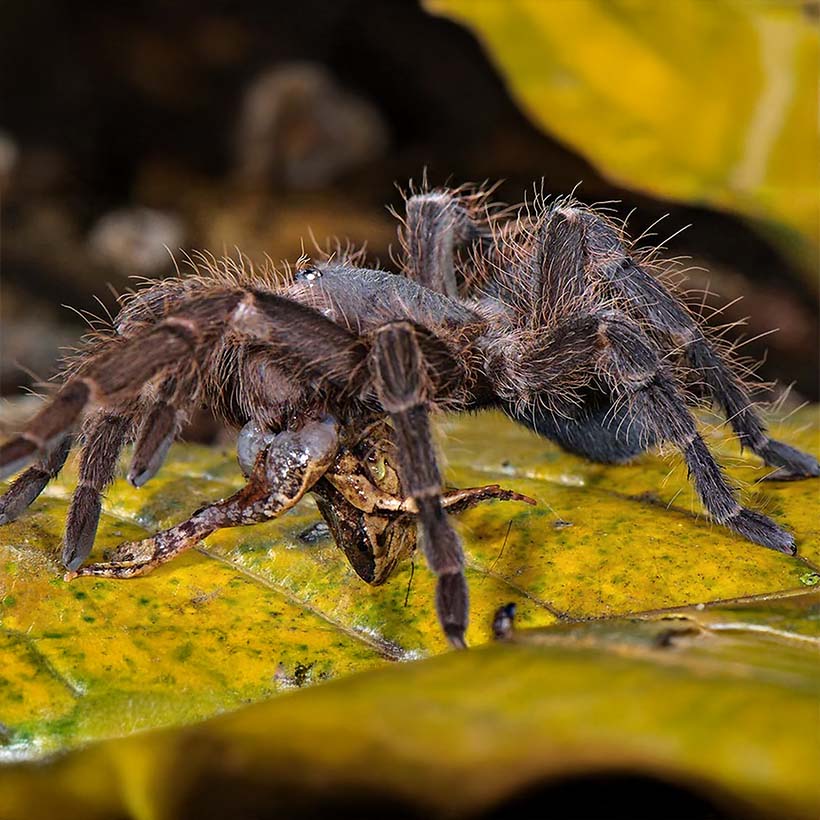
Feeding small tarantulas – mini but hungry
Newly hatched tarantula babies, so-called spiderlings, need to be fed regularly, but in very small and easily controllable portions.
Spiderlings should be fed two to three times a week during this phase. Regular, small meals support even growth and help to avoid moulting problems without overtaxing the animals.
Small fruit flies (Drosophila melanogaster) are ideal from a body length of around 2 mm. They are active enough to trigger the hunting instinct, but pose no danger to the sensitive young animals.
If the spiderlings continue to grow and reach a size of around 2-10 mm, large fruit flies (Drosophila hydei) or crickets XS can be offered without any problems.
From a body length of around 10-20 mm, cricket S, terfly or oven fish are a very good choice, as they provide more substance and can still be easily overwhelmed.
A tried and tested practical tip: Place a tiny piece of apple in the terrarium when feeding fruit flies, terfly, oven fish or crickets. This keeps the food animals vital and active for longer, which makes hunting easier and at the same time supports a consistently good supply of nutrients for the spiderlings – ideal for healthy growth in the early stages of life.
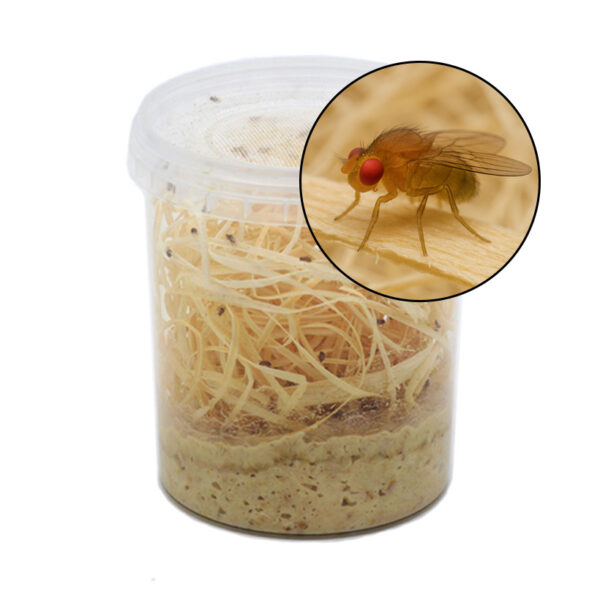
Small fruit fly “Turkish glider”
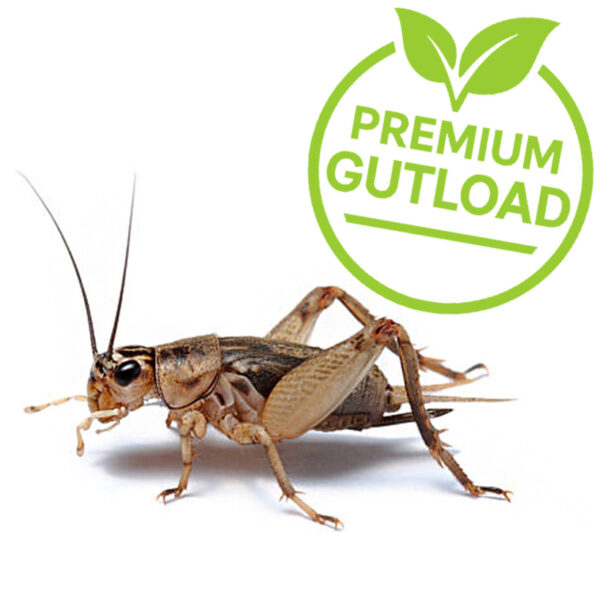
Cricket
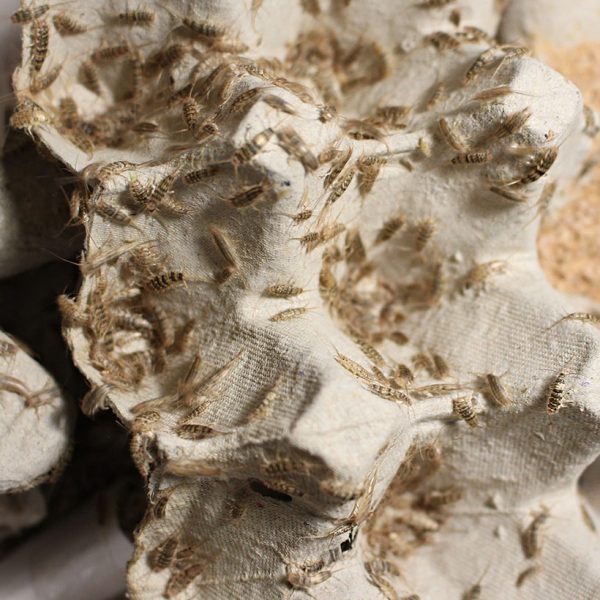
Thermobia domestica “Ovenfish”
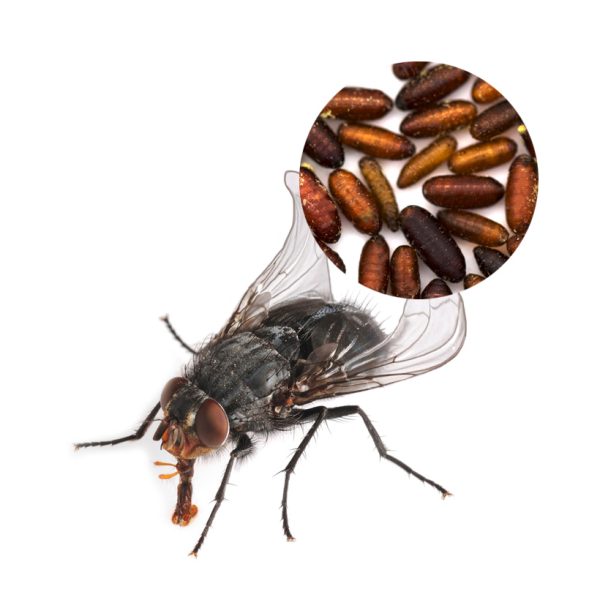
Terfly
Growth phase: variety is required
As soon as tarantulas leave the pure spiderling phase behind them, an important growth period begins. During this phase, the need for nutrients increases and at the same time the animals become more robust and much more confident when hunting. Now is the right time to diversify the food and gradually adjust the size of the prey.
During this growth phase, it is advisable to feed the tarantulas about twice a week. This rhythm supports even growth and ensures sufficient energy between moults without unnecessarily overfeeding the animals.
With a body length of around 20-30 mm, Argentine wood cockroaches in size S, gold flies, blow flies and crickets in size M have proven effective. These food animals already provide significantly more substance without overtaxing the spider. Their movement reliably triggers the hunting reflex and supports active, healthy growth.
If the tarantulas reach a size of 30-40 mm, the portions can be increased further. In this range, Argentine forest cockroaches in size M and crickets in size L are very suitable. The animals are now strong enough to safely overpower larger prey, but still benefit from switching between different food animals.
Variety is particularly important during this growth phase. Different food animals provide different nutrient profiles and promote even development. At the same time, varying prey species makes it easy to observe how active and ready to feed the tarantula is – a valuable indication of its general state of health.
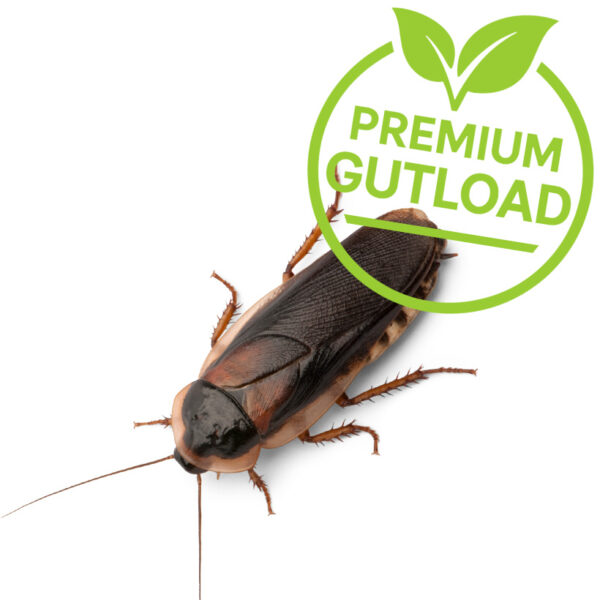
Blaptica dubia “Argentine forest cockroach”
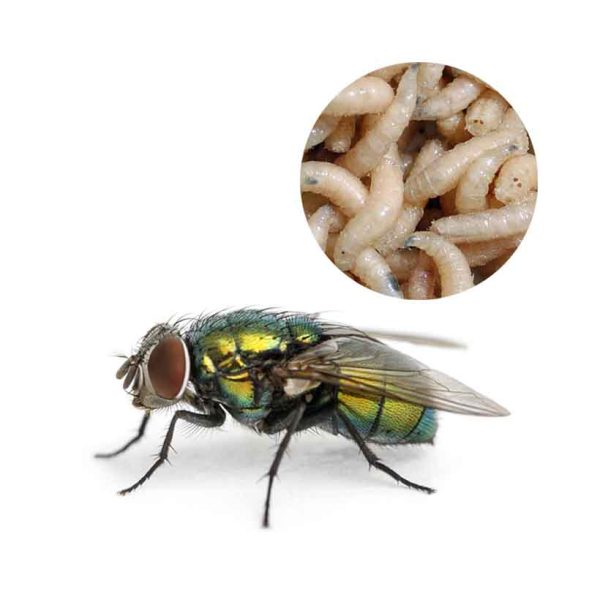
Gold flies
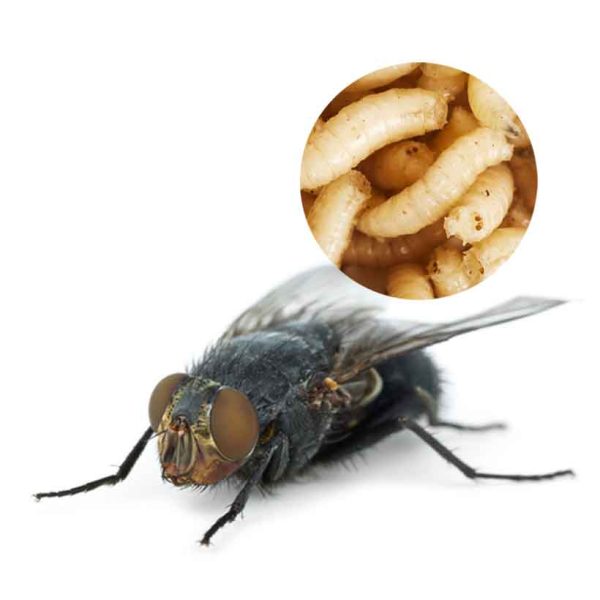
Blowflies
Cricket
Large tarantulas – less is more
Tarantulas are considered fully-grown from a body length of around 40 mm. In this phase, growth slows down considerably, the metabolism works more slowly and the need for food decreases noticeably. Frequent meals are now less important than suitable, nutritious food animals.
With a size of 40-50 mm, Argentine wood cockroaches in size L and crickets L are very suitable. They provide sufficient energy and are easily overpowered by strong animals. From a body length of 50 mm and more, Argentine cockroaches in size XL can be fed. These represent a substantial, species-appropriate prey and are well suited to the natural hunting behavior of large tarantulas.
At this stage, it is perfectly sufficient to feed adult tarantulas only once a week with just one food animal. Longer feeding breaks are completely normal and no cause for concern. It is more important to keep an eye on the condition of the body. A well-proportioned abdomen shows that the spider is optimally fed. Excessive feeding should be avoided as it can lead to a bulging abdomen and thus to an increased risk of injury.
Patience pays off, especially with large tarantulas. Less food, used in a targeted manner, corresponds to their natural rhythm and ensures long-lived, healthy animals.
Blaptica dubia “Argentine forest cockroach”
Cricket
Assessing size instead of blindly trusting
Finally, one point is particularly important, which is often underestimated in practice: Food animals are not always the same size, even if they are assigned to the same size category. Particularly with crickets or cockroaches, there can be significant differences in size after moulting. A freshly molted animal is often softer, lighter in color and sometimes noticeably larger than expected. You should therefore not rely solely on the size information, but always briefly compare the food animal with the tarantula before feeding it.
The tried and tested rule of thumb is:
The feeder should be about a third of the tarantula’s body length.
This size is large enough to provide nutrients and trigger the hunting instinct, but small enough not to pose a danger to the spider. Food animals that are too large can cause stress or, in the worst case, even cause injury, while prey that is too small is often ignored.
If you keep a close eye on your tarantulas, take their way of life into account and adjust the size of their food individually, you will always be on the safe side. In the end, it is not rigid tables but a sense of proportion, experience and calmness that make for successful and species-appropriate feeding.
Important note on moulting – remove food animals in good time
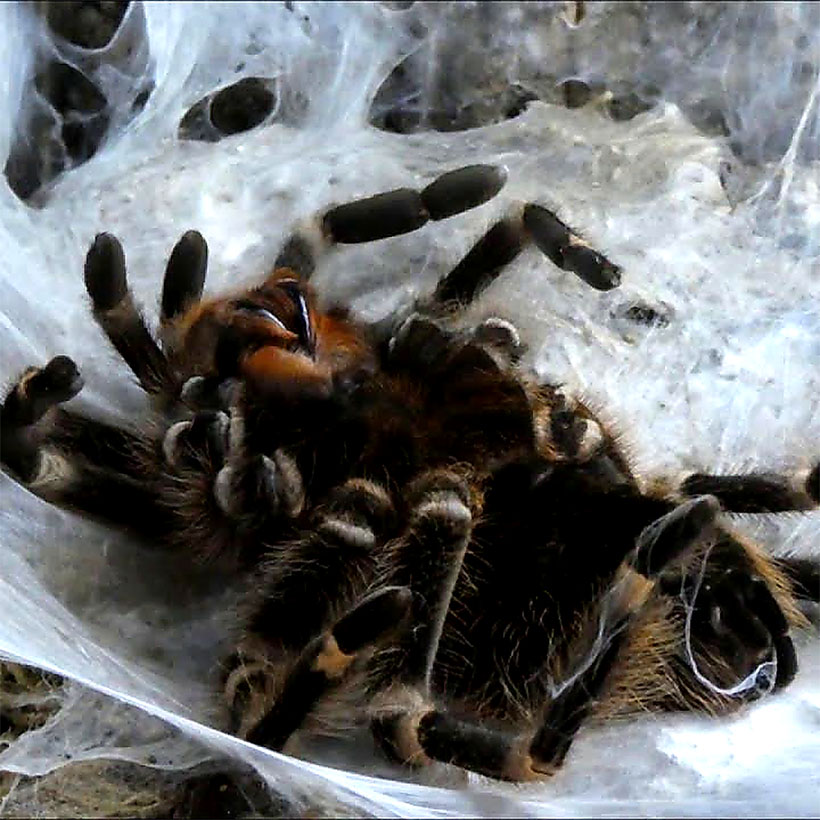
Moulting is a particularly sensitive moment in the life of a tarantula. During this phase, the animal is extremely vulnerable. This is exactly when food animals can become a real danger. Crickets and cockroaches in particular should be consistently removed from the terrarium before a moult. These food animals are not only active, but also opportunistic and can nibble on a defenceless tarantula, eat it or injure it – in the worst case with a fatal outcome.
Other food animals such as fruit flies or oven fish are not considered directly dangerous, but they can still disturb the spider by walking over it or causing it unnecessary stress.
As a general rule, therefore, as soon as a moult is imminent or a spider consistently refuses food, all food animals should be removed from the terrarium. Even after moulting, you should wait a few days until the shell has completely hardened before feeding again. Attention and timely action are crucial here and contribute significantly to a safe and successful moult.
If you have any further questions, please leave them in the comments below the article.
Leave a Reply
You must be logged in to post a comment.