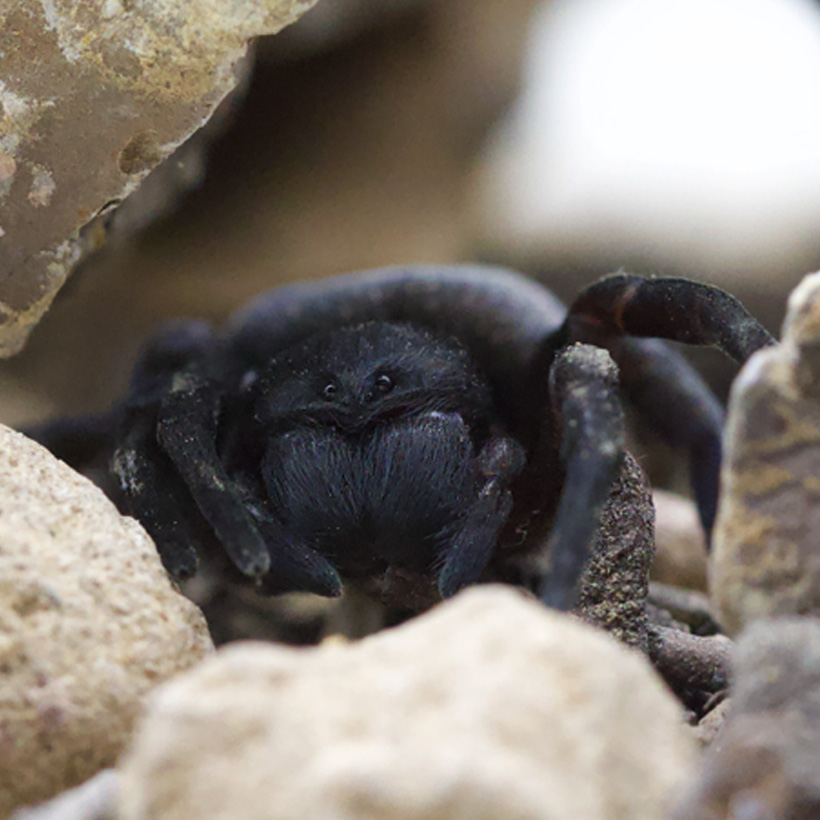


Some spiders fascinate us with their size. Others by their speed. Eresus species, on the other hand, are fascinating because they seem to ignore all the “rules” of the spider world. Anyone who takes a closer look at these animals soon realizes that they are not just about beautiful colors, but about a concept of life that is extreme, strange and almost emotional in many respects.
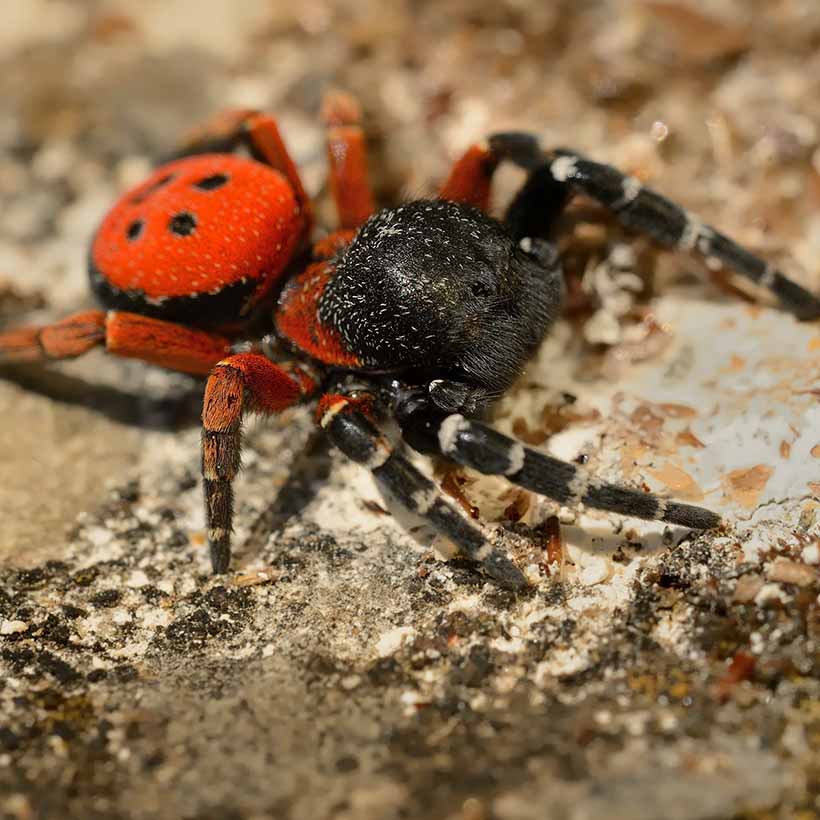
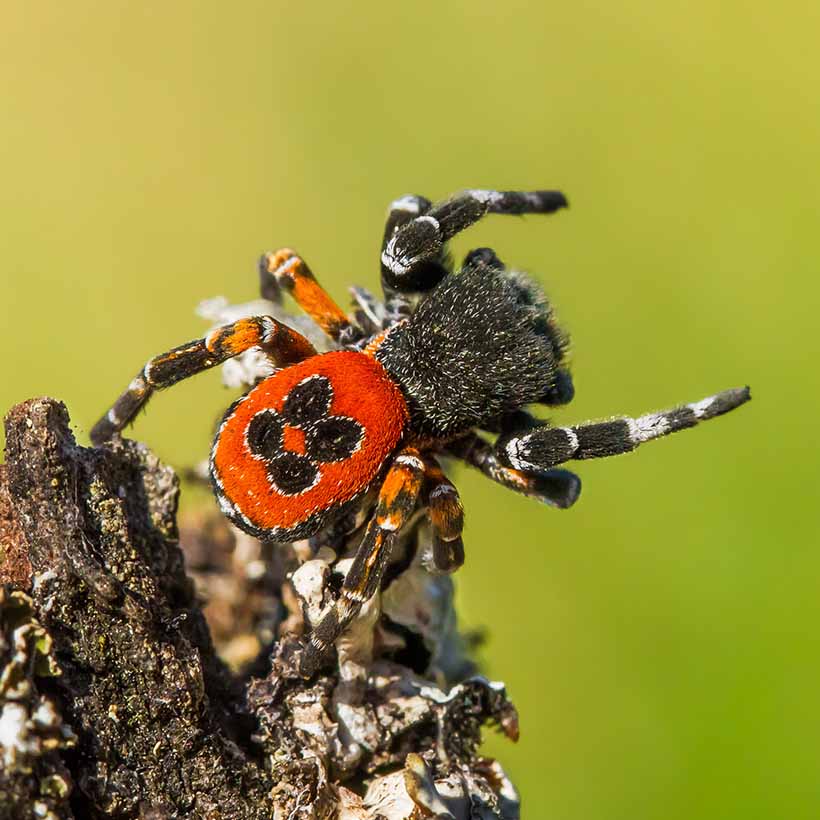
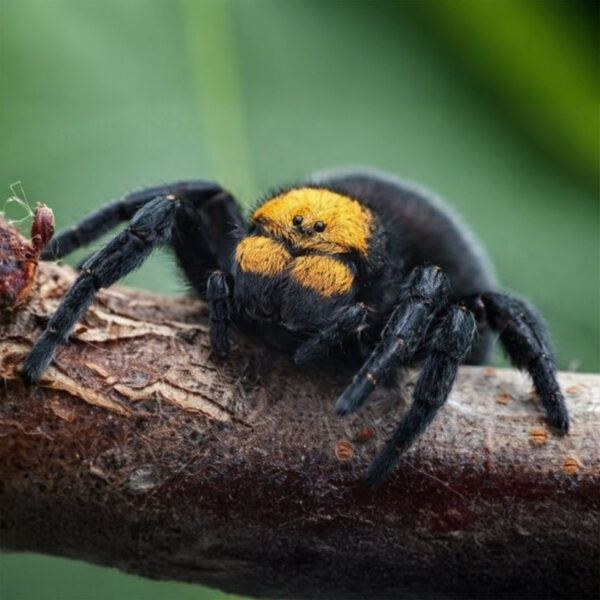
Let’s start with the obvious: the colors. The males of many Eresus species look as if they have climbed straight out of a warning sign. Bright red, deep black, high-contrast dots – an appearance that you would hardly expect from European spiders. And this is no coincidence. This coloration is aposematic, i.e. a warning coloration. Eresus males signal very clearly: “I am not easy prey.” For many keepers, this is precisely the first point of contact – these spiders do not look like “classic” eight-legged creatures, but almost like small works of art.
But it gets really exciting when you look at their behavior. Eresus are not restless hunters, not constantly visible terrarium inhabitants. They live secluded lives in stable living tubes, which they line with webbing and often camouflage with plant material or substrate. This “home” is not easily changed – it is the center of their lives. If you keep Eresus, you will see less action, but more structure, planning and consistency. This is exactly what makes them so appealing to many enthusiasts.
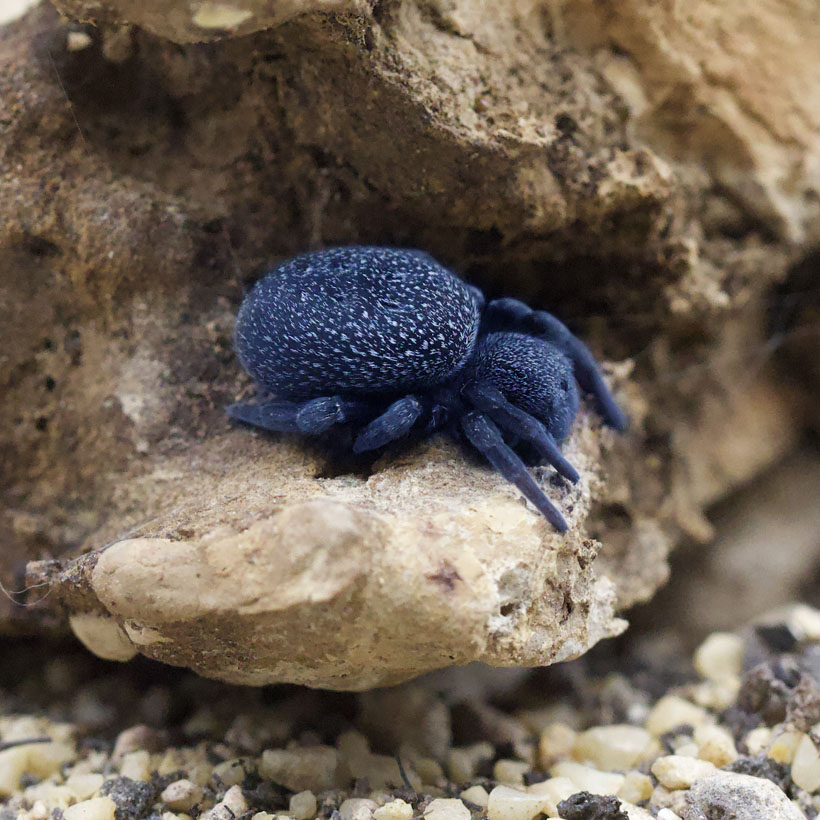
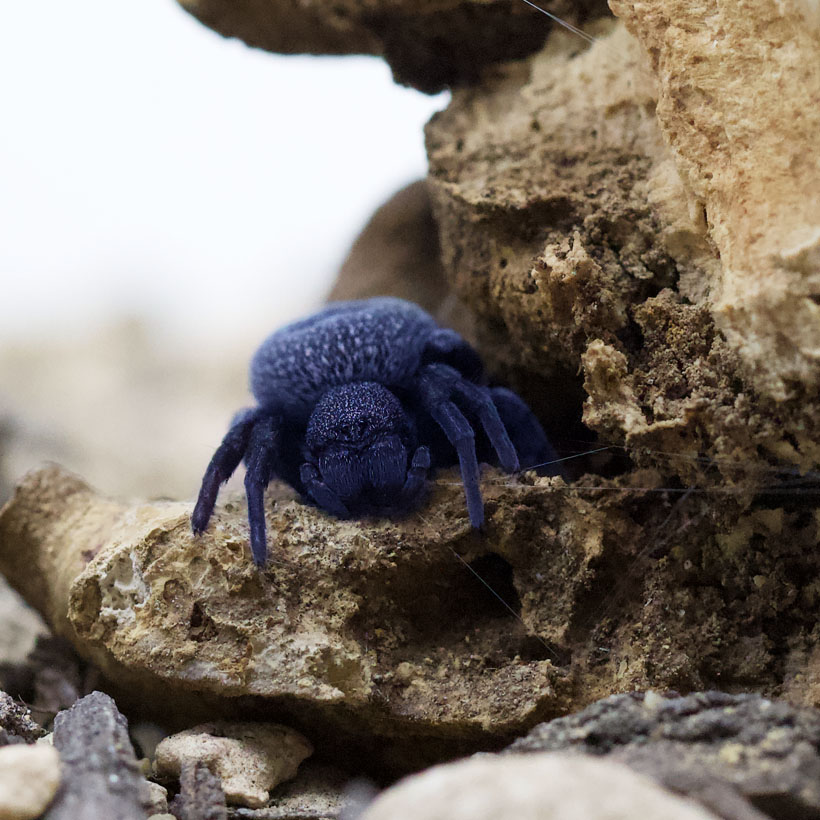
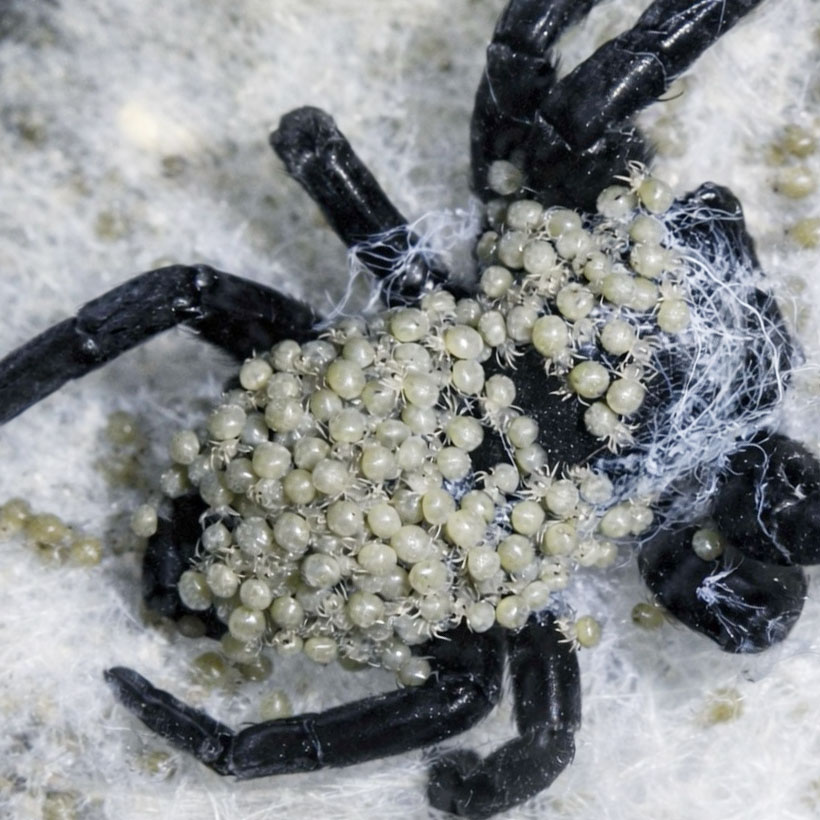
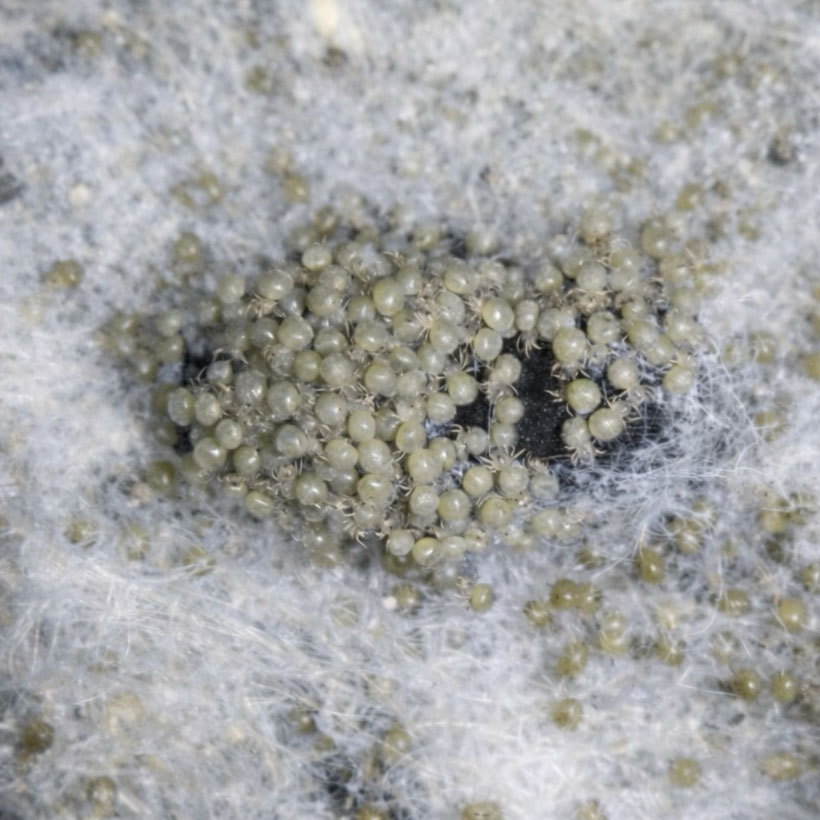
Reproductive behavior is an absolutely exceptional case in the spider world. After mating, the female does not simply remain “functional”, but invests herself completely in her offspring. The young animals hatch protected in the living tube – and then something happens that often makes even experienced terrarium keepers gulp: The mother is gradually consumed by her own offspring. Not an accident, not stressful behavior, but an evolutionarily established strategy. The mother’s body serves as the first, vital source of food. Radical? Yes. Effective? Absolutely. And biologically speaking, a fascinating example of maximum brood care.
The young animals themselves also behave unusually. Instead of dispersing immediately, they initially stay together, share the web and grow up together. This almost social behavior is a real rarity among spiders and also makes Eresus highly interesting from a breeding perspective. Anyone who follows these animals for any length of time soon realizes that they are not dealing with “throwaway biology”, but with a well thought-out life strategy.
Another detail that makes Eresus even more unusual is a behavior that many owners only notice on closer observation – or only once they have experienced it: Eresus warn before they bite. And not with threatening gestures, but with subtle, sometimes clearly perceptible vibrations.
Shortly before an Eresus actually grabs, the animal often begins to move its body minimally but rhythmically. These vibrations are transmitted via the substrate and the web and are not a random product of stress or breathing. Rather, it is a consciously used signal. In nature, it most likely serves to deter predators or troublemakers without having to invest energy or risk in a bite. A kind of last “better go away” before things get serious.
This behavior can be observed surprisingly well in the terrarium. If you get too close to the living tube with tweezers or when moving it, you sometimes notice that the spider suddenly “comes to life” – not frantically, not in panic, but in a controlled manner. The legs often remain in position, the body appears tense, and then this fine trembling begins. For experienced keepers, this is a clear sign: Now it is communicating, not attacking.
The exciting thing about this is that Eresus demonstrate a form of escalation control that is rarely seen so clearly in spiders. They don’t bite reflexively, they don’t blindly shoot forward. They warn. And that fits perfectly with their entire lifestyle: energy-efficient, deliberate, uncompromising only when it is really necessary.
For many people, this detail is a key moment. It takes some of the myth of the “unpredictable spider” away from Eresus and replaces it with respect. Anyone who reads and understands these animals quickly realizes that they are not aggressive – but extremely clear in their communication. And that is what makes them not only biologically fascinating, but also so special as terrarium animals.
In plain language, this means that Eresus are not impulse buys. They are animals for people who want to take a closer look, read and understand. But this is precisely where their enormous potential lies. Once you get involved with this species, you often develop a strong bond – not because of their constant activity, but because of the story these spiders tell. Of patience, sacrifice and evolutionary consistency.
Anyone who keeps this species knows that spiders can be more than just “moving decoration”. They are pure biology, uncompromising and fascinatingly honest. And that’s exactly why Eresus stay in your head – long after you’ve seen them for the first time.
Eresus balcanicus
Eresus elhennawayi
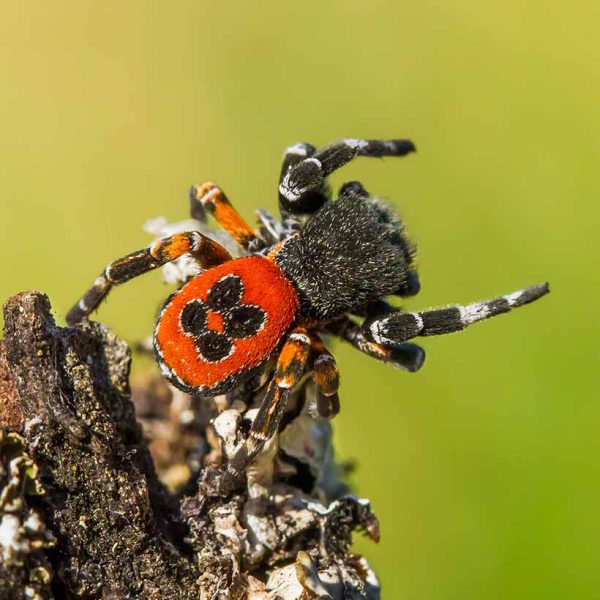
Eresus walckenaeri
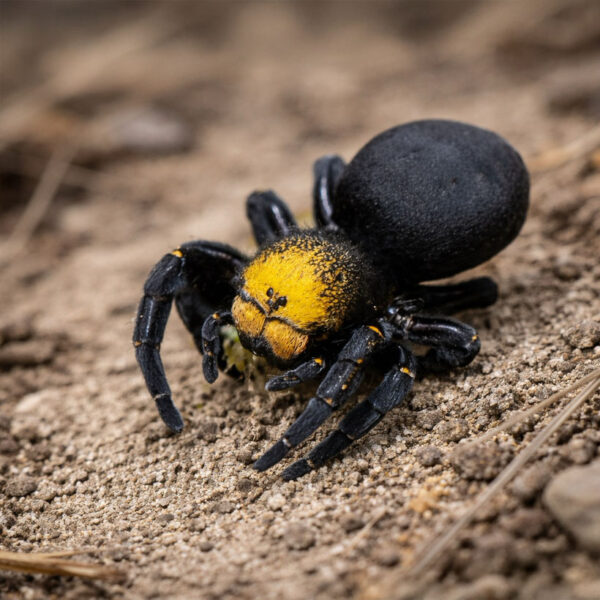
Eresus moravicus
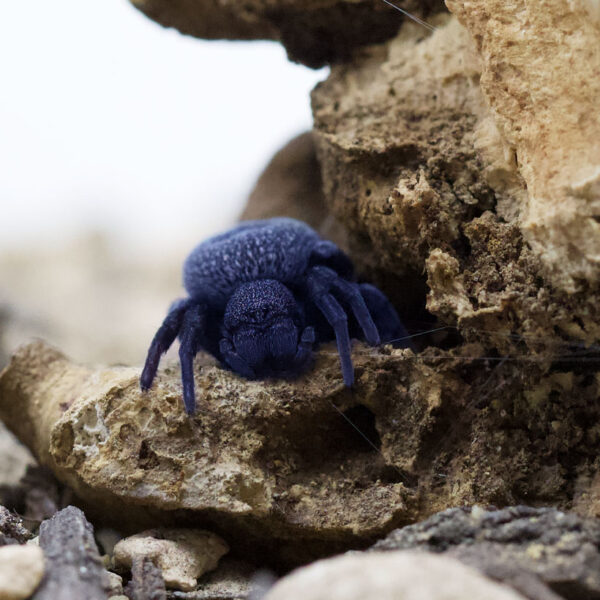
Eresus spec. “Blue Sidi Ifni”
Eresus illustris
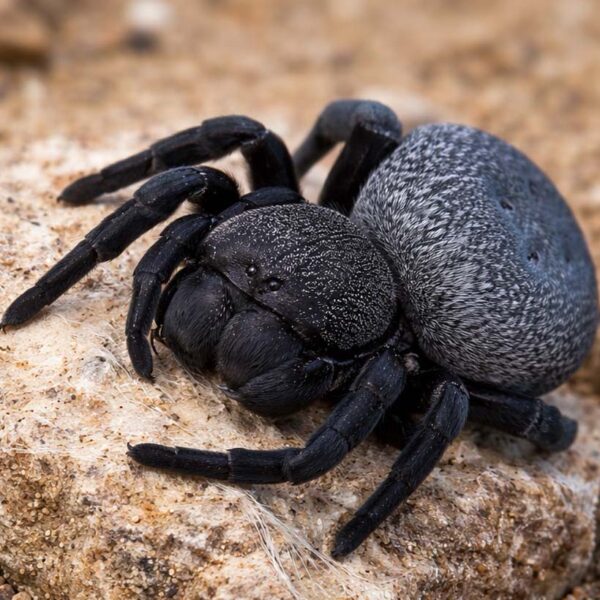
Eresus spec. “Bouarfa”
Eresus ruficapillus
Eresus spec. “Aguert Tamanart”
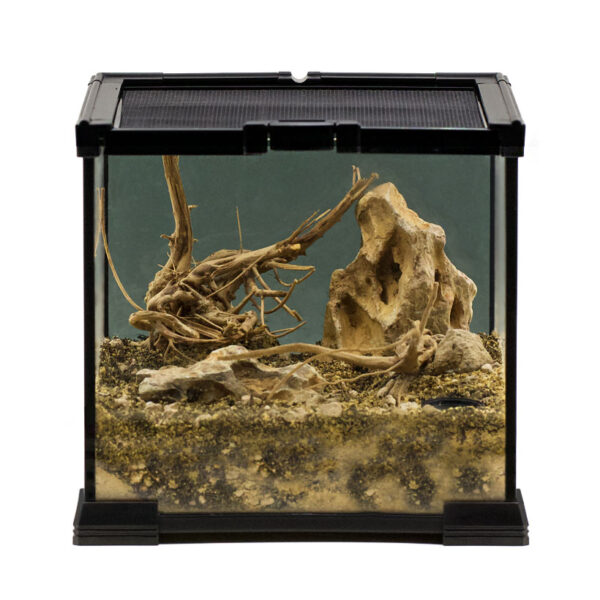
Eresus complete set
If you have any further questions, please leave them in the comments below the article.
Leave a Reply
You must be logged in to post a comment.