

Keepers keep telling me that almost their entire isopod or millipede population has died within a very short time. As an attempt at an explanation, I ask about changes before the mass extinction began. Ultimately, such attempts at explanations remain mere speculation without detailed investigation. They often only serve to reassure those affected that they have not made any mistakes and have become the victim of an unavoidable stroke of fate.
On closer inspection, these mass deaths can generally be attributed to causes that are often preventable!
Reasons for an unexplained slump
If we look at the habitat of the animals, it consists of deposits of dead, organic material, the so-called litter layer. It consists of fresh leaves, foliage and wood. It is home to soil animals such as spiders, snails, earthworms, grubs (beetle larvae), springtails, Isopods and sapsuckers. The rain washes out the litter layer and binds the tannins (tannins) and humic substances. These substances lower the pH value in the forest floor and have an antibacterial and fungicidal effect. Often this effect is lacking in the terrarium and the soil becomes alkaline (high pH value), resulting in mass mortality of the animals in it. There are no signs of this and therefore it actually appears to the keeper concerned as if a supernatural force has switched off the lives of the animals in the terrarium.
Check the PH value of the substrate
You can send a soil sample to an appropriate laboratory, which will then carry out a soil analysis and determine the exact pH value. A bit of a hassle and, if you have countless growing boxes like we do, also very time-consuming and expensive. You can occasionally find soil pH meters in well-stocked garden centers. But it is much easier to check the soil yourself with a small test. To do this, you need some vinegar (40 ml), a small bowl and the substrate to be tested (1 tablespoon). Pour a sip of vinegar into the bowl and add the soil to be tested. If there is a reaction and it starts to foam, the soil is already alkaline and you should take action immediately. As a rule, there is no reaction and you should only prevent it from staying that way. But how do we prevent the pH value in the soil from becoming too high?
Sea almond leaves
Regulating the PH value in the soil
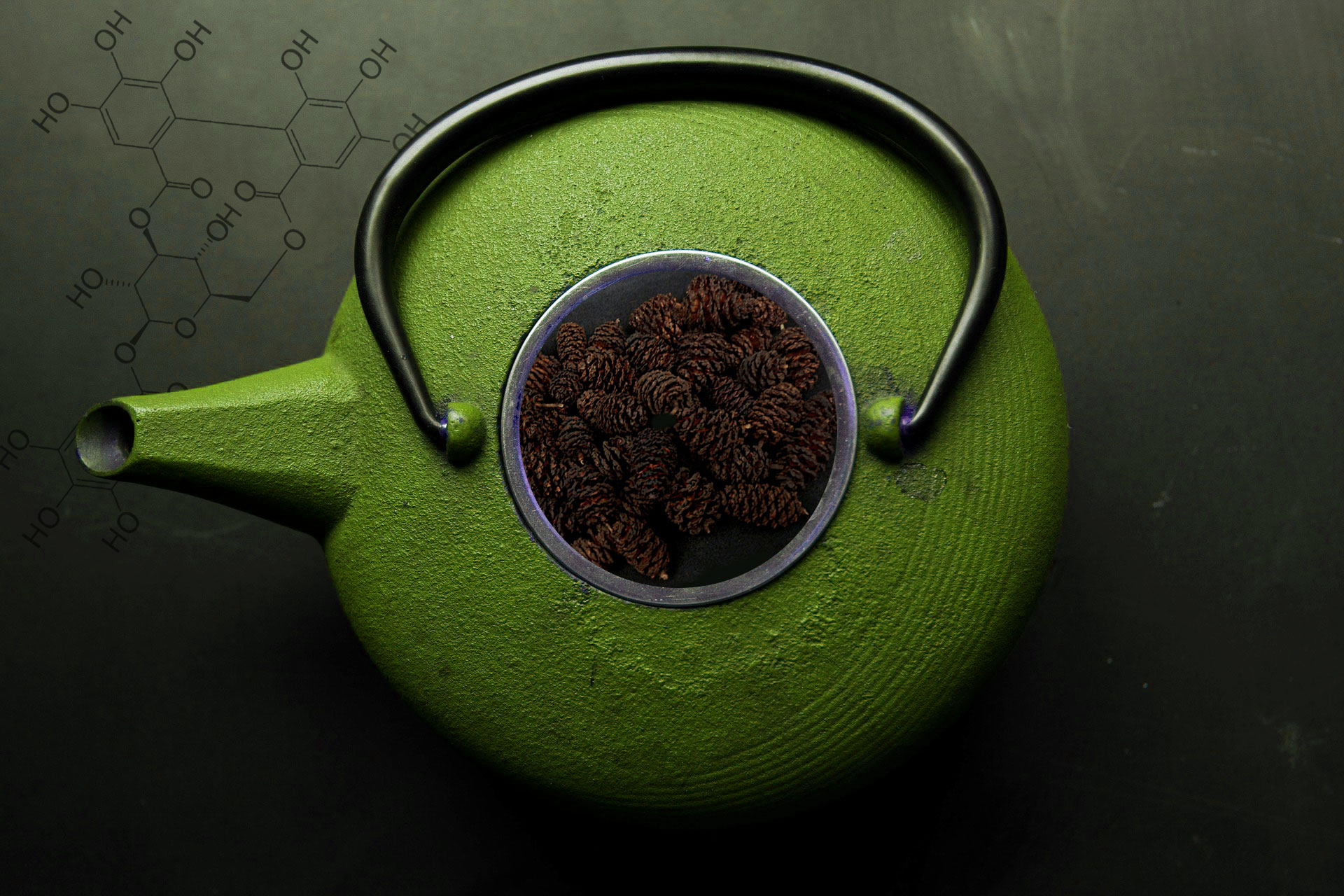
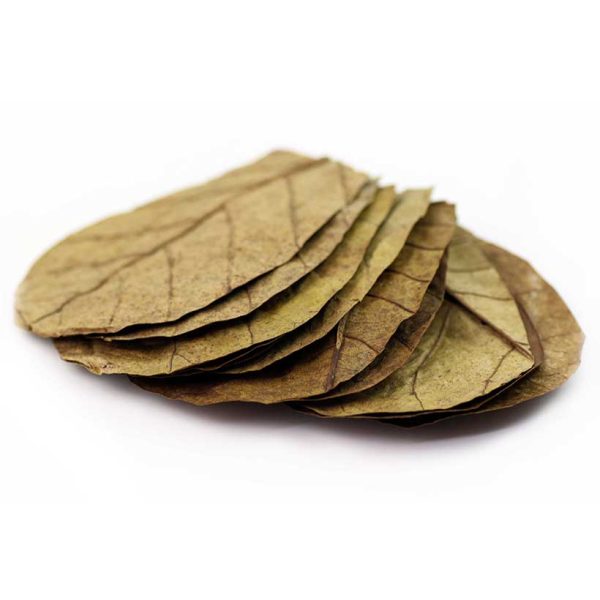
If we look at aquariums, the pH value is often reduced with oak leaves, almond tree leaves or alder cones. We can learn from these many years of experience and make use of them. Alder cones in particular are rich in active substances such as tannins and are known for their antibacterial and fungicidal effect. Compared to other natural materials that lower the pH value, you can simply collect them on a walk. Black alders are often found along streams or marshy areas. They love a moist location and keep their cones on the tree throughout the winter. Alder cones are not comparable to fir or spruce cones. With a size of 1-2 cm, they are not only much smaller, but their round shape also clearly distinguishes them from conifer cones. You should make sure that you collect the alder cones in the fall. This means that the rain has not yet washed them out and the valuable substances are still fully contained.
How do we get the valuable substances from the alder cones into our terrarium?
In principle, there is nothing to be said against simply placing the alder cones on the substrate surface in the terrarium. You could also mix them into the substrate to increase the effect in the substrate. However, this only achieves a selective application area and as we never soak the substrate completely, the humic substances are never distributed over the entire substrate. For this reason, we prepare an alder cone broth and regularly spray our substrate with it. This allows us to lower the pH value evenly and decide for ourselves when to use it. What should you bear in mind when preparing an alder cone stock?
Alder cones tea bags
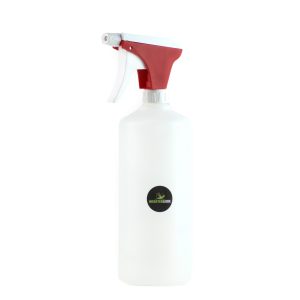
Insektenliebe pressure spray bottle 1 L
Prepare the alder cone stock
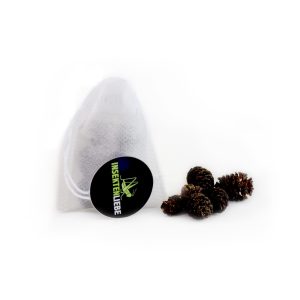
The alder cone brew should be free of dirt particles so that it can be sprayed into the terrarium later using a spray bottle. Empty tea bags are therefore ideal for storing the alder cones during the infusion time.
We use 6 alder cones in a tea bag and pour 1 liter of boiling water over them. We then leave this to infuse for 1 day. The water turns a brownish color, this is the humic substances of the alder cones that have dissolved in the water. Then empty the alder cone stock into a spray bottle. If we have boiled up more decoction than the spray bottle can hold, you can store the decoction in a closed bottle without hesitation. Due to the anti-fungal effect of the alder cones, no mold will develop. The boiled cones can be put into the terrarium for feeding.
Use of the alder cone broth
We use the spray bottle with the alder cone decoction once a week. To do this, we spray the substrate evenly with the pH-value-reducing solution. The animals react positively to the mixture and absorb it well, just like in nature.
Leave a Reply
You must be logged in to post a comment.